Rigveda 9.82: To Soma
Introduction
Rigveda 9.82 is a hymn of 5 verses addressed to Soma. It stands in book (maṇḍala) 9, the hymns to Soma Pavamāna. The Rigveda is the oldest collection of Sanskrit hymns, composed in the second half of the second millennium BCE and handed down orally for many centuries before it was written down.
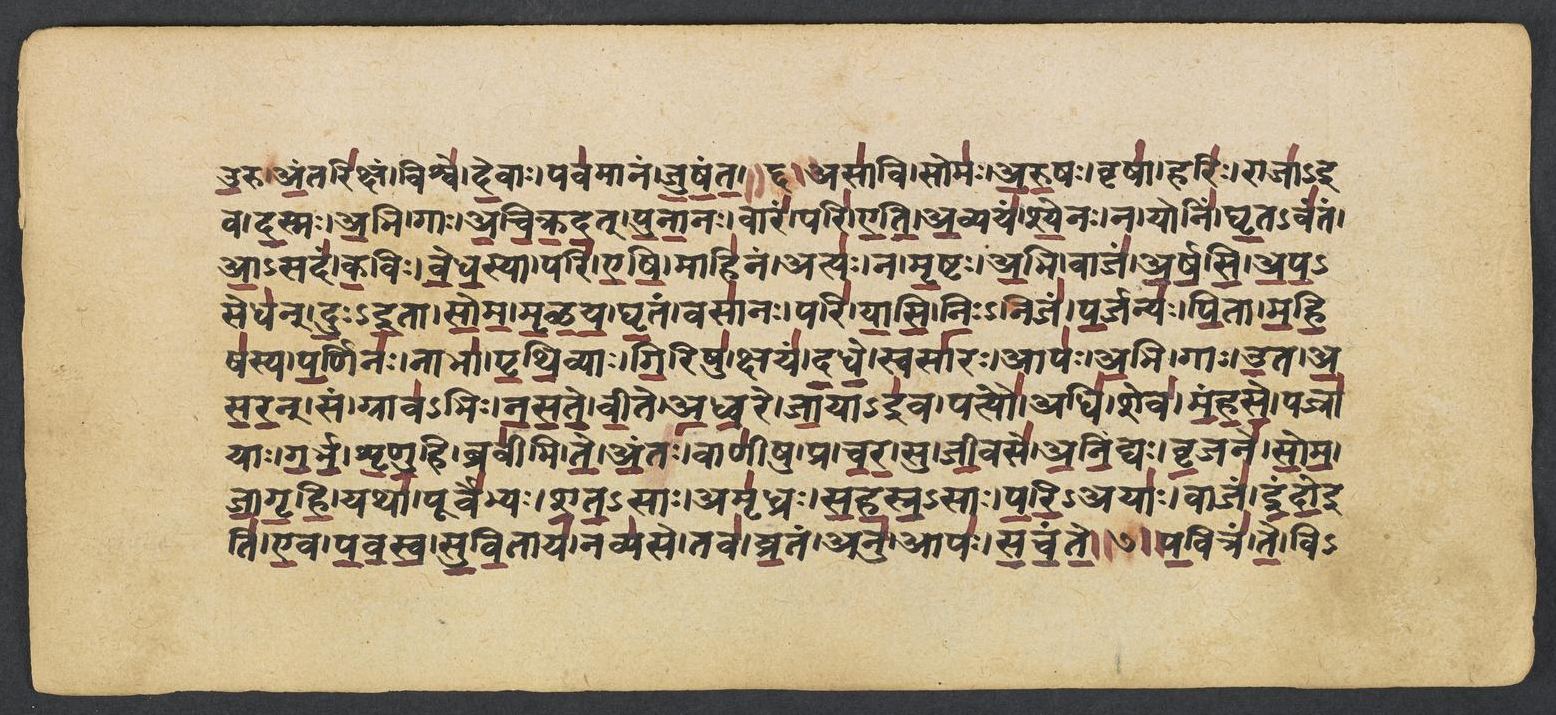
The manuscript shown is Penn Ms. Coll. 390 Item 41 (University of Pennsylvania), an undated paper manuscript of the padapāṭha (the word-by-word recitation text, in which every word is written separately and compounds are split) of the whole Ṛgveda in Devanāgarī, 884 leaves in fascicles, 7-9 lines to the page, accents in red; this hymn stands on fol. 710r. Each section below gives the verses that end on one page; the page boundaries were read on the images (the opening words of every page), not counted out. Where the manuscript is a padapāṭha (the word-by-word recitation text), the section shows Aufrecht's continuous (saṃhitā) text first and, as the edition text, the padapāṭha of the same verses, which is the form written on the page.
How was this verified? (Provenance)
Where on the image
Penn Ms. Coll. 390 Item 41, fol. 710r (numbered 27r by the scribe) (OPenn image 710, lower leaf). Checked on the image: the Rigveda text on this page begins in RV 9.81.5 ‹uru antarikṣam viśve devāḥ›. The next page with Rigveda text, fol. 710v (numbered 27v by the scribe), begins in RV 9.83.1 ‹-vi-tatam brahmaṇaḥ pate pra-bhuḥ›. Verses 9.82.1-5 end on this page.
1asā̍vi̱ somo̍ aru̱ṣo vṛṣā̱ harī̱ rāje̍va da̱smo a̱bhi gā a̍cikradat | pu̱nā̱no vāra̱m pary e̍ty a̱vyaya̍ṁ śye̱no na yoni̍ṁ ghṛ̱tava̍ntam ā̱sada̍m ||
2ka̱vir ve̍dha̱syā pary e̍ṣi̱ māhi̍na̱m atyo̱ na mṛ̱ṣṭo a̱bhi vāja̍m arṣasi | a̱pa̱sedha̍n duri̱tā so̍ma mṛḻaya ghṛ̱taṁ vasā̍na̱ḥ pari̍ yāsi ni̱rṇija̍m ||
3pa̱rjanya̍ḥ pi̱tā ma̍hi̱ṣasya̍ pa̱rṇino̱ nābhā̍ pṛthi̱vyā gi̱riṣu̱ kṣaya̍ṁ dadhe | svasā̍ra̱ āpo̍ a̱bhi gā u̱tāsa̍ra̱n saṁ grāva̍bhir nasate vī̱te a̍dhva̱re ||
4jā̱yeva̱ patyā̱v adhi̱ śeva̍ maṁhase̱ pajrā̍yā garbha śṛṇu̱hi bravī̍mi te | a̱ntar vāṇī̍ṣu̱ pra ca̍rā̱ su jī̱vase̍ 'ni̱ndyo vṛ̱jane̍ soma jāgṛhi ||
5yathā̱ pūrve̍bhyaḥ śata̱sā amṛ̍dhraḥ sahasra̱sāḥ pa̱ryayā̱ vāja̍m indo | e̱vā pa̍vasva suvi̱tāya̱ navya̍se̱ tava̍ vra̱tam anv āpa̍ḥ sacante ||
Compare: Padapāṭha (word-by-word text written in the manuscript; Sansknet e-text via GRETIL)
1asāvi | somaḥ | aruṣaḥ | vṛṣā | hariḥ | rājā-iva | dasmaḥ | abhi | gāḥ | acikradat | punānaḥ | vāram | pari | eti | avyayam | śyenaḥ | na | yonim | ghṛta-vantam | āsadam
2kaviḥ | vedhasyā | pari | eṣi | māhinam | atyaḥ | na | mṛṣṭaḥ | abhi | vājam | arṣasi | apa-sedhan | duḥ-itā | soma | mṛḷaya | ghṛtam | vasānaḥ | pari | yāsi | niḥ-nijam
3parjanyaḥ | pitā | mahiṣasya | parṇinaḥ | nābhā | pṛthivyāḥ | giriṣu | kṣayam | dadhe | svasāraḥ | āpaḥ | abhi | gāḥ | uta | asaran | sam | grāva-bhiḥ | nasate | vīte | adhvare
4jāyā-iva | patyau | adhi | śeva | maṃhase | pajrāyāḥ | garbha | śṛṇuhi | bravīmi | te | antaḥ | vāṇīṣu | pra | cāra | su | jīvase | anindyaḥ | vṛjane | soma | jāgṛhi
5yathā | pūrvebhyaḥ | śata-sāḥ | amṛdhraḥ | sahasra-sāḥ | pari-ayāḥ | vājam | indo iti | eva | pavasva | suvitāya | navyase | tava | vratam | anu | āpaḥ | sacante
1EVEN as a King hath Soma, red and tawny Bull, been pressed: the Wondrous One hath bellowed to the kine. While purified he passes through the filtering fleece to seat him hawk-like on the place that drops with oil.
2To glory goest thou, Sage with disposing skill, like a groomed steed thou rusbest forward to the prize. O Soma, be thou gracious, driving off distress: thou goest, clothed in butter, to a robe of state.
3Parjanya is the Father of the Mighty Bird: on mountains, in earth's centre hath he made his home. The waters too have flowed, the Sisters, to the kine: he meets the pressing-stones at the beloved rite.
4Thou givest pleasure as a wife delights her lord. Listen, O Child of Pajrâ, for to thee I speak. Amid the holy songs go on that we may live: in time of trouble, Soma, watch thou free from blame.
5As to the men of old thou camest, Indu unharmed, to strengthen, winning hundreds, thousands, So now for new felicity flow onward: the waters follow as thy law ordaineth.
Notes
- Sanskrit: Aufrecht's edition (1877) with the Vedic accents, as entered by van Nooten and Holland (GRETIL).
- English: Ralph T. H. Griffith, The Hymns of the Rigveda (1889-1892; 2nd ed. 1896-1897), from the VedaWeb digital text; OCR slips in that text were corrected against the printed 2nd edition (data/sources/rigveda/griffith_errata.json).
- Padapāṭha (edition text): Sansknet e-text via GRETIL (CC BY-NC-SA 4.0).
Cite
Sources
- Source: Penn Ms. Coll. 390 Item 41 (undated (catalogued with Penn's 18th-19th c. Vedic manuscripts)), OPenn, Public Domain Mark + Aufrecht's accented text (GRETIL) + Griffith's English (VedaWeb) (holding institution)
- Critical edition: Aufrecht (1877), accented e-text via GRETIL
← previous · → next · v cycle view · l back to library