Rigveda 9.87: To Soma
Introduction
Rigveda 9.87 is a hymn of 9 verses addressed to Soma. It stands in book (maṇḍala) 9, the hymns to Soma Pavamāna. The Rigveda is the oldest collection of Sanskrit hymns, composed in the second half of the second millennium BCE and handed down orally for many centuries before it was written down.
The manuscript shown is Penn Ms. Coll. 390 Item 41 (University of Pennsylvania), an undated paper manuscript of the padapāṭha (the word-by-word recitation text, in which every word is written separately and compounds are split) of the whole Ṛgveda in Devanāgarī, 884 leaves in fascicles, 7-9 lines to the page, accents in red; this hymn stands on fol. 717r-718r. Each section below gives the verses that end on one page; the page boundaries were read on the images (the opening words of every page), not counted out. Where the manuscript is a padapāṭha (the word-by-word recitation text), the section shows Aufrecht's continuous (saṃhitā) text first and, as the edition text, the padapāṭha of the same verses, which is the form written on the page.
How was this verified? (Provenance)
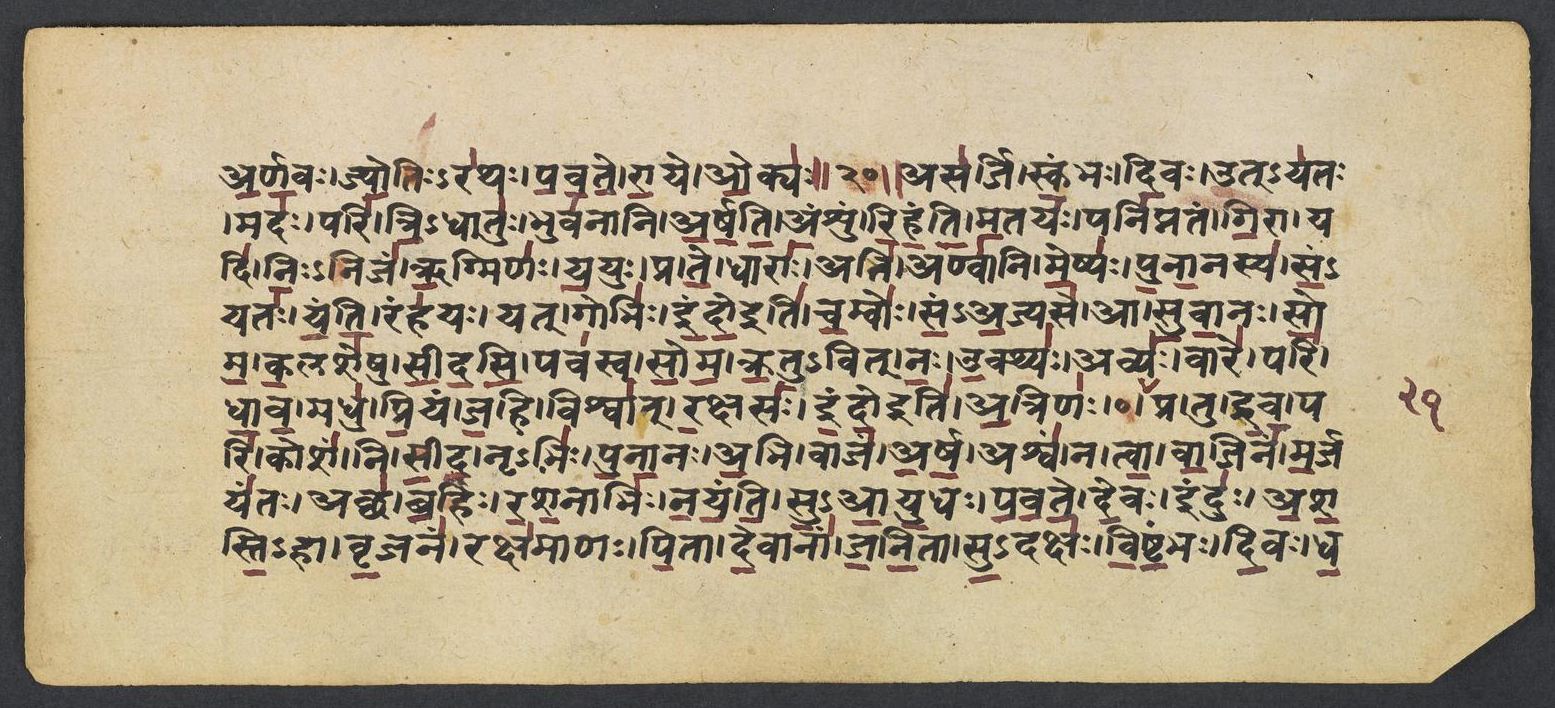
Where on the image
Penn Ms. Coll. 390 Item 41, fol. 717r (numbered 34r by the scribe) (OPenn image 717, lower leaf). Checked on the image: the Rigveda text on this page begins in RV 9.86.45 ‹arṇavaḥ jyotiḥ-rathaḥ pavate rāye›. The next page with Rigveda text, fol. 717v (numbered 34v by the scribe), begins in RV 9.87.2 ‹-dharuṇaḥ pṛthivyāḥ›. Verse 9.87.1 ends on this page.
1pra tu dra̍va̱ pari̱ kośa̱ṁ ni ṣī̍da̱ nṛbhi̍ḥ punā̱no a̱bhi vāja̍m arṣa | aśva̱ṁ na tvā̍ vā̱jina̍m ma̱rjaya̱nto 'cchā̍ ba̱rhī ra̍śa̱nābhi̍r nayanti ||
Compare: Padapāṭha (word-by-word text written in the manuscript; Sansknet e-text via GRETIL)
1pra | tu | drava | pari | kośam | ni | sīda | nṛ-bhiḥ | punānaḥ | abhi | vājam | arṣa | aśvam | na | tvā | vājinam | marjayantaḥ | accha | barhiḥ | raśanābhiḥ | nayanti
1RUN onward to the reservoir and seat thee: cleansed by the men speed forward to the battle. Making thee beauteous like an able courser, forth to the sacred grass with reins they lead thee.
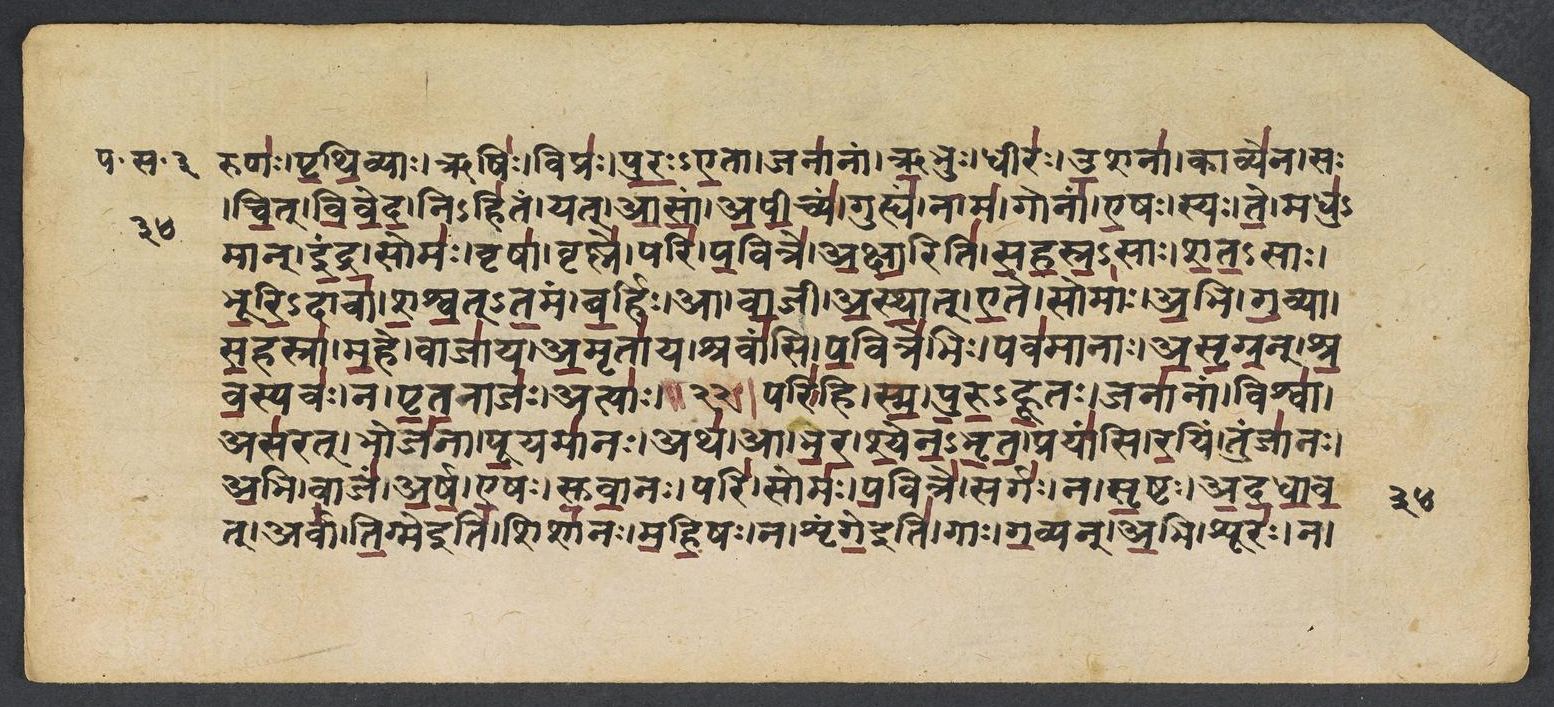
Where on the image
Penn Ms. Coll. 390 Item 41, fol. 717v (numbered 34v by the scribe) (OPenn image 718, upper leaf). Checked on the image: the Rigveda text on this page begins in RV 9.87.2 ‹-dharuṇaḥ pṛthivyāḥ›. The next page with Rigveda text, fol. 718r (numbered 35r by the scribe), begins in RV 9.87.7 ‹satvā›. Verses 9.87.2-6 end on this page; 9.87.2 begins on fol. 717r (numbered 34r by the scribe).
2svā̱yu̱dhaḥ pa̍vate de̱va indu̍r aśasti̱hā vṛ̱jana̱ṁ rakṣa̍māṇaḥ | pi̱tā de̱vānā̍ṁ jani̱tā su̱dakṣo̍ viṣṭa̱mbho di̱vo dha̱ruṇa̍ḥ pṛthi̱vyāḥ ||
3ṛṣi̱r vipra̍ḥ purae̱tā janā̍nām ṛ̱bhur dhīra̍ u̱śanā̱ kāvye̍na | sa ci̍d viveda̱ nihi̍ta̱ṁ yad ā̍sām apī̱cya1̱̍ṁ guhya̱ṁ nāma̱ gonā̍m ||
4e̱ṣa sya te̱ madhu̍mām̐ indra̱ somo̱ vṛṣā̱ vṛṣṇe̱ pari̍ pa̱vitre̍ akṣāḥ | sa̱ha̱sra̱sāḥ śa̍ta̱sā bhū̍ri̱dāvā̍ śaśvatta̱mam ba̱rhir ā vā̱jy a̍sthāt ||
5e̱te somā̍ a̱bhi ga̱vyā sa̱hasrā̍ ma̱he vājā̍yā̱mṛtā̍ya̱ śravā̍ṁsi | pa̱vitre̍bhi̱ḥ pava̍mānā asṛgrañ chrava̱syavo̱ na pṛ̍ta̱nājo̱ atyā̍ḥ ||
6pari̱ hi ṣmā̍ puruhū̱to janā̍nā̱ṁ viśvāsa̍ra̱d bhoja̍nā pū̱yamā̍naḥ | athā bha̍ra śyenabhṛta̱ prayā̍ṁsi ra̱yiṁ tuñjā̍no a̱bhi vāja̍m arṣa ||
Compare: Padapāṭha (word-by-word text written in the manuscript; Sansknet e-text via GRETIL)
2su-āyudhaḥ | pavate | devaḥ | induḥ | aśasti-hā | vṛjanam | rakṣamāṇaḥ | pitā | devānām | janitā | su-dakṣaḥ | viṣṭambhaḥ | divaḥ | dharuṇaḥ | pṛthivyāḥ
3ṛṣiḥ | vipraḥ | puraḥ-etā | janānām | ṛbhuḥ | dhīraḥ | uśanā | kāvyena | saḥ | cit | viveda | ni-hitam | yat | āsām | apīcyam | guhyam | nāma | gonām
4eṣaḥ | syaḥ | te | madhu-mān | indra | somaḥ | vṛṣā | vṛṣṇe | pari | pavitre | akṣāriti | sahasra-sāḥ | śata-sāḥ | bhūri-dāvā | śaśvat-tamam | barhiḥ | ā | vājī | asthāt
5ete | somāḥ | abhi | gavyā | sahasrā | mahe | vājāya | amṛtāya | śravāṃsi | pavitrebhiḥ | pavamānāḥ | asṛgran | śravasyavaḥ | na | pṛtanājaḥ | atyāḥ
6pari | hi | sma | puru-hūtaḥ | janānām | viśvā | asarat | bhojanā | pūyamānaḥ | atha | ā | bhara | śyena-bhṛta | prayāṃsi | rayim | tuñjānaḥ | abhi | vājam | arṣa
2Indu, the well-armed God, is flowing onward, who quells the curse and guards from treacherous onslaught, Father, begetter of the Gods, most skilful, the buttress of the heavens and earth's supporter.
3R̥ishi and Sage, the Champion of the people, cleft and sagacious, Uṣanâ in wisdom, He hath discovered even their hidden nature, the Cows' concealed and most mysterious title.
4This thine own Soma rich in meath, O Indra, Steer for the Steer, hath flowed into the filter. The strong Free-giver, winning hundreds, thousands, hath reached the holy grass that never fails him.
5These Somas are for wealth of countless cattle, renown therefor, and mighty strength immortal. These have been sent forth, purified by strainers, like steeds who rush to battle fain for glory.
6He, while he cleanses him, invoked of many, hath flowed to give the people all enjoyment. Thou whom the Falcon brought, bring, dainty viands, bestir thyself and send us wealth and booty.
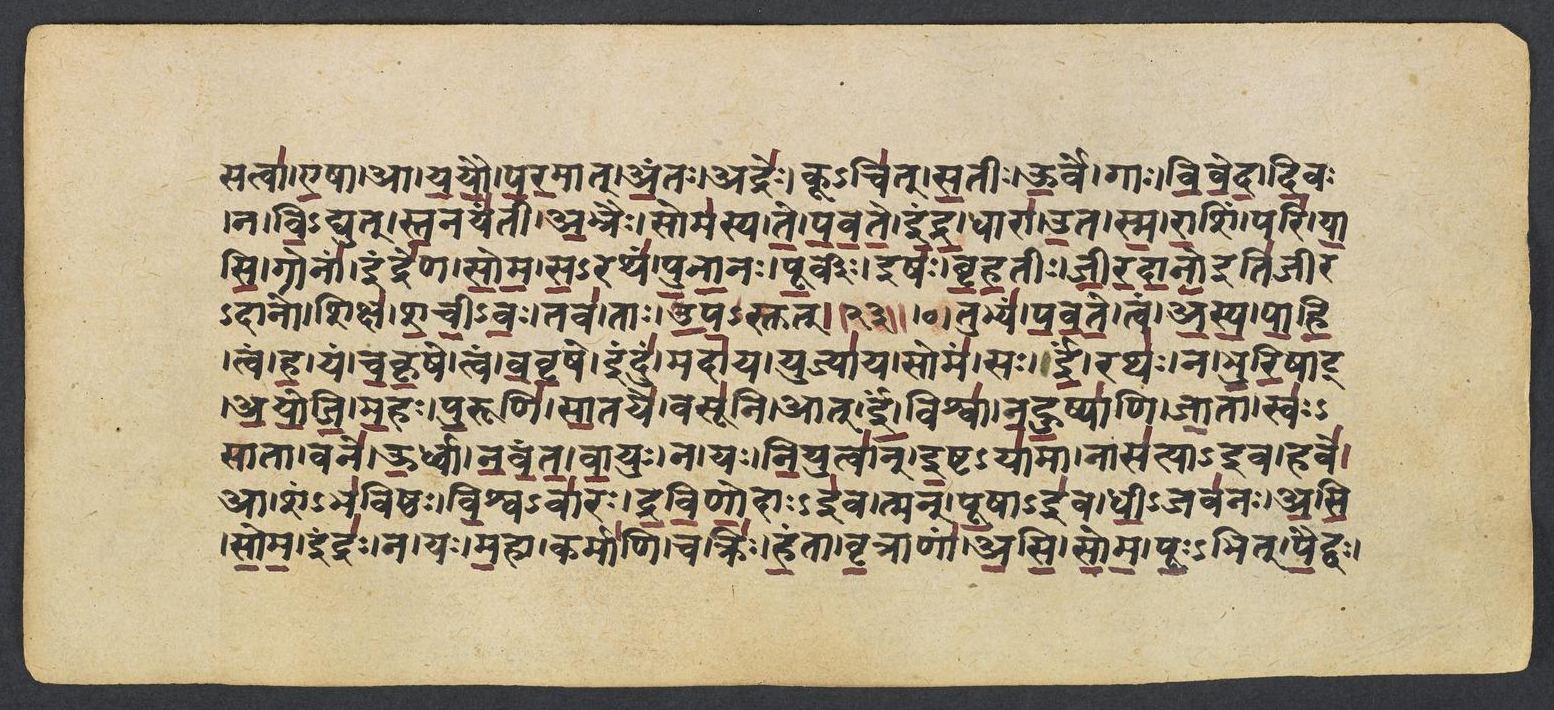
Where on the image
Penn Ms. Coll. 390 Item 41, fol. 718r (numbered 35r by the scribe) (OPenn image 718, lower leaf). Checked on the image: the Rigveda text on this page begins in RV 9.87.7 ‹satvā›. The next page with Rigveda text, fol. 718v (numbered 35v by the scribe), begins in RV 9.88.4 ‹na hi tvam ahi-nāmnām›. Verses 9.87.7-9 end on this page; 9.87.7 begins on fol. 717v (numbered 34v by the scribe).
7e̱ṣa su̍vā̱naḥ pari̱ soma̍ḥ pa̱vitre̱ sargo̱ na sṛ̱ṣṭo a̍dadhāva̱d arvā̍ | ti̱gme śiśā̍no mahi̱ṣo na śṛṅge̱ gā ga̱vyann a̱bhi śūro̱ na satvā̍ ||
8e̱ṣā ya̍yau para̱mād a̱ntar adre̱ḥ kūci̍t sa̱tīr ū̱rve gā vi̍veda | di̱vo na vi̱dyut sta̱naya̍nty a̱bhraiḥ soma̍sya te pavata indra̱ dhārā̍ ||
9u̱ta sma̍ rā̱śim pari̍ yāsi̱ gonā̱m indre̍ṇa soma sa̱ratha̍m punā̱naḥ | pū̱rvīr iṣo̍ bṛha̱tīr jī̍radāno̱ śikṣā̍ śacīva̱s tava̱ tā u̍pa̱ṣṭut ||
Compare: Padapāṭha (word-by-word text written in the manuscript; Sansknet e-text via GRETIL)
7eṣaḥ | sivānaḥ | pari | somaḥ | pavitre | sargaḥ | na | sṛṣṭaḥ | adadhāvat | arvā | tigme | śiśānaḥ | mahiṣaḥ | na | śṛṅge | gāḥ | gavyan | abhi | śūraḥ | na | satvā
8eṣā | ā | yayau | paramāt | antaḥ | adreḥ | kū-cit | satīḥ | ūrve | gāḥ | viveda | divaḥ | na | vi-dyut | stanayantī | abhraiḥ | somasya | te | pavate | indra | dhārā
9uta | sma | rāśim | pari | yāsi | gonām | indreṇa | soma | sa-ratham | punānaḥ | pūrvīḥ | iṣaḥ | bṛhatīḥ | jīradāno itijīra-dāno | śikṣa | sacī-vaḥ | tava | tāḥ | upa-stut
7This Soma, pressed into the cleansing filter, hath run as 'twere a host let loose, the Courser; Like a strong bull who whets his horns kpen-pointed, like a brave warrior in the fray for cattle.
8He issued forth from out the loftiest mountain, and found kine hidden somewhere in a stable. Soma's stream clears itself for thee, O Indra, like lightning thundering through the clouds of heaven,
9Cleansing thyself, and borne along with Indra, Soma, thou goest round the herd of cattle. May thy praise help us, Mighty One, prompt Giver, to the full ample food which thou bestowest.
Notes
- Sanskrit: Aufrecht's edition (1877) with the Vedic accents, as entered by van Nooten and Holland (GRETIL).
- English: Ralph T. H. Griffith, The Hymns of the Rigveda (1889-1892; 2nd ed. 1896-1897), from the VedaWeb digital text; OCR slips in that text were corrected against the printed 2nd edition (data/sources/rigveda/griffith_errata.json).
- Padapāṭha (edition text): Sansknet e-text via GRETIL (CC BY-NC-SA 4.0).
Cite
Sources
- Source: Penn Ms. Coll. 390 Item 41 (undated (catalogued with Penn's 18th-19th c. Vedic manuscripts)), OPenn, Public Domain Mark + Aufrecht's accented text (GRETIL) + Griffith's English (VedaWeb) (holding institution)
- Critical edition: Aufrecht (1877), accented e-text via GRETIL
← previous · → next · v cycle view · l back to library