Rigveda 9.86: To Soma
Introduction
Rigveda 9.86 is a hymn of 48 verses addressed to Soma. It stands in book (maṇḍala) 9, the hymns to Soma Pavamāna. The Rigveda is the oldest collection of Sanskrit hymns, composed in the second half of the second millennium BCE and handed down orally for many centuries before it was written down.
The manuscript shown is Penn Ms. Coll. 390 Item 41 (University of Pennsylvania), an undated paper manuscript of the padapāṭha (the word-by-word recitation text, in which every word is written separately and compounds are split) of the whole Ṛgveda in Devanāgarī, 884 leaves in fascicles, 7-9 lines to the page, accents in red; this hymn stands on fol. 712v-717r. Each section below gives the verses that end on one page; the page boundaries were read on the images (the opening words of every page), not counted out. Where the manuscript is a padapāṭha (the word-by-word recitation text), the section shows Aufrecht's continuous (saṃhitā) text first and, as the edition text, the padapāṭha of the same verses, which is the form written on the page.
How was this verified? (Provenance)
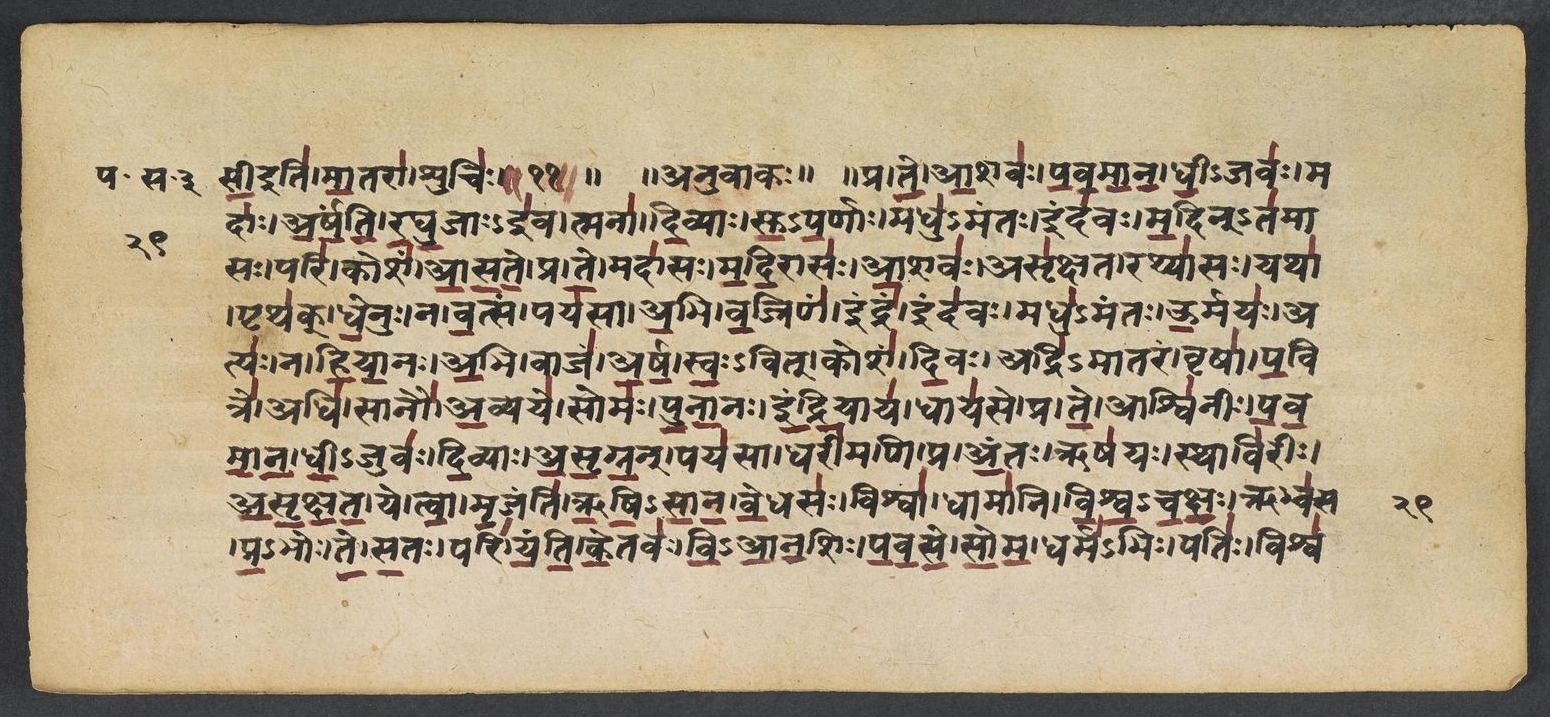
Where on the image
Penn Ms. Coll. 390 Item 41, fol. 712v (numbered 29v by the scribe) (OPenn image 713, upper leaf). Checked on the image: the Rigveda text on this page begins in RV 9.85.12 ‹-rodasī iti mātarā śuciḥ›. The next page with Rigveda text, fol. 713r (numbered 30r by the scribe), begins in RV 9.86.5 ‹-viśvasya bhuvanasya rājasi›. Verses 9.86.1-4 end on this page.
1pra ta̍ ā̱śava̍ḥ pavamāna dhī̱javo̱ madā̍ arṣanti raghu̱jā i̍va̱ tmanā̍ | di̱vyāḥ su̍pa̱rṇā madhu̍manta̱ inda̍vo ma̱dinta̍māsa̱ḥ pari̱ kośa̍m āsate ||
2pra te̱ madā̍so madi̱rāsa̍ ā̱śavo 'sṛ̍kṣata̱ rathyā̍so̱ yathā̱ pṛtha̍k | dhe̱nur na va̱tsam paya̍sā̱bhi va̱jriṇa̱m indra̱m inda̍vo̱ madhu̍manta ū̱rmaya̍ḥ ||
3atyo̱ na hi̍yā̱no a̱bhi vāja̍m arṣa sva̱rvit kośa̍ṁ di̱vo adri̍mātaram | vṛṣā̍ pa̱vitre̱ adhi̱ sāno̍ a̱vyaye̱ soma̍ḥ punā̱na i̍ndri̱yāya̱ dhāya̍se ||
4pra ta̱ āśvi̍nīḥ pavamāna dhī̱juvo̍ di̱vyā a̍sṛgra̱n paya̍sā̱ dharī̍maṇi | prāntar ṛṣa̍ya̱ḥ sthāvi̍rīr asṛkṣata̱ ye tvā̍ mṛ̱janty ṛ̍ṣiṣāṇa ve̱dhasa̍ḥ ||
Compare: Padapāṭha (word-by-word text written in the manuscript; Sansknet e-text via GRETIL)
1pra | te | āśavaḥ | pavamāna | dhī-javaḥ | madāḥ | arṣanti | raghujāḥ-iva | tmanā | divyāḥ | su-parṇāḥ | madhu-mantaḥ | indavaḥ | madin-tamāsaḥ | pari | kośam | āsate
2pra | te | madāsaḥ | madirāsaḥ | āśavaḥ | asṛkṣata | rathyāsaḥ | yathā | pṛthak | dhenuḥ | na | vatsam | payasā | abhi | vajriṇam | indram | indavaḥ | madhu-mantaḥ | ūrmayaḥ
3atyaḥ | na | hiyānaḥ | abhi | vājam | arṣa | svaḥ-vit | kośam | divaḥ | adri-mātaram | vṛṣā | pavitre | adhi | sānau | avyaye | somaḥ | punānaḥ | indriyāya | dhāyase
4pra | te | āśvinīḥ | pavamāna | dhī-juvaḥ | divyāḥ | asṛgran | payasā | dharīmaṇi | pra | antaḥ | ṛṣayaḥ | sthāvirīḥ | asṛkṣata | ye | tvā | mṛjanti | ṛṣi-sāṇa | vedhasaḥ
1THY gladdening draughts, O Pavamâna, urged by song flow swiftly of themselves like sons of fleetfoot mares. The drops of Soma juice, those eagles of the heavens, most cheering, rich in meath, rest in the reservoir.
2As rapid chariot-steeds, so turned in several ways have thine exhilarating juices darted forth, Soma-drops rich in meath, waves, to the Thunder-armed, to Indra, like milch-kine who seek their calf with milk.
3Like a steed urged to battle, finder of the light; speed onward to the cloud-born reservoir of heaven, A Steer that o'er the woolly surface seeks the sieve, Soma while purified for Indra's nourishment.
4Fleet as swift steeds, thy drops, divine, thought-swift, have been, O Pavamâna, poured with milk into the vat. The R̥ishis have poured in continuous Soma drops, ordainers who adorn thee, Friend whom R̥ishis love.
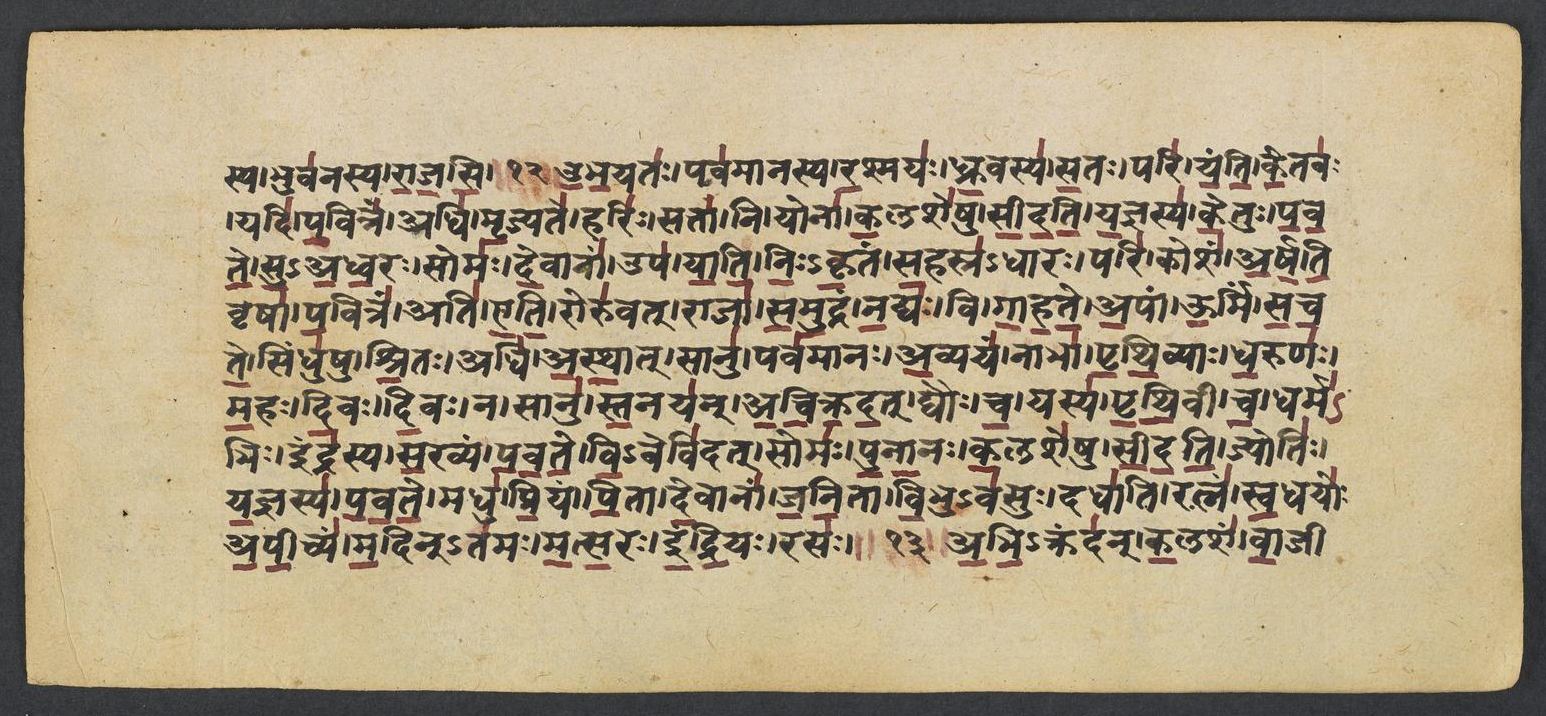
Where on the image
Penn Ms. Coll. 390 Item 41, fol. 713r (numbered 30r by the scribe) (OPenn image 713, lower leaf). Checked on the image: the Rigveda text on this page begins in RV 9.86.5 ‹-viśvasya bhuvanasya rājasi›. The next page with Rigveda text, fol. 713v (numbered 30v by the scribe), begins in RV 9.86.11 ‹arṣati patiḥ divaḥ śata-dhāraḥ›. Verses 9.86.5-10 end on this page; 9.86.5 begins on fol. 712v (numbered 29v by the scribe).
5viśvā̱ dhāmā̍ni viśvacakṣa̱ ṛbhva̍saḥ pra̱bhos te̍ sa̱taḥ pari̍ yanti ke̱tava̍ḥ | vyā̱na̱śiḥ pa̍vase soma̱ dharma̍bhi̱ḥ pati̱r viśva̍sya̱ bhuva̍nasya rājasi ||
6u̱bha̱yata̱ḥ pava̍mānasya ra̱śmayo̍ dhru̱vasya̍ sa̱taḥ pari̍ yanti ke̱tava̍ḥ | yadī̍ pa̱vitre̱ adhi̍ mṛ̱jyate̱ hari̱ḥ sattā̱ ni yonā̍ ka̱laśe̍ṣu sīdati ||
7ya̱jñasya̍ ke̱tuḥ pa̍vate svadhva̱raḥ somo̍ de̱vānā̱m upa̍ yāti niṣkṛ̱tam | sa̱hasra̍dhāra̱ḥ pari̱ kośa̍m arṣati̱ vṛṣā̍ pa̱vitra̱m aty e̍ti̱ roru̍vat ||
8rājā̍ samu̱draṁ na̱dyo̱3̱̍ vi gā̍hate̱ 'pām ū̱rmiṁ sa̍cate̱ sindhu̍ṣu śri̱taḥ | adhy a̍sthā̱t sānu̱ pava̍māno a̱vyaya̱ṁ nābhā̍ pṛthi̱vyā dha̱ruṇo̍ ma̱ho di̱vaḥ ||
9di̱vo na sānu̍ sta̱naya̍nn acikrada̱d dyauś ca̱ yasya̍ pṛthi̱vī ca̱ dharma̍bhiḥ | indra̍sya sa̱khyam pa̍vate vi̱vevi̍da̱t soma̍ḥ punā̱naḥ ka̱laśe̍ṣu sīdati ||
10jyoti̍r ya̱jñasya̍ pavate̱ madhu̍ pri̱yam pi̱tā de̱vānā̍ṁ jani̱tā vi̱bhūva̍suḥ | dadhā̍ti̱ ratna̍ṁ sva̱dhayo̍r apī̱cya̍m ma̱dinta̍mo matsa̱ra i̍ndri̱yo rasa̍ḥ ||
Compare: Padapāṭha (word-by-word text written in the manuscript; Sansknet e-text via GRETIL)
5viśvā | dhāmāni | viśva-cakṣaḥ | ṛbhvasaḥ | pra-bhoḥ | te | sataḥ | pari | yanti | ketavaḥ | vi-ānaśiḥ | pavase | soma | dharma-bhiḥ | patiḥ | viśvasya | bhuvanasya | rājasi
6ubhayataḥ | pavamānasya | raśmayaḥ | dhruvasya | sataḥ | pari | yanti | ketavaḥ | yadi | pavitre | adhi | mṛjyate | hariḥ | sattā | ni | yonā | kalaśeṣu | sīdati
7yajñasya | ketuḥ | pavate | su-adhvaraḥ | somaḥ | devānām | upa | yāti | niḥ-kṛtam | sahasra-dhāraḥ | pari | kośam | arṣati | vṛṣā | pavitram | ati | eti | roruvat
8rājā | samudram | nadyaḥ | vi | gāhate | apām | ūrmim | sacate | sindhuṣu | śritaḥ | adhi | asthāṭ | sānu | pavamānaḥ | avyayam | nābhā | pṛthivyāḥ | dharuṇaḥ | mahaḥ | divaḥ
9divaḥ | na | sānu | stanayan | acikradat | dyauḥ | ca | yasya | pṛthivī | ca | dharma-bhiḥ | indrasya | sakhyam | pavate | vi-vevidat | somaḥ | punānaḥ | kalaśeṣu | sīdati
10jyotiḥ | yajñasya | pavate | madhu | priyam | pitā | devānām | janitā | vibhu-vasuḥ | dadhāti | ratnam | svadhayoḥ | apīcyam | madin-tamaḥ | matsaraḥ | indriyaḥ | rasaḥ
5O thou who seest all things, Sovran as thou art and passing strong, thy rays encompass all abodes. Pervading with thy natural powers thou flowest on, and as the whole world's Lord, O Soma, thou art King.
6The beams of Pavamâna, sent from earth and heaven, his ensigns who is ever steadfast, travel round. When on the sieve the Golden-hued is cleansed, he rests within the vats as one who seats him in his place.
7Served with fair rites he flows, ensign of sacrifice: Soma advances to the special place of Gods. He speeds with thousand currents to the reservoir, and passes through the filter bellowing as a bull.
8The Sovran dips him in the sea and the streams, and set in rivers with the waters' wave moves on. High heaven's Sustainer at the central point of earth, raised on the fleecy surface Pavamâna stands.
9He on whose high decree the heavens and earth depend hath roared and thundered like the summit of the sky. Soma flows on obtaining Indra's friendly love, and, as they purify him, settles in the jars.
10He, light of sacrifice distils delicious meath, most wealthy, Father and begetter of the Gods. He, gladdening, best of Cheerers, juice!hat Indra loves, enriches with mysterious treasure earth and heaven.
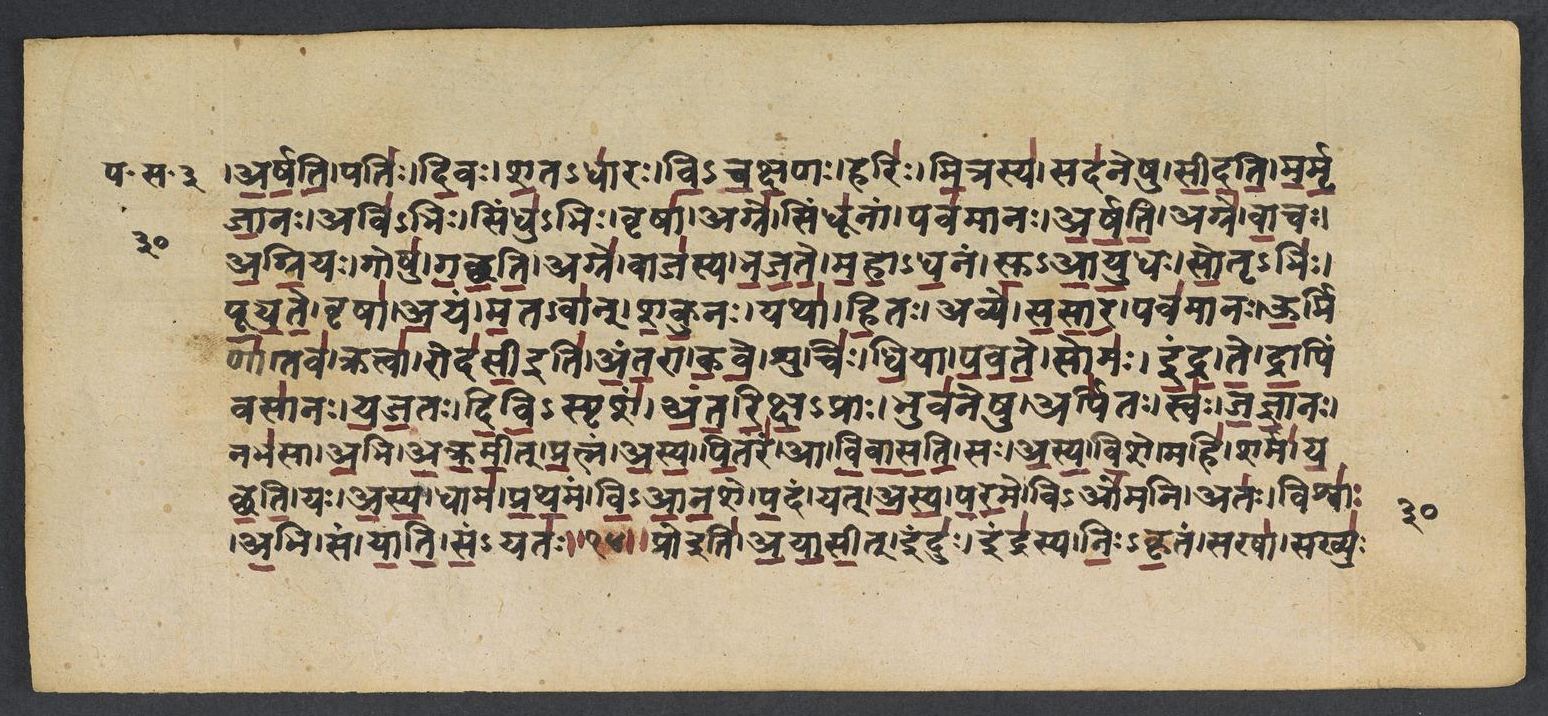
Where on the image
Penn Ms. Coll. 390 Item 41, fol. 713v (numbered 30v by the scribe) (OPenn image 714, upper leaf). Checked on the image: the Rigveda text on this page begins in RV 9.86.11 ‹arṣati patiḥ divaḥ śata-dhāraḥ›. The next page with Rigveda text, fol. 714r (numbered 31r by the scribe), begins in RV 9.86.16 ‹na pra mināti sam-giram›. Verses 9.86.11-15 end on this page; 9.86.11 begins on fol. 713r (numbered 30r by the scribe).
11a̱bhi̱kranda̍n ka̱laśa̍ṁ vā̱jy a̍rṣati̱ pati̍r di̱vaḥ śa̱tadhā̍ro vicakṣa̱ṇaḥ | hari̍r mi̱trasya̱ sada̍neṣu sīdati marmṛjā̱no 'vi̍bhi̱ḥ sindhu̍bhi̱r vṛṣā̍ ||
12agre̱ sindhū̍nā̱m pava̍māno arṣa̱ty agre̍ vā̱co a̍gri̱yo goṣu̍ gacchati | agre̱ vāja̍sya bhajate mahādha̱naṁ svā̍yu̱dhaḥ so̱tṛbhi̍ḥ pūyate̱ vṛṣā̍ ||
13a̱yam ma̱tavā̍ñ chaku̱no yathā̍ hi̱to 'vye̍ sasāra̱ pava̍māna ū̱rmiṇā̍ | tava̱ kratvā̱ roda̍sī anta̱rā ka̍ve̱ śuci̍r dhi̱yā pa̍vate̱ soma̍ indra te ||
14drā̱piṁ vasā̍no yaja̱to di̍vi̱spṛśa̍m antarikṣa̱prā bhuva̍ne̱ṣv arpi̍taḥ | sva̍r jajñā̱no nabha̍sā̱bhy a̍kramīt pra̱tnam a̍sya pi̱tara̱m ā vi̍vāsati ||
15so a̍sya vi̱śe mahi̱ śarma̍ yacchati̱ yo a̍sya̱ dhāma̍ pratha̱maṁ vyā̍na̱śe | pa̱daṁ yad a̍sya para̱me vyo̍ma̱ny ato̱ viśvā̍ a̱bhi saṁ yā̍ti sa̱ṁyata̍ḥ ||
Compare: Padapāṭha (word-by-word text written in the manuscript; Sansknet e-text via GRETIL)
11abhi-krandan | kalaśam | vājī | arṣati | patiḥ | divaḥ | śata-dhāraḥ | vi-cakṣaṇaḥ | hariḥ | mitrasya | sadaneṣu | sīdati | marmṛjānaḥ | avi-bhiḥ | sindhu-bhiḥ | vṛṣā
12agre | sindhūnām | pavamānaḥ | arṣati | agre | vācaḥ | agriyaḥ | goṣu | gacchati | agre | vājasya | bhajate | mahādhanam | su-āyudhaḥ | sotṛ-bhiḥ | pūyate | vṛṣā
13ayam | mata-vān | śakunaḥ | yathā | hitaḥ | avye | sasāra | pavamānaḥ | ūrmiṇā | tava | kratvā | rodasī iti | antarā | kave | śuciḥ | dhiyā | pavate | soma | indra | te
14drāpim | vasānaḥ | yajataḥ | divi-spṛśam | antarikṣa-prāḥ | bhuvaneṣu | arpitaḥ | svaḥ | jajñānaḥ | nabhasā | abhi | akramīt | pratnam | asya | pitaram | ā | vivāsati
15saḥ | asya | viśe | mahi | śarma | yacchati | yaḥ | asya | dhāma | prathamam | vi-ānaśe | padam | yat | asya | parame | vi-omani | ataḥ | viśvāḥ | abhi | sam | yāti | sam-yataḥ
11The vigorous and far-seeing one, the Lord of heaven, flows, shouting to the beaker, with his thousand streams. Coloured like gold he rests in seats where Mitra dwells, the Steer made beautiful by rivers and by sheep.
12In forefront of the rivers Pavamâna speeds, in forefront of the hymn, foremost among the kine. He shares the mighty booty in the van of war: the well-armed Steer is purified by worshippers.
13This heedful Pavamâna, like a bird sent forth, hath with his wave flowed onward to the fleecy sieve. O Indra, through thy wisdom, b thy thought, O Sage, Soma flows bright and pure between the earth and heaven.
14He, clad in mail that reaches heaven, the Holy One, filling the firmament stationed amid the worlds, Knowing. the realm of light, hath come to us in rain: he summons to himself his own primeval Sire.
15He who was first of all to penetrate his form bestowed upon his race wide shelter and defence. From that high station which he hath in loftiest heaven he comes victorious to all encounters here.
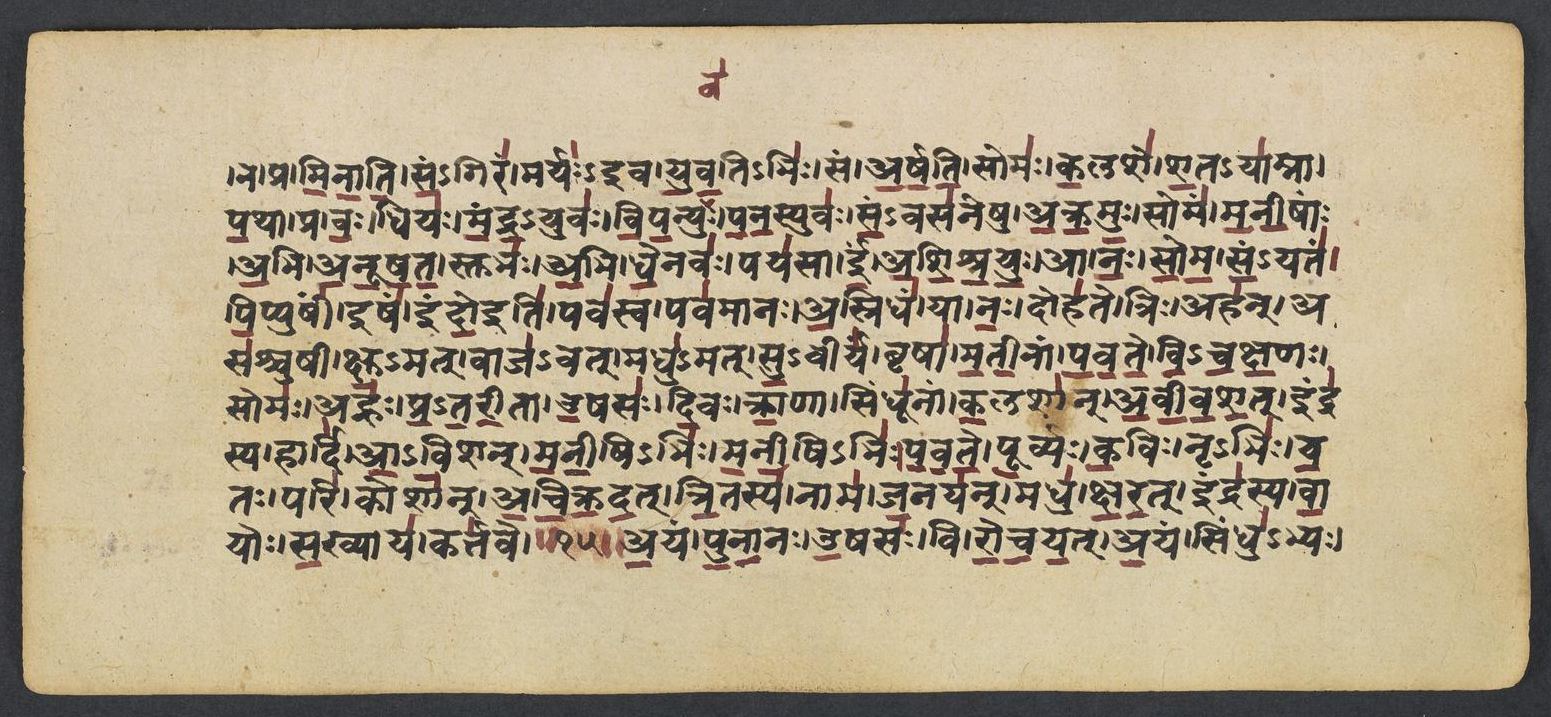
Where on the image
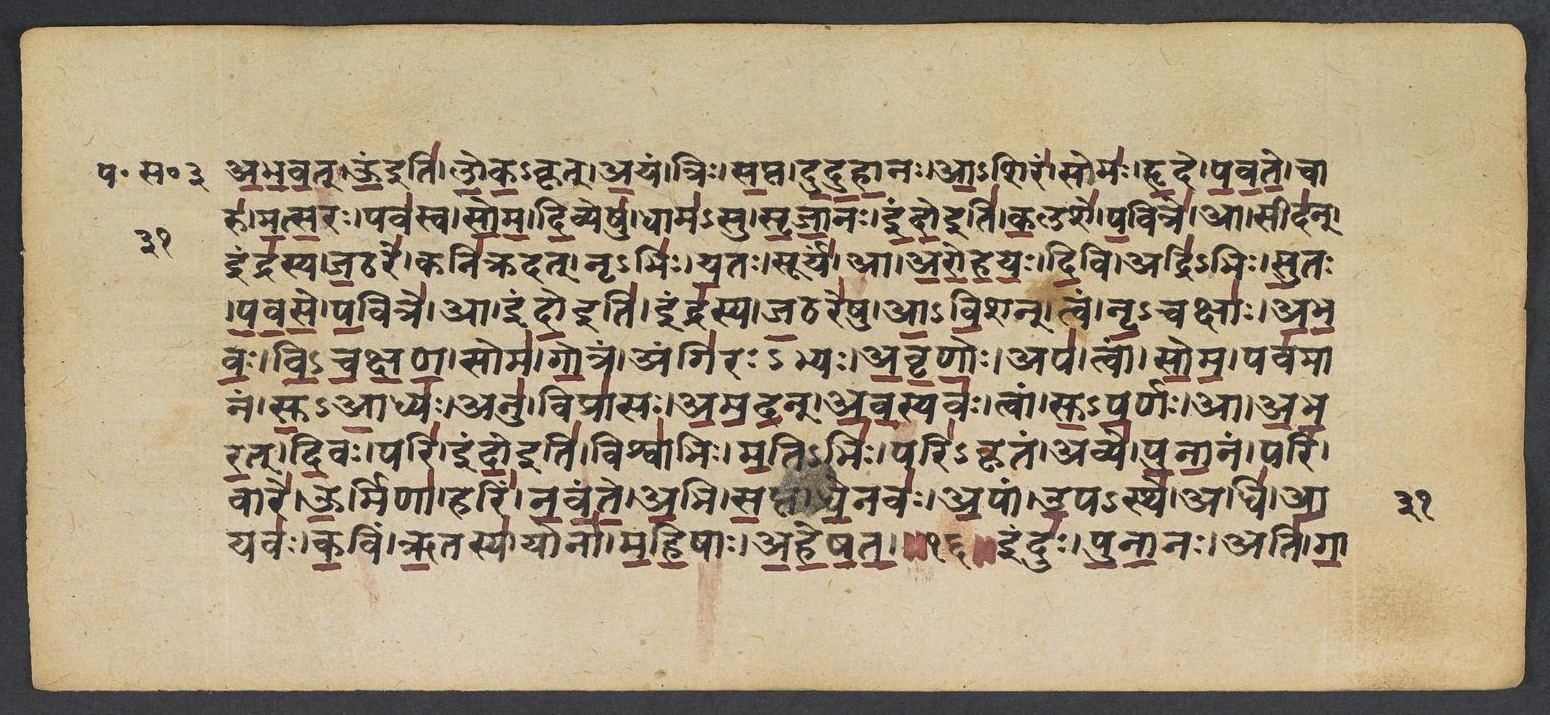
Penn Ms. Coll. 390 Item 41, fol. 714r (numbered 31r by the scribe) (OPenn image 714, lower leaf). Checked on the image: the Rigveda text on this page begins in RV 9.86.16 ‹na pra mināti sam-giram›. The next page with Rigveda text, fol. 714v (numbered 31v by the scribe), begins in RV 9.86.21 ‹abhavat oṃ iti loka-kṛt›. Verses 9.86.16-20 end on this page; 9.86.16 begins on fol. 713v (numbered 30v by the scribe).
16pro a̍yāsī̱d indu̱r indra̍sya niṣkṛ̱taṁ sakhā̱ sakhyu̱r na pra mi̍nāti sa̱ṁgira̍m | marya̍ iva yuva̱tibhi̱ḥ sam a̍rṣati̱ soma̍ḥ ka̱laśe̍ śa̱tayā̍mnā pa̱thā ||
17pra vo̱ dhiyo̍ mandra̱yuvo̍ vipa̱nyuva̍ḥ pana̱syuva̍ḥ sa̱ṁvasa̍neṣv akramuḥ | soma̍m manī̱ṣā a̱bhy a̍nūṣata̱ stubho̱ 'bhi dhe̱nava̱ḥ paya̍sem aśiśrayuḥ ||
18ā na̍ḥ soma sa̱ṁyata̍m pi̱pyuṣī̱m iṣa̱m indo̱ pava̍sva̱ pava̍māno a̱sridha̍m | yā no̱ doha̍te̱ trir aha̱nn asa̍ścuṣī kṣu̱mad vāja̍va̱n madhu̍mat su̱vīrya̍m ||
19vṛṣā̍ matī̱nām pa̍vate vicakṣa̱ṇaḥ somo̱ ahna̍ḥ pratarī̱toṣaso̍ di̱vaḥ | krā̱ṇā sindhū̍nāṁ ka̱laśā̍m̐ avīvaśa̱d indra̍sya̱ hārdy ā̍vi̱śan ma̍nī̱ṣibhi̍ḥ ||
20ma̱nī̱ṣibhi̍ḥ pavate pū̱rvyaḥ ka̱vir nṛbhi̍r ya̱taḥ pari̱ kośā̍m̐ acikradat | tri̱tasya̱ nāma̍ ja̱naya̱n madhu̍ kṣara̱d indra̍sya vā̱yoḥ sa̱khyāya̱ karta̍ve ||
Compare: Padapāṭha (word-by-word text written in the manuscript; Sansknet e-text via GRETIL)
16pro iti | ayāsīt | induḥ | indrasya | niḥ-kṛtam | sakhā | sakhyuḥ | na | pra | mināti | sam-giram | maryaḥ-iva | yuvati-bhiḥ | sam | arṣati | somaḥ | kalaśe | śata-yāmnā | pathā
17pra | vaḥ | dhiyaḥ | mandra-yuvaḥ | vipanyuvaḥ | panasyuvaḥ | sam-vasaneṣu | akramuḥ | somam | manīṣāḥ | abhi | anūṣata | stubhaḥ | abhi | dhenavaḥ | payasā | īm | aśiśrayuḥ
18ā | naḥ | soma | sam-yatam | pipyuṣīm | iṣam | indo iti | pavasva | pavamānaḥ | asridham | yā | naḥ | dohate | triḥ | ahan | asaścuṣī | kṣu-mat | vāja-vat | madhu-mat | su-vīryam
19vṛṣā | matīnām | pavate | vi-cakṣaṇaḥ | somaḥ | ahnaḥ | pra-tarītā | uṣasaḥ | divaḥ | krāṇā | sindhūnām | kalaśān | avīvaśat | indrasya | hārdi | ā-viśan | manīṣi-bhiḥ
20manīṣi-bhiḥ | pavate | pūrvyaḥ | kaviḥ | nṛ-bhiḥ | yataḥ | pari | kośān | acikradat | tritasya | nāma | janayan | madhu | kṣarat | indrasya | vāyoḥ | sakhyāya | kartave
16Indu hath started for Indra's special place and slights not as a Friend the promise of his Friend. Soma speeds onward like a youth to youtlitial maids, and gains the beaker by a course of hundred paths.
17Your songs, exhilarating, tuneful, uttering praise, are come into the places where the people meet. Worshippers have exalted Soma with their hymns, and milch kine have come near to meet him with their milk.
18O Soma, Indu, while they cleanse thee, pour on us accumulateds Plentiful, nutritious food, Which, ceaseless, thrice a day shall yield us hero power enriched with store of nourishment, and strength, and Meath.
19Far-seeing Soma flows, the Steer, the Lord of hymns, the Furtherer of day, of morning, and of heaven. Mixt with the streams he caused the beakers to resound, and with the singers' aid they entered Indra's heart.
20On, with the prudent singers, flows the ancient Sage and guided by the men hath roared about the vats. Producing Trita's name, may he pour forth the meath, that Vâyu and that Indra may become his Friends.
Where on the image
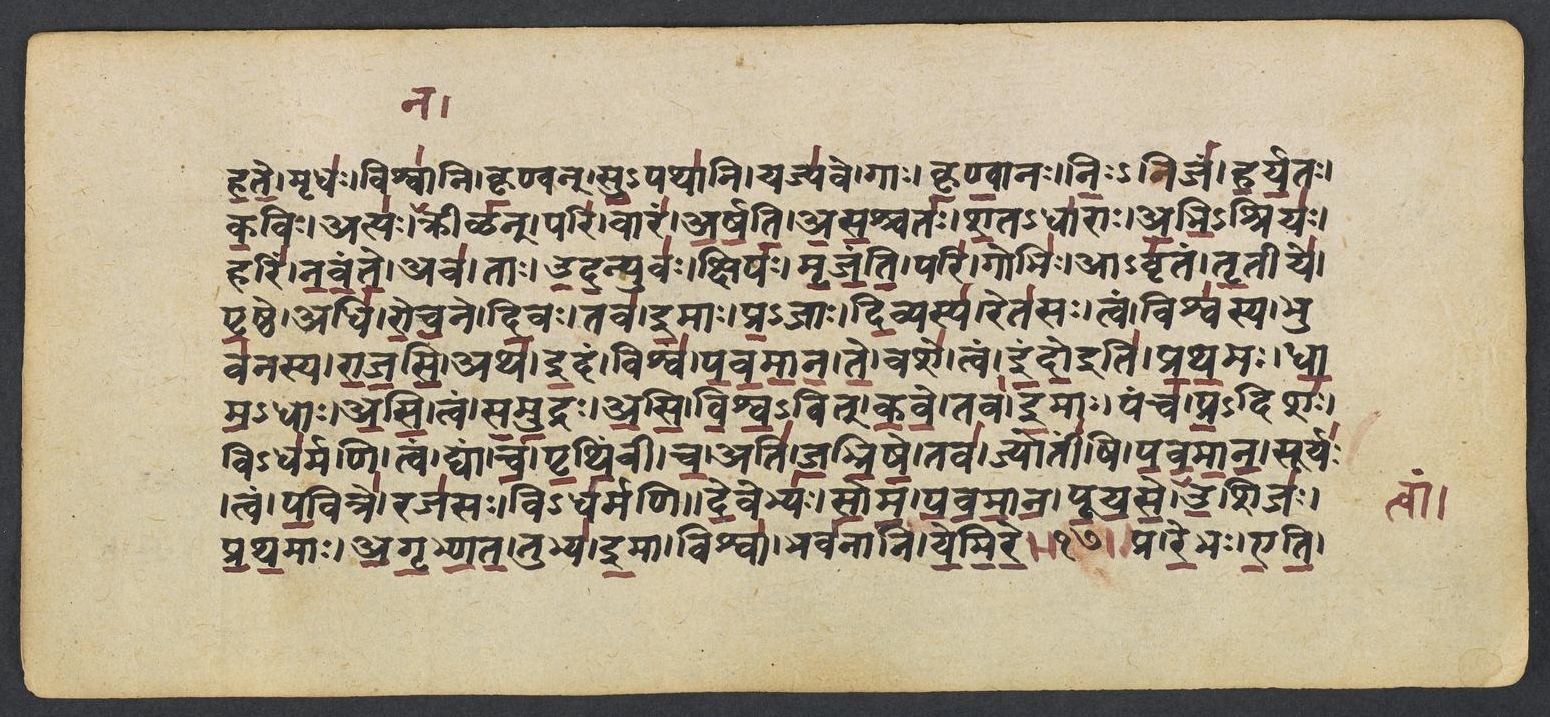
Penn Ms. Coll. 390 Item 41, fol. 714v (numbered 31v by the scribe) (OPenn image 715, upper leaf). Checked on the image: the Rigveda text on this page begins in RV 9.86.21 ‹abhavat oṃ iti loka-kṛt›. The next page with Rigveda text, fol. 715r (numbered 32r by the scribe), begins in RV 9.86.26 ‹-gāhate mṛdhaḥ viśvāni kṛṇvan›. Verses 9.86.21-25 end on this page; 9.86.21 begins on fol. 714r (numbered 31r by the scribe).
21a̱yam pu̍nā̱na u̱ṣaso̱ vi ro̍cayad a̱yaṁ sindhu̍bhyo abhavad u loka̱kṛt | a̱yaṁ triḥ sa̱pta du̍duhā̱na ā̱śira̱ṁ somo̍ hṛ̱de pa̍vate̱ cāru̍ matsa̱raḥ ||
22pava̍sva soma di̱vyeṣu̱ dhāma̍su sṛjā̱na i̍ndo ka̱laśe̍ pa̱vitra̱ ā | sīda̱nn indra̍sya ja̱ṭhare̱ kani̍krada̱n nṛbhi̍r ya̱taḥ sūrya̱m āro̍hayo di̱vi ||
23adri̍bhiḥ su̱taḥ pa̍vase pa̱vitra̱ ām̐ inda̱v indra̍sya ja̱ṭhare̍ṣv āvi̱śan | tvaṁ nṛ̱cakṣā̍ abhavo vicakṣaṇa̱ soma̍ go̱tram aṅgi̍robhyo 'vṛṇo̱r apa̍ ||
24tvāṁ so̍ma̱ pava̍mānaṁ svā̱dhyo 'nu̱ viprā̍so amadann ava̱syava̍ḥ | tvāṁ su̍pa̱rṇa ābha̍rad di̱vas parīndo̱ viśvā̍bhir ma̱tibhi̱ḥ pari̍ṣkṛtam ||
25avye̍ punā̱nam pari̱ vāra̍ ū̱rmiṇā̱ hari̍ṁ navante a̱bhi sa̱pta dhe̱nava̍ḥ | a̱pām u̱pasthe̱ adhy ā̱yava̍ḥ ka̱vim ṛ̱tasya̱ yonā̍ mahi̱ṣā a̍heṣata ||
Compare: Padapāṭha (word-by-word text written in the manuscript; Sansknet e-text via GRETIL)
21ayam | punānaḥ | uṣasaḥ | vi | rocayat | ayam | sindhu-bhyaḥ | abhavat | oṃ iti | loka-kṛt | ayam | triḥ | sapta | duduhānaḥ | āśiram | somaḥ | hṛde | pavate | cāru | matsaraḥ
22pavasva | soma | divyeṣu | dhāma-su | sṛjānaḥ | indo iti | kalaśe | pavitre | ā | sīdan | indrasya | jaṭhare | kanikradat | nṛ-bhiḥ | yataḥ | sūryam | ā | arohayaḥ | divi
23adri-bhiḥ | sutaḥ | pavase | pavitre | ā | indo iti | indrasya | jaṭhareṣu | ā-viśan | tvam | nṛ-cakṣāḥ | abhavaḥ | vi-cakṣaṇa | soma | gotram | aṅgiraḥ-bhyaḥ | avṛṇoḥ | apa
24tvām | soma | pavamānam | su-ādhyaḥ | anu | viprāsaḥ | amadan | avasyavaḥ | tvām | su-parṇaḥ | ā | abharat | divaḥ | pari | indo iti | viśvābhiḥ | mati-bhiḥ | pari-kṛtam
25avye | punānam | pari | vāre | ūrmiṇā | harim | navante | abhi | sapta | dhenavaḥ | apām | upa-sthe | adhi | āyavaḥ | kavim | ṛtasya | yonā | mahiṣāḥ | aheṣata
21He, being purified, hath made the Mornings shine: this, even this is he who gave the rivers room. He made the Three Times Seven pour out the milky flow: Soma, the Cheerer, yields whate'er the heart finds sweet.
22Flow, onward, Soma, in thine own celestial forms, flow, Indu, poured within the beaker and the sieve. Sinking into the throat of Indra with a roar, led by the men thou madest Sûrya mount to heaven.
23Pressed out with stones thou flowest onward to the sieve, O Indu, entering the depths of Indra's throat. Far-sighted Soma, now thou lookest on mankind: thou didst unbar the cowstall for the Angirases.
24In thee, O Soma, while thou purifitedst thee, high-thoughted sages, seeking favour, have rejoiced. Down from the heavens the Falcon brought thee hitherward, even thee, O Indu, thee whom all our hymns adorn.
25Seven Milch-kine glorify the Tawny-coloured One while with his wave in wool he purifies himself. The living men, the mighty, have impelled the Sage into the waters' lap, the place of sacrifice.
Where on the image
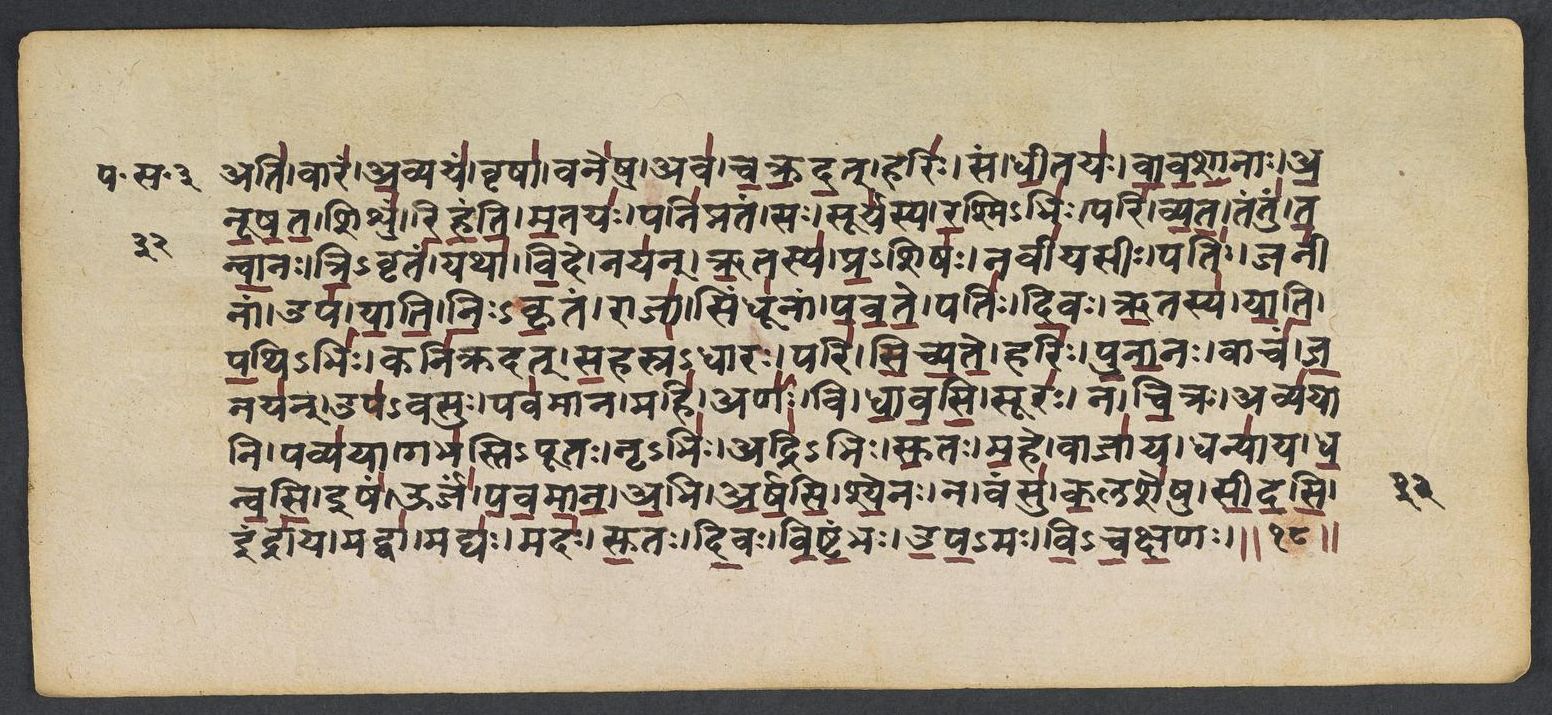
Penn Ms. Coll. 390 Item 41, fol. 715r (numbered 32r by the scribe) (OPenn image 715, lower leaf). Checked on the image: the Rigveda text on this page begins in RV 9.86.26 ‹-gāhate mṛdhaḥ viśvāni kṛṇvan›. The next page with Rigveda text, fol. 715v (numbered 32v by the scribe), begins in RV 9.86.31 ‹ati vāram avyayam vṛṣā›. Verses 9.86.26-30 end on this page; 9.86.26 begins on fol. 714v (numbered 31v by the scribe).
26indu̍ḥ punā̱no ati̍ gāhate̱ mṛdho̱ viśvā̍ni kṛ̱ṇvan su̱pathā̍ni̱ yajya̍ve | gāḥ kṛ̍ṇvā̱no ni̱rṇija̍ṁ harya̱taḥ ka̱vir atyo̱ na krīḻa̱n pari̱ vāra̍m arṣati ||
27a̱sa̱ścata̍ḥ śa̱tadhā̍rā abhi̱śriyo̱ hari̍ṁ nava̱nte 'va̱ tā u̍da̱nyuva̍ḥ | kṣipo̍ mṛjanti̱ pari̱ gobhi̱r āvṛ̍taṁ tṛ̱tīye̍ pṛ̱ṣṭhe adhi̍ roca̱ne di̱vaḥ ||
28tave̱māḥ pra̱jā di̱vyasya̱ reta̍sa̱s tvaṁ viśva̍sya̱ bhuva̍nasya rājasi | athe̱daṁ viśva̍m pavamāna te̱ vaśe̱ tvam i̍ndo pratha̱mo dhā̍ma̱dhā a̍si ||
29tvaṁ sa̍mu̱dro a̍si viśva̱vit ka̍ve̱ tave̱māḥ pañca̍ pra̱diśo̱ vidha̍rmaṇi | tvaṁ dyāṁ ca̍ pṛthi̱vīṁ cāti̍ jabhriṣe̱ tava̱ jyotī̍ṁṣi pavamāna̱ sūrya̍ḥ ||
30tvam pa̱vitre̱ raja̍so̱ vidha̍rmaṇi de̱vebhya̍ḥ soma pavamāna pūyase | tvām u̱śija̍ḥ pratha̱mā a̍gṛbhṇata̱ tubhye̱mā viśvā̱ bhuva̍nāni yemire ||
Compare: Padapāṭha (word-by-word text written in the manuscript; Sansknet e-text via GRETIL)
26induḥ | punānaḥ | ati | gāhate | mṛdhaḥ | viśvāni | kṛṇvan | su-pathāni | yajyave | gāḥ | kṛṇvānaḥ | niḥ-nijam | haryataḥ | kaviḥ | atyaḥ | na | krīḷan | pari | vāram | arṣati
27asaścataḥ | śata-dhārāḥ | abhi-śriyaḥ | harim | navante | ava | tāḥ | udanyuvaḥ | kṣipaḥ | mṛjanti | pari | gobhiḥ | āvṛtam | tṛtīye | pṛṣṭhe | adhi | rocane | divaḥ
28tava | imāḥ | pra-jāḥ | divyasya | retasaḥ | tvam | viśvasya | bhuvanasya | rājasi | atha | idam | viśvam | pavamāna | te | vaśe | tvam | indo iti | prathamaḥ | dhāma-dhāḥ | asi
29tvam | samudraḥ | asi | viśva-vit | kave | tava | imāḥ | pañca | pra-diśaḥ | vi-dharmaṇi | tvam | dyām | ca | pṛthivīm | ca | ati | jabhriṣe | tava | jyotīṃṣi | pavamāna | sūryaḥ
30tvam | pavitre | rajasaḥ | vi-dharmaṇi | devebhyaḥ | soma | pavamāna | pūyase | tvām | uśijaḥ | prathamāḥ | agṛbhṇata | tubhya | imā | viśvā | bhuvanāni | yemire
26Indu, attaining purity, plunges through the foe, making Ilis ways all easy for the pious man. Making the kine his mantle, he, the lovely Sage, runs like a sporting courser onward through the fleece.
27The ceaseless watery fountains with their hundred streams sing, as they hasten near, to him the Golden-hued Him, clad in robes of milk, swift fingers beautify on the third height and in the luminous realm of heaven.
28These are thy generations of celestial seed thou art the Sovran Lord of all the world of life. This universe, O Pavamâna, owns thy sway; thou, Indu, art the first establisher of Law.
29Thou art the sea, O Sage who bringest all to light: under thy Law are these five regions of the world. Thou reachest out beyond the earth, beyond the heavens: thine are the lights, O Pavamâna, thine the Sun.
30Thou in the filter, Soma Pavamâna, art purified to support the region for the Gods. The chief, the longing ones have sought to hold thee fast, and all these living creatures have been turned to thee.
Where on the image
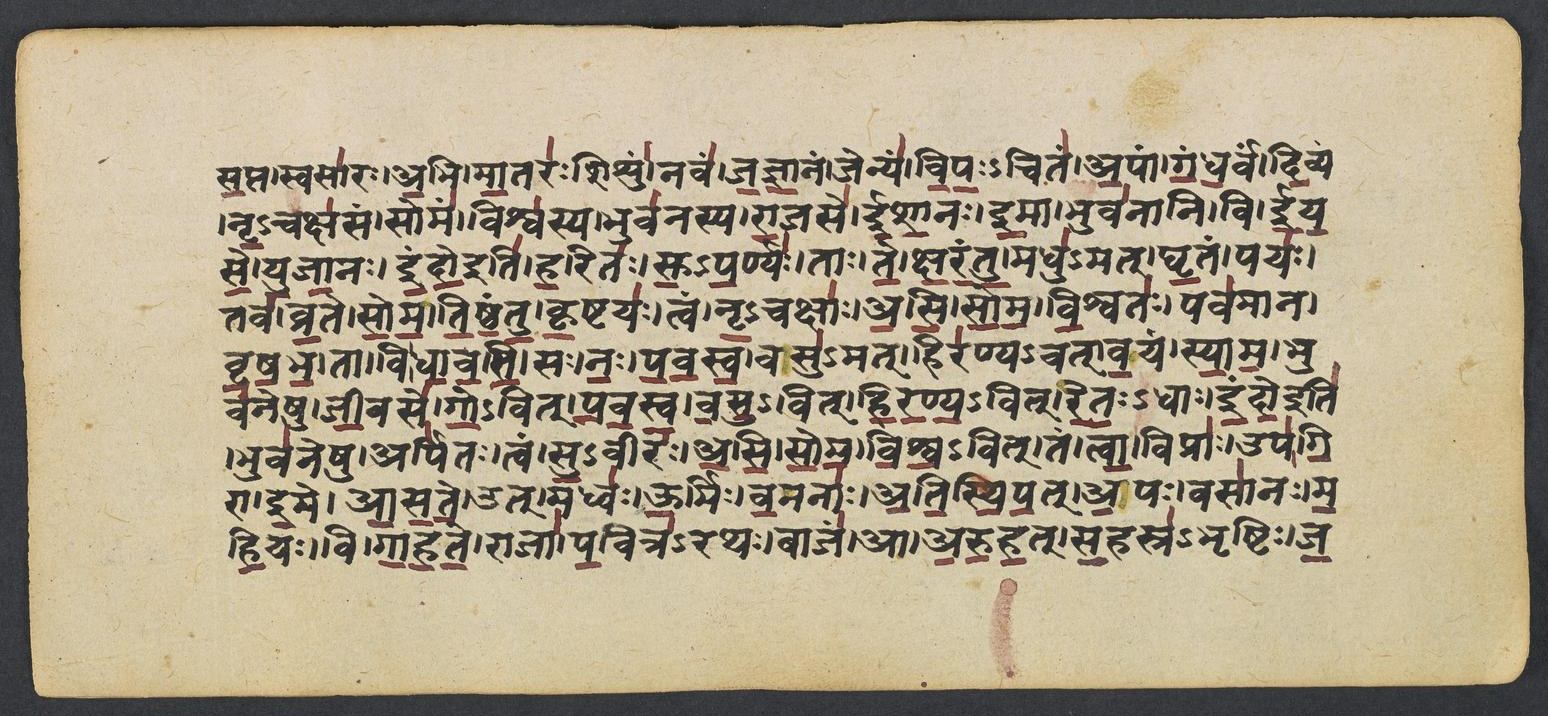
Penn Ms. Coll. 390 Item 41, fol. 715v (numbered 32v by the scribe) (OPenn image 716, upper leaf). Checked on the image: the Rigveda text on this page begins in RV 9.86.31 ‹ati vāram avyayam vṛṣā›. The next page with Rigveda text, fol. 716r (numbered 33r by the scribe), begins in RV 9.86.36 ‹sapta svasāraḥ abhi mātaraḥ›. Verses 9.86.31-35 end on this page; 9.86.31 begins on fol. 715r (numbered 32r by the scribe).
31pra re̱bha e̱ty ati̱ vāra̍m a̱vyaya̱ṁ vṛṣā̱ vane̱ṣv ava̍ cakrada̱d dhari̍ḥ | saṁ dhī̱tayo̍ vāvaśā̱nā a̍nūṣata̱ śiśu̍ṁ rihanti ma̱taya̱ḥ pani̍pnatam ||
32sa sūrya̍sya ra̱śmibhi̱ḥ pari̍ vyata̱ tantu̍ṁ tanvā̱nas tri̱vṛta̱ṁ yathā̍ vi̱de | naya̍nn ṛ̱tasya̍ pra̱śiṣo̱ navī̍yasī̱ḥ pati̱r janī̍nā̱m upa̍ yāti niṣkṛ̱tam ||
33rājā̱ sindhū̍nām pavate̱ pati̍r di̱va ṛ̱tasya̍ yāti pa̱thibhi̱ḥ kani̍kradat | sa̱hasra̍dhāra̱ḥ pari̍ ṣicyate̱ hari̍ḥ punā̱no vāca̍ṁ ja̱naya̱nn upā̍vasuḥ ||
34pava̍māna̱ mahy arṇo̱ vi dhā̍vasi̱ sūro̱ na ci̱tro avya̍yāni̱ pavya̍yā | gabha̍stipūto̱ nṛbhi̱r adri̍bhiḥ su̱to ma̱he vājā̍ya̱ dhanyā̍ya dhanvasi ||
35iṣa̱m ūrja̍m pavamānā̱bhy a̍rṣasi śye̱no na vaṁsu̍ ka̱laśe̍ṣu sīdasi | indrā̍ya̱ madvā̱ madyo̱ mada̍ḥ su̱to di̱vo vi̍ṣṭa̱mbha u̍pa̱mo vi̍cakṣa̱ṇaḥ ||
Compare: Padapāṭha (word-by-word text written in the manuscript; Sansknet e-text via GRETIL)
31pra | rebhaḥ | eti | ati | vāram | avyayam | vṛṣā | vaneṣu | ava | cakradat | hariḥ | sam | dhītayaḥ | vāvaśānāḥ | anūṣata | śiśum | rihanti | matayaḥ | panipnatam
32saḥ | sūryasya | raśmi-bhiḥ | pari | vyata | tantum | tanvānaḥ | tri-vṛtam | yathā | vide | nayan | ṛtasya | pra-śiṣaḥ | navīyasīḥ | patiḥ | janīnām | upa | yāti | niḥ-kṛtam
33rājā | sindhūnām | pavate | patiḥ | divaḥ | ṛtasya | yāti | pathi-bhiḥ | kanikradat | sahasra-dhāraḥ | pari | sicyate | hariḥ | punānaḥ | vācam | janayan | upa-vasuḥ
34pavamāna | mahi | arṇaḥ | vi | dhāvasi | sūraḥ | na | citraḥ | avyayāni | pavyayā | gabhasti-pūtaḥ | nṛ-bhiḥ | adri-bhiḥ | sutaḥ | mahe | vājāya | dhanyāya | dhanvasi
35iṣam | ūrjam | pavamāna | abhi | arṣasi | śyenaḥ | na | vaṃsu | kalaśeṣu | sīdasi | indrāya | madvā | madyaḥ | madaḥ | sutaḥ | divaḥ | viṣṭambhaḥ | upamaḥ | vi-cakṣaṇaḥ
31Onward the Singer travels o'er the fleecy sieve. the Tawny Steer hath bellowed in the wooden vats. Hymns have been sung aloud in resonant harmony, and holy songs kiss him, the Child who claims our praise.
32He hath assumed the rays of Sûrya for his robe, spinning, as he knows how, the triply-twisted thread. He, guiding to the newest rules of Holy Law, comes as the Women's Consort to the special place.
33On flows the King of rivers and the Lord of heaven: he follows with a shout the paths of Holy Law. The Golden-hued is poured forth, with his hundred streams, Wealth-bringer, lifting up his voice while purified.
34Fain to be cleansed, thou, Pavamâna, pourest out, like wondrous Sûrya, through the fleece, an ample sea. Purified with the hands, pressed by the men with stones, thou speedest on to mighty booty-bringing war.
35Thou, Pavamâna, sendest food and power in streams. thou sittest in the beakers as a hawk on trees, For Indra poured as cheering juice to make him glad, as nearest and farseeing bearer-up of heaven.
Where on the image
Penn Ms. Coll. 390 Item 41, fol. 716r (numbered 33r by the scribe) (OPenn image 716, lower leaf). Checked on the image: the Rigveda text on this page begins in RV 9.86.36 ‹sapta svasāraḥ abhi mātaraḥ›. The next page with Rigveda text, fol. 716v (numbered 33v by the scribe), begins in RV 9.86.40 ‹-jayati śravaḥ bṛhat›. Verses 9.86.36-39 end on this page.
36sa̱pta svasā̍ro a̱bhi mā̱tara̱ḥ śiśu̱ṁ nava̍ṁ jajñā̱naṁ jenya̍ṁ vipa̱ścita̍m | a̱pāṁ ga̍ndha̱rvaṁ di̱vyaṁ nṛ̱cakṣa̍sa̱ṁ soma̱ṁ viśva̍sya̱ bhuva̍nasya rā̱jase̍ ||
37ī̱śā̱na i̱mā bhuva̍nāni̱ vīya̍se yujā̱na i̍ndo ha̱rita̍ḥ supa̱rṇya̍ḥ | tās te̍ kṣarantu̱ madhu̍mad ghṛ̱tam paya̱s tava̍ vra̱te so̍ma tiṣṭhantu kṛ̱ṣṭaya̍ḥ ||
38tvaṁ nṛ̱cakṣā̍ asi soma vi̱śvata̱ḥ pava̍māna vṛṣabha̱ tā vi dhā̍vasi | sa na̍ḥ pavasva̱ vasu̍ma̱d dhira̍ṇyavad va̱yaṁ syā̍ma̱ bhuva̍neṣu jī̱vase̍ ||
39go̱vit pa̍vasva vasu̱vid dhi̍raṇya̱vid re̍to̱dhā i̍ndo̱ bhuva̍ne̱ṣv arpi̍taḥ | tvaṁ su̱vīro̍ asi soma viśva̱vit taṁ tvā̱ viprā̱ upa̍ gi̱rema ā̍sate ||
Compare: Padapāṭha (word-by-word text written in the manuscript; Sansknet e-text via GRETIL)
36sapta | svasāraḥ | abhi | mātaraḥ | śiśum | navam | jajñānam | jenyam | vipaḥ-citam | apām | gandharvam | divyam | nṛ-cakṣasam | somam | viśvasya | bhuvanasya | rājase
37īśānaḥ | imā | bhuvanāni | vi | īyase | yujānaḥ | indo iti | haritaḥ | su-parṇyaḥ | tāḥ | te | kṣarantu | madhu-mat | ghṛtam | payaḥ | tava | vrate | soma | tiṣṭhantu | kṛṣṭayaḥ
38tvam | nṛ-cakṣāḥ | asi | soma | viśvataḥ | pavamāna | vṛṣabha | tā | vi | dhāvasi | saḥ | naḥ | pavasva | vasu-mat | hiraṇya-vat | vayam | syāma | bhuvaneṣu | jīvase
39go-vit | pavasva | vasu-vit | hiraṇya-vit | retaḥ-dhāḥ | indo iti | bhuvaneṣu | arpitaḥ | tvam | su-vīraḥ | asi | soma | viśva-vit | tam | tvā | viprāḥ | upa | girā | ume | āsate
36The Sisters Seven, the Mothers, stand around the Babe, the noble, new-born Infant, skilled in holy song, Gandharva of the floods, divine, beholding men, Soma, that he may reign as King of all the world.
37As Sovran Lord thereof thou Passest through these worlds, O Indu, harnessing thy tawny wellwinged Mares. May they pour forth for thee milk and oil rich in sweets: O Soma, let the folk abide in thy decree.
38O Soma, thou beholdest men from every side: O Pavamâna, Steer, thou wanderest through these. Pour out upon us wealth in treasure and in gold: may we have strength to live among the things that be.
39Winner of gold and goods and cattle flow thou on, set as impregner, Indu, mid the worlds of life. Rich in brave men art thou, Soma, who winnest all: these holy singers wait upon thee with the song.
Where on the image
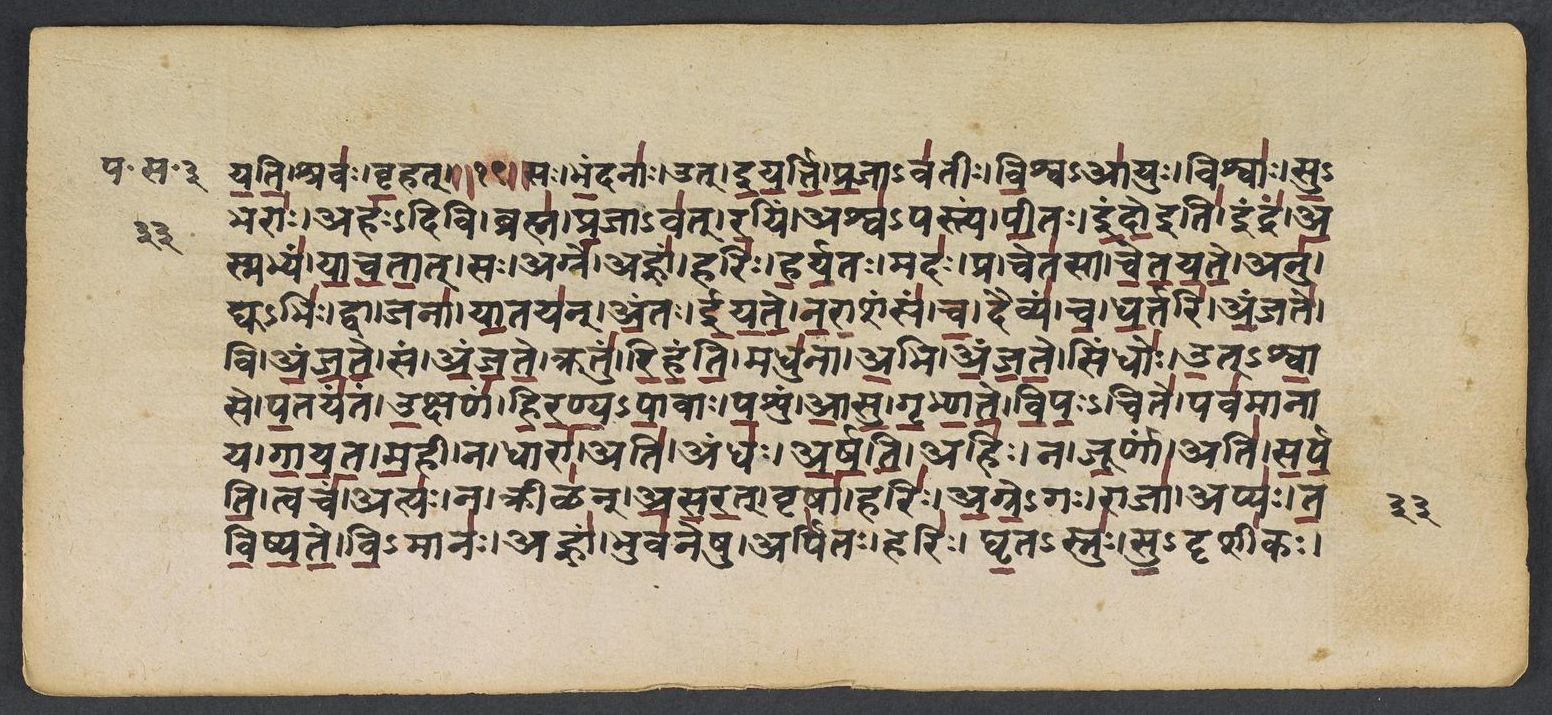
Penn Ms. Coll. 390 Item 41, fol. 716v (numbered 33v by the scribe) (OPenn image 717, upper leaf). Checked on the image: the Rigveda text on this page begins in RV 9.86.40 ‹-jayati śravaḥ bṛhat›. The next page with Rigveda text, fol. 717r (numbered 34r by the scribe), begins in RV 9.86.45 ‹arṇavaḥ jyotiḥ-rathaḥ pavate rāye›. Verses 9.86.40-44 end on this page; 9.86.40 begins on fol. 716r (numbered 33r by the scribe).
40un madhva̍ ū̱rmir va̱nanā̍ atiṣṭhipad a̱po vasā̍no mahi̱ṣo vi gā̍hate | rājā̍ pa̱vitra̍ratho̱ vāja̱m āru̍hat sa̱hasra̍bhṛṣṭir jayati̱ śravo̍ bṛ̱hat ||
41sa bha̱ndanā̱ ud i̍yarti pra̱jāva̍tīr vi̱śvāyu̱r viśvā̍ḥ su̱bharā̱ aha̍rdivi | brahma̍ pra̱jāva̍d ra̱yim aśva̍pastyam pī̱ta i̍nda̱v indra̍m a̱smabhya̍ṁ yācatāt ||
42so agre̱ ahnā̱ṁ hari̍r harya̱to mada̱ḥ pra ceta̍sā cetayate̱ anu̱ dyubhi̍ḥ | dvā janā̍ yā̱taya̍nn a̱ntar ī̍yate̱ narā̍ ca̱ śaṁsa̱ṁ daivya̍ṁ ca dha̱rtari̍ ||
43a̱ñjate̱ vy a̍ñjate̱ sam a̍ñjate̱ kratu̍ṁ rihanti̱ madhu̍nā̱bhy a̍ñjate | sindho̍r ucchvā̱se pa̱taya̍ntam u̱kṣaṇa̍ṁ hiraṇyapā̱vāḥ pa̱śum ā̍su gṛbhṇate ||
44vi̱pa̱ścite̱ pava̍mānāya gāyata ma̱hī na dhārāty andho̍ arṣati | ahi̱r na jū̱rṇām ati̍ sarpati̱ tvaca̱m atyo̱ na krīḻa̍nn asara̱d vṛṣā̱ hari̍ḥ ||
Compare: Padapāṭha (word-by-word text written in the manuscript; Sansknet e-text via GRETIL)
40ut | madhvaḥ | ūrmiḥ | vananāḥ | atisthipat | apaḥ | vasānaḥ | mahiṣaḥ | vi | gāhate | rājā | pavitra-rathaḥ | vājam | ā | aruhat | sahasra-bhṛṣṭiḥ | jayati | śravaḥ | bṛhat
41saḥ | bhandanāḥ | ut | iyarti | prajāvatīḥ | viśva-āyuḥ | viśvāḥ | su-bharāḥ | ahaḥ-divi | brahma | prajāvat | rayim | aśva-pastyam | pītaḥ | indo iti | indram | asmabhyam | yācatāt
42saḥ | agre | ahnām | hariḥ | haryataḥ | madaḥ | pra | cetasā | cetayate | anu | dyu-bhiḥ | dvā | janā | yātayan | antaḥ | īyate | narā | ca | śaṃsam | daivyam | ca | dhartari
43añjate | vi | añjate | sam | añjate | kratum | rihanti | madhunā | abhi | añjate | sindhoḥ | ut-śvāse | patayantam | ukṣaṇam | hiraṇya-pāvāḥ | paśum | āsu | gṛbhṇate
44vipaḥ-cite | pavamānāya | gāyata | mahī | na | dhārā | ati | andhaḥ | arṣati | ahiḥ | na | jūṇām | ati | sarpati | tvacam | atyaḥ | na | krīḷan | asarat | vṛṣā | hariḥ
40The wave of flowing meath hath wakened up desires: the Steer enrobed in milk plunges into the streams. Borne on his chariot-sieve the King hath risen to war, and with a thousand rays hath won him high renown.
41Dear to all life, he sends triumphant praises forth, abundant, bringing offspring, each succeeding day. From Indra crave for us, Indu, when thou art quaffed, the blessing that gives children, wealth that harbours steeds.
42When days begin, the strong juice, lovely, golden-hued, is recognized by wisdom more and more each day, He, stirring both the Races, goes between the two, the bearer of the word of men and word of Gods.
43They balm him, balm him over balm him thoroughly, caress the mighty strength and balm it with the meath. They seize the flying Steer at the stream's breathing-place: cleansing with gold they grasp the Animal herein.
44Sing forth to Pavamâna skilled in holy song: the juice is flowing onward like a mighty stream. He.glideth like a serpent from his ancient skin, and like a playful horse the Tawny Steer hath run.
Where on the image
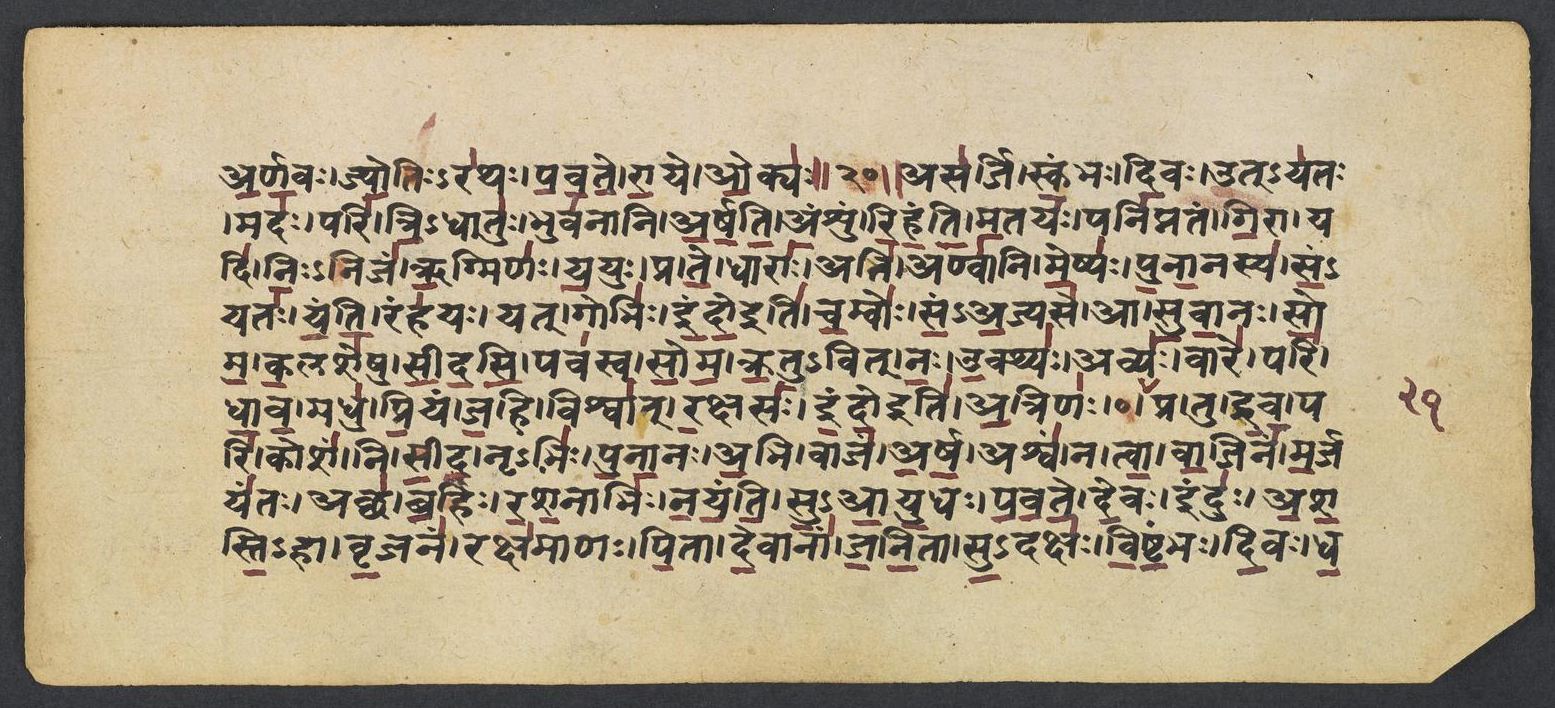
Penn Ms. Coll. 390 Item 41, fol. 717r (numbered 34r by the scribe) (OPenn image 717, lower leaf). Checked on the image: the Rigveda text on this page begins in RV 9.86.45 ‹arṇavaḥ jyotiḥ-rathaḥ pavate rāye›. The next page with Rigveda text, fol. 717v (numbered 34v by the scribe), begins in RV 9.87.2 ‹-dharuṇaḥ pṛthivyāḥ›. Verses 9.86.45-48 end on this page; 9.86.45 begins on fol. 716v (numbered 33v by the scribe).
45a̱gre̱go rājāpya̍s taviṣyate vi̱māno̱ ahnā̱m bhuva̍ne̱ṣv arpi̍taḥ | hari̍r ghṛ̱tasnu̍ḥ su̱dṛśī̍ko arṇa̱vo jyo̱tīra̍thaḥ pavate rā̱ya o̱kya̍ḥ ||
46asa̍rji ska̱mbho di̱va udya̍to̱ mada̱ḥ pari̍ tri̱dhātu̱r bhuva̍nāny arṣati | a̱ṁśuṁ ri̍hanti ma̱taya̱ḥ pani̍pnataṁ gi̱rā yadi̍ ni̱rṇija̍m ṛ̱gmiṇo̍ ya̱yuḥ ||
47pra te̱ dhārā̱ aty aṇvā̍ni me̱ṣya̍ḥ punā̱nasya̍ sa̱ṁyato̍ yanti̱ raṁha̍yaḥ | yad gobhi̍r indo ca̱mvo̍ḥ sama̱jyasa̱ ā su̍vā̱naḥ so̍ma ka̱laśe̍ṣu sīdasi ||
48pava̍sva soma kratu̱vin na̍ u̱kthyo 'vyo̱ vāre̱ pari̍ dhāva̱ madhu̍ pri̱yam | ja̱hi viśvā̍n ra̱kṣasa̍ indo a̱triṇo̍ bṛ̱had va̍dema vi̱dathe̍ su̱vīrā̍ḥ ||
Compare: Padapāṭha (word-by-word text written in the manuscript; Sansknet e-text via GRETIL)
45agre-gaḥ | rājā | āpyaḥ | taviṣyate | vi-mānaḥ | ahnām | bhuvaneṣu | arpitaḥ | hariḥ | ghṛta-snuḥ | su-dṛśīkaḥ | arṇavaḥ | jyotiḥ-rathaḥ | pavate | rāye | okyaḥ
46asarji | skambhaḥ | divaḥ | ut-yataḥ | madaḥ | pari | tri-dhātuḥ | bhuvanāni | arṣati | aṃśum | rihanti | matayaḥ | panipnatam | girā | yadi | niḥ-nijam | ṛgmiṇaḥ | yayuḥ
47pra | te | dhārāḥ | ati | aṇvāni | meṣyaḥ | punānasya | sam-yataḥ | yanti | raṃhayaḥ | yat | go-bhiḥ | indo iti | camvoḥ | sam-ajyase | ā | suvānaḥ | soma | kalaśeṣu | sīdasi
48pavasva | soma | kratu-vit | naḥ | ukthyaḥ | avyaḥ | vāre | pari | dhāva | madhu | priyam | jahi | viśvān | rakṣasaḥ | indo iti | atriṇaḥ | bṛhat | vadema | vidathe | su-vīrāḥ
45Dweller in floods, King, foremost, he displays his might, set among living things as measurer of days. Distilling oil he flows, fair, billowy, golden-hued, borne on a car of light, sharing one hom-e with wealth.
46Loosed is the heavens! support, the uplifted cheering juice: the triply-mingled draught flows round into the worlds. The holy hymns caress the stalk that claims our praise, when singers have approached his beauteous robe with song.
47Thy streams that flow forth rapidly collected run over the fine fleece of the sheep as thou art cleansed. When, Indu, thou art. balmed with milk within the bowl, thou sinkest in the jars, O Soma, when expressed.
48Winner of' power, flow, Soma, worthy of our laud: run onward to the fleece as well-beloved meath. Destroy, O Indu, all voracious Râkshasas. With brave sons in the assembly let our speech be bold.
Notes
- Sanskrit: Aufrecht's edition (1877) with the Vedic accents, as entered by van Nooten and Holland (GRETIL).
- English: Ralph T. H. Griffith, The Hymns of the Rigveda (1889-1892; 2nd ed. 1896-1897), from the VedaWeb digital text; OCR slips in that text were corrected against the printed 2nd edition (data/sources/rigveda/griffith_errata.json).
- Padapāṭha (edition text): Sansknet e-text via GRETIL (CC BY-NC-SA 4.0).
Cite
Sources
- Source: Penn Ms. Coll. 390 Item 41 (undated (catalogued with Penn's 18th-19th c. Vedic manuscripts)), OPenn, Public Domain Mark + Aufrecht's accented text (GRETIL) + Griffith's English (VedaWeb) (holding institution)
- Critical edition: Aufrecht (1877), accented e-text via GRETIL
← previous · → next · v cycle view · l back to library