Rigveda 9.90: To Soma
Introduction
Rigveda 9.90 is a hymn of 6 verses addressed to Soma. It stands in book (maṇḍala) 9, the hymns to Soma Pavamāna. The Rigveda is the oldest collection of Sanskrit hymns, composed in the second half of the second millennium BCE and handed down orally for many centuries before it was written down.
The manuscript shown is Penn Ms. Coll. 390 Item 41 (University of Pennsylvania), an undated paper manuscript of the padapāṭha (the word-by-word recitation text, in which every word is written separately and compounds are split) of the whole Ṛgveda in Devanāgarī, 884 leaves in fascicles, 7-9 lines to the page, accents in red; this hymn stands on fol. 719r-719v. Each section below gives the verses that end on one page; the page boundaries were read on the images (the opening words of every page), not counted out. Where the manuscript is a padapāṭha (the word-by-word recitation text), the section shows Aufrecht's continuous (saṃhitā) text first and, as the edition text, the padapāṭha of the same verses, which is the form written on the page.
How was this verified? (Provenance)
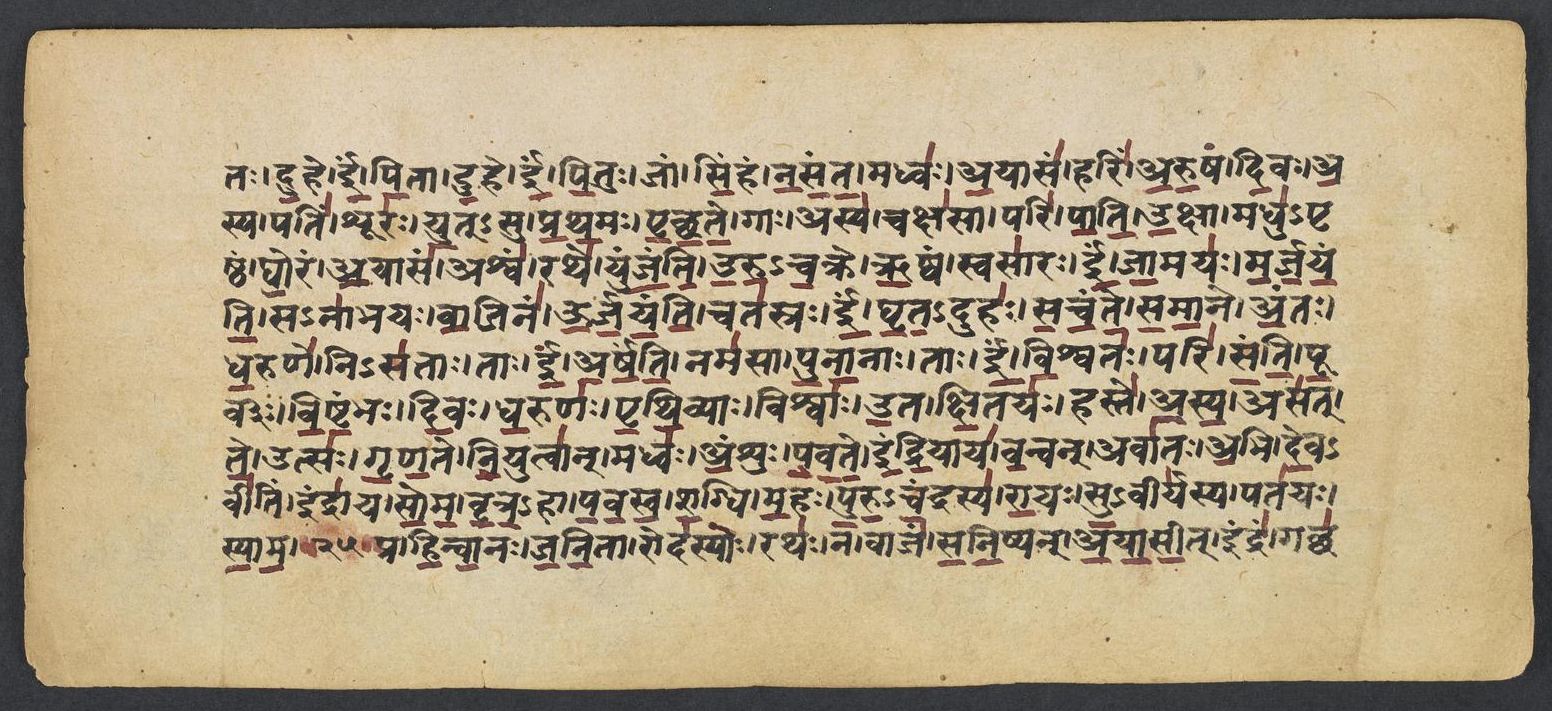
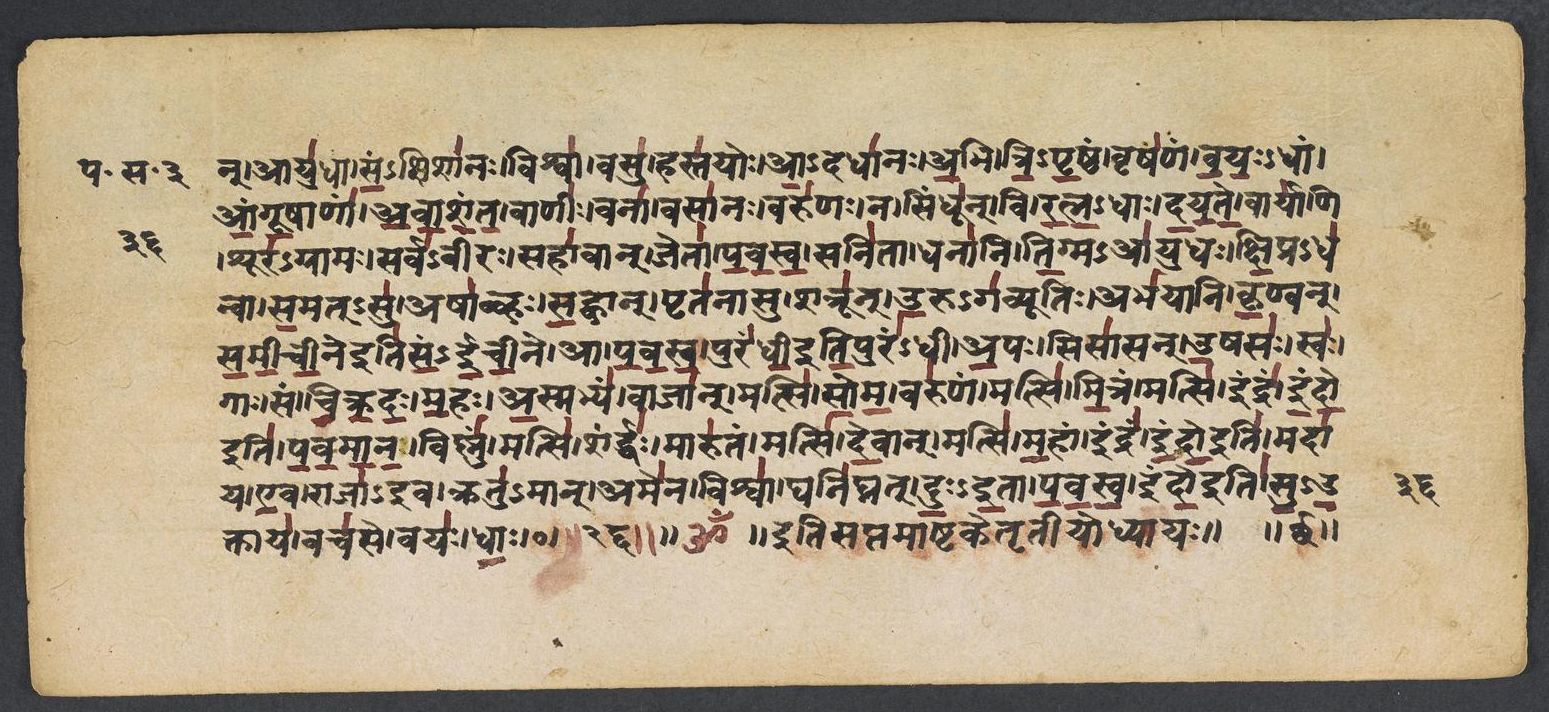
Where on the image
Penn Ms. Coll. 390 Item 41, fol. 719v (numbered 36v by the scribe) (OPenn image 720, upper leaf). Checked on the image: the Rigveda text on this page begins in RV 9.90.1 ‹-gacchan āyudhā sam-śiśānaḥ viśvā›. The next page with Rigveda text, fol. 720r (numbered 37r by the scribe), begins in RV 9.91.1 ‹asarji vakvā rathye yathā›. Verses 9.90.1-6 end on this page; 9.90.1 begins on fol. 719r (numbered 36r by the scribe).
1pra hi̍nvā̱no ja̍ni̱tā roda̍syo̱ ratho̱ na vāja̍ṁ sani̱ṣyann a̍yāsīt | indra̱ṁ gaccha̱nn āyu̍dhā sa̱ṁśiśā̍no̱ viśvā̱ vasu̱ hasta̍yor ā̱dadhā̍naḥ ||
2a̱bhi tri̍pṛ̱ṣṭhaṁ vṛṣa̍ṇaṁ vayo̱dhām ā̍ṅgū̱ṣāṇā̍m avāvaśanta̱ vāṇī̍ḥ | vanā̱ vasā̍no̱ varu̍ṇo̱ na sindhū̱n vi ra̍tna̱dhā da̍yate̱ vāryā̍ṇi ||
3śūra̍grāma̱ḥ sarva̍vīra̱ḥ sahā̍vā̱ñ jetā̍ pavasva̱ sani̍tā̱ dhanā̍ni | ti̱gmāyu̍dhaḥ kṣi̱pradha̍nvā sa̱matsv aṣā̍ḻhaḥ sā̱hvān pṛta̍nāsu̱ śatrū̍n ||
4u̱ruga̍vyūti̱r abha̍yāni kṛ̱ṇvan sa̍mīcī̱ne ā pa̍vasvā̱ pura̍ṁdhī | a̱paḥ siṣā̍sann u̱ṣasa̱ḥ sva1̱̍r gāḥ saṁ ci̍krado ma̱ho a̱smabhya̱ṁ vājā̍n ||
5matsi̍ soma̱ varu̍ṇa̱m matsi̍ mi̱tram matsīndra̍m indo pavamāna̱ viṣṇu̍m | matsi̱ śardho̱ māru̍ta̱m matsi̍ de̱vān matsi̍ ma̱hām indra̍m indo̱ madā̍ya ||
6e̱vā rāje̍va̱ kratu̍mā̱m̐ ame̍na̱ viśvā̱ ghani̍ghnad duri̱tā pa̍vasva | indo̍ sū̱ktāya̱ vaca̍se̱ vayo̍ dhā yū̱yam pā̍ta sva̱stibhi̱ḥ sadā̍ naḥ ||
Compare: Padapāṭha (word-by-word text written in the manuscript; Sansknet e-text via GRETIL)
1pra | hinvānaḥ | janitā | rodasyoḥ | rathaḥ | na | vājam | saniṣyan | cayāsīt | indram | gacchan | āyudhā | sam-śiśānaḥ | viśvā | vasu | hastayoḥ | ādadhānaḥ
2abhi | tri-pṛṣṭham | vṛṣaṇam | vayaḥ-dhām | āṅgūṣāṇām | avāvaśanta | vāṇīḥ | vanā | vasānaḥ | varuṇaḥ | na | sindhūn | vi | ratna-dhāḥ | dayate | vāryāṇi
3śūra-grāmaḥ | sarva-vīraḥ | sahāvān | jetā | pavasva | sanitā | dhanāni | tigma-āyudhaḥ | kṣipra-dhanvā | samat-su | aṣāḷhaḥ | sahvān | pṛtanāsu | śatrūn
4uru-gavyūtiḥ | abhayāni | kṛṇvan | samīcīne itisam-īcīne | ā | pavasva | purandhī itipuram-dhī | apaḥ | sisāsan | uṣasaḥ | svaḥ | gāḥ | sam | cikradaḥ | mahaḥ | asmabhyam | vājān
5matsi | soma | varuṇam | matsi | mitram | matsi | indram | indo iti | pavamāna | viṣṇum | matsi | śardhaḥ | mārutam | matsi | devān | matsi | mahām | indram | indo iti | madāya
6eva | rājā-iva | kratu-mān | amena | viśvā | ghanighnat | duḥ-itā | pavasva | indo iti | su-uktāya | vacase | vayaḥ | dhāḥ | yūyam | pāta | svasti-bhiḥ | sadā | naḥ
1URGED On, the Father of the Earth and Heaven hath gone forth like a car to gather booty, Going to Indra, sharpening his weapons, and in his hand containing every treasure.
2To him the tones of sacred song have sounded, Steer of the triple height, the Life-bestower. Dwelling in wood as Varuṇa in rivers, lavishing treasure he distributes blessings
3Great Conqueror, warnor-girt, Lord of all heroes, flow on thy way as he who winneth riches; With sharpened. arms, with swift bow, never vanquished in battle, vanquishing in fight the foemen.
4Giving security, Lord of wide dominion, send us both earth and heaven with all their fulness. Striving to win the Dawns, the light, the waters, and cattle, call to us abundant vigour.
5O Soma, gladden Varuṇa and Mitra; cheer, Indu Pavamâna! Indra, Vishṇu. Cheer thou the Gods, the Company of Maruts: Indu, cheer mighty Indra to rejoicing.
6Thus like a wise and potent King flow onward, destroying with thy vigour all misfortunes. For our well-spoken hymn give life, O Indu. Do ye preserve us evermore with blessings.
Notes
- Sanskrit: Aufrecht's edition (1877) with the Vedic accents, as entered by van Nooten and Holland (GRETIL).
- English: Ralph T. H. Griffith, The Hymns of the Rigveda (1889-1892; 2nd ed. 1896-1897), from the VedaWeb digital text; OCR slips in that text were corrected against the printed 2nd edition (data/sources/rigveda/griffith_errata.json).
- Padapāṭha (edition text): Sansknet e-text via GRETIL (CC BY-NC-SA 4.0).
Cite
Sources
- Source: Penn Ms. Coll. 390 Item 41 (undated (catalogued with Penn's 18th-19th c. Vedic manuscripts)), OPenn, Public Domain Mark + Aufrecht's accented text (GRETIL) + Griffith's English (VedaWeb) (holding institution)
- Critical edition: Aufrecht (1877), accented e-text via GRETIL
← previous · → next · v cycle view · l back to library