Sanchuniathon and Philo of Byblos: Porphyry's testimony and Philo's preface (Eusebius, Praeparatio evangelica 1.9.20-30)
Introduction
Philo of Byblos, a Phoenician grammarian writing in Greek around 100 AD, claimed to have translated the Phoenician History of Sanchuniathon of Berytus, a priestly writer said to have lived before the Trojan War, who drew on the city records and the temple inscriptions of Phoenicia and on the writings of Taautus (Thoth). Philo's work survives only in the long quotations that Eusebius of Caesarea copied into book 1 of his Preparation for the Gospel (c. 313 AD), taken partly through the philosopher Porphyry. It is the fullest account of Phoenician myth in Greek, and since the discovery of the Ugaritic tablets (14th-13th c. BCE) several of its gods and stories, such as El, Dagon, the succession of divine kings and the castration of the sky god, are known to go back to Bronze Age Canaan.
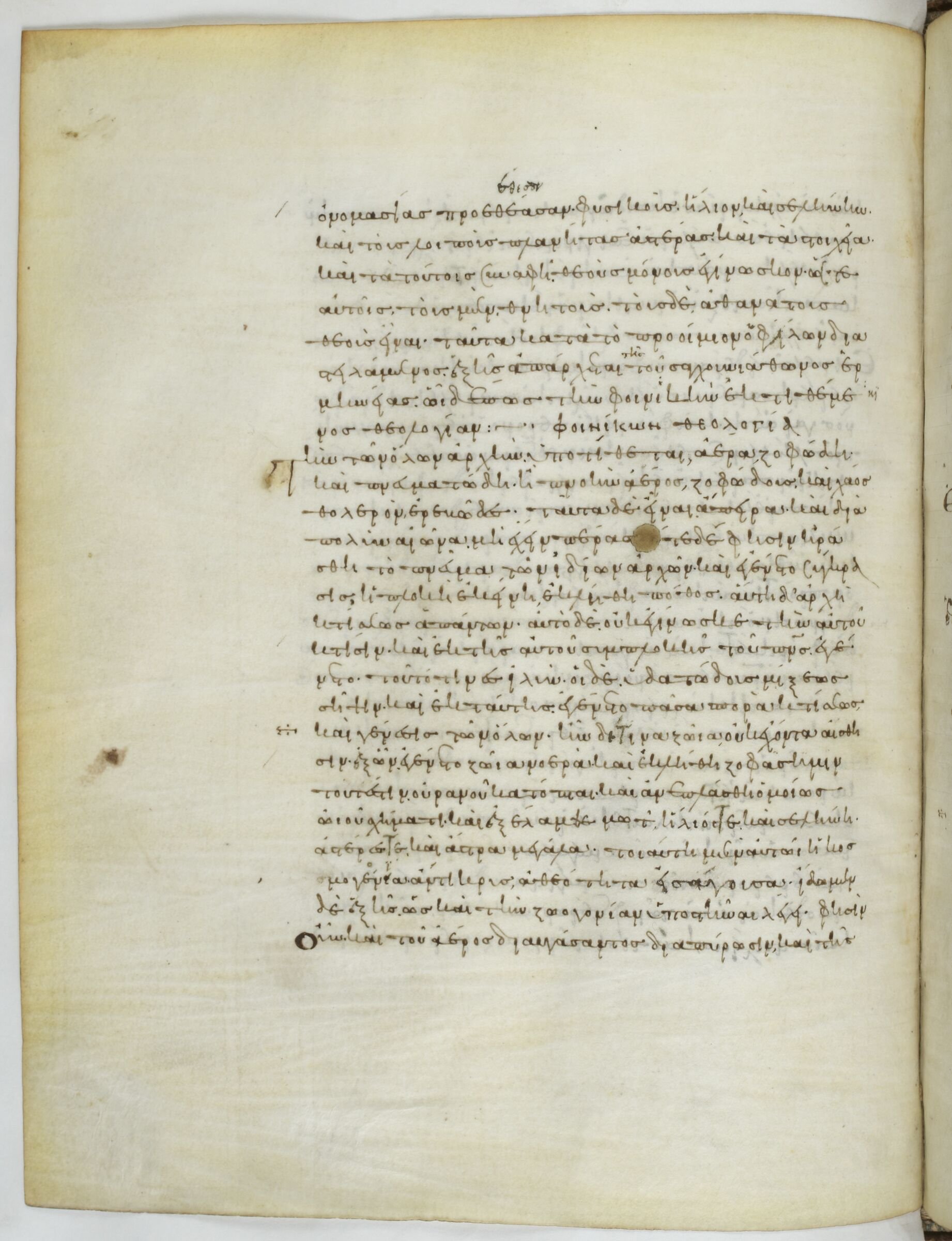
The manuscript shown is Paris, Bibliothèque nationale de France, grec 451, written in 914 AD by the scribe Baanes for Arethas, archbishop of Caesarea in Cappadocia; it is the oldest manuscript of books 1-5 of the Preparation. The passage runs from fol. 204v to fol. 213v. Each section is one of Dindorf's numbered sections and points at the page(s) that carry it; the page breaks were read on the images and are recorded in each note.
This entry covers sections 1.9.20 to 1.9.30, on fols. 204v to 206v.
How was this verified? (Provenance)
Where on the image
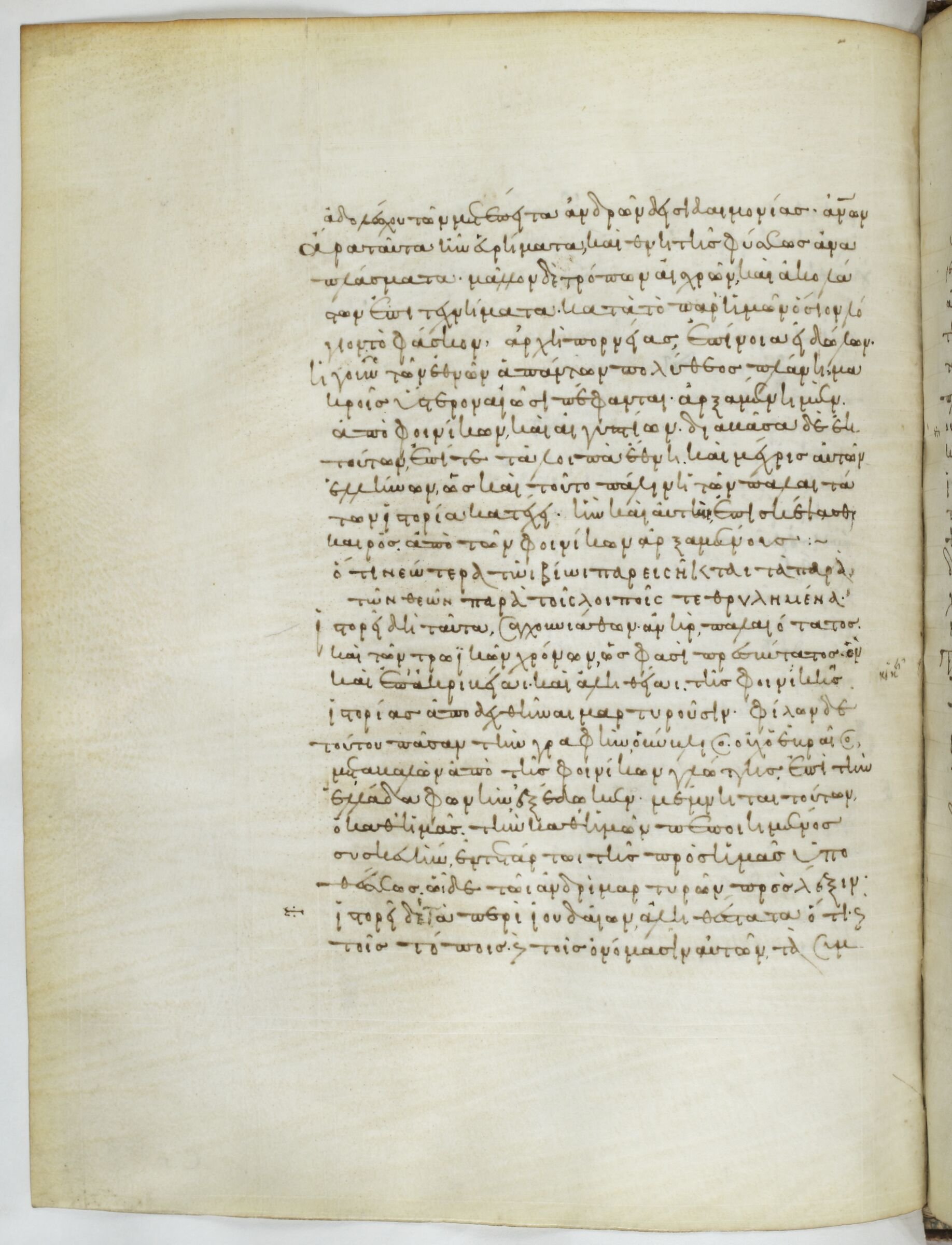
1.9.20 is on fol. 204v. Fol. 204v: in the lower half, after a heading in majuscule 'ὅτι νεώτερα τῷ βίῳ παρεισῆκται τὰ παρὰ τῶν θεῶν παρὰ τοῖς λοιποῖς τεθρυλημένα', 1.9.20 opens with a large initial 'Ἱστορεῖ δὲ ταῦτα Σαγχουνιάθων, ἀνὴρ παλαιότατος'; 1.9.21 begins near the foot, marked ÷ in the margin, 'ἱστορεῖ δὲ τὰ περὶ Ἰουδαίων ἀληθέστατα'; the page ends 'τὰ συμ-'. Checked on the image. Viewer: https://gallica.bnf.fr/ark:/12148/btv1b84701396/f414.item
9.20Ἱστορεῖ δὲ ταῦτα Σαγχουνιάθων, ἀνὴρ παλαίτατος καὶ τῶν Τρωϊκῶν χρόνων, ὥς φασι, πρεσβύτερος, ὃν καὶ ἐπ’ ἀκριβείᾳ καὶ ἀληθείᾳ τῆς Φοινικικῆς ἱστορίας ἀποδεχθῆναι μαρτυροῦσι. Φίλων δὲ τούτου πᾶσαν τὴν συγγραφὴν ὁ Βύβλιος, οὐχ ὁ Ἑβραῖος, μεταβαλὼν ἀπὸ τῆς Φοινίκων γλώττης ἐπὶ τὴν Ἑλλάδα φωνὴν ἐξέδωκε. μέμνηται τούτων ὁ καθ’ ἡμᾶς τὴν καθ’ ἡμῶν πεποιημένος συσκευὴν ἐν τετάρτῳ τῆς πρὸς ἡμᾶς ὑποθέσεως, ὧδε τῷ ἀνδρὶ μαρτυρῶν πρὸς λέξιν
9.20Now the historian of this subject is Sanchuniathon, an author of great antiquity, and older, as they say, than the Trojan times, one whom they testify to have been approved for the accuracy and truth of his Phoenician History. Philo of Byblos, not the Hebrew, translated his whole work from the Phoenician language into the Greek, and published it. The author in our own day of the compilation against us mentions these things in the fourth book of his treatise Against the Christians, where he bears the following testimony to Sanchuniathon, word for word:
Where on the image
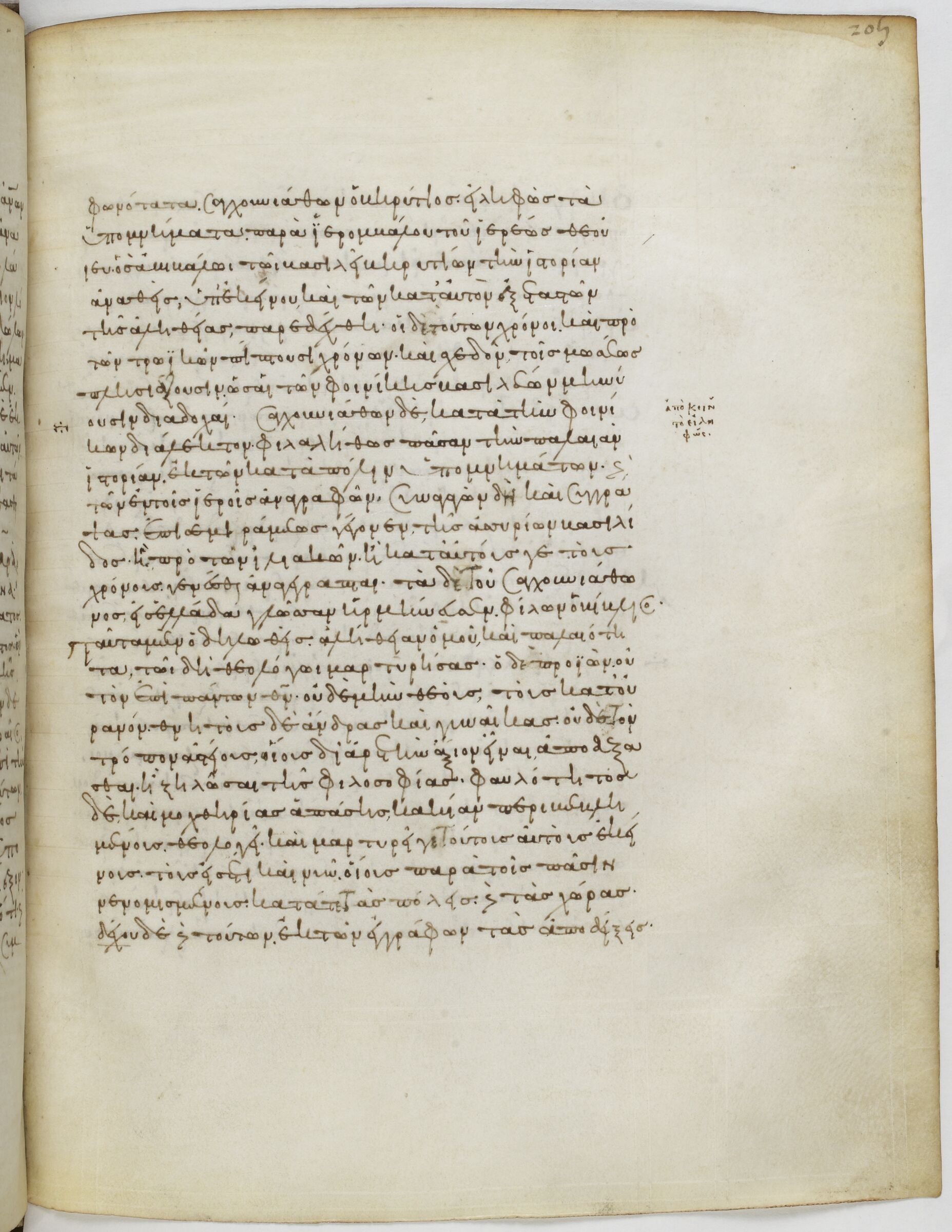
1.9.21 runs from fol. 204v to fol. 205r. Fol. 204v: in the lower half, after a heading in majuscule 'ὅτι νεώτερα τῷ βίῳ παρεισῆκται τὰ παρὰ τῶν θεῶν παρὰ τοῖς λοιποῖς τεθρυλημένα', 1.9.20 opens with a large initial 'Ἱστορεῖ δὲ ταῦτα Σαγχουνιάθων, ἀνὴρ παλαιότατος'; 1.9.21 begins near the foot, marked ÷ in the margin, 'ἱστορεῖ δὲ τὰ περὶ Ἰουδαίων ἀληθέστατα'; the page ends 'τὰ συμ-'. Fol. 205r: begins '-φωνότατα, Σαγχουνιάθων ὁ Βηρύτιος, εἰληφὼς τὰ ὑπομνήματα παρὰ Ἱερομβάλου' (1.9.21) and ends with the last words of 1.9.22 'δέχου δὲ καὶ τούτων ἐκ τῶν ἐγγράφων τὰς ἀποδείξεις'. Checked on the image. Viewer: https://gallica.bnf.fr/ark:/12148/btv1b84701396/f414.item
9.21“ἱστορεῖ δὲ τὰ περὶ Ἰουδαίων ἀληθέστατα, ὅτι καὶ τοῖς τόποις καὶ τοῖς ὀνόμασιν αὐτῶν τὰ συμφωνότατα, Σαγχουνιάθων ὁ Βηρύτιος, εἰληφὼς τὰ ὑπομνήματα παρὰ Ἱερομβάλου τοῦ ἱερέως θεοῦ τοῦ Ἰευώ· ὃς Ἀβιβάλῳ τῷ βασιλεῖ Βηρυτίων τὴν ἱστορίαν ἀναθεὶς ὑπ’ ἐκείνου καὶ τῶν κατ’ αὐτὸν ἐξεταστῶν τῆς ἀληθείας παρεδέχθη. οἱ δὲ τούτων χρόνοι καὶ πρὸ τῶν Τρωϊκῶν πίπτουσι χρόνων, καὶ σχεδὸν τοῖς Μωσέως πλησιάζουσιν, ὡς αἱ τῶν Φοινίκης βασιλέων μηνύουσι διαδοχαί. Σαγχουνιάθων δὲ κατὰ τὴν Φοινίκων διάλεκτον φιλαλήθως πᾶσαν τὴν παλαιὰν ἱστορίαν ἐκ τῶν κατὰ πόλιν ὑπομνημάτων καὶ τῶν ἐν τοῖς ἱεροῖς ἀναγραφῶν συναγαγὼν δὴ καὶ συγγράψας ἐπὶ Σεμιράμεως γέγονε τῆς Ἀσσυρίων βασιλίδος, ἣ πρὸ τῶν Ἰλιακῶν, ἢ κατ’ αὐτούς γε τοὺς χρόνους γενέσθαι ἀναγέγραπται. τὰ δὲ τοῦ Σαγχουνιάθωνος εἰς Ἑλλάδα γλῶσσαν ἡρμήνευσε Φίλων ὁ Βύβλιος.”
9.21'Of the affairs of the Jews the truest history, because the most in accordance with their places and names, is that of Sanchuniathon of Berytus, who received the records from Hierombalus the priest of the god Ieuo; he dedicated his history to Abibalus king of Berytus, and was approved by him and by the investigators of truth in his time. Now the times of these men fall even before the date of the Trojan war, and approach nearly to the times of Moses, as is shown by the successions of the kings of Phoenicia. And Sanchuniathon, who made a complete collection of ancient history from the records in the various cities and from the registers in the temples, and wrote in the Phoenician language with a love of truth, lived in the reign of Semiramis, the queen of the Assyrians, who is recorded to have lived before the Trojan war or in those very times. And the works of Sanchuniathon were translated into the Greek tongue by Philo of Byblos.'
Where on the image
1.9.22 is on fol. 205r. Fol. 205r: begins '-φωνότατα, Σαγχουνιάθων ὁ Βηρύτιος, εἰληφὼς τὰ ὑπομνήματα παρὰ Ἱερομβάλου' (1.9.21) and ends with the last words of 1.9.22 'δέχου δὲ καὶ τούτων ἐκ τῶν ἐγγράφων τὰς ἀποδείξεις'. Checked on the image. Viewer: https://gallica.bnf.fr/ark:/12148/btv1b84701396/f415.item
9.22Ταῦτα μὲν ὁ δηλωθεὶς, ἀλήθειαν ὁμοῦ καὶ παλαιότητα τῷ δὴ θεολόγῳ μαρτυρήσας. ὁ δὲ προϊὼν, οὐ τὸν ἐπὶ πάντων θεὸν, οὐδὲ μὴν θεοὺς τοὺς κατ’ οὐρανὸν, θνητοὺς δὲ ἄνδρας καὶ γυναῖκας, οὐδὲ τὸν τρόπον ἀστείους, οἴους δι’ ἀρετὴν ἄξιον εἶναι ἀποδέξασθαι ἢ ζηλῶσαι τῆς φιλοσοφίας, φαυλότητος δὲ καὶ μοχθηρίας ἁπάσης κακίαν περιβεβλημένους θεολογεῖ. καὶ μαρτυρεῖ γε τούτους αὐτοὺς ἐκείνους εἶναι, τοὺς εἰσέτι καὶ νῦν θεοὺς παρὰ τοῖς πᾶσι νενομισμένους κατά τε τὰς πόλεις καὶ τὰς χώρας. δέχου δὲ καὶ τούτων ἐκ τῶν ἐγγράφων τὰς ἀποδείξεις.
9.22So wrote the author before mentioned, bearing witness at once to the truthfulness and antiquity of the so-called theologian. But he, as he goes forward, treats as divine not the God who is over all, nor yet the gods in the heaven, but mortal men and women, not even refined in character, such as it would be right to approve for their virtue, or emulate for their love of wisdom, but involved in the dishonour of every kind of vileness and wickedness. He testifies also that these are the very same who are still regarded as gods by all both in the cities and in country districts. But let me give you the proofs of this out of his writings.
Where on the image
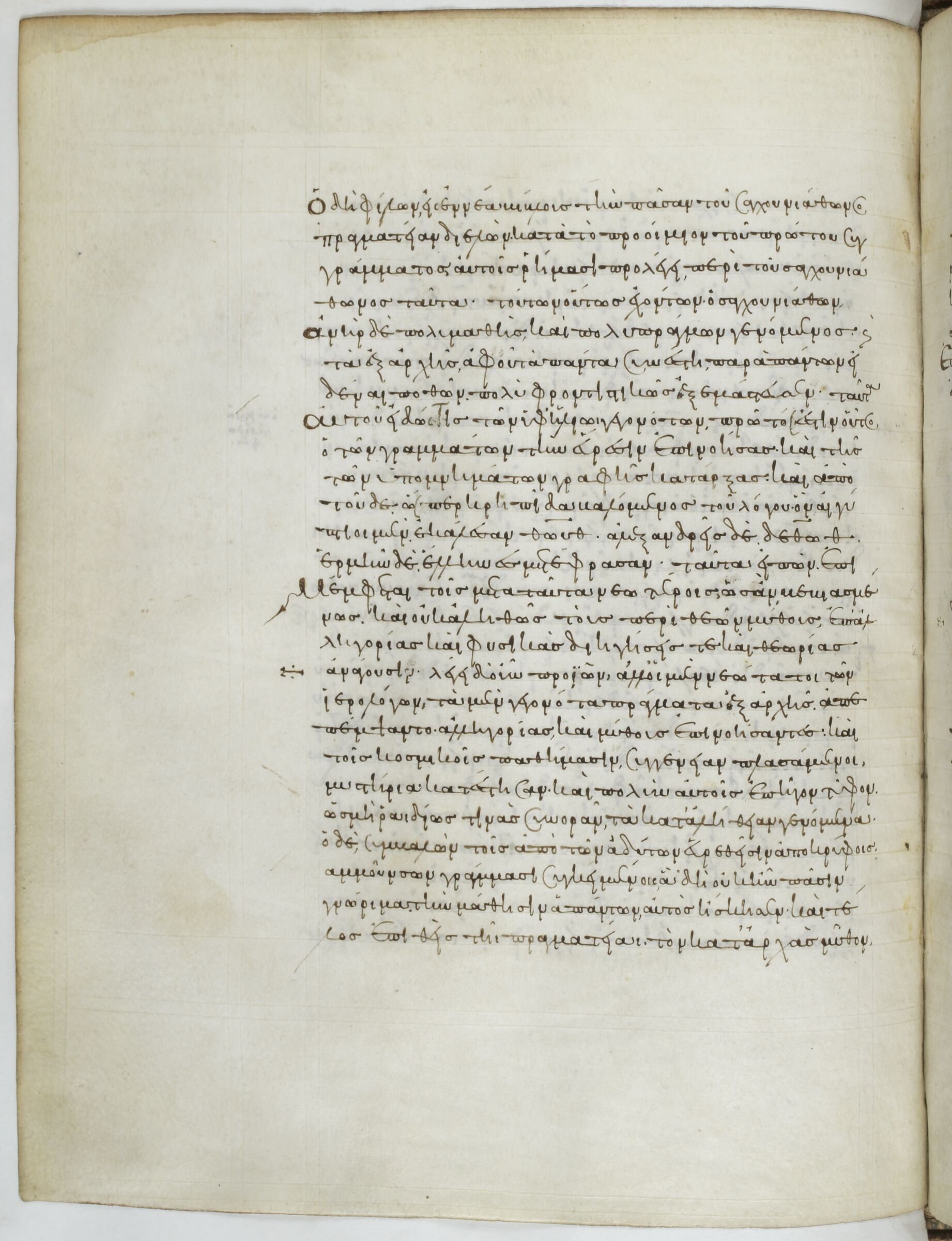
1.9.23 is on fol. 205v. Fol. 205v: begins with a large initial at 1.9.23 'Ὁ δὴ Φίλων εἰς ἐννέα βίβλους τὴν πᾶσαν τοῦ Σαγχουνιάθωνος πραγματείαν' and ends in 1.9.26 '...καὶ τέλος ἐπιθεὶς τῇ πραγματείᾳ τὸν κατ’ ἀρχὰς μῦθον'. Checked on the image. Viewer: https://gallica.bnf.fr/ark:/12148/btv1b84701396/f416.item
9.23ὁ δὴ Φίλων εἰς ἐννέα βίβλους τὴν πᾶσαν τοῦ Σαγχουνιάθωνος πραγματείαν διελὼν, κατὰ τὸ προοίμιον τοῦ πρώτου συγγράμματος αὐτοῖς ῥήμασι προλέγει περὶ τοῦ Σαγχουνιάθωνος ταῦτα
9.23Philo then, having divided the whole work of Sanchuniathon into nine books, in the introduction to the first book makes this preface concerning Sanchuniathon, word for word:
Where on the image
1.9.24 is on fol. 205v. Fol. 205v: begins with a large initial at 1.9.23 'Ὁ δὴ Φίλων εἰς ἐννέα βίβλους τὴν πᾶσαν τοῦ Σαγχουνιάθωνος πραγματείαν' and ends in 1.9.26 '...καὶ τέλος ἐπιθεὶς τῇ πραγματείᾳ τὸν κατ’ ἀρχὰς μῦθον'. Checked on the image. Viewer: https://gallica.bnf.fr/ark:/12148/btv1b84701396/f416.item
9.24“Τούτων οὕτως ἐχόντων ὁ Σαγχουνιάθων, ἀνὴρ πολυμαθὴς καὶ πολυπράγμων γενόμενος, καὶ τὰ ἐξ ἀρχῆς, ἀφ’ οὗ τὰ πάντα συνέστη, παρὰ πάντων εἰδέναι ποθῶν, πολυφροντίστως ἐξεμάστευσε τὰ Τααύτου, εἰδὼς ὅτι τῶν ὑφ’ ἡλίῳ γεγονότων πρῶτός ἐστι Τάαυτος, ὁ τῶν γραμμάτων τὴν εὕρεσιν ἐπινοήσας καὶ τῆς τῶν ὑπομνημάτων γραφῆς κατάρξας, καὶ ἀπὸ τοῦδε ὥσπερ κρηπῖδα βαλόμενος τοῦ λόγου, ὃν Αἰγύπτιοι μὲν ἐκάλεσαν Θωὺθ, Ἀλεξανδρεῖς δὲ Θὼθ, Ἑρμῆν δὲ Ἕλληνες μετέφρασαν.”
9.24'These things being so, Sanchuniathon, who was a man of much learning and great curiosity, and desirous of knowing the earliest history of all nations from the creation of the world, searched out with great care the history of Taautus, knowing that of all men under the sun Taautus was the first who thought of the invention of letters, and began the writing of records: and he laid the foundation, as it were, of his history, by beginning with him, whom the Egyptians called Thöyth, and the Alexandrians Thoth, translated by the Greeks into Hermes.'
Where on the image
1.9.25 is on fol. 205v. Fol. 205v: begins with a large initial at 1.9.23 'Ὁ δὴ Φίλων εἰς ἐννέα βίβλους τὴν πᾶσαν τοῦ Σαγχουνιάθωνος πραγματείαν' and ends in 1.9.26 '...καὶ τέλος ἐπιθεὶς τῇ πραγματείᾳ τὸν κατ’ ἀρχὰς μῦθον'. Checked on the image. Viewer: https://gallica.bnf.fr/ark:/12148/btv1b84701396/f416.item
9.25Ταῦτα εἰπὼν ἐπιμέμφεται τοῖς νεωτέροις τοῖς μετὰ ταῦτα, ὡς ἂν βεβιασμένως καὶ οὐκ ἀληθῶς τοὺς περὶ θεῶν μύθους ἐπ’ ἀλληγορίας καὶ φυσικὰς διηγήσεις τε καὶ θεωρίας ἀνάγουσι· λέγει δ’ οὖν προϊών
9.25After these statements he finds fault with the more recent authors as violently and untruly reducing the legends concerning the gods to allegories and physical explanations and theories; and so he goes on to say:
Where on the image
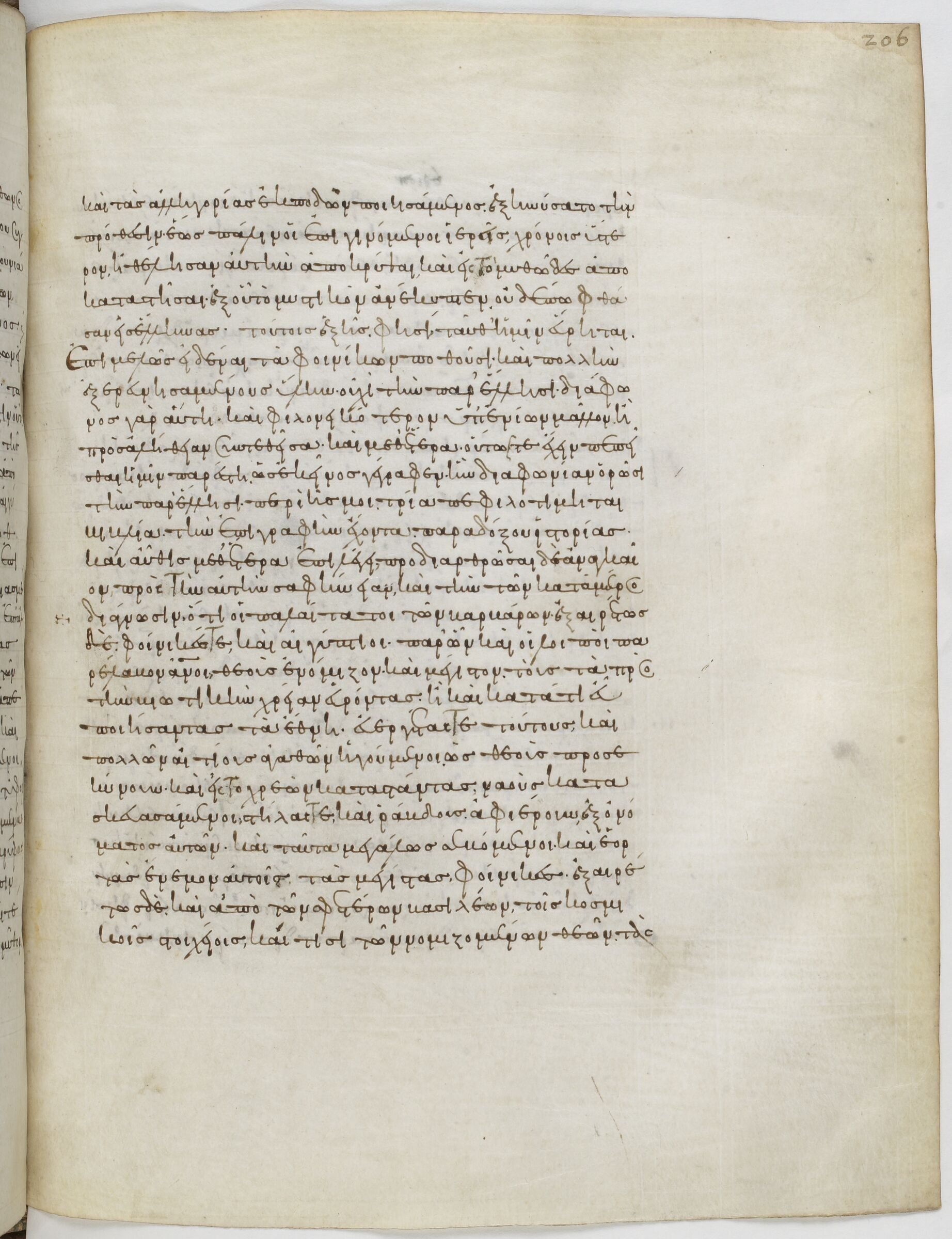
1.9.26 runs from fol. 205v to fol. 206r. Fol. 205v: begins with a large initial at 1.9.23 'Ὁ δὴ Φίλων εἰς ἐννέα βίβλους τὴν πᾶσαν τοῦ Σαγχουνιάθωνος πραγματείαν' and ends in 1.9.26 '...καὶ τέλος ἐπιθεὶς τῇ πραγματείᾳ τὸν κατ’ ἀρχὰς μῦθον'. Fol. 206r: begins 'καὶ τὰς ἀλληγορίας ἐκποδὼν ποιησάμενος, ἐξηνύσατο τὴν πρόθεσιν' (1.9.26) and ends in 1.9.29 '...τοῖς κοσμικοῖς στοιχείοις καί τισι τῶν νομιζομένων θεῶν τὰς'. Checked on the image. Viewer: https://gallica.bnf.fr/ark:/12148/btv1b84701396/f416.item
9.26“Ἀλλ’ οἱ μὲν νεώτατοι τῶν ἱερολόγων τὰ μὲν γεγονότα πράγματα ἐξ ἀρχῆς ἀπεπέμψαντο, ἀλληγορίας δὲ καὶ μύθους ἐπινοήσαντες καὶ τοῖς κοσμικοῖς παθήμασι συγγένειαν πλασάμενοι μυστήρια κατέστησαν, καὶ πολὺν αὐτοῖς ἐπῆγον τῦφον, ὡς μὴ ῥᾳδίως τινὰ συνορᾶν τὰ κατ’ ἀλήθειαν γενόμενα· ὁ δὲ συμβαλὼν τοῖς ἀπὸ τῶν ἀδύτων εὑρεθεῖσιν ἀποκρύφοις Ἀμμουνέων γράμμασι συγκειμένοις, ἃ δὴ οὐκ ἦν πᾶσι γνώριμα, τὴν μάθησιν ἁπάντων αὐτὸς ἤσκησε· καὶ τέλος ἐπιθεὶς τῇ πραγματείᾳ, τὸν κατ’ ἀρχὰς μῦθον καὶ τὰς ἀλληγορίας ἐκποδὼν ποιησάμενος, ἐξηνύσατο τὴν πρόθεσιν, ἕως πάλιν οἱ ἐπιγενόμενοι ἱερεῖς χρόνοις ὕστερον ἠθέλησαν αὐτὴν ἀποκρύψαι, καὶ εἰς τὸ μυθῶδες ἀποκαταστῆσαι· ἐξ οὗ τὸ μυστικὸν ἀνέκυπτεν οὐδέπω φθάσαν εἰς Ἕλληνας.”
9.26'But the most recent of the writers on religion rejected the real events from the beginning, and having invented allegories and myths, and formed a fictitious affinity to the cosmical phenomena, established mysteries, and overlaid them with a cloud of absurdity, so that one cannot easily discern what really occurred: but he having lighted upon the collections of secret writings of the Ammoneans which were discovered in the shrines and of course were not known to all men, applied himself diligently to the study of them all; and when he had completed the investigation, he put aside the original myth and the allegories, and so completed his proposed work; until the priests who followed in later times wished to hide this away again, and to restore the mythical character; from which time mysticism began to rise up, not having previously reached the Greeks.'
Where on the image
1.9.27 is on fol. 206r. Fol. 206r: begins 'καὶ τὰς ἀλληγορίας ἐκποδὼν ποιησάμενος, ἐξηνύσατο τὴν πρόθεσιν' (1.9.26) and ends in 1.9.29 '...τοῖς κοσμικοῖς στοιχείοις καί τισι τῶν νομιζομένων θεῶν τὰς'. Checked on the image. Viewer: https://gallica.bnf.fr/ark:/12148/btv1b84701396/f417.item
9.27Τούτοις ἑξῆς φησιν “Ταῦθ’ ἡμῖν εὕρηται ἐπιμελῶς εἰδέναι τὰ Φοινίκων ποθοῦσι, καὶ πολλὴν ἐξερευνησαμένοις ὕλην, οὐχὶ τὴν παρ’ Ἕλλησι· διάφωνος γὰρ αὕτη καὶ φιλονεικότερον ὑπ’ ἐνίων μᾶλλον ἢ πρὸς ἀλήθειαν συντεθεῖσα.”
9.27Next to this he says: 'These things I have discovered in my anxious desire to know the history of the Phoenicians, and after a thorough investigation of much matter, not that which is found among the Greeks, for that is contradictory, and compiled by some in a contentious spirit rather than with a view to truth.'
Where on the image
1.9.28 is on fol. 206r. Fol. 206r: begins 'καὶ τὰς ἀλληγορίας ἐκποδὼν ποιησάμενος, ἐξηνύσατο τὴν πρόθεσιν' (1.9.26) and ends in 1.9.29 '...τοῖς κοσμικοῖς στοιχείοις καί τισι τῶν νομιζομένων θεῶν τὰς'. Checked on the image. Viewer: https://gallica.bnf.fr/ark:/12148/btv1b84701396/f417.item
9.28Καὶ μεθ’ ἕτερα “Οὕτως τε ἔχειν πεπεῖσθαι ἡμῖν παρέστη ὡς ἐκεῖνος γέγραφε, τὴν διαφωνίαν ὁρῶσι τὴν παρ’ Ἕλλησι. περὶ ἧς μοι τρία πεφιλοτίμηται βιβλία τὴν ἐπιγραφὴν ἔχοντα Παραδόξου ἱστορίας.”
9.28And after other statements: 'And the conviction that the facts were as he has described them came to me, on seeing the disagreement among the Greeks: concerning which I have carefully composed three books bearing the title Paradoxical History.'
Where on the image
1.9.29 runs from fol. 206r to fol. 206v. Fol. 206r: begins 'καὶ τὰς ἀλληγορίας ἐκποδὼν ποιησάμενος, ἐξηνύσατο τὴν πρόθεσιν' (1.9.26) and ends in 1.9.29 '...τοῖς κοσμικοῖς στοιχείοις καί τισι τῶν νομιζομένων θεῶν τὰς'. Fol. 206v: begins 'ὀνομασίας ἐπέθεσαν· φυσικοὺς δὲ ἥλιον καὶ σελήνην' (1.9.29); the last line, with a large initial, starts 1.10.4 'Καὶ τοῦ ἀέρος διαυγάσαντος διὰ πύρωσιν καὶ τῆς'. Checked on the image. Viewer: https://gallica.bnf.fr/ark:/12148/btv1b84701396/f417.item
9.29Καὶ αὖθις μεθ’ ἕτερα ἐπιλέγει “Προδιαρθρῶσαι δὲ ἀναγκαῖον πρὸς τὴν αὖθις σαφήνειαν, καὶ τὴν τῶν κατὰ μέρος διάγνωσιν ὅτι οἱ παλαίτατοι τῶν βαρβάρων, ἐξαιρέτως δὲ Φοίνικές τε καὶ Αἰγύπτιοι, παρ’ ὧν καὶ οἱ λοιποὶ παρέλαβον ἄνθρωποι, θεοὺς ἐνόμιζον μεγίστους τοὺς τὰ πρὸς τὴν βιωτικὴν χρείαν εὑρόντας, ἢ καὶ κατά τι εὖ ποιήσαντας τὰ ἔθνη· εὐεργέτας τε τούτους καὶ πολλῶν αἰτίους ἀγαθῶν ἡγούμενοι ὡς θεοὺς προσεκύνουν, καὶ εἰς τὸ χρεὼν μεταστάντας ναοὺς κατασκευασάμενοι, στήλας τε καὶ ῥάβδους ἀφιέρουν ἐξ ὀνόματος αὐτῶν, καὶ ταῦτα μεγάλως σεβόμενοι, καὶ ἑορτὰς ἔνεμον αὐτοῖς τὰς μεγίστας Φοίνικες· ἐξαιρέτως δὲ καὶ ἀπὸ τῶν σφετέρων βασιλέων τοῖς κοσμικοῖς στοιχείοις καί τισι τῶν νομιζομένων θεῶν τὰς ὀνομασίας ἐπέθεσαν· φυσικοὺς δὲ ἥλιον καὶ σελήνην καὶ τοὺς λοιποὺς πλανήτας ἀστέρας καὶ τὰ στοιχεῖα καὶ τὰ τούτοις συναφῆ θεοὺς μόνους ἐγίνωσκον, ὥστ’ αὐτοῖς τοὺς μὲν θνητοὺς, τοὺς δὲ ἀθανάτους θεοὺς εἶναι.”
9.29And again after other statements he adds: 'But with a view to clearness hereafter, and the determination of particulars, it is necessary to state distinctly beforehand that the most ancient of the barbarians, and especially the Phoenicians and Egyptians, from whom the rest of mankind received their traditions, regarded as the greatest gods those who had discovered the necessaries of life, or in some way done good to the nations. Esteeming these as benefactors and authors of many blessings, they worshipped them also as gods after their death, and built shrines, and consecrated pillars and staves after their names: these the Phoenicians held in great reverence, and assigned to them their greatest festivals. Especially they applied the names of their kings to the elements of the cosmos, and to some of those who were regarded as gods. But they knew no other gods than those of nature, sun, and moon, and the rest of the wandering stars, and the elements and things connected with them, so that some of their gods were mortal and some immortal.'
Where on the image
1.9.30 is on fol. 206v. Fol. 206v: begins 'ὀνομασίας ἐπέθεσαν· φυσικοὺς δὲ ἥλιον καὶ σελήνην' (1.9.29); the last line, with a large initial, starts 1.10.4 'Καὶ τοῦ ἀέρος διαυγάσαντος διὰ πύρωσιν καὶ τῆς'. Checked on the image. Viewer: https://gallica.bnf.fr/ark:/12148/btv1b84701396/f418.item
9.30Ταῦτα κατὰ τὸ προοίμιον ὁ Φίλων διαστειλάμενος ἐξῆς ἀπάρχεται τῆς τοῦ Σαγχουνιάθωνος ἑρμηνείας, ὧδέ πως τὴν Φοινικικὴν ἐκτιθέμενος θεολογίαν
9.30Philo having explained these points in his preface, next begins his interpretation of Sanchuniathon by setting forth the theology of the Phoenicians as follows:
Notes
- Greek: W. Dindorf's Teubner edition (1867), from the First1KGreek digital text, proofread against the printed pages. The manuscript's wording differs from the edition in small details; the Greek shown is the edition, not a transcription of the page.
- English: E. H. Gifford's translation (Oxford, 1903). Where a Greek section begins in the middle of an English sentence, the English is divided at the corresponding clause.
- Asterisks mark a gap that Dindorf indicates in the Greek of 1.10.36; Gifford marks it with dots.
Cite
Sources
- Source: Paris gr. 451 (Arethas codex, 914 AD) via Gallica + Dindorf Greek (First1KGreek, proofread) + Gifford English (1903) (holding institution)
- Critical edition: W. Dindorf, Eusebii Caesariensis opera I (Teubner 1867), First1KGreek, proofread
← previous · → next · v cycle view · l back to library