Romans, Chapter 9
Introduction
This entry meets the strict three-criteria standard of the Theosis Library:
- Manuscript scan: The actual folio of Codex Sinaiticus containing this passage, from the Codex Sinaiticus Project (codexsinaiticus.org). Library folio reference: 264.
- Original text: The Codex Sinaiticus Project's verbatim transcription of the folio shown, letter for letter as the scribe wrote it (no accents, lunate sigma ϲ, nomina sacra such as θϲ for θεός and κϲ for κύριος). Beneath it, for comparison, the reading of Tischendorf's 8th critical edition (1869). Where the two differ, the transcription is what the manuscript actually says.
- English translation: The King James Version (1611), retrieved verbatim from the public-domain bible-api.com endpoint.
How was this verified? (Provenance)
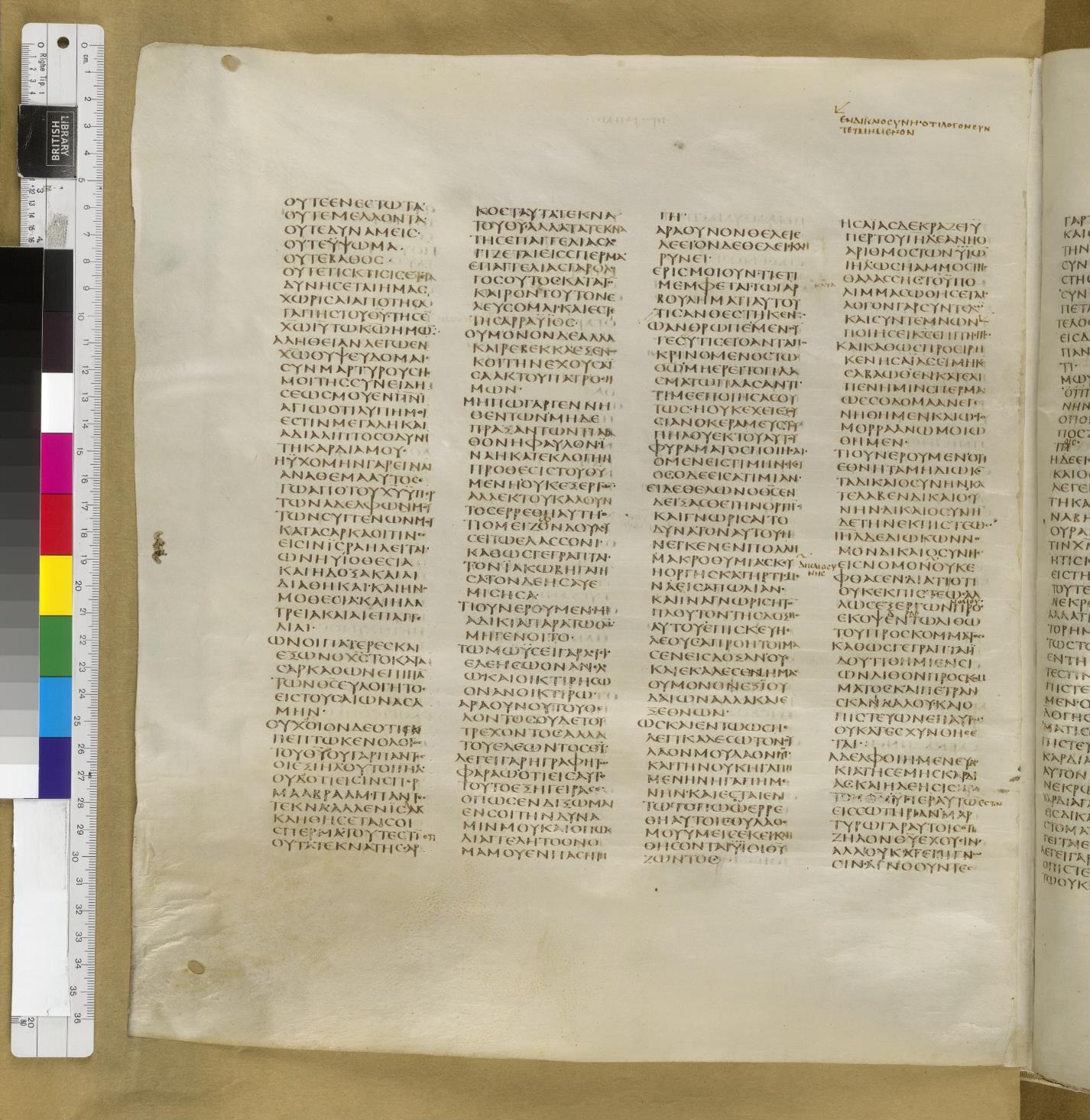
1αληθειαν λεγω εν χω ου ψευδομαι · ϲυνμαρτυρουϲηϲ μοι τηϲ ϲυνειδηϲεωϲ μου εν πνι αγιω 2οτι λυπη μοι εϲτιν μεγαλη και αδιαλιπτοϲ οδυνη τη καρδια μου · 3ηϋχομην γαρ ειναι αναθεμα αυτοϲ εγω απο του χυ ϋπερ των αδελφων μου των ϲυγγενων μου κατα ϲαρκα 4οιτινεϲ ειϲιν ϊϲραηλειται · ων η υϊοθεϲια και η δοξα και αι διαθηκαι · και η νομοθεϲια ˙ και η λατρεια και αι επαγγελιαι · 5ων οι πατερεϲ και εξ ων ο χϲ το κατα ϲαρκα ο ων επι πατων θϲ ευλογητοϲ ειϲ τουϲ αιωναϲ αμην · 6ουχʼ οιον δε οτι εκπεπτωκεν ο λογοϲ του θυ ου γαρ παντεϲ οι εξ ιηλʼ ουτοι ιηλ · 7ουδʼ οτι ειϲιν ϲπερμα αβρααμ · παντεϲ τεκνα · αλλ εν ϊϲακ κληθηϲεται ϲοι ϲπερμα · 8τουτ εϲτι ου τα τεκνα τηϲ ϲαρκοϲ ταυτα τεκνα του θυ · αλλα τα τεκνα τηϲ επαγγελιαϲ λογιζεται ειϲ ϲπερμα ˙
Compare: Tischendorf 8th edition (1869)
1Ἀλήθειαν λέγω ἐν Χριστῷ, οὐ ψεύδομαι, συνμαρτυρούσης μοι τῆς συνειδήσεώς μου ἐν πνεύματι ἁγίῳ, 2ὅτι λύπη μοί ἐστιν μεγάλη καὶ ἀδιάλειπτος ὀδύνη τῇ καρδίᾳ μου. 3ηὐχόμην γὰρ ἀνάθεμα εἶναι αὐτὸς ἐγὼ ἀπὸ τοῦ Χριστοῦ ὑπὲρ τῶν ἀδελφῶν μου τῶν συγγενῶν μου κατὰ σάρκα, 4οἵτινές εἰσιν Ἰσραηλεῖται, ὧν ἡ υἱοθεσία καὶ ἡ δόξα καὶ αἱ διαθῆκαι καὶ ἡ νομοθεσία καὶ ἡ λατρεία καὶ αἱ ἐπαγγελίαι, 5ὧν οἱ πατέρες, καὶ ἐξ ὧν ὁ Χριστὸς τὸ κατὰ σάρκα· ὁ ὢν ἐπὶ πάντων θεὸς εὐλογητὸς εἰς τοὺς αἰῶνας, ἀμήν. 6Οὐχ οἷον δὲ ὅτι ἐκπέπτωκεν ὁ λόγος τοῦ θεοῦ. οὐ γὰρ πάντες οἱ ἐξ Ἰσραήλ, οὗτοι Ἰσραήλ· 7οὐδ’ ὅτι εἰσὶν σπέρμα Ἀβραάμ, πάντες τέκνα, ἀλλ’, ἐν Ἰσαὰκ κληθήσεταί σοι σπέρμα. 8τοῦτ’ ἔστιν, οὐ τὰ τέκνα τῆς σαρκὸς ταῦτα τέκνα τοῦ θεοῦ, ἀλλὰ τὰ τέκνα τῆς ἐπαγγελίας λογίζεται εἰς σπέρμα·
1I say the truth in Christ, I lie not, my conscience also bearing me witness in the Holy Ghost, 2That I have great heaviness and continual sorrow in my heart. 3For I could wish that myself were accursed from Christ for my brethren, my kinsmen according to the flesh: 4Who are Israelites; to whom pertaineth the adoption, and the glory, and the covenants, and the giving of the law, and the service of God, and the promises; 5Whose are the fathers, and of whom as concerning the flesh Christ came, who is over all, God blessed for ever. Amen. 6Not as though the word of God hath taken none effect. For they are not all Israel, which are of Israel: 7Neither, because they are the seed of Abraham, are they all children: but, In Isaac shall thy seed be called. 8That is, They which are the children of the flesh, these are not the children of God: but the children of the promise are counted for the seed.
9επαγγελιαϲ γαρ ο λογοϲ ουτοϲ · κατα το καιρον τουτον ελευϲομαι ˙ και εϲτε τη ϲαρρα ϋϊοϲ · 10ου μονον δε αλλα και ρεβεκκα ˙ εξ ενοϲ κοιτην εχουϲα ˙ ϊϲαακ του πατροϲ ημων · 11μηπω γαρ γεννηθεντων ˙ μηδε πραξαντων τι αγαθον η φαυλον · ϊνα η κατ εκλογην προθεϲιϲ του θυ μενη ˙ 12ουκ εξ εργω · αλλ εκ του καλουντοϲ ερρεθη αυτη ˙ οτι ο μειζον δουλευϲει τω ελαϲϲονι · 13καθωϲ γεγραπται · τον ϊακωβ ηγαπηϲα · τον δε ηϲαυ εμιϲηϲα · 14τι ουν ερουμεν · μη αδικια παρα τω θω · μη γενοιτο · 15τω μωϋϲει γαρ λεγει · ελεηϲω ον αν ελεω · και οικτιρηϲω ον αν οικτιρω · 16αρα ουν ου του θελοντοϲ ουδε του τρεχοντοϲ · αλλα του ελεωντοϲ θυ ·
Compare: Tischendorf 8th edition (1869)
9ἐπαγγελίας γὰρ ὁ λόγος οὗτος, κατὰ τὸν καιρὸν τοῦτον ἐλεύσομαι καὶ ἔσται τῇ Σάρρᾳ υἱός. 10οὐ μόνον δέ, ἀλλὰ καὶ Ῥεβέκκα ἐξ ἑνὸς κοίτην ἔχουσα, Ἰσαὰκ τοῦ πατρὸς ἡμῶν· 11μήπω γὰρ γεννηθέντων μηδὲ πραξάντων τι ἀγαθὸν ἢ φαῦλον, ἵνα ἡ κατ’ ἐκλογὴν πρόθεσις τοῦ θεοῦ μένῃ, οὐκ ἐξ ἔργων ἀλλ’ ἐκ τοῦ καλοῦντος, 12ἐρρέθη αὐτῇ ὅτι ὁ μείζων δουλεύσει τῷ ἐλάσσονι, 13καθὼς γέγραπται, τὸν Ἰακὼβ ἠγάπησα, τὸν δὲ Ἠσαῦ ἐμίσησα. 14Τί οὖν ἐροῦμεν; μὴ ἀδικία παρὰ τῷ θεῷ; μὴ γένοιτο. 15τῷ Μωϋσεῖ γὰρ λέγει· ἐλεήσω ὃν ἂν ἐλεῶ, καὶ οἰκτειρήσω ὃν ἂν οἰκτείρω. 16ἄρα οὖν οὐ τοῦ θέλοντος οὐδὲ τοῦ τρέχοντος, ἀλλὰ τοῦ ἐλεῶντος θεοῦ.
9For this is the word of promise, At this time will I come, and Sarah shall have a son. 10And not only this; but when Rebecca also had conceived by one, even by our father Isaac; 11(For the children being not yet born, neither having done any good or evil, that the purpose of God according to election might stand, not of works, but of him that calleth;) 12It was said unto her, The elder shall serve the younger. 13As it is written, Jacob have I loved, but Esau have I hated. 14What shall we say then? Is there unrighteousness with God? God forbid. 15For he saith to Moses, I will have mercy on whom I will have mercy, and I will have compassion on whom I will have compassion. 16So then it is not of him that willeth, nor of him that runneth, but of God that sheweth mercy.
17λεγει γαρ η γραφη τω φαραω ˙ οτι ειϲ αυτο τουτο εξηγειρα ϲε · οπωϲ ενδιξωμαι εν ϲοι την δυναμιν μου και οπωϲ διαγγελη το ονομα μου εν παϲη τη γη · 18αρα ουν ον θελει ελεει ˙ ον δε θελει ϲκληρυνει · 19εριϲ μοι ουν · τι ετι μεμφεται · τω γαρ βουληματι αυτου τιϲ ανθεϲτηκεν 20ω ανθρωπε ˙ μενουγε ϲυ τιϲ ει ˙ ο ανταποκρινομενοϲ τω θω ˙ μη ερει το πλαϲμα τω πλαϲαντι · τι με εποιηϲαϲ ουτωϲ · 21η ουκ εχει εξουϲιαν ο κεραμευϲ του πηλου εκ του αυτου φυραματοϲ ποιηϲαι · ο μεν ειϲ τιμην ϲκευοϲ · ο δε ειϲ ατιμιαν · 22ει δε θελων ο θϲ ενδειξαϲθε την οργη · και γνωριϲαι το δυνατον αυτου · ηνεγκεν εν πολλη μακροθυμια ˙ ϲκευη οργηϲ κατηρτιϲμενα ειϲ απωλιαν · 23και ϊνα γνωριϲη το πλουτον τηϲ δοξηϲ αυτου ˙ επι ϲκευη ελεουϲ · α προητοιμαϲεν ειϲ δοξαν ˙ 24ουϲ και εκαλεϲεν ημαϲ · ου μονον εξ ϊουδαιων αλλα και εξ εθνων ·
Compare: Tischendorf 8th edition (1869)
17λέγει γὰρ ἡ γραφὴ τῷ Φαραὼ ὅτι εἰς αὐτὸ τοῦτο ἐξήγειρά σε ὅπως ἐνδείξωμαι ἐν σοὶ τὴν δύναμίν μου, καὶ ὅπως διαγγελῇ τὸ ὄνομά μου ἐν πάσῃ τῇ γῇ. 18ἄρα οὖν ὃν θέλει ἐλεεῖ, ὃν δὲ θέλει σκληρύνει. 19Ἐρεῖς μοι οὖν, τί ἔτι μέμφεται; τῷ γὰρ βουλήματι αὐτοῦ τίς ἀνθέστηκεν; 20ὦ ἄνθρωπε, μενοῦνγε σὺ τίς εἶ ὁ ἀνταποκρινόμενος τῷ θεῷ; μὴ ἐρεῖ τὸ πλάσμα τῷ πλάσαντι, τί με ἐποίησας οὕτως; 21ἢ οὐκ ἔχει ἐξουσίαν ὁ κεραμεὺς τοῦ πηλοῦ ἐκ τοῦ αὐτοῦ φυράματος ποιῆσαι ὃ μὲν εἰς τιμὴν σκεῦος, ὃ δὲ εἰς ἀτιμίαν; 22εἰ δὲ θέλων ὁ θεὸς ἐνδείξασθαι τὴν ὀργὴν καὶ γνωρίσαι τὸ δυνατὸν αὐτοῦ ἤνεγκεν ἐν πολλῇ μακροθυμίᾳ σκεύη ὀργῆς κατηρτισμένα εἰς ἀπώλειαν, 23καὶ ἵνα γνωρίσῃ τὸν πλοῦτον τῆς δόξης αὐτοῦ ἐπὶ σκεύη ἐλέους, ἃ προητοίμασεν εἰς δόξαν, 24οὓς καὶ ἐκάλεσεν ἡμᾶς οὐ μόνον ἐξ Ἰουδαίων ἀλλὰ καὶ ἐξ ἐθνῶν;
17For the scripture saith unto Pharaoh, Even for this same purpose have I raised thee up, that I might shew my power in thee, and that my name might be declared throughout all the earth. 18Therefore hath he mercy on whom he will have mercy, and whom he will he hardeneth. 19Thou wilt say then unto me, Why doth he yet find fault? For who hath resisted his will? 20Nay but, O man, who art thou that repliest against God? Shall the thing formed say to him that formed it, Why hast thou made me thus? 21Hath not the potter power over the clay, of the same lump to make one vessel unto honour, and another unto dishonour? 22What if God, willing to shew his wrath, and to make his power known, endured with much longsuffering the vessels of wrath fitted to destruction: 23And that he might make known the riches of his glory on the vessels of mercy, which he had afore prepared unto glory, 24Even us, whom he hath called, not of the Jews only, but also of the Gentiles?
25ωϲ και εν τω ωϲηε λεγι ˙ καλεϲω τον ου λαον μου λαον μ(ου) · και την ουκ ηγαπημενην ηγαπημενην · 26και εϲται εν τω τοπω ω ερρεθη αυτοιϲ · ου λαοϲ μου ϋμειϲ εκει κληθηϲονται ϋϊοι θυ ζωντοϲ · 27ηϲαϊαϲ δε κραζει ϋπερ του ιηλ ˙ εαν η ο αριθμοϲ των ϋϊω ιηλ ˙ ωϲ η αμμοϲ τηϲ θαλαϲϲηϲ · το υπολιμμα ϲωθηϲεται · 28λογον γαρ ϲυντελω και ϲυντεμνων ποιηϲει κϲ επι τηϲ γηϲ · 29και καθωϲ προειρηκεν ηϲαϊαϲ · ει μη κϲ ϲαβαωθʼ ενκατελιπεν ημιν ϲπερμα · ωϲ ϲοδομα αν εγενηθημεν και ωϲ γομορρα αν ωμοιωθημεν · 30τι ουν ερουμεν ˙ οτι εθνη τα μη διωκοτα δικαιοϲυνην , κατελαβεν δικαιοϲυνην · δικαιοϲυνη δε την εκ πιϲτεωϲ · 31ιηλ δε διωκων νομον δικαιοϲυνηϲ · ειϲ νομον ουκ εφθαϲεν · 32δια τι οτι ουκ εκ πιϲτεωϲ αλλ ωϲ εξ εργων προϲεκοψεν τω λιθω του προϲκομματοϲ ·
Compare: Tischendorf 8th edition (1869)
25ὡς καὶ ἐν τῷ Ὡσηὲ λέγει, καλέσω τὸν οὐ λαόν μου λαόν μου καὶ τὴν οὐκ ἠγαπημένην ἠγαπημένην· 26καὶ ἔσται ἐν τῷ τόπῳ οὗ ἐρρέθη αὐτοῖς, οὐ λαός μου ὑμεῖς, ἐκεῖ κληθήσονται υἱοὶ θεοῦ ζῶντος. 27Ἡσαΐας δὲ κράζει ὑπὲρ τοῦ Ἰσραήλ, ἐὰν ᾖ ὁ ἀριθμὸς τῶν υἱῶν Ἰσραὴλ ὡς ἡ ἄμμος τῆς θαλάσσης, τὸ ὑπόλειμμα σωθήσεται· 28λόγον γὰρ συντελῶν καὶ συντέμνων ποιήσει κύριος ἐπὶ τῆς γῆς. 29καὶ καθὼς προείρηκεν Ἡσαΐας· εἰ μὴ κύριος Σαβαὼθ ἐνκατέλιπεν ἡμῖν σπέρμα, ὡς Σόδομα ἂν ἐγενήθημεν καὶ ὡς Γόμορρα ἂν ὡμοιώθημεν. 30Τί οὖν ἐροῦμεν; ὅτι ἔθνη τὰ μὴ διώκοντα δικαιοσύνην κατέλαβεν δικαιοσύνην, δικαιοσύνην δὲ τὴν ἐκ πίστεως, 31Ἰσραὴλ δὲ διώκων νόμον δικαιοσύνης εἰς νόμον οὐκ ἔφθασεν. 32διατί; ὅτι οὐκ ἐκ πίστεως ἀλλ’ ὡς ἐξ ἔργων· προσέκοψαν τῷ λίθῳ τοῦ προσκόμματος,
25As he saith also in Osee, I will call them my people, which were not my people; and her beloved, which was not beloved. 26And it shall come to pass, that in the place where it was said unto them, Ye are not my people; there shall they be called the children of the living God. 27Esaias also crieth concerning Israel, Though the number of the children of Israel be as the sand of the sea, a remnant shall be saved: 28For he will finish the work, and cut it short in righteousness: because a short work will the Lord make upon the earth. 29And as Esaias said before, Except the Lord of Sabaoth had left us a seed, we had been as Sodoma, and been made like unto Gomorrha. 30What shall we say then? That the Gentiles, which followed not after righteousness, have attained to righteousness, even the righteousness which is of faith. 31But Israel, which followed after the law of righteousness, hath not attained to the law of righteousness. 32Wherefore? Because they sought it not by faith, but as it were by the works of the law. For they stumbled at that stumblingstone;
33καθωϲ γεγραπται · ϊδου τιθημι εν ϲιων λιθον προϲκομματοϲ · και πετραν ϲκανδαλου · και ο πιϲτευων επ αυτω · ου κατεϲχυνθηϲεται
Compare: Tischendorf 8th edition (1869)
33καθὼς γέγραπται· ἰδοὺ τίθημι ἐν Σιὼν λίθον προσκόμματος καὶ πέτραν σκανδάλου, καὶ ὁ πιστεύων ἐπ’ αὐτῷ οὐ καταισχυνθήσεται.
33As it is written, Behold, I lay in Sion a stumblingstone and rock of offence: and whosoever believeth on him shall not be ashamed.
Cite
Source & Cross-References
- Source text: Codex Sinaiticus folio + transcription (codexsinaiticus.org) + Tischendorf 8th edition (bolls.life) + KJV (bible-api.com) — view original
- Critical edition: Tischendorf 8th edition (1869) / Codex Sinaiticus transcription
← previous · → next · v cycle view · l back to library