The Iliad, Book 1
Introduction
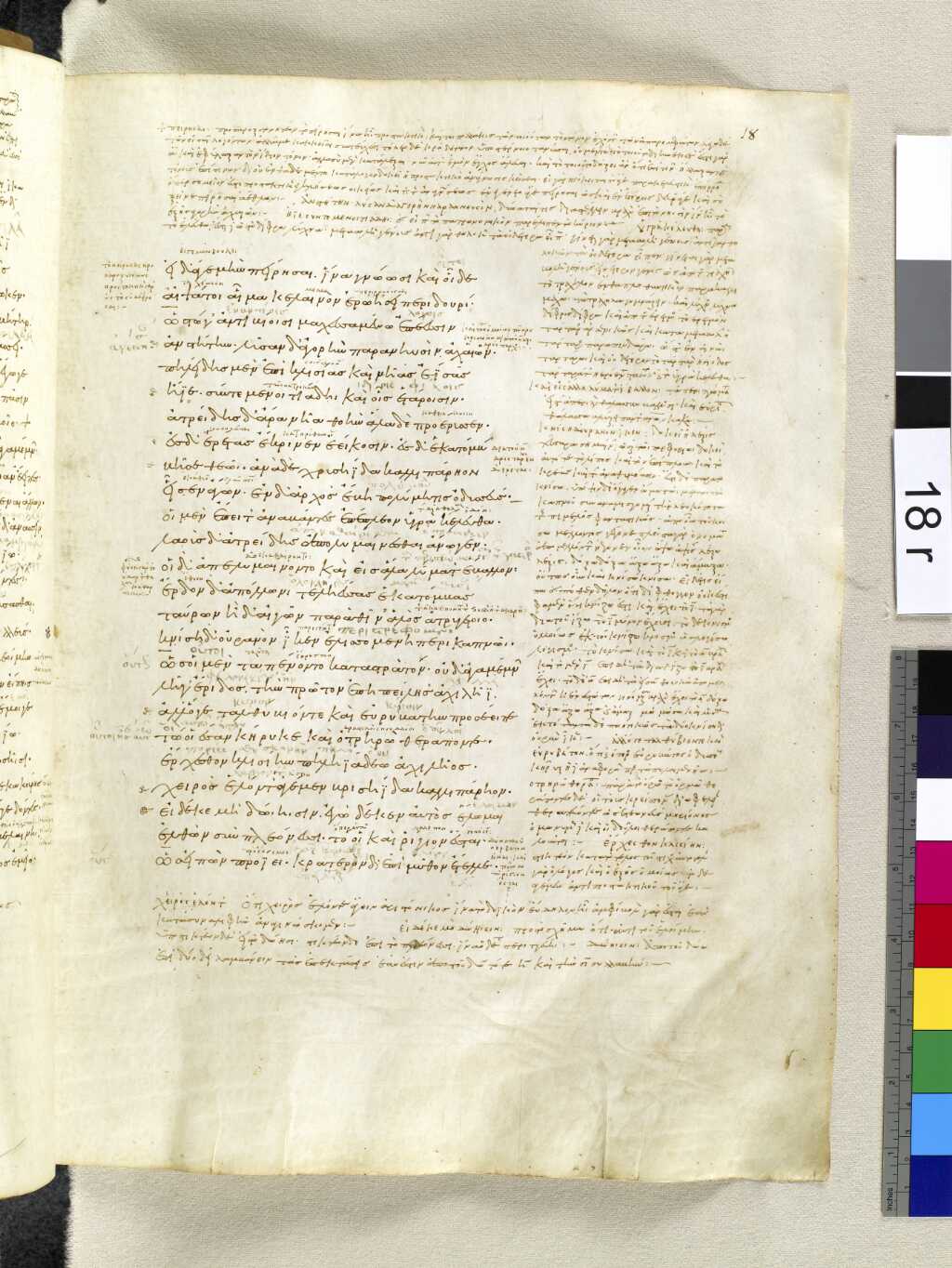
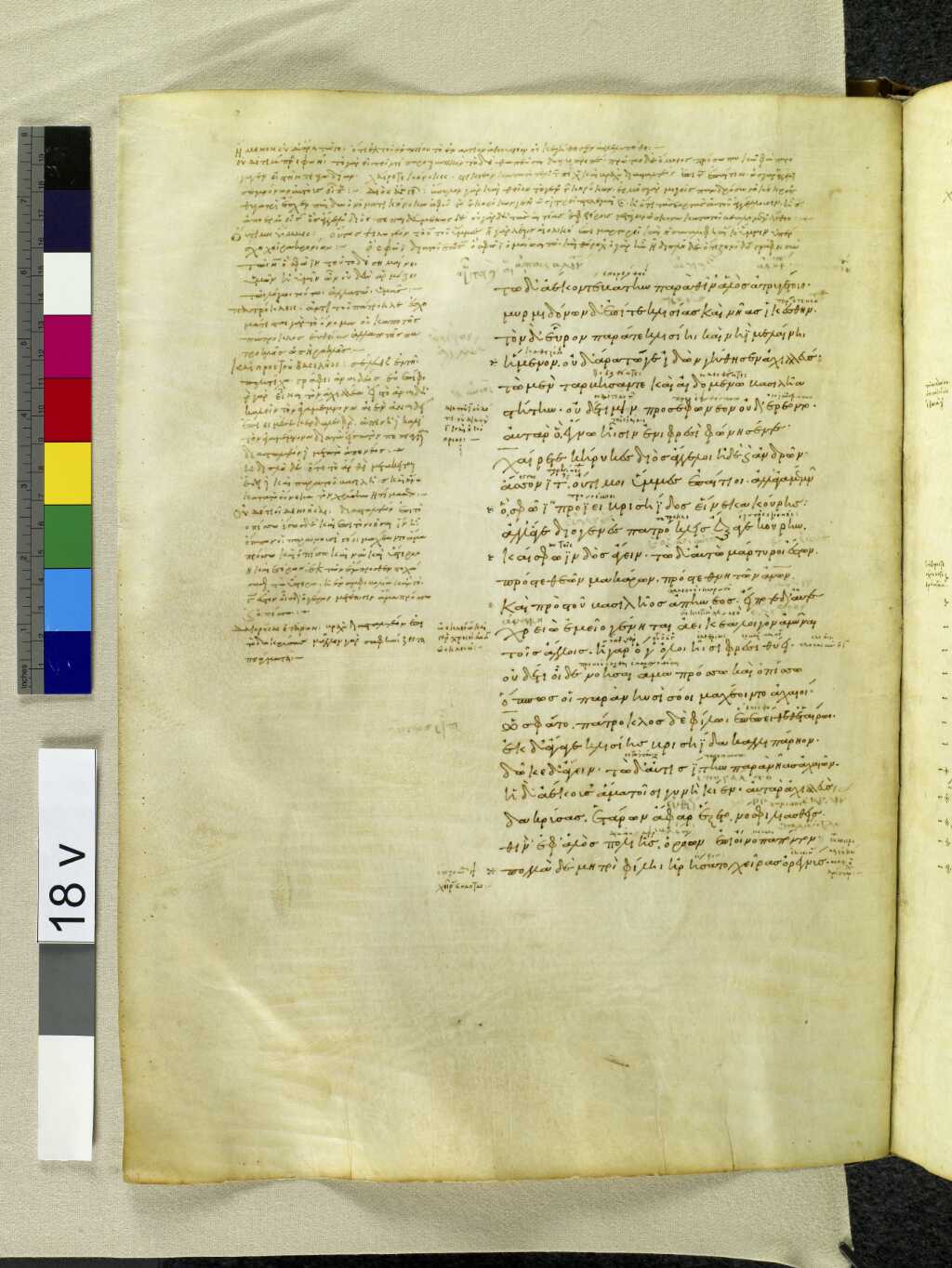
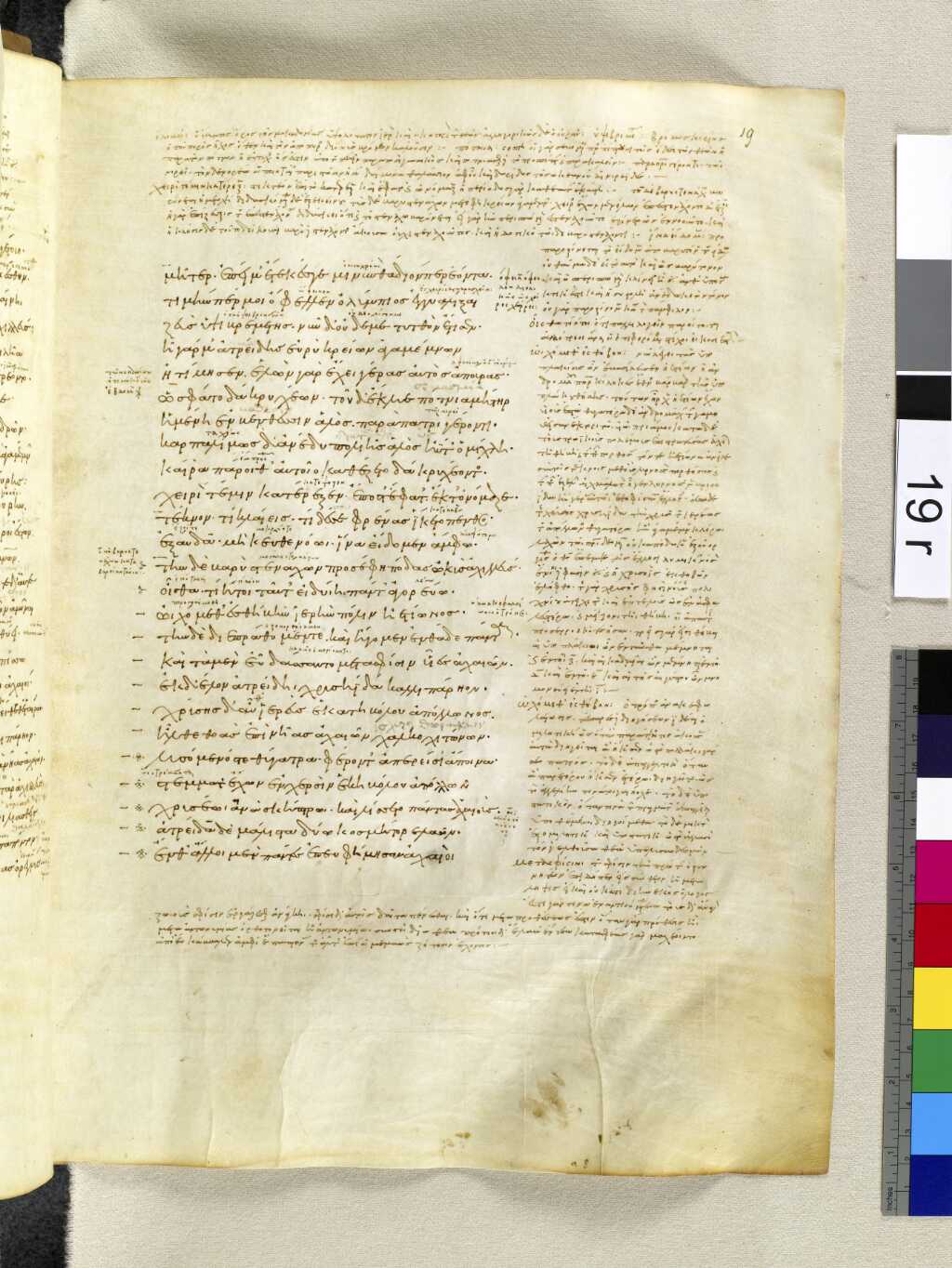
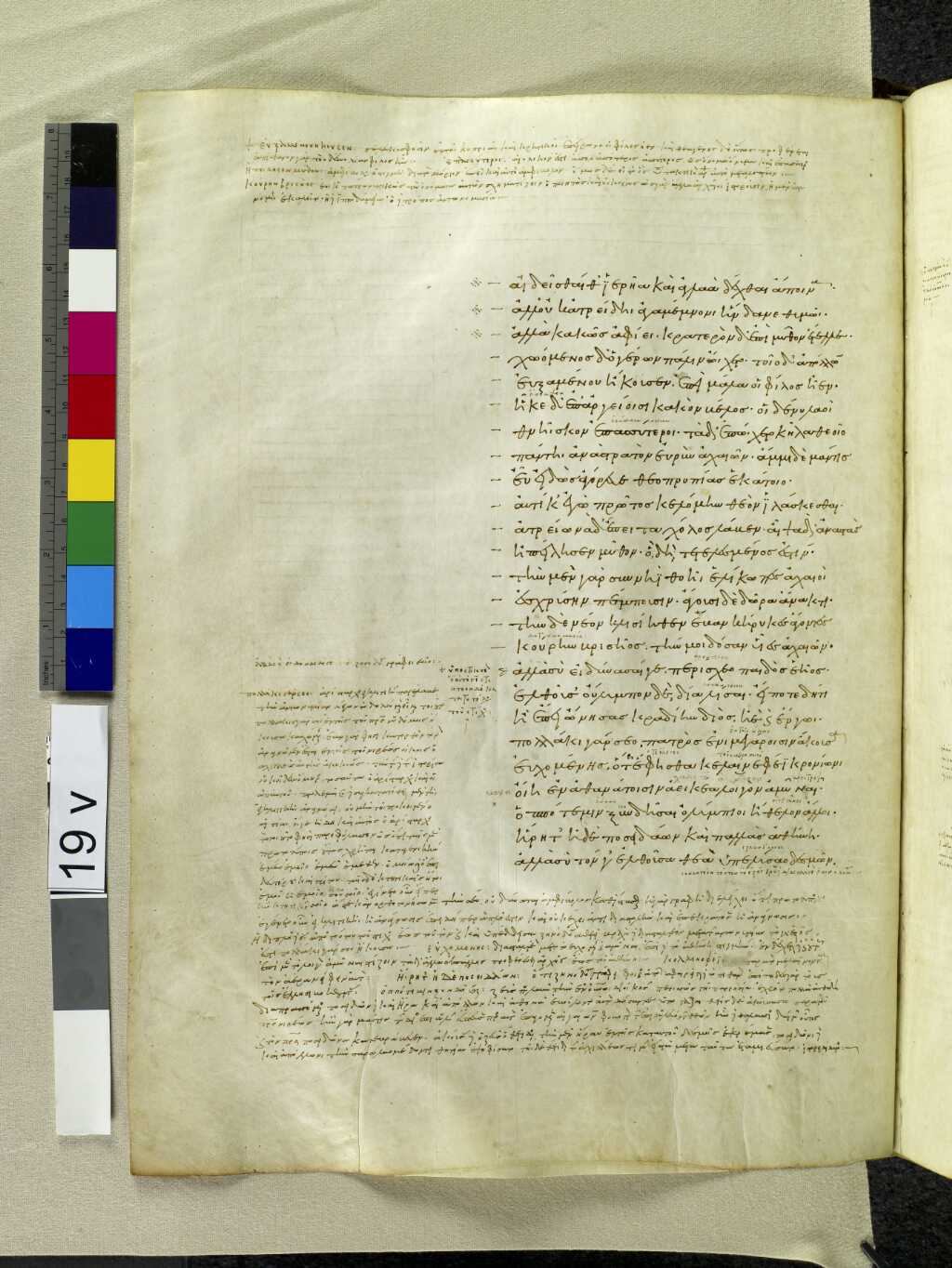
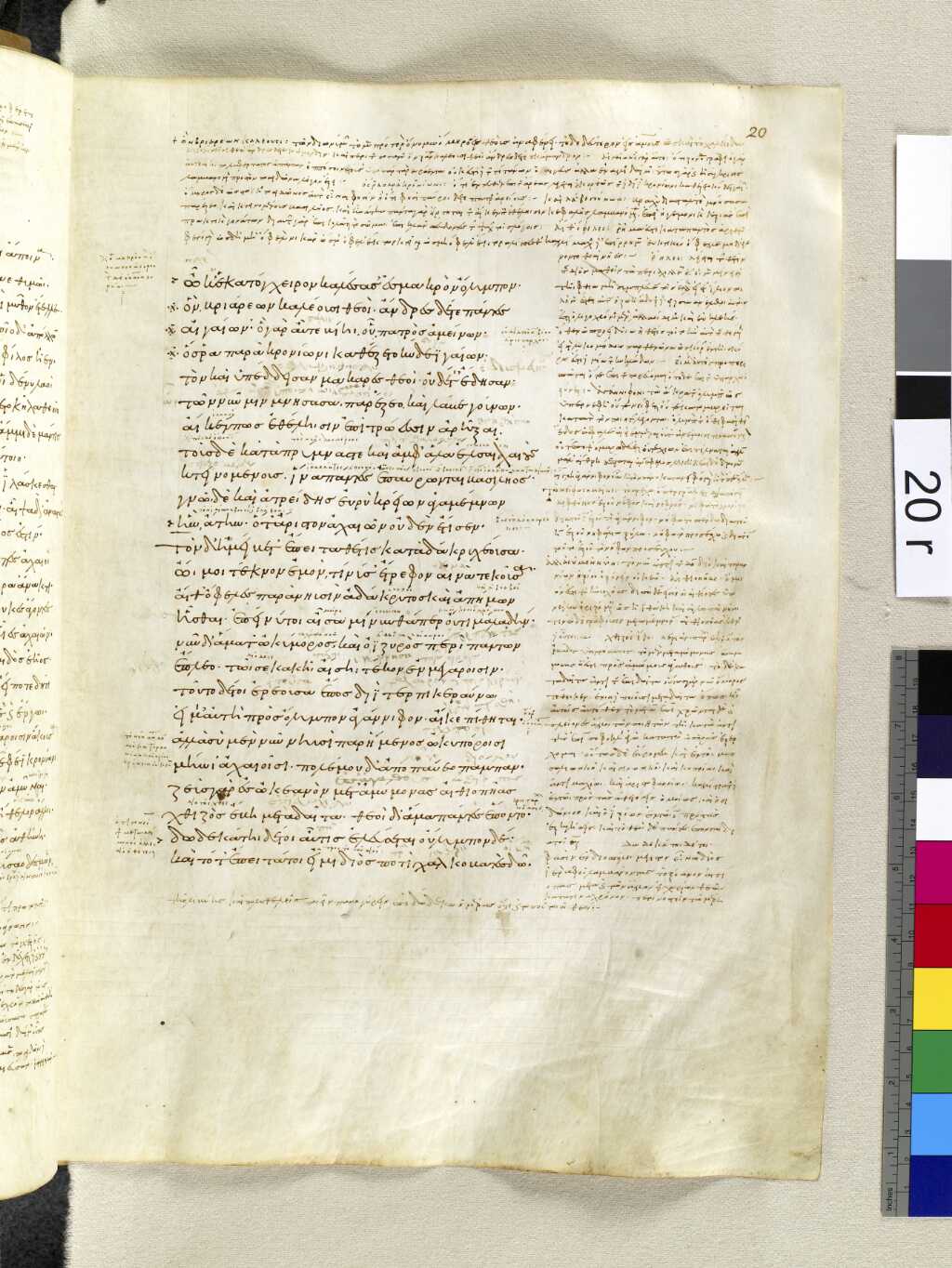
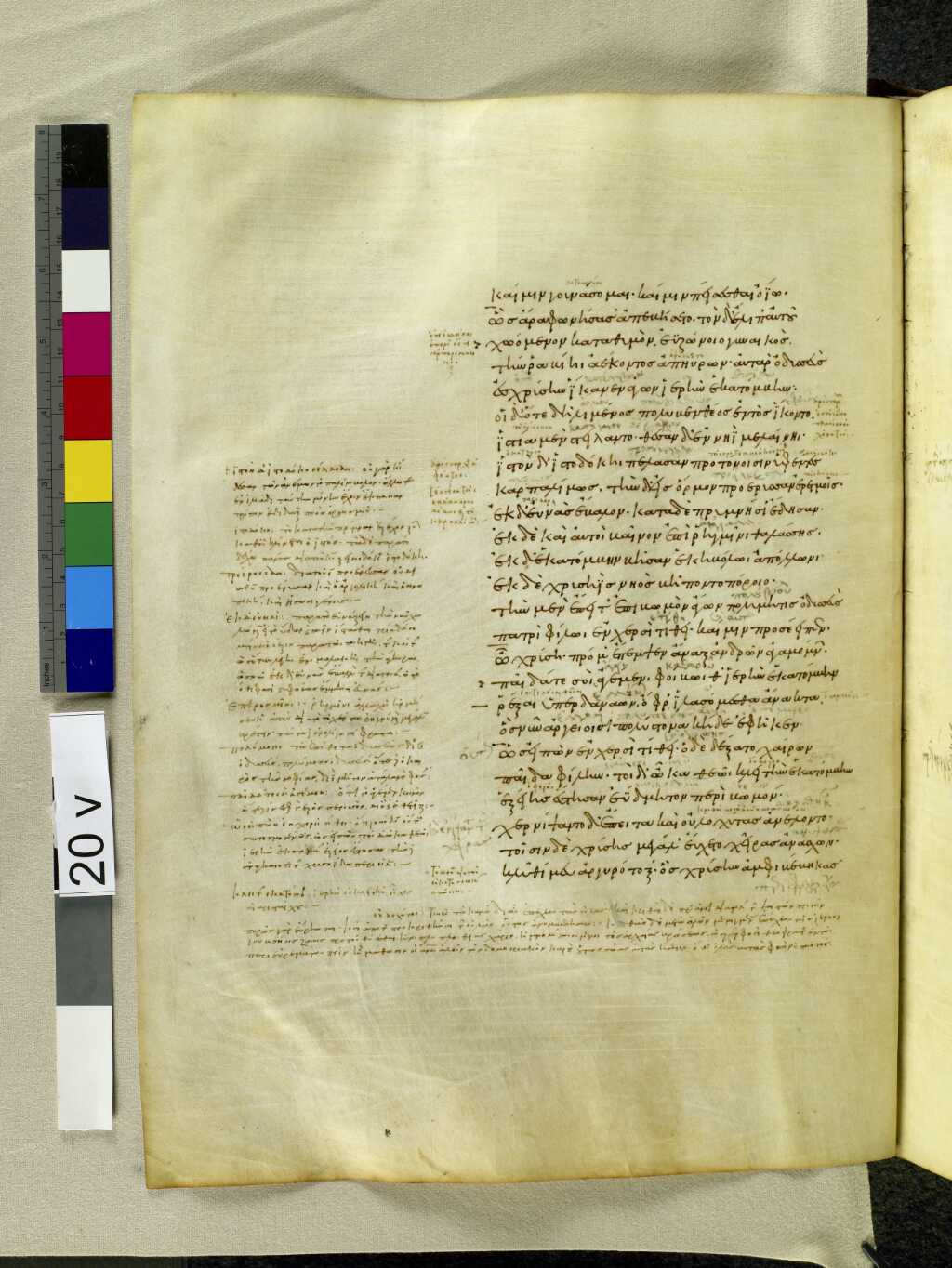
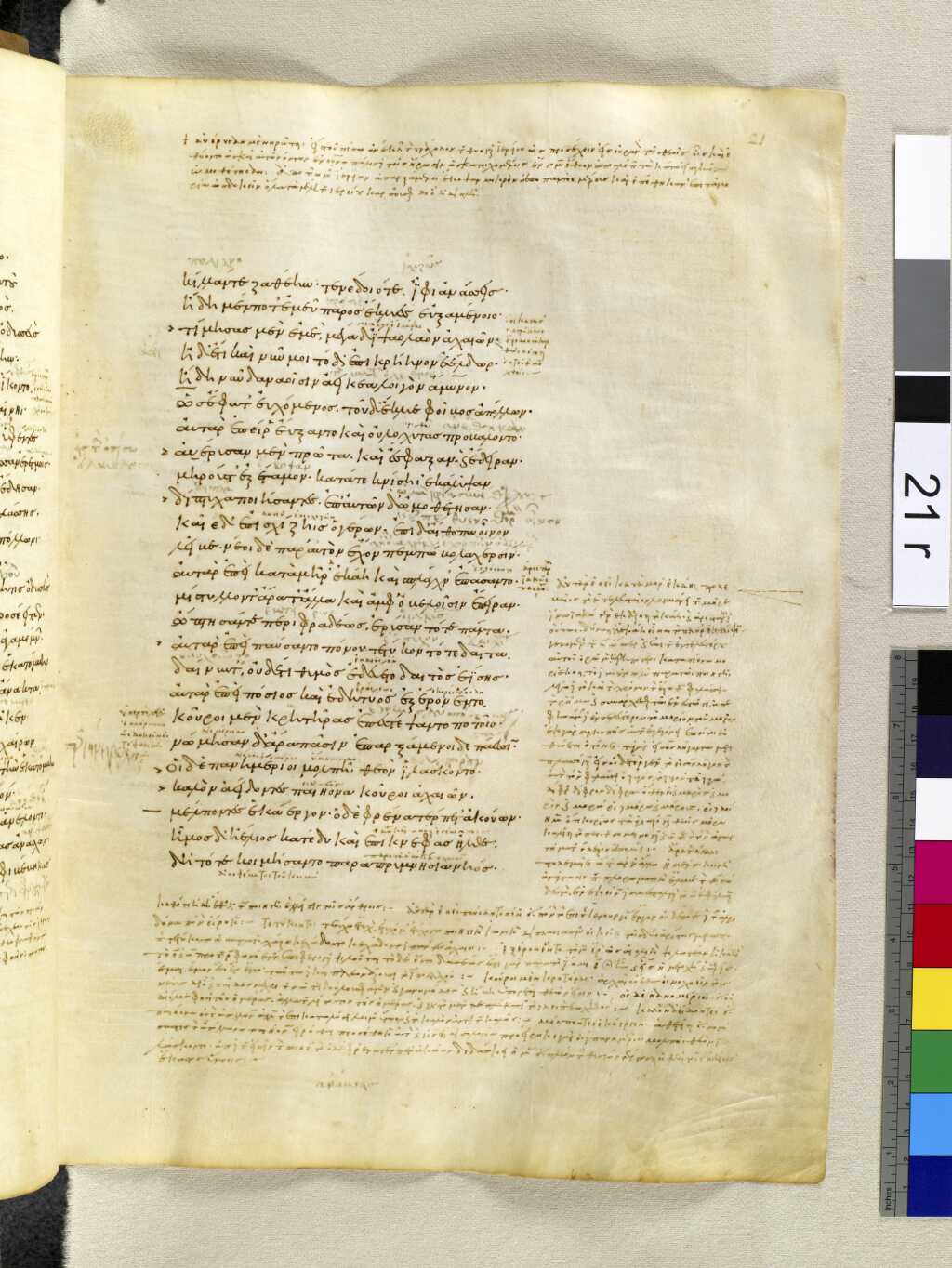
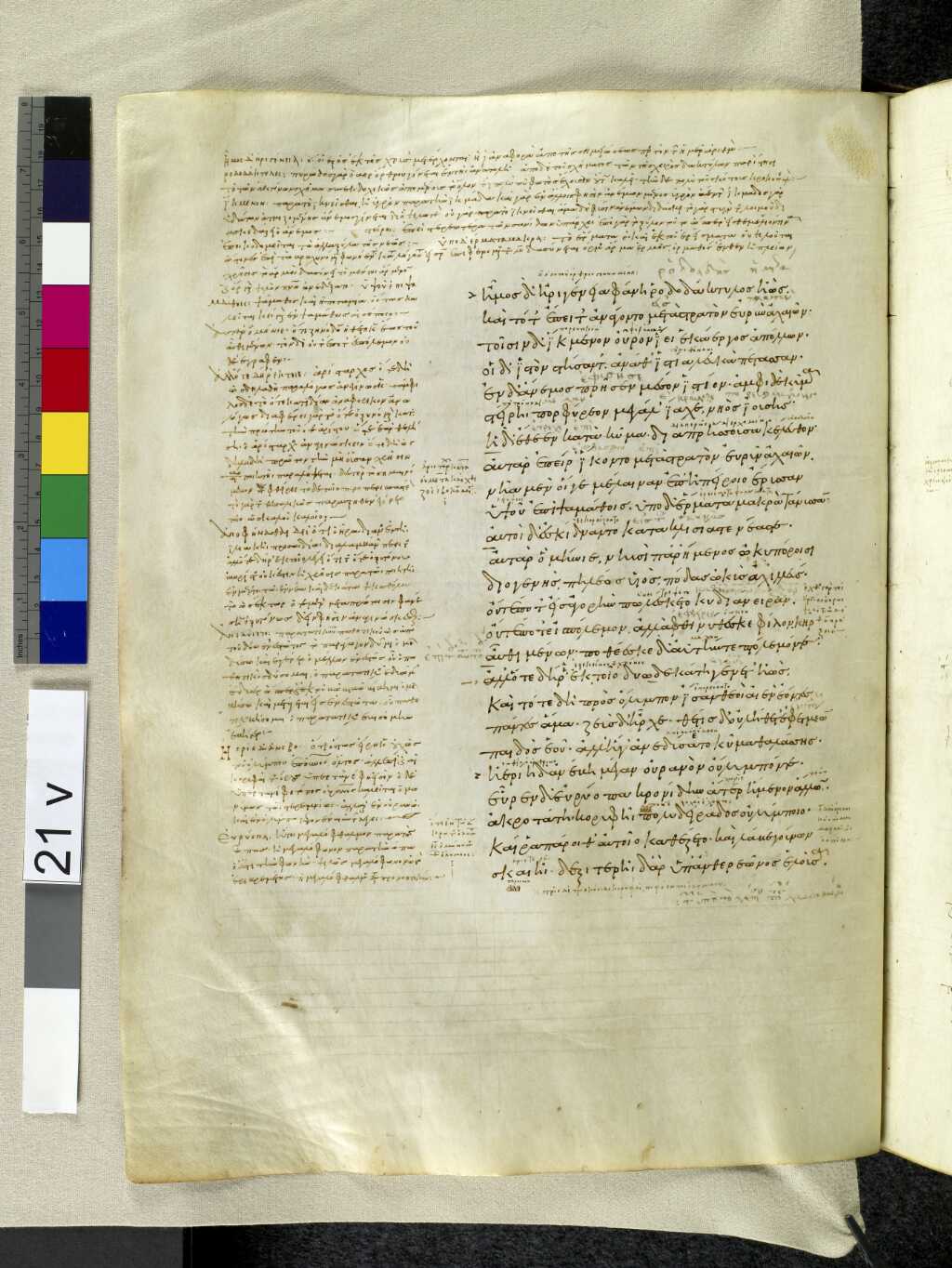
Book 1 of the Iliad with 25 sections, each linked to its specific folio in Venetus A (Marcianus Graecus 454, 10th c.). The Homer Multitext Project provides line-level folio mappings, ensuring every section of text corresponds to the exact manuscript page where it appears.
How was this verified? (Provenance)
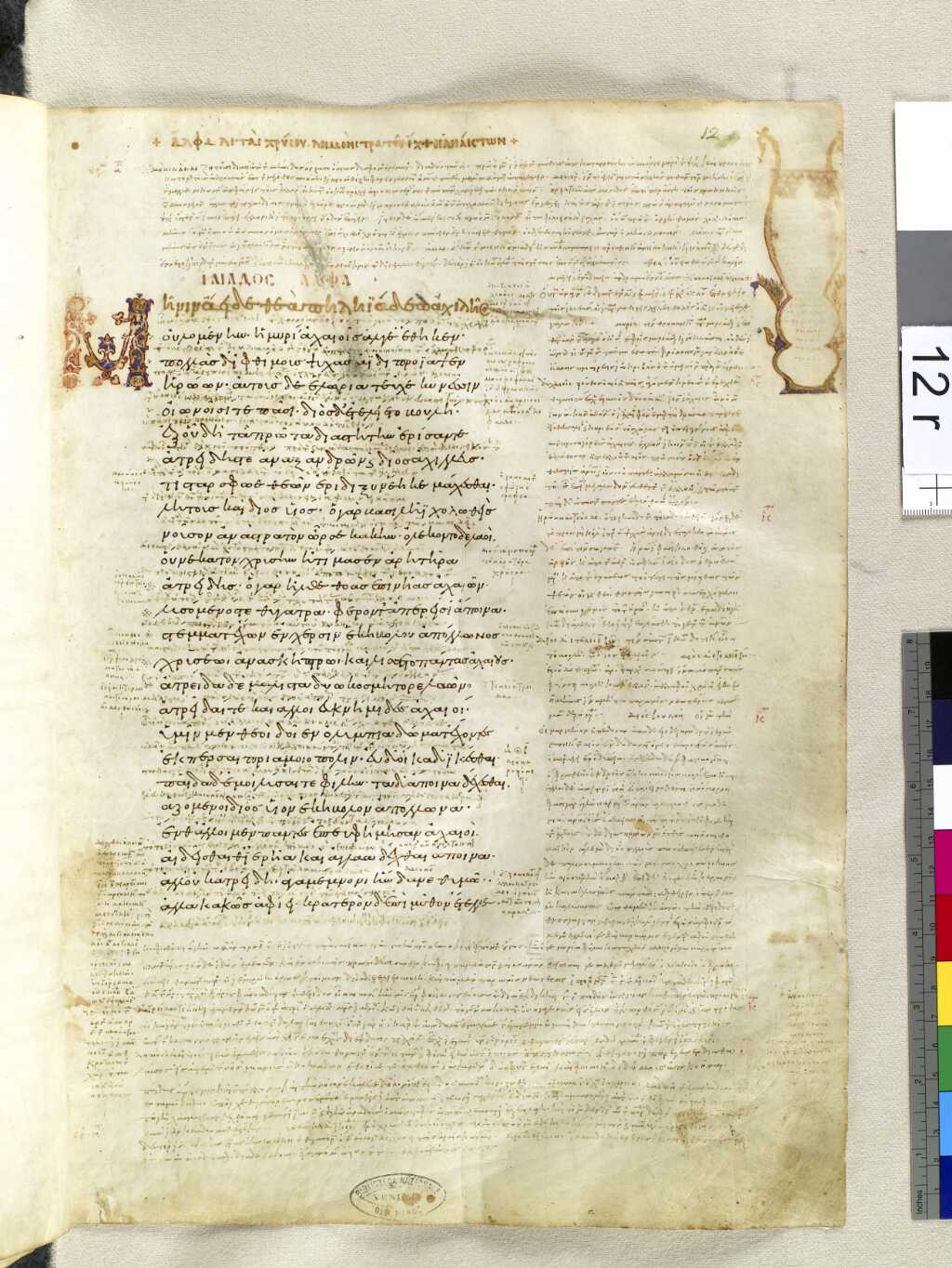
1μῆνιν ἄειδε θεὰ Πηληϊάδεω Ἀχιλῆος 2οὐλομένην, ἣ μυρίʼ Ἀχαιοῖς ἄλγεʼ ἔθηκε, 3πολλὰς δʼ ἰφθίμους ψυχὰς Ἄϊδι προΐαψεν 4ἡρώων, αὐτοὺς δὲ ἑλώρια τεῦχε κύνεσσιν 5οἰωνοῖσί τε πᾶσι, Διὸς δʼ ἐτελείετο βουλή, 6ἐξ οὗ δὴ τὰ πρῶτα διαστήτην ἐρίσαντε 7Ἀτρεΐδης τε ἄναξ ἀνδρῶν καὶ δῖος Ἀχιλλεύς. 8τίς τʼ ἄρ σφωε θεῶν ἔριδι ξυνέηκε μάχεσθαι; 9Λητοῦς καὶ Διὸς υἱός· ὃ γὰρ βασιλῆϊ χολωθεὶς 10νοῦσον ἀνὰ στρατὸν ὄρσε κακήν, ὀλέκοντο δὲ λαοί, 11οὕνεκα τὸν Χρύσην ἠτίμασεν ἀρητῆρα 12Ἀτρεΐδης· ὃ γὰρ ἦλθε θοὰς ἐπὶ νῆας Ἀχαιῶν 13λυσόμενός τε θύγατρα φέρων τʼ ἀπερείσιʼ ἄποινα, 14στέμματʼ ἔχων ἐν χερσὶν ἑκηβόλου Ἀπόλλωνος 15χρυσέῳ ἀνὰ σκήπτρῳ, καὶ λίσσετο πάντας Ἀχαιούς, 16Ἀτρεΐδα δὲ μάλιστα δύω, κοσμήτορε λαῶν· 17Ἀτρεΐδαι τε καὶ ἄλλοι ἐϋκνήμιδες Ἀχαιοί, 18ὑμῖν μὲν θεοὶ δοῖεν Ὀλύμπια δώματʼ ἔχοντες 19ἐκπέρσαι Πριάμοιο πόλιν, εὖ δʼ οἴκαδʼ ἱκέσθαι· 20παῖδα δʼ ἐμοὶ λύσαιτε φίλην, τὰ δʼ ἄποινα δέχεσθαι, 21ἁζόμενοι Διὸς υἱὸν ἑκηβόλον Ἀπόλλωνα. 22ἔνθʼ ἄλλοι μὲν πάντες ἐπευφήμησαν Ἀχαιοὶ 23αἰδεῖσθαί θʼ ἱερῆα καὶ ἀγλαὰ δέχθαι ἄποινα· 24ἀλλʼ οὐκ Ἀτρεΐδῃ Ἀγαμέμνονι ἥνδανε θυμῷ, 25ἀλλὰ κακῶς ἀφίει, κρατερὸν δʼ ἐπὶ μῦθον ἔτελλε·
The quarrel between Agamemnon and Achilles—Achilles withdraws from the war, and sends his mother Thetis to ask Jove to help the Trojans—Scene between Jove and Juno on Olympus.
Sing, O goddess, the anger of Achilles son of Peleus, that brought countless ills upon the Achaeans. Many a brave soul did it send hurrying down to Hades, and many a hero did it yield a prey to dogs and vultures, for so were the counsels of Jove fulfilled from the day on which the son of Atreus, king of men, and great Achilles, first fell out with one another.
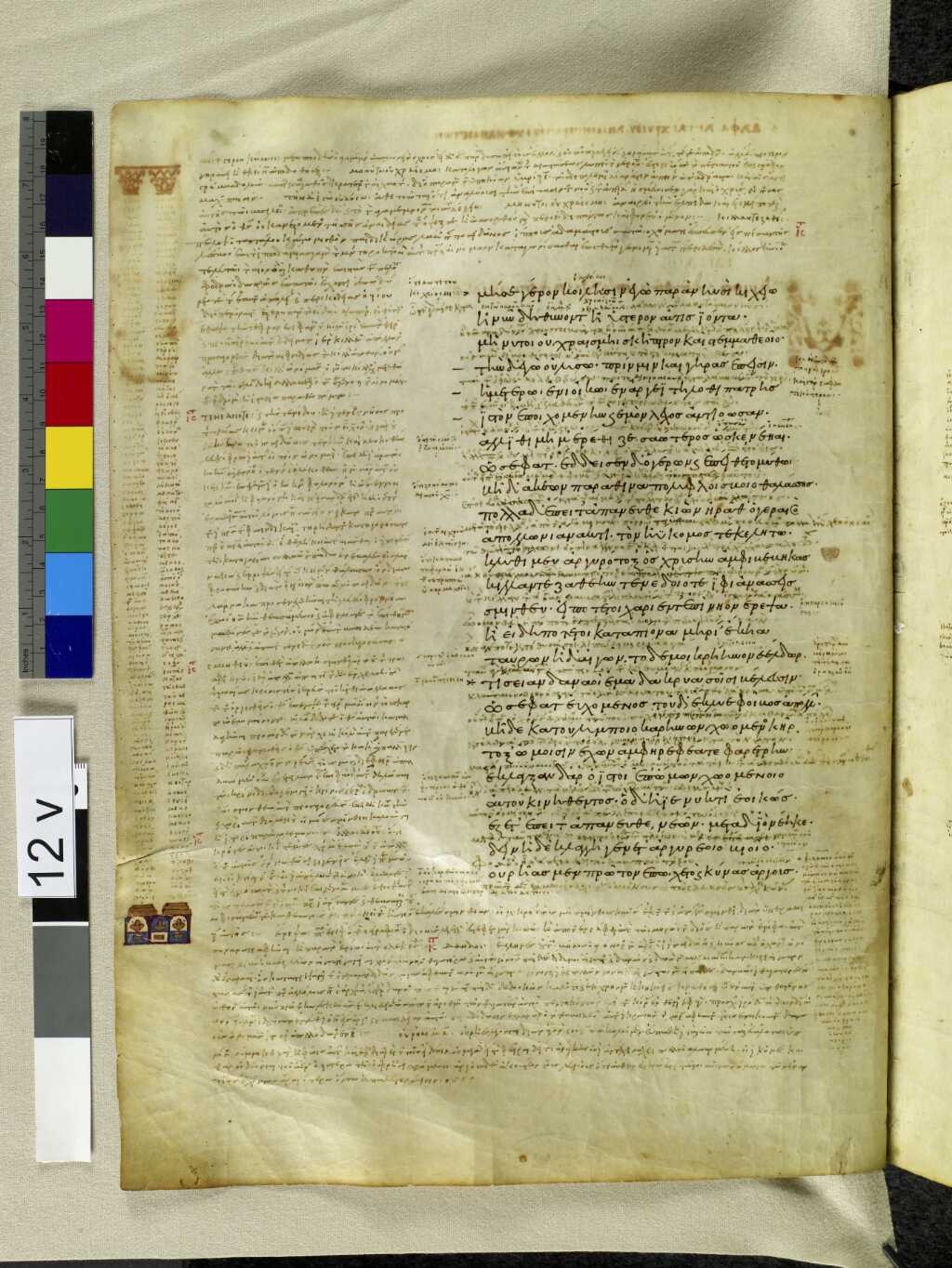
26μή σε γέρον κοίλῃσιν ἐγὼ παρὰ νηυσὶ κιχείω 27ἢ νῦν δηθύνοντʼ ἢ ὕστερον αὖτις ἰόντα, 28μή νύ τοι οὐ χραίσμῃ σκῆπτρον καὶ στέμμα θεοῖο· 29τὴν δʼ ἐγὼ οὐ λύσω· πρίν μιν καὶ γῆρας ἔπεισιν 30ἡμετέρῳ ἐνὶ οἴκῳ ἐν Ἄργεϊ τηλόθι πάτρης 31ἱστὸν ἐποιχομένην καὶ ἐμὸν λέχος ἀντιόωσαν· 32ἀλλʼ ἴθι μή μʼ ἐρέθιζε σαώτερος ὥς κε νέηαι. 33ὣς ἔφατʼ, ἔδεισεν δʼ ὃ γέρων καὶ ἐπείθετο μύθῳ· 34βῆ δʼ ἀκέων παρὰ θῖνα πολυφλοίσβοιο θαλάσσης· 35πολλὰ δʼ ἔπειτʼ ἀπάνευθε κιὼν ἠρᾶθʼ ὁ γεραιὸς 36Ἀπόλλωνι ἄνακτι, τὸν ἠΰκομος τέκε Λητώ· 37κλῦθί μευ ἀργυρότοξʼ, ὃς Χρύσην ἀμφιβέβηκας 38Κίλλαν τε ζαθέην Τενέδοιό τε ἶφι ἀνάσσεις, 39Σμινθεῦ εἴ ποτέ τοι χαρίεντʼ ἐπὶ νηὸν ἔρεψα, 40ἢ εἰ δή ποτέ τοι κατὰ πίονα μηρίʼ ἔκηα 41ταύρων ἠδʼ αἰγῶν, τὸ δέ μοι κρήηνον ἐέλδωρ· 42τίσειαν Δαναοὶ ἐμὰ δάκρυα σοῖσι βέλεσσιν. 43ὣς ἔφατʼ εὐχόμενος, τοῦ δʼ ἔκλυε Φοῖβος Ἀπόλλων, 44βῆ δὲ κατʼ Οὐλύμποιο καρήνων χωόμενος κῆρ, 45τόξʼ ὤμοισιν ἔχων ἀμφηρεφέα τε φαρέτρην· 46ἔκλαγξαν δʼ ἄρʼ ὀϊστοὶ ἐπʼ ὤμων χωομένοιο, 47αὐτοῦ κινηθέντος· ὃ δʼ ἤϊε νυκτὶ ἐοικώς. 48ἕζετʼ ἔπειτʼ ἀπάνευθε νεῶν, μετὰ δʼ ἰὸν ἕηκε· 49δεινὴ δὲ κλαγγὴ γένετʼ ἀργυρέοιο βιοῖο· 50οὐρῆας μὲν πρῶτον ἐπῴχετο καὶ κύνας ἀργούς,
And which of the gods was it that set them on to quarrel? It was the son of Jove and Leto; for he was angry with the king and sent a pestilence upon the host to plague the people, because the son of Atreus had dishonoured Chryses his priest. Now Chryses had come to the ships of the Achaeans to free his daughter, and had brought with him a great ransom: moreover he bore in his hand the sceptre of Apollo wreathed with a suppliant’s wreath, and he besought the Achaeans, but most of all the two sons of Atreus, who were their chiefs.
“Sons of Atreus,” he cried, “and all other Achaeans, may the gods who dwell in Olympus grant you to sack the city of Priam, and to reach your homes in safety; but free my daughter, and accept a ransom for her, in reverence to Apollo, son of Jove.”
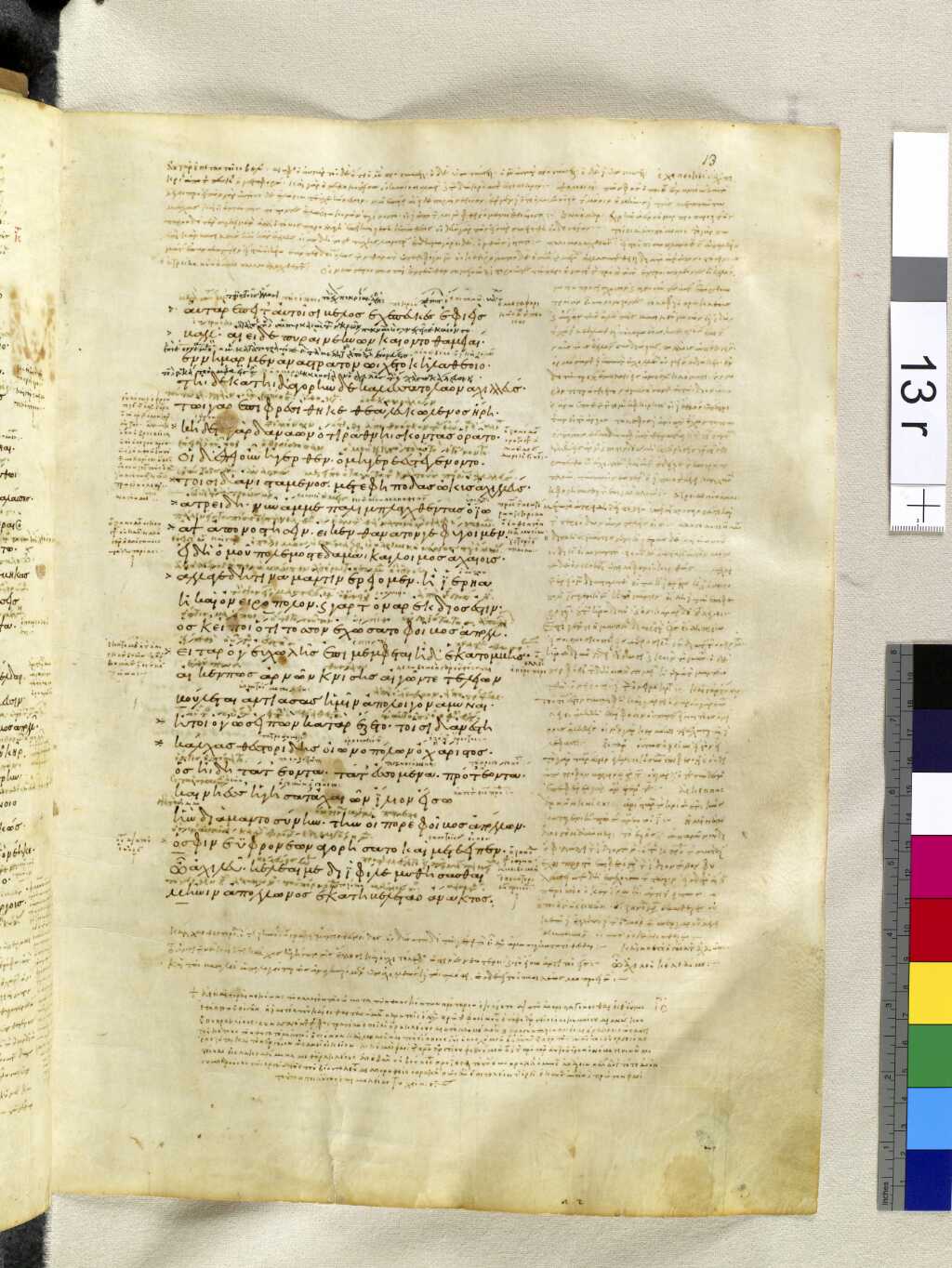
51αὐτὰρ ἔπειτʼ αὐτοῖσι βέλος ἐχεπευκὲς ἐφιεὶς 52βάλλʼ· αἰεὶ δὲ πυραὶ νεκύων καίοντο θαμειαί. 53ἐννῆμαρ μὲν ἀνὰ στρατὸν ᾤχετο κῆλα θεοῖο, 54τῇ δεκάτῃ δʼ ἀγορὴν δὲ καλέσσατο λαὸν Ἀχιλλεύς· 55τῷ γὰρ ἐπὶ φρεσὶ θῆκε θεὰ λευκώλενος Ἥρη· 56κήδετο γὰρ Δαναῶν, ὅτι ῥα θνήσκοντας ὁρᾶτο. 57οἳ δʼ ἐπεὶ οὖν ἤγερθεν ὁμηγερέες τε γένοντο, 58τοῖσι δʼ ἀνιστάμενος μετέφη πόδας ὠκὺς Ἀχιλλεύς· 59Ἀτρεΐδη νῦν ἄμμε παλιμπλαγχθέντας ὀΐω 60ἂψ ἀπονοστήσειν, εἴ κεν θάνατόν γε φύγοιμεν, 61εἰ δὴ ὁμοῦ πόλεμός τε δαμᾷ καὶ λοιμὸς Ἀχαιούς· 62ἀλλʼ ἄγε δή τινα μάντιν ἐρείομεν ἢ ἱερῆα 63ἢ καὶ ὀνειροπόλον, καὶ γάρ τʼ ὄναρ ἐκ Διός ἐστιν, 64ὅς κʼ εἴποι ὅ τι τόσσον ἐχώσατο Φοῖβος Ἀπόλλων, 65εἴτʼ ἄρʼ ὅ γʼ εὐχωλῆς ἐπιμέμφεται ἠδʼ ἑκατόμβης, 66αἴ κέν πως ἀρνῶν κνίσης αἰγῶν τε τελείων 67βούλεται ἀντιάσας ἡμῖν ἀπὸ λοιγὸν ἀμῦναι. 68ἤτοι ὅ γʼ ὣς εἰπὼν κατʼ ἄρʼ ἕζετο· τοῖσι δʼ ἀνέστη 69Κάλχας Θεστορίδης οἰωνοπόλων ὄχʼ ἄριστος, 70ὃς ᾔδη τά τʼ ἐόντα τά τʼ ἐσσόμενα πρό τʼ ἐόντα, 71καὶ νήεσσʼ ἡγήσατʼ Ἀχαιῶν Ἴλιον εἴσω 72ἣν διὰ μαντοσύνην, τήν οἱ πόρε Φοῖβος Ἀπόλλων· 73ὅ σφιν ἐὺ φρονέων ἀγορήσατο καὶ μετέειπεν· 74ὦ Ἀχιλεῦ κέλεαί με Διῒ φίλε μυθήσασθαι 75μῆνιν Ἀπόλλωνος ἑκατηβελέταο ἄνακτος·
On this the rest of the Achaeans with one voice were for respecting the priest and taking the ransom that he offered; but not so Agamemnon, who spoke fiercely to him and sent him roughly away. “Old man,” said he, “let me not find you tarrying about our ships, nor yet coming hereafter. Your sceptre of the god and your wreath shall profit you nothing. I will not free her. She shall grow old in my house at Argos far from her own home, busying herself with her loom and visiting my couch; so go, and do not provoke me or it shall be the worse for you.”
The old man feared him and obeyed. Not a word he spoke, but went by the shore of the sounding sea and prayed apart to King Apollo whom lovely Leto had borne. “Hear me,” he cried, “O god of the silver bow, that protectest Chryse and holy Cilla and rulest Tenedos with thy might, hear me oh thou of Sminthe. If I have ever decked your temple with garlands, or burned your thigh-bones in fat of bulls or goats, grant my prayer, and let your arrows avenge these my tears upon the Danaans.”
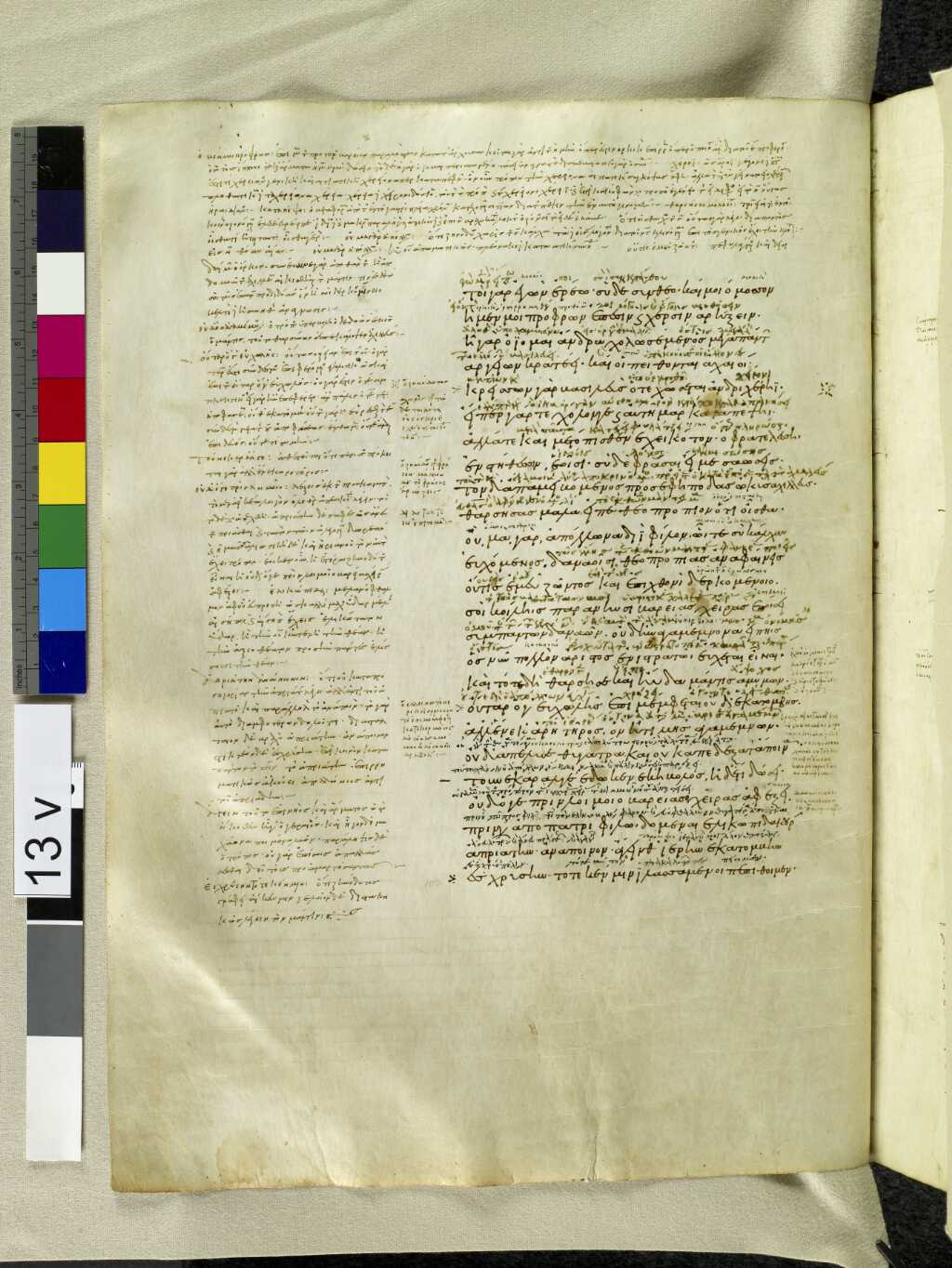
76τοὶ γὰρ ἐγὼν ἐρέω· σὺ δὲ σύνθεο καί μοι ὄμοσσον 77ἦ μέν μοι πρόφρων ἔπεσιν καὶ χερσὶν ἀρήξειν· 78ἦ γὰρ ὀΐομαι ἄνδρα χολωσέμεν, ὃς μέγα πάντων 79Ἀργείων κρατέει καί οἱ πείθονται Ἀχαιοί· 80κρείσσων γὰρ βασιλεὺς ὅτε χώσεται ἀνδρὶ χέρηϊ· 81εἴ περ γάρ τε χόλον γε καὶ αὐτῆμαρ καταπέψῃ, 82ἀλλά τε καὶ μετόπισθεν ἔχει κότον, ὄφρα τελέσσῃ, 83ἐν στήθεσσιν ἑοῖσι· σὺ δὲ φράσαι εἴ με σαώσεις. 84τὸν δʼ ἀπαμειβόμενος προσέφη πόδας ὠκὺς Ἀχιλλεύς· 85θαρσήσας μάλα εἰπὲ θεοπρόπιον ὅ τι οἶσθα· 86οὐ μὰ γὰρ Ἀπόλλωνα Διῒ φίλον, ᾧ τε σὺ Κάλχαν 87εὐχόμενος Δαναοῖσι θεοπροπίας ἀναφαίνεις, 88οὔ τις ἐμεῦ ζῶντος καὶ ἐπὶ χθονὶ δερκομένοιο 89σοὶ κοίλῃς παρὰ νηυσί βαρείας χεῖρας ἐποίσει 90συμπάντων Δαναῶν, οὐδʼ ἢν Ἀγαμέμνονα εἴπῃς, 91ὃς νῦν πολλὸν ἄριστος Ἀχαιῶν εὔχεται εἶναι. 92καὶ τότε δὴ θάρσησε καὶ ηὔδα μάντις ἀμύμων· 93οὔ τʼ ἄρ ὅ γʼ εὐχωλῆς ἐπιμέμφεται οὐδʼ ἑκατόμβης, 94ἀλλʼ ἕνεκʼ ἀρητῆρος ὃν ἠτίμησʼ Ἀγαμέμνων, 95οὐδʼ ἀπέλυσε θύγατρα καὶ οὐκ ἀπεδέξατʼ ἄποινα, 96τοὔνεκʼ ἄρʼ ἄλγεʼ ἔδωκεν ἑκηβόλος ἠδʼ ἔτι δώσει· 97οὐδʼ ὅ γε πρὶν Δαναοῖσιν ἀεικέα λοιγὸν ἀπώσει 98πρίν γʼ ἀπὸ πατρὶ φίλῳ δόμεναι ἑλικώπιδα κούρην 99ἀπριάτην ἀνάποινον, ἄγειν θʼ ἱερὴν ἑκατόμβην 100ἐς Χρύσην· τότε κέν μιν ἱλασσάμενοι πεπίθοιμεν.
Thus did he pray, and Apollo heard his prayer. He came down furious from the summits of Olympus, with his bow and his quiver upon his shoulder, and the arrows rattled on his back with the rage that trembled within him. He sat himself down away from the ships with a face as dark as night, and his silver bow rang death as he shot his arrow in the midst of them. First he smote their mules and their hounds, but presently he aimed his shafts at the people themselves, and all day long the pyres of the dead were burning.
For nine whole days he shot his arrows among the people, but upon the tenth day Achilles called them in assembly—moved thereto by Juno, who saw the Achaeans in their death-throes and had compassion upon them. Then, when they were got together, he rose and spoke among them.
“Son of Atreus,” said he, “I deem that we should now turn roving home if we would escape destruction, for we are being cut down by war and pestilence at once. Let us ask some priest or prophet, or some reader of dreams (for dreams, too, are of Jove) who can tell us why Phoebus Apollo is so angry, and say whether it is for some vow that we have broken, or hecatomb that we have not offered, and whether he will accept the savour of lambs and goats without blemish, so as to take away the plague from us.”
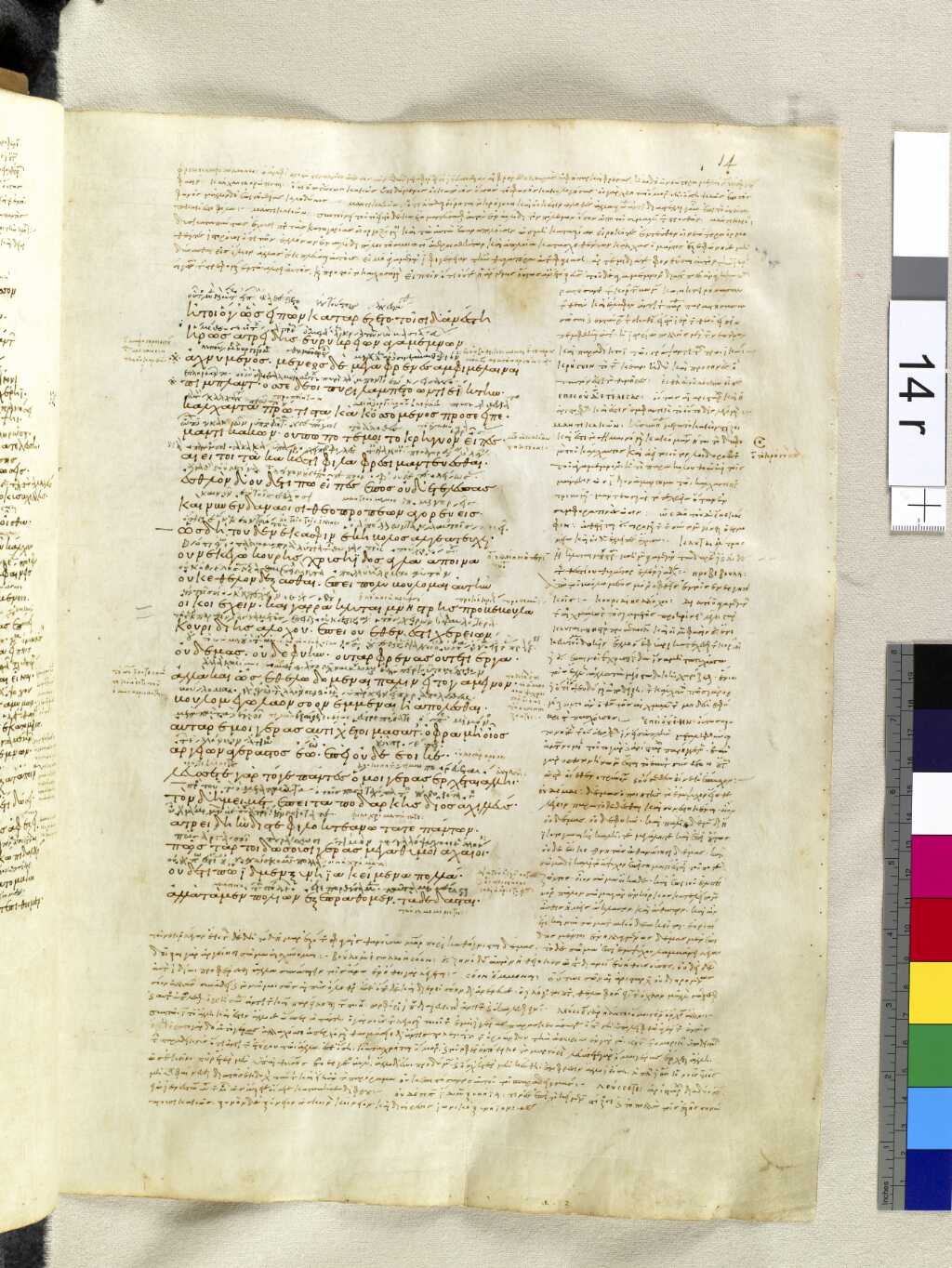
101ἤτοι ὅ γʼ ὣς εἰπὼν κατʼ ἄρʼ ἕζετο· τοῖσι δʼ ἀνέστη 102ἥρως Ἀτρεΐδης εὐρὺ κρείων Ἀγαμέμνων 103ἀχνύμενος· μένεος δὲ μέγα φρένες ἀμφιμέλαιναι 104πίμπλαντʼ, ὄσσε δέ οἱ πυρὶ λαμπετόωντι ἐΐκτην· 105Κάλχαντα πρώτιστα κάκʼ ὀσσόμενος προσέειπε· 106μάντι κακῶν οὐ πώ ποτέ μοι τὸ κρήγυον εἶπας· 107αἰεί τοι τὰ κάκʼ ἐστὶ φίλα φρεσὶ μαντεύεσθαι, 108ἐσθλὸν δʼ οὔτέ τί πω εἶπας ἔπος οὔτʼ ἐτέλεσσας· 109καὶ νῦν ἐν Δαναοῖσι θεοπροπέων ἀγορεύεις 110ὡς δὴ τοῦδʼ ἕνεκά σφιν ἑκηβόλος ἄλγεα τεύχει, 111οὕνεκʼ ἐγὼ κούρης Χρυσηΐδος ἀγλάʼ ἄποινα 112οὐκ ἔθελον δέξασθαι, ἐπεὶ πολὺ βούλομαι αὐτὴν 113οἴκοι ἔχειν· καὶ γάρ ῥα Κλυταιμνήστρης προβέβουλα 114κουριδίης ἀλόχου, ἐπεὶ οὔ ἑθέν ἐστι χερείων, 115οὐ δέμας οὐδὲ φυήν, οὔτʼ ἂρ φρένας οὔτέ τι ἔργα. 116ἀλλὰ καὶ ὧς ἐθέλω δόμεναι πάλιν εἰ τό γʼ ἄμεινον· 117βούλομʼ ἐγὼ λαὸν σῶν ἔμμεναι ἢ ἀπολέσθαι· 118αὐτὰρ ἐμοὶ γέρας αὐτίχʼ ἑτοιμάσατʼ ὄφρα μὴ οἶος 119Ἀργείων ἀγέραστος ἔω, ἐπεὶ οὐδὲ ἔοικε· 120λεύσσετε γὰρ τό γε πάντες ὅ μοι γέρας ἔρχεται ἄλλῃ. 121τὸν δʼ ἠμείβετʼ ἔπειτα ποδάρκης δῖος Ἀχιλλεύς· 122Ἀτρεΐδη κύδιστε φιλοκτεανώτατε πάντων, 123πῶς γάρ τοι δώσουσι γέρας μεγάθυμοι Ἀχαιοί; 124οὐδέ τί που ἴδμεν ξυνήϊα κείμενα πολλά· 125ἀλλὰ τὰ μὲν πολίων ἐξεπράθομεν, τὰ δέδασται,
With these words he sat down, and Calchas son of Thestor, wisest of augurs, who knew things past present and to come, rose to speak. He it was who had guided the Achaeans with their fleet to Ilius, through the prophesyings with which Phoebus Apollo had inspired him. With all sincerity and goodwill he addressed them thus:—
“Achilles, loved of heaven, you bid me tell you about the anger of King Apollo, I will therefore do so; but consider first and swear that you will stand by me heartily in word and deed, for I know that I shall offend one who rules the Argives with might, to whom all the Achaeans are in subjection. A plain man cannot stand against the anger of a king, who if he swallow his displeasure now, will yet nurse revenge till he has wreaked it. Consider, therefore, whether or no you will protect me.”
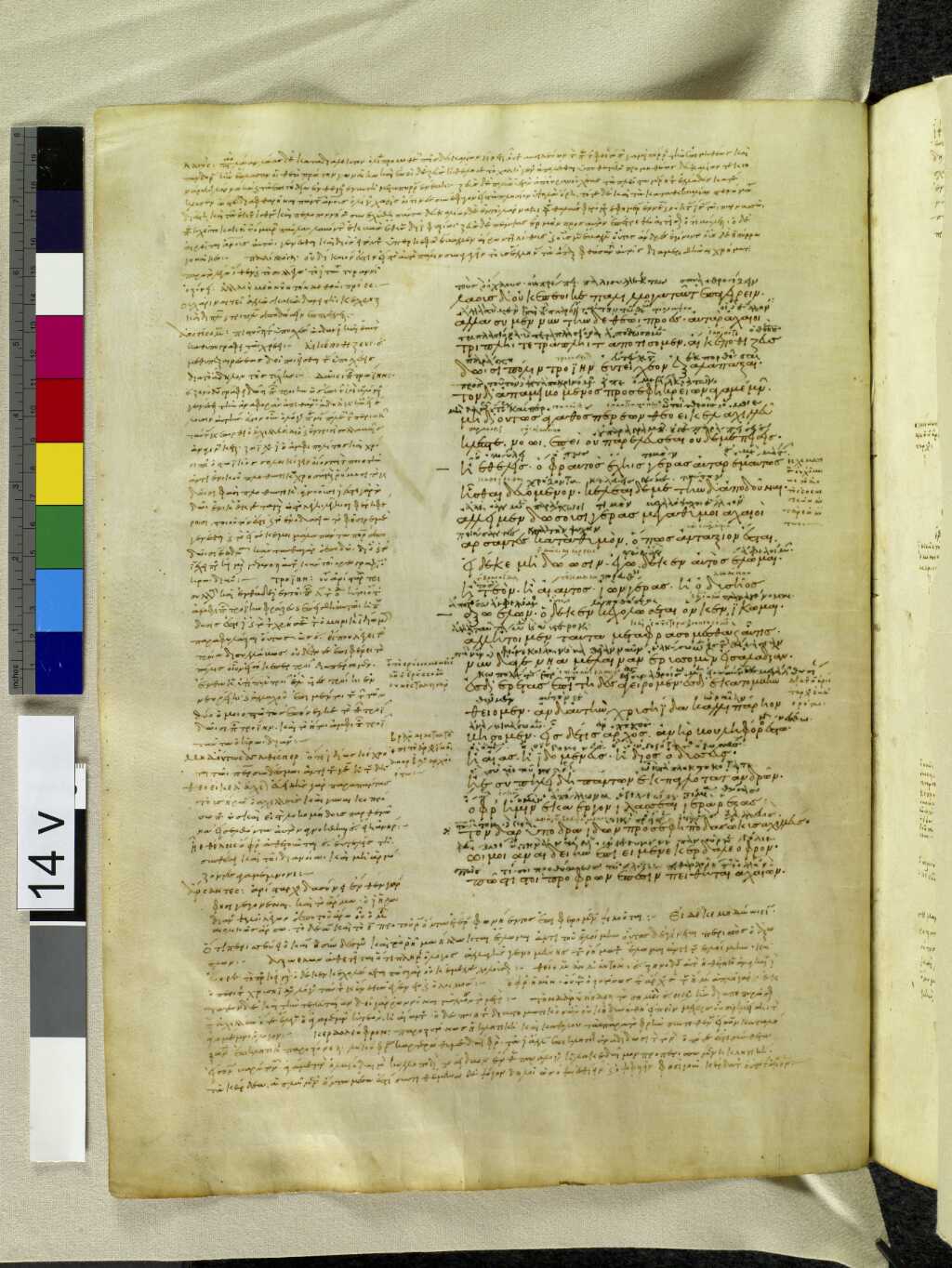
126λαοὺς δʼ οὐκ ἐπέοικε παλίλλογα ταῦτʼ ἐπαγείρειν. 127ἀλλὰ σὺ μὲν νῦν τήνδε θεῷ πρόες· αὐτὰρ Ἀχαιοὶ 128τριπλῇ τετραπλῇ τʼ ἀποτείσομεν, αἴ κέ ποθι Ζεὺς 129δῷσι πόλιν Τροίην εὐτείχεον ἐξαλαπάξαι. 130τὸν δʼ ἀπαμειβόμενος προσέφη κρείων Ἀγαμέμνων· 131μὴ δʼ οὕτως ἀγαθός περ ἐὼν θεοείκελʼ Ἀχιλλεῦ 132κλέπτε νόῳ, ἐπεὶ οὐ παρελεύσεαι οὐδέ με πείσεις. 133ἦ ἐθέλεις ὄφρʼ αὐτὸς ἔχῃς γέρας, αὐτὰρ ἔμʼ αὔτως 134ἧσθαι δευόμενον, κέλεαι δέ με τήνδʼ ἀποδοῦναι; 135ἀλλʼ εἰ μὲν δώσουσι γέρας μεγάθυμοι Ἀχαιοὶ 136ἄρσαντες κατὰ θυμὸν ὅπως ἀντάξιον ἔσται· 137εἰ δέ κε μὴ δώωσιν ἐγὼ δέ κεν αὐτὸς ἕλωμαι 138ἢ τεὸν ἢ Αἴαντος ἰὼν γέρας, ἢ Ὀδυσῆος 139ἄξω ἑλών· ὃ δέ κεν κεχολώσεται ὅν κεν ἵκωμαι. 140ἀλλʼ ἤτοι μὲν ταῦτα μεταφρασόμεσθα καὶ αὖτις, 141νῦν δʼ ἄγε νῆα μέλαιναν ἐρύσσομεν εἰς ἅλα δῖαν, 142ἐν δʼ ἐρέτας ἐπιτηδὲς ἀγείρομεν, ἐς δʼ ἑκατόμβην 143θείομεν, ἂν δʼ αὐτὴν Χρυσηΐδα καλλιπάρῃον 144βήσομεν· εἷς δέ τις ἀρχὸς ἀνὴρ βουληφόρος ἔστω, 145ἢ Αἴας ἢ Ἰδομενεὺς ἢ δῖος Ὀδυσσεὺς 146ἠὲ σὺ Πηλεΐδη πάντων ἐκπαγλότατʼ ἀνδρῶν, 147ὄφρʼ ἥμιν ἑκάεργον ἱλάσσεαι ἱερὰ ῥέξας. 148τὸν δʼ ἄρʼ ὑπόδρα ἰδὼν προσέφη πόδας ὠκὺς Ἀχιλλεύς· 149ὤ μοι ἀναιδείην ἐπιειμένε κερδαλεόφρον 150πῶς τίς τοι πρόφρων ἔπεσιν πείθηται Ἀχαιῶν
And Achilles answered, “Fear not, but speak as it is borne in upon you from heaven, for by Apollo, Calchas, to whom you pray, and whose oracles you reveal to us, not a Danaan at our ships shall lay his hand upon you, while I yet live to look upon the face of the earth—no, not though you name Agamemnon himself, who is by far the foremost of the Achaeans.”
Thereon the seer spoke boldly. “The god,” he said, “is angry neither about vow nor hecatomb, but for his priest’s sake, whom Agamemnon has dishonoured, in that he would not free his daughter nor take a ransom for her; therefore has he sent these evils upon us, and will yet send others. He will not deliver the Danaans from this pestilence till Agamemnon has restored the girl without fee or ransom to her father, and has sent a holy hecatomb to Chryse. Thus we may perhaps appease him.”
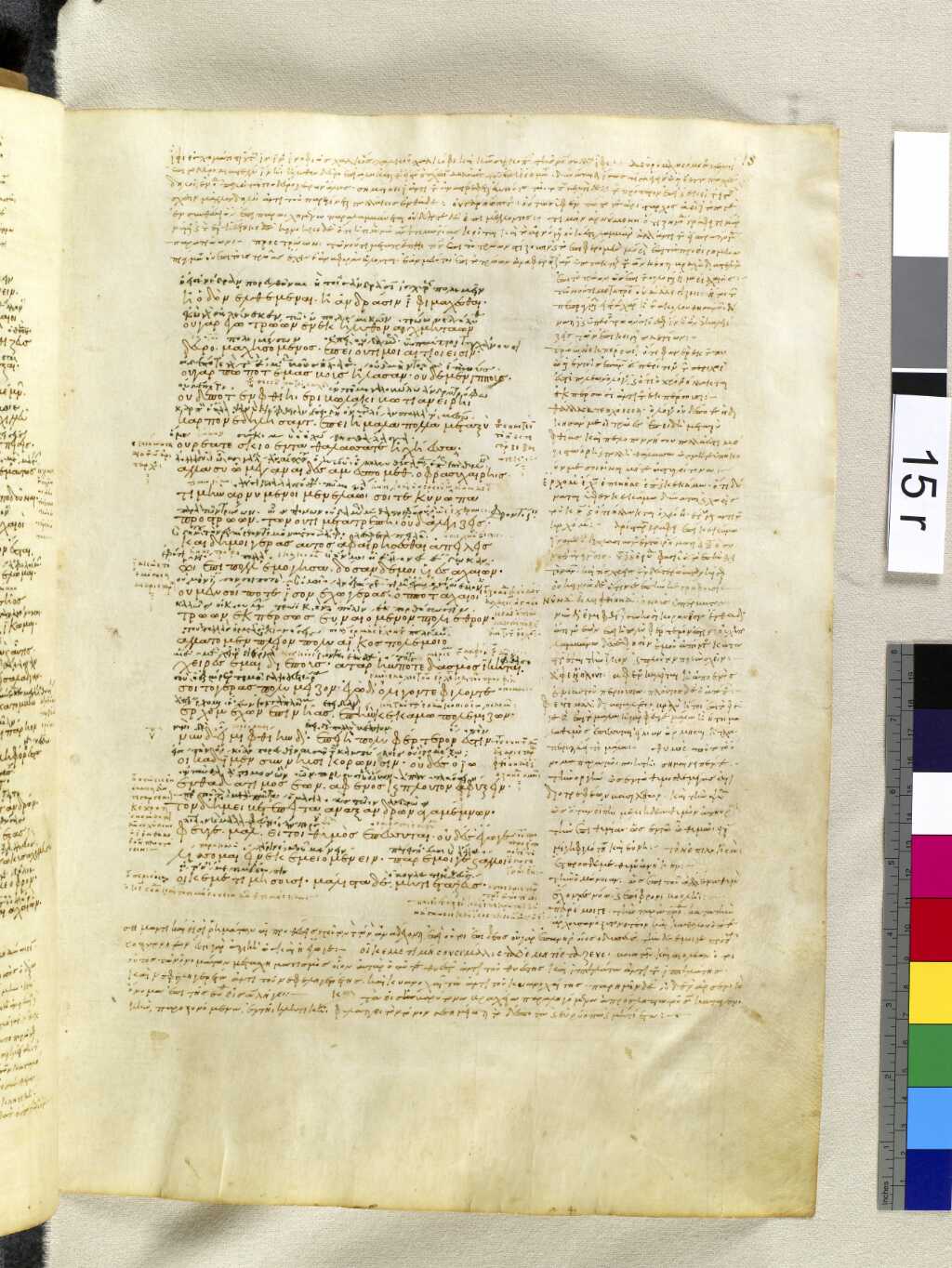
151ἢ ὁδὸν ἐλθέμεναι ἢ ἀνδράσιν ἶφι μάχεσθαι; 152οὐ γὰρ ἐγὼ Τρώων ἕνεκʼ ἤλυθον αἰχμητάων 153δεῦρο μαχησόμενος, ἐπεὶ οὔ τί μοι αἴτιοί εἰσιν· 154οὐ γὰρ πώποτʼ ἐμὰς βοῦς ἤλασαν οὐδὲ μὲν ἵππους, 155οὐδέ ποτʼ ἐν Φθίῃ ἐριβώλακι βωτιανείρῃ 156καρπὸν ἐδηλήσαντʼ, ἐπεὶ ἦ μάλα πολλὰ μεταξὺ 157οὔρεά τε σκιόεντα θάλασσά τε ἠχήεσσα· 158ἀλλὰ σοὶ ὦ μέγʼ ἀναιδὲς ἅμʼ ἑσπόμεθʼ ὄφρα σὺ χαίρῃς, 159τιμὴν ἀρνύμενοι Μενελάῳ σοί τε κυνῶπα 160πρὸς Τρώων· τῶν οὔ τι μετατρέπῃ οὐδʼ ἀλεγίζεις· 161καὶ δή μοι γέρας αὐτὸς ἀφαιρήσεσθαι ἀπειλεῖς, 162ᾧ ἔπι πολλὰ μόγησα, δόσαν δέ μοι υἷες Ἀχαιῶν. 163οὐ μὲν σοί ποτε ἶσον ἔχω γέρας ὁππότʼ Ἀχαιοὶ 164Τρώων ἐκπέρσωσʼ εὖ ναιόμενον πτολίεθρον· 165ἀλλὰ τὸ μὲν πλεῖον πολυάϊκος πολέμοιο 166χεῖρες ἐμαὶ διέπουσʼ· ἀτὰρ ἤν ποτε δασμὸς ἵκηται, 167σοὶ τὸ γέρας πολὺ μεῖζον, ἐγὼ δʼ ὀλίγον τε φίλον τε 168ἔρχομʼ ἔχων ἐπὶ νῆας, ἐπεί κε κάμω πολεμίζων. 169νῦν δʼ εἶμι Φθίην δʼ, ἐπεὶ ἦ πολὺ φέρτερόν ἐστιν 170οἴκαδʼ ἴμεν σὺν νηυσὶ κορωνίσιν, οὐδέ σʼ ὀΐω 171ἐνθάδʼ ἄτιμος ἐὼν ἄφενος καὶ πλοῦτον ἀφύξειν. 172τὸν δʼ ἠμείβετʼ ἔπειτα ἄναξ ἀνδρῶν Ἀγαμέμνων· 173φεῦγε μάλʼ εἴ τοι θυμὸς ἐπέσσυται, οὐδέ σʼ ἔγωγε 174λίσσομαι εἵνεκʼ ἐμεῖο μένειν· πάρʼ ἔμοιγε καὶ ἄλλοι 175οἵ κέ με τιμήσουσι, μάλιστα δὲ μητίετα Ζεύς.
With these words he sat down, and Agamemnon rose in anger. His heart was black with rage, and his eyes flashed fire as he scowled on Calchas and said, “Seer of evil, you never yet prophesied smooth things concerning me, but have ever loved to foretell that which was evil. You have brought me neither comfort nor performance; and now you come seeing among Danaans, and saying that Apollo has plagued us because I would not take a ransom for this girl, the daughter of Chryses. I have set my heart on keeping her in my own house, for I love her better even than my own wife Clytemnestra, whose peer she is alike in form and feature, in understanding and accomplishments. Still I will give her up if I must, for I would have the people live, not die; but you must find me a prize instead, or I alone among the Argives shall be without one. This is not well; for you behold, all of you, that my prize is to go elsewhither.”
And Achilles answered, “Most noble son of Atreus, covetous beyond all mankind, how shall the Achaeans find you another prize? We have no common store from which to take one. Those we took from the cities have been awarded; we cannot disallow the awards that have been made already. Give this girl, therefore, to the god, and if ever Jove grants us to sack the city of Troy we will requite you three and fourfold.”
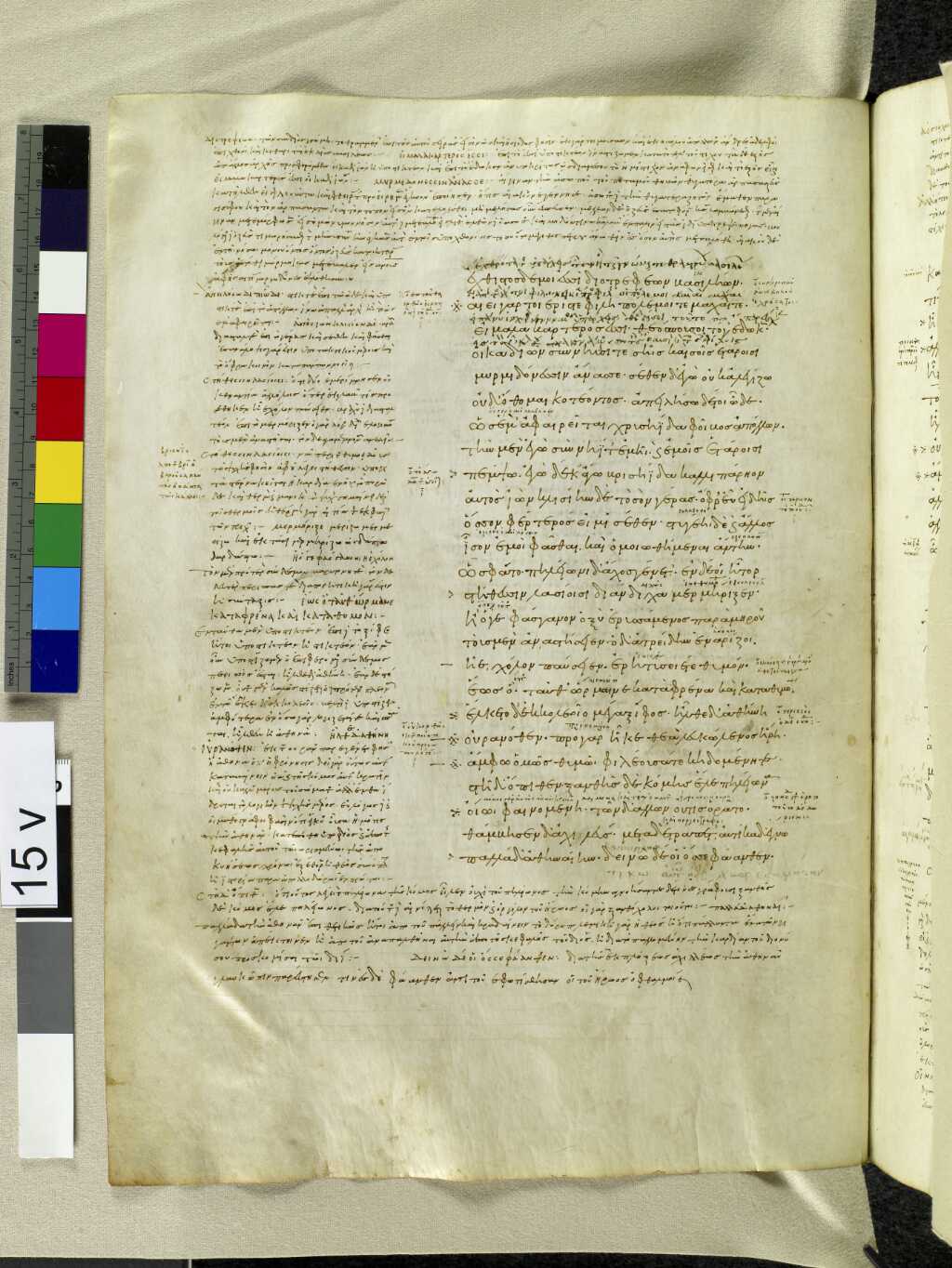
176ἔχθιστος δέ μοί ἐσσι διοτρεφέων βασιλήων· 177αἰεὶ γάρ τοι ἔρις τε φίλη πόλεμοί τε μάχαι τε· 178εἰ μάλα καρτερός ἐσσι, θεός που σοὶ τό γʼ ἔδωκεν· 179οἴκαδʼ ἰὼν σὺν νηυσί τε σῇς καὶ σοῖς ἑτάροισι 180Μυρμιδόνεσσιν ἄνασσε, σέθεν δʼ ἐγὼ οὐκ ἀλεγίζω, 181οὐδʼ ὄθομαι κοτέοντος· ἀπειλήσω δέ τοι ὧδε· 182ὡς ἔμʼ ἀφαιρεῖται Χρυσηΐδα Φοῖβος Ἀπόλλων, 183τὴν μὲν ἐγὼ σὺν νηΐ τʼ ἐμῇ καὶ ἐμοῖς ἑτάροισι 184πέμψω, ἐγὼ δέ κʼ ἄγω Βρισηΐδα καλλιπάρῃον 185αὐτὸς ἰὼν κλισίην δὲ τὸ σὸν γέρας ὄφρʼ ἐῢ εἰδῇς 186ὅσσον φέρτερός εἰμι σέθεν, στυγέῃ δὲ καὶ ἄλλος 187ἶσον ἐμοὶ φάσθαι καὶ ὁμοιωθήμεναι ἄντην. 188ὣς φάτο· Πηλεΐωνι δʼ ἄχος γένετʼ, ἐν δέ οἱ ἦτορ 189στήθεσσιν λασίοισι διάνδιχα μερμήριξεν, 190ἢ ὅ γε φάσγανον ὀξὺ ἐρυσσάμενος παρὰ μηροῦ 191τοὺς μὲν ἀναστήσειεν, ὃ δʼ Ἀτρεΐδην ἐναρίζοι, 192ἦε χόλον παύσειεν ἐρητύσειέ τε θυμόν. 193ἧος ὃ ταῦθʼ ὥρμαινε κατὰ φρένα καὶ κατὰ θυμόν, 194ἕλκετο δʼ ἐκ κολεοῖο μέγα ξίφος, ἦλθε δʼ Ἀθήνη 195οὐρανόθεν· πρὸ γὰρ ἧκε θεὰ λευκώλενος Ἥρη 196ἄμφω ὁμῶς θυμῷ φιλέουσά τε κηδομένη τε· 197στῆ δʼ ὄπιθεν, ξανθῆς δὲ κόμης ἕλε Πηλεΐωνα 198οἴῳ φαινομένη· τῶν δʼ ἄλλων οὔ τις ὁρᾶτο· 199θάμβησεν δʼ Ἀχιλεύς, μετὰ δʼ ἐτράπετʼ, αὐτίκα δʼ ἔγνω 200Παλλάδʼ Ἀθηναίην· δεινὼ δέ οἱ ὄσσε φάανθεν·
Then Agamemnon said, “Achilles, valiant though you be, you shall not thus outwit me. You shall not overreach and you shall not persuade me. Are you to keep your own prize, while I sit tamely under my loss and give up the girl at your bidding? Let the Achaeans find me a prize in fair exchange to my liking, or I will come and take your own, or that of Ajax or of Ulysses; and he to whomsoever I may come shall rue my coming. But of this we will take thought hereafter; for the present, let us draw a ship into the sea, and find a crew for her expressly; let us put a hecatomb on board, and let us send Chryseis also; further, let some chief man among us be in command, either Ajax, or Idomeneus, or yourself, son of Peleus, mighty warrior that you are, that we may offer sacrifice and appease the anger of the god.”
Achilles scowled at him and answered, “You are steeped in insolence and lust of gain. With what heart can any of the Achaeans do your bidding, either on foray or in open fighting? I came not warring here for any ill the Trojans had done me. I have no quarrel with them. They have not raided my cattle nor my horses, nor cut down my harvests on the rich plains of Phthia; for between me and them there is a great space, both mountain and sounding sea. We have followed you, Sir Insolence! for your pleasure, not ours—to gain satisfaction from the Trojans for your shameless self and for Menelaus. You forget this, and threaten to rob me of the prize for which I have toiled, and which the sons of the Achaeans have given me. Never when the Achaeans sack any rich city of the Trojans do I receive so good a prize as you do, though it is my hands that do the better part of the fighting. When the sharing comes, your share is far the largest, and I, forsooth, must go back to my ships, take what I can get and be thankful, when my labour of fighting is done. Now, therefore, I shall go back to Phthia; it will be much better for me to return home with my ships, for I will not stay here dishonoured to gather gold and substance for you.”
And Agamemnon answered, “Fly if you will, I shall make you no prayers to stay you. I have others here who will do me honour, and above all Jove, the lord of counsel. There is no king here so hateful to me as you are, for you are ever quarrelsome and ill-affected. What though you be brave? Was it not heaven that made you so? Go home, then, with your ships and comrades to lord it over the Myrmidons. I care neither for you nor for your anger; and thus will I do: since Phoebus Apollo is taking Chryseis from me, I shall send her with my ship and my followers, but I shall come to your tent and take your own prize Briseis, that you may learn how much stronger I am than you are, and that another may fear to set himself up as equal or comparable with me.”
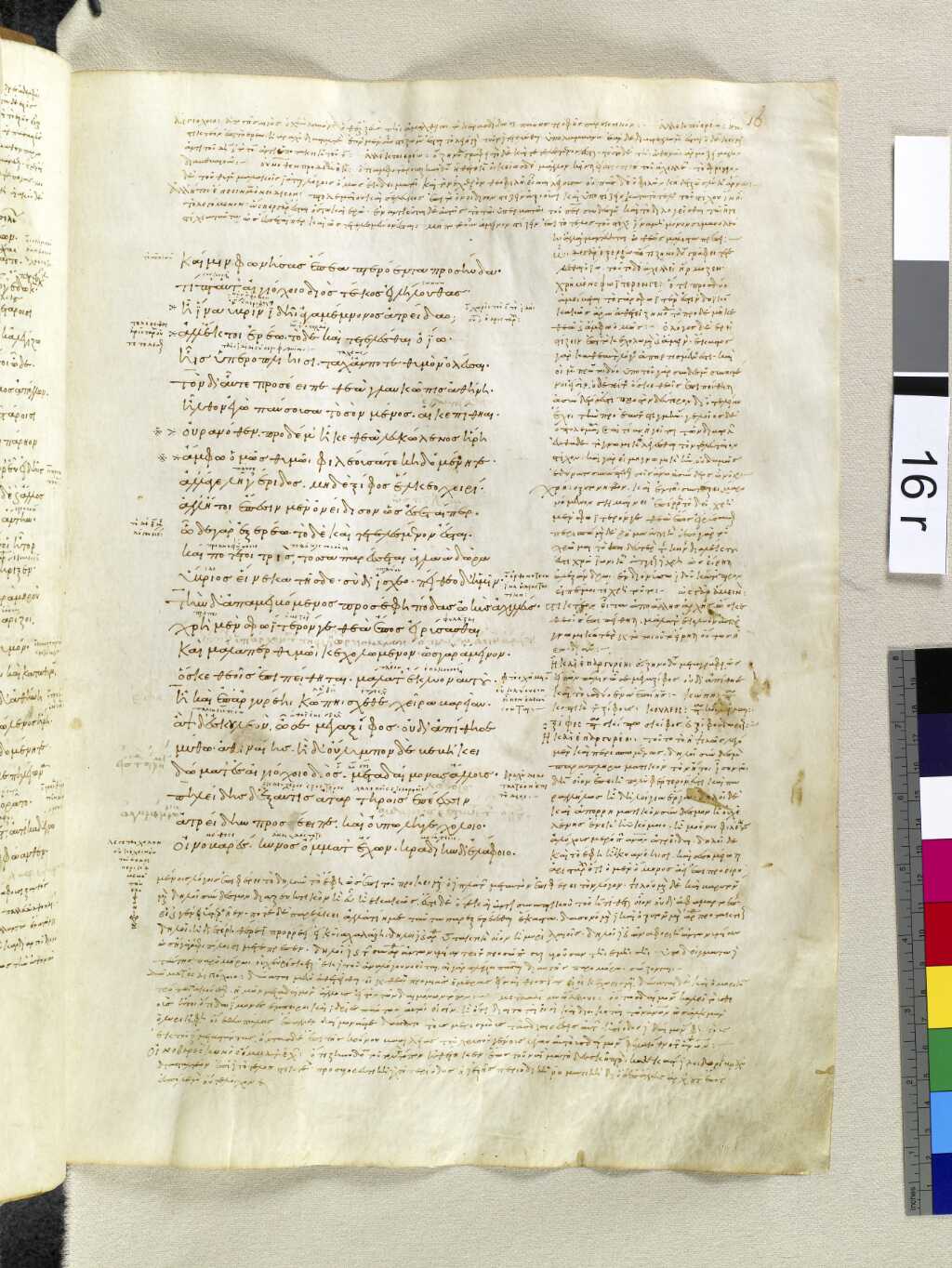
201καί μιν φωνήσας ἔπεα πτερόεντα προσηύδα· 202τίπτʼ αὖτʼ αἰγιόχοιο Διὸς τέκος εἰλήλουθας; 203ἦ ἵνα ὕβριν ἴδῃ Ἀγαμέμνονος Ἀτρεΐδαο; 204ἀλλʼ ἔκ τοι ἐρέω, τὸ δὲ καὶ τελέεσθαι ὀΐω· 205ᾗς ὑπεροπλίῃσι τάχʼ ἄν ποτε θυμὸν ὀλέσσῃ. 206τὸν δʼ αὖτε προσέειπε θεὰ γλαυκῶπις Ἀθήνη· 207ἦλθον ἐγὼ παύσουσα τὸ σὸν μένος, αἴ κε πίθηαι, 208οὐρανόθεν· πρὸ δέ μʼ ἧκε θεὰ λευκώλενος Ἥρη 209ἄμφω ὁμῶς θυμῷ φιλέουσά τε κηδομένη τε· 210ἀλλʼ ἄγε λῆγʼ ἔριδος, μηδὲ ξίφος ἕλκεο χειρί· 211ἀλλʼ ἤτοι ἔπεσιν μὲν ὀνείδισον ὡς ἔσεταί περ· 212ὧδε γὰρ ἐξερέω, τὸ δὲ καὶ τετελεσμένον ἔσται· 213καί ποτέ τοι τρὶς τόσσα παρέσσεται ἀγλαὰ δῶρα 214ὕβριος εἵνεκα τῆσδε· σὺ δʼ ἴσχεο, πείθεο δʼ ἡμῖν. 215τὴν δʼ ἀπαμειβόμενος προσέφη πόδας ὠκὺς Ἀχιλλεύς· 216χρὴ μὲν σφωΐτερόν γε θεὰ ἔπος εἰρύσσασθαι 217καὶ μάλα περ θυμῷ κεχολωμένον· ὧς γὰρ ἄμεινον· 218ὅς κε θεοῖς ἐπιπείθηται μάλα τʼ ἔκλυον αὐτοῦ. 219ἦ καὶ ἐπʼ ἀργυρέῃ κώπῃ σχέθε χεῖρα βαρεῖαν, 220ἂψ δʼ ἐς κουλεὸν ὦσε μέγα ξίφος, οὐδʼ ἀπίθησε 221μύθῳ Ἀθηναίης· ἣ δʼ Οὔλυμπον δὲ βεβήκει 222δώματʼ ἐς αἰγιόχοιο Διὸς μετὰ δαίμονας ἄλλους. 223Πηλεΐδης δʼ ἐξαῦτις ἀταρτηροῖς ἐπέεσσιν 224Ἀτρεΐδην προσέειπε, καὶ οὔ πω λῆγε χόλοιο· 225οἰνοβαρές, κυνὸς ὄμματʼ ἔχων, κραδίην δʼ ἐλάφοιο,
The son of Peleus was furious, and his heart within his shaggy breast was divided whether to draw his sword, push the others aside, and kill the son of Atreus, or to restrain himself and check his anger. While he was thus in two minds, and was drawing his mighty sword from its scabbard, Minerva came down from heaven (for Juno had sent her in the love she bore to them both), and seized the son of Peleus by his yellow hair, visible to him alone, for of the others no man could see her. Achilles turned in amaze, and by the fire that flashed from her eyes at once knew that she was Minerva. “Why are you here,” said he, “daughter of aegis-bearing Jove? To see the pride of Agamemnon, son of Atreus? Let me tell you—and it shall surely be—he shall pay for this insolence with his life.”
And Minerva said, “I come from heaven, if you will hear me, to bid you stay your anger. Juno has sent me, who cares for both of you alike. Cease, then, this brawling, and do not draw your sword; rail at him if you will, and your railing will not be vain, for I tell you—and it shall surely be—that you shall hereafter receive gifts three times as splendid by reason of this present insult. Hold, therefore, and obey.”
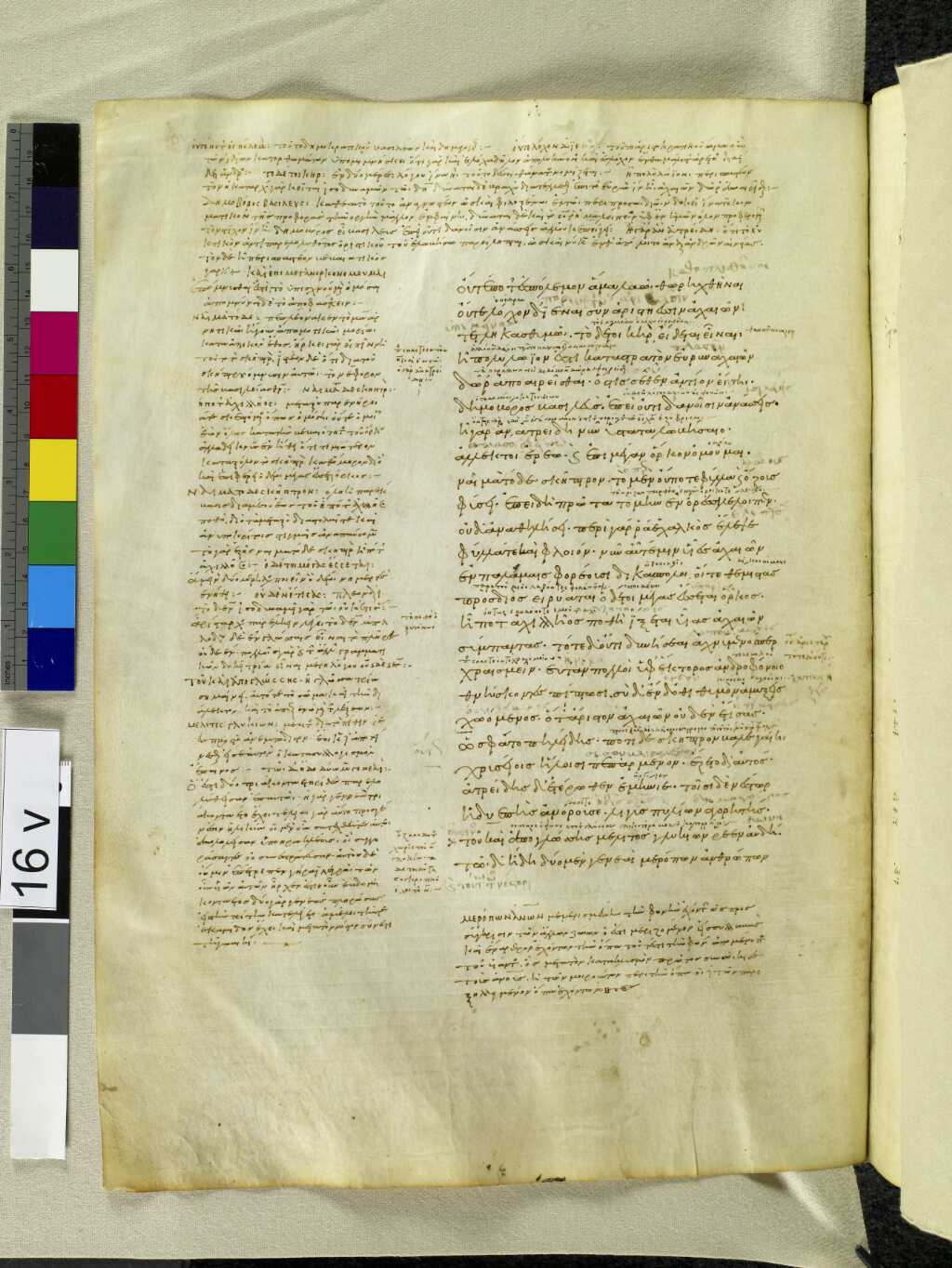
226οὔτέ ποτʼ ἐς πόλεμον ἅμα λαῷ θωρηχθῆναι 227οὔτε λόχον δʼ ἰέναι σὺν ἀριστήεσσιν Ἀχαιῶν 228τέτληκας θυμῷ· τὸ δέ τοι κὴρ εἴδεται εἶναι. 229ἦ πολὺ λώϊόν ἐστι κατὰ στρατὸν εὐρὺν Ἀχαιῶν 230δῶρʼ ἀποαιρεῖσθαι ὅς τις σέθεν ἀντίον εἴπῃ· 231δημοβόρος βασιλεὺς ἐπεὶ οὐτιδανοῖσιν ἀνάσσεις· 232ἦ γὰρ ἂν Ἀτρεΐδη νῦν ὕστατα λωβήσαιο. 233ἀλλʼ ἔκ τοι ἐρέω καὶ ἐπὶ μέγαν ὅρκον ὀμοῦμαι· 234ναὶ μὰ τόδε σκῆπτρον, τὸ μὲν οὔ ποτε φύλλα καὶ ὄζους 235φύσει, ἐπεὶ δὴ πρῶτα τομὴν ἐν ὄρεσσι λέλοιπεν, 236οὐδʼ ἀναθηλήσει· περὶ γάρ ῥά ἑ χαλκὸς ἔλεψε 237φύλλά τε καὶ φλοιόν· νῦν αὖτέ μιν υἷες Ἀχαιῶν 238ἐν παλάμῃς φορέουσι δικασπόλοι, οἵ τε θέμιστας 239πρὸς Διὸς εἰρύαται· ὃ δέ τοι μέγας ἔσσεται ὅρκος· 240ἦ ποτʼ Ἀχιλλῆος ποθὴ ἵξεται υἷας Ἀχαιῶν 241σύμπαντας· τότε δʼ οὔ τι δυνήσεαι ἀχνύμενός περ 242χραισμεῖν, εὖτʼ ἂν πολλοὶ ὑφʼ Ἕκτορος ἀνδροφόνοιο 243θνήσκοντες πίπτωσι· σὺ δʼ ἔνδοθι θυμὸν ἀμύξεις 244χωόμενος ὅ τʼ ἄριστον Ἀχαιῶν οὐδὲν ἔτισας. 245ὣς φάτο Πηλεΐδης, ποτὶ δὲ σκῆπτρον βάλε γαίῃ 246χρυσείοις ἥλοισι πεπαρμένον, ἕζετο δʼ αὐτός· 247Ἀτρεΐδης δʼ ἑτέρωθεν ἐμήνιε· τοῖσι δὲ Νέστωρ 248ἡδυεπὴς ἀνόρουσε λιγὺς Πυλίων ἀγορητής, 249τοῦ καὶ ἀπὸ γλώσσης μέλιτος γλυκίων ῥέεν αὐδή· 250τῷ δʼ ἤδη δύο μὲν γενεαὶ μερόπων ἀνθρώπων
“Goddess,” answered Achilles, “however angry a man may be, he must do as you two command him. This will be best, for the gods ever hear the prayers of him who has obeyed them.”
He stayed his hand on the silver hilt of his sword, and thrust it back into the scabbard as Minerva bade him. Then she went back to Olympus among the other gods, and to the house of aegis-bearing Jove.
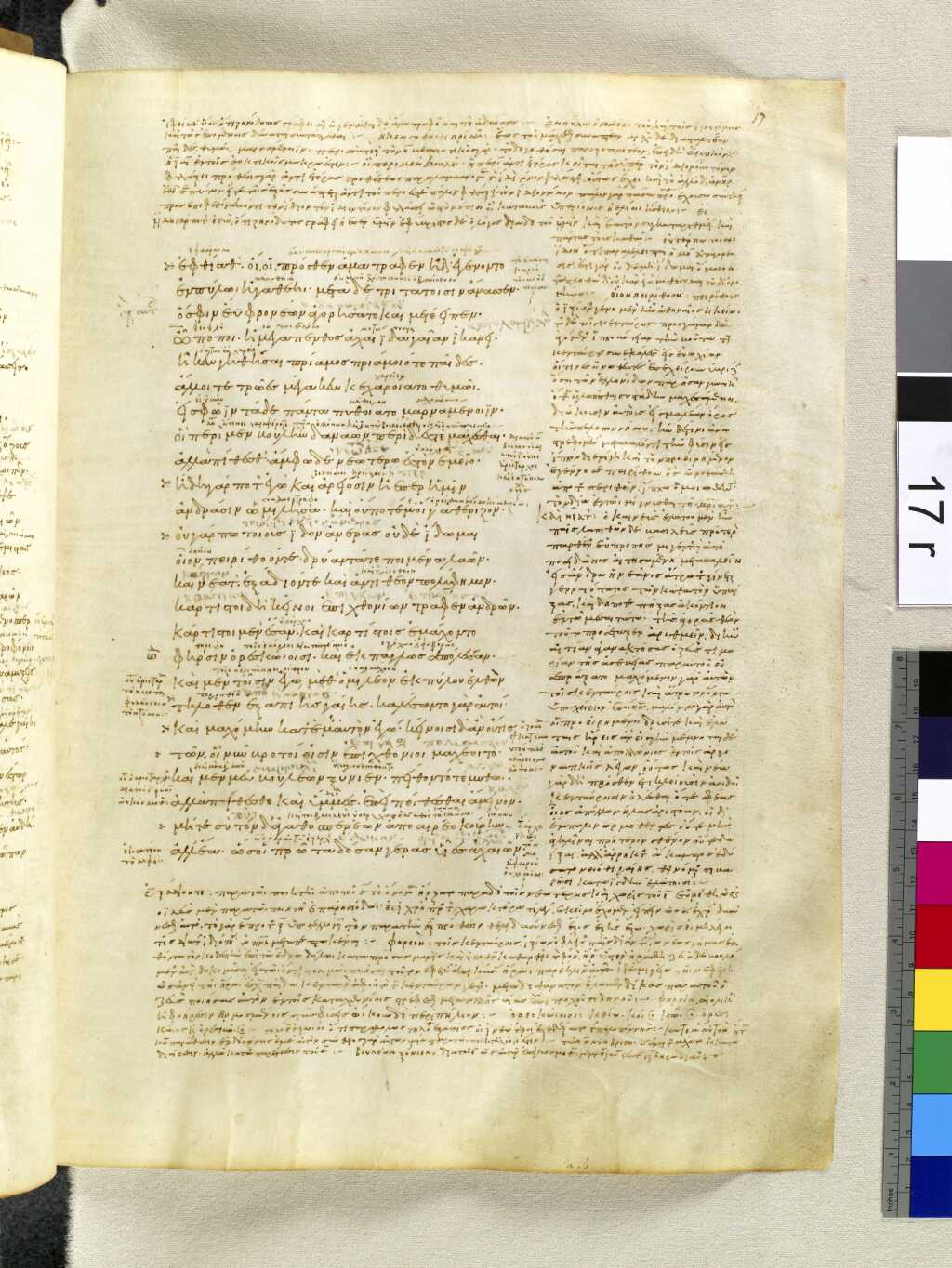
251ἐφθίαθʼ, οἵ οἱ πρόσθεν ἅμα τράφεν ἠδʼ ἐγένοντο 252ἐν Πύλῳ ἠγαθέῃ, μετὰ δὲ τριτάτοισιν ἄνασσεν· 253ὅ σφιν ἐὺ φρονέων ἀγορήσατο καὶ μετέειπεν· 254ὦ πόποι ἦ μέγα πένθος Ἀχαιΐδα γαῖαν ἱκάνει· 255ἦ κεν γηθήσαι Πρίαμος Πριάμοιό τε παῖδες 256ἄλλοι τε Τρῶες μέγα κεν κεχαροίατο θυμῷ 257εἰ σφῶϊν τάδε πάντα πυθοίατο μαρναμένοιϊν, 258οἳ περὶ μὲν βουλὴν Δαναῶν, περὶ δʼ ἐστὲ μάχεσθαι. 259ἀλλὰ πίθεσθʼ· ἄμφω δὲ νεωτέρω ἐστὸν ἐμεῖο· 260ἤδη γάρ ποτʼ ἐγὼ καὶ ἀρείοσιν ἠέ περ ὑμῖν 261ἀνδράσιν ὡμίλησα, καὶ οὔ ποτέ μʼ οἵ γʼ ἀθέριζον. 262οὐ γάρ πω τοίους ἴδον ἀνέρας οὐδὲ ἴδωμαι, 263οἷον Πειρίθοόν τε Δρύαντά τε ποιμένα λαῶν 264Καινέα τʼ Ἐξάδιόν τε καὶ ἀντίθεον Πολύφημον 265Θησέα τʼ Αἰγεΐδην, ἐπιείκελον ἀθανάτοισιν· 266κάρτιστοι δὴ κεῖνοι ἐπιχθονίων τράφεν ἀνδρῶν· 267κάρτιστοι μὲν ἔσαν καὶ καρτίστοις ἐμάχοντο 268φηρσὶν ὀρεσκῴοισι καὶ ἐκπάγλως ἀπόλεσσαν. 269καὶ μὲν τοῖσιν ἐγὼ μεθομίλεον ἐκ Πύλου ἐλθὼν 270τηλόθεν ἐξ ἀπίης γαίης· καλέσαντο γὰρ αὐτοί· 271καὶ μαχόμην κατʼ ἔμʼ αὐτὸν ἐγώ· κείνοισι δʼ ἂν οὔ τις 272τῶν οἳ νῦν βροτοί εἰσιν ἐπιχθόνιοι μαχέοιτο· 273καὶ μέν μευ βουλέων ξύνιεν πείθοντό τε μύθῳ· 274ἀλλὰ πίθεσθε καὶ ὔμμες, ἐπεὶ πείθεσθαι ἄμεινον· 275μήτε σὺ τόνδʼ ἀγαθός περ ἐὼν ἀποαίρεο κούρην,
But the son of Peleus again began railing at the son of Atreus, for he was still in a rage. “Wine-bibber,” he cried, “with the face of a dog and the heart of a hind, you never dare to go out with the host in fight, nor yet with our chosen men in ambuscade. You shun this as you do death itself. You had rather go round and rob his prizes from any man who contradicts you. You devour your people, for you are king over a feeble folk; otherwise, son of Atreus, henceforward you would insult no man. Therefore I say, and swear it with a great oath—nay, by this my sceptre which shalt sprout neither leaf nor shoot, nor bud anew from the day on which it left its parent stem upon the mountains—for the axe stripped it of leaf and bark, and now the sons of the Achaeans bear it as judges and guardians of the decrees of heaven—so surely and solemnly do I swear that hereafter they shall look fondly for Achilles and shall not find him. In the day of your distress, when your men fall dying by the murderous hand of Hector, you shall not know how to help them, and shall rend your heart with rage for the hour when you offered insult to the bravest of the Achaeans.”
With this the son of Peleus dashed his gold-bestudded sceptre on the ground and took his seat, while the son of Atreus was beginning fiercely from his place upon the other side. Then uprose smooth-tongued Nestor, the facile speaker of the Pylians, and the words fell from his lips sweeter than honey. Two generations of men born and bred in Pylos had passed away under his rule, and he was now reigning over the third. With all sincerity and goodwill, therefore, he addressed them thus:—
276ἀλλʼ ἔα ὥς οἱ πρῶτα δόσαν γέρας υἷες Ἀχαιῶν· 277μήτε σὺ Πηλείδη ἔθελʼ ἐριζέμεναι βασιλῆϊ 278ἀντιβίην, ἐπεὶ οὔ ποθʼ ὁμοίης ἔμμορε τιμῆς 279σκηπτοῦχος βασιλεύς, ᾧ τε Ζεὺς κῦδος ἔδωκεν. 280εἰ δὲ σὺ καρτερός ἐσσι θεὰ δέ σε γείνατο μήτηρ, 281ἀλλʼ ὅ γε φέρτερός ἐστιν ἐπεὶ πλεόνεσσιν ἀνάσσει. 282Ἀτρεΐδη σὺ δὲ παῦε τεὸν μένος· αὐτὰρ ἔγωγε 283λίσσομʼ Ἀχιλλῆϊ μεθέμεν χόλον, ὃς μέγα πᾶσιν 284ἕρκος Ἀχαιοῖσιν πέλεται πολέμοιο κακοῖο. 285τὸν δʼ ἀπαμειβόμενος προσέφη κρείων Ἀγαμέμνων· 286ναὶ δὴ ταῦτά γε πάντα γέρον κατὰ μοῖραν ἔειπες· 287ἀλλʼ ὅδʼ ἀνὴρ ἐθέλει περὶ πάντων ἔμμεναι ἄλλων, 288πάντων μὲν κρατέειν ἐθέλει, πάντεσσι δʼ ἀνάσσειν, 289πᾶσι δὲ σημαίνειν, ἅ τινʼ οὐ πείσεσθαι ὀΐω· 290εἰ δέ μιν αἰχμητὴν ἔθεσαν θεοὶ αἰὲν ἐόντες 291τοὔνεκά οἱ προθέουσιν ὀνείδεα μυθήσασθαι; 292τὸν δʼ ἄρʼ ὑποβλήδην ἠμείβετο δῖος Ἀχιλλεύς· 293ἦ γάρ κεν δειλός τε καὶ οὐτιδανὸς καλεοίμην 294εἰ δὴ σοὶ πᾶν ἔργον ὑπείξομαι ὅττί κεν εἴπῃς· 295ἄλλοισιν δὴ ταῦτʼ ἐπιτέλλεο, μὴ γὰρ ἔμοιγε 296σήμαινʼ· οὐ γὰρ ἔγωγʼ ἔτι σοὶ πείσεσθαι ὀΐω. 297ἄλλο δέ τοι ἐρέω, σὺ δʼ ἐνὶ φρεσὶ βάλλεο σῇσι· 298χερσὶ μὲν οὔ τοι ἔγωγε μαχήσομαι εἵνεκα κούρης 299οὔτε σοὶ οὔτέ τῳ ἄλλῳ, ἐπεί μʼ ἀφέλεσθέ γε δόντες· 300τῶν δʼ ἄλλων ἅ μοί ἐστι θοῇ παρὰ νηῒ μελαίνῃ
“Of a truth,” he said, “a great sorrow has befallen the Achaean land. Surely Priam with his sons would rejoice, and the Trojans be glad at heart if they could hear this quarrel between you two, who are so excellent in fight and counsel. I am older than either of you; therefore be guided by me. Moreover I have been the familiar friend of men even greater than you are, and they did not disregard my counsels. Never again can I behold such men as Pirithous and Dryas shepherd of his people, or as Caeneus, Exadius, godlike Polyphemus, and Theseus son of Aegeus, peer of the immortals. These were the mightiest men ever born upon this earth: mightiest were they, and when they fought the fiercest tribes of mountain savages they utterly overthrew them. I came from distant Pylos, and went about among them, for they would have me come, and I fought as it was in me to do. Not a man now living could withstand them, but they heard my words, and were persuaded by them. So be it also with yourselves, for this is the more excellent way. Therefore, Agamemnon, though you be strong, take not this girl away, for the sons of the Achaeans have already given her to Achilles; and you, Achilles, strive not further with the king, for no man who by the grace of Jove wields a sceptre has like honour with Agamemnon. You are strong, and have a goddess for your mother; but Agamemnon is stronger than you, for he has more people under him. Son of Atreus, check your anger, I implore you; end this quarrel with Achilles, who in the day of battle is a tower of strength to the Achaeans.”
And Agamemnon answered, “Sir, all that you have said is true, but this fellow must needs become our lord and master: he must be lord of all, king of all, and captain of all, and this shall hardly be. Granted that the gods have made him a great warrior, have they also given him the right to speak with railing?”
Achilles interrupted him. “I should be a mean coward,” he cried, “were I to give in to you in all things. Order other people about, not me, for I shall obey no longer. Furthermore I say—and lay my saying to your heart—I shall fight neither you nor any man about this girl, for those that take were those also that gave. But of all else that is at my ship you shall carry away nothing by force. Try, that others may see; if you do, my spear shall be reddened with your blood.”
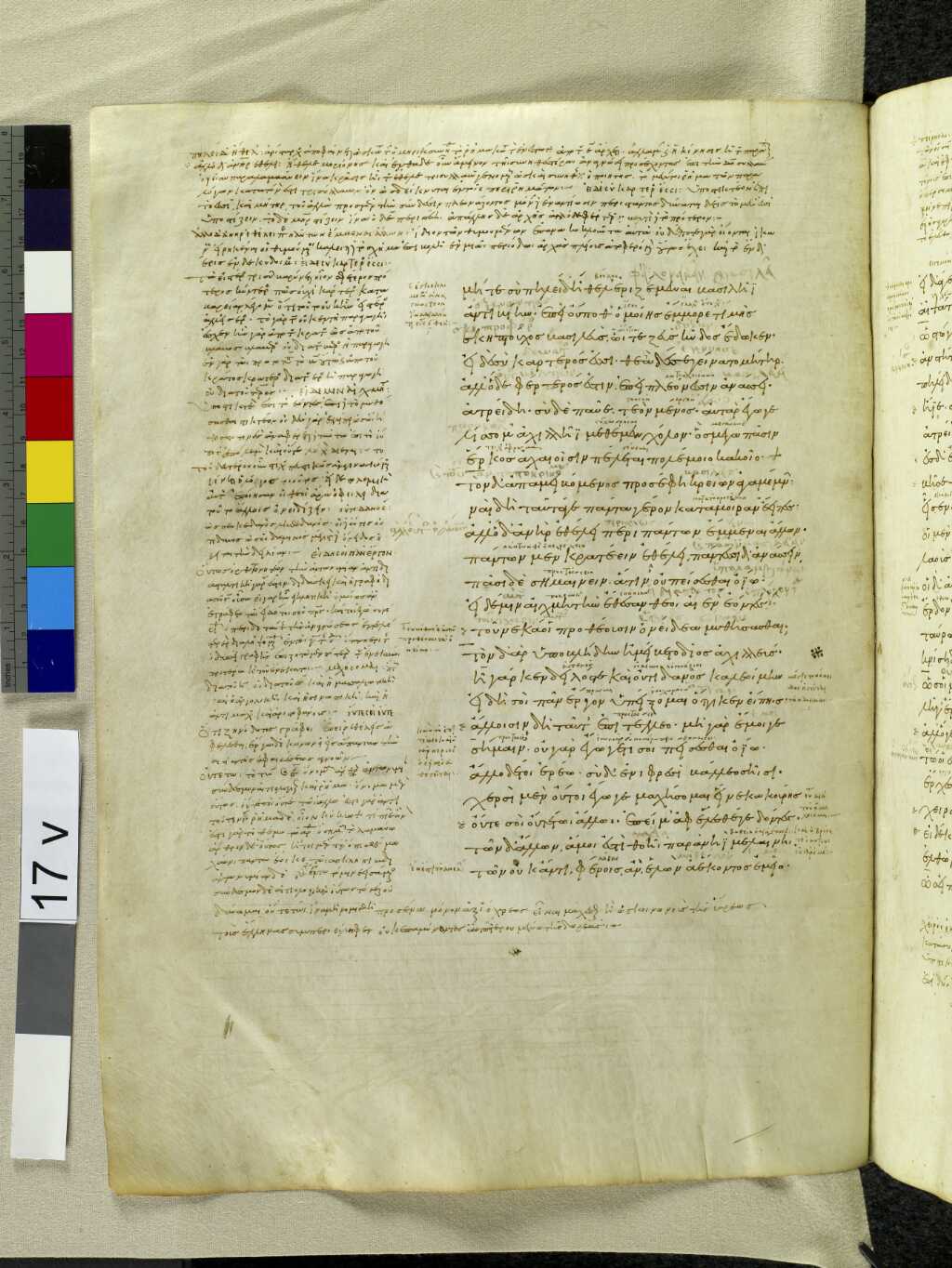
301τῶν οὐκ ἄν τι φέροις ἀνελὼν ἀέκοντος ἐμεῖο· 302εἰ δʼ ἄγε μὴν πείρησαι ἵνα γνώωσι καὶ οἵδε· 303αἶψά τοι αἷμα κελαινὸν ἐρωήσει περὶ δουρί. 304ὣς τώ γʼ ἀντιβίοισι μαχεσσαμένω ἐπέεσσιν 305ἀνστήτην, λῦσαν δʼ ἀγορὴν παρὰ νηυσὶν Ἀχαιῶν· 306Πηλεΐδης μὲν ἐπὶ κλισίας καὶ νῆας ἐΐσας 307ἤϊε σύν τε Μενοιτιάδῃ καὶ οἷς ἑτάροισιν· 308Ἀτρεΐδης δʼ ἄρα νῆα θοὴν ἅλα δὲ προέρυσσεν, 309ἐν δʼ ἐρέτας ἔκρινεν ἐείκοσιν, ἐς δʼ ἑκατόμβην 310βῆσε θεῷ, ἀνὰ δὲ Χρυσηΐδα καλλιπάρῃον 311εἷσεν ἄγων· ἐν δʼ ἀρχὸς ἔβη πολύμητις Ὀδυσσεύς. 312οἳ μὲν ἔπειτʼ ἀναβάντες ἐπέπλεον ὑγρὰ κέλευθα, 313λαοὺς δʼ Ἀτρεΐδης ἀπολυμαίνεσθαι ἄνωγεν· 314οἳ δʼ ἀπελυμαίνοντο καὶ εἰς ἅλα λύματα βάλλον, 315ἕρδον δʼ Ἀπόλλωνι τεληέσσας ἑκατόμβας 316ταύρων ἠδʼ αἰγῶν παρὰ θῖνʼ ἁλὸς ἀτρυγέτοιο· 317κνίση δʼ οὐρανὸν ἷκεν ἑλισσομένη περὶ καπνῷ. 318ὣς οἳ μὲν τὰ πένοντο κατὰ στρατόν· οὐδʼ Ἀγαμέμνων 319λῆγʼ ἔριδος τὴν πρῶτον ἐπηπείλησʼ Ἀχιλῆϊ, 320ἀλλʼ ὅ γε Ταλθύβιόν τε καὶ Εὐρυβάτην προσέειπε, 321τώ οἱ ἔσαν κήρυκε καὶ ὀτρηρὼ θεράποντε· 322ἔρχεσθον κλισίην Πηληϊάδεω Ἀχιλῆος· 323χειρὸς ἑλόντʼ ἀγέμεν Βρισηΐδα καλλιπάρῃον· 324εἰ δέ κε μὴ δώῃσιν ἐγὼ δέ κεν αὐτὸς ἕλωμαι 325ἐλθὼν σὺν πλεόνεσσι· τό οἱ καὶ ῥίγιον ἔσται.
When they had quarrelled thus angrily, they rose, and broke up the assembly at the ships of the Achaeans. The son of Peleus went back to his tents and ships with the son of Menoetius and his company, while Agamemnon drew a vessel into the water and chose a crew of twenty oarsmen. He escorted Chryseis on board and sent moreover a hecatomb for the god. And Ulysses went as captain.
These, then, went on board and sailed their ways over the sea. But the son of Atreus bade the people purify themselves; so they purified themselves and cast their filth into the sea. Then they offered hecatombs of bulls and goats without blemish on the sea-shore, and the smoke with the savour of their sacrifice rose curling up towards heaven.
326ὣς εἰπὼν προΐει, κρατερὸν δʼ ἐπὶ μῦθον ἔτελλε· 327τὼ δʼ ἀέκοντε βάτην παρὰ θῖνʼ ἁλὸς ἀτρυγέτοιο, 328Μυρμιδόνων δʼ ἐπί τε κλισίας καὶ νῆας ἱκέσθην, 329τὸν δʼ εὗρον παρά τε κλισίῃ καὶ νηῒ μελαίνῃ 330ἥμενον· οὐδʼ ἄρα τώ γε ἰδὼν γήθησεν Ἀχιλλεύς. 331τὼ μὲν ταρβήσαντε καὶ αἰδομένω βασιλῆα 332στήτην, οὐδέ τί μιν προσεφώνεον οὐδʼ ἐρέοντο· 333αὐτὰρ ὃ ἔγνω ᾗσιν ἐνὶ φρεσὶ φώνησέν τε· 334χαίρετε κήρυκες Διὸς ἄγγελοι ἠδὲ καὶ ἀνδρῶν, 335ἆσσον ἴτʼ· οὔ τί μοι ὔμμες ἐπαίτιοι ἀλλʼ Ἀγαμέμνων, 336ὃ σφῶϊ προΐει Βρισηΐδος εἵνεκα κούρης. 337ἀλλʼ ἄγε διογενὲς Πατρόκλεες ἔξαγε κούρην 338καί σφωϊν δὸς ἄγειν· τὼ δʼ αὐτὼ μάρτυροι ἔστων 339πρός τε θεῶν μακάρων πρός τε θνητῶν ἀνθρώπων 340καὶ πρὸς τοῦ βασιλῆος ἀπηνέος εἴ ποτε δʼ αὖτε 341χρειὼ ἐμεῖο γένηται ἀεικέα λοιγὸν ἀμῦναι 342τοῖς ἄλλοις· ἦ γὰρ ὅ γʼ ὀλοιῇσι φρεσὶ θύει, 343οὐδέ τι οἶδε νοῆσαι ἅμα πρόσσω καὶ ὀπίσσω, 344ὅππως οἱ παρὰ νηυσὶ σόοι μαχέοιντο Ἀχαιοί. 345ὣς φάτο, Πάτροκλος δὲ φίλῳ ἐπεπείθεθʼ ἑταίρῳ, 346ἐκ δʼ ἄγαγε κλισίης Βρισηΐδα καλλιπάρῃον, 347δῶκε δʼ ἄγειν· τὼ δʼ αὖτις ἴτην παρὰ νῆας Ἀχαιῶν· 348ἣ δʼ ἀέκουσʼ ἅμα τοῖσι γυνὴ κίεν· αὐτὰρ Ἀχιλλεὺς 349δακρύσας ἑτάρων ἄφαρ ἕζετο νόσφι λιασθείς, 350θῖνʼ ἔφʼ ἁλὸς πολιῆς, ὁρόων ἐπʼ ἀπείρονα πόντον·
Thus did they busy themselves throughout the host. But Agamemnon did not forget the threat that he had made Achilles, and called his trusty messengers and squires Talthybius and Eurybates. “Go,” said he, “to the tent of Achilles, son of Peleus; take Briseis by the hand and bring her hither; if he will not give her I shall come with others and take her—which will press him harder.”
He charged them straightly further and dismissed them, whereon they went their way sorrowfully by the seaside, till they came to the tents and ships of the Myrmidons. They found Achilles sitting by his tent and his ships, and ill-pleased he was when he beheld them. They stood fearfully and reverently before him, and never a word did they speak, but he knew them and said, “Welcome, heralds, messengers of gods and men; draw near; my quarrel is not with you but with Agamemnon who has sent you for the girl Briseis. Therefore, Patroclus, bring her and give her to them, but let them be witnesses by the blessed gods, by mortal men, and by the fierceness of Agamemnon’s anger, that if ever again there be need of me to save the people from ruin, they shall seek and they shall not find. Agamemnon is mad with rage and knows not how to look before and after that the Achaeans may fight by their ships in safety.”
351πολλὰ δὲ μητρὶ φίλῃ ἠρήσατο χεῖρας ὀρεγνύς· 352μῆτερ ἐπεί μʼ ἔτεκές γε μινυνθάδιόν περ ἐόντα, 353τιμήν πέρ μοι ὄφελλεν Ὀλύμπιος ἐγγυαλίξαι 354Ζεὺς ὑψιβρεμέτης· νῦν δʼ οὐδέ με τυτθὸν ἔτισεν· 355ἦ γάρ μʼ Ἀτρεΐδης εὐρὺ κρείων Ἀγαμέμνων 356ἠτίμησεν· ἑλὼν γὰρ ἔχει γέρας αὐτὸς ἀπούρας. 357ὣς φάτο δάκρυ χέων, τοῦ δʼ ἔκλυε πότνια μήτηρ 358ἡμένη ἐν βένθεσσιν ἁλὸς παρὰ πατρὶ γέροντι· 359καρπαλίμως δʼ ἀνέδυ πολιῆς ἁλὸς ἠΰτʼ ὀμίχλη, 360καί ῥα πάροιθʼ αὐτοῖο καθέζετο δάκρυ χέοντος, 361χειρί τέ μιν κατέρεξεν ἔπος τʼ ἔφατʼ ἔκ τʼ ὀνόμαζε· 362τέκνον τί κλαίεις; τί δέ σε φρένας ἵκετο πένθος; 363ἐξαύδα, μὴ κεῦθε νόῳ, ἵνα εἴδομεν ἄμφω. 364τὴν δὲ βαρὺ στενάχων προσέφη πόδας ὠκὺς Ἀχιλλεύς· 365οἶσθα· τί ἤ τοι ταῦτα ἰδυίῃ πάντʼ ἀγορεύω; 366ᾠχόμεθʼ ἐς Θήβην ἱερὴν πόλιν Ἠετίωνος, 367τὴν δὲ διεπράθομέν τε καὶ ἤγομεν ἐνθάδε πάντα· 368καὶ τὰ μὲν εὖ δάσσαντο μετὰ σφίσιν υἷες Ἀχαιῶν, 369ἐκ δʼ ἕλον Ἀτρεΐδῃ Χρυσηΐδα καλλιπάρῃον. 370Χρύσης δʼ αὖθʼ ἱερεὺς ἑκατηβόλου Ἀπόλλωνος 371ἦλθε θοὰς ἐπὶ νῆας Ἀχαιῶν χαλκοχιτώνων 372λυσόμενός τε θύγατρα φέρων τʼ ἀπερείσιʼ ἄποινα, 373στέμματʼ ἔχων ἐν χερσὶν ἑκηβόλου Ἀπόλλωνος 374χρυσέῳ ἀνὰ σκήπτρῳ, καὶ λίσσετο πάντας Ἀχαιούς, 375Ἀτρεΐδα δὲ μάλιστα δύω κοσμήτορε λαῶν.
Patroclus did as his dear comrade had bidden him. He brought Briseis from the tent and gave her over to the heralds, who took her with them to the ships of the Achaeans—and the woman was loth to go. Then Achilles went all alone by the side of the hoar sea, weeping and looking out upon the boundless waste of waters. He raised his hands in prayer to his immortal mother, “Mother,” he cried, “you bore me doomed to live but for a little season; surely Jove, who thunders from Olympus, might have made that little glorious. It is not so. Agamemnon, son of Atreus, has done me dishonour, and has robbed me of my prize by force.”
As he spoke he wept aloud, and his mother heard him where she was sitting in the depths of the sea hard by the old man her father. Forthwith she rose as it were a grey mist out of the waves, sat down before him as he stood weeping, caressed him with her hand, and said, “My son, why are you weeping? What is it that grieves you? Keep it not from me, but tell me, that we may know it together.”
376ἔνθʼ ἄλλοι μὲν πάντες ἐπευφήμησαν Ἀχαιοὶ 377αἰδεῖσθαί θʼ ἱερῆα καὶ ἀγλαὰ δέχθαι ἄποινα· 378ἀλλʼ οὐκ Ἀτρεΐδῃ Ἀγαμέμνονι ἥνδανε θυμῷ, 379ἀλλὰ κακῶς ἀφίει, κρατερὸν δʼ ἐπὶ μῦθον ἔτελλε· 380χωόμενος δʼ ὁ γέρων πάλιν ᾤχετο· τοῖο δʼ Ἀπόλλων 381εὐξαμένου ἤκουσεν, ἐπεὶ μάλα οἱ φίλος ἦεν, 382ἧκε δʼ ἐπʼ Ἀργείοισι κακὸν βέλος· οἳ δέ νυ λαοὶ 383θνῇσκον ἐπασσύτεροι, τὰ δʼ ἐπῴχετο κῆλα θεοῖο 384πάντῃ ἀνὰ στρατὸν εὐρὺν Ἀχαιῶν· ἄμμι δὲ μάντις 385εὖ εἰδὼς ἀγόρευε θεοπροπίας ἑκάτοιο. 386αὐτίκʼ ἐγὼ πρῶτος κελόμην θεὸν ἱλάσκεσθαι· 387Ἀτρεΐωνα δʼ ἔπειτα χόλος λάβεν, αἶψα δʼ ἀναστὰς 388ἠπείλησεν μῦθον ὃ δὴ τετελεσμένος ἐστί· 389τὴν μὲν γὰρ σὺν νηῒ θοῇ ἑλίκωπες Ἀχαιοὶ 390ἐς Χρύσην πέμπουσιν, ἄγουσι δὲ δῶρα ἄνακτι· 391τὴν δὲ νέον κλισίηθεν ἔβαν κήρυκες ἄγοντες 392κούρην Βρισῆος τήν μοι δόσαν υἷες Ἀχαιῶν. 393ἀλλὰ σὺ εἰ δύνασαί γε περίσχεο παιδὸς ἑῆος· 394ἐλθοῦσʼ Οὔλυμπον δὲ Δία λίσαι, εἴ ποτε δή τι 395ἢ ἔπει ὤνησας κραδίην Διὸς ἠὲ καὶ ἔργῳ. 396πολλάκι γάρ σεο πατρὸς ἐνὶ μεγάροισιν ἄκουσα 397εὐχομένης ὅτʼ ἔφησθα κελαινεφέϊ Κρονίωνι 398οἴη ἐν ἀθανάτοισιν ἀεικέα λοιγὸν ἀμῦναι, 399ὁππότε μιν ξυνδῆσαι Ὀλύμπιοι ἤθελον ἄλλοι 400Ἥρη τʼ ἠδὲ Ποσειδάων καὶ Παλλὰς Ἀθήνη·
Achilles drew a deep sigh and said, “You know it; why tell you what you know well already? We went to Thebe the strong city of Eetion, sacked it, and brought hither the spoil. The sons of the Achaeans shared it duly among themselves, and chose lovely Chryseis as the meed of Agamemnon; but Chryses, priest of Apollo, came to the ships of the Achaeans to free his daughter, and brought with him a great ransom: moreover he bore in his hand the sceptre of Apollo, wreathed with a suppliant’s wreath, and he besought the Achaeans, but most of all the two sons of Atreus who were their chiefs.
“On this the rest of the Achaeans with one voice were for respecting the priest and taking the ransom that he offered; but not so Agamemnon, who spoke fiercely to him and sent him roughly away. So he went back in anger, and Apollo, who loved him dearly, heard his prayer. Then the god sent a deadly dart upon the Argives, and the people died thick on one another, for the arrows went everywhither among the wide host of the Achaeans. At last a seer in the fulness of his knowledge declared to us the oracles of Apollo, and I was myself first to say that we should appease him. Whereon the son of Atreus rose in anger, and threatened that which he has since done. The Achaeans are now taking the girl in a ship to Chryse, and sending gifts of sacrifice to the god; but the heralds have just taken from my tent the daughter of Briseus, whom the Achaeans had awarded to myself.
“Help your brave son, therefore, if you are able. Go to Olympus, and if you have ever done him service in word or deed, implore the aid of Jove. Ofttimes in my father’s house have I heard you glory in that you alone of the immortals saved the son of Saturn from ruin, when the others, with Juno, Neptune, and Pallas Minerva would have put him in bonds. It was you, goddess, who delivered him by calling to Olympus the hundred-handed monster whom gods call Briareus, but men Aegaeon, for he is stronger even than his father; when therefore he took his seat all-glorious beside the son of Saturn, the other gods were afraid, and did not bind him. Go, then, to him, remind him of all this, clasp his knees, and bid him give succour to the Trojans. Let the Achaeans be hemmed in at the sterns of their ships, and perish on the sea-shore, that they may reap what joy they may of their king, and that Agamemnon may rue his blindness in offering insult to the foremost of the Achaeans.”
401ἀλλὰ σὺ τόν γʼ ἐλθοῦσα θεὰ ὑπελύσαο δεσμῶν, 402ὦχʼ ἑκατόγχειρον καλέσασʼ ἐς μακρὸν Ὄλυμπον, 403ὃν Βριάρεων καλέουσι θεοί, ἄνδρες δέ τε πάντες 404Αἰγαίωνʼ, ὃ γὰρ αὖτε βίην οὗ πατρὸς ἀμείνων· 405ὅς ῥα παρὰ Κρονίωνι καθέζετο κύδεϊ γαίων· 406τὸν καὶ ὑπέδεισαν μάκαρες θεοὶ οὐδʼ ἔτʼ ἔδησαν. 407τῶν νῦν μιν μνήσασα παρέζεο καὶ λαβὲ γούνων 408αἴ κέν πως ἐθέλῃσιν ἐπὶ Τρώεσσιν ἀρῆξαι, 409τοὺς δὲ κατὰ πρύμνας τε καὶ ἀμφʼ ἅλα ἔλσαι Ἀχαιοὺς 410κτεινομένους, ἵνα πάντες ἐπαύρωνται βασιλῆος, 411γνῷ δὲ καὶ Ἀτρεΐδης εὐρὺ κρείων Ἀγαμέμνων 412ἣν ἄτην ὅ τʼ ἄριστον Ἀχαιῶν οὐδὲν ἔτισεν. 413τὸν δʼ ἠμείβετʼ ἔπειτα Θέτις κατὰ δάκρυ χέουσα· 414ὤ μοι τέκνον ἐμόν, τί νύ σʼ ἔτρεφον αἰνὰ τεκοῦσα; 415αἴθʼ ὄφελες παρὰ νηυσὶν ἀδάκρυτος καὶ ἀπήμων 416ἧσθαι, ἐπεί νύ τοι αἶσα μίνυνθά περ οὔ τι μάλα δήν· 417νῦν δʼ ἅμα τʼ ὠκύμορος καὶ ὀϊζυρὸς περὶ πάντων 418ἔπλεο· τώ σε κακῇ αἴσῃ τέκον ἐν μεγάροισι. 419τοῦτο δέ τοι ἐρέουσα ἔπος Διὶ τερπικεραύνῳ 420εἶμʼ αὐτὴ πρὸς Ὄλυμπον ἀγάννιφον αἴ κε πίθηται. 421ἀλλὰ σὺ μὲν νῦν νηυσὶ παρήμενος ὠκυπόροισι 422μήνιʼ Ἀχαιοῖσιν, πολέμου δʼ ἀποπαύεο πάμπαν· 423Ζεὺς γὰρ ἐς Ὠκεανὸν μετʼ ἀμύμονας Αἰθιοπῆας 424χθιζὸς ἔβη κατὰ δαῖτα, θεοὶ δʼ ἅμα πάντες ἕποντο· 425δωδεκάτῃ δέ τοι αὖτις ἐλεύσεται Οὔλυμπον δέ,
Thetis wept and answered, “My son, woe is me that I should have borne or suckled you. Would indeed that you had lived your span free from all sorrow at your ships, for it is all too brief; alas, that you should be at once short of life and long of sorrow above your peers: woe, therefore, was the hour in which I bore you; nevertheless I will go to the snowy heights of Olympus, and tell this tale to Jove, if he will hear our prayer: meanwhile stay where you are with your ships, nurse your anger against the Achaeans, and hold aloof from fight. For Jove went yesterday to Oceanus, to a feast among the Ethiopians, and the other gods went with him. He will return to Olympus twelve days hence; I will then go to his mansion paved with bronze and will beseech him; nor do I doubt that I shall be able to persuade him.”
On this she left him, still furious at the loss of her that had been taken from him. Meanwhile Ulysses reached Chryse with the hecatomb. When they had come inside the harbour they furled the sails and laid them in the ship’s hold; they slackened the forestays, lowered the mast into its place, and rowed the ship to the place where they would have her lie; there they cast out their mooring-stones and made fast the hawsers. They then got out upon the sea-shore and landed the hecatomb for Apollo; Chryseis also left the ship, and Ulysses led her to the altar to deliver her into the hands of her father. “Chryses,” said he, “King Agamemnon has sent me to bring you back your child, and to offer sacrifice to Apollo on behalf of the Danaans, that we may propitiate the god, who has now brought sorrow upon the Argives.”
426καὶ τότʼ ἔπειτά τοι εἶμι Διὸς ποτὶ χαλκοβατὲς δῶ, 427καί μιν γουνάσομαι καί μιν πείσεσθαι ὀΐω. 428ὣς ἄρα φωνήσασʼ ἀπεβήσετο, τὸν δὲ λίπʼ αὐτοῦ 429χωόμενον κατὰ θυμὸν ἐϋζώνοιο γυναικὸς 430τήν ῥα βίῃ ἀέκοντος ἀπηύρων· αὐτὰρ Ὀδυσσεὺς 431ἐς Χρύσην ἵκανεν ἄγων ἱερὴν ἑκατόμβην. 432οἳ δʼ ὅτε δὴ λιμένος πολυβενθέος ἐντὸς ἵκοντο 433ἱστία μὲν στείλαντο, θέσαν δʼ ἐν νηῒ μελαίνῃ, 434ἱστὸν δʼ ἱστοδόκῃ πέλασαν προτόνοισιν ὑφέντες 435καρπαλίμως, τὴν δʼ εἰς ὅρμον προέρεσσαν ἐρετμοῖς. 436ἐκ δʼ εὐνὰς ἔβαλον, κατὰ δὲ πρυμνήσιʼ ἔδησαν· 437ἐκ δὲ καὶ αὐτοὶ βαῖνον ἐπὶ ῥηγμῖνι θαλάσσης, 438ἐκ δʼ ἑκατόμβην βῆσαν ἑκηβόλῳ Ἀπόλλωνι· 439ἐκ δὲ Χρυσηῒς νηὸς βῆ ποντοπόροιο. 440τὴν μὲν ἔπειτʼ ἐπὶ βωμὸν ἄγων πολύμητις Ὀδυσσεὺς 441πατρὶ φίλῳ ἐν χερσὶ τίθει καί μιν προσέειπεν· 442ὦ Χρύση, πρό μʼ ἔπεμψεν ἄναξ ἀνδρῶν Ἀγαμέμνων 443παῖδά τε σοὶ ἀγέμεν, Φοίβῳ θʼ ἱερὴν ἑκατόμβην 444ῥέξαι ὑπὲρ Δαναῶν ὄφρʼ ἱλασόμεσθα ἄνακτα, 445ὃς νῦν Ἀργείοισι πολύστονα κήδεʼ ἐφῆκεν. 446ὣς εἰπὼν ἐν χερσὶ τίθει, ὃ δὲ δέξατο χαίρων 447παῖδα φίλην· τοὶ δʼ ὦκα θεῷ ἱερὴν ἑκατόμβην 448ἑξείης ἔστησαν ἐΰδμητον περὶ βωμόν, 449χερνίψαντο δʼ ἔπειτα καὶ οὐλοχύτας ἀνέλοντο. 450τοῖσιν δὲ Χρύσης μεγάλʼ εὔχετο χεῖρας ἀνασχών·
So saying he gave the girl over to her father, who received her gladly, and they ranged the holy hecatomb all orderly round the altar of the god. They washed their hands and took up the barley-meal to sprinkle over the victims, while Chryses lifted up his hands and prayed aloud on their behalf. “Hear me,” he cried, “O god of the silver bow, that protectest Chryse and holy Cilla, and rulest Tenedos with thy might. Even as thou didst hear me aforetime when I prayed, and didst press hardly upon the Achaeans, so hear me yet again, and stay this fearful pestilence from the Danaans.”
Thus did he pray, and Apollo heard his prayer. When they had done praying and sprinkling the barley-meal, they drew back the heads of the victims and killed and flayed them. They cut out the thigh-bones, wrapped them round in two layers of fat, set some pieces of raw meat on the top of them, and then Chryses laid them on the wood fire and poured wine over them, while the young men stood near him with five-pronged spits in their hands. When the thigh-bones were burned and they had tasted the inward meats, they cut the rest up small, put the pieces upon the spits, roasted them till they were done, and drew them off: then, when they had finished their work and the feast was ready, they ate it, and every man had his full share, so that all were satisfied. As soon as they had had enough to eat and drink, pages filled the mixing-bowl with wine and water and handed it round, after giving every man his drink-offering.
451κλῦθί μευ ἀργυρότοξʼ, ὃς Χρύσην ἀμφιβέβηκας 452Κίλλαν τε ζαθέην Τενέδοιό τε ἶφι ἀνάσσεις· 453ἦ μὲν δή ποτʼ ἐμεῦ πάρος ἔκλυες εὐξαμένοιο, 454τίμησας μὲν ἐμέ, μέγα δʼ ἴψαο λαὸν Ἀχαιῶν· 455ἠδʼ ἔτι καὶ νῦν μοι τόδʼ ἐπικρήηνον ἐέλδωρ· 456ἤδη νῦν Δαναοῖσιν ἀεικέα λοιγὸν ἄμυνον. 457ὣς ἔφατʼ εὐχόμενος, τοῦ δʼ ἔκλυε Φοῖβος Ἀπόλλων. 458αὐτὰρ ἐπεί ῥʼ εὔξαντο καὶ οὐλοχύτας προβάλοντο, 459αὐέρυσαν μὲν πρῶτα καὶ ἔσφαξαν καὶ ἔδειραν, 460μηρούς τʼ ἐξέταμον κατά τε κνίσῃ ἐκάλυψαν 461δίπτυχα ποιήσαντες, ἐπʼ αὐτῶν δʼ ὠμοθέτησαν· 462καῖε δʼ ἐπὶ σχίζῃς ὁ γέρων, ἐπὶ δʼ αἴθοπα οἶνον 463λεῖβε· νέοι δὲ παρʼ αὐτὸν ἔχον πεμπώβολα χερσίν. 464αὐτὰρ ἐπεὶ κατὰ μῆρε κάη καὶ σπλάγχνα πάσαντο, 465μίστυλλόν τʼ ἄρα τἆλλα καὶ ἀμφʼ ὀβελοῖσιν ἔπειραν, 466ὤπτησάν τε περιφραδέως, ἐρύσαντό τε πάντα. 467αὐτὰρ ἐπεὶ παύσαντο πόνου τετύκοντό τε δαῖτα 468δαίνυντʼ, οὐδέ τι θυμὸς ἐδεύετο δαιτὸς ἐΐσης. 469αὐτὰρ ἐπεὶ πόσιος καὶ ἐδητύος ἐξ ἔρον ἕντο, 470κοῦροι μὲν κρητῆρας ἐπεστέψαντο ποτοῖο, 471νώμησαν δʼ ἄρα πᾶσιν ἐπαρξάμενοι δεπάεσσιν· 472οἳ δὲ πανημέριοι μολπῇ θεὸν ἱλάσκοντο 473καλὸν ἀείδοντες παιήονα κοῦροι Ἀχαιῶν 474μέλποντες ἑκάεργον· ὃ δὲ φρένα τέρπετʼ ἀκούων. 475ἦμος δʼ ἠέλιος κατέδυ καὶ ἐπὶ κνέφας ἦλθε,
Thus all day long the young men worshipped the god with song, hymning him and chaunting the joyous paean, and the god took pleasure in their voices; but when the sun went down, and it came on dark, they laid themselves down to sleep by the stern cables of the ship, and when the child of morning, rosy-fingered Dawn, appeared they again set sail for the host of the Achaeans. Apollo sent them a fair wind, so they raised their mast and hoisted their white sails aloft. As the sail bellied with the wind the ship flew through the deep blue water, and the foam hissed against her bows as she sped onward. When they reached the wide-stretching host of the Achaeans, they drew the vessel ashore, high and dry upon the sands, set her strong props beneath her, and went their ways to their own tents and ships.
But Achilles abode at his ships and nursed his anger. He went not to the honourable assembly, and sallied not forth to fight, but gnawed at his own heart, pining for battle and the war-cry.
476δὴ τότε κοιμήσαντο παρὰ πρυμνήσια νηός· 477ἦμος δʼ ἠριγένεια φάνη ῥοδοδάκτυλος Ἠώς, 478καὶ τότʼ ἔπειτʼ ἀνάγοντο μετὰ στρατὸν εὐρὺν Ἀχαιῶν· 479τοῖσιν δʼ ἴκμενον οὖρον ἵει ἑκάεργος Ἀπόλλων· 480οἳ δʼ ἱστὸν στήσαντʼ ἀνά θʼ ἱστία λευκὰ πέτασσαν, 481ἐν δʼ ἄνεμος πρῆσεν μέσον ἱστίον, ἀμφὶ δὲ κῦμα 482στείρῃ πορφύρεον μεγάλʼ ἴαχε νηὸς ἰούσης· 483ἣ δʼ ἔθεεν κατὰ κῦμα διαπρήσσουσα κέλευθον. 484αὐτὰρ ἐπεί ῥʼ ἵκοντο κατὰ στρατὸν εὐρὺν Ἀχαιῶν, 485νῆα μὲν οἵ γε μέλαιναν ἐπʼ ἠπείροιο ἔρυσσαν 486ὑψοῦ ἐπὶ ψαμάθοις, ὑπὸ δʼ ἕρματα μακρὰ τάνυσσαν· 487αὐτοὶ δʼ ἐσκίδναντο κατὰ κλισίας τε νέας τε. 488αὐτὰρ ὃ μήνιε νηυσὶ παρήμενος ὠκυπόροισι 489διογενὴς Πηλῆος υἱὸς πόδας ὠκὺς Ἀχιλλεύς· 490οὔτέ ποτʼ εἰς ἀγορὴν πωλέσκετο κυδιάνειραν 491οὔτέ ποτʼ ἐς πόλεμον, ἀλλὰ φθινύθεσκε φίλον κῆρ 492αὖθι μένων, ποθέεσκε δʼ ἀϋτήν τε πτόλεμόν τε. 493ἀλλʼ ὅτε δή ῥʼ ἐκ τοῖο δυωδεκάτη γένετʼ ἠώς, 494καὶ τότε δὴ πρὸς Ὄλυμπον ἴσαν θεοὶ αἰὲν ἐόντες 495πάντες ἅμα, Ζεὺς δʼ ἦρχε· Θέτις δʼ οὐ λήθετʼ ἐφετμέων 496παιδὸς ἑοῦ, ἀλλʼ ἥ γʼ ἀνεδύσετο κῦμα θαλάσσης. 497ἠερίη δʼ ἀνέβη μέγαν οὐρανὸν Οὔλυμπόν τε. 498εὗρεν δʼ εὐρύοπα Κρονίδην ἄτερ ἥμενον ἄλλων 499ἀκροτάτῃ κορυφῇ πολυδειράδος Οὐλύμποιο· 500καί ῥα πάροιθʼ αὐτοῖο καθέζετο, καὶ λάβε γούνων
Now after twelve days the immortal gods came back in a body to Olympus, and Jove led the way. Thetis was not unmindful of the charge her son had laid upon her, so she rose from under the sea and went through great heaven with early morning to Olympus, where she found the mighty son of Saturn sitting all alone upon its topmost ridges. She sat herself down before him, and with her left hand seized his knees, while with her right she caught him under the chin, and besought him, saying:—
“Father Jove, if I ever did you service in word or deed among the immortals, hear my prayer, and do honour to my son, whose life is to be cut short so early. King Agamemnon has dishonoured him by taking his prize and keeping her. Honour him then yourself, Olympian lord of counsel, and grant victory to the Trojans, till the Achaeans give my son his due and load him with riches in requital.”
Jove sat for a while silent, and without a word, but Thetis still kept firm hold of his knees, and besought him a second time. “Incline your head,” said she, “and promise me surely, or else deny me—for you have nothing to fear—that I may learn how greatly you disdain me.”
501σκαιῇ, δεξιτερῇ δʼ ἄρʼ ὑπʼ ἀνθερεῶνος ἑλοῦσα 502λισσομένη προσέειπε Δία Κρονίωνα ἄνακτα· 503Ζεῦ πάτερ εἴ ποτε δή σε μετʼ ἀθανάτοισιν ὄνησα 504ἢ ἔπει ἢ ἔργῳ, τόδε μοι κρήηνον ἐέλδωρ· 505τίμησόν μοι υἱὸν ὃς ὠκυμορώτατος ἄλλων 506ἔπλετʼ· ἀτάρ μιν νῦν γε ἄναξ ἀνδρῶν Ἀγαμέμνων 507ἠτίμησεν· ἑλὼν γὰρ ἔχει γέρας αὐτὸς ἀπούρας. 508ἀλλὰ σύ πέρ μιν τῖσον Ὀλύμπιε μητίετα Ζεῦ· 509τόφρα δʼ ἐπὶ Τρώεσσι τίθει κράτος ὄφρʼ ἂν Ἀχαιοὶ 510υἱὸν ἐμὸν τίσωσιν ὀφέλλωσίν τέ ἑ τιμῇ. 511ὣς φάτο· τὴν δʼ οὔ τι προσέφη νεφεληγερέτα Ζεύς, 512ἀλλʼ ἀκέων δὴν ἧστο· Θέτις δʼ ὡς ἥψατο γούνων 513ὣς ἔχετʼ ἐμπεφυυῖα, καὶ εἴρετο δεύτερον αὖτις· 514νημερτὲς μὲν δή μοι ὑπόσχεο καὶ κατάνευσον 515ἢ ἀπόειπʼ, ἐπεὶ οὔ τοι ἔπι δέος, ὄφρʼ ἐῢ εἰδέω 516ὅσσον ἐγὼ μετὰ πᾶσιν ἀτιμοτάτη θεός εἰμι. 517τὴν δὲ μέγʼ ὀχθήσας προσέφη νεφεληγερέτα Ζεύς· 518ἦ δὴ λοίγια ἔργʼ ὅ τέ μʼ ἐχθοδοπῆσαι ἐφήσεις 519Ἥρῃ ὅτʼ ἄν μʼ ἐρέθῃσιν ὀνειδείοις ἐπέεσσιν· 520ἣ δὲ καὶ αὔτως μʼ αἰεὶ ἐν ἀθανάτοισι θεοῖσι 521νεικεῖ, καί τέ μέ φησι μάχῃ Τρώεσσιν ἀρήγειν. 522ἀλλὰ σὺ μὲν νῦν αὖτις ἀπόστιχε μή τι νοήσῃ 523Ἥρη· ἐμοὶ δέ κε ταῦτα μελήσεται ὄφρα τελέσσω· 524εἰ δʼ ἄγε τοι κεφαλῇ κατανεύσομαι ὄφρα πεποίθῃς· 525τοῦτο γὰρ ἐξ ἐμέθεν γε μετʼ ἀθανάτοισι μέγιστον
At this Jove was much troubled and answered, “I shall have trouble if you set me quarrelling with Juno, for she will provoke me with her taunting speeches; even now she is always railing at me before the other gods and accusing me of giving aid to the Trojans. Go back now, lest she should find out. I will consider the matter, and will bring it about as you wish. See, I incline my head that you may believe me. This is the most solemn promise that I can give to any god. I never recall my word, or deceive, or fail to do what I say, when I have nodded my head.”
As he spoke the son of Saturn bowed his dark brows, and the ambrosial locks swayed on his immortal head, till vast Olympus reeled.
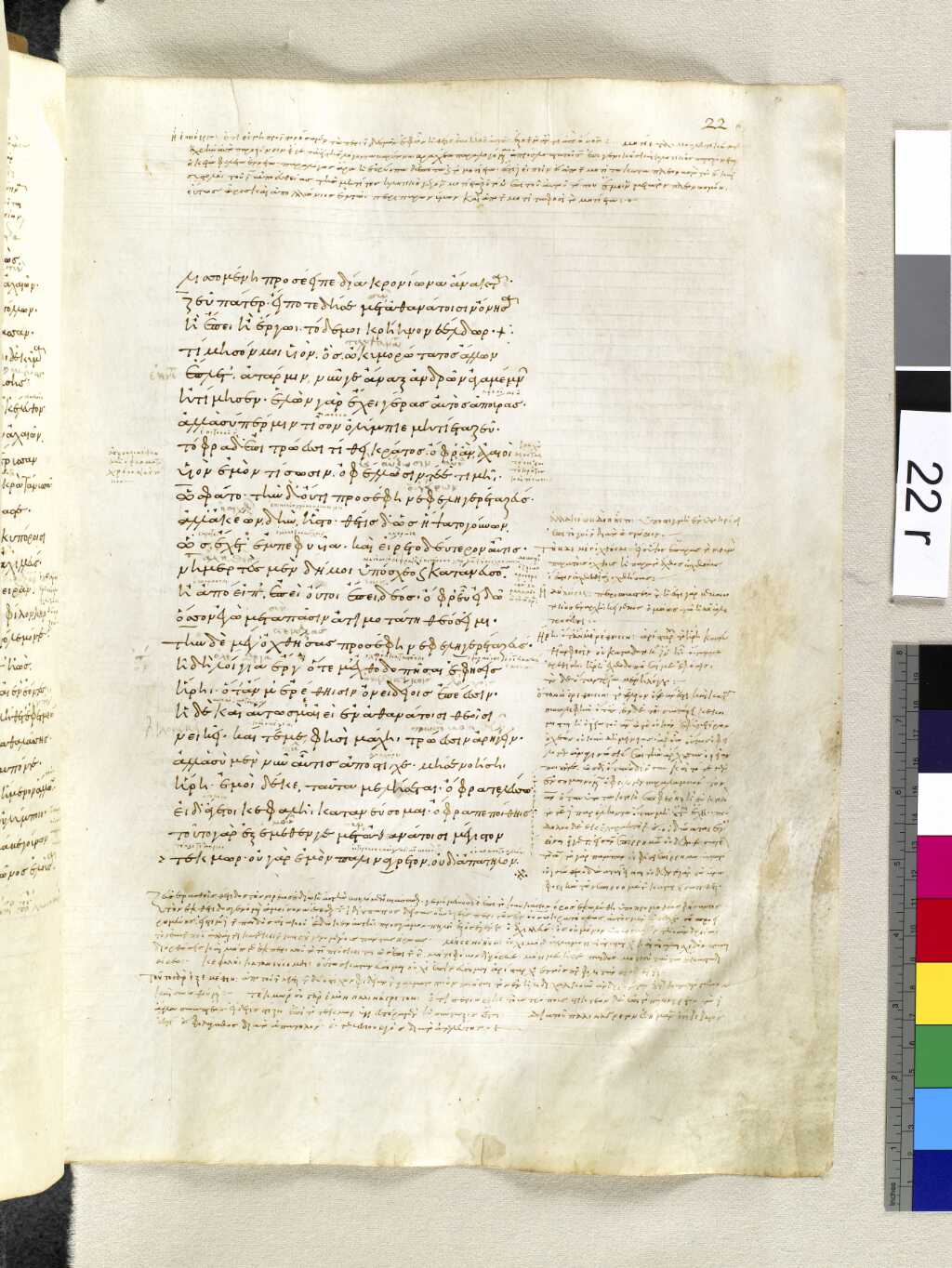
526τέκμωρ· οὐ γὰρ ἐμὸν παλινάγρετον οὐδʼ ἀπατηλὸν 527οὐδʼ ἀτελεύτητον ὅ τί κεν κεφαλῇ κατανεύσω. 528ἦ καὶ κυανέῃσιν ἐπʼ ὀφρύσι νεῦσε Κρονίων· 529ἀμβρόσιαι δʼ ἄρα χαῖται ἐπερρώσαντο ἄνακτος 530κρατὸς ἀπʼ ἀθανάτοιο· μέγαν δʼ ἐλέλιξεν Ὄλυμπον. 531τώ γʼ ὣς βουλεύσαντε διέτμαγεν· ἣ μὲν ἔπειτα 532εἰς ἅλα ἆλτο βαθεῖαν ἀπʼ αἰγλήεντος Ὀλύμπου, 533Ζεὺς δὲ ἑὸν πρὸς δῶμα· θεοὶ δʼ ἅμα πάντες ἀνέσταν 534ἐξ ἑδέων σφοῦ πατρὸς ἐναντίον· οὐδέ τις ἔτλη 535μεῖναι ἐπερχόμενον, ἀλλʼ ἀντίοι ἔσταν ἅπαντες. 536ὣς ὃ μὲν ἔνθα καθέζετʼ ἐπὶ θρόνου· οὐδέ μιν Ἥρη 537ἠγνοίησεν ἰδοῦσʼ ὅτι οἱ συμφράσσατο βουλὰς 538ἀργυρόπεζα Θέτις θυγάτηρ ἁλίοιο γέροντος. 539αὐτίκα κερτομίοισι Δία Κρονίωνα προσηύδα· 540τίς δʼ αὖ τοι δολομῆτα θεῶν συμφράσσατο βουλάς; 541αἰεί τοι φίλον ἐστὶν ἐμεῦ ἀπὸ νόσφιν ἐόντα 542κρυπτάδια φρονέοντα δικαζέμεν· οὐδέ τί πώ μοι 543πρόφρων τέτληκας εἰπεῖν ἔπος ὅττι νοήσῃς. 544τὴν δʼ ἠμείβετʼ ἔπειτα πατὴρ ἀνδρῶν τε θεῶν τε· 545Ἥρη μὴ δὴ πάντας ἐμοὺς ἐπιέλπεο μύθους 546εἰδήσειν· χαλεποί τοι ἔσοντʼ ἀλόχῳ περ ἐούσῃ· 547ἀλλʼ ὃν μέν κʼ ἐπιεικὲς ἀκουέμεν οὔ τις ἔπειτα 548οὔτε θεῶν πρότερος τὸν εἴσεται οὔτʼ ἀνθρώπων· 549ὃν δέ κʼ ἐγὼν ἀπάνευθε θεῶν ἐθέλωμι νοῆσαι 550μή τι σὺ ταῦτα ἕκαστα διείρεο μηδὲ μετάλλα.
When the pair had thus laid their plans, they parted—Jove to his house, while the goddess quitted the splendour of Olympus, and plunged into the depths of the sea. The gods rose from their seats, before the coming of their sire. Not one of them dared to remain sitting, but all stood up as he came among them. There, then, he took his seat. But Juno, when she saw him, knew that he and the old merman’s daughter, silver-footed Thetis, had been hatching mischief, so she at once began to upbraid him. “Trickster,” she cried, “which of the gods have you been taking into your counsels now? You are always settling matters in secret behind my back, and have never yet told me, if you could help it, one word of your intentions.”
“Juno,” replied the sire of gods and men, “you must not expect to be informed of all my counsels. You are my wife, but you would find it hard to understand them. When it is proper for you to hear, there is no one, god or man, who will be told sooner, but when I mean to keep a matter to myself, you must not pry nor ask questions.”
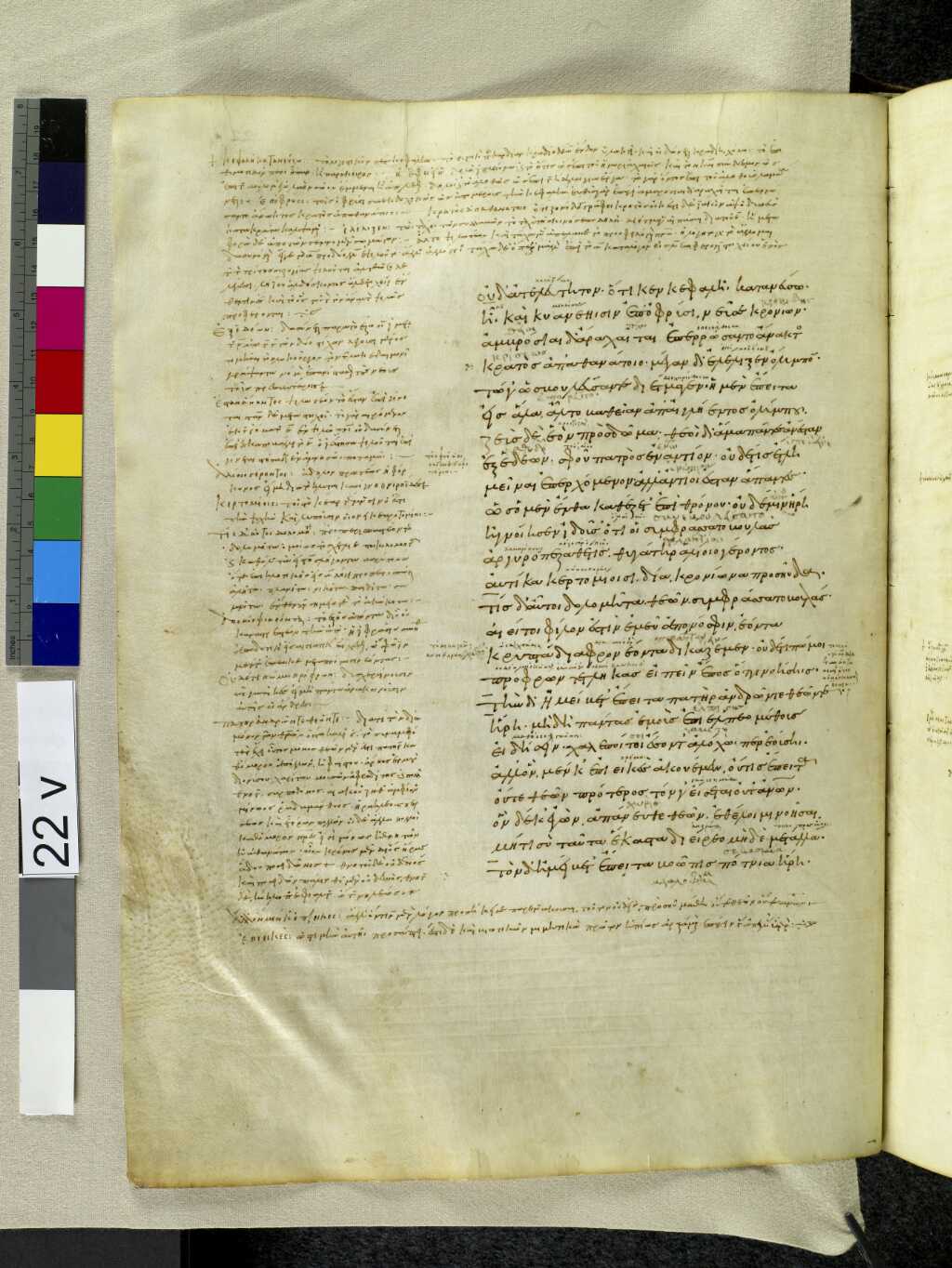
551τὸν δʼ ἠμείβετʼ ἔπειτα βοῶπις πότνια Ἥρη· 552αἰνότατε Κρονίδη ποῖον τὸν μῦθον ἔειπες; 553καὶ λίην σε πάρος γʼ οὔτʼ εἴρομαι οὔτε μεταλλῶ, 554ἀλλὰ μάλʼ εὔκηλος τὰ φράζεαι ἅσσʼ ἐθέλῃσθα. 555νῦν δʼ αἰνῶς δείδοικα κατὰ φρένα μή σε παρείπῃ 556ἀργυρόπεζα Θέτις θυγάτηρ ἁλίοιο γέροντος· 557ἠερίη γὰρ σοί γε παρέζετο καὶ λάβε γούνων· 558τῇ σʼ ὀΐω κατανεῦσαι ἐτήτυμον ὡς Ἀχιλῆα 559τιμήσῃς, ὀλέσῃς δὲ πολέας ἐπὶ νηυσὶν Ἀχαιῶν. 560τὴν δʼ ἀπαμειβόμενος προσέφη νεφεληγερέτα Ζεύς· 561δαιμονίη αἰεὶ μὲν ὀΐεαι οὐδέ σε λήθω· 562πρῆξαι δʼ ἔμπης οὔ τι δυνήσεαι, ἀλλʼ ἀπὸ θυμοῦ 563μᾶλλον ἐμοὶ ἔσεαι· τὸ δέ τοι καὶ ῥίγιον ἔσται. 564εἰ δʼ οὕτω τοῦτʼ ἐστὶν ἐμοὶ μέλλει φίλον εἶναι· 565ἀλλʼ ἀκέουσα κάθησο, ἐμῷ δʼ ἐπιπείθεο μύθῳ, 566μή νύ τοι οὐ χραίσμωσιν ὅσοι θεοί εἰσʼ ἐν Ὀλύμπῳ 567ἆσσον ἰόνθʼ, ὅτε κέν τοι ἀάπτους χεῖρας ἐφείω. 568ὣς ἔφατʼ ἔδεισεν δὲ βοῶπις πότνια Ἥρη, 569καί ῥʼ ἀκέουσα καθῆστο ἐπιγνάμψασα φίλον κῆρ· 570ὄχθησαν δʼ ἀνὰ δῶμα Διὸς θεοὶ Οὐρανίωνες· 571τοῖσιν δʼ Ἥφαιστος κλυτοτέχνης ἦρχʼ ἀγορεύειν 572μητρὶ φίλῃ ἐπίηρα φέρων λευκωλένῳ Ἥρῃ· 573ἦ δὴ λοίγια ἔργα τάδʼ ἔσσεται οὐδʼ ἔτʼ ἀνεκτά, 574εἰ δὴ σφὼ ἕνεκα θνητῶν ἐριδαίνετον ὧδε, 575ἐν δὲ θεοῖσι κολῳὸν ἐλαύνετον· οὐδέ τι δαιτὸς
“Dread son of Saturn,” answered Juno, “what are you talking about? I? Pry and ask questions? Never. I let you have your own way in everything. Still, I have a strong misgiving that the old merman’s daughter Thetis has been talking you over, for she was with you and had hold of your knees this self-same morning. I believe, therefore, that you have been promising her to give glory to Achilles, and to kill much people at the ships of the Achaeans.”
“Wife,” said Jove, “I can do nothing but you suspect me and find it out. You will take nothing by it, for I shall only dislike you the more, and it will go harder with you. Granted that it is as you say; I mean to have it so; sit down and hold your tongue as I bid you for if I once begin to lay my hands about you, though all heaven were on your side it would profit you nothing.”
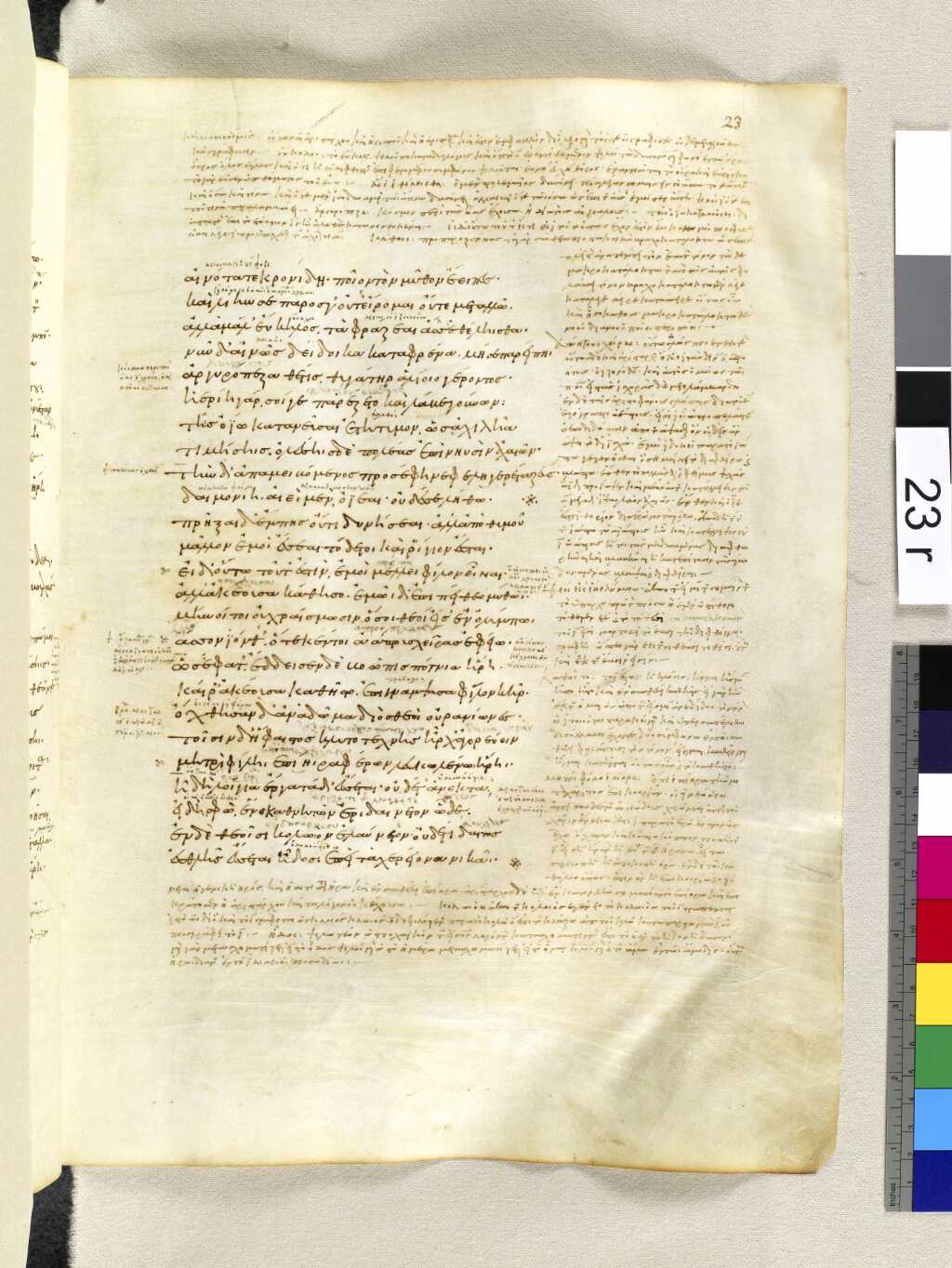
576ἐσθλῆς ἔσσεται ἦδος, ἐπεὶ τὰ χερείονα νικᾷ. 577μητρὶ δʼ ἐγὼ παράφημι καὶ αὐτῇ περ νοεούσῃ 578πατρὶ φίλῳ ἐπίηρα φέρειν Διί, ὄφρα μὴ αὖτε 579νεικείῃσι πατήρ, σὺν δʼ ἡμῖν δαῖτα ταράξῃ. 580εἴ περ γάρ κʼ ἐθέλῃσιν Ὀλύμπιος ἀστεροπητὴς 581ἐξ ἑδέων στυφελίξαι· ὃ γὰρ πολὺ φέρτατός ἐστιν. 582ἀλλὰ σὺ τὸν ἐπέεσσι καθάπτεσθαι μαλακοῖσιν· 583αὐτίκʼ ἔπειθʼ ἵλαος Ὀλύμπιος ἔσσεται ἡμῖν. 584ὣς ἄρʼ ἔφη καὶ ἀναΐξας δέπας ἀμφικύπελλον 585μητρὶ φίλῃ ἐν χειρὶ τίθει καί μιν προσέειπε· 586τέτλαθι μῆτερ ἐμή, καὶ ἀνάσχεο κηδομένη περ, 587μή σε φίλην περ ἐοῦσαν ἐν ὀφθαλμοῖσιν ἴδωμαι 588θεινομένην, τότε δʼ οὔ τι δυνήσομαι ἀχνύμενός περ 589χραισμεῖν· ἀργαλέος γὰρ Ὀλύμπιος ἀντιφέρεσθαι· 590ἤδη γάρ με καὶ ἄλλοτʼ ἀλεξέμεναι μεμαῶτα 591ῥῖψε ποδὸς τεταγὼν ἀπὸ βηλοῦ θεσπεσίοιο, 592πᾶν δʼ ἦμαρ φερόμην, ἅμα δʼ ἠελίῳ καταδύντι 593κάππεσον ἐν Λήμνῳ, ὀλίγος δʼ ἔτι θυμὸς ἐνῆεν· 594ἔνθά με Σίντιες ἄνδρες ἄφαρ κομίσαντο πεσόντα. 595ὣς φάτο, μείδησεν δὲ θεὰ λευκώλενος Ἥρη, 596μειδήσασα δὲ παιδὸς ἐδέξατο χειρὶ κύπελλον· 597αὐτὰρ ὃ τοῖς ἄλλοισι θεοῖς ἐνδέξια πᾶσιν 598οἰνοχόει γλυκὺ νέκταρ ἀπὸ κρητῆρος ἀφύσσων· 599ἄσβεστος δʼ ἄρʼ ἐνῶρτο γέλως μακάρεσσι θεοῖσιν 600ὡς ἴδον Ἥφαιστον διὰ δώματα ποιπνύοντα.
On this Juno was frightened, so she curbed her stubborn will and sat down in silence. But the heavenly beings were disquieted throughout the house of Jove, till the cunning workman Vulcan began to try and pacify his mother Juno. “It will be intolerable,” said he, “if you two fall to wrangling and setting heaven in an uproar about a pack of mortals. If such ill counsels are to prevail, we shall have no pleasure at our banquet. Let me then advise my mother—and she must herself know that it will be better—to make friends with my dear father Jove, lest he again scold her and disturb our feast. If the Olympian Thunderer wants to hurl us all from our seats, he can do so, for he is far the strongest, so give him fair words, and he will then soon be in a good humour with us.”
As he spoke, he took a double cup of nectar, and placed it in his mother’s hand. “Cheer up, my dear mother,” said he, “and make the best of it. I love you dearly, and should be very sorry to see you get a thrashing; however grieved I might be, I could not help, for there is no standing against Jove. Once before when I was trying to help you, he caught me by the foot and flung me from the heavenly threshold. All day long from morn till eve, was I falling, till at sunset I came to ground in the island of Lemnos, and there I lay, with very little life left in me, till the Sintians came and tended me.”
Juno smiled at this, and as she smiled she took the cup from her son’s hands. Then Vulcan drew sweet nectar from the mixing-bowl, and served it round among the gods, going from left to right; and the blessed gods laughed out a loud applause as they saw him bustling about the heavenly mansion.
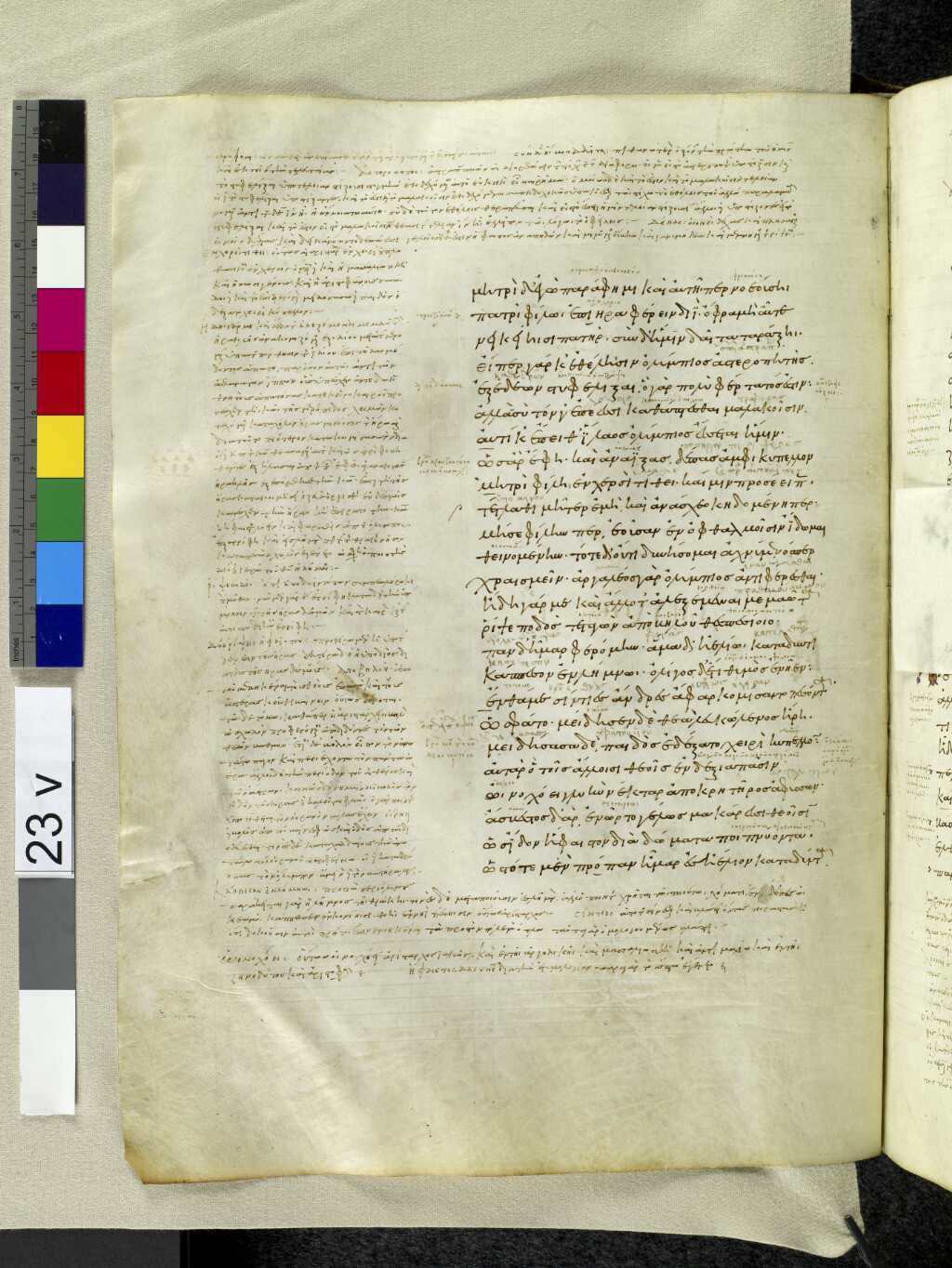
601ὣς τότε μὲν πρόπαν ἦμαρ ἐς ἠέλιον καταδύντα 602δαίνυντʼ, οὐδέ τι θυμὸς ἐδεύετο δαιτὸς ἐΐσης, 603οὐ μὲν φόρμιγγος περικαλλέος ἣν ἔχʼ Ἀπόλλων, 604Μουσάων θʼ αἳ ἄειδον ἀμειβόμεναι ὀπὶ καλῇ. 605αὐτὰρ ἐπεὶ κατέδυ λαμπρὸν φάος ἠελίοιο, 606οἳ μὲν κακκείοντες ἔβαν οἶκον δὲ ἕκαστος, 607ἧχι ἑκάστῳ δῶμα περικλυτὸς ἀμφιγυήεις 608Ἥφαιστος ποίησεν ἰδυίῃσι πραπίδεσσι· 609Ζεὺς δὲ πρὸς ὃν λέχος ἤϊʼ Ὀλύμπιος ἀστεροπητής, 610ἔνθα πάρος κοιμᾶθʼ ὅτε μιν γλυκὺς ὕπνος ἱκάνοι· 611ἔνθα καθεῦδʼ ἀναβάς, παρὰ δὲ χρυσόθρονος Ἥρη.
Thus through the livelong day to the going down of the sun they feasted, and every one had his full share, so that all were satisfied. Apollo struck his lyre, and the Muses lifted up their sweet voices, calling and answering one another. But when the sun’s glorious light had faded, they went home to bed, each in his own abode, which lame Vulcan with his consummate skill had fashioned for them. So Jove, the Olympian Lord of Thunder, hied him to the bed in which he always slept; and when he had got on to it he went to sleep, with Juno of the golden throne by his side.
Cite
Source & Cross-References
- Source text: Venetus A (10th c.) via Homer Multitext IIIF + Perseus Greek + Butler English (PG #2199) — view original
- Critical edition: Munro & Allen (Perseus Digital Library)
← previous · → next · v cycle view · l back to library