The Iliad, Book 2
Introduction
Book 2 of the Iliad with 36 sections, each linked to its specific folio in Venetus A (Marcianus Graecus 454, 10th c.). The Homer Multitext Project provides line-level folio mappings, ensuring every section of text corresponds to the exact manuscript page where it appears.
How was this verified? (Provenance)
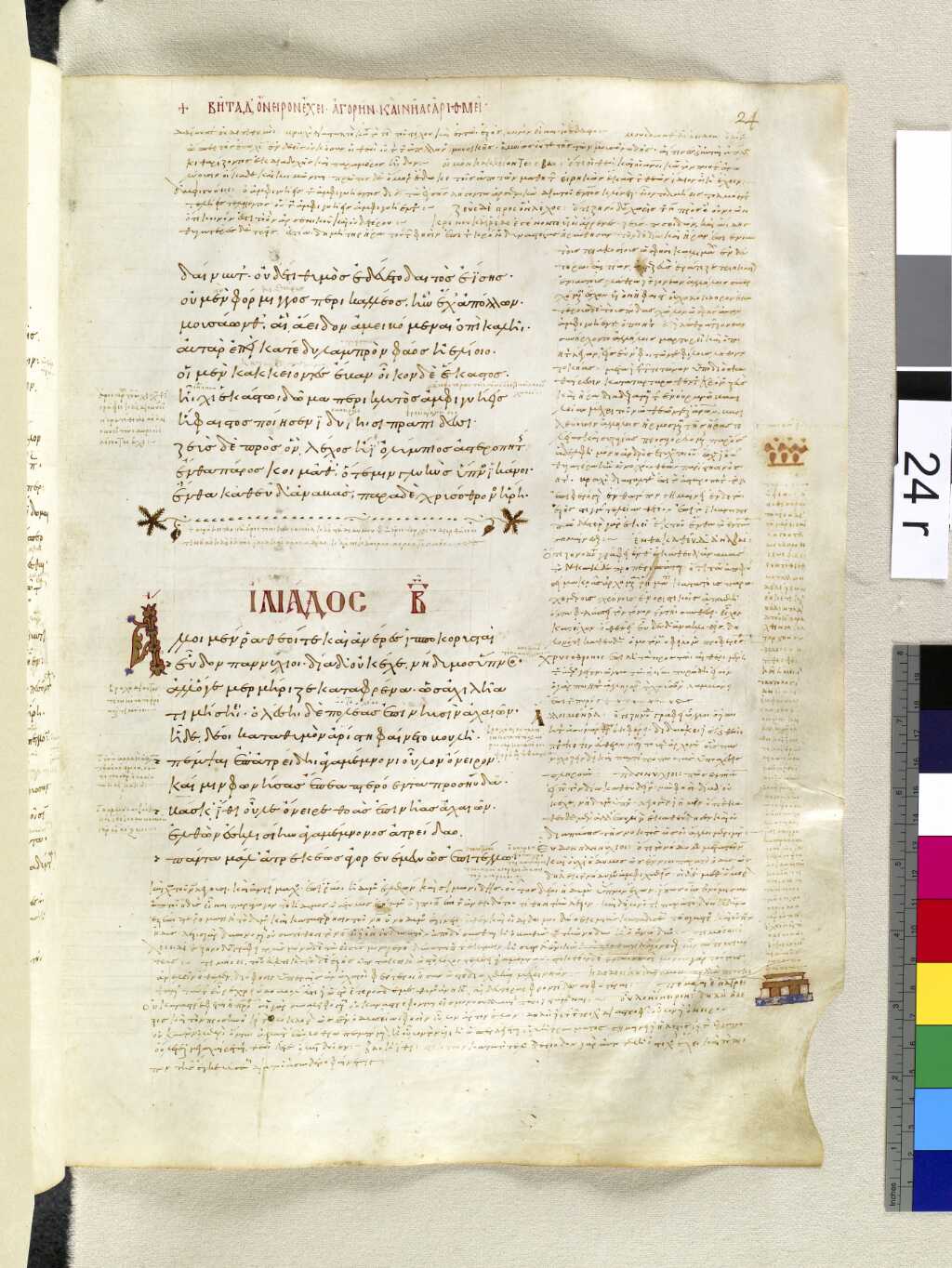
1ἄλλοι μέν ῥα θεοί τε καὶ ἀνέρες ἱπποκορυσταὶ 2εὗδον παννύχιοι, Δία δʼ οὐκ ἔχε νήδυμος ὕπνος, 3ἀλλʼ ὅ γε μερμήριζε κατὰ φρένα ὡς Ἀχιλῆα 4τιμήσῃ, ὀλέσῃ δὲ πολέας ἐπὶ νηυσὶν Ἀχαιῶν. 5ἥδε δέ οἱ κατὰ θυμὸν ἀρίστη φαίνετο βουλή, 6πέμψαι ἐπʼ Ἀτρεΐδῃ Ἀγαμέμνονι οὖλον ὄνειρον· 7καί μιν φωνήσας ἔπεα πτερόεντα προσηύδα· 8βάσκʼ ἴθι οὖλε ὄνειρε θοὰς ἐπὶ νῆας Ἀχαιῶν· 9ἐλθὼν ἐς κλισίην Ἀγαμέμνονος Ἀτρεΐδαο 10πάντα μάλʼ ἀτρεκέως ἀγορευέμεν ὡς ἐπιτέλλω· 11θωρῆξαί ἑ κέλευε κάρη κομόωντας Ἀχαιοὺς 12πανσυδίῃ· νῦν γάρ κεν ἕλοι πόλιν εὐρυάγυιαν 13Τρώων· οὐ γὰρ ἔτʼ ἀμφὶς Ὀλύμπια δώματʼ ἔχοντες 14ἀθάνατοι φράζονται· ἐπέγναμψεν γὰρ ἅπαντας 15Ἥρη λισσομένη, Τρώεσσι δὲ κήδεʼ ἐφῆπται. 16ὣς φάτο, βῆ δʼ ἄρʼ ὄνειρος ἐπεὶ τὸν μῦθον ἄκουσε· 17καρπαλίμως δʼ ἵκανε θοὰς ἐπὶ νῆας Ἀχαιῶν, 18βῆ δʼ ἄρʼ ἐπʼ Ἀτρεΐδην Ἀγαμέμνονα· τὸν δὲ κίχανεν 19εὕδοντʼ ἐν κλισίῃ, περὶ δʼ ἀμβρόσιος κέχυθʼ ὕπνος. 20στῆ δʼ ἄρʼ ὑπὲρ κεφαλῆς Νηληΐῳ υἷι ἐοικώς 21Νέστορι, τόν ῥα μάλιστα γερόντων τῖʼ Ἀγαμέμνων· 22τῷ μιν ἐεισάμενος προσεφώνεε θεῖος ὄνειρος· 23εὕδεις Ἀτρέος υἱὲ δαΐφρονος ἱπποδάμοιο· 24οὐ χρὴ παννύχιον εὕδειν βουληφόρον ἄνδρα 25ᾧ λαοί τʼ ἐπιτετράφαται καὶ τόσσα μέμηλε·
Jove sends a lying dream to Agamemnon, who thereon calls the chiefs in assembly, and proposes to sound the mind of his army—In the end they march to fight—Catalogue of the Achaean and Trojan forces.
Now the other gods and the armed warriors on the plain slept soundly, but Jove was wakeful, for he was thinking how to do honour to Achilles, and destroyed much people at the ships of the Achaeans. In the end he deemed it would be best to send a lying dream to King Agamemnon; so he called one to him and said to it, “Lying Dream, go to the ships of the Achaeans, into the tent of Agamemnon, and say to him word for word as I now bid you. Tell him to get the Achaeans instantly under arms, for he shall take Troy. There are no longer divided counsels among the gods; Juno has brought them to her own mind, and woe betides the Trojans.”
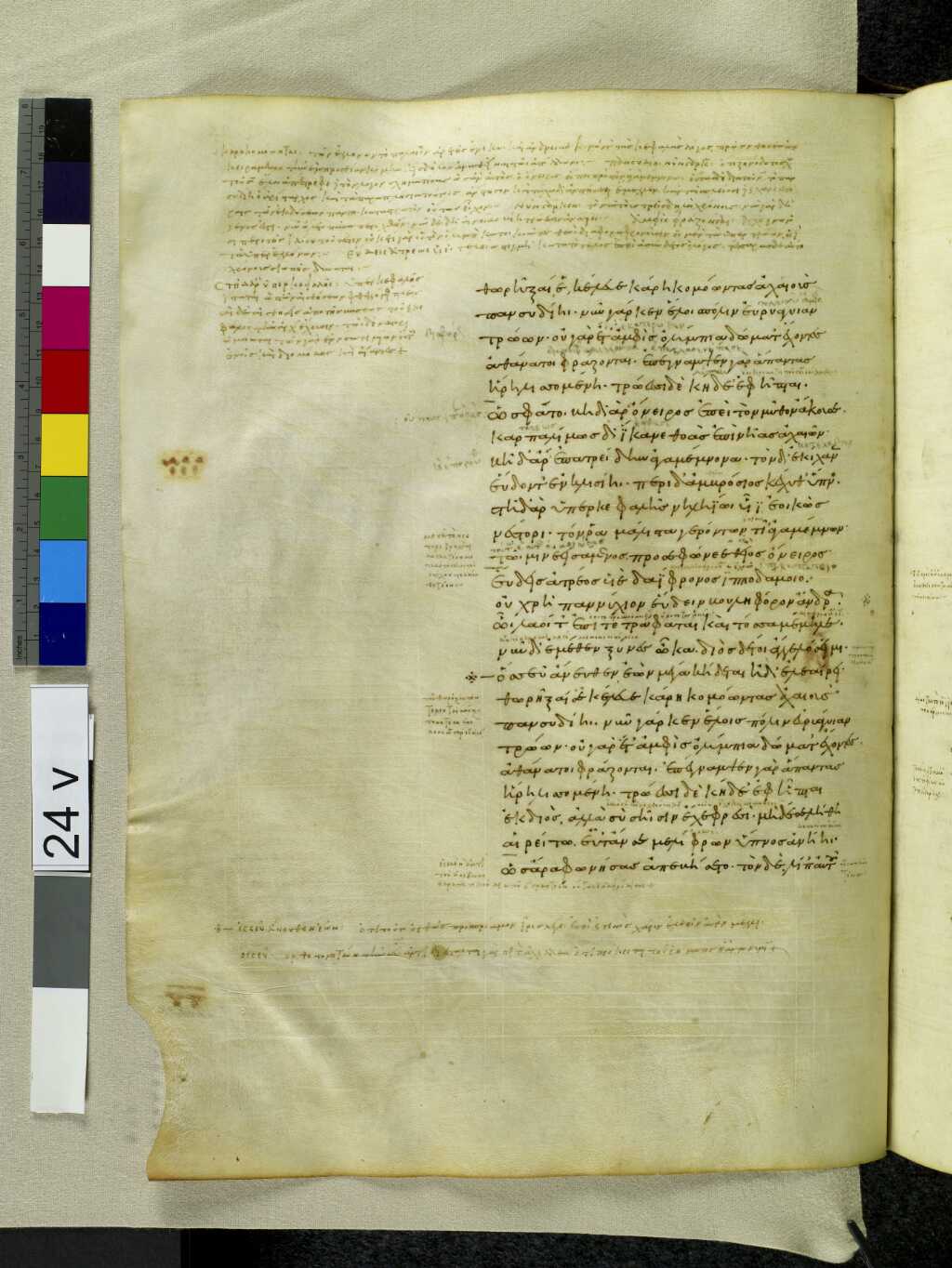
26νῦν δʼ ἐμέθεν ξύνες ὦκα· Διὸς δέ τοι ἄγγελός εἰμι, 27ὃς σεῦ ἄνευθεν ἐὼν μέγα κήδεται ἠδʼ ἐλεαίρει. 28θωρῆξαί σε κέλευσε κάρη κομόωντας Ἀχαιοὺς 29πανσυδίῃ· νῦν γάρ κεν ἕλοις πόλιν εὐρυάγυιαν 30Τρώων· οὐ γὰρ ἔτʼ ἀμφὶς Ὀλύμπια δώματʼ ἔχοντες 31ἀθάνατοι φράζονται· ἐπέγναμψεν γὰρ ἅπαντας 32Ἥρη λισσομένη, Τρώεσσι δὲ κήδεʼ ἐφῆπται 33ἐκ Διός· ἀλλὰ σὺ σῇσιν ἔχε φρεσί, μηδέ σε λήθη 34αἱρείτω εὖτʼ ἄν σε μελίφρων ὕπνος ἀνήῃ. 35ὣς ἄρα φωνήσας ἀπεβήσετο, τὸν δὲ λίπʼ αὐτοῦ 36τὰ φρονέοντʼ ἀνὰ θυμὸν ἅ ῥʼ οὐ τελέεσθαι ἔμελλον· 37φῆ γὰρ ὅ γʼ αἱρήσειν Πριάμου πόλιν ἤματι κείνῳ 38νήπιος, οὐδὲ τὰ ᾔδη ἅ ῥα Ζεὺς μήδετο ἔργα· 39θήσειν γὰρ ἔτʼ ἔμελλεν ἐπʼ ἄλγεά τε στοναχάς τε 40Τρωσί τε καὶ Δαναοῖσι διὰ κρατερὰς ὑσμίνας. 41ἔγρετο δʼ ἐξ ὕπνου, θείη δέ μιν ἀμφέχυτʼ ὀμφή· 42ἕζετο δʼ ὀρθωθείς, μαλακὸν δʼ ἔνδυνε χιτῶνα 43καλὸν νηγάτεον, περὶ δὲ μέγα βάλλετο φᾶρος· 44ποσσὶ δʼ ὑπὸ λιπαροῖσιν ἐδήσατο καλὰ πέδιλα, 45ἀμφὶ δʼ ἄρʼ ὤμοισιν βάλετο ξίφος ἀργυρόηλον· 46εἵλετο δὲ σκῆπτρον πατρώϊον ἄφθιτον αἰεὶ 47σὺν τῷ ἔβη κατὰ νῆας Ἀχαιῶν χαλκοχιτώνων· 48ἠὼς μέν ῥα θεὰ προσεβήσετο μακρὸν Ὄλυμπον 49Ζηνὶ φόως ἐρέουσα καὶ ἄλλοις ἀθανάτοισιν· 50αὐτὰρ ὃ κηρύκεσσι λιγυφθόγγοισι κέλευσε
The dream went when it had heard its message, and soon reached the ships of the Achaeans. It sought Agamemnon son of Atreus and found him in his tent, wrapped in a profound slumber. It hovered over his head in the likeness of Nestor, son of Neleus, whom Agamemnon honoured above all his councillors, and said:—
“You are sleeping, son of Atreus; one who has the welfare of his host and so much other care upon his shoulders should dock his sleep. Hear me at once, for I come as a messenger from Jove, who, though he be not near, yet takes thought for you and pities you. He bids you get the Achaeans instantly under arms, for you shall take Troy. There are no longer divided counsels among the gods; Juno has brought them over to her own mind, and woe betides the Trojans at the hands of Jove. Remember this, and when you wake see that it does not escape you.”
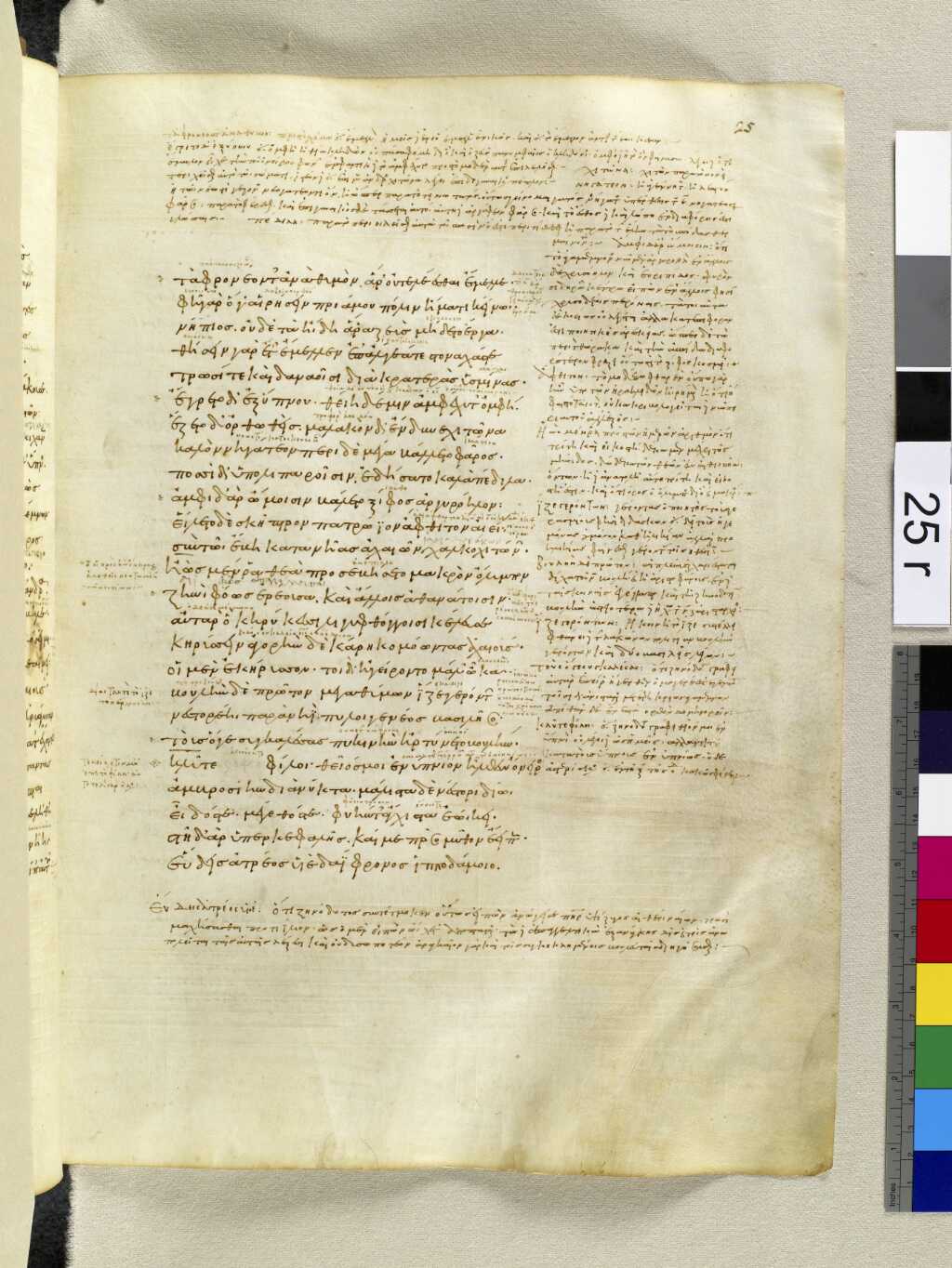
51κηρύσσειν ἀγορὴν δὲ κάρη κομόωντας Ἀχαιούς· 52οἳ μὲν ἐκήρυσσον, τοὶ δʼ ἠγείροντο μάλʼ ὦκα· 53βουλὴν δὲ πρῶτον μεγαθύμων ἷζε γερόντων 54Νεστορέῃ παρὰ νηῒ Πυλοιγενέος βασιλῆος· 55τοὺς ὅ γε συγκαλέσας πυκινὴν ἀρτύνετο βουλήν· 56κλῦτε φίλοι· θεῖός μοι ἐνύπνιον ἦλθεν ὄνειρος 57ἀμβροσίην διὰ νύκτα· μάλιστα δὲ Νέστορι δίῳ 58εἶδός τε μέγεθός τε φυήν τʼ ἄγχιστα ἐῴκει· 59στῆ δʼ ἄρʼ ὑπὲρ κεφαλῆς καί με πρὸς μῦθον ἔειπεν· 60εὕδεις Ἀτρέος υἱὲ δαΐφρονος ἱπποδάμοιο· 61οὐ χρὴ παννύχιον εὕδειν βουληφόρον ἄνδρα, 62ᾧ λαοί τʼ ἐπιτετράφαται καὶ τόσσα μέμηλε· 63νῦν δʼ ἐμέθεν ξύνες ὦκα· Διὸς δέ τοι ἄγγελός εἰμι, 64ὃς σεῦ ἄνευθεν ἐὼν μέγα κήδεται ἠδʼ ἐλεαίρει· 65θωρῆξαί σε κέλευσε κάρη κομόωντας Ἀχαιοὺς 66πανσυδίῃ· νῦν γάρ κεν ἕλοις πόλιν εὐρυάγυιαν 67Τρώων· οὐ γὰρ ἔτʼ ἀμφὶς Ὀλύμπια δώματʼ ἔχοντες 68ἀθάνατοι φράζονται· ἐπέγναμψεν γὰρ ἅπαντας 69Ἥρη λισσομένη, Τρώεσσι δὲ κήδεʼ ἐφῆπται 70ἐκ Διός· ἀλλὰ σὺ σῇσιν ἔχε φρεσίν· ὣς ὃ μὲν εἰπὼν 71ᾤχετʼ ἀποπτάμενος, ἐμὲ δὲ γλυκὺς ὕπνος ἀνῆκεν. 72ἀλλʼ ἄγετʼ αἴ κέν πως θωρήξομεν υἷας Ἀχαιῶν· 73πρῶτα δʼ ἐγὼν ἔπεσιν πειρήσομαι, ἣ θέμις ἐστί, 74καὶ φεύγειν σὺν νηυσὶ πολυκλήϊσι κελεύσω· 75ὑμεῖς δʼ ἄλλοθεν ἄλλος ἐρητύειν ἐπέεσσιν.
The dream then left him, and he thought of things that were surely not to be accomplished. He thought that on that same day he was to take the city of Priam, but he little knew what was in the mind of Jove, who had many another hard-fought fight in store alike for Danaans and Trojans. Then presently he woke, with the divine message still ringing in his ears; so he sat upright, and put on his soft shirt so fair and new, and over this his heavy cloak. He bound his sandals on to his comely feet, and slung his silver-studded sword about his shoulders; then he took the imperishable staff of his father, and sallied forth to the ships of the Achaeans.
The goddess Dawn now wended her way to vast Olympus that she might herald day to Jove and to the other immortals, and Agamemnon sent the criers round to call the people in assembly; so they called them and the people gathered thereon. But first he summoned a meeting of the elders at the ship of Nestor king of Pylos, and when they were assembled he laid a cunning counsel before them.
“My friends,” said he, “I have had a dream from heaven in the dead of night, and its face and figure resembled none but Nestor’s. It hovered over my head and said, ‘You are sleeping, son of Atreus; one who has the welfare of his host and so much other care upon his shoulders should dock his sleep. Hear me at once, for I am a messenger from Jove, who, though he be not near, yet takes thought for you and pities you. He bids you get the Achaeans instantly under arms, for you shall take Troy. There are no longer divided counsels among the gods; Juno has brought them over to her own mind, and woe betides the Trojans at the hands of Jove. Remember this.’ The dream then vanished and I awoke. Let us now, therefore, arm the sons of the Achaeans. But it will be well that I should first sound them, and to this end I will tell them to fly with their ships; but do you others go about among the host and prevent their doing so.”
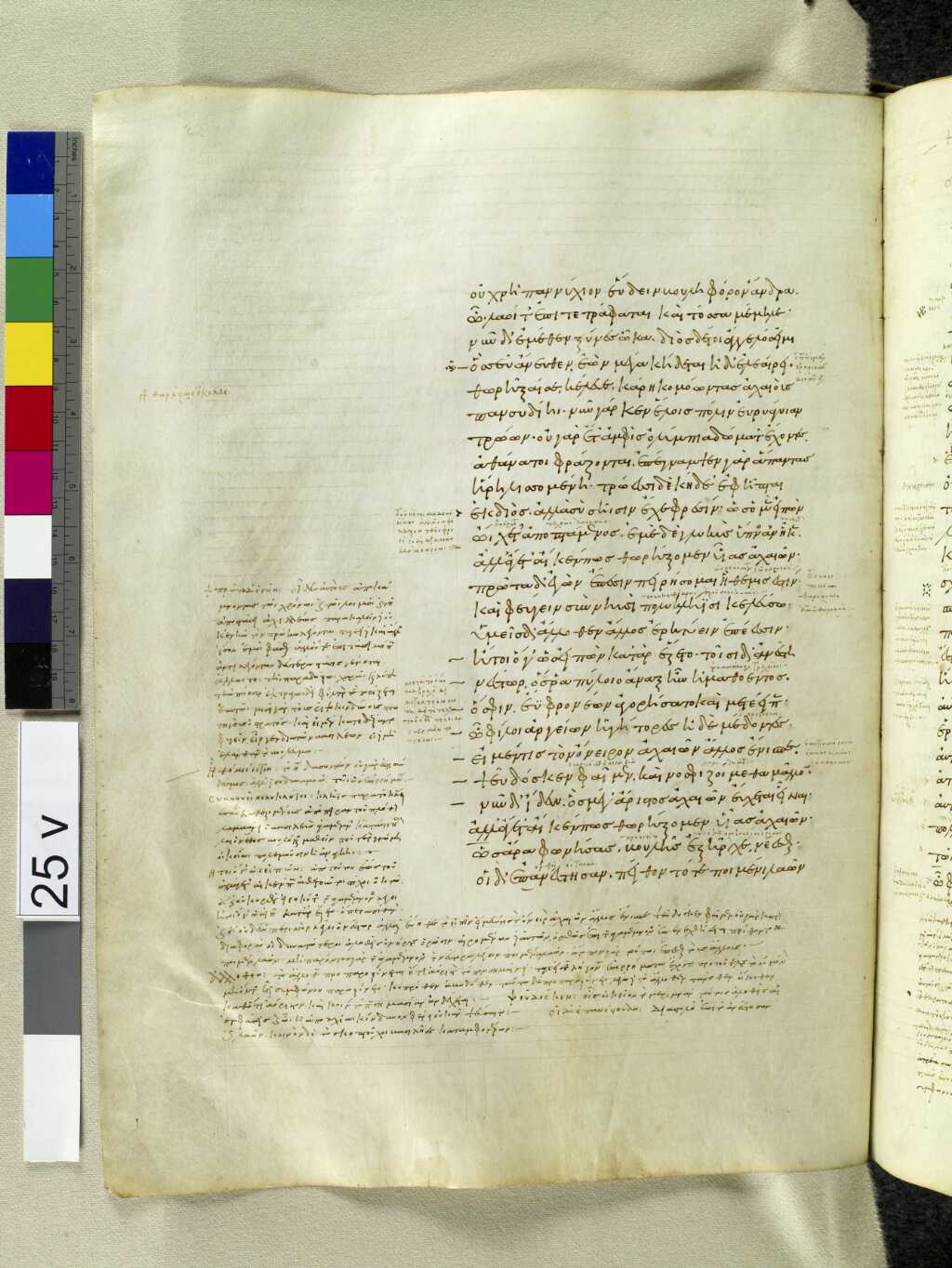
76ἤτοι ὅ γʼ ὣς εἰπὼν κατʼ ἄρʼ ἕζετο, τοῖσι δʼ ἀνέστη 77Νέστωρ, ὅς ῥα Πύλοιο ἄναξ ἦν ἠμαθόεντος, 78ὅ σφιν ἐὺ φρονέων ἀγορήσατο καὶ μετέειπεν· 79ὦ φίλοι Ἀργείων ἡγήτορες ἠδὲ μέδοντες 80εἰ μέν τις τὸν ὄνειρον Ἀχαιῶν ἄλλος ἔνισπε 81ψεῦδός κεν φαῖμεν καὶ νοσφιζοίμεθα μᾶλλον· 82νῦν δʼ ἴδεν ὃς μέγʼ ἄριστος Ἀχαιῶν εὔχεται εἶναι· 83ἀλλʼ ἄγετʼ αἴ κέν πως θωρήξομεν υἷας Ἀχαιῶν. 84ὣς ἄρα φωνήσας βουλῆς ἐξῆρχε νέεσθαι, 85οἳ δʼ ἐπανέστησαν πείθοντό τε ποιμένι λαῶν 86σκηπτοῦχοι βασιλῆες· ἐπεσσεύοντο δὲ λαοί. 87ἠΰτε ἔθνεα εἶσι μελισσάων ἁδινάων 88πέτρης ἐκ γλαφυρῆς αἰεὶ νέον ἐρχομενάων, 89βοτρυδὸν δὲ πέτονται ἐπʼ ἄνθεσιν εἰαρινοῖσιν· 90αἳ μέν τʼ ἔνθα ἅλις πεποτήαται, αἳ δέ τε ἔνθα· 91ὣς τῶν ἔθνεα πολλὰ νεῶν ἄπο καὶ κλισιάων 92ἠϊόνος προπάροιθε βαθείης ἐστιχόωντο 93ἰλαδὸν εἰς ἀγορήν· μετὰ δέ σφισιν ὄσσα δεδήει 94ὀτρύνουσʼ ἰέναι Διὸς ἄγγελος· οἳ δʼ ἀγέροντο. 95τετρήχει δʼ ἀγορή, ὑπὸ δὲ στεναχίζετο γαῖα 96λαῶν ἱζόντων, ὅμαδος δʼ ἦν· ἐννέα δέ σφεας 97κήρυκες βοόωντες ἐρήτυον, εἴ ποτʼ ἀϋτῆς 98σχοίατʼ, ἀκούσειαν δὲ διοτρεφέων βασιλήων. 99σπουδῇ δʼ ἕζετο λαός, ἐρήτυθεν δὲ καθʼ ἕδρας 100παυσάμενοι κλαγγῆς· ἀνὰ δὲ κρείων Ἀγαμέμνων
He then sat down, and Nestor the prince of Pylos with all sincerity and goodwill addressed them thus: “My friends,” said he, “princes and councillors of the Argives, if any other man of the Achaeans had told us of this dream we should have declared it false, and would have had nothing to do with it. But he who has seen it is the foremost man among us; we must therefore set about getting the people under arms.”
With this he led the way from the assembly, and the other sceptred kings rose with him in obedience to the word of Agamemnon; but the people pressed forward to hear. They swarmed like bees that sally from some hollow cave and flit in countless throng among the spring flowers, bunched in knots and clusters; even so did the mighty multitude pour from ships and tents to the assembly, and range themselves upon the wide-watered shore, while among them ran Wildfire Rumour, messenger of Jove, urging them ever to the fore. Thus they gathered in a pell-mell of mad confusion, and the earth groaned under the tramp of men as the people sought their places. Nine heralds went crying about among them to stay their tumult and bid them listen to the kings, till at last they were got into their several places and ceased their clamour. Then King Agamemnon rose, holding his sceptre. This was the work of Vulcan, who gave it to Jove the son of Saturn. Jove gave it to Mercury, slayer of Argus, guide and guardian. King Mercury gave it to Pelops, the mighty charioteer, and Pelops to Atreus, shepherd of his people. Atreus, when he died, left it to Thyestes, rich in flocks, and Thyestes in his turn left it to be borne by Agamemnon, that he might be lord of all Argos and of the isles. Leaning, then, on his sceptre, he addressed the Argives.
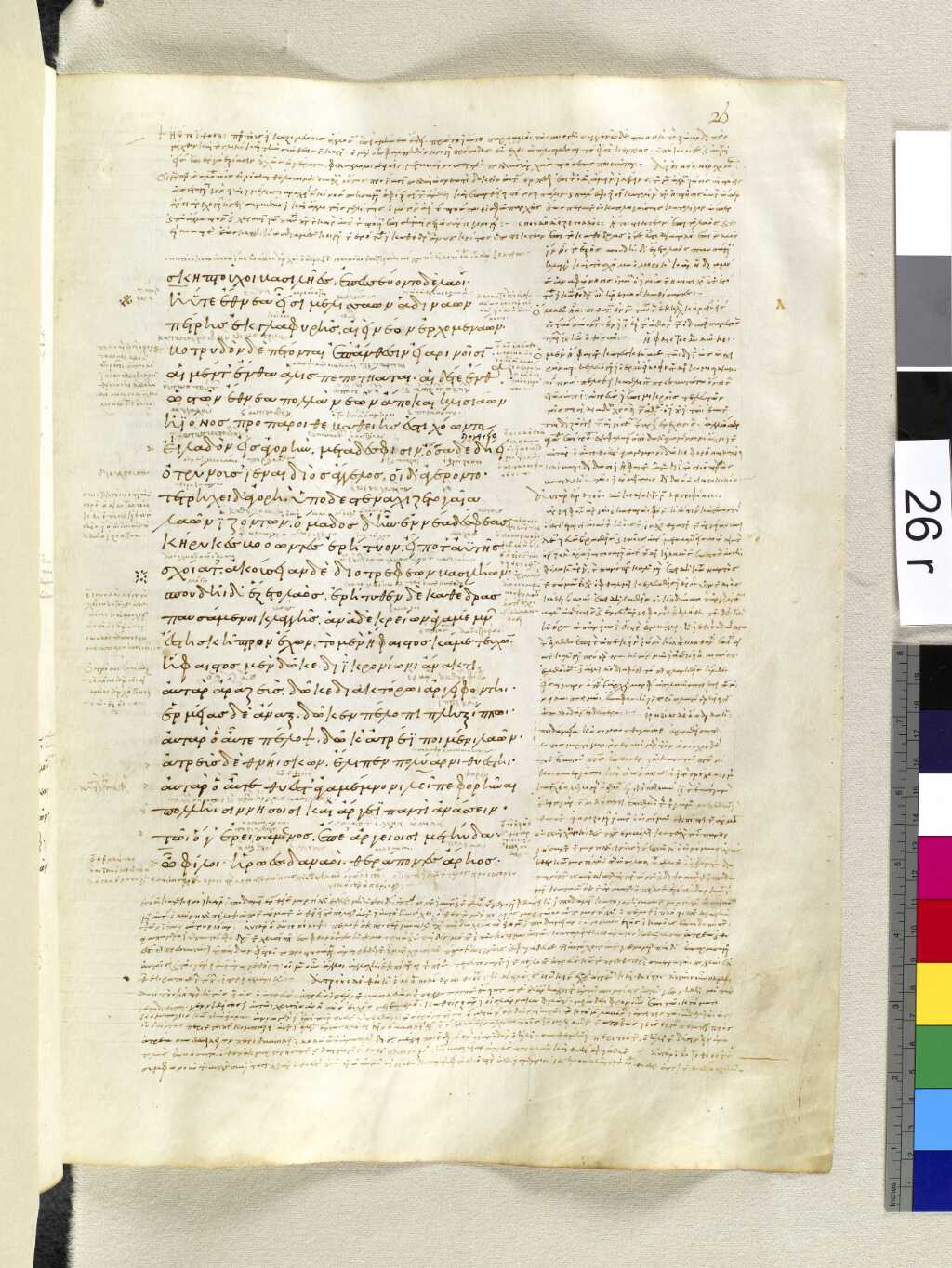
101ἔστη σκῆπτρον ἔχων τὸ μὲν Ἥφαιστος κάμε τεύχων. 102Ἥφαιστος μὲν δῶκε Διὶ Κρονίωνι ἄνακτι, 103αὐτὰρ ἄρα Ζεὺς δῶκε διακτόρῳ ἀργεϊφόντῃ· 104Ἑρμείας δὲ ἄναξ δῶκεν Πέλοπι πληξίππῳ, 105αὐτὰρ ὃ αὖτε Πέλοψ δῶκʼ Ἀτρέϊ ποιμένι λαῶν, 106Ἀτρεὺς δὲ θνῄσκων ἔλιπεν πολύαρνι Θυέστῃ, 107αὐτὰρ ὃ αὖτε Θυέστʼ Ἀγαμέμνονι λεῖπε φορῆναι, 108πολλῇσιν νήσοισι καὶ Ἄργεϊ παντὶ ἀνάσσειν. 109τῷ ὅ γʼ ἐρεισάμενος ἔπεʼ Ἀργείοισι μετηύδα· 110ὦ φίλοι ἥρωες Δαναοὶ θεράποντες Ἄρηος 111Ζεύς με μέγα Κρονίδης ἄτῃ ἐνέδησε βαρείῃ, 112σχέτλιος, ὃς πρὶν μέν μοι ὑπέσχετο καὶ κατένευσεν 113Ἴλιον ἐκπέρσαντʼ εὐτείχεον ἀπονέεσθαι, 114νῦν δὲ κακὴν ἀπάτην βουλεύσατο, καί με κελεύει 115δυσκλέα Ἄργος ἱκέσθαι, ἐπεὶ πολὺν ὤλεσα λαόν. 116οὕτω που Διὶ μέλλει ὑπερμενέϊ φίλον εἶναι, 117ὃς δὴ πολλάων πολίων κατέλυσε κάρηνα 118ἠδʼ ἔτι καὶ λύσει· τοῦ γὰρ κράτος ἐστὶ μέγιστον. 119αἰσχρὸν γὰρ τόδε γʼ ἐστὶ καὶ ἐσσομένοισι πυθέσθαι 120μὰψ οὕτω τοιόνδε τοσόνδε τε λαὸν Ἀχαιῶν 121ἄπρηκτον πόλεμον πολεμίζειν ἠδὲ μάχεσθαι 122ἀνδράσι παυροτέροισι, τέλος δʼ οὔ πώ τι πέφανται· 123εἴ περ γάρ κʼ ἐθέλοιμεν Ἀχαιοί τε Τρῶές τε 124ὅρκια πιστὰ ταμόντες ἀριθμηθήμεναι ἄμφω, 125Τρῶας μὲν λέξασθαι ἐφέστιοι ὅσσοι ἔασιν,
“My friends,” he said, “heroes, servants of Mars, the hand of heaven has been laid heavily upon me. Cruel Jove gave me his solemn promise that I should sack the city of Priam before returning, but he has played me false, and is now bidding me go ingloriously back to Argos with the loss of much people. Such is the will of Jove, who has laid many a proud city in the dust, as he will yet lay others, for his power is above all. It will be a sorry tale hereafter that an Achaean host, at once so great and valiant, battled in vain against men fewer in number than themselves; but as yet the end is not in sight. Think that the Achaeans and Trojans have sworn to a solemn covenant, and that they have each been numbered—the Trojans by the roll of their householders, and we by companies of ten; think further that each of our companies desired to have a Trojan householder to pour out their wine; we are so greatly more in number that full many a company would have to go without its cup-bearer. But they have in the town allies from other places, and it is these that hinder me from being able to sack the rich city of Ilius. Nine of Jove’s years are gone; the timbers of our ships have rotted; their tackling is sound no longer. Our wives and little ones at home look anxiously for our coming, but the work that we came hither to do has not been done. Now, therefore, let us all do as I say: let us sail back to our own land, for we shall not take Troy.”
With these words he moved the hearts of the multitude, so many of them as knew not the cunning counsel of Agamemnon. They surged to and fro like the waves of the Icarian Sea, when the east and south winds break from heaven’s clouds to lash them; or as when the west wind sweeps over a field of corn and the ears bow beneath the blast, even so were they swayed as they flew with loud cries towards the ships, and the dust from under their feet rose heavenward. They cheered each other on to draw the ships into the sea; they cleared the channels in front of them; they began taking away the stays from underneath them, and the welkin rang with their glad cries, so eager were they to return.
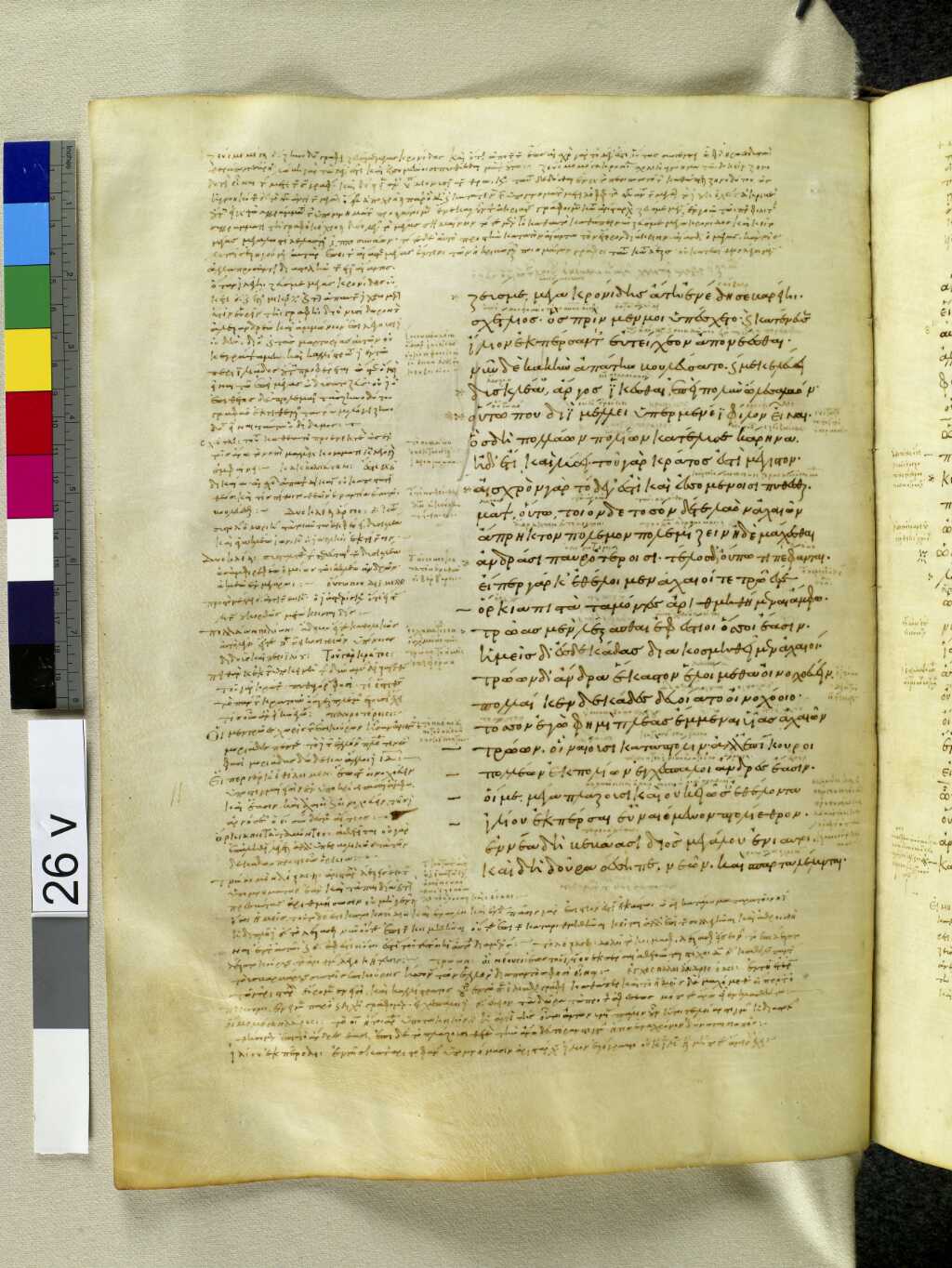
126ἡμεῖς δʼ ἐς δεκάδας διακοσμηθεῖμεν Ἀχαιοί, 127Τρώων δʼ ἄνδρα ἕκαστοι ἑλοίμεθα οἰνοχοεύειν, 128πολλαί κεν δεκάδες δευοίατο οἰνοχόοιο. 129τόσσον ἐγώ φημι πλέας ἔμμεναι υἷας Ἀχαιῶν 130Τρώων, οἳ ναίουσι κατὰ πτόλιν· ἀλλʼ ἐπίκουροι 131πολλέων ἐκ πολίων ἐγχέσπαλοι ἄνδρες ἔασιν, 132οἵ με μέγα πλάζουσι καὶ οὐκ εἰῶσʼ ἐθέλοντα 133Ἰλίου ἐκπέρσαι εὖ ναιόμενον πτολίεθρον. 134ἐννέα δὴ βεβάασι Διὸς μεγάλου ἐνιαυτοί, 135καὶ δὴ δοῦρα σέσηπε νεῶν καὶ σπάρτα λέλυνται· 136αἳ δέ που ἡμέτεραί τʼ ἄλοχοι καὶ νήπια τέκνα 137εἵατʼ ἐνὶ μεγάροις ποτιδέγμεναι· ἄμμι δὲ ἔργον 138αὔτως ἀκράαντον οὗ εἵνεκα δεῦρʼ ἱκόμεσθα. 139ἀλλʼ ἄγεθʼ ὡς ἂν ἐγὼ εἴπω πειθώμεθα πάντες· 140φεύγωμεν σὺν νηυσὶ φίλην ἐς πατρίδα γαῖαν· 141οὐ γὰρ ἔτι Τροίην αἱρήσομεν εὐρυάγυιαν. 142ὣς φάτο, τοῖσι δὲ θυμὸν ἐνὶ στήθεσσιν ὄρινε 143πᾶσι μετὰ πληθὺν ὅσοι οὐ βουλῆς ἐπάκουσαν· 144κινήθη δʼ ἀγορὴ φὴ κύματα μακρὰ θαλάσσης 145πόντου Ἰκαρίοιο, τὰ μέν τʼ Εὖρός τε Νότος τε 146ὤρορʼ ἐπαΐξας πατρὸς Διὸς ἐκ νεφελάων. 147ὡς δʼ ὅτε κινήσῃ Ζέφυρος βαθὺ λήϊον ἐλθὼν 148λάβρος ἐπαιγίζων, ἐπί τʼ ἠμύει ἀσταχύεσσιν, 149ὣς τῶν πᾶσʼ ἀγορὴ κινήθη· τοὶ δʼ ἀλαλητῷ 150νῆας ἔπʼ ἐσσεύοντο, ποδῶν δʼ ὑπένερθε κονίη
Then surely the Argives would have returned after a fashion that was not fated. But Juno said to Minerva, “Alas, daughter of aegis-bearing Jove, unweariable, shall the Argives fly home to their own land over the broad sea, and leave Priam and the Trojans the glory of still keeping Helen, for whose sake so many of the Achaeans have died at Troy, far from their homes? Go about at once among the host, and speak fairly to them, man by man, that they draw not their ships into the sea.”
Minerva was not slack to do her bidding. Down she darted from the topmost summits of Olympus, and in a moment she was at the ships of the Achaeans. There she found Ulysses, peer of Jove in counsel, standing alone. He had not as yet laid a hand upon his ship, for he was grieved and sorry; so she went close up to him and said, “Ulysses, noble son of Laertes, are you going to fling yourselves into your ships and be off home to your own land in this way? Will you leave Priam and the Trojans the glory of still keeping Helen, for whose sake so many of the Achaeans have died at Troy, far from their homes? Go about at once among the host, and speak fairly to them, man by man, that they draw not their ships into the sea.”
Ulysses knew the voice as that of the goddess: he flung his cloak from him and set off to run. His servant Eurybates, a man of Ithaca, who waited on him, took charge of the cloak, whereon Ulysses went straight up to Agamemnon and received from him his ancestral, imperishable staff. With this he went about among the ships of the Achaeans.
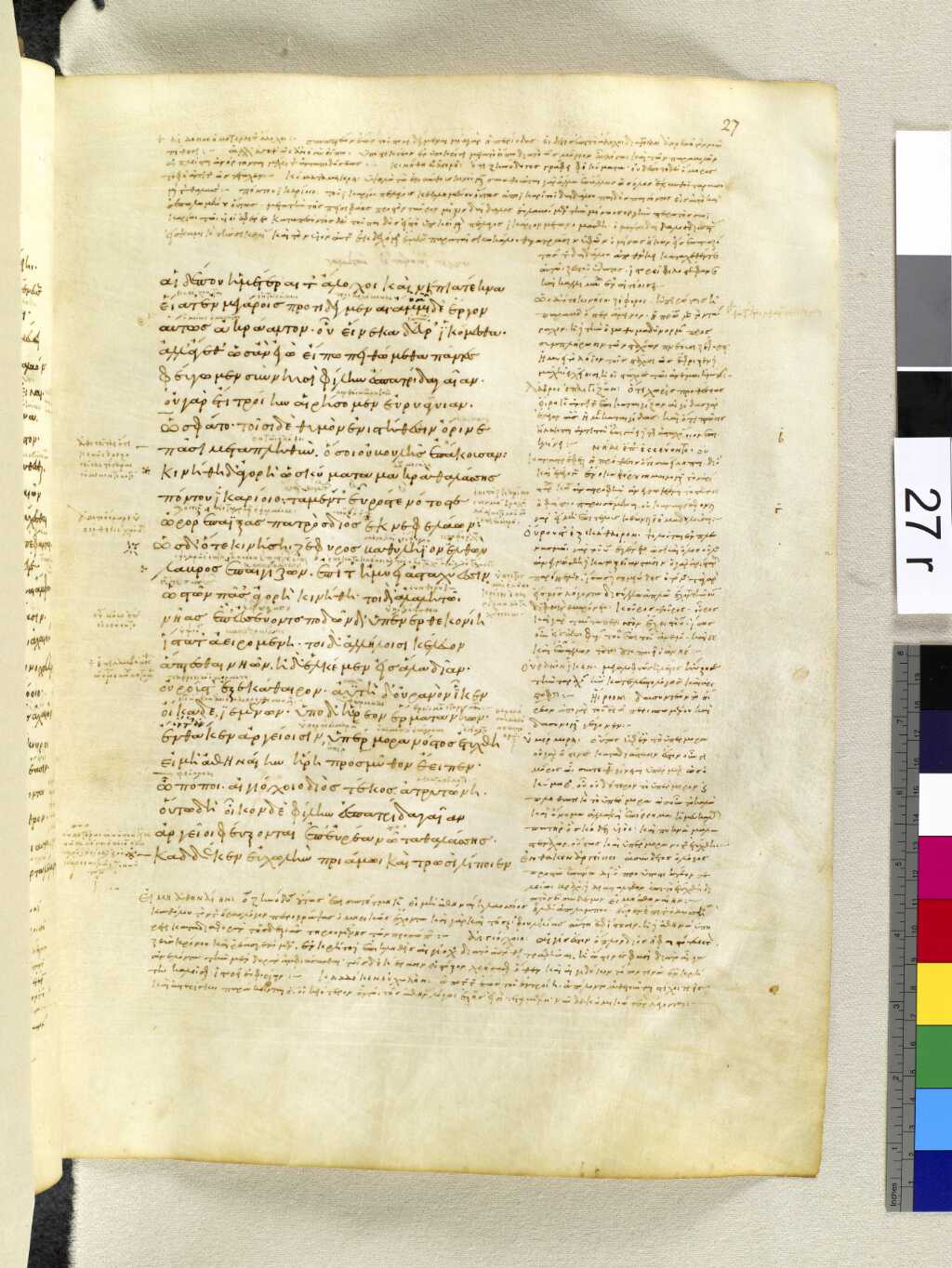
151ἵστατʼ ἀειρομένη· τοὶ δʼ ἀλλήλοισι κέλευον 152ἅπτεσθαι νηῶν ἠδʼ ἑλκέμεν εἰς ἅλα δῖαν, 153οὐρούς τʼ ἐξεκάθαιρον· ἀϋτὴ δʼ οὐρανὸν ἷκεν 154οἴκαδε ἱεμένων· ὑπὸ δʼ ᾕρεον ἕρματα νηῶν. 155ἔνθά κεν Ἀργείοισιν ὑπέρμορα νόστος ἐτύχθη 156εἰ μὴ Ἀθηναίην Ἥρη πρὸς μῦθον ἔειπεν· 157ὢ πόποι αἰγιόχοιο Διὸς τέκος Ἀτρυτώνη, 158οὕτω δὴ οἶκον δὲ φίλην ἐς πατρίδα γαῖαν 159Ἀργεῖοι φεύξονται ἐπʼ εὐρέα νῶτα θαλάσσης, 160κὰδ δέ κεν εὐχωλὴν Πριάμῳ καὶ Τρωσὶ λίποιεν 161Ἀργείην Ἑλένην, ἧς εἵνεκα πολλοὶ Ἀχαιῶν 162ἐν Τροίῃ ἀπόλοντο φίλης ἀπὸ πατρίδος αἴης· 163ἀλλʼ ἴθι νῦν κατὰ λαὸν Ἀχαιῶν χαλκοχιτώνων· 164σοῖς ἀγανοῖς ἐπέεσσιν ἐρήτυε φῶτα ἕκαστον, 165μηδὲ ἔα νῆας ἅλα δʼ ἑλκέμεν ἀμφιελίσσας. 166ὣς ἔφατʼ, οὐδʼ ἀπίθησε θεὰ γλαυκῶπις Ἀθήνη, 167βῆ δὲ κατʼ Οὐλύμποιο καρήνων ἀΐξασα· 168καρπαλίμως δʼ ἵκανε θοὰς ἐπὶ νῆας Ἀχαιῶν. 169εὗρεν ἔπειτʼ Ὀδυσῆα Διὶ μῆτιν ἀτάλαντον 170ἑσταότʼ· οὐδʼ ὅ γε νηὸς ἐϋσσέλμοιο μελαίνης 171ἅπτετʼ, ἐπεί μιν ἄχος κραδίην καὶ θυμὸν ἵκανεν· 172ἀγχοῦ δʼ ἱσταμένη προσέφη γλαυκῶπις Ἀθήνη· 173διογενὲς Λαερτιάδη πολυμήχανʼ Ὀδυσσεῦ, 174οὕτω δὴ οἶκον δὲ φίλην ἐς πατρίδα γαῖαν 175φεύξεσθʼ ἐν νήεσσι πολυκλήϊσι πεσόντες,
Whenever he met a king or chieftain, he stood by him and spoke him fairly. “Sir,” said he, “this flight is cowardly and unworthy. Stand to your post, and bid your people also keep their places. You do not yet know the full mind of Agamemnon; he was sounding us, and ere long will visit the Achaeans with his displeasure. We were not all of us at the council to hear what he then said; see to it lest he be angry and do us a mischief; for the pride of kings is great, and the hand of Jove is with them.”
But when he came across any common man who was making a noise, he struck him with his staff and rebuked him, saying, “Sirrah, hold your peace, and listen to better men than yourself. You are a coward and no soldier; you are nobody either in fight or council; we cannot all be kings; it is not well that there should be many masters; one man must be supreme—one king to whom the son of scheming Saturn has given the sceptre of sovereignty over you all.”
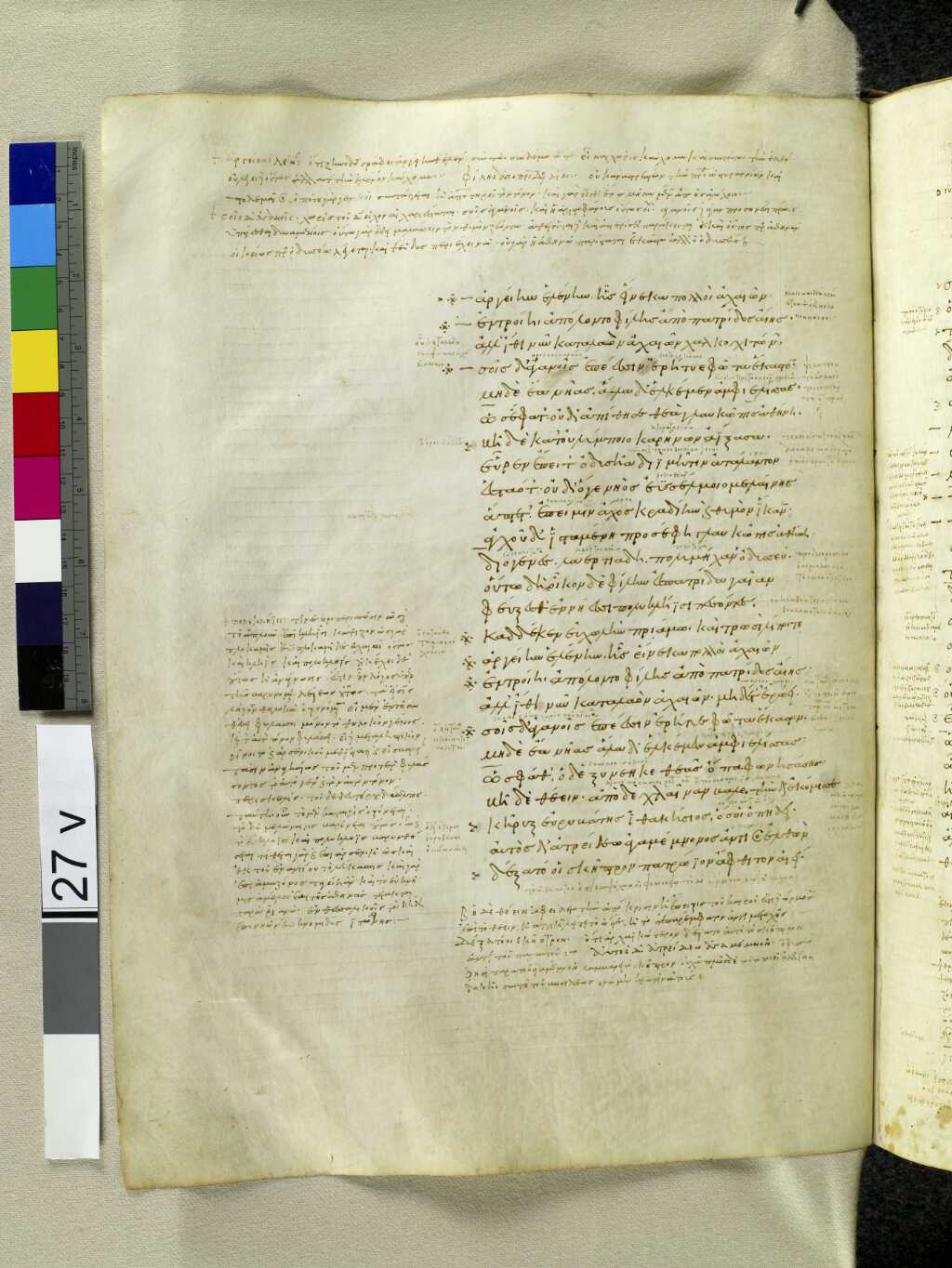
176κὰδ δέ κεν εὐχωλὴν Πριάμῳ καὶ Τρωσὶ λίποιτε 177Ἀργείην Ἑλένην, ἧς εἵνεκα πολλοὶ Ἀχαιῶν 178ἐν Τροίῃ ἀπόλοντο φίλης ἀπὸ πατρίδος αἴης; 179ἀλλʼ ἴθι νῦν κατὰ λαὸν Ἀχαιῶν, μηδʼ ἔτʼ ἐρώει, 180σοῖς δʼ ἀγανοῖς ἐπέεσσιν ἐρήτυε φῶτα ἕκαστον, 181μηδὲ ἔα νῆας ἅλα δʼ ἑλκέμεν ἀμφιελίσσας. 182ὣς φάθʼ, ὃ δὲ ξυνέηκε θεᾶς ὄπα φωνησάσης, 183βῆ δὲ θέειν, ἀπὸ δὲ χλαῖναν βάλε· τὴν δὲ κόμισσε 184κῆρυξ Εὐρυβάτης Ἰθακήσιος ὅς οἱ ὀπήδει· 185αὐτὸς δʼ Ἀτρεΐδεω Ἀγαμέμνονος ἀντίος ἐλθὼν 186δέξατό οἱ σκῆπτρον πατρώϊον ἄφθιτον αἰεί· 187σὺν τῷ ἔβη κατὰ νῆας Ἀχαιῶν χαλκοχιτώνων. 188ὅν τινα μὲν βασιλῆα καὶ ἔξοχον ἄνδρα κιχείη 189τὸν δʼ ἀγανοῖς ἐπέεσσιν ἐρητύσασκε παραστάς· 190δαιμόνιʼ οὔ σε ἔοικε κακὸν ὣς δειδίσσεσθαι, 191ἀλλʼ αὐτός τε κάθησο καὶ ἄλλους ἵδρυε λαούς· 192οὐ γάρ πω σάφα οἶσθʼ οἷος νόος Ἀτρεΐωνος· 193νῦν μὲν πειρᾶται, τάχα δʼ ἴψεται υἷας Ἀχαιῶν. 194ἐν βουλῇ δʼ οὐ πάντες ἀκούσαμεν οἷον ἔειπε. 195μή τι χολωσάμενος ῥέξῃ κακὸν υἷας Ἀχαιῶν· 196θυμὸς δὲ μέγας ἐστὶ διοτρεφέων βασιλήων, 197τιμὴ δʼ ἐκ Διός ἐστι, φιλεῖ δέ ἑ μητίετα Ζεύς. 198ὃν δʼ αὖ δήμου τʼ ἄνδρα ἴδοι βοόωντά τʼ ἐφεύροι, 199τὸν σκήπτρῳ ἐλάσασκεν ὁμοκλήσασκέ τε μύθῳ· 200δαιμόνιʼ ἀτρέμας ἧσο καὶ ἄλλων μῦθον ἄκουε,
Thus masterfully did he go about among the host, and the people hurried back to the council from their tents and ships with a sound as the thunder of surf when it comes crashing down upon the shore, and all the sea is in an uproar.
The rest now took their seats and kept to their own several places, but Thersites still went on wagging his unbridled tongue—a man of many words, and those unseemly; a monger of sedition, a railer against all who were in authority, who cared not what he said, so that he might set the Achaeans in a laugh. He was the ugliest man of all those that came before Troy—bandy-legged, lame of one foot, with his two shoulders rounded and hunched over his chest. His head ran up to a point, but there was little hair on the top of it. Achilles and Ulysses hated him worst of all, for it was with them that he was most wont to wrangle; now, however, with a shrill squeaky voice he began heaping his abuse on Agamemnon. The Achaeans were angry and disgusted, yet none the less he kept on brawling and bawling at the son of Atreus.
“Agamemnon,” he cried, “what ails you now, and what more do you want? Your tents are filled with bronze and with fair women, for whenever we take a town we give you the pick of them. Would you have yet more gold, which some Trojan is to give you as a ransom for his son, when I or another Achaean has taken him prisoner? or is it some young girl to hide and lie with? It is not well that you, the ruler of the Achaeans, should bring them into such misery. Weakling cowards, women rather than men, let us sail home, and leave this fellow here at Troy to stew in his own meeds of honour, and discover whether we were of any service to him or no. Achilles is a much better man than he is, and see how he has treated him—robbing him of his prize and keeping it himself. Achilles takes it meekly and shows no fight; if he did, son of Atreus, you would never again insult him.”
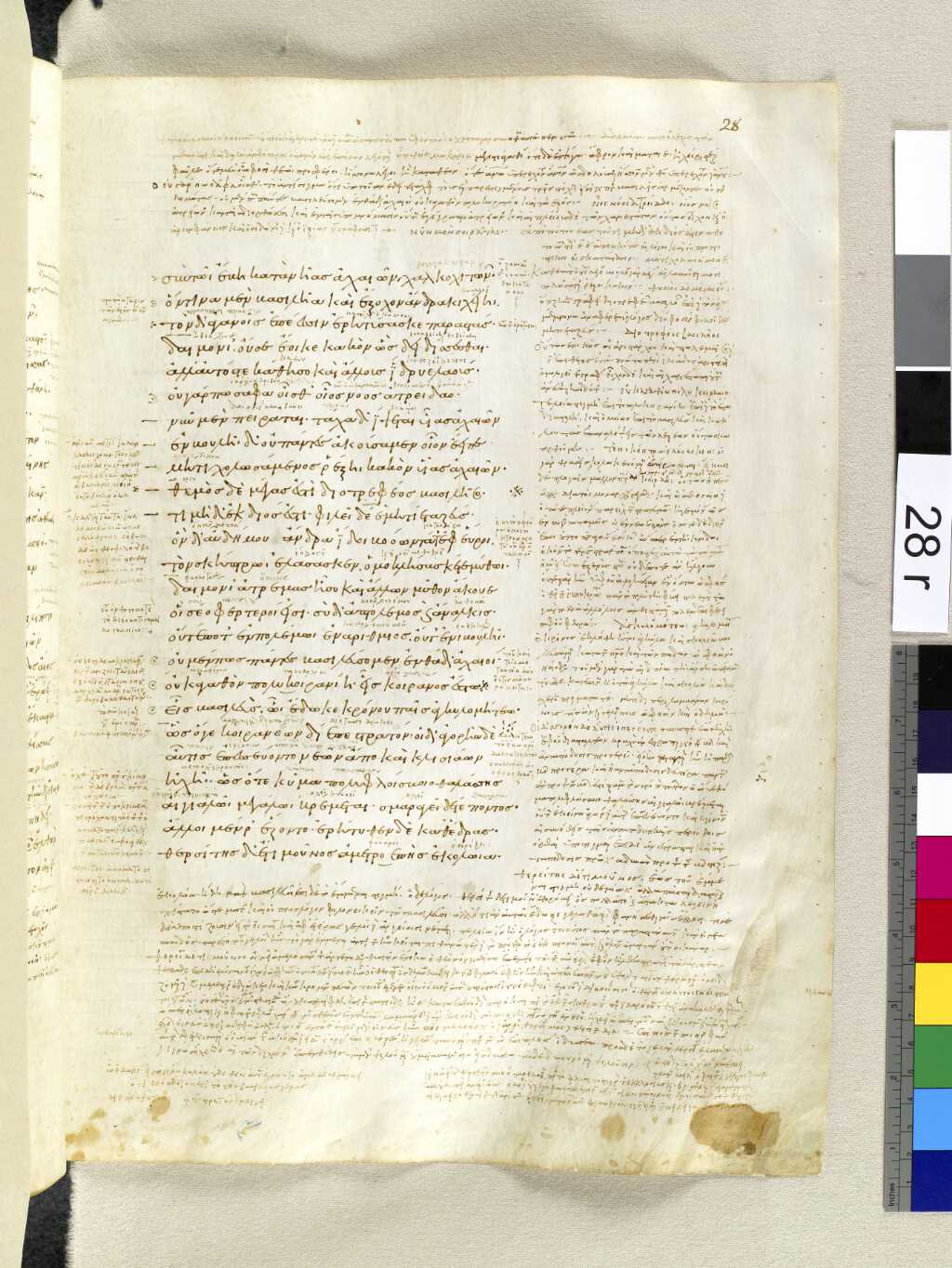
201οἳ σέο φέρτεροί εἰσι, σὺ δʼ ἀπτόλεμος καὶ ἄναλκις 202οὔτέ ποτʼ ἐν πολέμῳ ἐναρίθμιος οὔτʼ ἐνὶ βουλῇ· 203οὐ μέν πως πάντες βασιλεύσομεν ἐνθάδʼ Ἀχαιοί· 204οὐκ ἀγαθὸν πολυκοιρανίη· εἷς κοίρανος ἔστω, 205εἷς βασιλεύς, ᾧ δῶκε Κρόνου πάϊς ἀγκυλομήτεω 206σκῆπτρόν τʼ ἠδὲ θέμιστας, ἵνά σφισι βουλεύῃσι. 207ὣς ὅ γε κοιρανέων δίεπε στρατόν· οἳ δʼ ἀγορὴν δὲ 208αὖτις ἐπεσσεύοντο νεῶν ἄπο καὶ κλισιάων 209ἠχῇ, ὡς ὅτε κῦμα πολυφλοίσβοιο θαλάσσης 210αἰγιαλῷ μεγάλῳ βρέμεται, σμαραγεῖ δέ τε πόντος. 211ἄλλοι μέν ῥʼ ἕζοντο, ἐρήτυθεν δὲ καθʼ ἕδρας· 212Θερσίτης δʼ ἔτι μοῦνος ἀμετροεπὴς ἐκολῴα, 213ὃς ἔπεα φρεσὶν ᾗσιν ἄκοσμά τε πολλά τε ᾔδη 214μάψ, ἀτὰρ οὐ κατὰ κόσμον, ἐριζέμεναι βασιλεῦσιν, 215ἀλλʼ ὅ τι οἱ εἴσαιτο γελοίϊον Ἀργείοισιν 216ἔμμεναι· αἴσχιστος δὲ ἀνὴρ ὑπὸ Ἴλιον ἦλθε· 217φολκὸς ἔην, χωλὸς δʼ ἕτερον πόδα· τὼ δέ οἱ ὤμω 218κυρτὼ ἐπὶ στῆθος συνοχωκότε· αὐτὰρ ὕπερθε 219φοξὸς ἔην κεφαλήν, ψεδνὴ δʼ ἐπενήνοθε λάχνη. 220ἔχθιστος δʼ Ἀχιλῆϊ μάλιστʼ ἦν ἠδʼ Ὀδυσῆϊ· 221τὼ γὰρ νεικείεσκε· τότʼ αὖτʼ Ἀγαμέμνονι δίῳ 222ὀξέα κεκλήγων λέγʼ ὀνείδεα· τῷ δʼ ἄρʼ Ἀχαιοὶ 223ἐκπάγλως κοτέοντο νεμέσσηθέν τʼ ἐνὶ θυμῷ. 224αὐτὰρ ὃ μακρὰ βοῶν Ἀγαμέμνονα νείκεε μύθῳ· 225Ἀτρεΐδη τέο δʼ αὖτʼ ἐπιμέμφεαι ἠδὲ χατίζεις;
Thus railed Thersites, but Ulysses at once went up to him and rebuked him sternly. “Check your glib tongue, Thersites,” said he, “and babble not a word further. Chide not with princes when you have none to back you. There is no viler creature come before Troy with the sons of Atreus. Drop this chatter about kings, and neither revile them nor keep harping about going home. We do not yet know how things are going to be, nor whether the Achaeans are to return with good success or evil. How dare you gibe at Agamemnon because the Danaans have awarded him so many prizes? I tell you, therefore—and it shall surely be—that if I again catch you talking such nonsense, I will either forfeit my own head and be no more called father of Telemachus, or I will take you, strip you stark naked, and whip you out of the assembly till you go blubbering back to the ships.”
On this he beat him with his staff about the back and shoulders till he dropped and fell a-weeping. The golden sceptre raised a bloody weal on his back, so he sat down frightened and in pain, looking foolish as he wiped the tears from his eyes. The people were sorry for him, yet they laughed heartily, and one would turn to his neighbour saying, “Ulysses has done many a good thing ere now in fight and council, but he never did the Argives a better turn than when he stopped this fellow’s mouth from prating further. He will give the kings no more of his insolence.”
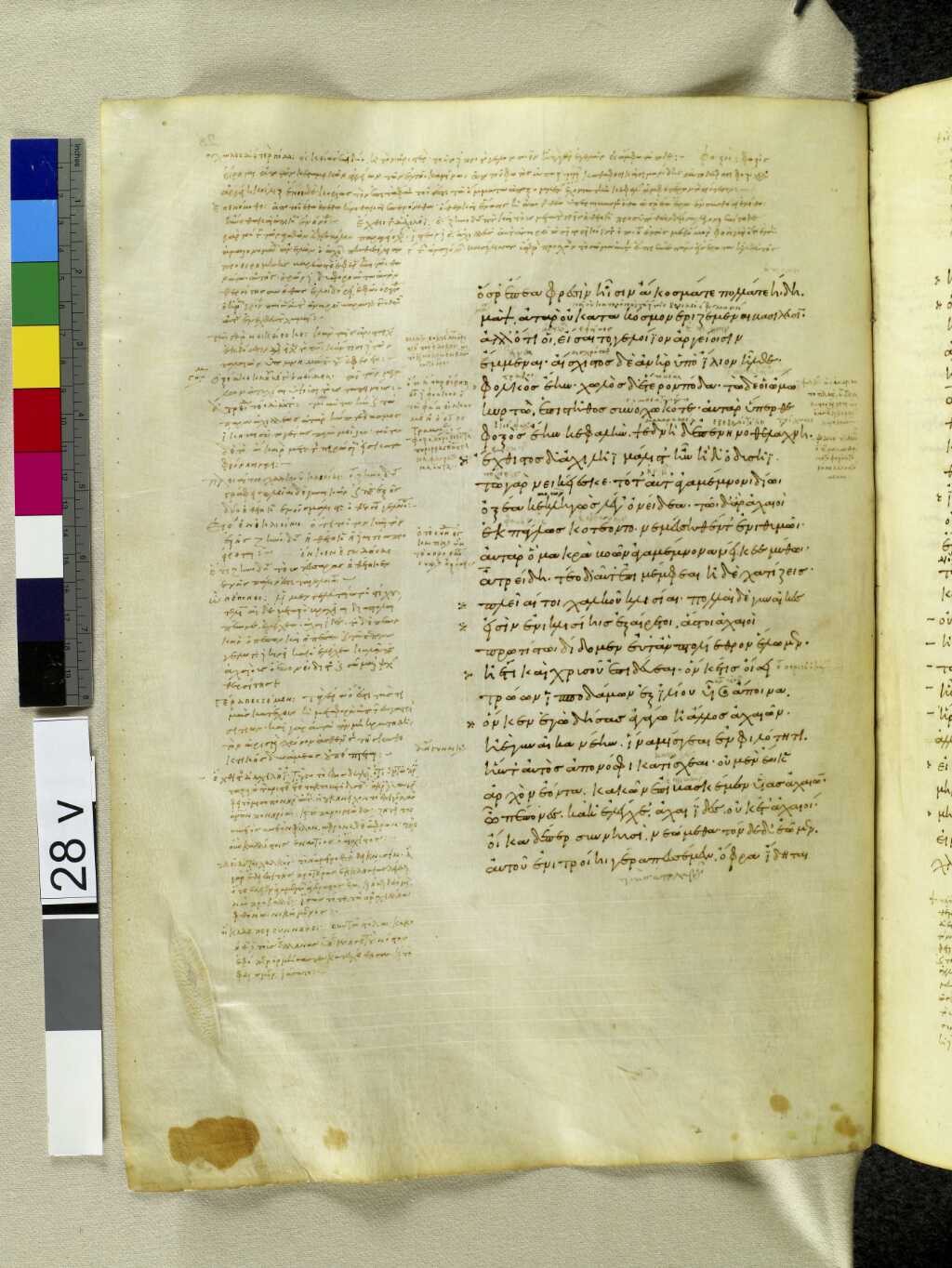
226πλεῖαί τοι χαλκοῦ κλισίαι, πολλαὶ δὲ γυναῖκες 227εἰσὶν ἐνὶ κλισίῃς ἐξαίρετοι, ἅς τοι Ἀχαιοὶ 228πρωτίστῳ δίδομεν εὖτʼ ἂν πτολίεθρον ἕλωμεν. 229ἦ ἔτι καὶ χρυσοῦ ἐπιδεύεαι, ὅν κέ τις οἴσει 230Τρώων ἱπποδάμων ἐξ Ἰλίου υἷος ἄποινα, 231ὅν κεν ἐγὼ δήσας ἀγάγω ἢ ἄλλος Ἀχαιῶν, 232ἠὲ γυναῖκα νέην, ἵνα μίσγεαι ἐν φιλότητι, 233ἥν τʼ αὐτὸς ἀπονόσφι κατίσχεαι; οὐ μὲν ἔοικεν 234ἀρχὸν ἐόντα κακῶν ἐπιβασκέμεν υἷας Ἀχαιῶν. 235ὦ πέπονες κάκʼ ἐλέγχεʼ Ἀχαιΐδες οὐκέτʼ Ἀχαιοὶ 236οἴκαδέ περ σὺν νηυσὶ νεώμεθα, τόνδε δʼ ἐῶμεν 237αὐτοῦ ἐνὶ Τροίῃ γέρα πεσσέμεν, ὄφρα ἴδηται 238ἤ ῥά τί οἱ χἠμεῖς προσαμύνομεν ἦε καὶ οὐκί· 239ὃς καὶ νῦν Ἀχιλῆα ἕο μέγʼ ἀμείνονα φῶτα 240ἠτίμησεν· ἑλὼν γὰρ ἔχει γέρας αὐτὸς ἀπούρας. 241ἀλλὰ μάλʼ οὐκ Ἀχιλῆϊ χόλος φρεσίν, ἀλλὰ μεθήμων· 242ἦ γὰρ ἂν Ἀτρεΐδη νῦν ὕστατα λωβήσαιο· 243ὣς φάτο νεικείων Ἀγαμέμνονα ποιμένα λαῶν, 244Θερσίτης· τῷ δʼ ὦκα παρίστατο δῖος Ὀδυσσεύς, 245καί μιν ὑπόδρα ἰδὼν χαλεπῷ ἠνίπαπε μύθῳ· 246Θερσῖτʼ ἀκριτόμυθε, λιγύς περ ἐὼν ἀγορητής, 247ἴσχεο, μηδʼ ἔθελʼ οἶος ἐριζέμεναι βασιλεῦσιν· 248οὐ γὰρ ἐγὼ σέο φημὶ χερειότερον βροτὸν ἄλλον 249ἔμμεναι, ὅσσοι ἅμʼ Ἀτρεΐδῃς ὑπὸ Ἴλιον ἦλθον. 250τὼ οὐκ ἂν βασιλῆας ἀνὰ στόμʼ ἔχων ἀγορεύοις,
Thus said the people. Then Ulysses rose, sceptre in hand, and Minerva in the likeness of a herald bade the people be still, that those who were far off might hear him and consider his council. He therefore with all sincerity and goodwill addressed them thus:—
“King Agamemnon, the Achaeans are for making you a by-word among all mankind. They forget the promise they made you when they set out from Argos, that you should not return till you had sacked the town of Troy, and, like children or widowed women, they murmur and would set off homeward. True it is that they have had toil enough to be disheartened. A man chafes at having to stay away from his wife even for a single month, when he is on shipboard, at the mercy of wind and sea, but it is now nine long years that we have been kept here; I cannot, therefore, blame the Achaeans if they turn restive; still we shall be shamed if we go home empty after so long a stay—therefore, my friends, be patient yet a little longer that we may learn whether the prophesyings of Calchas were false or true.
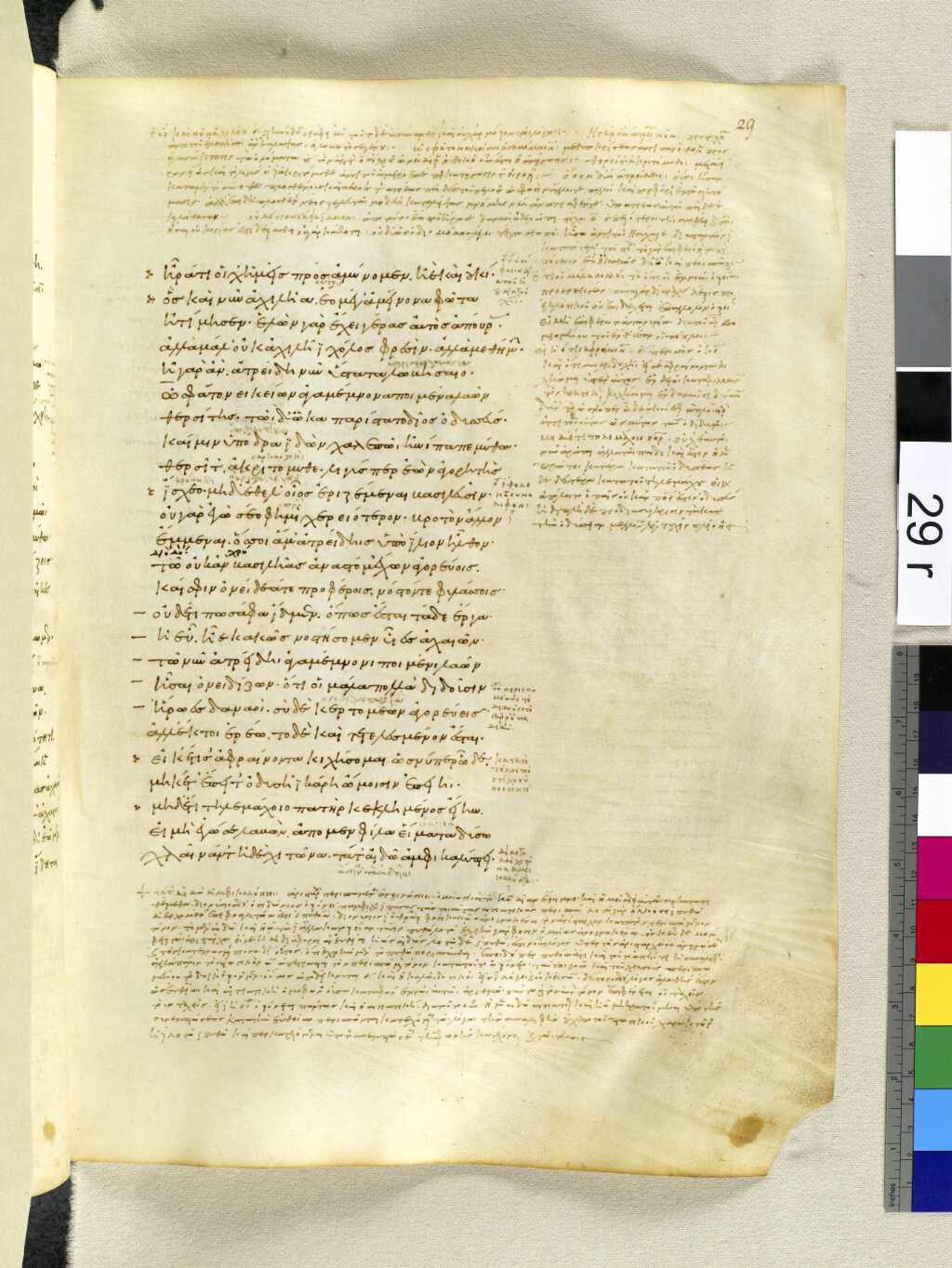
251καί σφιν ὀνείδεά τε προφέροις, νόστόν τε φυλάσσοις. 252οὐδέ τί πω σάφα ἴδμεν ὅπως ἔσται τάδε ἔργα, 253ἢ εὖ ἦε κακῶς νοστήσομεν υἷες Ἀχαιῶν. 254τὼ νῦν Ἀτρεΐδῃ Ἀγαμέμνονι ποιμένι λαῶν 255ἧσαι ὀνειδίζων, ὅτι οἱ μάλα πολλὰ διδοῦσιν 256ἥρωες Δαναοί· σὺ δὲ κερτομέων ἀγορεύεις. 257ἀλλʼ ἔκ τοι ἐρέω, τὸ δὲ καὶ τετελεσμένον ἔσται· 258εἴ κʼ ἔτι σʼ ἀφραίνοντα κιχήσομαι ὥς νύ περ ὧδε, 259μηκέτʼ ἔπειτʼ Ὀδυσῆϊ κάρη ὤμοισιν ἐπείη, 260μηδʼ ἔτι Τηλεμάχοιο πατὴρ κεκλημένος εἴην, 261εἰ μὴ ἐγώ σε λαβὼν ἀπὸ μὲν φίλα εἵματα δύσω, 262χλαῖνάν τʼ ἠδὲ χιτῶνα, τά τʼ αἰδῶ ἀμφικαλύπτει, 263αὐτὸν δὲ κλαίοντα θοὰς ἐπὶ νῆας ἀφήσω 264πεπλήγων ἀγορῆθεν ἀεικέσσι πληγῇσιν. 265ὣς ἄρʼ ἔφη, σκήπτρῳ δὲ μετάφρενον ἠδὲ καὶ ὤμω 266πλῆξεν· ὃ δʼ ἰδνώθη, θαλερὸν δέ οἱ ἔκπεσε δάκρυ· 267σμῶδιξ δʼ αἱματόεσσα μεταφρένου ἐξυπανέστη 268σκήπτρου ὕπο χρυσέου· ὃ δʼ ἄρʼ ἕζετο τάρβησέν τε, 269ἀλγήσας δʼ ἀχρεῖον ἰδὼν ἀπομόρξατο δάκρυ. 270οἳ δὲ καὶ ἀχνύμενοί περ ἐπʼ αὐτῷ ἡδὺ γέλασσαν· 271ὧδε δέ τις εἴπεσκεν ἰδὼν ἐς πλησίον ἄλλον· 272ὢ πόποι ἦ δὴ μυρίʼ Ὀδυσσεὺς ἐσθλὰ ἔοργε 273βουλάς τʼ ἐξάρχων ἀγαθὰς πόλεμόν τε κορύσσων· 274νῦν δὲ τόδε μέγʼ ἄριστον ἐν Ἀργείοισιν ἔρεξεν, 275ὃς τὸν λωβητῆρα ἐπεσβόλον ἔσχʼ ἀγοράων.
“All who have not since perished must remember as though it were yesterday or the day before, how the ships of the Achaeans were detained in Aulis when we were on our way hither to make war on Priam and the Trojans. We were ranged round about a fountain offering hecatombs to the gods upon their holy altars, and there was a fine plane-tree from beneath which there welled a stream of pure water. Then we saw a prodigy; for Jove sent a fearful serpent out of the ground, with blood-red stains upon its back, and it darted from under the altar on to the plane-tree. Now there was a brood of young sparrows, quite small, upon the topmost bough, peeping out from under the leaves, eight in all, and their mother that hatched them made nine. The serpent ate the poor cheeping things, while the old bird flew about lamenting her little ones; but the serpent threw his coils about her and caught her by the wing as she was screaming. Then, when he had eaten both the sparrow and her young, the god who had sent him made him become a sign; for the son of scheming Saturn turned him into stone, and we stood there wondering at that which had come to pass. Seeing, then, that such a fearful portent had broken in upon our hecatombs, Calchas forthwith declared to us the oracles of heaven. ‘Why, Achaeans,’ said he, ‘are you thus speechless? Jove has sent us this sign, long in coming, and long ere it be fulfilled, though its fame shall last for ever. As the serpent ate the eight fledglings and the sparrow that hatched them, which makes nine, so shall we fight nine years at Troy, but in the tenth shall take the town.’ This was what he said, and now it is all coming true. Stay here, therefore, all of you, till we take the city of Priam.”
On this the Argives raised a shout, till the ships rang again with the uproar. Nestor, knight of Gerene, then addressed them. “Shame on you,” he cried, “to stay talking here like children, when you should fight like men. Where are our covenants now, and where the oaths that we have taken? Shall our counsels be flung into the fire, with our drink-offerings and the right hands of fellowship wherein we have put our trust? We waste our time in words, and for all our talking here shall be no further forward. Stand, therefore, son of Atreus, by your own steadfast purpose; lead the Argives on to battle, and leave this handful of men to rot, who scheme, and scheme in vain, to get back to Argos ere they have learned whether Jove be true or a liar. For the mighty son of Saturn surely promised that we should succeed, when we Argives set sail to bring death and destruction upon the Trojans. He showed us favourable signs by flashing his lightning on our right hands; therefore let none make haste to go till he has first lain with the wife of some Trojan, and avenged the toil and sorrow that he has suffered for the sake of Helen. Nevertheless, if any man is in such haste to be at home again, let him lay his hand to his ship that he may meet his doom in the sight of all. But, O king, consider and give ear to my counsel, for the word that I say may not be neglected lightly. Divide your men, Agamemnon, into their several tribes and clans, that clans and tribes may stand by and help one another. If you do this, and if the Achaeans obey you, you will find out who, both chiefs and peoples, are brave, and who are cowards; for they will vie against the other. Thus you shall also learn whether it is through the counsel of heaven or the cowardice of man that you shall fail to take the town.”
And Agamemnon answered, “Nestor, you have again outdone the sons of the Achaeans in counsel. Would, by Father Jove, Minerva, and Apollo, that I had among them ten more such councillors, for the city of King Priam would then soon fall beneath our hands, and we should sack it. But the son of Saturn afflicts me with bootless wranglings and strife. Achilles and I are quarrelling about this girl, in which matter I was the first to offend; if we can be of one mind again, the Trojans will not stave off destruction for a day. Now, therefore, get your morning meal, that our hosts join in fight. Whet well your spears; see well to the ordering of your shields; give good feeds to your horses, and look your chariots carefully over, that we may do battle the livelong day; for we shall have no rest, not for a moment, till night falls to part us. The bands that bear your shields shall be wet with the sweat upon your shoulders, your hands shall weary upon your spears, your horses shall steam in front of your chariots, and if I see any man shirking the fight, or trying to keep out of it at the ships, there shall be no help for him, but he shall be a prey to dogs and vultures.”
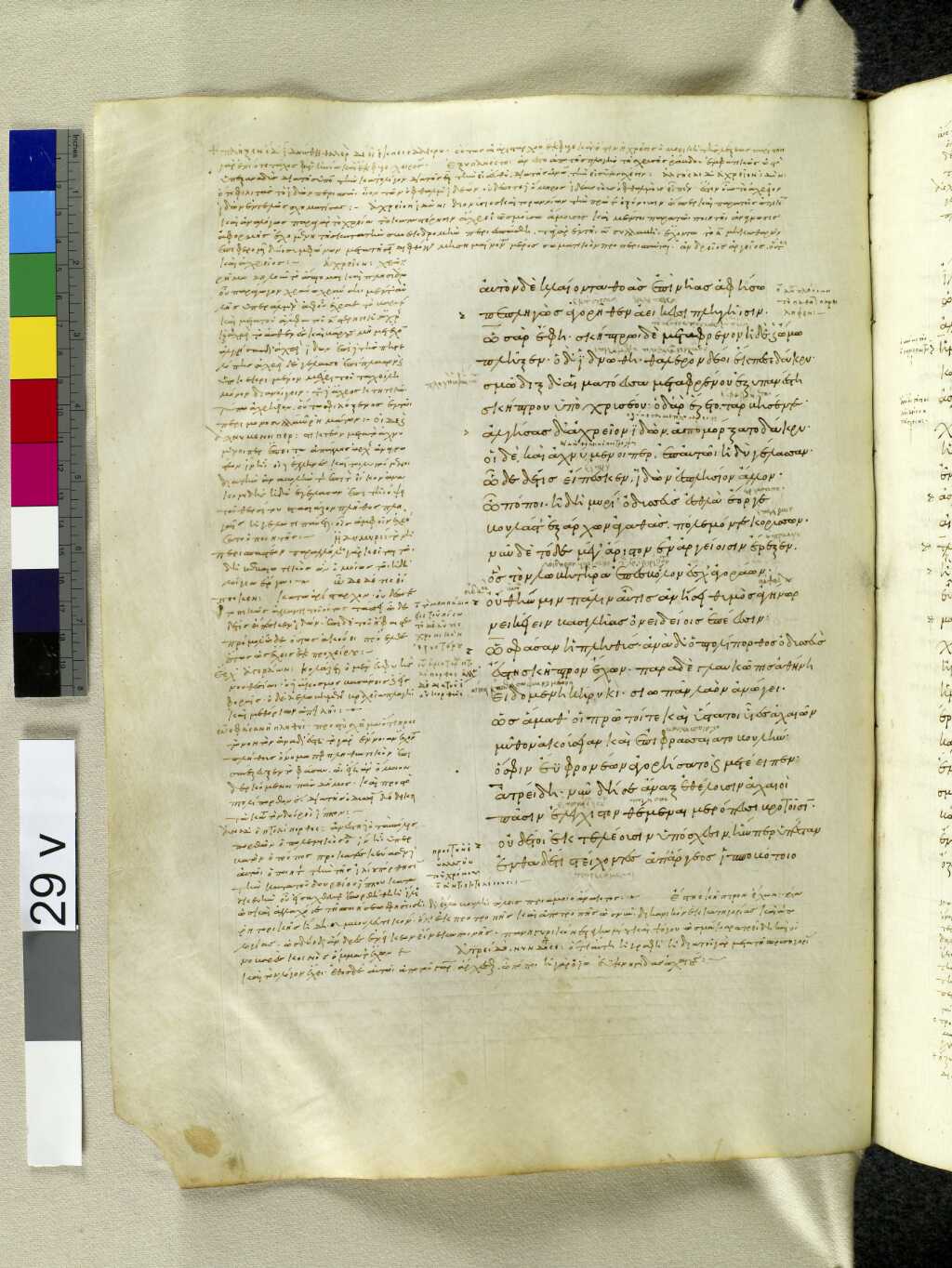
276οὔ θήν μιν πάλιν αὖτις ἀνήσει θυμὸς ἀγήνωρ 277νεικείειν βασιλῆας ὀνειδείοις ἐπέεσσιν. 278ὣς φάσαν ἣ πληθύς· ἀνὰ δʼ ὃ πτολίπορθος Ὀδυσσεὺς 279ἔστη σκῆπτρον ἔχων· παρὰ δὲ γλαυκῶπις Ἀθήνη 280εἰδομένη κήρυκι σιωπᾶν λαὸν ἀνώγει, 281ὡς ἅμα θʼ οἳ πρῶτοί τε καὶ ὕστατοι υἷες Ἀχαιῶν 282μῦθον ἀκούσειαν καὶ ἐπιφρασσαίατο βουλήν· 283ὅ σφιν ἐὺ φρονέων ἀγορήσατο καὶ μετέειπεν· 284Ἀτρεΐδη νῦν δή σε ἄναξ ἐθέλουσιν Ἀχαιοὶ 285πᾶσιν ἐλέγχιστον θέμεναι μερόπεσσι βροτοῖσιν, 286οὐδέ τοι ἐκτελέουσιν ὑπόσχεσιν ἥν περ ὑπέσταν 287ἐνθάδʼ ἔτι στείχοντες ἀπʼ Ἄργεος ἱπποβότοιο 288Ἴλιον ἐκπέρσαντʼ εὐτείχεον ἀπονέεσθαι. 289ὥς τε γὰρ ἢ παῖδες νεαροὶ χῆραί τε γυναῖκες 290ἀλλήλοισιν ὀδύρονται οἶκον δὲ νέεσθαι. 291ἦ μὴν καὶ πόνος ἐστὶν ἀνιηθέντα νέεσθαι· 292καὶ γάρ τίς θʼ ἕνα μῆνα μένων ἀπὸ ἧς ἀλόχοιο 293ἀσχαλάᾳ σὺν νηῒ πολυζύγῳ, ὅν περ ἄελλαι 294χειμέριαι εἰλέωσιν ὀρινομένη τε θάλασσα· 295ἡμῖν δʼ εἴνατός ἐστι περιτροπέων ἐνιαυτὸς 296ἐνθάδε μιμνόντεσσι· τὼ οὐ νεμεσίζομʼ Ἀχαιοὺς 297ἀσχαλάαν παρὰ νηυσὶ κορωνίσιν· ἀλλὰ καὶ ἔμπης 298αἰσχρόν τοι δηρόν τε μένειν κενεόν τε νέεσθαι. 299τλῆτε φίλοι, καὶ μείνατʼ ἐπὶ χρόνον ὄφρα δαῶμεν 300ἢ ἐτεὸν Κάλχας μαντεύεται ἦε καὶ οὐκί.
Thus he spoke, and the Achaeans roared applause. As when the waves run high before the blast of the south wind and break on some lofty headland, dashing against it and buffeting it without ceasing, as the storms from every quarter drive them, even so did the Achaeans rise and hurry in all directions to their ships. There they lighted their fires at their tents and got dinner, offering sacrifice every man to one or other of the gods, and praying each one of them that he might live to come out of the fight. Agamemnon, king of men, sacrificed a fat five-year-old bull to the mighty son of Saturn, and invited the princes and elders of his host. First he asked Nestor and King Idomeneus, then the two Ajaxes and the son of Tydeus, and sixthly Ulysses, peer of gods in counsel; but Menelaus came of his own accord, for he knew how busy his brother then was. They stood round the bull with the barley-meal in their hands, and Agamemnon prayed, saying, “Jove, most glorious, supreme, that dwellest in heaven, and ridest upon the storm-cloud, grant that the sun may not go down, nor the night fall, till the palace of Priam is laid low, and its gates are consumed with fire. Grant that my sword may pierce the shirt of Hector about his heart, and that full many of his comrades may bite the dust as they fall dying round him.”
Thus he prayed, but the son of Saturn would not fulfil his prayer. He accepted the sacrifice, yet none the less increased their toil continually. When they had done praying and sprinkling the barley-meal upon the victim, they drew back its head, killed it, and then flayed it. They cut out the thigh-bones, wrapped them round in two layers of fat, and set pieces of raw meat on the top of them. These they burned upon the split logs of firewood, but they spitted the inward meats, and held them in the flames to cook. When the thigh-bones were burned, and they had tasted the inward meats, they cut the rest up small, put the pieces upon spits, roasted them till they were done, and drew them off; then, when they had finished their work and the feast was ready, they ate it, and every man had his full share, so that all were satisfied. As soon as they had had enough to eat and drink, Nestor, knight of Gerene, began to speak. “King Agamemnon,” said he, “let us not stay talking here, nor be slack in the work that heaven has put into our hands. Let the heralds summon the people to gather at their several ships; we will then go about among the host, that we may begin fighting at once.”
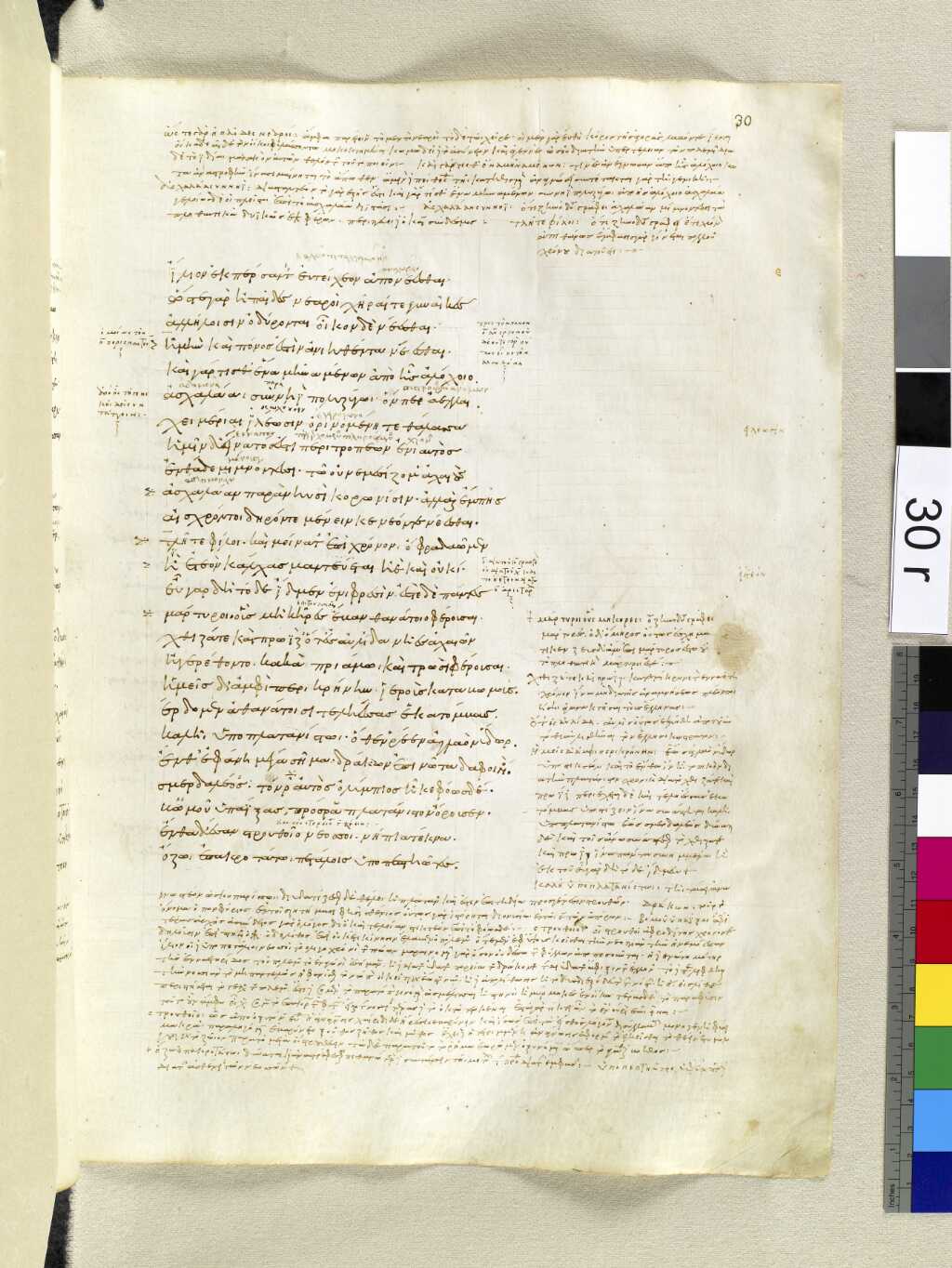
301εὖ γὰρ δὴ τόδε ἴδμεν ἐνὶ φρεσίν, ἐστὲ δὲ πάντες 302μάρτυροι, οὓς μὴ κῆρες ἔβαν θανάτοιο φέρουσαι· 303χθιζά τε καὶ πρωΐζʼ ὅτʼ ἐς Αὐλίδα νῆες Ἀχαιῶν 304ἠγερέθοντο κακὰ Πριάμῳ καὶ Τρωσὶ φέρουσαι, 305ἡμεῖς δʼ ἀμφὶ περὶ κρήνην ἱεροὺς κατὰ βωμοὺς 306ἕρδομεν ἀθανάτοισι τεληέσσας ἑκατόμβας 307καλῇ ὑπὸ πλατανίστῳ ὅθεν ῥέεν ἀγλαὸν ὕδωρ· 308ἔνθʼ ἐφάνη μέγα σῆμα· δράκων ἐπὶ νῶτα δαφοινὸς 309σμερδαλέος, τόν ῥʼ αὐτὸς Ὀλύμπιος ἧκε φόως δέ, 310βωμοῦ ὑπαΐξας πρός ῥα πλατάνιστον ὄρουσεν. 311ἔνθα δʼ ἔσαν στρουθοῖο νεοσσοί, νήπια τέκνα, 312ὄζῳ ἐπʼ ἀκροτάτῳ πετάλοις ὑποπεπτηῶτες 313ὀκτώ, ἀτὰρ μήτηρ ἐνάτη ἦν ἣ τέκε τέκνα· 314ἔνθʼ ὅ γε τοὺς ἐλεεινὰ κατήσθιε τετριγῶτας· 315μήτηρ δʼ ἀμφεποτᾶτο ὀδυρομένη φίλα τέκνα· 316τὴν δʼ ἐλελιξάμενος πτέρυγος λάβεν ἀμφιαχυῖαν. 317αὐτὰρ ἐπεὶ κατὰ τέκνα φάγε στρουθοῖο καὶ αὐτήν, 318τὸν μὲν ἀρίζηλον θῆκεν θεὸς ὅς περ ἔφηνε· 319λᾶαν γάρ μιν ἔθηκε Κρόνου πάϊς ἀγκυλομήτεω· 320ἡμεῖς δʼ ἑσταότες θαυμάζομεν οἷον ἐτύχθη. 321ὡς οὖν δεινὰ πέλωρα θεῶν εἰσῆλθʼ ἑκατόμβας, 322Κάλχας δʼ αὐτίκʼ ἔπειτα θεοπροπέων ἀγόρευε· 323τίπτʼ ἄνεῳ ἐγένεσθε κάρη κομόωντες Ἀχαιοί; 324ἡμῖν μὲν τόδʼ ἔφηνε τέρας μέγα μητίετα Ζεὺς 325ὄψιμον ὀψιτέλεστον, ὅου κλέος οὔ ποτʼ ὀλεῖται.
Thus did he speak, and Agamemnon heeded his words. He at once sent the criers round to call the people in assembly. So they called them, and the people gathered thereon. The chiefs about the son of Atreus chose their men and marshalled them, while Minerva went among them holding her priceless aegis that knows neither age nor death. From it there waved a hundred tassels of pure gold, all deftly woven, and each one of them worth a hundred oxen. With this she darted furiously everywhere among the hosts of the Achaeans, urging them forward, and putting courage into the heart of each, so that he might fight and do battle without ceasing. Thus war became sweeter in their eyes even than returning home in their ships. As when some great forest fire is raging upon a mountain top and its light is seen afar, even so as they marched the gleam of their armour flashed up into the firmament of heaven.
They were like great flocks of geese, or cranes, or swans on the plain about the waters of Cayster, that wing their way hither and thither, glorying in the pride of flight, and crying as they settle till the fen is alive with their screaming. Even thus did their tribes pour from ships and tents on to the plain of the Scamander, and the ground rang as brass under the feet of men and horses. They stood as thick upon the flower-bespangled field as leaves that bloom in summer.
As countless swarms of flies buzz around a herdsman’s homestead in the time of spring when the pails are drenched with milk, even so did the Achaeans swarm on to the plain to charge the Trojans and destroy them.
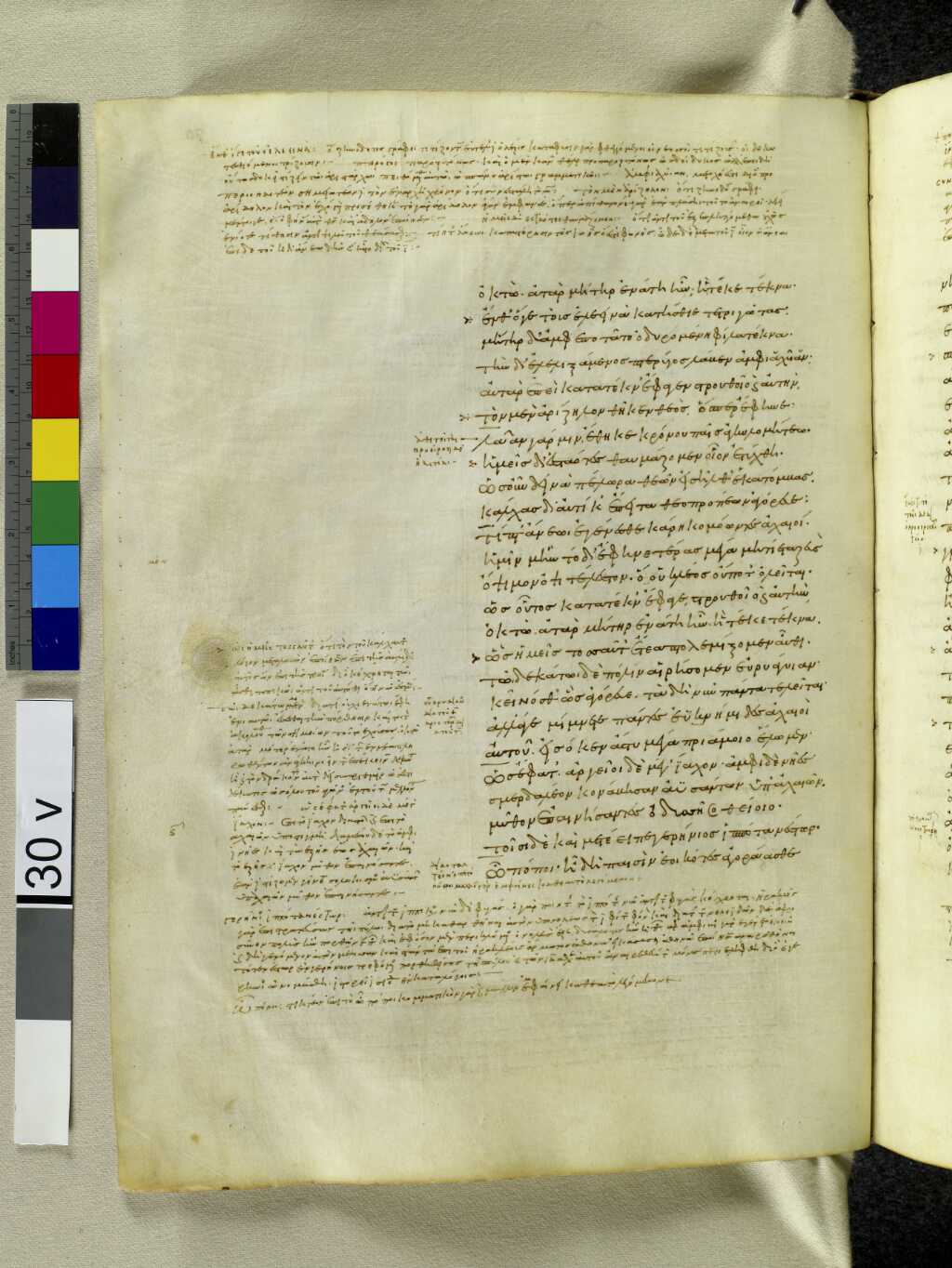
326ὡς οὗτος κατὰ τέκνα φάγε στρουθοῖο καὶ αὐτὴν 327ὀκτώ, ἀτὰρ μήτηρ ἐνάτη ἦν ἣ τέκε τέκνα, 328ὣς ἡμεῖς τοσσαῦτʼ ἔτεα πτολεμίξομεν αὖθι, 329τῷ δεκάτῳ δὲ πόλιν αἱρήσομεν εὐρυάγυιαν. 330κεῖνος τὼς ἀγόρευε· τὰ δὴ νῦν πάντα τελεῖται. 331ἀλλʼ ἄγε μίμνετε πάντες ἐϋκνήμιδες Ἀχαιοὶ 332αὐτοῦ εἰς ὅ κεν ἄστυ μέγα Πριάμοιο ἕλωμεν. 333ὣς ἔφατʼ, Ἀργεῖοι δὲ μέγʼ ἴαχον, ἀμφὶ δὲ νῆες 334σμερδαλέον κονάβησαν ἀϋσάντων ὑπʼ Ἀχαιῶν, 335μῦθον ἐπαινήσαντες Ὀδυσσῆος θείοιο· 336τοῖσι δὲ καὶ μετέειπε Γερήνιος ἱππότα Νέστωρ· 337ὦ πόποι ἦ δὴ παισὶν ἐοικότες ἀγοράασθε 338νηπιάχοις οἷς οὔ τι μέλει πολεμήϊα ἔργα. 339πῇ δὴ συνθεσίαι τε καὶ ὅρκια βήσεται ἥμιν; 340ἐν πυρὶ δὴ βουλαί τε γενοίατο μήδεά τʼ ἀνδρῶν 341σπονδαί τʼ ἄκρητοι καὶ δεξιαί, ᾗς ἐπέπιθμεν· 342αὔτως γὰρ ἐπέεσσʼ ἐριδαίνομεν, οὐδέ τι μῆχος 343εὑρέμεναι δυνάμεσθα, πολὺν χρόνον ἐνθάδʼ ἐόντες. 344Ἀτρεΐδη σὺ δʼ ἔθʼ ὡς πρὶν ἔχων ἀστεμφέα βουλὴν 345ἄρχευʼ Ἀργείοισι κατὰ κρατερὰς ὑσμίνας, 346τούσδε δʼ ἔα φθινύθειν ἕνα καὶ δύο, τοί κεν Ἀχαιῶν 347νόσφιν βουλεύωσʼ· ἄνυσις δʼ οὐκ ἔσσεται αὐτῶν· 348πρὶν Ἄργος δʼ ἰέναι πρὶν καὶ Διὸς αἰγιόχοιο 349γνώμεναι εἴ τε ψεῦδος ὑπόσχεσις εἴ τε καὶ οὐκί. 350φημὶ γὰρ οὖν κατανεῦσαι ὑπερμενέα Κρονίωνα
The chiefs disposed their men this way and that before the fight began, drafting them out as easily as goatherds draft their flocks when they have got mixed while feeding; and among them went King Agamemnon, with a head and face like Jove the lord of thunder, a waist like Mars, and a chest like that of Neptune. As some great bull that lords it over the herds upon the plain, even so did Jove make the son of Atreus stand peerless among the multitude of heroes.
And now, O Muses, dwellers in the mansions of Olympus, tell me—for you are goddesses and are in all places so that you see all things, while we know nothing but by report—who were the chiefs and princes of the Danaans? As for the common soldiers, they were so that I could not name every single one of them though I had ten tongues, and though my voice failed not and my heart were of bronze within me, unless you, O Olympian Muses, daughters of aegis-bearing Jove, were to recount them to me. Nevertheless, I will tell the captains of the ships and all the fleet together.
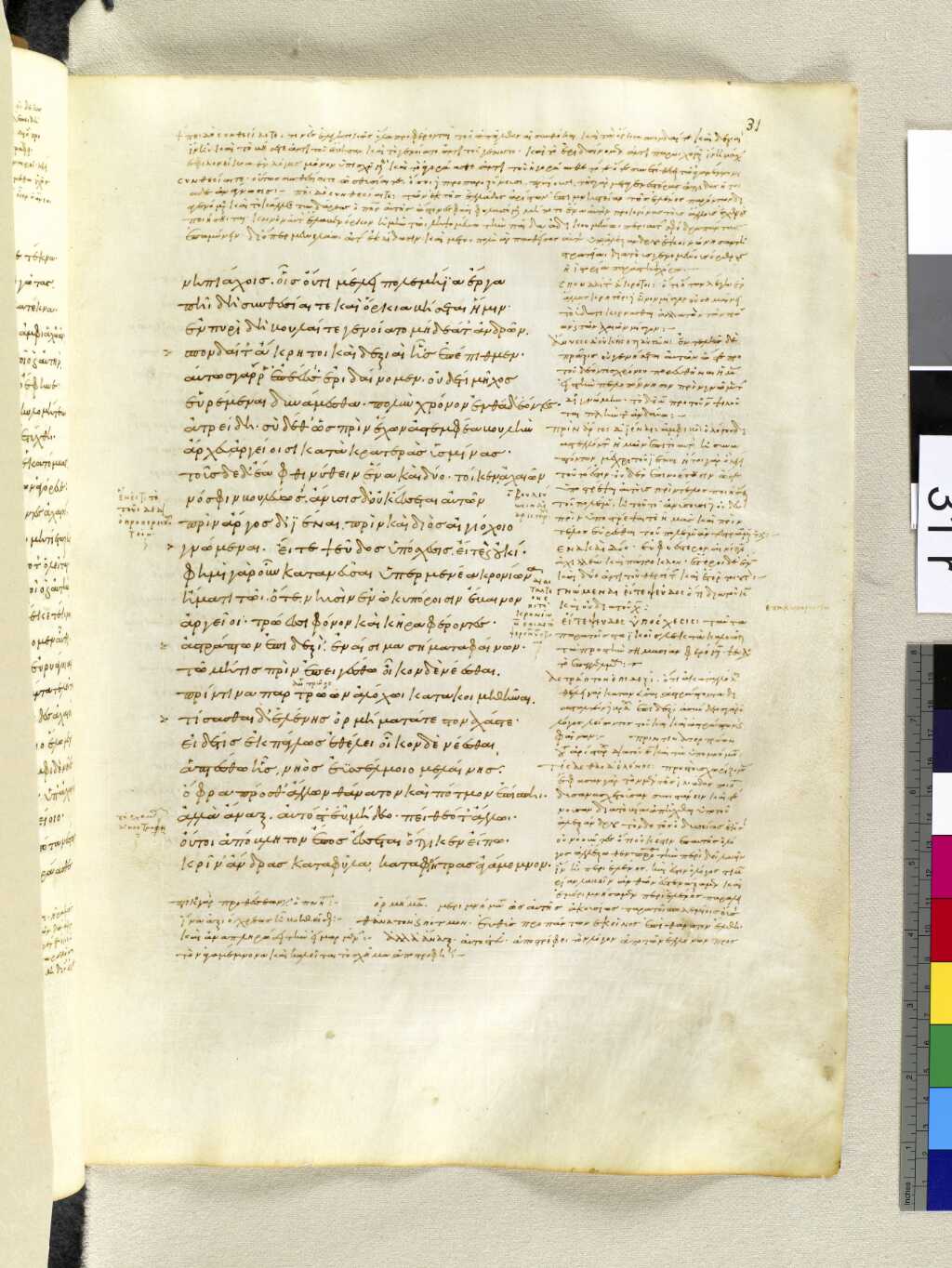
351ἤματι τῷ ὅτε νηυσὶν ἐν ὠκυπόροισιν ἔβαινον 352Ἀργεῖοι Τρώεσσι φόνον καὶ κῆρα φέροντες 353ἀστράπτων ἐπιδέξιʼ ἐναίσιμα σήματα φαίνων. 354τὼ μή τις πρὶν ἐπειγέσθω οἶκον δὲ νέεσθαι 355πρίν τινα πὰρ Τρώων ἀλόχῳ κατακοιμηθῆναι, 356τίσασθαι δʼ Ἑλένης ὁρμήματά τε στοναχάς τε. 357εἰ δέ τις ἐκπάγλως ἐθέλει οἶκον δὲ νέεσθαι 358ἁπτέσθω ἧς νηὸς ἐϋσσέλμοιο μελαίνης, 359ὄφρα πρόσθʼ ἄλλων θάνατον καὶ πότμον ἐπίσπῃ. 360ἀλλὰ ἄναξ αὐτός τʼ εὖ μήδεο πείθεό τʼ ἄλλῳ· 361οὔ τοι ἀπόβλητον ἔπος ἔσσεται ὅττί κεν εἴπω· 362κρῖνʼ ἄνδρας κατὰ φῦλα κατὰ φρήτρας Ἀγάμεμνον, 363ὡς φρήτρη φρήτρηφιν ἀρήγῃ, φῦλα δὲ φύλοις. 364εἰ δέ κεν ὣς ἕρξῃς καί τοι πείθωνται Ἀχαιοί, 365γνώσῃ ἔπειθʼ ὅς θʼ ἡγεμόνων κακὸς ὅς τέ νυ λαῶν 366ἠδʼ ὅς κʼ ἐσθλὸς ἔῃσι· κατὰ σφέας γὰρ μαχέονται. 367γνώσεαι δʼ εἰ καὶ θεσπεσίῃ πόλιν οὐκ ἀλαπάξεις, 368ἦ ἀνδρῶν κακότητι καὶ ἀφραδίῃ πολέμοιο. 369τὸν δʼ ἀπαμειβόμενος προσέφη κρείων Ἀγαμέμνων· 370ἦ μὰν αὖτʼ ἀγορῇ νικᾷς γέρον υἷας Ἀχαιῶν. 371αἲ γὰρ Ζεῦ τε πάτερ καὶ Ἀθηναίη καὶ Ἄπολλον 372τοιοῦτοι δέκα μοι συμφράδμονες εἶεν Ἀχαιῶν· 373τώ κε τάχʼ ἠμύσειε πόλις Πριάμοιο ἄνακτος 374χερσὶν ὑφʼ ἡμετέρῃσιν ἁλοῦσά τε περθομένη τε. 375ἀλλά μοι αἰγίοχος Κρονίδης Ζεὺς ἄλγεʼ ἔδωκεν,
Peneleos, Leitus, Arcesilaus, Prothoenor, and Clonius were captains of the Boeotians. These were they that dwelt in Hyria and rocky Aulis, and who held Schoenus, Scolus, and the highlands of Eteonus, with Thespeia, Graia, and the fair city of Mycalessus. They also held Harma, Eilesium, and Erythrae; and they had Eleon, Hyle, and Peteon; Ocalea and the strong fortress of Medeon; Copae, Eutresis, and Thisbe the haunt of doves; Coronea, and the pastures of Haliartus; Plataea and Glisas; the fortress of Thebes the less; holy Onchestus with its famous grove of Neptune; Arne rich in vineyards; Midea, sacred Nisa, and Anthedon upon the sea. From these there came fifty ships, and in each there were a hundred and twenty young men of the Boeotians.
Ascalaphus and Ialmenus, sons of Mars, led the people that dwelt in Aspledon and Orchomenus the realm of Minyas. Astyoche a noble maiden bore them in the house of Actor son of Azeus; for she had gone with Mars secretly into an upper chamber, and he had lain with her. With these there came thirty ships.
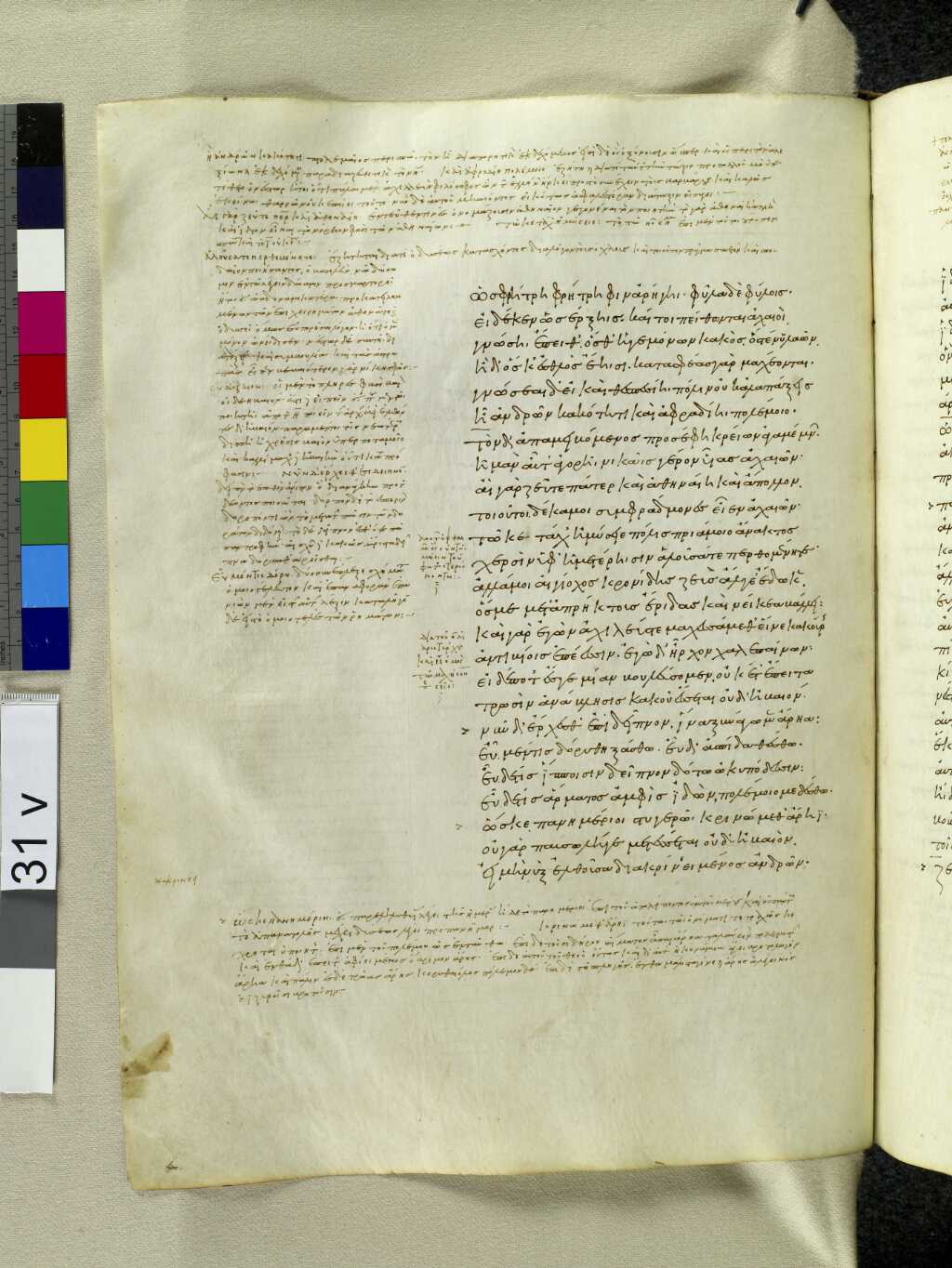
376ὅς με μετʼ ἀπρήκτους ἔριδας καὶ νείκεα βάλλει. 377καὶ γὰρ ἐγὼν Ἀχιλεύς τε μαχεσσάμεθʼ εἵνεκα κούρης 378ἀντιβίοις ἐπέεσσιν, ἐγὼ δʼ ἦρχον χαλεπαίνων· 379εἰ δέ ποτʼ ἔς γε μίαν βουλεύσομεν, οὐκέτʼ ἔπειτα 380Τρωσὶν ἀνάβλησις κακοῦ ἔσσεται οὐδʼ ἠβαιόν. 381νῦν δʼ ἔρχεσθʼ ἐπὶ δεῖπνον ἵνα ξυνάγωμεν Ἄρηα. 382εὖ μέν τις δόρυ θηξάσθω, εὖ δʼ ἀσπίδα θέσθω, 383εὖ δέ τις ἵπποισιν δεῖπνον δότω ὠκυπόδεσσιν, 384εὖ δέ τις ἅρματος ἀμφὶς ἰδὼν πολέμοιο μεδέσθω, 385ὥς κε πανημέριοι στυγερῷ κρινώμεθʼ Ἄρηϊ. 386οὐ γὰρ παυσωλή γε μετέσσεται οὐδʼ ἠβαιὸν 387εἰ μὴ νὺξ ἐλθοῦσα διακρινέει μένος ἀνδρῶν. 388ἱδρώσει μέν τευ τελαμὼν ἀμφὶ στήθεσφιν 389ἀσπίδος ἀμφιβρότης, περὶ δʼ ἔγχεϊ χεῖρα καμεῖται· 390ἱδρώσει δέ τευ ἵππος ἐΰξοον ἅρμα τιταίνων. 391ὃν δέ κʼ ἐγὼν ἀπάνευθε μάχης ἐθέλοντα νοήσω 392μιμνάζειν παρὰ νηυσὶ κορωνίσιν, οὔ οἱ ἔπειτα 393ἄρκιον ἐσσεῖται φυγέειν κύνας ἠδʼ οἰωνούς. 394ὣς ἔφατʼ, Ἀργεῖοι δὲ μέγʼ ἴαχον ὡς ὅτε κῦμα 395ἀκτῇ ἐφʼ ὑψηλῇ, ὅτε κινήσῃ Νότος ἐλθών, 396προβλῆτι σκοπέλῳ· τὸν δʼ οὔ ποτε κύματα λείπει 397παντοίων ἀνέμων, ὅτʼ ἂν ἔνθʼ ἢ ἔνθα γένωνται. 398ἀνστάντες δʼ ὀρέοντο κεδασθέντες κατὰ νῆας, 399κάπνισσάν τε κατὰ κλισίας, καὶ δεῖπνον ἕλοντο. 400ἄλλος δʼ ἄλλῳ ἔρεζε θεῶν αἰειγενετάων
The Phoceans were led by Schedius and Epistrophus, sons of mighty Iphitus the son of Naubolus. These were they that held Cyparissus, rocky Pytho, holy Crisa, Daulis, and Panopeus; they also that dwelt in Anemorea and Hyampolis, and about the waters of the river Cephissus, and Lilaea by the springs of the Cephissus; with their chieftains came forty ships, and they marshalled the forces of the Phoceans, which were stationed next to the Boeotians, on their left.
Ajax, the fleet son of Oileus, commanded the Locrians. He was not so great, nor nearly so great, as Ajax the son of Telamon. He was a little man, and his breastplate was made of linen, but in use of the spear he excelled all the Hellenes and the Achaeans. These dwelt in Cynus, Opous, Calliarus, Bessa, Scarphe, fair Augeae, Tarphe, and Thronium about the river Boagrius. With him there came forty ships of the Locrians who dwell beyond Euboea.
The fierce Abantes held Euboea with its cities, Chalcis, Eretria, Histiaea rich in vines, Cerinthus upon the sea, and the rock-perched town of Dium; with them were also the men of Carystus and Styra; Elephenor of the race of Mars was in command of these; he was son of Chalcodon, and chief over all the Abantes. With him they came, fleet of foot and wearing their hair long behind, brave warriors, who would ever strive to tear open the corslets of their foes with their long ashen spears. Of these there came fifty ships.
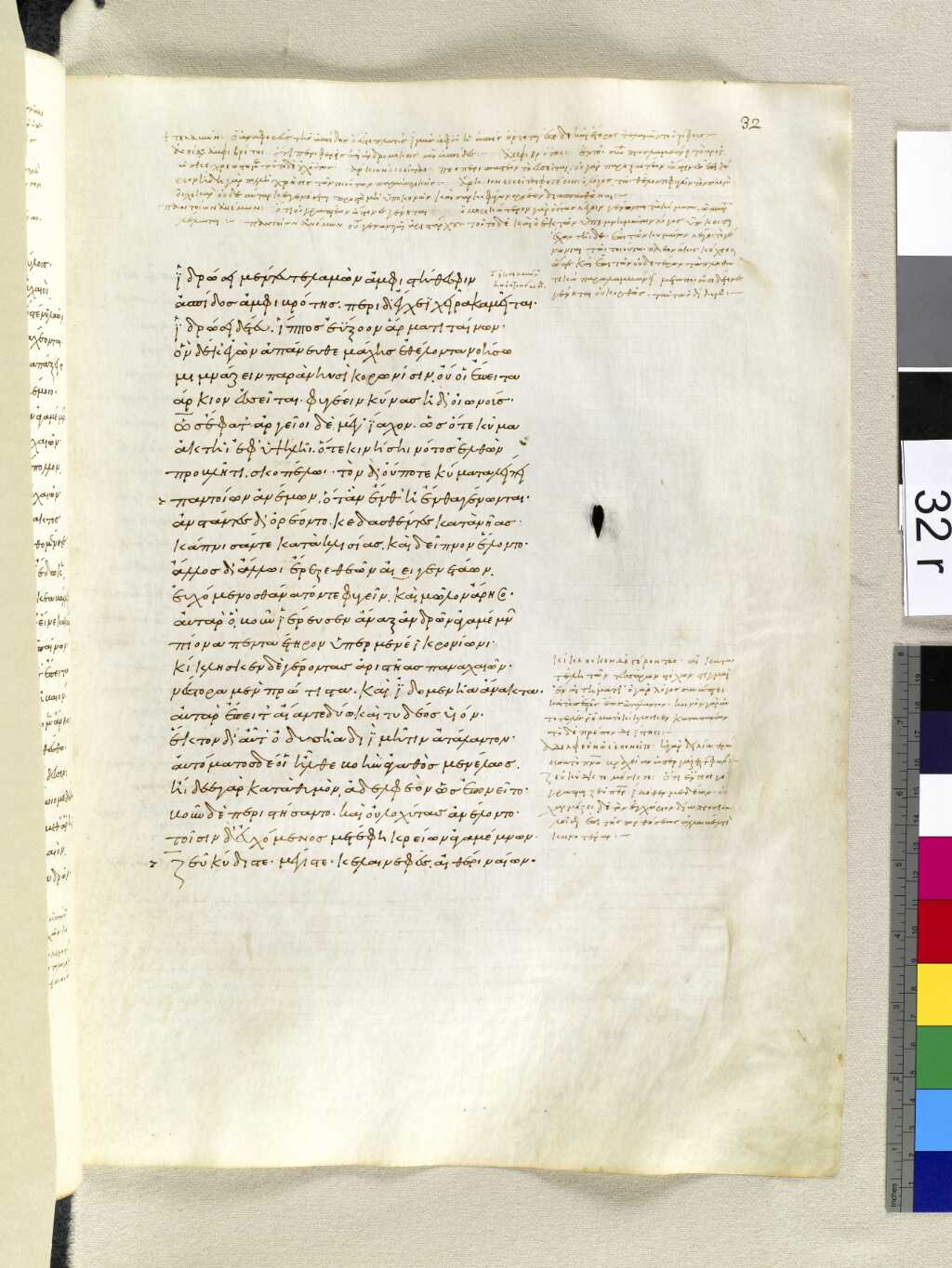
401εὐχόμενος θάνατόν τε φυγεῖν καὶ μῶλον Ἄρηος. 402αὐτὰρ ὃ βοῦν ἱέρευσε ἄναξ ἀνδρῶν Ἀγαμέμνων 403πίονα πενταέτηρον ὑπερμενέϊ Κρονίωνι, 404κίκλησκεν δὲ γέροντας ἀριστῆας Παναχαιῶν, 405Νέστορα μὲν πρώτιστα καὶ Ἰδομενῆα ἄνακτα, 406αὐτὰρ ἔπειτʼ Αἴαντε δύω καὶ Τυδέος υἱόν, 407ἕκτον δʼ αὖτʼ Ὀδυσῆα Διὶ μῆτιν ἀτάλαντον. 408αὐτόματος δέ οἱ ἦλθε βοὴν ἀγαθὸς Μενέλαος· 409ᾔδεε γὰρ κατὰ θυμὸν ἀδελφεὸν ὡς ἐπονεῖτο. 410βοῦν δὲ περιστήσαντο καὶ οὐλοχύτας ἀνέλοντο· 411τοῖσιν δʼ εὐχόμενος μετέφη κρείων Ἀγαμέμνων· 412Ζεῦ κύδιστε μέγιστε κελαινεφὲς αἰθέρι ναίων 413μὴ πρὶν ἐπʼ ἠέλιον δῦναι καὶ ἐπὶ κνέφας ἐλθεῖν 414πρίν με κατὰ πρηνὲς βαλέειν Πριάμοιο μέλαθρον 415αἰθαλόεν, πρῆσαι δὲ πυρὸς δηΐοιο θύρετρα, 416Ἑκτόρεον δὲ χιτῶνα περὶ στήθεσσι δαΐξαι 417χαλκῷ ῥωγαλέον· πολέες δʼ ἀμφʼ αὐτὸν ἑταῖροι 418πρηνέες ἐν κονίῃσιν ὀδὰξ λαζοίατο γαῖαν. 419ὣς ἔφατʼ, οὐδʼ ἄρα πώ οἱ ἐπεκραίαινε Κρονίων, 420ἀλλʼ ὅ γε δέκτο μὲν ἱρά, πόνον δʼ ἀμέγαρτον ὄφελλεν. 421αὐτὰρ ἐπεί ῥʼ εὔξαντο καὶ οὐλοχύτας προβάλοντο, 422αὐέρυσαν μὲν πρῶτα καὶ ἔσφαξαν καὶ ἔδειραν, 423μηρούς τʼ ἐξέταμον κατά τε κνίσῃ ἐκάλυψαν 424δίπτυχα ποιήσαντες, ἐπʼ αὐτῶν δʼ ὠμοθέτησαν. 425καὶ τὰ μὲν ἂρ σχίζῃσιν ἀφύλλοισιν κατέκαιον,
And they that held the strong city of Athens, the people of great Erechtheus, who was born of the soil itself, but Jove’s daughter, Minerva, fostered him, and established him at Athens in her own rich sanctuary. There, year by year, the Athenian youths worship him with sacrifices of bulls and rams. These were commanded by Menestheus, son of Peteos. No man living could equal him in the marshalling of chariots and foot soldiers. Nestor could alone rival him, for he was older. With him there came fifty ships.
Ajax brought twelve ships from Salamis, and stationed them alongside those of the Athenians.
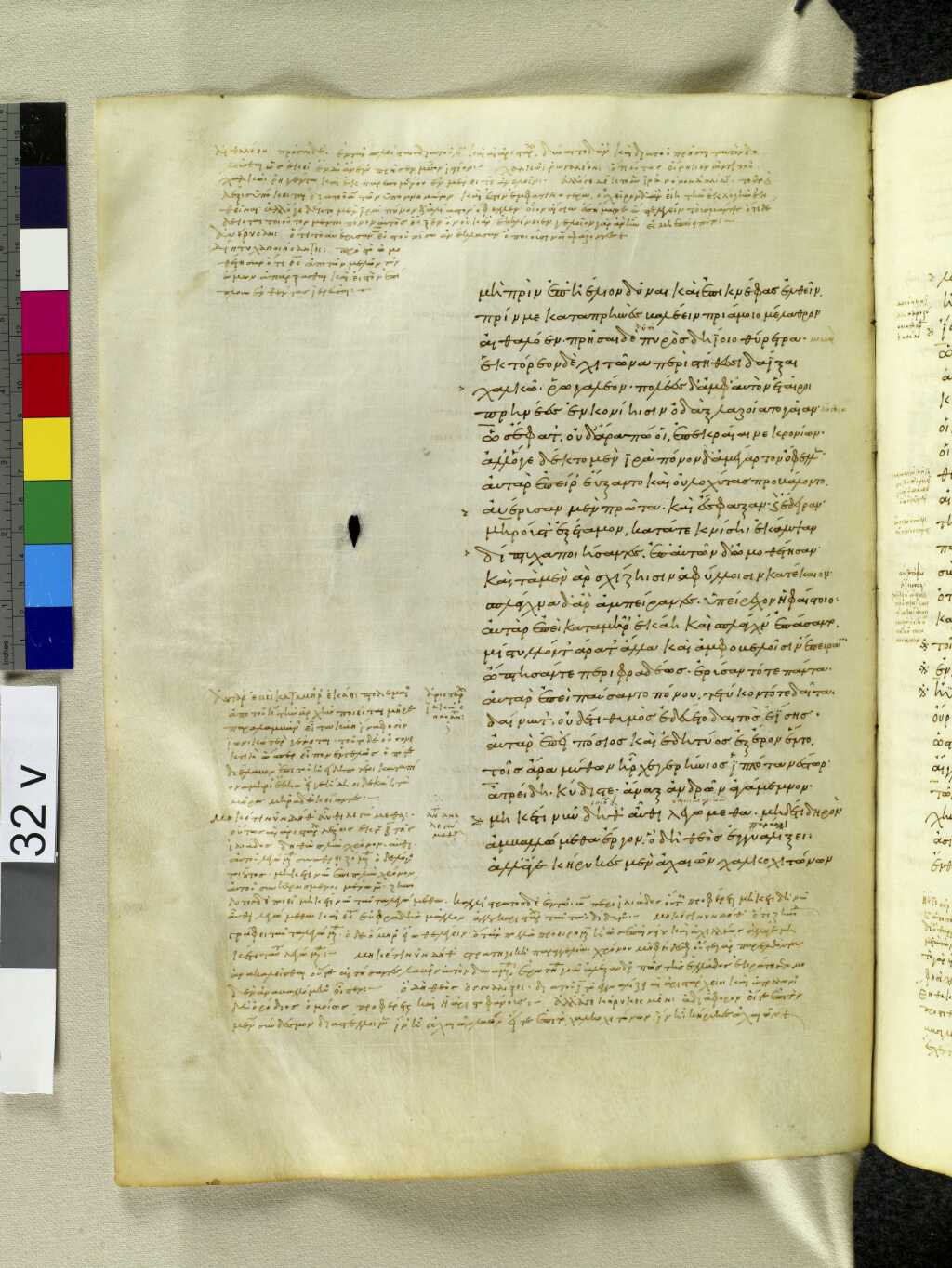
426σπλάγχνα δʼ ἄρʼ ἀμπείραντες ὑπείρεχον Ἡφαίστοιο. 427αὐτὰρ ἐπεὶ κατὰ μῆρε κάη καὶ σπλάγχνα πάσαντο, 428μίστυλλόν τʼ ἄρα τἆλλα καὶ ἀμφʼ ὀβελοῖσιν ἔπειραν, 429ὤπτησάν τε περιφραδέως, ἐρύσαντό τε πάντα. 430αὐτὰρ ἐπεὶ παύσαντο πόνου τετύκοντό τε δαῖτα 431δαίνυντʼ, οὐδέ τι θυμὸς ἐδεύετο δαιτὸς ἐΐσης. 432αὐτὰρ ἐπεὶ πόσιος καὶ ἐδητύος ἐξ ἔρον ἕντο, 433τοῖς ἄρα μύθων ἦρχε Γερήνιος ἱππότα Νέστωρ· 434Ἀτρεΐδη κύδιστε ἄναξ ἀνδρῶν Ἀγάμεμνον, 435μηκέτι νῦν δήθʼ αὖθι λεγώμεθα, μηδʼ ἔτι δηρὸν 436ἀμβαλλώμεθα ἔργον ὃ δὴ θεὸς ἐγγυαλίζει. 437ἀλλʼ ἄγε κήρυκες μὲν Ἀχαιῶν χαλκοχιτώνων 438λαὸν κηρύσσοντες ἀγειρόντων κατὰ νῆας, 439ἡμεῖς δʼ ἀθρόοι ὧδε κατὰ στρατὸν εὐρὺν Ἀχαιῶν 440ἴομεν ὄφρα κε θᾶσσον ἐγείρομεν ὀξὺν Ἄρηα. 441ὣς ἔφατʼ, οὐδʼ ἀπίθησεν ἄναξ ἀνδρῶν Ἀγαμέμνων. 442αὐτίκα κηρύκεσσι λιγυφθόγγοισι κέλευσε 443κηρύσσειν πόλεμον δὲ κάρη κομόωντας Ἀχαιούς· 444οἳ μὲν ἐκήρυσσον, τοὶ δʼ ἠγείροντο μάλʼ ὦκα. 445οἳ δʼ ἀμφʼ Ἀτρεΐωνα διοτρεφέες βασιλῆες 446θῦνον κρίνοντες, μετὰ δὲ γλαυκῶπις Ἀθήνη 447αἰγίδʼ ἔχουσʼ ἐρίτιμον ἀγήρων ἀθανάτην τε, 448τῆς ἑκατὸν θύσανοι παγχρύσεοι ἠερέθονται, 449πάντες ἐϋπλεκέες, ἑκατόμβοιος δὲ ἕκαστος· 450σὺν τῇ παιφάσσουσα διέσσυτο λαὸν Ἀχαιῶν
The men of Argos, again, and those who held the walls of Tiryns, with Hermione, and Asine upon the gulf; Troezene, Eionae, and the vineyard lands of Epidaurus; the Achaean youths, moreover, who came from Aegina and Mases; these were led by Diomed of the loud battle-cry, and Sthenelus son of famed Capaneus. With them in command was Euryalus, son of king Mecisteus, son of Talaus; but Diomed was chief over them all. With these there came eighty ships.
Those who held the strong city of Mycenae, rich Corinth and Cleonae; Orneae, Araethyrea, and Licyon, where Adrastus reigned of old; Hyperesia, high Gonoessa, and Pellene; Aegium and all the coast-land round about Helice; these sent a hundred ships under the command of King Agamemnon, son of Atreus. His force was far both finest and most numerous, and in their midst was the king himself, all glorious in his armour of gleaming bronze—foremost among the heroes, for he was the greatest king, and had most men under him.
And those that dwelt in Lacedaemon, lying low among the hills, Pharis, Sparta, with Messe the haunt of doves; Bryseae, Augeae, Amyclae, and Helos upon the sea; Laas, moreover, and Oetylus; these were led by Menelaus of the loud battle-cry, brother to Agamemnon, and of them there were sixty ships, drawn up apart from the others. Among them went Menelaus himself, strong in zeal, urging his men to fight; for he longed to avenge the toil and sorrow that he had suffered for the sake of Helen.
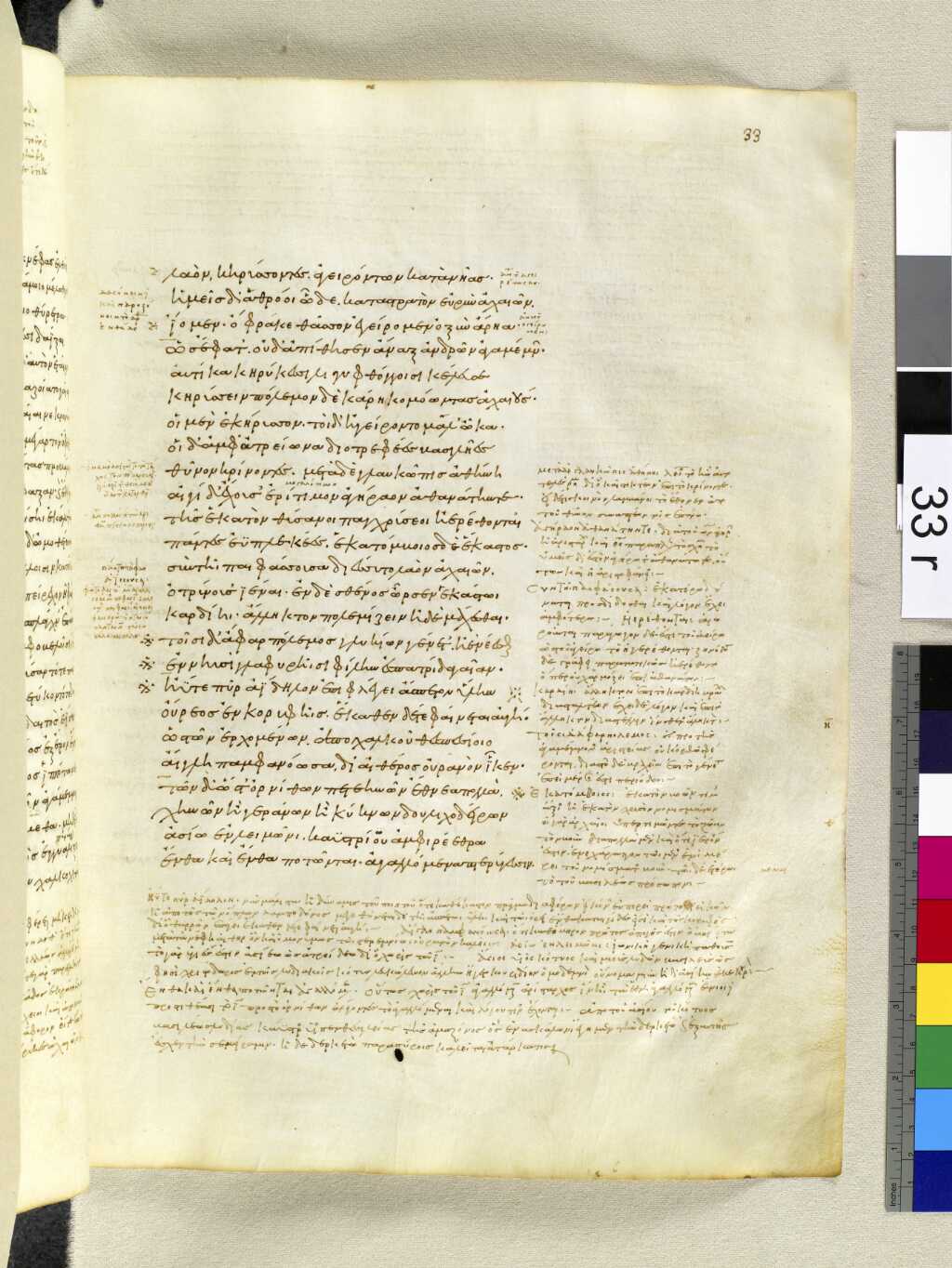
451ὀτρύνουσʼ ἰέναι· ἐν δὲ σθένος ὦρσεν ἑκάστῳ 452καρδίῃ ἄλληκτον πολεμίζειν ἠδὲ μάχεσθαι. 453τοῖσι δʼ ἄφαρ πόλεμος γλυκίων γένετʼ ἠὲ νέεσθαι 454ἐν νηυσὶ γλαφυρῇσι φίλην ἐς πατρίδα γαῖαν. 455ἠΰτε πῦρ ἀΐδηλον ἐπιφλέγει ἄσπετον ὕλην 456οὔρεος ἐν κορυφῇς, ἕκαθεν δέ τε φαίνεται αὐγή, 457ὣς τῶν ἐρχομένων ἀπὸ χαλκοῦ θεσπεσίοιο 458αἴγλη παμφανόωσα διʼ αἰθέρος οὐρανὸν ἷκε. 459τῶν δʼ ὥς τʼ ὀρνίθων πετεηνῶν ἔθνεα πολλὰ 460χηνῶν ἢ γεράνων ἢ κύκνων δουλιχοδείρων 461Ἀσίω ἐν λειμῶνι Καϋστρίου ἀμφὶ ῥέεθρα 462ἔνθα καὶ ἔνθα ποτῶνται ἀγαλλόμενα πτερύγεσσι 463κλαγγηδὸν προκαθιζόντων, σμαραγεῖ δέ τε λειμών, 464ὣς τῶν ἔθνεα πολλὰ νεῶν ἄπο καὶ κλισιάων 465ἐς πεδίον προχέοντο Σκαμάνδριον· αὐτὰρ ὑπὸ χθὼν 466σμερδαλέον κονάβιζε ποδῶν αὐτῶν τε καὶ ἵππων. 467ἔσταν δʼ ἐν λειμῶνι Σκαμανδρίῳ ἀνθεμόεντι 468μυρίοι, ὅσσά τε φύλλα καὶ ἄνθεα γίγνεται ὥρῃ. 469ἠΰτε μυιάων ἁδινάων ἔθνεα πολλὰ 470αἵ τε κατὰ σταθμὸν ποιμνήϊον ἠλάσκουσιν 471ὥρῃ ἐν εἰαρινῇ ὅτε τε γλάγος ἄγγεα δεύει, 472τόσσοι ἐπὶ Τρώεσσι κάρη κομόωντες Ἀχαιοὶ 473ἐν πεδίῳ ἵσταντο διαρραῖσαι μεμαῶτες. 474τοὺς δʼ ὥς τʼ αἰπόλια πλατέʼ αἰγῶν αἰπόλοι ἄνδρες 475ῥεῖα διακρίνωσιν ἐπεί κε νομῷ μιγέωσιν,
The men of Pylos and Arene, and Thryum where is the ford of the river Alpheus; strong Aipy, Cyparisseis, and Amphigenea; Pteleum, Helos, and Dorium, where the Muses met Thamyris, and stilled his minstrelsy for ever. He was returning from Oechalia, where Eurytus lived and reigned, and boasted that he would surpass even the Muses, daughters of aegis-bearing Jove, if they should sing against him; whereon they were angry, and maimed him. They robbed him of his divine power of song, and thenceforth he could strike the lyre no more. These were commanded by Nestor, knight of Gerene, and with him there came ninety ships.
And those that held Arcadia, under the high mountain of Cyllene, near the tomb of Aepytus, where the people fight hand to hand; the men of Pheneus also, and Orchomenus rich in flocks; of Rhipae, Stratie, and bleak Enispe; of Tegea and fair Mantinea; of Stymphelus and Parrhasia; of these King Agapenor son of Ancaeus was commander, and they had sixty ships. Many Arcadians, good soldiers, came in each one of them, but Agamemnon found them the ships in which to cross the sea, for they were not a people that occupied their business upon the waters.
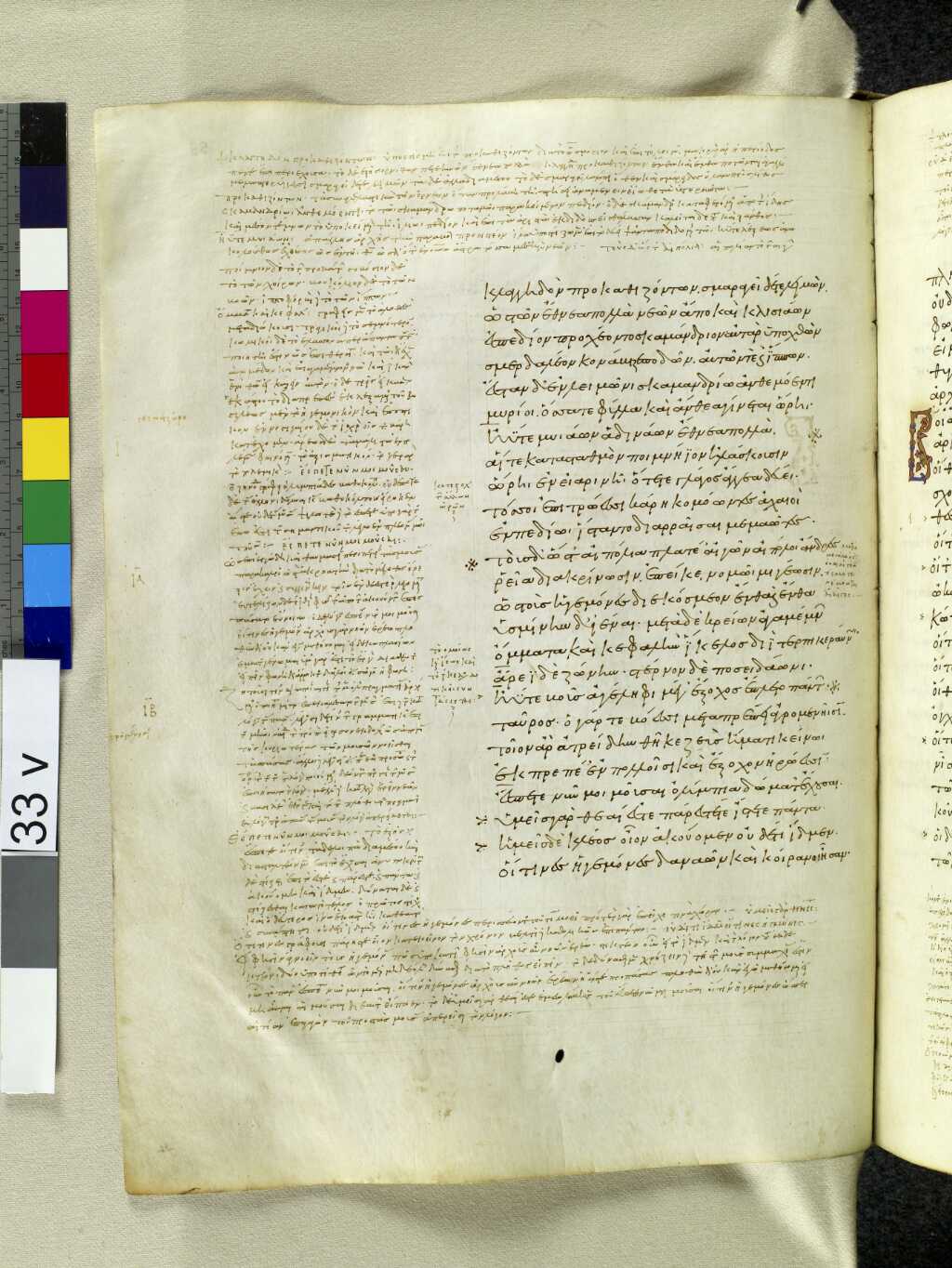
476ὣς τοὺς ἡγεμόνες διεκόσμεον ἔνθα καὶ ἔνθα 477ὑσμίνην δʼ ἰέναι, μετὰ δὲ κρείων Ἀγαμέμνων 478ὄμματα καὶ κεφαλὴν ἴκελος Διὶ τερπικεραύνῳ, 479Ἄρεϊ δὲ ζώνην, στέρνον δὲ Ποσειδάωνι. 480ἠΰτε βοῦς ἀγέληφι μέγʼ ἔξοχος ἔπλετο πάντων 481ταῦρος· ὃ γάρ τε βόεσσι μεταπρέπει ἀγρομένῃσι· 482τοῖον ἄρʼ Ἀτρεΐδην θῆκε Ζεὺς ἤματι κείνῳ 483ἐκπρεπέʼ ἐν πολλοῖσι καὶ ἔξοχον ἡρώεσσιν. 484ἔσπετε νῦν μοι Μοῦσαι Ὀλύμπια δώματʼ ἔχουσαι· 485ὑμεῖς γὰρ θεαί ἐστε πάρεστέ τε ἴστέ τε πάντα, 486ἡμεῖς δὲ κλέος οἶον ἀκούομεν οὐδέ τι ἴδμεν· 487οἵ τινες ἡγεμόνες Δαναῶν καὶ κοίρανοι ἦσαν· 488πληθὺν δʼ οὐκ ἂν ἐγὼ μυθήσομαι οὐδʼ ὀνομήνω, 489οὐδʼ εἴ μοι δέκα μὲν γλῶσσαι, δέκα δὲ στόματʼ εἶεν, 490φωνὴ δʼ ἄρρηκτος, χάλκεον δέ μοι ἦτορ ἐνείη, 491εἰ μὴ Ὀλυμπιάδες Μοῦσαι Διὸς αἰγιόχοιο 492θυγατέρες μνησαίαθʼ ὅσοι ὑπὸ Ἴλιον ἦλθον· 493ἀρχοὺς αὖ νηῶν ἐρέω νῆάς τε προπάσας. 494Βοιωτῶν μὲν Πηνέλεως καὶ Λήϊτος ἦρχον 495Ἀρκεσίλαός τε Προθοήνωρ τε Κλονίος τε, 496οἵ θʼ Ὑρίην ἐνέμοντο καὶ Αὐλίδα πετρήεσσαν 497Σχοῖνόν τε Σκῶλόν τε πολύκνημόν τʼ Ἐτεωνόν, 498Θέσπειαν Γραῖάν τε καὶ εὐρύχορον Μυκαλησσόν, 499οἵ τʼ ἀμφʼ Ἅρμʼ ἐνέμοντο καὶ Εἰλέσιον καὶ Ἐρυθράς, 500οἵ τʼ Ἐλεῶνʼ εἶχον ἠδʼ Ὕλην καὶ Πετεῶνα,
The men, moreover, of Buprasium and of Elis, so much of it as is enclosed between Hyrmine, Myrsinus upon the sea-shore, the rock Olene and Alesium. These had four leaders, and each of them had ten ships, with many Epeans on board. Their captains were Amphimachus and Thalpius—the one, son of Cteatus, and the other, of Eurytus—both of the race of Actor. The two others were Diores, son of Amarynceus, and Polyxenus, son of King Agasthenes, son of Augeas.
And those of Dulichium with the sacred Echinean islands, who dwelt beyond the sea off Elis; these were led by Meges, peer of Mars, and the son of valiant Phyleus, dear to Jove, who quarrelled with his father, and went to settle in Dulichium. With him there came forty ships.
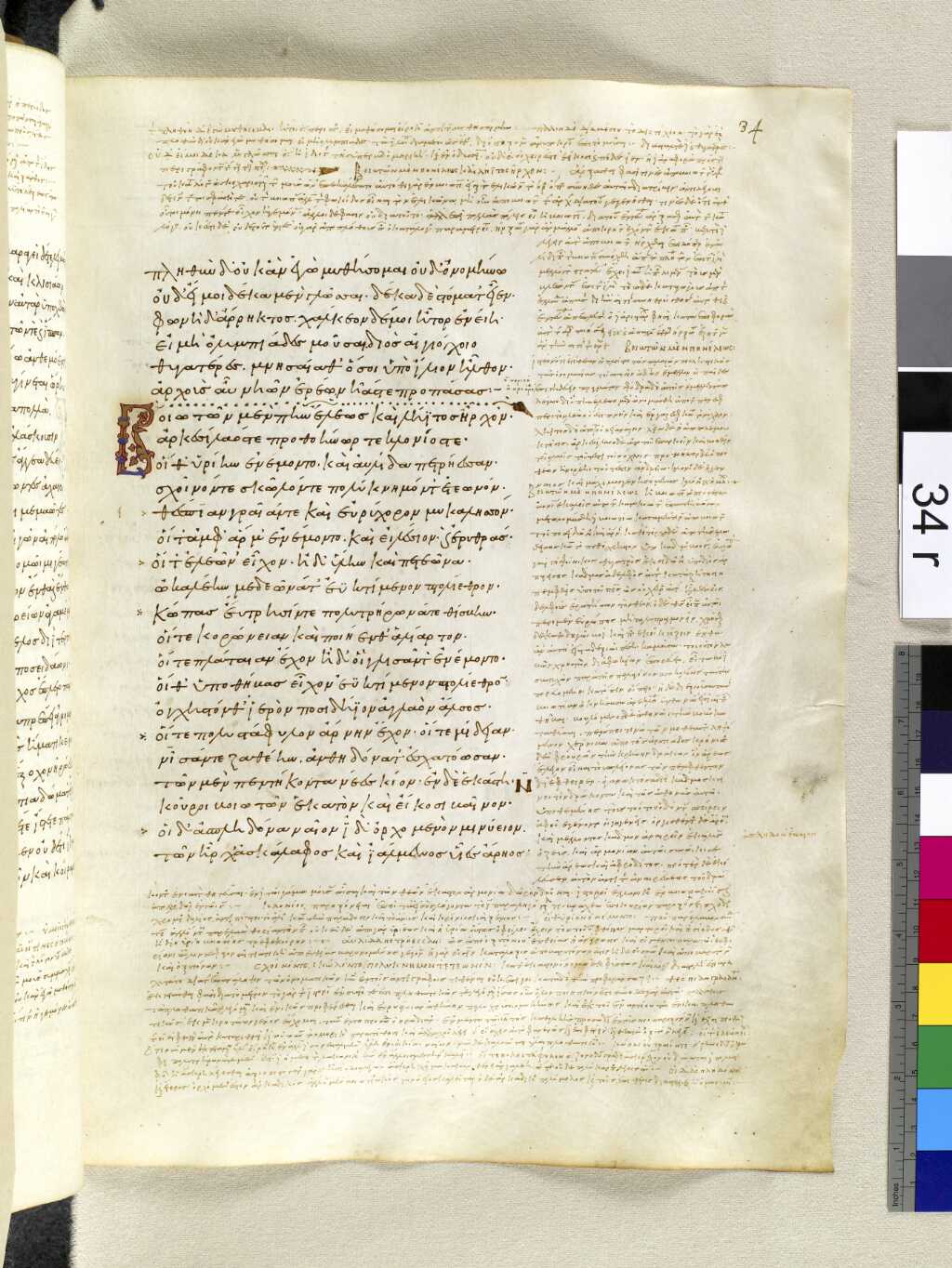
501Ὠκαλέην Μεδεῶνά τʼ ἐϋκτίμενον πτολίεθρον, 502Κώπας Εὔτρησίν τε πολυτρήρωνά τε Θίσβην, 503οἵ τε Κορώνειαν καὶ ποιήενθʼ Ἁλίαρτον, 504οἵ τε Πλάταιαν ἔχον ἠδʼ οἳ Γλισᾶντʼ ἐνέμοντο, 505οἵ θʼ Ὑποθήβας εἶχον ἐϋκτίμενον πτολίεθρον, 506Ὀγχηστόν θʼ ἱερὸν Ποσιδήϊον ἀγλαὸν ἄλσος, 507οἵ τε πολυστάφυλον Ἄρνην ἔχον, οἵ τε Μίδειαν 508Νῖσάν τε ζαθέην Ἀνθηδόνα τʼ ἐσχατόωσαν· 509τῶν μὲν πεντήκοντα νέες κίον, ἐν δὲ ἑκάστῃ 510κοῦροι Βοιωτῶν ἑκατὸν καὶ εἴκοσι βαῖνον. 511οἳ δʼ Ἀσπληδόνα ναῖον ἰδʼ Ὀρχομενὸν Μινύειον, 512τῶν ἦρχʼ Ἀσκάλαφος καὶ Ἰάλμενος υἷες Ἄρηος 513οὓς τέκεν Ἀστυόχη δόμῳ Ἄκτορος Ἀζεΐδαο, 514παρθένος αἰδοίη ὑπερώϊον εἰσαναβᾶσα 515Ἄρηϊ κρατερῷ· ὃ δέ οἱ παρελέξατο λάθρῃ· 516τοῖς δὲ τριήκοντα γλαφυραὶ νέες ἐστιχόωντο. 517αὐτὰρ Φωκήων Σχεδίος καὶ Ἐπίστροφος ἦρχον 518υἷες Ἰφίτου μεγαθύμου Ναυβολίδαο, 519οἳ Κυπάρισσον ἔχον Πυθῶνά τε πετρήεσσαν 520Κρῖσάν τε ζαθέην καὶ Δαυλίδα καὶ Πανοπῆα, 521οἵ τʼ Ἀνεμώρειαν καὶ Ὑάμπολιν ἀμφενέμοντο, 522οἵ τʼ ἄρα πὰρ ποταμὸν Κηφισὸν δῖον ἔναιον, 523οἵ τε Λίλαιαν ἔχον πηγῇς ἔπι Κηφισοῖο· 524τοῖς δʼ ἅμα τεσσαράκοντα μέλαιναι νῆες ἕποντο. 525οἳ μὲν Φωκήων στίχας ἵστασαν ἀμφιέποντες,
Ulysses led the brave Cephallenians, who held Ithaca, Neritum with its forests, Crocylea, rugged Aegilips, Samos and Zacynthus, with the mainland also that was over against the islands. These were led by Ulysses, peer of Jove in counsel, and with him there came twelve ships.
Thoas, son of Andraemon, commanded the Aetolians, who dwelt in Pleuron, Olenus, Pylene, Chalcis by the sea, and rocky Calydon, for the great king Oeneus had now no sons living, and was himself dead, as was also golden-haired Meleager, who had been set over the Aetolians to be their king. And with Thoas there came forty ships.
The famous spearsman Idomeneus led the Cretans, who held Cnossus, and the well-walled city of Gortys; Lyctus also, Miletus and Lycastus that lies upon the chalk; the populous towns of Phaestus and Rhytium, with the other peoples that dwelt in the hundred cities of Crete. All these were led by Idomeneus, and by Meriones, peer of murderous Mars. And with these there came eighty ships.
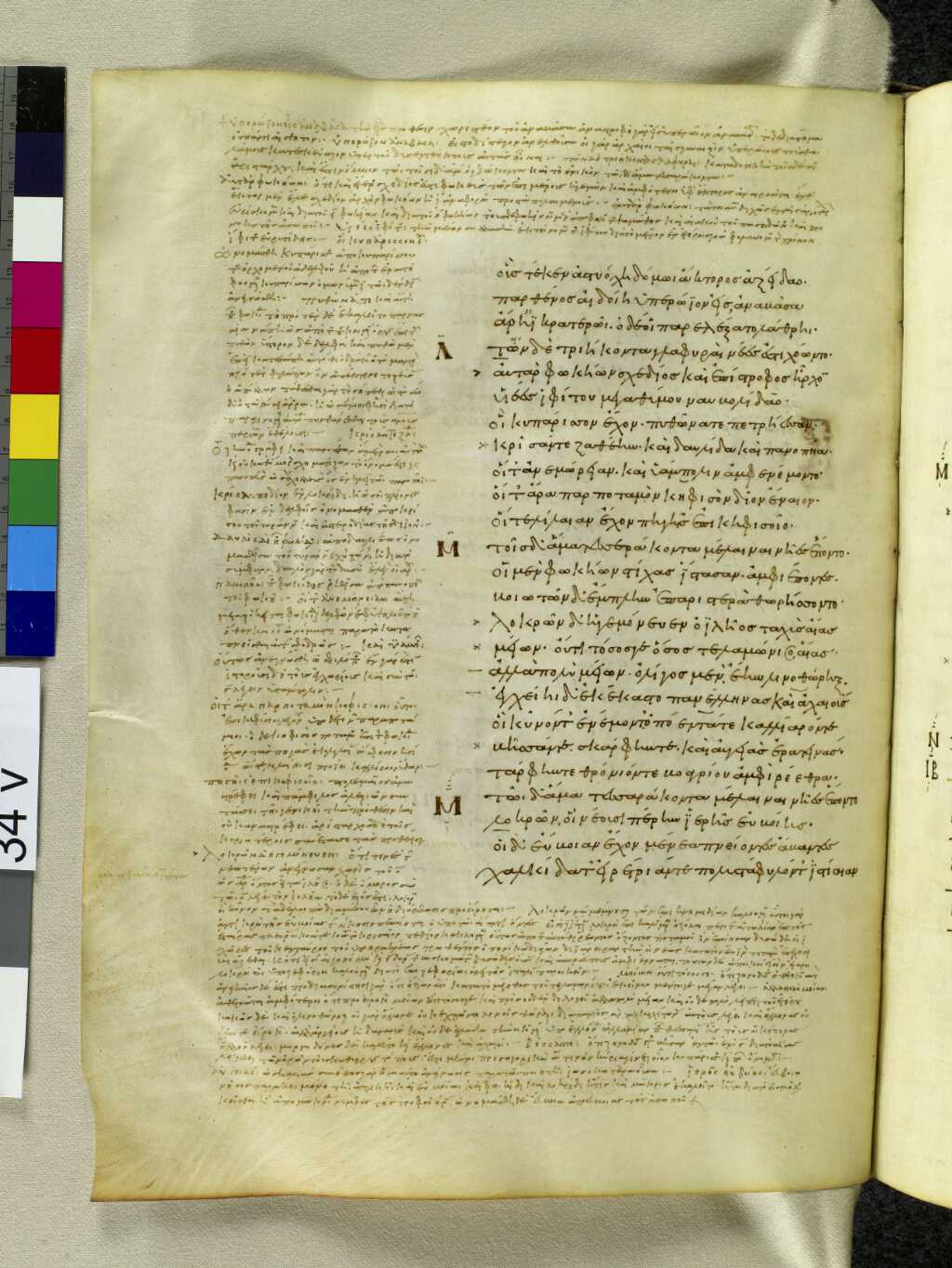
526Βοιωτῶν δʼ ἔμπλην ἐπʼ ἀριστερὰ θωρήσσοντο. 527Λοκρῶν δʼ ἡγεμόνευεν Ὀϊλῆος ταχὺς Αἴας 528μείων, οὔ τι τόσος γε ὅσος Τελαμώνιος Αἴας 529ἀλλὰ πολὺ μείων· ὀλίγος μὲν ἔην λινοθώρηξ, 530ἐγχείῃ δʼ ἐκέκαστο Πανέλληνας καὶ Ἀχαιούς· 531οἳ Κῦνόν τʼ ἐνέμοντʼ Ὀπόεντά τε Καλλίαρόν τε 532Βῆσσάν τε Σκάρφην τε καὶ Αὐγειὰς ἐρατεινὰς 533Τάρφην τε Θρόνιον τε Βοαγρίου ἀμφὶ ῥέεθρα· 534τῷ δʼ ἅμα τεσσαράκοντα μέλαιναι νῆες ἕποντο 535Λοκρῶν, οἳ ναίουσι πέρην ἱερῆς Εὐβοίης. 536οἳ δʼ Εὔβοιαν ἔχον μένεα πνείοντες Ἄβαντες 537Χαλκίδα τʼ Εἰρέτριάν τε πολυστάφυλόν θʼ Ἱστίαιαν 538Κήρινθόν τʼ ἔφαλον Δίου τʼ αἰπὺ πτολίεθρον, 539οἵ τε Κάρυστον ἔχον ἠδʼ οἳ Στύρα ναιετάασκον, 540τῶν αὖθʼ ἡγεμόνευʼ Ἐλεφήνωρ ὄζος Ἄρηος 541Χαλκωδοντιάδης μεγαθύμων ἀρχὸς Ἀβάντων. 542τῷ δʼ ἅμʼ Ἄβαντες ἕποντο θοοὶ ὄπιθεν κομόωντες 543αἰχμηταὶ μεμαῶτες ὀρεκτῇσιν μελίῃσι 544θώρηκας ῥήξειν δηΐων ἀμφὶ στήθεσσι· 545τῷ δʼ ἅμα τεσσαράκοντα μέλαιναι νῆες ἕποντο. 546οἳ δʼ ἄρʼ Ἀθήνας εἶχον ἐϋκτίμενον πτολίεθρον 547δῆμον Ἐρεχθῆος μεγαλήτορος, ὅν ποτʼ Ἀθήνη 548θρέψε Διὸς θυγάτηρ, τέκε δὲ ζείδωρος ἄρουρα, 549κὰδ δʼ ἐν Ἀθήνῃς εἷσεν ἑῷ ἐν πίονι νηῷ· 550ἔνθα δέ μιν ταύροισι καὶ ἀρνειοῖς ἱλάονται
Tlepolemus, son of Hercules, a man both brave and large of stature, brought nine ships of lordly warriors from Rhodes. These dwelt in Rhodes which is divided among the three cities of Lindus, Ielysus, and Cameirus, that lies upon the chalk. These were commanded by Tlepolemus, son of Hercules by Astyochea, whom he had carried off from Ephyra, on the river Selleis, after sacking many cities of valiant warriors. When Tlepolemus grew up, he killed his father’s uncle Licymnius, who had been a famous warrior in his time, but was then grown old. On this he built himself a fleet, gathered a great following, and fled beyond the sea, for he was menaced by the other sons and grandsons of Hercules. After a voyage, during which he suffered great hardship, he came to Rhodes, where the people divided into three communities, according to their tribes, and were dearly loved by Jove, the lord of gods and men; wherefore the son of Saturn showered down great riches upon them.
And Nireus brought three ships from Syme—Nireus, who was the handsomest man that came up under Ilius of all the Danaans after the son of Peleus—but he was a man of no substance, and had but a small following.
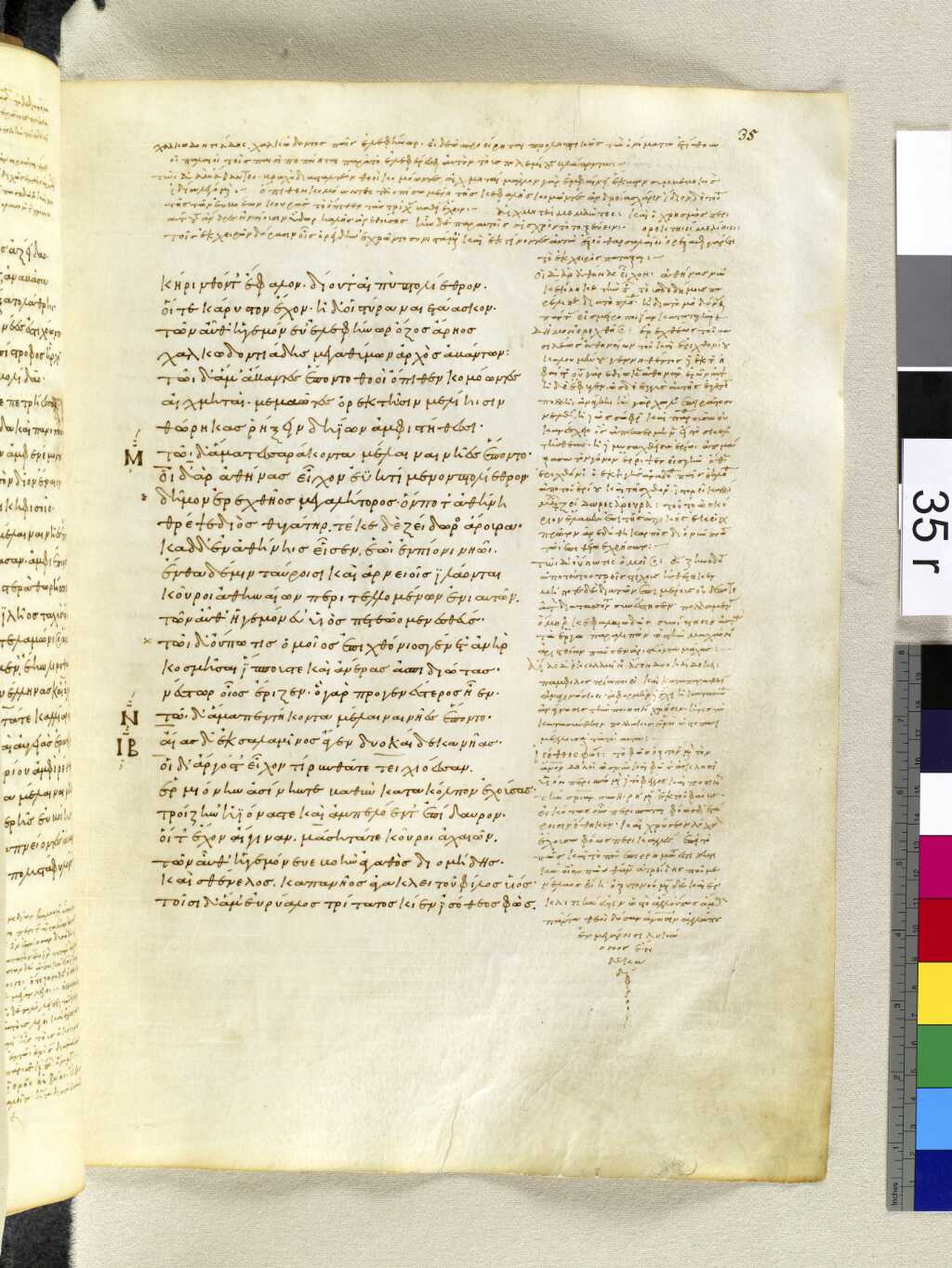
551κοῦροι Ἀθηναίων περιτελλομένων ἐνιαυτῶν· 552τῶν αὖθʼ ἡγεμόνευʼ υἱὸς Πετεῶο Μενεσθεύς. 553τῷ δʼ οὔ πώ τις ὁμοῖος ἐπιχθόνιος γένετʼ ἀνὴρ 554κοσμῆσαι ἵππους τε καὶ ἀνέρας ἀσπιδιώτας· 555Νέστωρ οἶος ἔριζεν· ὃ γὰρ προγενέστερος ἦεν· 556τῷ δʼ ἅμα πεντήκοντα μέλαιναι νῆες ἕποντο. 557Αἴας δʼ ἐκ Σαλαμῖνος ἄγεν δυοκαίδεκα νῆας, 558στῆσε δʼ ἄγων ἵνʼ Ἀθηναίων ἵσταντο φάλαγγες. 559οἳ δʼ Ἄργός τʼ εἶχον Τίρυνθά τε τειχιόεσσαν 560Ἑρμιόνην Ἀσίνην τε, βαθὺν κατὰ κόλπον ἐχούσας, 561Τροιζῆνʼ Ἠϊόνας τε καὶ ἀμπελόεντʼ Ἐπίδαυρον, 562οἵ τʼ ἔχον Αἴγιναν Μάσητά τε κοῦροι Ἀχαιῶν, 563τῶν αὖθʼ ἡγεμόνευε βοὴν ἀγαθὸς Διομήδης 564καὶ Σθένελος, Καπανῆος ἀγακλειτοῦ φίλος υἱός· 565τοῖσι δʼ ἅμʼ Εὐρύαλος τρίτατος κίεν ἰσόθεος φὼς 566Μηκιστέος υἱὸς Ταλαϊονίδαο ἄνακτος· 567συμπάντων δʼ ἡγεῖτο βοὴν ἀγαθὸς Διομήδης· 568τοῖσι δʼ ἅμʼ ὀγδώκοντα μέλαιναι νῆες ἕποντο. 569οἳ δὲ Μυκήνας εἶχον ἐϋκτίμενον πτολίεθρον 570ἀφνειόν τε Κόρινθον ἐϋκτιμένας τε Κλεωνάς, 571Ὀρνειάς τʼ ἐνέμοντο Ἀραιθυρέην τʼ ἐρατεινὴν 572καὶ Σικυῶνʼ, ὅθʼ ἄρʼ Ἄδρηστος πρῶτʼ ἐμβασίλευεν, 573οἵ θʼ Ὑπερησίην τε καὶ αἰπεινὴν Γονόεσσαν 574Πελλήνην τʼ εἶχον ἠδʼ Αἴγιον ἀμφενέμοντο 575Αἰγιαλόν τʼ ἀνὰ πάντα καὶ ἀμφʼ Ἑλίκην εὐρεῖαν,
And those that held Nisyrus, Crapathus, and Casus, with Cos, the city of Eurypylus, and the Calydnian islands, these were commanded by Pheidippus and Antiphus, two sons of King Thessalus the son of Hercules. And with them there came thirty ships.
Those again who held Pelasgic Argos, Alos, Alope, and Trachis; and those of Phthia and Hellas the land of fair women, who were called Myrmidons, Hellenes, and Achaeans; these had fifty ships, over which Achilles was in command. But they now took no part in the war, inasmuch as there was no one to marshal them; for Achilles stayed by his ships, furious about the loss of the girl Briseis, whom he had taken from Lyrnessus at his own great peril, when he had sacked Lyrnessus and Thebe, and had overthrown Mynes and Epistrophus, sons of king Evenor, son of Selepus. For her sake Achilles was still grieving, but ere long he was again to join them.
And those that held Phylace and the flowery meadows of Pyrasus, sanctuary of Ceres; Iton, the mother of sheep; Antrum upon the sea, and Pteleum that lies upon the grass lands. Of these brave Protesilaus had been captain while he was yet alive, but he was now lying under the earth. He had left a wife behind him in Phylace to tear her cheeks in sorrow, and his house was only half finished, for he was slain by a Dardanian warrior while leaping foremost of the Achaeans upon the soil of Troy. Still, though his people mourned their chieftain, they were not without a leader, for Podarces, of the race of Mars, marshalled them; he was son of Iphiclus, rich in sheep, who was the son of Phylacus, and he was own brother to Protesilaus, only younger, Protesilaus being at once the elder and the more valiant. So the people were not without a leader, though they mourned him whom they had lost. With him there came forty ships.
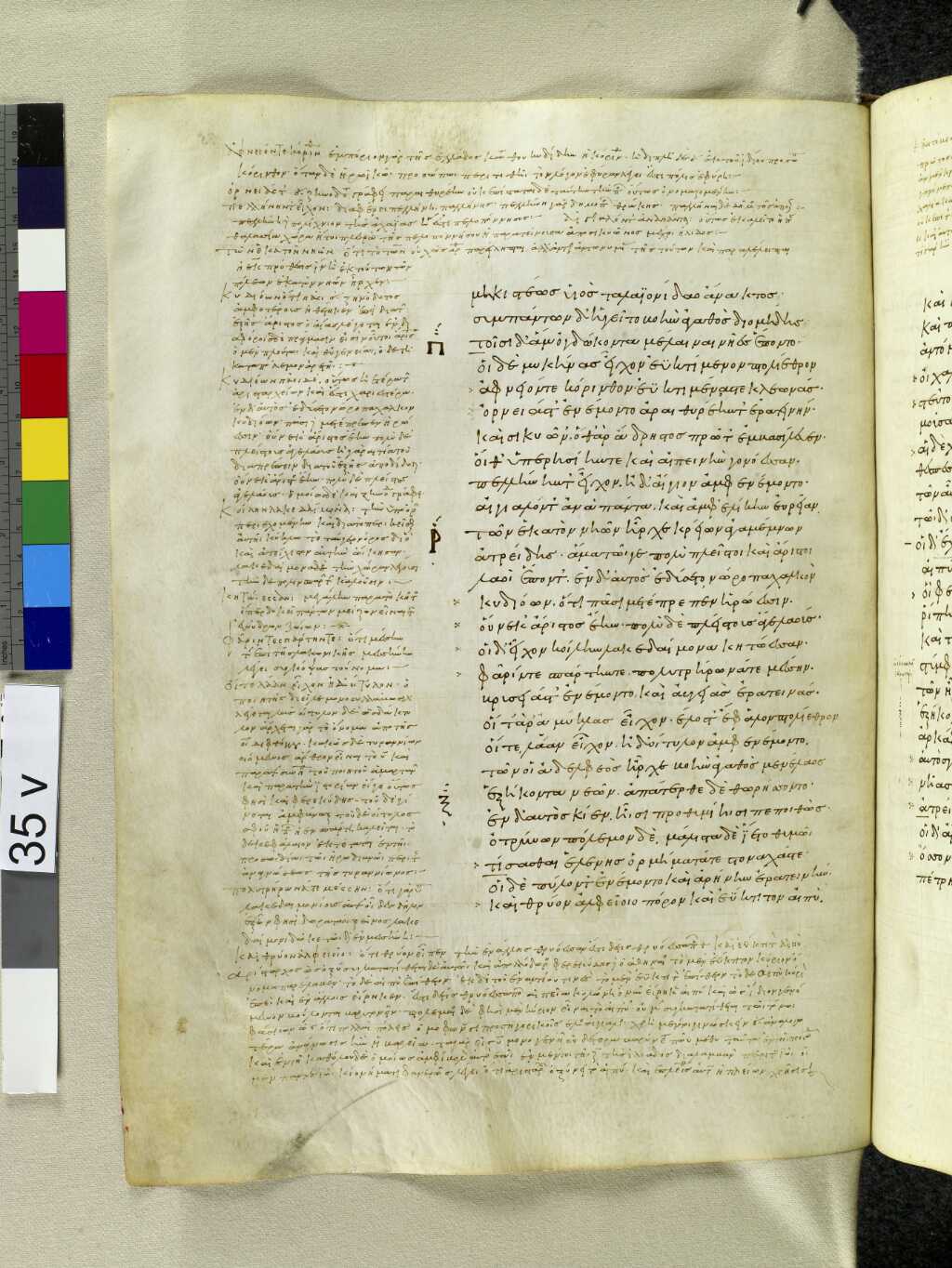
576τῶν ἑκατὸν νηῶν ἦρχε κρείων Ἀγαμέμνων 577Ἀτρεΐδης· ἅμα τῷ γε πολὺ πλεῖστοι καὶ ἄριστοι 578λαοὶ ἕποντʼ· ἐν δʼ αὐτὸς ἐδύσετο νώροπα χαλκὸν 579κυδιόων, πᾶσιν δὲ μετέπρεπεν ἡρώεσσιν 580οὕνεκʼ ἄριστος ἔην πολὺ δὲ πλείστους ἄγε λαούς. 581οἳ δʼ εἶχον κοίλην Λακεδαίμονα κητώεσσαν, 582Φᾶρίν τε Σπάρτην τε πολυτρήρωνά τε Μέσσην, 583Βρυσειάς τʼ ἐνέμοντο καὶ Αὐγειὰς ἐρατεινάς, 584οἵ τʼ ἄρʼ Ἀμύκλας εἶχον Ἕλος τʼ ἔφαλον πτολίεθρον, 585οἵ τε Λάαν εἶχον ἠδʼ Οἴτυλον ἀμφενέμοντο, 586τῶν οἱ ἀδελφεὸς ἦρχε βοὴν ἀγαθὸς Μενέλαος 587ἑξήκοντα νεῶν· ἀπάτερθε δὲ θωρήσσοντο· 588ἐν δʼ αὐτὸς κίεν ᾗσι προθυμίῃσι πεποιθὼς 589ὀτρύνων πόλεμον δέ· μάλιστα δὲ ἵετο θυμῷ 590τίσασθαι Ἑλένης ὁρμήματά τε στοναχάς τε. 591οἳ δὲ Πύλον τʼ ἐνέμοντο καὶ Ἀρήνην ἐρατεινὴν 592καὶ Θρύον Ἀλφειοῖο πόρον καὶ ἐΰκτιτον Αἰπὺ 593καὶ Κυπαρισσήεντα καὶ Ἀμφιγένειαν ἔναιον 594καὶ Πτελεὸν καὶ Ἕλος καὶ Δώριον, ἔνθά τε Μοῦσαι 595ἀντόμεναι Θάμυριν τὸν Θρήϊκα παῦσαν ἀοιδῆς 596Οἰχαλίηθεν ἰόντα παρʼ Εὐρύτου Οἰχαλιῆος· 597στεῦτο γὰρ εὐχόμενος νικησέμεν εἴ περ ἂν αὐταὶ 598Μοῦσαι ἀείδοιεν κοῦραι Διὸς αἰγιόχοιο· 599αἳ δὲ χολωσάμεναι πηρὸν θέσαν, αὐτὰρ ἀοιδὴν 600θεσπεσίην ἀφέλοντο καὶ ἐκλέλαθον κιθαριστύν·
And those that held Pherae by the Boebean lake, with Boebe, Glaphyrae, and the populous city of Iolcus, these with their eleven ships were led by Eumelus, son of Admetus, whom Alcestis bore to him, loveliest of the daughters of Pelias.
And those that held Methone and Thaumacia, with Meliboea and rugged Olizon, these were led by the skilful archer Philoctetes, and they had seven ships, each with fifty oarsmen all of them good archers; but Philoctetes was lying in great pain in the Island of Lemnos, where the sons of the Achaeans left him, for he had been bitten by a poisonous water snake. There he lay sick and sorry, and full soon did the Argives come to miss him. But his people, though they felt his loss were not leaderless, for Medon, the bastard son of Oileus by Rhene, set them in array.
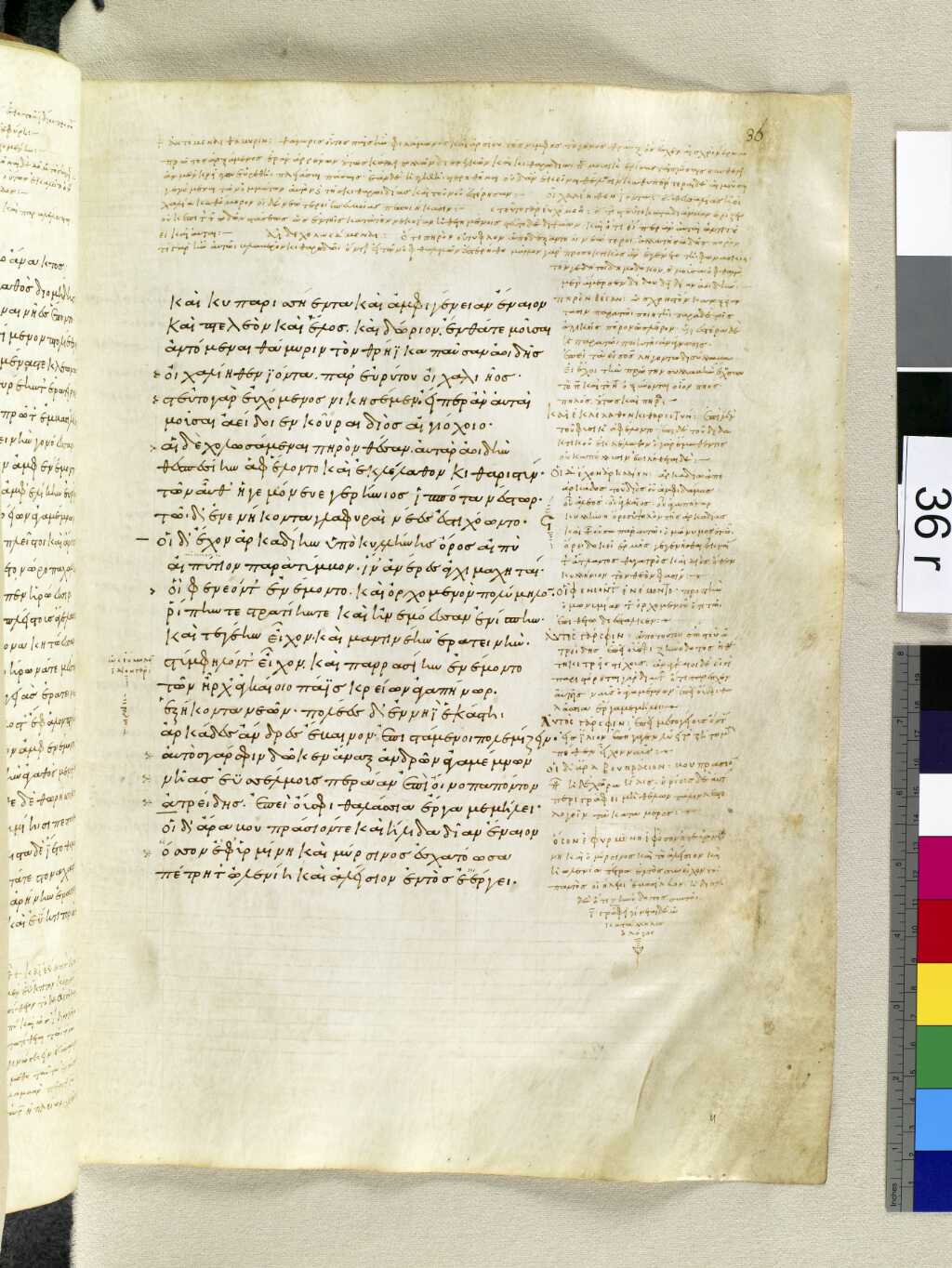
601τῶν αὖθʼ ἡγεμόνευε Γερήνιος ἱππότα Νέστωρ· 602τῷ δʼ ἐνενήκοντα γλαφυραὶ νέες ἐστιχόωντο. 603οἳ δʼ ἔχον Ἀρκαδίην ὑπὸ Κυλλήνης ὄρος αἰπὺ 604Αἰπύτιον παρὰ τύμβον ἵνʼ ἀνέρες ἀγχιμαχηταί, 605οἳ Φενεόν τʼ ἐνέμοντο καὶ Ὀρχομενὸν πολύμηλον 606Ῥίπην τε Στρατίην τε καὶ ἠνεμόεσσαν Ἐνίσπην 607καὶ Τεγέην εἶχον καὶ Μαντινέην ἐρατεινὴν 608Στύμφηλόν τʼ εἶχον καὶ Παρρασίην ἐνέμοντο, 609τῶν ἦρχʼ Ἀγκαίοιο πάϊς κρείων Ἀγαπήνωρ 610ἑξήκοντα νεῶν· πολέες δʼ ἐν νηῒ ἑκάστῃ 611Ἀρκάδες ἄνδρες ἔβαινον ἐπιστάμενοι πολεμίζειν. 612αὐτὸς γάρ σφιν δῶκεν ἄναξ ἀνδρῶν Ἀγαμέμνων 613νῆας ἐϋσσέλμους περάαν ἐπὶ οἴνοπα πόντον 614Ἀτρεΐδης, ἐπεὶ οὔ σφι θαλάσσια ἔργα μεμήλει. 615οἳ δʼ ἄρα Βουπράσιόν τε καὶ Ἤλιδα δῖαν ἔναιον 616ὅσσον ἐφʼ Ὑρμίνη καὶ Μύρσινος ἐσχατόωσα 617πέτρη τʼ Ὠλενίη καὶ Ἀλήσιον ἐντὸς ἐέργει, 618τῶν αὖ τέσσαρες ἀρχοὶ ἔσαν, δέκα δʼ ἀνδρὶ ἑκάστῳ 619νῆες ἕποντο θοαί, πολέες δʼ ἔμβαινον Ἐπειοί. 620τῶν μὲν ἄρʼ Ἀμφίμαχος καὶ Θάλπιος ἡγησάσθην 621υἷες ὃ μὲν Κτεάτου, ὃ δʼ ἄρʼ Εὐρύτου, Ἀκτορίωνε· 622τῶν δʼ Ἀμαρυγκεΐδης ἦρχε κρατερὸς Διώρης· 623τῶν δὲ τετάρτων ἦρχε Πολύξεινος θεοειδὴς 624υἱὸς Ἀγασθένεος Αὐγηϊάδαο ἄνακτος. 625οἳ δʼ ἐκ Δουλιχίοιο Ἐχινάων θʼ ἱεράων
Those, again, of Tricca and the stony region of Ithome, and they that held Oechalia, the city of Oechalian Eurytus, these were commanded by the two sons of Aesculapius, skilled in the art of healing, Podalirius and Machaon. And with them there came thirty ships.
The men, moreover, of Ormenius, and by the fountain of Hypereia, with those that held Asterius, and the white crests of Titanus, these were led by Eurypylus, the son of Euaemon, and with them there came forty ships.
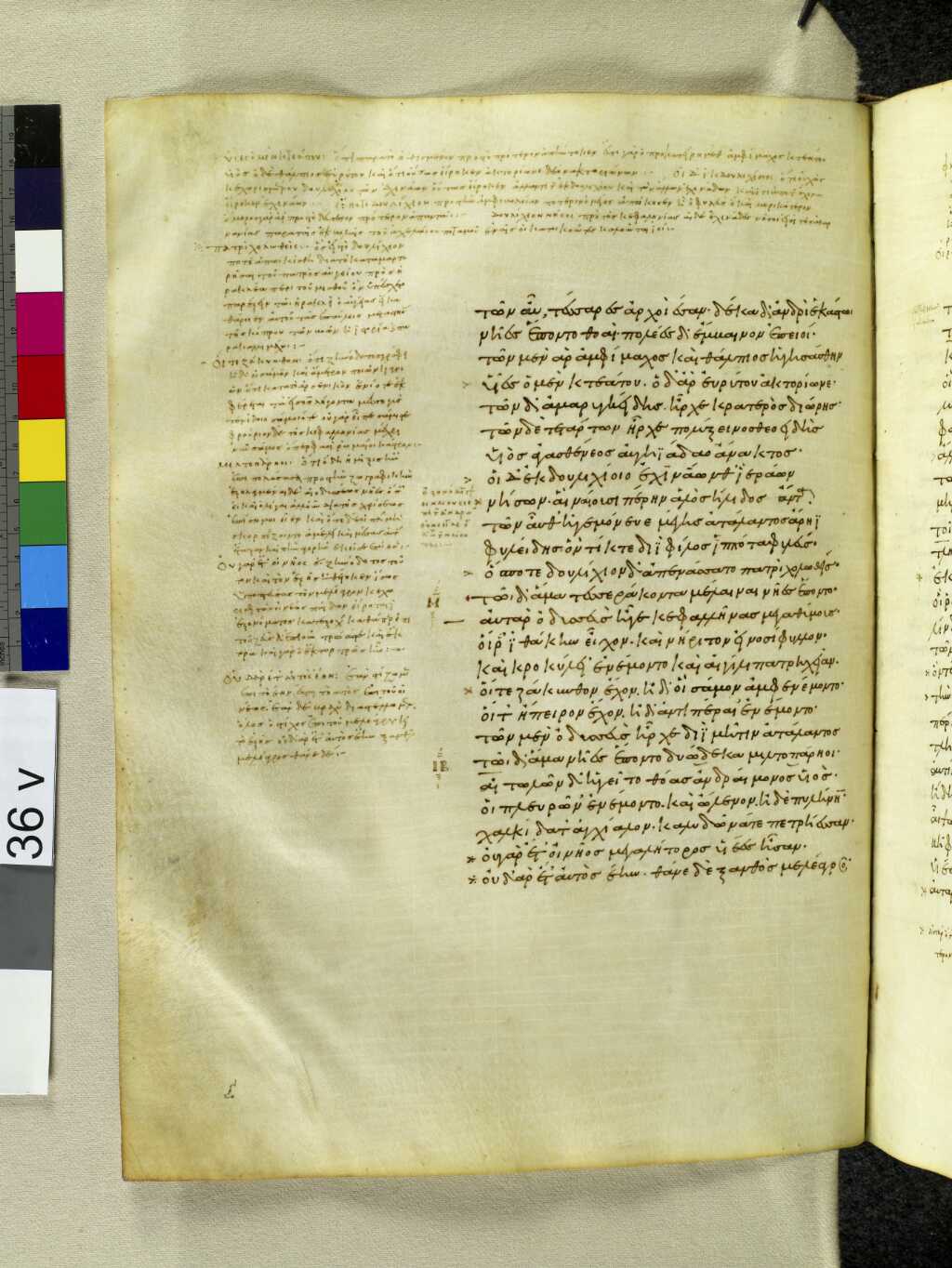
626νήσων, αἳ ναίουσι πέρην ἁλὸς Ἤλιδος ἄντα, 627τῶν αὖθʼ ἡγεμόνευε Μέγης ἀτάλαντος Ἄρηϊ 628Φυλεΐδης, ὃν τίκτε Διῒ φίλος ἱππότα Φυλεύς, 629ὅς ποτε Δουλίχιον δʼ ἀπενάσσατο πατρὶ χολωθείς· 630τῷ δʼ ἅμα τεσσαράκοντα μέλαιναι νῆες ἕποντο. 631αὐτὰρ Ὀδυσσεὺς ἦγε Κεφαλλῆνας μεγαθύμους, 632οἵ ῥʼ Ἰθάκην εἶχον καὶ Νήριτον εἰνοσίφυλλον 633καὶ Κροκύλειʼ ἐνέμοντο καὶ Αἰγίλιπα τρηχεῖαν, 634οἵ τε Ζάκυνθον ἔχον ἠδʼ οἳ Σάμον ἀμφενέμοντο, 635οἵ τʼ ἤπειρον ἔχον ἠδʼ ἀντιπέραιʼ ἐνέμοντο· 636τῶν μὲν Ὀδυσσεὺς ἦρχε Διὶ μῆτιν ἀτάλαντος· 637τῷ δʼ ἅμα νῆες ἕποντο δυώδεκα μιλτοπάρῃοι. 638Αἰτωλῶν δʼ ἡγεῖτο Θόας Ἀνδραίμονος υἱός, 639οἳ Πλευρῶνʼ ἐνέμοντο καὶ Ὤλενον ἠδὲ Πυλήνην 640Χαλκίδα τʼ ἀγχίαλον Καλυδῶνά τε πετρήεσσαν· 641οὐ γὰρ ἔτʼ Οἰνῆος μεγαλήτορος υἱέες ἦσαν, 642οὐδʼ ἄρʼ ἔτʼ αὐτὸς ἔην, θάνε δὲ ξανθὸς Μελέαγρος· 643τῷ δʼ ἐπὶ πάντʼ ἐτέταλτο ἀνασσέμεν Αἰτωλοῖσι· 644τῷ δʼ ἅμα τεσσαράκοντα μέλαιναι νῆες ἕποντο. 645Κρητῶν δʼ Ἰδομενεὺς δουρὶ κλυτὸς ἡγεμόνευεν, 646οἳ Κνωσόν τʼ εἶχον Γόρτυνά τε τειχιόεσσαν, 647Λύκτον Μίλητόν τε καὶ ἀργινόεντα Λύκαστον 648Φαιστόν τε Ῥύτιόν τε, πόλεις εὖ ναιετοώσας, 649ἄλλοι θʼ οἳ Κρήτην ἑκατόμπολιν ἀμφενέμοντο. 650τῶν μὲν ἄρʼ Ἰδομενεὺς δουρὶ κλυτὸς ἡγεμόνευε
Those that held Argissa and Gyrtone, Orthe, Elone, and the white city of Oloosson, of these brave Polypoetes was leader. He was son of Pirithous, who was son of Jove himself, for Hippodameia bore him to Pirithous on the day when he took his revenge on the shaggy mountain savages and drove them from Mt. Pelion to the Aithices. But Polypoetes was not sole in command, for with him was Leonteus, of the race of Mars, who was son of Coronus, the son of Caeneus. And with these there came forty ships.
Guneus brought two and twenty ships from Cyphus, and he was followed by the Enienes and the valiant Peraebi, who dwelt about wintry Dodona, and held the lands round the lovely river Titaresius, which sends its waters into the Peneus. They do not mingle with the silver eddies of the Peneus, but flow on the top of them like oil; for the Titaresius is a branch of dread Orcus and of the river Styx.
Of the Magnetes, Prothous son of Tenthredon was commander. They were they that dwelt about the river Peneus and Mt. Pelion. Prothous, fleet of foot, was their leader, and with him there came forty ships.
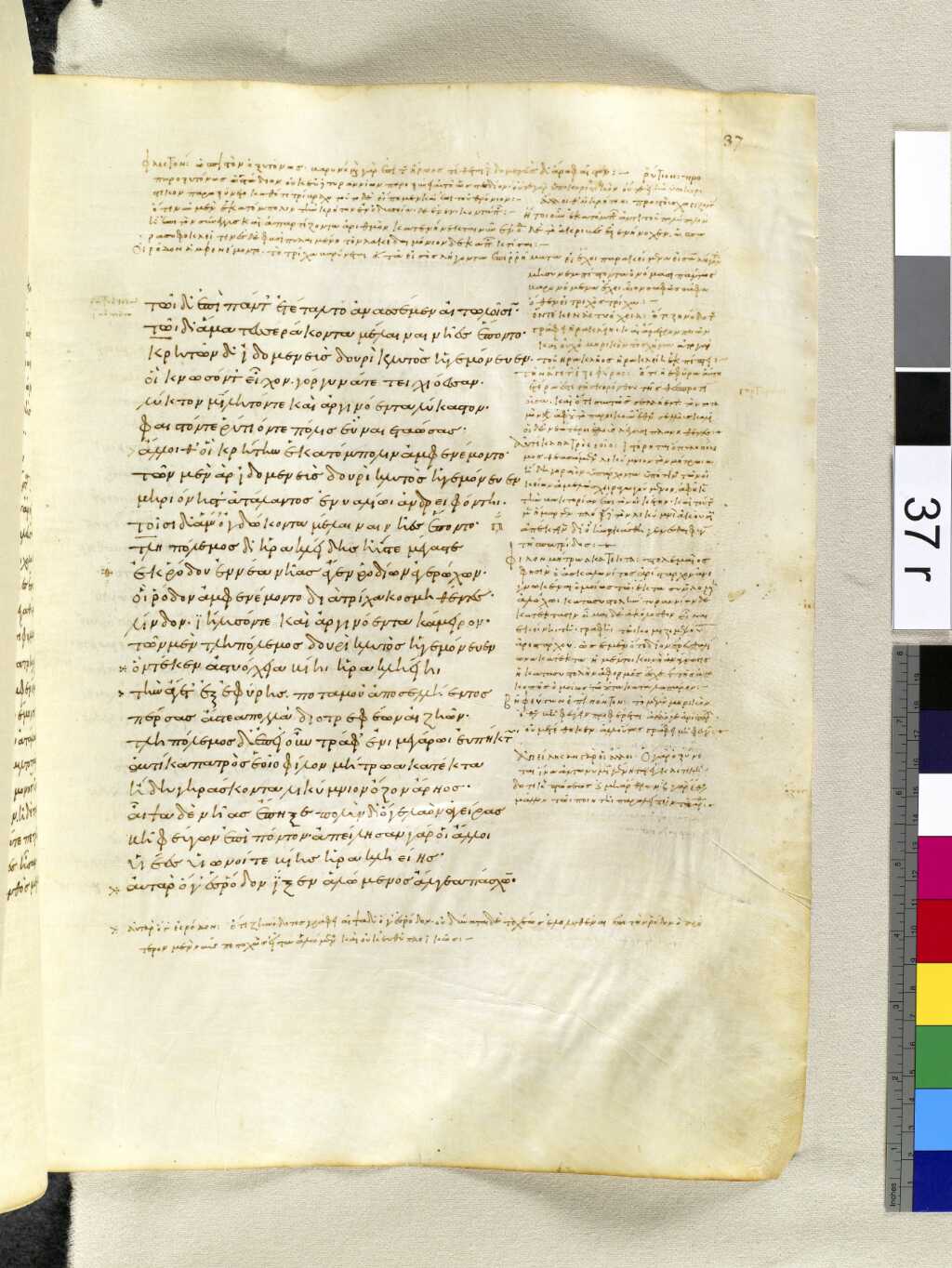
651Μηριόνης τʼ ἀτάλαντος Ἐνυαλίῳ ἀνδρειφόντῃ· 652τοῖσι δʼ ἅμʼ ὀγδώκοντα μέλαιναι νῆες ἕποντο. 653Τληπόλεμος δʼ Ἡρακλεΐδης ἠΰς τε μέγας τε 654ἐκ Ῥόδου ἐννέα νῆας ἄγεν Ῥοδίων ἀγερώχων, 655οἳ Ῥόδον ἀμφενέμοντο διὰ τρίχα κοσμηθέντες 656Λίνδον Ἰηλυσόν τε καὶ ἀργινόεντα Κάμειρον. 657τῶν μὲν Τληπόλεμος δουρὶ κλυτὸς ἡγεμόνευεν, 658ὃν τέκεν Ἀστυόχεια βίῃ Ἡρακληείῃ, 659τὴν ἄγετʼ ἐξ Ἐφύρης ποταμοῦ ἄπο Σελλήεντος 660πέρσας ἄστεα πολλὰ διοτρεφέων αἰζηῶν. 661Τληπόλεμος δʼ ἐπεὶ οὖν τράφʼ ἐνὶ μεγάρῳ εὐπήκτῳ, 662αὐτίκα πατρὸς ἑοῖο φίλον μήτρωα κατέκτα 663ἤδη γηράσκοντα Λικύμνιον ὄζον Ἄρηος· 664αἶψα δὲ νῆας ἔπηξε, πολὺν δʼ ὅ γε λαὸν ἀγείρας 665βῆ φεύγων ἐπὶ πόντον· ἀπείλησαν γάρ οἱ ἄλλοι 666υἱέες υἱωνοί τε βίης Ἡρακληείης. 667αὐτὰρ ὅ γʼ ἐς Ῥόδον ἷξεν ἀλώμενος ἄλγεα πάσχων· 668τριχθὰ δὲ ᾤκηθεν καταφυλαδόν, ἠδὲ φίληθεν 669ἐκ Διός, ὅς τε θεοῖσι καὶ ἀνθρώποισιν ἀνάσσει, 670καί σφιν θεσπέσιον πλοῦτον κατέχευε Κρονίων. 671Νιρεὺς αὖ Σύμηθεν ἄγε τρεῖς νῆας ἐΐσας 672Νιρεὺς Ἀγλαΐης υἱὸς Χαρόποιό τʼ ἄνακτος 673Νιρεύς, ὃς κάλλιστος ἀνὴρ ὑπὸ Ἴλιον ἦλθε 674τῶν ἄλλων Δαναῶν μετʼ ἀμύμονα Πηλεΐωνα· 675ἀλλʼ ἀλαπαδνὸς ἔην, παῦρος δέ οἱ εἵπετο λαός.
Such were the chiefs and princes of the Danaans. Who, then, O Muse, was the foremost, whether man or horse, among those that followed after the sons of Atreus?
Of the horses, those of the son of Pheres were by far the finest. They were driven by Eumelus, and were as fleet as birds. They were of the same age and colour, and perfectly matched in height. Apollo, of the silver bow, had bred them in Perea—both of them mares, and terrible as Mars in battle. Of the men, Ajax, son of Telamon, was much the foremost so long as Achilles’ anger lasted, for Achilles excelled him greatly and he had also better horses; but Achilles was now holding aloof at his ships by reason of his quarrel with Agamemnon, and his people passed their time upon the sea-shore, throwing discs or aiming with spears at a mark, and in archery. Their horses stood each by his own chariot, champing lotus and wild celery. The chariots were housed under cover, but their owners, for lack of leadership, wandered hither and thither about the host and went not forth to fight.
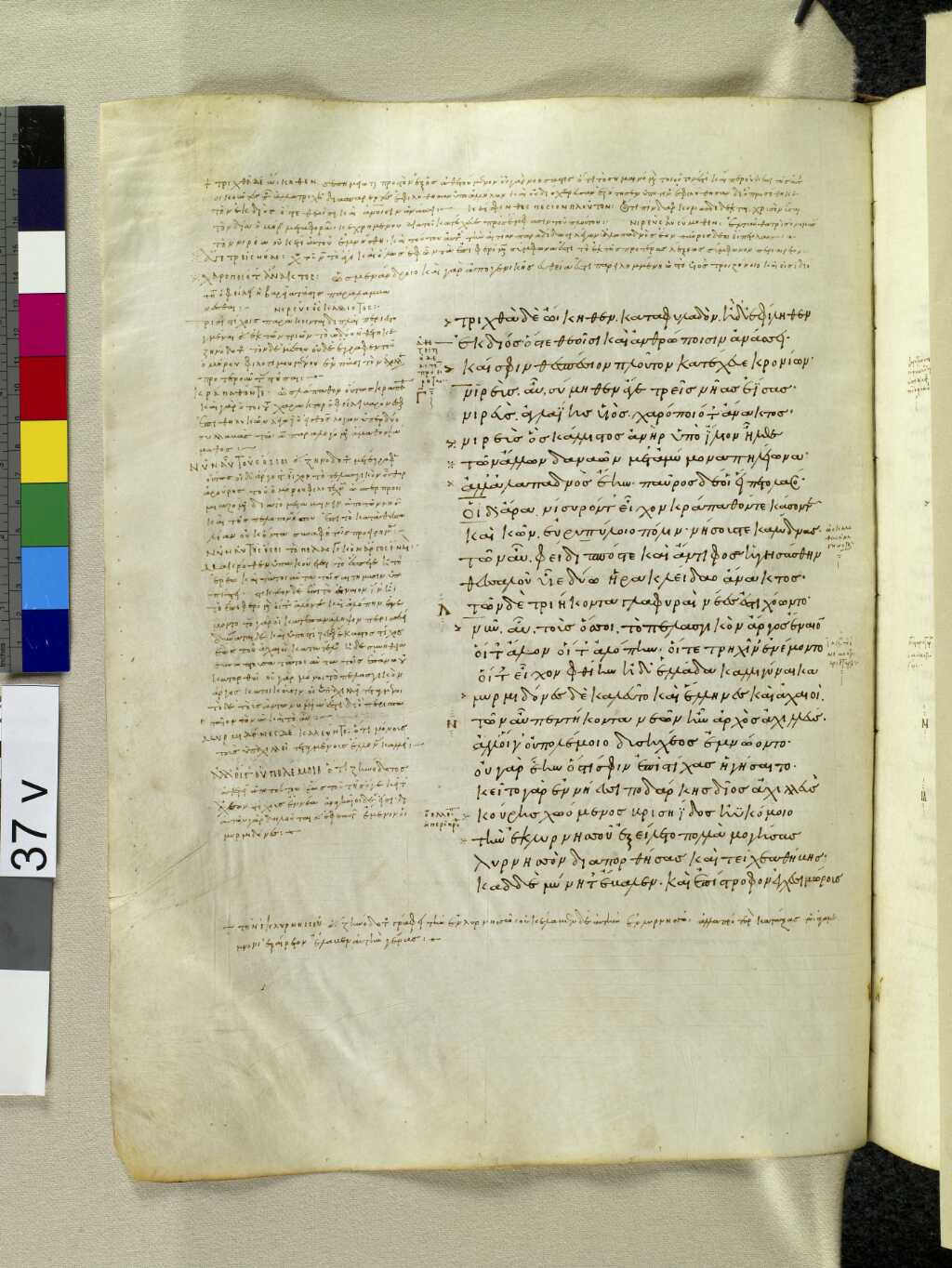
676οἳ δʼ ἄρα Νίσυρόν τʼ εἶχον Κράπαθόν τε Κάσον τε 677καὶ Κῶν Εὐρυπύλοιο πόλιν νήσους τε Καλύδνας, 678τῶν αὖ Φείδιππός τε καὶ Ἄντιφος ἡγησάσθην 679Θεσσαλοῦ υἷε δύω Ἡρακλεΐδαο ἄνακτος· 680τοῖς δὲ τριήκοντα γλαφυραὶ νέες ἐστιχόωντο. 681νῦν αὖ τοὺς ὅσσοι τὸ Πελασγικὸν Ἄργος ἔναιον, 682οἵ τʼ Ἄλον οἵ τʼ Ἀλόπην οἵ τε Τρηχῖνα νέμοντο, 683οἵ τʼ εἶχον Φθίην ἠδʼ Ἑλλάδα καλλιγύναικα, 684Μυρμιδόνες δὲ καλεῦντο καὶ Ἕλληνες καὶ Ἀχαιοί, 685τῶν αὖ πεντήκοντα νεῶν ἦν ἀρχὸς Ἀχιλλεύς. 686ἀλλʼ οἵ γʼ οὐ πολέμοιο δυσηχέος ἐμνώοντο· 687οὐ γὰρ ἔην ὅς τίς σφιν ἐπὶ στίχας ἡγήσαιτο· 688κεῖτο γὰρ ἐν νήεσσι ποδάρκης δῖος Ἀχιλλεὺς 689κούρης χωόμενος Βρισηΐδος ἠϋκόμοιο, 690τὴν ἐκ Λυρνησσοῦ ἐξείλετο πολλὰ μογήσας 691Λυρνησσὸν διαπορθήσας καὶ τείχεα Θήβης, 692κὰδ δὲ Μύνητʼ ἔβαλεν καὶ Ἐπίστροφον ἐγχεσιμώρους, 693υἱέας Εὐηνοῖο Σεληπιάδαο ἄνακτος· 694τῆς ὅ γε κεῖτʼ ἀχέων, τάχα δʼ ἀνστήσεσθαι ἔμελλεν. 695οἳ δʼ εἶχον Φυλάκην καὶ Πύρασον ἀνθεμόεντα 696Δήμητρος τέμενος, Ἴτωνά τε μητέρα μήλων, 697ἀγχίαλόν τʼ Ἀντρῶνα ἰδὲ Πτελεὸν λεχεποίην, 698τῶν αὖ Πρωτεσίλαος ἀρήϊος ἡγεμόνευε 699ζωὸς ἐών· τότε δʼ ἤδη ἔχεν κάτα γαῖα μέλαινα. 700τοῦ δὲ καὶ ἀμφιδρυφὴς ἄλοχος Φυλάκῃ ἐλέλειπτο
Thus marched the host like a consuming fire, and the earth groaned beneath them when the lord of thunder is angry and lashes the land about Typhoeus among the Arimi, where they say Typhoeus lies. Even so did the earth groan beneath them as they sped over the plain.
And now Iris, fleet as the wind, was sent by Jove to tell the bad news among the Trojans. They were gathered in assembly, old and young, at Priam’s gates, and Iris came close up to Priam, speaking with the voice of Priam’s son Polites, who, being fleet of foot, was stationed as watchman for the Trojans on the tomb of old Aesyetes, to look out for any sally of the Achaeans. In his likeness Iris spoke, saying, “Old man, you talk idly, as in time of peace, while war is at hand. I have been in many a battle, but never yet saw such a host as is now advancing. They are crossing the plain to attack the city as thick as leaves or as the sands of the sea. Hector, I charge you above all others, do as I say. There are many allies dispersed about the city of Priam from distant places and speaking divers tongues. Therefore, let each chief give orders to his own people, setting them severally in array and leading them forth to battle.”
Thus she spoke, but Hector knew that it was the goddess, and at once broke up the assembly. The men flew to arms; all the gates were opened, and the people thronged through them, horse and foot, with the tramp as of a great multitude.
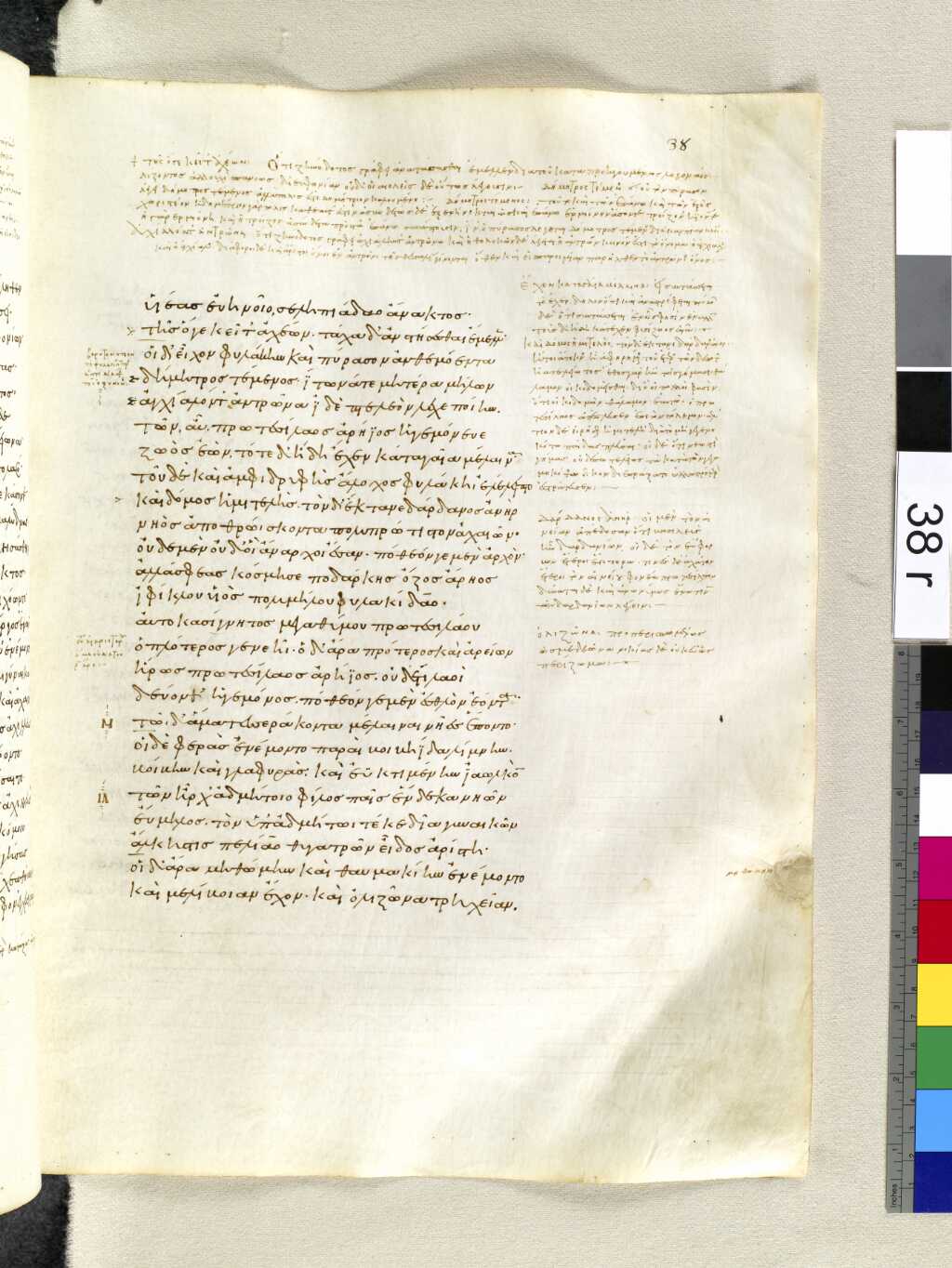
701καὶ δόμος ἡμιτελής· τὸν δʼ ἔκτανε Δάρδανος ἀνὴρ 702νηὸς ἀποθρῴσκοντα πολὺ πρώτιστον Ἀχαιῶν. 703οὐδὲ μὲν οὐδʼ οἳ ἄναρχοι ἔσαν, πόθεόν γε μὲν ἀρχόν· 704ἀλλά σφεας κόσμησε Ποδάρκης ὄζος Ἄρηος 705Ἰφίκλου υἱὸς πολυμήλου Φυλακίδαο 706αὐτοκασίγνητος μεγαθύμου Πρωτεσιλάου 707ὁπλότερος γενεῇ· ὁ δʼ ἅμα πρότερος καὶ ἀρείων 708ἥρως Πρωτεσίλαος ἀρήϊος· οὐδέ τι λαοὶ 709δεύονθʼ ἡγεμόνος, πόθεόν γε μὲν ἐσθλὸν ἐόντα· 710τῷ δʼ ἅμα τεσσαράκοντα μέλαιναι νῆες ἕποντο. 711οἳ δὲ Φερὰς ἐνέμοντο παραὶ Βοιβηΐδα λίμνην 712Βοίβην καὶ Γλαφύρας καὶ ἐϋκτιμένην Ἰαωλκόν, 713τῶν ἦρχʼ Ἀδμήτοιο φίλος πάϊς ἕνδεκα νηῶν 714Εὔμηλος, τὸν ὑπʼ Ἀδμήτῳ τέκε δῖα γυναικῶν 715Ἄλκηστις Πελίαο θυγατρῶν εἶδος ἀρίστη. 716οἳ δʼ ἄρα Μηθώνην καὶ Θαυμακίην ἐνέμοντο 717καὶ Μελίβοιαν ἔχον καὶ Ὀλιζῶνα τρηχεῖαν, 718τῶν δὲ Φιλοκτήτης ἦρχεν τόξων ἐῢ εἰδὼς 719ἑπτὰ νεῶν· ἐρέται δʼ ἐν ἑκάστῃ πεντήκοντα 720ἐμβέβασαν τόξων εὖ εἰδότες ἶφι μάχεσθαι. 721ἀλλʼ ὃ μὲν ἐν νήσῳ κεῖτο κρατέρʼ ἄλγεα πάσχων 722Λήμνῳ ἐν ἠγαθέῃ, ὅθι μιν λίπον υἷες Ἀχαιῶν 723ἕλκεϊ μοχθίζοντα κακῷ ὀλοόφρονος ὕδρου· 724ἔνθʼ ὅ γε κεῖτʼ ἀχέων· τάχα δὲ μνήσεσθαι ἔμελλον 725Ἀργεῖοι παρὰ νηυσὶ Φιλοκτήταο ἄνακτος.
Now there is a high mound before the city, rising by itself upon the plain. Men call it Batieia, but the gods know that it is the tomb of lithe Myrine. Here the Trojans and their allies divided their forces.
Priam’s son, great Hector of the gleaming helmet, commanded the Trojans, and with him were arrayed by far the greater number and most valiant of those who were longing for the fray.
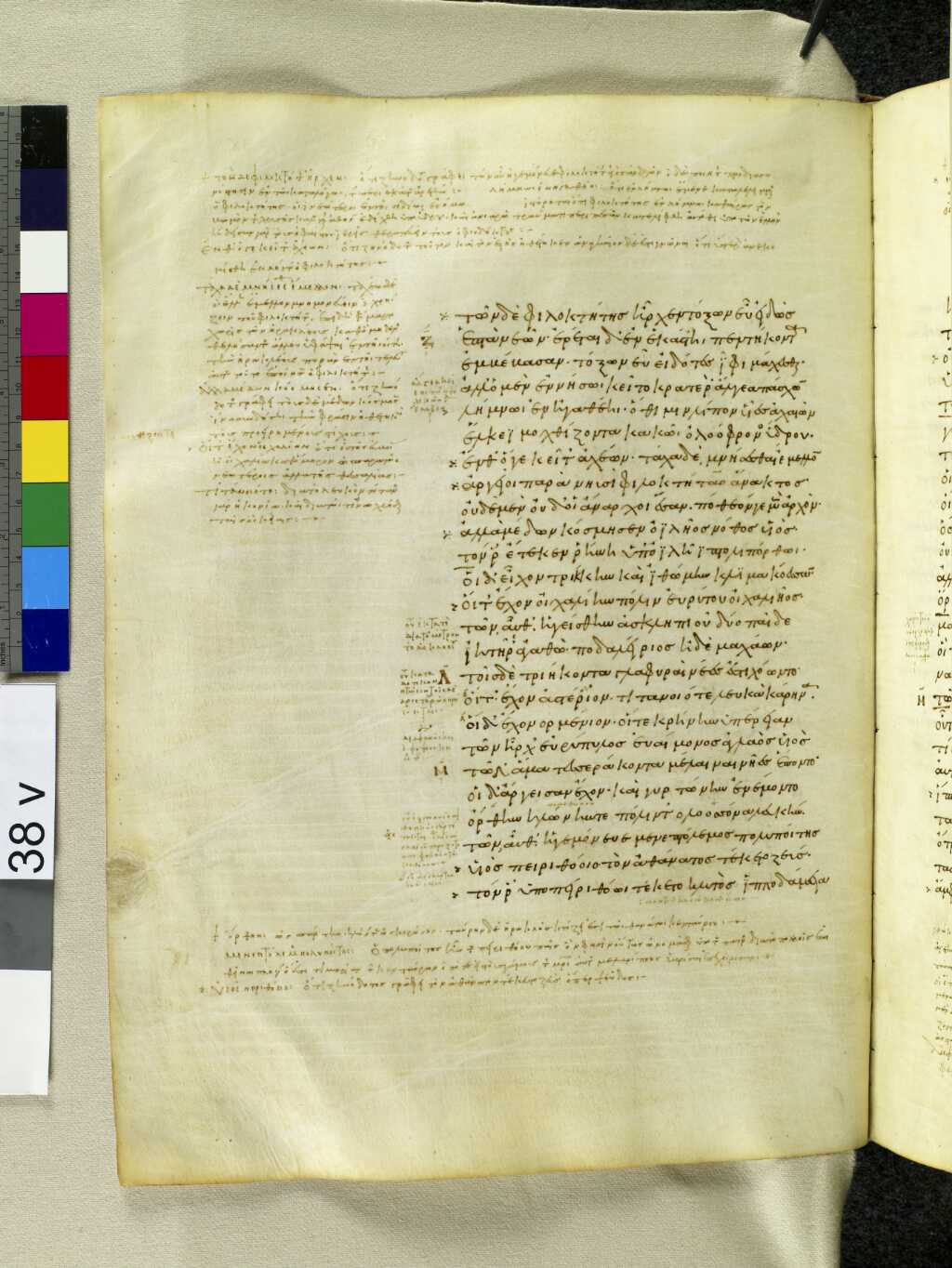
726οὐδὲ μὲν οὐδʼ οἳ ἄναρχοι ἔσαν, πόθεόν γε μὲν ἀρχόν· 727ἀλλὰ Μέδων κόσμησεν Ὀϊλῆος νόθος υἱός, 728τόν ῥʼ ἔτεκεν Ῥήνη ὑπʼ Ὀϊλῆϊ πτολιπόρθῳ. 729οἳ δʼ εἶχον Τρίκκην καὶ Ἰθώμην κλωμακόεσσαν, 730οἵ τʼ ἔχον Οἰχαλίην πόλιν Εὐρύτου Οἰχαλιῆος, 731τῶν αὖθʼ ἡγείσθην Ἀσκληπιοῦ δύο παῖδε 732ἰητῆρʼ ἀγαθὼ Ποδαλείριος ἠδὲ Μαχάων· 733τοῖς δὲ τριήκοντα γλαφυραὶ νέες ἐστιχόωντο. 734οἳ δʼ ἔχον Ὀρμένιον, οἵ τε κρήνην Ὑπέρειαν, 735οἵ τʼ ἔχον Ἀστέριον Τιτάνοιό τε λευκὰ κάρηνα, 736τῶν ἦρχʼ Εὐρύπυλος Εὐαίμονος ἀγλαὸς υἱός· 737τῷ δʼ ἅμα τεσσαράκοντα μέλαιναι νῆες ἕποντο. 738οἳ δʼ Ἄργισσαν ἔχον καὶ Γυρτώνην ἐνέμοντο, 739Ὄρθην Ἠλώνην τε πόλιν τʼ Ὀλοοσσόνα λευκήν, 740τῶν αὖθʼ ἡγεμόνευε μενεπτόλεμος Πολυποίτης 741υἱὸς Πειριθόοιο τὸν ἀθάνατος τέκετο Ζεύς· 742τόν ῥʼ ὑπὸ Πειριθόῳ τέκετο κλυτὸς Ἱπποδάμεια 743ἤματι τῷ ὅτε Φῆρας ἐτίσατο λαχνήεντας, 744τοὺς δʼ ἐκ Πηλίου ὦσε καὶ Αἰθίκεσσι πέλασσεν· 745οὐκ οἶος, ἅμα τῷ γε Λεοντεὺς ὄζος Ἄρηος 746υἱὸς ὑπερθύμοιο Κορώνου Καινεΐδαο· 747τοῖς δʼ ἅμα τεσσαράκοντα μέλαιναι νῆες ἕποντο. 748Γουνεὺς δʼ ἐκ Κύφου ἦγε δύω καὶ εἴκοσι νῆας· 749τῷ δʼ Ἐνιῆνες ἕποντο μενεπτόλεμοί τε Περαιβοὶ 750οἳ περὶ Δωδώνην δυσχείμερον οἰκίʼ ἔθεντο,
The Dardanians were led by brave Aeneas, whom Venus bore to Anchises, when she, goddess though she was, had lain with him upon the mountain slopes of Ida. He was not alone, for with him were the two sons of Antenor, Archelochus and Acamas, both skilled in all the arts of war.
They that dwelt in Telea under the lowest spurs of Mt. Ida, men of substance, who drink the limpid waters of the Aesepus, and are of Trojan blood—these were led by Pandarus son of Lycaon, whom Apollo had taught to use the bow.
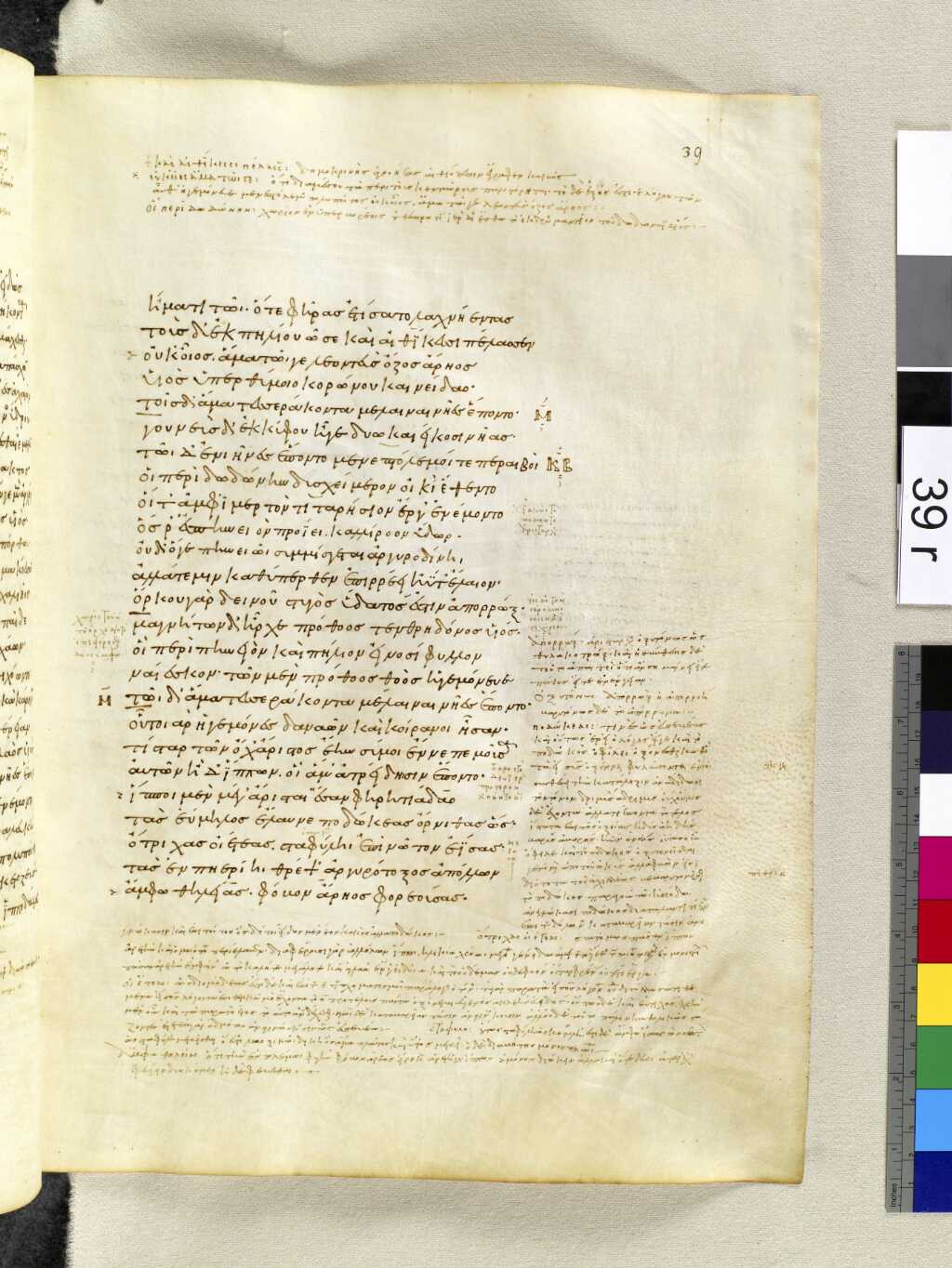
751οἵ τʼ ἀμφʼ ἱμερτὸν Τιταρησσὸν ἔργα νέμοντο 752ὅς ῥʼ ἐς Πηνειὸν προΐει καλλίρροον ὕδωρ, 753οὐδʼ ὅ γε Πηνειῷ συμμίσγεται ἀργυροδίνῃ, 754ἀλλά τέ μιν καθύπερθεν ἐπιρρέει ἠΰτʼ ἔλαιον· 755ὅρκου γὰρ δεινοῦ Στυγὸς ὕδατός ἐστιν ἀπορρώξ. 756Μαγνήτων δʼ ἦρχε Πρόθοος Τενθρηδόνος υἱός, 757οἳ περὶ Πηνειὸν καὶ Πήλιον εἰνοσίφυλλον 758ναίεσκον· τῶν μὲν Πρόθοος θοὸς ἡγεμόνευε, 759τῷ δʼ ἅμα τεσσαράκοντα μέλαιναι νῆες ἕποντο. 760οὗτοι ἄρʼ ἡγεμόνες Δαναῶν καὶ κοίρανοι ἦσαν· 761τίς τὰρ τῶν ὄχʼ ἄριστος ἔην σύ μοι ἔννεπε Μοῦσα 762αὐτῶν ἠδʼ ἵππων, οἳ ἅμʼ Ἀτρεΐδῃσιν ἕποντο. 763ἵπποι μὲν μέγʼ ἄρισται ἔσαν Φηρητιάδαο, 764τὰς Εὔμηλος ἔλαυνε ποδώκεας ὄρνιθας ὣς 765ὄτριχας οἰέτεας σταφύλῇ ἐπὶ νῶτον ἐΐσας· 766τὰς ἐν Πηρείῃ θρέψʼ ἀργυρότοξος Ἀπόλλων 767ἄμφω θηλείας, φόβον Ἄρηος φορεούσας. 768ἀνδρῶν αὖ μέγʼ ἄριστος ἔην Τελαμώνιος Αἴας 769ὄφρʼ Ἀχιλεὺς μήνιεν· ὃ γὰρ πολὺ φέρτατος ἦεν, 770ἵπποι θʼ οἳ φορέεσκον ἀμύμονα Πηλεΐωνα. 771ἀλλʼ ὃ μὲν ἐν νήεσσι κορωνίσι ποντοπόροισι 772κεῖτʼ ἀπομηνίσας Ἀγαμέμνονι ποιμένι λαῶν 773Ἀτρεΐδῃ· λαοὶ δὲ παρὰ ῥηγμῖνι θαλάσσης 774δίσκοισιν τέρποντο καὶ αἰγανέῃσιν ἱέντες 775τόξοισίν θʼ· ἵπποι δὲ παρʼ ἅρμασιν οἷσιν ἕκαστος
They that held Adresteia and the land of Apaesus, with Pityeia, and the high mountain of Tereia—these were led by Adrestus and Amphius, whose breastplate was of linen. These were the sons of Merops of Percote, who excelled in all kinds of divination. He told them not to take part in the war, but they gave him no heed, for fate lured them to destruction.
They that dwelt about Percote and Practius, with Sestos, Abydos, and Arisbe—these were led by Asius, son of Hyrtacus, a brave commander—Asius, the son of Hyrtacus, whom his powerful dark bay steeds, of the breed that comes from the river Selleis, had brought from Arisbe.
Hippothous led the tribes of Pelasgian spearsmen, who dwelt in fertile Larissa—Hippothous, and Pylaeus of the race of Mars, two sons of the Pelasgian Lethus, son of Teutamus.
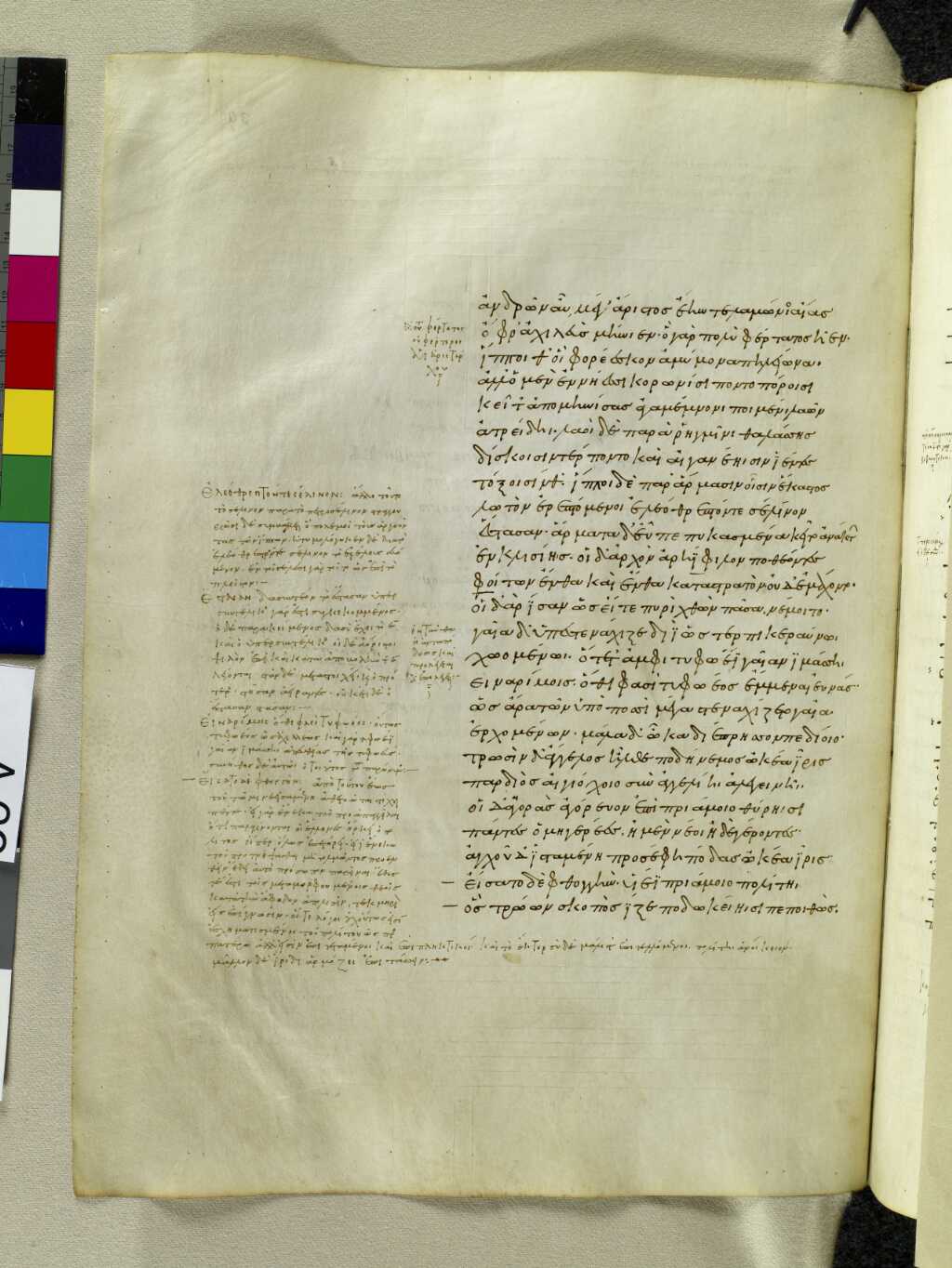
776λωτὸν ἐρεπτόμενοι ἐλεόθρεπτόν τε σέλινον 777ἕστασαν· ἅρματα δʼ εὖ πεπυκασμένα κεῖτο ἀνάκτων 778ἐν κλισίῃς· οἳ δʼ ἀρχὸν ἀρηΐφιλον ποθέοντες 779φοίτων ἔνθα καὶ ἔνθα κατὰ στρατὸν οὐδὲ μάχοντο. 780οἳ δʼ ἄρʼ ἴσαν ὡς εἴ τε πυρὶ χθὼν πᾶσα νέμοιτο· 781γαῖα δʼ ὑπεστενάχιζε Διὶ ὣς τερπικεραύνῳ 782χωομένῳ ὅτε τʼ ἀμφὶ Τυφωέϊ γαῖαν ἱμάσσῃ 783εἰν Ἀρίμοις, ὅθι φασὶ Τυφωέος ἔμμεναι εὐνάς· 784ὣς ἄρα τῶν ὑπὸ ποσσὶ μέγα στεναχίζετο γαῖα 785ἐρχομένων· μάλα δʼ ὦκα διέπρησσον πεδίοιο. 786Τρωσὶν δʼ ἄγγελος ἦλθε ποδήνεμος ὠκέα Ἶρις 787πὰρ Διὸς αἰγιόχοιο σὺν ἀγγελίῃ ἀλεγεινῇ· 788οἳ δʼ ἀγορὰς ἀγόρευον ἐπὶ Πριάμοιο θύρῃσι 789πάντες ὁμηγερέες ἠμὲν νέοι ἠδὲ γέροντες· 790ἀγχοῦ δʼ ἱσταμένη προσέφη πόδας ὠκέα Ἶρις· 791εἴσατο δὲ φθογγὴν υἷϊ Πριάμοιο Πολίτῃ, 792ὃς Τρώων σκοπὸς ἷζε ποδωκείῃσι πεποιθὼς 793τύμβῳ ἐπʼ ἀκροτάτῳ Αἰσυήταο γέροντος, 794δέγμενος ὁππότε ναῦφιν ἀφορμηθεῖεν Ἀχαιοί· 795τῷ μιν ἐεισαμένη προσέφη πόδας ὠκέα Ἶρις· 796ὦ γέρον αἰεί τοι μῦθοι φίλοι ἄκριτοί εἰσιν, 797ὥς ποτʼ ἐπʼ εἰρήνης· πόλεμος δʼ ἀλίαστος ὄρωρεν. 798ἤδη μὲν μάλα πολλὰ μάχας εἰσήλυθον ἀνδρῶν, 799ἀλλʼ οὔ πω τοιόνδε τοσόνδέ τε λαὸν ὄπωπα· 800λίην γὰρ φύλλοισιν ἐοικότες ἢ ψαμάθοισιν
Acamas and the warrior Peirous commanded the Thracians and those that came from beyond the mighty stream of the Hellespont.
Euphemus, son of Troezenus, the son of Ceos, was captain of the Ciconian spearsmen.
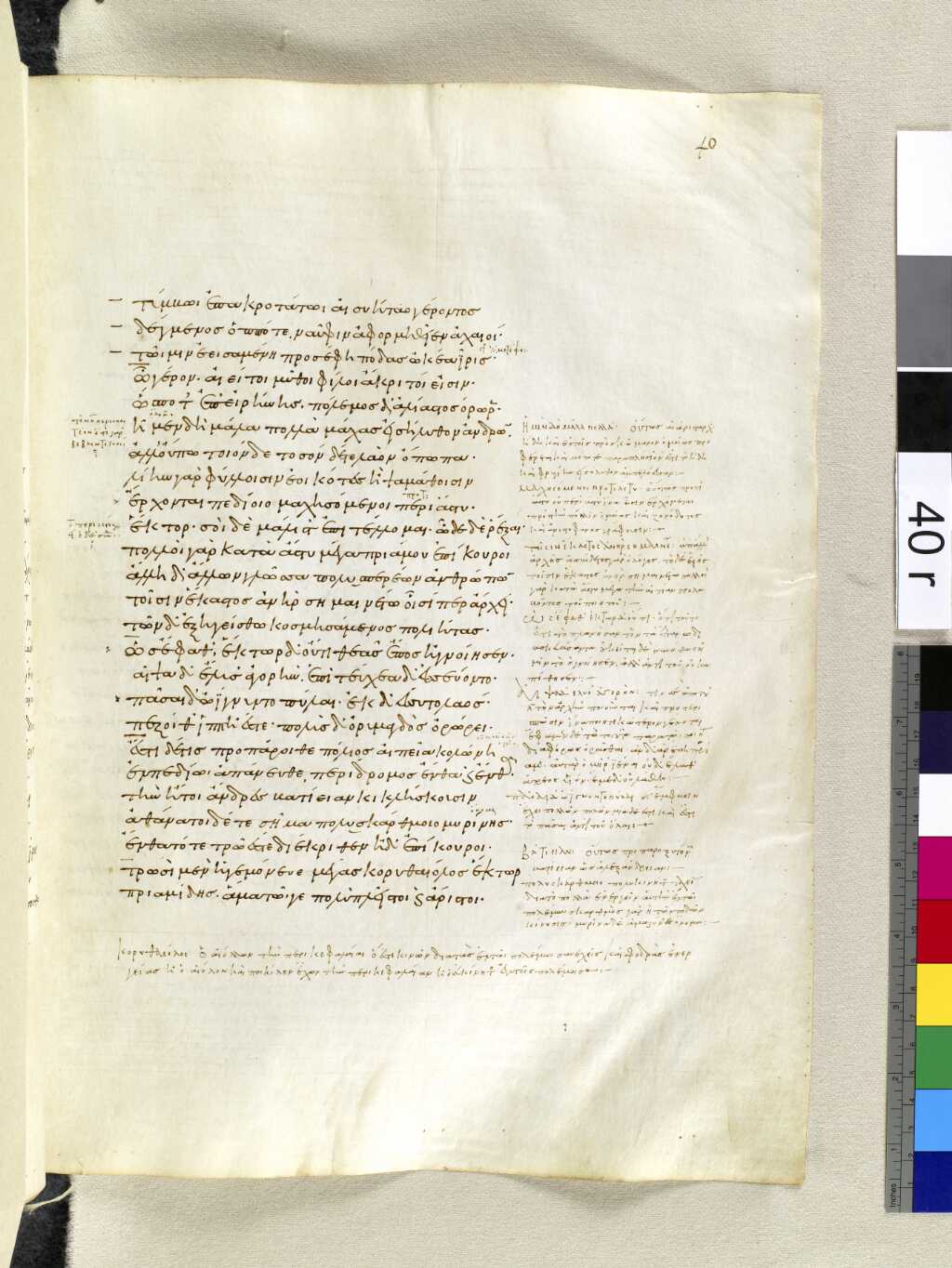
801ἔρχονται πεδίοιο μαχησόμενοι προτὶ ἄστυ. 802Ἕκτορ σοὶ δὲ μάλιστʼ ἐπιτέλλομαι, ὧδε δὲ ῥέξαι· 803πολλοὶ γὰρ κατὰ ἄστυ μέγα Πριάμου ἐπίκουροι, 804ἄλλη δʼ ἄλλων γλῶσσα πολυσπερέων ἀνθρώπων· 805τοῖσιν ἕκαστος ἀνὴρ σημαινέτω οἷσί περ ἄρχει, 806τῶν δʼ ἐξηγείσθω κοσμησάμενος πολιήτας. 807ὣς ἔφαθʼ, Ἕκτωρ δʼ οὔ τι θεᾶς ἔπος ἠγνοίησεν, 808αἶψα δʼ ἔλυσʼ ἀγορήν· ἐπὶ τεύχεα δʼ ἐσσεύοντο· 809πᾶσαι δʼ ὠΐγνυντο πύλαι, ἐκ δʼ ἔσσυτο λαὸς 810πεζοί θʼ ἱππῆές τε· πολὺς δʼ ὀρυμαγδὸς ὀρώρει. 811ἔστι δέ τις προπάροιθε πόλιος αἰπεῖα κολώνη 812ἐν πεδίῳ ἀπάνευθε περίδρομος ἔνθα καὶ ἔνθα, 813τὴν ἤτοι ἄνδρες Βατίειαν κικλήσκουσιν, 814ἀθάνατοι δέ τε σῆμα πολυσκάρθμοιο Μυρίνης· 815ἔνθα τότε Τρῶές τε διέκριθεν ἠδʼ ἐπίκουροι. 816Τρωσὶ μὲν ἡγεμόνευε μέγας κορυθαίολος Ἕκτωρ 817Πριαμίδης· ἅμα τῷ γε πολὺ πλεῖστοι καὶ ἄριστοι 818λαοὶ θωρήσσοντο μεμαότες ἐγχείῃσι. 819Δαρδανίων αὖτʼ ἦρχεν ἐῢς πάϊς Ἀγχίσαο 820Αἰνείας, τὸν ὑπʼ Ἀγχίσῃ τέκε δῖʼ Ἀφροδίτη 821Ἴδης ἐν κνημοῖσι θεὰ βροτῷ εὐνηθεῖσα, 822οὐκ οἶος, ἅμα τῷ γε δύω Ἀντήνορος υἷε 823Ἀρχέλοχός τʼ Ἀκάμας τε μάχης εὖ εἰδότε πάσης. 824οἳ δὲ Ζέλειαν ἔναιον ὑπαὶ πόδα νείατον Ἴδης 825ἀφνειοὶ πίνοντες ὕδωρ μέλαν Αἰσήποιο
Pyraechmes led the Paeonian archers from distant Amydon, by the broad waters of the river Axius, the fairest that flow upon the earth.
The Paphlagonians were commanded by stout-hearted Pylaemanes from Enetae, where the mules run wild in herds. These were they that held Cytorus and the country round Sesamus, with the cities by the river Parthenius, Cromna, Aegialus, and lofty Erithini.
Odius and Epistrophus were captains over the Halizoni from distant Alybe, where there are mines of silver.
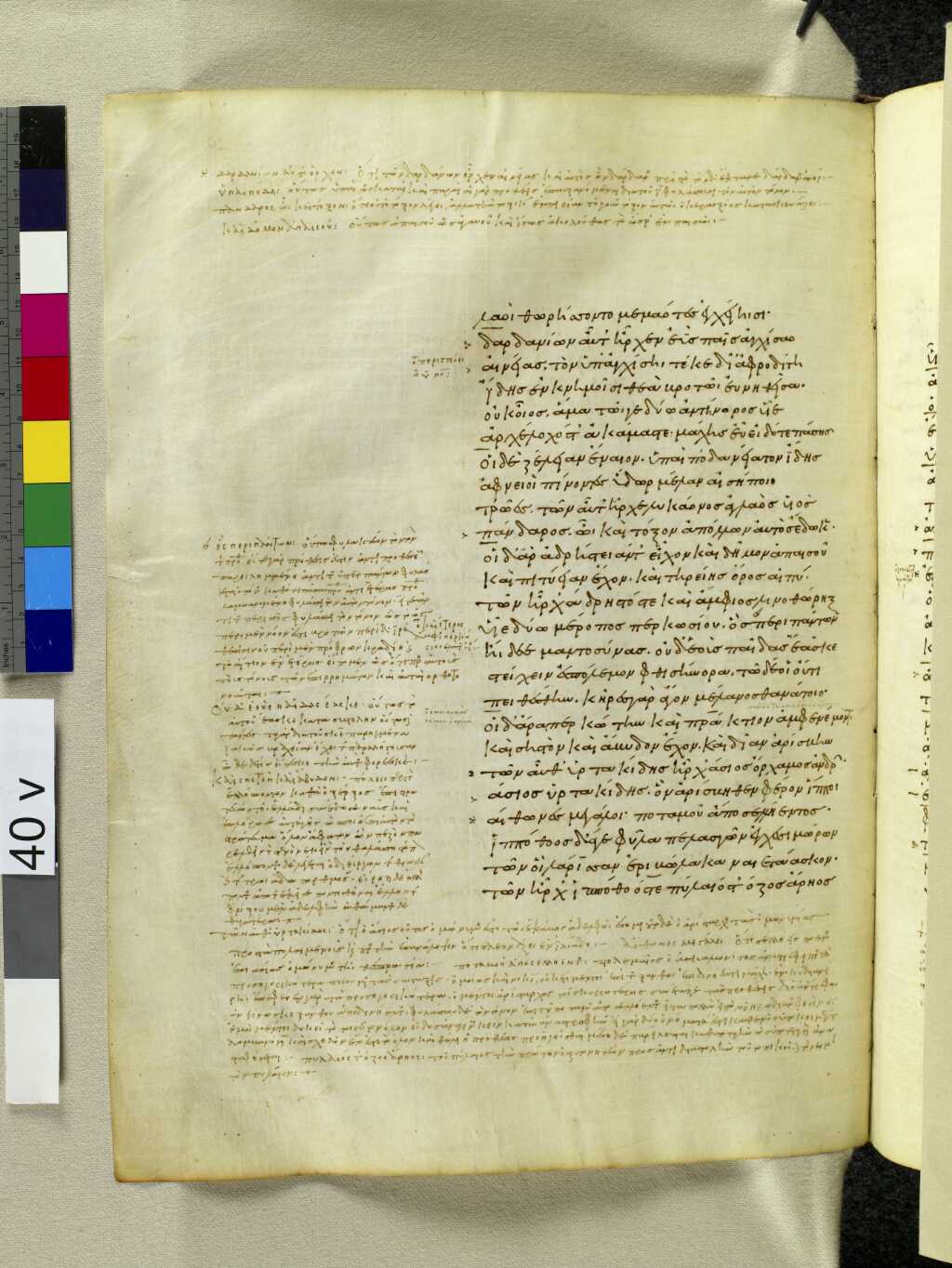
826Τρῶες, τῶν αὖτʼ ἦρχε Λυκάονος ἀγλαὸς υἱὸς 827Πάνδαρος, ᾧ καὶ τόξον Ἀπόλλων αὐτὸς ἔδωκεν. 828οἳ δʼ Ἀδρήστειάν τʼ εἶχον καὶ δῆμον Ἀπαισοῦ 829καὶ Πιτύειαν ἔχον καὶ Τηρείης ὄρος αἰπύ, 830τῶν ἦρχʼ Ἄδρηστός τε καὶ Ἄμφιος λινοθώρηξ 831υἷε δύω Μέροπος Περκωσίου, ὃς περὶ πάντων 832ᾔδεε μαντοσύνας, οὐδὲ οὓς παῖδας ἔασκε 833στείχειν ἐς πόλεμον φθισήνορα· τὼ δέ οἱ οὔ τι 834πειθέσθην· κῆρες γὰρ ἄγον μέλανος θανάτοιο. 835οἳ δʼ ἄρα Περκώτην καὶ Πράκτιον ἀμφενέμοντο 836καὶ Σηστὸν καὶ Ἄβυδον ἔχον καὶ δῖαν Ἀρίσβην, 837τῶν αὖθʼ Ὑρτακίδης ἦρχʼ Ἄσιος ὄρχαμος ἀνδρῶν, 838Ἄσιος Ὑρτακίδης ὃν Ἀρίσβηθεν φέρον ἵπποι 839αἴθωνες μεγάλοι ποταμοῦ ἄπο Σελλήεντος. 840Ἱππόθοος δʼ ἄγε φῦλα Πελασγῶν ἐγχεσιμώρων 841τῶν οἳ Λάρισαν ἐριβώλακα ναιετάασκον· 842τῶν ἦρχʼ Ἱππόθοός τε Πύλαιός τʼ ὄζος Ἄρηος, 843υἷε δύω Λήθοιο Πελασγοῦ Τευταμίδαο. 844αὐτὰρ Θρήϊκας ἦγʼ Ἀκάμας καὶ Πείροος ἥρως 845ὅσσους Ἑλλήσποντος ἀγάρροος ἐντὸς ἐέργει. 846Εὔφημος δʼ ἀρχὸς Κικόνων ἦν αἰχμητάων 847υἱὸς Τροιζήνοιο διοτρεφέος Κεάδαο. 848αὐτὰρ Πυραίχμης ἄγε Παίονας ἀγκυλοτόξους 849τηλόθεν ἐξ Ἀμυδῶνος ἀπʼ Ἀξιοῦ εὐρὺ ῥέοντος, 850Ἀξιοῦ οὗ κάλλιστον ὕδωρ ἐπικίδναται αἶαν.
Chromis, and Ennomus the augur, led the Mysians, but his skill in augury availed not to save him from destruction, for he fell by the hand of the fleet descendant of Aeacus in the river, where he slew others also of the Trojans.
Phorcys, again, and noble Ascanius led the Phrygians from the far country of Ascania, and both were eager for the fray.
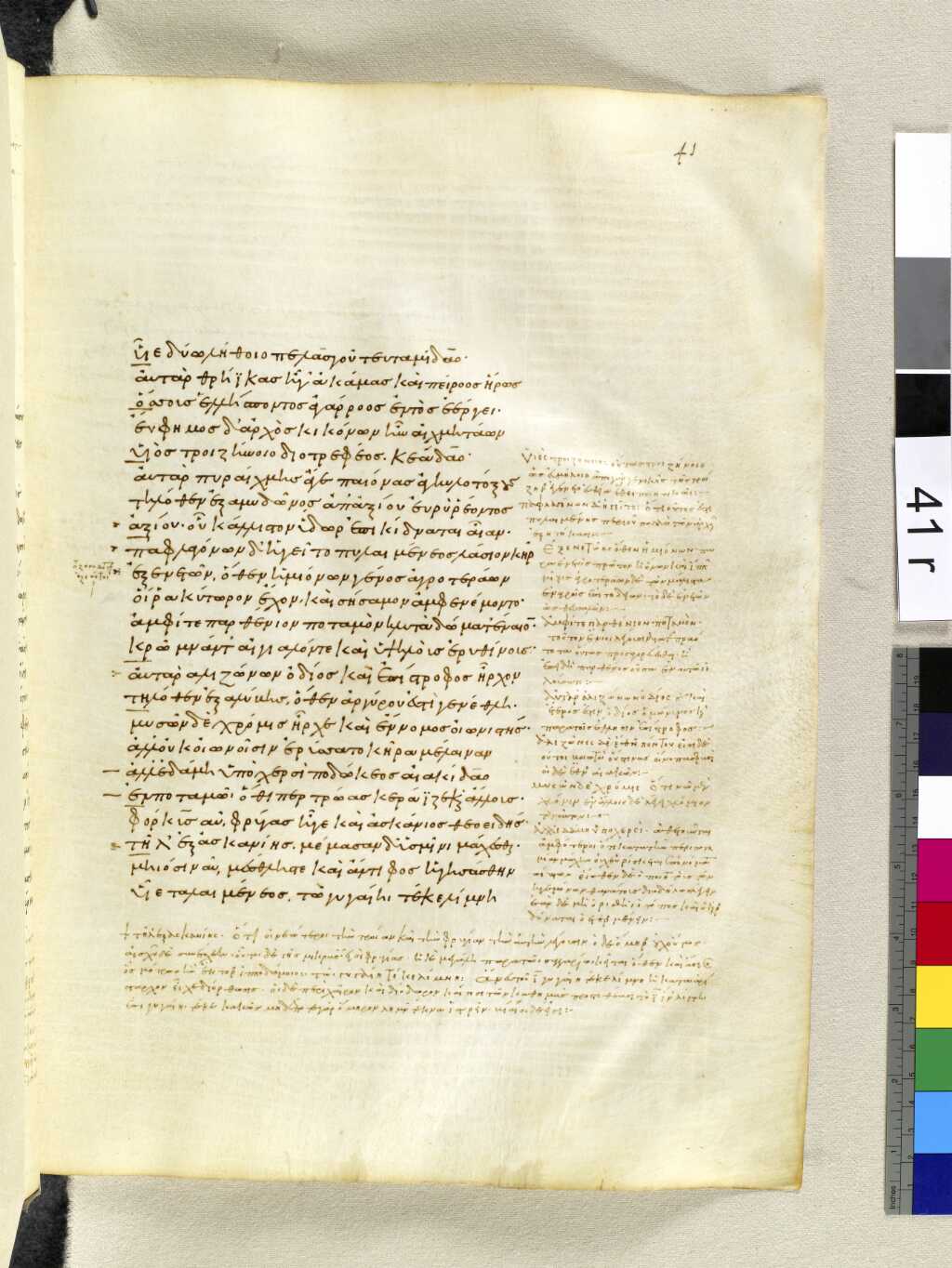
851Παφλαγόνων δʼ ἡγεῖτο Πυλαιμένεος λάσιον κῆρ 852ἐξ Ἐνετῶν, ὅθεν ἡμιόνων γένος ἀγροτεράων, 853οἵ ῥα Κύτωρον ἔχον καὶ Σήσαμον ἀμφενέμοντο 854ἀμφί τε Παρθένιον ποταμὸν κλυτὰ δώματʼ ἔναιον 855Κρῶμνάν τʼ Αἰγιαλόν τε καὶ ὑψηλοὺς Ἐρυθίνους. 856αὐτὰρ Ἁλιζώνων Ὀδίος καὶ Ἐπίστροφος ἦρχον 857τηλόθεν ἐξ Ἀλύβης, ὅθεν ἀργύρου ἐστὶ γενέθλη. 858Μυσῶν δὲ Χρόμις ἦρχε καὶ Ἔννομος οἰωνιστής· 859ἀλλʼ οὐκ οἰωνοῖσιν ἐρύσατο κῆρα μέλαιναν, 860ἀλλʼ ἐδάμη ὑπὸ χερσὶ ποδώκεος Αἰακίδαο 861ἐν ποταμῷ, ὅθι περ Τρῶας κεράϊζε καὶ ἄλλους. 862Φόρκυς αὖ Φρύγας ἦγε καὶ Ἀσκάνιος θεοειδὴς 863τῆλʼ ἐξ Ἀσκανίης· μέμασαν δʼ ὑσμῖνι μάχεσθαι. 864Μῄοσιν αὖ Μέσθλης τε καὶ Ἄντιφος ἡγησάσθην 865υἷε Ταλαιμένεος τὼ Γυγαίη τέκε λίμνη, 866οἳ καὶ Μῄονας ἦγον ὑπὸ Τμώλῳ γεγαῶτας. 867Νάστης αὖ Καρῶν ἡγήσατο βαρβαροφώνων, 868οἳ Μίλητον ἔχον Φθιρῶν τʼ ὄρος ἀκριτόφυλλον 869Μαιάνδρου τε ῥοὰς Μυκάλης τʼ αἰπεινὰ κάρηνα· 870τῶν μὲν ἄρʼ Ἀμφίμαχος καὶ Νάστης ἡγησάσθην, 871Νάστης Ἀμφίμαχός τε Νομίονος ἀγλαὰ τέκνα, 872ὃς καὶ χρυσὸν ἔχων πόλεμον δʼ ἴεν ἠΰτε κούρη 873νήπιος, οὐδέ τί οἱ τό γʼ ἐπήρκεσε λυγρὸν ὄλεθρον, 874ἀλλʼ ἐδάμη ὑπὸ χερσὶ ποδώκεος Αἰακίδαο 875ἐν ποταμῷ, χρυσὸν δʼ Ἀχιλεὺς ἐκόμισσε δαΐφρων.
Mesthles and Antiphus commanded the Meonians, sons of Talaemenes, born to him of the Gygaean lake. These led the Meonians, who dwelt under Mt. Tmolus.
Nastes led the Carians, men of a strange speech. These held Miletus and the wooded mountain of Phthires, with the water of the river Maeander and the lofty crests of Mt. Mycale. These were commanded by Nastes and Amphimachus, the brave sons of Nomion. He came into the fight with gold about him, like a girl; fool that he was, his gold was of no avail to save him, for he fell in the river by the hand of the fleet descendant of Aeacus, and Achilles bore away his gold.
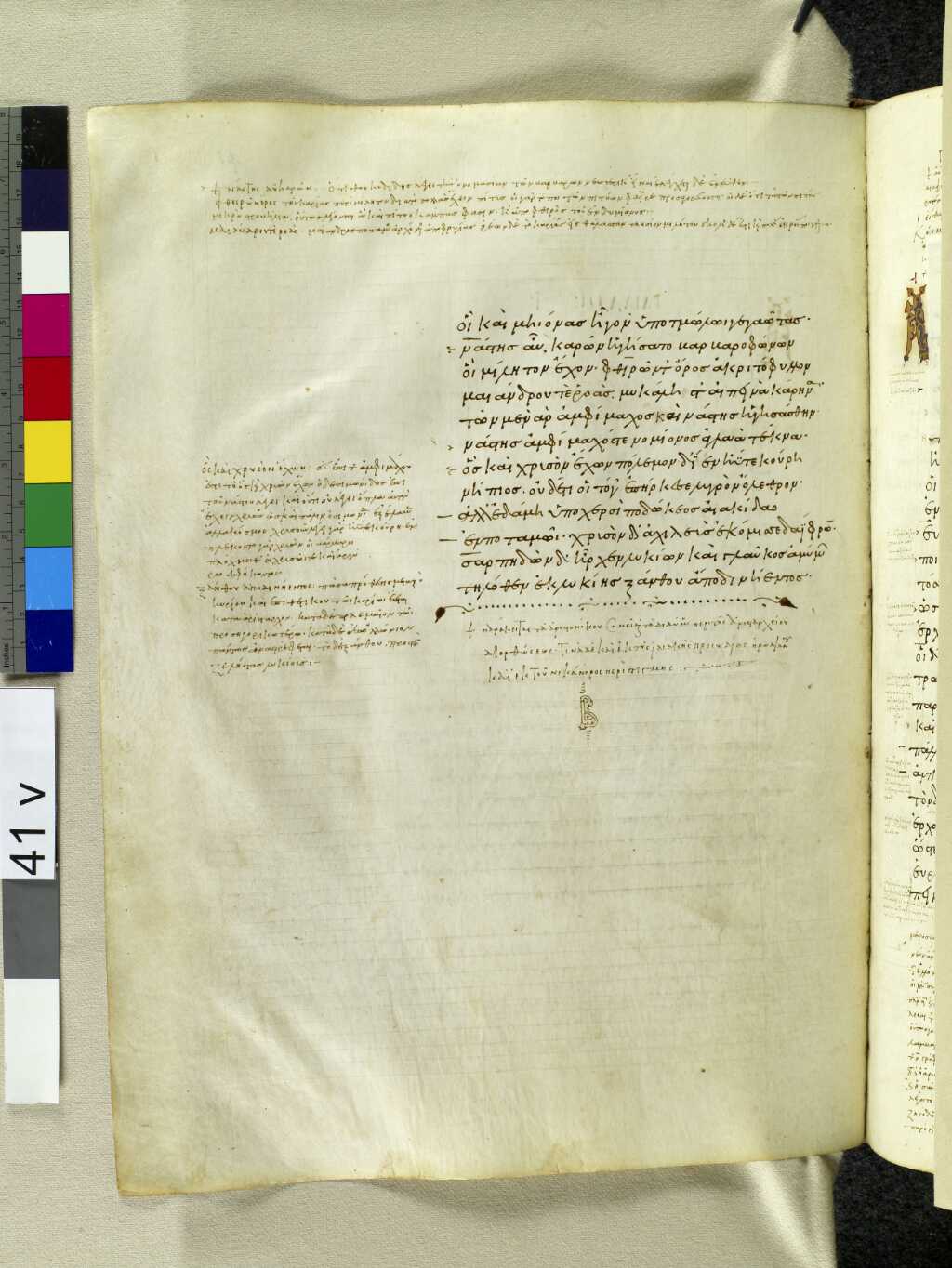
876Σαρπηδὼν δʼ ἦρχεν Λυκίων καὶ Γλαῦκος ἀμύμων 877τηλόθεν ἐκ Λυκίης, Ξάνθου ἄπο δινήεντος.
Sarpedon and Glaucus led the Lycians from their distant land, by the eddying waters of the Xanthus.
Cite
Source & Cross-References
- Source text: Venetus A (10th c.) via Homer Multitext IIIF + Perseus Greek + Butler English (PG #2199) — view original
- Critical edition: Munro & Allen (Perseus Digital Library)
← previous · → next · v cycle view · l back to library