The Iliad, Book 17
Introduction
Book 17 of the Iliad with 31 sections, each linked to its specific folio in Venetus A (Marcianus Graecus 454, 10th c.). The Homer Multitext Project provides line-level folio mappings, ensuring every section of text corresponds to the exact manuscript page where it appears.
How was this verified? (Provenance)
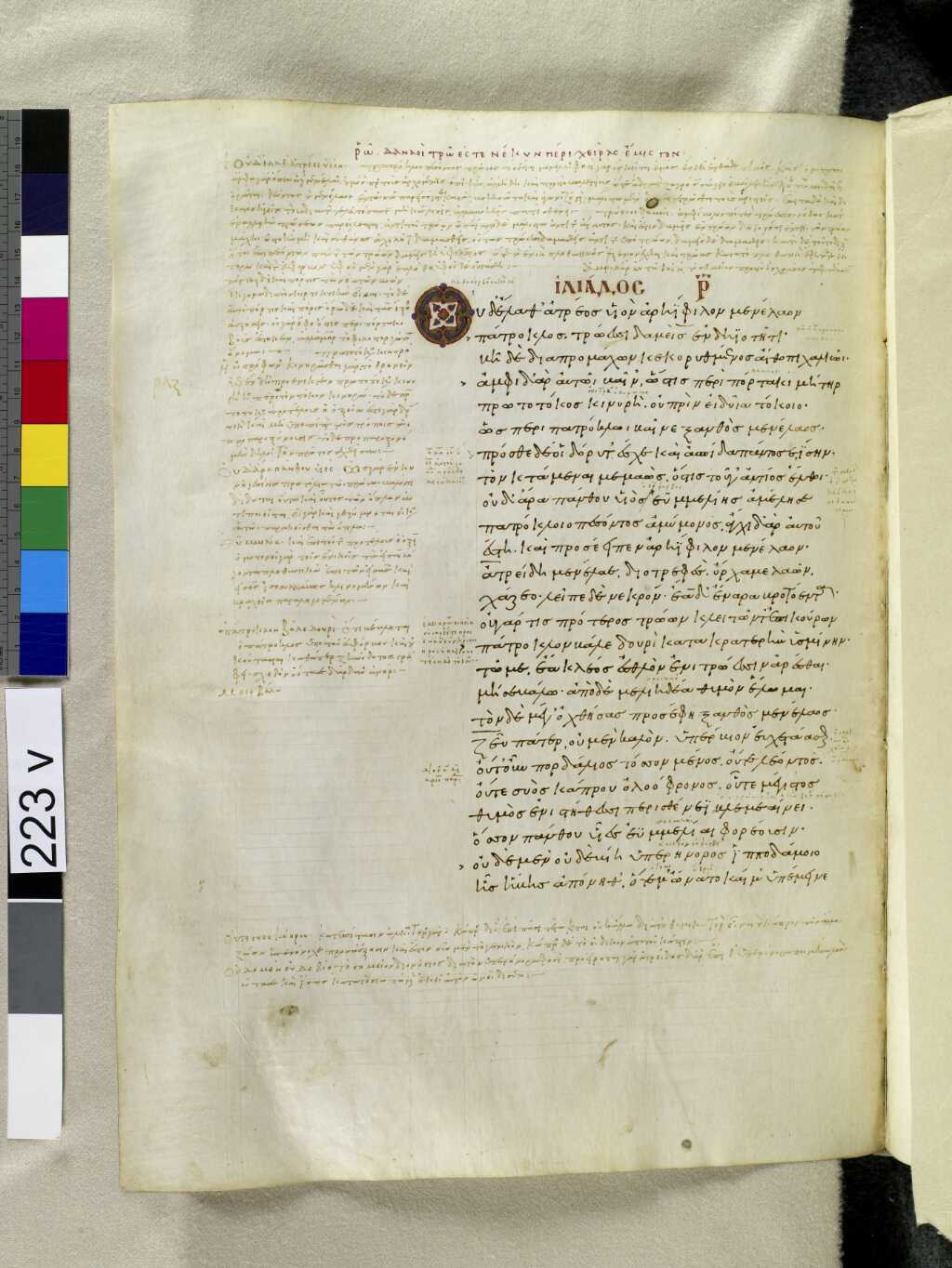
1οὐδʼ ἔλαθʼ Ἀτρέος υἱὸν ἀρηΐφιλον Μενέλαον 2Πάτροκλος Τρώεσσι δαμεὶς ἐν δηϊοτῆτι. 3βῆ δὲ διὰ προμάχων κεκορυθμένος αἴθοπι χαλκῷ, 4ἀμφὶ δʼ ἄρʼ αὐτῷ βαῖνʼ ὥς τις περὶ πόρτακι μήτηρ 5πρωτοτόκος κινυρὴ οὐ πρὶν εἰδυῖα τόκοιο· 6ὣς περὶ Πατρόκλῳ βαῖνε ξανθὸς Μενέλαος. 7πρόσθε δέ οἱ δόρυ τʼ ἔσχε καὶ ἀσπίδα πάντοσʼ ἐΐσην, 8τὸν κτάμεναι μεμαὼς ὅς τις τοῦ γʼ ἀντίος ἔλθοι. 9οὐδʼ ἄρα Πάνθου υἱὸς ἐϋμμελίης ἀμέλησε 10Πατρόκλοιο πεσόντος ἀμύμονος· ἄγχι δʼ ἄρʼ αὐτοῦ 11ἔστη, καὶ προσέειπεν ἀρηΐφιλον Μενέλαον· 12Ἀτρεΐδη Μενέλαε διοτρεφὲς ὄρχαμε λαῶν 13χάζεο, λεῖπε δὲ νεκρόν, ἔα δʼ ἔναρα βροτόεντα· 14οὐ γάρ τις πρότερος Τρώων κλειτῶν τʼ ἐπικούρων 15Πάτροκλον βάλε δουρὶ κατὰ κρατερὴν ὑσμίνην· 16τώ με ἔα κλέος ἐσθλὸν ἐνὶ Τρώεσσιν ἀρέσθαι, 17μή σε βάλω, ἀπὸ δὲ μελιηδέα θυμὸν ἕλωμαι. 18τὸν δὲ μέγʼ ὀχθήσας προσέφη ξανθὸς Μενέλαος· 19Ζεῦ πάτερ οὐ μὲν καλὸν ὑπέρβιον εὐχετάασθαι. 20οὔτʼ οὖν παρδάλιος τόσσον μένος οὔτε λέοντος 21οὔτε συὸς κάπρου ὀλοόφρονος, οὗ τε μέγιστος 22θυμὸς ἐνὶ στήθεσσι περὶ σθένεϊ βλεμεαίνει, 23ὅσσον Πάνθου υἷες ἐϋμμελίαι φρονέουσιν. 24οὐδὲ μὲν οὐδὲ βίη Ὑπερήνορος ἱπποδάμοιο 25ἧς ἥβης ἀπόνηθʼ, ὅτε μʼ ὤνατο καί μʼ ὑπέμεινε
The fight around the body of Patroclus.
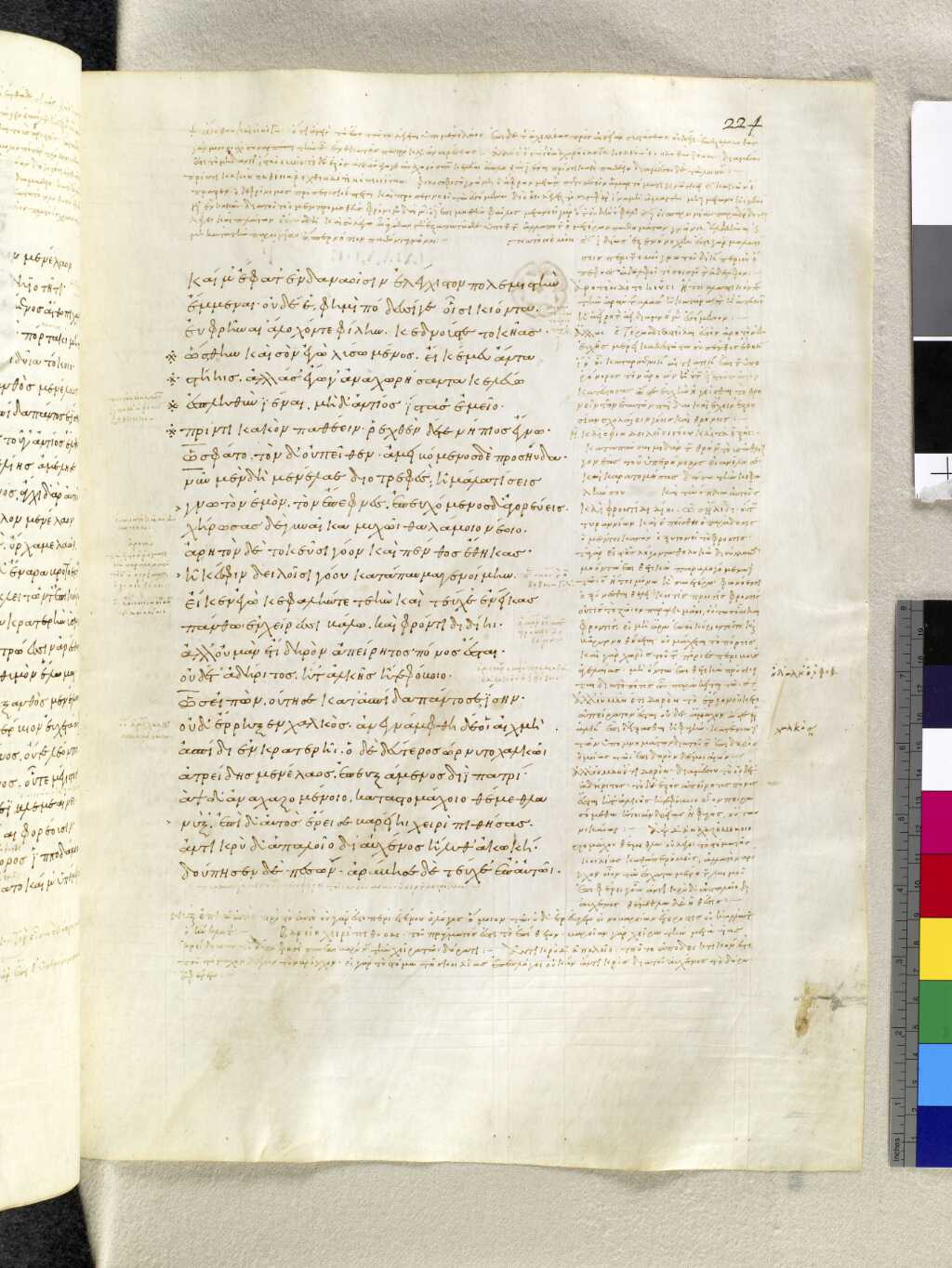
26καί μʼ ἔφατʼ ἐν Δαναοῖσιν ἐλέγχιστον πολεμιστὴν 27ἔμμεναι· οὐδέ ἕ φημι πόδεσσί γε οἷσι κιόντα 28εὐφρῆναι ἄλοχόν τε φίλην κεδνούς τε τοκῆας. 29ὥς θην καὶ σὸν ἐγὼ λύσω μένος εἴ κέ μευ ἄντα 30στήῃς· ἀλλά σʼ ἔγωγʼ ἀναχωρήσαντα κελεύω 31ἐς πληθὺν ἰέναι, μηδʼ ἀντίος ἵστασʼ ἐμεῖο 32πρίν τι κακὸν παθέειν· ῥεχθὲν δέ τε νήπιος ἔγνω. 33ὣς φάτο, τὸν δʼ οὐ πεῖθεν· ἀμειβόμενος δὲ προσηύδα· 34νῦν μὲν δὴ Μενέλαε διοτρεφὲς ἦ μάλα τείσεις 35γνωτὸν ἐμὸν τὸν ἔπεφνες, ἐπευχόμενος δʼ ἀγορεύεις, 36χήρωσας δὲ γυναῖκα μυχῷ θαλάμοιο νέοιο, 37ἀρητὸν δὲ τοκεῦσι γόον καὶ πένθος ἔθηκας. 38ἦ κέ σφιν δειλοῖσι γόου κατάπαυμα γενοίμην 39εἴ κεν ἐγὼ κεφαλήν τε τεὴν καὶ τεύχεʼ ἐνείκας 40Πάνθῳ ἐν χείρεσσι βάλω καὶ Φρόντιδι δίῃ. 41ἀλλʼ οὐ μὰν ἔτι δηρὸν ἀπείρητος πόνος ἔσται 42οὐδʼ ἔτʼ ἀδήριτος ἤτʼ ἀλκῆς ἤτε φόβοιο. 43ὣς εἰπὼν οὔτησε κατʼ ἀσπίδα πάντοσʼ ἐΐσην· 44οὐδʼ ἔρρηξεν χαλκός, ἀνεγνάμφθη δέ οἱ αἰχμὴ 45ἀσπίδʼ ἐνὶ κρατερῇ· ὃ δὲ δεύτερος ὄρνυτο χαλκῷ 46Ἀτρεΐδης Μενέλαος ἐπευξάμενος Διὶ πατρί· 47ἂψ δʼ ἀναχαζομένοιο κατὰ στομάχοιο θέμεθλα 48νύξʼ, ἐπὶ δʼ αὐτὸς ἔρεισε βαρείῃ χειρὶ πιθήσας· 49ἀντικρὺ δʼ ἁπαλοῖο διʼ αὐχένος ἤλυθʼ ἀκωκή, 50δούπησεν δὲ πεσών, ἀράβησε δὲ τεύχεʼ ἐπʼ αὐτῷ.
Brave Menelaus son of Atreus now came to know that Patroclus had fallen, and made his way through the front ranks clad in full armour to bestride him. As a cow stands lowing over her first calf, even so did yellow-haired Menelaus bestride Patroclus. He held his round shield and his spear in front of him, resolute to kill any who should dare face him. But the son of Panthous had also noted the body, and came up to Menelaus saying, “Menelaus, son of Atreus, draw back, leave the body, and let the blood-stained spoils be. I was first of the Trojans and their brave allies to drive my spear into Patroclus, let me, therefore, have my full glory among the Trojans, or I will take aim and kill you.”
To this Menelaus answered in great anger “By father Jove, boasting is an ill thing. The pard is not more bold, nor the lion nor savage wild boar, which is fiercest and most dauntless of all creatures, than are the proud sons of Panthous. Yet Hyperenor did not see out the days of his youth when he made light of me and withstood me, deeming me the meanest soldier among the Danaans. His own feet never bore him back to gladden his wife and parents. Even so shall I make an end of you too, if you withstand me; get you back into the crowd and do not face me, or it shall be worse for you. Even a fool may be wise after the event.”
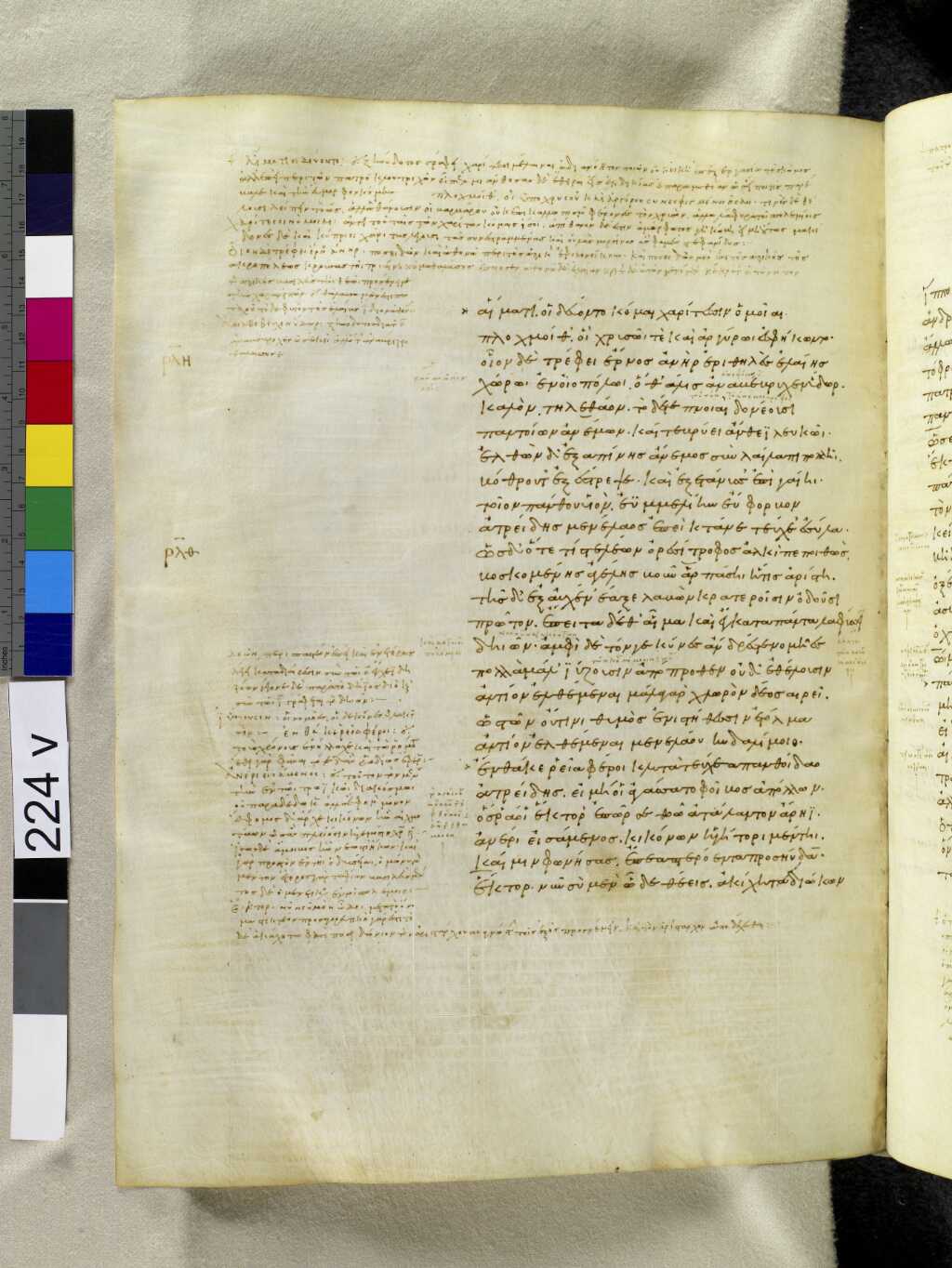
51αἵματί οἱ δεύοντο κόμαι Χαρίτεσσιν ὁμοῖαι 52πλοχμοί θʼ, οἳ χρυσῷ τε καὶ ἀργύρῳ ἐσφήκωντο. 53οἷον δὲ τρέφει ἔρνος ἀνὴρ ἐριθηλὲς ἐλαίης 54χώρῳ ἐν οἰοπόλῳ, ὅθʼ ἅλις ἀναβέβροχεν ὕδωρ, 55καλὸν τηλεθάον· τὸ δέ τε πνοιαὶ δονέουσι 56παντοίων ἀνέμων, καί τε βρύει ἄνθεϊ λευκῷ· 57ἐλθὼν δʼ ἐξαπίνης ἄνεμος σὺν λαίλαπι πολλῇ 58βόθρου τʼ ἐξέστρεψε καὶ ἐξετάνυσσʼ ἐπὶ γαίῃ· 59τοῖον Πάνθου υἱὸν ἐϋμμελίην Εὔφορβον 60Ἀτρεΐδης Μενέλαος ἐπεὶ κτάνε τεύχεʼ ἐσύλα. 61ὡς δʼ ὅτε τίς τε λέων ὀρεσίτροφος ἀλκὶ πεποιθὼς 62βοσκομένης ἀγέλης βοῦν ἁρπάσῃ ἥ τις ἀρίστη· 63τῆς δʼ ἐξ αὐχένʼ ἔαξε λαβὼν κρατεροῖσιν ὀδοῦσι 64πρῶτον, ἔπειτα δέ θʼ αἷμα καὶ ἔγκατα πάντα λαφύσσει 65δῃῶν· ἀμφὶ δὲ τόν γε κύνες τʼ ἄνδρές τε νομῆες 66πολλὰ μάλʼ ἰύζουσιν ἀπόπροθεν οὐδʼ ἐθέλουσιν 67ἀντίον ἐλθέμεναι· μάλα γὰρ χλωρὸν δέος αἱρεῖ· 68ὣς τῶν οὔ τινι θυμὸς ἐνὶ στήθεσσιν ἐτόλμα 69ἀντίον ἐλθέμεναι Μενελάου κυδαλίμοιο. 70ἔνθά κε ῥεῖα φέροι κλυτὰ τεύχεα Πανθοΐδαο 71Ἀτρεΐδης, εἰ μή οἱ ἀγάσσατο Φοῖβος Ἀπόλλων, 72ὅς ῥά οἱ Ἕκτορʼ ἐπῶρσε θοῷ ἀτάλαντον Ἄρηϊ 73ἀνέρι εἰσάμενος Κικόνων ἡγήτορι Μέντῃ· 74καί μιν φωνήσας ἔπεα πτερόεντα προσηύδα· 75Ἕκτορ νῦν σὺ μὲν ὧδε θέεις ἀκίχητα διώκων
Euphorbus would not listen, and said, “Now indeed, Menelaus, shall you pay for the death of my brother over whom you vaunted, and whose wife you widowed in her bridal chamber, while you brought grief unspeakable on his parents. I shall comfort these poor people if I bring your head and armour and place them in the hands of Panthous and noble Phrontis. The time is come when this matter shall be fought out and settled, for me or against me.”
As he spoke he struck Menelaus full on the shield, but the spear did not go through, for the shield turned its point. Menelaus then took aim, praying to father Jove as he did so; Euphorbus was drawing back, and Menelaus struck him about the roots of his throat, leaning his whole weight on the spear, so as to drive it home. The point went clean through his neck, and his armour rang rattling round him as he fell heavily to the ground. His hair which was like that of the Graces, and his locks so deftly bound in bands of silver and gold, were all bedrabbled with blood. As one who has grown a fine young olive tree in a clear space where there is abundance of water—the plant is full of promise, and though the winds beat upon it from every quarter it puts forth its white blossoms till the blasts of some fierce hurricane sweep down upon it and level it with the ground—even so did Menelaus strip the fair youth Euphorbus of his armour after he had slain him. Or as some fierce lion upon the mountains in the pride of his strength fastens on the finest heifer in a herd as it is feeding—first he breaks her neck with his strong jaws, and then gorges on her blood and entrails; dogs and shepherds raise a hue and cry against him, but they stand aloof and will not come close to him, for they are pale with fear—even so no one had the courage to face valiant Menelaus. The son of Atreus would have then carried off the armour of the son of Panthous with ease, had not Phoebus Apollo been angry, and in the guise of Mentes chief of the Cicons incited Hector to attack him. “Hector,” said he, “you are now going after the horses of the noble son of Aeacus, but you will not take them; they cannot be kept in hand and driven by mortal man, save only by Achilles, who is son to an immortal mother. Meanwhile Menelaus son of Atreus has bestridden the body of Patroclus and killed the noblest of the Trojans, Euphorbus son of Panthous, so that he can fight no more.”
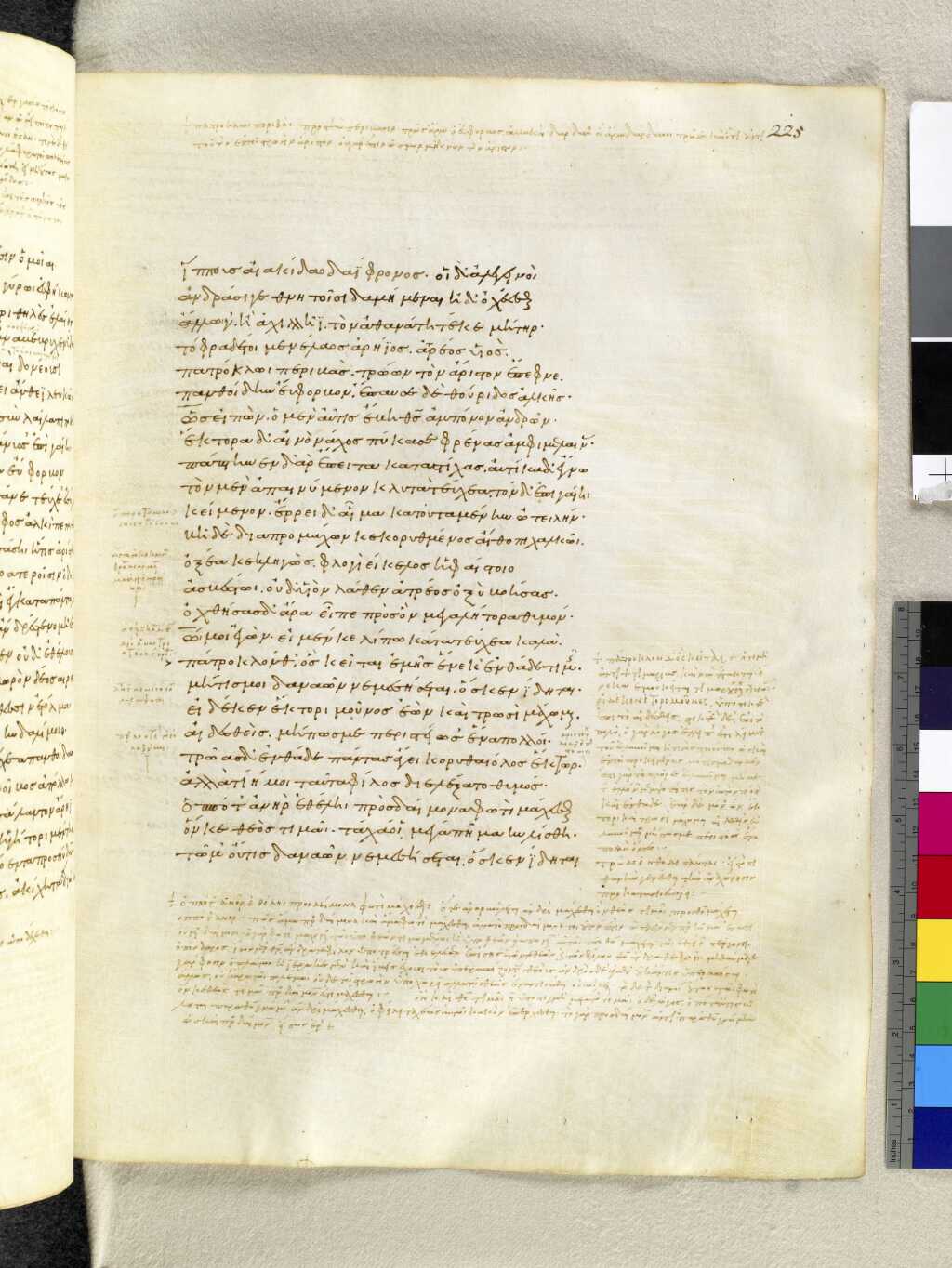
76ἵππους Αἰακίδαο δαΐφρονος· οἳ δʼ ἀλεγεινοὶ 77ἀνδράσι γε θνητοῖσι δαμήμεναι ἠδʼ ὀχέεσθαι 78ἄλλῳ γʼ ἢ Ἀχιλῆϊ, τὸν ἀθανάτη τέκε μήτηρ. 79τόφρα δέ τοι Μενέλαος ἀρήϊος Ἀτρέος υἱὸς 80Πατρόκλῳ περιβὰς Τρώων τὸν ἄριστον ἔπεφνε 81Πανθοΐδην Εὔφορβον, ἔπαυσε δὲ θούριδος ἀλκῆς. 82ὣς εἰπὼν ὃ μὲν αὖτις ἔβη θεὸς ἂμ πόνον ἀνδρῶν, 83Ἕκτορα δʼ αἰνὸν ἄχος πύκασε φρένας ἀμφὶ μελαίνας· 84πάπτηνεν δʼ ἄρʼ ἔπειτα κατὰ στίχας, αὐτίκα δʼ ἔγνω 85τὸν μὲν ἀπαινύμενον κλυτὰ τεύχεα, τὸν δʼ ἐπὶ γαίῃ 86κείμενον· ἔρρει δʼ αἷμα κατʼ οὐταμένην ὠτειλήν. 87βῆ δὲ διὰ προμάχων κεκορυθμένος αἴθοπι χαλκῷ 88ὀξέα κεκλήγων φλογὶ εἴκελος Ἡφαίστοιο 89ἀσβέστῳ· οὐδʼ υἱὸν λάθεν Ἀτρέος ὀξὺ βοήσας· 90ὀχθήσας δʼ ἄρα εἶπε πρὸς ὃν μεγαλήτορα θυμόν· 91ὤ μοι ἐγὼν εἰ μέν κε λίπω κάτα τεύχεα καλὰ 92Πάτροκλόν θʼ, ὃς κεῖται ἐμῆς ἕνεκʼ ἐνθάδε τιμῆς, 93μή τίς μοι Δαναῶν νεμεσήσεται ὅς κεν ἴδηται. 94εἰ δέ κεν Ἕκτορι μοῦνος ἐὼν καὶ Τρωσὶ μάχωμαι 95αἰδεσθείς, μή πώς με περιστήωσʼ ἕνα πολλοί· 96Τρῶας δʼ ἐνθάδε πάντας ἄγει κορυθαίολος Ἕκτωρ. 97ἀλλὰ τί ἤ μοι ταῦτα φίλος διελέξατο θυμός; 98ὁππότʼ ἀνὴρ ἐθέλῃ πρὸς δαίμονα φωτὶ μάχεσθαι 99ὅν κε θεὸς τιμᾷ, τάχα οἱ μέγα πῆμα κυλίσθη. 100τώ μʼ οὔ τις Δαναῶν νεμεσήσεται ὅς κεν ἴδηται
The god then went back into the toil and turmoil, but the soul of Hector was darkened with a cloud of grief; he looked along the ranks and saw Euphorbus lying on the ground with the blood still flowing from his wound, and Menelaus stripping him of his armour. On this he made his way to the front like a flame of fire, clad in his gleaming armour, and crying with a loud voice. When the son of Atreus heard him, he said to himself in his dismay, “Alas! what shall I do? I may not let the Trojans take the armour of Patroclus who has fallen fighting on my behalf, lest some Danaan who sees me should cry shame upon me. Still if for my honour’s sake I fight Hector and the Trojans single-handed, they will prove too many for me, for Hector is bringing them up in force. Why, however, should I thus hesitate? When a man fights in despite of heaven with one whom a god befriends, he will soon rue it. Let no Danaan think ill of me if I give place to Hector, for the hand of heaven is with him. Yet, if I could find Ajax, the two of us would fight Hector and heaven too, if we might only save the body of Patroclus for Achilles son of Peleus. This, of many evils would be the least.”
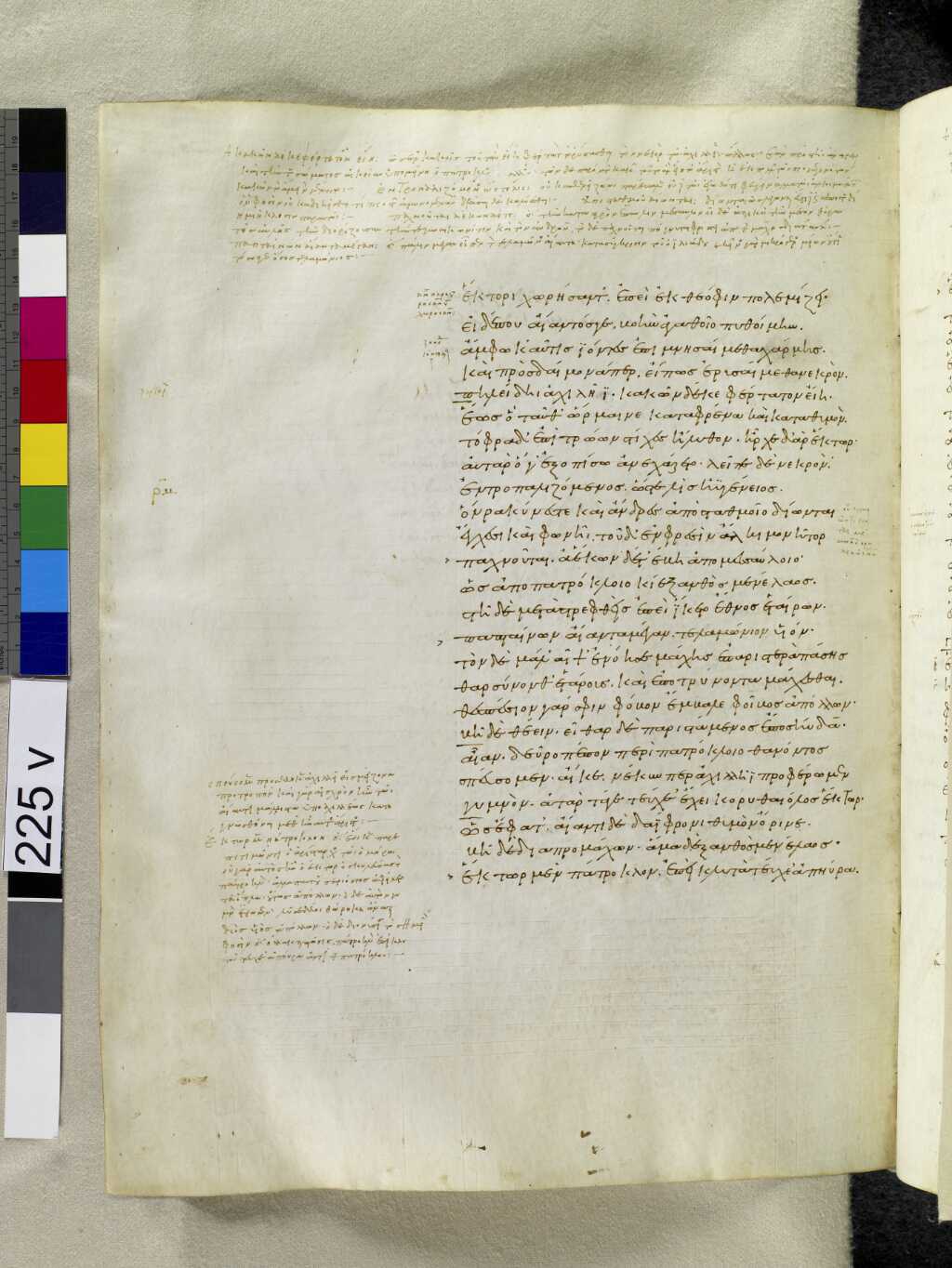
101Ἕκτορι χωρήσαντʼ, ἐπεὶ ἐκ θεόφιν πολεμίζει. 102εἰ δέ που Αἴαντός γε βοὴν ἀγαθοῖο πυθοίμην, 103ἄμφω κʼ αὖτις ἰόντες ἐπιμνησαίμεθα χάρμης 104καὶ πρὸς δαίμονά περ, εἴ πως ἐρυσαίμεθα νεκρὸν 105Πηλεΐδῃ Ἀχιλῆϊ· κακῶν δέ κε φέρτατον εἴη. 106εἷος ὁ ταῦθʼ ὅρμαινε κατὰ φρένα καὶ κατὰ θυμὸν 107τόφρα δʼ ἐπὶ Τρώων στίχες ἤλυθον· ἦρχε δʼ ἄρʼ Ἕκτωρ. 108αὐτὰρ ὅ γʼ ἐξοπίσω ἀνεχάζετο, λεῖπε δὲ νεκρὸν 109ἐντροπαλιζόμενος ὥς τε λὶς ἠϋγένειος, 110ὅν ῥα κύνες τε καὶ ἄνδρες ἀπὸ σταθμοῖο δίωνται 111ἔγχεσι καὶ φωνῇ· τοῦ δʼ ἐν φρεσὶν ἄλκιμον ἦτορ 112παχνοῦται, ἀέκων δέ τʼ ἔβη ἀπὸ μεσσαύλοιο· 113ὣς ἀπὸ Πατρόκλοιο κίε ξανθὸς Μενέλαος. 114στῆ δὲ μεταστρεφθεὶς ἐπεὶ ἵκετο ἔθνος ἑταίρων 115παπταίνων Αἴαντα μέγαν Τελαμώνιον υἱόν. 116τὸν δὲ μάλʼ αἶψʼ ἐνόησε μάχης ἐπʼ ἀριστερὰ πάσης 117θαρσύνονθʼ ἑτάρους καὶ ἐποτρύνοντα μάχεσθαι· 118θεσπέσιον γάρ σφιν φόβον ἔμβαλε Φοῖβος Ἀπόλλων· 119βῆ δὲ θέειν, εἶθαρ δὲ παριστάμενος ἔπος ηὔδα. 120Αἶαν δεῦρο πέπον, περὶ Πατρόκλοιο θανόντος 121σπεύσομεν, αἴ κε νέκυν περ Ἀχιλλῆϊ προφέρωμεν 122γυμνόν· ἀτὰρ τά γε τεύχεʼ ἔχει κορυθαίολος Ἕκτωρ. 123ὣς ἔφατʼ, Αἴαντι δὲ δαΐφρονι θυμὸν ὄρινε· 124βῆ δὲ διὰ προμάχων, ἅμα δὲ ξανθὸς Μενέλαος. 125Ἕκτωρ μὲν Πάτροκλον ἐπεὶ κλυτὰ τεύχεʼ ἀπηύρα,
While he was thus in two minds, the Trojans came up to him with Hector at their head; he therefore drew back and left the body, turning about like some bearded lion who is being chased by dogs and men from a stockyard with spears and hue and cry, whereon he is daunted and slinks sulkily off—even so did Menelaus son of Atreus turn and leave the body of Patroclus. When among the body of his men, he looked around for mighty Ajax son of Telamon, and presently saw him on the extreme left of the fight, cheering on his men and exhorting them to keep on fighting, for Phoebus Apollo had spread a great panic among them. He ran up to him and said, “Ajax, my good friend, come with me at once to dead Patroclus, if so be that we may take the body to Achilles—as for his armour, Hector already has it.”
These words stirred the heart of Ajax, and he made his way among the front ranks, Menelaus going with him. Hector had stripped Patroclus of his armour, and was dragging him away to cut off his head and take the body to fling before the dogs of Troy. But Ajax came up with his shield like wall before him, on which Hector withdrew under shelter of his men, and sprang on to his chariot, giving the armour over to the Trojans to take to the city, as a great trophy for himself; Ajax, therefore, covered the body of Patroclus with his broad shield and bestrode him; as a lion stands over his whelps if hunters have come upon him in a forest when he is with his little ones—in the pride and fierceness of his strength he draws his knit brows down till they cover his eyes—even so did Ajax bestride the body of Patroclus, and by his side stood Menelaus son of Atreus, nursing great sorrow in his heart.
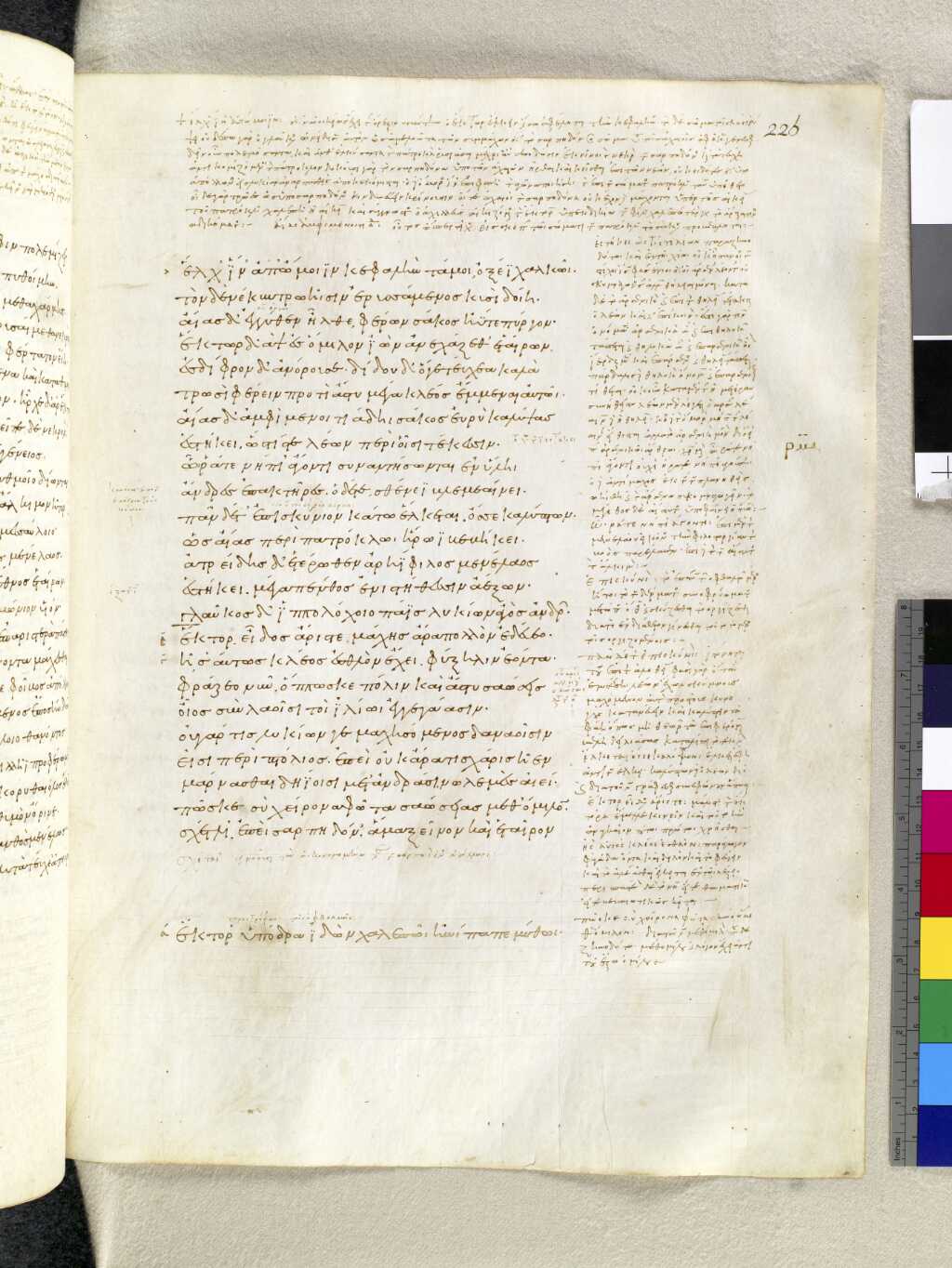
126ἕλχʼ ἵνʼ ἀπʼ ὤμοιιν κεφαλὴν τάμοι ὀξέϊ χαλκῷ, 127τὸν δὲ νέκυν Τρῳῇσιν ἐρυσσάμενος κυσὶ δοίη. 128Αἴας δʼ ἐγγύθεν ἦλθε φέρων σάκος ἠΰτε πύργον· 129Ἕκτωρ δʼ ἂψ ἐς ὅμιλον ἰὼν ἀνεχάζεθʼ ἑταίρων, 130ἐς δίφρον δʼ ἀνόρουσε· δίδου δʼ ὅ γε τεύχεα καλὰ 131Τρωσὶ φέρειν προτὶ ἄστυ, μέγα κλέος ἔμμεναι αὐτῷ. 132Αἴας δʼ ἀμφὶ Μενοιτιάδῃ σάκος εὐρὺ καλύψας 133ἑστήκει ὥς τίς τε λέων περὶ οἷσι τέκεσσιν, 134ᾧ ῥά τε νήπιʼ ἄγοντι συναντήσωνται ἐν ὕλῃ 135ἄνδρες ἐπακτῆρες· ὃ δέ τε σθένεϊ βλεμεαίνει, 136πᾶν δέ τʼ ἐπισκύνιον κάτω ἕλκεται ὄσσε καλύπτων· 137ὣς Αἴας περὶ Πατρόκλῳ ἥρωϊ βεβήκει. 138Ἀτρεΐδης δʼ ἑτέρωθεν ἀρηΐφιλος Μενέλαος 139ἑστήκει, μέγα πένθος ἐνὶ στήθεσσιν ἀέξων. 140Γλαῦκος δʼ Ἱππολόχοιο πάϊς Λυκίων ἀγὸς ἀνδρῶν 141Ἕκτορʼ ὑπόδρα ἰδὼν χαλεπῷ ἠνίπαπε μύθῳ· 142Ἕκτορ εἶδος ἄριστε μάχης ἄρα πολλὸν ἐδεύεο. 143ἦ σʼ αὔτως κλέος ἐσθλὸν ἔχει φύξηλιν ἐόντα. 144φράζεο νῦν ὅππως κε πόλιν καὶ ἄστυ σαώσῃς 145οἶος σὺν λαοῖς τοὶ Ἰλίῳ ἐγγεγάασιν· 146οὐ γάρ τις Λυκίων γε μαχησόμενος Δαναοῖσιν 147εἶσι περὶ πτόλιος, ἐπεὶ οὐκ ἄρα τις χάρις ἦεν 148μάρνασθαι δηΐοισιν ἐπʼ ἀνδράσι νωλεμὲς αἰεί. 149πῶς κε σὺ χείρονα φῶτα σαώσειας μεθʼ ὅμιλον 150σχέτλιʼ, ἐπεὶ Σαρπηδόνʼ ἅμα ξεῖνον καὶ ἑταῖρον
Then Glaucus son of Hippolochus looked fiercely at Hector and rebuked him sternly. “Hector,” said he, “you make a brave show, but in fight you are sadly wanting. A runaway like yourself has no claim to so great a reputation. Think how you may now save your town and citadel by the hands of your own people born in Ilius; for you will get no Lycians to fight for you, seeing what thanks they have had for their incessant hardships. Are you likely, sir, to do anything to help a man of less note, after leaving Sarpedon, who was at once your guest and comrade in arms, to be the spoil and prey of the Danaans? So long as he lived he did good service both to your city and yourself; yet you had no stomach to save his body from the dogs. If the Lycians will listen to me, they will go home and leave Troy to its fate. If the Trojans had any of that daring fearless spirit which lays hold of men who are fighting for their country and harassing those who would attack it, we should soon bear off Patroclus into Ilius. Could we get this dead man away and bring him into the city of Priam, the Argives would readily give up the armour of Sarpedon, and we should get his body to boot. For he whose squire has been now killed is the foremost man at the ships of the Achaeans—he and his close fighting followers. Nevertheless you dared not make a stand against Ajax, nor face him, eye to eye, with battle all round you, for he is a braver man than you are.”
Hector scowled at him and answered, “Glaucus, you should know better. I have held you so far as a man of more understanding than any in all Lycia, but now I despise you for saying that I am afraid of Ajax. I fear neither battle nor the din of chariots, but Jove’s will is stronger than ours; Jove at one time makes even a strong man draw back and snatches victory from his grasp, while at another he will set him on to fight. Come hither then, my friend, stand by me and see indeed whether I shall play the coward the whole day through as you say, or whether I shall not stay some even of the boldest Danaans from fighting round the body of Patroclus.”
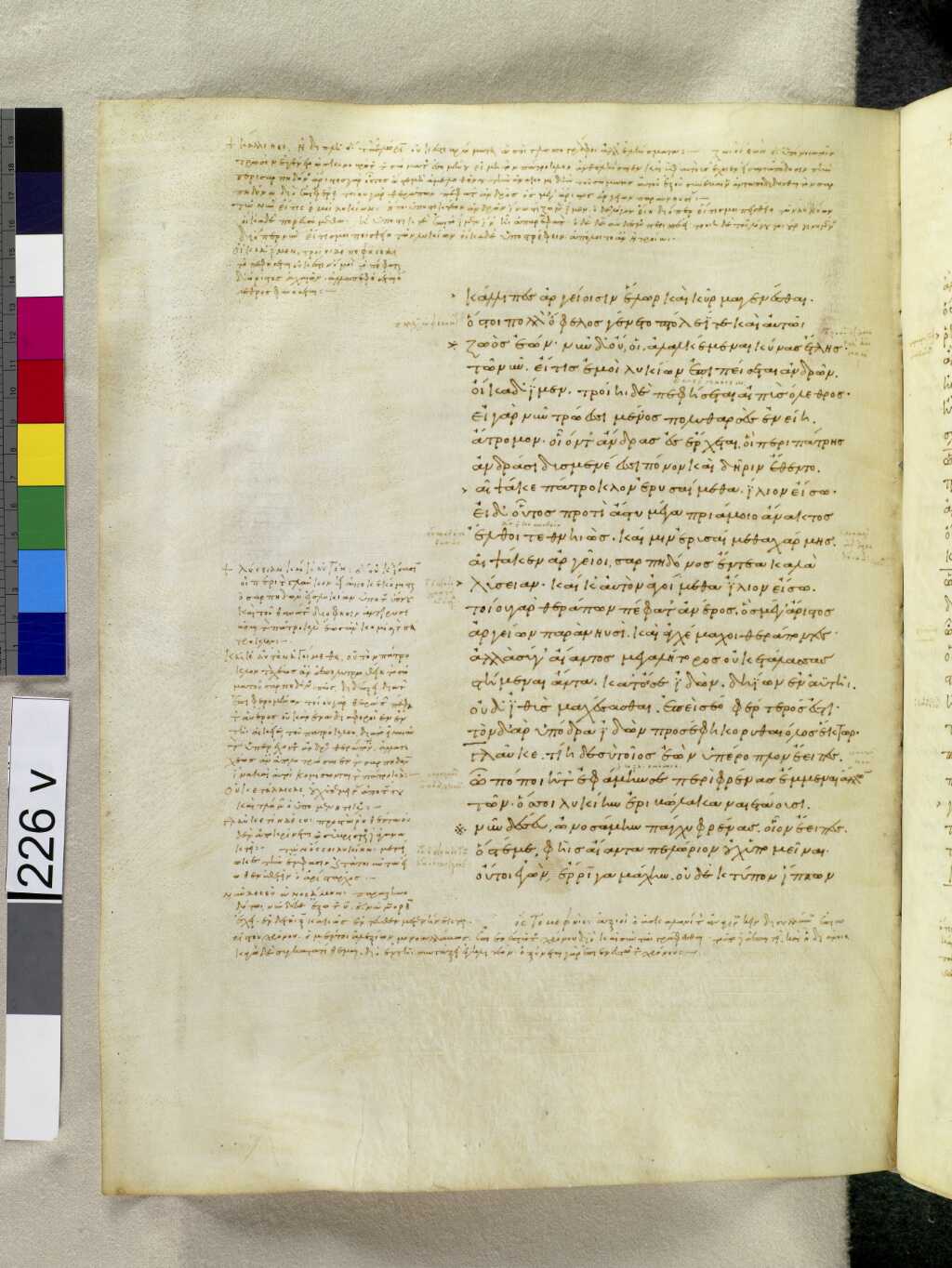
151κάλλιπες Ἀργείοισιν ἕλωρ καὶ κύρμα γενέσθαι, 152ὅς τοι πόλλʼ ὄφελος γένετο πτόλεΐ τε καὶ αὐτῷ 153ζωὸς ἐών· νῦν δʼ οὔ οἱ ἀλαλκέμεναι κύνας ἔτλης. 154τὼ νῦν εἴ τις ἐμοὶ Λυκίων ἐπιπείσεται ἀνδρῶν 155οἴκαδʼ ἴμεν, Τροίῃ δὲ πεφήσεται αἰπὺς ὄλεθρος. 156εἰ γὰρ νῦν Τρώεσσι μένος πολυθαρσὲς ἐνείη 157ἄτρομον, οἷόν τʼ ἄνδρας ἐσέρχεται οἳ περὶ πάτρης 158ἀνδράσι δυσμενέεσσι πόνον καὶ δῆριν ἔθεντο, 159αἶψά κε Πάτροκλον ἐρυσαίμεθα Ἴλιον εἴσω. 160εἰ δʼ οὗτος προτὶ ἄστυ μέγα Πριάμοιο ἄνακτος 161ἔλθοι τεθνηὼς καί μιν ἐρυσαίμεθα χάρμης, 162αἶψά κεν Ἀργεῖοι Σαρπηδόνος ἔντεα καλὰ 163λύσειαν, καί κʼ αὐτὸν ἀγοίμεθα Ἴλιον εἴσω· 164τοίου γὰρ θεράπων πέφατʼ ἀνέρος, ὃς μέγʼ ἄριστος 165Ἀργείων παρὰ νηυσὶ καὶ ἀγχέμαχοι θεράποντες. 166ἀλλὰ σύ γʼ Αἴαντος μεγαλήτορος οὐκ ἐτάλασσας 167στήμεναι ἄντα κατʼ ὄσσε ἰδὼν δηΐων ἐν ἀϋτῇ, 168οὐδʼ ἰθὺς μαχέσασθαι, ἐπεὶ σέο φέρτερός ἐστι. 169τὸν δʼ ἄρʼ ὑπόδρα ἰδὼν προσέφη κορυθαίολος Ἕκτωρ· 170Γλαῦκε τί ἢ δὲ σὺ τοῖος ἐὼν ὑπέροπλον ἔειπες; 171ὢ πόποι ἦ τʼ ἐφάμην σὲ περὶ φρένας ἔμμεναι ἄλλων 172τῶν ὅσσοι Λυκίην ἐριβώλακα ναιετάουσι· 173νῦν δέ σευ ὠνοσάμην πάγχυ φρένας οἷον ἔειπες, 174ὅς τέ με φῂς Αἴαντα πελώριον οὐχ ὑπομεῖναι. 175οὔ τοι ἐγὼν ἔρριγα μάχην οὐδὲ κτύπον ἵππων·
As he spoke he called loudly on the Trojans saying, “Trojans, Lycians, and Dardanians, fighters in close combat, be men, my friends, and fight might and main, while I put on the goodly armour of Achilles, which I took when I killed Patroclus.”
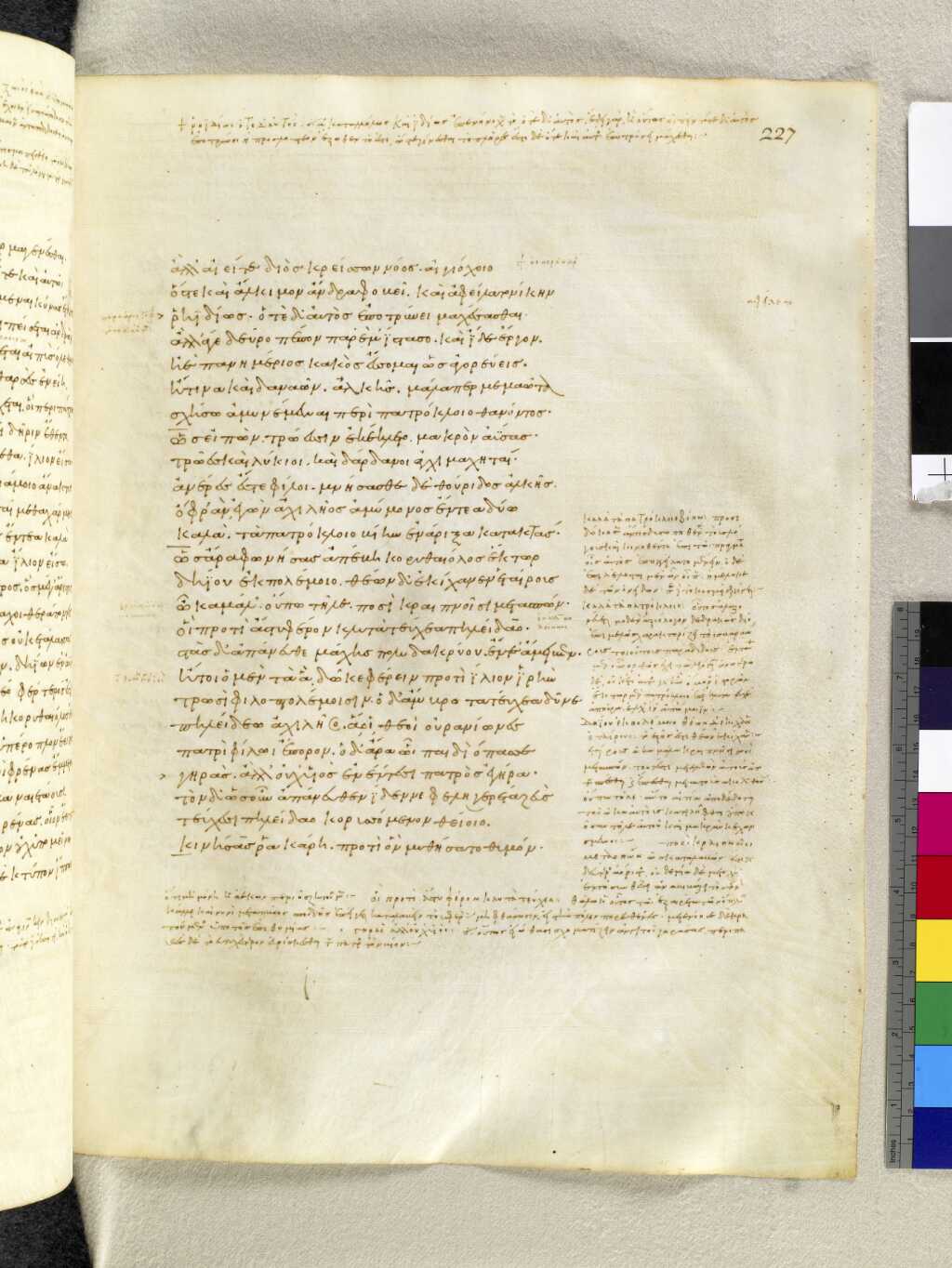
176ἀλλʼ αἰεί τε Διὸς κρείσσων νόος αἰγιόχοιο, 177ὅς τε καὶ ἄλκιμον ἄνδρα φοβεῖ καὶ ἀφείλετο νίκην 178ῥηϊδίως, ὁτὲ δʼ αὐτὸς ἐποτρύνει μαχέσασθαι. 179ἀλλʼ ἄγε δεῦρο πέπον, παρʼ ἔμʼ ἵστασο καὶ ἴδε ἔργον, 180ἠὲ πανημέριος κακὸς ἔσσομαι, ὡς ἀγορεύεις, 181ἦ τινα καὶ Δαναῶν ἀλκῆς μάλα περ μεμαῶτα 182σχήσω ἀμυνέμεναι περὶ Πατρόκλοιο θανόντος. 183ὣς εἰπὼν Τρώεσσιν ἐκέκλετο μακρὸν ἀΰσας· 184Τρῶες καὶ Λύκιοι καὶ Δάρδανοι ἀγχιμαχηταί, 185ἀνέρες ἔστε φίλοι, μνήσασθε δὲ θούριδος ἀλκῆς, 186ὄφρʼ ἂν ἐγὼν Ἀχιλῆος ἀμύμονος ἔντεα δύω 187καλά, τὰ Πατρόκλοιο βίην ἐνάριξα κατακτάς. 188ὣς ἄρα φωνήσας ἀπέβη κορυθαίολος Ἕκτωρ 189δηΐου ἐκ πολέμοιο· θέων δʼ ἐκίχανεν ἑταίρους 190ὦκα μάλʼ οὔ πω τῆλε ποσὶ κραιπνοῖσι μετασπών, 191οἳ προτὶ ἄστυ φέρον κλυτὰ τεύχεα Πηλεΐωνος. 192στὰς δʼ ἀπάνευθε μάχης πολυδακρύου ἔντεʼ ἄμειβεν· 193ἤτοι ὃ μὲν τὰ ἃ δῶκε φέρειν προτὶ Ἴλιον ἱρὴν 194Τρωσὶ φιλοπτολέμοισιν, ὃ δʼ ἄμβροτα τεύχεα δῦνε 195Πηλεΐδεω Ἀχιλῆος ἅ οἱ θεοὶ Οὐρανίωνες 196πατρὶ φίλῳ ἔπορον· ὃ δʼ ἄρα ᾧ παιδὶ ὄπασσε 197γηράς· ἀλλʼ οὐχ υἱὸς ἐν ἔντεσι πατρὸς ἐγήρα. 198τὸν δʼ ὡς οὖν ἀπάνευθεν ἴδεν νεφεληγερέτα Ζεὺς 199τεύχεσι Πηλεΐδαο κορυσσόμενον θείοιο, 200κινήσας ῥα κάρη προτὶ ὃν μυθήσατο θυμόν·
With this Hector left the fight, and ran full speed after his men who were taking the armour of Achilles to Troy, but had not yet got far. Standing for a while apart from the woeful fight, he changed his armour. His own he sent to the strong city of Ilius and to the Trojans, while he put on the immortal armour of the son of Peleus, which the gods had given to Peleus, who in his age gave it to his son; but the son did not grow old in his father’s armour.
When Jove, lord of the storm-cloud, saw Hector standing aloof and arming himself in the armour of the son of Peleus, he wagged his head and muttered to himself saying, “A! poor wretch, you arm in the armour of a hero, before whom many another trembles, and you reck nothing of the doom that is already close upon you. You have killed his comrade so brave and strong, but it was not well that you should strip the armour from his head and shoulders. I do indeed endow you with great might now, but as against this you shall not return from battle to lay the armour of the son of Peleus before Andromache.”
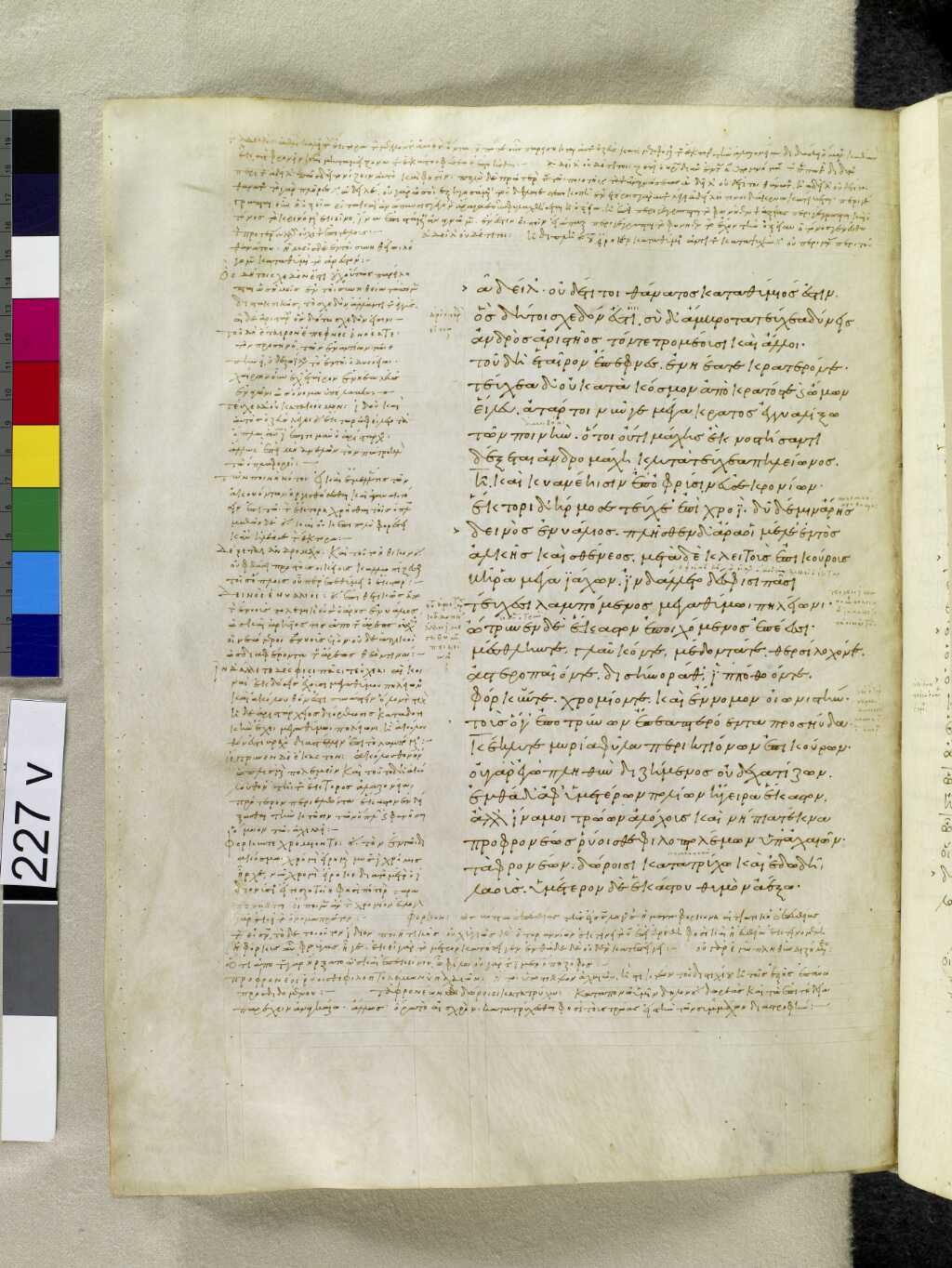
201ἆ δείλʼ οὐδέ τί τοι θάνατος καταθύμιός ἐστιν 202ὃς δή τοι σχεδὸν εἶσι· σὺ δʼ ἄμβροτα τεύχεα δύνεις 203ἀνδρὸς ἀριστῆος, τόν τε τρομέουσι καὶ ἄλλοι· 204τοῦ δὴ ἑταῖρον ἔπεφνες ἐνηέα τε κρατερόν τε, 205τεύχεα δʼ οὐ κατὰ κόσμον ἀπὸ κρατός τε καὶ ὤμων 206εἵλευ· ἀτάρ τοι νῦν γε μέγα κράτος ἐγγυαλίξω, 207τῶν ποινὴν ὅ τοι οὔ τι μάχης ἐκνοστήσαντι 208δέξεται Ἀνδρομάχη κλυτὰ τεύχεα Πηλεΐωνος. 209ἦ καὶ κυανέῃσιν ἐπʼ ὀφρύσι νεῦσε Κρονίων. 210Ἕκτορι δʼ ἥρμοσε τεύχεʼ ἐπὶ χροΐ, δῦ δέ μιν Ἄρης 211δεινὸς ἐνυάλιος, πλῆσθεν δʼ ἄρα οἱ μέλεʼ ἐντὸς 212ἀλκῆς καὶ σθένεος· μετὰ δὲ κλειτοὺς ἐπικούρους 213βῆ ῥα μέγα ἰάχων· ἰνδάλλετο δέ σφισι πᾶσι 214τεύχεσι λαμπόμενος μεγαθύμου Πηλεΐωνος. 215ὄτρυνεν δὲ ἕκαστον ἐποιχόμενος ἐπέεσσι 216Μέσθλην τε Γλαῦκόν τε Μέδοντά τε Θερσίλοχόν τε 217Ἀστεροπαῖόν τε Δεισήνορά θʼ Ἱππόθοόν τε 218Φόρκυν τε Χρομίον τε καὶ Ἔννομον οἰωνιστήν· 219τοὺς ὅ γʼ ἐποτρύνων ἔπεα πτερόεντα προσηύδα· 220κέκλυτε μυρία φῦλα περικτιόνων ἐπικούρων· 221οὐ γὰρ ἐγὼ πληθὺν διζήμενος οὐδὲ χατίζων 222ἐνθάδʼ ἀφʼ ὑμετέρων πολίων ἤγειρα ἕκαστον, 223ἀλλʼ ἵνα μοι Τρώων ἀλόχους καὶ νήπια τέκνα 224προφρονέως ῥύοισθε φιλοπτολέμων ὑπʼ Ἀχαιῶν. 225τὰ φρονέων δώροισι κατατρύχω καὶ ἐδωδῇ
The son of Saturn bowed his portentous brows, and Hector fitted the armour to his body, while terrible Mars entered into him, and filled his whole body with might and valour. With a shout he strode in among the allies, and his armour flashed about him so that he seemed to all of them like the great son of Peleus himself. He went about among them and cheered them on—Mesthles, Glaucus, Medon, Thersilochus, Asteropaeus, Deisenor and Hippothous, Phorcys, Chromius and Ennomus the augur. All these did he exhort saying, “Hear me, allies from other cities who are here in your thousands, it was not in order to have a crowd about me that I called you hither each from his several city, but that with heart and soul you might defend the wives and little ones of the Trojans from the fierce Achaeans. For this do I oppress my people with your food and the presents that make you rich. Therefore turn, and charge at the foe, to stand or fall as is the game of war; whoever shall bring Patroclus, dead though he be, into the hands of the Trojans, and shall make Ajax give way before him, I will give him one half of the spoils while I keep the other. He will thus share like honour with myself.”
When he had thus spoken they charged full weight upon the Danaans with their spears held out before them, and the hopes of each ran high that he should force Ajax son of Telamon to yield up the body—fools that they were, for he was about to take the lives of many. Then Ajax said to Menelaus, “My good friend Menelaus, you and I shall hardly come out of this fight alive. I am less concerned for the body of Patroclus, who will shortly become meat for the dogs and vultures of Troy, than for the safety of my own head and yours. Hector has wrapped us round in a storm of battle from every quarter, and our destruction seems now certain. Call then upon the princes of the Danaans if there is any who can hear us.”
226λαούς, ὑμέτερον δὲ ἑκάστου θυμὸν ἀέξω. 227τώ τις νῦν ἰθὺς τετραμμένος ἢ ἀπολέσθω 228ἠὲ σαωθήτω· ἣ γὰρ πολέμου ὀαριστύς. 229ὃς δέ κε Πάτροκλον καὶ τεθνηῶτά περ ἔμπης 230Τρῶας ἐς ἱπποδάμους ἐρύσῃ, εἴξῃ δέ οἱ Αἴας, 231ἥμισυ τῷ ἐνάρων ἀποδάσσομαι, ἥμισυ δʼ αὐτὸς 232ἕξω ἐγώ· τὸ δέ οἱ κλέος ἔσσεται ὅσσον ἐμοί περ. 233ὣς ἔφαθʼ, οἳ δʼ ἰθὺς Δαναῶν βρίσαντες ἔβησαν 234δούρατʼ ἀνασχόμενοι· μάλα δέ σφισιν ἔλπετο θυμὸς 235νεκρὸν ὑπʼ Αἴαντος ἐρύειν Τελαμωνιάδαο 236νήπιοι· ἦ τε πολέσσιν ἐπʼ αὐτῷ θυμὸν ἀπηύρα. 237καὶ τότʼ ἄρʼ Αἴας εἶπε βοὴν ἀγαθὸν Μενέλαον· 238ὦ πέπον ὦ Μενέλαε διοτρεφὲς οὐκέτι νῶϊ 239ἔλπομαι αὐτώ περ νοστησέμεν ἐκ πολέμοιο. 240οὔ τι τόσον νέκυος περιδείδια Πατρόκλοιο, 241ὅς κε τάχα Τρώων κορέει κύνας ἠδʼ οἰωνούς, 242ὅσσον ἐμῇ κεφαλῇ περιδείδια μή τι πάθῃσι, 243καὶ σῇ, ἐπεὶ πολέμοιο νέφος περὶ πάντα καλύπτει 244Ἕκτωρ, ἡμῖν δʼ αὖτʼ ἀναφαίνεται αἰπὺς ὄλεθρος. 245ἀλλʼ ἄγʼ ἀριστῆας Δαναῶν κάλει, ἤν τις ἀκούσῃ. 246ὣς ἔφατʼ, οὐδʼ ἀπίθησε βοὴν ἀγαθὸς Μενέλαος, 247ἤϋσεν δὲ διαπρύσιον Δαναοῖσι γεγωνώς· 248ὦ φίλοι Ἀργείων ἡγήτορες ἠδὲ μέδοντες 249οἵ τε παρʼ Ἀτρεΐδῃς Ἀγαμέμνονι καὶ Μενελάῳ 250δήμια πίνουσιν καὶ σημαίνουσιν ἕκαστος
Menelaus did as he said, and shouted to the Danaans for help at the top of his voice. “My friends,” he cried, “princes and counsellors of the Argives, all you who with Agamemnon and Menelaus drink at the public cost, and give orders each to his own people as Jove vouchsafes him power and glory, the fight is so thick about me that I cannot distinguish you severally; come on, therefore, every man unbidden, and think it shame that Patroclus should become meat and morsel for Trojan hounds.”
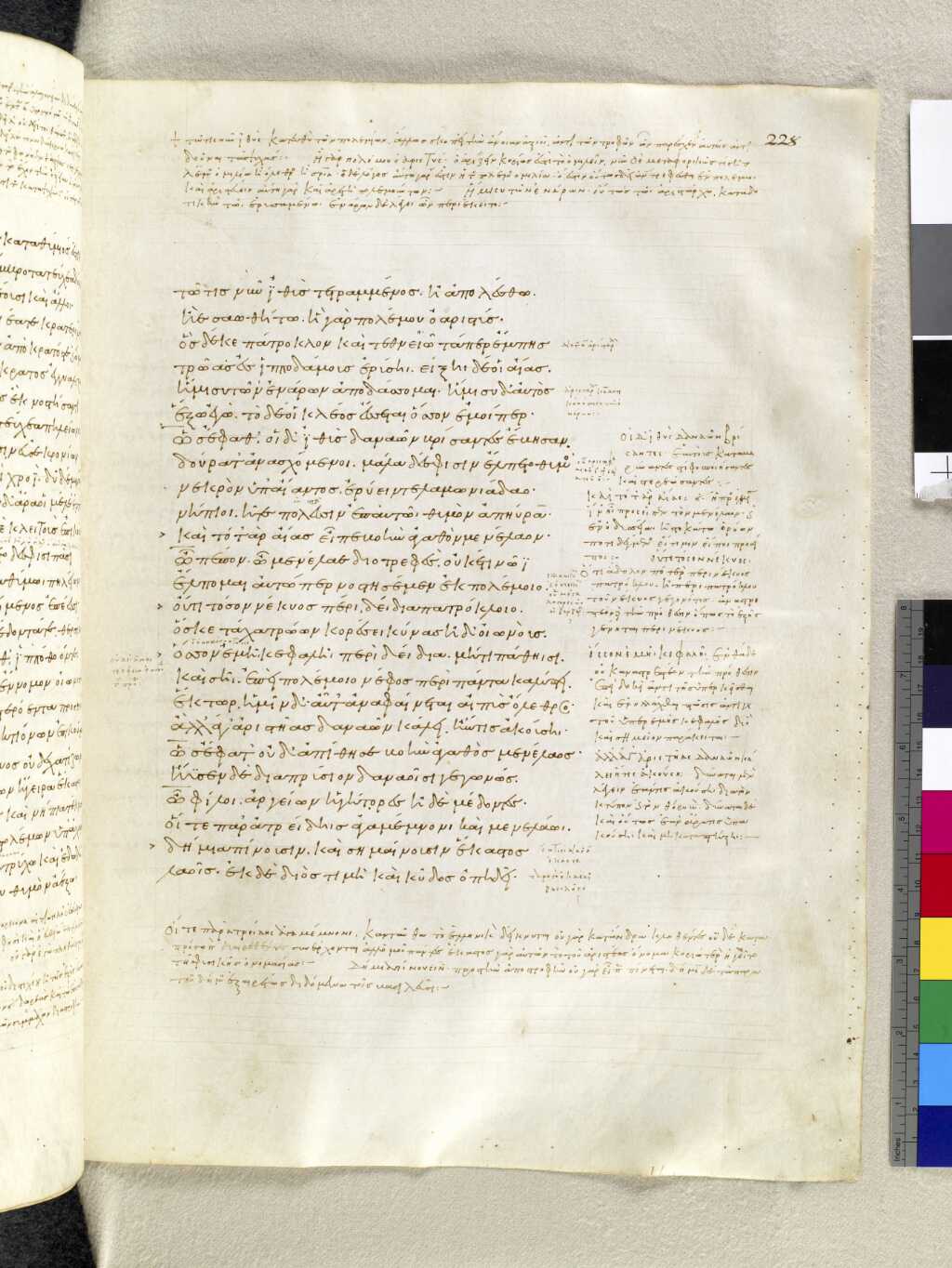
251λαοῖς· ἐκ δὲ Διὸς τιμὴ καὶ κῦδος ὀπηδεῖ. 252ἀργαλέον δέ μοί ἐστι διασκοπιᾶσθαι ἕκαστον 253ἡγεμόνων· τόσση γὰρ ἔρις πολέμοιο δέδηεν· 254ἀλλά τις αὐτὸς ἴτω, νεμεσιζέσθω δʼ ἐνὶ θυμῷ 255Πάτροκλον Τρῳῇσι κυσὶν μέλπηθρα γενέσθαι. 256ὣς ἔφατʼ, ὀξὺ δʼ ἄκουσεν Ὀϊλῆος ταχὺς Αἴας· 257πρῶτος δʼ ἀντίος ἦλθε θέων ἀνὰ δηϊοτῆτα, 258τὸν δὲ μετʼ Ἰδομενεὺς καὶ ὀπάων Ἰδομενῆος 259Μηριόνης ἀτάλαντος Ἐνυαλίῳ ἀνδρειφόντῃ. 260τῶν δʼ ἄλλων τίς κεν ᾗσι φρεσὶν οὐνόματʼ εἴποι, 261ὅσσοι δὴ μετόπισθε μάχην ἤγειραν Ἀχαιῶν; 262Τρῶες δὲ προὔτυψαν ἀολλέες· ἦρχε δʼ ἄρʼ Ἕκτωρ. 263ὡς δʼ ὅτʼ ἐπὶ προχοῇσι διιπετέος ποταμοῖο 264βέβρυχεν μέγα κῦμα ποτὶ ῥόον, ἀμφὶ δέ τʼ ἄκραι 265ἠϊόνες βοόωσιν ἐρευγομένης ἁλὸς ἔξω, 266τόσσῃ ἄρα Τρῶες ἰαχῇ ἴσαν. αὐτὰρ Ἀχαιοὶ 267ἕστασαν ἀμφὶ Μενοιτιάδῃ ἕνα θυμὸν ἔχοντες 268φραχθέντες σάκεσιν χαλκήρεσιν· ἀμφὶ δʼ ἄρά σφι 269λαμπρῇσιν κορύθεσσι Κρονίων ἠέρα πολλὴν 270χεῦʼ, ἐπεὶ οὐδὲ Μενοιτιάδην ἔχθαιρε πάρος γε, 271ὄφρα ζωὸς ἐὼν θεράπων ἦν Αἰακίδαο· 272μίσησεν δʼ ἄρα μιν δηΐων κυσὶ κύρμα γενέσθαι 273Τρῳῇσιν· τὼ καί οἱ ἀμυνέμεν ὦρσεν ἑταίρους. 274ὦσαν δὲ πρότεροι Τρῶες ἑλίκωπας Ἀχαιούς· 275νεκρὸν δὲ προλιπόντες ὑπέτρεσαν, οὐδέ τινʼ αὐτῶν
Fleet Ajax son of Oileus heard him and was first to force his way through the fight and run to help him. Next came Idomeneus and Meriones his esquire, peer of murderous Mars. As for the others that came into the fight after these, who of his own self could name them?
The Trojans with Hector at their head charged in a body. As a great wave that comes thundering in at the mouth of some heaven-born river, and the rocks that jut into the sea ring with the roar of the breakers that beat and buffet them—even with such a roar did the Trojans come on; but the Achaeans in singleness of heart stood firm about the son of Menoetius, and fenced him with their bronze shields. Jove, moreover, hid the brightness of their helmets in a thick cloud, for he had borne no grudge against the son of Menoetius while he was still alive and squire to the descendant of Aeacus; therefore he was loth to let him fall a prey to the dogs of his foes the Trojans, and urged his comrades on to defend him.
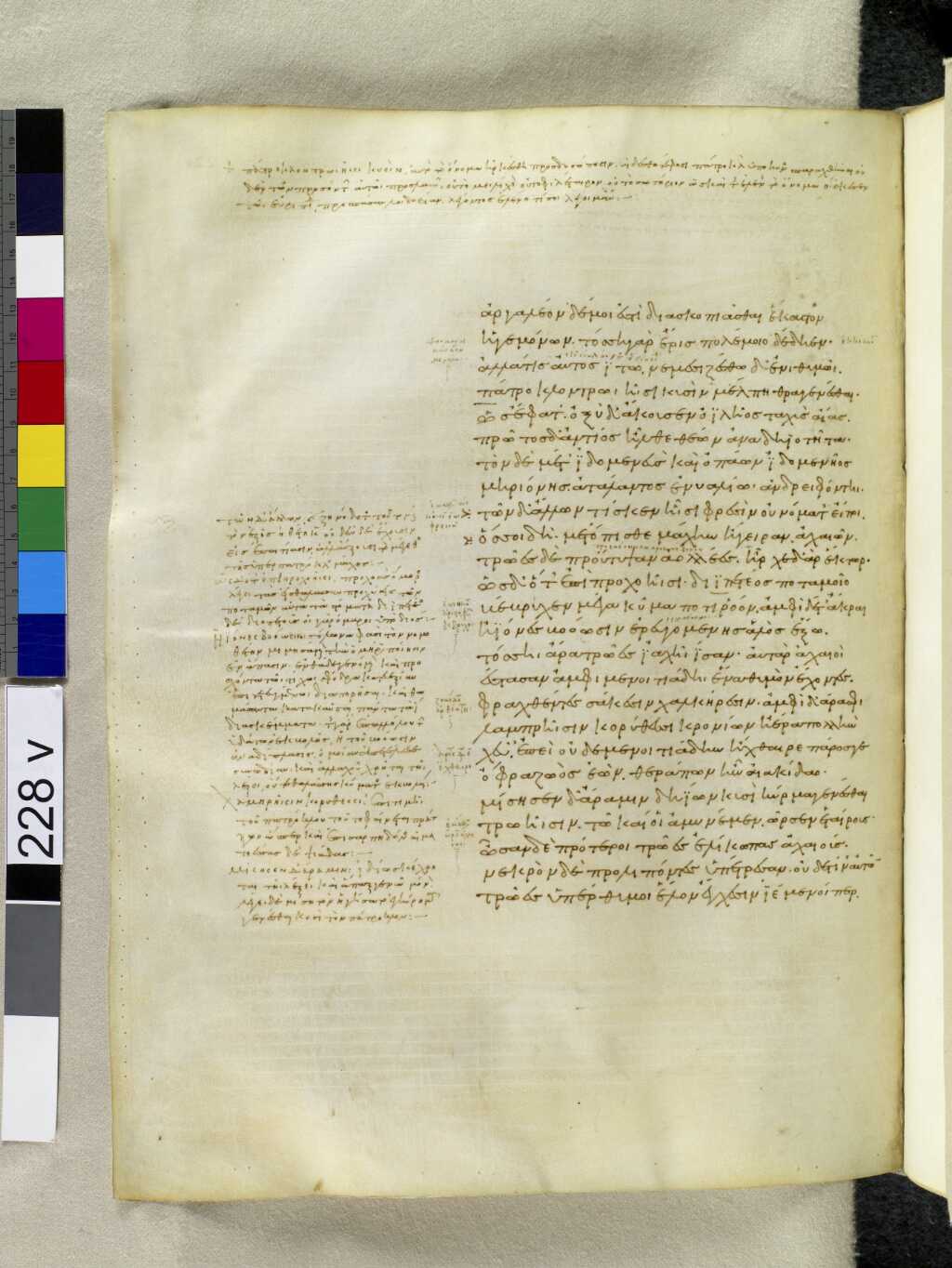
276Τρῶες ὑπέρθυμοι ἕλον ἔγχεσιν ἱέμενοί περ, 277ἀλλὰ νέκυν ἐρύοντο· μίνυνθα δὲ καὶ τοῦ Ἀχαιοὶ 278μέλλον ἀπέσσεσθαι· μάλα γάρ σφεας ὦκʼ ἐλέλιξεν 279Αἴας, ὃς περὶ μὲν εἶδος, περὶ δʼ ἔργα τέτυκτο 280τῶν ἄλλων Δαναῶν μετʼ ἀμύμονα Πηλεΐωνα. 281ἴθυσεν δὲ διὰ προμάχων συῒ εἴκελος ἀλκὴν 282καπρίῳ, ὅς τʼ ἐν ὄρεσσι κύνας θαλερούς τʼ αἰζηοὺς 283ῥηϊδίως ἐκέδασσεν, ἑλιξάμενος διὰ βήσσας· 284ὣς υἱὸς Τελαμῶνος ἀγαυοῦ φαίδιμος Αἴας 285ῥεῖα μετεισάμενος Τρώων ἐκέδασσε φάλαγγας 286οἳ περὶ Πατρόκλῳ βέβασαν, φρόνεον δὲ μάλιστα 287ἄστυ πότι σφέτερον ἐρύειν καὶ κῦδος ἀρέσθαι. 288ἤτοι τὸν Λήθοιο Πελασγοῦ φαίδιμος υἱὸς 289Ἱππόθοος ποδὸς ἕλκε κατὰ κρατερὴν ὑσμίνην 290δησάμενος τελαμῶνι παρὰ σφυρὸν ἀμφὶ τένοντας 291Ἕκτορι καὶ Τρώεσσι χαριζόμενος· τάχα δʼ αὐτῷ 292ἦλθε κακόν, τό οἱ οὔ τις ἐρύκακεν ἱεμένων περ. 293τὸν δʼ υἱὸς Τελαμῶνος ἐπαΐξας διʼ ὁμίλου 294πλῆξʼ αὐτοσχεδίην κυνέης διὰ χαλκοπαρῄου· 295ἤρικε δʼ ἱπποδάσεια κόρυς περὶ δουρὸς ἀκωκῇ 296πληγεῖσʼ ἔγχεΐ τε μεγάλῳ καὶ χειρὶ παχείῃ, 297ἐγκέφαλος δὲ παρʼ αὐλὸν ἀνέδραμεν ἐξ ὠτειλῆς 298αἱματόεις· τοῦ δʼ αὖθι λύθη μένος, ἐκ δʼ ἄρα χειρῶν 299Πατρόκλοιο πόδα μεγαλήτορος ἧκε χαμᾶζε 300κεῖσθαι· ὃ δʼ ἄγχʼ αὐτοῖο πέσε πρηνὴς ἐπὶ νεκρῷ
At first the Trojans drove the Achaeans back, and they withdrew from the dead man daunted. The Trojans did not succeed in killing any one, nevertheless they drew the body away. But the Achaeans did not lose it long, for Ajax, foremost of all the Danaans after the son of Peleus alike in stature and prowess, quickly rallied them and made towards the front like a wild boar upon the mountains when he stands at bay in the forest glades and routs the hounds and lusty youths that have attacked him—even so did Ajax son of Telamon passing easily in among the phalanxes of the Trojans, disperse those who had bestridden Patroclus and were most bent on winning glory by dragging him off to their city. At this moment Hippothous brave son of the Pelasgian Lethus, in his zeal for Hector and the Trojans, was dragging the body off by the foot through the press of the fight, having bound a strap round the sinews near the ancle; but a mischief soon befell him from which none of those could save him who would have gladly done so, for the son of Telamon sprang forward and smote him on his bronze-cheeked helmet. The plumed headpiece broke about the point of the weapon, struck at once by the spear and by the strong hand of Ajax, so that the bloody brain came oozing out through the crest-socket. His strength then failed him and he let Patroclus’ foot drop from his hand, as he fell full length dead upon the body; thus he died far from the fertile land of Larissa, and never repaid his parents the cost of bringing him up, for his life was cut short early by the spear of mighty Ajax. Hector then took aim at Ajax with a spear, but he saw it coming and just managed to avoid it; the spear passed on and struck Schedius son of noble Iphitus, captain of the Phoceans, who dwelt in famed Panopeus and reigned over much people; it struck him under the middle of the collar-bone the bronze point went right through him, coming out at the bottom of his shoulder-blade, and his armour rang rattling round him as he fell heavily to the ground. Ajax in his turn struck noble Phorcys son of Phaenops in the middle of the belly as he was bestriding Hippothous, and broke the plate of his cuirass; whereon the spear tore out his entrails and he clutched the ground in his palm as he fell to earth. Hector and those who were in the front rank then gave ground, while the Argives raised a loud cry of triumph, and drew off the bodies of Phorcys and Hippothous which they stripped presently of their armour.
The Trojans would now have been worsted by the brave Achaeans and driven back to Ilius through their own cowardice, while the Argives, so great was their courage and endurance, would have achieved a triumph even against the will of Jove, if Apollo had not roused Aeneas, in the likeness of Periphas son of Epytus, an attendant who had grown old in the service of Aeneas’ aged father, and was at all times devoted to him. In his likeness, then, Apollo said, “Aeneas, can you not manage, even though heaven be against us, to save high Ilius? I have known men, whose numbers, courage, and self-reliance have saved their people in spite of Jove, whereas in this case he would much rather give victory to us than to the Danaans, if you would only fight instead of being so terribly afraid.”
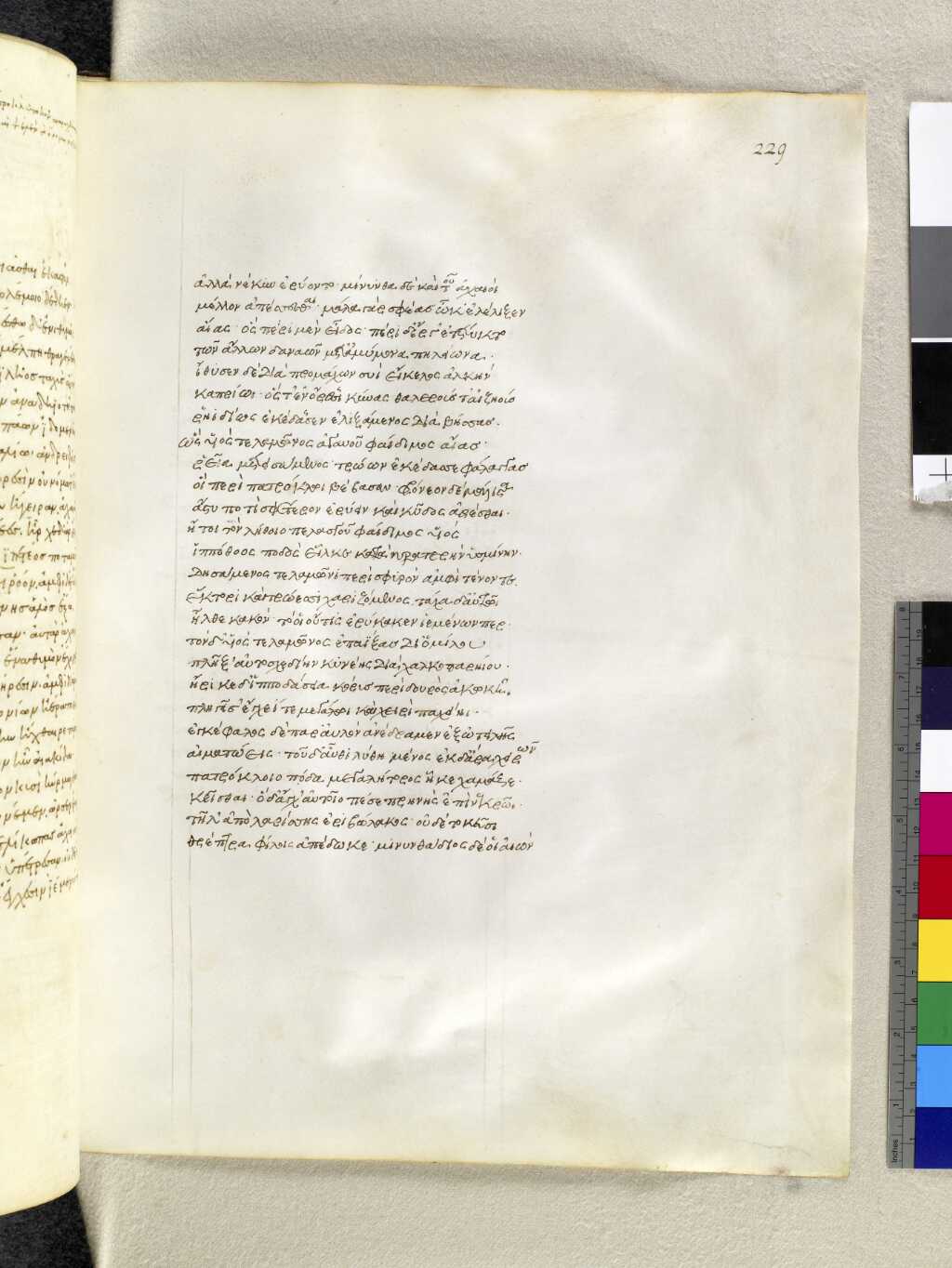
301τῆλʼ ἀπὸ Λαρίσης ἐριβώλακος, οὐδὲ τοκεῦσι 302θρέπτρα φίλοις ἀπέδωκε, μινυνθάδιος δέ οἱ αἰὼν 303ἔπλεθʼ ὑπʼ Αἴαντος μεγαθύμου δουρὶ δαμέντι. 304Ἕκτωρ δʼ αὖτʼ Αἴαντος ἀκόντισε δουρὶ φαεινῷ· 305ἀλλʼ ὃ μὲν ἄντα ἰδὼν ἠλεύατο χάλκεον ἔγχος 306τυτθόν· ὃ δὲ Σχεδίον μεγαθύμου Ἰφίτου υἱὸν 307Φωκήων ὄχʼ ἄριστον, ὃς ἐν κλειτῷ Πανοπῆϊ 308οἰκία ναιετάασκε πολέσσʼ ἄνδρεσσιν ἀνάσσων, 309τὸν βάλʼ ὑπὸ κληῗδα μέσην· διὰ δʼ ἀμπερὲς ἄκρη 310αἰχμὴ χαλκείη παρὰ νείατον ὦμον ἀνέσχε· 311δούπησεν δὲ πεσών, ἀράβησε δὲ τεύχεʼ ἐπʼ αὐτῷ. 312Αἴας δʼ αὖ Φόρκυνα δαΐφρονα Φαίνοπος υἱὸν 313Ἱπποθόῳ περιβάντα μέσην κατὰ γαστέρα τύψε· 314ῥῆξε δὲ θώρηκος γύαλον, διὰ δʼ ἔντερα χαλκὸς 315ἤφυσʼ· ὃ δʼ ἐν κονίῃσι πεσὼν ἕλε γαῖαν ἀγοστῷ. 316χώρησαν δʼ ὑπό τε πρόμαχοι καὶ φαίδιμος Ἕκτωρ· 317Ἀργεῖοι δὲ μέγα ἴαχον, ἐρύσαντο δὲ νεκροὺς 318Φόρκυν θʼ Ἱππόθοόν τε, λύοντο δὲ τεύχεʼ ἀπʼ ὤμων. 319ἔνθά κεν αὖτε Τρῶες ἀρηϊφίλων ὑπʼ Ἀχαιῶν 320Ἴλιον εἰσανέβησαν ἀναλκείῃσι δαμέντες, 321Ἀργεῖοι δέ κε κῦδος ἕλον καὶ ὑπὲρ Διὸς αἶσαν 322κάρτεϊ καὶ σθένεϊ σφετέρῳ· ἀλλʼ αὐτὸς Ἀπόλλων 323Αἰνείαν ὄτρυνε δέμας Περίφαντι ἐοικὼς 324κήρυκι Ἠπυτίδῃ, ὅς οἱ παρὰ πατρὶ γέροντι 325κηρύσσων γήρασκε φίλα φρεσὶ μήδεα εἰδώς·
Aeneas knew Apollo when he looked straight at him, and shouted to Hector saying, “Hector and all other Trojans and allies, shame on us if we are beaten by the Achaeans and driven back to Ilius through our own cowardice. A god has just come up to me and told me that Jove the supreme disposer will be with us. Therefore let us make for the Danaans, that it may go hard with them ere they bear away dead Patroclus to the ships.”
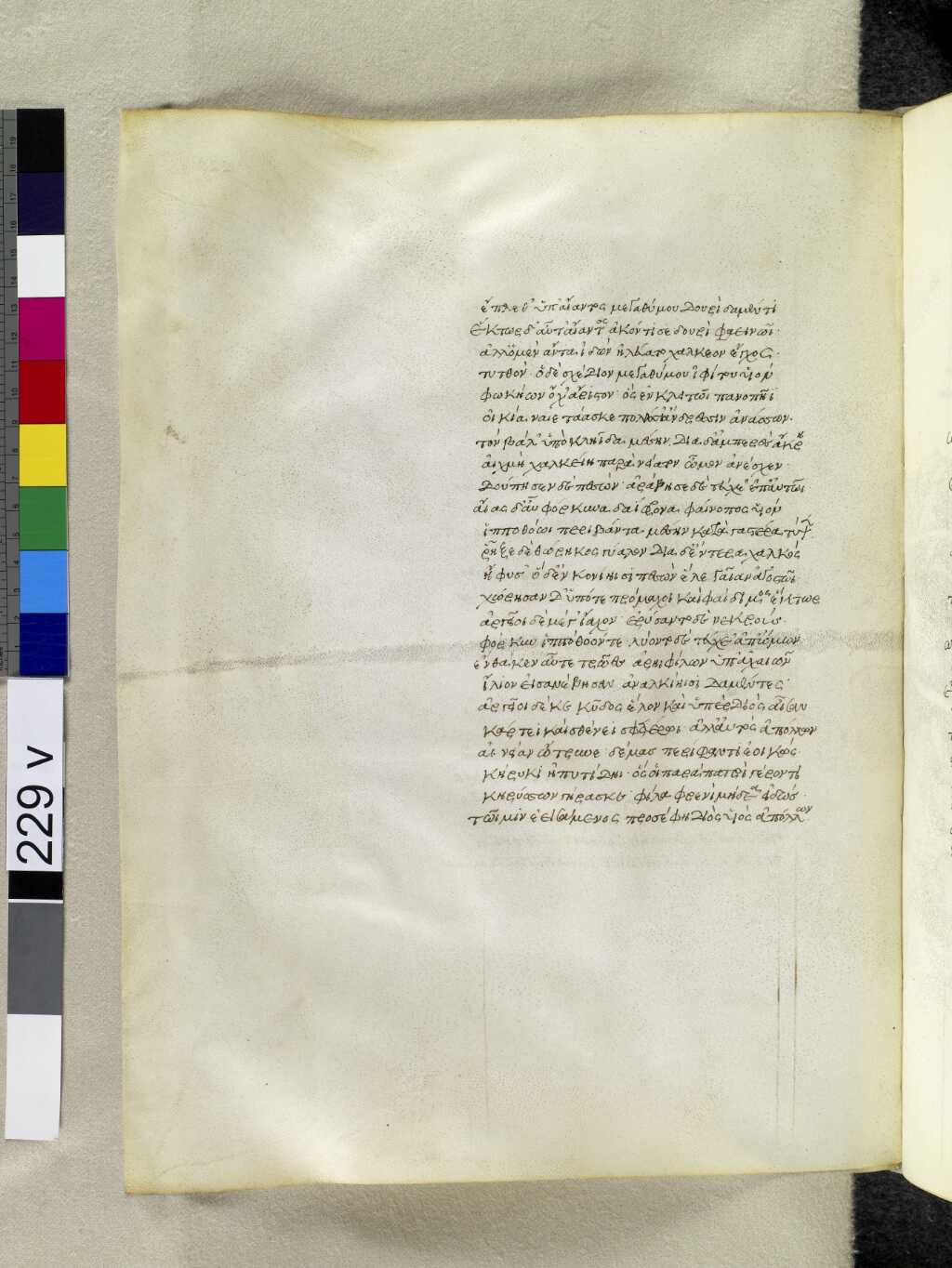
326τῷ μιν ἐεισάμενος προσέφη Διὸς υἱὸς Ἀπόλλων· 327Αἰνεία πῶς ἂν καὶ ὑπὲρ θεὸν εἰρύσσαισθε 328Ἴλιον αἰπεινήν; ὡς δὴ ἴδον ἀνέρας ἄλλους 329κάρτεΐ τε σθένεΐ τε πεποιθότας ἠνορέῃ τε 330πλήθεΐ τε σφετέρῳ καὶ ὑπερδέα δῆμον ἔχοντας· 331ἡμῖν δὲ Ζεὺς μὲν πολὺ βούλεται ἢ Δαναοῖσι 332νίκην· ἀλλʼ αὐτοὶ τρεῖτʼ ἄσπετον οὐδὲ μάχεσθε. 333ὣς ἔφατʼ, Αἰνείας δʼ ἑκατηβόλον Ἀπόλλωνα 334ἔγνω ἐς ἄντα ἰδών, μέγα δʼ Ἕκτορα εἶπε βοήσας· 335Ἕκτόρ τʼ ἠδʼ ἄλλοι Τρώων ἀγοὶ ἠδʼ ἐπικούρων 336αἰδὼς μὲν νῦν ἥδε γʼ ἀρηϊφίλων ὑπʼ Ἀχαιῶν 337Ἴλιον εἰσαναβῆναι ἀναλκείῃσι δαμέντας. 338ἀλλʼ ἔτι γάρ τίς φησι θεῶν ἐμοὶ ἄγχι παραστὰς 339Ζῆνʼ ὕπατον μήστωρα μάχης ἐπιτάρροθον εἶναι· 340τώ ῥʼ ἰθὺς Δαναῶν ἴομεν, μηδʼ οἵ γε ἕκηλοι 341Πάτροκλον νηυσὶν πελασαίατο τεθνηῶτα. 342ὣς φάτο, καί ῥα πολὺ προμάχων ἐξάλμενος ἔστη· 343οἳ δʼ ἐλελίχθησαν καὶ ἐναντίοι ἔσταν Ἀχαιῶν. 344ἔνθʼ αὖτʼ Αἰνείας Λειώκριτον οὔτασε δουρὶ 345υἱὸν Ἀρίσβαντος Λυκομήδεος ἐσθλὸν ἑταῖρον. 346τὸν δὲ πεσόντʼ ἐλέησεν ἀρηΐφιλος Λυκομήδης, 347στῆ δὲ μάλʼ ἐγγὺς ἰών, καὶ ἀκόντισε δουρὶ φαεινῷ, 348καὶ βάλεν Ἱππασίδην Ἀπισάονα ποιμένα λαῶν 349ἧπαρ ὑπὸ πραπίδων, εἶθαρ δʼ ὑπὸ γούνατʼ ἔλυσεν, 350ὅς ῥʼ ἐκ Παιονίης ἐριβώλακος εἰληλούθει,
As he spoke he sprang out far in front of the others, who then rallied and again faced the Achaeans. Aeneas speared Leiocritus son of Arisbas, a valiant follower of Lycomedes, and Lycomedes was moved with pity as he saw him fall; he therefore went close up, and speared Apisaon son of Hippasus shepherd of his people in the liver under the midriff, so that he died; he had come from fertile Paeonia and was the best man of them all after Asteropaeus. Asteropaeus flew forward to avenge him and attack the Danaans, but this might no longer be, inasmuch as those about Patroclus were well covered by their shields, and held their spears in front of them, for Ajax had given them strict orders that no man was either to give ground, or to stand out before the others, but all were to hold well together about the body and fight hand to hand. Thus did huge Ajax bid them, and the earth ran red with blood as the corpses fell thick on one another alike on the side of the Trojans and allies, and on that of the Danaans; for these last, too, fought no bloodless fight though many fewer of them perished, through the care they took to defend and stand by one another.
Thus did they fight as it were a flaming fire; it seemed as though it had gone hard even with the sun and moon, for they were hidden over all that part where the bravest heroes were fighting about the dead son of Menoetius, whereas the other Danaans and Achaeans fought at their ease in full daylight with brilliant sunshine all round them, and there was not a cloud to be seen neither on plain nor mountain. These last moreover would rest for a while and leave off fighting, for they were some distance apart and beyond the range of one another’s weapons, whereas those who were in the thick of the fray suffered both from battle and darkness. All the best of them were being worn out by the great weight of their armour, but the two valiant heroes, Thrasymedes and Antilochus, had not yet heard of the death of Patroclus, and believed him to be still alive and leading the van against the Trojans; they were keeping themselves in reserve against the death or rout of their own comrades, for so Nestor had ordered when he sent them from the ships into battle.
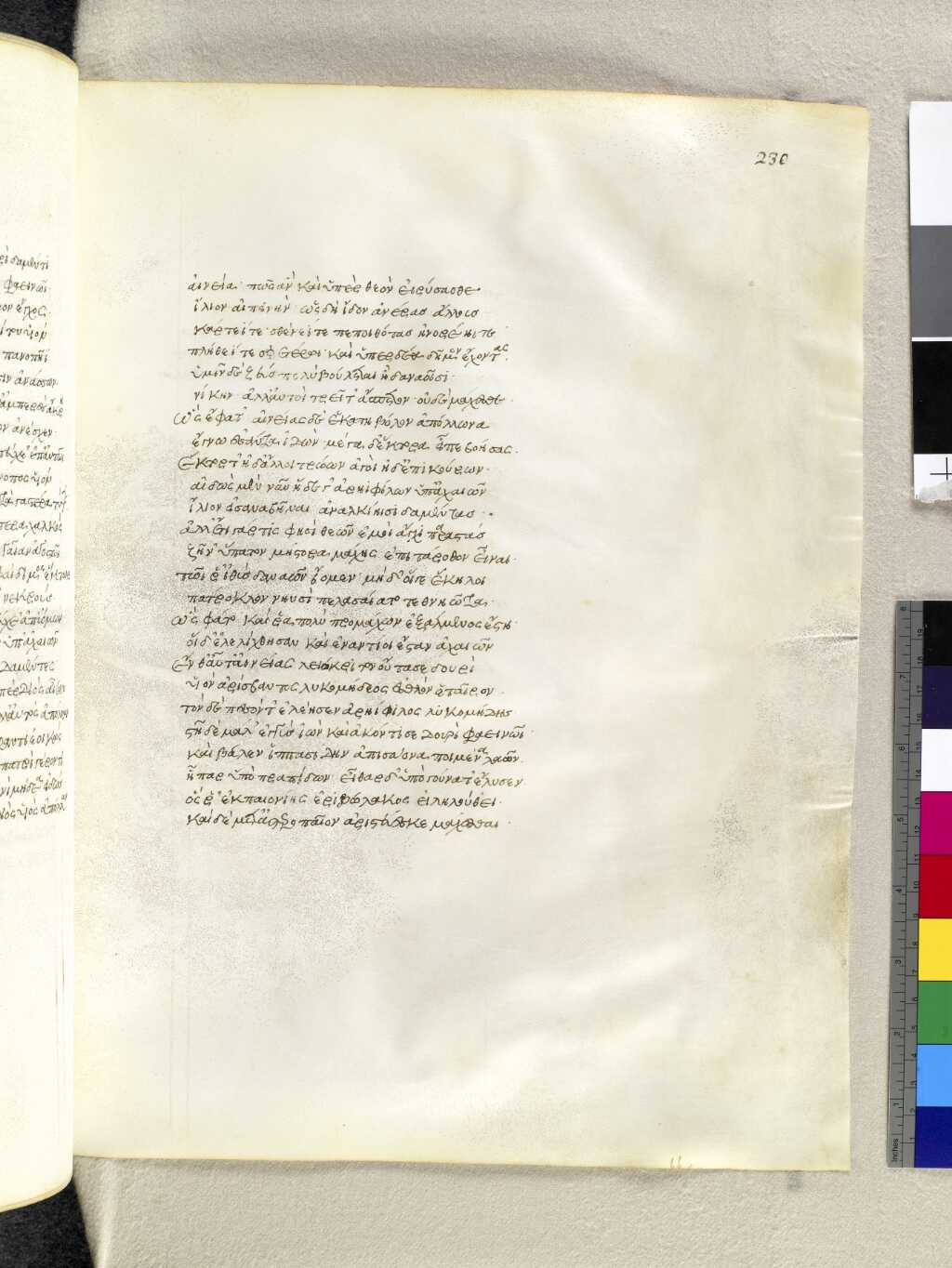
351καὶ δὲ μετʼ Ἀστεροπαῖον ἀριστεύεσκε μάχεσθαι. 352τὸν δὲ πεσόντʼ ἐλέησεν ἀρήϊος Ἀστεροπαῖος, 353ἴθυσεν δὲ καὶ ὃ πρόφρων Δαναοῖσι μάχεσθαι· 354ἀλλʼ οὔ πως ἔτι εἶχε· σάκεσσι γὰρ ἔρχατο πάντῃ 355ἑσταότες περὶ Πατρόκλῳ, πρὸ δὲ δούρατʼ ἔχοντο. 356Αἴας γὰρ μάλα πάντας ἐπῴχετο πολλὰ κελεύων· 357οὔτέ τινʼ ἐξοπίσω νεκροῦ χάζεσθαι ἀνώγει 358οὔτέ τινα προμάχεσθαι Ἀχαιῶν ἔξοχον ἄλλων, 359ἀλλὰ μάλʼ ἀμφʼ αὐτῷ βεβάμεν, σχεδόθεν δὲ μάχεσθαι. 360ὣς Αἴας ἐπέτελλε πελώριος, αἵματι δὲ χθὼν 361δεύετο πορφυρέῳ, τοὶ δʼ ἀγχιστῖνοι ἔπιπτον 362νεκροὶ ὁμοῦ Τρώων καὶ ὑπερμενέων ἐπικούρων 363καὶ Δαναῶν· οὐδʼ οἳ γὰρ ἀναιμωτί γε μάχοντο, 364παυρότεροι δὲ πολὺ φθίνυθον· μέμνηντο γὰρ αἰεὶ 365ἀλλήλοις ἀνʼ ὅμιλον ἀλεξέμεναι φόνον αἰπύν. 366ὣς οἳ μὲν μάρναντο δέμας πυρός, οὐδέ κε φαίης 367οὔτέ ποτʼ ἠέλιον σῶν ἔμμεναι οὔτε σελήνην· 368ἠέρι γὰρ κατέχοντο μάχης ἐπί θʼ ὅσσον ἄριστοι 369ἕστασαν ἀμφὶ Μενοιτιάδῃ κατατεθνηῶτι. 370οἳ δʼ ἄλλοι Τρῶες καὶ ἐϋκνήμιδες Ἀχαιοὶ 371εὔκηλοι πολέμιζον ὑπʼ αἰθέρι, πέπτατο δʼ αὐγὴ 372ἠελίου ὀξεῖα, νέφος δʼ οὐ φαίνετο πάσης 373γαίης οὐδʼ ὀρέων· μεταπαυόμενοι δὲ μάχοντο 374ἀλλήλων ἀλεείνοντες βέλεα στονόεντα 375πολλὸν ἀφεσταότες. τοὶ δʼ ἐν μέσῳ ἄλγεʼ ἔπασχον
Thus through the livelong day did they wage fierce war, and the sweat of their toil rained ever on their legs under them, and on their hands and eyes, as they fought over the squire of the fleet son of Peleus. It was as when a man gives a great ox-hide all drenched in fat to his men, and bids them stretch it; whereon they stand round it in a ring and tug till the moisture leaves it, and the fat soaks in for the many that pull at it, and it is well stretched—even so did the two sides tug the dead body hither and thither within the compass of but a little space—the Trojans steadfastly set on dragging it into Ilius, while the Achaeans were no less so on taking it to their ships; and fierce was the fight between them. Not Mars himself the lord of hosts, nor yet Minerva, even in their fullest fury could make light of such a battle.
Such fearful turmoil of men and horses did Jove on that day ordain round the body of Patroclus. Meanwhile Achilles did not know that he had fallen, for the fight was under the wall of Troy a long way off the ships. He had no idea, therefore, that Patroclus was dead, and deemed that he would return alive as soon as he had gone close up to the gates. He knew that he was not to sack the city neither with nor without himself, for his mother had often told him this when he had sat alone with her, and she had informed him of the counsels of great Jove. Now, however, she had not told him how great a disaster had befallen him in the death of the one who was far dearest to him of all his comrades.
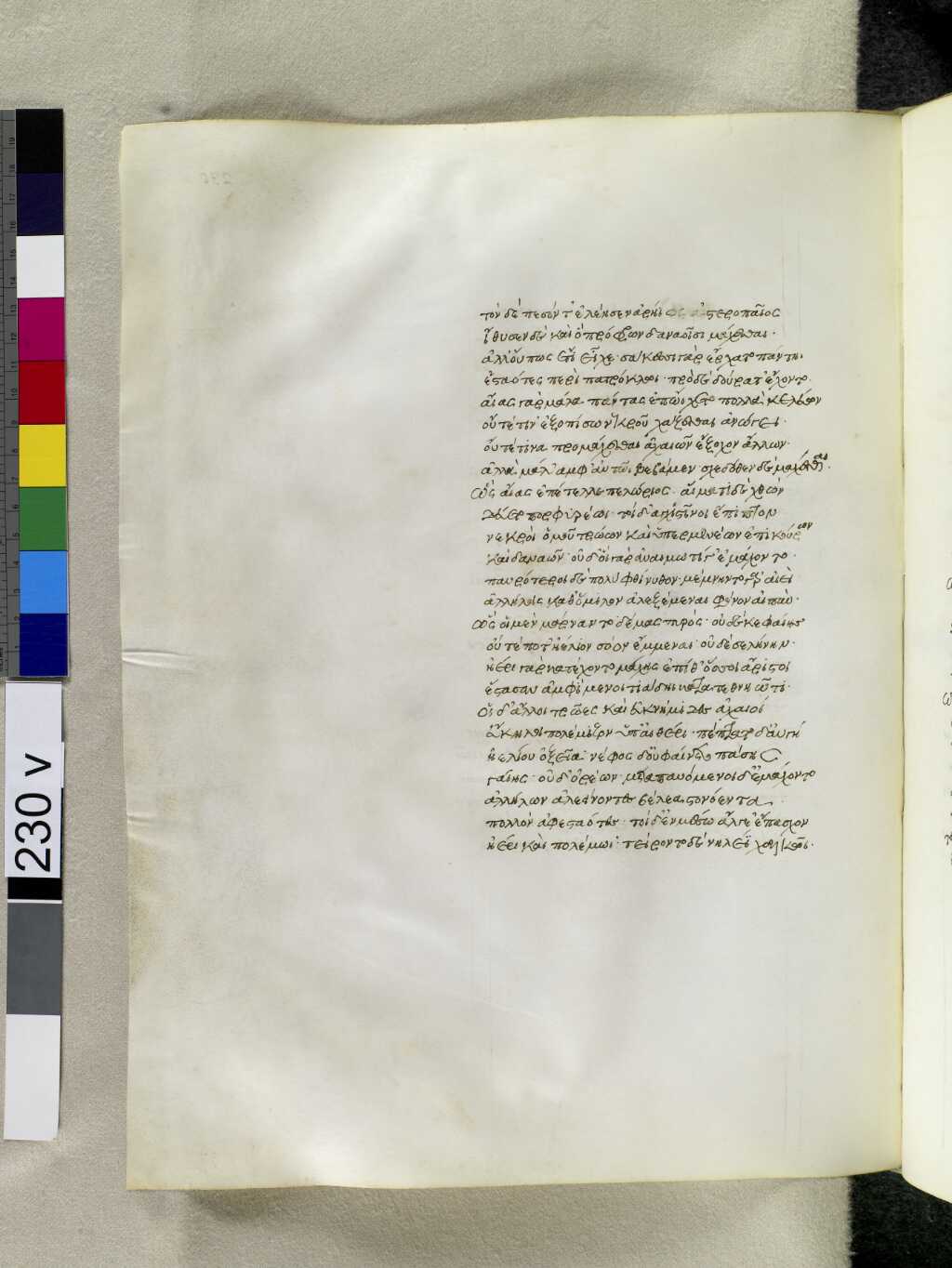
376ἠέρι καὶ πολέμῳ, τείροντο δὲ νηλέϊ χαλκῷ 377ὅσσοι ἄριστοι ἔσαν· δύο δʼ οὔ πω φῶτε πεπύσθην 378ἀνέρε κυδαλίμω Θρασυμήδης Ἀντίλοχός τε 379Πατρόκλοιο θανόντος ἀμύμονος, ἀλλʼ ἔτʼ ἔφαντο 380ζωὸν ἐνὶ πρώτῳ ὁμάδῳ Τρώεσσι μάχεσθαι. 381τὼ δʼ ἐπιοσσομένω θάνατον καὶ φύζαν ἑταίρων 382νόσφιν ἐμαρνάσθην, ἐπεὶ ὣς ἐπετέλλετο Νέστωρ 383ὀτρύνων πόλεμον δὲ μελαινάων ἀπὸ νηῶν. 384τοῖς δὲ πανημερίοις ἔριδος μέγα νεῖκος ὀρώρει 385ἀργαλέης· καμάτῳ δὲ καὶ ἱδρῷ νωλεμὲς αἰεὶ 386γούνατά τε κνῆμαί τε πόδες θʼ ὑπένερθεν ἑκάστου 387χεῖρές τʼ ὀφθαλμοί τε παλάσσετο μαρναμένοιιν 388ἀμφʼ ἀγαθὸν θεράποντα ποδώκεος Αἰακίδαο. 389ὡς δʼ ὅτʼ ἀνὴρ ταύροιο βοὸς μεγάλοιο βοείην 390λαοῖσιν δώῃ τανύειν μεθύουσαν ἀλοιφῇ· 391δεξάμενοι δʼ ἄρα τοί γε διαστάντες τανύουσι 392κυκλόσʼ, ἄφαρ δέ τε ἰκμὰς ἔβη, δύνει δέ τʼ ἀλοιφὴ 393πολλῶν ἑλκόντων, τάνυται δέ τε πᾶσα διὰ πρό· 394ὣς οἵ γʼ ἔνθα καὶ ἔνθα νέκυν ὀλίγῃ ἐνὶ χώρῃ 395εἵλκεον ἀμφότεροι· μάλα δέ σφισιν ἔλπετο θυμὸς 396Τρωσὶν μὲν ἐρύειν προτὶ Ἴλιον, αὐτὰρ Ἀχαιοῖς 397νῆας ἔπι γλαφυράς· περὶ δʼ αὐτοῦ μῶλος ὀρώρει 398ἄγριος· οὐδέ κʼ Ἄρης λαοσσόος οὐδέ κʼ Ἀθήνη 399τόν γε ἰδοῦσʼ ὀνόσαιτʼ, οὐδʼ εἰ μάλα μιν χόλος ἵκοι· 400τοῖον Ζεὺς ἐπὶ Πατρόκλῳ ἀνδρῶν τε καὶ ἵππων
The others still kept on charging one another round the body with their pointed spears and killing each other. Then would one say, “My friends, we can never again show our faces at the ships—better, and greatly better, that earth should open and swallow us here in this place, than that we should let the Trojans have the triumph of bearing off Patroclus to their city.”
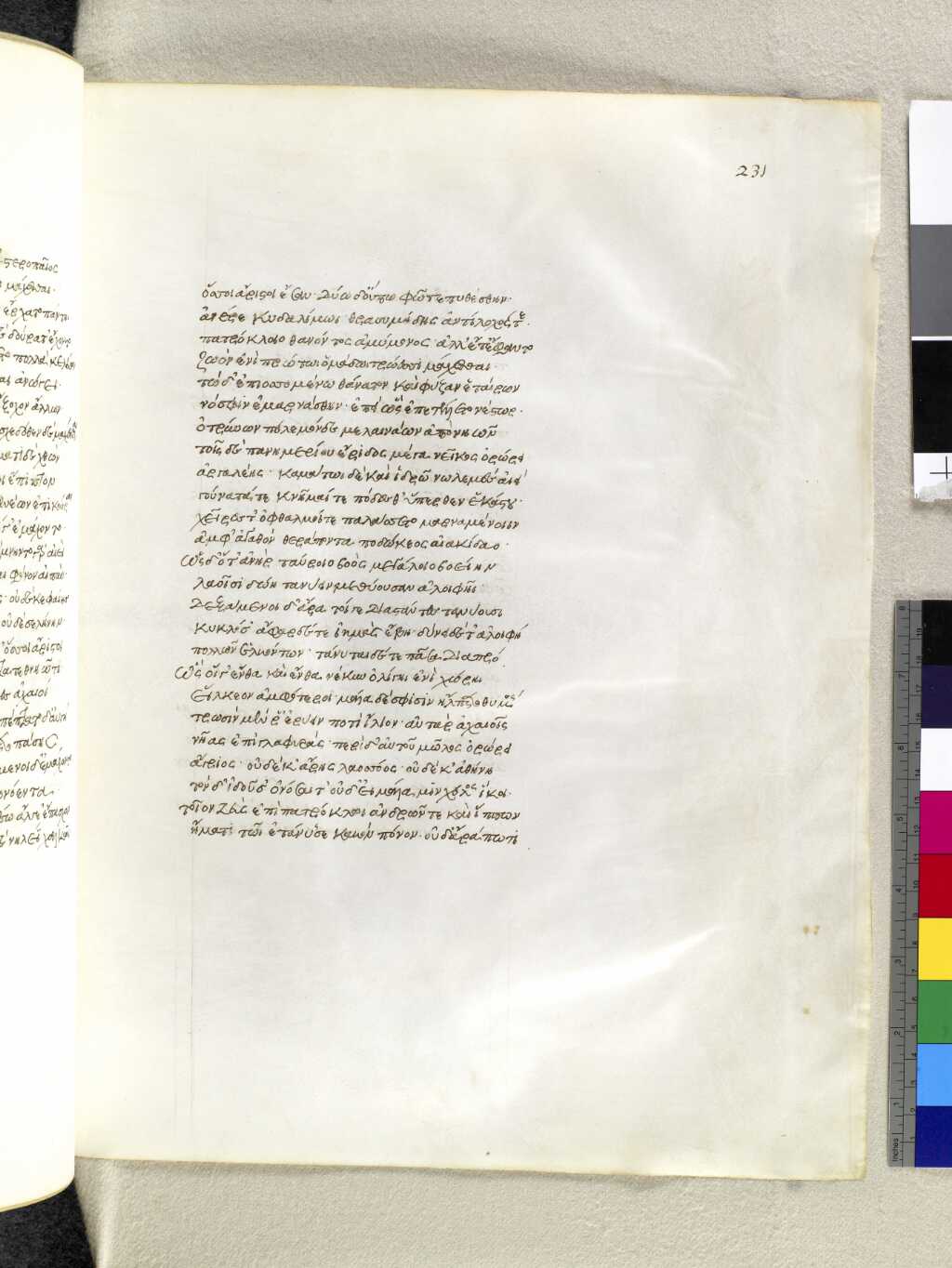
401ἤματι τῷ ἐτάνυσσε κακὸν πόνον· οὐδʼ ἄρα πώ τι 402ᾔδεε Πάτροκλον τεθνηότα δῖος Ἀχιλλεύς· 403πολλὸν γὰρ ῥʼ ἀπάνευθε νεῶν μάρναντο θοάων 404τείχει ὕπο Τρώων· τό μιν οὔ ποτε ἔλπετο θυμῷ 405τεθνάμεν, ἀλλὰ ζωὸν ἐνιχριμφθέντα πύλῃσιν 406ἂψ ἀπονοστήσειν, ἐπεὶ οὐδὲ τὸ ἔλπετο πάμπαν 407ἐκπέρσειν πτολίεθρον ἄνευ ἕθεν, οὐδὲ σὺν αὐτῷ· 408πολλάκι γὰρ τό γε μητρὸς ἐπεύθετο νόσφιν ἀκούων, 409ἥ οἱ ἀπαγγέλλεσκε Διὸς μεγάλοιο νόημα. 410δὴ τότε γʼ οὔ οἱ ἔειπε κακὸν τόσον ὅσσον ἐτύχθη 411μήτηρ, ὅττί ῥά οἱ πολὺ φίλτατος ὤλεθʼ ἑταῖρος. 412οἳ δʼ αἰεὶ περὶ νεκρὸν ἀκαχμένα δούρατʼ ἔχοντες 413νωλεμὲς ἐγχρίμπτοντο καὶ ἀλλήλους ἐνάριζον· 414ὧδε δέ τις εἴπεσκεν Ἀχαιῶν χαλκοχιτώνων· 415ὦ φίλοι οὐ μὰν ἧμιν ἐϋκλεὲς ἀπονέεσθαι 416νῆας ἔπι γλαφυράς, ἀλλʼ αὐτοῦ γαῖα μέλαινα 417πᾶσι χάνοι· τό κεν ἧμιν ἄφαρ πολὺ κέρδιον εἴη 418εἰ τοῦτον Τρώεσσι μεθήσομεν ἱπποδάμοισιν 419ἄστυ πότι σφέτερον ἐρύσαι καὶ κῦδος ἀρέσθαι. 420ὣς δέ τις αὖ Τρώων μεγαθύμων αὐδήσασκεν· 421ὦ φίλοι, εἰ καὶ μοῖρα παρʼ ἀνέρι τῷδε δαμῆναι 422πάντας ὁμῶς, μή πώ τις ἐρωείτω πολέμοιο. 423ὣς ἄρα τις εἴπεσκε, μένος δʼ ὄρσασκεν ἑκάστου. 424ὣς οἳ μὲν μάρναντο, σιδήρειος δʼ ὀρυμαγδὸς 425χάλκεον οὐρανὸν ἷκε διʼ αἰθέρος ἀτρυγέτοιο·
The Trojans also on their part spoke to one another saying, “Friends, though we fall to a man beside this body, let none shrink from fighting.” With such words did they exhort each other. They fought and fought, and an iron clank rose through the void air to the brazen vault of heaven. The horses of the descendant of Aeacus stood out of the fight and wept when they heard that their driver had been laid low by the hand of murderous Hector. Automedon, valiant son of Diores, lashed them again and again; many a time did he speak kindly to them, and many a time did he upbraid them, but they would neither go back to the ships by the waters of the broad Hellespont, nor yet into battle among the Achaeans; they stood with their chariot stock still, as a pillar set over the tomb of some dead man or woman, and bowed their heads to the ground. Hot tears fell from their eyes as they mourned the loss of their charioteer, and their noble manes drooped all wet from under the yoke-straps on either side the yoke.
The son of Saturn saw them and took pity upon their sorrow. He wagged his head, and muttered to himself, saying, “Poor things, why did we give you to King Peleus who is a mortal, while you are yourselves ageless and immortal? Was it that you might share the sorrows that befall mankind? for of all creatures that live and move upon the earth there is none so pitiable as he is—still, Hector son of Priam shall drive neither you nor your chariot. I will not have it. It is enough that he should have the armour over which he vaunts so vainly. Furthermore I will give you strength of heart and limb to bear Automedon safely to the ships from battle, for I shall let the Trojans triumph still further, and go on killing till they reach the ships; whereon night shall fall and darkness overshadow the land.”
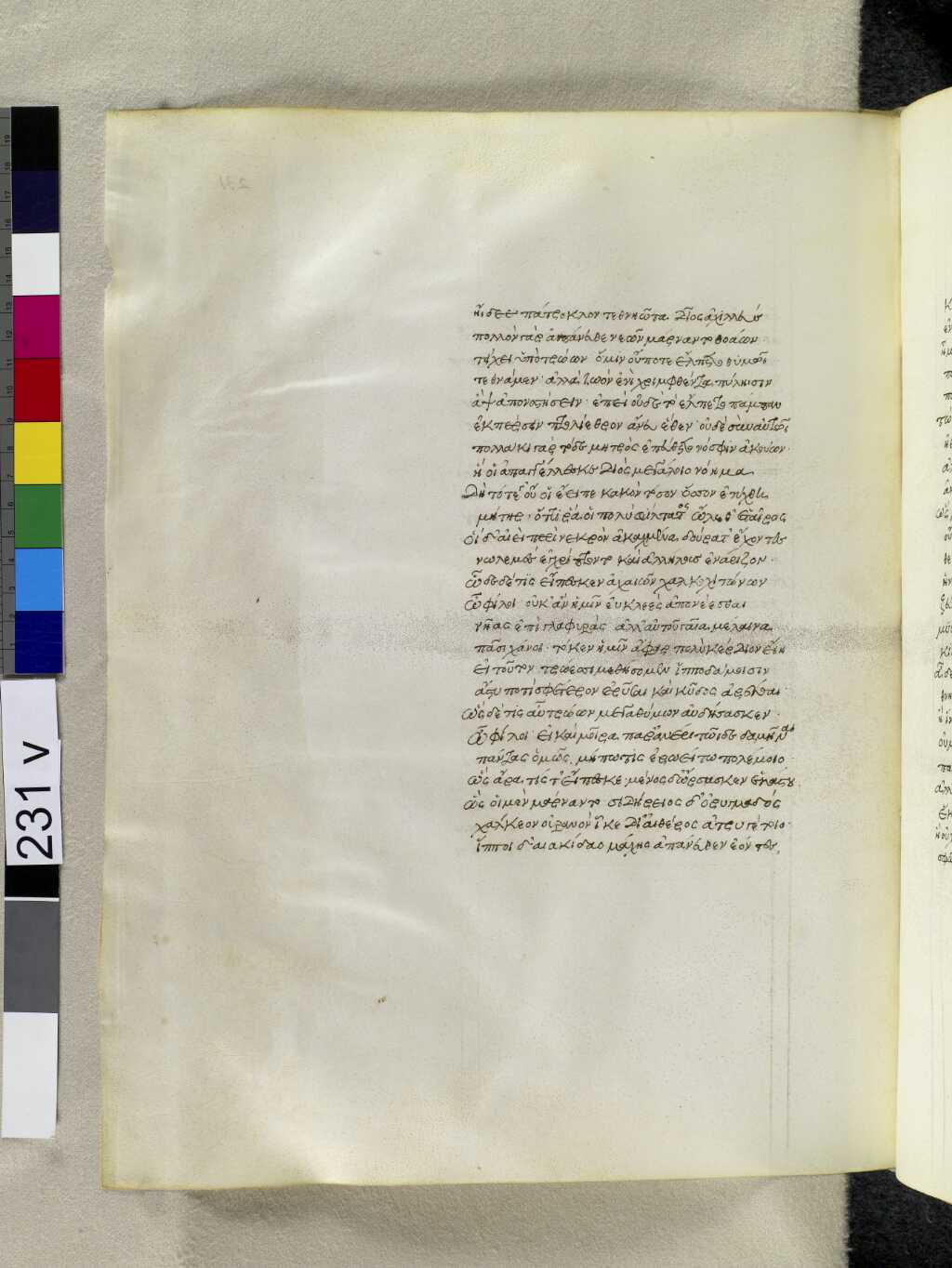
426ἵπποι δʼ Αἰακίδαο μάχης ἀπάνευθεν ἐόντες 427κλαῖον, ἐπεὶ δὴ πρῶτα πυθέσθην ἡνιόχοιο 428ἐν κονίῃσι πεσόντος ὑφʼ Ἕκτορος ἀνδροφόνοιο. 429ἦ μὰν Αὐτομέδων Διώρεος ἄλκιμος υἱὸς 430πολλὰ μὲν ἂρ μάστιγι θοῇ ἐπεμαίετο θείνων, 431πολλὰ δὲ μειλιχίοισι προσηύδα, πολλὰ δʼ ἀρειῇ· 432τὼ δʼ οὔτʼ ἂψ ἐπὶ νῆας ἐπὶ πλατὺν Ἑλλήσποντον 433ἠθελέτην ἰέναι οὔτʼ ἐς πόλεμον μετʼ Ἀχαιούς, 434ἀλλʼ ὥς τε στήλη μένει ἔμπεδον, ἥ τʼ ἐπὶ τύμβῳ 435ἀνέρος ἑστήκῃ τεθνηότος ἠὲ γυναικός, 436ὣς μένον ἀσφαλέως περικαλλέα δίφρον ἔχοντες 437οὔδει ἐνισκίμψαντε καρήατα· δάκρυα δέ σφι 438θερμὰ κατὰ βλεφάρων χαμάδις ῥέε μυρομένοισιν 439ἡνιόχοιο πόθῳ· θαλερὴ δʼ ἐμιαίνετο χαίτη 440ζεύγλης ἐξεριποῦσα παρὰ ζυγὸν ἀμφοτέρωθεν. 441μυρομένω δʼ ἄρα τώ γε ἰδὼν ἐλέησε Κρονίων, 442κινήσας δὲ κάρη προτὶ ὃν μυθήσατο θυμόν· 443ἆ δειλώ, τί σφῶϊ δόμεν Πηλῆϊ ἄνακτι 444θνητῷ, ὑμεῖς δʼ ἐστὸν ἀγήρω τʼ ἀθανάτω τε; 445ἦ ἵνα δυστήνοισι μετʼ ἀνδράσιν ἄλγεʼ ἔχητον; 446οὐ μὲν γάρ τί πού ἐστιν ὀϊζυρώτερον ἀνδρὸς 447πάντων, ὅσσά τε γαῖαν ἔπι πνείει τε καὶ ἕρπει. 448ἀλλʼ οὐ μὰν ὑμῖν γε καὶ ἅρμασι δαιδαλέοισιν 449Ἕκτωρ Πριαμίδης ἐποχήσεται· οὐ γὰρ ἐάσω. 450ἦ οὐχ ἅλις ὡς καὶ τεύχεʼ ἔχει καὶ ἐπεύχεται αὔτως;
As he spoke he breathed heart and strength into the horses so that they shook the dust from out of their manes, and bore their chariot swiftly into the fight that raged between Trojans and Achaeans. Behind them fought Automedon full of sorrow for his comrade, as a vulture amid a flock of geese. In and out, and here and there, full speed he dashed amid the throng of the Trojans, but for all the fury of his pursuit he killed no man, for he could not wield his spear and keep his horses in hand when alone in the chariot; at last, however, a comrade, Alcimedon, son of Laerces son of Haemon caught sight of him and came up behind his chariot. “Automedon,” said he, “what god has put this folly into your heart and robbed you of your right mind, that you fight the Trojans in the front rank single-handed? He who was your comrade is slain, and Hector plumes himself on being armed in the armour of the descendant of Aeacus.”
Automedon son of Diores answered, “Alcimedon, there is no one else who can control and guide the immortal steeds so well as you can, save only Patroclus—while he was alive—peer of gods in counsel. Take then the whip and reins, while I go down from the car and fight.”
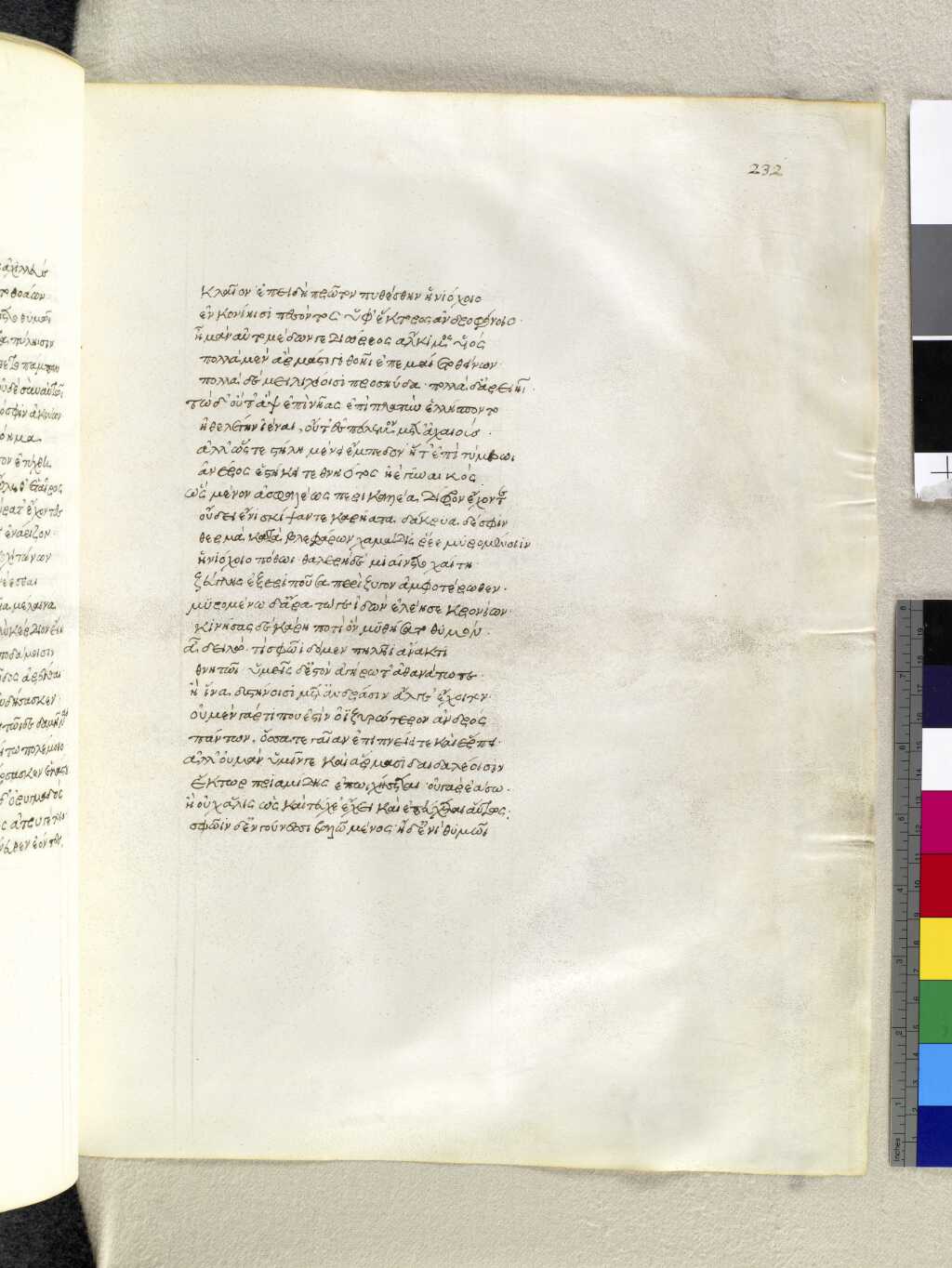
451σφῶϊν δʼ ἐν γούνεσσι βαλῶ μένος ἠδʼ ἐνὶ θυμῷ, 452ὄφρα καὶ Αὐτομέδοντα σαώσετον ἐκ πολέμοιο 453νῆας ἔπι γλαφυράς· ἔτι γάρ σφισι κῦδος ὀρέξω 454κτείνειν, εἰς ὅ κε νῆας ἐϋσσέλμους ἀφίκωνται 455δύῃ τʼ ἠέλιος καὶ ἐπὶ κνέφας ἱερὸν ἔλθῃ· 456ὣς εἰπὼν ἵπποισιν ἐνέπνευσεν μένος ἠΰ. 457τὼ δʼ ἀπὸ χαιτάων κονίην οὖδας δὲ βαλόντε 458ῥίμφα φέρον θοὸν ἅρμα μετὰ Τρῶας καὶ Ἀχαιούς. 459τοῖσι δʼ ἐπʼ Αὐτομέδων μάχετʼ ἀχνύμενός περ ἑταίρου 460ἵπποις ἀΐσσων ὥς τʼ αἰγυπιὸς μετὰ χῆνας· 461ῥέα μὲν γὰρ φεύγεσκεν ὑπʼ ἐκ Τρώων ὀρυμαγδοῦ, 462ῥεῖα δʼ ἐπαΐξασκε πολὺν καθʼ ὅμιλον ὀπάζων. 463ἀλλʼ οὐχ ᾕρει φῶτας ὅτε σεύαιτο διώκειν· 464οὐ γάρ πως ἦν οἶον ἐόνθʼ ἱερῷ ἐνὶ δίφρῳ 465ἔγχει ἐφορμᾶσθαι καὶ ἐπίσχειν ὠκέας ἵππους. 466ὀψὲ δὲ δή μιν ἑταῖρος ἀνὴρ ἴδεν ὀφθαλμοῖσιν 467Ἀλκιμέδων υἱὸς Λαέρκεος Αἱμονίδαο· 468στῆ δʼ ὄπιθεν δίφροιο καὶ Αὐτομέδοντα προσηύδα· 469Αὐτόμεδον, τίς τοί νυ θεῶν νηκερδέα βουλὴν 470ἐν στήθεσσιν ἔθηκε, καὶ ἐξέλετο φρένας ἐσθλάς; 471οἷον πρὸς Τρῶας μάχεαι πρώτῳ ἐν ὁμίλῳ 472μοῦνος· ἀτάρ τοι ἑταῖρος ἀπέκτατο, τεύχεα δʼ Ἕκτωρ 473αὐτὸς ἔχων ὤμοισιν ἀγάλλεται Αἰακίδαο. 474τὸν δʼ αὖτʼ Αὐτομέδων προσέφη Διώρεος υἱός· 475Ἀλκίμεδον τίς γάρ τοι Ἀχαιῶν ἄλλος ὁμοῖος
Alcimedon sprang on to the chariot, and caught up the whip and reins, while Automedon leaped from off the car. When Hector saw him he said to Aeneas who was near him, “Aeneas, counsellor of the mail-clad Trojans, I see the steeds of the fleet son of Aeacus come into battle with weak hands to drive them. I am sure, if you think well, that we might take them; they will not dare face us if we both attack them.”
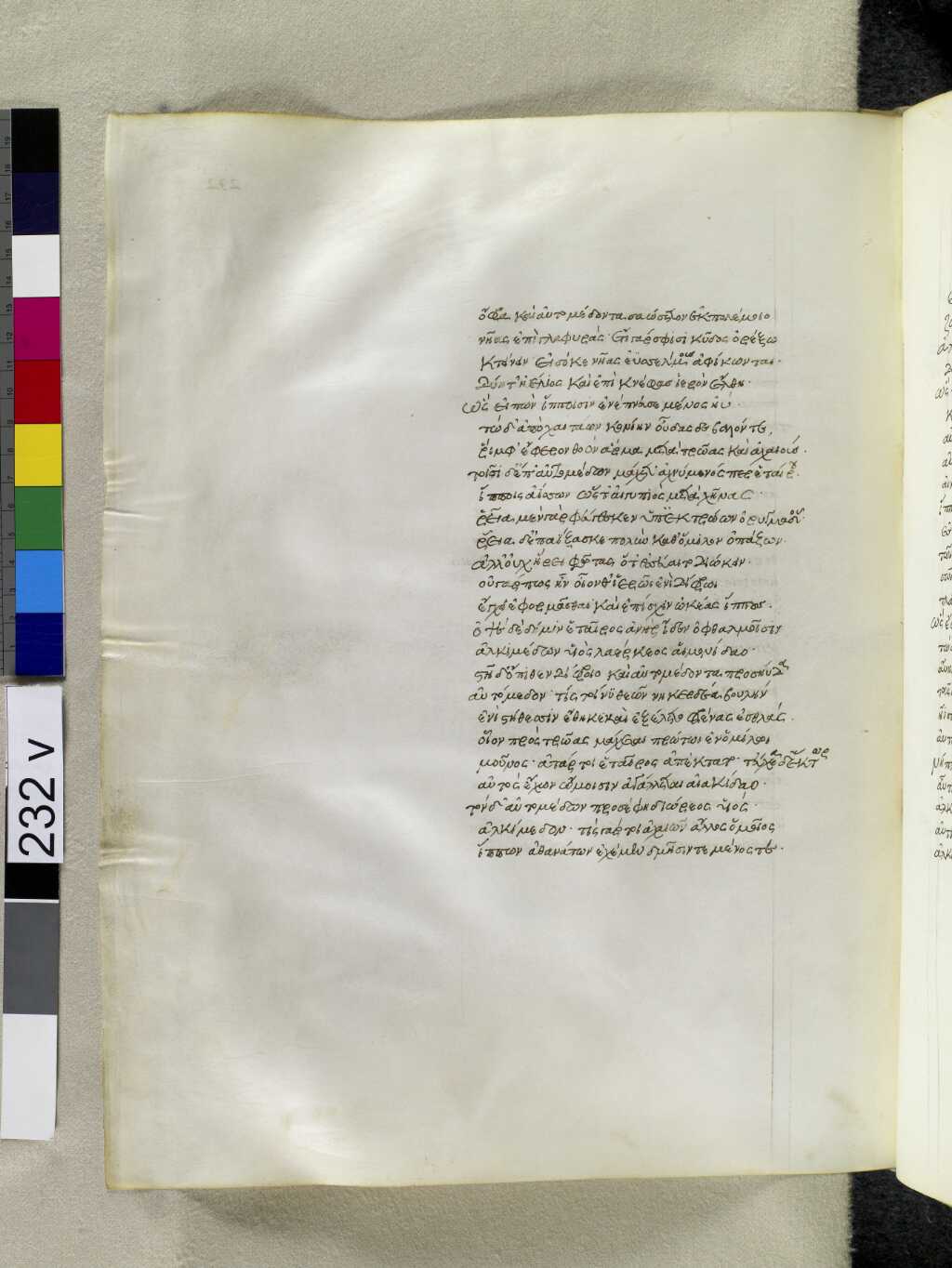
476ἵππων ἀθανάτων ἐχέμεν δμῆσίν τε μένος τε, 477εἰ μὴ Πάτροκλος θεόφιν μήστωρ ἀτάλαντος 478ζωὸς ἐών; νῦν αὖ θάνατος καὶ μοῖρα κιχάνει. 479ἀλλὰ σὺ μὲν μάστιγα καὶ ἡνία σιγαλόεντα 480δέξαι, ἐγὼ δʼ ἵππων ἀποβήσομαι, ὄφρα μάχωμαι. 481ὣς ἔφατʼ, Ἀλκιμέδων δὲ βοηθόον ἅρμʼ ἐπορούσας 482καρπαλίμως μάστιγα καὶ ἡνία λάζετο χερσίν, 483Αὐτομέδων δʼ ἀπόρουσε· νόησε δὲ φαίδιμος Ἕκτωρ, 484αὐτίκα δʼ Αἰνείαν προσεφώνεεν ἐγγὺς ἐόντα· 485Αἰνεία Τρώων βουληφόρε χαλκοχιτώνων 486ἵππω τώδʼ ἐνόησα ποδώκεος Αἰακίδαο 487ἐς πόλεμον προφανέντε σὺν ἡνιόχοισι κακοῖσι· 488τώ κεν ἐελποίμην αἱρησέμεν, εἰ σύ γε θυμῷ 489σῷ ἐθέλεις, ἐπεὶ οὐκ ἂν ἐφορμηθέντε γε νῶϊ 490τλαῖεν ἐναντίβιον στάντες μαχέσασθαι Ἄρηϊ. 491ὣς ἔφατʼ, οὐδʼ ἀπίθησεν ἐῢς πάϊς Ἀγχίσαο. 492τὼ δʼ ἰθὺς βήτην βοέῃς εἰλυμένω ὤμους 493αὔῃσι στερεῇσι· πολὺς δʼ ἐπελήλατο χαλκός. 494τοῖσι δʼ ἅμα Χρομίος τε καὶ Ἄρητος θεοειδὴς 495ἤϊσαν ἀμφότεροι· μάλα δέ σφισιν ἔλπετο θυμὸς 496αὐτώ τε κτενέειν ἐλάαν τʼ ἐριαύχενας ἵππους 497νήπιοι, οὐδʼ ἄρʼ ἔμελλον ἀναιμωτί γε νέεσθαι 498αὖτις ἀπʼ Αὐτομέδοντος. ὃ δʼ εὐξάμενος Διὶ πατρὶ 499ἀλκῆς καὶ σθένεος πλῆτο φρένας ἀμφὶ μελαίνας· 500αὐτίκα δʼ Ἀλκιμέδοντα προσηύδα πιστὸν ἑταῖρον·
The valiant son of Anchises was of the same mind, and the pair went right on, with their shoulders covered under shields of tough dry ox-hide, overlaid with much bronze. Chromius and Aretus went also with them, and their hearts beat high with hope that they might kill the men and capture the horses—fools that they were, for they were not to return scatheless from their meeting with Automedon, who prayed to father Jove and was forthwith filled with courage and strength abounding. He turned to his trusty comrade Alcimedon and said, “Alcimedon, keep your horses so close up that I may feel their breath upon my back; I doubt that we shall not stay Hector son of Priam till he has killed us and mounted behind the horses; he will then either spread panic among the ranks of the Achaeans, or himself be killed among the foremost.”
On this he cried out to the two Ajaxes and Menelaus, “Ajaxes captains of the Argives, and Menelaus, give the dead body over to them that are best able to defend it, and come to the rescue of us living; for Hector and Aeneas who are the two best men among the Trojans, are pressing us hard in the full tide of war. Nevertheless the issue lies on the lap of heaven, I will therefore hurl my spear and leave the rest to Jove.”
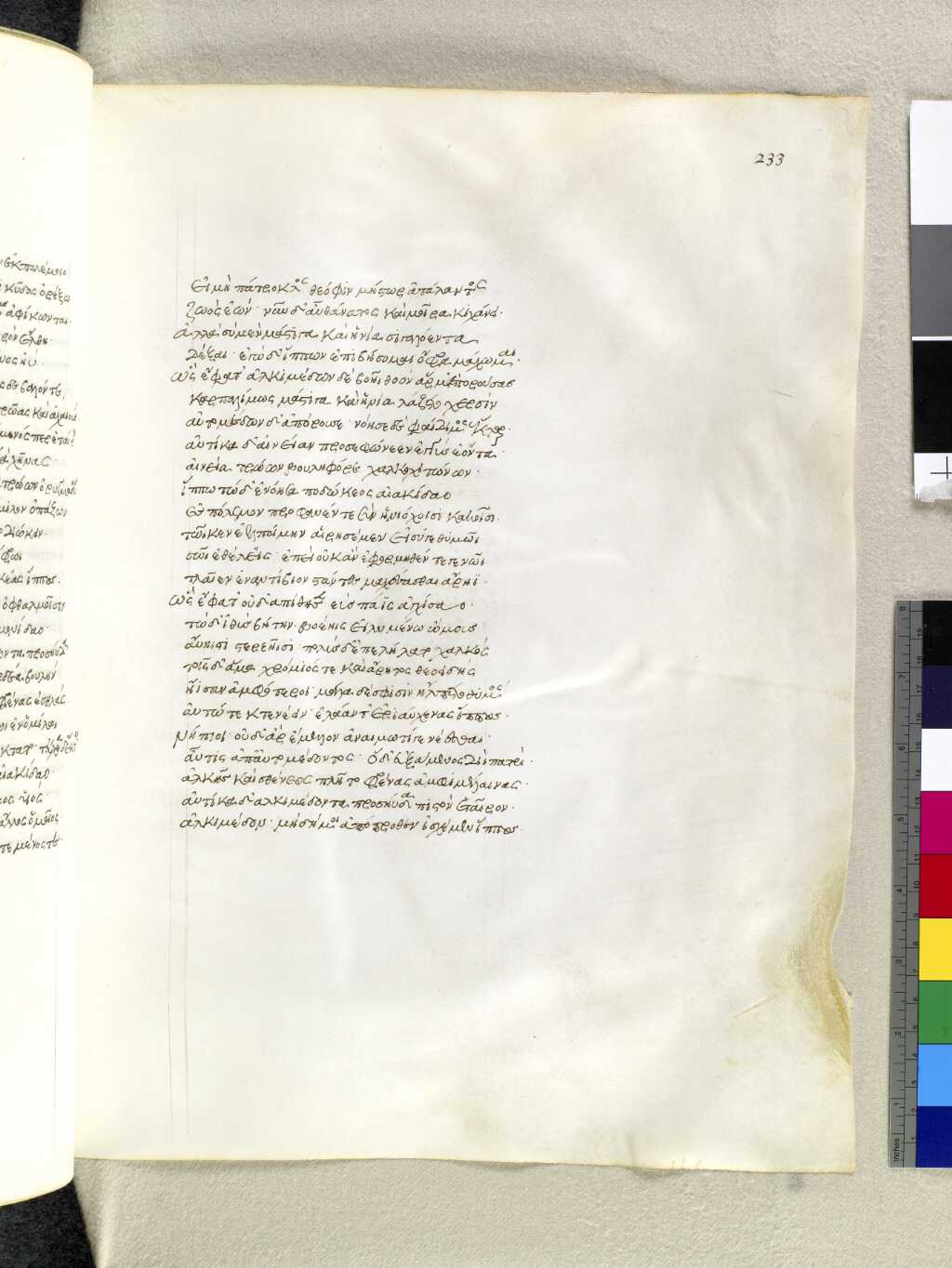
501Ἀλκίμεδον μὴ δή μοι ἀπόπροθεν ἰσχέμεν ἵππους, 502ἀλλὰ μάλʼ ἐμπνείοντε μεταφρένῳ· οὐ γὰρ ἔγωγε 503Ἕκτορα Πριαμίδην μένεος σχήσεσθαι ὀΐω, 504πρίν γʼ ἐπʼ Ἀχιλλῆος καλλίτριχε βήμεναι ἵππω 505νῶϊ κατακτείναντα, φοβῆσαί τε στίχας ἀνδρῶν 506Ἀργείων, ἤ κʼ αὐτὸς ἐνὶ πρώτοισιν ἁλοίη. 507ὣς εἰπὼν Αἴαντε καλέσσατο καὶ Μενέλαον· 508Αἴαντʼ Ἀργείων ἡγήτορε καὶ Μενέλαε 509ἤτοι μὲν τὸν νεκρὸν ἐπιτράπεθʼ οἵ περ ἄριστοι 510ἀμφʼ αὐτῷ βεβάμεν καὶ ἀμύνεσθαι στίχας ἀνδρῶν, 511νῶϊν δὲ ζωοῖσιν ἀμύνετε νηλεὲς ἦμαρ· 512τῇδε γὰρ ἔβρισαν πόλεμον κάτα δακρυόεντα 513Ἕκτωρ Αἰνείας θʼ, οἳ Τρώων εἰσὶν ἄριστοι. 514ἀλλʼ ἤτοι μὲν ταῦτα θεῶν ἐν γούνασι κεῖται· 515ἥσω γὰρ καὶ ἐγώ, τὰ δέ κεν Διὶ πάντα μελήσει. 516ἦ ῥα, καὶ ἀμπεπαλὼν προΐει δολιχόσκιον ἔγχος, 517καὶ βάλεν Ἀρήτοιο κατʼ ἀσπίδα πάντοσʼ ἐΐσην· 518ἣ δʼ οὐκ ἔγχος ἔρυτο, διὰ πρὸ δὲ εἴσατο χαλκός, 519νειαίρῃ δʼ ἐν γαστρὶ διὰ ζωστῆρος ἔλασσεν. 520ὡς δʼ ὅτʼ ἂν ὀξὺν ἔχων πέλεκυν αἰζήϊος ἀνὴρ 521κόψας ἐξόπιθεν κεράων βοὸς ἀγραύλοιο 522ἶνα τάμῃ διὰ πᾶσαν, ὃ δὲ προθορὼν ἐρίπῃσιν, 523ὣς ἄρʼ ὅ γε προθορὼν πέσεν ὕπτιος· ἐν δέ οἱ ἔγχος 524νηδυίοισι μάλʼ ὀξὺ κραδαινόμενον λύε γυῖα. 525Ἕκτωρ δʼ Αὐτομέδοντος ἀκόντισε δουρὶ φαεινῷ·
He poised and hurled as he spoke, whereon the spear struck the round shield of Aretus, and went right through it for the shield stayed it not, so that it was driven through his belt into the lower part of his belly. As when some sturdy youth, axe in hand, deals his blow behind the horns of an ox and severs the tendons at the back of its neck so that it springs forward and then drops, even so did Aretus give one bound and then fall on his back the spear quivering in his body till it made an end of him. Hector then aimed a spear at Automedon but he saw it coming and stooped forward to avoid it, so that it flew past him and the point stuck in the ground, while the butt-end went on quivering till Mars robbed it of its force. They would then have fought hand to hand with swords had not the two Ajaxes forced their way through the crowd when they heard their comrade calling, and parted them for all their fury—for Hector, Aeneas, and Chromius were afraid and drew back, leaving Aretus to lie there struck to the heart. Automedon, peer of fleet Mars, then stripped him of his armour and vaunted over him saying, “I have done little to assuage my sorrow for the son of Menoetius, for the man I have killed is not so good as he was.”
As he spoke he took the blood-stained spoils and laid them upon his chariot; then he mounted the car with his hands and feet all steeped in gore as a lion that has been gorging upon a bull.
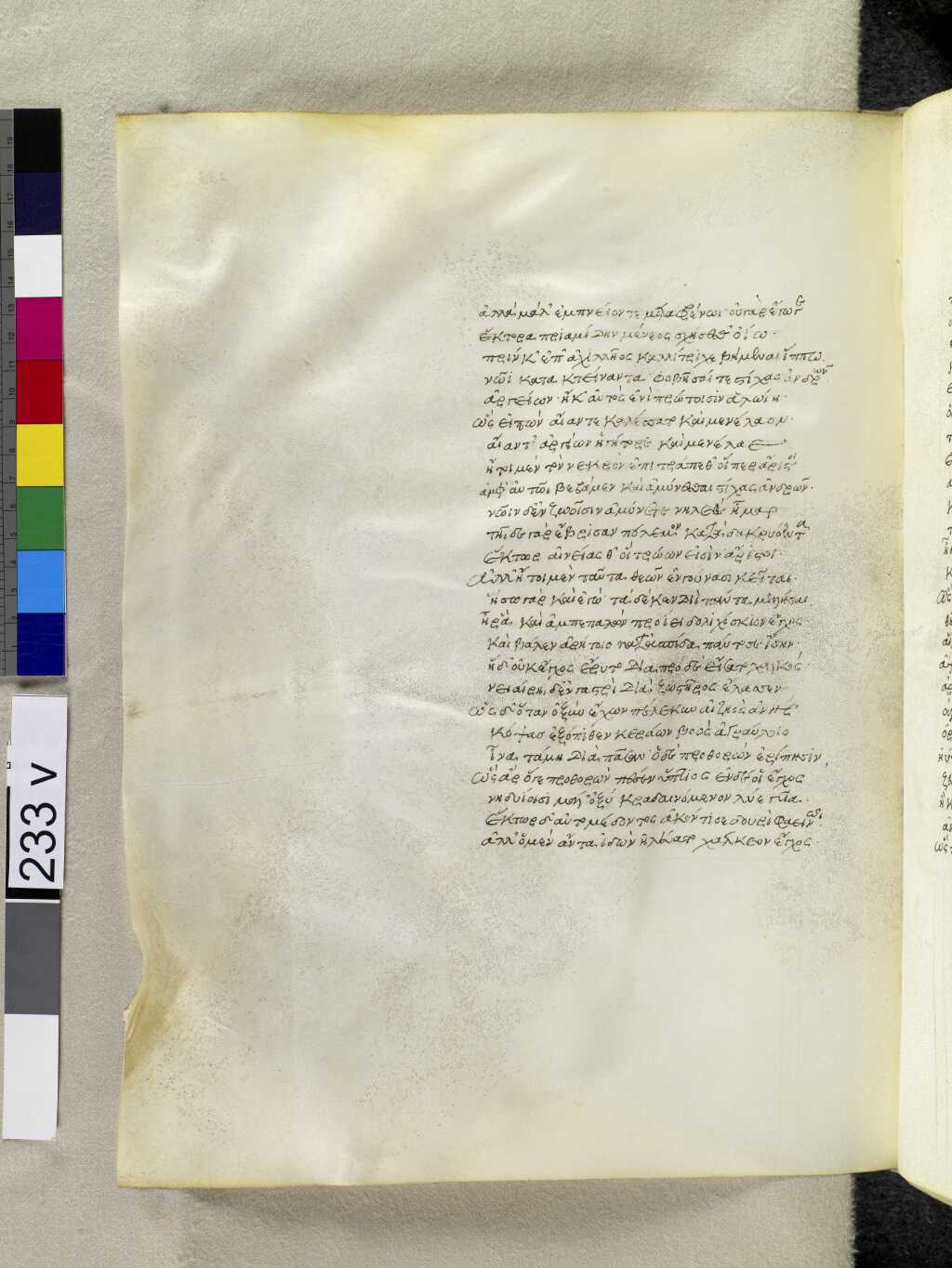
526ἀλλʼ ὃ μὲν ἄντα ἰδὼν ἠλεύατο χάλκεον ἔγχος· 527πρόσσω γὰρ κατέκυψε, τὸ δʼ ἐξόπιθεν δόρυ μακρὸν 528οὔδει ἐνισκίμφθη, ἐπὶ δʼ οὐρίαχος πελεμίχθη 529ἔγχεος· ἔνθα δʼ ἔπειτʼ ἀφίει μένος ὄβριμος Ἄρης. 530καί νύ κε δὴ ξιφέεσσʼ αὐτοσχεδὸν ὁρμηθήτην 531εἰ μή σφωʼ Αἴαντε διέκριναν μεμαῶτε, 532οἵ ῥʼ ἦλθον καθʼ ὅμιλον ἑταίρου κικλήσκοντος· 533τοὺς ὑποταρβήσαντες ἐχώρησαν πάλιν αὖτις 534Ἕκτωρ Αἰνείας τʼ ἠδὲ Χρομίος θεοειδής, 535Ἄρητον δὲ κατʼ αὖθι λίπον δεδαϊγμένον ἦτορ 536κείμενον· Αὐτομέδων δὲ θοῷ ἀτάλαντος Ἄρηϊ 537τεύχεά τʼ ἐξενάριξε καὶ εὐχόμενος ἔπος ηὔδα· 538ἦ δὴ μὰν ὀλίγον γε Μενοιτιάδαο θανόντος 539κῆρ ἄχεος μεθέηκα χερείονά περ καταπέφνων. 540ὣς εἰπὼν ἐς δίφρον ἑλὼν ἔναρα βροτόεντα 541θῆκʼ, ἂν δʼ αὐτὸς ἔβαινε πόδας καὶ χεῖρας ὕπερθεν 542αἱματόεις ὥς τίς τε λέων κατὰ ταῦρον ἐδηδώς. 543ἂψ δʼ ἐπὶ Πατρόκλῳ τέτατο κρατερὴ ὑσμίνη 544ἀργαλέη πολύδακρυς, ἔγειρε δὲ νεῖκος Ἀθήνη 545οὐρανόθεν καταβᾶσα· προῆκε γὰρ εὐρύοπα Ζεὺς 546ὀρνύμεναι Δαναούς· δὴ γὰρ νόος ἐτράπετʼ αὐτοῦ. 547ἠΰτε πορφυρέην ἶριν θνητοῖσι τανύσσῃ 548Ζεὺς ἐξ οὐρανόθεν τέρας ἔμμεναι ἢ πολέμοιο 549ἢ καὶ χειμῶνος δυσθαλπέος, ὅς ῥά τε ἔργων 550ἀνθρώπους ἀνέπαυσεν ἐπὶ χθονί, μῆλα δὲ κήδει,
And now the fierce groanful fight again raged about Patroclus, for Minerva came down from heaven and roused its fury by the command of far-seeing Jove, who had changed his mind and sent her to encourage the Danaans. As when Jove bends his bright bow in heaven in token to mankind either of war or of the chill storms that stay men from their labour and plague the flocks—even so, wrapped in such radiant raiment, did Minerva go in among the host and speak man by man to each. First she took the form and voice of Phoenix and spoke to Menelaus son of Atreus, who was standing near her. “Menelaus,” said she, “it will be shame and dishonour to you, if dogs tear the noble comrade of Achilles under the walls of Troy. Therefore be staunch, and urge your men to be so also.”
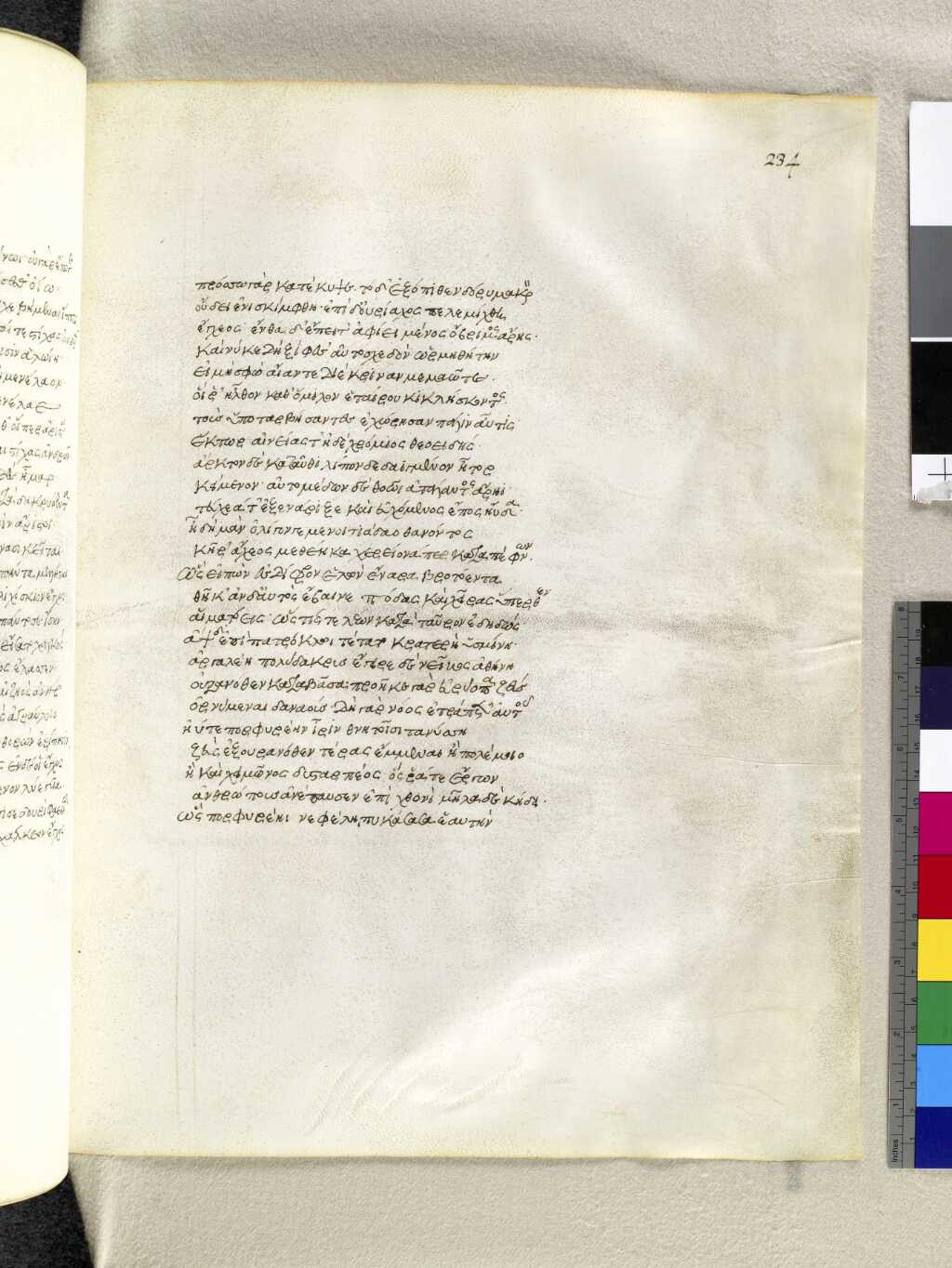
551ὣς ἣ πορφυρέῃ νεφέλῃ πυκάσασα ἓ αὐτὴν 552δύσετʼ Ἀχαιῶν ἔθνος, ἔγειρε δὲ φῶτα ἕκαστον. 553πρῶτον δʼ Ἀτρέος υἱὸν ἐποτρύνουσα προσηύδα 554ἴφθιμον Μενέλαον· ὃ γάρ ῥά οἱ ἐγγύθεν ἦεν· 555εἰσαμένη Φοίνικι δέμας καὶ ἀτειρέα φωνήν· 556σοὶ μὲν δὴ Μενέλαε κατηφείη καὶ ὄνειδος 557ἔσσεται εἴ κʼ Ἀχιλῆος ἀγαυοῦ πιστὸν ἑταῖρον 558τείχει ὕπο Τρώων ταχέες κύνες ἑλκήσουσιν. 559ἀλλʼ ἔχεο κρατερῶς, ὄτρυνε δὲ λαὸν ἅπαντα. 560τὴν δʼ αὖτε προσέειπε βοὴν ἀγαθὸς Μενέλαος· 561Φοῖνιξ ἄττα γεραιὲ παλαιγενές, εἰ γὰρ Ἀθήνη 562δοίη κάρτος ἐμοί, βελέων δʼ ἀπερύκοι ἐρωήν· 563τώ κεν ἔγωγʼ ἐθέλοιμι παρεστάμεναι καὶ ἀμύνειν 564Πατρόκλῳ· μάλα γάρ με θανὼν ἐσεμάσσατο θυμόν. 565ἀλλʼ Ἕκτωρ πυρὸς αἰνὸν ἔχει μένος, οὐδʼ ἀπολήγει 566χαλκῷ δηϊόων· τῷ γὰρ Ζεὺς κῦδος ὀπάζει. 567ὣς φάτο, γήθησεν δὲ θεὰ γλαυκῶπις Ἀθήνη, 568ὅττί ῥά οἱ πάμπρωτα θεῶν ἠρήσατο πάντων. 569ἐν δὲ βίην ὤμοισι καὶ ἐν γούνεσσιν ἔθηκε, 570καί οἱ μυίης θάρσος ἐνὶ στήθεσσιν ἐνῆκεν, 571ἥ τε καὶ ἐργομένη μάλα περ χροὸς ἀνδρομέοιο 572ἰσχανάᾳ δακέειν, λαρόν τέ οἱ αἷμʼ ἀνθρώπου· 573τοίου μιν θάρσευς πλῆσε φρένας ἀμφὶ μελαίνας, 574βῆ δʼ ἐπὶ Πατρόκλῳ, καὶ ἀκόντισε δουρὶ φαεινῷ. 575ἔσκε δʼ ἐνὶ Τρώεσσι Ποδῆς υἱὸς Ἠετίωνος
Menelaus answered, “Phoenix, my good old friend, may Minerva vouchsafe me strength and keep the darts from off me, for so shall I stand by Patroclus and defend him; his death has gone to my heart, but Hector is as a raging fire and deals his blows without ceasing, for Jove is now granting him a time of triumph.”
Minerva was pleased at his having named herself before any of the other gods. Therefore she put strength into his knees and shoulders, and made him as bold as a fly, which, though driven off will yet come again and bite if it can, so dearly does it love man’s blood—even so bold as this did she make him as he stood over Patroclus and threw his spear. Now there was among the Trojans a man named Podes, son of Eetion, who was both rich and valiant. Hector held him in the highest honour for he was his comrade and boon companion; the spear of Menelaus struck this man in the girdle just as he had turned in flight, and went right through him. Whereon he fell heavily forward, and Menelaus son of Atreus drew off his body from the Trojans into the ranks of his own people.
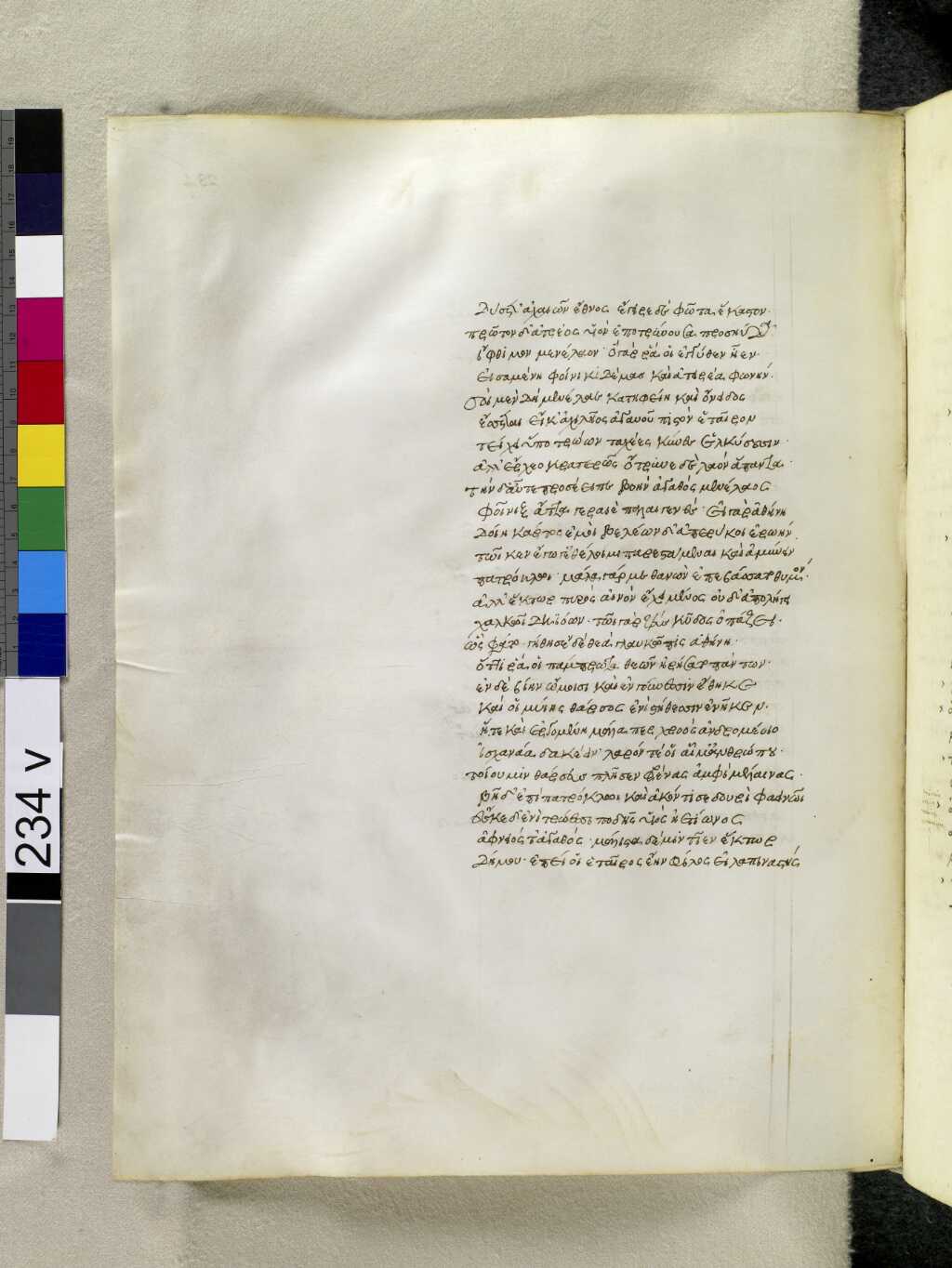
576ἀφνειός τʼ ἀγαθός τε· μάλιστα δέ μιν τίεν Ἕκτωρ 577δήμου, ἐπεί οἱ ἑταῖρος ἔην φίλος εἰλαπιναστής· 578τόν ῥα κατὰ ζωστῆρα βάλε ξανθὸς Μενέλαος 579ἀΐξαντα φόβον δέ, διὰ πρὸ δὲ χαλκὸν ἔλασσε· 580δούπησεν δὲ πεσών· ἀτὰρ Ἀτρεΐδης Μενέλαος 581νεκρὸν ὑπʼ ἐκ Τρώων ἔρυσεν μετὰ ἔθνος ἑταίρων. 582Ἕκτορα δʼ ἐγγύθεν ἱστάμενος ὄτρυνεν Ἀπόλλων 583Φαίνοπι Ἀσιάδῃ ἐναλίγκιος, ὅς οἱ ἁπάντων 584ξείνων φίλτατος ἔσκεν Ἀβυδόθι οἰκία ναίων· 585τῷ μιν ἐεισάμενος προσέφη ἑκάεργος Ἀπόλλων· 586Ἕκτορ τίς κέ σʼ ἔτʼ ἄλλος Ἀχαιῶν ταρβήσειεν; 587οἷον δὴ Μενέλαον ὑπέτρεσας, ὃς τὸ πάρος γε 588μαλθακὸς αἰχμητής· νῦν δʼ οἴχεται οἶος ἀείρας 589νεκρὸν ὑπʼ ἐκ Τρώων, σὸν δʼ ἔκτανε πιστὸν ἑταῖρον 590ἐσθλὸν ἐνὶ προμάχοισι Ποδῆν υἱὸν Ἠετίωνος. 591ὣς φάτο, τὸν δʼ ἄχεος νεφέλη ἐκάλυψε μέλαινα, 592βῆ δὲ διὰ προμάχων κεκορυθμένος αἴθοπι χαλκῷ. 593καὶ τότʼ ἄρα Κρονίδης ἕλετʼ αἰγίδα θυσσανόεσσαν 594μαρμαρέην, Ἴδην δὲ κατὰ νεφέεσσι κάλυψεν, 595ἀστράψας δὲ μάλα μεγάλʼ ἔκτυπε, τὴν δὲ τίναξε, 596νίκην δὲ Τρώεσσι δίδου, ἐφόβησε δʼ Ἀχαιούς. 597πρῶτος Πηνέλεως Βοιώτιος ἦρχε φόβοιο. 598βλῆτο γὰρ ὦμον δουρὶ πρόσω τετραμμένος αἰεὶ 599ἄκρον ἐπιλίγδην· γράψεν δέ οἱ ὀστέον ἄχρις 600αἰχμὴ Πουλυδάμαντος· ὃ γάρ ῥʼ ἔβαλε σχεδὸν ἐλθών.
Apollo then went up to Hector and spurred him on to fight, in the likeness of Phaenops son of Asius who lived in Abydos and was the most favoured of all Hector’s guests. In his likeness Apollo said, “Hector, who of the Achaeans will fear you henceforward now that you have quailed before Menelaus who has ever been rated poorly as a soldier? Yet he has now got a corpse away from the Trojans single-handed, and has slain your own true comrade, a man brave among the foremost, Podes son of Eetion.”
A dark cloud of grief fell upon Hector as he heard, and he made his way to the front clad in full armour. Thereon the son of Saturn seized his bright tasselled aegis, and veiled Ida in cloud: he sent forth his lightnings and his thunders, and as he shook his aegis he gave victory to the Trojans and routed the Achaeans.
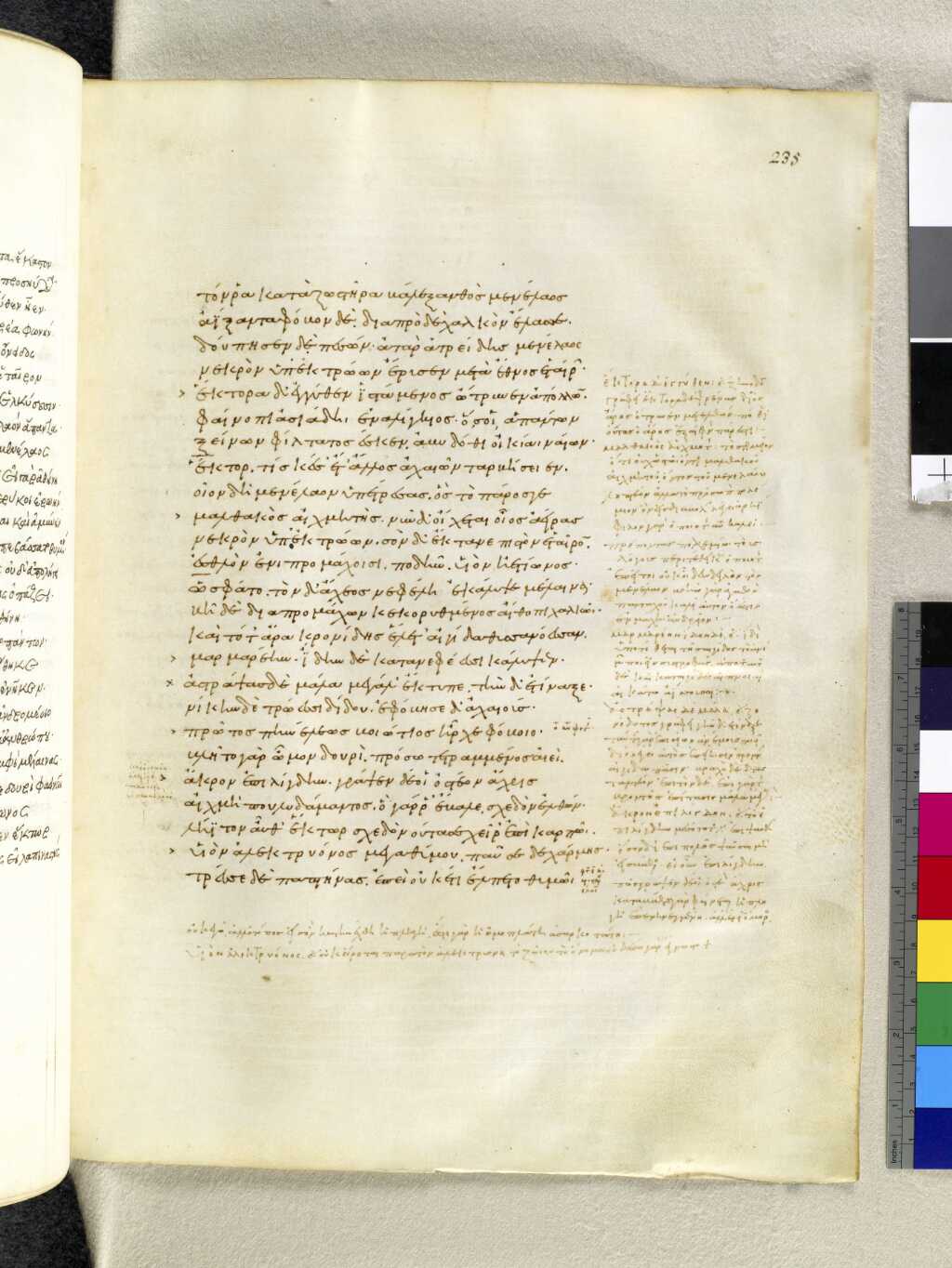
601Λήϊτον αὖθʼ Ἕκτωρ σχεδὸν οὔτασε χεῖρʼ ἐπὶ καρπῷ 602υἱὸν Ἀλεκτρυόνος μεγαθύμου, παῦσε δὲ χάρμης· 603τρέσσε δὲ παπτήνας, ἐπεὶ οὐκέτι ἔλπετο θυμῷ 604ἔγχος ἔχων ἐν χειρὶ μαχήσεσθαι Τρώεσσιν. 605Ἕκτορα δʼ Ἰδομενεὺς μετὰ Λήϊτον ὁρμηθέντα 606βεβλήκει θώρηκα κατὰ στῆθος παρὰ μαζόν· 607ἐν καυλῷ δʼ ἐάγη δολιχὸν δόρυ, τοὶ δὲ βόησαν 608Τρῶες· ὃ δʼ Ἰδομενῆος ἀκόντισε Δευκαλίδαο 609δίφρῳ ἐφεσταότος· τοῦ μέν ῥʼ ἀπὸ τυτθὸν ἅμαρτεν· 610αὐτὰρ ὃ Μηριόναο ὀπάονά θʼ ἡνίοχόν τε 611Κοίρανον, ὅς ῥʼ ἐκ Λύκτου ἐϋκτιμένης ἕπετʼ αὐτῷ· 612πεζὸς γὰρ τὰ πρῶτα λιπὼν νέας ἀμφιελίσσας 613ἤλυθε, καί κε Τρωσὶ μέγα κράτος ἐγγυάλιξεν, 614εἰ μὴ Κοίρανος ὦκα ποδώκεας ἤλασεν ἵππους· 615καὶ τῷ μὲν φάος ἦλθεν, ἄμυνε δὲ νηλεὲς ἦμαρ, 616αὐτὸς δʼ ὤλεσε θυμὸν ὑφʼ Ἕκτορος ἀνδροφόνοιο· 617τὸν βάλʼ ὑπὸ γναθμοῖο καὶ οὔατος, ἐκ δʼ ἄρʼ ὀδόντας 618ὦσε δόρυ πρυμνόν, διὰ δὲ γλῶσσαν τάμε μέσσην. 619ἤριπε δʼ ἐξ ὀχέων, κατὰ δʼ ἡνία χεῦεν ἔραζε. 620καὶ τά γε Μηριόνης ἔλαβεν χείρεσσι φίλῃσι 621κύψας ἐκ πεδίοιο, καὶ Ἰδομενῆα προσηύδα· 622μάστιε νῦν εἷός κε θοὰς ἐπὶ νῆας ἵκηαι· 623γιγνώσκεις δὲ καὶ αὐτὸς ὅ τʼ οὐκέτι κάρτος Ἀχαιῶν. 624ὣς ἔφατʼ, Ἰδομενεὺς δʼ ἵμασεν καλλίτριχας ἵππους 625νῆας ἔπι γλαφυράς· δὴ γὰρ δέος ἔμπεσε θυμῷ.
The panic was begun by Peneleos the Boeotian, for while keeping his face turned ever towards the foe he had been hit with a spear on the upper part of the shoulder; a spear thrown by Polydamas had grazed the top of the bone, for Polydamas had come up to him and struck him from close at hand. Then Hector in close combat struck Leitus son of noble Alectryon in the hand by the wrist, and disabled him from fighting further. He looked about him in dismay, knowing that never again should he wield spear in battle with the Trojans. While Hector was in pursuit of Leitus, Idomeneus struck him on the breastplate over his chest near the nipple; but the spear broke in the shaft, and the Trojans cheered aloud. Hector then aimed at Idomeneus son of Deucalion as he was standing on his chariot, and very narrowly missed him, but the spear hit Coiranus, a follower and charioteer of Meriones who had come with him from Lyctus. Idomeneus had left the ships on foot and would have afforded a great triumph to the Trojans if Coiranus had not driven quickly up to him, he therefore brought life and rescue to Idomeneus, but himself fell by the hand of murderous Hector. For Hector hit him on the jaw under the ear; the end of the spear drove out his teeth and cut his tongue in two pieces, so that he fell from his chariot and let the reins fall to the ground. Meriones gathered them up from the ground and took them into his own hands, then he said to Idomeneus, “Lay on, till you get back to the ships, for you must see that the day is no longer ours.”
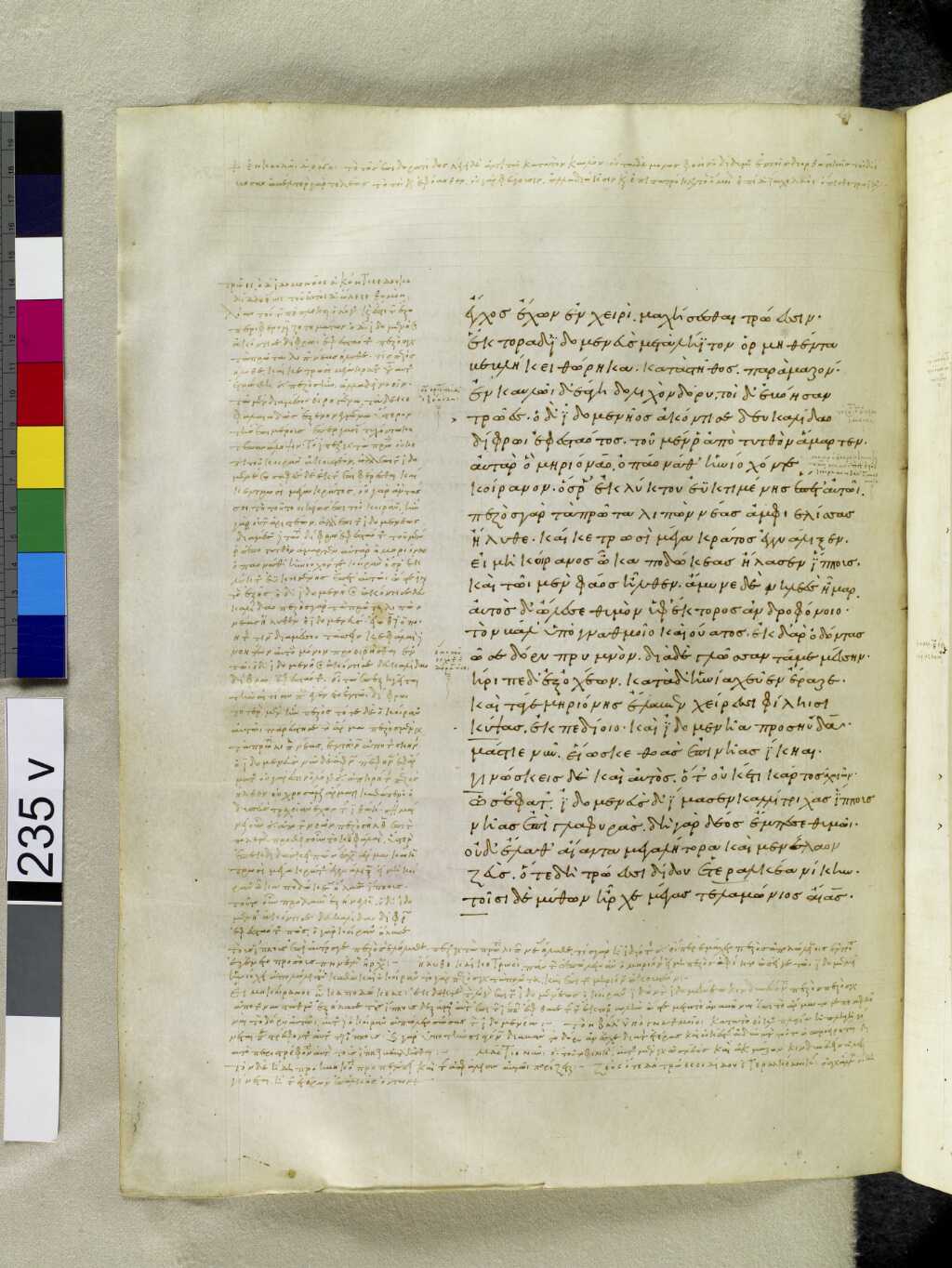
626οὐδʼ ἔλαθʼ Αἴαντα μεγαλήτορα καὶ Μενέλαον 627Ζεύς, ὅτε δὴ Τρώεσσι δίδου ἑτεραλκέα νίκην. 628τοῖσι δὲ μύθων ἦρχε μέγας Τελαμώνιος Αἴας· 629ὢ πόποι ἤδη μέν κε καὶ ὃς μάλα νήπιός ἐστι 630γνοίη ὅτι Τρώεσσι πατὴρ Ζεὺς αὐτὸς ἀρήγει. 631τῶν μὲν γὰρ πάντων βέλεʼ ἅπτεται ὅς τις ἀφήῃ 632ἢ κακὸς ἢ ἀγαθός· Ζεὺς δʼ ἔμπης πάντʼ ἰθύνει· 633ἡμῖν δʼ αὔτως πᾶσιν ἐτώσια πίπτει ἔραζε. 634ἀλλʼ ἄγετʼ αὐτοί περ φραζώμεθα μῆτιν ἀρίστην, 635ἠμὲν ὅπως τὸν νεκρὸν ἐρύσσομεν, ἠδὲ καὶ αὐτοὶ 636χάρμα φίλοις ἑτάροισι γενώμεθα νοστήσαντες, 637οἵ που δεῦρʼ ὁρόωντες ἀκηχέδατʼ, οὐδʼ ἔτι φασὶν 638Ἕκτορος ἀνδροφόνοιο μένος καὶ χεῖρας ἀάπτους 639σχήσεσθʼ, ἀλλʼ ἐν νηυσὶ μελαίνῃσιν πεσέεσθαι. 640εἴη δʼ ὅς τις ἑταῖρος ἀπαγγείλειε τάχιστα 641Πηλεΐδῃ, ἐπεὶ οὔ μιν ὀΐομαι οὐδὲ πεπύσθαι 642λυγρῆς ἀγγελίης, ὅτι οἱ φίλος ὤλεθʼ ἑταῖρος. 643ἀλλʼ οὔ πῃ δύναμαι ἰδέειν τοιοῦτον Ἀχαιῶν· 644ἠέρι γὰρ κατέχονται ὁμῶς αὐτοί τε καὶ ἵπποι. 645Ζεῦ πάτερ ἀλλὰ σὺ ῥῦσαι ὑπʼ ἠέρος υἷας Ἀχαιῶν, 646ποίησον δʼ αἴθρην, δὸς δʼ ὀφθαλμοῖσιν ἰδέσθαι· 647ἐν δὲ φάει καὶ ὄλεσσον, ἐπεί νύ τοι εὔαδεν οὕτως. 648ὣς φάτο, τὸν δὲ πατὴρ ὀλοφύρατο δάκρυ χέοντα· 649αὐτίκα δʼ ἠέρα μὲν σκέδασεν καὶ ἀπῶσεν ὀμίχλην, 650ἠέλιος δʼ ἐπέλαμψε, μάχη δʼ ἐπὶ πᾶσα φαάνθη·
On this Idomeneus lashed the horses to the ships, for fear had taken hold upon him.
Ajax and Menelaus noted how Jove had turned the scale in favour of the Trojans, and Ajax was first to speak. “Alas,” said he, “even a fool may see that father Jove is helping the Trojans. All their weapons strike home; no matter whether it be a brave man or a coward that hurls them, Jove speeds all alike, whereas ours fall each one of them without effect. What, then, will be best both as regards rescuing the body, and our return to the joy of our friends who will be grieving as they look hitherwards; for they will make sure that nothing can now check the terrible hands of Hector, and that he will fling himself upon our ships. I wish that some one would go and tell the son of Peleus at once, for I do not think he can have yet heard the sad news that the dearest of his friends has fallen. But I can see not a man among the Achaeans to send, for they and their chariots are alike hidden in darkness. O father Jove, lift this cloud from over the sons of the Achaeans; make heaven serene, and let us see; if you will that we perish, let us fall at any rate by daylight.”
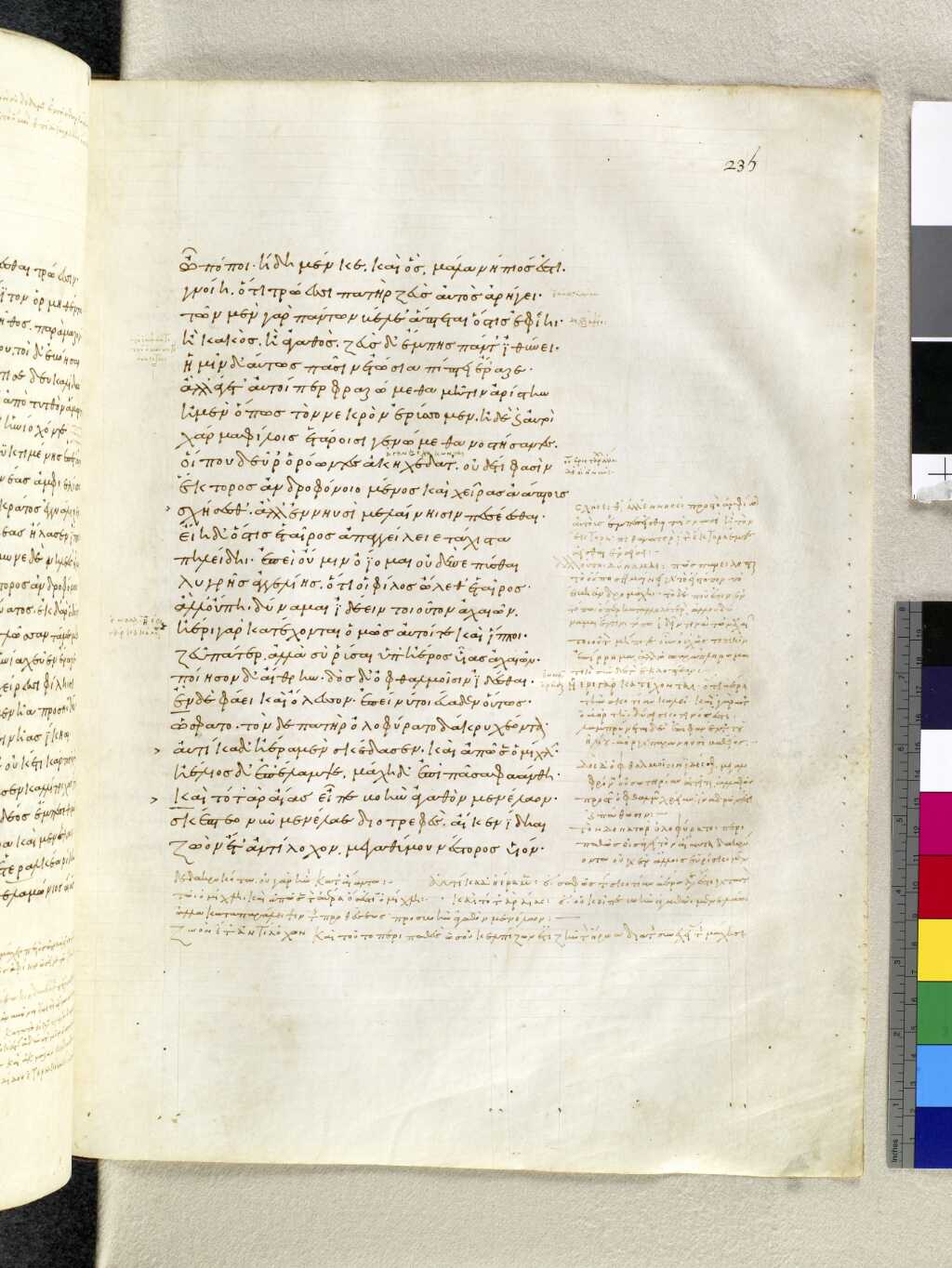
651καὶ τότʼ ἄρʼ Αἴας εἶπε βοὴν ἀγαθὸν Μενέλαον· 652σκέπτεο νῦν Μενέλαε διοτρεφὲς αἴ κεν ἴδηαι 653ζωὸν ἔτʼ Ἀντίλοχον μεγαθύμου Νέστορος υἱόν, 654ὄτρυνον δʼ Ἀχιλῆϊ δαΐφρονι θᾶσσον ἰόντα 655εἰπεῖν ὅττι ῥά οἱ πολὺ φίλτατος ὤλεθʼ ἑταῖρος. 656ὣς ἔφατʼ, οὐδʼ ἀπίθησε βοὴν ἀγαθὸς Μενέλαος, 657βῆ δʼ ἰέναι ὥς τίς τε λέων ἀπὸ μεσσαύλοιο, 658ὅς τʼ ἐπεὶ ἄρ κε κάμῃσι κύνας τʼ ἄνδρας τʼ ἐρεθίζων, 659οἵ τέ μιν οὐκ εἰῶσι βοῶν ἐκ πῖαρ ἑλέσθαι 660πάννυχοι ἐγρήσσοντες· ὃ δὲ κρειῶν ἐρατίζων 661ἰθύει, ἀλλʼ οὔ τι πρήσσει· θαμέες γὰρ ἄκοντες 662ἀντίον ἀΐσσουσι θρασειάων ἀπὸ χειρῶν, 663καιόμεναί τε δεταί, τάς τε τρεῖ ἐσσύμενός περ· 664ἠῶθεν δʼ ἀπονόσφιν ἔβη τετιηότι θυμῷ· 665ὣς ἀπὸ Πατρόκλοιο βοὴν ἀγαθὸς Μενέλαος 666ἤϊε πόλλʼ ἀέκων· περὶ γὰρ δίε μή μιν Ἀχαιοὶ 667ἀργαλέου πρὸ φόβοιο ἕλωρ δηΐοισι λίποιεν. 668πολλὰ δὲ Μηριόνῃ τε καὶ Αἰάντεσσʼ ἐπέτελλεν· 669Αἴαντʼ Ἀργείων ἡγήτορε Μηριόνη τε 670νῦν τις ἐνηείης Πατροκλῆος δειλοῖο 671μνησάσθω· πᾶσιν γὰρ ἐπίστατο μείλιχος εἶναι 672ζωὸς ἐών· νῦν αὖ θάνατος καὶ μοῖρα κιχάνει. 673ὣς ἄρα φωνήσας ἀπέβη ξανθὸς Μενέλαος, 674πάντοσε παπταίνων ὥς τʼ αἰετός, ὅν ῥά τέ φασιν 675ὀξύτατον δέρκεσθαι ὑπουρανίων πετεηνῶν,
Father Jove heard him and had compassion upon his tears. Forthwith he chased away the cloud of darkness, so that the sun shone out and all the fighting was revealed. Ajax then said to Menelaus, “Look, Menelaus, and if Antilochus son of Nestor be still living, send him at once to tell Achilles that by far the dearest to him of all his comrades has fallen.”
Menelaus heeded his words and went his way as a lion from a stockyard—the lion is tired of attacking the men and hounds, who keep watch the whole night through and will not let him feast on the fat of their herd. In his lust of meat he makes straight at them but in vain, for darts from strong hands assail him, and burning brands which daunt him for all his hunger, so in the morning he slinks sulkily away—even so did Menelaus sorely against his will leave Patroclus, in great fear lest the Achaeans should be driven back in rout and let him fall into the hands of the foe. He charged Meriones and the two Ajaxes straitly saying, “Ajaxes and Meriones, leaders of the Argives, now indeed remember how good Patroclus was; he was ever courteous while alive, bear it in mind now that he is dead.”
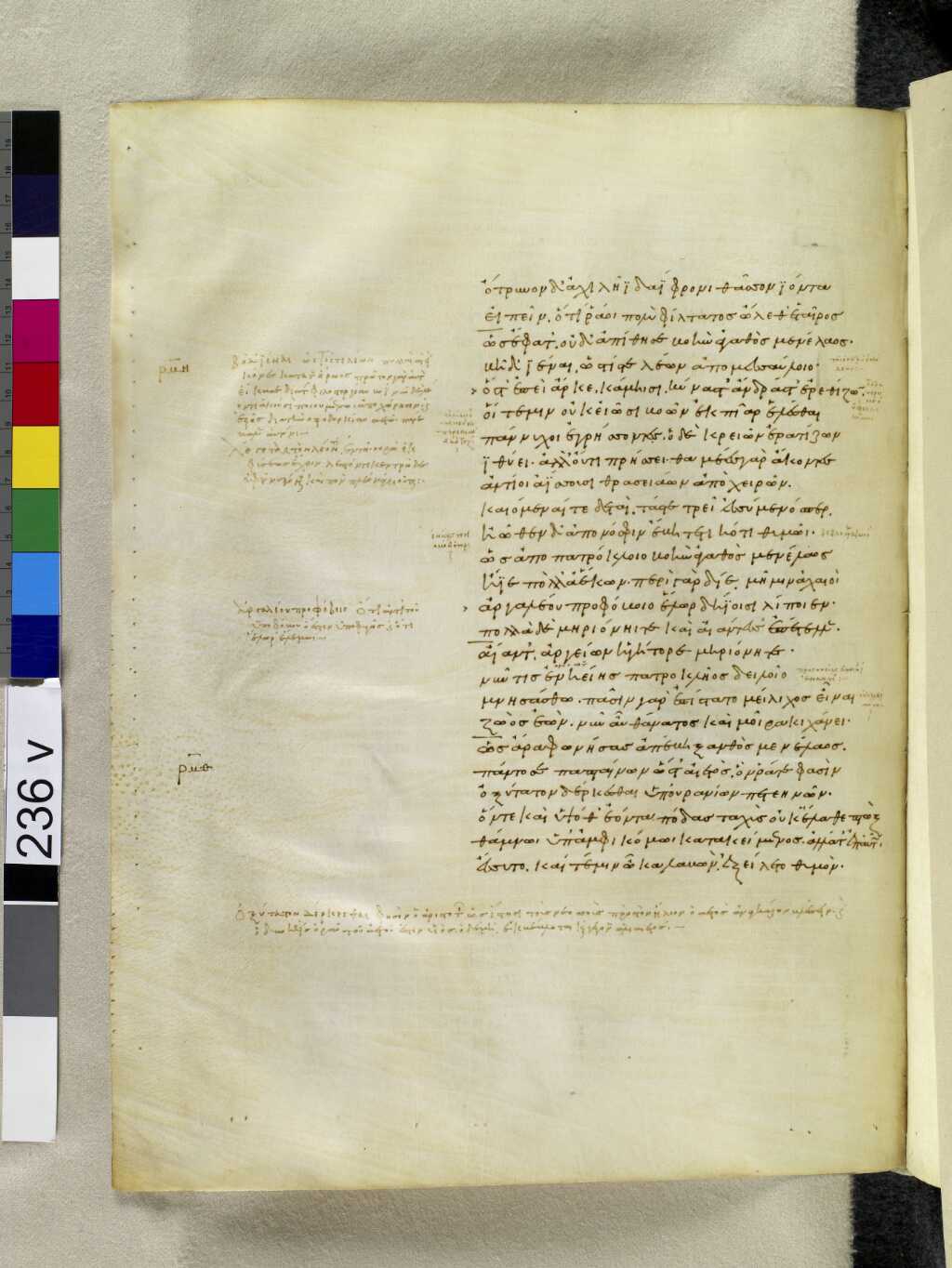
676ὅν τε καὶ ὑψόθʼ ἐόντα πόδας ταχὺς οὐκ ἔλαθε πτὼξ 677θάμνῳ ὑπʼ ἀμφικόμῳ κατακείμενος, ἀλλά τʼ ἐπʼ αὐτῷ 678ἔσσυτο, καί τέ μιν ὦκα λαβὼν ἐξείλετο θυμόν. 679ὣς τότε σοὶ Μενέλαε διοτρεφὲς ὄσσε φαεινὼ 680πάντοσε δινείσθην πολέων κατὰ ἔθνος ἑταίρων, 681εἴ που Νέστορος υἱὸν ἔτι ζώοντα ἴδοιτο. 682τὸν δὲ μάλʼ αἶψʼ ἐνόησε μάχης ἐπʼ ἀριστερὰ πάσης 683θαρσύνονθʼ ἑτάρους καὶ ἐποτρύνοντα μάχεσθαι, 684ἀγχοῦ δʼ ἱστάμενος προσέφη ξανθὸς Μενέλαος· 685Ἀντίλοχʼ εἰ δʼ ἄγε δεῦρο διοτρεφὲς ὄφρα πύθηαι 686λυγρῆς ἀγγελίης, ἣ μὴ ὤφελλε γενέσθαι. 687ἤδη μὲν σὲ καὶ αὐτὸν ὀΐομαι εἰσορόωντα 688γιγνώσκειν ὅτι πῆμα θεὸς Δαναοῖσι κυλίνδει, 689νίκη δὲ Τρώων· πέφαται δʼ ὤριστος Ἀχαιῶν 690Πάτροκλος, μεγάλη δὲ ποθὴ Δαναοῖσι τέτυκται. 691ἀλλὰ σύ γʼ αἶψʼ Ἀχιλῆϊ θέων ἐπὶ νῆας Ἀχαιῶν 692εἰπεῖν, αἴ κε τάχιστα νέκυν ἐπὶ νῆα σαώσῃ 693γυμνόν· ἀτὰρ τά γε τεύχεʼ ἔχει κορυθαίολος Ἕκτωρ. 694ὣς ἔφατʼ, Ἀντίλοχος δὲ κατέστυγε μῦθον ἀκούσας· 695δὴν δέ μιν ἀμφασίη ἐπέων λάβε, τὼ δέ οἱ ὄσσε 696δακρυόφι πλῆσθεν, θαλερὴ δέ οἱ ἔσχετο φωνή. 697ἀλλʼ οὐδʼ ὧς Μενελάου ἐφημοσύνης ἀμέλησε, 698βῆ δὲ θέειν, τὰ δὲ τεύχεʼ ἀμύμονι δῶκεν ἑταίρῳ 699Λαοδόκῳ, ὅς οἱ σχεδὸν ἔστρεφε μώνυχας ἵππους. 700τὸν μὲν δάκρυ χέοντα πόδες φέρον ἐκ πολέμοιο
With this Menelaus left them, looking round him as keenly as an eagle, whose sight they say is keener than that of any other bird—however high he may be in the heavens, not a hare that runs can escape him by crouching under bush or thicket, for he will swoop down upon it and make an end of it—even so, O Menelaus, did your keen eyes range round the mighty host of your followers to see if you could find the son of Nestor still alive. Presently Menelaus saw him on the extreme left of the battle cheering on his men and exhorting them to fight boldly. Menelaus went up to him and said, “Antilochus, come here and listen to sad news, which I would indeed were untrue. You must see with your own eyes that heaven is heaping calamity upon the Danaans, and giving victory to the Trojans. Patroclus has fallen, who was the bravest of the Achaeans, and sorely will the Danaans miss him. Run instantly to the ships and tell Achilles, that he may come to rescue the body and bear it to the ships. As for the armour, Hector already has it.”
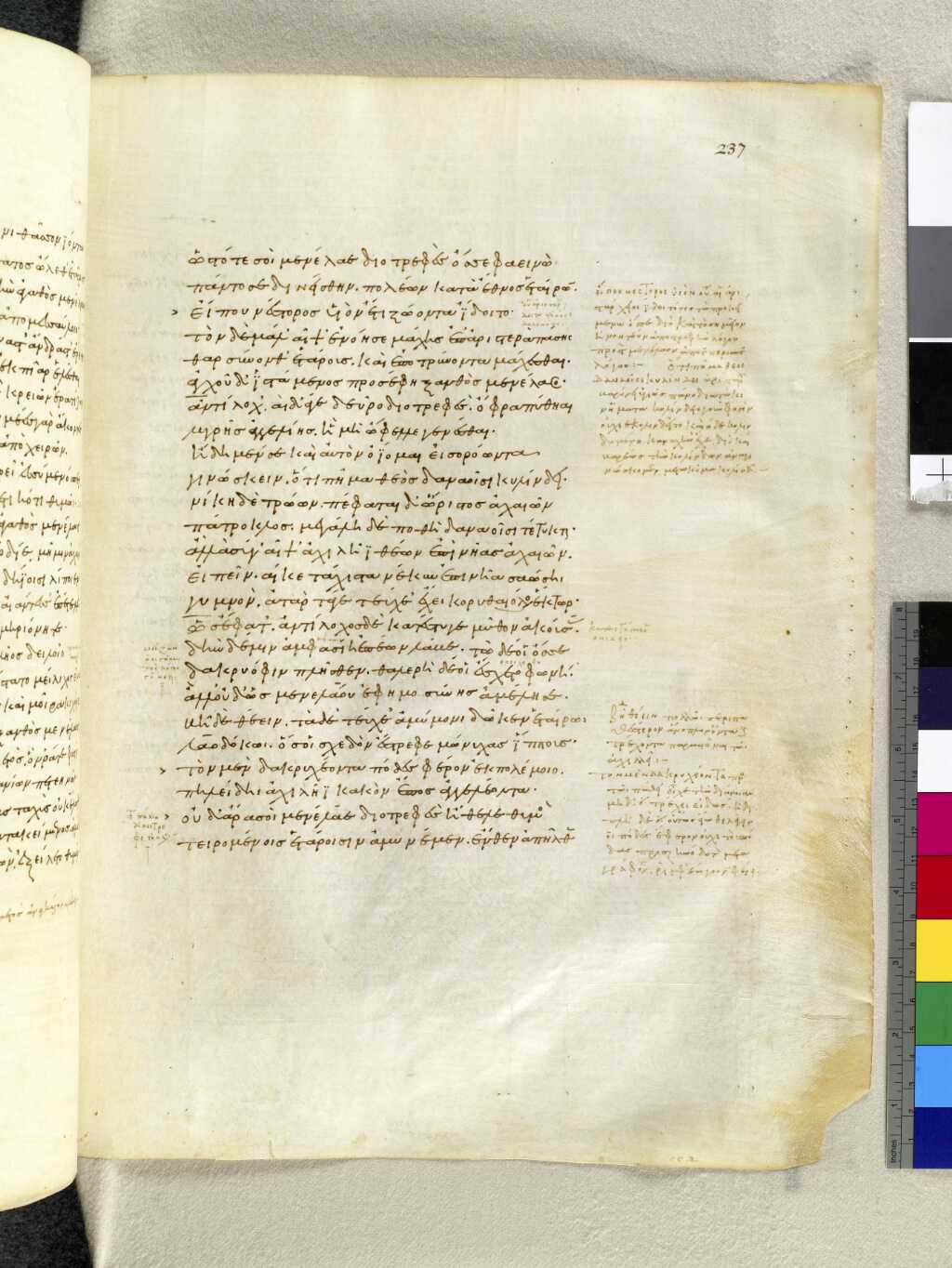
701Πηλεΐδῃ Ἀχιλῆϊ κακὸν ἔπος ἀγγελέοντα. 702οὐδʼ ἄρα σοὶ Μενέλαε διοτρεφὲς ἤθελε θυμὸς 703τειρομένοις ἑτάροισιν ἀμυνέμεν, ἔνθεν ἀπῆλθεν 704Ἀντίλοχος, μεγάλη δὲ ποθὴ Πυλίοισιν ἐτύχθη· 705ἀλλʼ ὅ γε τοῖσιν μὲν Θρασυμήδεα δῖον ἀνῆκεν, 706αὐτὸς δʼ αὖτʼ ἐπὶ Πατρόκλῳ ἥρωϊ βεβήκει, 707στῆ δὲ παρʼ Αἰάντεσσι θέων, εἶθαρ δὲ προσηύδα· 708κεῖνον μὲν δὴ νηυσὶν ἐπιπροέηκα θοῇσιν 709ἐλθεῖν εἰς Ἀχιλῆα πόδας ταχύν· οὐδέ μιν οἴω 710νῦν ἰέναι μάλα περ κεχολωμένον Ἕκτορι δίῳ· 711οὐ γάρ πως ἂν γυμνὸς ἐὼν Τρώεσσι μάχοιτο. 712ἡμεῖς δʼ αὐτοί περ φραζώμεθα μῆτιν ἀρίστην, 713ἠμὲν ὅπως τὸν νεκρὸν ἐρύσσομεν, ἠδὲ καὶ αὐτοὶ 714Τρώων ἐξ ἐνοπῆς θάνατον καὶ κῆρα φύγωμεν. 715τὸν δʼ ἠμείβετʼ ἔπειτα μέγας Τελαμώνιος Αἴας· 716πάντα κατʼ αἶσαν ἔειπες ἀγακλεὲς ὦ Μενέλαε· 717ἀλλὰ σὺ μὲν καὶ Μηριόνης ὑποδύντε μάλʼ ὦκα 718νεκρὸν ἀείραντες φέρετʼ ἐκ πόνου· αὐτὰρ ὄπισθε 719νῶϊ μαχησόμεθα Τρωσίν τε καὶ Ἕκτορι δίῳ 720ἶσον θυμὸν ἔχοντες ὁμώνυμοι, οἳ τὸ πάρος περ 721μίμνομεν ὀξὺν Ἄρηα παρʼ ἀλλήλοισι μένοντες. 722ὣς ἔφαθʼ, οἳ δʼ ἄρα νεκρὸν ἀπὸ χθονὸς ἀγκάζοντο 723ὕψι μάλα μεγάλως· ἐπὶ δʼ ἴαχε λαὸς ὄπισθε 724Τρωϊκός, ὡς εἴδοντο νέκυν αἴροντας Ἀχαιούς. 725ἴθυσαν δὲ κύνεσσιν ἐοικότες, οἵ τʼ ἐπὶ κάπρῳ
Antilochus was struck with horror. For a long time he was speechless; his eyes filled with tears and he could find no utterance, but he did as Menelaus had said, and set off running as soon as he had given his armour to a comrade, Laodocus, who was wheeling his horses round, close beside him.
Thus, then, did he run weeping from the field, to carry the bad news to Achilles son of Peleus. Nor were you, O Menelaus, minded to succour his harassed comrades, when Antilochus had left the Pylians—and greatly did they miss him—but he sent them noble Thrasymedes, and himself went back to Patroclus. He came running up to the two Ajaxes and said, “I have sent Antilochus to the ships to tell Achilles, but rage against Hector as he may, he cannot come, for he cannot fight without armour. What then will be our best plan both as regards rescuing the dead, and our own escape from death amid the battle-cries of the Trojans?”
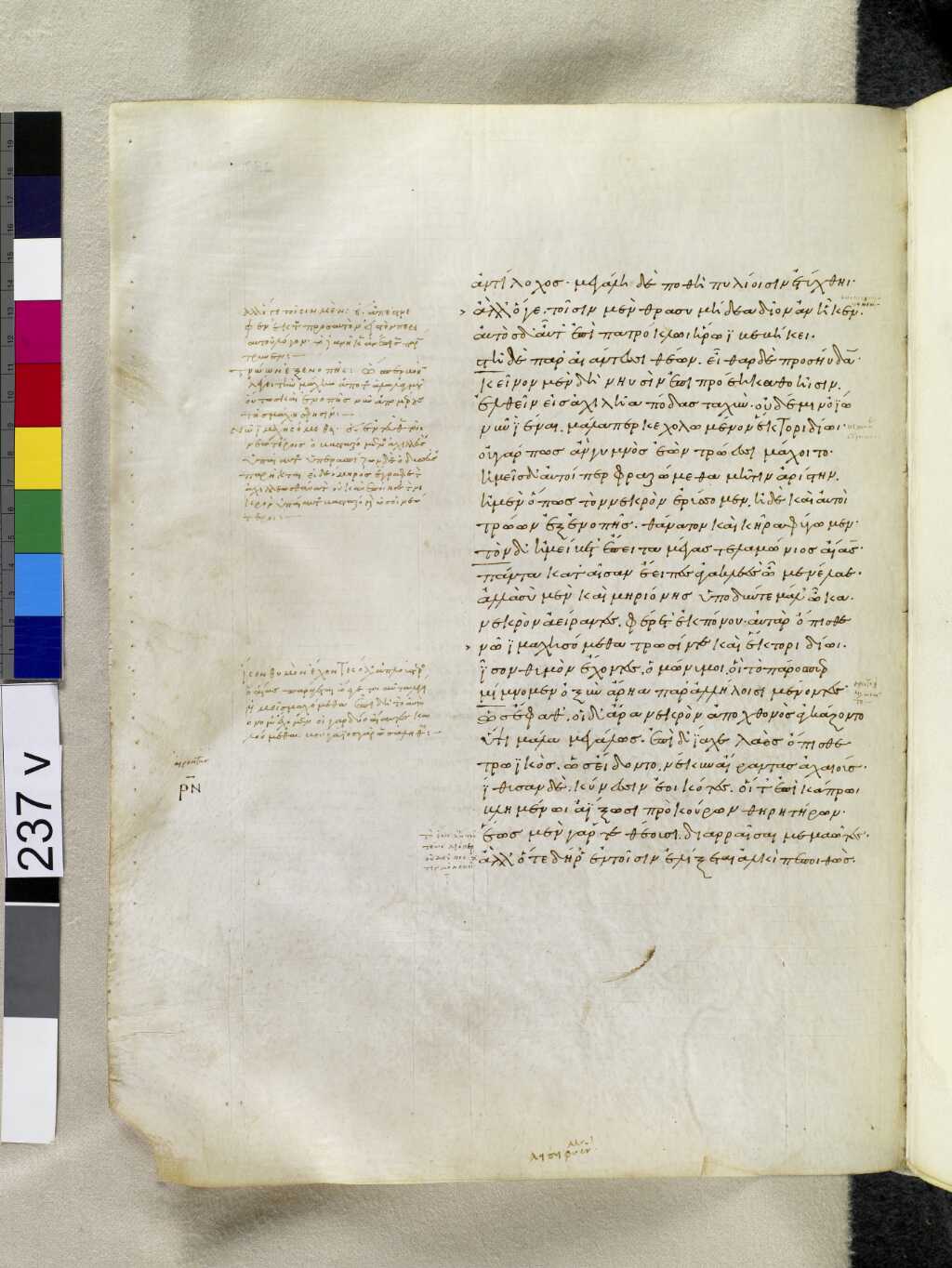
726βλημένῳ ἀΐξωσι πρὸ κούρων θηρητήρων· 727ἕως μὲν γάρ τε θέουσι διαρραῖσαι μεμαῶτες, 728ἀλλʼ ὅτε δή ῥʼ ἐν τοῖσιν ἑλίξεται ἀλκὶ πεποιθώς, 729ἄψ τʼ ἀνεχώρησαν διά τʼ ἔτρεσαν ἄλλυδις ἄλλος. 730ὣς Τρῶες εἷος μὲν ὁμιλαδὸν αἰὲν ἕποντο 731νύσσοντες ξίφεσίν τε καὶ ἔγχεσιν ἀμφιγύοισιν· 732ἀλλʼ ὅτε δή ῥʼ Αἴαντε μεταστρεφθέντε κατʼ αὐτοὺς 733σταίησαν, τῶν δὲ τράπετο χρώς, οὐδέ τις ἔτλη 734πρόσσω ἀΐξας περὶ νεκροῦ δηριάασθαι. 735ὣς οἵ γʼ ἐμμεμαῶτε νέκυν φέρον ἐκ πολέμοιο 736νῆας ἔπι γλαφυράς· ἐπὶ δὲ πτόλεμος τέτατό σφιν 737ἄγριος ἠΰτε πῦρ, τό τʼ ἐπεσσύμενον πόλιν ἀνδρῶν 738ὄρμενον ἐξαίφνης φλεγέθει, μινύθουσι δὲ οἶκοι 739ἐν σέλαϊ μεγάλῳ· τὸ δʼ ἐπιβρέμει ἲς ἀνέμοιο. 740ὣς μὲν τοῖς ἵππων τε καὶ ἀνδρῶν αἰχμητάων 741ἀζηχὴς ὀρυμαγδὸς ἐπήϊεν ἐρχομένοισιν· 742οἳ δʼ ὥς θʼ ἡμίονοι κρατερὸν μένος ἀμφιβαλόντες 743ἕλκωσʼ ἐξ ὄρεος κατὰ παιπαλόεσσαν ἀταρπὸν 744ἢ δοκὸν ἠὲ δόρυ μέγα νήϊον· ἐν δέ τε θυμὸς 745τείρεθʼ ὁμοῦ καμάτῳ τε καὶ ἱδρῷ σπευδόντεσσιν· 746ὣς οἵ γʼ ἐμμεμαῶτε νέκυν φέρον. αὐτὰρ ὄπισθεν 747Αἴαντʼ ἰσχανέτην, ὥς τε πρὼν ἰσχάνει ὕδωρ 748ὑλήεις πεδίοιο διαπρύσιον τετυχηκώς, 749ὅς τε καὶ ἰφθίμων ποταμῶν ἀλεγεινὰ ῥέεθρα 750ἴσχει, ἄφαρ δέ τε πᾶσι ῥόον πεδίον δὲ τίθησι
Ajax answered, “Menelaus, you have said well: do you, then, and Meriones stoop down, raise the body, and bear it out of the fray, while we two behind you keep off Hector and the Trojans, one in heart as in name, and long used to fighting side by side with one another.”
On this Menelaus and Meriones took the dead man in their arms and lifted him high aloft with a great effort. The Trojan host raised a hue and cry behind them when they saw the Achaeans bearing the body away, and flew after them like hounds attacking a wounded boar at the loo of a band of young huntsmen. For a while the hounds fly at him as though they would tear him in pieces, but now and again he turns on them in a fury, scaring and scattering them in all directions—even so did the Trojans for a while charge in a body, striking with sword and with spears pointed at both the ends, but when the two Ajaxes faced them and stood at bay, they would turn pale and no man dared press on to fight further about the dead.
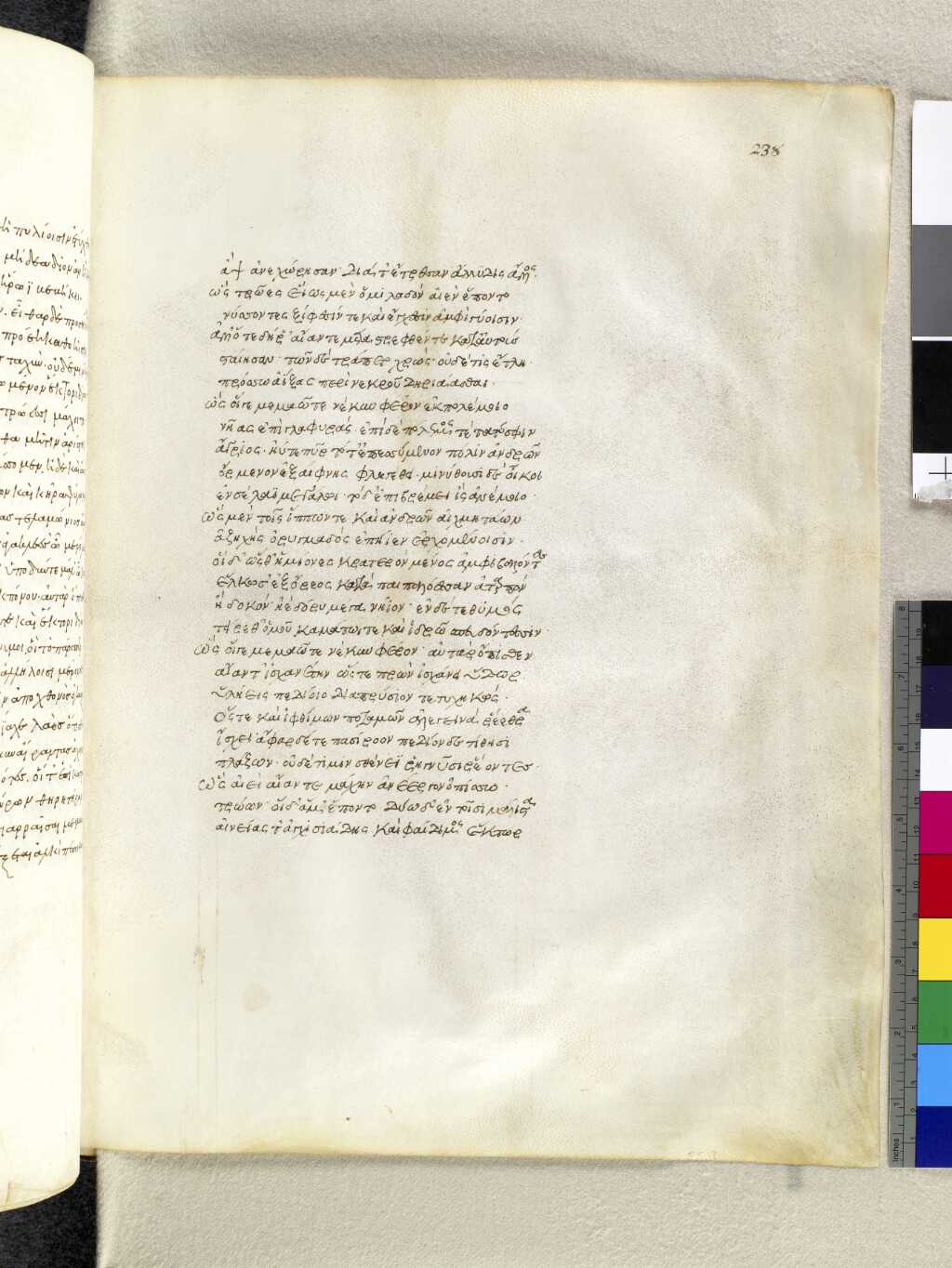
751πλάζων· οὐδέ τί μιν σθένεϊ ῥηγνῦσι ῥέοντες· 752ὣς αἰεὶ Αἴαντε μάχην ἀνέεργον ὀπίσσω 753Τρώων· οἳ δʼ ἅμʼ ἕποντο, δύω δʼ ἐν τοῖσι μάλιστα 754Αἰνείας τʼ Ἀγχισιάδης καὶ φαίδιμος Ἕκτωρ. 755τῶν δʼ ὥς τε ψαρῶν νέφος ἔρχεται ἠὲ κολοιῶν 756οὖλον κεκλήγοντες, ὅτε προΐδωσιν ἰόντα 757κίρκον, ὅ τε σμικρῇσι φόνον φέρει ὀρνίθεσσιν, 758ὣς ἄρʼ ὑπʼ Αἰνείᾳ τε καὶ Ἕκτορι κοῦροι Ἀχαιῶν 759οὖλον κεκλήγοντες ἴσαν, λήθοντο δὲ χάρμης. 760πολλὰ δὲ τεύχεα καλὰ πέσον περί τʼ ἀμφί τε τάφρον 761φευγόντων Δαναῶν· πολέμου δʼ οὐ γίγνετʼ ἐρωή.
In this wise did the two heroes strain every nerve to bear the body to the ships out of the fight. The battle raged round them like fierce flames that when once kindled spread like wildfire over a city, and the houses fall in the glare of its burning—even such was the roar and tramp of men and horses that pursued them as they bore Patroclus from the field. Or as mules that put forth all their strength to draw some beam or great piece of ship’s timber down a rough mountain-track, and they pant and sweat as they go—even so did Menelaus and Meriones pant and sweat as they bore the body of Patroclus. Behind them the two Ajaxes held stoutly out. As some wooded mountain-spur that stretches across a plain will turn water and check the flow even of a great river, nor is there any stream strong enough to break through it—even so did the two Ajaxes face the Trojans and stem the tide of their fighting though they kept pouring on towards them and foremost among them all was Aeneas son of Anchises with valiant Hector. As a flock of daws or starlings fall to screaming and chattering when they see a falcon, foe to all small birds, come soaring near them, even so did the Achaean youth raise a babel of cries as they fled before Aeneas and Hector, unmindful of their former prowess. In the rout of the Danaans much goodly armour fell round about the trench, and of fighting there was no end.
Cite
Source & Cross-References
- Source text: Venetus A (10th c.) via Homer Multitext IIIF + Perseus Greek + Butler English (PG #2199) — view original
- Critical edition: Munro & Allen (Perseus Digital Library)
← previous · → next · v cycle view · l back to library