The Iliad, Book 18
Introduction
Book 18 of the Iliad with 25 sections, each linked to its specific folio in Venetus A (Marcianus Graecus 454, 10th c.). The Homer Multitext Project provides line-level folio mappings, ensuring every section of text corresponds to the exact manuscript page where it appears.
How was this verified? (Provenance)
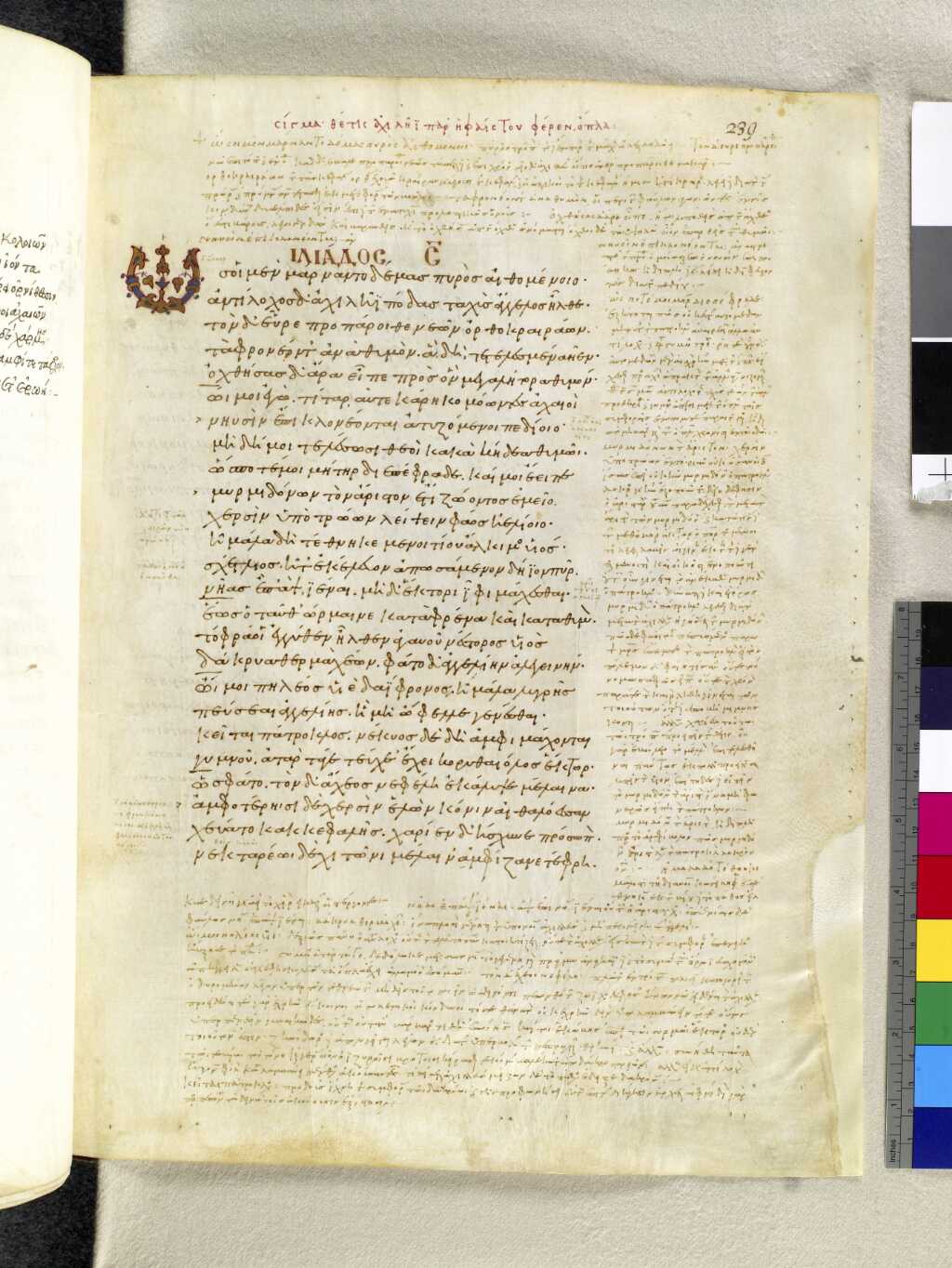
1ὣς οἳ μὲν μάρναντο δέμας πυρὸς αἰθομένοιο, 2Ἀντίλοχος δʼ Ἀχιλῆϊ πόδας ταχὺς ἄγγελος ἦλθε. 3τὸν δʼ εὗρε προπάροιθε νεῶν ὀρθοκραιράων 4τὰ φρονέοντʼ ἀνὰ θυμὸν ἃ δὴ τετελεσμένα ἦεν· 5ὀχθήσας δʼ ἄρα εἶπε πρὸς ὃν μεγαλήτορα θυμόν· 6ὤ μοι ἐγώ, τί τʼ ἄρʼ αὖτε κάρη κομόωντες Ἀχαιοὶ 7νηυσὶν ἔπι κλονέονται ἀτυζόμενοι πεδίοιο; 8μὴ δή μοι τελέσωσι θεοὶ κακὰ κήδεα θυμῷ, 9ὥς ποτέ μοι μήτηρ διεπέφραδε καί μοι ἔειπε 10Μυρμιδόνων τὸν ἄριστον ἔτι ζώοντος ἐμεῖο 11χερσὶν ὕπο Τρώων λείψειν φάος ἠελίοιο. 12ἦ μάλα δὴ τέθνηκε Μενοιτίου ἄλκιμος υἱὸς 13σχέτλιος· ἦ τʼ ἐκέλευον ἀπωσάμενον δήϊον πῦρ 14ἂψ ἐπὶ νῆας ἴμεν, μηδʼ Ἕκτορι ἶφι μάχεσθαι. 15εἷος ὃ ταῦθʼ ὥρμαινε κατὰ φρένα καὶ κατὰ θυμόν, 16τόφρά οἱ ἐγγύθεν ἦλθεν ἀγαυοῦ Νέστορος υἱὸς 17δάκρυα θερμὰ χέων, φάτο δʼ ἀγγελίην ἀλεγεινήν· 18ὤ μοι Πηλέος υἱὲ δαΐφρονος ἦ μάλα λυγρῆς 19πεύσεαι ἀγγελίης, ἣ μὴ ὤφελλε γενέσθαι. 20κεῖται Πάτροκλος, νέκυος δὲ δὴ ἀμφιμάχονται 21γυμνοῦ· ἀτὰρ τά γε τεύχεʼ ἔχει κορυθαίολος Ἕκτωρ. 22ὣς φάτο, τὸν δʼ ἄχεος νεφέλη ἐκάλυψε μέλαινα· 23ἀμφοτέρῃσι δὲ χερσὶν ἑλὼν κόνιν αἰθαλόεσσαν 24χεύατο κὰκ κεφαλῆς, χαρίεν δʼ ᾔσχυνε πρόσωπον· 25νεκταρέῳ δὲ χιτῶνι μέλαινʼ ἀμφίζανε τέφρη.
The grief of Achilles over Patroclus—The visit of Thetis to Vulcan and the armour that he made for Achilles.
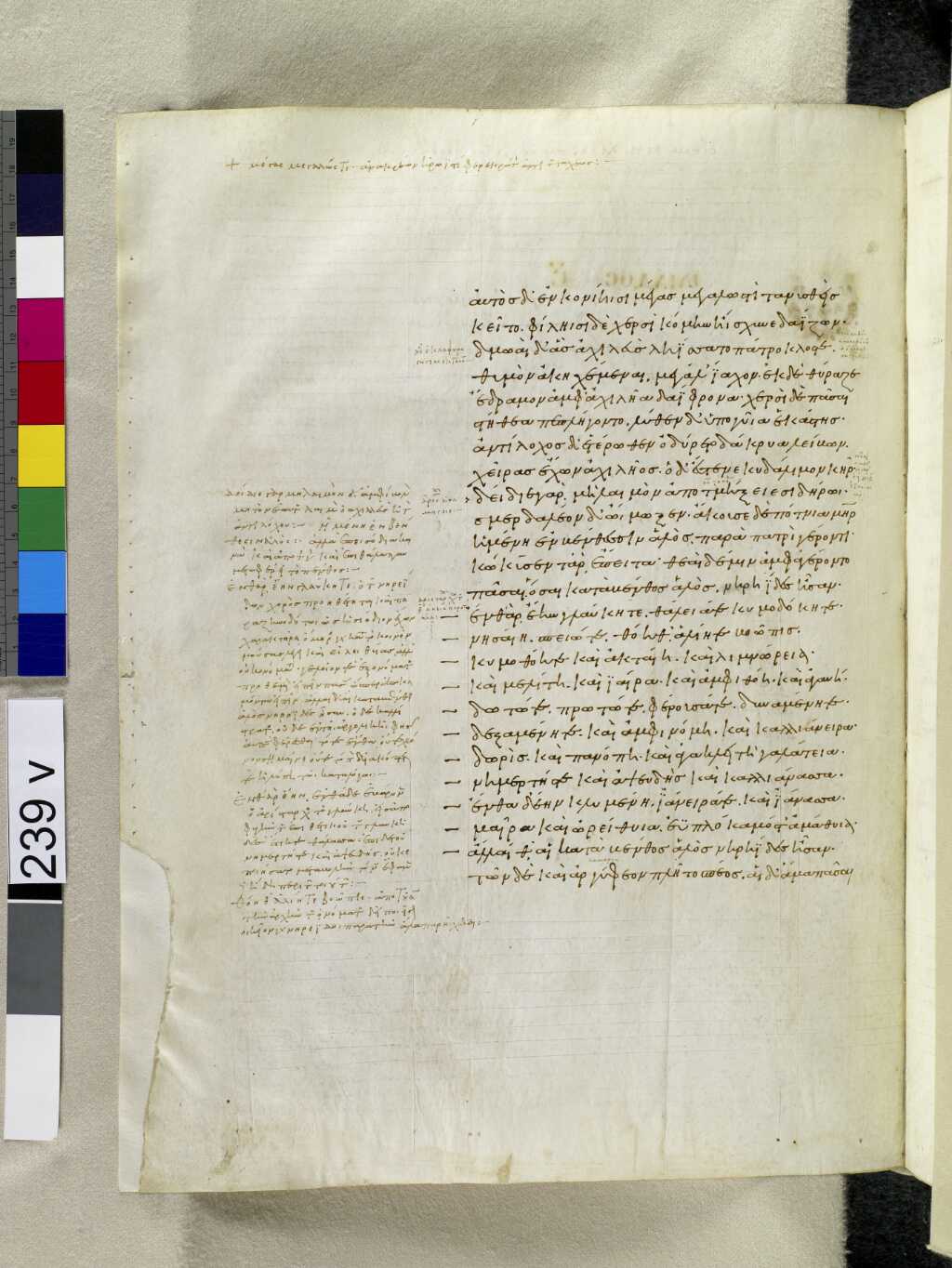
26αὐτὸς δʼ ἐν κονίῃσι μέγας μεγαλωστὶ τανυσθεὶς 27κεῖτο, φίλῃσι δὲ χερσὶ κόμην ᾔσχυνε δαΐζων. 28δμῳαὶ δʼ ἃς Ἀχιλεὺς ληΐσσατο Πάτροκλός τε 29θυμὸν ἀκηχέμεναι μεγάλʼ ἴαχον, ἐκ δὲ θύραζε 30ἔδραμον ἀμφʼ Ἀχιλῆα δαΐφρονα, χερσὶ δὲ πᾶσαι 31στήθεα πεπλήγοντο, λύθεν δʼ ὑπὸ γυῖα ἑκάστης. 32Ἀντίλοχος δʼ ἑτέρωθεν ὀδύρετο δάκρυα λείβων 33χεῖρας ἔχων Ἀχιλῆος· ὃ δʼ ἔστενε κυδάλιμον κῆρ· 34δείδιε γὰρ μὴ λαιμὸν ἀπαμήσειε σιδήρῳ. 35σμερδαλέον δʼ ᾤμωξεν· ἄκουσε δὲ πότνια μήτηρ 36ἡμένη ἐν βένθεσσιν ἁλὸς παρὰ πατρὶ γέροντι, 37κώκυσέν τʼ ἄρʼ ἔπειτα· θεαὶ δέ μιν ἀμφαγέροντο 38πᾶσαι ὅσαι κατὰ βένθος ἁλὸς Νηρηΐδες ἦσαν. 39ἔνθʼ ἄρʼ ἔην Γλαύκη τε Θάλειά τε Κυμοδόκη τε 40Νησαίη Σπειώ τε Θόη θʼ Ἁλίη τε βοῶπις 41Κυμοθόη τε καὶ Ἀκταίη καὶ Λιμνώρεια 42καὶ Μελίτη καὶ Ἴαιρα καὶ Ἀμφιθόη καὶ Ἀγαυὴ 43Δωτώ τε Πρωτώ τε Φέρουσά τε Δυναμένη τε 44Δεξαμένη τε καὶ Ἀμφινόμη καὶ Καλλιάνειρα 45Δωρὶς καὶ Πανόπη καὶ ἀγακλειτὴ Γαλάτεια 46Νημερτής τε καὶ Ἀψευδὴς καὶ Καλλιάνασσα· 47ἔνθα δʼ ἔην Κλυμένη Ἰάνειρά τε καὶ Ἰάνασσα 48Μαῖρα καὶ Ὠρείθυια ἐϋπλόκαμός τʼ Ἀμάθεια 49ἄλλαι θʼ αἳ κατὰ βένθος ἁλὸς Νηρηΐδες ἦσαν. 50τῶν δὲ καὶ ἀργύφεον πλῆτο σπέος· αἳ δʼ ἅμα πᾶσαι
Thus then did they fight as it were a flaming fire. Meanwhile the fleet runner Antilochus, who had been sent as messenger, reached Achilles, and found him sitting by his tall ships and boding that which was indeed too surely true. “Alas,” said he to himself in the heaviness of his heart, “why are the Achaeans again scouring the plain and flocking towards the ships? Heaven grant the gods be not now bringing that sorrow upon me of which my mother Thetis spoke, saying that while I was yet alive the bravest of the Myrmidons should fall before the Trojans, and see the light of the sun no longer. I fear the brave son of Menoetius has fallen through his own daring and yet I bade him return to the ships as soon as he had driven back those that were bringing fire against them, and not join battle with Hector.”
As he was thus pondering, the son of Nestor came up to him and told his sad tale, weeping bitterly the while. “Alas,” he cried, “son of noble Peleus, I bring you bad tidings, would indeed that they were untrue. Patroclus has fallen, and a fight is raging about his naked body—for Hector holds his armour.”
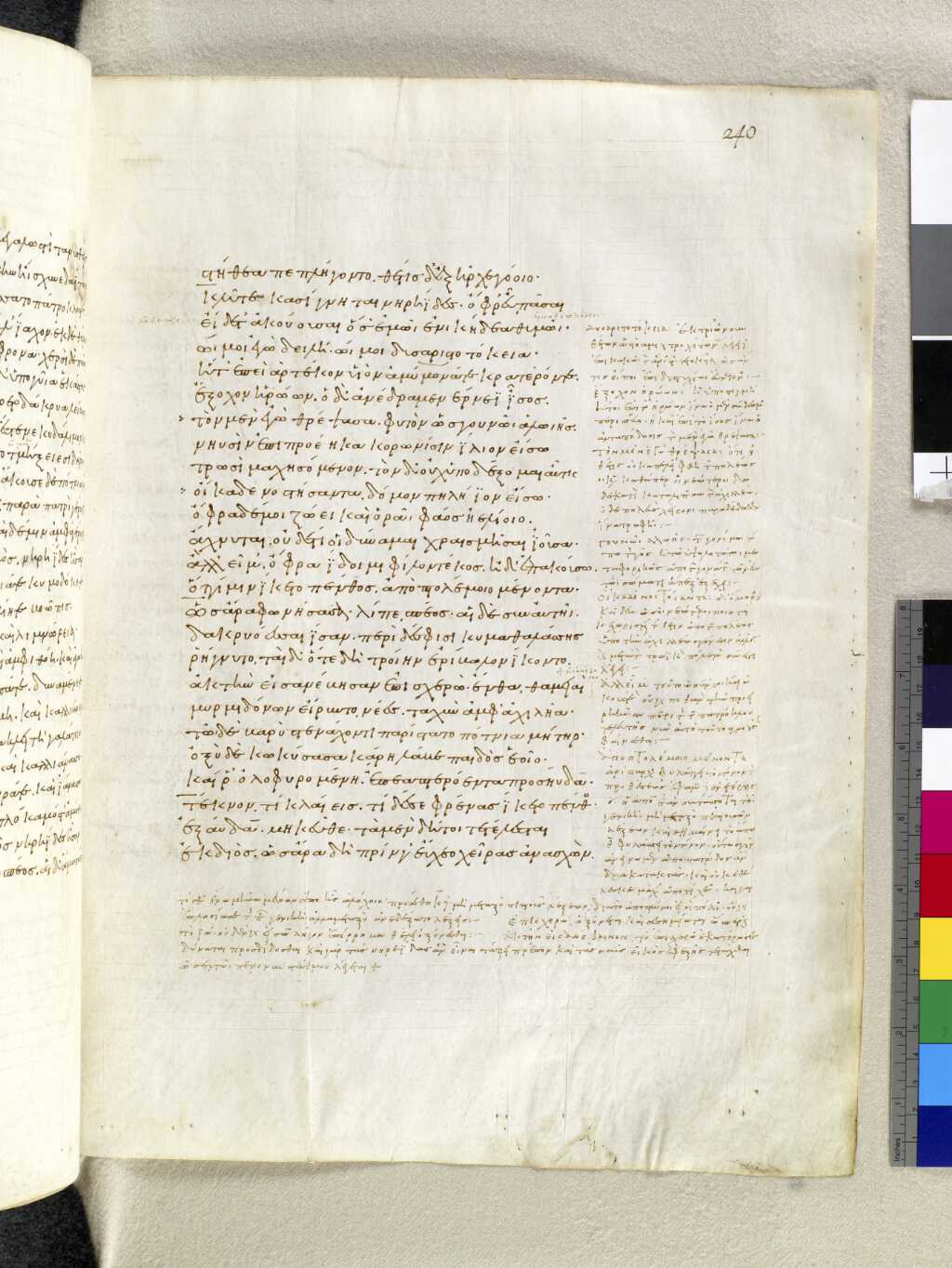
51στήθεα πεπλήγοντο, Θέτις δʼ ἐξῆρχε γόοιο· 52κλῦτε κασίγνηται Νηρηΐδες, ὄφρʼ ἐῢ πᾶσαι 53εἴδετʼ ἀκούουσαι ὅσʼ ἐμῷ ἔνι κήδεα θυμῷ. 54ὤ μοι ἐγὼ δειλή, ὤ μοι δυσαριστοτόκεια, 55ἥ τʼ ἐπεὶ ἂρ τέκον υἱὸν ἀμύμονά τε κρατερόν τε 56ἔξοχον ἡρώων· ὃ δʼ ἀνέδραμεν ἔρνεϊ ἶσος· 57τὸν μὲν ἐγὼ θρέψασα φυτὸν ὣς γουνῷ ἀλωῆς 58νηυσὶν ἐπιπροέηκα κορωνίσιν Ἴλιον εἴσω 59Τρωσὶ μαχησόμενον· τὸν δʼ οὐχ ὑποδέξομαι αὖτις 60οἴκαδε νοστήσαντα δόμον Πηλήϊον εἴσω. 61ὄφρα δέ μοι ζώει καὶ ὁρᾷ φάος ἠελίοιο 62ἄχνυται, οὐδέ τί οἱ δύναμαι χραισμῆσαι ἰοῦσα. 63ἀλλʼ εἶμʼ, ὄφρα ἴδωμι φίλον τέκος, ἠδʼ ἐπακούσω 64ὅττί μιν ἵκετο πένθος ἀπὸ πτολέμοιο μένοντα. 65ὣς ἄρα φωνήσασα λίπε σπέος· αἳ δὲ σὺν αὐτῇ 66δακρυόεσσαι ἴσαν, περὶ δέ σφισι κῦμα θαλάσσης 67ῥήγνυτο· ταὶ δʼ ὅτε δὴ Τροίην ἐρίβωλον ἵκοντο 68ἀκτὴν εἰσανέβαινον ἐπισχερώ, ἔνθα θαμειαὶ 69Μυρμιδόνων εἴρυντο νέες ταχὺν ἀμφʼ Ἀχιλῆα. 70τῷ δὲ βαρὺ στενάχοντι παρίστατο πότνια μήτηρ, 71ὀξὺ δὲ κωκύσασα κάρη λάβε παιδὸς ἑοῖο, 72καί ῥʼ ὀλοφυρομένη ἔπεα πτερόεντα προσηύδα· 73τέκνον τί κλαίεις; τί δέ σε φρένας ἵκετο πένθος; 74ἐξαύδα, μὴ κεῦθε· τὰ μὲν δή τοι τετέλεσται 75ἐκ Διός, ὡς ἄρα δὴ πρίν γʼ εὔχεο χεῖρας ἀνασχὼν
A dark cloud of grief fell upon Achilles as he listened. He filled both hands with dust from off the ground, and poured it over his head, disfiguring his comely face, and letting the refuse settle over his shirt so fair and new. He flung himself down all huge and hugely at full length, and tore his hair with his hands. The bondswomen whom Achilles and Patroclus had taken captive screamed aloud for grief, beating their breasts, and with their limbs failing them for sorrow. Antilochus bent over him the while, weeping and holding both his hands as he lay groaning for he feared that he might plunge a knife into his own throat. Then Achilles gave a loud cry and his mother heard him as she was sitting in the depths of the sea by the old man her father, whereon she screamed, and all the goddesses daughters of Nereus that dwelt at the bottom of the sea, came gathering round her. There were Glauce, Thalia and Cymodoce, Nesaia, Speo, Thoe and dark-eyed Halie, Cymothoe, Actaea and Limnorea, Melite, Iaera, Amphithoe and Agave, Doto and Proto, Pherusa and Dynamene, Dexamene, Amphinome and Callianeira, Doris, Panope, and the famous sea-nymph Galatea, Nemertes, Apseudes and Callianassa. There were also Clymene, Ianeira and Ianassa, Maera, Oreithuia and Amatheia of the lovely locks, with other Nereids who dwell in the depths of the sea. The crystal cave was filled with their multitude and they all beat their breasts while Thetis led them in their lament.
“Listen,” she cried, “sisters, daughters of Nereus, that you may hear the burden of my sorrows. Alas, woe is me, woe in that I have borne the most glorious of offspring. I bore him fair and strong, hero among heroes, and he shot up as a sapling; I tended him as a plant in a goodly garden, and sent him with his ships to Ilius to fight the Trojans, but never shall I welcome him back to the house of Peleus. So long as he lives to look upon the light of the sun he is in heaviness, and though I go to him I cannot help him. Nevertheless I will go, that I may see my dear son and learn what sorrow has befallen him though he is still holding aloof from battle.”
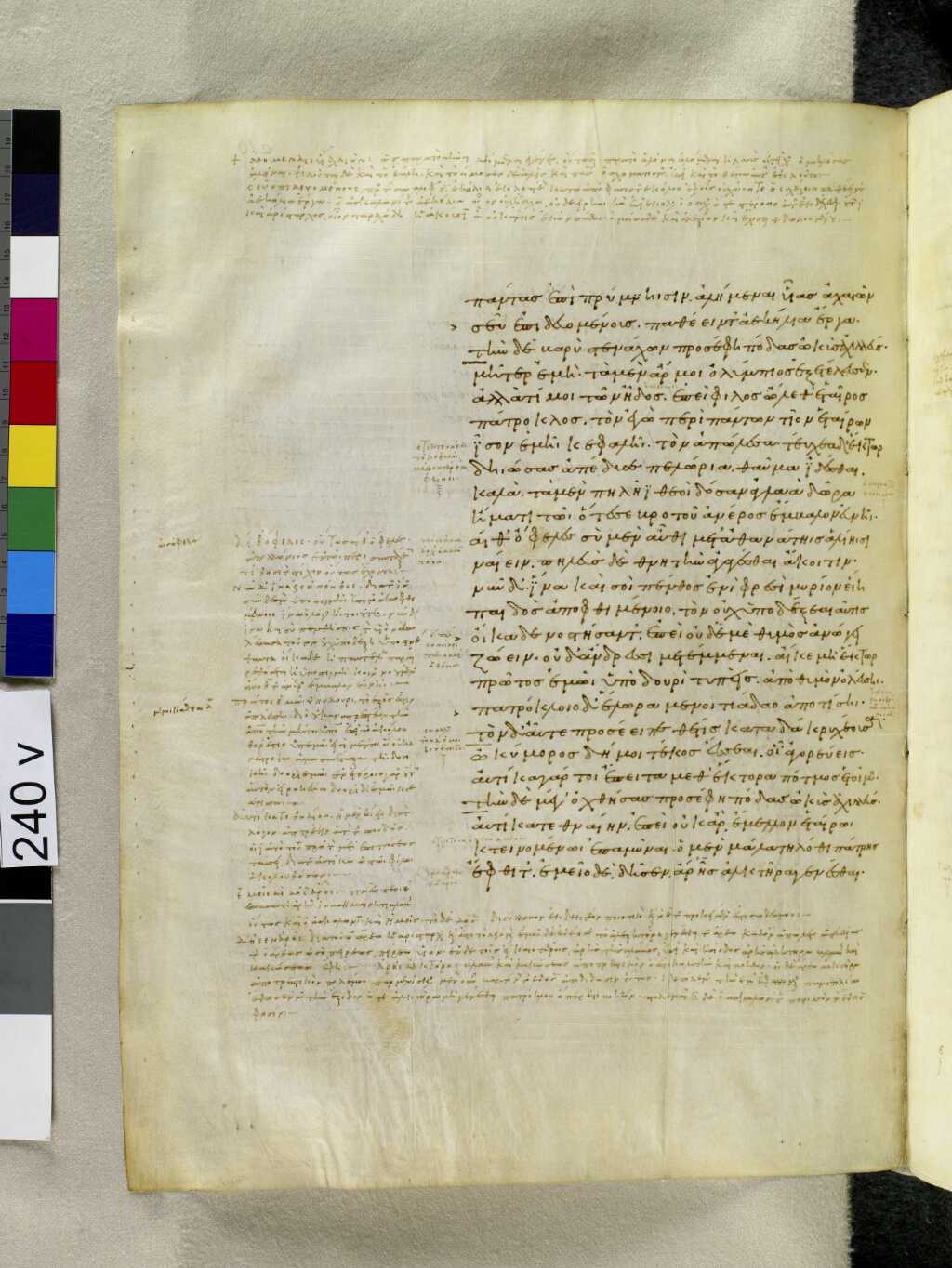
76πάντας ἐπὶ πρύμνῃσιν ἀλήμεναι υἷας Ἀχαιῶν 77σεῦ ἐπιδευομένους, παθέειν τʼ ἀεκήλια ἔργα. 78τὴν δὲ βαρὺ στενάχων προσέφη πόδας ὠκὺς Ἀχιλλεύς· 79μῆτερ ἐμή, τὰ μὲν ἄρ μοι Ὀλύμπιος ἐξετέλεσσεν· 80ἀλλὰ τί μοι τῶν ἦδος ἐπεὶ φίλος ὤλεθʼ ἑταῖρος 81Πάτροκλος, τὸν ἐγὼ περὶ πάντων τῖον ἑταίρων 82ἶσον ἐμῇ κεφαλῇ; τὸν ἀπώλεσα, τεύχεα δʼ Ἕκτωρ 83δῃώσας ἀπέδυσε πελώρια θαῦμα ἰδέσθαι 84καλά· τὰ μὲν Πηλῆϊ θεοὶ δόσαν ἀγλαὰ δῶρα 85ἤματι τῷ ὅτε σε βροτοῦ ἀνέρος ἔμβαλον εὐνῇ. 86αἴθʼ ὄφελες σὺ μὲν αὖθι μετʼ ἀθανάτῃς ἁλίῃσι 87ναίειν, Πηλεὺς δὲ θνητὴν ἀγαγέσθαι ἄκοιτιν. 88νῦν δʼ ἵνα καὶ σοὶ πένθος ἐνὶ φρεσὶ μυρίον εἴη 89παιδὸς ἀποφθιμένοιο, τὸν οὐχ ὑποδέξεαι αὖτις 90οἴκαδε νοστήσαντʼ, ἐπεὶ οὐδʼ ἐμὲ θυμὸς ἄνωγε 91ζώειν οὐδʼ ἄνδρεσσι μετέμμεναι, αἴ κε μὴ Ἕκτωρ 92πρῶτος ἐμῷ ὑπὸ δουρὶ τυπεὶς ἀπὸ θυμὸν ὀλέσσῃ, 93Πατρόκλοιο δʼ ἕλωρα Μενοιτιάδεω ἀποτίσῃ. 94τὸν δʼ αὖτε προσέειπε Θέτις κατὰ δάκρυ χέουσα· 95ὠκύμορος δή μοι τέκος ἔσσεαι, οἷʼ ἀγορεύεις· 96αὐτίκα γάρ τοι ἔπειτα μεθʼ Ἕκτορα πότμος ἑτοῖμος. 97τὴν δὲ μέγʼ ὀχθήσας προσέφη πόδας ὠκὺς Ἀχιλλεύς· 98αὐτίκα τεθναίην, ἐπεὶ οὐκ ἄρʼ ἔμελλον ἑταίρῳ 99κτεινομένῳ ἐπαμῦναι· ὃ μὲν μάλα τηλόθι πάτρης 100ἔφθιτʼ, ἐμεῖο δὲ δῆσεν ἀρῆς ἀλκτῆρα γενέσθαι.
She left the cave as she spoke, while the others followed weeping after, and the waves opened a path before them. When they reached the rich plain of Troy, they came up out of the sea in a long line on to the sands, at the place where the ships of the Myrmidons were drawn up in close order round the tents of Achilles. His mother went up to him as he lay groaning; she laid her hand upon his head and spoke piteously, saying, “My son, why are you thus weeping? What sorrow has now befallen you? Tell me; hide it not from me. Surely Jove has granted you the prayer you made him, when you lifted up your hands and besought him that the Achaeans might all of them be pent up at their ships, and rue it bitterly in that you were no longer with them.”
Achilles groaned and answered, “Mother, Olympian Jove has indeed vouchsafed me the fulfilment of my prayer, but what boots it to me, seeing that my dear comrade Patroclus has fallen—he whom I valued more than all others, and loved as dearly as my own life? I have lost him; aye, and Hector when he had killed him stripped the wondrous armour, so glorious to behold, which the gods gave to Peleus when they laid you in the couch of a mortal man. Would that you were still dwelling among the immortal sea-nymphs, and that Peleus had taken to himself some mortal bride. For now you shall have grief infinite by reason of the death of that son whom you can never welcome home—nay, I will not live nor go about among mankind unless Hector fall by my spear, and thus pay me for having slain Patroclus son of Menoetius.”
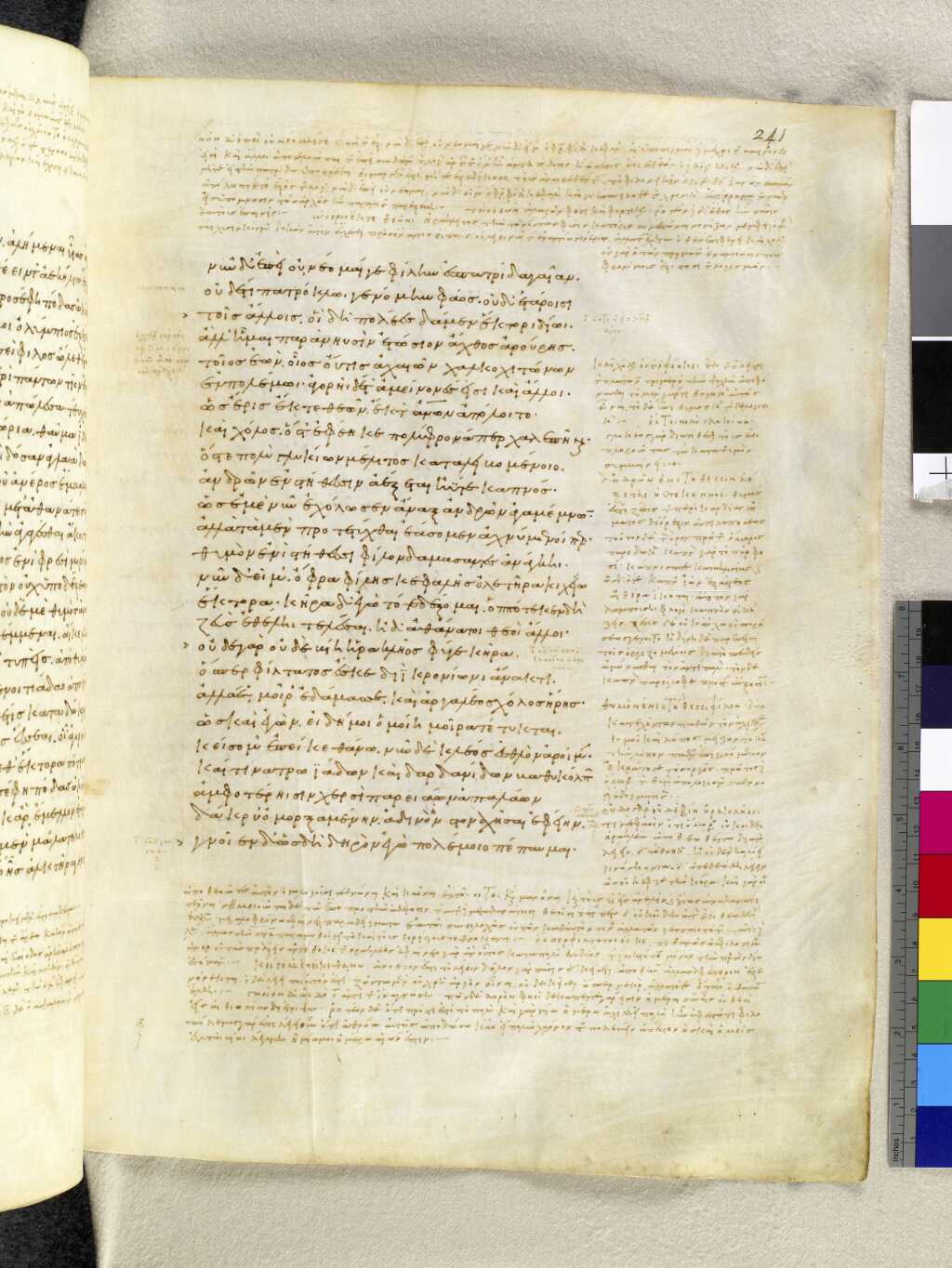
101νῦν δʼ ἐπεὶ οὐ νέομαί γε φίλην ἐς πατρίδα γαῖαν, 102οὐδέ τι Πατρόκλῳ γενόμην φάος οὐδʼ ἑτάροισι 103τοῖς ἄλλοις, οἳ δὴ πολέες δάμεν Ἕκτορι δίῳ, 104ἀλλʼ ἧμαι παρὰ νηυσὶν ἐτώσιον ἄχθος ἀρούρης, 105τοῖος ἐὼν οἷος οὔ τις Ἀχαιῶν χαλκοχιτώνων 106ἐν πολέμῳ· ἀγορῇ δέ τʼ ἀμείνονές εἰσι καὶ ἄλλοι. 107ὡς ἔρις ἔκ τε θεῶν ἔκ τʼ ἀνθρώπων ἀπόλοιτο 108καὶ χόλος, ὅς τʼ ἐφέηκε πολύφρονά περ χαλεπῆναι, 109ὅς τε πολὺ γλυκίων μέλιτος καταλειβομένοιο 110ἀνδρῶν ἐν στήθεσσιν ἀέξεται ἠΰτε καπνός· 111ὡς ἐμὲ νῦν ἐχόλωσεν ἄναξ ἀνδρῶν Ἀγαμέμνων. 112ἀλλὰ τὰ μὲν προτετύχθαι ἐάσομεν ἀχνύμενοί περ, 113θυμὸν ἐνὶ στήθεσσι φίλον δαμάσαντες ἀνάγκῃ· 114νῦν δʼ εἶμʼ ὄφρα φίλης κεφαλῆς ὀλετῆρα κιχείω 115Ἕκτορα· κῆρα δʼ ἐγὼ τότε δέξομαι ὁππότε κεν δὴ 116Ζεὺς ἐθέλῃ τελέσαι ἠδʼ ἀθάνατοι θεοὶ ἄλλοι. 117οὐδὲ γὰρ οὐδὲ βίη Ἡρακλῆος φύγε κῆρα, 118ὅς περ φίλτατος ἔσκε Διὶ Κρονίωνι ἄνακτι· 119ἀλλά ἑ μοῖρα δάμασσε καὶ ἀργαλέος χόλος Ἥρης. 120ὣς καὶ ἐγών, εἰ δή μοι ὁμοίη μοῖρα τέτυκται, 121κείσομʼ ἐπεί κε θάνω· νῦν δὲ κλέος ἐσθλὸν ἀροίμην, 122καί τινα Τρωϊάδων καὶ Δαρδανίδων βαθυκόλπων 123ἀμφοτέρῃσιν χερσὶ παρειάων ἁπαλάων 124δάκρυʼ ὀμορξαμένην ἁδινὸν στοναχῆσαι ἐφείην, 125γνοῖεν δʼ ὡς δὴ δηρὸν ἐγὼ πολέμοιο πέπαυμαι·
Thetis wept and answered, “Then, my son, is your end near at hand—for your own death awaits you full soon after that of Hector.”
Then said Achilles in his great grief, “I would die here and now, in that I could not save my comrade. He has fallen far from home, and in his hour of need my hand was not there to help him. What is there for me? Return to my own land I shall not, and I have brought no saving neither to Patroclus nor to my other comrades of whom so many have been slain by mighty Hector; I stay here by my ships a bootless burden upon the earth, I, who in fight have no peer among the Achaeans, though in council there are better than I. Therefore, perish strife both from among gods and men, and anger, wherein even a righteous man will harden his heart—which rises up in the soul of a man like smoke, and the taste thereof is sweeter than drops of honey. Even so has Agamemnon angered me. And yet—so be it, for it is over; I will force my soul into subjection as I needs must; I will go; I will pursue Hector who has slain him whom I loved so dearly, and will then abide my doom when it may please Jove and the other gods to send it. Even Hercules, the best beloved of Jove—even he could not escape the hand of death, but fate and Juno’s fierce anger laid him low, as I too shall lie when I am dead if a like doom awaits me. Till then I will win fame, and will bid Trojan and Dardanian women wring tears from their tender cheeks with both their hands in the grievousness of their great sorrow; thus shall they know that he who has held aloof so long will hold aloof no longer. Hold me not back, therefore, in the love you bear me, for you shall not move me.”
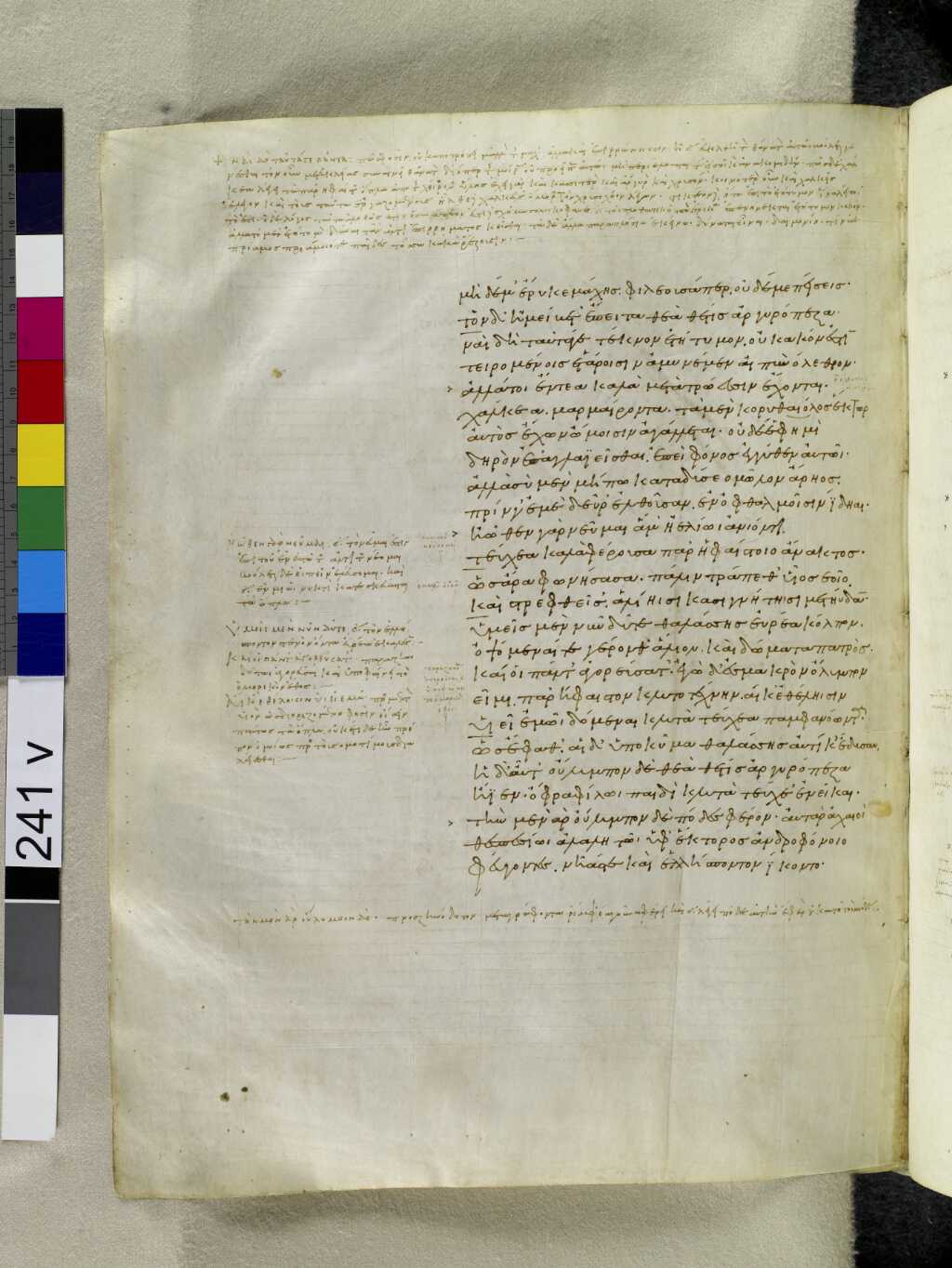
126μὴ δέ μʼ ἔρυκε μάχης φιλέουσά περ· οὐδέ με πείσεις. 127τὸν δʼ ἠμείβετʼ ἔπειτα θεὰ Θέτις ἀργυρόπεζα· 128ναὶ δὴ ταῦτά γε τέκνον ἐτήτυμον οὐ κακόν ἐστι 129τειρομένοις ἑτάροισιν ἀμυνέμεν αἰπὺν ὄλεθρον. 130ἀλλά τοι ἔντεα καλὰ μετὰ Τρώεσσιν ἔχονται 131χάλκεα μαρμαίροντα· τὰ μὲν κορυθαίολος Ἕκτωρ 132αὐτὸς ἔχων ὤμοισιν ἀγάλλεται· οὐδέ ἕ φημι 133δηρὸν ἐπαγλαϊεῖσθαι, ἐπεὶ φόνος ἐγγύθεν αὐτῷ. 134ἀλλὰ σὺ μὲν μή πω καταδύσεο μῶλον Ἄρηος 135πρίν γʼ ἐμὲ δεῦρʼ ἐλθοῦσαν ἐν ὀφθαλμοῖσιν ἴδηαι· 136ἠῶθεν γὰρ νεῦμαι ἅμʼ ἠελίῳ ἀνιόντι 137τεύχεα καλὰ φέρουσα παρʼ Ἡφαίστοιο ἄνακτος. 138ὣς ἄρα φωνήσασα πάλιν τράπεθʼ υἷος ἑοῖο, 139καὶ στρεφθεῖσʼ ἁλίῃσι κασιγνήτῃσι μετηύδα· 140ὑμεῖς μὲν νῦν δῦτε θαλάσσης εὐρέα κόλπον 141ὀψόμεναί τε γέρονθʼ ἅλιον καὶ δώματα πατρός, 142καί οἱ πάντʼ ἀγορεύσατʼ· ἐγὼ δʼ ἐς μακρὸν Ὄλυμπον 143εἶμι παρʼ Ἥφαιστον κλυτοτέχνην, αἴ κʼ ἐθέλῃσιν 144υἱεῖ ἐμῷ δόμεναι κλυτὰ τεύχεα παμφανόωντα. 145ὣς ἔφαθʼ, αἳ δʼ ὑπὸ κῦμα θαλάσσης αὐτίκʼ ἔδυσαν· 146ἣ δʼ αὖτʼ Οὔλυμπον δὲ θεὰ Θέτις ἀργυρόπεζα 147ἤϊεν ὄφρα φίλῳ παιδὶ κλυτὰ τεύχεʼ ἐνείκαι. 148τὴν μὲν ἄρʼ Οὔλυμπον δὲ πόδες φέρον· αὐτὰρ Ἀχαιοὶ 149θεσπεσίῳ ἀλαλητῷ ὑφʼ Ἕκτορος ἀνδροφόνοιο 150φεύγοντες νῆάς τε καὶ Ἑλλήσποντον ἵκοντο.
Then silver-footed Thetis answered, “My son, what you have said is true. It is well to save your comrades from destruction, but your armour is in the hands of the Trojans; Hector bears it in triumph upon his own shoulders. Full well I know that his vaunt shall not be lasting, for his end is close at hand; go not, however, into the press of battle till you see me return hither; to-morrow at break of day I shall be here, and will bring you goodly armour from King Vulcan.”
On this she left her brave son, and as she turned away she said to the sea-nymphs her sisters, “Dive into the bosom of the sea and go to the house of the old sea-god my father. Tell him everything; as for me, I will go to the cunning workman Vulcan on high Olympus, and ask him to provide my son with a suit of splendid armour.”
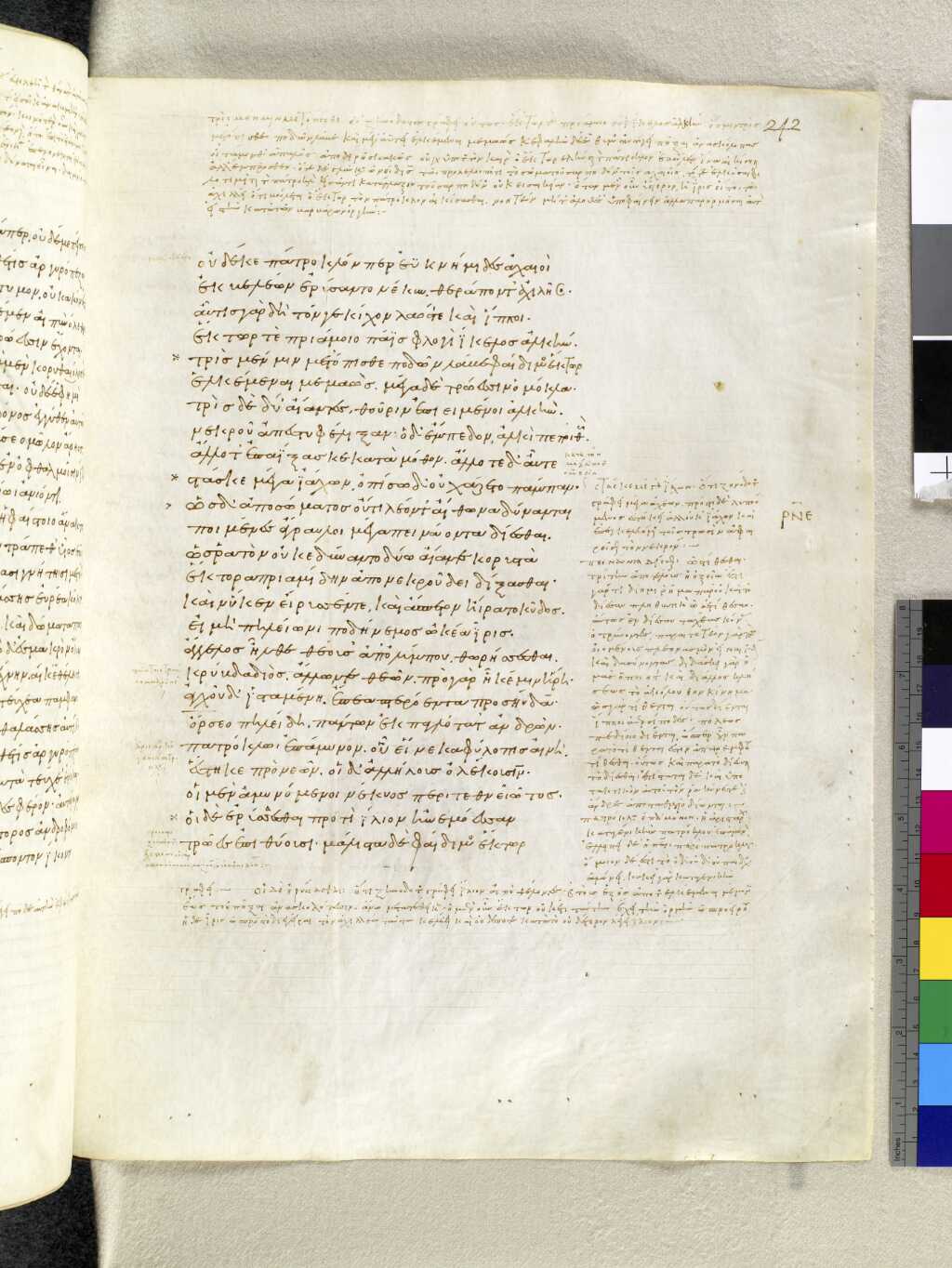
151οὐδέ κε Πάτροκλόν περ ἐϋκνήμιδες Ἀχαιοὶ 152ἐκ βελέων ἐρύσαντο νέκυν θεράποντʼ Ἀχιλῆος· 153αὖτις γὰρ δὴ τόν γε κίχον λαός τε καὶ ἵπποι 154Ἕκτωρ τε Πριάμοιο πάϊς φλογὶ εἴκελος ἀλκήν. 155τρὶς μέν μιν μετόπισθε ποδῶν λάβε φαίδιμος Ἕκτωρ 156ἑλκέμεναι μεμαώς, μέγα δὲ Τρώεσσιν ὁμόκλα· 157τρὶς δὲ δύʼ Αἴαντες θοῦριν ἐπιειμένοι ἀλκὴν 158νεκροῦ ἀπεστυφέλιξαν· ὃ δʼ ἔμπεδον ἀλκὶ πεποιθὼς 159ἄλλοτʼ ἐπαΐξασκε κατὰ μόθον, ἄλλοτε δʼ αὖτε 160στάσκε μέγα ἰάχων· ὀπίσω δʼ οὐ χάζετο πάμπαν. 161ὡς δʼ ἀπὸ σώματος οὔ τι λέοντʼ αἴθωνα δύνανται 162ποιμένες ἄγραυλοι μέγα πεινάοντα δίεσθαι, 163ὥς ῥα τὸν οὐκ ἐδύναντο δύω Αἴαντε κορυστὰ 164Ἕκτορα Πριαμίδην ἀπὸ νεκροῦ δειδίξασθαι. 165καί νύ κεν εἴρυσσέν τε καὶ ἄσπετον ἤρατο κῦδος, 166εἰ μὴ Πηλεΐωνι ποδήνεμος ὠκέα Ἶρις 167ἄγγελος ἦλθε θέουσʼ ἀπʼ Ὀλύμπου θωρήσσεσθαι 168κρύβδα Διὸς ἄλλων τε θεῶν· πρὸ γὰρ ἧκέ μιν Ἥρη. 169ἀγχοῦ δʼ ἱσταμένη ἔπεα πτερόεντα προσηύδα· 170ὄρσεο Πηλεΐδη, πάντων ἐκπαγλότατʼ ἀνδρῶν· 171Πατρόκλῳ ἐπάμυνον, οὗ εἵνεκα φύλοπις αἰνὴ 172ἕστηκε πρὸ νεῶν· οἳ δʼ ἀλλήλους ὀλέκουσιν 173οἳ μὲν ἀμυνόμενοι νέκυος πέρι τεθνηῶτος, 174οἳ δὲ ἐρύσσασθαι ποτὶ Ἴλιον ἠνεμόεσσαν 175Τρῶες ἐπιθύουσι· μάλιστα δὲ φαίδιμος Ἕκτωρ
When she had so said, they dived forthwith beneath the waves, while silver-footed Thetis went her way that she might bring the armour for her son.
Thus, then, did her feet bear the goddess to Olympus, and meanwhile the Achaeans were flying with loud cries before murderous Hector till they reached the ships and the Hellespont, and they could not draw the body of Mars’s servant Patroclus out of reach of the weapons that were showered upon him, for Hector son of Priam with his host and horsemen had again caught up to him like the flame of a fiery furnace; thrice did brave Hector seize him by the feet, striving with might and main to draw him away and calling loudly on the Trojans, and thrice did the two Ajaxes, clothed in valour as with a garment, beat him from off the body; but all undaunted he would now charge into the thick of the fight, and now again he would stand still and cry aloud, but he would give no ground. As upland shepherds that cannot chase some famished lion from a carcase, even so could not the two Ajaxes scare Hector son of Priam from the body of Patroclus.
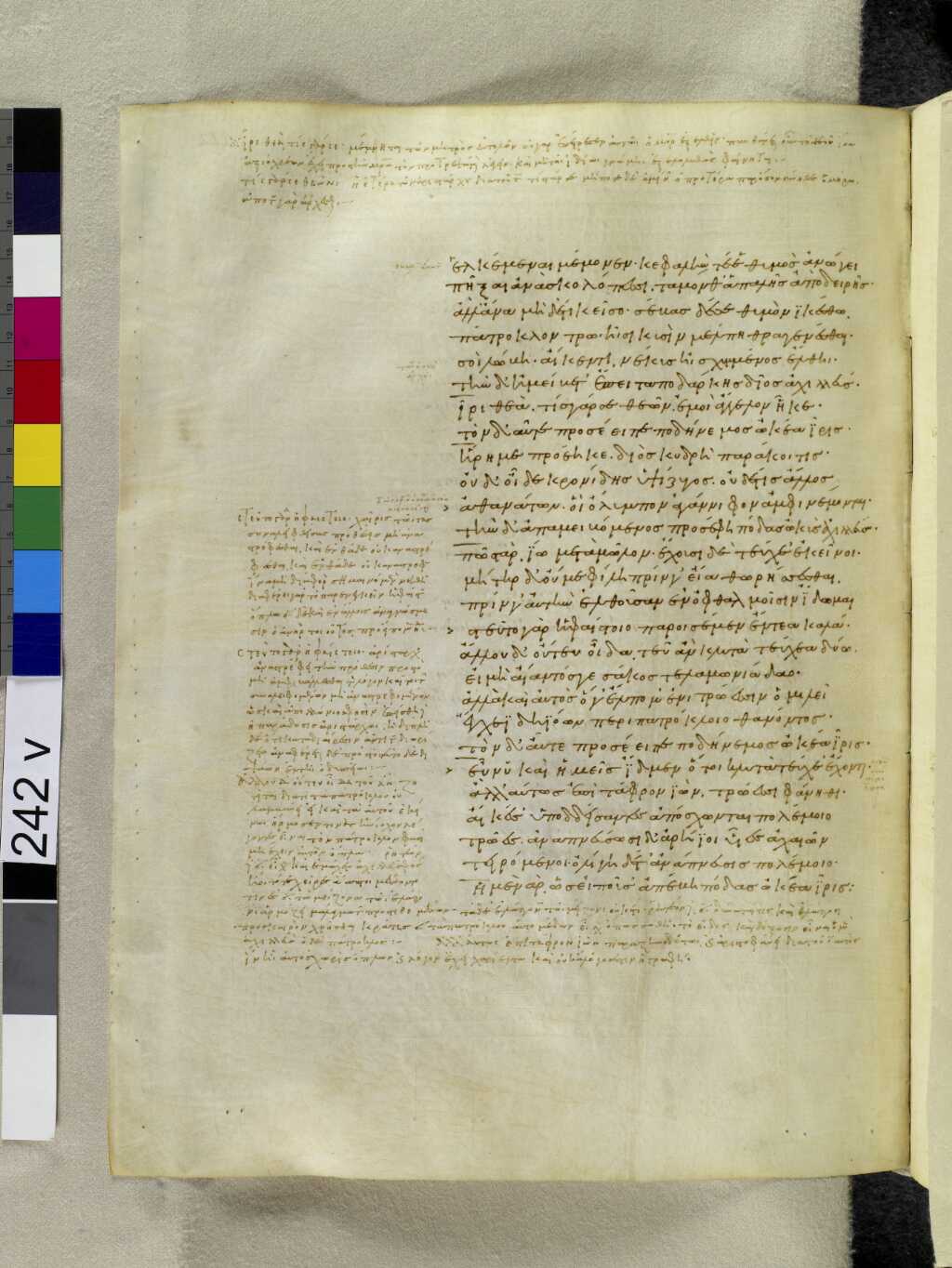
176ἑλκέμεναι μέμονεν· κεφαλὴν δέ ἑ θυμὸς ἄνωγε 177πῆξαι ἀνὰ σκολόπεσσι ταμόνθʼ ἁπαλῆς ἀπὸ δειρῆς. 178ἀλλʼ ἄνα μηδʼ ἔτι κεῖσο· σέβας δέ σε θυμὸν ἱκέσθω 179Πάτροκλον Τρῳῇσι κυσὶν μέλπηθρα γενέσθαι· 180σοὶ λώβη, αἴ κέν τι νέκυς ᾐσχυμμένος ἔλθῃ. 181τὴν δʼ ἠμείβετʼ ἔπειτα ποδάρκης δῖος Ἀχιλλεύς· 182Ἶρι θεὰ τίς γάρ σε θεῶν ἐμοὶ ἄγγελον ἧκε; 183τὸν δʼ αὖτε προσέειπε ποδήνεμος ὠκέα Ἶρις· 184Ἥρη με προέηκε Διὸς κυδρὴ παράκοιτις· 185οὐδʼ οἶδε Κρονίδης ὑψίζυγος οὐδέ τις ἄλλος 186ἀθανάτων, οἳ Ὄλυμπον ἀγάννιφον ἀμφινέμονται. 187τὴν δʼ ἀπαμειβόμενος προσέφη πόδας ὠκὺς Ἀχιλλεύς· 188πῶς τὰρ ἴω μετὰ μῶλον; ἔχουσι δὲ τεύχεʼ ἐκεῖνοι· 189μήτηρ δʼ οὔ με φίλη πρίν γʼ εἴα θωρήσσεσθαι 190πρίν γʼ αὐτὴν ἐλθοῦσαν ἐν ὀφθαλμοῖσιν ἴδωμαι· 191στεῦτο γὰρ Ἡφαίστοιο πάρʼ οἰσέμεν ἔντεα καλά. 192ἄλλου δʼ οὔ τευ οἶδα τεῦ ἂν κλυτὰ τεύχεα δύω, 193εἰ μὴ Αἴαντός γε σάκος Τελαμωνιάδαο. 194ἀλλὰ καὶ αὐτὸς ὅ γʼ ἔλπομʼ ἐνὶ πρώτοισιν ὁμιλεῖ 195ἔγχεϊ δηϊόων περὶ Πατρόκλοιο θανόντος. 196τὸν δʼ αὖτε προσέειπε ποδήνεμος ὠκέα Ἶρις· 197εὖ νυ καὶ ἡμεῖς ἴδμεν ὅ τοι κλυτὰ τεύχεʼ ἔχονται· 198ἀλλʼ αὔτως ἐπὶ τάφρον ἰὼν Τρώεσσι φάνηθι, 199αἴ κέ σʼ ὑποδείσαντες ἀπόσχωνται πολέμοιο 200Τρῶες, ἀναπνεύσωσι δʼ ἀρήϊοι υἷες Ἀχαιῶν
And now he would even have dragged it off and have won imperishable glory, had not Iris fleet as the wind, winged her way as messenger from Olympus to the son of Peleus and bidden him arm. She came secretly without the knowledge of Jove and of the other gods, for Juno sent her, and when she had got close to him she said, “Up, son of Peleus, mightiest of all mankind; rescue Patroclus about whom this fearful fight is now raging by the ships. Men are killing one another, the Danaans in defence of the dead body, while the Trojans are trying to hale it away, and take it to windy Ilius: Hector is the most furious of them all; he is for cutting the head from the body and fixing it on the stakes of the wall. Up, then, and bide here no longer; shrink from the thought that Patroclus may become meat for the dogs of Troy. Shame on you, should his body suffer any kind of outrage.”
And Achilles said, “Iris, which of the gods was it that sent you to me?”
201τειρόμενοι· ὀλίγη δέ τʼ ἀνάπνευσις πολέμοιο. 202ἣ μὲν ἄρʼ ὣς εἰποῦσʼ ἀπέβη πόδας ὠκέα Ἶρις, 203αὐτὰρ Ἀχιλλεὺς ὦρτο Διῒ φίλος· ἀμφὶ δʼ Ἀθήνη 204ὤμοις ἰφθίμοισι βάλʼ αἰγίδα θυσσανόεσσαν, 205ἀμφὶ δέ οἱ κεφαλῇ νέφος ἔστεφε δῖα θεάων 206χρύσεον, ἐκ δʼ αὐτοῦ δαῖε φλόγα παμφανόωσαν. 207ὡς δʼ ὅτε καπνὸς ἰὼν ἐξ ἄστεος αἰθέρʼ ἵκηται 208τηλόθεν ἐκ νήσου, τὴν δήϊοι ἀμφιμάχωνται, 209οἵ τε πανημέριοι στυγερῷ κρίνονται Ἄρηϊ 210ἄστεος ἐκ σφετέρου· ἅμα δʼ ἠελίῳ καταδύντι 211πυρσοί τε φλεγέθουσιν ἐπήτριμοι, ὑψόσε δʼ αὐγὴ 212γίγνεται ἀΐσσουσα περικτιόνεσσιν ἰδέσθαι, 213αἴ κέν πως σὺν νηυσὶν ἄρεω ἀλκτῆρες ἵκωνται· 214ὣς ἀπʼ Ἀχιλλῆος κεφαλῆς σέλας αἰθέρʼ ἵκανε· 215στῆ δʼ ἐπὶ τάφρον ἰὼν ἀπὸ τείχεος, οὐδʼ ἐς Ἀχαιοὺς 216μίσγετο· μητρὸς γὰρ πυκινὴν ὠπίζετʼ ἐφετμήν. 217ἔνθα στὰς ἤϋσʼ, ἀπάτερθε δὲ Παλλὰς Ἀθήνη 218φθέγξατʼ· ἀτὰρ Τρώεσσιν ἐν ἄσπετον ὦρσε κυδοιμόν. 219ὡς δʼ ὅτʼ ἀριζήλη φωνή, ὅτε τʼ ἴαχε σάλπιγξ 220ἄστυ περιπλομένων δηΐων ὕπο θυμοραϊστέων, 221ὣς τότʼ ἀριζήλη φωνὴ γένετʼ Αἰακίδαο. 222οἳ δʼ ὡς οὖν ἄϊον ὄπα χάλκεον Αἰακίδαο, 223πᾶσιν ὀρίνθη θυμός· ἀτὰρ καλλίτριχες ἵπποι 224ἂψ ὄχεα τρόπεον· ὄσσοντο γὰρ ἄλγεα θυμῷ. 225ἡνίοχοι δʼ ἔκπληγεν, ἐπεὶ ἴδον ἀκάματον πῦρ
Iris answered, “It was Juno the royal spouse of Jove, but the son of Saturn does not know of my coming, nor yet does any other of the immortals who dwell on the snowy summits of Olympus.”
Then fleet Achilles answered her saying, “How can I go up into the battle? They have my armour. My mother forbade me to arm till I should see her come, for she promised to bring me goodly armour from Vulcan; I know no man whose arms I can put on, save only the shield of Ajax son of Telamon, and he surely must be fighting in the front rank and wielding his spear about the body of dead Patroclus.”
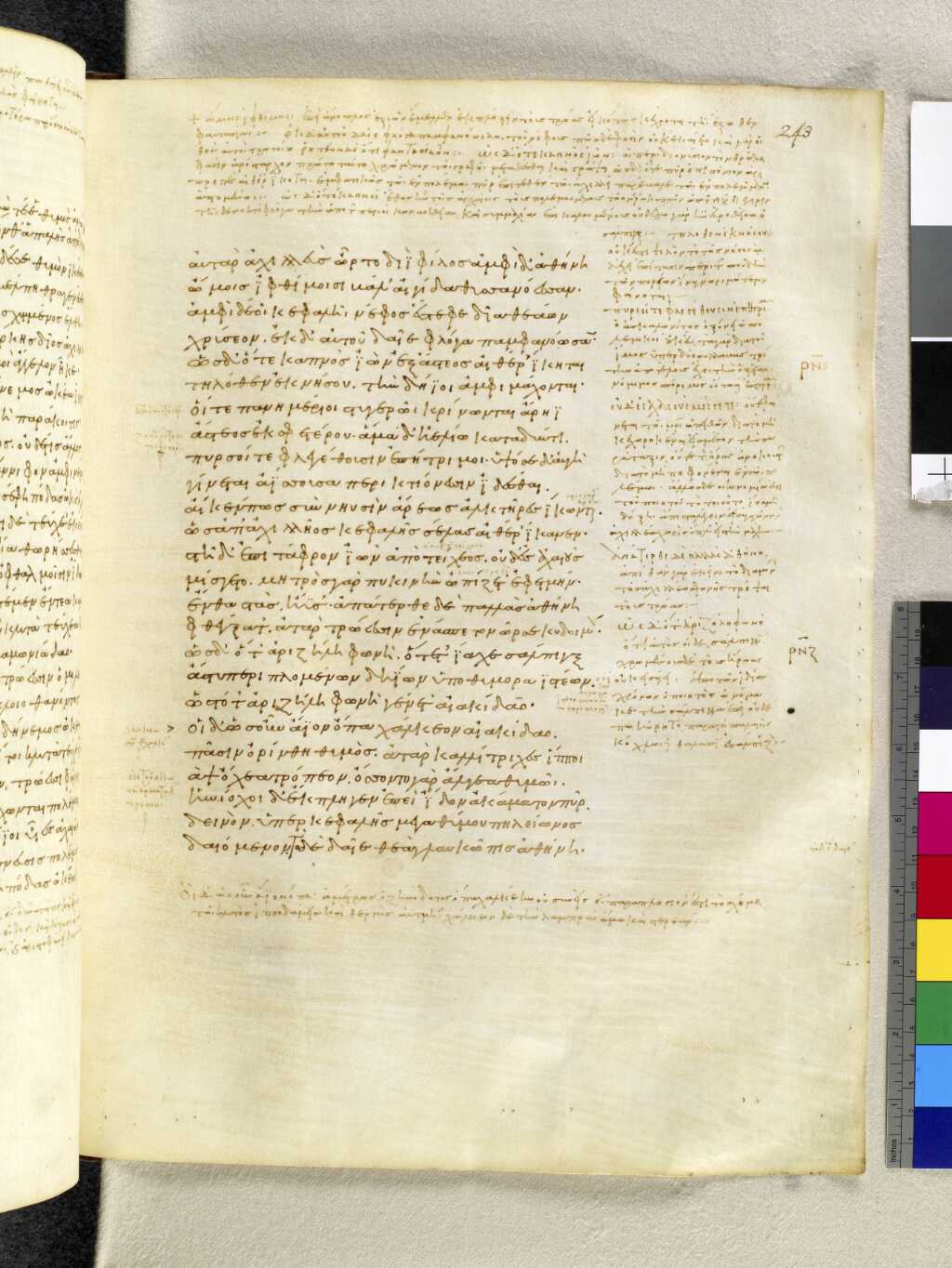
226δεινὸν ὑπὲρ κεφαλῆς μεγαθύμου Πηλεΐωνος 227δαιόμενον· τὸ δὲ δαῖε θεὰ γλαυκῶπις Ἀθήνη. 228τρὶς μὲν ὑπὲρ τάφρου μεγάλʼ ἴαχε δῖος Ἀχιλλεύς, 229τρὶς δὲ κυκήθησαν Τρῶες κλειτοί τʼ ἐπίκουροι. 230ἔνθα δὲ καὶ τότʼ ὄλοντο δυώδεκα φῶτες ἄριστοι 231ἀμφὶ σφοῖς ὀχέεσσι καὶ ἔγχεσιν. αὐτὰρ Ἀχαιοὶ 232ἀσπασίως Πάτροκλον ὑπʼ ἐκ βελέων ἐρύσαντες 233κάτθεσαν ἐν λεχέεσσι· φίλοι δʼ ἀμφέσταν ἑταῖροι 234μυρόμενοι· μετὰ δέ σφι ποδώκης εἵπετʼ Ἀχιλλεὺς 235δάκρυα θερμὰ χέων, ἐπεὶ εἴσιδε πιστὸν ἑταῖρον 236κείμενον ἐν φέρτρῳ δεδαϊγμένον ὀξέϊ χαλκῷ, 237τόν ῥʼ ἤτοι μὲν ἔπεμπε σὺν ἵπποισιν καὶ ὄχεσφιν 238ἐς πόλεμον, οὐδʼ αὖτις ἐδέξατο νοστήσαντα. 239Ἠέλιον δʼ ἀκάμαντα βοῶπις πότνια Ἥρη 240πέμψεν ἐπʼ Ὠκεανοῖο ῥοὰς ἀέκοντα νέεσθαι· 241ἠέλιος μὲν ἔδυ, παύσαντο δὲ δῖοι Ἀχαιοὶ 242φυλόπιδος κρατερῆς καὶ ὁμοιΐου πολέμοιο. 243Τρῶες δʼ αὖθʼ ἑτέρωθεν ἀπὸ κρατερῆς ὑσμίνης 244χωρήσαντες ἔλυσαν ὑφʼ ἅρμασιν ὠκέας ἵππους, 245ἐς δʼ ἀγορὴν ἀγέροντο πάρος δόρποιο μέδεσθαι. 246ὀρθῶν δʼ ἑσταότων ἀγορὴ γένετʼ, οὐδέ τις ἔτλη 247ἕζεσθαι· πάντας γὰρ ἔχε τρόμος, οὕνεκʼ Ἀχιλλεὺς 248ἐξεφάνη, δηρὸν δὲ μάχης ἐπέπαυτʼ ἀλεγεινῆς. 249τοῖσι δὲ Πουλυδάμας πεπνυμένος ἦρχʼ ἀγορεύειν 250Πανθοΐδης· ὃ γὰρ οἶος ὅρα πρόσσω καὶ ὀπίσσω·
Iris said, “We know that your armour has been taken, but go as you are; go to the deep trench and show yourself before the Trojans, that they may fear you and cease fighting. Thus will the fainting sons of the Achaeans gain some brief breathing time, which in battle may hardly be.”
Iris left him when she had so spoken. But Achilles dear to Jove arose, and Minerva flung her tasselled aegis round his strong shoulders; she crowned his head with a halo of golden cloud from which she kindled a glow of gleaming fire. As the smoke that goes up into heaven from some city that is being beleaguered on an island far out at sea—all day long do men sally from the city and fight their hardest, and at the going down of the sun the line of beacon-fires blazes forth, flaring high for those that dwell near them to behold, if so be that they may come with their ships and succour them—even so did the light flare from the head of Achilles, as he stood by the trench, going beyond the wall—but he did not join the Achaeans for he heeded the charge which his mother laid upon him.
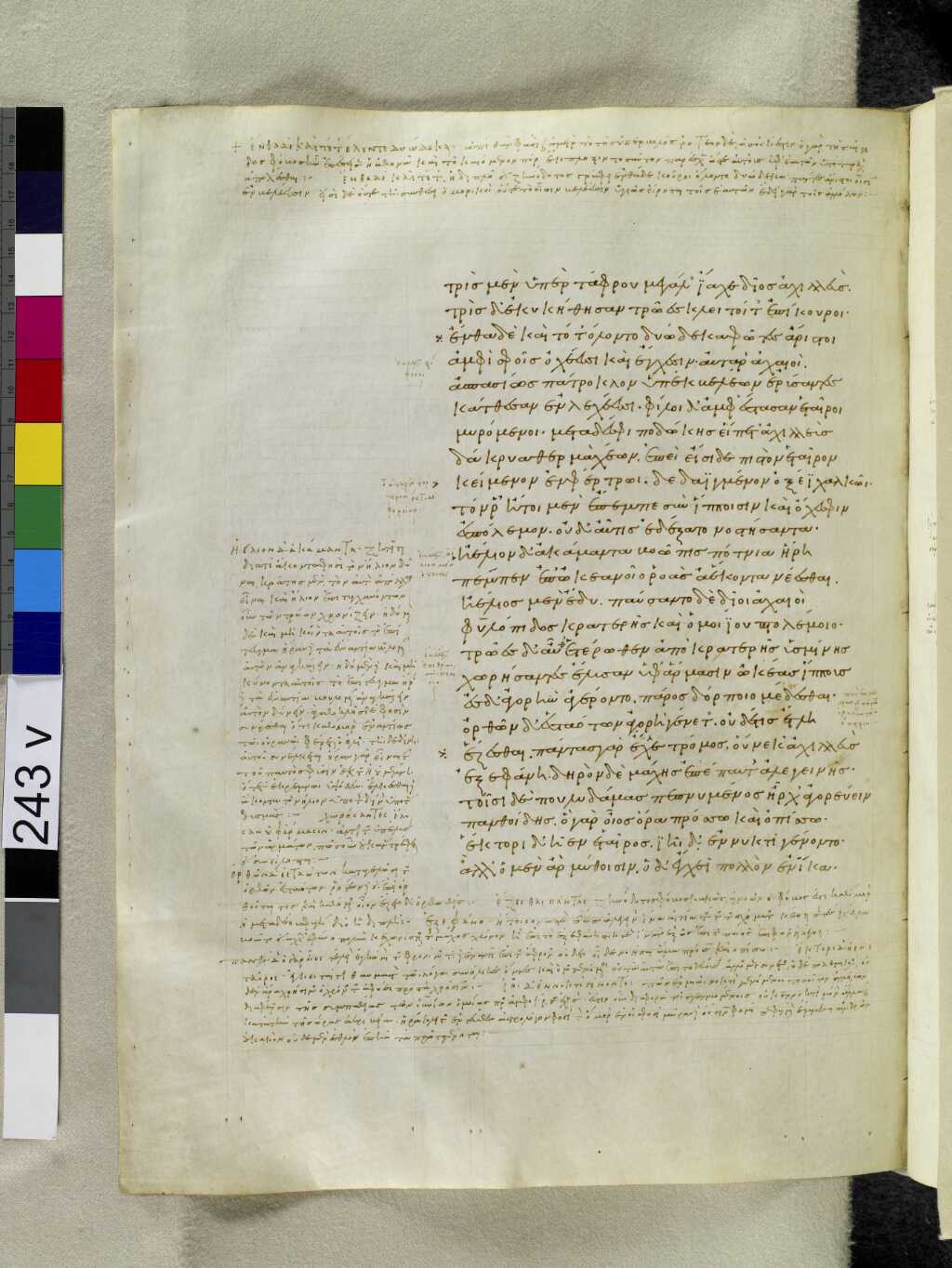
251Ἕκτορι δʼ ἦεν ἑταῖρος, ἰῇ δʼ ἐν νυκτὶ γένοντο, 252ἀλλʼ ὃ μὲν ἂρ μύθοισιν, ὃ δʼ ἔγχεϊ πολλὸν ἐνίκα· 253ὅ σφιν ἐϋφρονέων ἀγορήσατο καὶ μετέειπεν· 254ἀμφὶ μάλα φράζεσθε φίλοι· κέλομαι γὰρ ἔγωγε 255ἄστυδε νῦν ἰέναι, μὴ μίμνειν ἠῶ δῖαν 256ἐν πεδίῳ παρὰ νηυσίν· ἑκὰς δʼ ἀπὸ τείχεός εἰμεν. 257ὄφρα μὲν οὗτος ἀνὴρ Ἀγαμέμνονι μήνιε δίῳ 258τόφρα δὲ ῥηΐτεροι πολεμίζειν ἦσαν Ἀχαιοί· 259χαίρεσκον γὰρ ἔγωγε θοῇς ἐπὶ νηυσὶν ἰαύων 260ἐλπόμενος νῆας αἱρησέμεν ἀμφιελίσσας. 261νῦν δʼ αἰνῶς δείδοικα ποδώκεα Πηλεΐωνα· 262οἷος κείνου θυμὸς ὑπέρβιος, οὐκ ἐθελήσει 263μίμνειν ἐν πεδίῳ, ὅθι περ Τρῶες καὶ Ἀχαιοὶ 264ἐν μέσῳ ἀμφότεροι μένος Ἄρηος δατέονται, 265ἀλλὰ περὶ πτόλιός τε μαχήσεται ἠδὲ γυναικῶν. 266ἀλλʼ ἴομεν προτὶ ἄστυ, πίθεσθέ μοι· ὧδε γὰρ ἔσται· 267νῦν μὲν νὺξ ἀπέπαυσε ποδώκεα Πηλεΐωνα 268ἀμβροσίη· εἰ δʼ ἄμμε κιχήσεται ἐνθάδʼ ἐόντας 269αὔριον ὁρμηθεὶς σὺν τεύχεσιν, εὖ νύ τις αὐτὸν 270γνώσεται· ἀσπασίως γὰρ ἀφίξεται Ἴλιον ἱρὴν 271ὅς κε φύγῃ, πολλοὺς δὲ κύνες καὶ γῦπες ἔδονται 272Τρώων· αἲ γὰρ δή μοι ἀπʼ οὔατος ὧδε γένοιτο. 273εἰ δʼ ἂν ἐμοῖς ἐπέεσσι πιθώμεθα κηδόμενοί περ, 274νύκτα μὲν εἰν ἀγορῇ σθένος ἕξομεν, ἄστυ δὲ πύργοι 275ὑψηλαί τε πύλαι σανίδες τʼ ἐπὶ τῇς ἀραρυῖαι
There did he stand and shout aloud. Minerva also raised her voice from afar, and spread terror unspeakable among the Trojans. Ringing as the note of a trumpet that sounds alarm then the foe is at the gates of a city, even so brazen was the voice of the son of Aeacus, and when the Trojans heard its clarion tones they were dismayed; the horses turned back with their chariots for they boded mischief, and their drivers were awe-struck by the steady flame which the grey-eyed goddess had kindled above the head of the great son of Peleus.
Thrice did Achilles raise his loud cry as he stood by the trench, and thrice were the Trojans and their brave allies thrown into confusion; whereon twelve of their noblest champions fell beneath the wheels of their chariots and perished by their own spears. The Achaeans to their great joy then drew Patroclus out of reach of the weapons, and laid him on a litter: his comrades stood mourning round him, and among them fleet Achilles who wept bitterly as he saw his true comrade lying dead upon his bier. He had sent him out with horses and chariots into battle, but his return he was not to welcome.
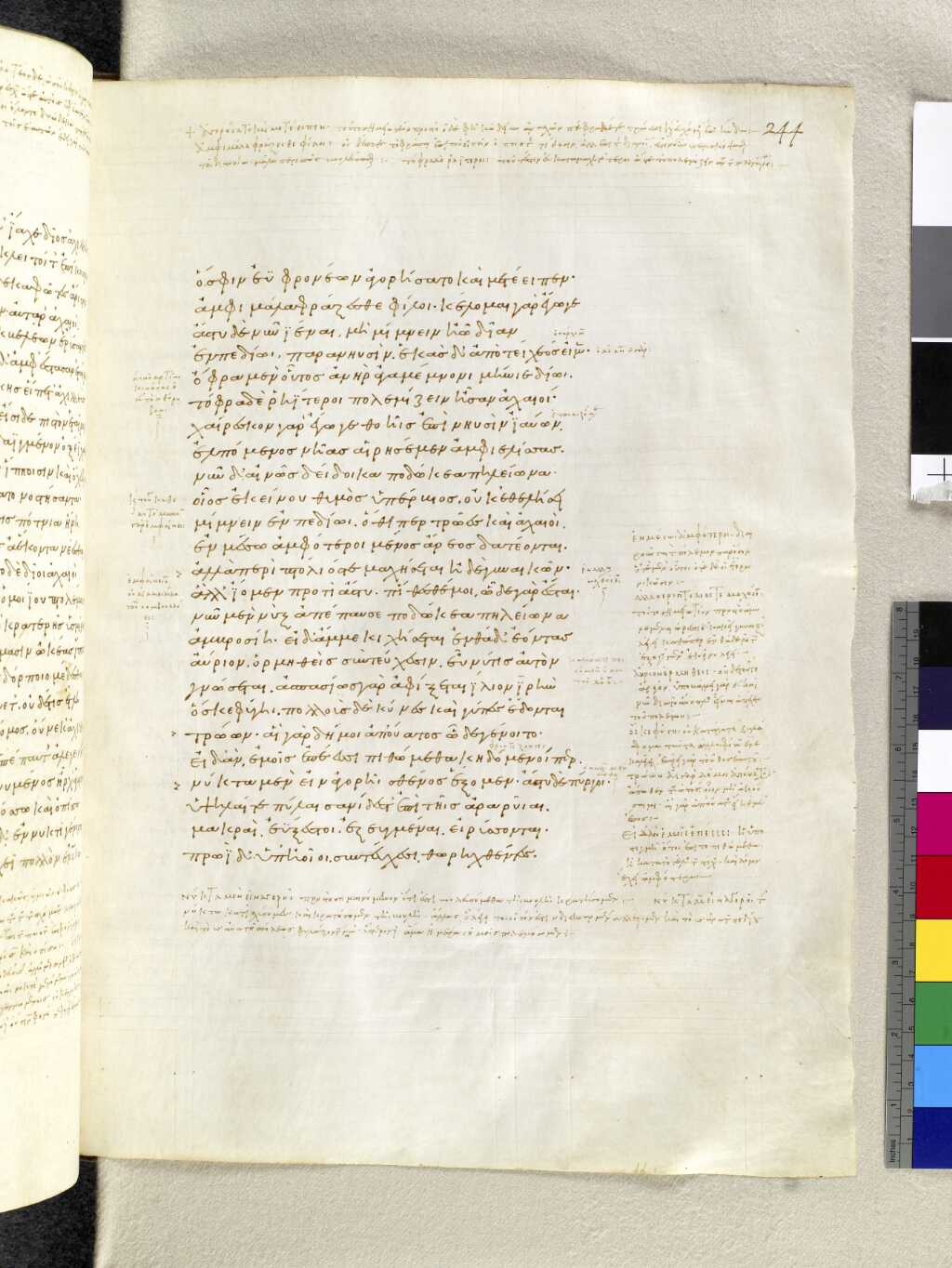
276μακραὶ ἐΰξεστοι ἐζευγμέναι εἰρύσσονται· 277πρῶϊ δʼ ὑπηοῖοι σὺν τεύχεσι θωρηχθέντες 278στησόμεθʼ ἂμ πύργους· τῷ δʼ ἄλγιον, αἴ κʼ ἐθέλῃσιν 279ἐλθὼν ἐκ νηῶν περὶ τείχεος ἄμμι μάχεσθαι. 280ἂψ πάλιν εἶσʼ ἐπὶ νῆας, ἐπεί κʼ ἐριαύχενας ἵππους 281παντοίου δρόμου ἄσῃ ὑπὸ πτόλιν ἠλασκάζων· 282εἴσω δʼ οὔ μιν θυμὸς ἐφορμηθῆναι ἐάσει, 283οὐδέ ποτʼ ἐκπέρσει· πρίν μιν κύνες ἀργοὶ ἔδονται. 284τὸν δʼ ἄρʼ ὑπόδρα ἰδὼν προσέφη κορυθαίολος Ἕκτωρ· 285Πουλυδάμα σὺ μὲν οὐκέτʼ ἐμοὶ φίλα ταῦτʼ ἀγορεύεις, 286ὃς κέλεαι κατὰ ἄστυ ἀλήμεναι αὖτις ἰόντας. 287ἦ οὔ πω κεκόρησθε ἐελμένοι ἔνδοθι πύργων; 288πρὶν μὲν γὰρ Πριάμοιο πόλιν μέροπες ἄνθρωποι 289πάντες μυθέσκοντο πολύχρυσον πολύχαλκον· 290νῦν δὲ δὴ ἐξαπόλωλε δόμων κειμήλια καλά, 291πολλὰ δὲ δὴ Φρυγίην καὶ Μῃονίην ἐρατεινὴν 292κτήματα περνάμενʼ ἵκει, ἐπεὶ μέγας ὠδύσατο Ζεύς. 293νῦν δʼ ὅτε πέρ μοι ἔδωκε Κρόνου πάϊς ἀγκυλομήτεω 294κῦδος ἀρέσθʼ ἐπὶ νηυσί, θαλάσσῃ τʼ ἔλσαι Ἀχαιούς, 295νήπιε μηκέτι ταῦτα νοήματα φαῖνʼ ἐνὶ δήμῳ· 296οὐ γάρ τις Τρώων ἐπιπείσεται· οὐ γὰρ ἐάσω. 297ἀλλʼ ἄγεθʼ ὡς ἂν ἐγὼ εἴπω, πειθώμεθα πάντες. 298νῦν μὲν δόρπον ἕλεσθε κατὰ στρατὸν ἐν τελέεσσι, 299καὶ φυλακῆς μνήσασθε, καὶ ἐγρήγορθε ἕκαστος· 300Τρώων δʼ ὃς κτεάτεσσιν ὑπερφιάλως ἀνιάζει,
Then Juno sent the busy sun, loth though he was, into the waters of Oceanus; so he set, and the Achaeans had rest from the tug and turmoil of war.
Now the Trojans when they had come out of the fight, unyoked their horses and gathered in assembly before preparing their supper. They kept their feet, nor would any dare to sit down, for fear had fallen upon them all because Achilles had shown himself after having held aloof so long from battle. Polydamas son of Panthous was first to speak, a man of judgement, who alone among them could look both before and after. He was comrade to Hector, and they had been born upon the same night; with all sincerity and goodwill, therefore, he addressed them thus:—
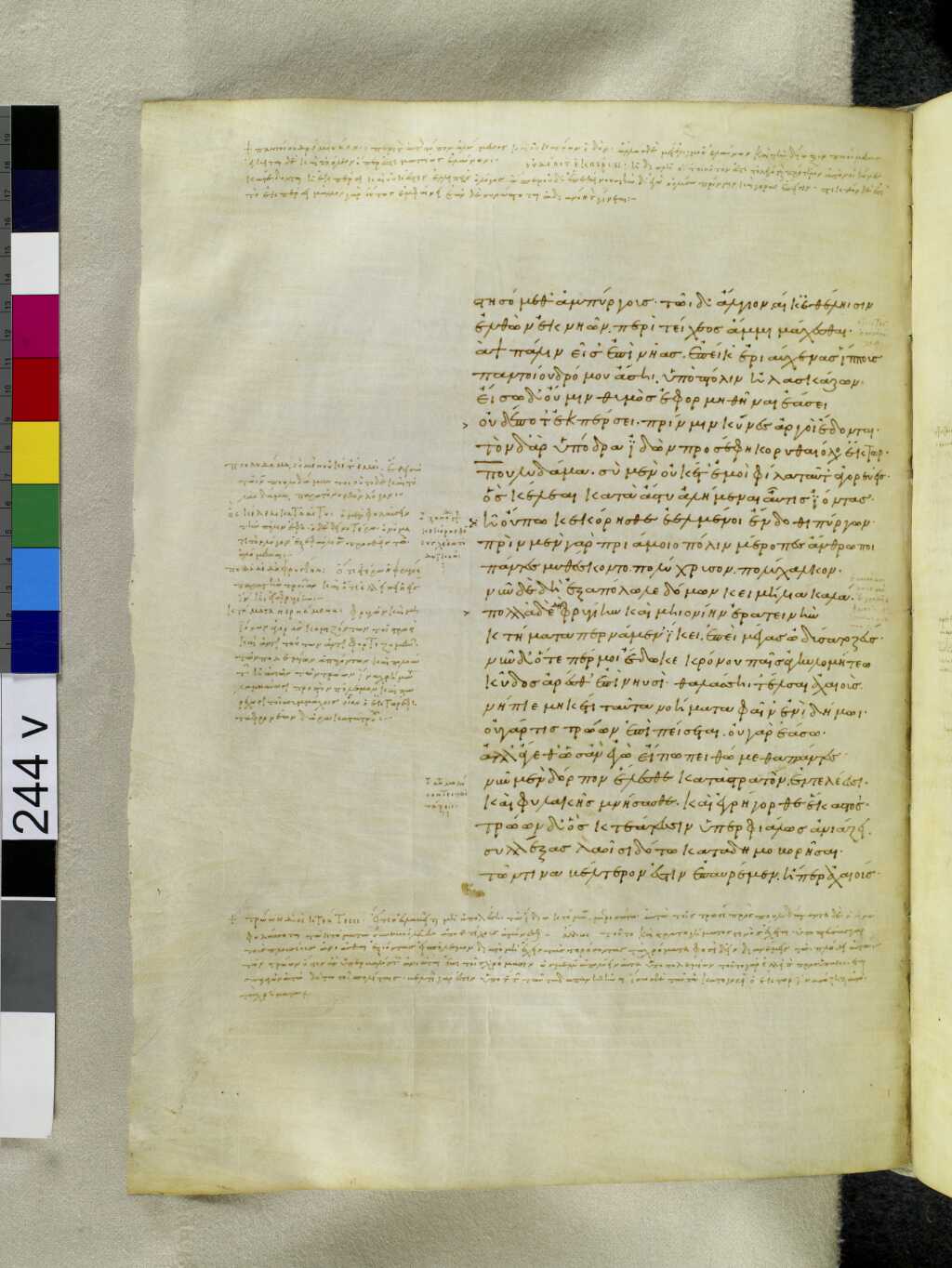
301συλλέξας λαοῖσι δότω καταδημοβορῆσαι· 302τῶν τινὰ βέλτερόν ἐστιν ἐπαυρέμεν ἤ περ Ἀχαιούς. 303πρῶϊ δʼ ὑπηοῖοι σὺν τεύχεσι θωρηχθέντες 304νηυσὶν ἔπι γλαφυρῇσιν ἐγείρομεν ὀξὺν Ἄρηα. 305εἰ δʼ ἐτεὸν παρὰ ναῦφιν ἀνέστη δῖος Ἀχιλλεύς, 306ἄλγιον αἴ κʼ ἐθέλῃσι τῷ ἔσσεται· οὔ μιν ἔγωγε 307φεύξομαι ἐκ πολέμοιο δυσηχέος, ἀλλὰ μάλʼ ἄντην 308στήσομαι, ἤ κε φέρῃσι μέγα κράτος, ἦ κε φεροίμην. 309ξυνὸς Ἐνυάλιος, καί τε κτανέοντα κατέκτα. 310ὣς Ἕκτωρ ἀγόρευʼ, ἐπὶ δὲ Τρῶες κελάδησαν 311νήπιοι· ἐκ γάρ σφεων φρένας εἵλετο Παλλὰς Ἀθήνη. 312Ἕκτορι μὲν γὰρ ἐπῄνησαν κακὰ μητιόωντι, 313Πουλυδάμαντι δʼ ἄρʼ οὔ τις ὃς ἐσθλὴν φράζετο βουλήν. 314δόρπον ἔπειθʼ εἵλοντο κατὰ στρατόν· αὐτὰρ Ἀχαιοὶ 315παννύχιοι Πάτροκλον ἀνεστενάχοντο γοῶντες. 316τοῖσι δὲ Πηλεΐδης ἁδινοῦ ἐξῆρχε γόοιο 317χεῖρας ἐπʼ ἀνδροφόνους θέμενος στήθεσσιν ἑταίρου 318πυκνὰ μάλα στενάχων ὥς τε λὶς ἠϋγένειος, 319ᾧ ῥά θʼ ὑπὸ σκύμνους ἐλαφηβόλος ἁρπάσῃ ἀνὴρ 320ὕλης ἐκ πυκινῆς· ὃ δέ τʼ ἄχνυται ὕστερος ἐλθών, 321πολλὰ δέ τʼ ἄγκεʼ ἐπῆλθε μετʼ ἀνέρος ἴχνιʼ ἐρευνῶν 322εἴ ποθεν ἐξεύροι· μάλα γὰρ δριμὺς χόλος αἱρεῖ· 323ὣς ὃ βαρὺ στενάχων μετεφώνεε Μυρμιδόνεσσιν· 324ὢ πόποι ἦ ῥʼ ἅλιον ἔπος ἔκβαλον ἤματι κείνῳ 325θαρσύνων ἥρωα Μενοίτιον ἐν μεγάροισι·
“Look to it well, my friends; I would urge you to go back now to your city and not wait here by the ships till morning, for we are far from our walls. So long as this man was at enmity with Agamemnon the Achaeans were easier to deal with, and I would have gladly camped by the ships in the hope of taking them; but now I go in great fear of the fleet son of Peleus; he is so daring that he will never bide here on the plain whereon the Trojans and Achaeans fight with equal valour, but he will try to storm our city and carry off our women. Do then as I say, and let us retreat. For this is what will happen. The darkness of night will for a time stay the son of Peleus, but if he find us here in the morning when he sallies forth in full armour, we shall have knowledge of him in good earnest. Glad indeed will he be who can escape and get back to Ilius, and many a Trojan will become meat for dogs and vultures may I never live to hear it. If we do as I say, little though we may like it, we shall have strength in counsel during the night, and the great gates with the doors that close them will protect the city. At dawn we can arm and take our stand on the walls; he will then rue it if he sallies from the ships to fight us. He will go back when he has given his horses their fill of being driven all whithers under our walls, and will be in no mind to try and force his way into the city. Neither will he ever sack it, dogs shall devour him ere he do so.”
Hector looked fiercely at him and answered, “Polydamas, your words are not to my liking in that you bid us go back and be pent within the city. Have you not had enough of being cooped up behind walls? In the old-days the city of Priam was famous the whole world over for its wealth of gold and bronze, but our treasures are wasted out of our houses, and much goods have been sold away to Phrygia and fair Meonia, for the hand of Jove has been laid heavily upon us. Now, therefore, that the son of scheming Saturn has vouchsafed me to win glory here and to hem the Achaeans in at their ships, prate no more in this fool’s wise among the people. You will have no man with you; it shall not be; do all of you as I now say;—take your suppers in your companies throughout the host, and keep your watches and be wakeful every man of you. If any Trojan is uneasy about his possessions, let him gather them and give them out among the people. Better let these, rather than the Achaeans, have them. At daybreak we will arm and fight about the ships; granted that Achilles has again come forward to defend them, let it be as he will, but it shall go hard with him. I shall not shun him, but will fight him, to fall or conquer. The god of war deals out like measure to all, and the slayer may yet be slain.”
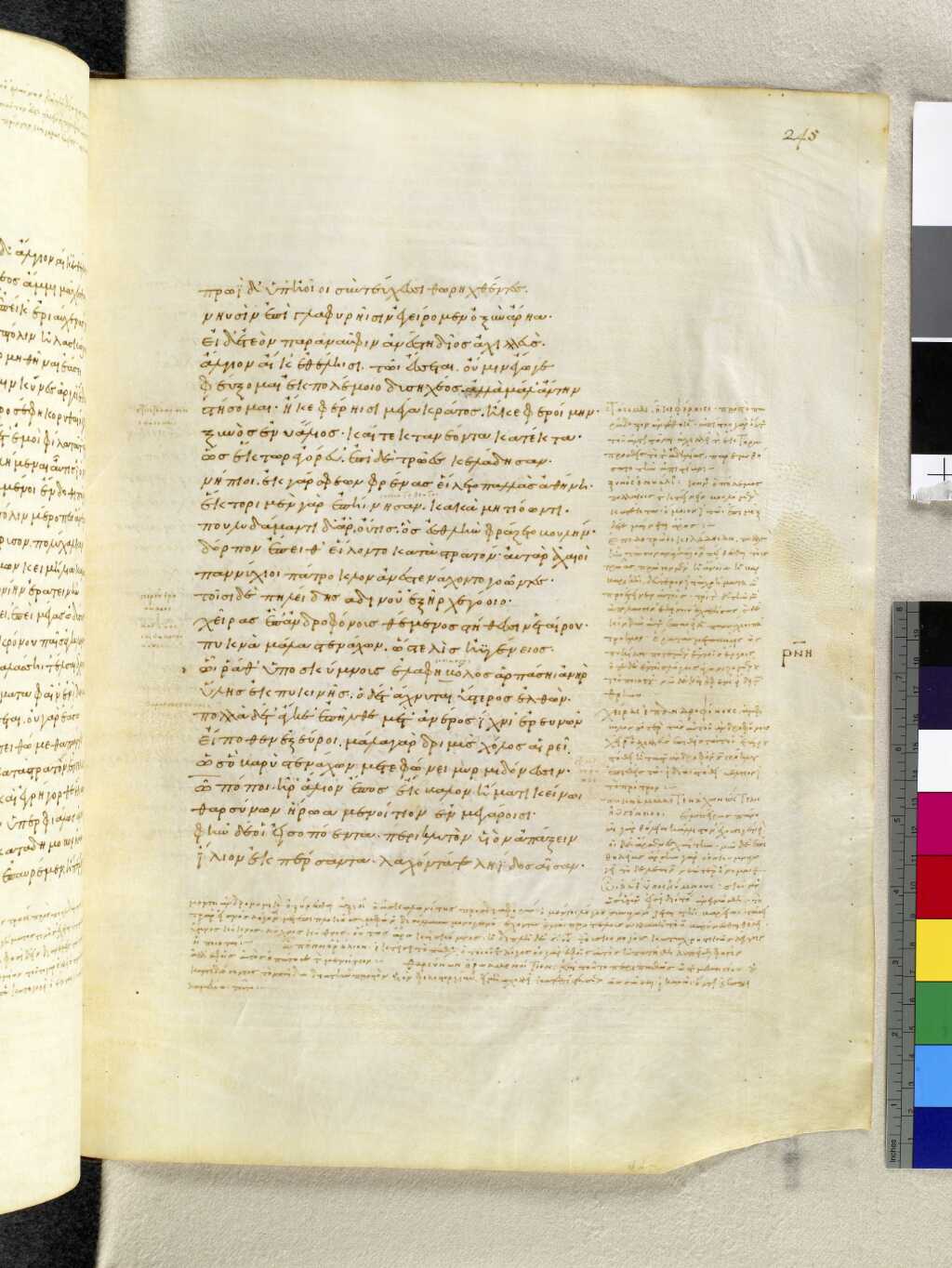
326φῆν δέ οἱ εἰς Ὀπόεντα περικλυτὸν υἱὸν ἀπάξειν 327Ἴλιον ἐκπέρσαντα, λαχόντα τε ληΐδος αἶσαν. 328ἀλλʼ οὐ Ζεὺς ἄνδρεσσι νοήματα πάντα τελευτᾷ· 329ἄμφω γὰρ πέπρωται ὁμοίην γαῖαν ἐρεῦσαι 330αὐτοῦ ἐνὶ Τροίῃ, ἐπεὶ οὐδʼ ἐμὲ νοστήσαντα 331δέξεται ἐν μεγάροισι γέρων ἱππηλάτα Πηλεὺς 332οὐδὲ Θέτις μήτηρ, ἀλλʼ αὐτοῦ γαῖα καθέξει. 333νῦν δʼ ἐπεὶ οὖν Πάτροκλε σεῦ ὕστερος εἶμʼ ὑπὸ γαῖαν, 334οὔ σε πρὶν κτεριῶ πρίν γʼ Ἕκτορος ἐνθάδʼ ἐνεῖκαι 335τεύχεα καὶ κεφαλὴν μεγαθύμου σοῖο φονῆος· 336δώδεκα δὲ προπάροιθε πυρῆς ἀποδειροτομήσω 337Τρώων ἀγλαὰ τέκνα σέθεν κταμένοιο χολωθείς. 338τόφρα δέ μοι παρὰ νηυσὶ κορωνίσι κείσεαι αὔτως, 339ἀμφὶ δὲ σὲ Τρῳαὶ καὶ Δαρδανίδες βαθύκολποι 340κλαύσονται νύκτάς τε καὶ ἤματα δάκρυ χέουσαι, 341τὰς αὐτοὶ καμόμεσθα βίηφί τε δουρί τε μακρῷ 342πιείρας πέρθοντε πόλεις μερόπων ἀνθρώπων. 343ὣς εἰπὼν ἑτάροισιν ἐκέκλετο δῖος Ἀχιλλεὺς 344ἀμφὶ πυρὶ στῆσαι τρίποδα μέγαν, ὄφρα τάχιστα 345Πάτροκλον λούσειαν ἄπο βρότον αἱματόεντα. 346οἳ δὲ λοετροχόον τρίποδʼ ἵστασαν ἐν πυρὶ κηλέῳ, 347ἐν δʼ ἄρʼ ὕδωρ ἔχεαν, ὑπὸ δὲ ξύλα δαῖον ἑλόντες. 348γάστρην μὲν τρίποδος πῦρ ἄμφεπε, θέρμετο δʼ ὕδωρ· 349αὐτὰρ ἐπεὶ δὴ ζέσσεν ὕδωρ ἐνὶ ἤνοπι χαλκῷ, 350καὶ τότε δὴ λοῦσάν τε καὶ ἤλειψαν λίπʼ ἐλαίῳ,
Thus spoke Hector; and the Trojans, fools that they were, shouted in applause, for Pallas Minerva had robbed them of their understanding. They gave ear to Hector with his evil counsel, but the wise words of Polydamas no man would heed. They took their supper throughout the host, and meanwhile through the whole night the Achaeans mourned Patroclus, and the son of Peleus led them in their lament. He laid his murderous hands upon the breast of his comrade, groaning again and again as a bearded lion when a man who was chasing deer has robbed him of his young in some dense forest; when the lion comes back he is furious, and searches dingle and dell to track the hunter if he can find him, for he is mad with rage—even so with many a sigh did Achilles speak among the Myrmidons saying, “Alas! vain were the words with which I cheered the hero Menoetius in his own house; I said that I would bring his brave son back again to Opoeis after he had sacked Ilius and taken his share of the spoils—but Jove does not give all men their heart’s desire. The same soil shall be reddened here at Troy by the blood of us both, for I too shall never be welcomed home by the old knight Peleus, nor by my mother Thetis, but even in this place shall the earth cover me. Nevertheless, O Patroclus, now that I am left behind you, I will not bury you, till I have brought hither the head and armour of mighty Hector who has slain you. Twelve noble sons of Trojans will I behead before your bier to avenge you; till I have done so you shall lie as you are by the ships, and fair women of Troy and Dardanus, whom we have taken with spear and strength of arm when we sacked men’s goodly cities, shall weep over you both night and day.”
Then Achilles told his men to set a large tripod upon the fire that they might wash the clotted gore from off Patroclus. Thereon they set a tripod full of bath water on to a clear fire: they threw sticks on to it to make it blaze, and the water became hot as the flame played about the belly of the tripod. When the water in the cauldron was boiling they washed the body, anointed it with oil, and closed its wounds with ointment that had been kept nine years. Then they laid it on a bier and covered it with a linen cloth from head to foot, and over this they laid a fair white robe. Thus all night long did the Myrmidons gather round Achilles to mourn Patroclus.
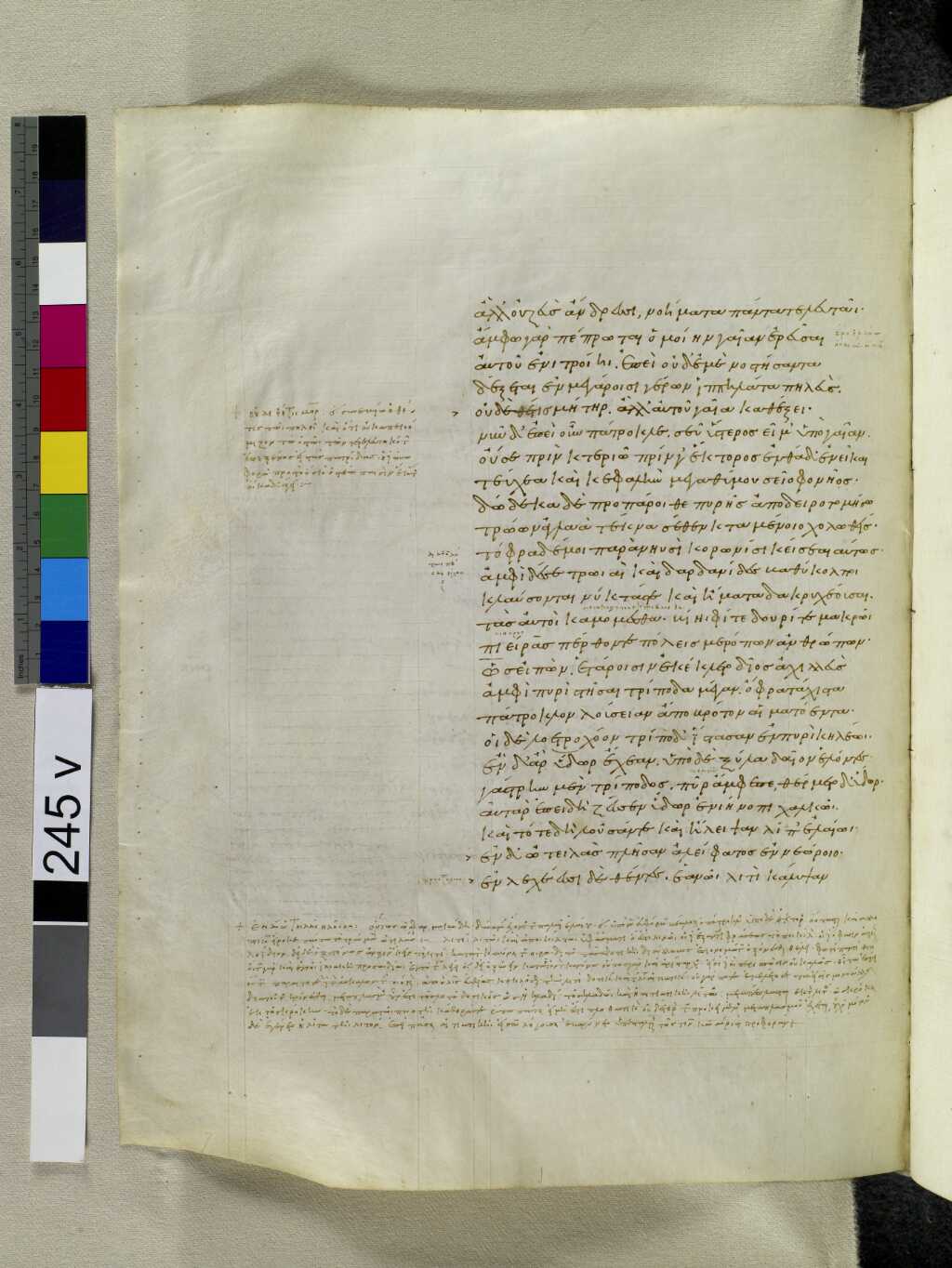
351ἐν δʼ ὠτειλὰς πλῆσαν ἀλείφατος ἐννεώροιο· 352ἐν λεχέεσσι δὲ θέντες ἑανῷ λιτὶ κάλυψαν 353ἐς πόδας ἐκ κεφαλῆς, καθύπερθε δὲ φάρεϊ λευκῷ. 354παννύχιοι μὲν ἔπειτα πόδας ταχὺν ἀμφʼ Ἀχιλῆα 355Μυρμιδόνες Πάτροκλον ἀνεστενάχοντο γοῶντες· 356Ζεὺς δʼ Ἥρην προσέειπε κασιγνήτην ἄλοχόν τε· 357ἔπρηξας καὶ ἔπειτα βοῶπις πότνια Ἥρη 358ἀνστήσασʼ Ἀχιλῆα πόδας ταχύν· ἦ ῥά νυ σεῖο 359ἐξ αὐτῆς ἐγένοντο κάρη κομόωντες Ἀχαιοί. 360τὸν δʼ ἠμείβετʼ ἔπειτα βοῶπις πότνια Ἥρη· 361αἰνότατε Κρονίδη ποῖον τὸν μῦθον ἔειπες. 362καὶ μὲν δή πού τις μέλλει βροτὸς ἀνδρὶ τελέσσαι, 363ὅς περ θνητός τʼ ἐστὶ καὶ οὐ τόσα μήδεα οἶδε· 364πῶς δὴ ἔγωγʼ, ἥ φημι θεάων ἔμμεν ἀρίστη, 365ἀμφότερον γενεῇ τε καὶ οὕνεκα σὴ παράκοιτις 366κέκλημαι, σὺ δὲ πᾶσι μετʼ ἀθανάτοισιν ἀνάσσεις, 367οὐκ ὄφελον Τρώεσσι κοτεσσαμένη κακὰ ῥάψαι; 368ὣς οἳ μὲν τοιαῦτα πρὸς ἀλλήλους ἀγόρευον· 369Ἡφαίστου δʼ ἵκανε δόμον Θέτις ἀργυρόπεζα 370ἄφθιτον ἀστερόεντα μεταπρεπέʼ ἀθανάτοισι 371χάλκεον, ὅν ῥʼ αὐτὸς ποιήσατο κυλλοποδίων. 372τὸν δʼ εὗρʼ ἱδρώοντα ἑλισσόμενον περὶ φύσας 373σπεύδοντα· τρίποδας γὰρ ἐείκοσι πάντας ἔτευχεν 374ἑστάμεναι περὶ τοῖχον ἐϋσταθέος μεγάροιο, 375χρύσεα δέ σφʼ ὑπὸ κύκλα ἑκάστῳ πυθμένι θῆκεν,
Then Jove said to Juno his sister-wife, “So, Queen Juno, you have gained your end, and have roused fleet Achilles. One would think that the Achaeans were of your own flesh and blood.”
And Juno answered, “Dread son of Saturn, why should you say this thing? May not a man though he be only mortal and knows less than we do, do what he can for another person? And shall not I—foremost of all goddesses both by descent and as wife to you who reign in heaven—devise evil for the Trojans if I am angry with them?”
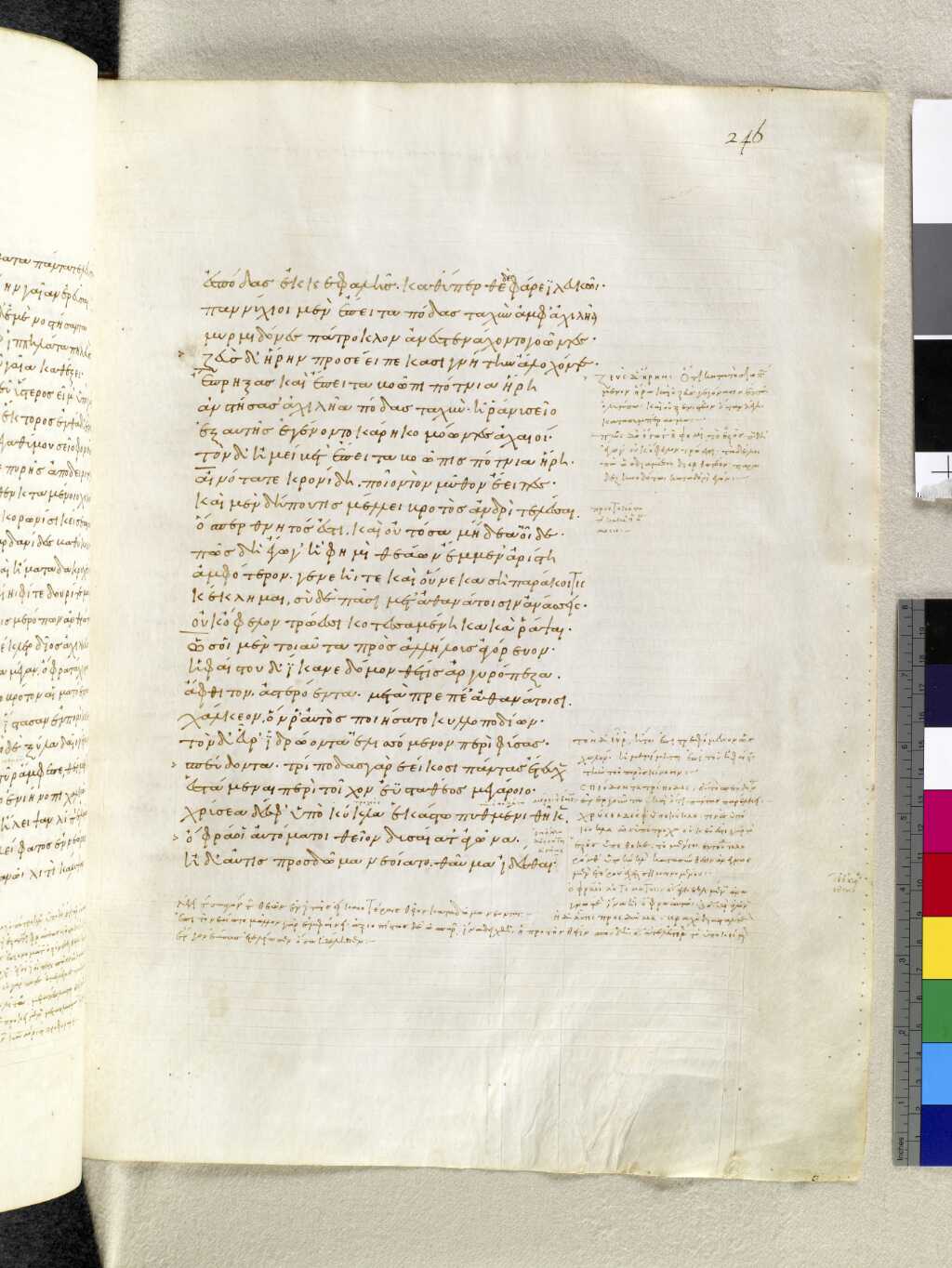
376ὄφρά οἱ αὐτόματοι θεῖον δυσαίατʼ ἀγῶνα 377ἠδʼ αὖτις πρὸς δῶμα νεοίατο θαῦμα ἰδέσθαι. 378οἳ δʼ ἤτοι τόσσον μὲν ἔχον τέλος, οὔατα δʼ οὔ πω 379δαιδάλεα προσέκειτο· τά ῥʼ ἤρτυε, κόπτε δὲ δεσμούς. 380ὄφρʼ ὅ γε ταῦτʼ ἐπονεῖτο ἰδυίῃσι πραπίδεσσι, 381τόφρά οἱ ἐγγύθεν ἦλθε θεὰ Θέτις ἀργυρόπεζα. 382τὴν δὲ ἴδε προμολοῦσα Χάρις λιπαροκρήδεμνος 383καλή, τὴν ὤπυιε περικλυτὸς ἀμφιγυήεις· 384ἔν τʼ ἄρα οἱ φῦ χειρὶ ἔπος τʼ ἔφατʼ ἔκ τʼ ὀνόμαζε· 385τίπτε Θέτι τανύπεπλε ἱκάνεις ἡμέτερον δῶ 386αἰδοίη τε φίλη τε; πάρος γε μὲν οὔ τι θαμίζεις. 387ἀλλʼ ἕπεο προτέρω, ἵνα τοι πὰρ ξείνια θείω. 388ὣς ἄρα φωνήσασα πρόσω ἄγε δῖα θεάων. 389τὴν μὲν ἔπειτα καθεῖσεν ἐπὶ θρόνου ἀργυροήλου 390καλοῦ δαιδαλέου· ὑπὸ δὲ θρῆνυς ποσὶν ἦεν· 391κέκλετο δʼ Ἥφαιστον κλυτοτέχνην εἶπέ τε μῦθον· 392Ἥφαιστε πρόμολʼ ὧδε· Θέτις νύ τι σεῖο χατίζει. 393τὴν δʼ ἠμείβετʼ ἔπειτα περικλυτὸς ἀμφιγυήεις· 394ἦ ῥά νύ μοι δεινή τε καὶ αἰδοίη θεὸς ἔνδον, 395ἥ μʼ ἐσάωσʼ ὅτε μʼ ἄλγος ἀφίκετο τῆλε πεσόντα 396μητρὸς ἐμῆς ἰότητι κυνώπιδος, ἥ μʼ ἐθέλησε 397κρύψαι χωλὸν ἐόντα· τότʼ ἂν πάθον ἄλγεα θυμῷ, 398εἰ μή μʼ Εὐρυνόμη τε Θέτις θʼ ὑπεδέξατο κόλπῳ 399Εὐρυνόμη θυγάτηρ ἀψορρόου Ὠκεανοῖο. 400τῇσι παρʼ εἰνάετες χάλκευον δαίδαλα πολλά,
Thus did they converse. Meanwhile Thetis came to the house of Vulcan, imperishable, star-bespangled, fairest of the abodes in heaven, a house of bronze wrought by the lame god’s own hands. She found him busy with his bellows, sweating and hard at work, for he was making twenty tripods that were to stand by the wall of his house, and he set wheels of gold under them all that they might go of their own selves to the assemblies of the gods, and come back again—marvels indeed to see. They were finished all but the ears of cunning workmanship which yet remained to be fixed to them: these he was now fixing, and he was hammering at the rivets. While he was thus at work silver-footed Thetis came to the house. Charis, of graceful head-dress, wife to the far-famed lame god, came towards her as soon as she saw her, and took her hand in her own, saying, “Why have you come to our house, Thetis, honoured and ever welcome—for you do not visit us often? Come inside and let me set refreshment before you.”
The goddess led the way as she spoke, and bade Thetis sit on a richly decorated seat inlaid with silver; there was a footstool also under her feet. Then she called Vulcan and said, “Vulcan, come here, Thetis wants you”; and the far-famed lame god answered, “Then it is indeed an august and honoured goddess who has come here; she it was that took care of me when I was suffering from the heavy fall which I had through my cruel mother’s anger—for she would have got rid of me because I was lame. It would have gone hardly with me had not Eurynome, daughter of the ever-encircling waters of Oceanus, and Thetis, taken me to their bosom. Nine years did I stay with them, and many beautiful works in bronze, brooches, spiral armlets, cups, and chains, did I make for them in their cave, with the roaring waters of Oceanus foaming as they rushed ever past it; and no one knew, neither of gods nor men, save only Thetis and Eurynome who took care of me. If, then, Thetis has come to my house I must make her due requital for having saved me; entertain her, therefore, with all hospitality, while I put by my bellows and all my tools.”
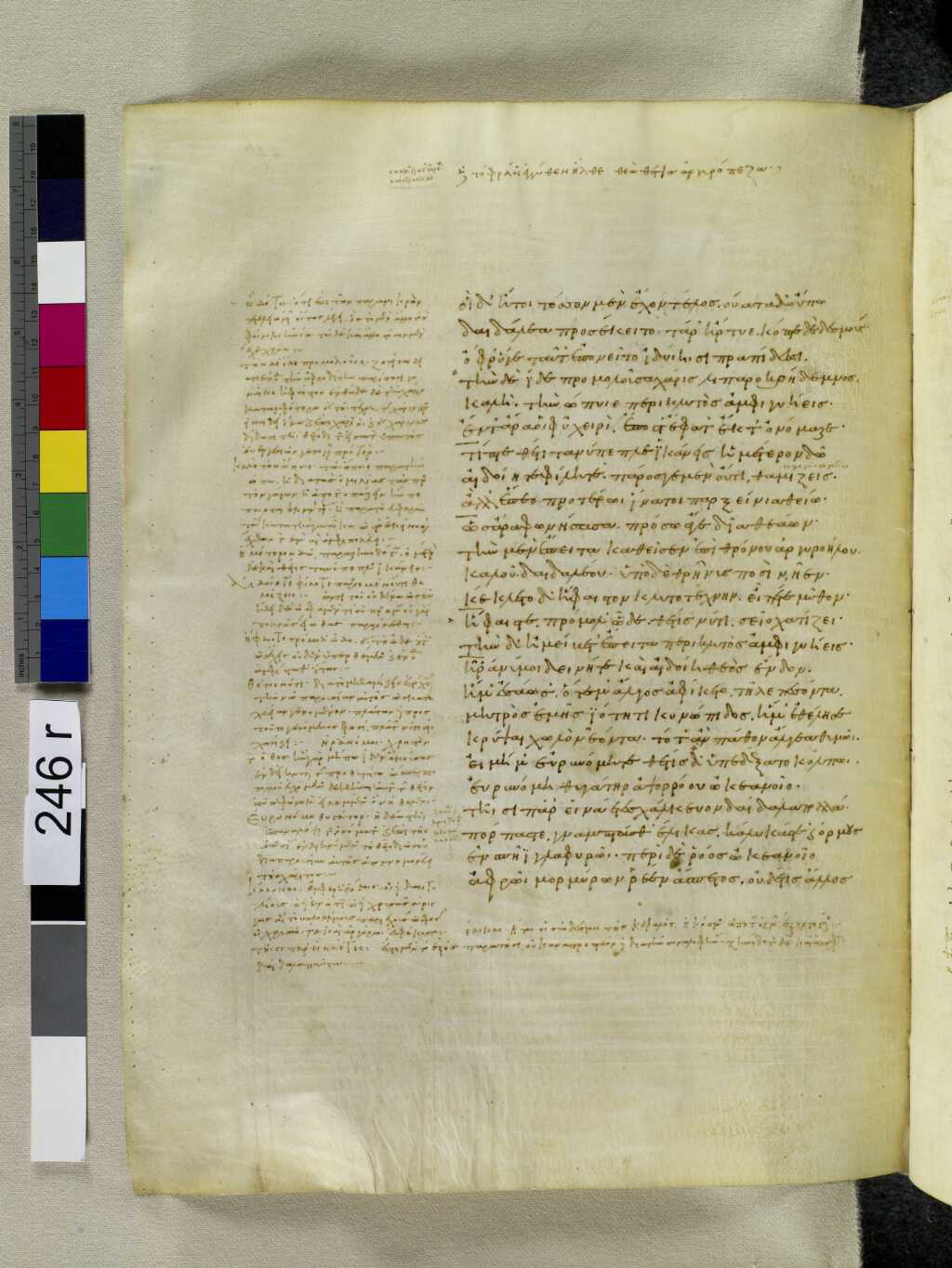
401πόρπας τε γναμπτάς θʼ ἕλικας κάλυκάς τε καὶ ὅρμους 402ἐν σπῆϊ γλαφυρῷ· περὶ δὲ ῥόος Ὠκεανοῖο 403ἀφρῷ μορμύρων ῥέεν ἄσπετος· οὐδέ τις ἄλλος 404ᾔδεεν οὔτε θεῶν οὔτε θνητῶν ἀνθρώπων, 405ἀλλὰ Θέτις τε καὶ Εὐρυνόμη ἴσαν, αἵ μʼ ἐσάωσαν. 406ἣ νῦν ἡμέτερον δόμον ἵκει· τώ με μάλα χρεὼ 407πάντα Θέτι καλλιπλοκάμῳ ζῳάγρια τίνειν. 408ἀλλὰ σὺ μὲν νῦν οἱ παράθες ξεινήϊα καλά, 409ὄφρʼ ἂν ἐγὼ φύσας ἀποθείομαι ὅπλά τε πάντα. 410ἦ, καὶ ἀπʼ ἀκμοθέτοιο πέλωρ αἴητον ἀνέστη 411χωλεύων· ὑπὸ δὲ κνῆμαι ῥώοντο ἀραιαί. 412φύσας μέν ῥʼ ἀπάνευθε τίθει πυρός, ὅπλά τε πάντα 413λάρνακʼ ἐς ἀργυρέην συλλέξατο, τοῖς ἐπονεῖτο· 414σπόγγῳ δʼ ἀμφὶ πρόσωπα καὶ ἄμφω χεῖρʼ ἀπομόργνυ 415αὐχένα τε στιβαρὸν καὶ στήθεα λαχνήεντα, 416δῦ δὲ χιτῶνʼ, ἕλε δὲ σκῆπτρον παχύ, βῆ δὲ θύραζε 417χωλεύων· ὑπὸ δʼ ἀμφίπολοι ῥώοντο ἄνακτι 418χρύσειαι ζωῇσι νεήνισιν εἰοικυῖαι. 419τῇς ἐν μὲν νόος ἐστὶ μετὰ φρεσίν, ἐν δὲ καὶ αὐδὴ 420καὶ σθένος, ἀθανάτων δὲ θεῶν ἄπο ἔργα ἴσασιν. 421αἳ μὲν ὕπαιθα ἄνακτος ἐποίπνυον· αὐτὰρ ὃ ἔρρων 422πλησίον, ἔνθα Θέτις περ, ἐπὶ θρόνου ἷζε φαεινοῦ, 423ἔν τʼ ἄρα οἱ φῦ χειρὶ ἔπος τʼ ἔφατʼ ἔκ τʼ ὀνόμαζε· 424τίπτε Θέτι τανύπεπλε ἱκάνεις ἡμέτερον δῶ 425αἰδοίη τε φίλη τε; πάρος γε μὲν οὔ τι θαμίζεις.
On this the mighty monster hobbled off from his anvil, his thin legs plying lustily under him. He set the bellows away from the fire, and gathered his tools into a silver chest. Then he took a sponge and washed his face and hands, his shaggy chest and brawny neck; he donned his shirt, grasped his strong staff, and limped towards the door. There were golden handmaids also who worked for him, and were like real young women, with sense and reason, voice also and strength, and all the learning of the immortals; these busied themselves as the king bade them, while he drew near to Thetis, seated her upon a goodly seat, and took her hand in his own, saying, “Why have you come to our house, Thetis honoured and ever welcome—for you do not visit us often? Say what you want, and I will do it for you at once if I can, and if it can be done at all.”
Thetis wept and answered, “Vulcan, is there another goddess in Olympus whom the son of Saturn has been pleased to try with so much affliction as he has me? Me alone of the marine goddesses did he make subject to a mortal husband, Peleus son of Aeacus, and sorely against my will did I submit to the embraces of one who was but mortal, and who now stays at home worn out with age. Neither is this all. Heaven vouchsafed me a son, hero among heroes, and he shot up as a sapling. I tended him as a plant in a goodly garden and sent him with his ships to Ilius to fight the Trojans, but never shall I welcome him back to the house of Peleus. So long as he lives to look upon the light of the sun, he is in heaviness, and though I go to him I cannot help him; King Agamemnon has made him give up the maiden whom the sons of the Achaeans had awarded him, and he wastes with sorrow for her sake. Then the Trojans hemmed the Achaeans in at their ships’ sterns and would not let them come forth; the elders, therefore, of the Argives besought Achilles and offered him great treasure, whereon he refused to bring deliverance to them himself, but put his own armour on Patroclus and sent him into the fight with much people after him. All day long they fought by the Scaean gates and would have taken the city there and then, had not Apollo vouchsafed glory to Hector and slain the valiant son of Menoetius after he had done the Trojans much evil. Therefore I am suppliant at your knees if haply you may be pleased to provide my son, whose end is near at hand, with helmet and shield, with goodly greaves fitted with ancle-clasps, and with a breastplate, for he lost his own when his true comrade fell at the hands of the Trojans, and he now lies stretched on earth in the bitterness of his soul.”
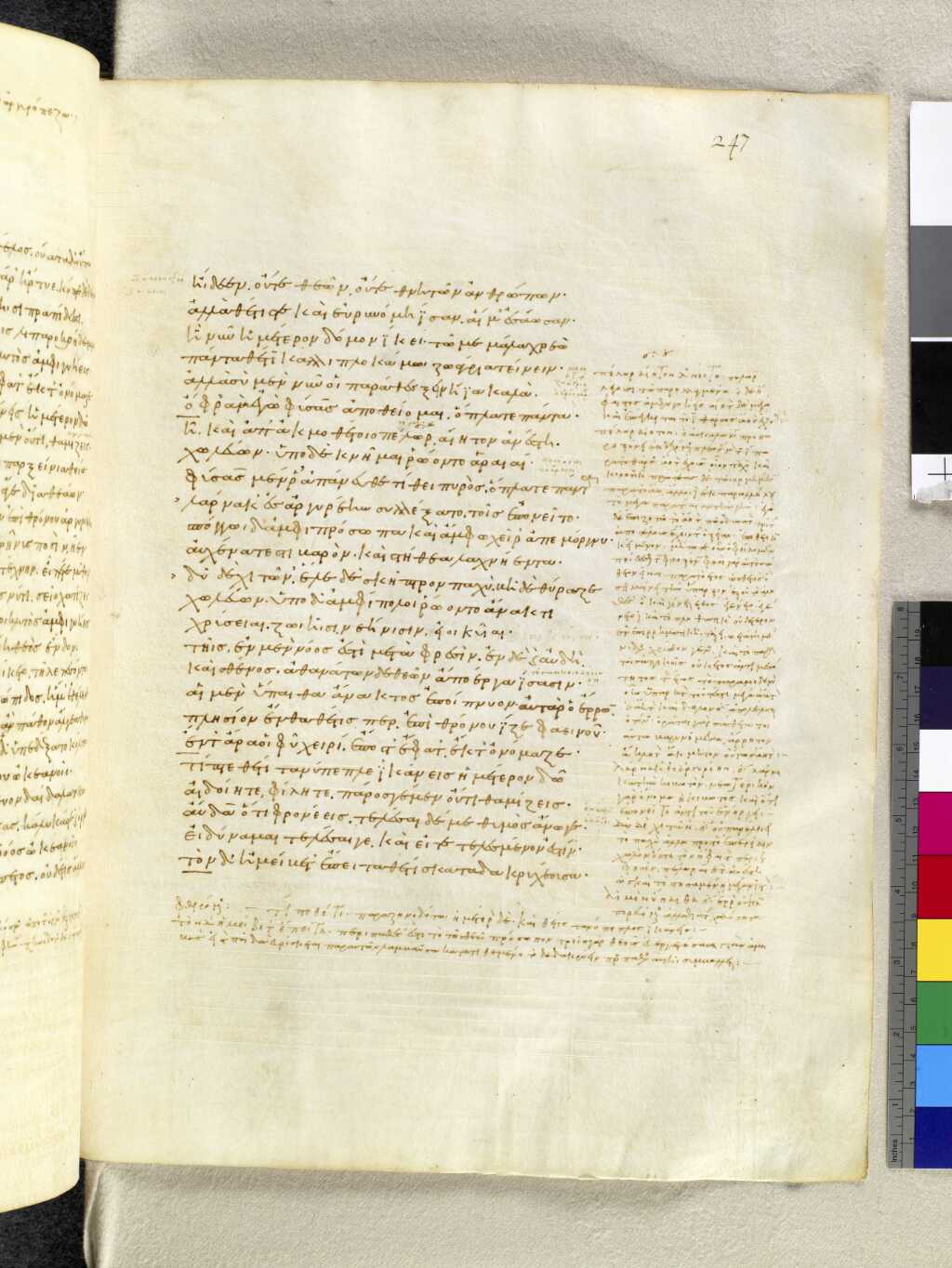
426αὔδα ὅ τι φρονέεις· τελέσαι δέ με θυμὸς ἄνωγεν, 427εἰ δύναμαι τελέσαι γε καὶ εἰ τετελεσμένον ἐστίν. 428τὸν δʼ ἠμείβετʼ ἔπειτα Θέτις κατὰ δάκρυ χέουσα· 429Ἥφαιστʼ, ἦ ἄρα δή τις, ὅσαι θεαί εἰσʼ ἐν Ὀλύμπῳ, 430τοσσάδʼ ἐνὶ φρεσὶν ᾗσιν ἀνέσχετο κήδεα λυγρὰ 431ὅσσʼ ἐμοὶ ἐκ πασέων Κρονίδης Ζεὺς ἄλγεʼ ἔδωκεν; 432ἐκ μέν μʼ ἀλλάων ἁλιάων ἀνδρὶ δάμασσεν 433Αἰακίδῃ Πηλῆϊ, καὶ ἔτλην ἀνέρος εὐνὴν 434πολλὰ μάλʼ οὐκ ἐθέλουσα. ὃ μὲν δὴ γήραϊ λυγρῷ 435κεῖται ἐνὶ μεγάροις ἀρημένος, ἄλλα δέ μοι νῦν· 436υἱὸν ἐπεί μοι δῶκε γενέσθαί τε τραφέμεν τε 437ἔξοχον ἡρώων· ὃ δʼ ἀνέδραμεν ἔρνεϊ ἶσος· 438τὸν μὲν ἐγὼ θρέψασα φυτὸν ὣς γουνῷ ἀλωῆς 439νηυσὶν ἐπιπροέηκα κορωνίσιν Ἴλιον εἴσω 440Τρωσὶ μαχησόμενον· τὸν δʼ οὐχ ὑποδέξομαι αὖτις 441οἴκαδε νοστήσαντα δόμον Πηλήϊον εἴσω. 442ὄφρα δέ μοι ζώει καὶ ὁρᾷ φάος ἠελίοιο 443ἄχνυται, οὐδέ τί οἱ δύναμαι χραισμῆσαι ἰοῦσα. 444κούρην ἣν ἄρα οἱ γέρας ἔξελον υἷες Ἀχαιῶν, 445τὴν ἂψ ἐκ χειρῶν ἕλετο κρείων Ἀγαμέμνων. 446ἤτοι ὃ τῆς ἀχέων φρένας ἔφθιεν· αὐτὰρ Ἀχαιοὺς 447Τρῶες ἐπὶ πρύμνῃσιν ἐείλεον, οὐδὲ θύραζε 448εἴων ἐξιέναι· τὸν δὲ λίσσοντο γέροντες 449Ἀργείων, καὶ πολλὰ περικλυτὰ δῶρʼ ὀνόμαζον. 450ἔνθʼ αὐτὸς μὲν ἔπειτʼ ἠναίνετο λοιγὸν ἀμῦναι,
And Vulcan answered, “Take heart, and be no more disquieted about this matter; would that I could hide him from death’s sight when his hour is come, so surely as I can find him armour that shall amaze the eyes of all who behold it.”
When he had so said he left her and went to his bellows, turning them towards the fire and bidding them do their office. Twenty bellows blew upon the melting-pots, and they blew blasts of every kind, some fierce to help him when he had need of them, and others less strong as Vulcan willed it in the course of his work. He threw tough copper into the fire, and tin, with silver and gold; he set his great anvil on its block, and with one hand grasped his mighty hammer while he took the tongs in the other.
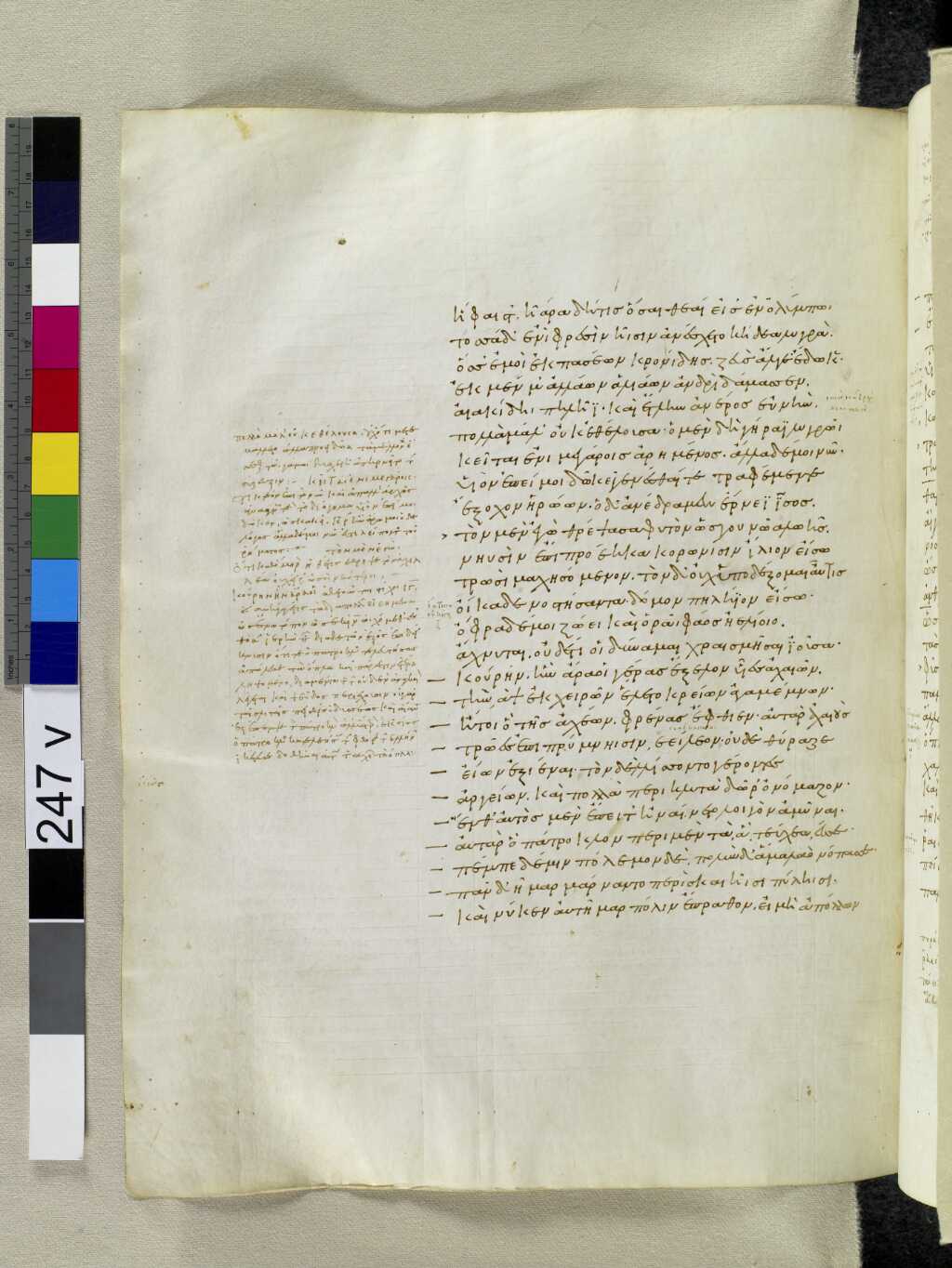
451αὐτὰρ ὃ Πάτροκλον περὶ μὲν τὰ ἃ τεύχεα ἕσσε, 452πέμπε δέ μιν πόλεμον δέ, πολὺν δʼ ἅμα λαὸν ὄπασσε. 453πᾶν δʼ ἦμαρ μάρναντο περὶ Σκαιῇσι πύλῃσι· 454καί νύ κεν αὐτῆμαρ πόλιν ἔπραθον, εἰ μὴ Ἀπόλλων 455πολλὰ κακὰ ῥέξαντα Μενοιτίου ἄλκιμον υἱὸν 456ἔκτανʼ ἐνὶ προμάχοισι καὶ Ἕκτορι κῦδος ἔδωκε. 457τοὔνεκα νῦν τὰ σὰ γούναθʼ ἱκάνομαι, αἴ κʼ ἐθέλῃσθα 458υἱεῖ ἐμῷ ὠκυμόρῳ δόμεν ἀσπίδα καὶ τρυφάλειαν 459καὶ καλὰς κνημῖδας ἐπισφυρίοις ἀραρυίας 460καὶ θώρηχʼ· ὃ γὰρ ἦν οἱ ἀπώλεσε πιστὸς ἑταῖρος 461Τρωσὶ δαμείς· ὃ δὲ κεῖται ἐπὶ χθονὶ θυμὸν ἀχεύων. 462τὴν δʼ ἠμείβετʼ ἔπειτα περικλυτὸς ἀμφιγυήεις· 463θάρσει· μή τοι ταῦτα μετὰ φρεσὶ σῇσι μελόντων. 464αἲ γάρ μιν θανάτοιο δυσηχέος ὧδε δυναίμην 465νόσφιν ἀποκρύψαι, ὅτε μιν μόρος αἰνὸς ἱκάνοι, 466ὥς οἱ τεύχεα καλὰ παρέσσεται, οἷά τις αὖτε 467ἀνθρώπων πολέων θαυμάσσεται, ὅς κεν ἴδηται. 468ὣς εἰπὼν τὴν μὲν λίπεν αὐτοῦ, βῆ δʼ ἐπὶ φύσας· 469τὰς δʼ ἐς πῦρ ἔτρεψε κέλευσέ τε ἐργάζεσθαι. 470φῦσαι δʼ ἐν χοάνοισιν ἐείκοσι πᾶσαι ἐφύσων 471παντοίην εὔπρηστον ἀϋτμὴν ἐξανιεῖσαι, 472ἄλλοτε μὲν σπεύδοντι παρέμμεναι, ἄλλοτε δʼ αὖτε, 473ὅππως Ἥφαιστός τʼ ἐθέλοι καὶ ἔργον ἄνοιτο. 474χαλκὸν δʼ ἐν πυρὶ βάλλεν ἀτειρέα κασσίτερόν τε 475καὶ χρυσὸν τιμῆντα καὶ ἄργυρον· αὐτὰρ ἔπειτα
First he shaped the shield so great and strong, adorning it all over and binding it round with a gleaming circuit in three layers; and the baldric was made of silver. He made the shield in five thicknesses, and with many a wonder did his cunning hand enrich it.
He wrought the earth, the heavens, and the sea; the moon also at her full and the untiring sun, with all the signs that glorify the face of heaven—the Pleiads, the Hyads, huge Orion, and the Bear, which men also call the Wain and which turns round ever in one place, facing Orion, and alone never dips into the stream of Oceanus.
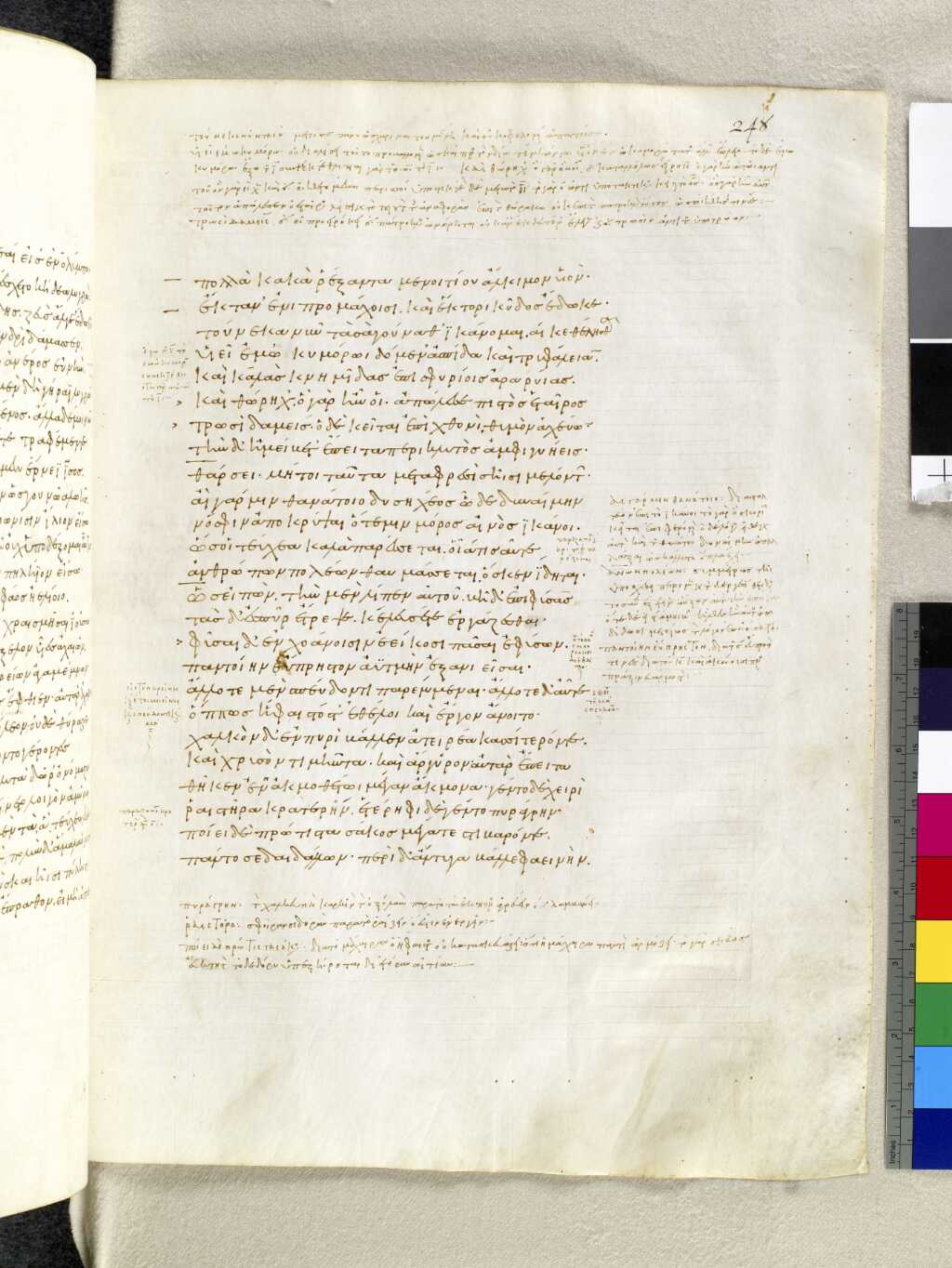
476θῆκεν ἐν ἀκμοθέτῳ μέγαν ἄκμονα, γέντο δὲ χειρὶ 477ῥαιστῆρα κρατερήν, ἑτέρηφι δὲ γέντο πυράγρην. 478ποίει δὲ πρώτιστα σάκος μέγα τε στιβαρόν τε 479πάντοσε δαιδάλλων, περὶ δʼ ἄντυγα βάλλε φαεινὴν 480τρίπλακα μαρμαρέην, ἐκ δʼ ἀργύρεον τελαμῶνα. 481πέντε δʼ ἄρʼ αὐτοῦ ἔσαν σάκεος πτύχες· αὐτὰρ ἐν αὐτῷ 482ποίει δαίδαλα πολλὰ ἰδυίῃσι πραπίδεσσιν. 483ἐν μὲν γαῖαν ἔτευξʼ, ἐν δʼ οὐρανόν, ἐν δὲ θάλασσαν, 484ἠέλιόν τʼ ἀκάμαντα σελήνην τε πλήθουσαν, 485ἐν δὲ τὰ τείρεα πάντα, τά τʼ οὐρανὸς ἐστεφάνωται, 486Πληϊάδας θʼ Ὑάδας τε τό τε σθένος Ὠρίωνος 487Ἄρκτόν θʼ, ἣν καὶ Ἄμαξαν ἐπίκλησιν καλέουσιν, 488ἥ τʼ αὐτοῦ στρέφεται καί τʼ Ὠρίωνα δοκεύει, 489οἴη δʼ ἄμμορός ἐστι λοετρῶν Ὠκεανοῖο. 490ἐν δὲ δύω ποίησε πόλεις μερόπων ἀνθρώπων 491καλάς. ἐν τῇ μέν ῥα γάμοι τʼ ἔσαν εἰλαπίναι τε, 492νύμφας δʼ ἐκ θαλάμων δαΐδων ὕπο λαμπομενάων 493ἠγίνεον ἀνὰ ἄστυ, πολὺς δʼ ὑμέναιος ὀρώρει· 494κοῦροι δʼ ὀρχηστῆρες ἐδίνεον, ἐν δʼ ἄρα τοῖσιν 495αὐλοὶ φόρμιγγές τε βοὴν ἔχον· αἳ δὲ γυναῖκες 496ἱστάμεναι θαύμαζον ἐπὶ προθύροισιν ἑκάστη. 497λαοὶ δʼ εἰν ἀγορῇ ἔσαν ἀθρόοι· ἔνθα δὲ νεῖκος 498ὠρώρει, δύο δʼ ἄνδρες ἐνείκεον εἵνεκα ποινῆς 499ἀνδρὸς ἀποφθιμένου· ὃ μὲν εὔχετο πάντʼ ἀποδοῦναι 500δήμῳ πιφαύσκων, ὃ δʼ ἀναίνετο μηδὲν ἑλέσθαι·
He wrought also two cities, fair to see and busy with the hum of men. In the one were weddings and wedding-feasts, and they were going about the city with brides whom they were escorting by torchlight from their chambers. Loud rose the cry of Hymen, and the youths danced to the music of flute and lyre, while the women stood each at her house door to see them.
Meanwhile the people were gathered in assembly, for there was a quarrel, and two men were wrangling about the blood-money for a man who had been killed, the one saying before the people that he had paid damages in full, and the other that he had not been paid. Each was trying to make his own case good, and the people took sides, each man backing the side that he had taken; but the heralds kept them back, and the elders sate on their seats of stone in a solemn circle, holding the staves which the heralds had put into their hands. Then they rose and each in his turn gave judgement, and there were two talents laid down, to be given to him whose judgement should be deemed the fairest.
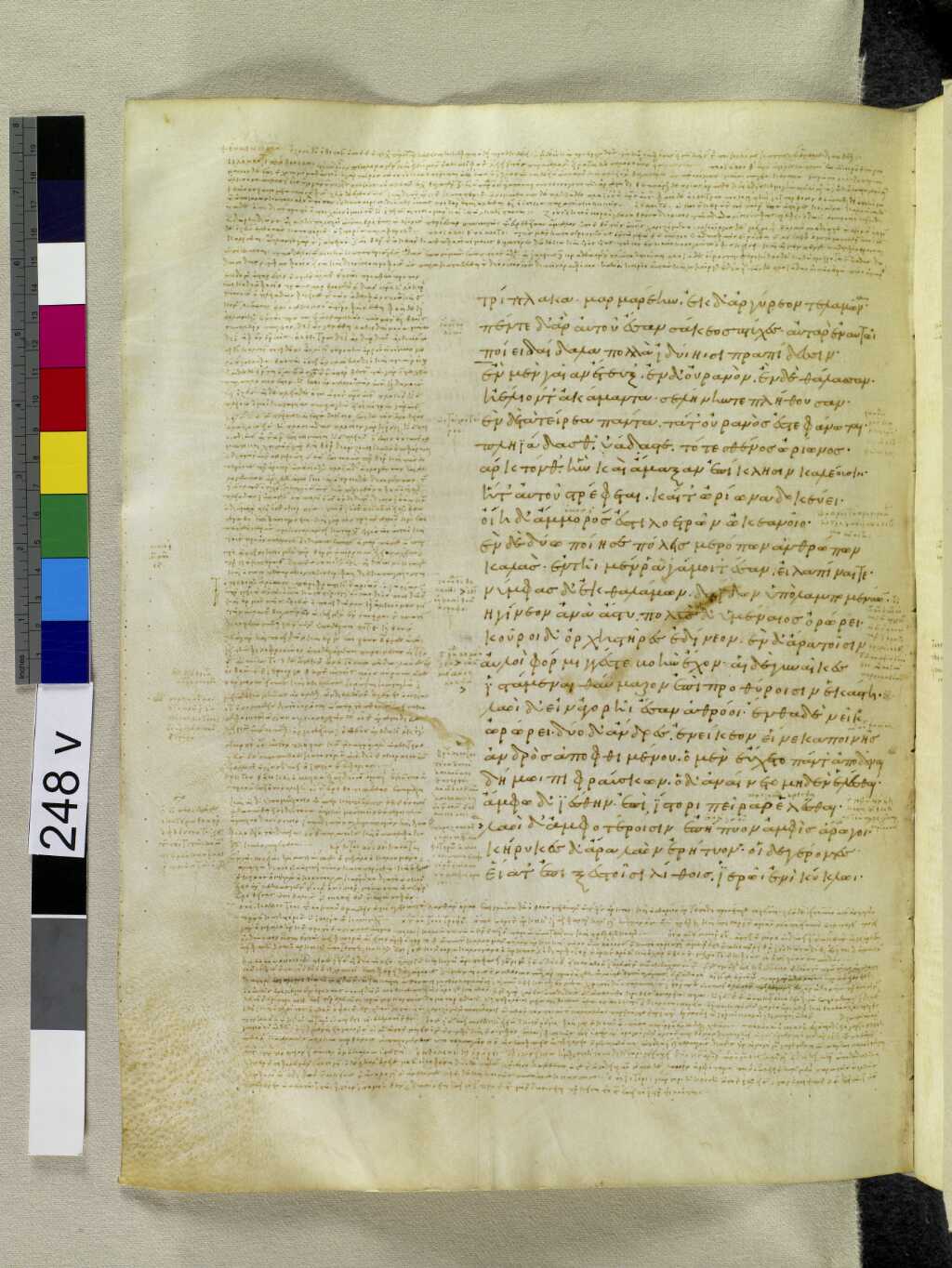
501ἄμφω δʼ ἱέσθην ἐπὶ ἴστορι πεῖραρ ἑλέσθαι. 502λαοὶ δʼ ἀμφοτέροισιν ἐπήπυον ἀμφὶς ἀρωγοί· 503κήρυκες δʼ ἄρα λαὸν ἐρήτυον· οἳ δὲ γέροντες 504εἵατʼ ἐπὶ ξεστοῖσι λίθοις ἱερῷ ἐνὶ κύκλῳ, 505σκῆπτρα δὲ κηρύκων ἐν χέρσʼ ἔχον ἠεροφώνων· 506τοῖσιν ἔπειτʼ ἤϊσσον, ἀμοιβηδὶς δὲ δίκαζον. 507κεῖτο δʼ ἄρʼ ἐν μέσσοισι δύω χρυσοῖο τάλαντα, 508τῷ δόμεν ὃς μετὰ τοῖσι δίκην ἰθύντατα εἴποι. 509τὴν δʼ ἑτέρην πόλιν ἀμφὶ δύω στρατοὶ ἥατο λαῶν 510τεύχεσι λαμπόμενοι· δίχα δέ σφισιν ἥνδανε βουλή, 511ἠὲ διαπραθέειν ἢ ἄνδιχα πάντα δάσασθαι 512κτῆσιν ὅσην πτολίεθρον ἐπήρατον ἐντὸς ἔεργεν· 513οἳ δʼ οὔ πω πείθοντο, λόχῳ δʼ ὑπεθωρήσσοντο. 514τεῖχος μέν ῥʼ ἄλοχοί τε φίλαι καὶ νήπια τέκνα 515ῥύατʼ ἐφεσταότες, μετὰ δʼ ἀνέρες οὓς ἔχε γῆρας· 516οἳ δʼ ἴσαν· ἦρχε δʼ ἄρά σφιν Ἄρης καὶ Παλλὰς Ἀθήνη 517ἄμφω χρυσείω, χρύσεια δὲ εἵματα ἕσθην, 518καλὼ καὶ μεγάλω σὺν τεύχεσιν, ὥς τε θεώ περ 519ἀμφὶς ἀριζήλω· λαοὶ δʼ ὑπολίζονες ἦσαν. 520οἳ δʼ ὅτε δή ῥʼ ἵκανον ὅθι σφίσιν εἶκε λοχῆσαι 521ἐν ποταμῷ, ὅθι τʼ ἀρδμὸς ἔην πάντεσσι βοτοῖσιν, 522ἔνθʼ ἄρα τοί γʼ ἵζοντʼ εἰλυμένοι αἴθοπι χαλκῷ. 523τοῖσι δʼ ἔπειτʼ ἀπάνευθε δύω σκοποὶ εἵατο λαῶν 524δέγμενοι ὁππότε μῆλα ἰδοίατο καὶ ἕλικας βοῦς. 525οἳ δὲ τάχα προγένοντο, δύω δʼ ἅμʼ ἕποντο νομῆες
About the other city there lay encamped two hosts in gleaming armour, and they were divided whether to sack it, or to spare it and accept the half of what it contained. But the men of the city would not yet consent, and armed themselves for a surprise; their wives and little children kept guard upon the walls, and with them were the men who were past fighting through age; but the others sallied forth with Mars and Pallas Minerva at their head—both of them wrought in gold and clad in golden raiment, great and fair with their armour as befitting gods, while they that followed were smaller. When they reached the place where they would lay their ambush, it was on a riverbed to which live stock of all kinds would come from far and near to water; here, then, they lay concealed, clad in full armour. Some way off them there were two scouts who were on the look-out for the coming of sheep or cattle, which presently came, followed by two shepherds who were playing on their pipes, and had not so much as a thought of danger. When those who were in ambush saw this, they cut off the flocks and herds and killed the shepherds. Meanwhile the besiegers, when they heard much noise among the cattle as they sat in council, sprang to their horses, and made with all speed towards them; when they reached them they set battle in array by the banks of the river, and the hosts aimed their bronze-shod spears at one another. With them were Strife and Riot, and fell Fate who was dragging three men after her, one with a fresh wound, and the other unwounded, while the third was dead, and she was dragging him along by his heel: and her robe was bedrabbled in men’s blood. They went in and out with one another and fought as though they were living people haling away one another’s dead.
He wrought also a fair fallow field, large and thrice ploughed already. Many men were working at the plough within it, turning their oxen to and fro, furrow after furrow. Each time that they turned on reaching the headland a man would come up to them and give them a cup of wine, and they would go back to their furrows looking forward to the time when they should again reach the headland. The part that they had ploughed was dark behind them, so that the field, though it was of gold, still looked as if it were being ploughed—very curious to behold.
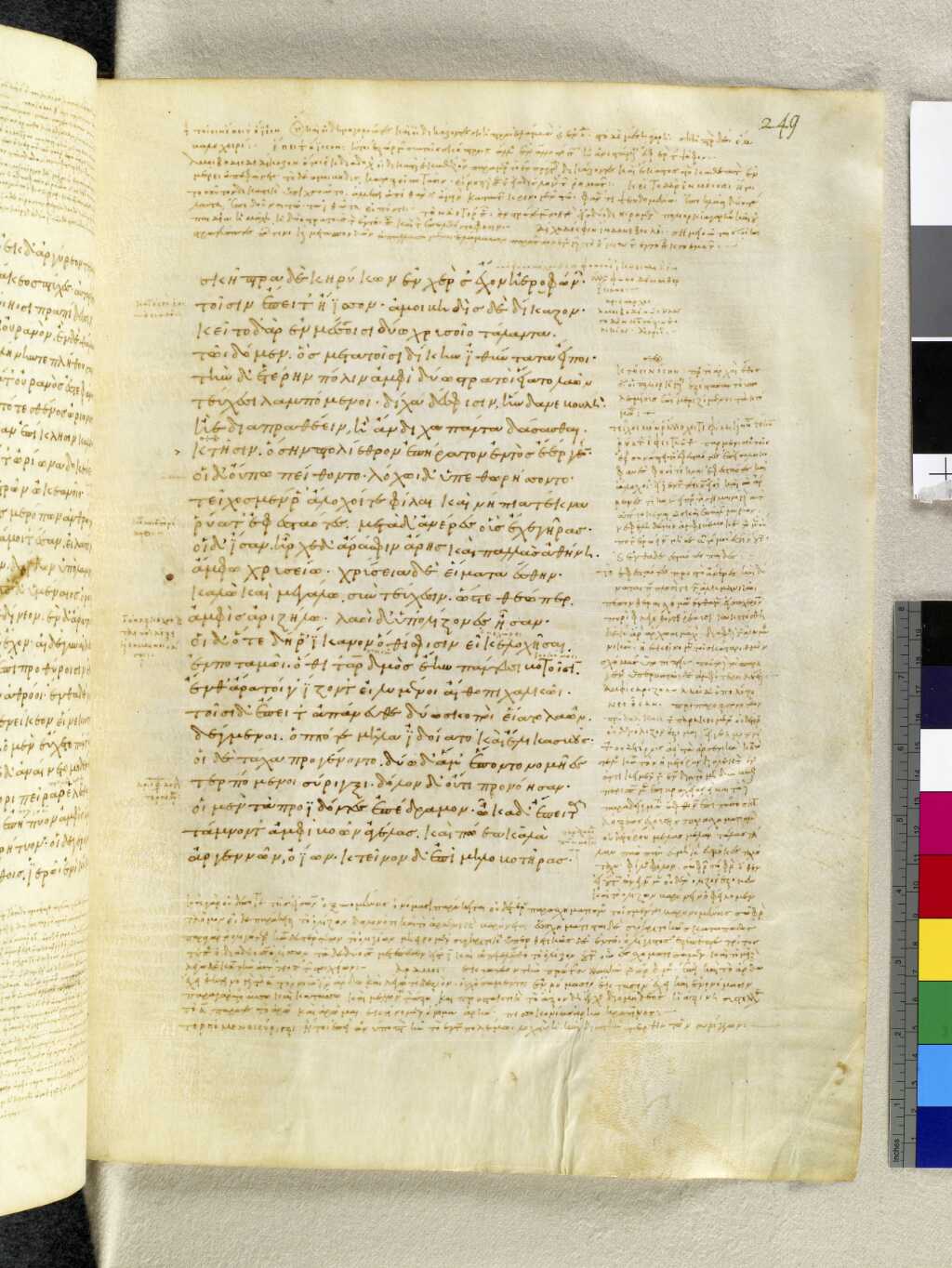
526τερπόμενοι σύριγξι· δόλον δʼ οὔ τι προνόησαν. 527οἳ μὲν τὰ προϊδόντες ἐπέδραμον, ὦκα δʼ ἔπειτα 528τάμνοντʼ ἀμφὶ βοῶν ἀγέλας καὶ πώεα καλὰ 529ἀργεννέων οἰῶν, κτεῖνον δʼ ἐπὶ μηλοβοτῆρας. 530οἳ δʼ ὡς οὖν ἐπύθοντο πολὺν κέλαδον παρὰ βουσὶν 531εἰράων προπάροιθε καθήμενοι, αὐτίκʼ ἐφʼ ἵππων 532βάντες ἀερσιπόδων μετεκίαθον, αἶψα δʼ ἵκοντο. 533στησάμενοι δʼ ἐμάχοντο μάχην ποταμοῖο παρʼ ὄχθας, 534βάλλον δʼ ἀλλήλους χαλκήρεσιν ἐγχείῃσιν. 535ἐν δʼ Ἔρις ἐν δὲ Κυδοιμὸς ὁμίλεον, ἐν δʼ ὀλοὴ Κήρ, 536ἄλλον ζωὸν ἔχουσα νεούτατον, ἄλλον ἄουτον, 537ἄλλον τεθνηῶτα κατὰ μόθον ἕλκε ποδοῖιν· 538εἷμα δʼ ἔχʼ ἀμφʼ ὤμοισι δαφοινεὸν αἵματι φωτῶν. 539ὡμίλευν δʼ ὥς τε ζωοὶ βροτοὶ ἠδʼ ἐμάχοντο, 540νεκρούς τʼ ἀλλήλων ἔρυον κατατεθνηῶτας. 541ἐν δʼ ἐτίθει νειὸν μαλακὴν πίειραν ἄρουραν 542εὐρεῖαν τρίπολον· πολλοὶ δʼ ἀροτῆρες ἐν αὐτῇ 543ζεύγεα δινεύοντες ἐλάστρεον ἔνθα καὶ ἔνθα. 544οἳ δʼ ὁπότε στρέψαντες ἱκοίατο τέλσον ἀρούρης, 545τοῖσι δʼ ἔπειτʼ ἐν χερσὶ δέπας μελιηδέος οἴνου 546δόσκεν ἀνὴρ ἐπιών· τοὶ δὲ στρέψασκον ἀνʼ ὄγμους, 547ἱέμενοι νειοῖο βαθείης τέλσον ἱκέσθαι. 548ἣ δὲ μελαίνετʼ ὄπισθεν, ἀρηρομένῃ δὲ ἐῴκει, 549χρυσείη περ ἐοῦσα· τὸ δὴ περὶ θαῦμα τέτυκτο. 550ἐν δʼ ἐτίθει τέμενος βασιλήϊον· ἔνθα δʼ ἔριθοι
He wrought also a field of harvest corn, and the reapers were reaping with sharp sickles in their hands. Swathe after swathe fell to the ground in a straight line behind them, and the binders bound them in bands of twisted straw. There were three binders, and behind them there were boys who gathered the cut corn in armfuls and kept on bringing them to be bound: among them all the owner of the land stood by in silence and was glad. The servants were getting a meal ready under an oak, for they had sacrificed a great ox, and were busy cutting him up, while the women were making a porridge of much white barley for the labourers’ dinner.
He wrought also a vineyard, golden and fair to see, and the vines were loaded with grapes. The bunches overhead were black, but the vines were trained on poles of silver. He ran a ditch of dark metal all round it, and fenced it with a fence of tin; there was only one path to it, and by this the vintagers went when they would gather the vintage. Youths and maidens all blithe and full of glee, carried the luscious fruit in plaited baskets; and with them there went a boy who made sweet music with his lyre, and sang the Linos-song with his clear boyish voice.
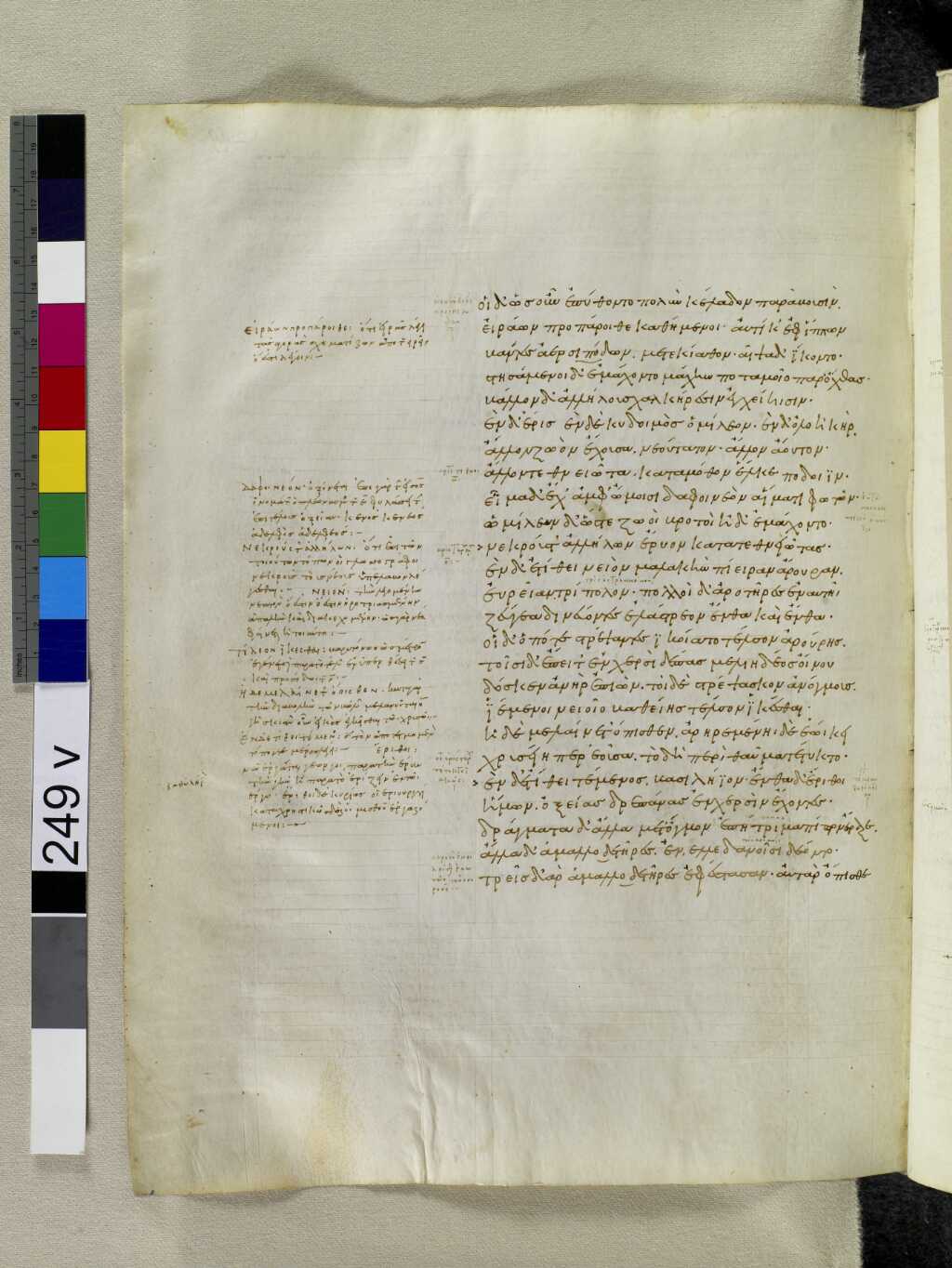
551ἤμων ὀξείας δρεπάνας ἐν χερσὶν ἔχοντες. 552δράγματα δʼ ἄλλα μετʼ ὄγμον ἐπήτριμα πῖπτον ἔραζε, 553ἄλλα δʼ ἀμαλλοδετῆρες ἐν ἐλλεδανοῖσι δέοντο. 554τρεῖς δʼ ἄρʼ ἀμαλλοδετῆρες ἐφέστασαν· αὐτὰρ ὄπισθε 555παῖδες δραγμεύοντες ἐν ἀγκαλίδεσσι φέροντες 556ἀσπερχὲς πάρεχον· βασιλεὺς δʼ ἐν τοῖσι σιωπῇ 557σκῆπτρον ἔχων ἑστήκει ἐπʼ ὄγμου γηθόσυνος κῆρ. 558κήρυκες δʼ ἀπάνευθεν ὑπὸ δρυῒ δαῖτα πένοντο, 559βοῦν δʼ ἱερεύσαντες μέγαν ἄμφεπον· αἳ δὲ γυναῖκες 560δεῖπνον ἐρίθοισιν λεύκʼ ἄλφιτα πολλὰ πάλυνον. 561ἐν δʼ ἐτίθει σταφυλῇσι μέγα βρίθουσαν ἀλωὴν 562καλὴν χρυσείην· μέλανες δʼ ἀνὰ βότρυες ἦσαν, 563ἑστήκει δὲ κάμαξι διαμπερὲς ἀργυρέῃσιν. 564ἀμφὶ δὲ κυανέην κάπετον, περὶ δʼ ἕρκος ἔλασσε 565κασσιτέρου· μία δʼ οἴη ἀταρπιτὸς ἦεν ἐπʼ αὐτήν, 566τῇ νίσοντο φορῆες ὅτε τρυγόῳεν ἀλωήν. 567παρθενικαὶ δὲ καὶ ἠΐθεοι ἀταλὰ φρονέοντες 568πλεκτοῖς ἐν ταλάροισι φέρον μελιηδέα καρπόν. 569τοῖσιν δʼ ἐν μέσσοισι πάϊς φόρμιγγι λιγείῃ 570ἱμερόεν κιθάριζε, λίνον δʼ ὑπὸ καλὸν ἄειδε 571λεπταλέῃ φωνῇ· τοὶ δὲ ῥήσσοντες ἁμαρτῇ 572μολπῇ τʼ ἰυγμῷ τε ποσὶ σκαίροντες ἕποντο. 573ἐν δʼ ἀγέλην ποίησε βοῶν ὀρθοκραιράων· 574αἳ δὲ βόες χρυσοῖο τετεύχατο κασσιτέρου τε, 575μυκηθμῷ δʼ ἀπὸ κόπρου ἐπεσσεύοντο νομὸν δὲ
He wrought also a herd of horned cattle. He made the cows of gold and tin, and they lowed as they came full speed out of the yards to go and feed among the waving reeds that grow by the banks of the river. Along with the cattle there went four shepherds, all of them in gold, and their nine fleet dogs went with them. Two terrible lions had fastened on a bellowing bull that was with the foremost cows, and bellow as he might they haled him, while the dogs and men gave chase: the lions tore through the bull’s thick hide and were gorging on his blood and bowels, but the herdsmen were afraid to do anything, and only hounded on their dogs; the dogs dared not fasten on the lions but stood by barking and keeping out of harm’s way.
The god wrought also a pasture in a fair mountain dell, and a large flock of sheep, with a homestead and huts, and sheltered sheepfolds.
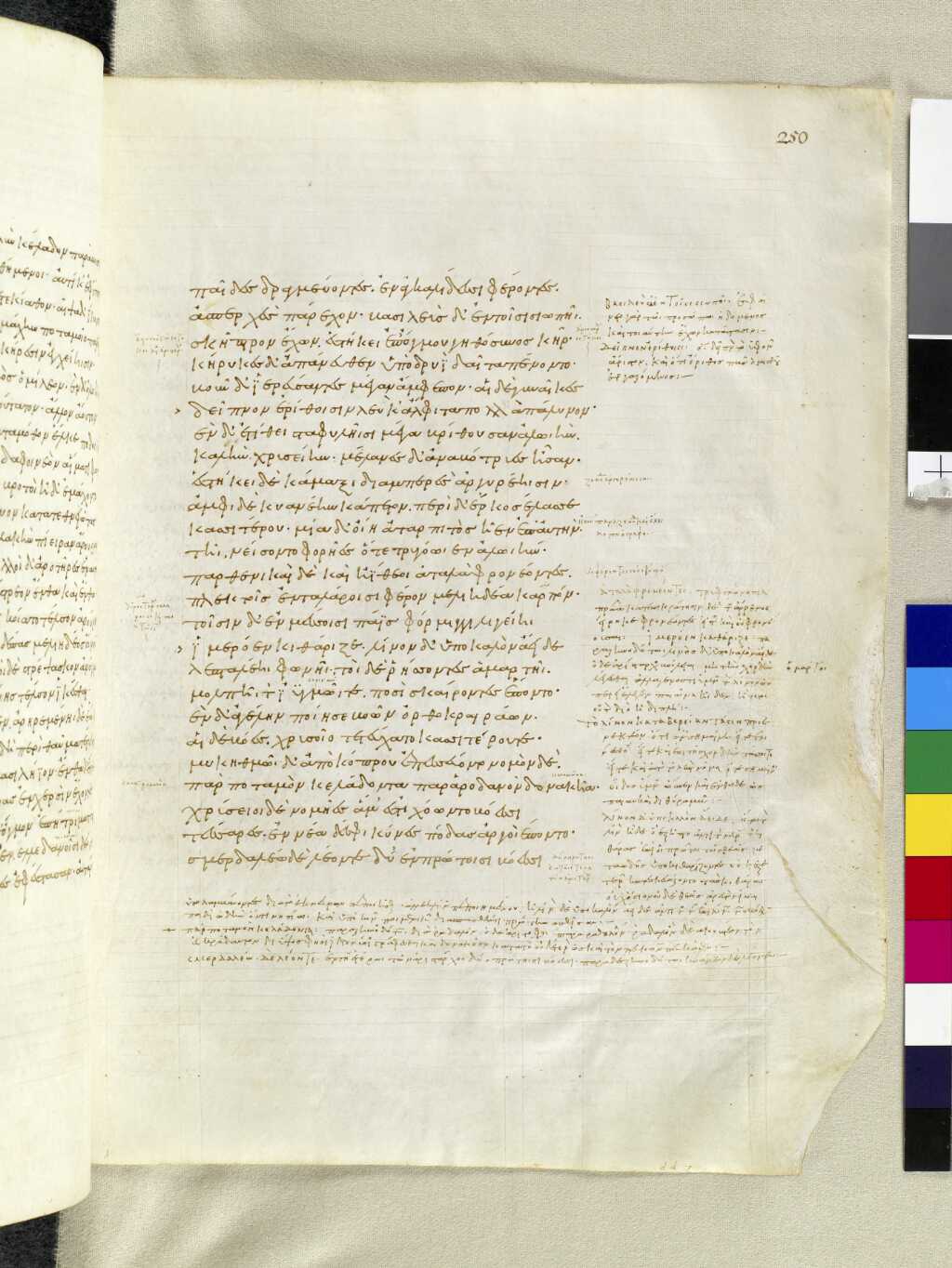
576πὰρ ποταμὸν κελάδοντα, παρὰ ῥοδανὸν δονακῆα. 577χρύσειοι δὲ νομῆες ἅμʼ ἐστιχόωντο βόεσσι 578τέσσαρες, ἐννέα δέ σφι κύνες πόδας ἀργοὶ ἕποντο. 579σμερδαλέω δὲ λέοντε δύʼ ἐν πρώτῃσι βόεσσι 580ταῦρον ἐρύγμηλον ἐχέτην· ὃ δὲ μακρὰ μεμυκὼς 581ἕλκετο· τὸν δὲ κύνες μετεκίαθον ἠδʼ αἰζηοί. 582τὼ μὲν ἀναρρήξαντε βοὸς μεγάλοιο βοείην 583ἔγκατα καὶ μέλαν αἷμα λαφύσσετον· οἳ δὲ νομῆες 584αὔτως ἐνδίεσαν ταχέας κύνας ὀτρύνοντες. 585οἳ δʼ ἤτοι δακέειν μὲν ἀπετρωπῶντο λεόντων, 586ἱστάμενοι δὲ μάλʼ ἐγγὺς ὑλάκτεον ἔκ τʼ ἀλέοντο. 587ἐν δὲ νομὸν ποίησε περικλυτὸς ἀμφιγυήεις 588ἐν καλῇ βήσσῃ μέγαν οἰῶν ἀργεννάων, 589σταθμούς τε κλισίας τε κατηρεφέας ἰδὲ σηκούς. 590ἐν δὲ χορὸν ποίκιλλε περικλυτὸς ἀμφιγυήεις, 591τῷ ἴκελον οἷόν ποτʼ ἐνὶ Κνωσῷ εὐρείῃ 592Δαίδαλος ἤσκησεν καλλιπλοκάμῳ Ἀριάδνῃ. 593ἔνθα μὲν ἠΐθεοι καὶ παρθένοι ἀλφεσίβοιαι 594ὀρχεῦντʼ ἀλλήλων ἐπὶ καρπῷ χεῖρας ἔχοντες. 595τῶν δʼ αἳ μὲν λεπτὰς ὀθόνας ἔχον, οἳ δὲ χιτῶνας 596εἵατʼ ἐϋννήτους, ἦκα στίλβοντας ἐλαίῳ· 597καί ῥʼ αἳ μὲν καλὰς στεφάνας ἔχον, οἳ δὲ μαχαίρας 598εἶχον χρυσείας ἐξ ἀργυρέων τελαμώνων. 599οἳ δʼ ὁτὲ μὲν θρέξασκον ἐπισταμένοισι πόδεσσι 600ῥεῖα μάλʼ, ὡς ὅτε τις τροχὸν ἄρμενον ἐν παλάμῃσιν
Furthermore he wrought a green, like that which Daedalus once made in Cnossus for lovely Ariadne. Hereon there danced youths and maidens whom all would woo, with their hands on one another’s wrists. The maidens wore robes of light linen, and the youths well woven shirts that were slightly oiled. The girls were crowned with garlands, while the young men had daggers of gold that hung by silver baldrics; sometimes they would dance deftly in a ring with merry twinkling feet, as it were a potter sitting at his work and making trial of his wheel to see whether it will run, and sometimes they would go all in line with one another, and much people was gathered joyously about the green. There was a bard also to sing to them and play his lyre, while two tumblers went about performing in the midst of them when the man struck up with his tune.
All round the outermost rim of the shield he set the mighty stream of the river Oceanus.
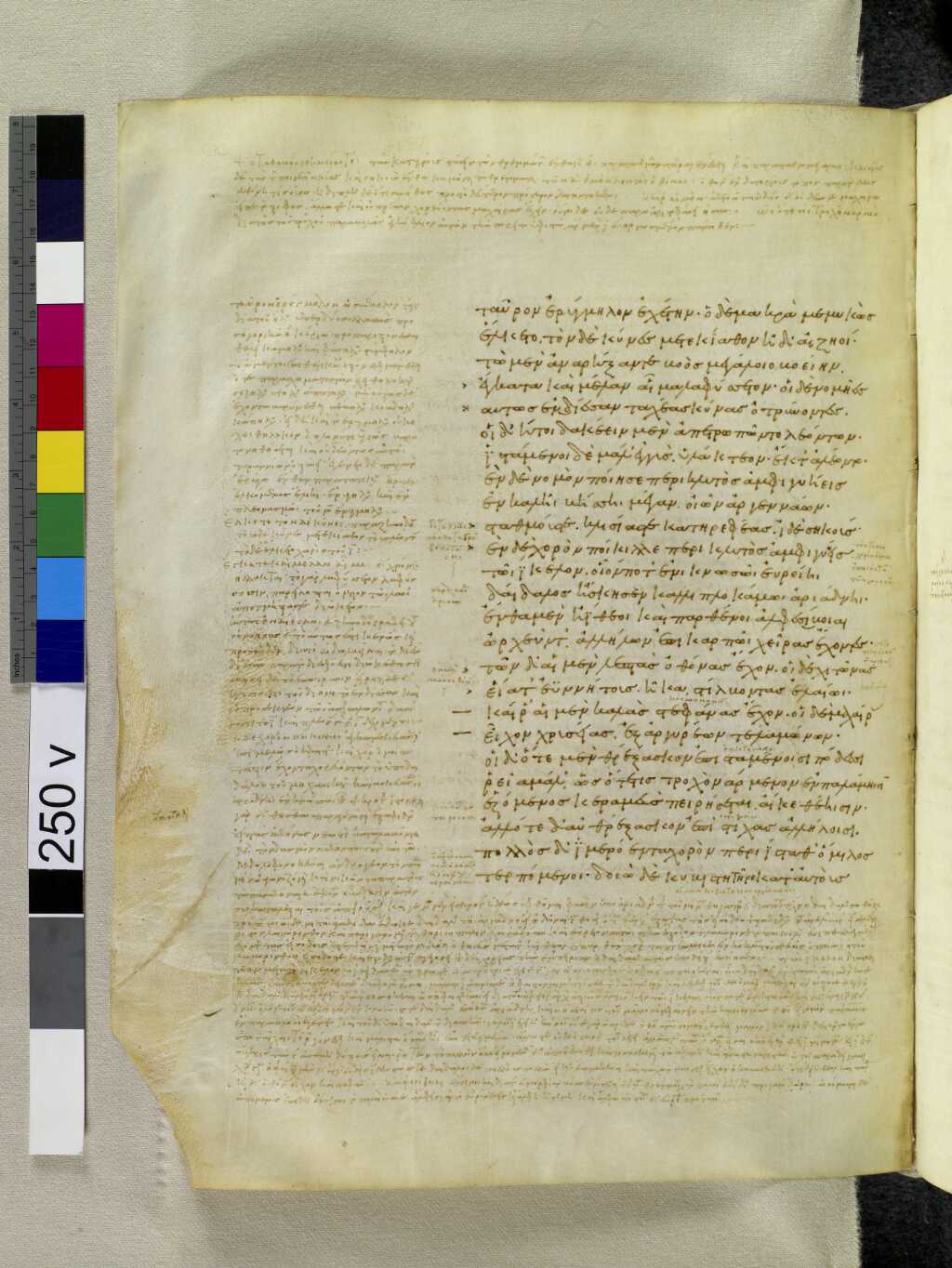
601ἑζόμενος κεραμεὺς πειρήσεται, αἴ κε θέῃσιν· 602ἄλλοτε δʼ αὖ θρέξασκον ἐπὶ στίχας ἀλλήλοισι. 603πολλὸς δʼ ἱμερόεντα χορὸν περιίσταθʼ ὅμιλος 604τερπόμενοι· μετὰ δέ σφιν ἐμέλπετο θεῖος ἀοιδὸς 605φορμίζων· δοιὼ δὲ κυβιστητῆρε κατ' αὐτοὺς 606μολπῆς ἐξάρχοντες ἐδίνευον κατὰ μέσσους. 607ἐν δʼ ἐτίθει ποταμοῖο μέγα σθένος Ὠκεανοῖο 608ἄντυγα πὰρ πυμάτην σάκεος πύκα ποιητοῖο. 609αὐτὰρ ἐπεὶ δὴ τεῦξε σάκος μέγα τε στιβαρόν τε, 610τεῦξʼ ἄρα οἱ θώρηκα φαεινότερον πυρὸς αὐγῆς, 611τεῦξε δέ οἱ κόρυθα βριαρὴν κροτάφοις ἀραρυῖαν 612καλὴν δαιδαλέην, ἐπὶ δὲ χρύσεον λόφον ἧκε, 613τεῦξε δέ οἱ κνημῖδας ἑανοῦ κασσιτέροιο. 614αὐτὰρ ἐπεὶ πάνθʼ ὅπλα κάμε κλυτὸς ἀμφιγυήεις, 615μητρὸς Ἀχιλλῆος θῆκε προπάροιθεν ἀείρας. 616ἣ δʼ ἴρηξ ὣς ἆλτο κατʼ Οὐλύμπου νιφόεντος 617τεύχεα μαρμαίροντα παρʼ Ἡφαίστοιο φέρουσα.
Then when he had fashioned the shield so great and strong, he made a breastplate also that shone brighter than fire. He made a helmet, close fitting to the brow, and richly worked, with a golden plume overhanging it; and he made greaves also of beaten tin.
Lastly, when the famed lame god had made all the armour, he took it and set it before the mother of Achilles; whereon she darted like a falcon from the snowy summits of Olympus and bore away the gleaming armour from the house of Vulcan.
Cite
Source & Cross-References
- Source text: Venetus A (10th c.) via Homer Multitext IIIF + Perseus Greek + Butler English (PG #2199) — view original
- Critical edition: Munro & Allen (Perseus Digital Library)
← previous · → next · v cycle view · l back to library