The Iliad, Book 24
Introduction
Book 24 of the Iliad with 33 sections, each linked to its specific folio in Venetus A (Marcianus Graecus 454, 10th c.). The Homer Multitext Project provides line-level folio mappings, ensuring every section of text corresponds to the exact manuscript page where it appears.
How was this verified? (Provenance)
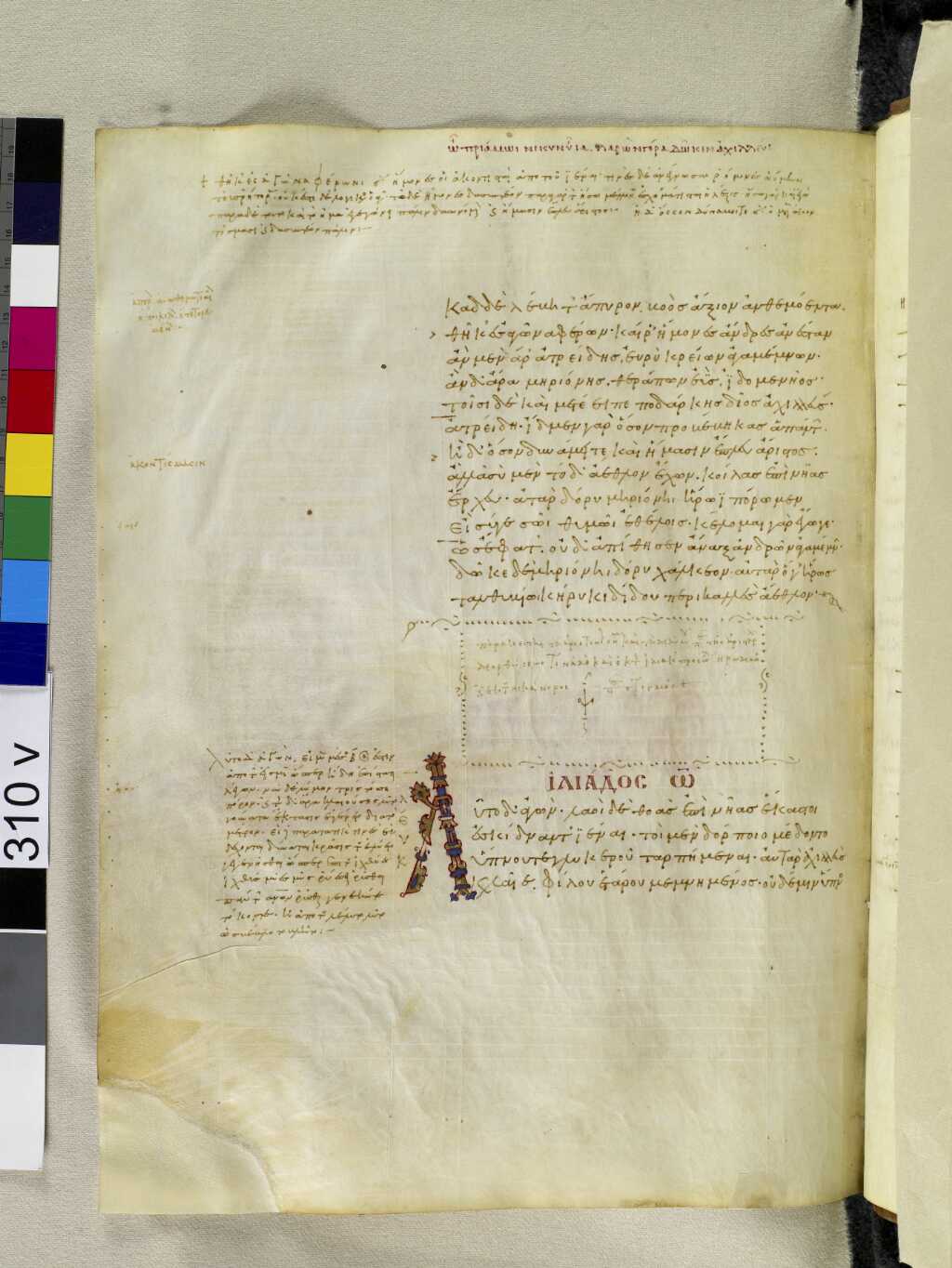
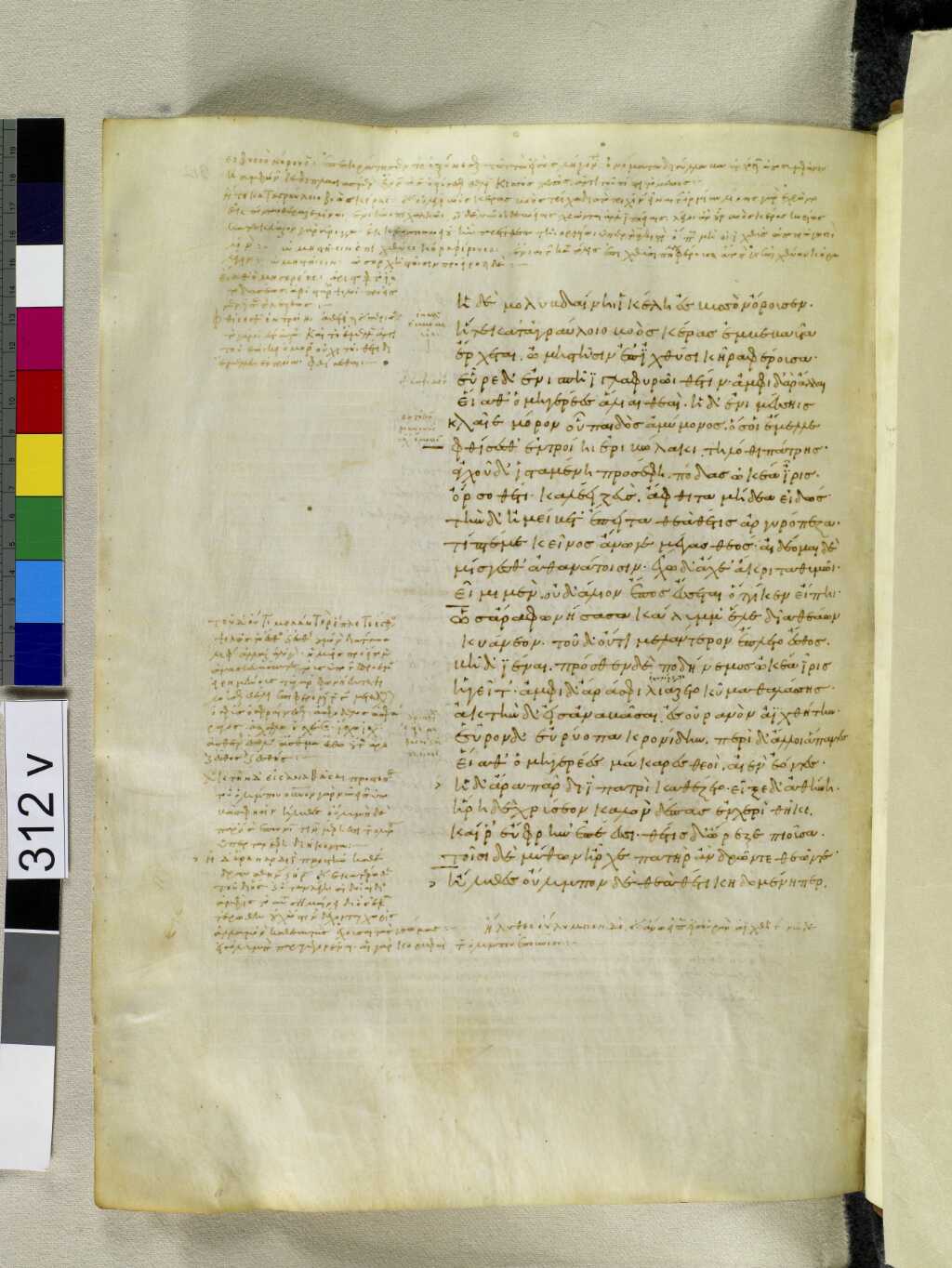
1λῦτο δʼ ἀγών, λαοὶ δὲ θοὰς ἐπὶ νῆας ἕκαστοι 2ἐσκίδναντʼ ἰέναι. τοὶ μὲν δόρποιο μέδοντο 3ὕπνου τε γλυκεροῦ ταρπήμεναι· αὐτὰρ Ἀχιλλεὺς 4κλαῖε φίλου ἑτάρου μεμνημένος, οὐδέ μιν ὕπνος 5ᾕρει πανδαμάτωρ, ἀλλʼ ἐστρέφετʼ ἔνθα καὶ ἔνθα 6Πατρόκλου ποθέων ἀνδροτῆτά τε καὶ μένος ἠΰ, 7ἠδʼ ὁπόσα τολύπευσε σὺν αὐτῷ καὶ πάθεν ἄλγεα 8ἀνδρῶν τε πτολέμους ἀλεγεινά τε κύματα πείρων· 9τῶν μιμνησκόμενος θαλερὸν κατὰ δάκρυον εἶβεν, 10ἄλλοτʼ ἐπὶ πλευρὰς κατακείμενος, ἄλλοτε δʼ αὖτε 11ὕπτιος, ἄλλοτε δὲ πρηνής· τοτὲ δʼ ὀρθὸς ἀναστὰς 12δινεύεσκʼ ἀλύων παρὰ θῖνʼ ἁλός· οὐδέ μιν ἠὼς 13φαινομένη λήθεσκεν ὑπεὶρ ἅλα τʼ ἠϊόνας τε. 14ἀλλʼ ὅ γʼ ἐπεὶ ζεύξειεν ὑφʼ ἅρμασιν ὠκέας ἵππους, 15Ἕκτορα δʼ ἕλκεσθαι δησάσκετο δίφρου ὄπισθεν, 16τρὶς δʼ ἐρύσας περὶ σῆμα Μενοιτιάδαο θανόντος 17αὖτις ἐνὶ κλισίῃ παυέσκετο, τὸν δέ τʼ ἔασκεν 18ἐν κόνι ἐκτανύσας προπρηνέα· τοῖο δʼ Ἀπόλλων 19πᾶσαν ἀεικείην ἄπεχε χροῒ φῶτʼ ἐλεαίρων 20καὶ τεθνηότα περ· περὶ δʼ αἰγίδι πάντα κάλυπτε 21χρυσείῃ, ἵνα μή μιν ἀποδρύφοι ἑλκυστάζων. 22ὣς ὃ μὲν Ἕκτορα δῖον ἀείκιζεν μενεαίνων· 23τὸν δʼ ἐλεαίρεσκον μάκαρες θεοὶ εἰσορόωντες, 24κλέψαι δʼ ὀτρύνεσκον ἐΰσκοπον ἀργεϊφόντην. 25ἔνθʼ ἄλλοις μὲν πᾶσιν ἑήνδανεν, οὐδέ ποθʼ Ἥρῃ
Priam ransoms the body of Hector—Hector’s funeral.
The assembly now broke up and the people went their ways each to his own ship. There they made ready their supper, and then bethought them of the blessed boon of sleep; but Achilles still wept for thinking of his dear comrade, and sleep, before whom all things bow, could take no hold upon him. This way and that did he turn as he yearned after the might and manfulness of Patroclus; he thought of all they had done together, and all they had gone through both on the field of battle and on the waves of the weary sea. As he dwelt on these things he wept bitterly and lay now on his side, now on his back, and now face downwards, till at last he rose and went out as one distraught to wander upon the sea-shore. Then, when he saw dawn breaking over beach and sea, he yoked his horses to his chariot, and bound the body of Hector behind it that he might drag it about. Thrice did he drag it round the tomb of the son of Menoetius, and then went back into his tent, leaving the body on the ground full length and with its face downwards. But Apollo would not suffer it to be disfigured, for he pitied the man, dead though he now was; therefore he shielded him with his golden aegis continually, that he might take no hurt while Achilles was dragging him.
Thus shamefully did Achilles in his fury dishonour Hector; but the blessed gods looked down in pity from heaven, and urged Mercury, slayer of Argus, to steal the body. All were of this mind save only Juno, Neptune, and Jove’s grey-eyed daughter, who persisted in the hate which they had ever borne towards Ilius with Priam and his people; for they forgave not the wrong done them by Alexandrus in disdaining the goddesses who came to him when he was in his sheepyards, and preferring her who had offered him a wanton to his ruin.
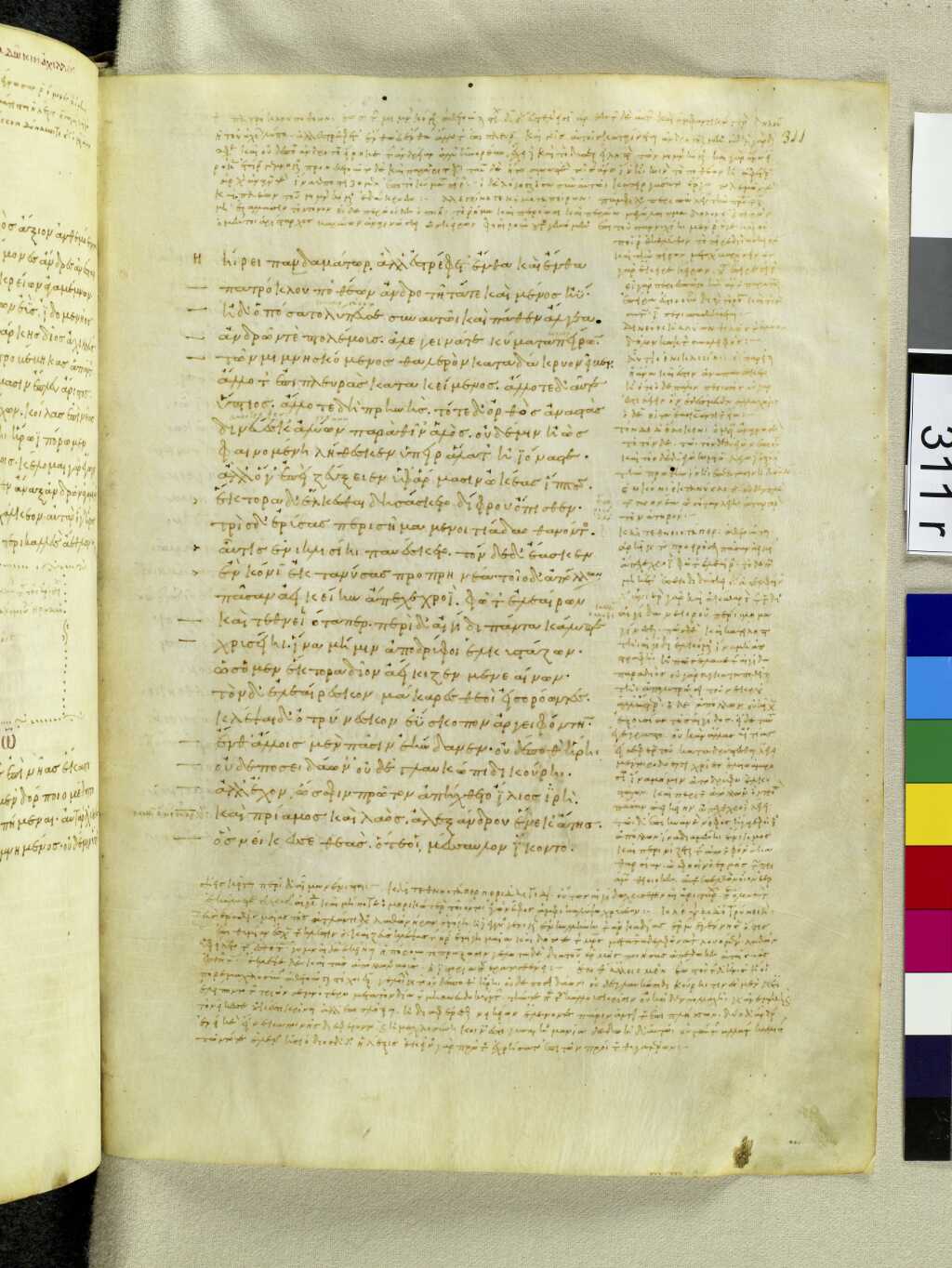
26οὐδὲ Ποσειδάωνʼ οὐδὲ γλαυκώπιδι κούρῃ, 27ἀλλʼ ἔχον ὥς σφιν πρῶτον ἀπήχθετο Ἴλιος ἱρὴ 28καὶ Πρίαμος καὶ λαὸς Ἀλεξάνδρου ἕνεκʼ ἄτης, 29ὃς νείκεσσε θεὰς ὅτε οἱ μέσσαυλον ἵκοντο, 30τὴν δʼ ᾔνησʼ ἥ οἱ πόρε μαχλοσύνην ἀλεγεινήν. 31ἀλλʼ ὅτε δή ῥʼ ἐκ τοῖο δυωδεκάτη γένετʼ ἠώς, 32καὶ τότʼ ἄρʼ ἀθανάτοισι μετηύδα Φοῖβος Ἀπόλλων· 33σχέτλιοί ἐστε θεοί, δηλήμονες· οὔ νύ ποθʼ ὑμῖν 34Ἕκτωρ μηρίʼ ἔκηε βοῶν αἰγῶν τε τελείων; 35τὸν νῦν οὐκ ἔτλητε νέκυν περ ἐόντα σαῶσαι 36ᾗ τʼ ἀλόχῳ ἰδέειν καὶ μητέρι καὶ τέκεϊ ᾧ 37καὶ πατέρι Πριάμῳ λαοῖσί τε, τοί κέ μιν ὦκα 38ἐν πυρὶ κήαιεν καὶ ἐπὶ κτέρεα κτερίσαιεν. 39ἀλλʼ ὀλοῷ Ἀχιλῆϊ θεοὶ βούλεσθʼ ἐπαρήγειν, 40ᾧ οὔτʼ ἂρ φρένες εἰσὶν ἐναίσιμοι οὔτε νόημα 41γναμπτὸν ἐνὶ στήθεσσι, λέων δʼ ὣς ἄγρια οἶδεν, 42ὅς τʼ ἐπεὶ ἂρ μεγάλῃ τε βίῃ καὶ ἀγήνορι θυμῷ 43εἴξας εἶσʼ ἐπὶ μῆλα βροτῶν ἵνα δαῖτα λάβῃσιν· 44ὣς Ἀχιλεὺς ἔλεον μὲν ἀπώλεσεν, οὐδέ οἱ αἰδὼς 45γίγνεται, ἥ τʼ ἄνδρας μέγα σίνεται ἠδʼ ὀνίνησι. 46μέλλει μέν πού τις καὶ φίλτερον ἄλλον ὀλέσσαι 47ἠὲ κασίγνητον ὁμογάστριον ἠὲ καὶ υἱόν· 48ἀλλʼ ἤτοι κλαύσας καὶ ὀδυράμενος μεθέηκε· 49τλητὸν γὰρ Μοῖραι θυμὸν θέσαν ἀνθρώποισιν. 50αὐτὰρ ὅ γʼ Ἕκτορα δῖον, ἐπεὶ φίλον ἦτορ ἀπηύρα,
When, therefore, the morning of the twelfth day had now come, Phoebus Apollo spoke among the immortals saying, “You gods ought to be ashamed of yourselves; you are cruel and hard-hearted. Did not Hector burn you thigh-bones of heifers and of unblemished goats? And now dare you not rescue even his dead body, for his wife to look upon, with his mother and child, his father Priam, and his people, who would forthwith commit him to the flames, and give him his due funeral rites? So, then, you would all be on the side of mad Achilles, who knows neither right nor ruth? He is like some savage lion that in the pride of his great strength and daring springs upon men’s flocks and gorges on them. Even so has Achilles flung aside all pity, and all that conscience which at once so greatly banes yet greatly boons him that will heed it. A man may lose one far dearer than Achilles has lost—a son, it may be, or a brother born from his own mother’s womb; yet when he has mourned him and wept over him he will let him bide, for it takes much sorrow to kill a man; whereas Achilles, now that he has slain noble Hector, drags him behind his chariot round the tomb of his comrade. It were better of him, and for him, that he should not do so, for brave though he be we gods may take it ill that he should vent his fury upon dead clay.”
Juno spoke up in a rage. “This were well,” she cried, “O lord of the silver bow, if you would give like honour to Hector and to Achilles; but Hector was mortal and suckled at a woman’s breast, whereas Achilles is the offspring of a goddess whom I myself reared and brought up. I married her to Peleus, who is above measure dear to the immortals; you gods came all of you to her wedding; you feasted along with them yourself and brought your lyre—false, and fond of low company, that you have ever been.”
Then said Jove, “Juno, be not so bitter. Their honour shall not be equal, but of all that dwell in Ilius, Hector was dearest to the gods, as also to myself, for his offerings never failed me. Never was my altar stinted of its dues, nor of the drink-offerings and savour of sacrifice which we claim of right. I shall therefore permit the body of mighty Hector to be stolen; and yet this may hardly be without Achilles coming to know it, for his mother keeps night and day beside him. Let some one of you, therefore, send Thetis to me, and I will impart my counsel to her, namely that Achilles is to accept a ransom from Priam, and give up the body.”
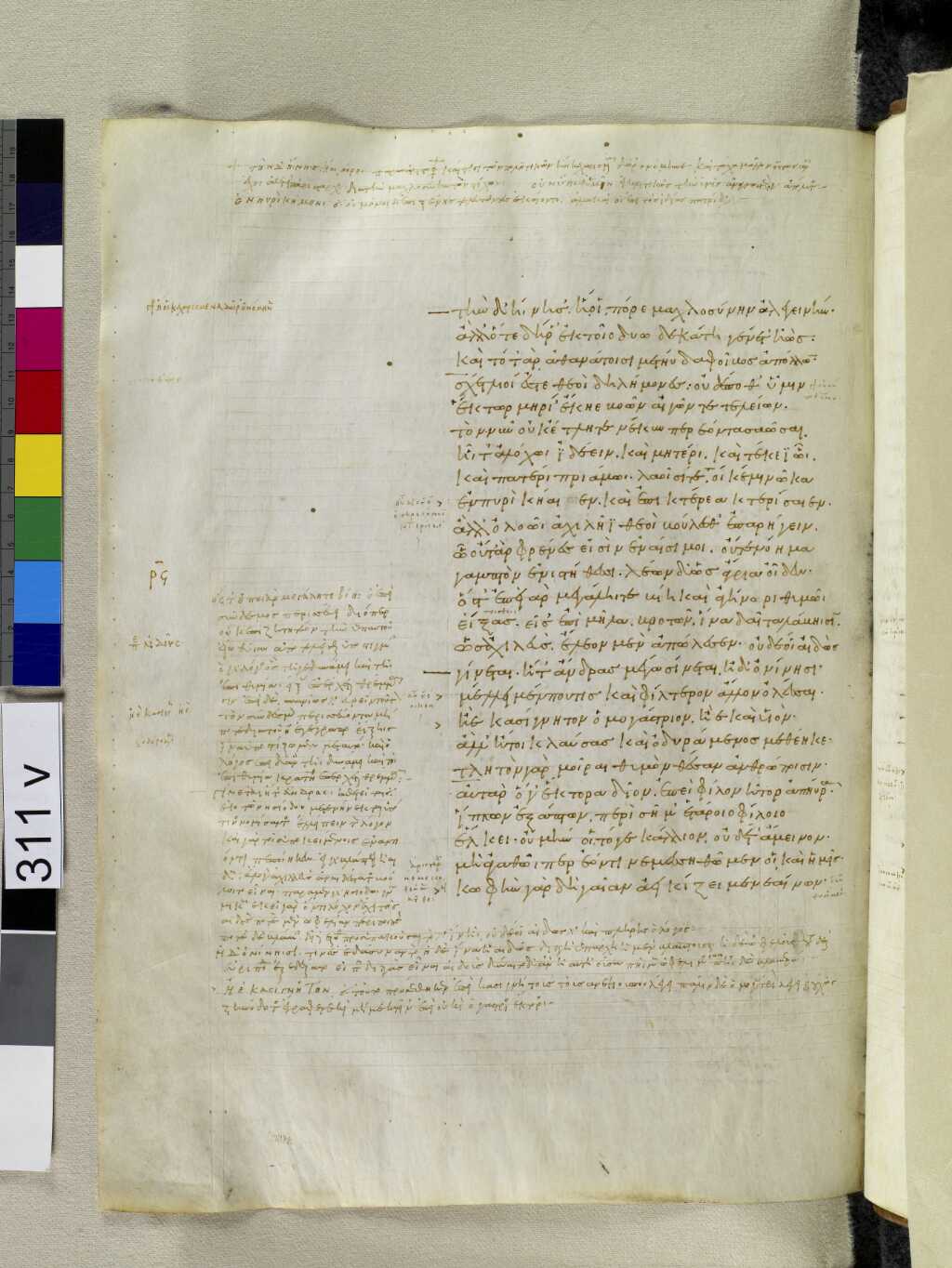
51ἵππων ἐξάπτων περὶ σῆμʼ ἑτάροιο φίλοιο 52ἕλκει· οὐ μήν οἱ τό γε κάλλιον οὐδέ τʼ ἄμεινον. 53μὴ ἀγαθῷ περ ἐόντι νεμεσσηθέωμέν οἱ ἡμεῖς· 54κωφὴν γὰρ δὴ γαῖαν ἀεικίζει μενεαίνων. 55τὸν δὲ χολωσαμένη προσέφη λευκώλενος Ἥρη· 56εἴη κεν καὶ τοῦτο τεὸν ἔπος ἀργυρότοξε 57εἰ δὴ ὁμὴν Ἀχιλῆϊ καὶ Ἕκτορι θήσετε τιμήν. 58Ἕκτωρ μὲν θνητός τε γυναῖκά τε θήσατο μαζόν· 59αὐτὰρ Ἀχιλλεύς ἐστι θεᾶς γόνος, ἣν ἐγὼ αὐτὴ 60θρέψά τε καὶ ἀτίτηλα καὶ ἀνδρὶ πόρον παράκοιτιν 61Πηλέϊ, ὃς περὶ κῆρι φίλος γένετʼ ἀθανάτοισι. 62πάντες δʼ ἀντιάασθε θεοὶ γάμου· ἐν δὲ σὺ τοῖσι 63δαίνυʼ ἔχων φόρμιγγα κακῶν ἕταρʼ, αἰὲν ἄπιστε. 64τὴν δʼ ἀπαμειβόμενος προσέφη νεφεληγερέτα Ζεύς· 65Ἥρη μὴ δὴ πάμπαν ἀποσκύδμαινε θεοῖσιν· 66οὐ μὲν γὰρ τιμή γε μίʼ ἔσσεται· ἀλλὰ καὶ Ἕκτωρ 67φίλτατος ἔσκε θεοῖσι βροτῶν οἳ ἐν Ἰλίῳ εἰσίν· 68ὣς γὰρ ἔμοιγʼ, ἐπεὶ οὔ τι φίλων ἡμάρτανε δώρων. 69οὐ γάρ μοί ποτε βωμὸς ἐδεύετο δαιτὸς ἐΐσης 70λοιβῆς τε κνίσης τε· τὸ γὰρ λάχομεν γέρας ἡμεῖς. 71ἀλλʼ ἤτοι κλέψαι μὲν ἐάσομεν, οὐδέ πῃ ἔστι, 72λάθρῃ Ἀχιλλῆος θρασὺν Ἕκτορα· ἦ γάρ οἱ αἰεὶ 73μήτηρ παρμέμβλωκεν ὁμῶς νύκτάς τε καὶ ἦμαρ. 74ἀλλʼ εἴ τις καλέσειε θεῶν Θέτιν ἆσσον ἐμεῖο, 75ὄφρά τί οἱ εἴπω πυκινὸν ἔπος, ὥς κεν Ἀχιλλεὺς
On this Iris fleet as the wind went forth to carry his message. Down she plunged into the dark sea midway between Samos and rocky Imbrus; the waters hissed as they closed over her, and she sank into the bottom as the lead at the end of an ox-horn, that is sped to carry death to fishes. She found Thetis sitting in a great cave with the other sea-goddesses gathered round her; there she sat in the midst of them weeping for her noble son who was to fall far from his own land, on the rich plains of Troy. Iris went up to her and said, “Rise Thetis; Jove, whose counsels fail not, bids you come to him.” And Thetis answered, “Why does the mighty god so bid me? I am in great grief, and shrink from going in and out among the immortals. Still, I will go, and the word that he may speak shall not be spoken in vain.”
The goddess took her dark veil, than which there can be no robe more sombre, and went forth with fleet Iris leading the way before her. The waves of the sea opened them a path, and when they reached the shore they flew up into the heavens, where they found the all-seeing son of Saturn with the blessed gods that live for ever assembled near him. Minerva gave up her seat to her, and she sat down by the side of father Jove. Juno then placed a fair golden cup in her hand, and spoke to her in words of comfort, whereon Thetis drank and gave her back the cup; and the sire of gods and men was the first to speak.
“So, goddess,” said he, “for all your sorrow, and the grief that I well know reigns ever in your heart, you have come hither to Olympus, and I will tell you why I have sent for you. This nine days past the immortals have been quarrelling about Achilles waster of cities and the body of Hector. The gods would have Mercury slayer of Argus steal the body, but in furtherance of our peace and amity henceforward, I will concede such honour to your son as I will now tell you. Go, then, to the host and lay these commands upon him; say that the gods are angry with him, and that I am myself more angry than them all, in that he keeps Hector at the ships and will not give him up. He may thus fear me and let the body go. At the same time I will send Iris to great Priam to bid him go to the ships of the Achaeans, and ransom his son, taking with him such gifts for Achilles as may give him satisfaction.”
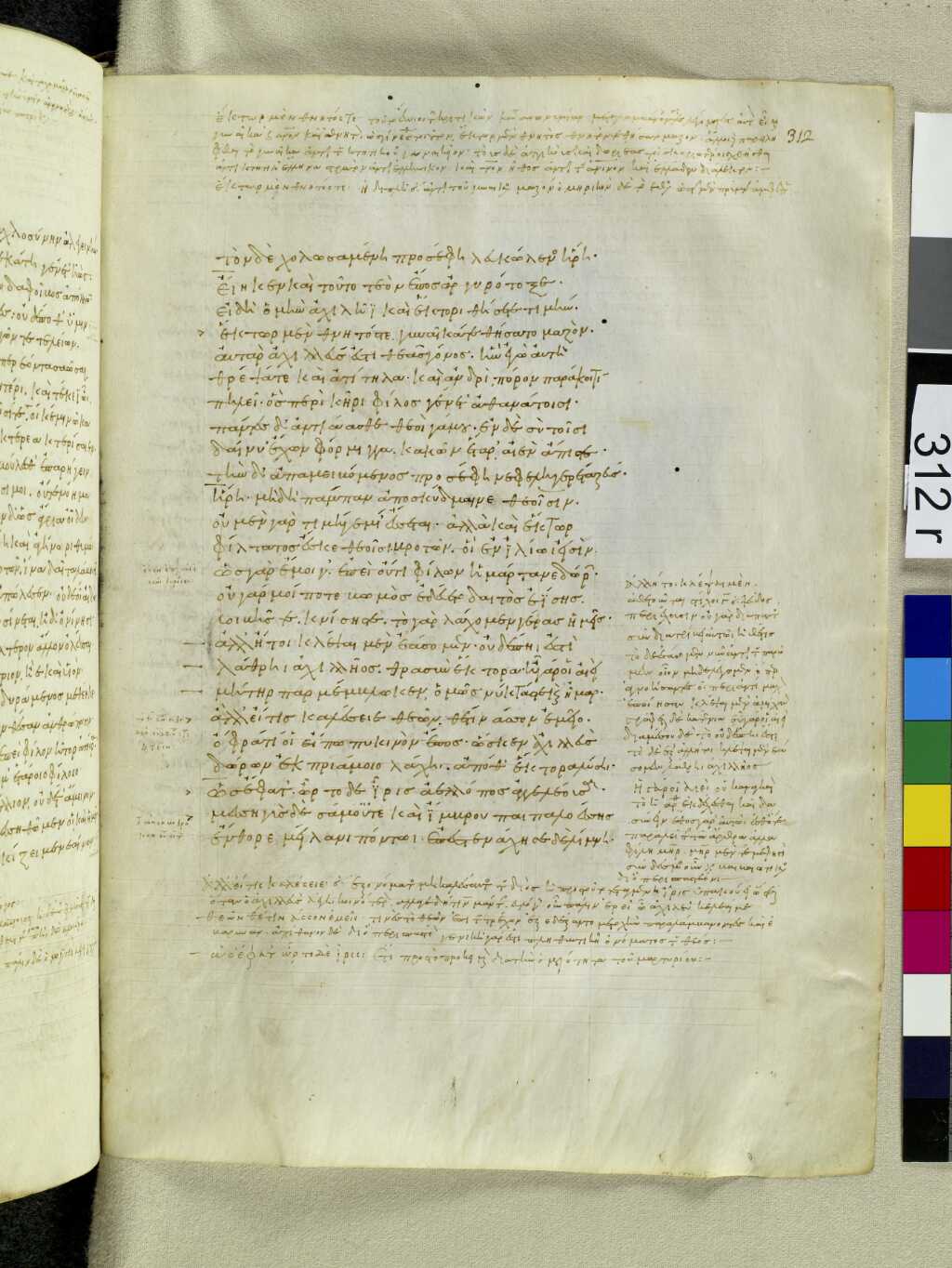
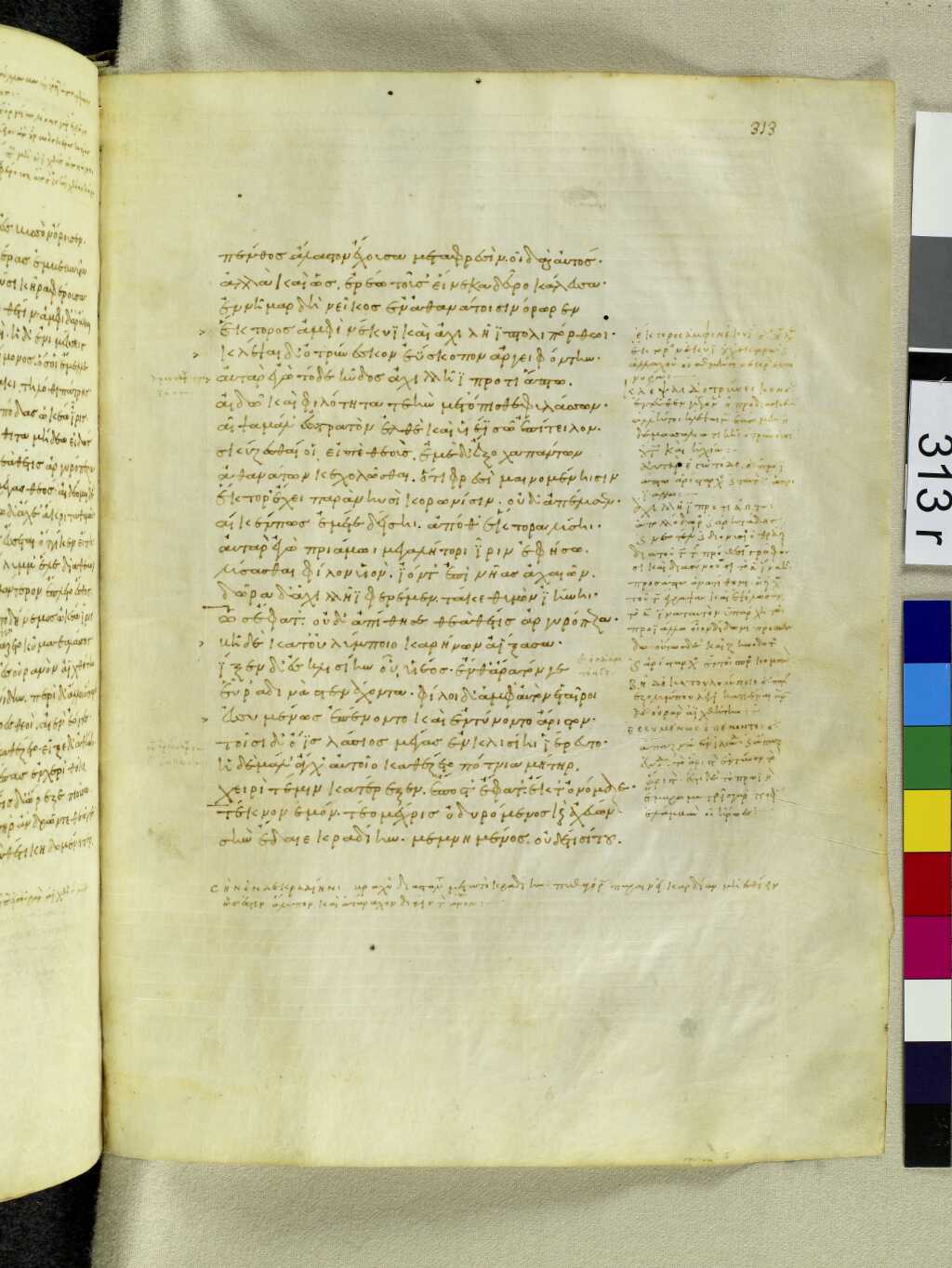
76δώρων ἐκ Πριάμοιο λάχῃ ἀπό θʼ Ἕκτορα λύσῃ. 77ὣς ἔφατʼ, ὦρτο δὲ Ἶρις ἀελλόπος ἀγγελέουσα, 78μεσσηγὺς δὲ Σάμου τε καὶ Ἴμβρου παιπαλοέσσης 79ἔνθορε μείλανι πόντῳ· ἐπεστονάχησε δὲ λίμνη. 80ἣ δὲ μολυβδαίνῃ ἰκέλη ἐς βυσσὸν ὄρουσεν, 81ἥ τε κατʼ ἀγραύλοιο βοὸς κέρας ἐμβεβαυῖα 82ἔρχεται ὠμηστῇσιν ἐπʼ ἰχθύσι κῆρα φέρουσα. 83εὗρε δʼ ἐνὶ σπῆϊ γλαφυρῷ Θέτιν, ἀμφὶ δʼ ἄρʼ ἄλλαι 84εἵαθʼ ὁμηγερέες ἅλιαι θεαί· ἣ δʼ ἐνὶ μέσσῃς 85κλαῖε μόρον οὗ παιδὸς ἀμύμονος, ὅς οἱ ἔμελλε 86φθίσεσθʼ ἐν Τροίῃ ἐριβώλακι τηλόθι πάτρης. 87ἀγχοῦ δʼ ἱσταμένη προσέφη πόδας ὠκέα Ἶρις· 88ὄρσο Θέτι· καλέει Ζεὺς ἄφθιτα μήδεα εἰδώς. 89τὴν δʼ ἠμείβετʼ ἔπειτα θεὰ Θέτις ἀργυρόπεζα· 90τίπτέ με κεῖνος ἄνωγε μέγας θεός; αἰδέομαι δὲ 91μίσγεσθʼ ἀθανάτοισιν, ἔχω δʼ ἄχεʼ ἄκριτα θυμῷ. 92εἶμι μέν, οὐδʼ ἅλιον ἔπος ἔσσεται ὅττί κεν εἴπῃ. 93ὣς ἄρα φωνήσασα κάλυμμʼ ἕλε δῖα θεάων 94κυάνεον, τοῦ δʼ οὔ τι μελάντερον ἔπλετο ἔσθος. 95βῆ δʼ ἰέναι, πρόσθεν δὲ ποδήνεμος ὠκέα Ἶρις 96ἡγεῖτʼ· ἀμφὶ δʼ ἄρα σφι λιάζετο κῦμα θαλάσσης. 97ἀκτὴν δʼ ἐξαναβᾶσαι ἐς οὐρανὸν ἀϊχθήτην, 98εὗρον δʼ εὐρύοπα Κρονίδην, περὶ δʼ ἄλλοι ἅπαντες 99εἵαθʼ ὁμηγερέες μάκαρες θεοὶ αἰὲν ἐόντες. 100ἣ δʼ ἄρα πὰρ Διὶ πατρὶ καθέζετο, εἶξε δʼ Ἀθήνη.
Silver-footed Thetis did as the god had told her, and forthwith down she darted from the topmost summits of Olympus. She went to her son’s tents where she found him grieving bitterly, while his trusty comrades round him were busy preparing their morning meal, for which they had killed a great woolly sheep. His mother sat down beside him and caressed him with her hand saying, “My son, how long will you keep on thus grieving and making moan? You are gnawing at your own heart, and think neither of food nor of woman’s embraces; and yet these too were well, for you have no long time to live, and death with the strong hand of fate are already close beside you. Now, therefore, heed what I say, for I come as a messenger from Jove; he says that the gods are angry with you, and himself more angry than them all, in that you keep Hector at the ships and will not give him up. Therefore let him go, and accept a ransom for his body.”
And Achilles answered, “So be it. If Olympian Jove of his own motion thus commands me, let him that brings the ransom bear the body away.”
Thus did mother and son talk together at the ships in long discourse with one another. Meanwhile the son of Saturn sent Iris to the strong city of Ilius. “Go,” said he, “fleet Iris, from the mansions of Olympus, and tell King Priam in Ilius, that he is to go to the ships of the Achaeans and free the body of his dear son. He is to take such gifts with him as shall give satisfaction to Achilles, and he is to go alone, with no other Trojan, save only some honoured servant who may drive his mules and waggon, and bring back the body of him whom noble Achilles has slain. Let him have no thought nor fear of death in his heart, for we will send the slayer of Argus to escort him, and bring him within the tent of Achilles. Achilles will not kill him nor let another do so, for he will take heed to his ways and sin not, and he will entreat a suppliant with all honourable courtesy.”
101Ἥρη δὲ χρύσεον καλὸν δέπας ἐν χερὶ θῆκε 102καί ῥʼ εὔφρηνʼ ἐπέεσσι· Θέτις δʼ ὤρεξε πιοῦσα. 103τοῖσι δὲ μύθων ἦρχε πατὴρ ἀνδρῶν τε θεῶν τε· 104ἤλυθες Οὔλυμπον δὲ θεὰ Θέτι κηδομένη περ, 105πένθος ἄλαστον ἔχουσα μετὰ φρεσίν· οἶδα καὶ αὐτός· 106ἀλλὰ καὶ ὧς ἐρέω τοῦ σʼ εἵνεκα δεῦρο κάλεσσα. 107ἐννῆμαρ δὴ νεῖκος ἐν ἀθανάτοισιν ὄρωρεν 108Ἕκτορος ἀμφὶ νέκυι καὶ Ἀχιλλῆϊ πτολιπόρθῳ· 109κλέψαι δʼ ὀτρύνουσιν ἐΰσκοπον ἀργεϊφόντην· 110αὐτὰρ ἐγὼ τόδε κῦδος Ἀχιλλῆϊ προτιάπτω 111αἰδῶ καὶ φιλότητα τεὴν μετόπισθε φυλάσσων. 112αἶψα μάλʼ ἐς στρατὸν ἐλθὲ καὶ υἱέϊ σῷ ἐπίτειλον· 113σκύζεσθαί οἱ εἰπὲ θεούς, ἐμὲ δʼ ἔξοχα πάντων 114ἀθανάτων κεχολῶσθαι, ὅτι φρεσὶ μαινομένῃσιν 115Ἕκτορʼ ἔχει παρὰ νηυσὶ κορωνίσιν οὐδʼ ἀπέλυσεν, 116αἴ κέν πως ἐμέ τε δείσῃ ἀπό θʼ Ἕκτορα λύσῃ. 117αὐτὰρ ἐγὼ Πριάμῳ μεγαλήτορι Ἶριν ἐφήσω 118λύσασθαι φίλον υἱὸν ἰόντʼ ἐπὶ νῆας Ἀχαιῶν, 119δῶρα δʼ Ἀχιλλῆϊ φερέμεν, τά κε θυμὸν ἰήνῃ. 120ὣς ἔφατʼ, οὐδʼ ἀπίθησε θεὰ Θέτις ἀργυρόπεζα, 121βῆ δὲ κατʼ Οὐλύμποιο καρήνων ἀΐξασα, 122ἷξεν δʼ ἐς κλισίην οὗ υἱέος· ἔνθʼ ἄρα τόν γε 123εὗρʼ ἁδινὰ στενάχοντα· φίλοι δʼ ἀμφʼ αὐτὸν ἑταῖροι 124ἐσσυμένως ἐπένοντο καὶ ἐντύνοντο ἄριστον· 125τοῖσι δʼ ὄϊς λάσιος μέγας ἐν κλισίῃ ἱέρευτο.
On this Iris, fleet as the wind, sped forth to deliver her message. She went to Priam’s house, and found weeping and lamentation therein. His sons were seated round their father in the outer courtyard, and their raiment was wet with tears: the old man sat in the midst of them with his mantle wrapped close about his body, and his head and neck all covered with the filth which he had clutched as he lay grovelling in the mire. His daughters and his sons’ wives went wailing about the house, as they thought of the many and brave men who lay dead, slain by the Argives. The messenger of Jove stood by Priam and spoke softly to him, but fear fell upon him as she did so. “Take heart,” she said, “Priam offspring of Dardanus, take heart and fear not. I bring no evil tidings, but am minded well towards you. I come as a messenger from Jove, who though he be not near, takes thought for you and pities you. The lord of Olympus bids you go and ransom noble Hector, and take with you such gifts as shall give satisfaction to Achilles. You are to go alone, with no Trojan, save only some honoured servant who may drive your mules and waggon, and bring back to the city the body of him whom noble Achilles has slain. You are to have no thought, nor fear of death, for Jove will send the slayer of Argus to escort you. When he has brought you within Achilles’ tent, Achilles will not kill you nor let another do so, for he will take heed to his ways and sin not, and he will entreat a suppliant with all honourable courtesy.”
Iris went her way when she had thus spoken, and Priam told his sons to get a mule-waggon ready, and to make the body of the waggon fast upon the top of its bed. Then he went down into his fragrant store-room, high-vaulted, and made of cedar-wood, where his many treasures were kept, and he called Hecuba his wife. “Wife,” said he, “a messenger has come to me from Olympus, and has told me to go to the ships of the Achaeans to ransom my dear son, taking with me such gifts as shall give satisfaction to Achilles. What think you of this matter? for my own part I am greatly moved to pass through the camps of the Achaeans and go to their ships.”
His wife cried aloud as she heard him, and said, “Alas, what has become of that judgement for which you have been ever famous both among strangers and your own people? How can you venture alone to the ships of the Achaeans, and look into the face of him who has slain so many of your brave sons? You must have iron courage, for if the cruel savage sees you and lays hold on you, he will know neither respect nor pity. Let us then weep Hector from afar here in our own house, for when I gave him birth the threads of overruling fate were spun for him that dogs should eat his flesh far from his parents, in the house of that terrible man on whose liver I would fain fasten and devour it. Thus would I avenge my son, who showed no cowardice when Achilles slew him, and thought neither of flight nor of avoiding battle as he stood in defence of Trojan men and Trojan women.”
126ἣ δὲ μάλʼ ἄγχʼ αὐτοῖο καθέζετο πότνια μήτηρ, 127χειρί τέ μιν κατέρεξεν ἔπος τʼ ἔφατʼ ἔκ τʼ ὀνόμαζε· 128τέκνον ἐμὸν τέο μέχρις ὀδυρόμενος καὶ ἀχεύων 129σὴν ἔδεαι κραδίην μεμνημένος οὔτέ τι σίτου 130οὔτʼ εὐνῆς; ἀγαθὸν δὲ γυναικί περ ἐν φιλότητι 131μίσγεσθʼ· οὐ γάρ μοι δηρὸν βέῃ, ἀλλά τοι ἤδη 132ἄγχι παρέστηκεν θάνατος καὶ μοῖρα κραταιή. 133ἀλλʼ ἐμέθεν ξύνες ὦκα, Διὸς δέ τοι ἄγγελός εἰμι· 134σκύζεσθαι σοί φησι θεούς, ἑὲ δʼ ἔξοχα πάντων 135ἀθανάτων κεχολῶσθαι, ὅτι φρεσὶ μαινομένῃσιν 136Ἕκτορʼ ἔχεις παρὰ νηυσὶ κορωνίσιν οὐδʼ ἀπέλυσας. 137ἀλλʼ ἄγε δὴ λῦσον, νεκροῖο δὲ δέξαι ἄποινα. 138τὴν δʼ ἀπαμειβόμενος προσέφη πόδας ὠκὺς Ἀχιλλεύς· 139τῇδʼ εἴη· ὃς ἄποινα φέροι καὶ νεκρὸν ἄγοιτο, 140εἰ δὴ πρόφρονι θυμῷ Ὀλύμπιος αὐτὸς ἀνώγει. 141ὣς οἵ γʼ ἐν νηῶν ἀγύρει μήτηρ τε καὶ υἱὸς 142πολλὰ πρὸς ἀλλήλους ἔπεα πτερόεντʼ ἀγόρευον. 143Ἶριν δʼ ὄτρυνε Κρονίδης εἰς Ἴλιον ἱρήν· 144βάσκʼ ἴθι Ἶρι ταχεῖα λιποῦσʼ ἕδος Οὐλύμποιο 145ἄγγειλον Πριάμῳ μεγαλήτορι Ἴλιον εἴσω 146λύσασθαι φίλον υἱὸν ἰόντʼ ἐπὶ νῆας Ἀχαιῶν, 147δῶρα δʼ Ἀχιλλῆϊ φερέμεν τά κε θυμὸν ἰήνῃ 148οἶον, μὴ δέ τις ἄλλος ἅμα Τρώων ἴτω ἀνήρ. 149κῆρύξ τίς οἱ ἕποιτο γεραίτερος, ὅς κʼ ἰθύνοι 150ἡμιόνους καὶ ἄμαξαν ἐΰτροχον, ἠδὲ καὶ αὖτις
Then Priam said, “I would go, do not therefore stay me nor be as a bird of ill omen in my house, for you will not move me. Had it been some mortal man who had sent me some prophet or priest who divines from sacrifice—I should have deemed him false and have given him no heed; but now I have heard the goddess and seen her face to face, therefore I will go and her saying shall not be in vain. If it be my fate to die at the ships of the Achaeans even so would I have it; let Achilles slay me, if I may but first have taken my son in my arms and mourned him to my heart’s comforting.”
So saying he lifted the lids of his chests, and took out twelve goodly vestments. He took also twelve cloaks of single fold, twelve rugs, twelve fair mantles, and an equal number of shirts. He weighed out ten talents of gold, and brought moreover two burnished tripods, four cauldrons, and a very beautiful cup which the Thracians had given him when he had gone to them on an embassy; it was very precious, but he grudged not even this, so eager was he to ransom the body of his son. Then he chased all the Trojans from the court and rebuked them with words of anger. “Out,” he cried, “shame and disgrace to me that you are. Have you no grief in your own homes that you are come to plague me here? Is it a small thing, think you, that the son of Saturn has sent this sorrow upon me, to lose the bravest of my sons? Nay, you shall prove it in person, for now he is gone the Achaeans will have easier work in killing you. As for me, let me go down within the house of Hades, ere mine eyes behold the sacking and wasting of the city.”
He drove the men away with his staff, and they went forth as the old man sped them. Then he called to his sons, upbraiding Helenus, Paris, noble Agathon, Pammon, Antiphonus, Polites of the loud battle-cry, Deiphobus, Hippothous, and Dius. These nine did the old man call near him. “Come to me at once,” he cried, “worthless sons who do me shame; would that you had all been killed at the ships rather than Hector. Miserable man that I am, I have had the bravest sons in all Troy—noble Nestor, Troilus the dauntless charioteer, and Hector who was a god among men, so that one would have thought he was son to an immortal—yet there is not one of them left. Mars has slain them and those of whom I am ashamed are alone left me. Liars, and light of foot, heroes of the dance, robbers of lambs and kids from your own people, why do you not get a waggon ready for me at once, and put all these things upon it that I may set out on my way?”
Thus did he speak, and they feared the rebuke of their father. They brought out a strong mule-waggon, newly made, and set the body of the waggon fast on its bed. They took the mule-yoke from the peg on which it hung, a yoke of boxwood with a knob on the top of it and rings for the reins to go through. Then they brought a yoke-band eleven cubits long, to bind the yoke to the pole; they bound it on at the far end of the pole, and put the ring over the upright pin making it fast with three turns of the band on either side the knob, and bending the thong of the yoke beneath it. This done, they brought from the store-chamber the rich ransom that was to purchase the body of Hector, and they set it all orderly on the waggon; then they yoked the strong harness-mules which the Mysians had on a time given as a goodly present to Priam; but for Priam himself they yoked horses which the old king had bred, and kept for his own use.
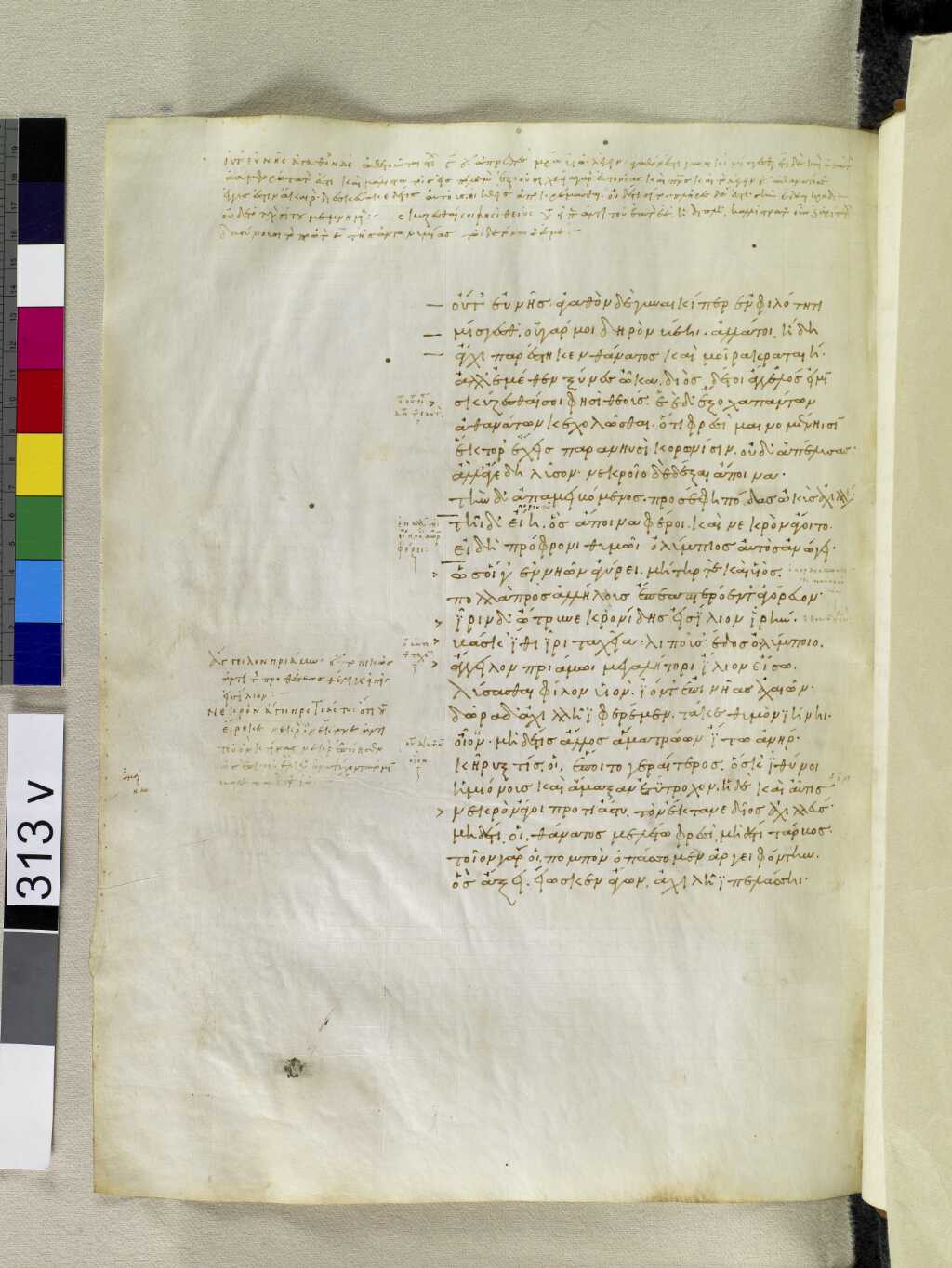
151νεκρὸν ἄγοι προτὶ ἄστυ, τὸν ἔκτανε δῖος Ἀχιλλεύς. 152μὴ δέ τί οἱ θάνατος μελέτω φρεσὶ μὴ δέ τι τάρβος· 153τοῖον γάρ οἱ πομπὸν ὀπάσσομεν ἀργεϊφόντην, 154ὃς ἄξει εἷός κεν ἄγων Ἀχιλῆϊ πελάσσῃ. 155αὐτὰρ ἐπὴν ἀγάγῃσιν ἔσω κλισίην Ἀχιλῆος, 156οὔτʼ αὐτὸς κτενέει ἀπό τʼ ἄλλους πάντας ἐρύξει· 157οὔτε γάρ ἐστʼ ἄφρων οὔτʼ ἄσκοπος οὔτʼ ἀλιτήμων, 158ἀλλὰ μάλʼ ἐνδυκέως ἱκέτεω πεφιδήσεται ἀνδρός. 159ὣς ἔφατʼ, ὦρτο δὲ Ἶρις ἀελλόπος ἀγγελέουσα. 160ἷξεν δʼ ἐς Πριάμοιο, κίχεν δʼ ἐνοπήν τε γόον τε. 161παῖδες μὲν πατέρʼ ἀμφὶ καθήμενοι ἔνδοθεν αὐλῆς 162δάκρυσιν εἵματʼ ἔφυρον, ὃ δʼ ἐν μέσσοισι γεραιὸς 163ἐντυπὰς ἐν χλαίνῃ κεκαλυμμένος· ἀμφὶ δὲ πολλὴ 164κόπρος ἔην κεφαλῇ τε καὶ αὐχένι τοῖο γέροντος 165τήν ῥα κυλινδόμενος καταμήσατο χερσὶν ἑῇσι. 166θυγατέρες δʼ ἀνὰ δώματʼ ἰδὲ νυοὶ ὠδύροντο 167τῶν μιμνησκόμεναι οἳ δὴ πολέες τε καὶ ἐσθλοὶ 168χερσὶν ὑπʼ Ἀργείων κέατο ψυχὰς ὀλέσαντες. 169στῆ δὲ παρὰ Πρίαμον Διὸς ἄγγελος, ἠδὲ προσηύδα 170τυτθὸν φθεγξαμένη· τὸν δὲ τρόμος ἔλλαβε γυῖα· 171θάρσει Δαρδανίδη Πρίαμε φρεσί, μὴ δέ τι τάρβει· 172οὐ μὲν γάρ τοι ἐγὼ κακὸν ὀσσομένη τόδʼ ἱκάνω 173ἀλλʼ ἀγαθὰ φρονέουσα· Διὸς δέ τοι ἄγγελός εἰμι, 174ὅς σευ ἄνευθεν ἐὼν μέγα κήδεται ἠδʼ ἐλεαίρει. 175λύσασθαί σʼ ἐκέλευσεν Ὀλύμπιος Ἕκτορα δῖον,
Thus heedfully did Priam and his servant see to the yolking of their cars at the palace. Then Hecuba came to them all sorrowful, with a golden goblet of wine in her right hand, that they might make a drink-offering before they set out. She stood in front of the horses and said, “Take this, make a drink-offering to father Jove, and since you are minded to go to the ships in spite of me, pray that you may come safely back from the hands of your enemies. Pray to the son of Saturn lord of the whirlwind, who sits on Ida and looks down over all Troy, pray him to send his swift messenger on your right hand, the bird of omen which is strongest and most dear to him of all birds, that you may see it with your own eyes and trust it as you go forth to the ships of the Danaans. If all-seeing Jove will not send you this messenger, however set upon it you may be, I would not have you go to the ships of the Argives.”
And Priam answered, “Wife, I will do as you desire me; it is well to lift hands in prayer to Jove, if so be he may have mercy upon me.”
With this the old man bade the serving-woman pour pure water over his hands, and the woman came, bearing the water in a bowl. He washed his hands and took the cup from his wife; then he made the drink-offering and prayed, standing in the middle of the courtyard and turning his eyes to heaven. “Father Jove,” he said, “that rulest from Ida, most glorious and most great, grant that I may be received kindly and compassionately in the tents of Achilles; and send your swift messenger upon my right hand, the bird of omen which is strongest and most dear to you of all birds, that I may see it with my own eyes and trust it as I go forth to the ships of the Danaans.”
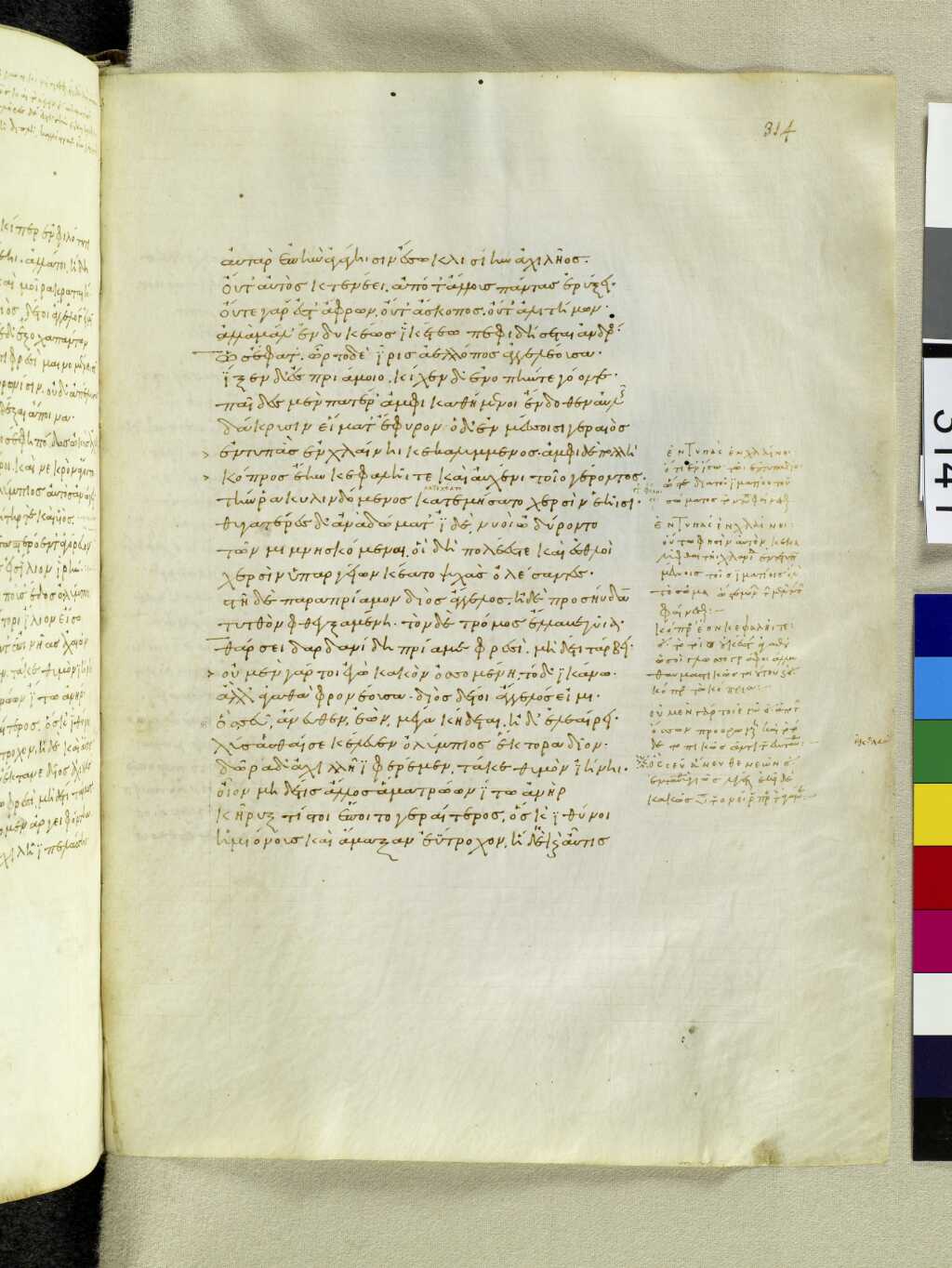
176δῶρα δʼ Ἀχιλλῆϊ φερέμεν τά κε θυμὸν ἰήνῃ 177οἶον, μὴ δέ τις ἄλλος ἅμα Τρώων ἴτω ἀνήρ. 178κῆρύξ τίς τοι ἕποιτο γεραίτερος, ὅς κʼ ἰθύνοι 179ἡμιόνους καὶ ἄμαξαν ἐΰτροχον, ἠδὲ καὶ αὖτις 180νεκρὸν ἄγοι προτὶ ἄστυ, τὸν ἔκτανε δῖος Ἀχιλλεύς. 181μὴ δέ τί τοι θάνατος μελέτω φρεσὶ μηδέ τι τάρβος· 182τοῖος γάρ τοι πομπὸς ἅμʼ ἕψεται ἀργεϊφόντης, 183ὅς σʼ ἄξει εἷός κεν ἄγων Ἀχιλῆϊ πελάσσῃ. 184αὐτὰρ ἐπὴν ἀγάγῃσιν ἔσω κλισίην Ἀχιλῆος, 185οὔτʼ αὐτὸς κτενέει ἀπό τʼ ἄλλους πάντας ἐρύξει· 186οὔτε γάρ ἔστʼ ἄφρων οὔτʼ ἄσκοπος οὔτʼ ἀλιτήμων, 187ἀλλὰ μάλʼ ἐνδυκέως ἱκέτεω πεφιδήσεται ἀνδρός. 188ἣ μὲν ἄρʼ ὣς εἰποῦσʼ ἀπέβη πόδας ὠκέα Ἶρις, 189αὐτὰρ ὅ γʼ υἷας ἄμαξαν ἐΰτροχον ἡμιονείην 190ὁπλίσαι ἠνώγει, πείρινθα δὲ δῆσαι ἐπʼ αὐτῆς. 191αὐτὸς δʼ ἐς θάλαμον κατεβήσετο κηώεντα 192κέδρινον ὑψόροφον, ὃς γλήνεα πολλὰ κεχάνδει· 193ἐς δʼ ἄλοχον Ἑκάβην ἐκαλέσσατο φώνησέν τε· 194δαιμονίη Διόθεν μοι Ὀλύμπιος ἄγγελος ἦλθε 195λύσασθαι φίλον υἱὸν ἰόντʼ ἐπὶ νῆας Ἀχαιῶν, 196δῶρα δʼ Ἀχιλλῆϊ φερέμεν τά κε θυμὸν ἰήνῃ. 197ἀλλʼ ἄγε μοι τόδε εἰπὲ τί τοι φρεσὶν εἴδεται εἶναι; 198αἰνῶς γάρ μʼ αὐτόν γε μένος καὶ θυμὸς ἄνωγε 199κεῖσʼ ἰέναι ἐπὶ νῆας ἔσω στρατὸν εὐρὺν Ἀχαιῶν. 200ὣς φάτο, κώκυσεν δὲ γυνὴ καὶ ἀμείβετο μύθῳ·
So did he pray, and Jove the lord of counsel heard his prayer. Forthwith he sent an eagle, the most unerring portent of all birds that fly, the dusky hunter that men also call the Black Eagle. His wings were spread abroad on either side as wide as the well-made and well-bolted door of a rich man’s chamber. He came to them flying over the city upon their right hands, and when they saw him they were glad and their hearts took comfort within them. The old man made haste to mount his chariot, and drove out through the inner gateway and under the echoing gatehouse of the outer court. Before him went the mules drawing the four-wheeled waggon, and driven by wise Idaeus; behind these were the horses, which the old man lashed with his whip and drove swiftly through the city, while his friends followed after, wailing and lamenting for him as though he were on his road to death. As soon as they had come down from the city and had reached the plain, his sons and sons-in-law who had followed him went back to Ilius.
But Priam and Idaeus as they showed out upon the plain did not escape the ken of all-seeing Jove, who looked down upon the old man and pitied him; then he spoke to his son Mercury and said, “Mercury, for it is you who are the most disposed to escort men on their way, and to hear those whom you will hear, go, and so conduct Priam to the ships of the Achaeans that no other of the Danaans shall see him nor take note of him until he reach the son of Peleus.”
Thus he spoke and Mercury, guide and guardian, slayer of Argus, did as he was told. Forthwith he bound on his glittering golden sandals with which he could fly like the wind over land and sea; he took the wand with which he seals men’s eyes in sleep, or wakes them just as he pleases, and flew holding it in his hand till he came to Troy and to the Hellespont. To look at, he was like a young man of noble birth in the hey-day of his youth and beauty with the down just coming upon his face.
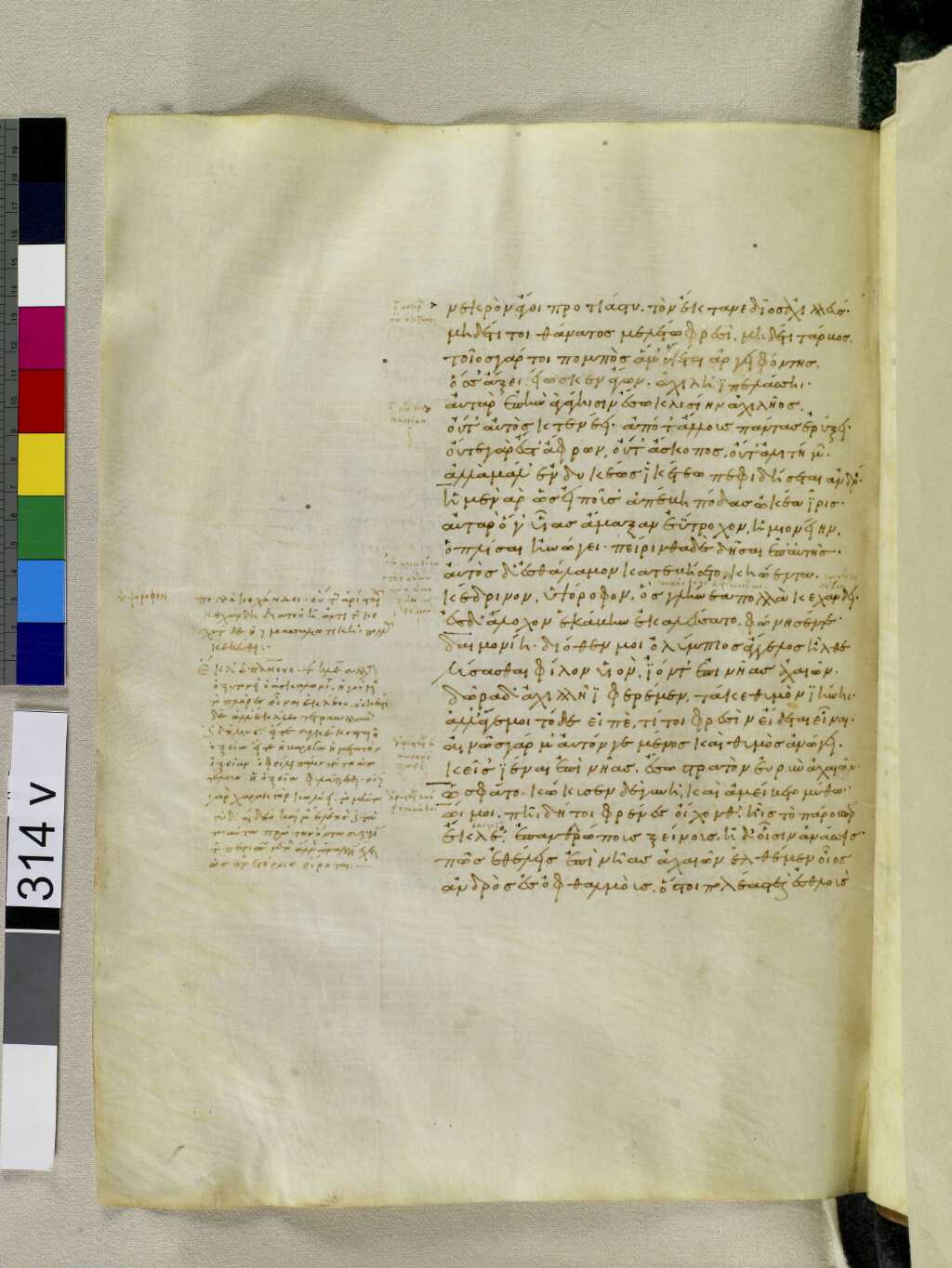
201ὤ μοι πῇ δή τοι φρένες οἴχονθʼ, ᾗς τὸ πάρος περ 202ἔκλεʼ ἐπʼ ἀνθρώπους ξείνους ἠδʼ οἷσιν ἀνάσσεις; 203πῶς ἐθέλεις ἐπὶ νῆας Ἀχαιῶν ἐλθέμεν οἶος 204ἀνδρὸς ἐς ὀφθαλμοὺς ὅς τοι πολέας τε καὶ ἐσθλοὺς 205υἱέας ἐξενάριξε· σιδήρειόν νύ τοι ἦτορ. 206εἰ γάρ σʼ αἱρήσει καὶ ἐσόψεται ὀφθαλμοῖσιν 207ὠμηστὴς καὶ ἄπιστος ἀνὴρ ὅ γε οὔ σʼ ἐλεήσει, 208οὐδέ τί σʼ αἰδέσεται. νῦν δὲ κλαίωμεν ἄνευθεν 209ἥμενοι ἐν μεγάρῳ· τῷ δʼ ὥς ποθι Μοῖρα κραταιὴ 210γιγνομένῳ ἐπένησε λίνῳ, ὅτε μιν τέκον αὐτή, 211ἀργίποδας κύνας ἆσαι ἑῶν ἀπάνευθε τοκήων 212ἀνδρὶ πάρα κρατερῷ, τοῦ ἐγὼ μέσον ἧπαρ ἔχοιμι 213ἐσθέμεναι προσφῦσα· τότʼ ἄντιτα ἔργα γένοιτο 214παιδὸς ἐμοῦ, ἐπεὶ οὔ ἑ κακιζόμενόν γε κατέκτα, 215ἀλλὰ πρὸ Τρώων καὶ Τρωϊάδων βαθυκόλπων 216ἑσταότʼ οὔτε φόβου μεμνημένον οὔτʼ ἀλεωρῆς. 217τὴν δʼ αὖτε προσέειπε γέρων Πρίαμος θεοειδής· 218μή μʼ ἐθέλοντʼ ἰέναι κατερύκανε, μὴ δέ μοι αὐτὴ 219ὄρνις ἐνὶ μεγάροισι κακὸς πέλευ· οὐδέ με πείσεις. 220εἰ μὲν γάρ τίς μʼ ἄλλος ἐπιχθονίων ἐκέλευεν, 221ἢ οἳ μάντιές εἰσι θυοσκόοι ἢ ἱερῆες, 222ψεῦδός κεν φαῖμεν καὶ νοσφιζοίμεθα μᾶλλον· 223νῦν δʼ, αὐτὸς γὰρ ἄκουσα θεοῦ καὶ ἐσέδρακον ἄντην, 224εἶμι καὶ οὐχ ἅλιον ἔπος ἔσσεται. εἰ δέ μοι αἶσα 225τεθνάμεναι παρὰ νηυσὶν Ἀχαιῶν χαλκοχιτώνων
Now when Priam and Idaeus had driven past the great tomb of Ilius, they stayed their mules and horses that they might drink in the river, for the shades of night were falling, when, therefore, Idaeus saw Mercury standing near them he said to Priam, “Take heed, descendant of Dardanus; here is matter which demands consideration. I see a man who I think will presently fall upon us; let us fly with our horses, or at least embrace his knees and implore him to take compassion upon us?”
When he heard this the old man’s heart failed him, and he was in great fear; he stayed where he was as one dazed, and the hair stood on end over his whole body; but the bringer of good luck came up to him and took him by the hand, saying, “Whither, father, are you thus driving your mules and horses in the dead of night when other men are asleep? Are you not afraid of the fierce Achaeans who are hard by you, so cruel and relentless? Should some one of them see you bearing so much treasure through the darkness of the flying night, what would not your state then be? You are no longer young, and he who is with you is too old to protect you from those who would attack you. For myself, I will do you no harm, and I will defend you from any one else, for you remind me of my own father.”
And Priam answered, “It is indeed as you say, my dear son; nevertheless some god has held his hand over me, in that he has sent such a wayfarer as yourself to meet me so opportunely; you are so comely in mien and figure, and your judgement is so excellent that you must come of blessed parents.”
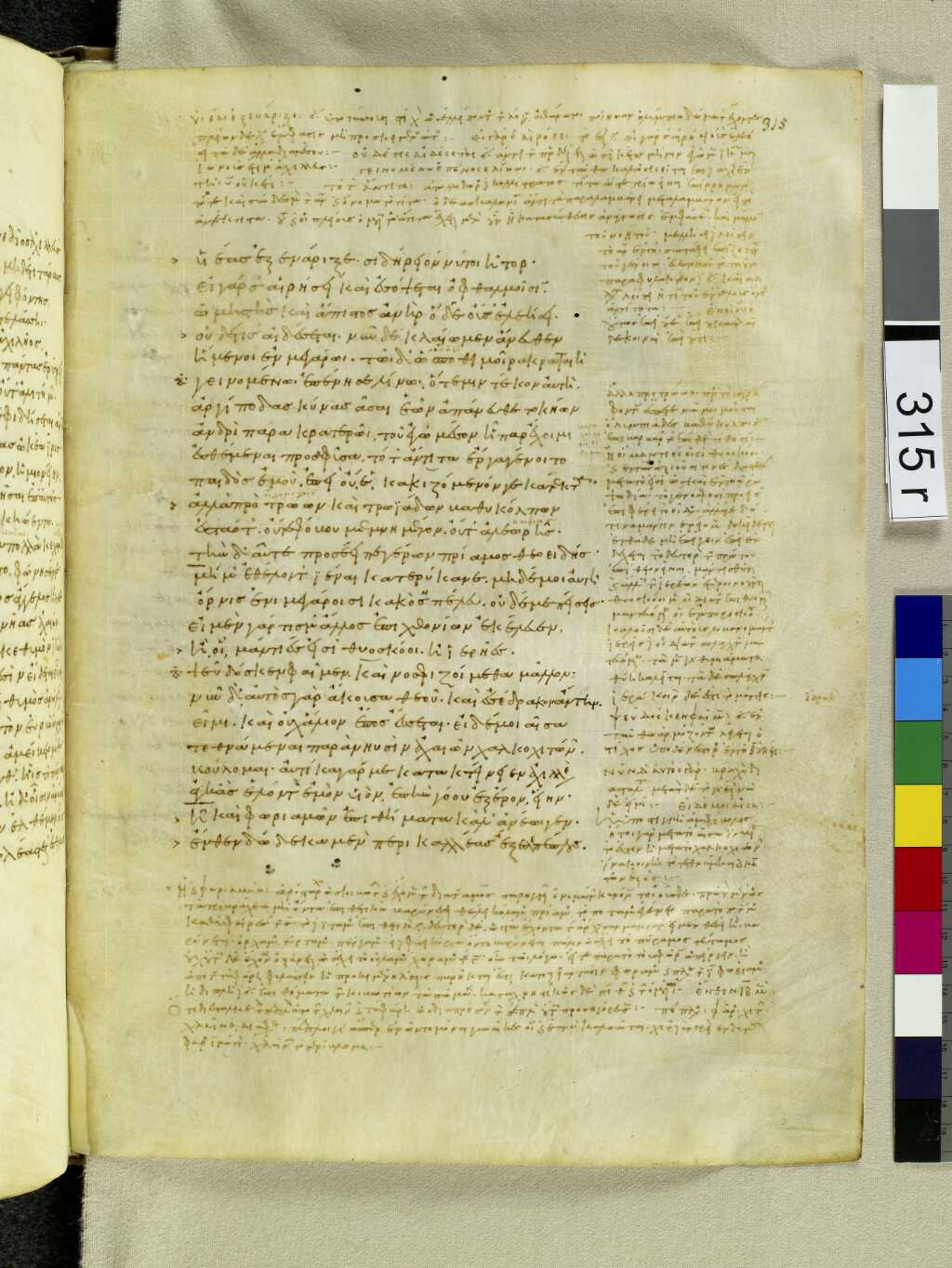
226βούλομαι· αὐτίκα γάρ με κατακτείνειεν Ἀχιλλεὺς 227ἀγκὰς ἑλόντʼ ἐμὸν υἱόν, ἐπὴν γόου ἐξ ἔρον εἵην. 228ἦ καὶ φωριαμῶν ἐπιθήματα κάλʼ ἀνέῳγεν· 229ἔνθεν δώδεκα μὲν περικαλλέας ἔξελε πέπλους, 230δώδεκα δʼ ἁπλοΐδας χλαίνας, τόσσους δὲ τάπητας, 231τόσσα δὲ φάρεα λευκά, τόσους δʼ ἐπὶ τοῖσι χιτῶνας. 232χρυσοῦ δὲ στήσας ἔφερεν δέκα πάντα τάλαντα, 233ἐκ δὲ δύʼ αἴθωνας τρίποδας, πίσυρας δὲ λέβητας, 234ἐκ δὲ δέπας περικαλλές, ὅ οἱ Θρῇκες πόρον ἄνδρες 235ἐξεσίην ἐλθόντι μέγα κτέρας· οὐδέ νυ τοῦ περ 236φείσατʼ ἐνὶ μεγάροις ὃ γέρων, περὶ δʼ ἤθελε θυμῷ 237λύσασθαι φίλον υἱόν. ὃ δὲ Τρῶας μὲν ἅπαντας 238αἰθούσης ἀπέεργεν ἔπεσσʼ αἰσχροῖσιν ἐνίσσων· 239ἔρρετε λωβητῆρες ἐλεγχέες· οὔ νυ καὶ ὑμῖν 240οἴκοι ἔνεστι γόος, ὅτι μʼ ἤλθετε κηδήσοντες; 241ἦ ὀνόσασθʼ ὅτι μοι Κρονίδης Ζεὺς ἄλγεʼ ἔδωκε 242παῖδʼ ὀλέσαι τὸν ἄριστον; ἀτὰρ γνώσεσθε καὶ ὔμμες· 243ῥηΐτεροι γὰρ μᾶλλον Ἀχαιοῖσιν δὴ ἔσεσθε 244κείνου τεθνηῶτος ἐναιρέμεν. αὐτὰρ ἔγωγε 245πρὶν ἀλαπαζομένην τε πόλιν κεραϊζομένην τε 246ὀφθαλμοῖσιν ἰδεῖν βαίην δόμον Ἄϊδος εἴσω. 247ἦ καὶ σκηπανίῳ δίεπʼ ἀνέρας· οἳ δʼ ἴσαν ἔξω 248σπερχομένοιο γέροντος· ὃ δʼ υἱάσιν οἷσιν ὁμόκλα 249νεικείων Ἕλενόν τε Πάριν τʼ Ἀγάθωνά τε δῖον 250Πάμμονά τʼ Ἀντίφονόν τε βοὴν ἀγαθόν τε Πολίτην
Then said the slayer of Argus, guide and guardian, “Sir, all that you have said is right; but tell me and tell me true, are you taking this rich treasure to send it to a foreign people where it may be safe, or are you all leaving strong Ilius in dismay now that your son has fallen who was the bravest man among you and was never lacking in battle with the Achaeans?”
And Priam said, “Who are you, my friend, and who are your parents, that you speak so truly about the fate of my unhappy son?”
The slayer of Argus, guide and guardian, answered him, “Sir, you would prove me, that you question me about noble Hector. Many a time have I set eyes upon him in battle when he was driving the Argives to their ships and putting them to the sword. We stood still and marvelled, for Achilles in his anger with the son of Atreus suffered us not to fight. I am his squire, and came with him in the same ship. I am a Myrmidon, and my father’s name is Polyctor: he is a rich man and about as old as you are; he has six sons besides myself, and I am the seventh. We cast lots, and it fell upon me to sail hither with Achilles. I am now come from the ships on to the plain, for with daybreak the Achaeans will set battle in array about the city. They chafe at doing nothing, and are so eager that their princes cannot hold them back.”
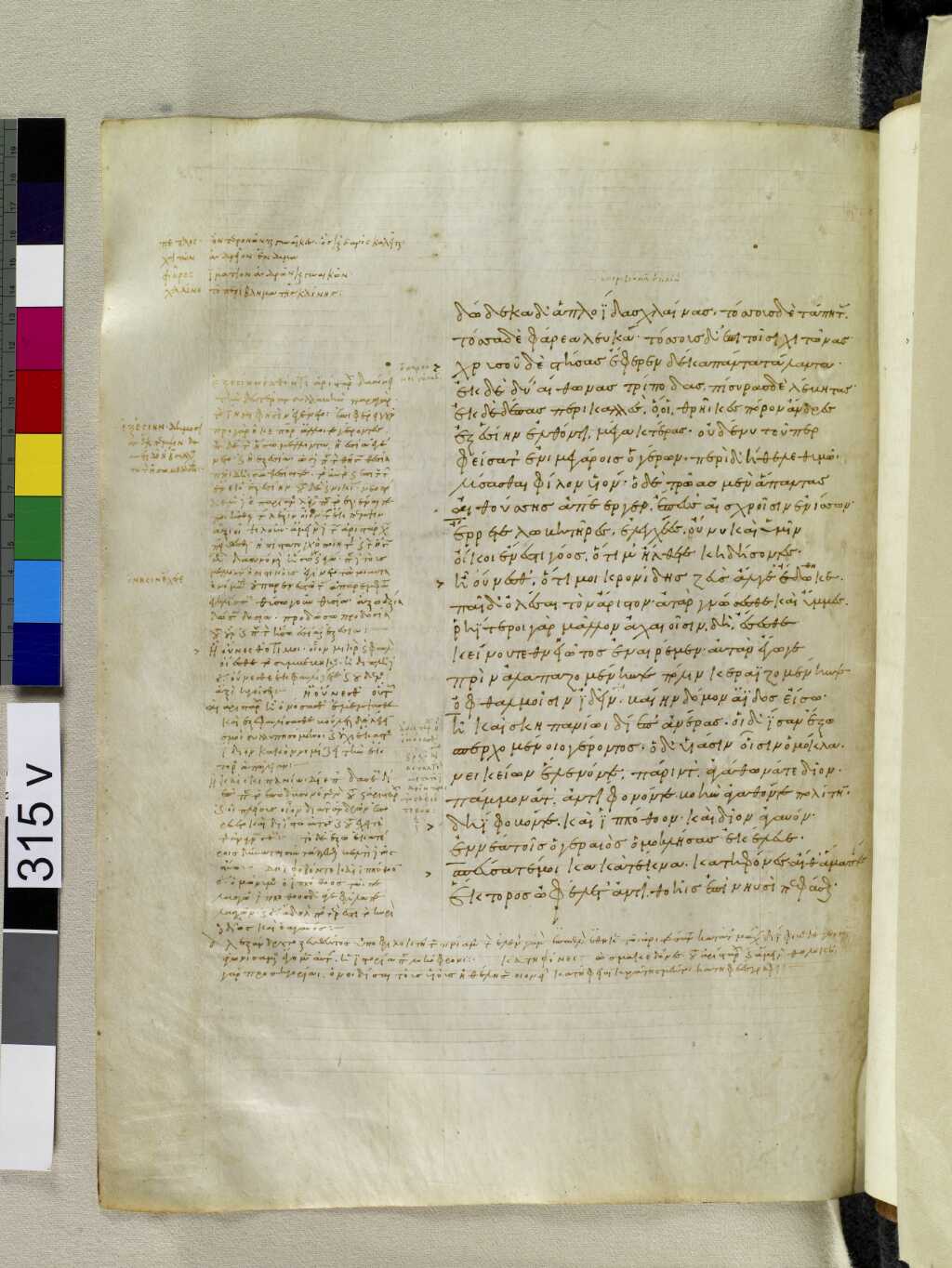
251Δηΐφοβόν τε καὶ Ἱππόθοον καὶ δῖον Ἀγαυόν· 252ἐννέα τοῖς ὃ γεραιὸς ὁμοκλήσας ἐκέλευε· 253σπεύσατέ μοι κακὰ τέκνα κατηφόνες· αἴθʼ ἅμα πάντες 254Ἕκτορος ὠφέλετʼ ἀντὶ θοῇς ἐπὶ νηυσὶ πεφάσθαι. 255ὤ μοι ἐγὼ πανάποτμος, ἐπεὶ τέκον υἷας ἀρίστους 256Τροίῃ ἐν εὐρείῃ, τῶν δʼ οὔ τινά φημι λελεῖφθαι, 257Μήστορά τʼ ἀντίθεον καὶ Τρωΐλον ἱππιοχάρμην 258Ἕκτορά θʼ, ὃς θεὸς ἔσκε μετʼ ἀνδράσιν, οὐδὲ ἐῴκει 259ἀνδρός γε θνητοῦ πάϊς ἔμμεναι ἀλλὰ θεοῖο. 260τοὺς μὲν ἀπώλεσʼ Ἄρης, τὰ δʼ ἐλέγχεα πάντα λέλειπται 261ψεῦσταί τʼ ὀρχησταί τε χοροιτυπίῃσιν ἄριστοι 262ἀρνῶν ἠδʼ ἐρίφων ἐπιδήμιοι ἁρπακτῆρες. 263οὐκ ἂν δή μοι ἄμαξαν ἐφοπλίσσαιτε τάχιστα, 264ταῦτά τε πάντʼ ἐπιθεῖτε, ἵνα πρήσσωμεν ὁδοῖο; 265ὣς ἔφαθʼ, οἳ δʼ ἄρα πατρὸς ὑποδείσαντες ὁμοκλὴν 266ἐκ μὲν ἄμαξαν ἄειραν ἐΰτροχον ἡμιονείην 267καλὴν πρωτοπαγέα, πείρινθα δὲ δῆσαν ἐπʼ αὐτῆς, 268κὰδ δʼ ἀπὸ πασσαλόφι ζυγὸν ᾕρεον ἡμιόνειον 269πύξινον ὀμφαλόεν εὖ οἰήκεσσιν ἀρηρός· 270ἐκ δʼ ἔφερον ζυγόδεσμον ἅμα ζυγῷ ἐννεάπηχυ. 271καὶ τὸ μὲν εὖ κατέθηκαν ἐϋξέστῳ ἐπὶ ῥυμῷ 272πέζῃ ἔπι πρώτῃ, ἐπὶ δὲ κρίκον ἕστορι βάλλον, 273τρὶς δʼ ἑκάτερθεν ἔδησαν ἐπʼ ὀμφαλόν, αὐτὰρ ἔπειτα 274ἑξείης κατέδησαν, ὑπὸ γλωχῖνα δʼ ἔκαμψαν. 275ἐκ θαλάμου δὲ φέροντες ἐϋξέστης ἐπʼ ἀπήνης
Then answered Priam, “If you are indeed the squire of Achilles son of Peleus, tell me now the whole truth. Is my son still at the ships, or has Achilles hewn him limb from limb, and given him to his hounds?”
“Sir,” replied the slayer of Argus, guide and guardian, “neither hounds nor vultures have yet devoured him; he is still just lying at the tents by the ship of Achilles, and though it is now twelve days that he has lain there, his flesh is not wasted nor have the worms eaten him although they feed on warriors. At daybreak Achilles drags him cruelly round the sepulchre of his dear comrade, but it does him no hurt. You should come yourself and see how he lies fresh as dew, with the blood all washed away, and his wounds every one of them closed though many pierced him with their spears. Such care have the blessed gods taken of your brave son, for he was dear to them beyond all measure.”
The old man was comforted as he heard him and said, “My son, see what a good thing it is to have made due offerings to the immortals; for as sure as that he was born my son never forgot the gods that hold Olympus, and now they requite it to him even in death. Accept therefore at my hands this goodly chalice; guard me and with heaven’s help guide me till I come to the tent of the son of Peleus.”
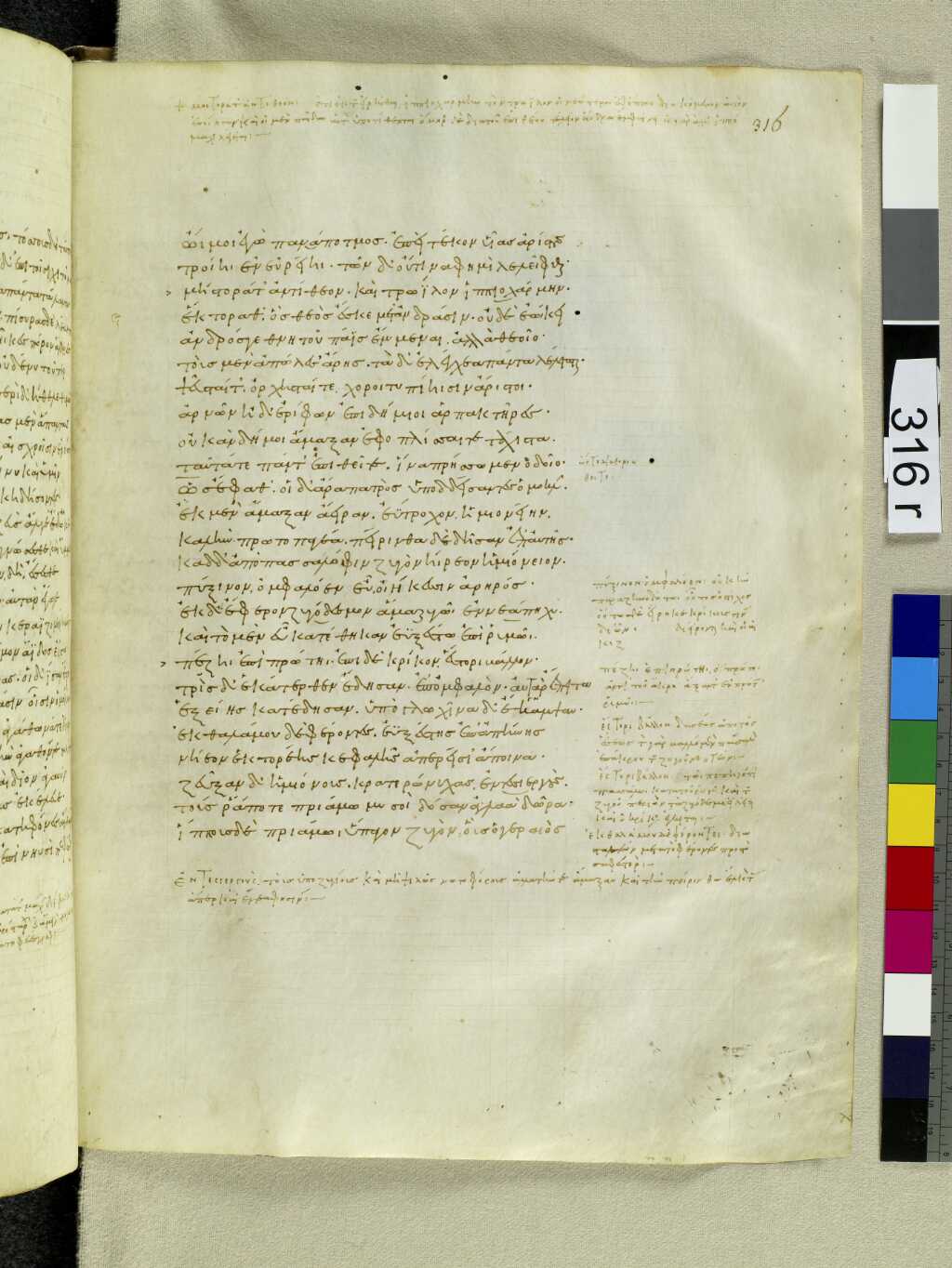
276νήεον Ἑκτορέης κεφαλῆς ἀπερείσιʼ ἄποινα, 277ζεῦξαν δʼ ἡμιόνους κρατερώνυχας ἐντεσιεργούς, 278τούς ῥά ποτε Πριάμῳ Μυσοὶ δόσαν ἀγλαὰ δῶρα. 279ἵππους δὲ Πριάμῳ ὕπαγον ζυγόν, οὓς ὃ γεραιὸς 280αὐτὸς ἔχων ἀτίταλλεν ἐϋξέστῃ ἐπὶ φάτνῃ. 281τὼ μὲν ζευγνύσθην ἐν δώμασιν ὑψηλοῖσι 282κῆρυξ καὶ Πρίαμος πυκινὰ φρεσὶ μήδεʼ ἔχοντες· 283ἀγχίμολον δέ σφʼ ἦλθʼ Ἑκάβη τετιηότι θυμῷ 284οἶνον ἔχουσʼ ἐν χειρὶ μελίφρονα δεξιτερῆφι 285χρυσέῳ ἐν δέπαϊ, ὄφρα λείψαντε κιοίτην· 286στῆ δʼ ἵππων προπάροιθεν ἔπος τʼ ἔφατʼ ἔκ τʼ ὀνόμαζε· 287τῆ σπεῖσον Διὶ πατρί, καὶ εὔχεο οἴκαδʼ ἱκέσθαι 288ἂψ ἐκ δυσμενέων ἀνδρῶν, ἐπεὶ ἂρ σέ γε θυμὸς 289ὀτρύνει ἐπὶ νῆας ἐμεῖο μὲν οὐκ ἐθελούσης. 290ἀλλʼ εὔχεο σύ γʼ ἔπειτα κελαινεφέϊ Κρονίωνι 291Ἰδαίῳ, ὅς τε Τροίην κατὰ πᾶσαν ὁρᾶται, 292αἴτει δʼ οἰωνὸν ταχὺν ἄγγελον, ὅς τέ οἱ αὐτῷ 293φίλτατος οἰωνῶν, καί εὑ κράτος ἐστὶ μέγιστον, 294δεξιόν, ὄφρά μιν αὐτὸς ἐν ὀφθαλμοῖσι νοήσας 295τῷ πίσυνος ἐπὶ νῆας ἴῃς Δαναῶν ταχυπώλων. 296εἰ δέ τοι οὐ δώσει ἑὸν ἄγγελον εὐρύοπα Ζεύς, 297οὐκ ἂν ἔγωγέ σʼ ἔπειτα ἐποτρύνουσα κελοίμην 298νῆας ἐπʼ Ἀργείων ἰέναι μάλα περ μεμαῶτα. 299τὴν δʼ ἀπαμειβόμενος προσέφη Πρίαμος θεοειδής· 300ὦ γύναι οὐ μέν τοι τόδʼ ἐφιεμένῃ ἀπιθήσω.
Then answered the slayer of Argus, guide and guardian, “Sir, you are tempting me and playing upon my youth, but you shall not move me, for you are offering me presents without the knowledge of Achilles whom I fear and hold it great guilt to defraud, lest some evil presently befall me; but as your guide I would go with you even to Argos itself, and would guard you so carefully whether by sea or land, that no one should attack you through making light of him who was with you.”
The bringer of good luck then sprang on to the chariot, and seizing the whip and reins he breathed fresh spirit into the mules and horses. When they reached the trench and the wall that was before the ships, those who were on guard had just been getting their suppers, and the slayer of Argus threw them all into a deep sleep. Then he drew back the bolts to open the gates, and took Priam inside with the treasure he had upon his waggon. Ere long they came to the lofty dwelling of the son of Peleus for which the Myrmidons had cut pine and which they had built for their king; when they had built it they thatched it with coarse tussock-grass which they had mown out on the plain, and all round it they made a large courtyard, which was fenced with stakes set close together. The gate was barred with a single bolt of pine which it took three men to force into its place, and three to draw back so as to open the gate, but Achilles could draw it by himself. Mercury opened the gate for the old man, and brought in the treasure that he was taking with him for the son of Peleus. Then he sprang from the chariot on to the ground and said, “Sir, it is I, immortal Mercury, that am come with you, for my father sent me to escort you. I will now leave you, and will not enter into the presence of Achilles, for it might anger him that a god should befriend mortal men thus openly. Go you within, and embrace the knees of the son of Peleus: beseech him by his father, his lovely mother, and his son; thus you may move him.”
With these words Mercury went back to high Olympus. Priam sprang from his chariot to the ground, leaving Idaeus where he was, in charge of the mules and horses. The old man went straight into the house where Achilles, loved of the gods, was sitting. There he found him with his men seated at a distance from him: only two, the hero Automedon, and Alcimus of the race of Mars, were busy in attendance about his person, for he had but just done eating and drinking, and the table was still there. King Priam entered without their seeing him, and going right up to Achilles he clasped his knees and kissed the dread murderous hands that had slain so many of his sons.
As when some cruel spite has befallen a man that he should have killed some one in his own country, and must fly to a great man’s protection in a land of strangers, and all marvel who see him, even so did Achilles marvel as he beheld Priam. The others looked one to another and marvelled also, but Priam besought Achilles saying, “Think of your father, O Achilles like unto the gods, who is such even as I am, on the sad threshold of old age. It may be that those who dwell near him harass him, and there is none to keep war and ruin from him. Yet when he hears of you being still alive, he is glad, and his days are full of hope that he shall see his dear son come home to him from Troy; but I, wretched man that I am, had the bravest in all Troy for my sons, and there is not one of them left. I had fifty sons when the Achaeans came here; nineteen of them were from a single womb, and the others were borne to me by the women of my household. The greater part of them has fierce Mars laid low, and Hector, him who was alone left, him who was the guardian of the city and ourselves, him have you lately slain; therefore I am now come to the ships of the Achaeans to ransom his body from you with a great ransom. Fear, O Achilles, the wrath of heaven; think on your own father and have compassion upon me, who am the more pitiable, for I have steeled myself as no man yet has ever steeled himself before me, and have raised to my lips the hand of him who slew my son.”
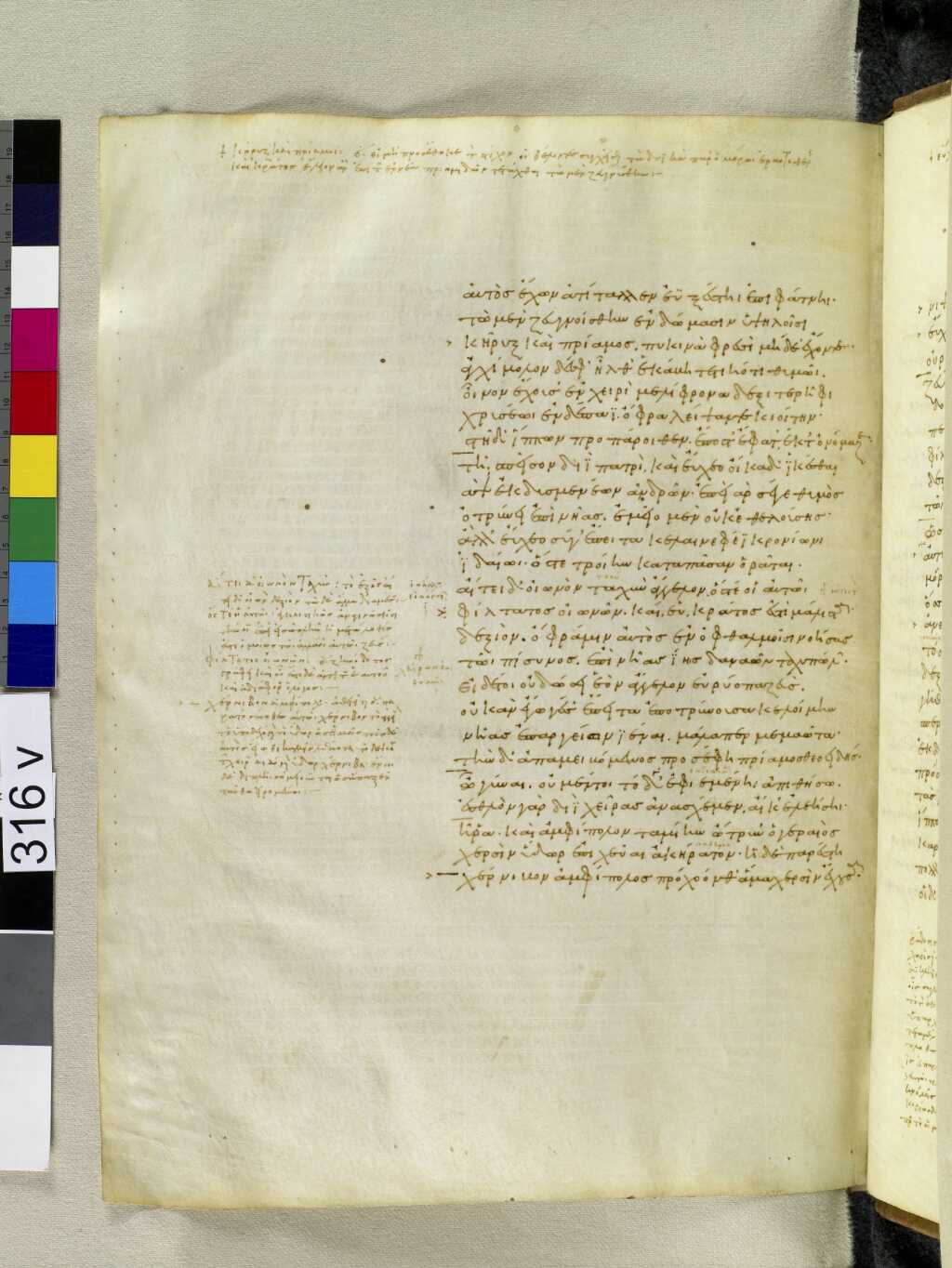
301ἐσθλὸν γὰρ Διὶ χεῖρας ἀνασχέμεν αἴ κʼ ἐλεήσῃ. 302ἦ ῥα καὶ ἀμφίπολον ταμίην ὄτρυνʼ ὃ γεραιὸς 303χερσὶν ὕδωρ ἐπιχεῦαι ἀκήρατον· ἣ δὲ παρέστη 304χέρνιβον ἀμφίπολος πρόχοόν θʼ ἅμα χερσὶν ἔχουσα. 305νιψάμενος δὲ κύπελλον ἐδέξατο ἧς ἀλόχοιο· 306εὔχετʼ ἔπειτα στὰς μέσῳ ἕρκεϊ, λεῖβε δὲ οἶνον 307οὐρανὸν εἰσανιδών, καὶ φωνήσας ἔπος ηὔδα· 308Ζεῦ πάτερ Ἴδηθεν μεδέων κύδιστε μέγιστε 309δός μʼ ἐς Ἀχιλλῆος φίλον ἐλθεῖν ἠδʼ ἐλεεινόν, 310πέμψον δʼ οἰωνὸν ταχὺν ἄγγελον, ὅς τε σοὶ αὐτῷ 311φίλτατος οἰωνῶν, καί εὑ κράτος ἐστὶ μέγιστον, 312δεξιόν, ὄφρά μιν αὐτὸς ἐν ὀφθαλμοῖσι νοήσας 313τῷ πίσυνος ἐπὶ νῆας ἴω Δαναῶν ταχυπώλων. 314ὣς ἔφατʼ εὐχόμενος, τοῦ δʼ ἔκλυε μητίετα Ζεὺς 315αὐτίκα δʼ αἰετὸν ἧκε τελειότατον πετεηνῶν 316μόρφνον θηρητῆρʼ ὃν καὶ περκνὸν καλέουσιν. 317ὅσση δʼ ὑψορόφοιο θύρη θαλάμοιο τέτυκται 318ἀνέρος ἀφνειοῖο ἐῢ κληῗσʼ ἀραρυῖα, 319τόσσʼ ἄρα τοῦ ἑκάτερθεν ἔσαν πτερά· εἴσατο δέ σφι 320δεξιὸς ἀΐξας διὰ ἄστεος· οἳ δὲ ἰδόντες 321γήθησαν, καὶ πᾶσιν ἐνὶ φρεσὶ θυμὸς ἰάνθη. 322σπερχόμενος δʼ ὃ γεραιὸς ἑοῦ ἐπεβήσετο δίφρου, 323ἐκ δʼ ἔλασε προθύροιο καὶ αἰθούσης ἐριδούπου. 324πρόσθε μὲν ἡμίονοι ἕλκον τετράκυκλον ἀπήνην, 325τὰς Ἰδαῖος ἔλαυνε δαΐφρων· αὐτὰρ ὄπισθεν
Thus spoke Priam, and the heart of Achilles yearned as he bethought him of his father. He took the old man’s hand and moved him gently away. The two wept bitterly—Priam, as he lay at Achilles’ feet, weeping for Hector, and Achilles now for his father and now for Patroclus, till the house was filled with their lamentation. But when Achilles was now sated with grief and had unburthened the bitterness of his sorrow, he left his seat and raised the old man by the hand, in pity for his white hair and beard; then he said, “Unhappy man, you have indeed been greatly daring; how could you venture to come alone to the ships of the Achaeans, and enter the presence of him who has slain so many of your brave sons? You must have iron courage: sit now upon this seat, and for all our grief we will hide our sorrows in our hearts, for weeping will not avail us. The immortals know no care, yet the lot they spin for man is full of sorrow; on the floor of Jove’s palace there stand two urns, the one filled with evil gifts, and the other with good ones. He for whom Jove the lord of thunder mixes the gifts he sends, will meet now with good and now with evil fortune; but he to whom Jove sends none but evil gifts will be pointed at by the finger of scorn, the hand of famine will pursue him to the ends of the world, and he will go up and down the face of the earth, respected neither by gods nor men. Even so did it befall Peleus; the gods endowed him with all good things from his birth upwards, for he reigned over the Myrmidons excelling all men in prosperity and wealth, and mortal though he was they gave him a goddess for his bride. But even on him too did heaven send misfortune, for there is no race of royal children born to him in his house, save one son who is doomed to die all untimely; nor may I take care of him now that he is growing old, for I must stay here at Troy to be the bane of you and your children. And you too, O Priam, I have heard that you were aforetime happy. They say that in wealth and plenitude of offspring you surpassed all that is in Lesbos, the realm of Makar to the northward, Phrygia that is more inland, and those that dwell upon the great Hellespont; but from the day when the dwellers in heaven sent this evil upon you, war and slaughter have been about your city continually. Bear up against it, and let there be some intervals in your sorrow. Mourn as you may for your brave son, you will take nothing by it. You cannot raise him from the dead, ere you do so yet another sorrow shall befall you.”
And Priam answered, “O king, bid me not be seated, while Hector is still lying uncared for in your tents, but accept the great ransom which I have brought you, and give him to me at once that I may look upon him. May you prosper with the ransom and reach your own land in safety, seeing that you have suffered me to live and to look upon the light of the sun.”
Achilles looked at him sternly and said, “Vex me, sir, no longer; I am of myself minded to give up the body of Hector. My mother, daughter of the old man of the sea, came to me from Jove to bid me deliver it to you. Moreover I know well, O Priam, and you cannot hide it, that some god has brought you to the ships of the Achaeans, for else, no man however strong and in his prime would dare to come to our host; he could neither pass our guard unseen, nor draw the bolt of my gates thus easily; therefore, provoke me no further, lest I sin against the word of Jove, and suffer you not, suppliant though you are, within my tents.”
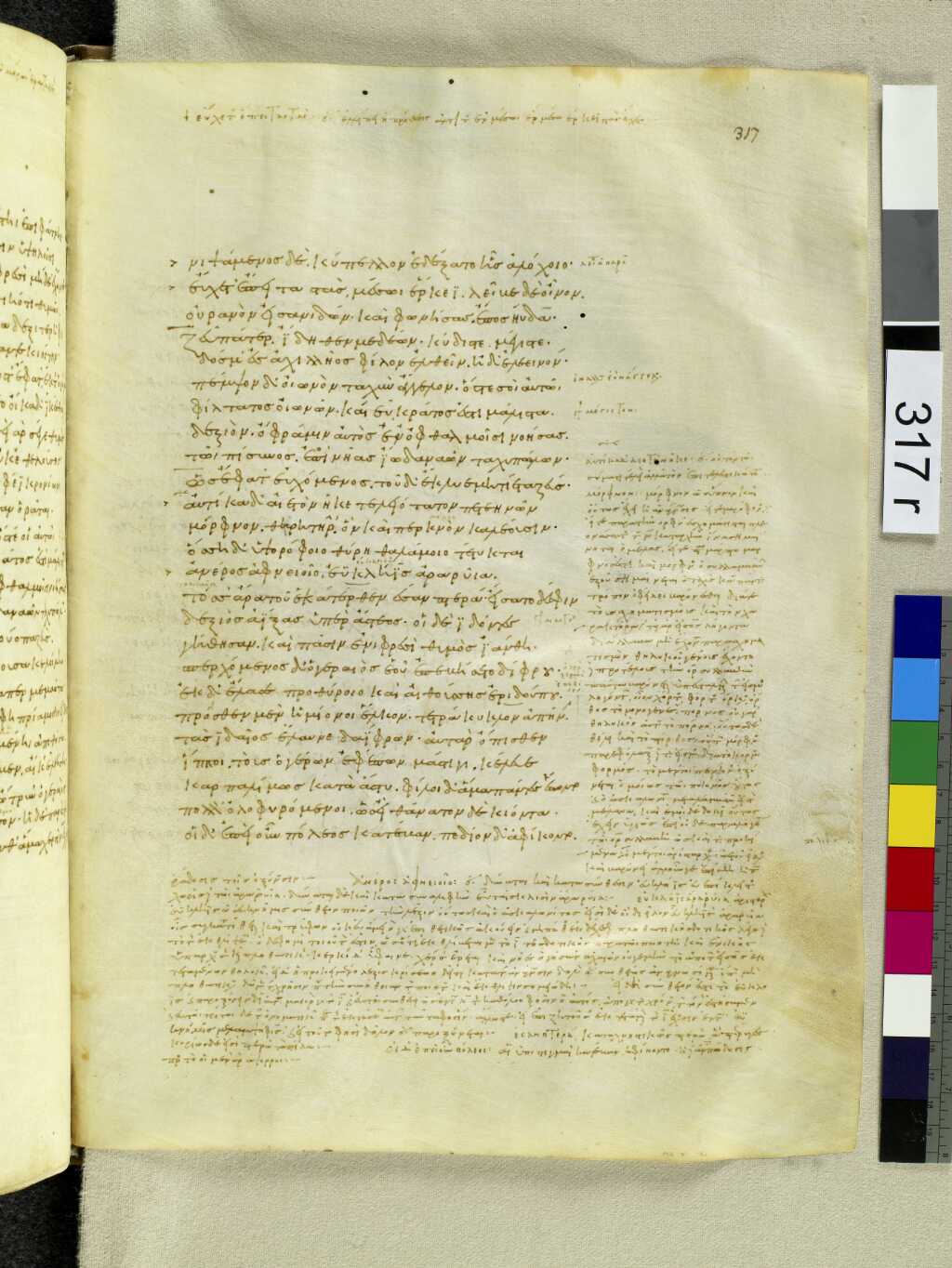
326ἵπποι, τοὺς ὃ γέρων ἐφέπων μάστιγι κέλευε 327καρπαλίμως κατὰ ἄστυ· φίλοι δʼ ἅμα πάντες ἕποντο 328πόλλʼ ὀλοφυρόμενοι ὡς εἰ θάνατον δὲ κιόντα. 329οἳ δʼ ἐπεὶ οὖν πόλιος κατέβαν, πεδίον δʼ ἀφίκοντο, 330οἳ μὲν ἄρʼ ἄψορροι προτὶ Ἴλιον ἀπονέοντο 331παῖδες καὶ γαμβροί, τὼ δʼ οὐ λάθον εὐρύοπα Ζῆν 332ἐς πεδίον προφανέντε· ἰδὼν δʼ ἐλέησε γέροντα, 333αἶψα δʼ ἄρʼ Ἑρμείαν υἱὸν φίλον ἀντίον ηὔδα· 334Ἑρμεία, σοὶ γάρ τε μάλιστά γε φίλτατόν ἐστιν 335ἀνδρὶ ἑταιρίσσαι, καί τʼ ἔκλυες ᾧ κʼ ἐθέλῃσθα, 336βάσκʼ ἴθι καὶ Πρίαμον κοίλας ἐπὶ νῆας Ἀχαιῶν 337ὣς ἄγαγʼ, ὡς μήτʼ ἄρ τις ἴδῃ μήτʼ ἄρ τε νοήσῃ 338τῶν ἄλλων Δαναῶν, πρὶν Πηλεΐωνα δʼ ἱκέσθαι. 339ὣς ἔφατʼ, οὐδʼ ἀπίθησε διάκτορος ἀργεϊφόντης. 340αὐτίκʼ ἔπειθʼ ὑπὸ ποσσὶν ἐδήσατο καλὰ πέδιλα 341ἀμβρόσια χρύσεια, τά μιν φέρον ἠμὲν ἐφʼ ὑγρὴν 342ἠδʼ ἐπʼ ἀπείρονα γαῖαν ἅμα πνοιῇς ἀνέμοιο· 343εἵλετο δὲ ῥάβδον, τῇ τʼ ἀνδρῶν ὄμματα θέλγει 344ὧν ἐθέλει, τοὺς δʼ αὖτε καὶ ὑπνώοντας ἐγείρει· 345τὴν μετὰ χερσὶν ἔχων πέτετο κρατὺς ἀργεϊφόντης. 346αἶψα δʼ ἄρα Τροίην τε καὶ Ἑλλήσποντον ἵκανε, 347βῆ δʼ ἰέναι κούρῳ αἰσυμνητῆρι ἐοικὼς 348πρῶτον ὑπηνήτῃ, τοῦ περ χαριεστάτη ἥβη. 349οἳ δʼ ἐπεὶ οὖν μέγα σῆμα παρὲξ Ἴλοιο ἔλασσαν, 350στῆσαν ἄρʼ ἡμιόνους τε καὶ ἵππους ὄφρα πίοιεν
The old man feared him and obeyed. Then the son of Peleus sprang like a lion through the door of his house, not alone, but with him went his two squires Automedon and Alcimus who were closer to him than any others of his comrades now that Patroclus was no more. These unyoked the horses and mules, and bade Priam’s herald and attendant be seated within the house. They lifted the ransom for Hector’s body from the waggon, but they left two mantles and a goodly shirt, that Achilles might wrap the body in them when he gave it to be taken home. Then he called to his servants and ordered them to wash the body and anoint it, but he first took it to a place where Priam should not see it, lest if he did so, he should break out in the bitterness of his grief, and enrage Achilles, who might then kill him and sin against the word of Jove. When the servants had washed the body and anointed it, and had wrapped it in a fair shirt and mantle, Achilles himself lifted it on to a bier, and he and his men then laid it on the waggon. He cried aloud as he did so and called on the name of his dear comrade, “Be not angry with me, Patroclus,” he said, “if you hear even in the house of Hades that I have given Hector to his father for a ransom. It has been no unworthy one, and I will share it equitably with you.”
Achilles then went back into the tent and took his place on the richly inlaid seat from which he had risen, by the wall that was at right angles to the one against which Priam was sitting. “Sir,” he said, “your son is now laid upon his bier and is ransomed according to desire; you shall look upon him when you take him away at daybreak; for the present let us prepare our supper. Even lovely Niobe had to think about eating, though her twelve children—six daughters and six lusty sons—had been all slain in her house. Apollo killed the sons with arrows from his silver bow, to punish Niobe, and Diana slew the daughters, because Niobe had vaunted herself against Leto; she said Leto had borne two children only, whereas she had herself borne many—whereon the two killed the many. Nine days did they lie weltering, and there was none to bury them, for the son of Saturn turned the people into stone; but on the tenth day the gods in heaven themselves buried them, and Niobe then took food, being worn out with weeping. They say that somewhere among the rocks on the mountain pastures of Sipylus, where the nymphs live that haunt the river Achelous, there, they say, she lives in stone and still nurses the sorrows sent upon her by the hand of heaven. Therefore, noble sir, let us two now take food; you can weep for your dear son hereafter as you are bearing him back to Ilius—and many a tear will he cost you.”
With this Achilles sprang from his seat and killed a sheep of silvery whiteness, which his followers skinned and made ready all in due order. They cut the meat carefully up into smaller pieces, spitted them, and drew them off again when they were well roasted. Automedon brought bread in fair baskets and served it round the table, while Achilles dealt out the meat, and they laid their hands on the good things that were before them. As soon as they had had enough to eat and drink, Priam, descendant of Dardanus, marvelled at the strength and beauty of Achilles for he was as a god to see, and Achilles marvelled at Priam as he listened to him and looked upon his noble presence. When they had gazed their fill Priam spoke first. “And now, O king,” he said, “take me to my couch that we may lie down and enjoy the blessed boon of sleep. Never once have my eyes been closed from the day your hands took the life of my son; I have grovelled without ceasing in the mire of my stable-yard, making moan and brooding over my countless sorrows. Now, moreover, I have eaten bread and drunk wine; hitherto I have tasted nothing.”
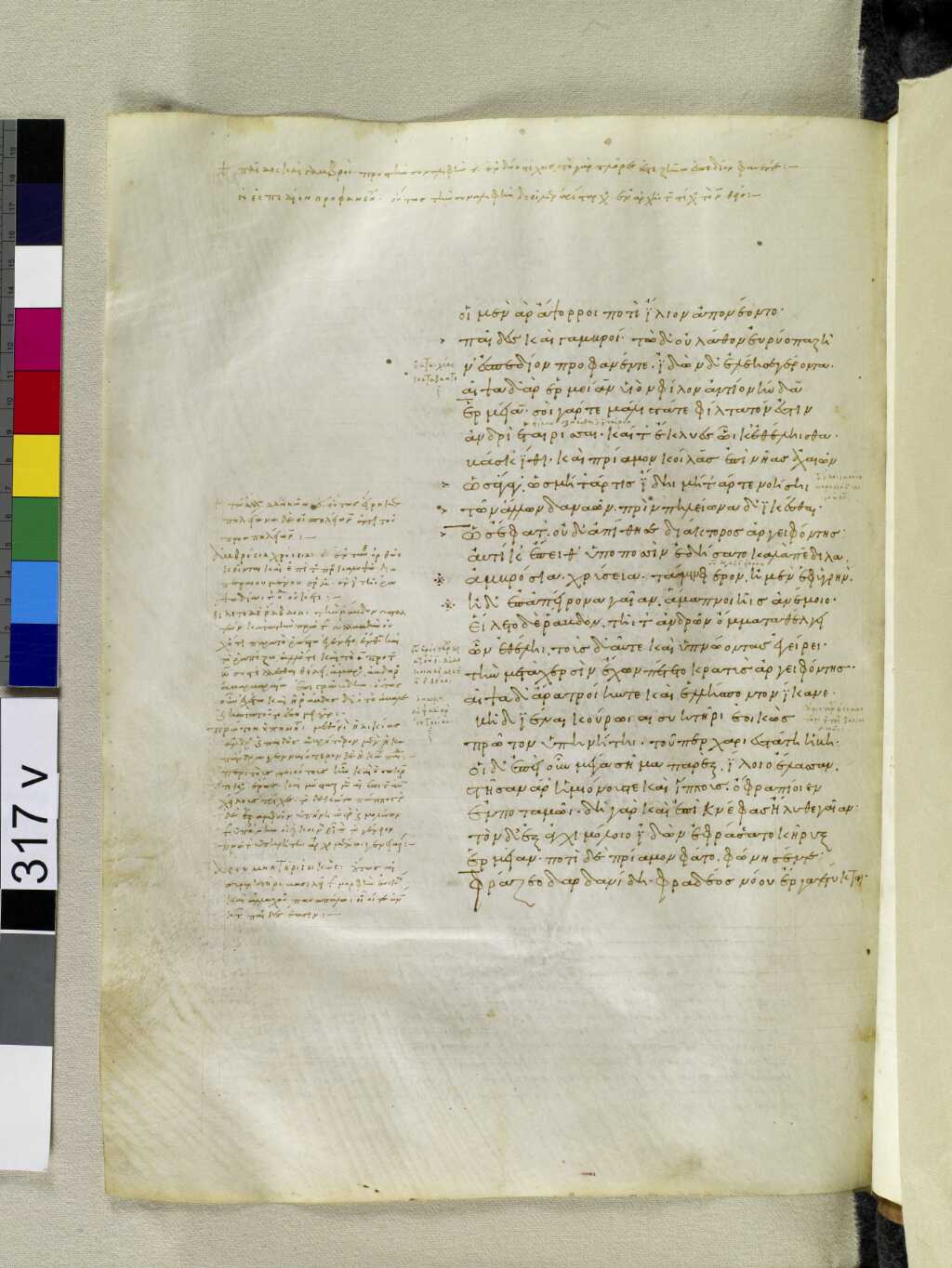
351ἐν ποταμῷ· δὴ γὰρ καὶ ἐπὶ κνέφας ἤλυθε γαῖαν. 352τὸν δʼ ἐξ ἀγχιμόλοιο ἰδὼν ἐφράσσατο κῆρυξ 353Ἑρμείαν, ποτὶ δὲ Πρίαμον φάτο φώνησέν τε· 354φράζεο Δαρδανίδη· φραδέος νόου ἔργα τέτυκται. 355ἄνδρʼ ὁρόω, τάχα δʼ ἄμμε διαρραίσεσθαι ὀΐω. 356ἀλλʼ ἄγε δὴ φεύγωμεν ἐφʼ ἵππων, ἤ μιν ἔπειτα 357γούνων ἁψάμενοι λιτανεύσομεν αἴ κʼ ἐλεήσῃ. 358ὣς φάτο, σὺν δὲ γέροντι νόος χύτο, δείδιε δʼ αἰνῶς, 359ὀρθαὶ δὲ τρίχες ἔσταν ἐνὶ γναμπτοῖσι μέλεσσι, 360στῆ δὲ ταφών· αὐτὸς δʼ ἐριούνιος ἐγγύθεν ἐλθὼν 361χεῖρα γέροντος ἑλὼν ἐξείρετο καὶ προσέειπε· 362πῇ πάτερ ὧδʼ ἵππους τε καὶ ἡμιόνους ἰθύνεις 363νύκτα διʼ ἀμβροσίην, ὅτε θʼ εὕδουσι βροτοὶ ἄλλοι; 364οὐδὲ σύ γʼ ἔδεισας μένεα πνείοντας Ἀχαιούς, 365οἵ τοι δυσμενέες καὶ ἀνάρσιοι ἐγγὺς ἔασι; 366τῶν εἴ τίς σε ἴδοιτο θοὴν διὰ νύκτα μέλαιναν 367τοσσάδʼ ὀνείατʼ ἄγοντα, τίς ἂν δή τοι νόος εἴη; 368οὔτʼ αὐτὸς νέος ἐσσί, γέρων δέ τοι οὗτος ὀπηδεῖ, 369ἄνδρʼ ἀπαμύνασθαι, ὅτε τις πρότερος χαλεπήνῃ. 370ἀλλʼ ἐγὼ οὐδέν σε ῥέξω κακά, καὶ δέ κεν ἄλλον 371σεῦ ἀπαλεξήσαιμι· φίλῳ δέ σε πατρὶ ἐΐσκω. 372τὸν δʼ ἠμείβετʼ ἔπειτα γέρων Πρίαμος θεοειδής· 373οὕτω πῃ τάδε γʼ ἐστὶ φίλον τέκος ὡς ἀγορεύεις. 374ἀλλʼ ἔτι τις καὶ ἐμεῖο θεῶν ὑπερέσχεθε χεῖρα, 375ὅς μοι τοιόνδʼ ἧκεν ὁδοιπόρον ἀντιβολῆσαι
As he spoke Achilles told his men and the women servants to set beds in the room that was in the gatehouse, and make them with good red rugs, and spread coverlets on the top of them with woollen cloaks for Priam and Idaeus to wear. So the maids went out carrying a torch and got the two beds ready in all haste. Then Achilles said laughingly to Priam, “Dear sir, you shall lie outside, lest some counsellor of those who in due course keep coming to advise with me should see you here in the darkness of the flying night, and tell it to Agamemnon. This might cause delay in the delivery of the body. And now tell me and tell me true, for how many days would you celebrate the funeral rites of noble Hector? Tell me, that I may hold aloof from war and restrain the host.”
And Priam answered, “Since, then, you suffer me to bury my noble son with all due rites, do thus, Achilles, and I shall be grateful. You know how we are pent up within our city; it is far for us to fetch wood from the mountain, and the people live in fear. Nine days, therefore, will we mourn Hector in my house; on the tenth day we will bury him and there shall be a public feast in his honour; on the eleventh we will build a mound over his ashes, and on the twelfth, if there be need, we will fight.”
And Achilles answered, “All, King Priam, shall be as you have said. I will stay our fighting for as long a time as you have named.”
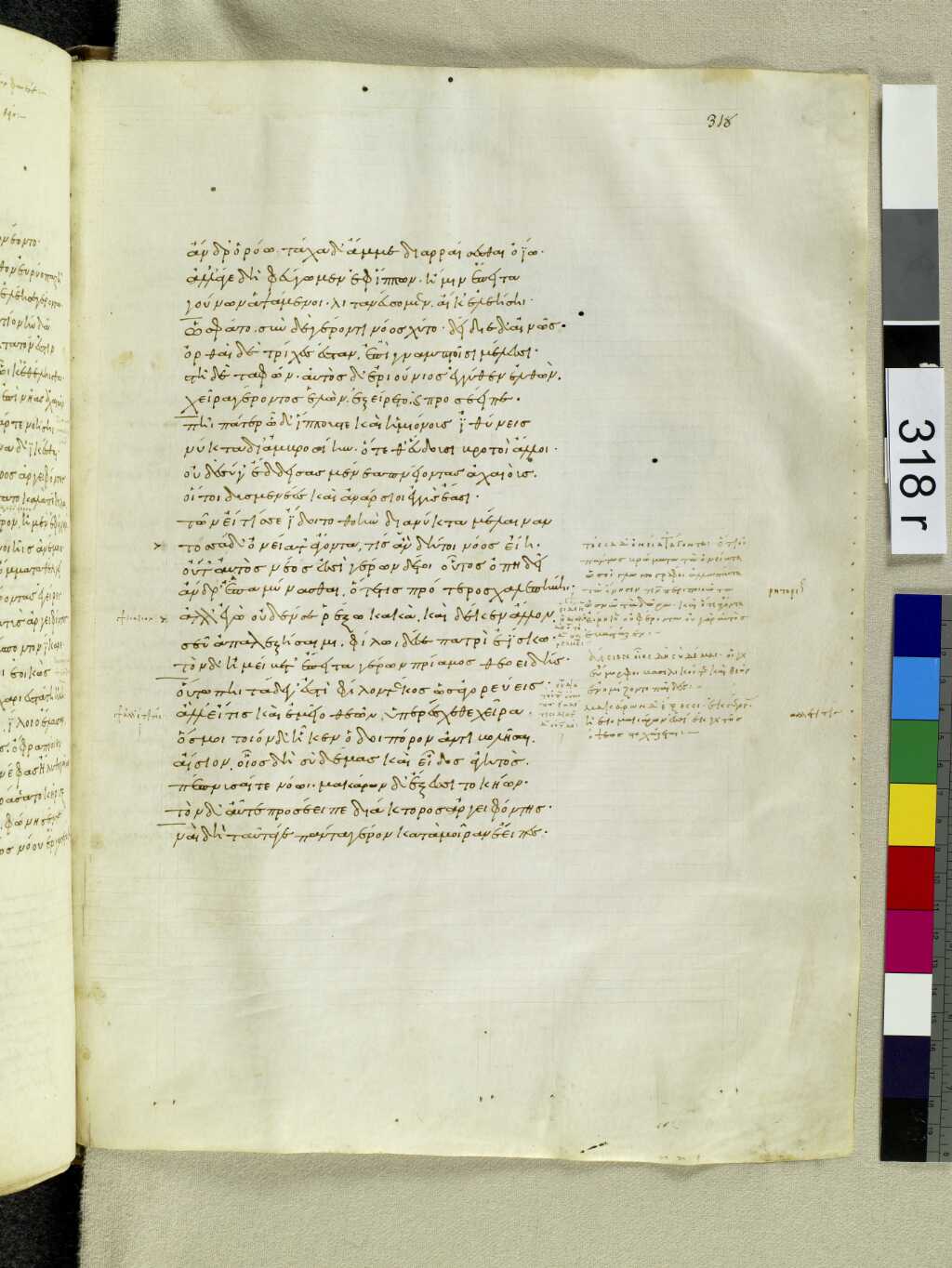
376αἴσιον, οἷος δὴ σὺ δέμας καὶ εἶδος ἀγητός, 377πέπνυσαί τε νόῳ, μακάρων δʼ ἔξεσσι τοκήων. 378τὸν δʼ αὖτε προσέειπε διάκτορος ἀργεϊφόντης· 379ναὶ δὴ ταῦτά γε πάντα γέρον κατὰ μοῖραν ἔειπες. 380ἀλλʼ ἄγε μοι τόδε εἰπὲ καὶ ἀτρεκέως κατάλεξον, 381ἠέ πῃ ἐκπέμπεις κειμήλια πολλὰ καὶ ἐσθλὰ 382ἄνδρας ἐς ἀλλοδαποὺς ἵνα περ τάδε τοι σόα μίμνῃ, 383ἦ ἤδη πάντες καταλείπετε Ἴλιον ἱρὴν 384δειδιότες· τοῖος γὰρ ἀνὴρ ὤριστος ὄλωλε 385σὸς πάϊς· οὐ μὲν γάρ τι μάχης ἐπιδεύετʼ Ἀχαιῶν. 386τὸν δʼ ἠμείβετʼ ἔπειτα γέρων Πρίαμος θεοειδής· 387τίς δὲ σύ ἐσσι φέριστε τέων δʼ ἔξεσσι τοκήων; 388ὥς μοι καλὰ τὸν οἶτον ἀπότμου παιδὸς ἔνισπες. 389τὸν δʼ αὖτε προσέειπε διάκτορος ἀργεϊφόντης· 390πειρᾷ ἐμεῖο γεραιὲ καὶ εἴρεαι Ἕκτορα δῖον. 391τὸν μὲν ἐγὼ μάλα πολλὰ μάχῃ ἔνι κυδιανείρῃ 392ὀφθαλμοῖσιν ὄπωπα, καὶ εὖτʼ ἐπὶ νηυσὶν ἐλάσσας 393Ἀργείους κτείνεσκε δαΐζων ὀξέϊ χαλκῷ· 394ἡμεῖς δʼ ἑσταότες θαυμάζομεν· οὐ γὰρ Ἀχιλλεὺς 395εἴα μάρνασθαι κεχολωμένος Ἀτρεΐωνι. 396τοῦ γὰρ ἐγὼ θεράπων, μία δʼ ἤγαγε νηῦς εὐεργής· 397Μυρμιδόνων δʼ ἔξειμι, πατὴρ δέ μοί ἐστι Πολύκτωρ. 398ἀφνειὸς μὲν ὅ γʼ ἐστί, γέρων δὲ δὴ ὡς σύ περ ὧδε, 399ἓξ δέ οἱ υἷες ἔασιν, ἐγὼ δέ οἱ ἕβδομός εἰμι· 400τῶν μέτα παλλόμενος κλήρῳ λάχον ἐνθάδʼ ἕπεσθαι.
As he spoke he laid his hand on the old man’s right wrist, in token that he should have no fear; thus then did Priam and his attendant sleep there in the forecourt, full of thought, while Achilles lay in an inner room of the house, with fair Briseis by his side.
And now both gods and mortals were fast asleep through the livelong night, but upon Mercury alone, the bringer of good luck, sleep could take no hold for he was thinking all the time how to get King Priam away from the ships without his being seen by the strong force of sentinels. He hovered therefore over Priam’s head and said, “Sir, now that Achilles has spared your life, you seem to have no fear about sleeping in the thick of your foes. You have paid a great ransom, and have received the body of your son; were you still alive and a prisoner the sons whom you have left at home would have to give three times as much to free you; and so it would be if Agamemnon and the other Achaeans were to know of your being here.”
When he heard this the old man was afraid and roused his servant. Mercury then yoked their horses and mules, and drove them quickly through the host so that no man perceived them. When they came to the ford of eddying Xanthus, begotten of immortal Jove, Mercury went back to high Olympus, and dawn in robe of saffron began to break over all the land. Priam and Idaeus then drove on toward the city lamenting and making moan, and the mules drew the body of Hector. No one neither man nor woman saw them, till Cassandra, fair as golden Venus standing on Pergamus, caught sight of her dear father in his chariot, and his servant that was the city’s herald with him. Then she saw him that was lying upon the bier, drawn by the mules, and with a loud cry she went about the city saying, “Come hither Trojans, men and women, and look on Hector; if ever you rejoiced to see him coming from battle when he was alive, look now on him that was the glory of our city and all our people.”
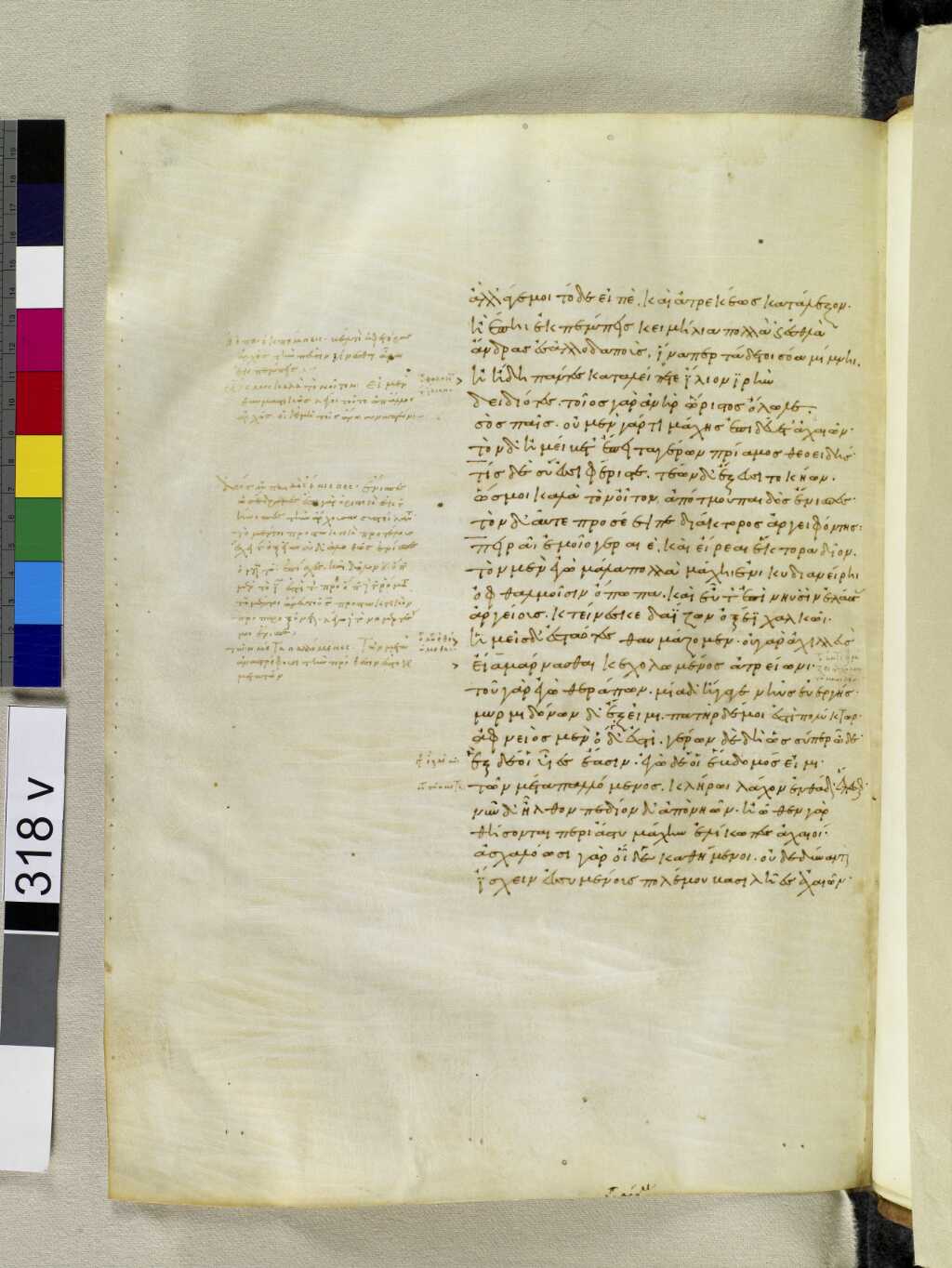
401νῦν δʼ ἦλθον πεδίον δʼ ἀπὸ νηῶν· ἠῶθεν γὰρ 402θήσονται περὶ ἄστυ μάχην ἑλίκωπες Ἀχαιοί. 403ἀσχαλόωσι γὰρ οἵδε καθήμενοι, οὐδὲ δύνανται 404ἴσχειν ἐσσυμένους πολέμου βασιλῆες Ἀχαιῶν. 405τὸν δʼ ἠμείβετʼ ἔπειτα γέρων Πρίαμος θεοειδής· 406εἰ μὲν δὴ θεράπων Πηληϊάδεω Ἀχιλῆος 407εἴς, ἄγε δή μοι πᾶσαν ἀληθείην κατάλεξον, 408ἢ ἔτι πὰρ νήεσσιν ἐμὸς πάϊς, ἦέ μιν ἤδη 409ᾗσι κυσὶν μελεϊστὶ ταμὼν προύθηκεν Ἀχιλλεύς. 410τὸν δʼ αὖτε προσέειπε διάκτορος ἀργεϊφόντης· 411ὦ γέρον οὔ πω τόν γε κύνες φάγον οὐδʼ οἰωνοί, 412ἀλλʼ ἔτι κεῖνος κεῖται Ἀχιλλῆος παρὰ νηῒ 413αὔτως ἐν κλισίῃσι· δυωδεκάτη δέ οἱ ἠὼς 414κειμένῳ, οὐδέ τί οἱ χρὼς σήπεται, οὐδέ μιν εὐλαὶ 415ἔσθουσʼ, αἵ ῥά τε φῶτας ἀρηϊφάτους κατέδουσιν. 416ἦ μέν μιν περὶ σῆμα ἑοῦ ἑτάροιο φίλοιο 417ἕλκει ἀκηδέστως ἠὼς ὅτε δῖα φανήῃ, 418οὐδέ μιν αἰσχύνει· θηοῖό κεν αὐτὸς ἐπελθὼν 419οἷον ἐερσήεις κεῖται, περὶ δʼ αἷμα νένιπται, 420οὐδέ ποθι μιαρός· σὺν δʼ ἕλκεα πάντα μέμυκεν 421ὅσσʼ ἐτύπη· πολέες γὰρ ἐν αὐτῷ χαλκὸν ἔλασσαν. 422ὥς τοι κήδονται μάκαρες θεοὶ υἷος ἑῆος 423καὶ νέκυός περ ἐόντος, ἐπεί σφι φίλος περὶ κῆρι. 424ὣς φάτο, γήθησεν δʼ ὃ γέρων, καὶ ἀμείβετο μύθῳ· 425ὦ τέκος, ἦ ῥʼ ἀγαθὸν καὶ ἐναίσιμα δῶρα διδοῦναι
At this there was not man nor woman left in the city, so great a sorrow had possessed them. Hard by the gates they met Priam as he was bringing in the body. Hector’s wife and his mother were the first to mourn him: they flew towards the waggon and laid their hands upon his head, while the crowd stood weeping round them. They would have stayed before the gates, weeping and lamenting the livelong day to the going down of the sun, had not Priam spoken to them from the chariot and said, “Make way for the mules to pass you. Afterwards when I have taken the body home you shall have your fill of weeping.”
On this the people stood asunder, and made a way for the waggon. When they had borne the body within the house they laid it upon a bed and seated minstrels round it to lead the dirge, whereon the women joined in the sad music of their lament. Foremost among them all Andromache led their wailing as she clasped the head of mighty Hector in her embrace. “Husband,” she cried, “you have died young, and leave me in your house a widow; he of whom we are the ill-starred parents is still a mere child, and I fear he may not reach manhood. Ere he can do so our city will be razed and overthrown, for you who watched over it are no more—you who were its saviour, the guardian of our wives and children. Our women will be carried away captives to the ships, and I among them; while you, my child, who will be with me will be put to some unseemly tasks, working for a cruel master. Or, may be, some Achaean will hurl you (O miserable death) from our walls, to avenge some brother, son, or father whom Hector slew; many of them have indeed bitten the dust at his hands, for your father’s hand in battle was no light one. Therefore do the people mourn him. You have left, O Hector, sorrow unutterable to your parents, and my own grief is greatest of all, for you did not stretch forth your arms and embrace me as you lay dying, nor say to me any words that might have lived with me in my tears night and day for evermore.”
Bitterly did she weep the while, and the women joined in her lament. Hecuba in her turn took up the strains of woe. “Hector,” she cried, “dearest to me of all my children. So long as you were alive the gods loved you well, and even in death they have not been utterly unmindful of you; for when Achilles took any other of my sons, he would sell him beyond the seas, to Samos Imbrus or rugged Lemnos; and when he had slain you too with his sword, many a time did he drag you round the sepulchre of his comrade—though this could not give him life—yet here you lie all fresh as dew, and comely as one whom Apollo has slain with his painless shafts.”
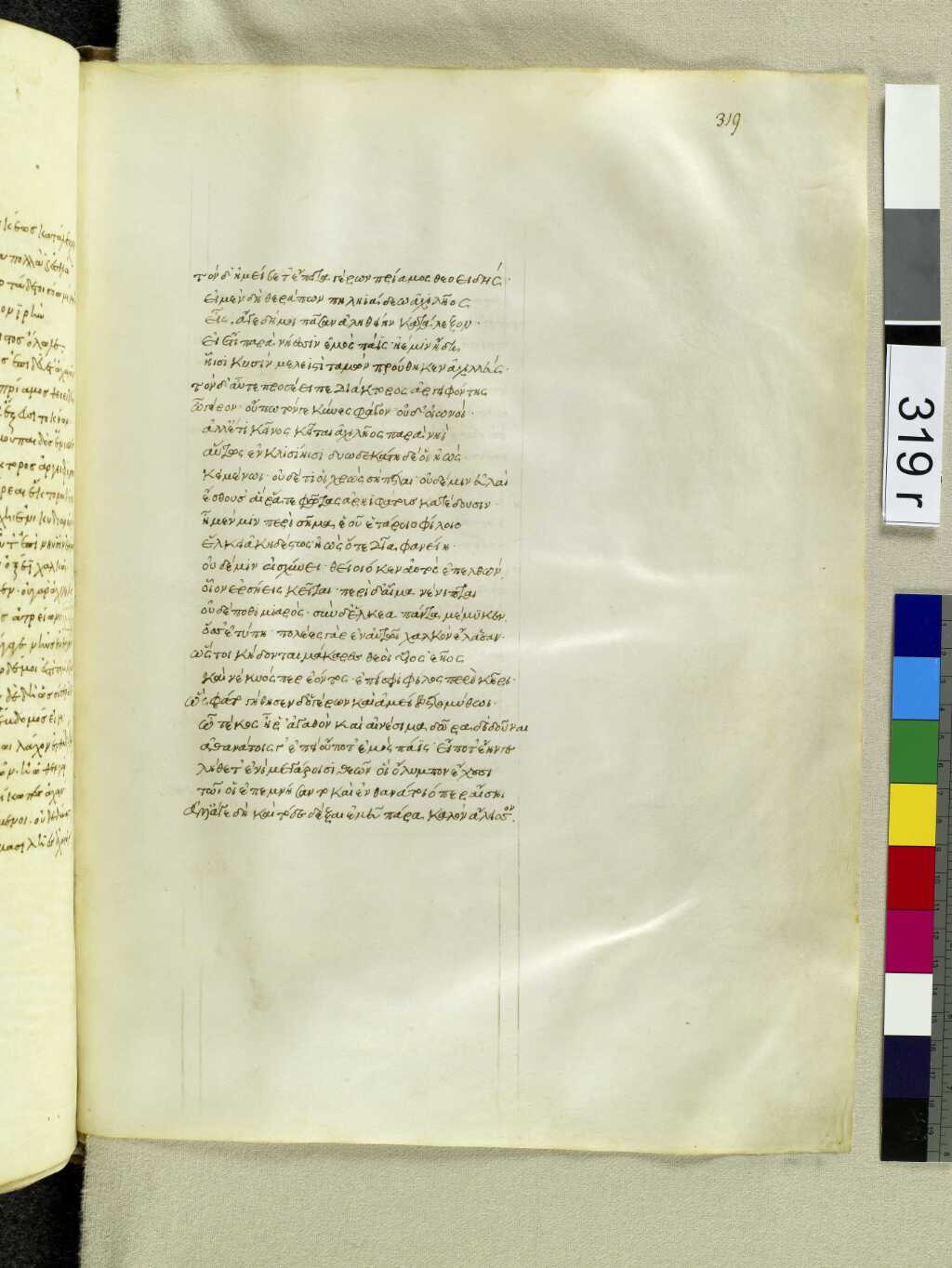
426ἀθανάτοις, ἐπεὶ οὔ ποτʼ ἐμὸς πάϊς, εἴ ποτʼ ἔην γε, 427λήθετʼ ἐνὶ μεγάροισι θεῶν οἳ Ὄλυμπον ἔχουσι· 428τώ οἱ ἀπεμνήσαντο καὶ ἐν θανάτοιό περ αἴσῃ. 429ἀλλʼ ἄγε δὴ τόδε δέξαι ἐμεῦ πάρα καλὸν ἄλεισον, 430αὐτόν τε ῥῦσαι, πέμψον δέ με σύν γε θεοῖσιν, 431ὄφρά κεν ἐς κλισίην Πηληϊάδεω ἀφίκωμαι. 432τὸν δʼ αὖτε προσέειπε διάκτορος ἀργεϊφόντης· 433πειρᾷ ἐμεῖο γεραιὲ νεωτέρου, οὐδέ με πείσεις, 434ὅς με κέλῃ σέο δῶρα παρὲξ Ἀχιλῆα δέχεσθαι. 435τὸν μὲν ἐγὼ δείδοικα καὶ αἰδέομαι περὶ κῆρι 436συλεύειν, μή μοί τι κακὸν μετόπισθε γένηται. 437σοὶ δʼ ἂν ἐγὼ πομπὸς καί κε κλυτὸν Ἄργος ἱκοίμην, 438ἐνδυκέως ἐν νηῒ θοῇ ἢ πεζὸς ὁμαρτέων· 439οὐκ ἄν τίς τοι πομπὸν ὀνοσσάμενος μαχέσαιτο. 440ἦ καὶ ἀναΐξας ἐριούνιος ἅρμα καὶ ἵππους 441καρπαλίμως μάστιγα καὶ ἡνία λάζετο χερσίν, 442ἐν δʼ ἔπνευσʼ ἵπποισι καὶ ἡμιόνοις μένος ἠΰ. 443ἀλλʼ ὅτε δὴ πύργους τε νεῶν καὶ τάφρον ἵκοντο, 444οἳ δὲ νέον περὶ δόρπα φυλακτῆρες πονέοντο, 445τοῖσι δʼ ἐφʼ ὕπνον ἔχευε διάκτορος ἀργεϊφόντης 446πᾶσιν, ἄφαρ δʼ ὤϊξε πύλας καὶ ἀπῶσεν ὀχῆας, 447ἐς δʼ ἄγαγε Πρίαμόν τε καὶ ἀγλαὰ δῶρʼ ἐπʼ ἀπήνης. 448ἀλλʼ ὅτε δὴ κλισίην Πηληϊάδεω ἀφίκοντο 449ὑψηλήν, τὴν Μυρμιδόνες ποίησαν ἄνακτι 450δοῦρʼ ἐλάτης κέρσαντες· ἀτὰρ καθύπερθεν ἔρεψαν
Thus did she too speak through her tears with bitter moan, and then Helen for a third time took up the strain of lamentation. “Hector,” said she, “dearest of all my brothers-in-law—for I am wife to Alexandrus who brought me hither to Troy—would that I had died ere he did so—twenty years are come and gone since I left my home and came from over the sea, but I have never heard one word of insult or unkindness from you. When another would chide with me, as it might be one of your brothers or sisters or of your brothers’ wives, or my mother-in-law—for Priam was as kind to me as though he were my own father—you would rebuke and check them with words of gentleness and goodwill. Therefore my tears flow both for you and for my unhappy self, for there is no one else in Troy who is kind to me, but all shrink and shudder as they go by me.”
She wept as she spoke and the vast crowd that was gathered round her joined in her lament. Then King Priam spoke to them saying, “Bring wood, O Trojans, to the city, and fear no cunning ambush of the Argives, for Achilles when he dismissed me from the ships gave me his word that they should not attack us until the morning of the twelfth day.”
Forthwith they yoked their oxen and mules and gathered together before the city. Nine days long did they bring in great heaps of wood, and on the morning of the tenth day with many tears they took brave Hector forth, laid his dead body upon the summit of the pile, and set the fire thereto. Then when the child of morning, rosy-fingered dawn, appeared on the eleventh day, the people again assembled, round the pyre of mighty Hector. When they were got together, they first quenched the fire with wine wherever it was burning, and then his brothers and comrades with many a bitter tear gathered his white bones, wrapped them in soft robes of purple, and laid them in a golden urn, which they placed in a grave and covered over with large stones set close together. Then they built a barrow hurriedly over it keeping guard on every side lest the Achaeans should attack them before they had finished. When they had heaped up the barrow they went back again into the city, and being well assembled they held high feast in the house of Priam their king.
Thus, then, did they celebrate the funeral of Hector tamer of horses.
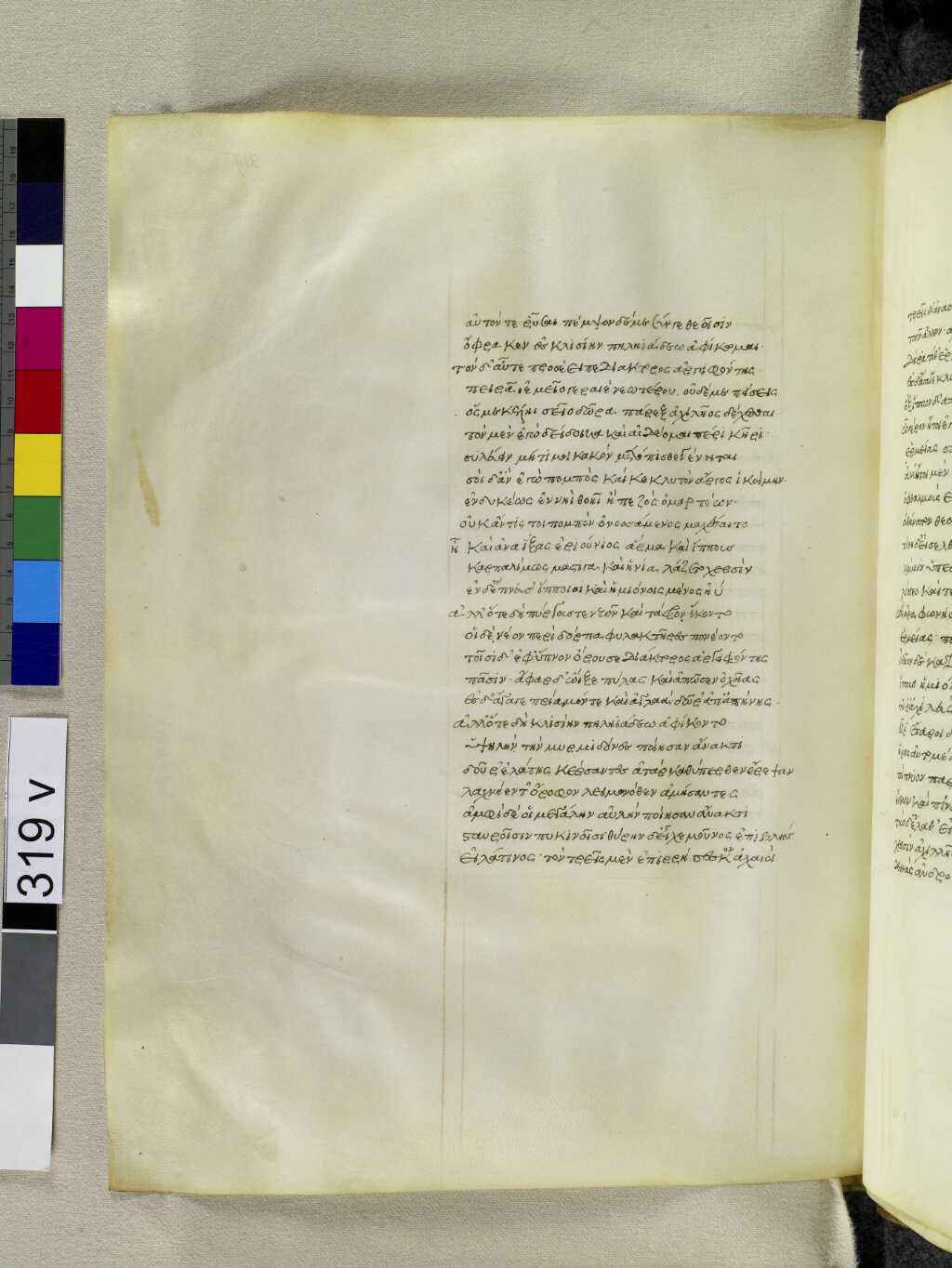
451λαχνήεντʼ ὄροφον λειμωνόθεν ἀμήσαντες· 452ἀμφὶ δέ οἱ μεγάλην αὐλὴν ποίησαν ἄνακτι 453σταυροῖσιν πυκινοῖσι· θύρην δʼ ἔχε μοῦνος ἐπιβλὴς 454εἰλάτινος, τὸν τρεῖς μὲν ἐπιρρήσσεσκον Ἀχαιοί, 455τρεῖς δʼ ἀναοίγεσκον μεγάλην κληῗδα θυράων 456τῶν ἄλλων· Ἀχιλεὺς δʼ ἄρʼ ἐπιρρήσσεσκε καὶ οἶος· 457δή ῥα τόθʼ Ἑρμείας ἐριούνιος ᾦξε γέροντι, 458ἐς δʼ ἄγαγε κλυτὰ δῶρα ποδώκεϊ Πηλεΐωνι, 459ἐξ ἵππων δʼ ἀπέβαινεν ἐπὶ χθόνα φώνησέν τε· 460ὦ γέρον ἤτοι ἐγὼ θεὸς ἄμβροτος εἰλήλουθα 461Ἑρμείας· σοὶ γάρ με πατὴρ ἅμα πομπὸν ὄπασσεν. 462ἀλλʼ ἤτοι μὲν ἐγὼ πάλιν εἴσομαι, οὐδʼ Ἀχιλῆος 463ὀφθαλμοὺς εἴσειμι· νεμεσσητὸν δέ κεν εἴη 464ἀθάνατον θεὸν ὧδε βροτοὺς ἀγαπαζέμεν ἄντην· 465τύνη δʼ εἰσελθὼν λαβὲ γούνατα Πηλεΐωνος, 466καί μιν ὑπὲρ πατρὸς καὶ μητέρος ἠϋκόμοιο 467λίσσεο καὶ τέκεος, ἵνα οἱ σὺν θυμὸν ὀρίνῃς. 468ὣς ἄρα φωνήσας ἀπέβη πρὸς μακρὸν Ὄλυμπον 469Ἑρμείας· Πρίαμος δʼ ἐξ ἵππων ἆλτο χαμᾶζε, 470Ἰδαῖον δὲ κατʼ αὖθι λίπεν· ὃ δὲ μίμνεν ἐρύκων 471ἵππους ἡμιόνους τε· γέρων δʼ ἰθὺς κίεν οἴκου, 472τῇ ῥʼ Ἀχιλεὺς ἵζεσκε Διῒ φίλος· ἐν δέ μιν αὐτὸν 473εὗρʼ, ἕταροι δʼ ἀπάνευθε καθήατο· τὼ δὲ δύʼ οἴω 474ἥρως Αὐτομέδων τε καὶ Ἄλκιμος ὄζος Ἄρηος 475ποίπνυον παρεόντε· νέον δʼ ἀπέληγεν ἐδωδῆς
*** END OF THE PROJECT GUTENBERG EBOOK THE ILIAD ***
Updated editions will replace the previous one—the old editions will be renamed.
Creating the works from print editions not protected by U.S. copyright law means that no one owns a United States copyright in these works, so the Foundation (and you!) can copy and distribute it in the United States without permission and without paying copyright royalties. Special rules, set forth in the General Terms of Use part of this license, apply to copying and distributing Project Gutenberg™ electronic works to protect the PROJECT GUTENBERG™ concept and trademark. Project Gutenberg is a registered trademark, and may not be used if you charge for an eBook, except by following the terms of the trademark license, including paying royalties for use of the Project Gutenberg trademark. If you do not charge anything for copies of this eBook, complying with the trademark license is very easy. You may use this eBook for nearly any purpose such as creation of derivative works, reports, performances and research. Project Gutenberg eBooks may be modified and printed and given away—you may do practically ANYTHING in the United States with eBooks not protected by U.S. copyright law. Redistribution is subject to the trademark license, especially commercial redistribution.
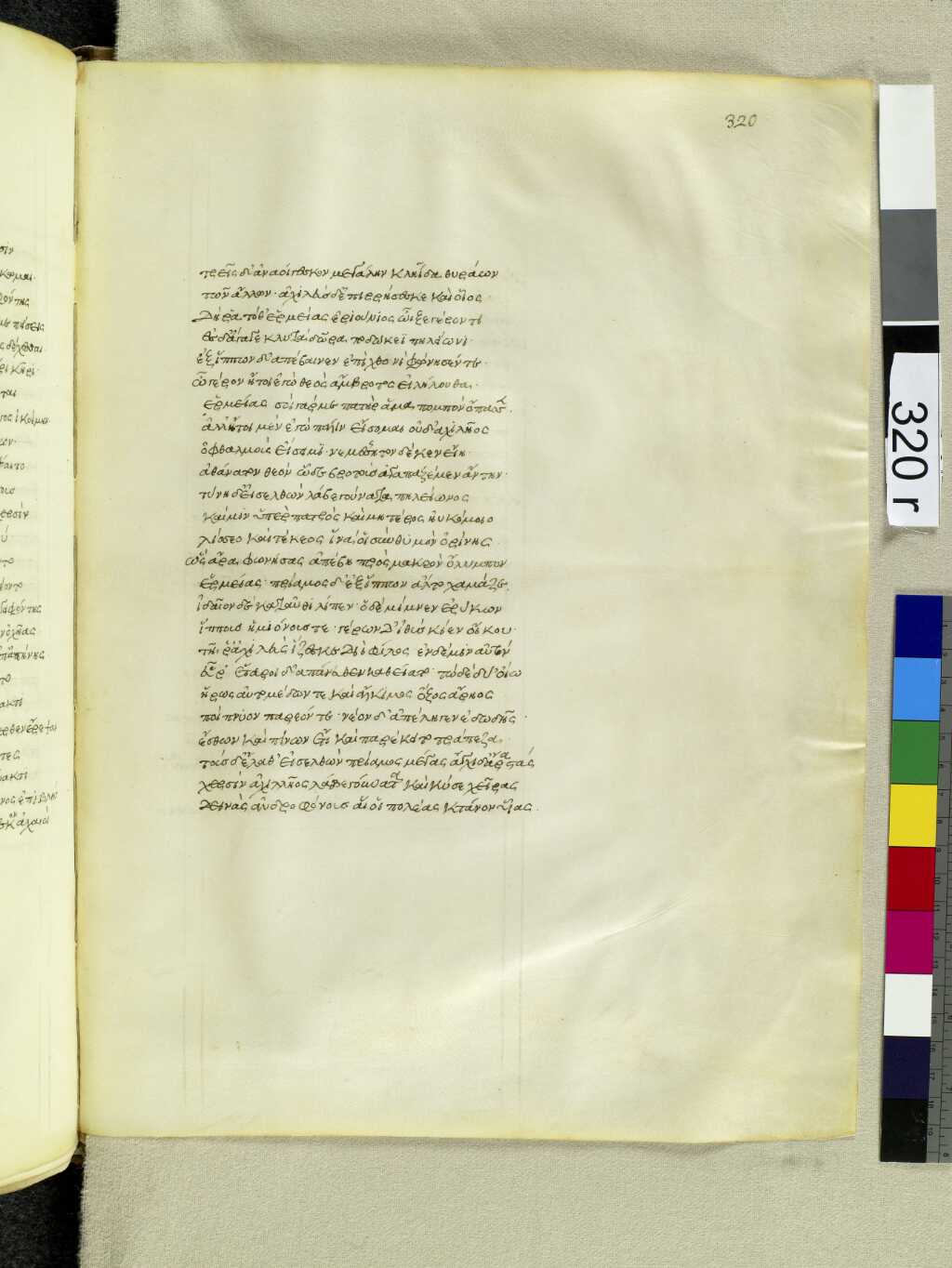
476ἔσθων καὶ πίνων· ἔτι καὶ παρέκειτο τράπεζα. 477τοὺς δʼ ἔλαθʼ εἰσελθὼν Πρίαμος μέγας, ἄγχι δʼ ἄρα στὰς 478χερσὶν Ἀχιλλῆος λάβε γούνατα καὶ κύσε χεῖρας 479δεινὰς ἀνδροφόνους, αἵ οἱ πολέας κτάνον υἷας. 480ὡς δʼ ὅτʼ ἂν ἄνδρʼ ἄτη πυκινὴ λάβῃ, ὅς τʼ ἐνὶ πάτρῃ 481φῶτα κατακτείνας ἄλλων ἐξίκετο δῆμον 482ἀνδρὸς ἐς ἀφνειοῦ, θάμβος δʼ ἔχει εἰσορόωντας, 483ὣς Ἀχιλεὺς θάμβησεν ἰδὼν Πρίαμον θεοειδέα· 484θάμβησαν δὲ καὶ ἄλλοι, ἐς ἀλλήλους δὲ ἴδοντο. 485τὸν καὶ λισσόμενος Πρίαμος πρὸς μῦθον ἔειπε· 486μνῆσαι πατρὸς σοῖο θεοῖς ἐπιείκελʼ Ἀχιλλεῦ, 487τηλίκου ὥς περ ἐγών, ὀλοῷ ἐπὶ γήραος οὐδῷ· 488καὶ μέν που κεῖνον περιναιέται ἀμφὶς ἐόντες 489τείρουσʼ, οὐδέ τίς ἐστιν ἀρὴν καὶ λοιγὸν ἀμῦναι. 490ἀλλʼ ἤτοι κεῖνός γε σέθεν ζώοντος ἀκούων 491χαίρει τʼ ἐν θυμῷ, ἐπί τʼ ἔλπεται ἤματα πάντα 492ὄψεσθαι φίλον υἱὸν ἀπὸ Τροίηθεν ἰόντα· 493αὐτὰρ ἐγὼ πανάποτμος, ἐπεὶ τέκον υἷας ἀρίστους 494Τροίῃ ἐν εὐρείῃ, τῶν δʼ οὔ τινά φημι λελεῖφθαι. 495πεντήκοντά μοι ἦσαν ὅτʼ ἤλυθον υἷες Ἀχαιῶν· 496ἐννεακαίδεκα μέν μοι ἰῆς ἐκ νηδύος ἦσαν, 497τοὺς δʼ ἄλλους μοι ἔτικτον ἐνὶ μεγάροισι γυναῖκες. 498τῶν μὲν πολλῶν θοῦρος Ἄρης ὑπὸ γούνατʼ ἔλυσεν· 499ὃς δέ μοι οἶος ἔην, εἴρυτο δὲ ἄστυ καὶ αὐτούς, 500τὸν σὺ πρῴην κτεῖνας ἀμυνόμενον περὶ πάτρης
THE FULL PROJECT GUTENBERG™ LICENSE
PLEASE READ THIS BEFORE YOU DISTRIBUTE OR USE THIS WORK
To protect the Project Gutenberg™ mission of promoting the free distribution of electronic works, by using or distributing this work (or any other work associated in any way with the phrase “Project Gutenberg”), you agree to comply with all the terms of the Full Project Gutenberg License available with this file or online at www.gutenberg.org/license.
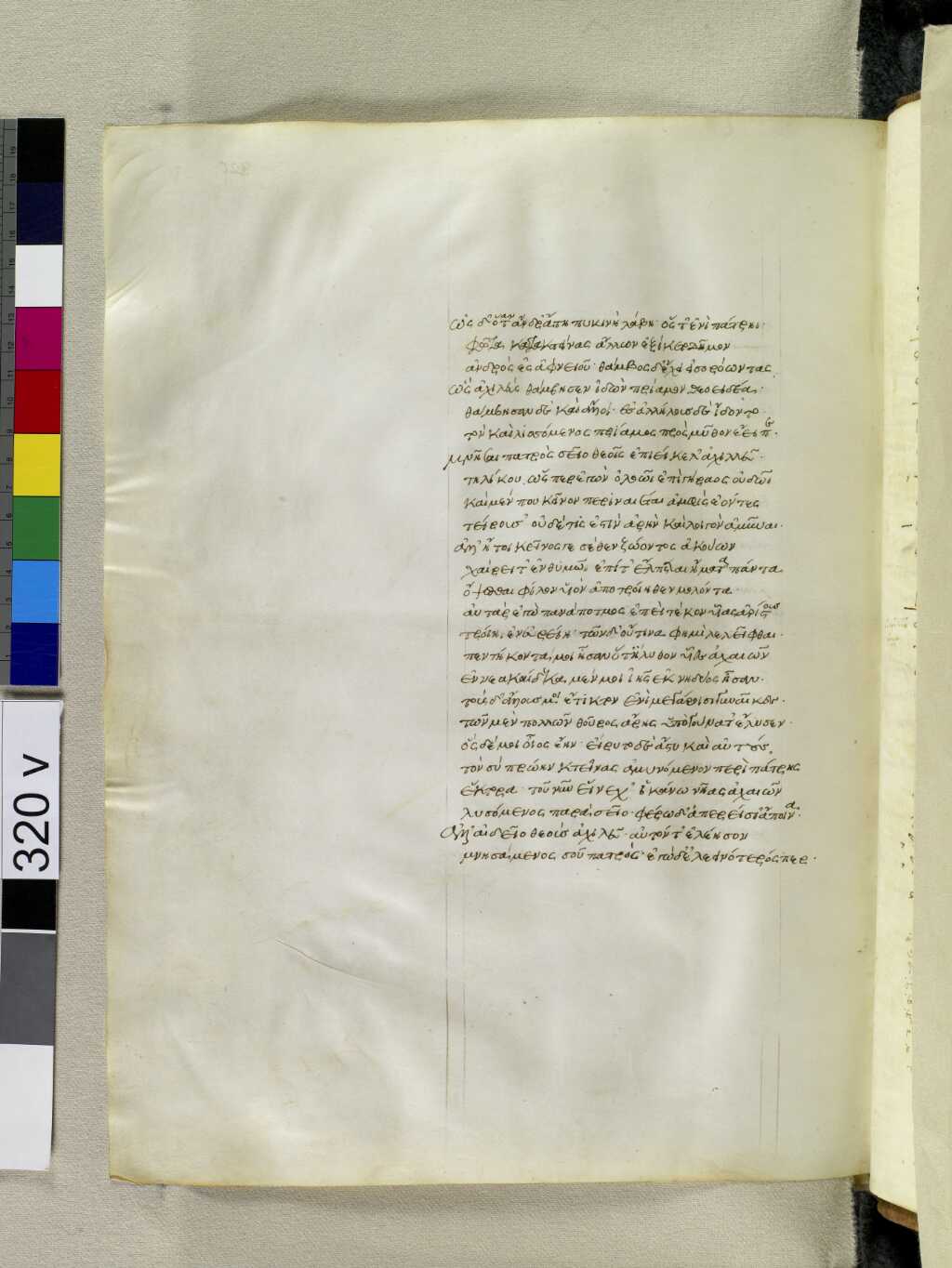
501Ἕκτορα· τοῦ νῦν εἵνεχʼ ἱκάνω νῆας Ἀχαιῶν 502λυσόμενος παρὰ σεῖο, φέρω δʼ ἀπερείσιʼ ἄποινα. 503ἀλλʼ αἰδεῖο θεοὺς Ἀχιλεῦ, αὐτόν τʼ ἐλέησον 504μνησάμενος σοῦ πατρός· ἐγὼ δʼ ἐλεεινότερός περ, 505ἔτλην δʼ οἷʼ οὔ πώ τις ἐπιχθόνιος βροτὸς ἄλλος, 506ἀνδρὸς παιδοφόνοιο ποτὶ στόμα χεῖρʼ ὀρέγεσθαι. 507ὣς φάτο, τῷ δʼ ἄρα πατρὸς ὑφʼ ἵμερον ὦρσε γόοιο· 508ἁψάμενος δʼ ἄρα χειρὸς ἀπώσατο ἦκα γέροντα. 509τὼ δὲ μνησαμένω ὃ μὲν Ἕκτορος ἀνδροφόνοιο 510κλαῖʼ ἁδινὰ προπάροιθε ποδῶν Ἀχιλῆος ἐλυσθείς, 511αὐτὰρ Ἀχιλλεὺς κλαῖεν ἑὸν πατέρʼ, ἄλλοτε δʼ αὖτε 512Πάτροκλον· τῶν δὲ στοναχὴ κατὰ δώματʼ ὀρώρει. 513αὐτὰρ ἐπεί ῥα γόοιο τετάρπετο δῖος Ἀχιλλεύς, 514καί οἱ ἀπὸ πραπίδων ἦλθʼ ἵμερος ἠδʼ ἀπὸ γυίων, 515αὐτίκʼ ἀπὸ θρόνου ὦρτο, γέροντα δὲ χειρὸς ἀνίστη 516οἰκτίρων πολιόν τε κάρη πολιόν τε γένειον, 517καί μιν φωνήσας ἔπεα πτερόεντα προσηύδα· 518ἆ δείλʼ, ἦ δὴ πολλὰ κάκʼ ἄνσχεο σὸν κατὰ θυμόν. 519πῶς ἔτλης ἐπὶ νῆας Ἀχαιῶν ἐλθέμεν οἶος 520ἀνδρὸς ἐς ὀφθαλμοὺς ὅς τοι πολέας τε καὶ ἐσθλοὺς 521υἱέας ἐξενάριξα; σιδήρειόν νύ τοι ἦτορ. 522ἀλλʼ ἄγε δὴ κατʼ ἄρʼ ἕζευ ἐπὶ θρόνου, ἄλγεα δʼ ἔμπης 523ἐν θυμῷ κατακεῖσθαι ἐάσομεν ἀχνύμενοί περ· 524οὐ γάρ τις πρῆξις πέλεται κρυεροῖο γόοιο· 525ὡς γὰρ ἐπεκλώσαντο θεοὶ δειλοῖσι βροτοῖσι
Section 1. General Terms of Use and Redistributing Project Gutenberg electronic works
1.A. By reading or using any part of this Project Gutenberg electronic work, you indicate that you have read, understand, agree to and accept all the terms of this license and intellectual property (trademark/copyright) agreement. If you do not agree to abide by all the terms of this agreement, you must cease using and return or destroy all copies of Project Gutenberg electronic works in your possession. If you paid a fee for obtaining a copy of or access to a Project Gutenberg electronic work and you do not agree to be bound by the terms of this agreement, you may obtain a refund from the person or entity to whom you paid the fee as set forth in paragraph 1.E.8.
1.B. “Project Gutenberg” is a registered trademark. It may only be used on or associated in any way with an electronic work by people who agree to be bound by the terms of this agreement. There are a few things that you can do with most Project Gutenberg electronic works even without complying with the full terms of this agreement. See paragraph 1.C below. There are a lot of things you can do with Project Gutenberg electronic works if you follow the terms of this agreement and help preserve free future access to Project Gutenberg electronic works. See paragraph 1.E below.
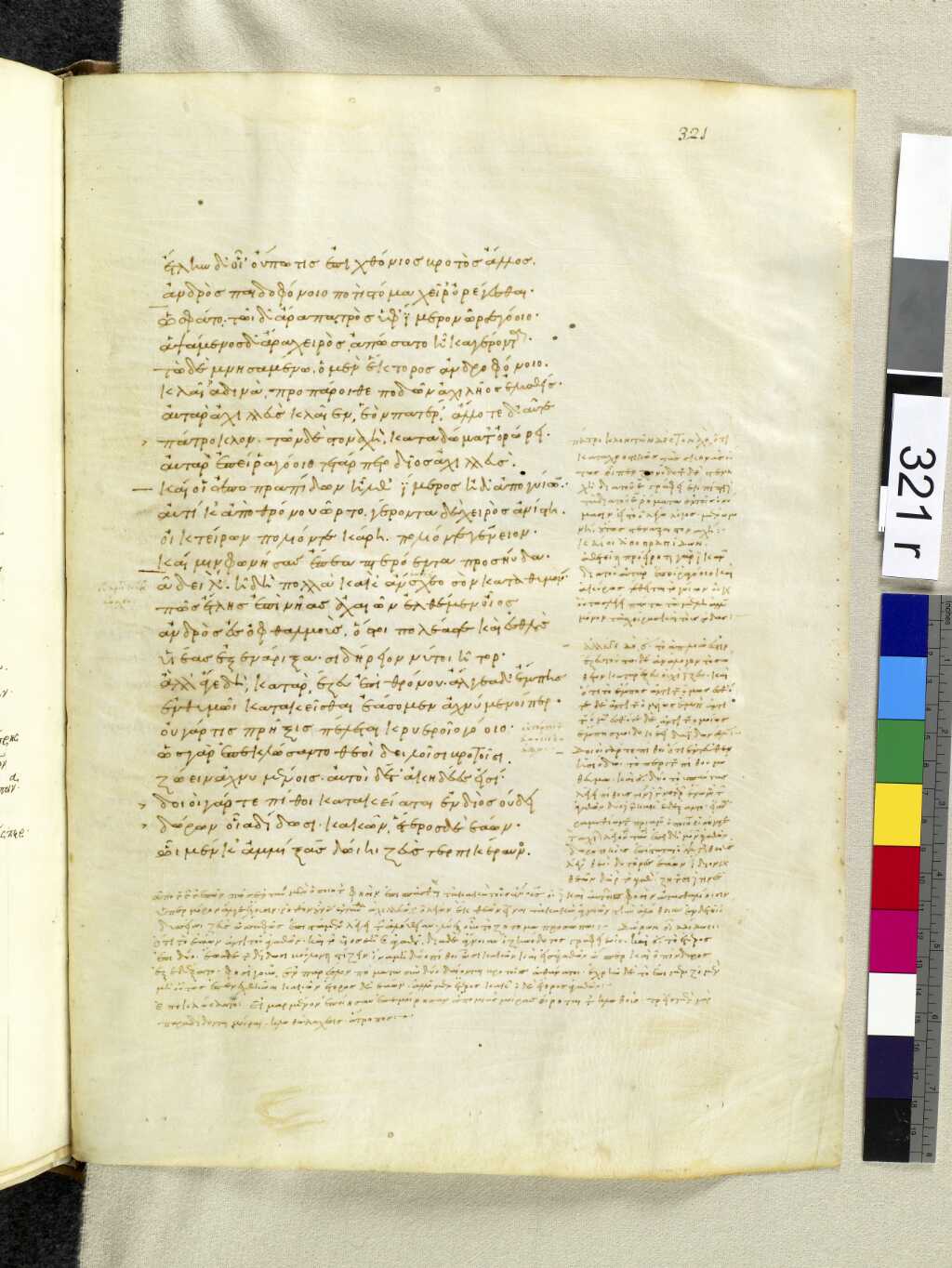
526ζώειν ἀχνυμένοις· αὐτοὶ δέ τʼ ἀκηδέες εἰσί. 527δοιοὶ γάρ τε πίθοι κατακείαται ἐν Διὸς οὔδει 528δώρων οἷα δίδωσι κακῶν, ἕτερος δὲ ἑάων· 529ᾧ μέν κʼ ἀμμίξας δώῃ Ζεὺς τερπικέραυνος, 530ἄλλοτε μέν τε κακῷ ὅ γε κύρεται, ἄλλοτε δʼ ἐσθλῷ· 531ᾧ δέ κε τῶν λυγρῶν δώῃ, λωβητὸν ἔθηκε, 532καί ἑ κακὴ βούβρωστις ἐπὶ χθόνα δῖαν ἐλαύνει, 533φοιτᾷ δʼ οὔτε θεοῖσι τετιμένος οὔτε βροτοῖσιν. 534ὣς μὲν καὶ Πηλῆϊ θεοὶ δόσαν ἀγλαὰ δῶρα 535ἐκ γενετῆς· πάντας γὰρ ἐπʼ ἀνθρώπους ἐκέκαστο 536ὄλβῳ τε πλούτῳ τε, ἄνασσε δὲ Μυρμιδόνεσσι, 537καί οἱ θνητῷ ἐόντι θεὰν ποίησαν ἄκοιτιν. 538ἀλλʼ ἐπὶ καὶ τῷ θῆκε θεὸς κακόν, ὅττί οἱ οὔ τι 539παίδων ἐν μεγάροισι γονὴ γένετο κρειόντων, 540ἀλλʼ ἕνα παῖδα τέκεν παναώριον· οὐδέ νυ τόν γε 541γηράσκοντα κομίζω, ἐπεὶ μάλα τηλόθι πάτρης 542ἧμαι ἐνὶ Τροίῃ, σέ τε κήδων ἠδὲ σὰ τέκνα. 543καὶ σὲ γέρον τὸ πρὶν μὲν ἀκούομεν ὄλβιον εἶναι· 544ὅσσον Λέσβος ἄνω Μάκαρος ἕδος ἐντὸς ἐέργει 545καὶ Φρυγίη καθύπερθε καὶ Ἑλλήσποντος ἀπείρων, 546τῶν σε γέρον πλούτῳ τε καὶ υἱάσι φασὶ κεκάσθαι. 547αὐτὰρ ἐπεί τοι πῆμα τόδʼ ἤγαγον Οὐρανίωνες 548αἰεί τοι περὶ ἄστυ μάχαι τʼ ἀνδροκτασίαι τε. 549ἄνσχεο, μὴ δʼ ἀλίαστον ὀδύρεο σὸν κατὰ θυμόν· 550οὐ γάρ τι πρήξεις ἀκαχήμενος υἷος ἑῆος,
1.C. The Project Gutenberg Literary Archive Foundation (“the Foundation” or PGLAF), owns a compilation copyright in the collection of Project Gutenberg electronic works. Nearly all the individual works in the collection are in the public domain in the United States. If an individual work is unprotected by copyright law in the United States and you are located in the United States, we do not claim a right to prevent you from copying, distributing, performing, displaying or creating derivative works based on the work as long as all references to Project Gutenberg are removed. Of course, we hope that you will support the Project Gutenberg mission of promoting free access to electronic works by freely sharing Project Gutenberg works in compliance with the terms of this agreement for keeping the Project Gutenberg name associated with the work. You can easily comply with the terms of this agreement by keeping this work in the same format with its attached full Project Gutenberg License when you share it without charge with others.
1.D. The copyright laws of the place where you are located also govern what you can do with this work. Copyright laws in most countries are in a constant state of change. If you are outside the United States, check the laws of your country in addition to the terms of this agreement before downloading, copying, displaying, performing, distributing or creating derivative works based on this work or any other Project Gutenberg work. The Foundation makes no representations concerning the copyright status of any work in any country other than the United States.
1.E. Unless you have removed all references to Project Gutenberg:
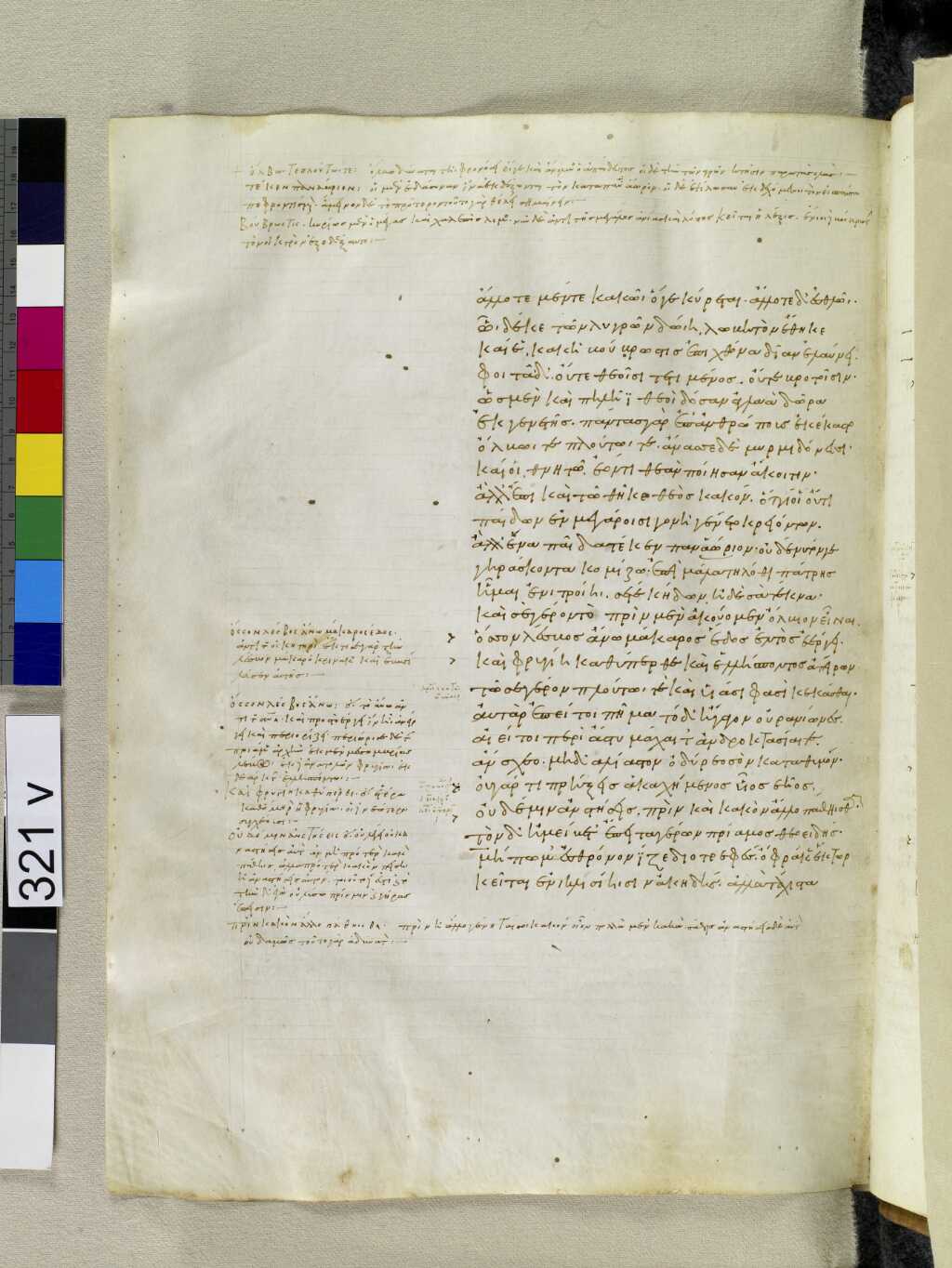
551οὐδέ μιν ἀνστήσεις, πρὶν καὶ κακὸν ἄλλο πάθῃσθα. 552τὸν δʼ ἠμείβετʼ ἔπειτα γέρων Πρίαμος θεοειδής· 553μή πω μʼ ἐς θρόνον ἵζε διοτρεφὲς ὄφρά κεν Ἕκτωρ 554κεῖται ἐνὶ κλισίῃσιν ἀκηδής, ἀλλὰ τάχιστα 555λῦσον ἵνʼ ὀφθαλμοῖσιν ἴδω· σὺ δὲ δέξαι ἄποινα 556πολλά, τά τοι φέρομεν· σὺ δὲ τῶνδʼ ἀπόναιο, καὶ ἔλθοις 557σὴν ἐς πατρίδα γαῖαν, ἐπεί με πρῶτον ἔασας 558αὐτόν τε ζώειν καὶ ὁρᾶν φάος ἠελίοιο. 559τὸν δʼ ἄρʼ ὑπόδρα ἰδὼν προσέφη πόδας ὠκὺς Ἀχιλλεύς· 560μηκέτι νῦν μʼ ἐρέθιζε γέρον· νοέω δὲ καὶ αὐτὸς 561Ἕκτορά τοι λῦσαι, Διόθεν δέ μοι ἄγγελος ἦλθε 562μήτηρ, ἥ μʼ ἔτεκεν, θυγάτηρ ἁλίοιο γέροντος. 563καὶ δέ σε γιγνώσκω Πρίαμε φρεσίν, οὐδέ με λήθεις, 564ὅττι θεῶν τίς σʼ ἦγε θοὰς ἐπὶ νῆας Ἀχαιῶν. 565οὐ γάρ κε τλαίη βροτὸς ἐλθέμεν, οὐδὲ μάλʼ ἡβῶν, 566ἐς στρατόν· οὐδὲ γὰρ ἂν φυλάκους λάθοι, οὐδέ κʼ ὀχῆα 567ῥεῖα μετοχλίσσειε θυράων ἡμετεράων. 568τὼ νῦν μή μοι μᾶλλον ἐν ἄλγεσι θυμὸν ὀρίνῃς, 569μή σε γέρον οὐδʼ αὐτὸν ἐνὶ κλισίῃσιν ἐάσω 570καὶ ἱκέτην περ ἐόντα, Διὸς δʼ ἀλίτωμαι ἐφετμάς. 571ὣς ἔφατʼ, ἔδεισεν δʼ ὃ γέρων καὶ ἐπείθετο μύθῳ. 572Πηλεΐδης δʼ οἴκοιο λέων ὣς ἆλτο θύραζε 573οὐκ οἶος, ἅμα τῷ γε δύω θεράποντες ἕποντο 574ἥρως Αὐτομέδων ἠδʼ Ἄλκιμος, οὕς ῥα μάλιστα 575τῖʼ Ἀχιλεὺς ἑτάρων μετὰ Πάτροκλόν γε θανόντα,
1.E.1. The following sentence, with active links to, or other immediate access to, the full Project Gutenberg License must appear prominently whenever any copy of a Project Gutenberg work (any work on which the phrase “Project Gutenberg” appears, or with which the phrase “Project Gutenberg” is associated) is accessed, displayed, performed, viewed, copied or distributed:
This eBook is for the use of anyone anywhere in the United States and most other parts of the world at no cost and with almost no restrictions whatsoever. You may copy it, give it away or re-use it under the terms of the Project Gutenberg™ License included with this eBook or online at www.gutenberg.org. If you are not located in the United States, you will have to check the laws of the country where you are located before using this eBook. 1.E.2. If an individual Project Gutenberg electronic work is derived from texts not protected by U.S. copyright law (does not contain a notice indicating that it is posted with permission of the copyright holder), the work can be copied and distributed to anyone in the United States without paying any fees or charges. If you are redistributing or providing access to a work with the phrase “Project Gutenberg” associated with or appearing on the work, you must comply either with the requirements of paragraphs 1.E.1 through 1.E.7 or obtain permission for the use of the work and the Project Gutenberg trademark as set forth in paragraphs 1.E.8 or 1.E.9.
1.E.3. If an individual Project Gutenberg electronic work is posted with the permission of the copyright holder, your use and distribution must comply with both paragraphs 1.E.1 through 1.E.7 and any additional terms imposed by the copyright holder. Additional terms will be linked to the Project Gutenberg License for all works posted with the permission of the copyright holder found at the beginning of this work.
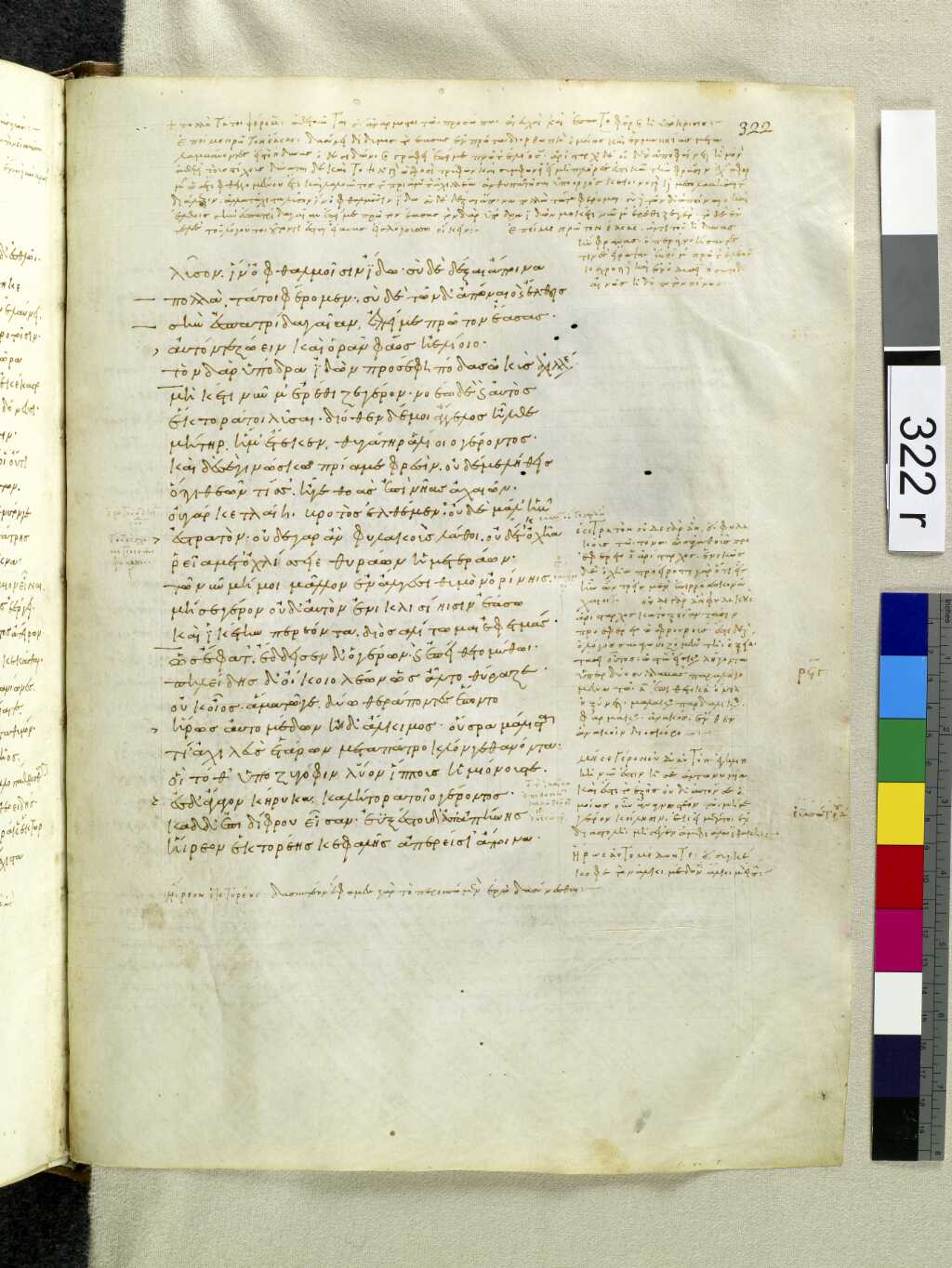
576οἳ τόθʼ ὑπὸ ζυγόφιν λύον ἵππους ἡμιόνους τε, 577ἐς δʼ ἄγαγον κήρυκα καλήτορα τοῖο γέροντος, 578κὰδ δʼ ἐπὶ δίφρου εἷσαν· ἐϋξέστου δʼ ἀπʼ ἀπήνης 579ᾕρεον Ἑκτορέης κεφαλῆς ἀπερείσιʼ ἄποινα. 580κὰδ δʼ ἔλιπον δύο φάρεʼ ἐΰννητόν τε χιτῶνα, 581ὄφρα νέκυν πυκάσας δοίη οἶκον δὲ φέρεσθαι. 582δμῳὰς δʼ ἐκκαλέσας λοῦσαι κέλετʼ ἀμφί τʼ ἀλεῖψαι 583νόσφιν ἀειράσας, ὡς μὴ Πρίαμος ἴδοι υἱόν, 584μὴ ὃ μὲν ἀχνυμένῃ κραδίῃ χόλον οὐκ ἐρύσαιτο 585παῖδα ἰδών, Ἀχιλῆϊ δʼ ὀρινθείη φίλον ἦτορ, 586καί ἑ κατακτείνειε, Διὸς δʼ ἀλίτηται ἐφετμάς. 587τὸν δʼ ἐπεὶ οὖν δμῳαὶ λοῦσαν καὶ χρῖσαν ἐλαίῳ, 588ἀμφὶ δέ μιν φᾶρος καλὸν βάλον ἠδὲ χιτῶνα, 589αὐτὸς τόν γʼ Ἀχιλεὺς λεχέων ἐπέθηκεν ἀείρας, 590σὺν δʼ ἕταροι ἤειραν ἐϋξέστην ἐπʼ ἀπήνην. 591ᾤμωξέν τʼ ἄρʼ ἔπειτα, φίλον δʼ ὀνόμηνεν ἑταῖρον· 592μή μοι Πάτροκλε σκυδμαινέμεν, αἴ κε πύθηαι 593εἰν Ἄϊδός περ ἐὼν ὅτι Ἕκτορα δῖον ἔλυσα 594πατρὶ φίλῳ, ἐπεὶ οὔ μοι ἀεικέα δῶκεν ἄποινα. 595σοὶ δʼ αὖ ἐγὼ καὶ τῶνδʼ ἀποδάσσομαι ὅσσʼ ἐπέοικεν. 596ἦ ῥα, καὶ ἐς κλισίην πάλιν ἤϊε δῖος Ἀχιλλεύς, 597ἕζετο δʼ ἐν κλισμῷ πολυδαιδάλῳ ἔνθεν ἀνέστη 598τοίχου τοῦ ἑτέρου, ποτὶ δὲ Πρίαμον φάτο μῦθον· 599υἱὸς μὲν δή τοι λέλυται γέρον ὡς ἐκέλευες, 600κεῖται δʼ ἐν λεχέεσσʼ· ἅμα δʼ ἠοῖ φαινομένηφιν
1.E.4. Do not unlink or detach or remove the full Project Gutenberg License terms from this work, or any files containing a part of this work or any other work associated with Project Gutenberg.
1.E.5. Do not copy, display, perform, distribute or redistribute this electronic work, or any part of this electronic work, without prominently displaying the sentence set forth in paragraph 1.E.1 with active links or immediate access to the full terms of the Project Gutenberg License.
1.E.6. You may convert to and distribute this work in any binary, compressed, marked up, nonproprietary or proprietary form, including any word processing or hypertext form. However, if you provide access to or distribute copies of a Project Gutenberg work in a format other than “Plain Vanilla ASCII” or other format used in the official version posted on the official Project Gutenberg website (www.gutenberg.org), you must, at no additional cost, fee or expense to the user, provide a copy, a means of exporting a copy, or a means of obtaining a copy upon request, of the work in its original “Plain Vanilla ASCII” or other form. Any alternate format must include the full Project Gutenberg License as specified in paragraph 1.E.1.
1.E.7. Do not charge a fee for access to, viewing, displaying, performing, copying or distributing any Project Gutenberg works unless you comply with paragraph 1.E.8 or 1.E.9.
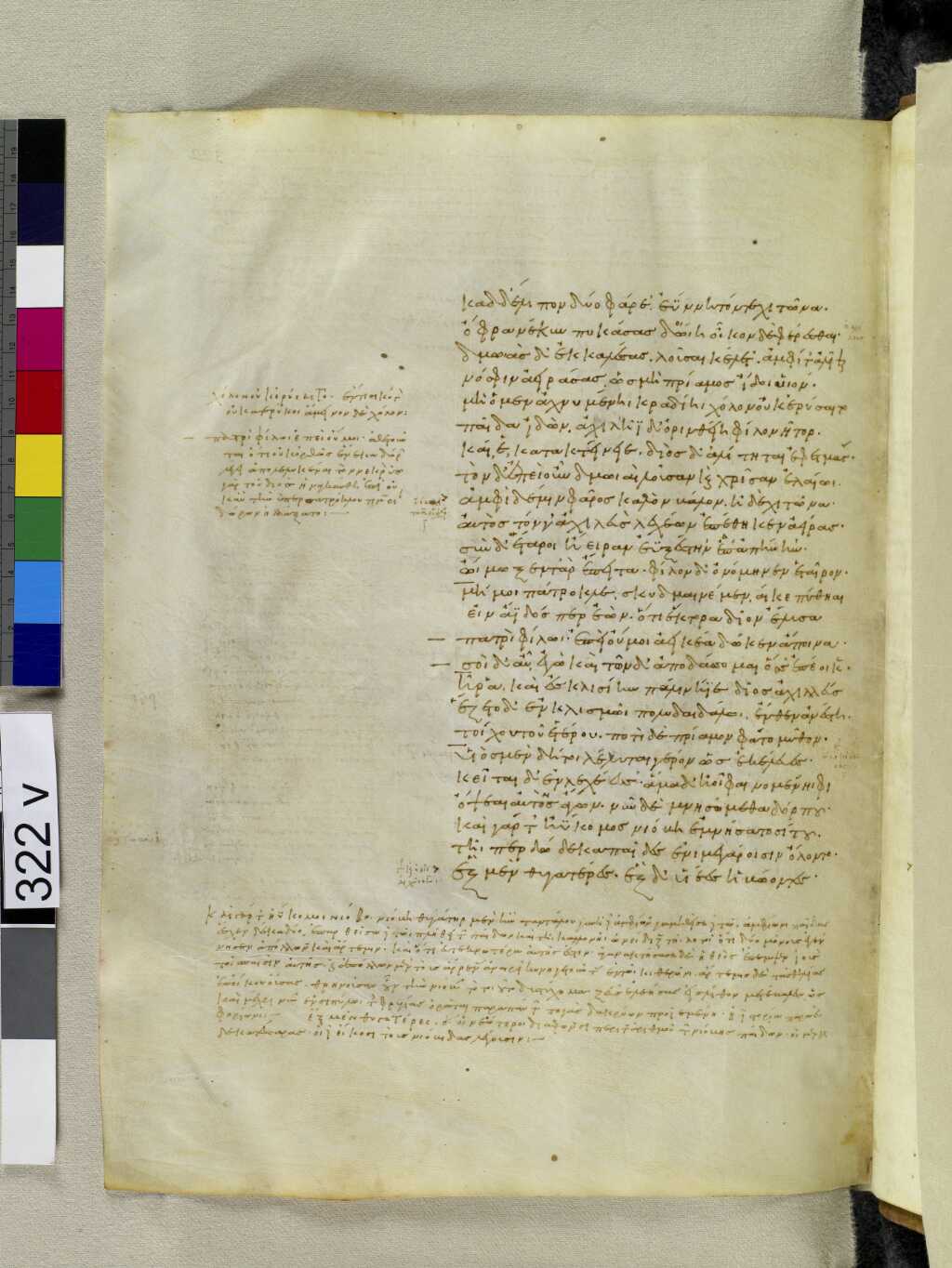
601ὄψεαι αὐτὸς ἄγων· νῦν δὲ μνησώμεθα δόρπου. 602καὶ γάρ τʼ ἠΰκομος Νιόβη ἐμνήσατο σίτου, 603τῇ περ δώδεκα παῖδες ἐνὶ μεγάροισιν ὄλοντο 604ἓξ μὲν θυγατέρες, ἓξ δʼ υἱέες ἡβώοντες. 605τοὺς μὲν Ἀπόλλων πέφνεν ἀπʼ ἀργυρέοιο βιοῖο 606χωόμενος Νιόβῃ, τὰς δʼ Ἄρτεμις ἰοχέαιρα, 607οὕνεκʼ ἄρα Λητοῖ ἰσάσκετο καλλιπαρῄῳ· 608φῆ δοιὼ τεκέειν, ἣ δʼ αὐτὴ γείνατο πολλούς· 609τὼ δʼ ἄρα καὶ δοιώ περ ἐόντʼ ἀπὸ πάντας ὄλεσσαν. 610οἳ μὲν ἄρʼ ἐννῆμαρ κέατʼ ἐν φόνῳ, οὐδέ τις ἦεν 611κατθάψαι, λαοὺς δὲ λίθους ποίησε Κρονίων· 612τοὺς δʼ ἄρα τῇ δεκάτῃ θάψαν θεοὶ Οὐρανίωνες. 613ἣ δʼ ἄρα σίτου μνήσατʼ, ἐπεὶ κάμε δάκρυ χέουσα. 614νῦν δέ που ἐν πέτρῃσιν ἐν οὔρεσιν οἰοπόλοισιν 615ἐν Σιπύλῳ, ὅθι φασὶ θεάων ἔμμεναι εὐνὰς 616νυμφάων, αἵ τʼ ἀμφʼ Ἀχελώϊον ἐρρώσαντο, 617ἔνθα λίθος περ ἐοῦσα θεῶν ἐκ κήδεα πέσσει. 618ἀλλʼ ἄγε δὴ καὶ νῶϊ μεδώμεθα δῖε γεραιὲ 619σίτου· ἔπειτά κεν αὖτε φίλον παῖδα κλαίοισθα 620Ἴλιον εἰσαγαγών· πολυδάκρυτος δέ τοι ἔσται. 621ἦ καὶ ἀναΐξας ὄϊν ἄργυφον ὠκὺς Ἀχιλλεὺς 622σφάξʼ· ἕταροι δʼ ἔδερόν τε καὶ ἄμφεπον εὖ κατὰ κόσμον, 623μίστυλλόν τʼ ἄρʼ ἐπισταμένως πεῖράν τʼ ὀβελοῖσιν, 624ὄπτησάν τε περιφραδέως, ἐρύσαντό τε πάντα. 625Αὐτομέδων δʼ ἄρα σῖτον ἑλὼν ἐπένειμε τραπέζῃ
1.E.8. You may charge a reasonable fee for copies of or providing access to or distributing Project Gutenberg electronic works provided that:
• You pay a royalty fee of 20% of the gross profits you derive from the use of Project Gutenberg works calculated using the method you already use to calculate your applicable taxes. The fee is owed to the owner of the Project Gutenberg trademark, but he has agreed to donate royalties under this paragraph to the Project Gutenberg Literary Archive Foundation. Royalty payments must be paid within 60 days following each date on which you prepare (or are legally required to prepare) your periodic tax returns. Royalty payments should be clearly marked as such and sent to the Project Gutenberg Literary Archive Foundation at the address specified in Section 4, “Information about donations to the Project Gutenberg Literary Archive Foundation.” • You provide a full refund of any money paid by a user who notifies you in writing (or by e-mail) within 30 days of receipt that s/he does not agree to the terms of the full Project Gutenberg™ License. You must require such a user to return or destroy all copies of the works possessed in a physical medium and discontinue all use of and all access to other copies of Project Gutenberg™ works. • You provide, in accordance with paragraph 1.F.3, a full refund of any money paid for a work or a replacement copy, if a defect in the electronic work is discovered and reported to you within 90 days of receipt of the work. • You comply with all other terms of this agreement for free distribution of Project Gutenberg™ works.
1.E.9. If you wish to charge a fee or distribute a Project Gutenberg™ electronic work or group of works on different terms than are set forth in this agreement, you must obtain permission in writing from the Project Gutenberg Literary Archive Foundation, the manager of the Project Gutenberg™ trademark. Contact the Foundation as set forth in Section 3 below.
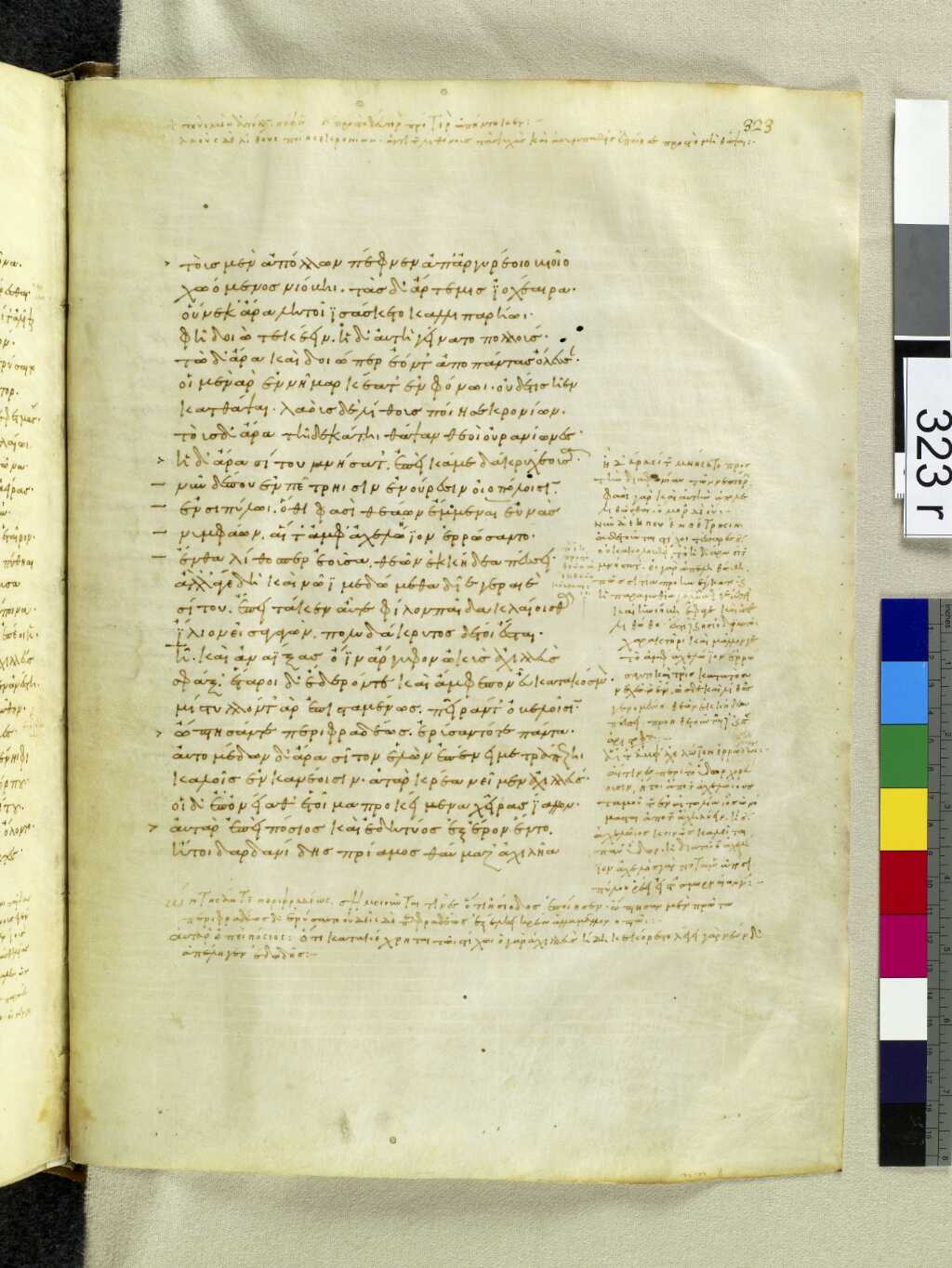
626καλοῖς ἐν κανέοισιν· ἀτὰρ κρέα νεῖμεν Ἀχιλλεύς. 627οἳ δʼ ἐπʼ ὀνείαθʼ ἑτοῖμα προκείμενα χεῖρας ἴαλλον. 628αὐτὰρ ἐπεὶ πόσιος καὶ ἐδητύος ἐξ ἔρον ἕντο, 629ἤτοι Δαρδανίδης Πρίαμος θαύμαζʼ Ἀχιλῆα 630ὅσσος ἔην οἷός τε· θεοῖσι γὰρ ἄντα ἐῴκει· 631αὐτὰρ ὃ Δαρδανίδην Πρίαμον θαύμαζεν Ἀχιλλεὺς 632εἰσορόων ὄψίν τʼ ἀγαθὴν καὶ μῦθον ἀκούων. 633αὐτὰρ ἐπεὶ τάρπησαν ἐς ἀλλήλους ὁρόωντες, 634τὸν πρότερος προσέειπε γέρων Πρίαμος θεοειδής· 635λέξον νῦν με τάχιστα διοτρεφές, ὄφρα καὶ ἤδη 636ὕπνῳ ὕπο γλυκερῷ ταρπώμεθα κοιμηθέντες· 637οὐ γάρ πω μύσαν ὄσσε ὑπὸ βλεφάροισιν ἐμοῖσιν 638ἐξ οὗ σῇς ὑπὸ χερσὶν ἐμὸς πάϊς ὤλεσε θυμόν, 639ἀλλʼ αἰεὶ στενάχω καὶ κήδεα μυρία πέσσω 640αὐλῆς ἐν χόρτοισι κυλινδόμενος κατὰ κόπρον. 641νῦν δὴ καὶ σίτου πασάμην καὶ αἴθοπα οἶνον 642λαυκανίης καθέηκα· πάρος γε μὲν οὔ τι πεπάσμην. 643ἦ ῥʼ, Ἀχιλεὺς δʼ ἑτάροισιν ἰδὲ δμῳῇσι κέλευσε 644δέμνιʼ ὑπʼ αἰθούσῃ θέμεναι καὶ ῥήγεα καλὰ 645πορφύρεʼ ἐμβαλέειν, στορέσαι τʼ ἐφύπερθε τάπητας, 646χλαίνας τʼ ἐνθέμεναι οὔλας καθύπερθεν ἕσασθαι. 647αἳ δʼ ἴσαν ἐκ μεγάροιο δάος μετὰ χερσὶν ἔχουσαι, 648αἶψα δʼ ἄρα στόρεσαν δοιὼ λέχεʼ ἐγκονέουσαι. 649τὸν δʼ ἐπικερτομέων προσέφη πόδας ὠκὺς Ἀχιλλεύς· 650ἐκτὸς μὲν δὴ λέξο γέρον φίλε, μή τις Ἀχαιῶν
1.F.1. Project Gutenberg volunteers and employees expend considerable effort to identify, do copyright research on, transcribe and proofread works not protected by U.S. copyright law in creating the Project Gutenberg™ collection. Despite these efforts, Project Gutenberg™ electronic works, and the medium on which they may be stored, may contain “Defects,” such as, but not limited to, incomplete, inaccurate or corrupt data, transcription errors, a copyright or other intellectual property infringement, a defective or damaged disk or other medium, a computer virus, or computer codes that damage or cannot be read by your equipment.
1.F.2. LIMITED WARRANTY, DISCLAIMER OF DAMAGES - Except for the “Right of Replacement or Refund” described in paragraph 1.F.3, the Project Gutenberg Literary Archive Foundation, the owner of the Project Gutenberg™ trademark, and any other party distributing a Project Gutenberg™ electronic work under this agreement, disclaim all liability to you for damages, costs and expenses, including legal fees. YOU AGREE THAT YOU HAVE NO REMEDIES FOR NEGLIGENCE, STRICT LIABILITY, BREACH OF WARRANTY OR BREACH OF CONTRACT EXCEPT THOSE PROVIDED IN PARAGRAPH 1.F.3. YOU AGREE THAT THE FOUNDATION, THE TRADEMARK OWNER, AND ANY DISTRIBUTOR UNDER THIS AGREEMENT WILL NOT BE LIABLE TO YOU FOR ACTUAL, DIRECT, INDIRECT, CONSEQUENTIAL, PUNITIVE OR INCIDENTAL DAMAGES EVEN IF YOU GIVE NOTICE OF THE POSSIBILITY OF SUCH DAMAGE.
1.F.3. LIMITED RIGHT OF REPLACEMENT OR REFUND - If you discover a defect in this electronic work within 90 days of receiving it, you can receive a refund of the money (if any) you paid for it by sending a written explanation to the person you received the work from. If you received the work on a physical medium, you must return the medium with your written explanation. The person or entity that provided you with the defective work may elect to provide a replacement copy in lieu of a refund. If you received the work electronically, the person or entity providing it to you may choose to give you a second opportunity to receive the work electronically in lieu of a refund. If the second copy is also defective, you may demand a refund in writing without further opportunities to fix the problem.
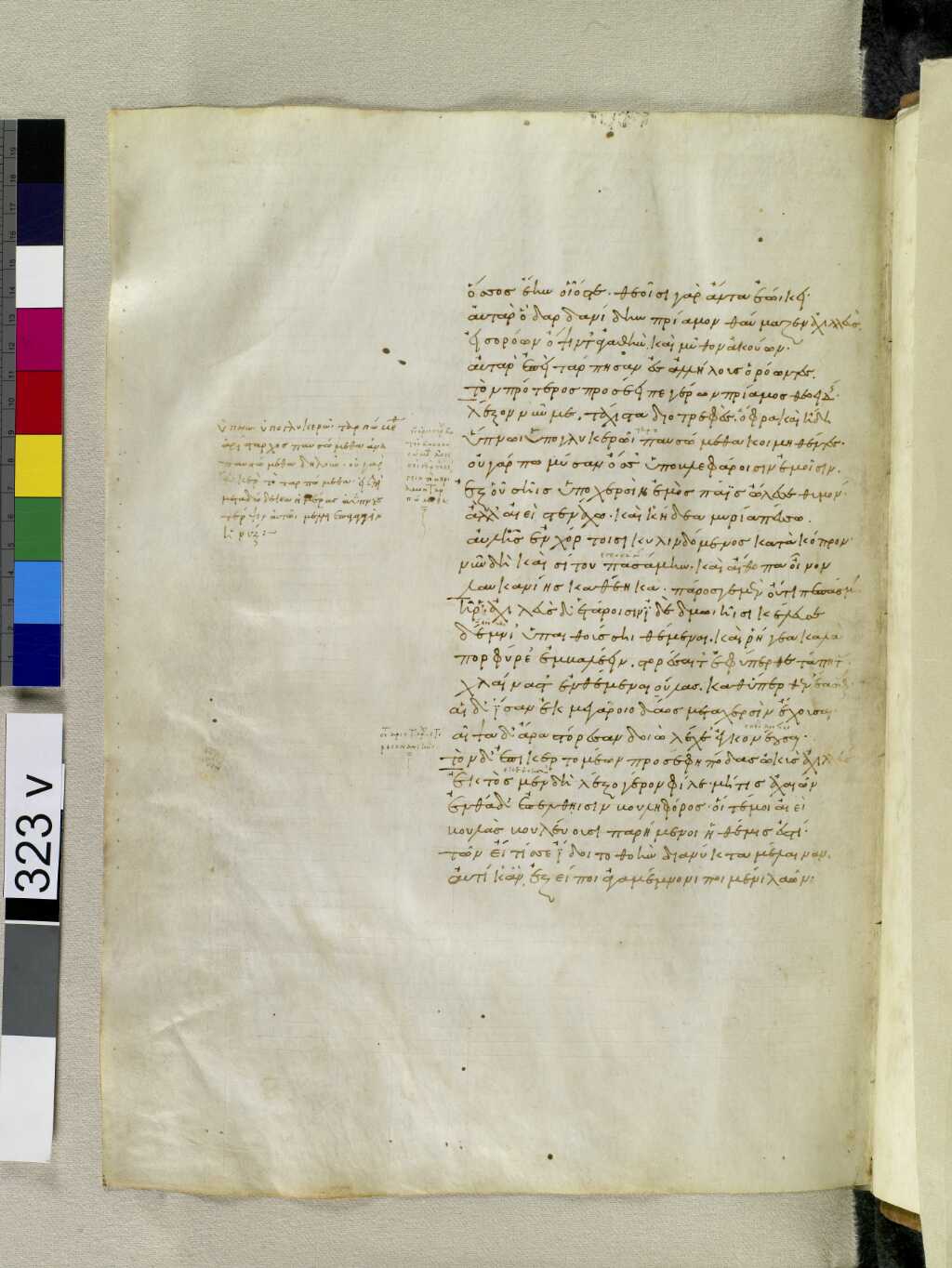
651ἐνθάδʼ ἐπέλθῃσιν βουληφόρος, οἵ τέ μοι αἰεὶ 652βουλὰς βουλεύουσι παρήμενοι, ἣ θέμις ἐστί· 653τῶν εἴ τίς σε ἴδοιτο θοὴν διὰ νύκτα μέλαιναν, 654αὐτίκʼ ἂν ἐξείποι Ἀγαμέμνονι ποιμένι λαῶν, 655καί κεν ἀνάβλησις λύσιος νεκροῖο γένηται. 656ἀλλʼ ἄγε μοι τόδε εἰπὲ καὶ ἀτρεκέως κατάλεξον, 657ποσσῆμαρ μέμονας κτερεϊζέμεν Ἕκτορα δῖον, 658ὄφρα τέως αὐτός τε μένω καὶ λαὸν ἐρύκω. 659τὸν δʼ ἠμείβετʼ ἔπειτα γέρων Πρίαμος θεοειδής· 660εἰ μὲν δή μʼ ἐθέλεις τελέσαι τάφον Ἕκτορι δίῳ, 661ὧδέ κέ μοι ῥέζων Ἀχιλεῦ κεχαρισμένα θείης. 662οἶσθα γὰρ ὡς κατὰ ἄστυ ἐέλμεθα, τηλόθι δʼ ὕλη 663ἀξέμεν ἐξ ὄρεος, μάλα δὲ Τρῶες δεδίασιν. 664ἐννῆμαρ μέν κʼ αὐτὸν ἐνὶ μεγάροις γοάοιμεν, 665τῇ δεκάτῃ δέ κε θάπτοιμεν δαινῦτό τε λαός, 666ἑνδεκάτῃ δέ κε τύμβον ἐπʼ αὐτῷ ποιήσαιμεν, 667τῇ δὲ δυωδεκάτῃ πολεμίξομεν εἴ περ ἀνάγκη. 668τὸν δʼ αὖτε προσέειπε ποδάρκης δῖος Ἀχιλλεύς· 669ἔσται τοι καὶ ταῦτα γέρον Πρίαμʼ ὡς σὺ κελεύεις· 670σχήσω γὰρ πόλεμον τόσσον χρόνον ὅσσον ἄνωγας. 671ὣς ἄρα φωνήσας ἐπὶ καρπῷ χεῖρα γέροντος 672ἔλλαβε δεξιτερήν, μή πως δείσειʼ ἐνὶ θυμῷ. 673οἳ μὲν ἄρʼ ἐν προδόμῳ δόμου αὐτόθι κοιμήσαντο 674κῆρυξ καὶ Πρίαμος πυκινὰ φρεσὶ μήδεʼ ἔχοντες, 675αὐτὰρ Ἀχιλλεὺς εὗδε μυχῷ κλισίης ἐϋπήκτου·
1.F.4. Except for the limited right of replacement or refund set forth in paragraph 1.F.3, this work is provided to you ‘AS-IS’, WITH NO OTHER WARRANTIES OF ANY KIND, EXPRESS OR IMPLIED, INCLUDING BUT NOT LIMITED TO WARRANTIES OF MERCHANTABILITY OR FITNESS FOR ANY PURPOSE.
1.F.5. Some states do not allow disclaimers of certain implied warranties or the exclusion or limitation of certain types of damages. If any disclaimer or limitation set forth in this agreement violates the law of the state applicable to this agreement, the agreement shall be interpreted to make the maximum disclaimer or limitation permitted by the applicable state law. The invalidity or unenforceability of any provision of this agreement shall not void the remaining provisions.
1.F.6. INDEMNITY - You agree to indemnify and hold the Foundation, the trademark owner, any agent or employee of the Foundation, anyone providing copies of Project Gutenberg™ electronic works in accordance with this agreement, and any volunteers associated with the production, promotion and distribution of Project Gutenberg™ electronic works, harmless from all liability, costs and expenses, including legal fees, that arise directly or indirectly from any of the following which you do or cause to occur: (a) distribution of this or any Project Gutenberg work, (b) alteration, modification, or additions or deletions to any Project Gutenberg work, and (c) any Defect you cause.
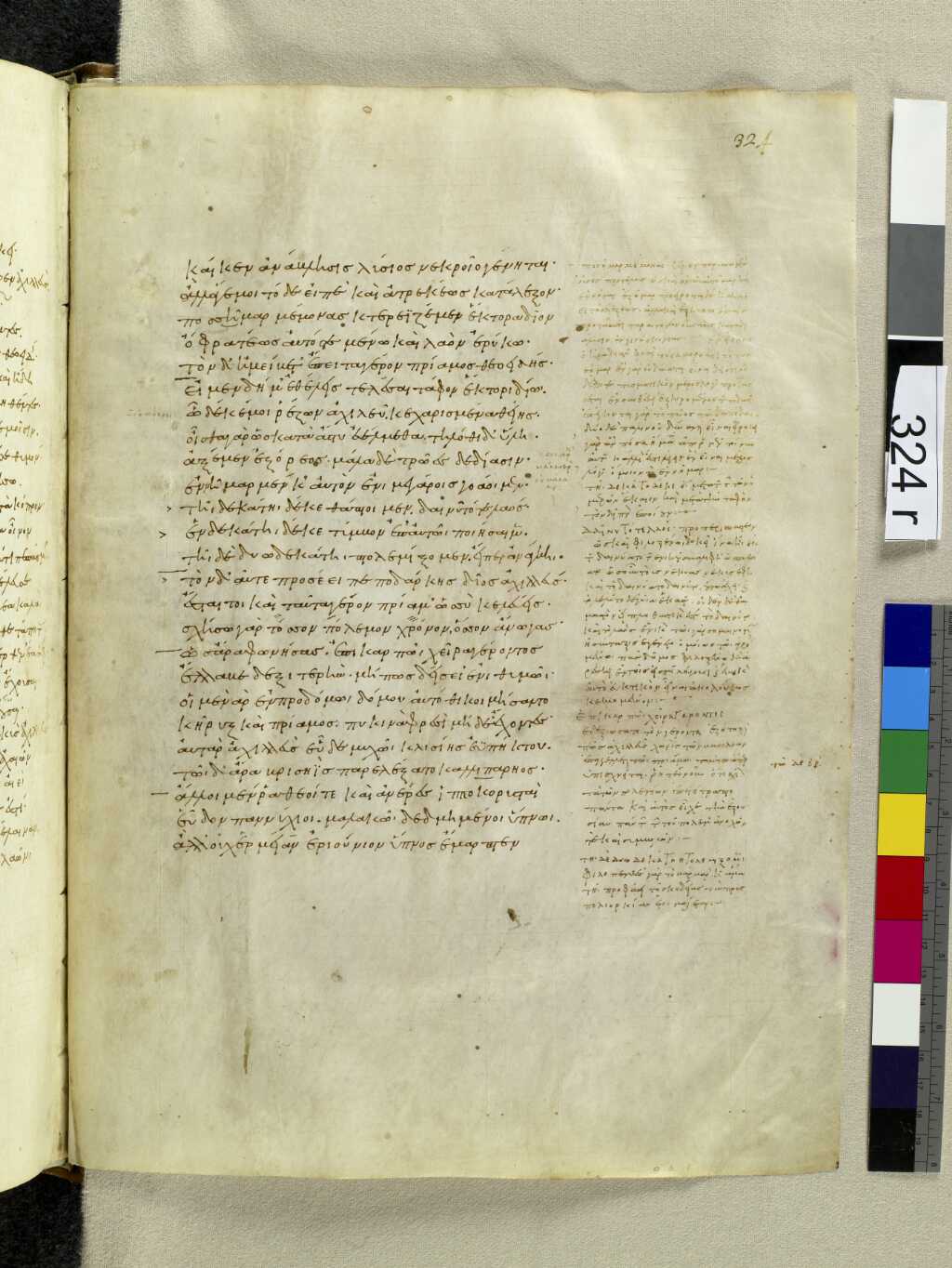
676τῷ δὲ Βρισηῒς παρελέξατο καλλιπάρῃος. 677ἄλλοι μέν ῥα θεοί τε καὶ ἀνέρες ἱπποκορυσταὶ 678εὗδον παννύχιοι μαλακῷ δεδμημένοι ὕπνῳ· 679ἀλλʼ οὐχ Ἑρμείαν ἐριούνιον ὕπνος ἔμαρπτεν 680ὁρμαίνοντʼ ἀνὰ θυμὸν ὅπως Πρίαμον βασιλῆα 681νηῶν ἐκπέμψειε λαθὼν ἱεροὺς πυλαωρούς. 682στῆ δʼ ἄρʼ ὑπὲρ κεφαλῆς καί μιν πρὸς μῦθον ἔειπεν· 683ὦ γέρον οὔ νύ τι σοί γε μέλει κακόν, οἷον ἔθʼ εὕδεις 684ἀνδράσιν ἐν δηΐοισιν, ἐπεί σʼ εἴασεν Ἀχιλλεύς. 685καὶ νῦν μὲν φίλον υἱὸν ἐλύσαο, πολλὰ δʼ ἔδωκας· 686σεῖο δέ κε ζωοῦ καὶ τρὶς τόσα δοῖεν ἄποινα 687παῖδες τοὶ μετόπισθε λελειμμένοι, αἴ κʼ Ἀγαμέμνων 688γνώῃ σʼ Ἀτρεΐδης, γνώωσι δὲ πάντες Ἀχαιοί. 689ὣς ἔφατʼ, ἔδεισεν δʼ ὃ γέρων, κήρυκα δʼ ἀνίστη. 690τοῖσιν δʼ Ἑρμείας ζεῦξʼ ἵππους ἡμιόνους τε, 691ῥίμφα δʼ ἄρʼ αὐτὸς ἔλαυνε κατὰ στρατόν, οὐδέ τις ἔγνω. 692ἀλλʼ ὅτε δὴ πόρον ἷξον ἐϋρρεῖος ποταμοῖο 693Ξάνθου δινήεντος, ὃν ἀθάνατος τέκετο Ζεύς, 694Ἑρμείας μὲν ἔπειτʼ ἀπέβη πρὸς μακρὸν Ὄλυμπον, 695Ἠὼς δὲ κροκόπεπλος ἐκίδνατο πᾶσαν ἐπʼ αἶαν, 696οἳ δʼ εἰς ἄστυ ἔλων οἰμωγῇ τε στοναχῇ τε 697ἵππους, ἡμίονοι δὲ νέκυν φέρον. οὐδέ τις ἄλλος 698ἔγνω πρόσθʼ ἀνδρῶν καλλιζώνων τε γυναικῶν, 699ἀλλʼ ἄρα Κασσάνδρη ἰκέλη χρυσῇ Ἀφροδίτῃ 700Πέργαμον εἰσαναβᾶσα φίλον πατέρʼ εἰσενόησεν
Section 2. Information about the Mission of Project Gutenberg
Project Gutenberg is synonymous with the free distribution of electronic works in formats readable by the widest variety of computers including obsolete, old, middle-aged and new computers. It exists because of the efforts of hundreds of volunteers and donations from people in all walks of life.
Volunteers and financial support to provide volunteers with the assistance they need are critical to reaching Project Gutenberg’s goals and ensuring that the Project Gutenberg collection will remain freely available for generations to come. In 2001, the Project Gutenberg Literary Archive Foundation was created to provide a secure and permanent future for Project Gutenberg and future generations. To learn more about the Project Gutenberg Literary Archive Foundation and how your efforts and donations can help, see Sections 3 and 4 and the Foundation information page at www.gutenberg.org.
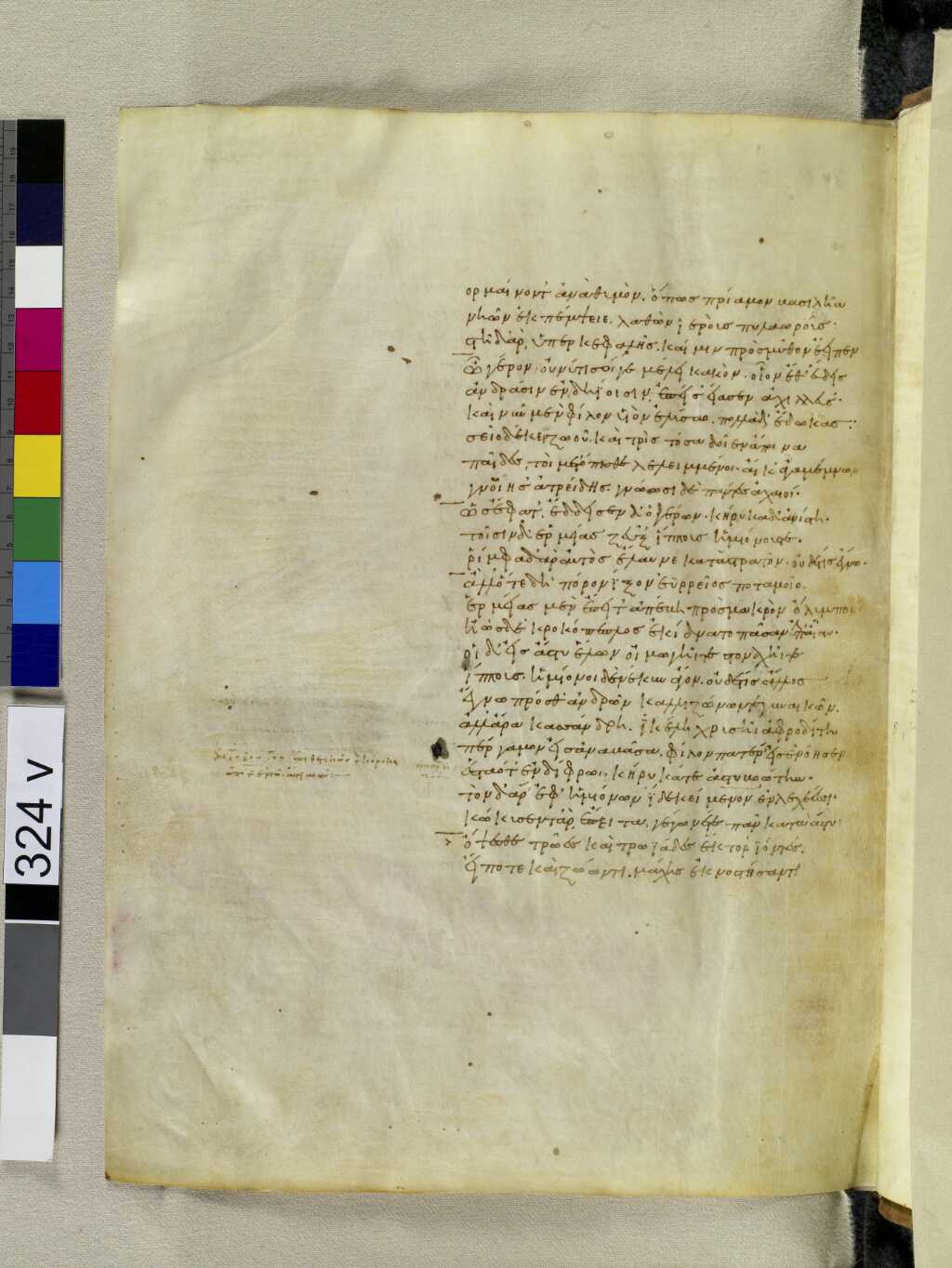
701ἑσταότʼ ἐν δίφρῳ, κήρυκά τε ἀστυβοώτην· 702τὸν δʼ ἄρʼ ἐφʼ ἡμιόνων ἴδε κείμενον ἐν λεχέεσσι· 703κώκυσέν τʼ ἄρʼ ἔπειτα γέγωνέ τε πᾶν κατὰ ἄστυ· 704ὄψεσθε Τρῶες καὶ Τρῳάδες Ἕκτορʼ ἰόντες, 705εἴ ποτε καὶ ζώοντι μάχης ἐκνοστήσαντι 706χαίρετʼ, ἐπεὶ μέγα χάρμα πόλει τʼ ἦν παντί τε δήμῳ. 707ὣς ἔφατʼ, οὐδέ τις αὐτόθʼ ἐνὶ πτόλεϊ λίπετʼ ἀνὴρ 708οὐδὲ γυνή· πάντας γὰρ ἀάσχετον ἵκετο πένθος· 709ἀγχοῦ δὲ ξύμβληντο πυλάων νεκρὸν ἄγοντι. 710πρῶται τόν γʼ ἄλοχός τε φίλη καὶ πότνια μήτηρ 711τιλλέσθην ἐπʼ ἄμαξαν ἐΰτροχον ἀΐξασαι 712ἁπτόμεναι κεφαλῆς· κλαίων δʼ ἀμφίσταθʼ ὅμιλος. 713καί νύ κε δὴ πρόπαν ἦμαρ ἐς ἠέλιον καταδύντα 714Ἕκτορα δάκρυ χέοντες ὀδύροντο πρὸ πυλάων, 715εἰ μὴ ἄρʼ ἐκ δίφροιο γέρων λαοῖσι μετηύδα· 716εἴξατέ μοι οὐρεῦσι διελθέμεν· αὐτὰρ ἔπειτα 717ἄσεσθε κλαυθμοῖο, ἐπὴν ἀγάγωμι δόμον δέ. 718ὣς ἔφαθʼ, οἳ δὲ διέστησαν καὶ εἶξαν ἀπήνῃ. 719οἳ δʼ ἐπεὶ εἰσάγαγον κλυτὰ δώματα, τὸν μὲν ἔπειτα 720τρητοῖς ἐν λεχέεσσι θέσαν, παρὰ δʼ εἷσαν ἀοιδοὺς 721θρήνων ἐξάρχους, οἵ τε στονόεσσαν ἀοιδὴν 722οἳ μὲν ἄρʼ ἐθρήνεον, ἐπὶ δὲ στενάχοντο γυναῖκες. 723τῇσιν δʼ Ἀνδρομάχη λευκώλενος ἦρχε γόοιο 724Ἕκτορος ἀνδροφόνοιο κάρη μετὰ χερσὶν ἔχουσα· 725ἆνερ ἀπʼ αἰῶνος νέος ὤλεο, κὰδ δέ με χήρην
Section 3. Information about the Project Gutenberg Literary Archive Foundation
The Project Gutenberg Literary Archive Foundation is a non-profit 501(c)(3) educational corporation organized under the laws of the state of Mississippi and granted tax exempt status by the Internal Revenue Service. The Foundation’s EIN or federal tax identification number is 64-6221541. Contributions to the Project Gutenberg Literary Archive Foundation are tax deductible to the full extent permitted by U.S. federal laws and your state’s laws.
The Foundation’s business office is located at 41 Watchung Plaza #516, Montclair NJ 07042, USA, +1 (862) 621-9288. Email contact links and up to date contact information can be found at the Foundation’s website and official page at www.gutenberg.org/contact
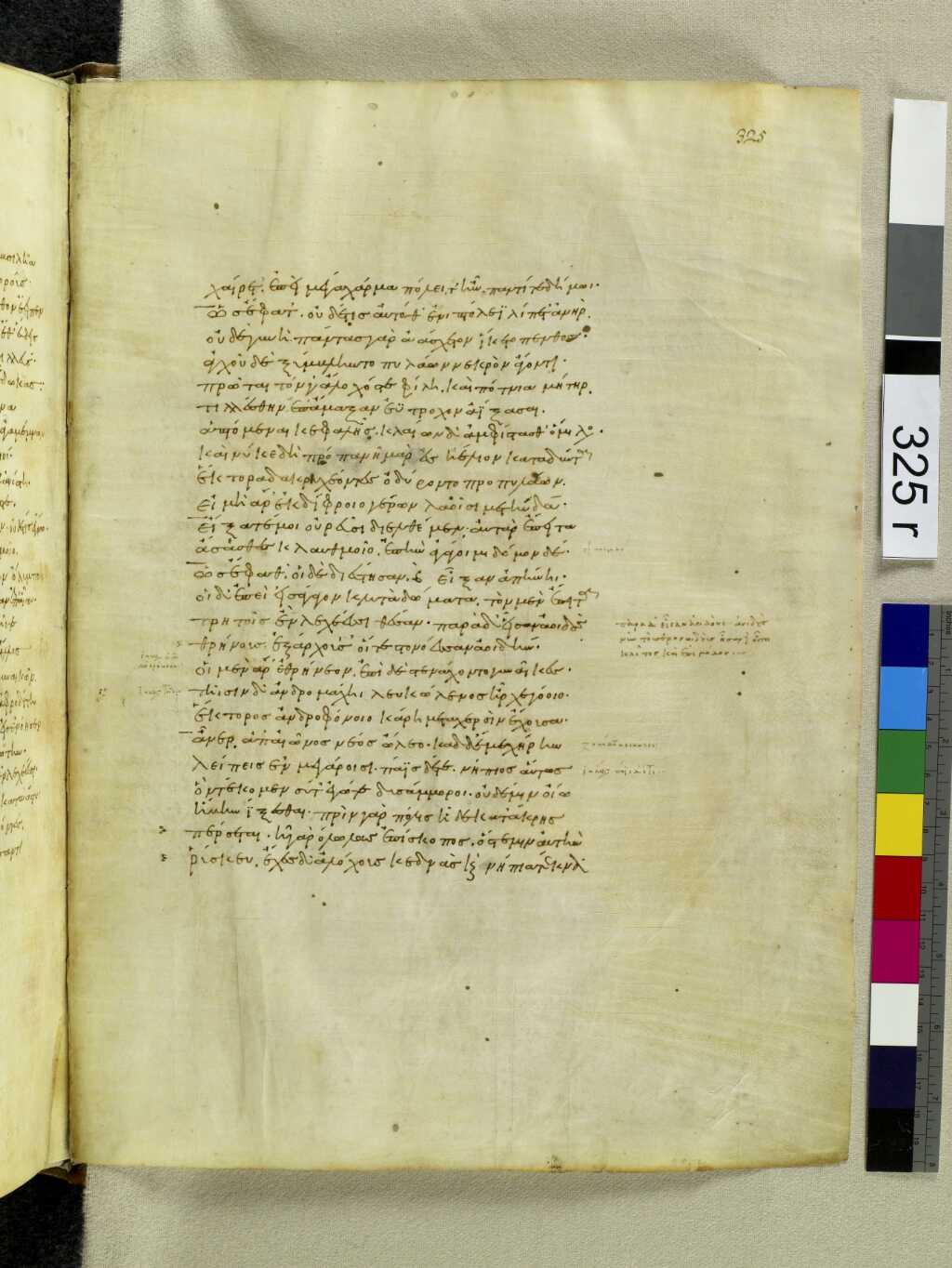
726λείπεις ἐν μεγάροισι· πάϊς δʼ ἔτι νήπιος αὔτως 727ὃν τέκομεν σύ τʼ ἐγώ τε δυσάμμοροι, οὐδέ μιν οἴω 728ἥβην ἵξεσθαι· πρὶν γὰρ πόλις ἥδε κατʼ ἄκρης 729πέρσεται· ἦ γὰρ ὄλωλας ἐπίσκοπος, ὅς τέ μιν αὐτὴν 730ῥύσκευ, ἔχες δʼ ἀλόχους κεδνὰς καὶ νήπια τέκνα, 731αἳ δή τοι τάχα νηυσὶν ὀχήσονται γλαφυρῇσι, 732καὶ μὲν ἐγὼ μετὰ τῇσι· σὺ δʼ αὖ τέκος ἢ ἐμοὶ αὐτῇ 733ἕψεαι, ἔνθά κεν ἔργα ἀεικέα ἐργάζοιο 734ἀθλεύων πρὸ ἄνακτος ἀμειλίχου, ἤ τις Ἀχαιῶν 735ῥίψει χειρὸς ἑλὼν ἀπὸ πύργου λυγρὸν ὄλεθρον 736χωόμενος, ᾧ δή που ἀδελφεὸν ἔκτανεν Ἕκτωρ 737ἢ πατέρʼ ἠὲ καὶ υἱόν, ἐπεὶ μάλα πολλοὶ Ἀχαιῶν 738Ἕκτορος ἐν παλάμῃσιν ὀδὰξ ἕλον ἄσπετον οὖδας. 739οὐ γὰρ μείλιχος ἔσκε πατὴρ τεὸς ἐν δαῒ λυγρῇ· 740τὼ καί μιν λαοὶ μὲν ὀδύρονται κατὰ ἄστυ, 741ἀρητὸν δὲ τοκεῦσι γόον καὶ πένθος ἔθηκας 742Ἕκτορ· ἐμοὶ δὲ μάλιστα λελείψεται ἄλγεα λυγρά. 743οὐ γάρ μοι θνῄσκων λεχέων ἐκ χεῖρας ὄρεξας, 744οὐδέ τί μοι εἶπες πυκινὸν ἔπος, οὗ τέ κεν αἰεὶ 745μεμνῄμην νύκτάς τε καὶ ἤματα δάκρυ χέουσα. 746ὣς ἔφατο κλαίουσʼ, ἐπὶ δὲ στενάχοντο γυναῖκες. 747τῇσιν δʼ αὖθʼ Ἑκάβη ἁδινοῦ ἐξῆρχε γόοιο· 748Ἕκτορ ἐμῷ θυμῷ πάντων πολὺ φίλτατε παίδων, 749ἦ μέν μοι ζωός περ ἐὼν φίλος ἦσθα θεοῖσιν· 750οἳ δʼ ἄρα σεῦ κήδοντο καὶ ἐν θανάτοιό περ αἴσῃ.
Section 4. Information about Donations to the Project Gutenberg Literary Archive Foundation
Project Gutenberg™ depends upon and cannot survive without widespread public support and donations to carry out its mission of increasing the number of public domain and licensed works that can be freely distributed in machine-readable form accessible by the widest array of equipment including outdated equipment. Many small donations ($1 to $5,000) are particularly important to maintaining tax exempt status with the IRS.
The Foundation is committed to complying with the laws regulating charities and charitable donations in all 50 states of the United States. Compliance requirements are not uniform and it takes a considerable effort, much paperwork and many fees to meet and keep up with these requirements. We do not solicit donations in locations where we have not received written confirmation of compliance. To SEND DONATIONS or determine the status of compliance for any particular state visit www.gutenberg.org/donate.
While we cannot and do not solicit contributions from states where we have not met the solicitation requirements, we know of no prohibition against accepting unsolicited donations from donors in such states who approach us with offers to donate.
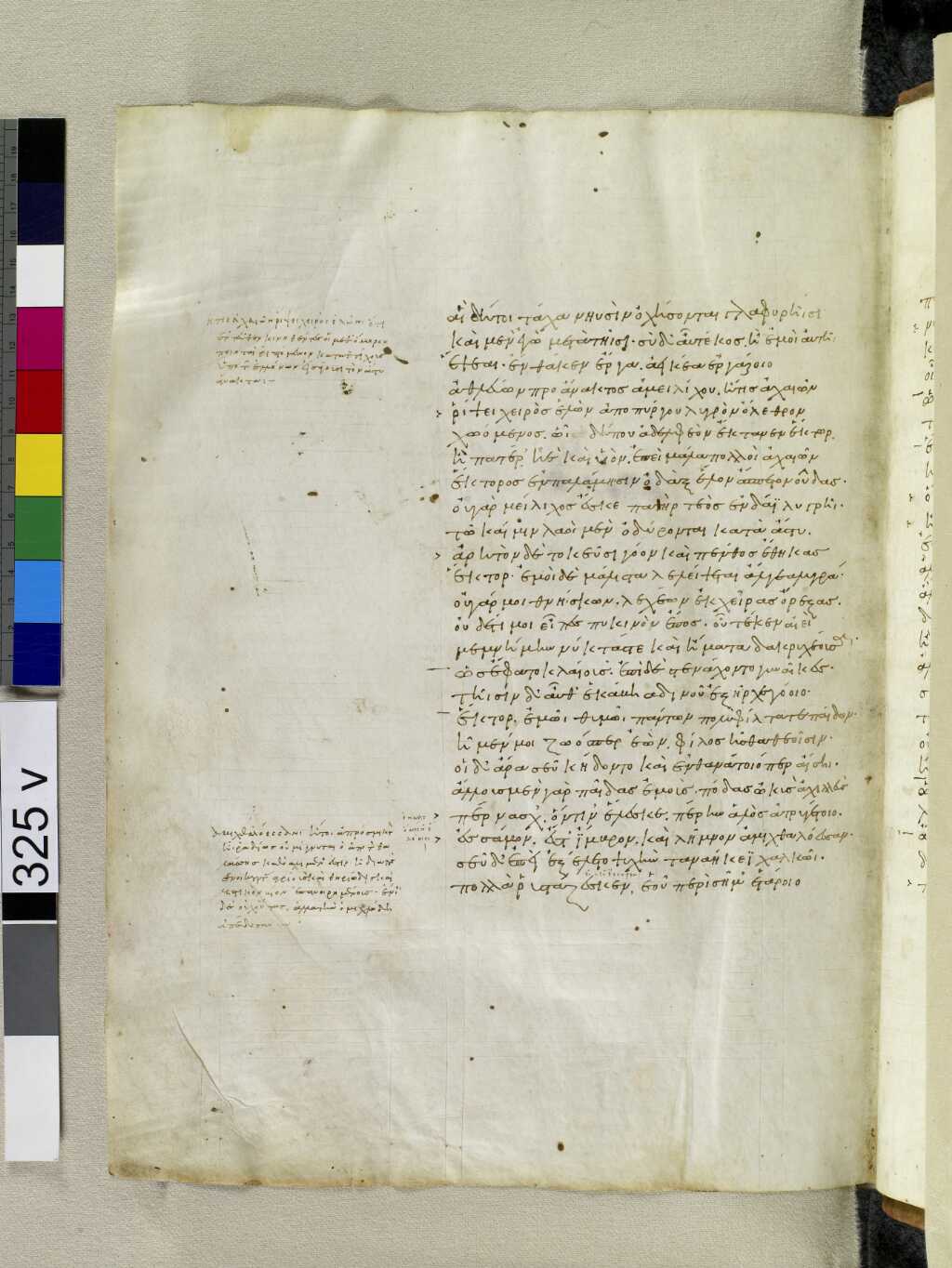
751ἄλλους μὲν γὰρ παῖδας ἐμοὺς πόδας ὠκὺς Ἀχιλλεὺς 752πέρνασχʼ ὅν τινʼ ἕλεσκε πέρην ἁλὸς ἀτρυγέτοιο, 753ἐς Σάμον ἔς τʼ Ἴμβρον καὶ Λῆμνον ἀμιχθαλόεσσαν· 754σεῦ δʼ ἐπεὶ ἐξέλετο ψυχὴν ταναήκεϊ χαλκῷ, 755πολλὰ ῥυστάζεσκεν ἑοῦ περὶ σῆμʼ ἑτάροιο 756Πατρόκλου, τὸν ἔπεφνες· ἀνέστησεν δέ μιν οὐδʼ ὧς. 757νῦν δέ μοι ἑρσήεις καὶ πρόσφατος ἐν μεγάροισι 758κεῖσαι, τῷ ἴκελος ὅν τʼ ἀργυρότοξος Ἀπόλλων 759οἷς ἀγανοῖσι βέλεσσιν ἐποιχόμενος κατέπεφνεν. 760ὣς ἔφατο κλαίουσα, γόον δʼ ἀλίαστον ὄρινε. 761τῇσι δʼ ἔπειθʼ Ἑλένη τριτάτη ἐξῆρχε γόοιο· 762Ἕκτορ ἐμῷ θυμῷ δαέρων πολὺ φίλτατε πάντων, 763ἦ μέν μοι πόσις ἐστὶν Ἀλέξανδρος θεοειδής, 764ὅς μʼ ἄγαγε Τροίηνδʼ· ὡς πρὶν ὤφελλον ὀλέσθαι. 765ἤδη γὰρ νῦν μοι τόδε εἰκοστὸν ἔτος ἐστὶν 766ἐξ οὗ κεῖθεν ἔβην καὶ ἐμῆς ἀπελήλυθα πάτρης· 767ἀλλʼ οὔ πω σεῦ ἄκουσα κακὸν ἔπος οὐδʼ ἀσύφηλον· 768ἀλλʼ εἴ τίς με καὶ ἄλλος ἐνὶ μεγάροισιν ἐνίπτοι 769δαέρων ἢ γαλόων ἢ εἰνατέρων εὐπέπλων, 770ἢ ἑκυρή, ἑκυρὸς δὲ πατὴρ ὣς ἤπιος αἰεί, 771ἀλλὰ σὺ τὸν ἐπέεσσι παραιφάμενος κατέρυκες 772σῇ τʼ ἀγανοφροσύνῃ καὶ σοῖς ἀγανοῖς ἐπέεσσι. 773τὼ σέ θʼ ἅμα κλαίω καὶ ἔμʼ ἄμμορον ἀχνυμένη κῆρ· 774οὐ γάρ τίς μοι ἔτʼ ἄλλος ἐνὶ Τροίῃ εὐρείῃ 775ἤπιος οὐδὲ φίλος, πάντες δέ με πεφρίκασιν.
International donations are gratefully accepted, but we cannot make any statements concerning tax treatment of donations received from outside the United States. U.S. laws alone swamp our small staff.
Please check the Project Gutenberg web pages for current donation methods and addresses. Donations are accepted in a number of other ways including checks, online payments and credit card donations. To donate, please visit: www.gutenberg.org/donate.
Section 5. General Information About Project Gutenberg electronic works
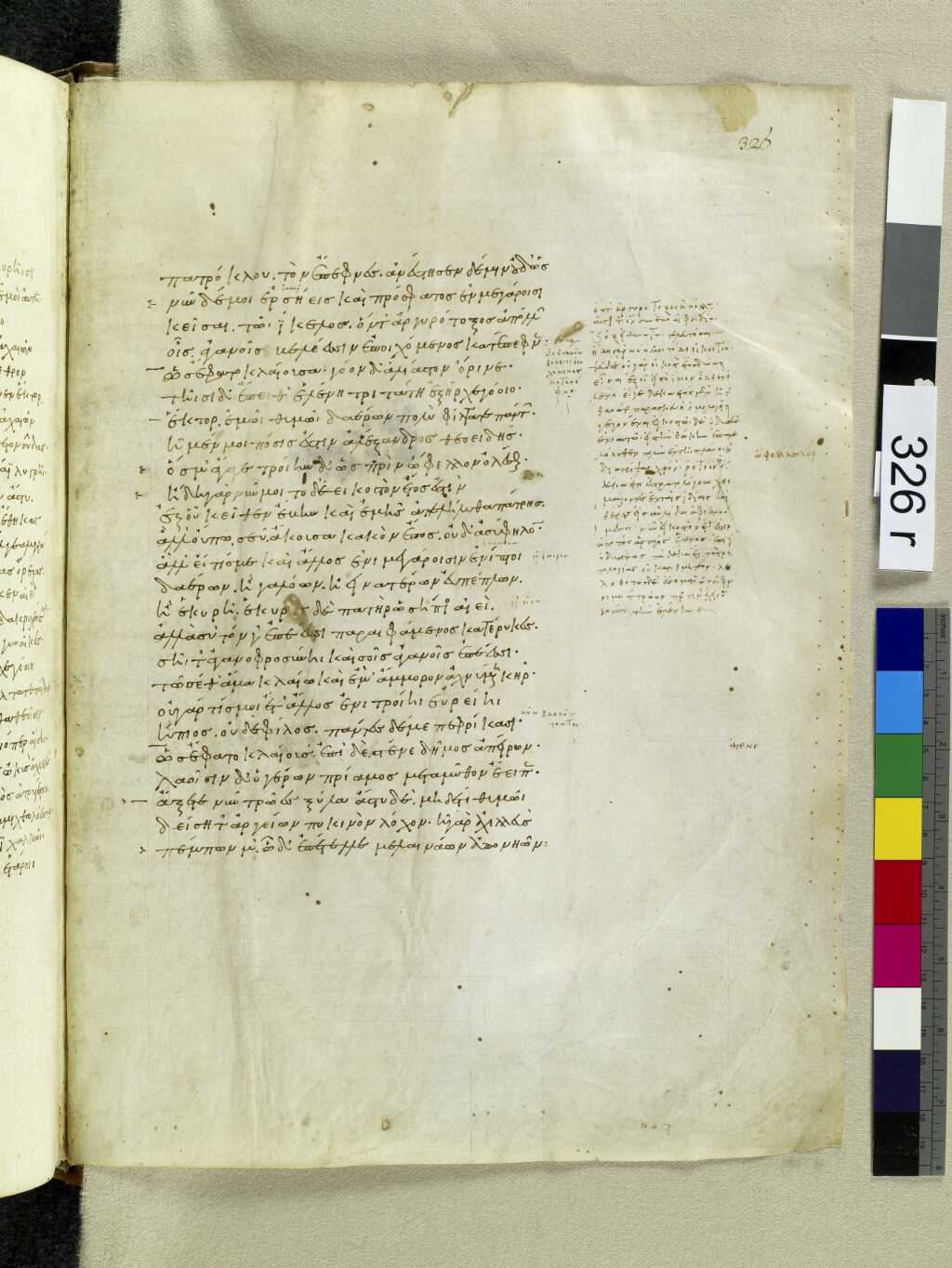
776ὣς ἔφατο κλαίουσʼ, ἐπὶ δʼ ἔστενε δῆμος ἀπείρων. 777λαοῖσιν δʼ ὃ γέρων Πρίαμος μετὰ μῦθον ἔειπεν· 778ἄξετε νῦν Τρῶες ξύλα ἄστυ δέ, μὴ δέ τι θυμῷ 779δείσητʼ Ἀργείων πυκινὸν λόχον· ἦ γὰρ Ἀχιλλεὺς 780πέμπων μʼ ὧδʼ ἐπέτελλε μελαινάων ἀπὸ νηῶν 781μὴ πρὶν πημανέειν πρὶν δωδεκάτη μόλῃ ἠώς. 782ὣς ἔφαθʼ, οἳ δʼ ὑπʼ ἀμάξῃσιν βόας ἡμιόνους τε 783ζεύγνυσαν, αἶψα δʼ ἔπειτα πρὸ ἄστεος ἠγερέθοντο. 784ἐννῆμαρ μὲν τοί γε ἀγίνεον ἄσπετον ὕλην· 785ἀλλʼ ὅτε δὴ δεκάτη ἐφάνη φαεσίμβροτος ἠώς, 786καὶ τότʼ ἄρʼ ἐξέφερον θρασὺν Ἕκτορα δάκρυ χέοντες, 787ἐν δὲ πυρῇ ὑπάτῃ νεκρὸν θέσαν, ἐν δʼ ἔβαλον πῦρ. 788ἦμος δʼ ἠριγένεια φάνη ῥοδοδάκτυλος Ἠώς, 789τῆμος ἄρʼ ἀμφὶ πυρὴν κλυτοῦ Ἕκτορος ἔγρετο λαός. 790αὐτὰρ ἐπεί ῥʼ ἤγερθεν ὁμηγερέες τʼ ἐγένοντο 791πρῶτον μὲν κατὰ πυρκαϊὴν σβέσαν αἴθοπι οἴνῳ 792πᾶσαν, ὁπόσσον ἐπέσχε πυρὸς μένος· αὐτὰρ ἔπειτα 793ὀστέα λευκὰ λέγοντο κασίγνητοί θʼ ἕταροί τε 794μυρόμενοι, θαλερὸν δὲ κατείβετο δάκρυ παρειῶν. 795καὶ τά γε χρυσείην ἐς λάρνακα θῆκαν ἑλόντες 796πορφυρέοις πέπλοισι καλύψαντες μαλακοῖσιν. 797αἶψα δʼ ἄρʼ ἐς κοίλην κάπετον θέσαν, αὐτὰρ ὕπερθε 798πυκνοῖσιν λάεσσι κατεστόρεσαν μεγάλοισι· 799ῥίμφα δὲ σῆμʼ ἔχεαν, περὶ δὲ σκοποὶ ἥατο πάντῃ, 800μὴ πρὶν ἐφορμηθεῖεν ἐϋκνήμιδες Ἀχαιοί.
Professor Michael S. Hart was the originator of the Project Gutenberg concept of a library of electronic works that could be freely shared with anyone. For forty years, he produced and distributed Project Gutenberg eBooks with only a loose network of volunteer support.
Project Gutenberg eBooks are often created from several printed editions, all of which are confirmed as not protected by copyright in the U.S. unless a copyright notice is included. Thus, we do not necessarily keep eBooks in compliance with any particular paper edition.
Most people start at our website which has the main PG search facility: www.gutenberg.org.
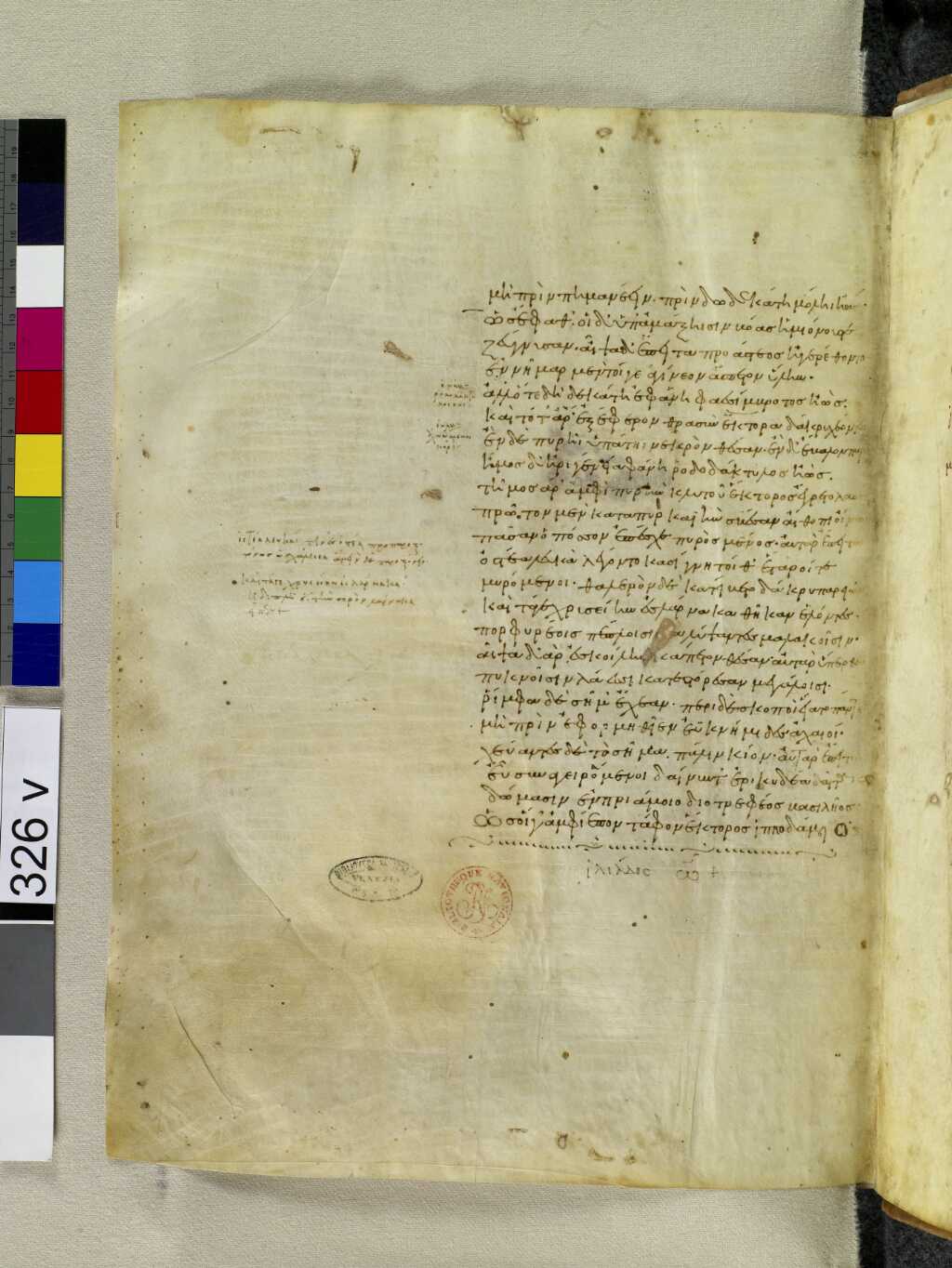
801χεύαντες δὲ τὸ σῆμα πάλιν κίον· αὐτὰρ ἔπειτα 802εὖ συναγειρόμενοι δαίνυντʼ ἐρικυδέα δαῖτα 803δώμασιν ἐν Πριάμοιο διοτρεφέος βασιλῆος. 804ὣς οἵ γʼ ἀμφίεπον τάφον Ἕκτορος ἱπποδάμοιο.
This website includes information about Project Gutenberg, including how to make donations to the Project Gutenberg Literary Archive Foundation, how to help produce our new eBooks, and how to subscribe to our email newsletter to hear about new eBooks.
Cite
Source & Cross-References
- Source text: Venetus A (10th c.) via Homer Multitext IIIF + Perseus Greek + Butler English (PG #2199) — view original
- Critical edition: Munro & Allen (Perseus Digital Library)
← previous · → next · v cycle view · l back to library