The Iliad, Book 23
Introduction
Book 23 of the Iliad with 36 sections, each linked to its specific folio in Venetus A (Marcianus Graecus 454, 10th c.). The Homer Multitext Project provides line-level folio mappings, ensuring every section of text corresponds to the exact manuscript page where it appears.
How was this verified? (Provenance)
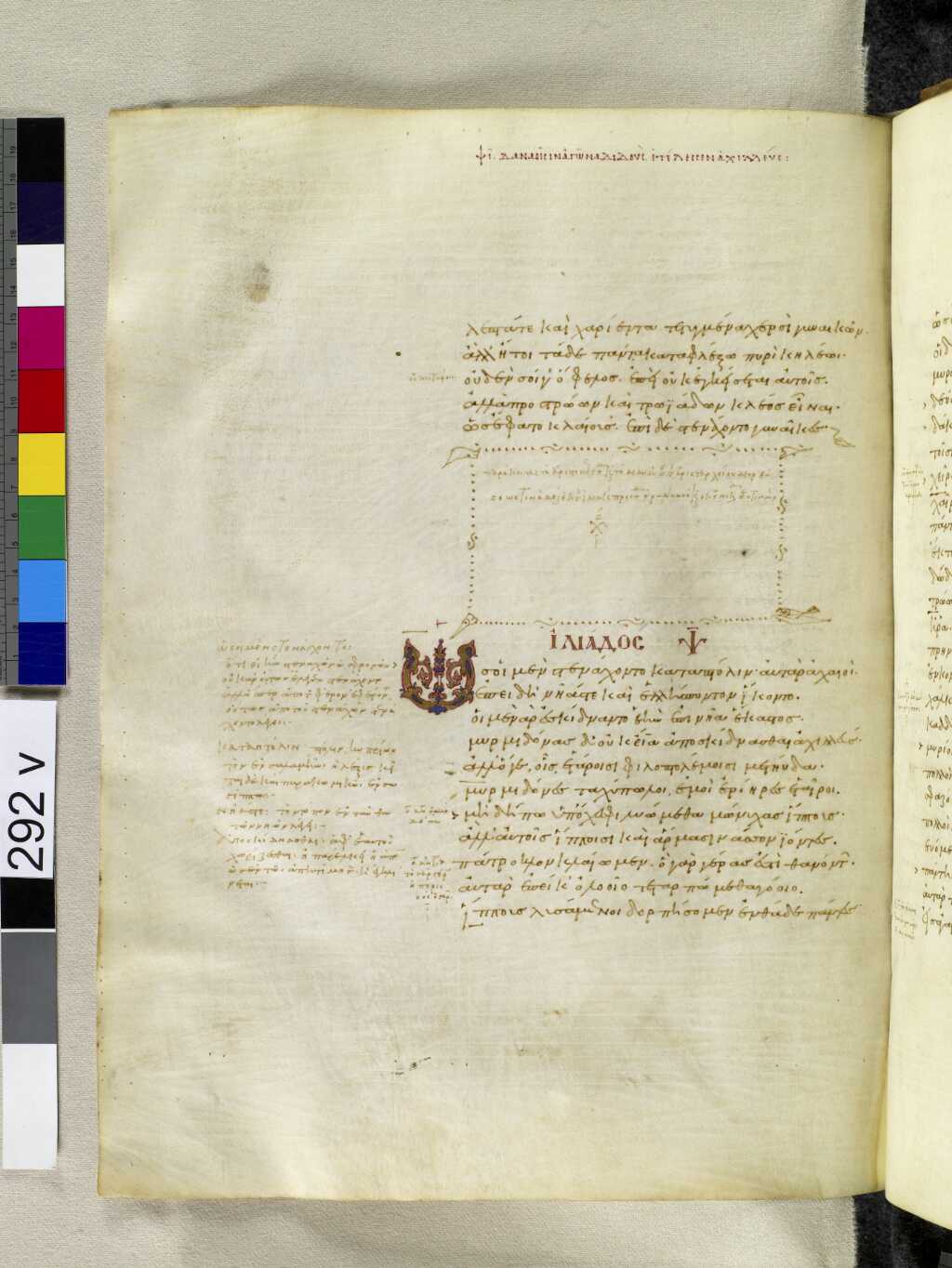
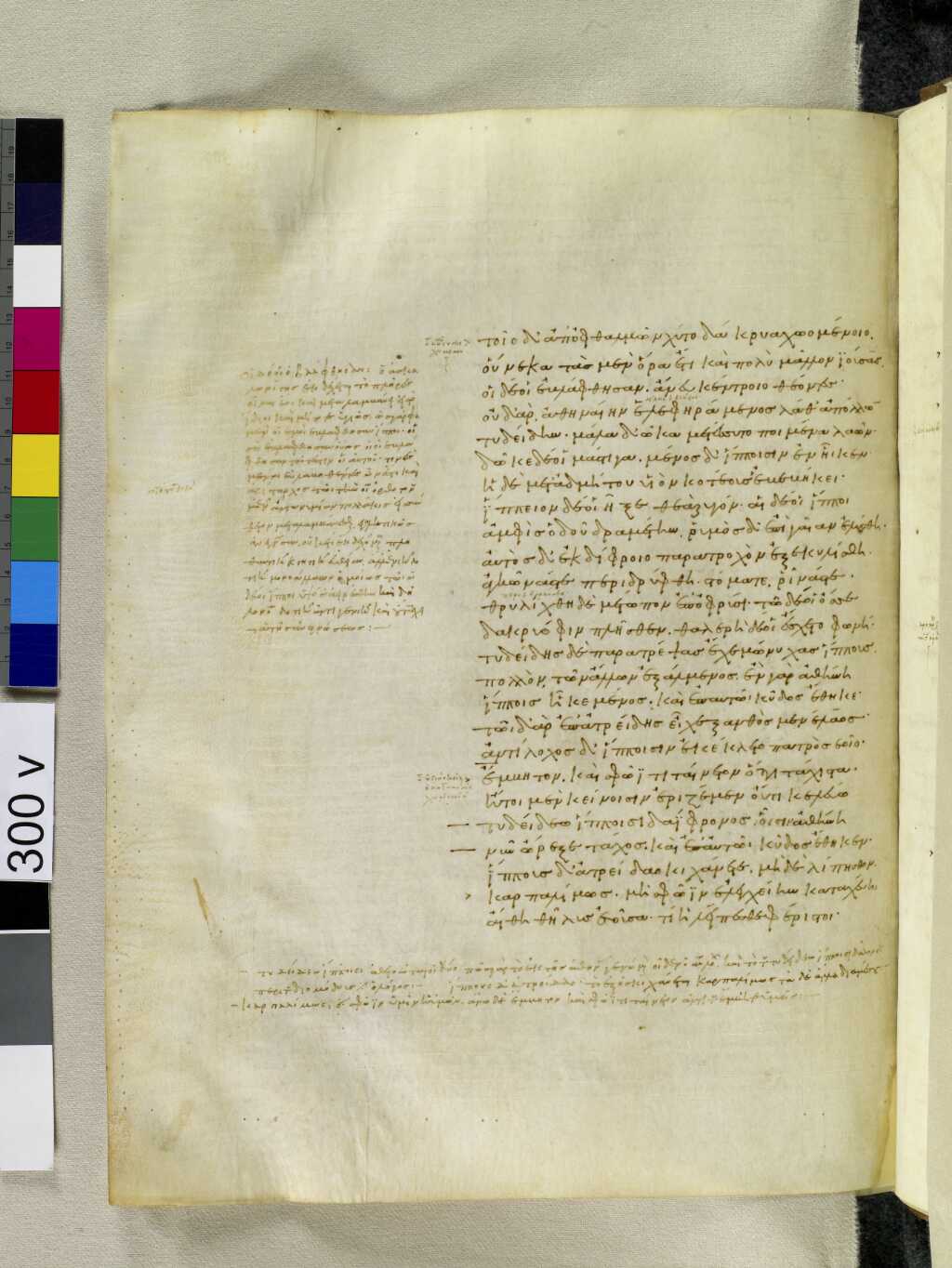
1ὣς οἳ μὲν στενάχοντο κατὰ πτόλιν· αὐτὰρ Ἀχαιοὶ 2ἐπεὶ δὴ νῆάς τε καὶ Ἑλλήσποντον ἵκοντο, 3οἳ μὲν ἄρʼ ἐσκίδναντο ἑὴν ἐπὶ νῆα ἕκαστος, 4Μυρμιδόνας δʼ οὐκ εἴα ἀποσκίδνασθαι Ἀχιλλεύς, 5ἀλλʼ ὅ γε οἷς ἑτάροισι φιλοπτολέμοισι μετηύδα· 6Μυρμιδόνες ταχύπωλοι ἐμοὶ ἐρίηρες ἑταῖροι 7μὴ δή πω ὑπʼ ὄχεσφι λυώμεθα μώνυχας ἵππους, 8ἀλλʼ αὐτοῖς ἵπποισι καὶ ἅρμασιν ἆσσον ἰόντες 9Πάτροκλον κλαίωμεν· ὃ γὰρ γέρας ἐστὶ θανόντων. 10αὐτὰρ ἐπεί κʼ ὀλοοῖο τεταρπώμεσθα γόοιο, 11ἵππους λυσάμενοι δορπήσομεν ἐνθάδε πάντες. 12ὣς ἔφαθʼ, οἳ δʼ ᾤμωξαν ἀολλέες, ἦρχε δʼ Ἀχιλλεύς. 13οἳ δὲ τρὶς περὶ νεκρὸν ἐΰτριχας ἤλασαν ἵππους 14μυρόμενοι· μετὰ δέ σφι Θέτις γόου ἵμερον ὦρσε. 15δεύοντο ψάμαθοι, δεύοντο δὲ τεύχεα φωτῶν 16δάκρυσι· τοῖον γὰρ πόθεον μήστωρα φόβοιο. 17τοῖσι δὲ Πηλεΐδης ἁδινοῦ ἐξῆρχε γόοιο 18χεῖρας ἐπʼ ἀνδροφόνους θέμενος στήθεσσιν ἑταίρου· 19χαῖρέ μοι ὦ Πάτροκλε καὶ εἰν Ἀΐδαο δόμοισι· 20πάντα γὰρ ἤδη τοι τελέω τὰ πάροιθεν ὑπέστην 21Ἕκτορα δεῦρʼ ἐρύσας δώσειν κυσὶν ὠμὰ δάσασθαι, 22δώδεκα δὲ προπάροιθε πυρῆς ἀποδειροτομήσειν 23Τρώων ἀγλαὰ τέκνα σέθεν κταμένοιο χολωθείς. 24ἦ ῥα καὶ Ἕκτορα δῖον ἀεικέα μήδετο ἔργα 25πρηνέα πὰρ λεχέεσσι Μενοιτιάδαο τανύσσας
The funeral of Patroclus, and the funeral games.
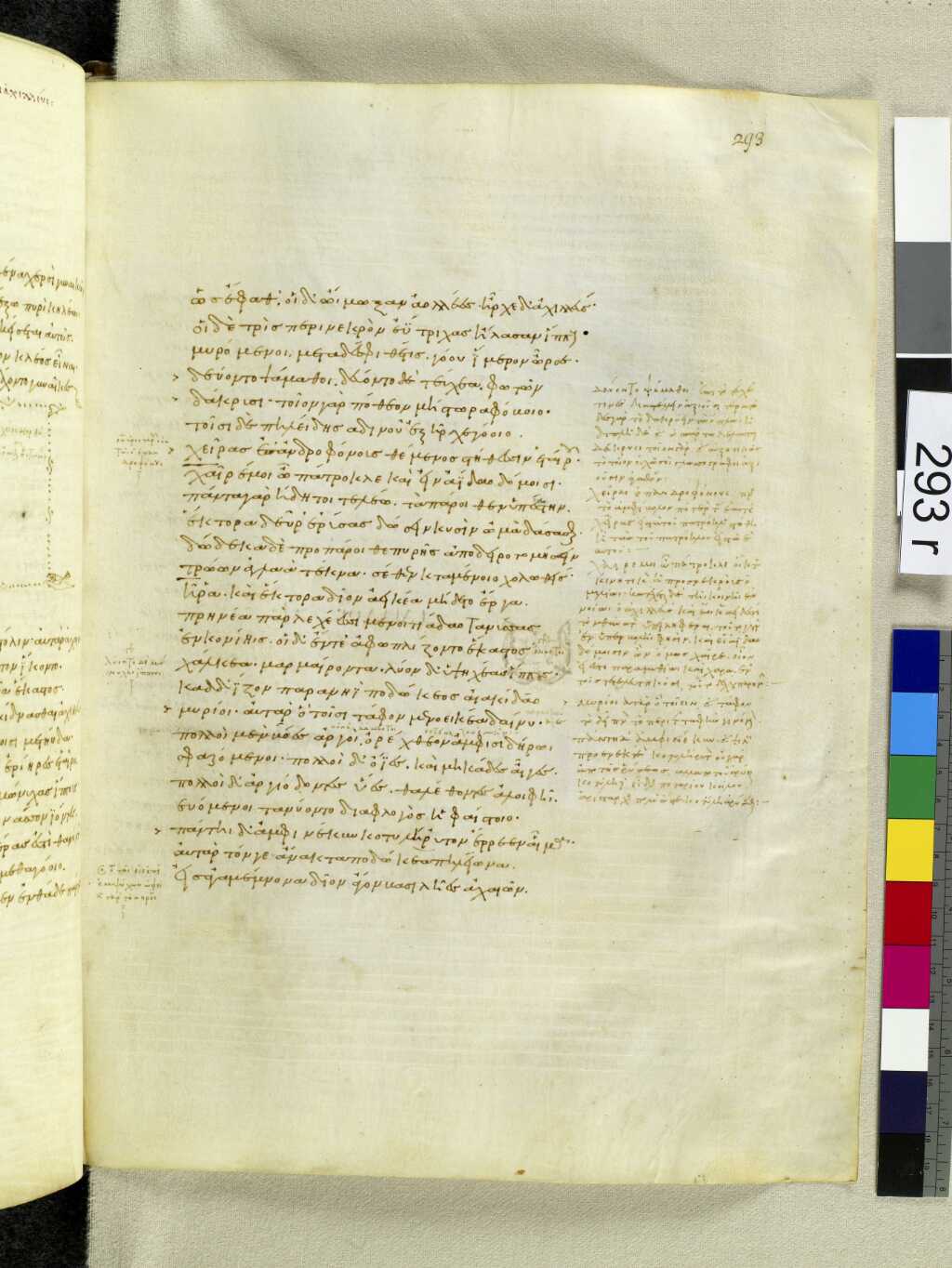
26ἐν κονίῃς· οἳ δʼ ἔντεʼ ἀφωπλίζοντο ἕκαστος 27χάλκεα μαρμαίροντα, λύον δʼ ὑψηχέας ἵππους, 28κὰδ δʼ ἷζον παρὰ νηῒ ποδώκεος Αἰακίδαο 29μυρίοι· αὐτὰρ ὃ τοῖσι τάφον μενοεικέα δαίνυ. 30πολλοὶ μὲν βόες ἀργοὶ ὀρέχθεον ἀμφὶ σιδήρῳ 31σφαζόμενοι, πολλοὶ δʼ ὄϊες καὶ μηκάδες αἶγες· 32πολλοὶ δʼ ἀργιόδοντες ὕες θαλέθοντες ἀλοιφῇ 33εὑόμενοι τανύοντο διὰ φλογὸς Ἡφαίστοιο· 34πάντῃ δʼ ἀμφὶ νέκυν κοτυλήρυτον ἔρρεεν αἷμα. 35αὐτὰρ τόν γε ἄνακτα ποδώκεα Πηλεΐωνα 36εἰς Ἀγαμέμνονα δῖον ἄγον βασιλῆες Ἀχαιῶν 37σπουδῇ παρπεπιθόντες ἑταίρου χωόμενον κῆρ. 38οἳ δʼ ὅτε δὴ κλισίην Ἀγαμέμνονος ἷξον ἰόντες, 39αὐτίκα κηρύκεσσι λιγυφθόγγοισι κέλευσαν 40ἀμφὶ πυρὶ στῆσαι τρίποδα μέγαν, εἰ πεπίθοιεν 41Πηλεΐδην λούσασθαι ἄπο βρότον αἱματόεντα. 42αὐτὰρ ὅ γʼ ἠρνεῖτο στερεῶς, ἐπὶ δʼ ὅρκον ὄμοσσεν· 43οὐ μὰ Ζῆνʼ, ὅς τίς τε θεῶν ὕπατος καὶ ἄριστος, 44οὐ θέμις ἐστὶ λοετρὰ καρήατος ἆσσον ἱκέσθαι 45πρίν γʼ ἐνὶ Πάτροκλον θέμεναι πυρὶ σῆμά τε χεῦαι 46κείρασθαί τε κόμην, ἐπεὶ οὔ μʼ ἔτι δεύτερον ὧδε 47ἵξετʼ ἄχος κραδίην ὄφρα ζωοῖσι μετείω. 48ἀλλʼ ἤτοι νῦν μὲν στυγερῇ πειθώμεθα δαιτί· 49ἠῶθεν δʼ ὄτρυνον ἄναξ ἀνδρῶν Ἀγάμεμνον 50ὕλην τʼ ἀξέμεναι παρά τε σχεῖν ὅσσʼ ἐπιεικὲς
Thus did they make their moan throughout the city, while the Achaeans when they reached the Hellespont went back every man to his own ship. But Achilles would not let the Myrmidons go, and spoke to his brave comrades saying, “Myrmidons, famed horsemen and my own trusted friends, not yet, forsooth, let us unyoke, but with horse and chariot draw near to the body and mourn Patroclus, in due honour to the dead. When we have had full comfort of lamentation we will unyoke our horses and take supper all of us here.”
On this they all joined in a cry of wailing and Achilles led them in their lament. Thrice did they drive their chariots all sorrowing round the body, and Thetis stirred within them a still deeper yearning. The sands of the sea-shore and the men’s armour were wet with their weeping, so great a minister of fear was he whom they had lost. Chief in all their mourning was the son of Peleus: he laid his blood-stained hand on the breast of his friend. “Fare well,” he cried, “Patroclus, even in the house of Hades. I will now do all that I erewhile promised you; I will drag Hector hither and let dogs devour him raw; twelve noble sons of Trojans will I also slay before your pyre to avenge you.”
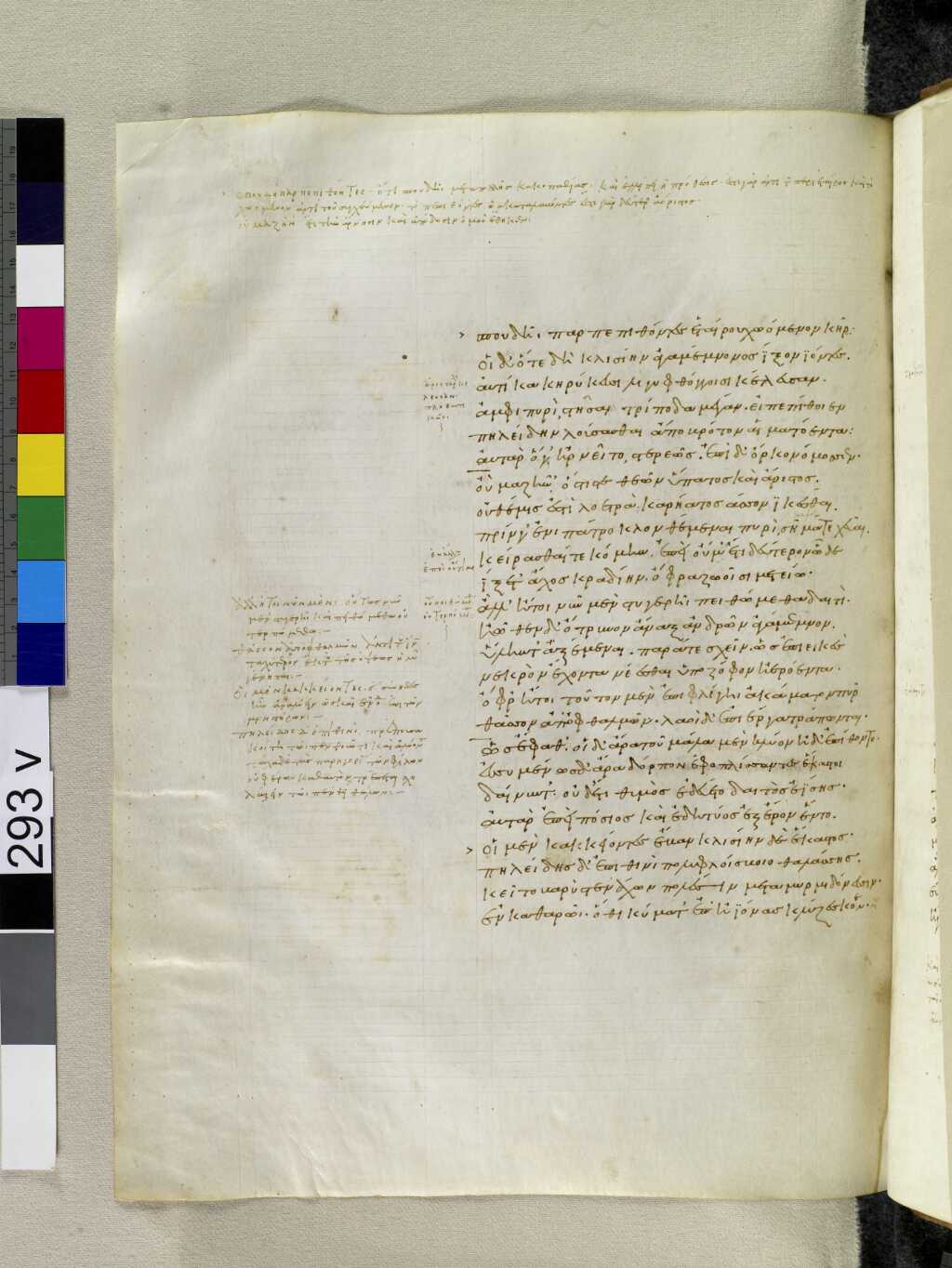
51νεκρὸν ἔχοντα νέεσθαι ὑπὸ ζόφον ἠερόεντα, 52ὄφρʼ ἤτοι τοῦτον μὲν ἐπιφλέγῃ ἀκάματον πῦρ 53θᾶσσον ἀπʼ ὀφθαλμῶν, λαοὶ δʼ ἐπὶ ἔργα τράπωνται. 54ὣς ἔφαθʼ, οἳ δʼ ἄρα τοῦ μάλα μὲν κλύον ἠδὲ πίθοντο. 55ἐσσυμένως δʼ ἄρα δόρπον ἐφοπλίσσαντες ἕκαστοι 56δαίνυντʼ, οὐδέ τι θυμὸς ἐδεύετο δαιτὸς ἐΐσης. 57αὐτὰρ ἐπεὶ πόσιος καὶ ἐδητύος ἐξ ἔρον ἕντο, 58οἳ μὲν κακκείοντες ἔβαν κλισίην δὲ ἕκαστος, 59Πηλεΐδης δʼ ἐπὶ θινὶ πολυφλοίσβοιο θαλάσσης 60κεῖτο βαρὺ στενάχων πολέσιν μετὰ Μυρμιδόνεσσιν 61ἐν καθαρῷ, ὅθι κύματʼ ἐπʼ ἠϊόνος κλύζεσκον· 62εὖτε τὸν ὕπνος ἔμαρπτε λύων μελεδήματα θυμοῦ 63νήδυμος ἀμφιχυθείς· μάλα γὰρ κάμε φαίδιμα γυῖα 64Ἕκτορʼ ἐπαΐσσων προτὶ Ἴλιον ἠνεμόεσσαν· 65ἦλθε δʼ ἐπὶ ψυχὴ Πατροκλῆος δειλοῖο 66πάντʼ αὐτῷ μέγεθός τε καὶ ὄμματα κάλʼ ἐϊκυῖα 67καὶ φωνήν, καὶ τοῖα περὶ χροῒ εἵματα ἕστο· 68στῆ δʼ ἄρʼ ὑπὲρ κεφαλῆς καί μιν πρὸς μῦθον ἔειπεν· 69εὕδεις, αὐτὰρ ἐμεῖο λελασμένος ἔπλευ Ἀχιλλεῦ. 70οὐ μέν μευ ζώοντος ἀκήδεις, ἀλλὰ θανόντος· 71θάπτέ με ὅττι τάχιστα πύλας Ἀΐδαο περήσω. 72τῆλέ με εἴργουσι ψυχαὶ εἴδωλα καμόντων, 73οὐδέ μέ πω μίσγεσθαι ὑπὲρ ποταμοῖο ἐῶσιν, 74ἀλλʼ αὔτως ἀλάλημαι ἀνʼ εὐρυπυλὲς Ἄϊδος δῶ. 75καί μοι δὸς τὴν χεῖρʼ· ὀλοφύρομαι, οὐ γὰρ ἔτʼ αὖτις
As he spoke he treated the body of noble Hector with contumely, laying it at full length in the dust beside the bier of Patroclus. The others then put off every man his armour, took the horses from their chariots, and seated themselves in great multitude by the ship of the fleet descendant of Aeacus, who thereon feasted them with an abundant funeral banquet. Many a goodly ox, with many a sheep and bleating goat did they butcher and cut up; many a tusked boar moreover, fat and well-fed, did they singe and set to roast in the flames of Vulcan; and rivulets of blood flowed all round the place where the body was lying.
Then the princes of the Achaeans took the son of Peleus to Agamemnon, but hardly could they persuade him to come with them, so wroth was he for the death of his comrade. As soon as they reached Agamemnon’s tent they told the serving-men to set a large tripod over the fire in case they might persuade the son of Peleus to wash the clotted gore from this body, but he denied them sternly, and swore it with a solemn oath, saying, “Nay, by King Jove, first and mightiest of all gods, it is not meet that water should touch my body, till I have laid Patroclus on the flames, have built him a barrow, and shaved my head—for so long as I live no such second sorrow shall ever draw nigh me. Now, therefore, let us do all that this sad festival demands, but at break of day, King Agamemnon, bid your men bring wood, and provide all else that the dead may duly take into the realm of darkness; the fire shall thus burn him out of our sight the sooner, and the people shall turn again to their own labours.”
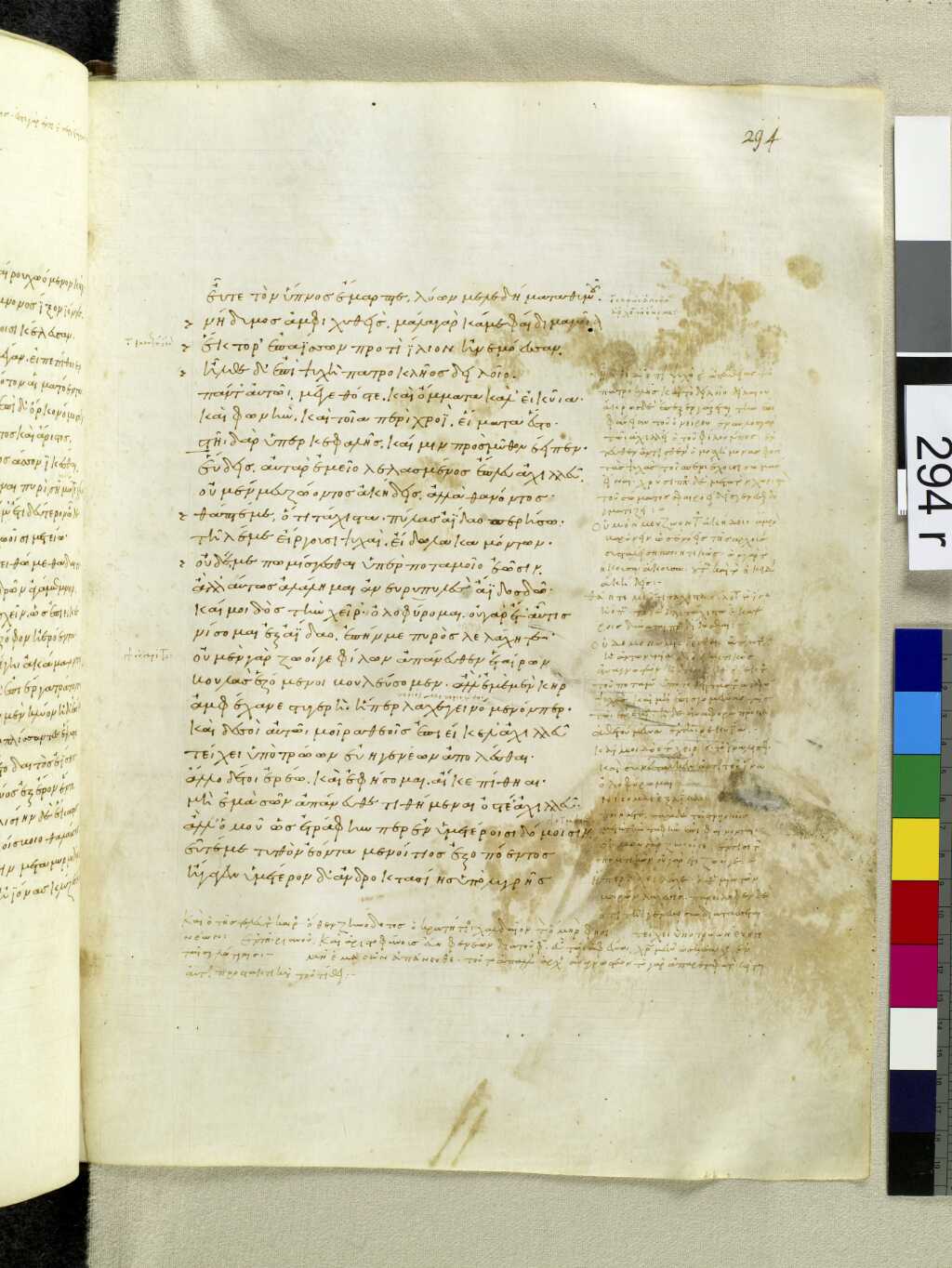
76νίσομαι ἐξ Ἀΐδαο, ἐπήν με πυρὸς λελάχητε. 77οὐ μὲν γὰρ ζωοί γε φίλων ἀπάνευθεν ἑταίρων 78βουλὰς ἑζόμενοι βουλεύσομεν, ἀλλʼ ἐμὲ μὲν κὴρ 79ἀμφέχανε στυγερή, ἥ περ λάχε γιγνόμενόν περ· 80καὶ δὲ σοὶ αὐτῷ μοῖρα, θεοῖς ἐπιείκελʼ Ἀχιλλεῦ, 81τείχει ὕπο Τρώων εὐηφενέων ἀπολέσθαι. 82ἄλλο δέ τοι ἐρέω καὶ ἐφήσομαι αἴ κε πίθηαι· 83μὴ ἐμὰ σῶν ἀπάνευθε τιθήμεναι ὀστέʼ Ἀχιλλεῦ, 84ἀλλʼ ὁμοῦ ὡς ἐτράφημεν ἐν ὑμετέροισι δόμοισιν, 85εὖτέ με τυτθὸν ἐόντα Μενοίτιος ἐξ Ὀπόεντος 86ἤγαγεν ὑμέτερόνδʼ ἀνδροκτασίης ὕπο λυγρῆς, 87ἤματι τῷ ὅτε παῖδα κατέκτανον Ἀμφιδάμαντος 88νήπιος οὐκ ἐθέλων ἀμφʼ ἀστραγάλοισι χολωθείς· 89ἔνθά με δεξάμενος ἐν δώμασιν ἱππότα Πηλεὺς 90ἔτραφέ τʼ ἐνδυκέως καὶ σὸν θεράποντʼ ὀνόμηνεν· 91ὣς δὲ καὶ ὀστέα νῶϊν ὁμὴ σορὸς ἀμφικαλύπτοι 92χρύσεος ἀμφιφορεύς, τόν τοι πόρε πότνια μήτηρ. 93τὸν δʼ ἀπαμειβόμενος προσέφη πόδας ὠκὺς Ἀχιλλεύς· 94τίπτέ μοι ἠθείη κεφαλὴ δεῦρʼ εἰλήλουθας 95καί μοι ταῦτα ἕκαστʼ ἐπιτέλλεαι; αὐτὰρ ἐγώ τοι 96πάντα μάλʼ ἐκτελέω καὶ πείσομαι ὡς σὺ κελεύεις. 97ἀλλά μοι ἆσσον στῆθι· μίνυνθά περ ἀμφιβαλόντε 98ἀλλήλους ὀλοοῖο τεταρπώμεσθα γόοιο. 99ὣς ἄρα φωνήσας ὠρέξατο χερσὶ φίλῃσιν 100οὐδʼ ἔλαβε· ψυχὴ δὲ κατὰ χθονὸς ἠΰτε καπνὸς
Thus did he speak, and they did even as he had said. They made haste to prepare the meal, they ate, and every man had his full share so that all were satisfied. As soon as they had had enough to eat and drink, the others went to their rest each in his own tent, but the son of Peleus lay grieving among his Myrmidons by the shore of the sounding sea, in an open place where the waves came surging in one after another. Here a very deep slumber took hold upon him and eased the burden of his sorrows, for his limbs were weary with chasing Hector round windy Ilius. Presently the sad spirit of Patroclus drew near him, like what he had been in stature, voice, and the light of his beaming eyes, clad, too, as he had been clad in life. The spirit hovered over his head and said—
“You sleep, Achilles, and have forgotten me; you loved me living, but now that I am dead you think for me no further. Bury me with all speed that I may pass the gates of Hades; the ghosts, vain shadows of men that can labour no more, drive me away from them; they will not yet suffer me to join those that are beyond the river, and I wander all desolate by the wide gates of the house of Hades. Give me now your hand I pray you, for when you have once given me my dues of fire, never shall I again come forth out of the house of Hades. Nevermore shall we sit apart and take sweet counsel among the living; the cruel fate which was my birth-right has yawned its wide jaws around me—nay, you too Achilles, peer of gods, are doomed to die beneath the wall of the noble Trojans.
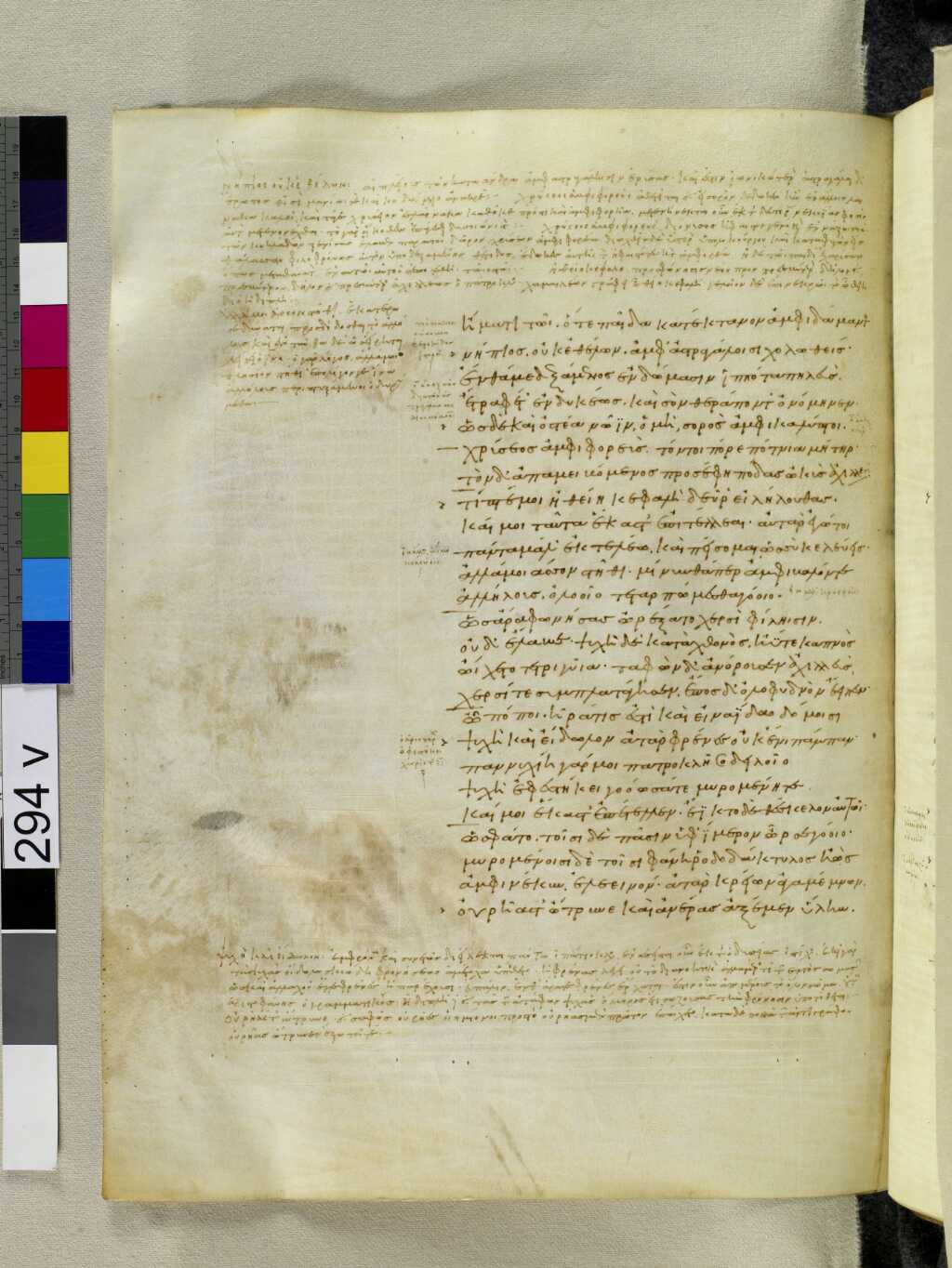
101ᾤχετο τετριγυῖα· ταφὼν δʼ ἀνόρουσεν Ἀχιλλεὺς 102χερσί τε συμπλατάγησεν, ἔπος δʼ ὀλοφυδνὸν ἔειπεν· 103ὢ πόποι ἦ ῥά τίς ἐστι καὶ εἰν Ἀΐδαο δόμοισι 104ψυχὴ καὶ εἴδωλον, ἀτὰρ φρένες οὐκ ἔνι πάμπαν· 105παννυχίη γάρ μοι Πατροκλῆος δειλοῖο 106ψυχὴ ἐφεστήκει γοόωσά τε μυρομένη τε, 107καί μοι ἕκαστʼ ἐπέτελλεν, ἔϊκτο δὲ θέσκελον αὐτῷ. 108ὣς φάτο, τοῖσι δὲ πᾶσιν ὑφʼ ἵμερον ὦρσε γόοιο· 109μυρομένοισι δὲ τοῖσι φάνη ῥοδοδάκτυλος Ἠὼς 110ἀμφὶ νέκυν ἐλεεινόν. ἀτὰρ κρείων Ἀγαμέμνων 111οὐρῆάς τʼ ὄτρυνε καὶ ἀνέρας ἀξέμεν ὕλην 112πάντοθεν ἐκ κλισιῶν· ἐπὶ δʼ ἀνὴρ ἐσθλὸς ὀρώρει 113Μηριόνης θεράπων ἀγαπήνορος Ἰδομενῆος. 114οἳ δʼ ἴσαν ὑλοτόμους πελέκεας ἐν χερσὶν ἔχοντες 115σειράς τʼ εὐπλέκτους· πρὸ δʼ ἄρʼ οὐρῆες κίον αὐτῶν. 116πολλὰ δʼ ἄναντα κάταντα πάραντά τε δόχμιά τʼ ἦλθον· 117ἀλλʼ ὅτε δὴ κνημοὺς προσέβαν πολυπίδακος Ἴδης, 118αὐτίκʼ ἄρα δρῦς ὑψικόμους ταναήκεϊ χαλκῷ 119τάμνον ἐπειγόμενοι· ταὶ δὲ μεγάλα κτυπέουσαι 120πῖπτον· τὰς μὲν ἔπειτα διαπλήσσοντες Ἀχαιοὶ 121ἔκδεον ἡμιόνων· ταὶ δὲ χθόνα ποσσὶ δατεῦντο 122ἐλδόμεναι πεδίοιο διὰ ῥωπήϊα πυκνά. 123πάντες δʼ ὑλοτόμοι φιτροὺς φέρον· ὡς γὰρ ἀνώγει 124Μηριόνης θεράπων ἀγαπήνορος Ἰδομενῆος. 125κὰδ δʼ ἄρʼ ἐπʼ ἀκτῆς βάλλον ἐπισχερώ, ἔνθʼ ἄρʼ Ἀχιλλεὺς
“One prayer more will I make you, if you will grant it; let not my bones be laid apart from yours, Achilles, but with them; even as we were brought up together in your own home, what time Menoetius brought me to you as a child from Opoeis because by a sad spite I had killed the son of Amphidamas—not of set purpose, but in childish quarrel over the dice. The knight Peleus took me into his house, entreated me kindly, and named me to be your squire; therefore let our bones lie in but a single urn, the two-handled golden vase given to you by your mother.”
And Achilles answered, “Why, true heart, are you come hither to lay these charges upon me? I will of my own self do all as you have bidden me. Draw closer to me, let us once more throw our arms around one another, and find sad comfort in the sharing of our sorrows.”
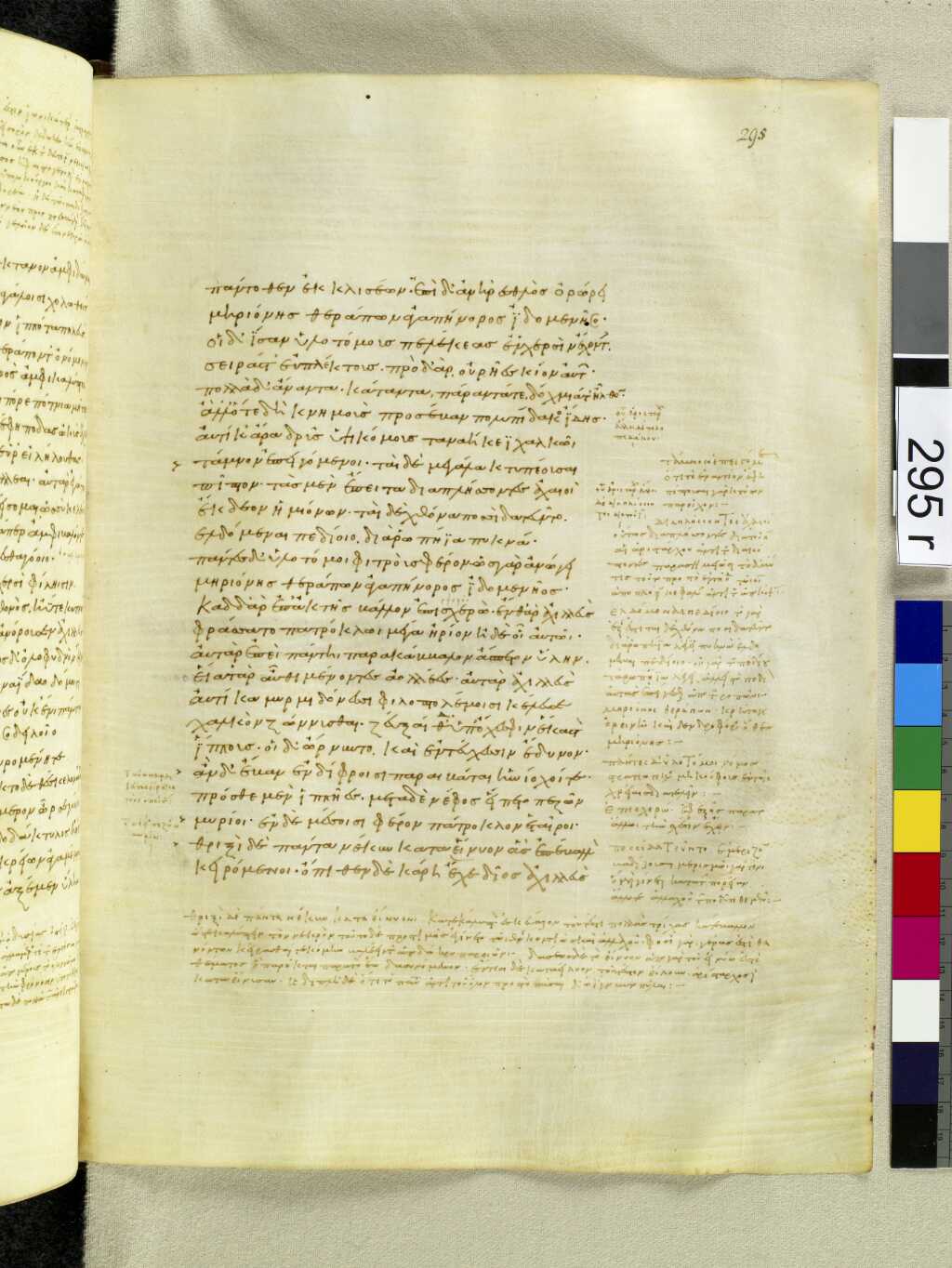
126φράσσατο Πατρόκλῳ μέγα ἠρίον ἠδὲ οἷ αὐτῷ. 127αὐτὰρ ἐπεὶ πάντῃ παρακάββαλον ἄσπετον ὕλην 128ἥατʼ ἄρʼ αὖθι μένοντες ἀολλέες. αὐτὰρ Ἀχιλλεὺς 129αὐτίκα Μυρμιδόνεσσι φιλοπτολέμοισι κέλευσε 130χαλκὸν ζώννυσθαι, ζεῦξαι δʼ ὑπʼ ὄχεσφιν ἕκαστον 131ἵππους· οἳ δʼ ὄρνυντο καὶ ἐν τεύχεσσιν ἔδυνον, 132ἂν δʼ ἔβαν ἐν δίφροισι παραιβάται ἡνίοχοί τε, 133πρόσθε μὲν ἱππῆες, μετὰ δὲ νέφος εἵπετο πεζῶν 134μυρίοι· ἐν δὲ μέσοισι φέρον Πάτροκλον ἑταῖροι. 135θριξὶ δὲ πάντα νέκυν καταείνυσαν, ἃς ἐπέβαλλον 136κειρόμενοι· ὄπιθεν δὲ κάρη ἔχε δῖος Ἀχιλλεὺς 137ἀχνύμενος· ἕταρον γὰρ ἀμύμονα πέμπʼ Ἄϊδος δέ. 138οἳ δʼ ὅτε χῶρον ἵκανον ὅθί σφισι πέφραδʼ Ἀχιλλεὺς 139κάτθεσαν, αἶψα δέ οἱ μενοεικέα νήεον ὕλην. 140ἔνθʼ αὖτʼ ἄλλʼ ἐνόησε ποδάρκης δῖος Ἀχιλλεύς· 141στὰς ἀπάνευθε πυρῆς ξανθὴν ἀπεκείρατο χαίτην, 142τήν ῥα Σπερχειῷ ποταμῷ τρέφε τηλεθόωσαν· 143ὀχθήσας δʼ ἄρα εἶπεν ἰδὼν ἐπὶ οἴνοπα πόντον· 144Σπερχείʼ ἄλλως σοί γε πατὴρ ἠρήσατο Πηλεὺς 145κεῖσέ με νοστήσαντα φίλην ἐς πατρίδα γαῖαν 146σοί τε κόμην κερέειν ῥέξειν θʼ ἱερὴν ἑκατόμβην, 147πεντήκοντα δʼ ἔνορχα παρʼ αὐτόθι μῆλʼ ἱερεύσειν 148ἐς πηγάς, ὅθι τοι τέμενος βωμός τε θυήεις. 149ὣς ἠρᾶθʼ ὃ γέρων, σὺ δέ οἱ νόον οὐκ ἐτέλεσσας. 150νῦν δʼ ἐπεὶ οὐ νέομαί γε φίλην ἐς πατρίδα γαῖαν
He opened his arms towards him as he spoke and would have clasped him in them, but there was nothing, and the spirit vanished as a vapour, gibbering and whining into the earth. Achilles sprang to his feet, smote his two hands, and made lamentation saying, “Of a truth even in the house of Hades there are ghosts and phantoms that have no life in them; all night long the sad spirit of Patroclus has hovered over head making piteous moan, telling me what I am to do for him, and looking wondrously like himself.”
Thus did he speak and his words set them all weeping and mourning about the poor dumb dead, till rosy-fingered morn appeared. Then King Agamemnon sent men and mules from all parts of the camp, to bring wood, and Meriones, squire to Idomeneus, was in charge over them. They went out with woodmen’s axes and strong ropes in their hands, and before them went the mules. Up hill and down dale did they go, by straight ways and crooked, and when they reached the heights of many-fountained Ida, they laid their axes to the roots of many a tall branching oak that came thundering down as they felled it. They split the trees and bound them behind the mules, which then wended their way as they best could through the thick brushwood on to the plain. All who had been cutting wood bore logs, for so Meriones squire to Idomeneus had bidden them, and they threw them down in a line upon the sea-shore at the place where Achilles would make a mighty monument for Patroclus and for himself.
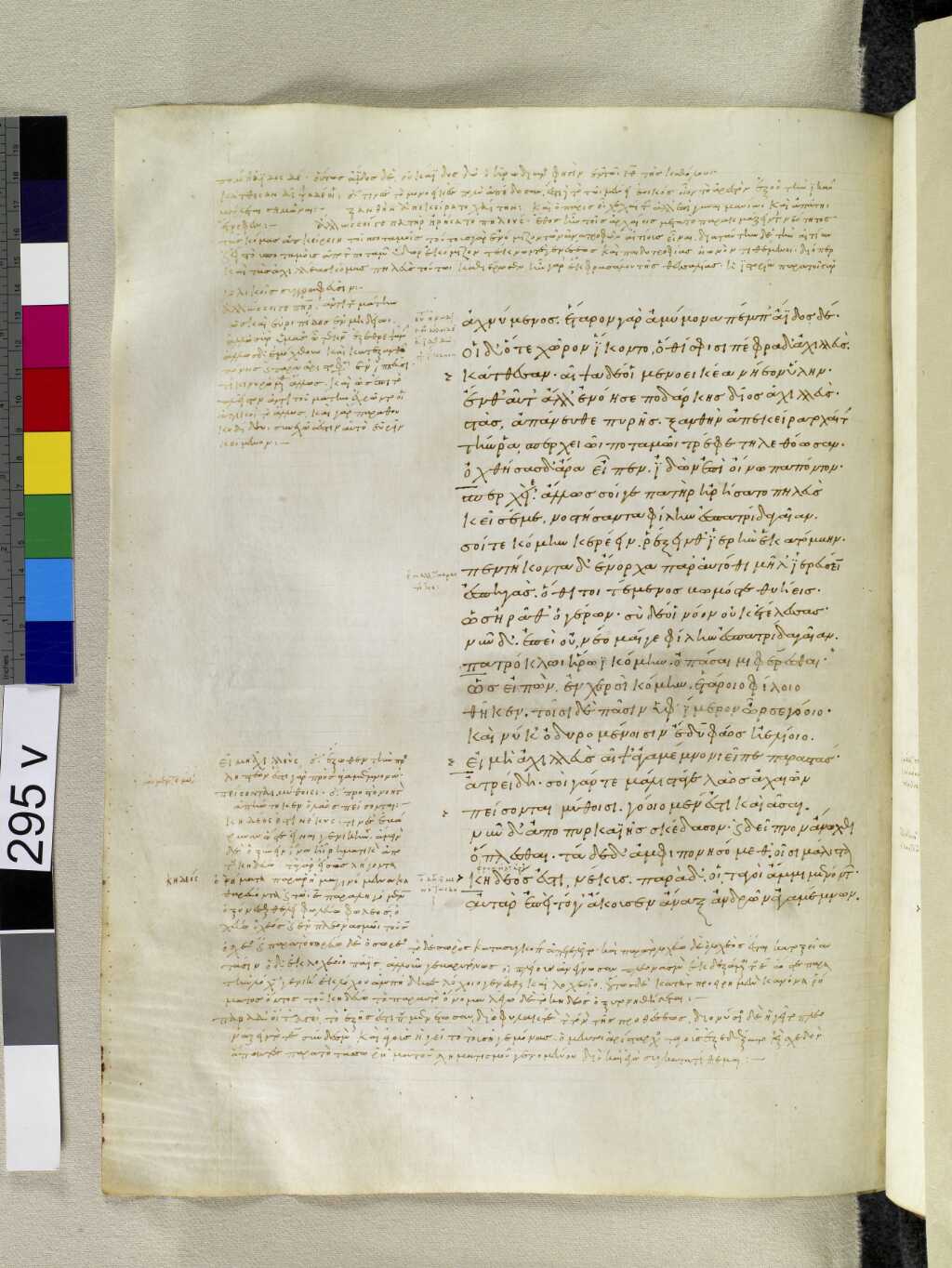
151Πατρόκλῳ ἥρωϊ κόμην ὀπάσαιμι φέρεσθαι. 152ὣς εἰπὼν ἐν χερσὶ κόμην ἑτάροιο φίλοιο 153θῆκεν, τοῖσι δὲ πᾶσιν ὑφʼ ἵμερον ὦρσε γόοιο. 154καί νύ κʼ ὀδυρομένοισιν ἔδυ φάος ἠελίοιο 155εἰ μὴ Ἀχιλλεὺς αἶψʼ Ἀγαμέμνονι εἶπε παραστάς· 156Ἀτρεΐδη, σοὶ γάρ τε μάλιστά γε λαὸς Ἀχαιῶν 157πείσονται μύθοισι, γόοιο μὲν ἔστι καὶ ἆσαι, 158νῦν δʼ ἀπὸ πυρκαϊῆς σκέδασον καὶ δεῖπνον ἄνωχθι 159ὅπλεσθαι· τάδε δʼ ἀμφὶ πονησόμεθʼ οἷσι μάλιστα 160κήδεός ἐστι νέκυς· παρὰ δʼ οἵ τʼ ἀγοὶ ἄμμι μενόντων. 161αὐτὰρ ἐπεὶ τό γʼ ἄκουσεν ἄναξ ἀνδρῶν Ἀγαμέμνων, 162αὐτίκα λαὸν μὲν σκέδασεν κατὰ νῆας ἐΐσας, 163κηδεμόνες δὲ παρʼ αὖθι μένον καὶ νήεον ὕλην, 164ποίησαν δὲ πυρὴν ἑκατόμπεδον ἔνθα καὶ ἔνθα, 165ἐν δὲ πυρῇ ὑπάτῃ νεκρὸν θέσαν ἀχνύμενοι κῆρ. 166πολλὰ δὲ ἴφια μῆλα καὶ εἰλίποδας ἕλικας βοῦς 167πρόσθε πυρῆς ἔδερόν τε καὶ ἄμφεπον· ἐκ δʼ ἄρα πάντων 168δημὸν ἑλὼν ἐκάλυψε νέκυν μεγάθυμος Ἀχιλλεὺς 169ἐς πόδας ἐκ κεφαλῆς, περὶ δὲ δρατὰ σώματα νήει. 170ἐν δʼ ἐτίθει μέλιτος καὶ ἀλείφατος ἀμφιφορῆας 171πρὸς λέχεα κλίνων· πίσυρας δʼ ἐριαύχενας ἵππους 172ἐσσυμένως ἐνέβαλλε πυρῇ μεγάλα στεναχίζων. 173ἐννέα τῷ γε ἄνακτι τραπεζῆες κύνες ἦσαν, 174καὶ μὲν τῶν ἐνέβαλλε πυρῇ δύο δειροτομήσας, 175δώδεκα δὲ Τρώων μεγαθύμων υἱέας ἐσθλοὺς
When they had thrown down their great logs of wood over the whole ground, they stayed all of them where they were, but Achilles ordered his brave Myrmidons to gird on their armour, and to yoke each man his horses; they therefore rose, girded on their armour and mounted each his chariot—they and their charioteers with them. The chariots went before, and they that were on foot followed as a cloud in their tens of thousands after. In the midst of them his comrades bore Patroclus and covered him with the locks of their hair which they cut off and threw upon his body. Last came Achilles with his head bowed for sorrow, so noble a comrade was he taking to the house of Hades.
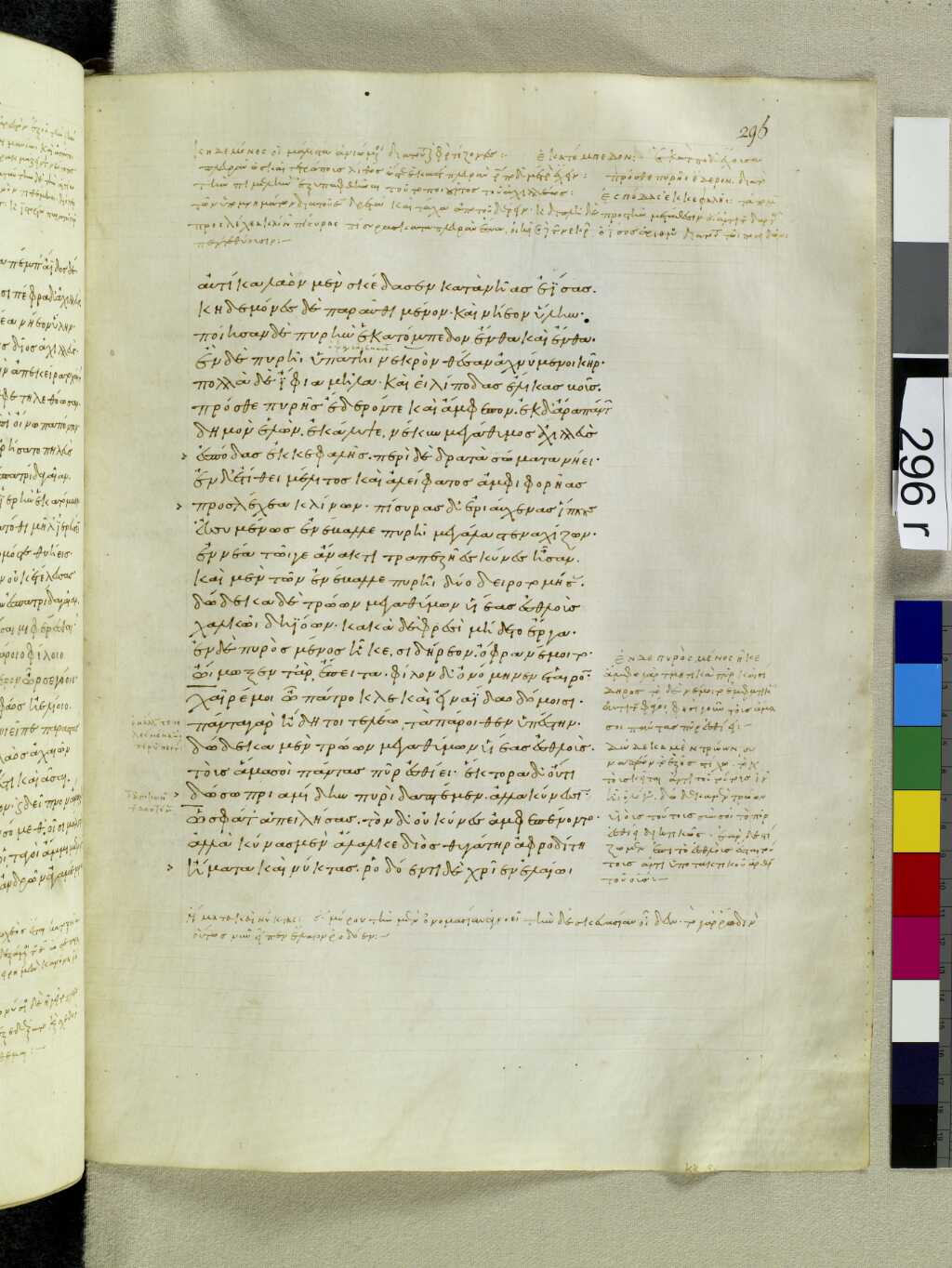
176χαλκῷ δηϊόων· κακὰ δὲ φρεσὶ μήδετο ἔργα· 177ἐν δὲ πυρὸς μένος ἧκε σιδήρεον ὄφρα νέμοιτο. 178ᾤμωξέν τʼ ἄρʼ ἔπειτα, φίλον δʼ ὀνόμηνεν ἑταῖρον· 179χαῖρέ μοι ὦ Πάτροκλε καὶ εἰν Ἀΐδαο δόμοισι· 180πάντα γὰρ ἤδη τοι τελέω τὰ πάροιθεν ὑπέστην, 181δώδεκα μὲν Τρώων μεγαθύμων υἱέας ἐσθλοὺς 182τοὺς ἅμα σοὶ πάντας πῦρ ἐσθίει· Ἕκτορα δʼ οὔ τι 183δώσω Πριαμίδην πυρὶ δαπτέμεν, ἀλλὰ κύνεσσιν. 184ὣς φάτʼ ἀπειλήσας· τὸν δʼ οὐ κύνες ἀμφεπένοντο, 185ἀλλὰ κύνας μὲν ἄλαλκε Διὸς θυγάτηρ Ἀφροδίτη 186ἤματα καὶ νύκτας, ῥοδόεντι δὲ χρῖεν ἐλαίῳ 187ἀμβροσίῳ, ἵνα μή μιν ἀποδρύφοι ἑλκυστάζων. 188τῷ δʼ ἐπὶ κυάνεον νέφος ἤγαγε Φοῖβος Ἀπόλλων 189οὐρανόθεν πεδίον δέ, κάλυψε δὲ χῶρον ἅπαντα 190ὅσσον ἐπεῖχε νέκυς, μὴ πρὶν μένος ἠελίοιο 191σκήλειʼ ἀμφὶ περὶ χρόα ἴνεσιν ἠδὲ μέλεσσιν. 192οὐδὲ πυρὴ Πατρόκλου ἐκαίετο τεθνηῶτος· 193ἔνθʼ αὖτʼ ἀλλʼ ἐνόησε ποδάρκης δῖος Ἀχιλλεύς· 194στὰς ἀπάνευθε πυρῆς δοιοῖς ἠρᾶτʼ ἀνέμοισι 195Βορέῃ καὶ Ζεφύρῳ, καὶ ὑπίσχετο ἱερὰ καλά· 196πολλὰ δὲ καὶ σπένδων χρυσέῳ δέπαϊ λιτάνευεν 197ἐλθέμεν, ὄφρα τάχιστα πυρὶ φλεγεθοίατο νεκροί, 198ὕλη τε σεύαιτο καήμεναι. ὦκα δὲ Ἶρις 199ἀράων ἀΐουσα μετάγγελος ἦλθʼ ἀνέμοισιν. 200οἳ μὲν ἄρα Ζεφύροιο δυσαέος ἀθρόοι ἔνδον
When they came to the place of which Achilles had told them they laid the body down and built up the wood. Achilles then bethought him of another matter. He went a space away from the pyre, and cut off the yellow lock which he had let grow for the river Spercheius. He looked all sorrowfully out upon the dark sea, and said, “Spercheius, in vain did my father Peleus vow to you that when I returned home to my loved native land I should cut off this lock and offer you a holy hecatomb; fifty she-goats was I to sacrifice to you there at your springs, where is your grove and your altar fragrant with burnt-offerings. Thus did my father vow, but you have not fulfilled his prayer; now, therefore, that I shall see my home no more, I give this lock as a keepsake to the hero Patroclus.”
As he spoke he placed the lock in the hands of his dear comrade, and all who stood by were filled with yearning and lamentation. The sun would have gone down upon their mourning had not Achilles presently said to Agamemnon, “Son of Atreus, for it is to you that the people will give ear, there is a time to mourn and a time to cease from mourning; bid the people now leave the pyre and set about getting their dinners: we, to whom the dead is dearest, will see to what is wanted here, and let the other princes also stay by me.”
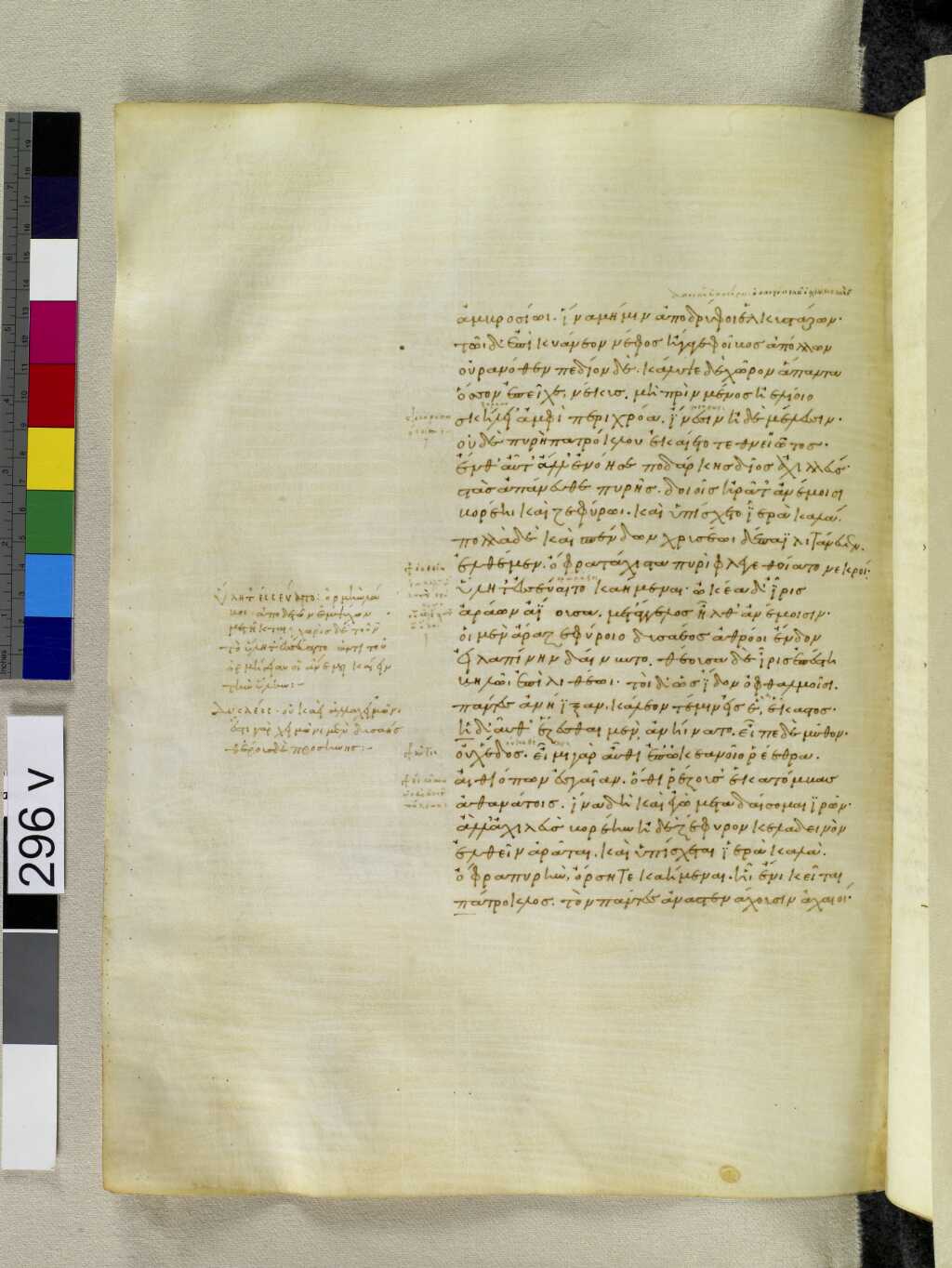
201εἰλαπίνην δαίνυντο· θέουσα δὲ Ἶρις ἐπέστη 202βηλῷ ἔπι λιθέῳ· τοὶ δʼ ὡς ἴδον ὀφθαλμοῖσι 203πάντες ἀνήϊξαν, κάλεόν τέ μιν εἰς ἓ ἕκαστος· 204ἣ δʼ αὖθʼ ἕζεσθαι μὲν ἀνήνατο, εἶπε δὲ μῦθον· 205οὐχ ἕδος· εἶμι γὰρ αὖτις ἐπʼ Ὠκεανοῖο ῥέεθρα 206Αἰθιόπων ἐς γαῖαν, ὅθι ῥέζουσʼ ἑκατόμβας 207ἀθανάτοις, ἵνα δὴ καὶ ἐγὼ μεταδαίσομαι ἱρῶν. 208ἀλλʼ Ἀχιλεὺς Βορέην ἠδὲ Ζέφυρον κελαδεινὸν 209ἐλθεῖν ἀρᾶται, καὶ ὑπίσχεται ἱερὰ καλά, 210ὄφρα πυρὴν ὄρσητε καήμεναι, ᾗ ἔνι κεῖται 211Πάτροκλος, τὸν πάντες ἀναστενάχουσιν Ἀχαιοί. 212ἣ μὲν ἄρʼ ὣς εἰποῦσʼ ἀπεβήσετο, τοὶ δʼ ὀρέοντο 213ἠχῇ θεσπεσίῃ νέφεα κλονέοντε πάροιθεν. 214αἶψα δὲ πόντον ἵκανον ἀήμεναι, ὦρτο δὲ κῦμα 215πνοιῇ ὕπο λιγυρῇ· Τροίην δʼ ἐρίβωλον ἱκέσθην, 216ἐν δὲ πυρῇ πεσέτην, μέγα δʼ ἴαχε θεσπιδαὲς πῦρ. 217παννύχιοι δʼ ἄρα τοί γε πυρῆς ἄμυδις φλόγʼ ἔβαλλον 218φυσῶντες λιγέως· ὃ δὲ πάννυχος ὠκὺς Ἀχιλλεὺς 219χρυσέου ἐκ κρητῆρος ἑλὼν δέπας ἀμφικύπελλον 220οἶνον ἀφυσσόμενος χαμάδις χέε, δεῦε δὲ γαῖαν 221ψυχὴν κικλήσκων Πατροκλῆος δειλοῖο. 222ὡς δὲ πατὴρ οὗ παιδὸς ὀδύρεται ὀστέα καίων 223νυμφίου, ὅς τε θανὼν δειλοὺς ἀκάχησε τοκῆας, 224ὣς Ἀχιλεὺς ἑτάροιο ὀδύρετο ὀστέα καίων, 225ἑρπύζων παρὰ πυρκαϊὴν ἁδινὰ στεναχίζων.
When King Agamemnon heard this he dismissed the people to their ships, but those who were about the dead heaped up wood and built a pyre a hundred feet this way and that; then they laid the dead all sorrowfully upon the top of it. They flayed and dressed many fat sheep and oxen before the pyre, and Achilles took fat from all of them and wrapped the body therein from head to foot, heaping the flayed carcases all round it. Against the bier he leaned two-handled jars of honey and unguents; four proud horses did he then cast upon the pyre, groaning the while he did so. The dead hero had had house-dogs; two of them did Achilles slay and threw upon the pyre; he also put twelve brave sons of noble Trojans to the sword and laid them with the rest, for he was full of bitterness and fury. Then he committed all to the resistless and devouring might of the fire; he groaned aloud and called on his dead comrade by name. “Fare well,” he cried, “Patroclus, even in the house of Hades; I am now doing all that I have promised you. Twelve brave sons of noble Trojans shall the flames consume along with yourself, but dogs, not fire, shall devour the flesh of Hector son of Priam.”
Thus did he vaunt, but the dogs came not about the body of Hector, for Jove’s daughter Venus kept them off him night and day, and anointed him with ambrosial oil of roses that his flesh might not be torn when Achilles was dragging him about. Phoebus Apollo moreover sent a dark cloud from heaven to earth, which gave shade to the whole place where Hector lay, that the heat of the sun might not parch his body.
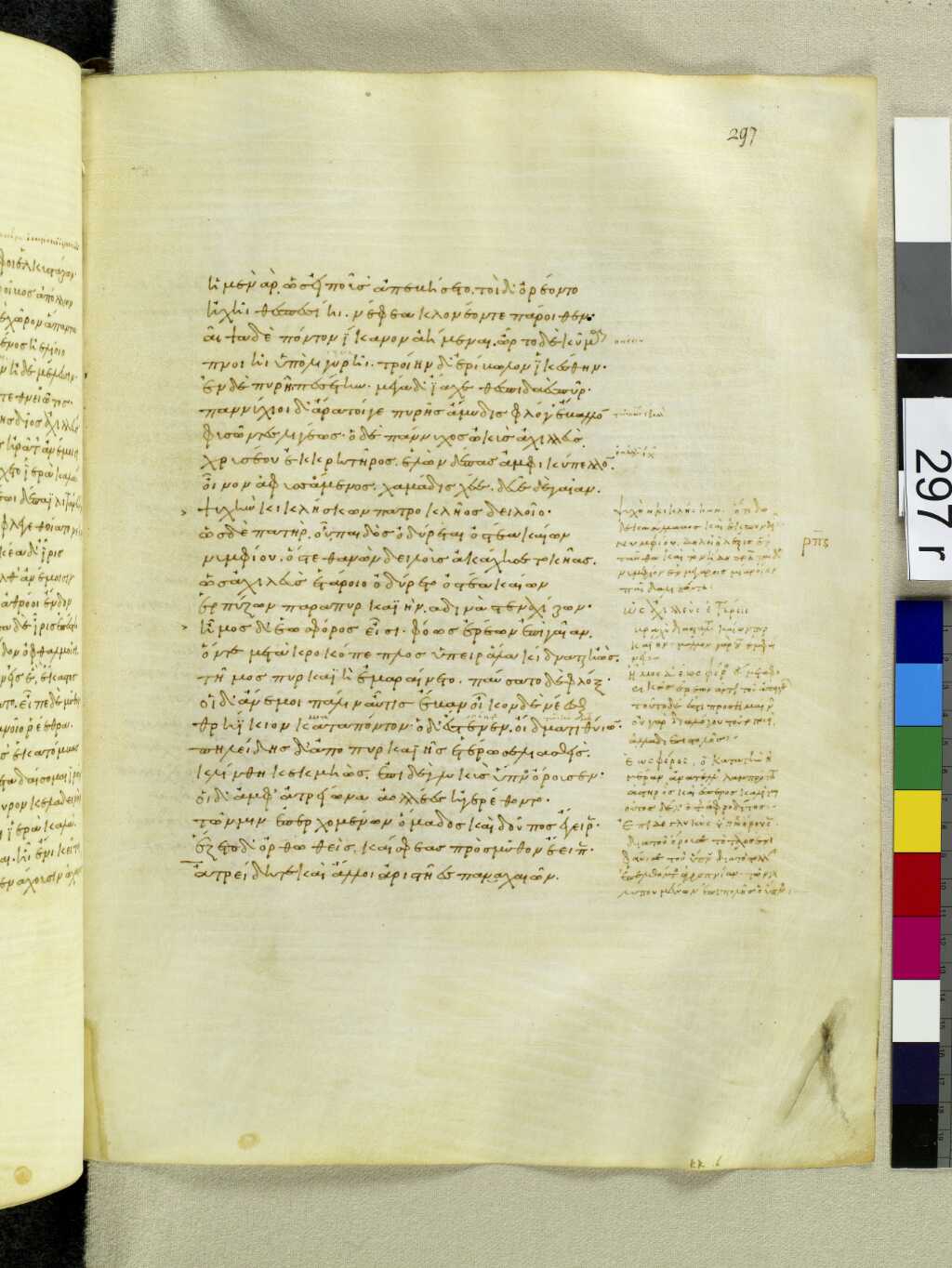
226ἦμος δʼ ἑωσφόρος εἶσι φόως ἐρέων ἐπὶ γαῖαν, 227ὅν τε μέτα κροκόπεπλος ὑπεὶρ ἅλα κίδναται ἠώς, 228τῆμος πυρκαϊὴ ἐμαραίνετο, παύσατο δὲ φλόξ. 229οἳ δʼ ἄνεμοι πάλιν αὖτις ἔβαν οἶκον δὲ νέεσθαι 230Θρηΐκιον κατὰ πόντον· ὃ δʼ ἔστενεν οἴδματι θύων. 231Πηλεΐδης δʼ ἀπὸ πυρκαϊῆς ἑτέρωσε λιασθεὶς 232κλίνθη κεκμηώς, ἐπὶ δὲ γλυκὺς ὕπνος ὄρουσεν· 233οἳ δʼ ἀμφʼ Ἀτρεΐωνα ἀολλέες ἠγερέθοντο· 234τῶν μιν ἐπερχομένων ὅμαδος καὶ δοῦπος ἔγειρεν, 235ἕζετο δʼ ὀρθωθεὶς καί σφεας πρὸς μῦθον ἔειπεν· 236Ἀτρεΐδη τε καὶ ἄλλοι ἀριστῆες Παναχαιῶν, 237πρῶτον μὲν κατὰ πυρκαϊὴν σβέσατʼ αἴθοπι οἴνῳ 238πᾶσαν, ὁπόσσον ἐπέσχε πυρὸς μένος· αὐτὰρ ἔπειτα 239ὀστέα Πατρόκλοιο Μενοιτιάδαο λέγωμεν 240εὖ διαγιγνώσκοντες· ἀριφραδέα δὲ τέτυκται· 241ἐν μέσσῃ γὰρ ἔκειτο πυρῇ, τοὶ δʼ ἄλλοι ἄνευθεν 242ἐσχατιῇ καίοντʼ ἐπιμὶξ ἵπποι τε καὶ ἄνδρες. 243καὶ τὰ μὲν ἐν χρυσέῃ φιάλῃ καὶ δίπλακι δημῷ 244θείομεν, εἰς ὅ κεν αὐτὸς ἐγὼν Ἄϊδι κεύθωμαι. 245τύμβον δʼ οὐ μάλα πολλὸν ἐγὼ πονέεσθαι ἄνωγα, 246ἀλλʼ ἐπιεικέα τοῖον· ἔπειτα δὲ καὶ τὸν Ἀχαιοὶ 247εὐρύν θʼ ὑψηλόν τε τιθήμεναι, οἵ κεν ἐμεῖο 248δεύτεροι ἐν νήεσσι πολυκλήϊσι λίπησθε. 249ὣς ἔφαθʼ, οἳ δʼ ἐπίθοντο ποδώκεϊ Πηλεΐωνι. 250πρῶτον μὲν κατὰ πυρκαϊὴν σβέσαν αἴθοπι οἴνῳ
Now the pyre about dead Patroclus would not kindle. Achilles therefore bethought him of another matter; he went apart and prayed to the two winds Boreas and Zephyrus vowing them goodly offerings. He made them many drink-offerings from the golden cup and besought them to come and help him that the wood might make haste to kindle and the dead bodies be consumed. Fleet Iris heard him praying and started off to fetch the winds. They were holding high feast in the house of boisterous Zephyrus when Iris came running up to the stone threshold of the house and stood there, but as soon as they set eyes on her they all came towards her and each of them called her to him, but Iris would not sit down. “I cannot stay,” she said, “I must go back to the streams of Oceanus and the land of the Ethiopians who are offering hecatombs to the immortals, and I would have my share; but Achilles prays that Boreas and shrill Zephyrus will come to him, and he vows them goodly offerings; he would have you blow upon the pyre of Patroclus for whom all the Achaeans are lamenting.”
With this she left them, and the two winds rose with a cry that rent the air and swept the clouds before them. They blew on and on until they came to the sea, and the waves rose high beneath them, but when they reached Troy they fell upon the pyre till the mighty flames roared under the blast that they blew. All night long did they blow hard and beat upon the fire, and all night long did Achilles grasp his double cup, drawing wine from a mixing-bowl of gold, and calling upon the spirit of dead Patroclus as he poured it upon the ground until the earth was drenched. As a father mourns when he is burning the bones of his bridegroom son whose death has wrung the hearts of his parents, even so did Achilles mourn while burning the body of his comrade, pacing round the bier with piteous groaning and lamentation.
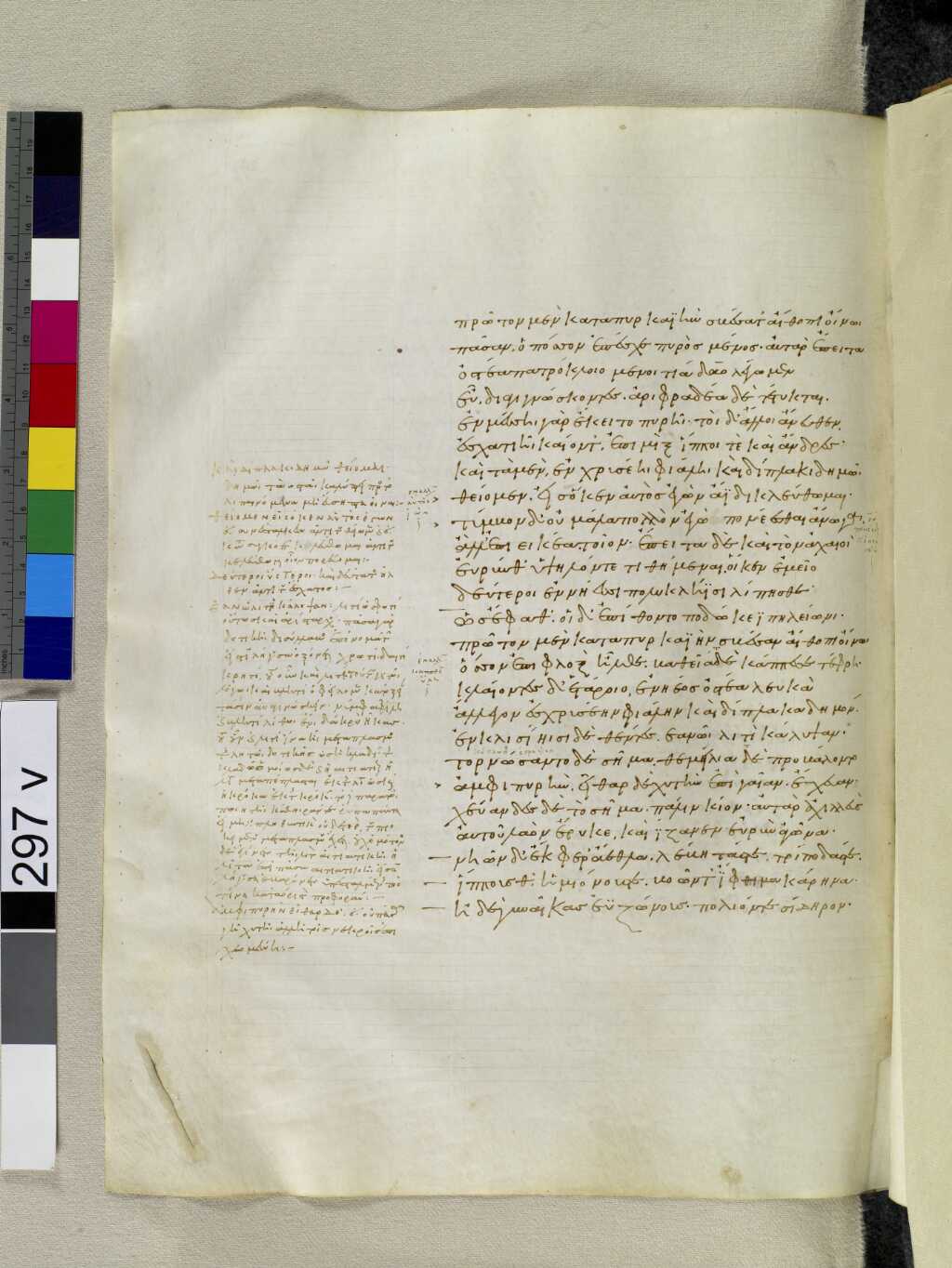
251ὅσσον ἐπὶ φλὸξ ἦλθε, βαθεῖα δὲ κάππεσε τέφρη· 252κλαίοντες δʼ ἑτάροιο ἐνηέος ὀστέα λευκὰ 253ἄλλεγον ἐς χρυσέην φιάλην καὶ δίπλακα δημόν, 254ἐν κλισίῃσι δὲ θέντες ἑανῷ λιτὶ κάλυψαν· 255τορνώσαντο δὲ σῆμα θεμείλιά τε προβάλοντο 256ἀμφὶ πυρήν· εἶθαρ δὲ χυτὴν ἐπὶ γαῖαν ἔχευαν, 257χεύαντες δὲ τὸ σῆμα πάλιν κίον. αὐτὰρ Ἀχιλλεὺς 258αὐτοῦ λαὸν ἔρυκε καὶ ἵζανεν εὐρὺν ἀγῶνα, 259νηῶν δʼ ἔκφερʼ ἄεθλα λέβητάς τε τρίποδάς τε 260ἵππους θʼ ἡμιόνους τε βοῶν τʼ ἴφθιμα κάρηνα, 261ἠδὲ γυναῖκας ἐϋζώνους πολιόν τε σίδηρον. 262ἱππεῦσιν μὲν πρῶτα ποδώκεσιν ἀγλάʼ ἄεθλα 263θῆκε γυναῖκα ἄγεσθαι ἀμύμονα ἔργα ἰδυῖαν 264καὶ τρίποδʼ ὠτώεντα δυωκαιεικοσίμετρον 265τῷ πρώτῳ· ἀτὰρ αὖ τῷ δευτέρῳ ἵππον ἔθηκεν 266ἑξέτεʼ ἀδμήτην βρέφος ἡμίονον κυέουσαν· 267αὐτὰρ τῷ τριτάτῳ ἄπυρον κατέθηκε λέβητα 268καλὸν τέσσαρα μέτρα κεχανδότα λευκὸν ἔτʼ αὔτως· 269τῷ δὲ τετάρτῳ θῆκε δύω χρυσοῖο τάλαντα, 270πέμπτῳ δʼ ἀμφίθετον φιάλην ἀπύρωτον ἔθηκε. 271στῆ δʼ ὀρθὸς καὶ μῦθον ἐν Ἀργείοισιν ἔειπεν· 272Ἀτρεΐδη τε καὶ ἄλλοι ἐϋκνήμιδες Ἀχαιοὶ 273ἱππῆας τάδʼ ἄεθλα δεδεγμένα κεῖτʼ ἐν ἀγῶνι. 274εἰ μὲν νῦν ἐπὶ ἄλλῳ ἀεθλεύοιμεν Ἀχαιοὶ 275ἦ τʼ ἂν ἐγὼ τὰ πρῶτα λαβὼν κλισίην δὲ φεροίμην.
At length as the Morning Star was beginning to herald the light which saffron-mantled Dawn was soon to suffuse over the sea, the flames fell and the fire began to die. The winds then went home beyond the Thracian sea, which roared and boiled as they swept over it. The son of Peleus now turned away from the pyre and lay down, overcome with toil, till he fell into a sweet slumber. Presently they who were about the son of Atreus drew near in a body, and roused him with the noise and tramp of their coming. He sat upright and said, “Son of Atreus, and all other princes of the Achaeans, first pour red wine everywhere upon the fire and quench it; let us then gather the bones of Patroclus son of Menoetius, singling them out with care; they are easily found, for they lie in the middle of the pyre, while all else, both men and horses, has been thrown in a heap and burned at the outer edge. We will lay the bones in a golden urn, in two layers of fat, against the time when I shall myself go down into the house of Hades. As for the barrow, labour not to raise a great one now, but such as is reasonable. Afterwards, let those Achaeans who may be left at the ships when I am gone, build it both broad and high.”
Thus he spoke and they obeyed the word of the son of Peleus. First they poured red wine upon the thick layer of ashes and quenched the fire. With many tears they singled out the whitened bones of their loved comrade and laid them within a golden urn in two layers of fat: they then covered the urn with a linen cloth and took it inside the tent. They marked off the circle where the barrow should be, made a foundation for it about the pyre, and forthwith heaped up the earth. When they had thus raised a mound they were going away, but Achilles stayed the people and made them sit in assembly. He brought prizes from the ships—cauldrons, tripods, horses and mules, noble oxen, women with fair girdles, and swart iron.
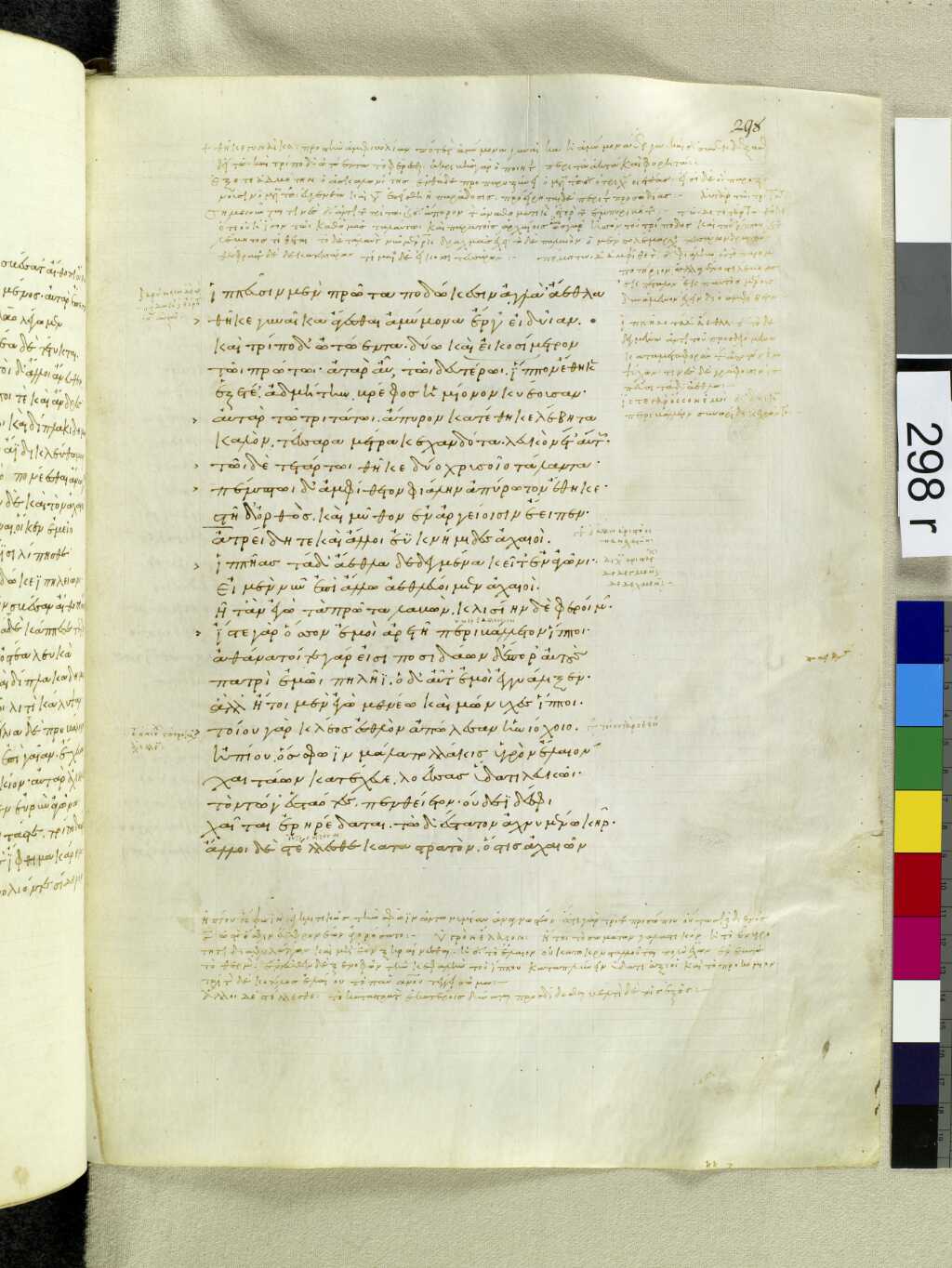
276ἴστε γὰρ ὅσσον ἐμοὶ ἀρετῇ περιβάλλετον ἵπποι· 277ἀθάνατοί τε γάρ εἰσι, Ποσειδάων δὲ πόρʼ αὐτοὺς 278πατρὶ ἐμῷ Πηλῆϊ, ὃ δʼ αὖτʼ ἐμοὶ ἐγγυάλιξεν. 279ἀλλʼ ἤτοι μὲν ἐγὼ μενέω καὶ μώνυχες ἵπποι· 280τοίου γὰρ κλέος ἐσθλὸν ἀπώλεσαν ἡνιόχοιο 281ἠπίου, ὅς σφωϊν μάλα πολλάκις ὑγρὸν ἔλαιον 282χαιτάων κατέχευε λοέσσας ὕδατι λευκῷ. 283τὸν τώ γʼ ἑσταότες πενθείετον, οὔδεϊ δέ σφι 284χαῖται ἐρηρέδαται, τὼ δʼ ἕστατον ἀχνυμένω κῆρ. 285ἄλλοι δὲ στέλλεσθε κατὰ στρατόν, ὅς τις Ἀχαιῶν 286ἵπποισίν τε πέποιθε καὶ ἅρμασι κολλητοῖσιν. 287ὣς φάτο Πηλεΐδης, ταχέες δʼ ἱππῆες ἄγερθεν. 288ὦρτο πολὺ πρῶτος μὲν ἄναξ ἀνδρῶν Εὔμηλος 289Ἀδμήτου φίλος υἱός, ὃς ἱπποσύνῃ ἐκέκαστο· 290τῷ δʼ ἐπὶ Τυδεΐδης ὦρτο κρατερὸς Διομήδης, 291ἵππους δὲ Τρῳοὺς ὕπαγε ζυγόν, οὕς ποτʼ ἀπηύρα 292Αἰνείαν, ἀτὰρ αὐτὸν ὑπεξεσάωσεν Ἀπόλλων. 293τῷ δʼ ἄρʼ ἐπʼ Ἀτρεΐδης ὦρτο ξανθὸς Μενέλαος 294διογενής, ὑπὸ δὲ ζυγὸν ἤγαγεν ὠκέας ἵππους 295Αἴθην τὴν Ἀγαμεμνονέην τὸν ἑόν τε Πόδαργον· 296τὴν Ἀγαμέμνονι δῶκʼ Ἀγχισιάδης Ἐχέπωλος 297δῶρʼ, ἵνα μή οἱ ἕποιθʼ ὑπὸ Ἴλιον ἠνεμόεσσαν, 298ἀλλʼ αὐτοῦ τέρποιτο μένων· μέγα γάρ οἱ ἔδωκε 299Ζεὺς ἄφενος, ναῖεν δʼ ὅ γʼ ἐν εὐρυχόρῳ Σικυῶνι· 300τὴν ὅ γʼ ὑπὸ ζυγὸν ἦγε μέγα δρόμου ἰσχανόωσαν.
The first prize he offered was for the chariot races—a woman skilled in all useful arts, and a three-legged cauldron that had ears for handles, and would hold twenty-two measures. This was for the man who came in first. For the second there was a six-year old mare, unbroken, and in foal to a he-ass; the third was to have a goodly cauldron that had never yet been on the fire; it was still bright as when it left the maker, and would hold four measures. The fourth prize was two talents of gold, and the fifth a two-handled urn as yet unsoiled by smoke. Then he stood up and spoke among the Argives saying—
“Son of Atreus, and all other Achaeans, these are the prizes that lie waiting the winners of the chariot races. At any other time I should carry off the first prize and take it to my own tent; you know how far my steeds excel all others—for they are immortal; Neptune gave them to my father Peleus, who in his turn gave them to myself; but I shall hold aloof, I and my steeds that have lost their brave and kind driver, who many a time has washed them in clear water and anointed their manes with oil. See how they stand weeping here, with their manes trailing on the ground in the extremity of their sorrow. But do you others set yourselves in order throughout the host, whosoever has confidence in his horses and in the strength of his chariot.”
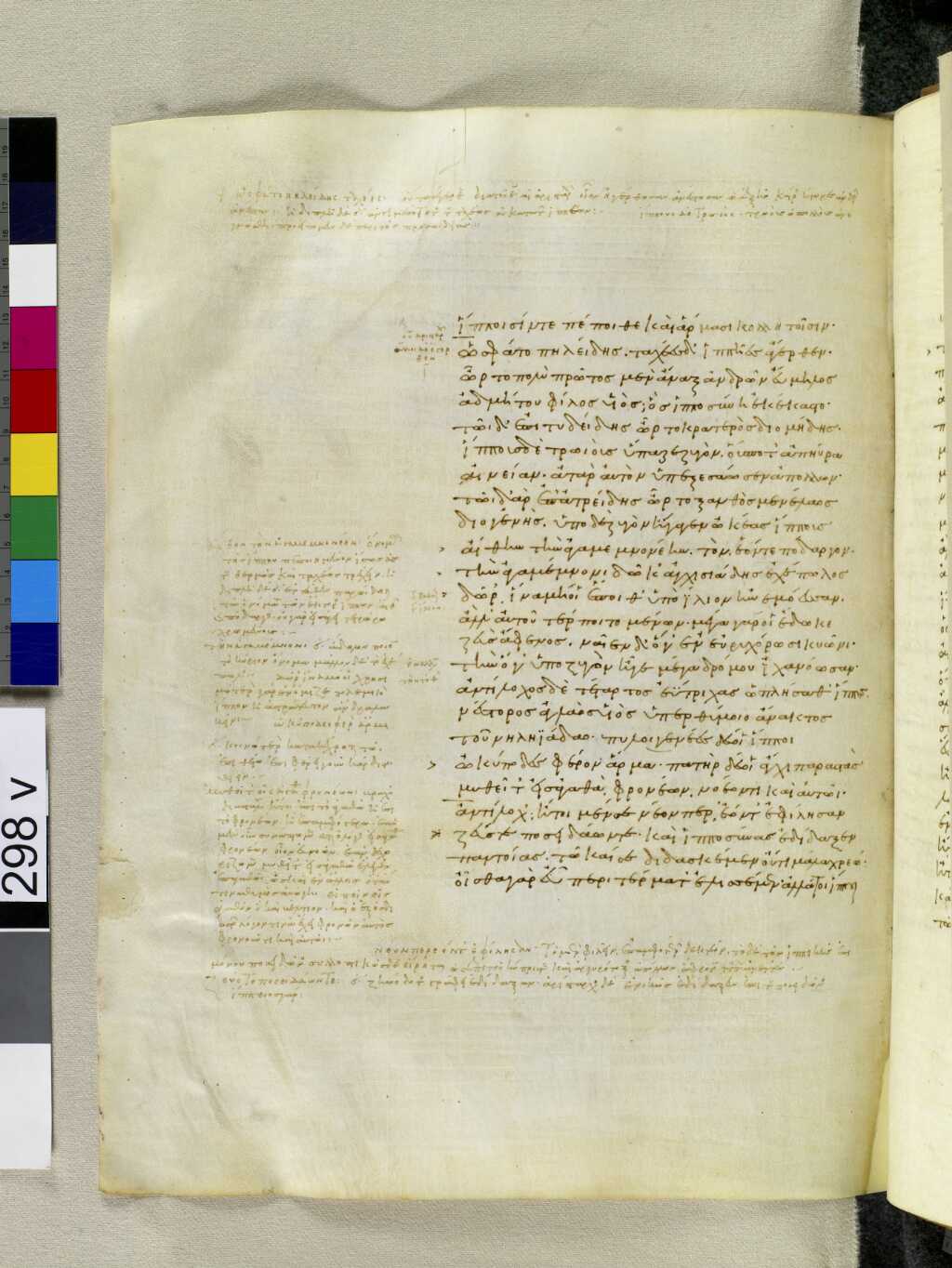
301Ἀντίλοχος δὲ τέταρτος ἐΰτριχας ὁπλίσαθʼ ἵππους, 302Νέστορος ἀγλαὸς υἱὸς ὑπερθύμοιο ἄνακτος 303τοῦ Νηληϊάδαο· Πυλοιγενέες δέ οἱ ἵπποι 304ὠκύποδες φέρον ἅρμα· πατὴρ δέ οἱ ἄγχι παραστὰς 305μυθεῖτʼ εἰς ἀγαθὰ φρονέων νοέοντι καὶ αὐτῷ· 306Ἀντίλοχʼ ἤτοι μέν σε νέον περ ἐόντʼ ἐφίλησαν 307Ζεύς τε Ποσειδάων τε, καὶ ἱπποσύνας ἐδίδαξαν 308παντοίας· τὼ καί σε διδασκέμεν οὔ τι μάλα χρεώ· 309οἶσθα γὰρ εὖ περὶ τέρμαθʼ ἑλισσέμεν· ἀλλά τοι ἵπποι 310βάρδιστοι θείειν· τώ τʼ οἴω λοίγιʼ ἔσεσθαι. 311τῶν δʼ ἵπποι μὲν ἔασιν ἀφάρτεροι, οὐδὲ μὲν αὐτοὶ 312πλείονα ἴσασιν σέθεν αὐτοῦ μητίσασθαι. 313ἀλλʼ ἄγε δὴ σὺ φίλος μῆτιν ἐμβάλλεο θυμῷ 314παντοίην, ἵνα μή σε παρεκπροφύγῃσιν ἄεθλα. 315μήτι τοι δρυτόμος μέγʼ ἀμείνων ἠὲ βίηφι· 316μήτι δʼ αὖτε κυβερνήτης ἐνὶ οἴνοπι πόντῳ 317νῆα θοὴν ἰθύνει ἐρεχθομένην ἀνέμοισι· 318μήτι δʼ ἡνίοχος περιγίγνεται ἡνιόχοιο. 319ἀλλʼ ὃς μέν θʼ ἵπποισι καὶ ἅρμασιν οἷσι πεποιθὼς 320ἀφραδέως ἐπὶ πολλὸν ἑλίσσεται ἔνθα καὶ ἔνθα, 321ἵπποι δὲ πλανόωνται ἀνὰ δρόμον, οὐδὲ κατίσχει· 322ὃς δέ κε κέρδεα εἰδῇ ἐλαύνων ἥσσονας ἵππους, 323αἰεὶ τέρμʼ ὁρόων στρέφει ἐγγύθεν, οὐδέ ἑ λήθει 324ὅππως τὸ πρῶτον τανύσῃ βοέοισιν ἱμᾶσιν, 325ἀλλʼ ἔχει ἀσφαλέως καὶ τὸν προὔχοντα δοκεύει.
Thus spoke the son of Peleus and the drivers of chariots bestirred themselves. First among them all uprose Eumelus, king of men, son of Admetus, a man excellent in horsemanship. Next to him rose mighty Diomed son of Tydeus; he yoked the Trojan horses which he had taken from Aeneas, when Apollo bore him out of the fight. Next to him, yellow-haired Menelaus son of Atreus rose and yoked his fleet horses, Agamemnon’s mare Aethe, and his own horse Podargus. The mare had been given to Agamemnon by Echepolus son of Anchises, that he might not have to follow him to Ilius, but might stay at home and take his ease; for Jove had endowed him with great wealth and he lived in spacious Sicyon. This mare, all eager for the race, did Menelaus put under the yoke.
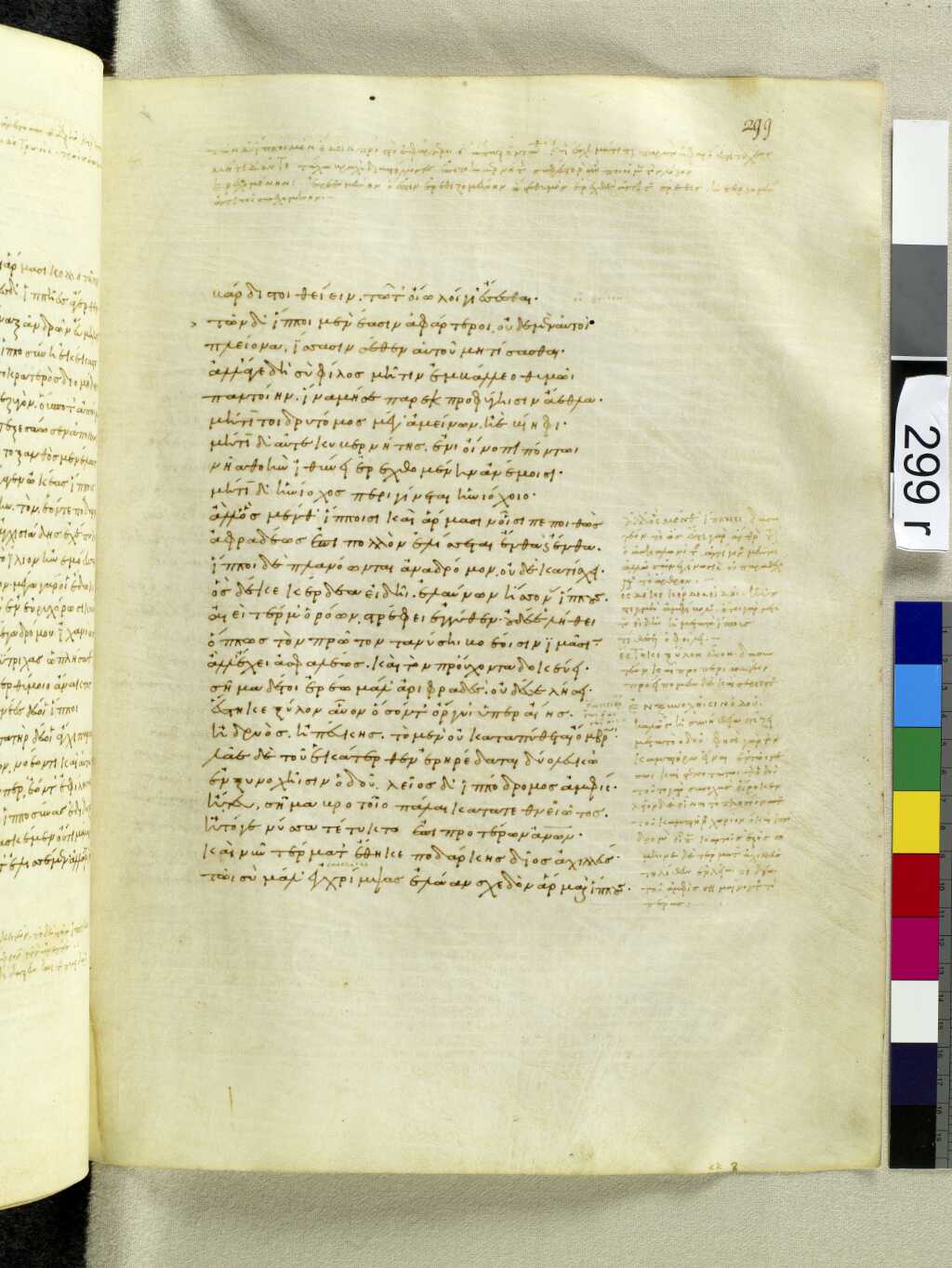
326σῆμα δέ τοι ἐρέω μάλʼ ἀριφραδές, οὐδέ σε λήσει. 327ἕστηκε ξύλον αὖον ὅσον τʼ ὄργυιʼ ὑπὲρ αἴης 328ἢ δρυὸς ἢ πεύκης· τὸ μὲν οὐ καταπύθεται ὄμβρῳ, 329λᾶε δὲ τοῦ ἑκάτερθεν ἐρηρέδαται δύο λευκὼ 330ἐν ξυνοχῇσιν ὁδοῦ, λεῖος δʼ ἱππόδρομος ἀμφὶς 331ἤ τευ σῆμα βροτοῖο πάλαι κατατεθνηῶτος, 332ἢ τό γε νύσσα τέτυκτο ἐπὶ προτέρων ἀνθρώπων, 333καὶ νῦν τέρματʼ ἔθηκε ποδάρκης δῖος Ἀχιλλεύς. 334τῷ σὺ μάλʼ ἐγχρίμψας ἐλάαν σχεδὸν ἅρμα καὶ ἵππους, 335αὐτὸς δὲ κλινθῆναι ἐϋπλέκτῳ ἐνὶ δίφρῳ 336ἦκʼ ἐπʼ ἀριστερὰ τοῖιν· ἀτὰρ τὸν δεξιὸν ἵππον 337κένσαι ὁμοκλήσας, εἶξαί τέ οἱ ἡνία χερσίν. 338ἐν νύσσῃ δέ τοι ἵππος ἀριστερὸς ἐγχριμφθήτω, 339ὡς ἄν τοι πλήμνη γε δοάσσεται ἄκρον ἱκέσθαι 340κύκλου ποιητοῖο· λίθου δʼ ἀλέασθαι ἐπαυρεῖν, 341μή πως ἵππους τε τρώσῃς κατά θʼ ἅρματα ἄξῃς· 342χάρμα δὲ τοῖς ἄλλοισιν, ἐλεγχείη δὲ σοὶ αὐτῷ 343ἔσσεται· ἀλλὰ φίλος φρονέων πεφυλαγμένος εἶναι. 344εἰ γάρ κʼ ἐν νύσσῃ γε παρεξελάσῃσθα διώκων, 345οὐκ ἔσθʼ ὅς κέ σʼ ἕλῃσι μετάλμενος οὐδὲ παρέλθῃ, 346οὐδʼ εἴ κεν μετόπισθεν Ἀρίονα δῖον ἐλαύνοι 347Ἀδρήστου ταχὺν ἵππον, ὃς ἐκ θεόφιν γένος ἦεν, 348ἢ τοὺς Λαομέδοντος, οἳ ἐνθάδε γʼ ἔτραφεν ἐσθλοί. 349ὣς εἰπὼν Νέστωρ Νηλήϊος ἂψ ἐνὶ χώρῃ 350ἕζετʼ, ἐπεὶ ᾧ παιδὶ ἑκάστου πείρατʼ ἔειπε.
Fourth in order Antilochus, son to noble Nestor son of Neleus, made ready his horses. These were bred in Pylos, and his father came up to him to give him good advice of which, however, he stood in but little need. “Antilochus,” said Nestor, “you are young, but Jove and Neptune have loved you well, and have made you an excellent horseman. I need not therefore say much by way of instruction. You are skilful at wheeling your horses round the post, but the horses themselves are very slow, and it is this that will, I fear, mar your chances. The other drivers know less than you do, but their horses are fleeter; therefore, my dear son, see if you cannot hit upon some artifice whereby you may insure that the prize shall not slip through your fingers. The woodman does more by skill than by brute force; by skill the pilot guides his storm-tossed barque over the sea, and so by skill one driver can beat another. If a man go wide in rounding this way and that, whereas a man who knows what he is doing may have worse horses, but he will keep them well in hand when he sees the doubling-post; he knows the precise moment at which to pull the rein, and keeps his eye well on the man in front of him. I will give you this certain token which cannot escape your notice. There is a stump of a dead tree—oak or pine as it may be—some six feet above the ground, and not yet rotted away by rain; it stands at the fork of the road; it has two white stones set one on each side, and there is a clear course all round it. It may have been a monument to some one long since dead, or it may have been used as a doubling-post in days gone by; now, however, it has been fixed on by Achilles as the mark round which the chariots shall turn; hug it as close as you can, but as you stand in your chariot lean over a little to the left; urge on your right-hand horse with voice and lash, and give him a loose rein, but let the left-hand horse keep so close in, that the nave of your wheel shall almost graze the post; but mind the stone, or you will wound your horses and break your chariot in pieces, which would be sport for others but confusion for yourself. Therefore, my dear son, mind well what you are about, for if you can be first to round the post there is no chance of any one giving you the go-by later, not even though you had Adrestus’s horse Arion behind you—a horse which is of divine race—or those of Laomedon, which are the noblest in this country.”
When Nestor had made an end of counselling his son he sat down in his place, and fifth in order Meriones got ready his horses. They then all mounted their chariots and cast lots. Achilles shook the helmet, and the lot of Antilochus son of Nestor fell out first; next came that of King Eumelus, and after his, those of Menelaus son of Atreus and of Meriones. The last place fell to the lot of Diomed son of Tydeus, who was the best man of them all. They took their places in line; Achilles showed them the doubling-post round which they were to turn, some way off upon the plain; here he stationed his father’s follower Phoenix as umpire, to note the running, and report truly.
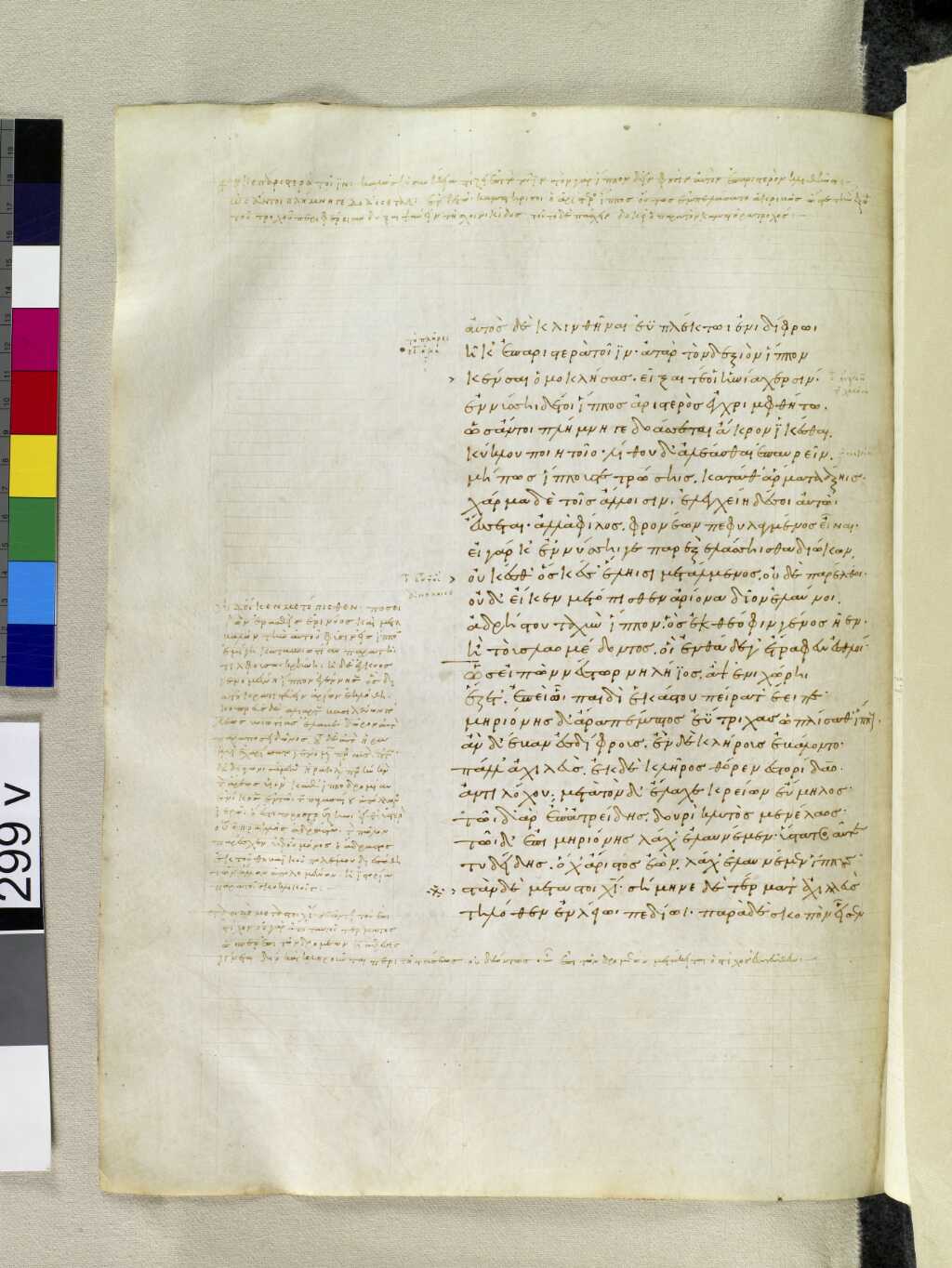
351Μηριόνης δʼ ἄρα πέμπτος ἐΰτριχας ὁπλίσαθʼ ἵππους. 352ἂν δʼ ἔβαν ἐς δίφρους, ἐν δὲ κλήρους ἐβάλοντο· 353πάλλʼ Ἀχιλεύς, ἐκ δὲ κλῆρος θόρε Νεστορίδαο 354Ἀντιλόχου· μετὰ τὸν δʼ ἔλαχε κρείων Εὔμηλος· 355τῷ δʼ ἄρʼ ἐπʼ Ἀτρεΐδης δουρὶ κλειτὸς Μενέλαος, 356τῷ δʼ ἐπὶ Μηριόνης λάχʼ ἐλαυνέμεν· ὕστατος αὖτε 357Τυδεΐδης ὄχʼ ἄριστος ἐὼν λάχʼ ἐλαυνέμεν ἵππους. 358στὰν δὲ μεταστοιχί, σήμηνε δὲ τέρματʼ Ἀχιλλεὺς 359τηλόθεν ἐν λείῳ πεδίῳ· παρὰ δὲ σκοπὸν εἷσεν 360ἀντίθεον Φοίνικα ὀπάονα πατρὸς ἑοῖο, 361ὡς μεμνέῳτο δρόμους καὶ ἀληθείην ἀποείποι. 362οἳ δʼ ἅμα πάντες ἐφʼ ἵπποιιν μάστιγας ἄειραν, 363πέπληγόν θʼ ἱμᾶσιν, ὁμόκλησάν τʼ ἐπέεσσιν 364ἐσσυμένως· οἳ δʼ ὦκα διέπρησσον πεδίοιο 365νόσφι νεῶν ταχέως· ὑπὸ δὲ στέρνοισι κονίη 366ἵστατʼ ἀειρομένη ὥς τε νέφος ἠὲ θύελλα, 367χαῖται δʼ ἐρρώοντο μετὰ πνοιῇς ἀνέμοιο. 368ἅρματα δʼ ἄλλοτε μὲν χθονὶ πίλνατο πουλυβοτείρῃ, 369ἄλλοτε δʼ ἀΐξασκε μετήορα· τοὶ δʼ ἐλατῆρες 370ἕστασαν ἐν δίφροισι, πάτασσε δὲ θυμὸς ἑκάστου 371νίκης ἱεμένων· κέκλοντο δὲ οἷσιν ἕκαστος 372ἵπποις, οἳ δʼ ἐπέτοντο κονίοντες πεδίοιο. 373ἀλλʼ ὅτε δὴ πύματον τέλεον δρόμον ὠκέες ἵπποι 374ἂψ ἐφʼ ἁλὸς πολιῆς, τότε δὴ ἀρετή γε ἑκάστου 375φαίνετʼ, ἄφαρ δʼ ἵπποισι τάθη δρόμος· ὦκα δʼ ἔπειτα
At the same instant they all of them lashed their horses, struck them with the reins, and shouted at them with all their might. They flew full speed over the plain away from the ships, the dust rose from under them as it were a cloud or whirlwind, and their manes were all flying in the wind. At one moment the chariots seemed to touch the ground, and then again they bounded into the air; the drivers stood erect, and their hearts beat fast and furious in their lust of victory. Each kept calling on his horses, and the horses scoured the plain amid the clouds of dust that they raised.
It was when they were doing the last part of the course on their way back towards the sea that their pace was strained to the utmost and it was seen what each could do. The horses of the descendant of Pheres now took the lead, and close behind them came the Trojan stallions of Diomed. They seemed as if about to mount Eumelus’s chariot, and he could feel their warm breath on his back and on his broad shoulders, for their heads were close to him as they flew over the course. Diomed would have now passed him, or there would have been a dead heat, but Phoebus Apollo to spite him made him drop his whip. Tears of anger fell from his eyes as he saw the mares going on faster than ever, while his own horses lost ground through his having no whip. Minerva saw the trick which Apollo had played the son of Tydeus, so she brought him his whip and put spirit into his horses; moreover she went after the son of Admetus in a rage and broke his yoke for him; the mares went one to one side of the course, and the other to the other, and the pole was broken against the ground. Eumelus was thrown from his chariot close to the wheel; his elbows, mouth, and nostrils were all torn, and his forehead was bruised above his eyebrows; his eyes filled with tears and he could find no utterance. But the son of Tydeus turned his horses aside and shot far ahead, for Minerva put fresh strength into them and covered Diomed himself with glory.
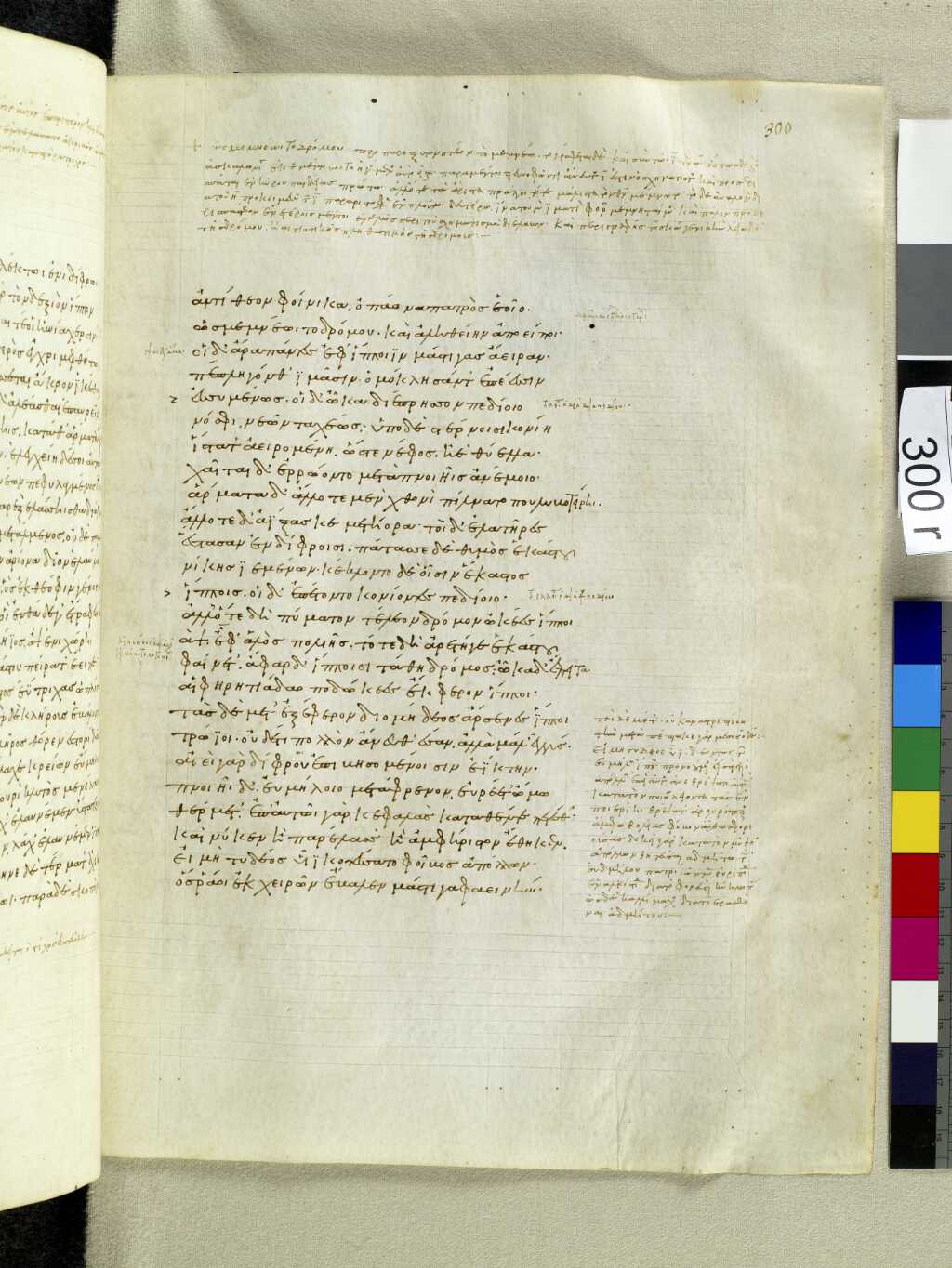
376αἳ Φηρητιάδαο ποδώκεες ἔκφερον ἵπποι. 377τὰς δὲ μετʼ ἐξέφερον Διομήδεος ἄρσενες ἵπποι 378Τρώϊοι, οὐδέ τι πολλὸν ἄνευθʼ ἔσαν, ἀλλὰ μάλʼ ἐγγύς· 379αἰεὶ γὰρ δίφρου ἐπιβησομένοισιν ἐΐκτην, 380πνοιῇ δʼ Εὐμήλοιο μετάφρενον εὐρέε τʼ ὤμω 381θέρμετʼ· ἐπʼ αὐτῷ γὰρ κεφαλὰς καταθέντε πετέσθην. 382καί νύ κεν ἢ παρέλασσʼ ἢ ἀμφήριστον ἔθηκεν, 383εἰ μὴ Τυδέος υἷϊ κοτέσσατο Φοῖβος Ἀπόλλων, 384ὅς ῥά οἱ ἐκ χειρῶν ἔβαλεν μάστιγα φαεινήν. 385τοῖο δʼ ἀπʼ ὀφθαλμῶν χύτο δάκρυα χωομένοιο, 386οὕνεκα τὰς μὲν ὅρα ἔτι καὶ πολὺ μᾶλλον ἰούσας, 387οἳ δέ οἱ ἐβλάφθησαν ἄνευ κέντροιο θέοντες. 388οὐδʼ ἄρʼ Ἀθηναίην ἐλεφηράμενος λάθʼ Ἀπόλλων 389Τυδεΐδην, μάλα δʼ ὦκα μετέσσυτο ποιμένα λαῶν, 390δῶκε δέ οἱ μάστιγα, μένος δʼ ἵπποισιν ἐνῆκεν· 391ἣ δὲ μετʼ Ἀδμήτου υἱὸν κοτέουσʼ ἐβεβήκει, 392ἵππειον δέ οἱ ἦξε θεὰ ζυγόν· αἳ δέ οἱ ἵπποι 393ἀμφὶς ὁδοῦ δραμέτην, ῥυμὸς δʼ ἐπὶ γαῖαν ἐλύσθη. 394αὐτὸς δʼ ἐκ δίφροιο παρὰ τροχὸν ἐξεκυλίσθη, 395ἀγκῶνάς τε περιδρύφθη στόμα τε ῥῖνάς τε, 396θρυλίχθη δὲ μέτωπον ἐπʼ ὀφρύσι· τὼ δέ οἱ ὄσσε 397δακρυόφι πλῆσθεν, θαλερὴ δέ οἱ ἔσχετο φωνή. 398Τυδεΐδης δὲ παρατρέψας ἔχε μώνυχας ἵππους, 399πολλὸν τῶν ἄλλων ἐξάλμενος· ἐν γὰρ Ἀθήνη 400ἵπποις ἧκε μένος καὶ ἐπʼ αὐτῷ κῦδος ἔθηκε.
Menelaus son of Atreus came next behind him, but Antilochus called to his father’s horses. “On with you both,” he cried, “and do your very utmost. I do not bid you try to beat the steeds of the son of Tydeus, for Minerva has put running into them, and has covered Diomed with glory; but you must overtake the horses of the son of Atreus and not be left behind, or Aethe who is so fleet will taunt you. Why, my good fellows, are you lagging? I tell you, and it shall surely be—Nestor will keep neither of you, but will put both of you to the sword, if we win any the worse a prize through your carelessness. Fly after them at your utmost speed; I will hit on a plan for passing them in a narrow part of the way, and it shall not fail me.”
They feared the rebuke of their master, and for a short space went quicker. Presently Antilochus saw a narrow place where the road had sunk. The ground was broken, for the winter’s rain had gathered and had worn the road so that the whole place was deepened. Menelaus was making towards it so as to get there first, for fear of a foul, but Antilochus turned his horses out of the way, and followed him a little on one side. The son of Atreus was afraid and shouted out, “Antilochus, you are driving recklessly; rein in your horses; the road is too narrow here, it will be wider soon, and you can pass me then; if you foul my chariot you may bring both of us to a mischief.”
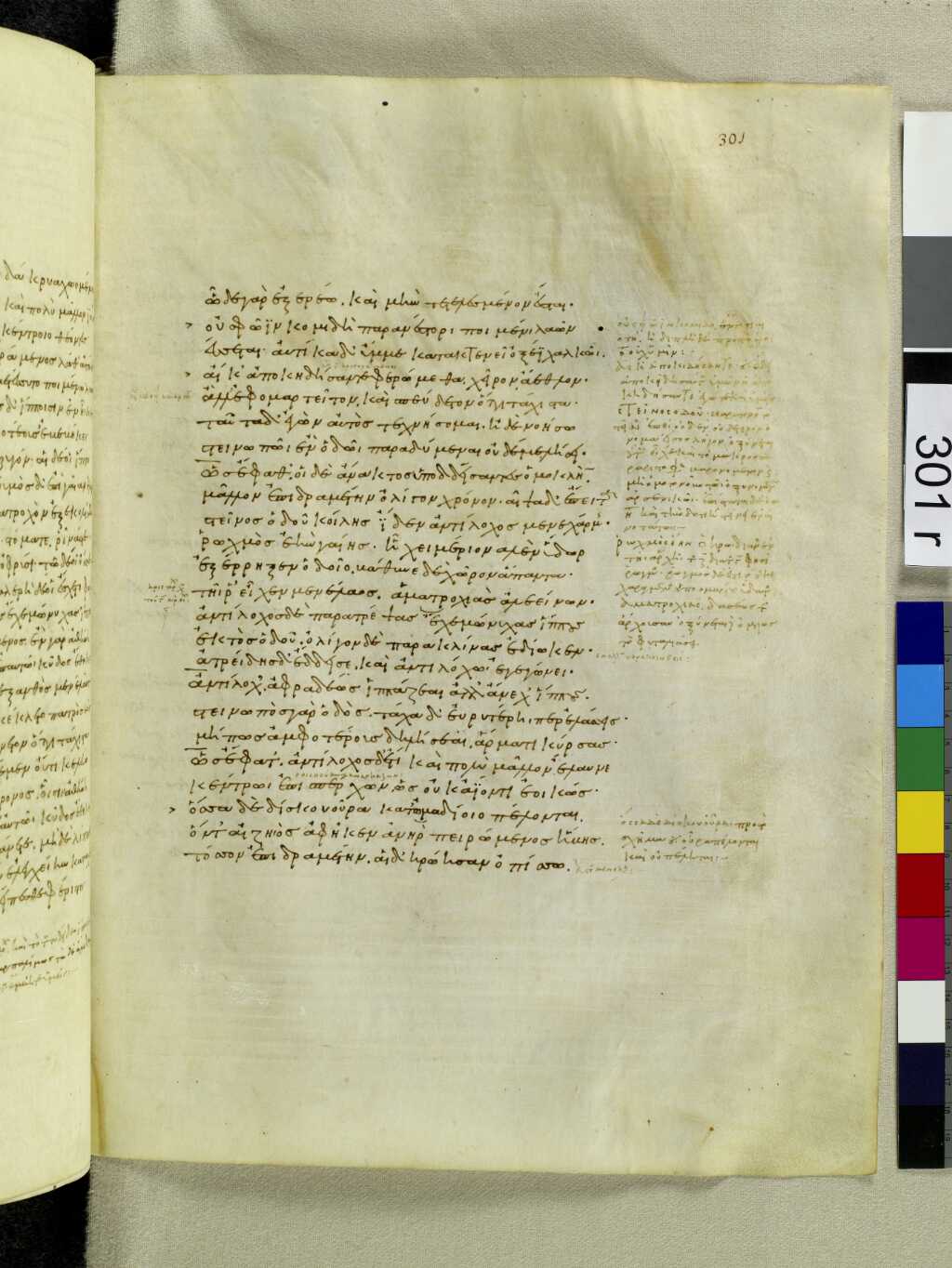
401τῷ δʼ ἄρʼ ἐπʼ Ἀτρεΐδης εἶχε ξανθὸς Μενέλαος. 402Ἀντίλοχος δʼ ἵπποισιν ἐκέκλετο πατρὸς ἑοῖο· 403ἔμβητον καὶ σφῶϊ· τιταίνετον ὅττι τάχιστα. 404ἤτοι μὲν κείνοισιν ἐριζέμεν οὔ τι κελεύω 405Τυδεΐδεω ἵπποισι δαΐφρονος, οἷσιν Ἀθήνη 406νῦν ὤρεξε τάχος καὶ ἐπʼ αὐτῷ κῦδος ἔθηκεν· 407ἵππους δʼ Ἀτρεΐδαο κιχάνετε, μὴ δὲ λίπησθον, 408καρπαλίμως, μὴ σφῶϊν ἐλεγχείην καταχεύῃ 409Αἴθη θῆλυς ἐοῦσα· τί ἢ λείπεσθε φέριστοι; 410ὧδε γὰρ ἐξερέω, καὶ μὴν τετελεσμένον ἔσται· 411οὐ σφῶϊν κομιδὴ παρὰ Νέστορι ποιμένι λαῶν 412ἔσσεται, αὐτίκα δʼ ὔμμε κατακτενεῖ ὀξέϊ χαλκῷ, 413αἴ κʼ ἀποκηδήσαντε φερώμεθα χεῖρον ἄεθλον. 414ἀλλʼ ἐφομαρτεῖτον καὶ σπεύδετον ὅττι τάχιστα· 415ταῦτα δʼ ἐγὼν αὐτὸς τεχνήσομαι ἠδὲ νοήσω 416στεινωπῷ ἐν ὁδῷ παραδύμεναι, οὐδέ με λήσει. 417ὣς ἔφαθʼ, οἳ δὲ ἄνακτος ὑποδείσαντες ὁμοκλὴν 418μᾶλλον ἐπιδραμέτην ὀλίγον χρόνον· αἶψα δʼ ἔπειτα 419στεῖνος ὁδοῦ κοίλης ἴδεν Ἀντίλοχος μενεχάρμης. 420ῥωχμὸς ἔην γαίης, ᾗ χειμέριον ἀλὲν ὕδωρ 421ἐξέρρηξεν ὁδοῖο, βάθυνε δὲ χῶρον ἅπαντα· 422τῇ ῥʼ εἶχεν Μενέλαος ἁματροχιὰς ἀλεείνων. 423Ἀντίλοχος δὲ παρατρέψας ἔχε μώνυχας ἵππους 424ἐκτὸς ὁδοῦ, ὀλίγον δὲ παρακλίνας ἐδίωκεν. 425Ἀτρεΐδης δʼ ἔδεισε καὶ Ἀντιλόχῳ ἐγεγώνει·
But Antilochus plied his whip, and drove faster, as though he had not heard him. They went side by side for about as far as a young man can hurl a disc from his shoulder when he is trying his strength, and then Menelaus’s mares drew behind, for he left off driving for fear the horses should foul one another and upset the chariots; thus, while pressing on in quest of victory, they might both come headlong to the ground. Menelaus then upbraided Antilochus and said, “There is no greater trickster living than you are; go, and bad luck go with you; the Achaeans say not well that you have understanding, and come what may you shall not bear away the prize without sworn protest on my part.”
Then he called on his horses and said to them, “Keep your pace, and slacken not; the limbs of the other horses will weary sooner than yours, for they are neither of them young.”
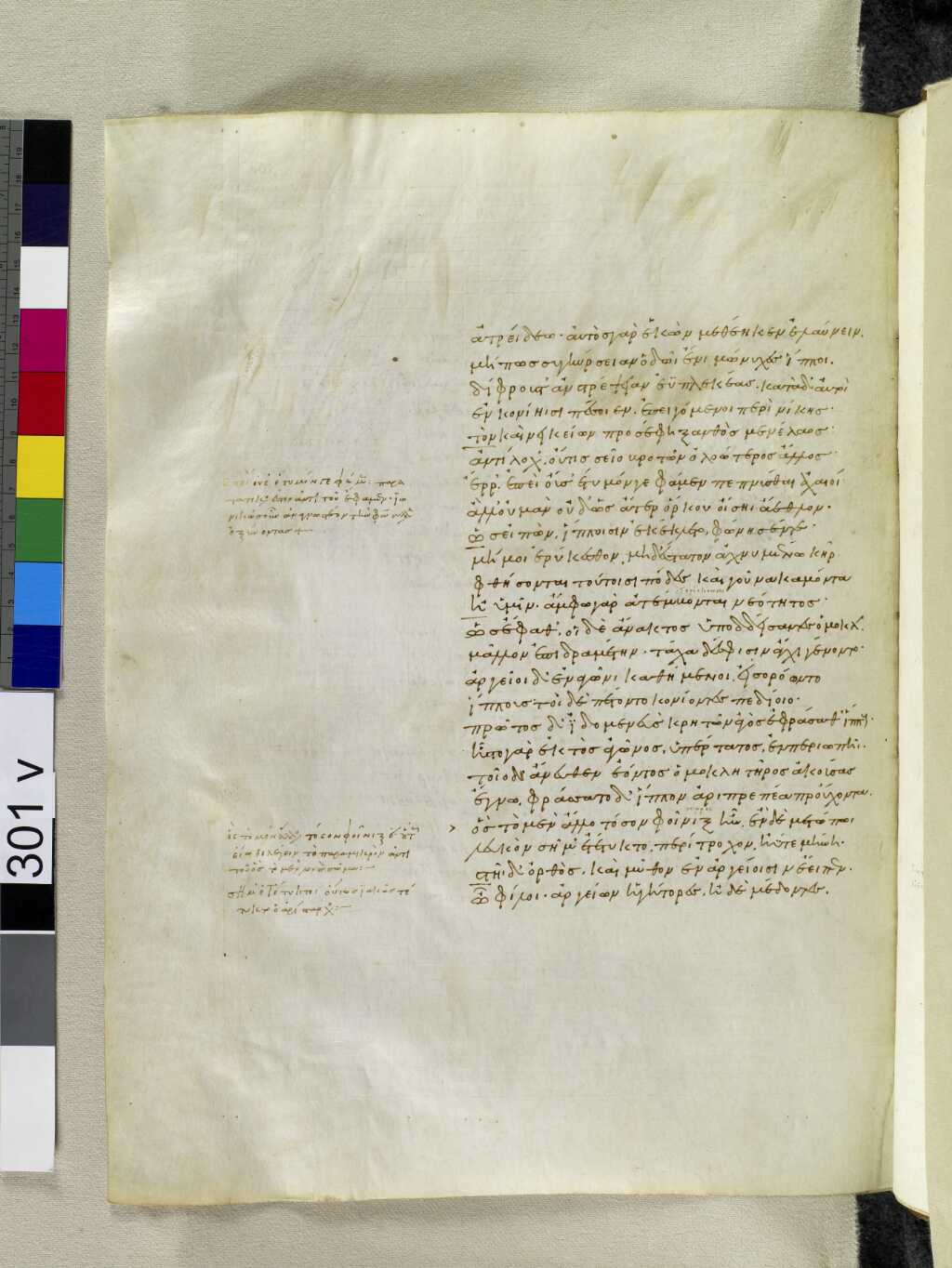
426Ἀντίλοχʼ ἀφραδέως ἱππάζεαι, ἀλλʼ ἄνεχʼ ἵππους· 427στεινωπὸς γὰρ ὁδός, τάχα δʼ εὐρυτέρη παρελάσσαι· 428μή πως ἀμφοτέρους δηλήσεαι ἅρματι κύρσας. 429ὣς ἔφατʼ, Ἀντίλοχος δʼ ἔτι καὶ πολὺ μᾶλλον ἔλαυνε 430κέντρῳ ἐπισπέρχων ὡς οὐκ ἀΐοντι ἐοικώς. 431ὅσσα δὲ δίσκου οὖρα κατωμαδίοιο πέλονται, 432ὅν τʼ αἰζηὸς ἀφῆκεν ἀνὴρ πειρώμενος ἥβης, 433τόσσον ἐπιδραμέτην· αἳ δʼ ἠρώησαν ὀπίσσω 434Ἀτρεΐδεω· αὐτὸς γὰρ ἑκὼν μεθέηκεν ἐλαύνειν 435μή πως συγκύρσειαν ὁδῷ ἔνι μώνυχες ἵπποι, 436δίφρους τʼ ἀνστρέψειαν ἐϋπλεκέας, κατὰ δʼ αὐτοὶ 437ἐν κονίῃσι πέσοιεν ἐπειγόμενοι περὶ νίκης. 438τὸν καὶ νεικείων προσέφη ξανθὸς Μενέλαος· 439Ἀντίλοχʼ οὔ τις σεῖο βροτῶν ὀλοώτερος ἄλλος· 440ἔρρʼ, ἐπεὶ οὔ σʼ ἔτυμόν γε φάμεν πεπνῦσθαι Ἀχαιοί. 441ἀλλʼ οὐ μὰν οὐδʼ ὧς ἄτερ ὅρκου οἴσῃ ἄεθλον. 442ὣς εἰπὼν ἵπποισιν ἐκέκλετο φώνησέν τε· 443μή μοι ἐρύκεσθον μὴ δʼ ἕστατον ἀχνυμένω κῆρ. 444φθήσονται τούτοισι πόδες καὶ γοῦνα καμόντα 445ἢ ὑμῖν· ἄμφω γὰρ ἀτέμβονται νεότητος. 446ὣς ἔφαθʼ, οἳ δὲ ἄνακτος ὑποδείσαντες ὁμοκλὴν 447μᾶλλον ἐπιδραμέτην, τάχα δέ σφισιν ἄγχι γένοντο. 448Ἀργεῖοι δʼ ἐν ἀγῶνι καθήμενοι εἰσορόωντο 449ἵππους· τοὶ δὲ πέτοντο κονίοντες πεδίοιο. 450πρῶτος δʼ Ἰδομενεὺς Κρητῶν ἀγὸς ἐφράσαθʼ ἵππους·
The horses feared the rebuke of their master, and went faster, so that they were soon nearly up with the others.
Meanwhile the Achaeans from their seats were watching how the horses went, as they scoured the plain amid clouds of their own dust. Idomeneus captain of the Cretans was first to make out the running, for he was not in the thick of the crowd, but stood on the most commanding part of the ground. The driver was a long way off, but Idomeneus could hear him shouting, and could see the foremost horse quite plainly—a chestnut with a round white star, like the moon, on its forehead. He stood up and said among the Argives, “My friends, princes and counsellors of the Argives, can you see the running as well as I can? There seems to be another pair in front now, and another driver; those that led off at the start must have been disabled out on the plain. I saw them at first making their way round the doubling-post, but now, though I search the plain of Troy, I cannot find them. Perhaps the reins fell from the driver’s hand so that he lost command of his horses at the doubling-post, and could not turn it. I suppose he must have been thrown out there, and broken his chariot, while his mares have left the course and gone off wildly in a panic. Come up and see for yourselves, I cannot make out for certain, but the driver seems an Aetolian by descent, ruler over the Argives, brave Diomed the son of Tydeus.”
451ἧστο γὰρ ἐκτὸς ἀγῶνος ὑπέρτατος ἐν περιωπῇ· 452τοῖο δʼ ἄνευθεν ἐόντος ὁμοκλητῆρος ἀκούσας 453ἔγνω, φράσσατο δʼ ἵππον ἀριπρεπέα προὔχοντα, 454ὃς τὸ μὲν ἄλλο τόσον φοῖνιξ ἦν, ἐν δὲ μετώπῳ 455λευκὸν σῆμα τέτυκτο περίτροχον ἠΰτε μήνη. 456στῆ δʼ ὀρθὸς καὶ μῦθον ἐν Ἀργείοισιν ἔειπεν· 457ὦ φίλοι Ἀργείων ἡγήτορες ἠδὲ μέδοντες 458οἶος ἐγὼν ἵππους αὐγάζομαι ἦε καὶ ὑμεῖς; 459ἄλλοι μοι δοκέουσι παροίτεροι ἔμμεναι ἵπποι, 460ἄλλος δʼ ἡνίοχος ἰνδάλλεται· αἳ δέ που αὐτοῦ 461ἔβλαβεν ἐν πεδίῳ, αἳ κεῖσέ γε φέρτεραι ἦσαν· 462ἤτοι γὰρ τὰς πρῶτα ἴδον περὶ τέρμα βαλούσας, 463νῦν δʼ οὔ πῃ δύναμαι ἰδέειν· πάντῃ δέ μοι ὄσσε 464Τρωϊκὸν ἂμ πεδίον παπταίνετον εἰσορόωντι· 465ἦε τὸν ἡνίοχον φύγον ἡνία, οὐδὲ δυνάσθη 466εὖ σχεθέειν περὶ τέρμα καὶ οὐκ ἐτύχησεν ἑλίξας· 467ἔνθά μιν ἐκπεσέειν ὀΐω σύν θʼ ἅρματα ἆξαι, 468αἳ δʼ ἐξηρώησαν, ἐπεὶ μένος ἔλλαβε θυμόν. 469ἀλλὰ ἴδεσθε καὶ ὔμμες ἀνασταδόν· οὐ γὰρ ἔγωγε 470εὖ διαγιγνώσκω· δοκέει δέ μοι ἔμμεναι ἀνὴρ 471Αἰτωλὸς γενεήν, μετὰ δʼ Ἀργείοισιν ἀνάσσει 472Τυδέος ἱπποδάμου υἱὸς κρατερὸς Διομήδης. 473τὸν δʼ αἰσχρῶς ἐνένιπεν Ὀϊλῆος ταχὺς Αἴας· 474Ἰδομενεῦ τί πάρος λαβρεύεαι; αἳ δέ τʼ ἄνευθεν 475ἵπποι ἀερσίποδες πολέος πεδίοιο δίενται.
Ajax the son of Oileus took him up rudely and said, “Idomeneus, why should you be in such a hurry to tell us all about it, when the mares are still so far out upon the plain? You are none of the youngest, nor your eyes none of the sharpest, but you are always laying down the law. You have no right to do so, for there are better men here than you are. Eumelus’s horses are in front now, as they always have been, and he is on the chariot holding the reins.”
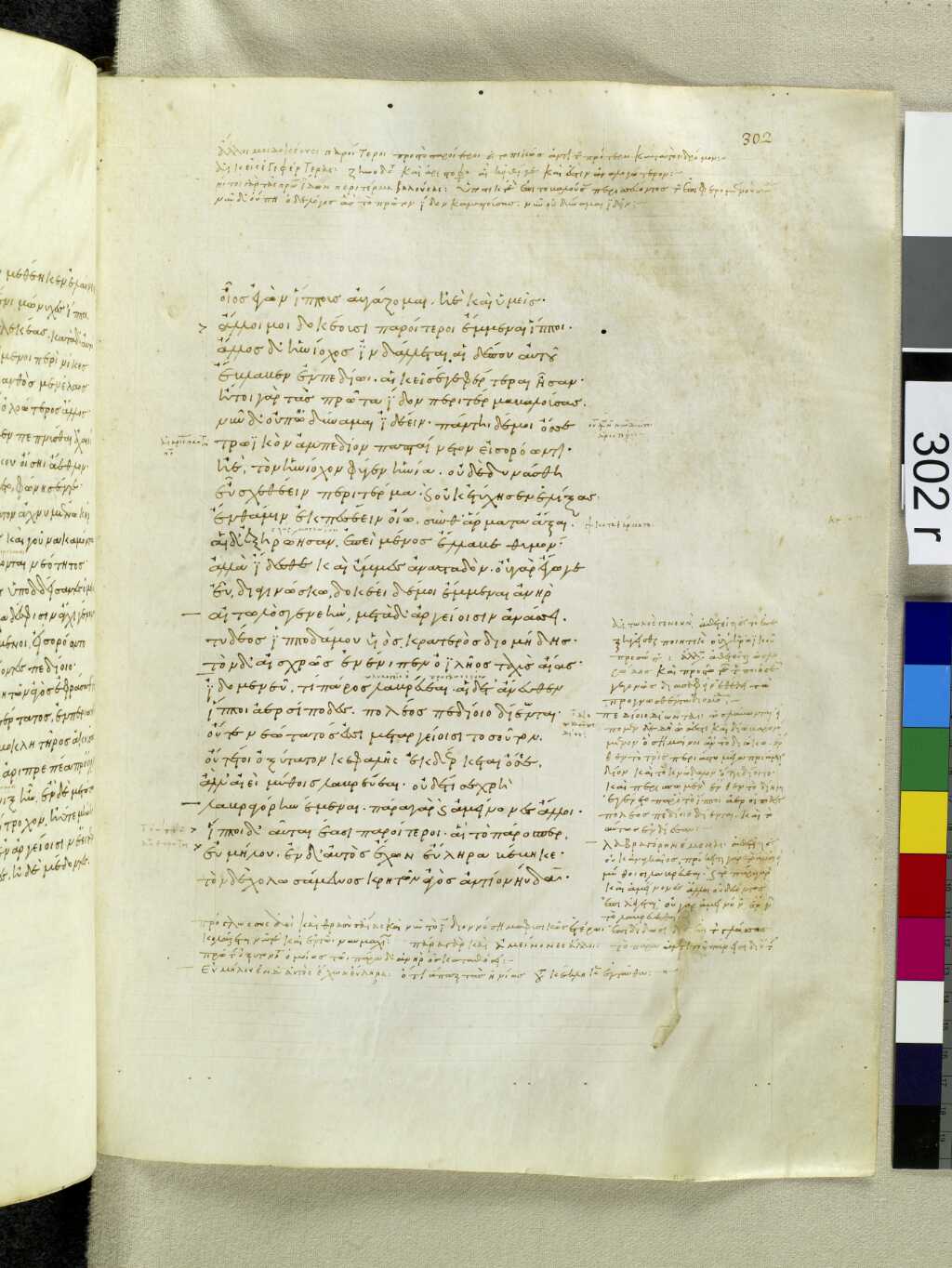
476οὔτε νεώτατός ἐσσι μετʼ Ἀργείοισι τοσοῦτον, 477οὔτέ τοι ὀξύτατον κεφαλῆς ἐκδέρκεται ὄσσε· 478ἀλλʼ αἰεὶ μύθοις λαβρεύεαι· οὐδέ τί σε χρὴ 479λαβραγόρην ἔμεναι· πάρα γὰρ καὶ ἀμείνονες ἄλλοι. 480ἵπποι δʼ αὐταὶ ἔασι παροίτεραι, αἳ τὸ πάρος περ, 481Εὐμήλου, ἐν δʼ αὐτὸς ἔχων εὔληρα βέβηκε. 482τὸν δὲ χολωσάμενος Κρητῶν ἀγὸς ἀντίον ηὔδα· 483Αἶαν νεῖκος ἄριστε κακοφραδὲς ἄλλά τε πάντα 484δεύεαι Ἀργείων, ὅτι τοι νόος ἐστὶν ἀπηνής. 485δεῦρό νυν ἢ τρίποδος περιδώμεθον ἠὲ λέβητος, 486ἴστορα δʼ Ἀτρεΐδην Ἀγαμέμνονα θείομεν ἄμφω, 487ὁππότεραι πρόσθʼ ἵπποι, ἵνα γνώῃς ἀποτίνων. 488ὣς ἔφατʼ, ὄρνυτο δʼ αὐτίκʼ Ὀϊλῆος ταχὺς Αἴας 489χωόμενος χαλεποῖσιν ἀμείψασθαι ἐπέεσσι· 490καί νύ κε δὴ προτέρω ἔτʼ ἔρις γένετʼ ἀμφοτέροισιν, 491εἰ μὴ Ἀχιλλεὺς αὐτὸς ἀνίστατο καὶ φάτο μῦθον· 492μηκέτι νῦν χαλεποῖσιν ἀμείβεσθον ἐπέεσσιν 493Αἶαν Ἰδομενεῦ τε κακοῖς, ἐπεὶ οὐδὲ ἔοικε. 494καὶ δʼ ἄλλῳ νεμεσᾶτον ὅτις τοιαῦτά γε ῥέζοι. 495ἀλλʼ ὑμεῖς ἐν ἀγῶνι καθήμενοι εἰσοράασθε 496ἵππους· οἳ δὲ τάχʼ αὐτοὶ ἐπειγόμενοι περὶ νίκης 497ἐνθάδʼ ἐλεύσονται· τότε δὲ γνώσεσθε ἕκαστος 498ἵππους Ἀργείων, οἳ δεύτεροι οἵ τε πάροιθεν. 499ὣς φάτο, Τυδεΐδης δὲ μάλα σχεδὸν ἦλθε διώκων, 500μάστι δʼ αἰὲν ἔλαυνε κατωμαδόν· οἳ δέ οἱ ἵπποι
The captain of the Cretans was angry, and answered, “Ajax you are an excellent railer, but you have no judgement, and are wanting in much else as well, for you have a vile temper. I will wager you a tripod or cauldron, and Agamemnon son of Atreus shall decide whose horses are first. You will then know to your cost.”
Ajax son of Oileus was for making him an angry answer, and there would have been yet further brawling between them, had not Achilles risen in his place and said, “Cease your railing, Ajax and Idomeneus; it is not seemly; you would be scandalised if you saw any one else do the like: sit down and keep your eyes on the horses; they are speeding towards the winning-post and will be here directly. You will then both of you know whose horses are first, and whose come after.”
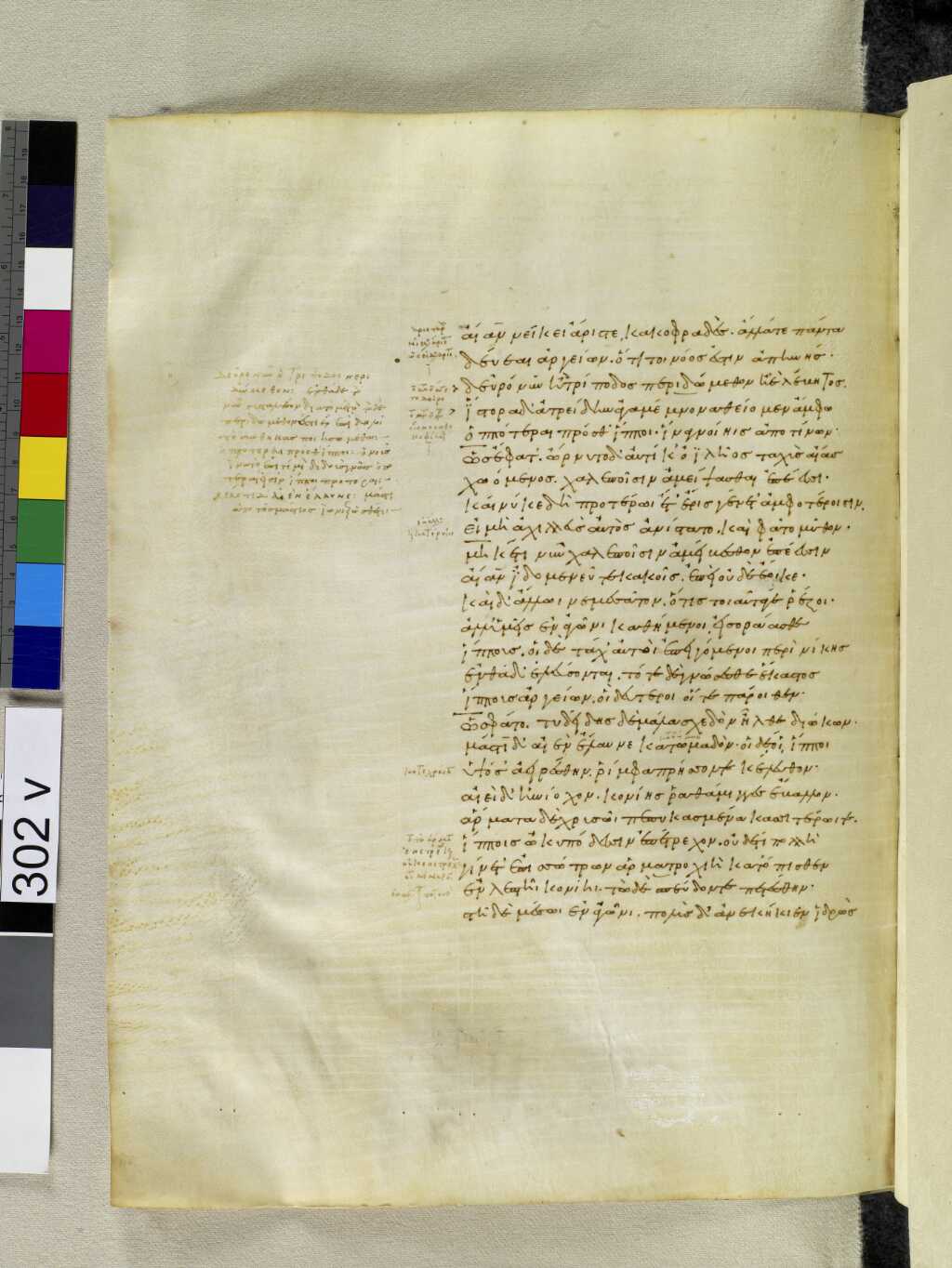
501ὑψόσʼ ἀειρέσθην ῥίμφα πρήσσοντε κέλευθον. 502αἰεὶ δʼ ἡνίοχον κονίης ῥαθάμιγγες ἔβαλλον, 503ἅρματα δὲ χρυσῷ πεπυκασμένα κασσιτέρῳ τε 504ἵπποις ὠκυπόδεσσιν ἐπέτρεχον· οὐδέ τι πολλὴ 505γίγνετʼ ἐπισσώτρων ἁρματροχιὴ κατόπισθεν 506ἐν λεπτῇ κονίῃ· τὼ δὲ σπεύδοντε πετέσθην. 507στῆ δὲ μέσῳ ἐν ἀγῶνι, πολὺς δʼ ἀνεκήκιεν ἱδρὼς 508ἵππων ἔκ τε λόφων καὶ ἀπὸ στέρνοιο χαμᾶζε. 509αὐτὸς δʼ ἐκ δίφροιο χαμαὶ θόρε παμφανόωντος, 510κλῖνε δʼ ἄρα μάστιγα ποτὶ ζυγόν· οὐδὲ μάτησεν 511ἴφθιμος Σθένελος, ἀλλʼ ἐσσυμένως λάβʼ ἄεθλον, 512δῶκε δʼ ἄγειν ἑτάροισιν ὑπερθύμοισι γυναῖκα 513καὶ τρίποδʼ ὠτώεντα φέρειν· ὃ δʼ ἔλυεν ὑφʼ ἵππους. 514τῷ δʼ ἄρʼ ἐπʼ Ἀντίλοχος Νηλήϊος ἤλασεν ἵππους 515κέρδεσιν, οὔ τι τάχει γε, παραφθάμενος Μενέλαον· 516ἀλλὰ καὶ ὧς Μενέλαος ἔχʼ ἐγγύθεν ὠκέας ἵππους. 517ὅσσον δὲ τροχοῦ ἵππος ἀφίσταται, ὅς ῥα ἄνακτα 518ἕλκῃσιν πεδίοιο τιταινόμενος σὺν ὄχεσφι· 519τοῦ μέν τε ψαύουσιν ἐπισσώτρου τρίχες ἄκραι 520οὐραῖαι· ὃ δέ τʼ ἄγχι μάλα τρέχει, οὐδέ τι πολλὴ 521χώρη μεσσηγὺς πολέος πεδίοιο θέοντος· 522τόσσον δὴ Μενέλαος ἀμύμονος Ἀντιλόχοιο 523λείπετʼ· ἀτὰρ τὰ πρῶτα καὶ ἐς δίσκουρα λέλειπτο, 524ἀλλά μιν αἶψα κίχανεν· ὀφέλλετο γὰρ μένος ἠῢ 525ἵππου τῆς Ἀγαμεμνονέης καλλίτριχος Αἴθης·
As he was speaking, the son of Tydeus came driving in, plying his whip lustily from his shoulder, and his horses stepping high as they flew over the course. The sand and grit rained thick on the driver, and the chariot inlaid with gold and tin ran close behind his fleet horses. There was little trace of wheel-marks in the fine dust, and the horses came flying in at their utmost speed. Diomed stayed them in the middle of the crowd, and the sweat from their manes and chests fell in streams on to the ground. Forthwith he sprang from his goodly chariot, and leaned his whip against his horses’ yoke; brave Sthenelus now lost no time, but at once brought on the prize, and gave the woman and the ear-handled cauldron to his comrades to take away. Then he unyoked the horses.
Next after him came in Antilochus of the race of Neleus, who had passed Menelaus by a trick and not by the fleetness of his horses; but even so Menelaus came in as close behind him as the wheel is to the horse that draws both the chariot and its master. The end hairs of a horse’s tail touch the tyre of the wheel, and there is never much space between wheel and horse when the chariot is going; Menelaus was no further than this behind Antilochus, though at first he had been a full disc’s throw behind him. He had soon caught him up again, for Agamemnon’s mare Aethe kept pulling stronger and stronger, so that if the course had been longer he would have passed him, and there would not even have been a dead heat. Idomeneus’s brave squire Meriones was about a spear’s cast behind Menelaus. His horses were slowest of all, and he was the worst driver. Last of them all came the son of Admetus, dragging his chariot and driving his horses on in front. When Achilles saw him he was sorry, and stood up among the Argives saying, “The best man is coming in last. Let us give him a prize for it is reasonable. He shall have the second, but the first must go to the son of Tydeus.”
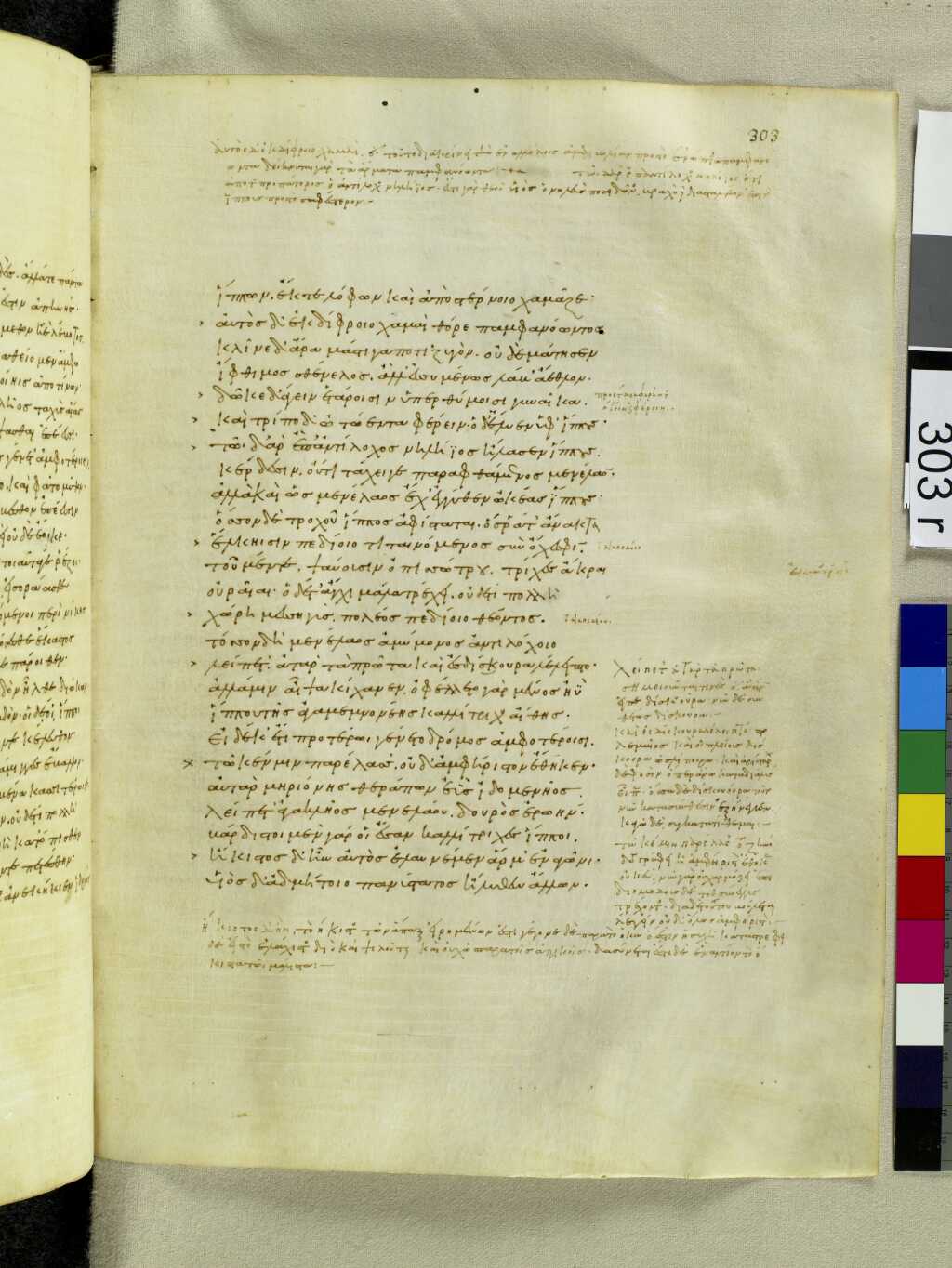
526εἰ δέ κʼ ἔτι προτέρω γένετο δρόμος ἀμφοτέροισι, 527τώ κέν μιν παρέλασσʼ οὐδʼ ἀμφήριστον ἔθηκεν. 528αὐτὰρ Μηριόνης θεράπων ἐῢς Ἰδομενῆος 529λείπετʼ ἀγακλῆος Μενελάου δουρὸς ἐρωήν· 530βάρδιστοι μὲν γάρ οἱ ἔσαν καλλίτριχες ἵπποι, 531ἤκιστος δʼ ἦν αὐτὸς ἐλαυνέμεν ἅρμʼ ἐν ἀγῶνι. 532υἱὸς δʼ Ἀδμήτοιο πανύστατος ἤλυθεν ἄλλων 533ἕλκων ἅρματα καλὰ ἐλαύνων πρόσσοθεν ἵππους. 534τὸν δὲ ἰδὼν ᾤκτειρε ποδάρκης δῖος Ἀχιλλεύς, 535στὰς δʼ ἄρʼ ἐν Ἀργείοις ἔπεα πτερόεντʼ ἀγόρευε· 536λοῖσθος ἀνὴρ ὤριστος ἐλαύνει μώνυχας ἵππους· 537ἀλλʼ ἄγε δή οἱ δῶμεν ἀέθλιον ὡς ἐπιεικὲς 538δεύτερʼ· ἀτὰρ τὰ πρῶτα φερέσθω Τυδέος υἱός. 539ὣς ἔφαθʼ, οἳ δʼ ἄρα πάντες ἐπῄνεον ὡς ἐκέλευε. 540καί νύ κέ οἱ πόρεν ἵππον, ἐπῄνησαν γὰρ Ἀχαιοί, 541εἰ μὴ ἄρʼ Ἀντίλοχος μεγαθύμου Νέστορος υἱὸς 542Πηλεΐδην Ἀχιλῆα δίκῃ ἠμείψατʼ ἀναστάς· 543ὦ Ἀχιλεῦ μάλα τοι κεχολώσομαι αἴ κε τελέσσῃς 544τοῦτο ἔπος· μέλλεις γὰρ ἀφαιρήσεσθαι ἄεθλον 545τὰ φρονέων ὅτι οἱ βλάβεν ἅρματα καὶ ταχέʼ ἵππω 546αὐτός τʼ ἐσθλὸς ἐών· ἀλλʼ ὤφελεν ἀθανάτοισιν 547εὔχεσθαι· τό κεν οὔ τι πανύστατος ἦλθε διώκων. 548εἰ δέ μιν οἰκτίρεις καί τοι φίλος ἔπλετο θυμῷ 549ἔστί τοι ἐν κλισίῃ χρυσὸς πολύς, ἔστι δὲ χαλκὸς 550καὶ πρόβατʼ, εἰσὶ δέ τοι δμῳαὶ καὶ μώνυχες ἵπποι·
Thus did he speak and the others all of them applauded his saying, and were for doing as he had said, but Nestor’s son Antilochus stood up and claimed his rights from the son of Peleus. “Achilles,” said he, “I shall take it much amiss if you do this thing; you would rob me of my prize, because you think Eumelus’s chariot and horses were thrown out, and himself too, good man that he is. He should have prayed duly to the immortals; he would not have come in last if he had done so. If you are sorry for him and so choose, you have much gold in your tents, with bronze, sheep, cattle and horses. Take something from this store if you would have the Achaeans speak well of you, and give him a better prize even than that which you have now offered; but I will not give up the mare, and he that will fight me for her, let him come on.”
Achilles smiled as he heard this, and was pleased with Antilochus, who was one of his dearest comrades. So he said—
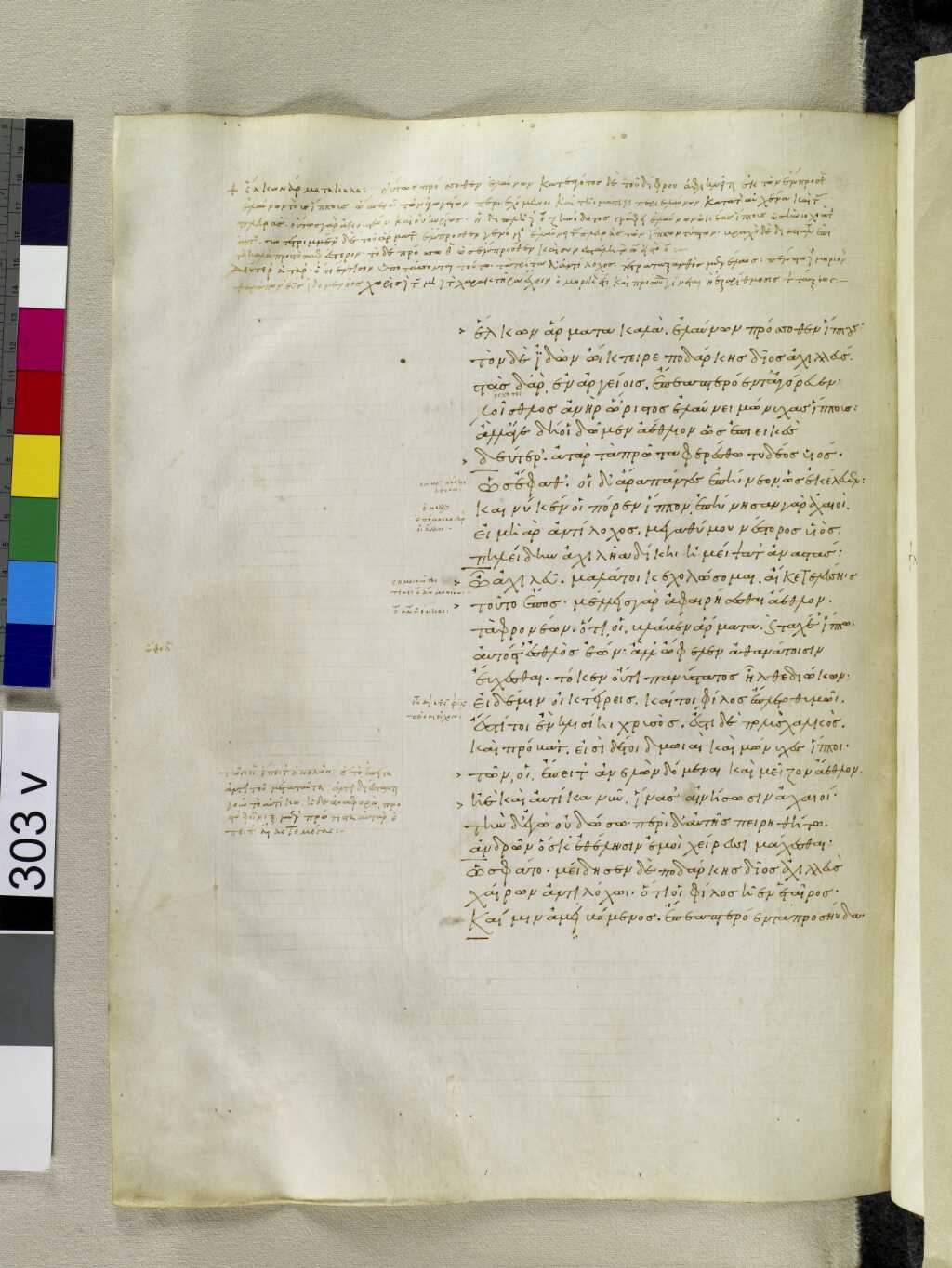
551τῶν οἱ ἔπειτʼ ἀνελὼν δόμεναι καὶ μεῖζον ἄεθλον 552ἠὲ καὶ αὐτίκα νῦν, ἵνα σʼ αἰνήσωσιν Ἀχαιοί. 553τὴν δʼ ἐγὼ οὐ δώσω· περὶ δʼ αὐτῆς πειρηθήτω 554ἀνδρῶν ὅς κʼ ἐθέλῃσιν ἐμοὶ χείρεσσι μάχεσθαι. 555ὣς φάτο, μείδησεν δὲ ποδάρκης δῖος Ἀχιλλεὺς 556χαίρων Ἀντιλόχῳ, ὅτι οἱ φίλος ἦεν ἑταῖρος· 557καί μιν ἀμειβόμενος ἔπεα πτερόεντα προσηύδα· 558Ἀντίλοχʼ, εἰ μὲν δή με κελεύεις οἴκοθεν ἄλλο 559Εὐμήλῳ ἐπιδοῦναι, ἐγὼ δέ κε καὶ τὸ τελέσσω. 560δώσω οἱ θώρηκα, τὸν Ἀστεροπαῖον ἀπηύρων 561χάλκεον, ᾧ πέρι χεῦμα φαεινοῦ κασσιτέροιο 562ἀμφιδεδίνηται· πολέος δέ οἱ ἄξιος ἔσται. 563ἦ ῥα, καὶ Αὐτομέδοντι φίλῳ ἐκέλευσεν ἑταίρῳ 564οἰσέμεναι κλισίηθεν· ὃ δʼ ᾤχετο καί οἱ ἔνεικεν, 565Εὐμήλῳ δʼ ἐν χερσὶ τίθει· ὃ δὲ δέξατο χαίρων. 566τοῖσι δὲ καὶ Μενέλαος ἀνίστατο θυμὸν ἀχεύων 567Ἀντιλόχῳ ἄμοτον κεχολωμένος· ἐν δʼ ἄρα κῆρυξ 568χειρὶ σκῆπτρον ἔθηκε, σιωπῆσαί τε κέλευσεν 569Ἀργείους· ὃ δʼ ἔπειτα μετηύδα ἰσόθεος φώς· 570Ἀντίλοχε πρόσθεν πεπνυμένε ποῖον ἔρεξας. 571ᾔσχυνας μὲν ἐμὴν ἀρετήν, βλάψας δέ μοι ἵππους 572τοὺς σοὺς πρόσθε βαλών, οἵ τοι πολὺ χείρονες ἦσαν. 573ἀλλʼ ἄγετʼ Ἀργείων ἡγήτορες ἠδὲ μέδοντες 574ἐς μέσον ἀμφοτέροισι δικάσσατε, μὴ δʼ ἐπʼ ἀρωγῇ, 575μή ποτέ τις εἴπῃσιν Ἀχαιῶν χαλκοχιτώνων·
“Antilochus, if you would have me find Eumelus another prize, I will give him the bronze breastplate with a rim of tin running all round it which I took from Asteropaeus. It will be worth much money to him.”
He bade his comrade Automedon bring the breastplate from his tent, and he did so. Achilles then gave it over to Eumelus, who received it gladly.
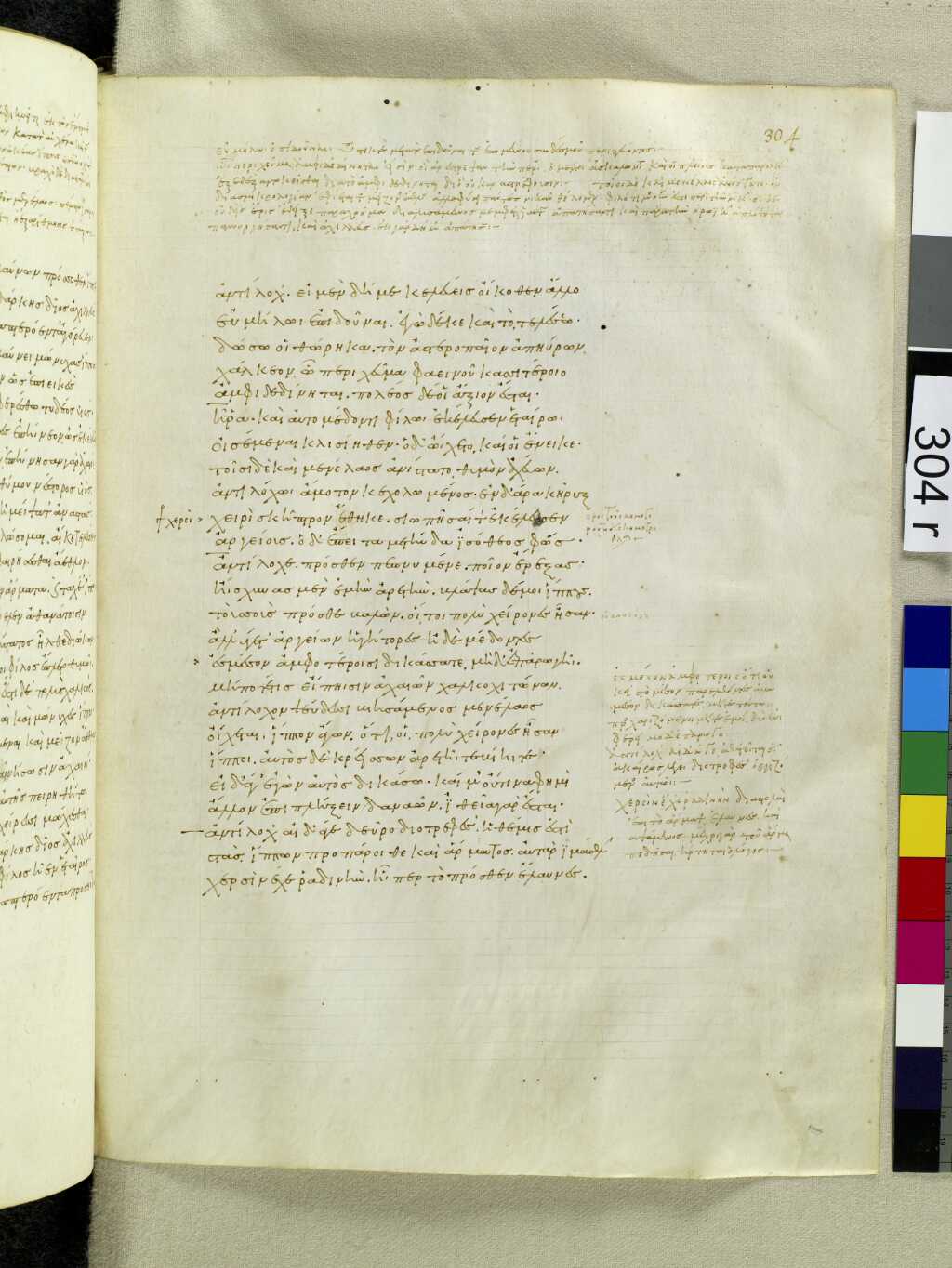
576Ἀντίλοχον ψεύδεσσι βιησάμενος Μενέλαος 577οἴχεται ἵππον ἄγων, ὅτι οἱ πολὺ χείρονες ἦσαν 578ἵπποι, αὐτὸς δὲ κρείσσων ἀρετῇ τε βίῃ τε. 579εἰ δʼ ἄγʼ ἐγὼν αὐτὸς δικάσω, καί μʼ οὔ τινά φημι 580ἄλλον ἐπιπλήξειν Δαναῶν· ἰθεῖα γὰρ ἔσται. 581Ἀντίλοχʼ εἰ δʼ ἄγε δεῦρο διοτρεφές, ἣ θέμις ἐστί, 582στὰς ἵππων προπάροιθε καὶ ἅρματος, αὐτὰρ ἱμάσθλην 583χερσὶν ἔχε ῥαδινήν, ᾗ περ τὸ πρόσθεν ἔλαυνες, 584ἵππων ἁψάμενος γαιήοχον ἐννοσίγαιον 585ὄμνυθι μὴ μὲν ἑκὼν τὸ ἐμὸν δόλῳ ἅρμα πεδῆσαι. 586τὸν δʼ αὖτʼ Ἀντίλοχος πεπνυμένος ἀντίον ηὔδα· 587ἄνσχεο νῦν· πολλὸν γὰρ ἔγωγε νεώτερός εἰμι 588σεῖο ἄναξ Μενέλαε, σὺ δὲ πρότερος καὶ ἀρείων. 589οἶσθʼ οἷαι νέου ἀνδρὸς ὑπερβασίαι τελέθουσι· 590κραιπνότερος μὲν γάρ τε νόος, λεπτὴ δέ τε μῆτις. 591τώ τοι ἐπιτλήτω κραδίη· ἵππον δέ τοι αὐτὸς 592δώσω, τὴν ἀρόμην. εἰ καί νύ κεν οἴκοθεν ἄλλο 593μεῖζον ἐπαιτήσειας, ἄφαρ κέ τοι αὐτίκα δοῦναι 594βουλοίμην ἢ σοί γε διοτρεφὲς ἤματα πάντα 595ἐκ θυμοῦ πεσέειν καὶ δαίμοσιν εἶναι ἀλιτρός. 596ἦ ῥα καὶ ἵππον ἄγων μεγαθύμου Νέστορος υἱὸς 597ἐν χείρεσσι τίθει Μενελάου· τοῖο δὲ θυμὸς 598ἰάνθη ὡς εἴ τε περὶ σταχύεσσιν ἐέρση 599ληΐου ἀλδήσκοντος, ὅτε φρίσσουσιν ἄρουραι· 600ὣς ἄρα σοὶ Μενέλαε μετὰ φρεσὶ θυμὸς ἰάνθη.
But Menelaus got up in a rage, furiously angry with Antilochus. An attendant placed his staff in his hands and bade the Argives keep silence: the hero then addressed them. “Antilochus,” said he, “what is this from you who have been so far blameless? You have made me cut a poor figure and baulked my horses by flinging your own in front of them, though yours are much worse than mine are; therefore, O princes and counsellors of the Argives, judge between us and show no favour, lest one of the Achaeans say, ‘Menelaus has got the mare through lying and corruption; his horses were far inferior to Antilochus’s, but he has greater weight and influence.’ Nay, I will determine the matter myself, and no man will blame me, for I shall do what is just. Come here, Antilochus, and stand, as our custom is, whip in hand before your chariot and horses; lay your hand on your steeds, and swear by earth-encircling Neptune that you did not purposely and guilefully get in the way of my horses.”
And Antilochus answered, “Forgive me; I am much younger, King Menelaus, than you are; you stand higher than I do and are the better man of the two; you know how easily young men are betrayed into indiscretion; their tempers are more hasty and they have less judgement; make due allowances therefore, and bear with me; I will of my own accord give up the mare that I have won, and if you claim any further chattel from my own possessions, I would rather yield it to you, at once, than fall from your good graces henceforth, and do wrong in the sight of heaven.”
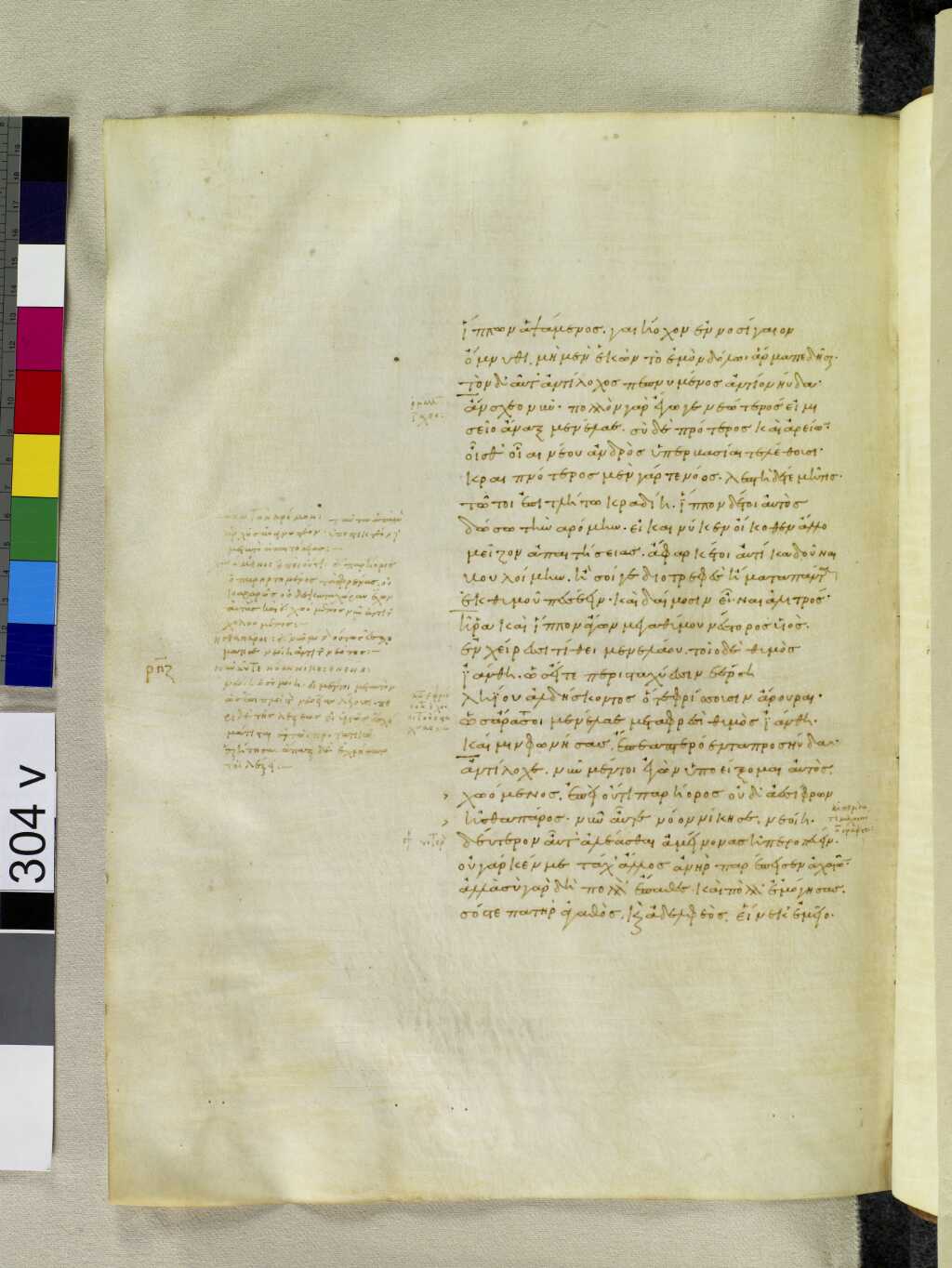
601καί μιν φωνήσας ἔπεα πτερόεντα προσηύδα· 602Ἀντίλοχε νῦν μέν τοι ἐγὼν ὑποείξομαι αὐτὸς 603χωόμενος, ἐπεὶ οὔ τι παρήορος οὐδʼ ἀεσίφρων 604ἦσθα πάρος· νῦν αὖτε νόον νίκησε νεοίη. 605δεύτερον αὖτʼ ἀλέασθαι ἀμείνονας ἠπεροπεύειν. 606οὐ γάρ κέν με τάχʼ ἄλλος ἀνὴρ παρέπεισεν Ἀχαιῶν. 607ἀλλὰ σὺ γὰρ δὴ πολλὰ πάθες καὶ πολλὰ μόγησας 608σός τε πατὴρ ἀγαθὸς καὶ ἀδελφεὸς εἵνεκʼ ἐμεῖο· 609τώ τοι λισσομένῳ ἐπιπείσομαι, ἠδὲ καὶ ἵππον 610δώσω ἐμήν περ ἐοῦσαν, ἵνα γνώωσι καὶ οἵδε 611ὡς ἐμὸς οὔ ποτε θυμὸς ὑπερφίαλος καὶ ἀπηνής. 612ἦ ῥα, καὶ Ἀντιλόχοιο Νοήμονι δῶκεν ἑταίρῳ 613ἵππον ἄγειν· ὃ δʼ ἔπειτα λέβηθʼ ἕλε παμφανόωντα. 614Μηριόνης δʼ ἀνάειρε δύω χρυσοῖο τάλαντα 615τέτρατος, ὡς ἔλασεν. πέμπτον δʼ ὑπελείπετʼ ἄεθλον, 616ἀμφίθετος φιάλη· τὴν Νέστορι δῶκεν Ἀχιλλεὺς 617Ἀργείων ἀνʼ ἀγῶνα φέρων, καὶ ἔειπε παραστάς· 618τῆ νῦν, καὶ σοὶ τοῦτο γέρον κειμήλιον ἔστω 619Πατρόκλοιο τάφου μνῆμʼ ἔμμεναι· οὐ γὰρ ἔτʼ αὐτὸν 620ὄψῃ ἐν Ἀργείοισι· δίδωμι δέ τοι τόδʼ ἄεθλον 621αὔτως· οὐ γὰρ πύξ γε μαχήσεαι, οὐδὲ παλαίσεις, 622οὐδʼ ἔτʼ ἀκοντιστὺν ἐσδύσεαι, οὐδὲ πόδεσσι 623θεύσεαι· ἤδη γὰρ χαλεπὸν κατὰ γῆρας ἐπείγει. 624ὣς εἰπὼν ἐν χερσὶ τίθει· ὃ δʼ ἐδέξατο χαίρων, 625καί μιν φωνήσας ἔπεα πτερόεντα προσηύδα·
The son of Nestor then took the mare and gave her over to Menelaus, whose anger was thus appeased; as when dew falls upon a field of ripening corn, and the lands are bristling with the harvest—even so, O Menelaus, was your heart made glad within you. He turned to Antilochus and said, “Now, Antilochus, angry though I have been, I can give way to you of my own free will; you have never been headstrong nor ill-disposed hitherto, but this time your youth has got the better of your judgement; be careful how you outwit your betters in future; no one else could have brought me round so easily, but your good father, your brother, and yourself have all of you had infinite trouble on my behalf; I therefore yield to your entreaty, and will give up the mare to you, mine though it indeed be; the people will thus see that I am neither harsh nor vindictive.”
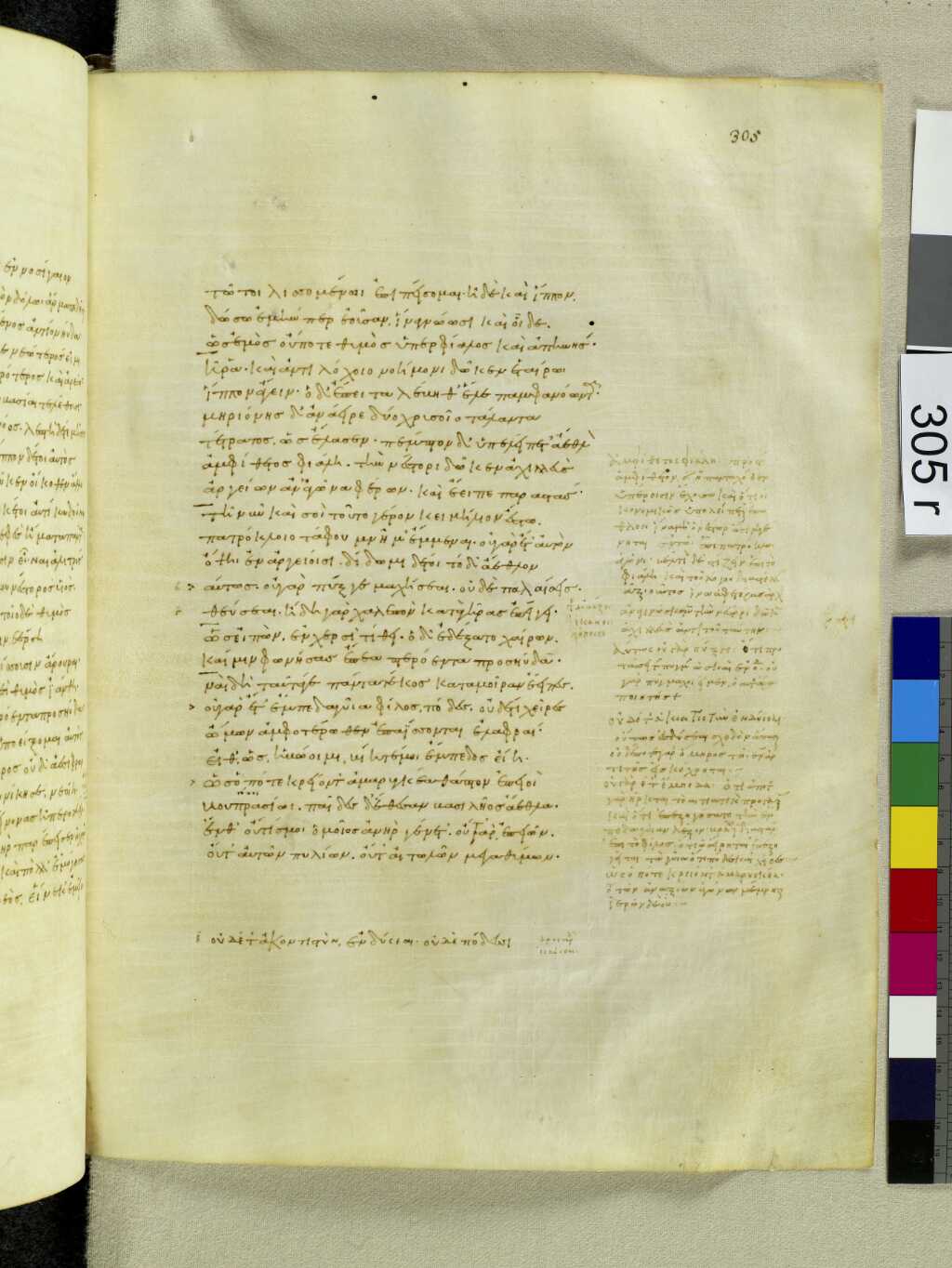
626ναὶ δὴ ταῦτά γε πάντα τέκος κατὰ μοῖραν ἔειπες· 627οὐ γὰρ ἔτʼ ἔμπεδα γυῖα φίλος πόδες, οὐδέ τι χεῖρες 628ὤμων ἀμφοτέρωθεν ἐπαΐσσονται ἐλαφραί. 629εἴθʼ ὣς ἡβώοιμι βίη τέ μοι ἔμπεδος εἴη 630ὡς ὁπότε κρείοντʼ Ἀμαρυγκέα θάπτον Ἐπειοὶ 631Βουπρασίῳ, παῖδες δʼ ἔθεσαν βασιλῆος ἄεθλα· 632ἔνθʼ οὔ τίς μοι ὁμοῖος ἀνὴρ γένετʼ, οὔτʼ ἄρʼ Ἐπειῶν 633οὔτʼ αὐτῶν Πυλίων οὔτʼ Αἰτωλῶν μεγαθύμων. 634πὺξ μὲν ἐνίκησα Κλυτομήδεα Ἤνοπος υἱόν, 635Ἀγκαῖον δὲ πάλῃ Πλευρώνιον, ὅς μοι ἀνέστη· 636Ἴφικλον δὲ πόδεσσι παρέδραμον ἐσθλὸν ἐόντα, 637δουρὶ δʼ ὑπειρέβαλον Φυλῆά τε καὶ Πολύδωρον. 638οἴοισίν μʼ ἵπποισι παρήλασαν Ἀκτορίωνε 639πλήθει πρόσθε βαλόντες ἀγασσάμενοι περὶ νίκης, 640οὕνεκα δὴ τὰ μέγιστα παρʼ αὐτόθι λείπετʼ ἄεθλα. 641οἳ δʼ ἄρʼ ἔσαν δίδυμοι· ὃ μὲν ἔμπεδον ἡνιόχευεν, 642ἔμπεδον ἡνιόχευʼ, ὃ δʼ ἄρα μάστιγι κέλευεν. 643ὥς ποτʼ ἔον· νῦν αὖτε νεώτεροι ἀντιοώντων 644ἔργων τοιούτων· ἐμὲ δὲ χρὴ γήραϊ λυγρῷ 645πείθεσθαι, τότε δʼ αὖτε μετέπρεπον ἡρώεσσιν. 646ἀλλʼ ἴθι καὶ σὸν ἑταῖρον ἀέθλοισι κτερέϊζε. 647τοῦτο δʼ ἐγὼ πρόφρων δέχομαι, χαίρει δέ μοι ἦτορ, 648ὥς μευ ἀεὶ μέμνησαι ἐνηέος, οὐδέ σε λήθω, 649τιμῆς ἧς τέ μʼ ἔοικε τετιμῆσθαι μετʼ Ἀχαιοῖς. 650σοὶ δὲ θεοὶ τῶνδʼ ἀντὶ χάριν μενοεικέα δοῖεν.
With this he gave the mare over to Antilochus’s comrade Noemon, and then took the cauldron. Meriones, who had come in fourth, carried off the two talents of gold, and the fifth prize, the two-handled urn, being unawarded, Achilles gave it to Nestor, going up to him among the assembled Argives and saying, “Take this, my good old friend, as an heirloom and memorial of the funeral of Patroclus—for you shall see him no more among the Argives. I give you this prize though you cannot win one; you can now neither wrestle nor fight, and cannot enter for the javelin-match nor foot-races, for the hand of age has been laid heavily upon you.”
So saying he gave the urn over to Nestor, who received it gladly and answered, “My son, all that you have said is true; there is no strength now in my legs and feet, nor can I hit out with my hands from either shoulder. Would that I were still young and strong as when the Epeans were burying King Amarynceus in Buprasium, and his sons offered prizes in his honour. There was then none that could vie with me neither of the Epeans nor the Pylians themselves nor the Aetolians. In boxing I overcame Clytomedes son of Enops, and in wrestling, Ancaeus of Pleuron who had come forward against me. Iphiclus was a good runner, but I beat him, and threw farther with my spear than either Phyleus or Polydorus. In chariot-racing alone did the two sons of Actor surpass me by crowding their horses in front of me, for they were angry at the way victory had gone, and at the greater part of the prizes remaining in the place in which they had been offered. They were twins, and the one kept on holding the reins, and holding the reins, while the other plied the whip. Such was I then, but now I must leave these matters to younger men; I must bow before the weight of years, but in those days I was eminent among heroes. And now, sir, go on with the funeral contests in honour of your comrade: gladly do I accept this urn, and my heart rejoices that you do not forget me but are ever mindful of my goodwill towards you, and of the respect due to me from the Achaeans. For all which may the grace of heaven be vouchsafed you in great abundance.”
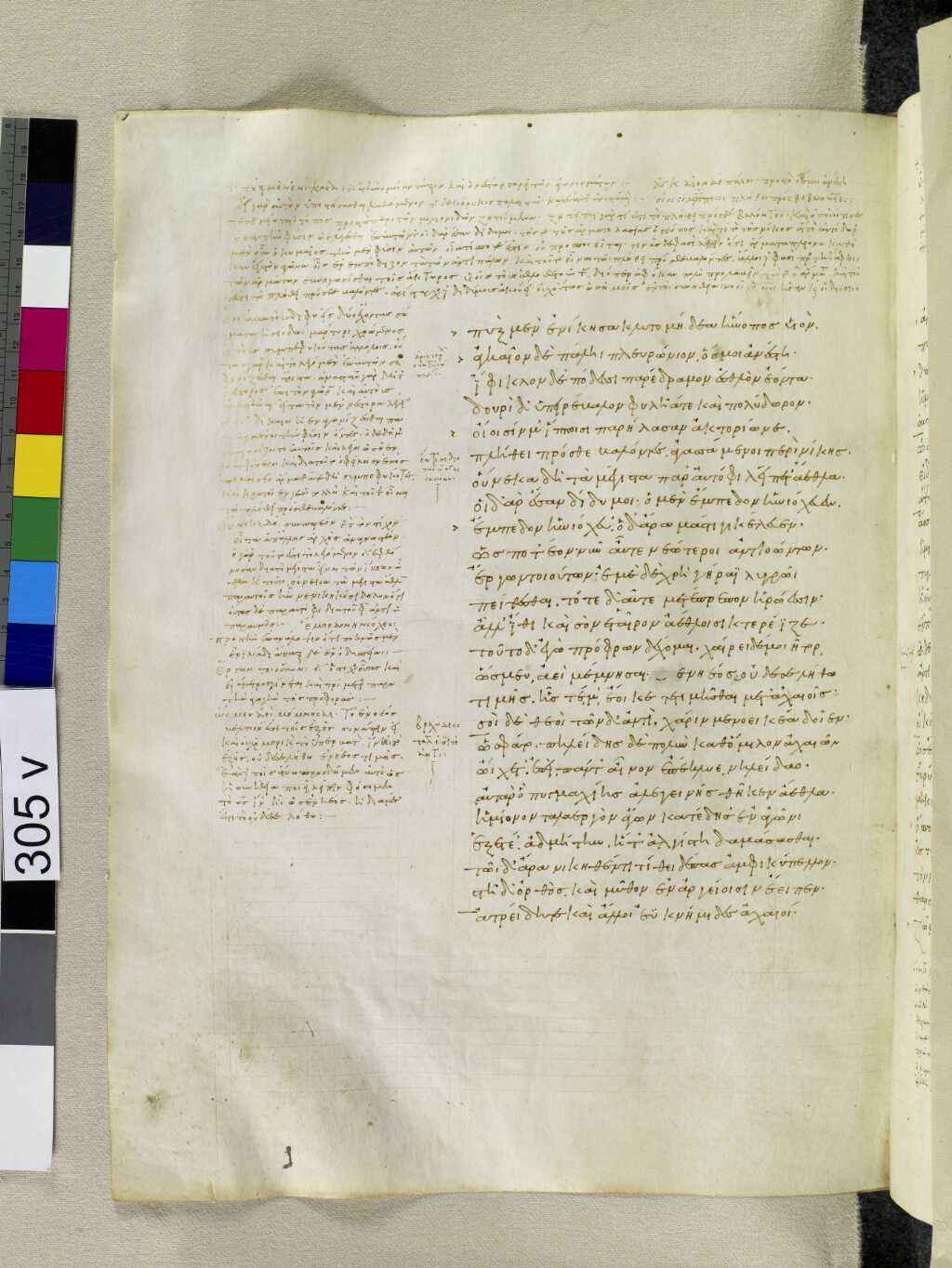
651ὣς φάτο, Πηλεΐδης δὲ πολὺν καθʼ ὅμιλον Ἀχαιῶν 652ᾤχετʼ, ἐπεὶ πάντʼ αἶνον ἐπέκλυε Νηλεΐδαο. 653αὐτὰρ ὃ πυγμαχίης ἀλεγεινῆς θῆκεν ἄεθλα· 654ἡμίονον ταλαεργὸν ἄγων κατέδησʼ ἐν ἀγῶνι 655ἑξέτεʼ ἀδμήτην, ἥ τʼ ἀλγίστη δαμάσασθαι· 656τῷ δʼ ἄρα νικηθέντι τίθει δέπας ἀμφικύπελλον. 657στῆ δʼ ὀρθὸς καὶ μῦθον ἐν Ἀργείοισιν ἔειπεν· 658Ἀτρεΐδη τε καὶ ἄλλοι ἐϋκνήμιδες Ἀχαιοὶ 659ἄνδρε δύω περὶ τῶνδε κελεύομεν, ὥ περ ἀρίστω, 660πὺξ μάλʼ ἀνασχομένω πεπληγέμεν· ᾧ δέ κʼ Ἀπόλλων 661δώῃ καμμονίην, γνώωσι δὲ πάντες Ἀχαιοί, 662ἡμίονον ταλαεργὸν ἄγων κλισίην δὲ νεέσθω· 663αὐτὰρ ὃ νικηθεὶς δέπας οἴσεται ἀμφικύπελλον. 664ὣς ἔφατʼ, ὄρνυτο δʼ αὐτίκʼ ἀνὴρ ἠΰς τε μέγας τε 665εἰδὼς πυγμαχίης υἱὸς Πανοπῆος Ἐπειός, 666ἅψατο δʼ ἡμιόνου ταλαεργοῦ φώνησέν τε· 667ἆσσον ἴτω ὅς τις δέπας οἴσεται ἀμφικύπελλον· 668ἡμίονον δʼ οὔ φημί τινʼ ἀξέμεν ἄλλον Ἀχαιῶν 669πυγμῇ νικήσαντʼ, ἐπεὶ εὔχομαι εἶναι ἄριστος. 670ἦ οὐχ ἅλις ὅττι μάχης ἐπιδεύομαι; οὐδʼ ἄρα πως ἦν 671ἐν πάντεσσʼ ἔργοισι δαήμονα φῶτα γενέσθαι. 672ὧδε γὰρ ἐξερέω, τὸ δὲ καὶ τετελεσμένον ἔσται· 673ἀντικρὺ χρόα τε ῥήξω σύν τʼ ὀστέʼ ἀράξω. 674κηδεμόνες δέ οἱ ἐνθάδʼ ἀολλέες αὖθι μενόντων, 675οἵ κέ μιν ἐξοίσουσιν ἐμῇς ὑπὸ χερσὶ δαμέντα.
Thereon the son of Peleus, when he had listened to all the thanks of Nestor, went about among the concourse of the Achaeans, and presently offered prizes for skill in the painful art of boxing. He brought out a strong mule, and made it fast in the middle of the crowd—a she-mule never yet broken, but six years old—when it is hardest of all to break them: this was for the victor, and for the vanquished he offered a double cup. Then he stood up and said among the Argives, “Son of Atreus, and all other Achaeans, I invite our two champion boxers to lay about them lustily and compete for these prizes. He to whom Apollo vouchsafes the greater endurance, and whom the Achaeans acknowledge as victor, shall take the mule back with him to his own tent, while he that is vanquished shall have the double cup.”
As he spoke there stood up a champion both brave and of great stature, a skilful boxer, Epeus, son of Panopeus. He laid his hand on the mule and said, “Let the man who is to have the cup come hither, for none but myself will take the mule. I am the best boxer of all here present, and none can beat me. Is it not enough that I should fall short of you in actual fighting? Still, no man can be good at everything. I tell you plainly, and it shall come true; if any man will box with me I will bruise his body and break his bones; therefore let his friends stay here in a body and be at hand to take him away when I have done with him.”
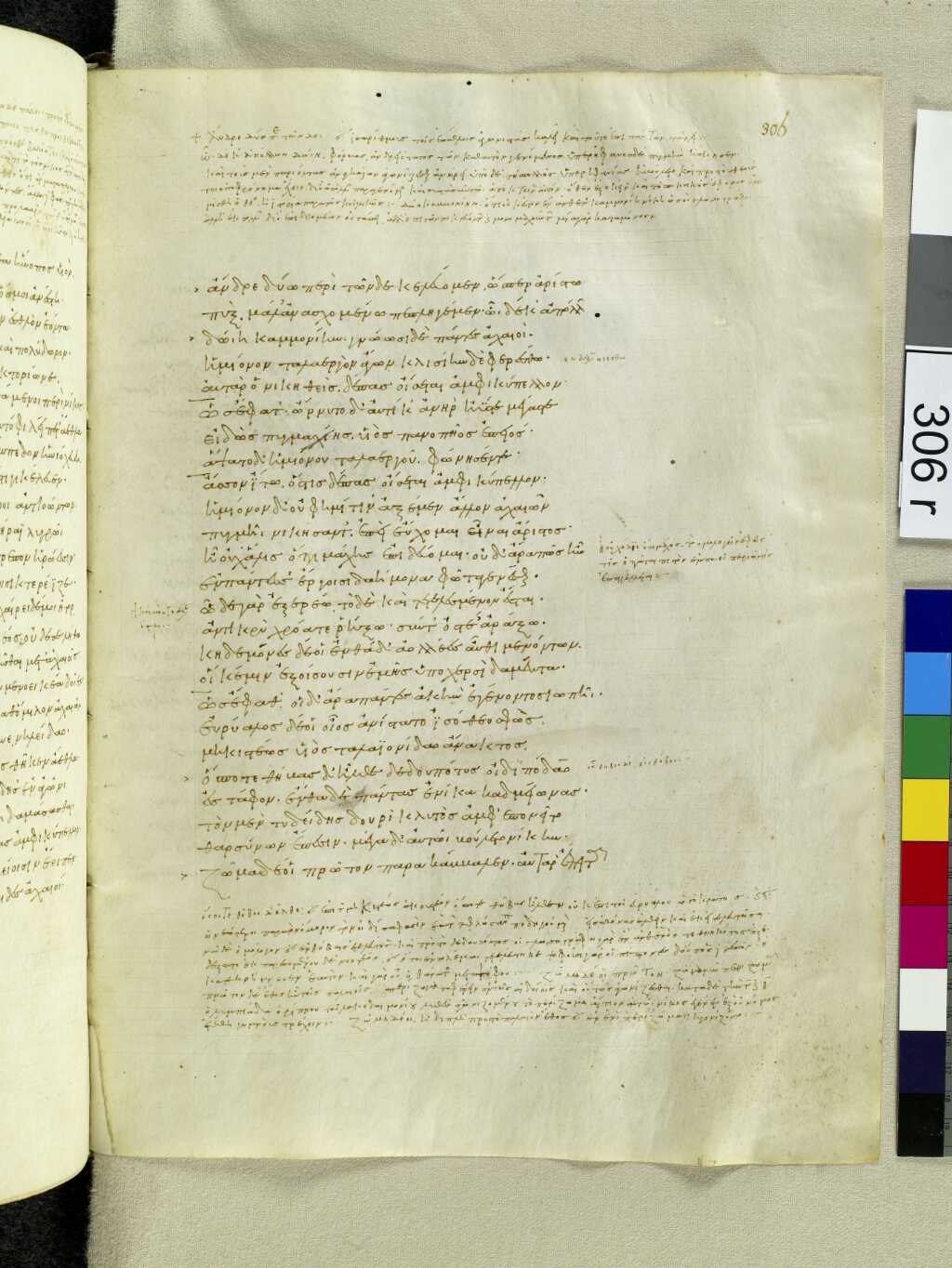
676ὣς ἔφαθʼ, οἳ δʼ ἄρα πάντες ἀκὴν ἐγένοντο σιωπῇ. 677Εὐρύαλος δέ οἱ οἶος ἀνίστατο ἰσόθεος φὼς 678Μηκιστῆος υἱὸς Ταλαϊονίδαο ἄνακτος, 679ὅς ποτε Θήβας δʼ ἦλθε δεδουπότος Οἰδιπόδαο 680ἐς τάφον· ἔνθα δὲ πάντας ἐνίκα Καδμείωνας. 681τὸν μὲν Τυδεΐδης δουρὶ κλυτὸς ἀμφεπονεῖτο 682θαρσύνων ἔπεσιν, μέγα δʼ αὐτῷ βούλετο νίκην. 683ζῶμα δέ οἱ πρῶτον παρακάββαλεν, αὐτὰρ ἔπειτα 684δῶκεν ἱμάντας ἐϋτμήτους βοὸς ἀγραύλοιο. 685τὼ δὲ ζωσαμένω βήτην ἐς μέσσον ἀγῶνα, 686ἄντα δʼ ἀνασχομένω χερσὶ στιβαρῇσιν ἅμʼ ἄμφω 687σύν ῥʼ ἔπεσον, σὺν δέ σφι βαρεῖαι χεῖρες ἔμιχθεν. 688δεινὸς δὲ χρόμαδος γενύων γένετʼ, ἔρρεε δʼ ἱδρὼς 689πάντοθεν ἐκ μελέων· ἐπὶ δʼ ὄρνυτο δῖος Ἐπειός, 690κόψε δὲ παπτήναντα παρήϊον· οὐδʼ ἄρʼ ἔτι δὴν 691ἑστήκειν· αὐτοῦ γὰρ ὑπήριπε φαίδιμα γυῖα. 692ὡς δʼ ὅθʼ ὑπὸ φρικὸς Βορέω ἀναπάλλεται ἰχθὺς 693θίνʼ ἐν φυκιόεντι, μέλαν δέ ἑ κῦμα κάλυψεν, 694ὣς πληγεὶς ἀνέπαλτʼ· αὐτὰρ μεγάθυμος Ἐπειὸς 695χερσὶ λαβὼν ὤρθωσε· φίλοι δʼ ἀμφέσταν ἑταῖροι, 696οἵ μιν ἄγον διʼ ἀγῶνος ἐφελκομένοισι πόδεσσιν 697αἷμα παχὺ πτύοντα κάρη βάλλονθʼ ἑτέρωσε· 698κὰδ δʼ ἀλλοφρονέοντα μετὰ σφίσιν εἷσαν ἄγοντες, 699αὐτοὶ δʼ οἰχόμενοι κόμισαν δέπας ἀμφικύπελλον. 700Πηλεΐδης δʼ αἶψʼ ἄλλα κατὰ τρίτα θῆκεν ἄεθλα
They all held their peace, and no man rose save Euryalus son of Mecisteus, who was son of Talaus. Mecisteus went once to Thebes after the fall of Oedipus, to attend his funeral, and he beat all the people of Cadmus. The son of Tydeus was Euryalus’s second, cheering him on and hoping heartily that he would win. First he put a waistband round him and then he gave him some well-cut thongs of ox-hide; the two men being now girt went into the middle of the ring, and immediately fell to; heavily indeed did they punish one another and lay about them with their brawny fists. One could hear the horrid crashing of their jaws, and they sweated from every pore of their skin. Presently Epeus came on and gave Euryalus a blow on the jaw as he was looking round; Euryalus could not keep his legs; they gave way under him in a moment and he sprang up with a bound, as a fish leaps into the air near some shore that is all bestrewn with sea-wrack, when Boreas furs the top of the waves, and then falls back into deep water. But noble Epeus caught hold of him and raised him up; his comrades also came round him and led him from the ring, unsteady in his gait, his head hanging on one side, and spitting great clots of gore. They set him down in a swoon and then went to fetch the double cup.
The son of Peleus now brought out the prizes for the third contest and showed them to the Argives. These were for the painful art of wrestling. For the winner there was a great tripod ready for setting upon the fire, and the Achaeans valued it among themselves at twelve oxen. For the loser he brought out a woman skilled in all manner of arts, and they valued her at four oxen. He rose and said among the Argives, “Stand forward, you who will essay this contest.”
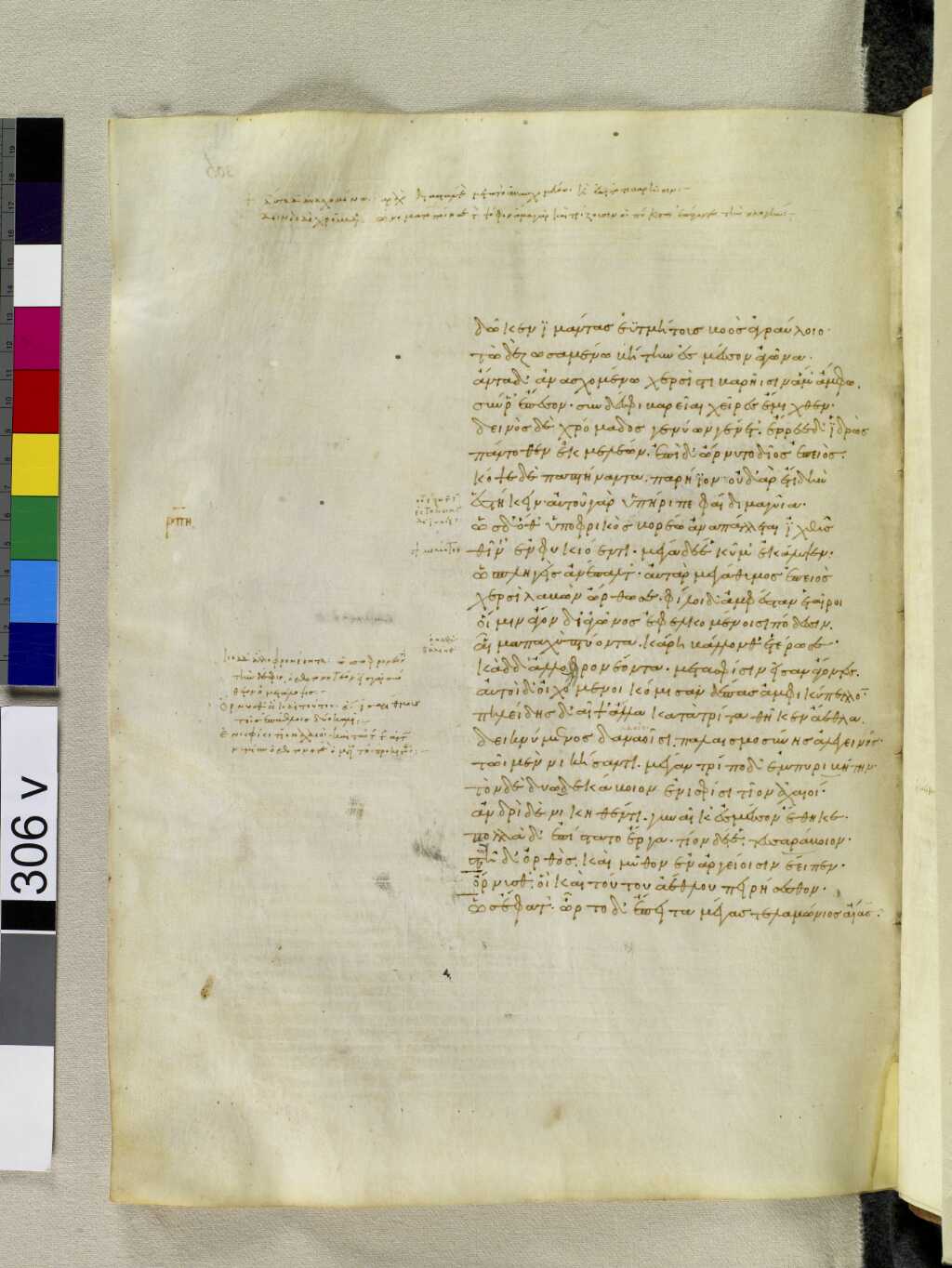
701δεικνύμενος Δαναοῖσι παλαισμοσύνης ἀλεγεινῆς, 702τῷ μὲν νικήσαντι μέγαν τρίποδʼ ἐμπυριβήτην, 703τὸν δὲ δυωδεκάβοιον ἐνὶ σφίσι τῖον Ἀχαιοί· 704ἀνδρὶ δὲ νικηθέντι γυναῖκʼ ἐς μέσσον ἔθηκε, 705πολλὰ δʼ ἐπίστατο ἔργα, τίον δέ ἑ τεσσαράβοιον. 706στῆ δʼ ὀρθὸς καὶ μῦθον ἐν Ἀργείοισιν ἔειπεν· 707ὄρνυσθʼ οἳ καὶ τούτου ἀέθλου πειρήσεσθον. 708ὣς ἔφατʼ, ὦρτο δʼ ἔπειτα μέγας Τελαμώνιος Αἴας, 709ἂν δʼ Ὀδυσεὺς πολύμητις ἀνίστατο κέρδεα εἰδώς. 710ζωσαμένω δʼ ἄρα τώ γε βάτην ἐς μέσσον ἀγῶνα, 711ἀγκὰς δʼ ἀλλήλων λαβέτην χερσὶ στιβαρῇσιν 712ὡς ὅτʼ ἀμείβοντες, τούς τε κλυτὸς ἤραρε τέκτων 713δώματος ὑψηλοῖο βίας ἀνέμων ἀλεείνων. 714τετρίγει δʼ ἄρα νῶτα θρασειάων ἀπὸ χειρῶν 715ἑλκόμενα στερεῶς· κατὰ δὲ νότιος ῥέεν ἱδρώς, 716πυκναὶ δὲ σμώδιγγες ἀνὰ πλευράς τε καὶ ὤμους 717αἵματι φοινικόεσσαι ἀνέδραμον· οἳ δὲ μάλʼ αἰεὶ 718νίκης ἱέσθην τρίποδος πέρι ποιητοῖο· 719οὔτʼ Ὀδυσεὺς δύνατο σφῆλαι οὔδει τε πελάσσαι, 720οὔτʼ Αἴας δύνατο, κρατερὴ δʼ ἔχεν ἲς Ὀδυσῆος. 721ἀλλʼ ὅτε δή ῥʼ ἀνίαζον ἐϋκνήμιδας Ἀχαιούς, 722δὴ τότε μιν προσέειπε μέγας Τελαμώνιος Αἴας· 723διογενὲς Λαερτιάδη πολυμήχανʼ Ὀδυσσεῦ 724ἤ μʼ ἀνάειρʼ, ἢ ἐγὼ σέ· τὰ δʼ αὖ Διὶ πάντα μελήσει. 725ὣς εἰπὼν ἀνάειρε· δόλου δʼ οὐ λήθετʼ Ὀδυσσεύς·
Forthwith uprose great Ajax the son of Telamon, and crafty Ulysses, full of wiles, rose also. The two girded themselves and went into the middle of the ring. They gripped each other in their strong hands like the rafters which some master-builder frames for the roof of a high house to keep the wind out. Their backbones cracked as they tugged at one another with their mighty arms—and sweat rained from them in torrents. Many a bloody weal sprang up on their sides and shoulders, but they kept on striving with might and main for victory and to win the tripod. Ulysses could not throw Ajax, nor Ajax him; Ulysses was too strong for him; but when the Achaeans began to tire of watching them, Ajax said to Ulysses, “Ulysses, noble son of Laertes, you shall either lift me, or I you, and let Jove settle it between us.”
He lifted him from the ground as he spoke, but Ulysses did not forget his cunning. He hit Ajax in the hollow at back of his knee, so that he could not keep his feet, but fell on his back with Ulysses lying upon his chest, and all who saw it marvelled. Then Ulysses in turn lifted Ajax and stirred him a little from the ground but could not lift him right off it, his knee sank under him, and the two fell side by side on the ground and were all begrimed with dust. They now sprang towards one another and were for wrestling yet a third time, but Achilles rose and stayed them. “Put not each other further,” said he, “to such cruel suffering; the victory is with both alike, take each of you an equal prize, and let the other Achaeans now compete.”
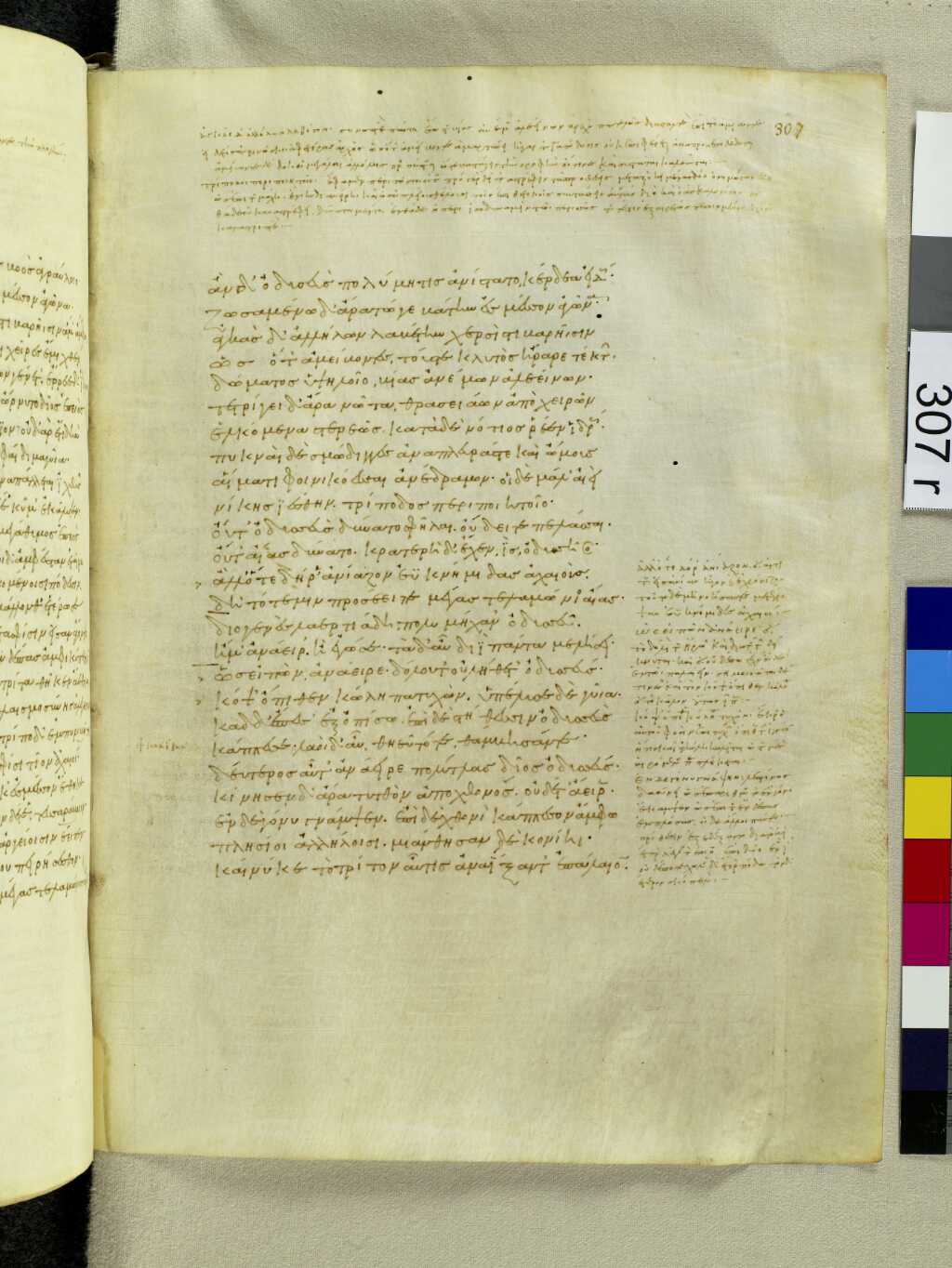
726κόψʼ ὄπιθεν κώληπα τυχών, ὑπέλυσε δὲ γυῖα, 727κὰδ δʼ ἔβαλʼ ἐξοπίσω· ἐπὶ δὲ στήθεσσιν Ὀδυσσεὺς 728κάππεσε· λαοὶ δʼ αὖ θηεῦντό τε θάμβησάν τε. 729δεύτερος αὖτʼ ἀνάειρε πολύτλας δῖος Ὀδυσσεύς, 730κίνησεν δʼ ἄρα τυτθὸν ἀπὸ χθονός, οὐδʼ ἔτʼ ἄειρεν, 731ἐν δὲ γόνυ γνάμψεν· ἐπὶ δὲ χθονὶ κάππεσον ἄμφω 732πλησίοι ἀλλήλοισι, μιάνθησαν δὲ κονίῃ. 733καί νύ κε τὸ τρίτον αὖτις ἀναΐξαντʼ ἐπάλαιον, 734εἰ μὴ Ἀχιλλεὺς αὐτὸς ἀνίστατο καὶ κατέρυκε· 735μηκέτʼ ἐρείδεσθον, μὴ δὲ τρίβεσθε κακοῖσι· 736νίκη δʼ ἀμφοτέροισιν· ἀέθλια δʼ ἶσʼ ἀνελόντες 737ἔρχεσθʼ, ὄφρα καὶ ἄλλοι ἀεθλεύωσιν Ἀχαιοί. 738ὣς ἔφαθʼ, οἳ δʼ ἄρα τοῦ μάλα μὲν κλύον ἠδὲ πίθοντο, 739καί ῥʼ ἀπομορξαμένω κονίην δύσαντο χιτῶνας. 740Πηλεΐδης δʼ αἶψʼ ἄλλα τίθει ταχυτῆτος ἄεθλα 741ἀργύρεον κρητῆρα τετυγμένον· ἓξ δʼ ἄρα μέτρα 742χάνδανεν, αὐτὰρ κάλλει ἐνίκα πᾶσαν ἐπʼ αἶαν 743πολλόν, ἐπεὶ Σιδόνες πολυδαίδαλοι εὖ ἤσκησαν, 744Φοίνικες δʼ ἄγον ἄνδρες ἐπʼ ἠεροειδέα πόντον, 745στῆσαν δʼ ἐν λιμένεσσι, Θόαντι δὲ δῶρον ἔδωκαν· 746υἷος δὲ Πριάμοιο Λυκάονος ὦνον ἔδωκε 747Πατρόκλῳ ἥρωϊ Ἰησονίδης Εὔνηος. 748καὶ τὸν Ἀχιλλεὺς θῆκεν ἄεθλον οὗ ἑτάροιο, 749ὅς τις ἐλαφρότατος ποσσὶ κραιπνοῖσι πέλοιτο· 750δευτέρῳ αὖ βοῦν θῆκε μέγαν καὶ πίονα δημῷ,
Thus did he speak and they did even as he had said, and put on their shirts again after wiping the dust from off their bodies.
The son of Peleus then offered prizes for speed in running—a mixing-bowl beautifully wrought, of pure silver. It would hold six measures, and far exceeded all others in the whole world for beauty; it was the work of cunning artificers in Sidon, and had been brought into port by Phoenicians from beyond the sea, who had made a present of it to Thoas. Eueneus son of Jason had given it to Patroclus in ransom of Priam’s son Lycaon, and Achilles now offered it as a prize in honour of his comrade to him who should be the swiftest runner. For the second prize he offered a large ox, well fattened, while for the last there was to be half a talent of gold. He then rose and said among the Argives, “Stand forward, you who will essay this contest.”
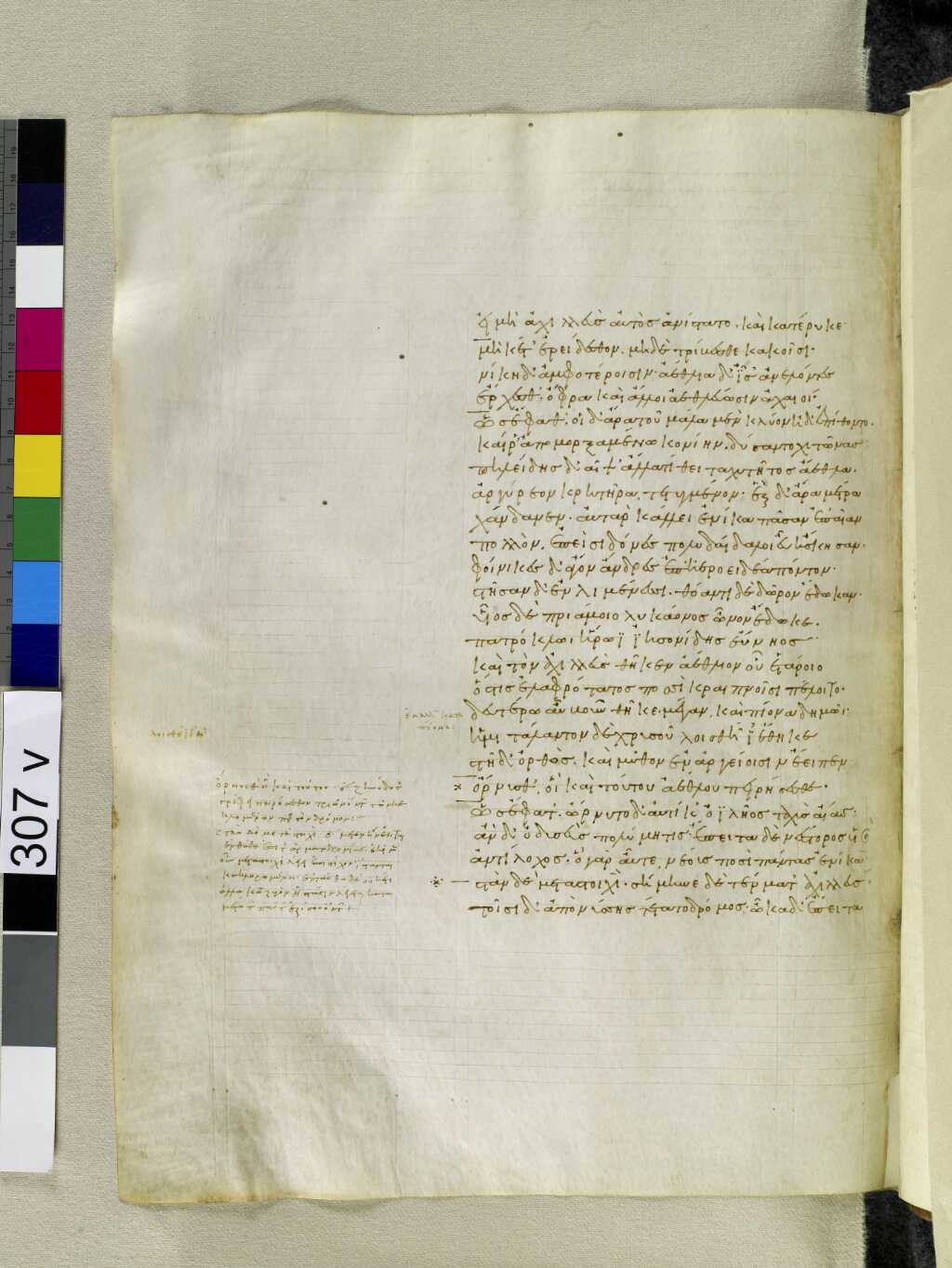
751ἡμιτάλαντον δὲ χρυσοῦ λοισθήϊʼ ἔθηκε. 752στῆ δʼ ὀρθὸς καὶ μῦθον ἐν Ἀργείοισιν ἔειπεν· 753ὄρνυσθʼ οἳ καὶ τούτου ἀέθλου πειρήσεσθε. 754ὣς ἔφατʼ, ὄρνυτο δʼ αὐτίκʼ Ὀϊλῆος ταχὺς Αἴας, 755ἂν δʼ Ὀδυσεὺς πολύμητις, ἔπειτα δὲ Νέστορος υἱὸς 756Ἀντίλοχος· ὃ γὰρ αὖτε νέους ποσὶ πάντας ἐνίκα. 757στὰν δὲ μεταστοιχί· σήμηνε δὲ τέρματʼ Ἀχιλλεύς. 758τοῖσι δʼ ἀπὸ νύσσης τέτατο δρόμος· ὦκα δʼ ἔπειτα 759ἔκφερʼ Ὀϊλιάδης· ἐπὶ δʼ ὄρνυτο δῖος Ὀδυσσεὺς 760ἄγχι μάλʼ, ὡς ὅτε τίς τε γυναικὸς ἐϋζώνοιο 761στήθεός ἐστι κανών, ὅν τʼ εὖ μάλα χερσὶ τανύσσῃ 762πηνίον ἐξέλκουσα παρὲκ μίτον, ἀγχόθι δʼ ἴσχει 763στήθεος· ὣς Ὀδυσεὺς θέεν ἐγγύθεν, αὐτὰρ ὄπισθεν 764ἴχνια τύπτε πόδεσσι πάρος κόνιν ἀμφιχυθῆναι· 765κὰδ δʼ ἄρα οἱ κεφαλῆς χέʼ ἀϋτμένα δῖος Ὀδυσσεὺς 766αἰεὶ ῥίμφα θέων· ἴαχον δʼ ἐπὶ πάντες Ἀχαιοὶ 767νίκης ἱεμένῳ, μάλα δὲ σπεύδοντι κέλευον. 768ἀλλʼ ὅτε δὴ πύματον τέλεον δρόμον, αὐτίκʼ Ὀδυσσεὺς 769εὔχετʼ Ἀθηναίῃ γλαυκώπιδι ὃν κατὰ θυμόν· 770κλῦθι θεά, ἀγαθή μοι ἐπίρροθος ἐλθὲ ποδοῖιν. 771ὣς ἔφατʼ εὐχόμενος· τοῦ δʼ ἔκλυε Παλλὰς Ἀθήνη, 772γυῖα δʼ ἔθηκεν ἐλαφρά, πόδας καὶ χεῖρας ὕπερθεν. 773ἀλλʼ ὅτε δὴ τάχʼ ἔμελλον ἐπαΐξασθαι ἄεθλον, 774ἔνθʼ Αἴας μὲν ὄλισθε θέων, βλάψεν γὰρ Ἀθήνη, 775τῇ ῥα βοῶν κέχυτʼ ὄνθος ἀποκταμένων ἐριμύκων,
Forthwith uprose fleet Ajax son of Oileus, with cunning Ulysses, and Nestor’s son Antilochus, the fastest runner among all the youth of his time. They stood side by side and Achilles showed them the goal. The course was set out for them from the starting-post, and the son of Oileus took the lead at once, with Ulysses as close behind him as the shuttle is to a woman’s bosom when she throws the woof across the warp and holds it close up to her; even so close behind him was Ulysses—treading in his footprints before the dust could settle there, and Ajax could feel his breath on the back of his head as he ran swiftly on. The Achaeans all shouted applause as they saw him straining his utmost, and cheered him as he shot past them; but when they were now nearing the end of the course Ulysses prayed inwardly to Minerva. “Hear me,” he cried, “and help my feet, O goddess.” Thus did he pray, and Pallas Minerva heard his prayer; she made his hands and his feet feel light, and when the runners were at the point of pouncing upon the prize, Ajax, through Minerva’s spite slipped upon some offal that was lying there from the cattle which Achilles had slaughtered in honour of Patroclus, and his mouth and nostrils were all filled with cow dung. Ulysses therefore carried off the mixing-bowl, for he got before Ajax and came in first. But Ajax took the ox and stood with his hand on one of its horns, spitting the dung out of his mouth. Then he said to the Argives, “Alas, the goddess has spoiled my running; she watches over Ulysses and stands by him as though she were his own mother.” Thus did he speak and they all of them laughed heartily.
Antilochus carried off the last prize and smiled as he said to the bystanders, “You all see, my friends, that now too the gods have shown their respect for seniority. Ajax is somewhat older than I am, and as for Ulysses, he belongs to an earlier generation, but he is hale in spite of his years, and no man of the Achaeans can run against him save only Achilles.”
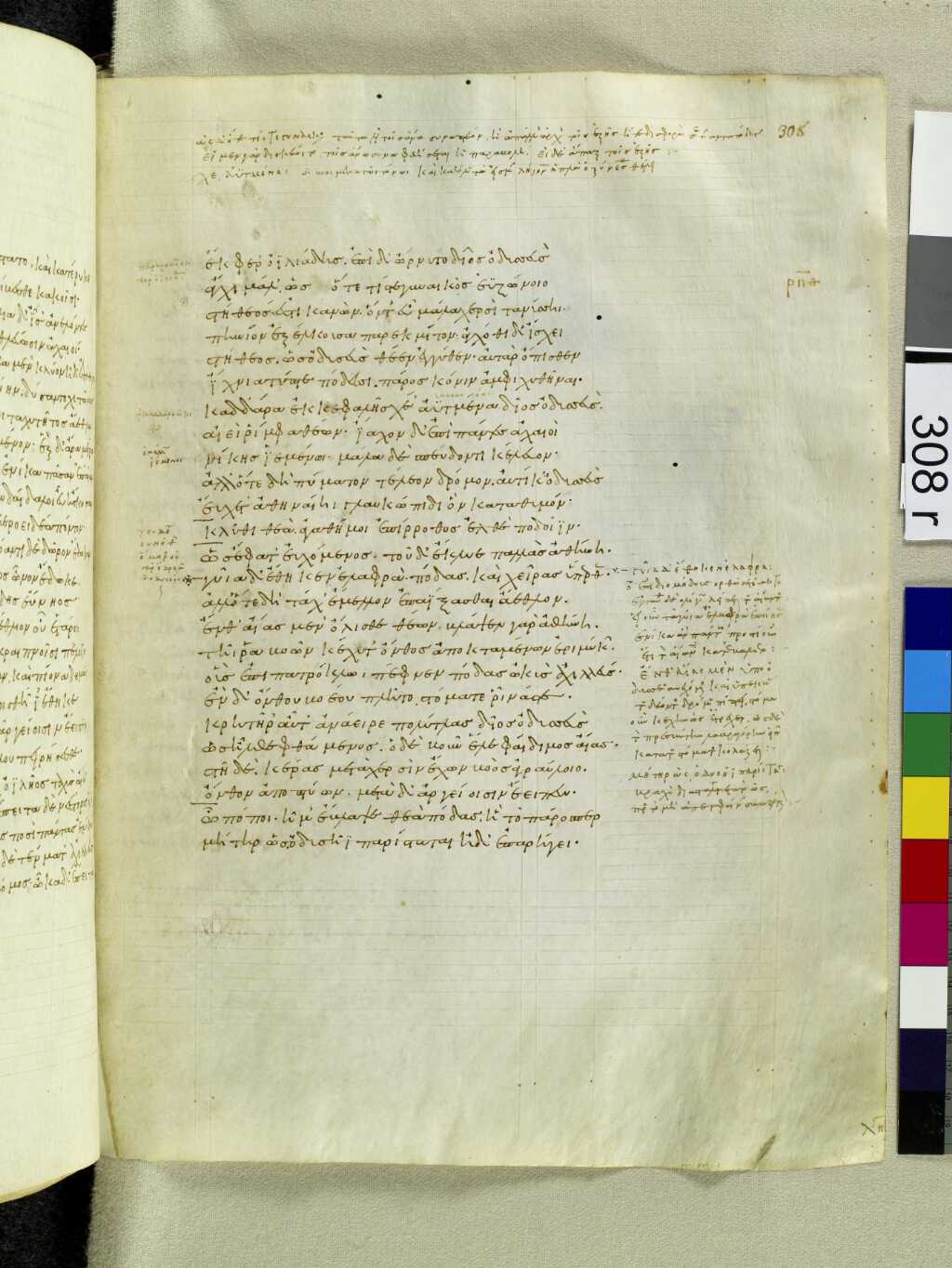
776οὓς ἐπὶ Πατρόκλῳ πέφνεν πόδας ὠκὺς Ἀχιλλεύς· 777ἐν δʼ ὄνθου βοέου πλῆτο στόμα τε ῥῖνάς τε· 778κρητῆρʼ αὖτʼ ἀνάειρε πολύτλας δῖος Ὀδυσσεύς, 779ὡς ἦλθε φθάμενος· ὃ δὲ βοῦν ἕλε φαίδιμος Αἴας. 780στῆ δὲ κέρας μετὰ χερσὶν ἔχων βοὸς ἀγραύλοιο 781ὄνθον ἀποπτύων, μετὰ δʼ Ἀργείοισιν ἔειπεν· 782ὢ πόποι ἦ μʼ ἔβλαψε θεὰ πόδας, ἣ τὸ πάρος περ 783μήτηρ ὣς Ὀδυσῆϊ παρίσταται ἠδʼ ἐπαρήγει. 784ὣς ἔφαθʼ, οἳ δʼ ἄρα πάντες ἐπʼ αὐτῷ ἡδὺ γέλασσαν. 785Ἀντίλοχος δʼ ἄρα δὴ λοισθήϊον ἔκφερʼ ἄεθλον 786μειδιόων, καὶ μῦθον ἐν Ἀργείοισιν ἔειπεν· 787εἰδόσιν ὔμμʼ ἐρέω πᾶσιν φίλοι, ὡς ἔτι καὶ νῦν 788ἀθάνατοι τιμῶσι παλαιοτέρους ἀνθρώπους. 789Αἴας μὲν γὰρ ἐμεῖʼ ὀλίγον προγενέστερός ἐστιν, 790οὗτος δὲ προτέρης γενεῆς προτέρων τʼ ἀνθρώπων· 791ὠμογέροντα δέ μίν φασʼ ἔμμεναι· ἀργαλέον δὲ 792ποσσὶν ἐριδήσασθαι Ἀχαιοῖς, εἰ μὴ Ἀχιλλεῖ. 793ὣς φάτο, κύδηνεν δὲ ποδώκεα Πηλεΐωνα. 794τὸν δʼ Ἀχιλεὺς μύθοισιν ἀμειβόμενος προσέειπεν· 795Ἀντίλοχʼ οὐ μέν τοι μέλεος εἰρήσεται αἶνος, 796ἀλλά τοι ἡμιτάλαντον ἐγὼ χρυσοῦ ἐπιθήσω. 797ὣς εἰπὼν ἐν χερσὶ τίθει, ὃ δʼ ἐδέξατο χαίρων. 798αὐτὰρ Πηλεΐδης κατὰ μὲν δολιχόσκιον ἔγχος 799θῆκʼ ἐς ἀγῶνα φέρων, κατὰ δʼ ἀσπίδα καὶ τρυφάλειαν 800τεύχεα Σαρπήδοντος, ἅ μιν Πάτροκλος ἀπηύρα.
He said this to pay a compliment to the son of Peleus, and Achilles answered, “Antilochus, you shall not have praised me to no purpose; I shall give you an additional half talent of gold.” He then gave the half talent to Antilochus, who received it gladly.
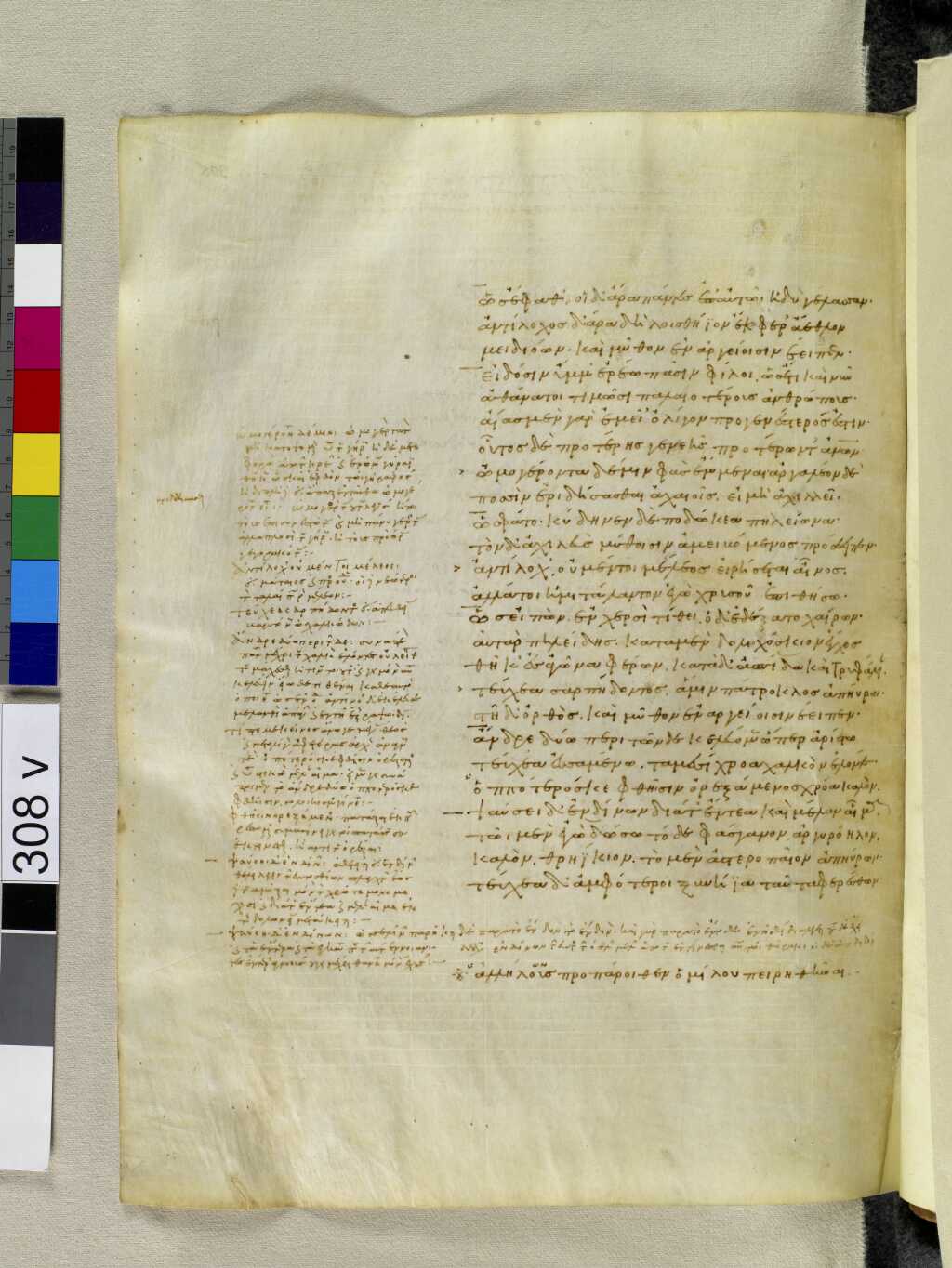
801στῆ δʼ ὀρθὸς καὶ μῦθον ἐν Ἀργείοισιν ἔειπεν· 802ἄνδρε δύω περὶ τῶνδε κελεύομεν, ὥ περ ἀρίστω, 803τεύχεα ἑσσαμένω ταμεσίχροα χαλκὸν ἑλόντε 804ἀλλήλων προπάροιθεν ὁμίλου πειρηθῆναι. 805ὁππότερός κε φθῇσιν ὀρεξάμενος χρόα καλόν, 806ψαύσῃ δʼ ἐνδίνων διά τʼ ἔντεα καὶ μέλαν αἷμα, 807τῷ μὲν ἐγὼ δώσω τόδε φάσγανον ἀργυρόηλον 808καλὸν Θρηΐκιον, τὸ μὲν Ἀστεροπαῖον ἀπηύρων· 809τεύχεα δʼ ἀμφότεροι ξυνήϊα ταῦτα φερέσθων· 810καί σφιν δαῖτʼ ἀγαθὴν παραθήσομεν ἐν κλισίῃσιν. 811ὣς ἔφατʼ, ὦρτο δʼ ἔπειτα μέγας Τελαμώνιος Αἴας, 812ἂν δʼ ἄρα Τυδεΐδης ὦρτο, κρατερὸς Διομήδης. 813οἳ δʼ ἐπεὶ οὖν ἑκάτερθεν ὁμίλου θωρήχθησαν, 814ἐς μέσον ἀμφοτέρω συνίτην μεμαῶτε μάχεσθαι 815δεινὸν δερκομένω· θάμβος δʼ ἔχε πάντας Ἀχαιούς. 816ἀλλʼ ὅτε δὴ σχεδὸν ἦσαν ἐπʼ ἀλλήλοισιν ἰόντες, 817τρὶς μὲν ἐπήϊξαν, τρὶς δὲ σχεδὸν ὁρμήθησαν. 818ἔνθʼ Αἴας μὲν ἔπειτα κατʼ ἀσπίδα πάντοσʼ ἐΐσην 819νύξʼ, οὐδὲ χρόʼ ἵκανεν· ἔρυτο γὰρ ἔνδοθι θώρηξ· 820Τυδεΐδης δʼ ἄρʼ ἔπειτα ὑπὲρ σάκεος μεγάλοιο 821αἰὲν ἐπʼ αὐχένι κῦρε φαεινοῦ δουρὸς ἀκωκῇ. 822καὶ τότε δή ῥʼ Αἴαντι περιδείσαντες Ἀχαιοὶ 823παυσαμένους ἐκέλευσαν ἀέθλια ἶσʼ ἀνελέσθαι. 824αὐτὰρ Τυδεΐδῃ δῶκεν μέγα φάσγανον ἥρως 825σὺν κολεῷ τε φέρων καὶ ἐϋτμήτῳ τελαμῶνι.
Then the son of Peleus brought out the spear, helmet and shield that had been borne by Sarpedon, and were taken from him by Patroclus. He stood up and said among the Argives, “We bid two champions put on their armour, take their keen blades, and make trial of one another in the presence of the multitude; whichever of them can first wound the flesh of the other, cut through his armour, and draw blood, to him will I give this goodly Thracian sword inlaid with silver, which I took from Asteropaeus, but the armour let both hold in partnership, and I will give each of them a hearty meal in my own tent.”
Forthwith uprose great Ajax the son of Telamon, as also mighty Diomed son of Tydeus. When they had put on their armour each on his own side of the ring, they both went into the middle eager to engage, and with fire flashing from their eyes. The Achaeans marvelled as they beheld them, and when the two were now close up with one another, thrice did they spring forward and thrice try to strike each other in close combat. Ajax pierced Diomed’s round shield, but did not draw blood, for the cuirass beneath the shield protected him; thereon the son of Tydeus from over his huge shield kept aiming continually at Ajax’s neck with the point of his spear, and the Achaeans alarmed for his safety bade them leave off fighting and divide the prize between them. Achilles then gave the great sword to the son of Tydeus, with its scabbard, and the leathern belt with which to hang it.
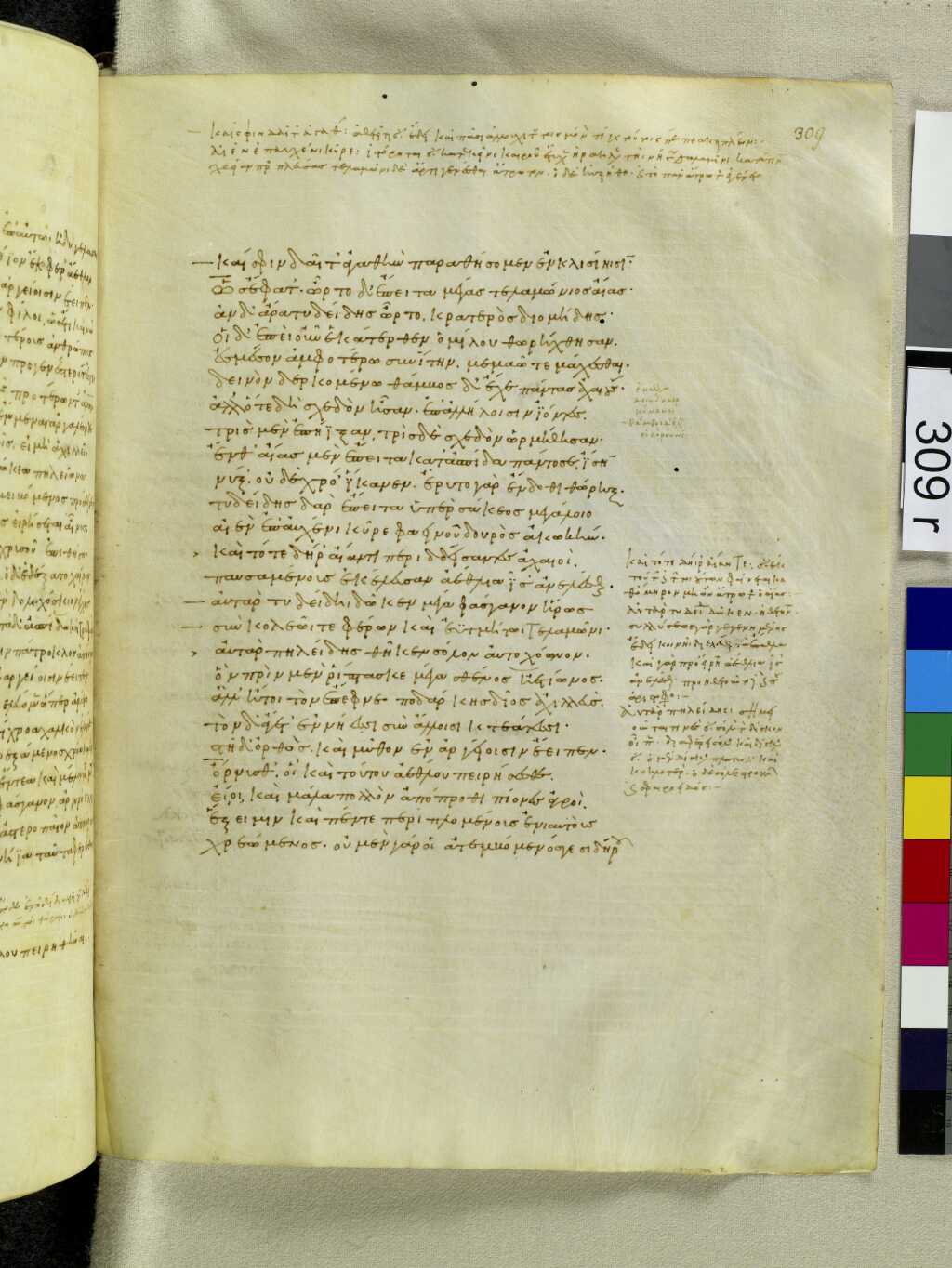
826αὐτὰρ Πηλεΐδης θῆκεν σόλον αὐτοχόωνον 827ὃν πρὶν μὲν ῥίπτασκε μέγα σθένος Ἠετίωνος· 828ἀλλʼ ἤτοι τὸν ἔπεφνε ποδάρκης δῖος Ἀχιλλεύς, 829τὸν δʼ ἄγετʼ ἐν νήεσσι σὺν ἄλλοισι κτεάτεσσι. 830στῆ δʼ ὀρθὸς καὶ μῦθον ἐν Ἀργείοισιν ἔειπεν· 831ὄρνυσθʼ οἳ καὶ τούτου ἀέθλου πειρήσεσθε. 832εἴ οἱ καὶ μάλα πολλὸν ἀπόπροθι πίονες ἀγροί, 833ἕξει μιν καὶ πέντε περιπλομένους ἐνιαυτοὺς 834χρεώμενος· οὐ μὲν γάρ οἱ ἀτεμβόμενός γε σιδήρου 835ποιμὴν οὐδʼ ἀροτὴρ εἶσʼ ἐς πόλιν, ἀλλὰ παρέξει. 836ὣς ἔφατʼ, ὦρτο δʼ ἔπειτα μενεπτόλεμος Πολυποίτης, 837ἂν δὲ Λεοντῆος κρατερὸν μένος ἀντιθέοιο, 838ἂν δʼ Αἴας Τελαμωνιάδης καὶ δῖος Ἐπειός. 839ἑξείης δʼ ἵσταντο, σόλον δʼ ἕλε δῖος Ἐπειός, 840ἧκε δὲ δινήσας· γέλασαν δʼ ἐπὶ πάντες Ἀχαιοί. 841δεύτερος αὖτʼ ἀφέηκε Λεοντεὺς ὄζος Ἄρηος· 842τὸ τρίτον αὖτʼ ἔρριψε μέγας Τελαμώνιος Αἴας 843χειρὸς ἄπο στιβαρῆς, καὶ ὑπέρβαλε σήματα πάντων. 844ἀλλʼ ὅτε δὴ σόλον εἷλε μενεπτόλεμος Πολυποίτης, 845ὅσσόν τίς τʼ ἔρριψε καλαύροπα βουκόλος ἀνήρ, 846ἣ δέ θʼ ἑλισσομένη πέτεται διὰ βοῦς ἀγελαίας, 847τόσσον παντὸς ἀγῶνος ὑπέρβαλε· τοὶ δὲ βόησαν. 848ἀνστάντες δʼ ἕταροι Πολυποίταο κρατεροῖο 849νῆας ἔπι γλαφυρὰς ἔφερον βασιλῆος ἄεθλον. 850αὐτὰρ ὃ τοξευτῇσι τίθει ἰόεντα σίδηρον,
Achilles next offered the massive iron quoit which mighty Eetion had erewhile been used to hurl, until Achilles had slain him and carried it off in his ships along with other spoils. He stood up and said among the Argives, “Stand forward, you who would essay this contest. He who wins it will have a store of iron that will last him five years as they go rolling round, and if his fair fields lie far from a town his shepherd or ploughman will not have to make a journey to buy iron, for he will have a stock of it on his own premises.”
Then uprose the two mighty men Polypoetes and Leonteus, with Ajax son of Telamon and noble Epeus. They stood up one after the other and Epeus took the quoit, whirled it, and flung it from him, which set all the Achaeans laughing. After him threw Leonteus of the race of Mars. Ajax son of Telamon threw third, and sent the quoit beyond any mark that had been made yet, but when mighty Polypoetes took the quoit he hurled it as though it had been a stockman’s stick which he sends flying about among his cattle when he is driving them, so far did his throw out-distance those of the others. All who saw it roared applause, and his comrades carried the prize for him and set it on board his ship.
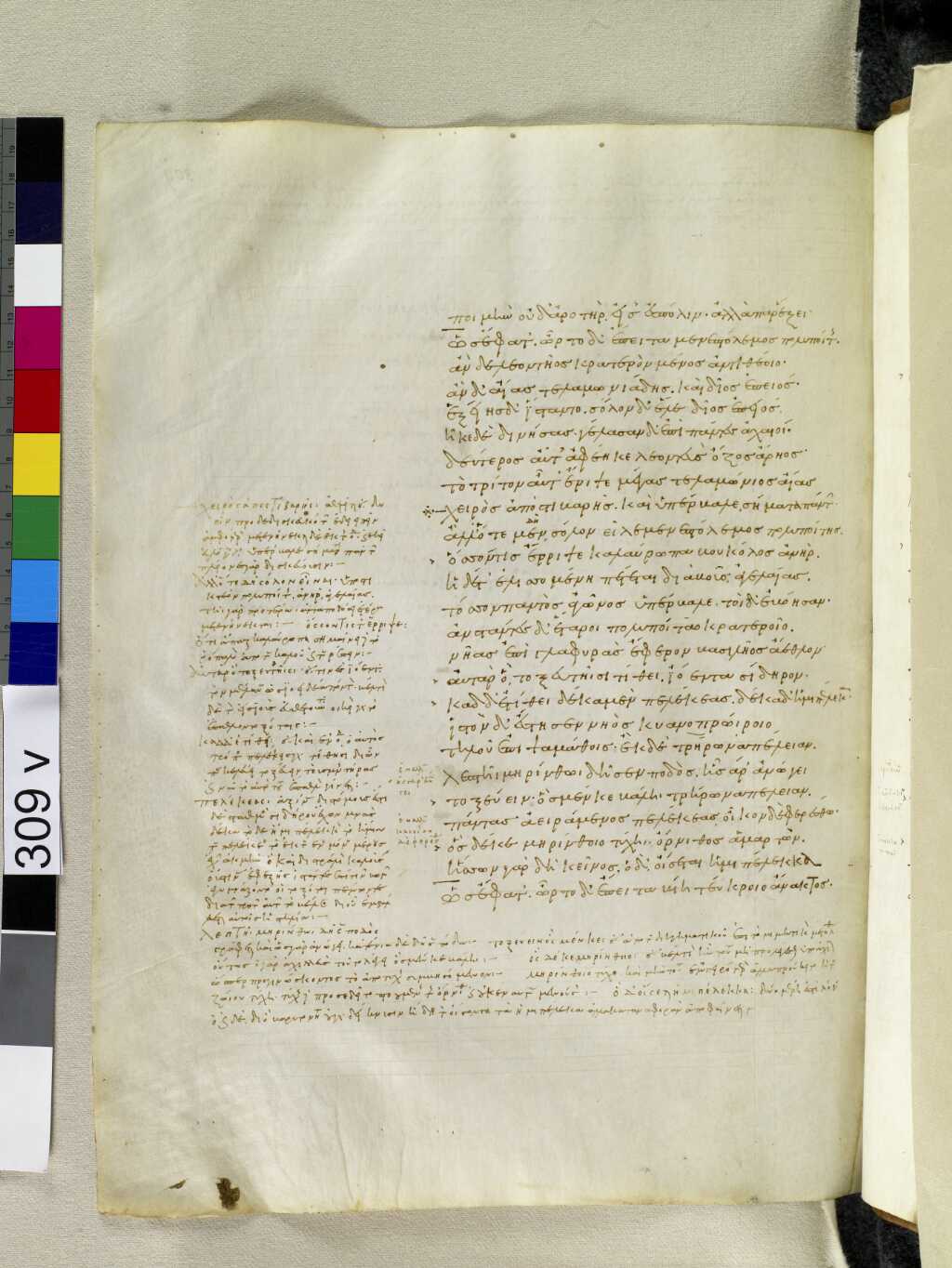
851κὰδ δʼ ἐτίθει δέκα μὲν πελέκεας, δέκα δʼ ἡμιπέλεκκα, 852ἱστὸν δʼ ἔστησεν νηὸς κυανοπρῴροιο 853τηλοῦ ἐπὶ ψαμάθοις, ἐκ δὲ τρήρωνα πέλειαν 854λεπτῇ μηρίνθῳ δῆσεν ποδός, ἧς ἄρʼ ἀνώγει 855τοξεύειν· ὃς μέν κε βάλῃ τρήρωνα πέλειαν, 856πάντας ἀειράμενος πελέκεας οἶκον δὲ φερέσθω· 857ὃς δέ κε μηρίνθοιο τύχῃ ὄρνιθος ἁμαρτών, 858ἥσσων γὰρ δὴ κεῖνος, ὃ δʼ οἴσεται ἡμιπέλεκκα. 859ὣς ἔφατʼ, ὦρτο δʼ ἔπειτα βίη Τεύκροιο ἄνακτος, 860ἂν δʼ ἄρα Μηριόνης θεράπων ἐῢς Ἰδομενῆος. 861κλήρους δʼ ἐν κυνέῃ χαλκήρεϊ πάλλον ἑλόντες, 862Τεῦκρος δὲ πρῶτος κλήρῳ λάχεν· αὐτίκα δʼ ἰὸν 863ἧκεν ἐπικρατέως, οὐδʼ ἠπείλησεν ἄνακτι 864ἀρνῶν πρωτογόνων ῥέξειν κλειτὴν ἑκατόμβην. 865ὄρνιθος μὲν ἅμαρτε· μέγηρε γάρ οἱ τό γʼ Ἀπόλλων· 866αὐτὰρ ὃ μήρινθον βάλε πὰρ πόδα, τῇ δέδετʼ ὄρνις· 867ἀντικρὺ δʼ ἀπὸ μήρινθον τάμε πικρὸς ὀϊστός. 868ἣ μὲν ἔπειτʼ ἤϊξε πρὸς οὐρανόν, ἣ δὲ παρείθη 869μήρινθος ποτὶ γαῖαν· ἀτὰρ κελάδησαν Ἀχαιοί. 870σπερχόμενος δʼ ἄρα Μηριόνης ἐξείρυσε χειρὸς 871τόξον· ἀτὰρ δὴ ὀϊστὸν ἔχεν πάλαι, ὡς ἴθυνεν. 872αὐτίκα δʼ ἠπείλησεν ἑκηβόλῳ Ἀπόλλωνι 873ἀρνῶν πρωτογόνων ῥέξειν κλειτὴν ἑκατόμβην. 874ὕψι δʼ ὑπὸ νεφέων εἶδε τρήρωνα πέλειαν· 875τῇ ῥʼ ὅ γε δινεύουσαν ὑπὸ πτέρυγος βάλε μέσσην,
Achilles next offered a prize of iron for archery—ten double-edged axes and ten with single edges: he set up a ship’s mast, some way off upon the sands, and with a fine string tied a pigeon to it by the foot; this was what they were to aim at. “Whoever,” he said, “can hit the pigeon shall have all the axes and take them away with him; he who hits the string without hitting the bird will have taken a worse aim and shall have the single-edged axes.”
Then uprose King Teucer, and Meriones the stalwart squire of Idomeneus rose also, They cast lots in a bronze helmet and the lot of Teucer fell first. He let fly with his arrow forthwith, but he did not promise hecatombs of firstling lambs to King Apollo, and missed his bird, for Apollo foiled his aim; but he hit the string with which the bird was tied, near its foot; the arrow cut the string clean through so that it hung down towards the ground, while the bird flew up into the sky, and the Achaeans shouted applause. Meriones, who had his arrow ready while Teucer was aiming, snatched the bow out of his hand, and at once promised that he would sacrifice a hecatomb of firstling lambs to Apollo lord of the bow; then espying the pigeon high up under the clouds, he hit her in the middle of the wing as she was circling upwards; the arrow went clean through the wing and fixed itself in the ground at Meriones’ feet, but the bird perched on the ship’s mast hanging her head and with all her feathers drooping; the life went out of her, and she fell heavily from the mast. Meriones, therefore, took all ten double-edged axes, while Teucer bore off the single-edged ones to his ships.
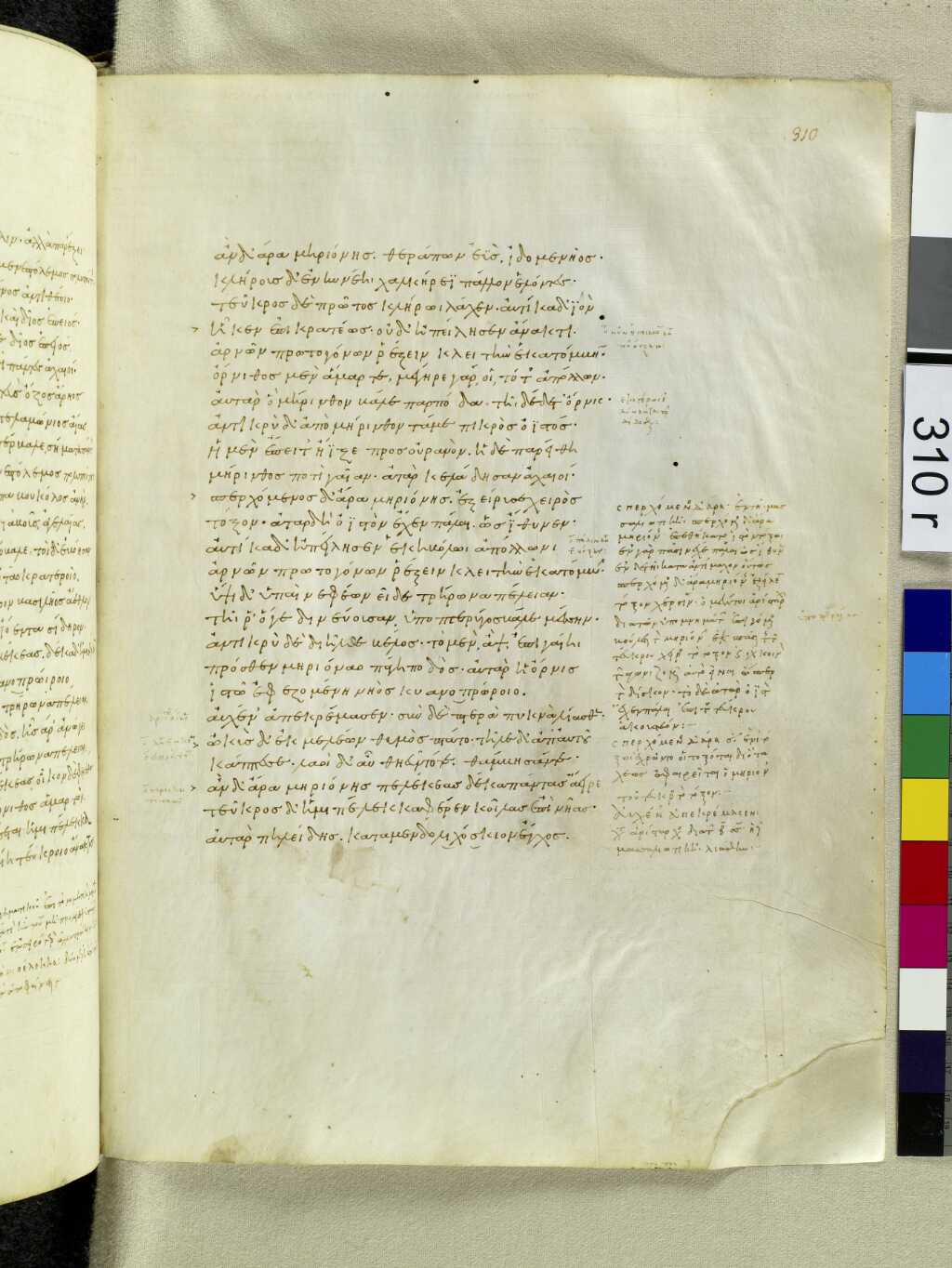
876ἀντικρὺ δὲ διῆλθε βέλος· τὸ μὲν ἂψ ἐπὶ γαίῃ 877πρόσθεν Μηριόναο πάγη ποδός· αὐτὰρ ἣ ὄρνις 878ἱστῷ ἐφεζομένη νηὸς κυανοπρῴροιο 879αὐχένʼ ἀπεκρέμασεν, σὺν δὲ πτερὰ πυκνὰ λίασθεν. 880ὠκὺς δʼ ἐκ μελέων θυμὸς πτάτο, τῆλε δʼ ἀπʼ αὐτοῦ 881κάππεσε· λαοὶ δʼ αὖ θηεῦντό τε θάμβησάν τε. 882ἂν δʼ ἄρα Μηριόνης πελέκεας δέκα πάντας ἄειρε, 883Τεῦκρος δʼ ἡμιπέλεκκα φέρεν κοίλας ἐπὶ νῆας. 884αὐτὰρ Πηλεΐδης κατὰ μὲν δολιχόσκιον ἔγχος, 885κὰδ δὲ λέβητʼ ἄπυρον βοὸς ἄξιον ἀνθεμόεντα 886θῆκʼ ἐς ἀγῶνα φέρων· καί ῥʼ ἥμονες ἄνδρες ἀνέσταν· 887ἂν μὲν ἄρʼ Ἀτρεΐδης εὐρὺ κρείων Ἀγαμέμνων, 888ἂν δʼ ἄρα Μηριόνης, θεράπων ἐῢς Ἰδομενῆος. 889τοῖσι δὲ καὶ μετέειπε ποδάρκης δῖος Ἀχιλλεύς· 890Ἀτρεΐδη· ἴδμεν γὰρ ὅσον προβέβηκας ἁπάντων 891ἠδʼ ὅσσον δυνάμει τε καὶ ἥμασιν ἔπλευ ἄριστος· 892ἀλλὰ σὺ μὲν τόδʼ ἄεθλον ἔχων κοίλας ἐπὶ νῆας 893ἔρχευ, ἀτὰρ δόρυ Μηριόνῃ ἥρωϊ πόρωμεν, 894εἰ σύ γε σῷ θυμῷ ἐθέλοις· κέλομαι γὰρ ἔγωγε. 895ὣς ἔφατʼ, οὐδʼ ἀπίθησεν ἄναξ ἀνδρῶν Ἀγαμέμνων· 896δῶκε δὲ Μηριόνῃ δόρυ χάλκεον· αὐτὰρ ὅ γʼ ἥρως 897Ταλθυβίῳ κήρυκι δίδου περικαλλὲς ἄεθλον.
Then the son of Peleus brought in a spear and a cauldron that had never been on the fire; it was worth an ox, and was chased with a pattern of flowers; and those that throw the javelin stood up—to wit the son of Atreus, king of men Agamemnon, and Meriones, stalwart squire of Idomeneus. But Achilles spoke saying, “Son of Atreus, we know how far you excel all others both in power and in throwing the javelin; take the cauldron back with you to your ships, but if it so please you, let us give the spear to Meriones; this at least is what I should myself wish.”
King Agamemnon assented. So he gave the bronze spear to Meriones, and handed the goodly cauldron to Talthybius his esquire.
Cite
Source & Cross-References
- Source text: Venetus A (10th c.) via Homer Multitext IIIF + Perseus Greek + Butler English (PG #2199) — view original
- Critical edition: Munro & Allen (Perseus Digital Library)
← previous · → next · v cycle view · l back to library