John, Chapter 12 (Codex Washingtonianus)
Introduction
John 12 from Codex Washingtonianus (the Freer Gospels, Gregory-Aland 032, Freer Gallery of Art F1906.274), a parchment codex of the four Gospels written in Egypt in the late 4th or early 5th century and bought by Charles Lang Freer from the dealer Ali Arabi at Giza in 1906. It is one of the oldest nearly complete Gospel books in existence. The Gospels stand in the so-called Western order, Matthew, John, Luke, Mark, and the text is famously block-mixed: the copyist drew on several exemplars of different textual character, so the text type changes in blocks within a single Gospel. After Mark 16:14 the codex carries the Freer Logion, a saying found in no other manuscript. Two passages are lost to damage: Mark 15:13-37 and John 14:26-16:6.
- Scan: each section is shown with the actual page of the codex that carries those verses, from the Freer Gallery's own photographs of F1906.274 served by the Smithsonian IIIF service (ids.si.edu). Which page holds which verse comes from the verse index of the Center for the Study of New Testament Manuscripts (CSNTM), whose photographs of the codex are the same shots; every CSNTM page was matched to its Smithsonian image by pixel comparison before use. Where a verse begins on one page and ends on the next, both pages are listed. For this chapter the page of each verse is taken from the transcription itself, which records where every page begins; CSNTM's index confirms which photograph shows that page.
- Greek: the manuscript's own text, from a diplomatic transcription (see Greek text below), with Tischendorf's 8th critical edition (1869) for comparison.
- English: the King James Version (1611, public domain), verbatim from bible-api.com. The KJV translates the later Byzantine text, so it will not always match the Greek shown or the reading of the codex.
Greek text: a diplomatic transcription of Codex Washingtonianus made by the International Greek New Testament Project (IGNTP), transcription of John in GA 032, version 2.1 (2013), published under a Creative Commons Attribution 4.0 licence. It gives the letters as the first scribe wrote them: no accents or breathings, the scribe's own spelling, and the sacred names in their contracted form (θς for θεος, ις for ιησους, κς for κυριος; the overline is not reproduced). A stroke ¯ after a letter (for example μενω¯, το¯) is the scribe's abbreviation for a final ν, kept as the transcription gives it. Corrections by later hands are not shown. Letters in square brackets are not legible on the page and were restored by the transcribers, a dot under a letter marks an uncertain reading, and [...] marks text lost to damage. Beneath each section, for comparison, is Tischendorf's 8th critical edition (1869). Where the two differ, the transcription is what the manuscript says. Each section is shown with the page on which the transcription places its verses.
How was this verified? (Provenance)
Where on the image
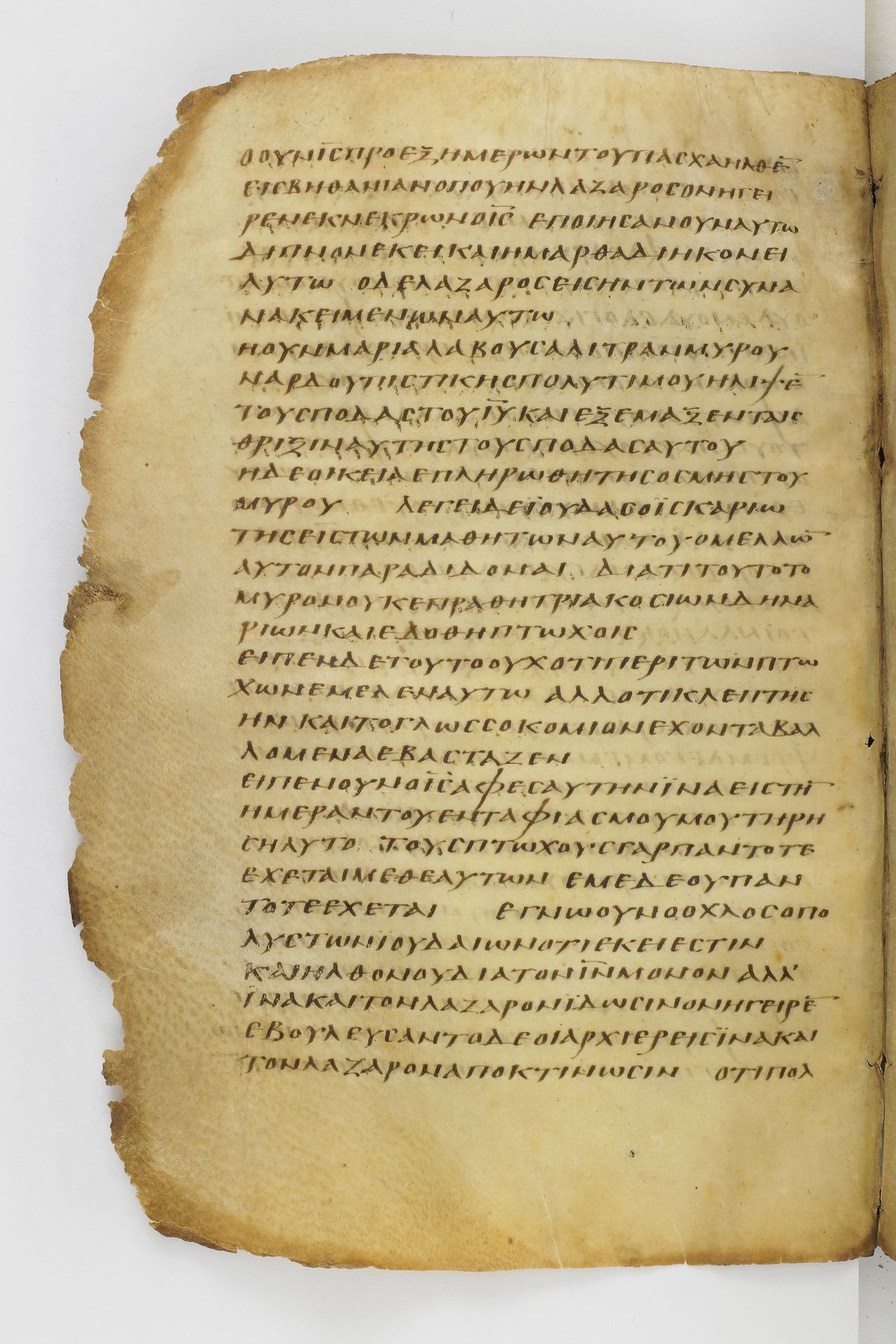
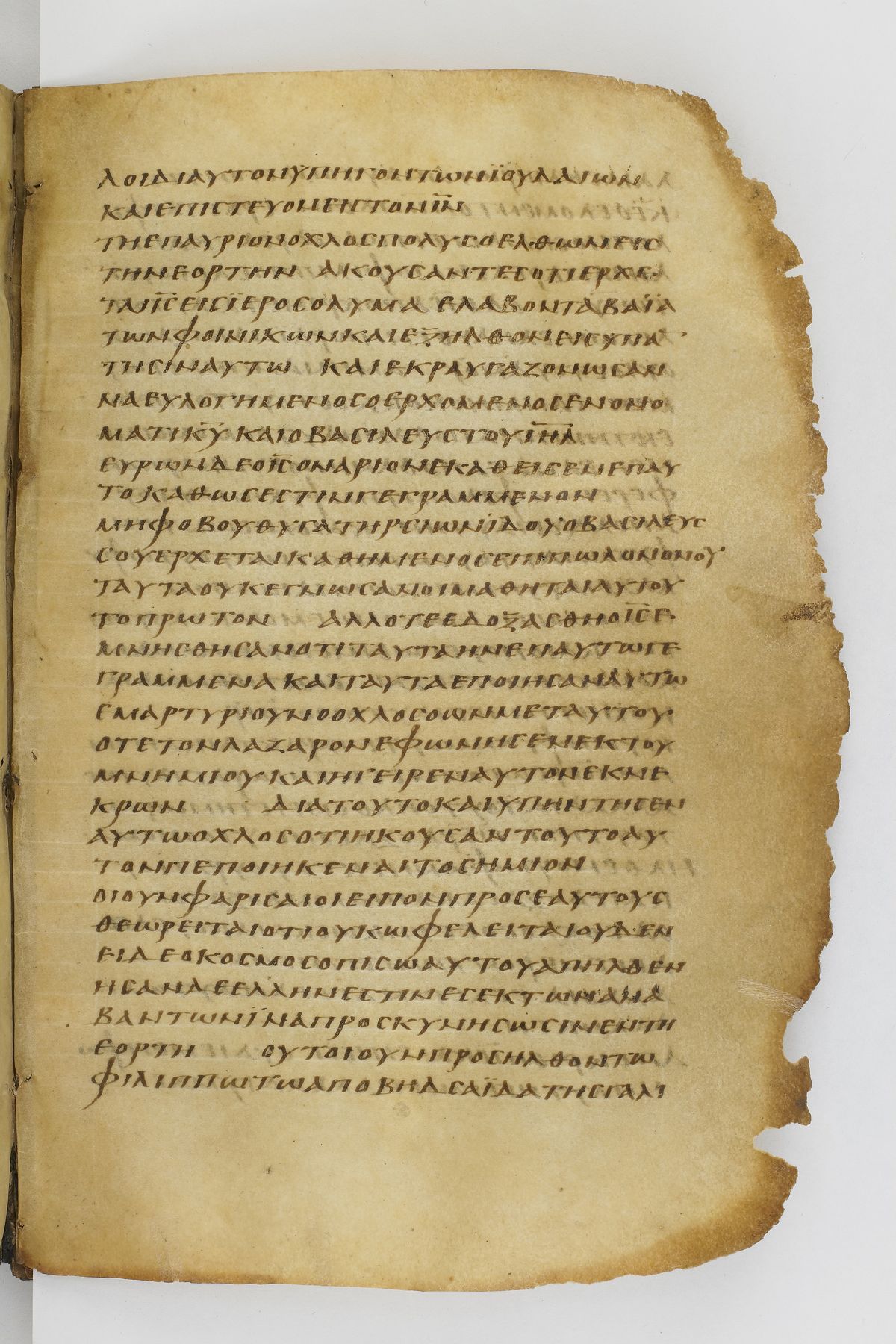
Page from the IGNTP transcription: verses 1-11 on fol. 81v, CSNTM GA_032_0162; verse 11 continues on fol. 82r, CSNTM GA_032_0163 (which begins 'λοι δι αυτον').
1ο ουν ις προ εξ ημερων του πασχα ηλθε¯ εις βηθανιαν οπου ην λαζαρος ον ηγειρεν εκ νεκρων ο ις 2εποιησαν ουν αυτω διπνον εκει και η μαρθα διηκονει αυτω ο δε λαζαρος εις ην των συνανακειμενων αυτω 3η ουν μαρια λαβουσα λιτραν μυρου ναρδου πιστικης πολυτιμου ηλιψε¯ τους ποδας του ιυ και εξεμαξεν ταις θριξιν αυτης τους ποδας αυτου η δε οικεια επληρωθη της οσμης του μυρου 4λεγει δε ιουδας ο ισκαριωτης εις των μαθητων αυτου ο μελλω¯ αυτον παραδιδοναι 5δια τι τουτο το μυρον ουκ επραθη τριακοσιων δηναριων και εδοθη πτωχοις 6ειπεν δε τουτο ουχ οτι περι των πτωχων εμελεν αυτω αλλ οτι κλεπτης ην και το γλωσσοκομιον εχον τα βαλλομενα εβασταζεν 7ειπεν ουν ο ις αφες αυτην ινα εις τη¯ ημεραν του ενταφιασμου μου τηρηση αυτο 8τους πτωχους γαρ παντοτε εχεται μεθ εαυτων εμε δε ου παντοτε εχεται 9εγνω ουν ο οχλος ο πολυς των ιουδαιων οτι εκει εστιν και ηλθον ου δια τον ιν μονον αλλ ινα και τον λαζαρον ιδωσιν ον ηγειρε¯ 10εβουλευσαντο δε οι αρχιερεις ινα και τον λαζαρον αποκτινωσιν 11οτι πολλοι δι αυτον υπηγον των ιουδαιων και επιστευον εις τον ιν
Compare: Tischendorf 8th edition (1869)
1Ὁ οὖν Ἰησοῦς πρὸ ἓξ ἡμερῶν τοῦ πάσχα ἦλθεν εἰς Βηθανίαν, ὅπου ἦν Λάζαρος, ὃν ἤγειρεν ἐκ νεκρῶν Ἰησοῦς. 2ἐποίησαν οὖν αὐτῷ δεῖπνον ἐκεῖ, καὶ ἡ Μάρθα διηκόνει, ὁ δὲ Λάζαρος εἷς ἦν ἐκ τῶν ἀνακειμένων σὺν αὐτῷ. 3ἡ οὖν Μαρία λαβοῦσα λίτραν μύρου νάρδου πιστικῆς πολυτίμου ἤλειψεν τοὺς πόδας τοῦ Ἰησοῦ καὶ ἐξέμαξεν ταῖς θριξὶν αὐτῆς τοὺς πόδας αὐτοῦ· ἡ δὲ οἰκία ἐπληρώθη ἐκ τῆς ὀσμῆς τοῦ μύρου. 4λέγει δὲ Ἰούδας ὁ Ἰσκαριώτης, εἷς ἐκ τῶν μαθητῶν αὐτοῦ, ὁ μέλλων αὐτὸν παραδιδόναι, 5διατί τοῦτο τὸ μύρον οὐκ ἐπράθη τριακοσίων δηναρίων καὶ ἐδόθη πτωχοῖς; 6εἶπεν δὲ τοῦτο οὐχ ὅτι περὶ τῶν πτωχῶν ἔμελεν αὐτῷ ἀλλ’ ὅτι κλέπτης ἦν καὶ τὸ γλωσσόκομον ἔχων τὰ βαλλόμενα ἐβάσταζεν. 7εἶπεν οὖν ὁ Ἰησοῦς· ἄφες αὐτήν, ἵνα εἰς τὴν ἡμέραν τοῦ ἐνταφιασμοῦ μου τηρήσῃ αὐτό· 8τοὺς πτωχοὺς γὰρ πάντοτε ἔχετε μεθ’ ἑαυτῶν, ἐμὲ δὲ οὐ πάντοτε ἔχετε. 9Ἔγνω οὖν ὁ ὄχλος πολὺς ἐκ τῶν Ἰουδαίων ὅτι ἐκεῖ ἐστιν, καὶ ἦλθον οὐ διὰ τὸν Ἰησοῦν μόνον, ἀλλ’ ἵνα καὶ τὸν Λάζαρον ἴδωσιν, ὃν ἤγειρεν ἐκ νεκρῶν. 10ἐβουλεύσαντο δὲ οἱ ἀρχιερεῖς ἵνα καὶ τὸν Λάζαρον ἀποκτείνωσιν, 11ὅτι πολλοὶ δι’ αὐτὸν ὑπῆγον τῶν Ἰουδαίων καὶ ἐπίστευον εἰς τὸν Ἰησοῦν.
1Then Jesus six days before the passover came to Bethany, where Lazarus was which had been dead, whom he raised from the dead. 2There they made him a supper; and Martha served: but Lazarus was one of them that sat at the table with him. 3Then took Mary a pound of ointment of spikenard, very costly, and anointed the feet of Jesus, and wiped his feet with her hair: and the house was filled with the odour of the ointment. 4Then saith one of his disciples, Judas Iscariot, Simon’s son, which should betray him, 5Why was not this ointment sold for three hundred pence, and given to the poor? 6This he said, not that he cared for the poor; but because he was a thief, and had the bag, and bare what was put therein. 7Then said Jesus, Let her alone: against the day of my burying hath she kept this. 8For the poor always ye have with you; but me ye have not always. 9Much people of the Jews therefore knew that he was there: and they came not for Jesus’ sake only, but that they might see Lazarus also, whom he had raised from the dead. 10But the chief priests consulted that they might put Lazarus also to death; 11Because that by reason of him many of the Jews went away, and believed on Jesus.
Where on the image
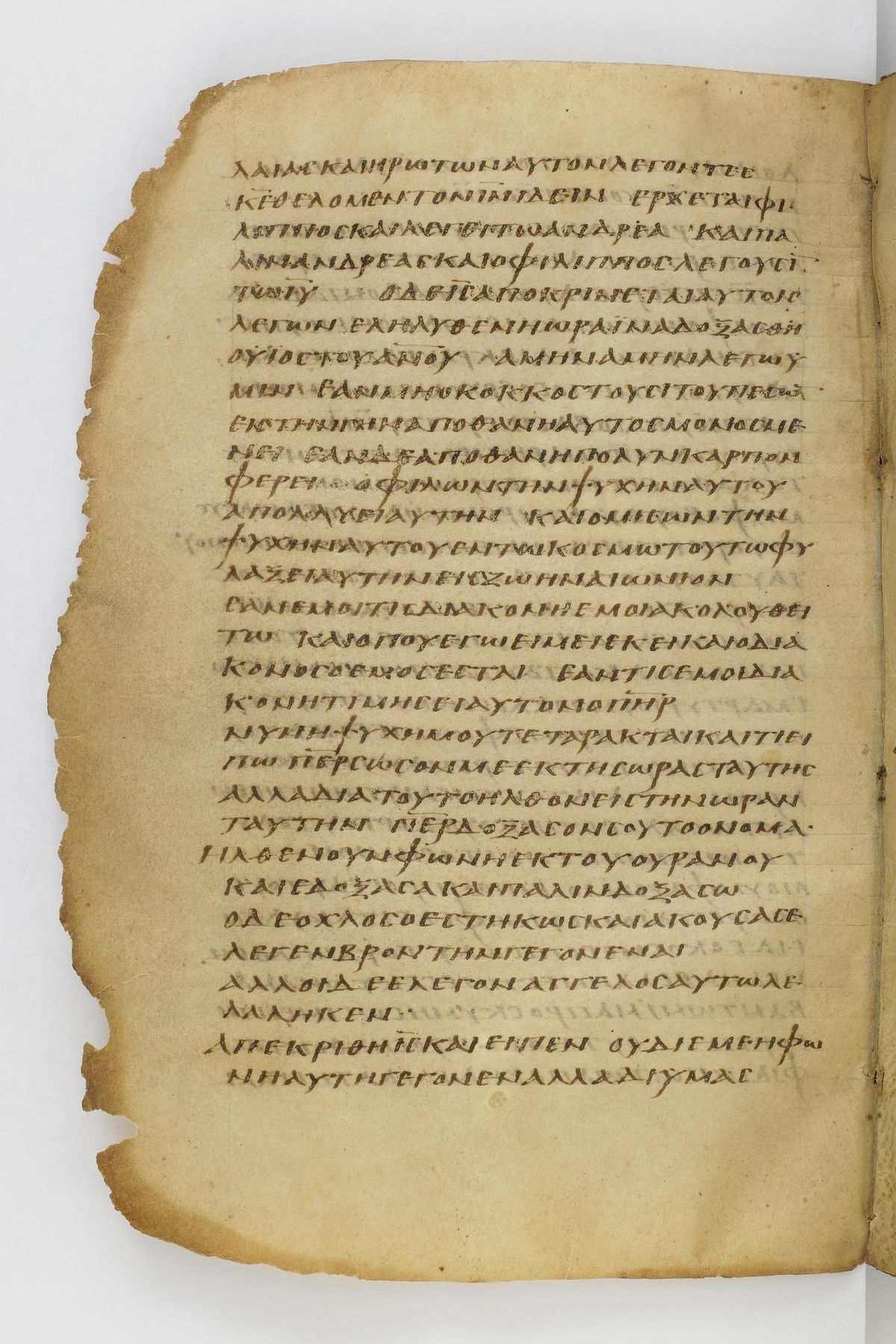
Page from the IGNTP transcription: verses 12-21 on fol. 82r, CSNTM GA_032_0163; verse 21 continues on fol. 82v, CSNTM GA_032_0164 (which begins 'λαιας και ηρωτων').
12τη επαυριον οχλος πολυς ο ελθων εις την εορτην ακουσαντες οτι ερχεται ις εις ιεροσολυμα 13ελαβον τα βαια των φοινικων και εξηλθον εις υπα¯τησιν αυτω και εκραυγαζον ωσαννα ευλογημενος ο ερχομενος εν ονοματι κυ και ο βασιλευς του ιηλ 14ευρων δε ο ις οναριον εκαθεισεν επ αυτο καθως εστιν γεγραμμενον 15μη φοβου θυγατηρ σιων ιδου ο βασιλευς σου ερχεται καθημενος επι πωλον ονου 16ταυτα ουκ εγνωσαν οι μαθηται αυτου το πρωτον αλλ οτε εδοξασθη ο ις εμνησθησαν οτι ταυτα ην επ αυτω γεγραμμενα και ταυτα εποιησαν αυτω 17εμαρτυρι ουν ο οχλος ο ων μετ αυτου οτε τον λαζαρον εφωνησεν εκ του μνημιου και ηγειρεν αυτον εκ νεκρων 18δια τουτο και υπηντησεν αυτω οχλος οτι ηκουσαν τουτο αυτον πεποιηκεναι το σημιον 19οι ουν φαρισαιοι ειπον προς εαυτους θεωρειται οτι ουκ ωφελειται ουδεν ειδε ο κοσμος οπισω αυτου απηλθεν 20ησαν δε ελληνες τινες εκ των αναβαντων ινα προσκυνησωσιν εν τη εορτη 21ουτοι ουν προσηλθον τω φιλιππω τω απο βηδσαιδα της γαλιλαιας και ηρωτων αυτον λεγοντες κε θελομεν τον ιν ιδειν
Compare: Tischendorf 8th edition (1869)
12Τῇ ἐπαύριον ὄχλος πολὺς ὁ ἐλθὼν εἰς τὴν ἑορτήν, ἀκούσαντες ὅτι ἔρχεται Ἰησοῦς εἰς Ἱεροσόλυμα, 13ἔλαβον τὰ βαΐα τῶν φοινίκων καὶ ἐξῆλθον εἰς ὑπάντησιν αὐτῷ, καὶ ἐκραύγαζον· ὡσαννά· εὐλογημένος ὁ ἐρχόμενος ἐν ὀνόματι κυρίου, καὶ ὁ βασιλεὺς τοῦ Ἰσραήλ. 14εὑρὼν δὲ ὁ Ἰησοῦς ὀνάριον ἐκάθισεν ἐπ’ αὐτό, καθώς ἐστιν γεγραμμένον· 15μὴ φοβοῦ, θυγάτηρ Σιών· ἰδοὺ ὁ βασιλεύς σου ἔρχεται, καθήμενος ἐπὶ πῶλον ὄνου. 16ταῦτα οὐκ ἔγνωσαν αὐτοῦ οἱ μαθηταὶ τὸ πρῶτον, ἀλλ’ ὅτε ἐδοξάσθη Ἰησοῦς τότε ἐμνήσθησαν ὅτι ταῦτα ἦν ἐπ’ αὐτῷ γεγραμμένα καὶ ταῦτα ἐποίησαν αὐτῷ. 17ἐμαρτύρει οὖν ὁ ὄχλος ὁ ὢν μετ’ αὐτοῦ ὅτι τὸν Λάζαρον ἐφώνησεν ἐκ τοῦ μνημείου καὶ ἤγειρεν αὐτὸν ἐκ νεκρῶν. 18διὰ τοῦτο καὶ ὑπήντησεν αὐτῷ ὁ ὄχλος, ὅτι ἤκουσαν τοῦτο αὐτὸν πεποιηκέναι τὸ σημεῖον. 19οἱ οὖν Φαρισαῖοι εἶπαν πρὸς ἑαυτούς· θεωρεῖτε ὅτι οὐκ ὠφελεῖτε οὐδέν· ἴδε ὁ κόσμος ὀπίσω αὐτοῦ ἀπῆλθεν. 20Ἦσαν δὲ Ἕλληνές τινες ἐκ τῶν ἀναβαινόντων ἵνα προσκυνήσωσιν ἐν τῇ ἑορτῇ· 21οὗτοι οὖν προσῆλθον Φιλίππῳ τῷ ἀπὸ Βηθσαϊδὰ τῆς Γαλιλαίας, καὶ ἠρώτων αὐτὸν λέγοντες· κύριε, θέλομεν τὸν Ἰησοῦν ἰδεῖν.
12On the next day much people that were come to the feast, when they heard that Jesus was coming to Jerusalem, 13Took branches of palm trees, and went forth to meet him, and cried, Hosanna: Blessed is the King of Israel that cometh in the name of the Lord. 14And Jesus, when he had found a young ass, sat thereon; as it is written, 15Fear not, daughter of Sion: behold, thy King cometh, sitting on an ass’s colt. 16These things understood not his disciples at the first: but when Jesus was glorified, then remembered they that these things were written of him, and that they had done these things unto him. 17The people therefore that was with him when he called Lazarus out of his grave, and raised him from the dead, bare record. 18For this cause the people also met him, for that they heard that he had done this miracle. 19The Pharisees therefore said among themselves, Perceive ye how ye prevail nothing? behold, the world is gone after him. 20And there were certain Greeks among them that came up to worship at the feast: 21The same came therefore to Philip, which was of Bethsaida of Galilee, and desired him, saying, Sir, we would see Jesus.
Where on the image
Page from the IGNTP transcription: verses 22-30 on fol. 82v, CSNTM GA_032_0164.
22ερχεται φιλιππος και λεγει τω ανδρεα και παλιν ανδρεας και ο φιλιππος λεγουσι¯ τω ιυ 23ο δε ις αποκρινεται αυτοις λεγων εληλυθεν η ωρα ινα δοξασθη ο υιος του ανου 24αμην αμην λεγω υμιν εαν μη ο κοκκος του σιτου πεσω¯ εις την γην αποθανη αυτος μονος μενει εαν δε αποθανη πολυν καρπον φερει 25ο φιλων την ψυχην αυτου απολλυει αυτην και ο μισων την ψυχην αυτου εν τω κοσμω τουτω φυλαξει αυτην εις ζωην αιωνιον 26εαν εμοι τις διακονη εμοι ακολουθειτω και οπου εγω ειμει εκει και ο διακονος ο εμος εσται εαν τις εμοι διακονη τιμησει αυτον ο πηρ 27νυν η ψυχη μου τεταρακται και τι ειπω περ σωσον με εκ της ωρας ταυτης αλλα δια τουτο ηλθον εις την ωραν ταυτην 28περ δοξασον σου το ονομα Ηλθεν ουν φωνη εκ του ουρανου και εδοξασα και παλιν δοξασω 29ο δε οχλος ο εστηκως και ακουσας ελεγεν βροντην γεγονεναι αλλοι δε ελεγον αγγελος αυτω λελαληκεν 30Απεκριθη ις και ειπεν ου δι εμε η φωνη αυτη γεγονεν αλλα δι υμας
Compare: Tischendorf 8th edition (1869)
22ἔρχεται Φίλιππος καὶ λέγει τῷ Ἀνδρέᾳ, ἔρχεται Ἀνδρέας καὶ Φίλιππος καὶ λέγουσιν τῷ Ἰησοῦ. 23ὁ δὲ Ἰησοῦς ἀποκρίνεται αὐτοῖς λέγων· ἐλήλυθεν ἡ ὥρα ἵνα δοξασθῇ ὁ υἱὸς τοῦ ἀνθρώπου. 24ἀμὴν ἀμὴν λέγω ὑμῖν, ἐὰν μὴ ὁ κόκκος τοῦ σίτου πεσὼν εἰς τὴν γῆν ἀποθάνῃ, αὐτὸς μόνος μένει· ἐὰν δὲ ἀποθάνῃ, πολὺν καρπὸν φέρει. 25ὁ φιλῶν τὴν ψυχὴν αὐτοῦ ἀπολλύει αὐτήν, καὶ ὁ μισῶν τὴν ψυχὴν αὐτοῦ ἐν τῷ κόσμῳ τούτῳ εἰς ζωὴν αἰώνιον φυλάξει αὐτήν. 26ἐὰν ἐμοί τις διακονῇ, ἐμοὶ ἀκολουθείτω, καὶ ὅπου εἰμὶ ἐγώ, ἐκεῖ καὶ ὁ διάκονος ὁ ἐμὸς ἔσται· ἐάν τις ἐμοὶ διακονῇ, τιμήσει αὐτὸν ὁ πατήρ. 27νῦν ἡ ψυχή μου τετάρακται, καὶ τί εἴπω; πάτερ, σῶσόν με ἐκ τῆς ὥρας ταύτης; ἀλλὰ διὰ τοῦτο ἦλθον εἰς τὴν ὥραν ταύτην· 28πάτερ, δόξασόν σου τὸ ὄνομα. ἦλθεν οὖν φωνὴ ἐκ τοῦ οὐρανοῦ· καὶ ἐδόξασα καὶ πάλιν δοξάσω. 29ὁ οὖν ὄχλος ὁ ἑστὼς ἀκούσας ἔλεγεν βροντὴν γεγονέναι· ἄλλοι ἔλεγον· ἄγγελος αὐτῷ λελάληκεν. 30ἀπεκρίθη Ἰησοῦς καὶ εἶπεν· οὐ δι’ ἐμὲ ἡ φωνὴ αὕτη γέγονεν ἀλλὰ δι’ ὑμᾶς.
22Philip cometh and telleth Andrew: and again Andrew and Philip tell Jesus. 23And Jesus answered them, saying, The hour is come, that the Son of man should be glorified. 24Verily, verily, I say unto you, Except a corn of wheat fall into the ground and die, it abideth alone: but if it die, it bringeth forth much fruit. 25He that loveth his life shall lose it; and he that hateth his life in this world shall keep it unto life eternal. 26If any man serve me, let him follow me; and where I am, there shall also my servant be: if any man serve me, him will my Father honour. 27Now is my soul troubled; and what shall I say? Father, save me from this hour: but for this cause came I unto this hour. 28Father, glorify thy name. Then came there a voice from heaven, saying, I have both glorified it, and will glorify it again. 29The people therefore, that stood by, and heard it, said that it thundered: others said, An angel spake to him. 30Jesus answered and said, This voice came not because of me, but for your sakes.
Where on the image
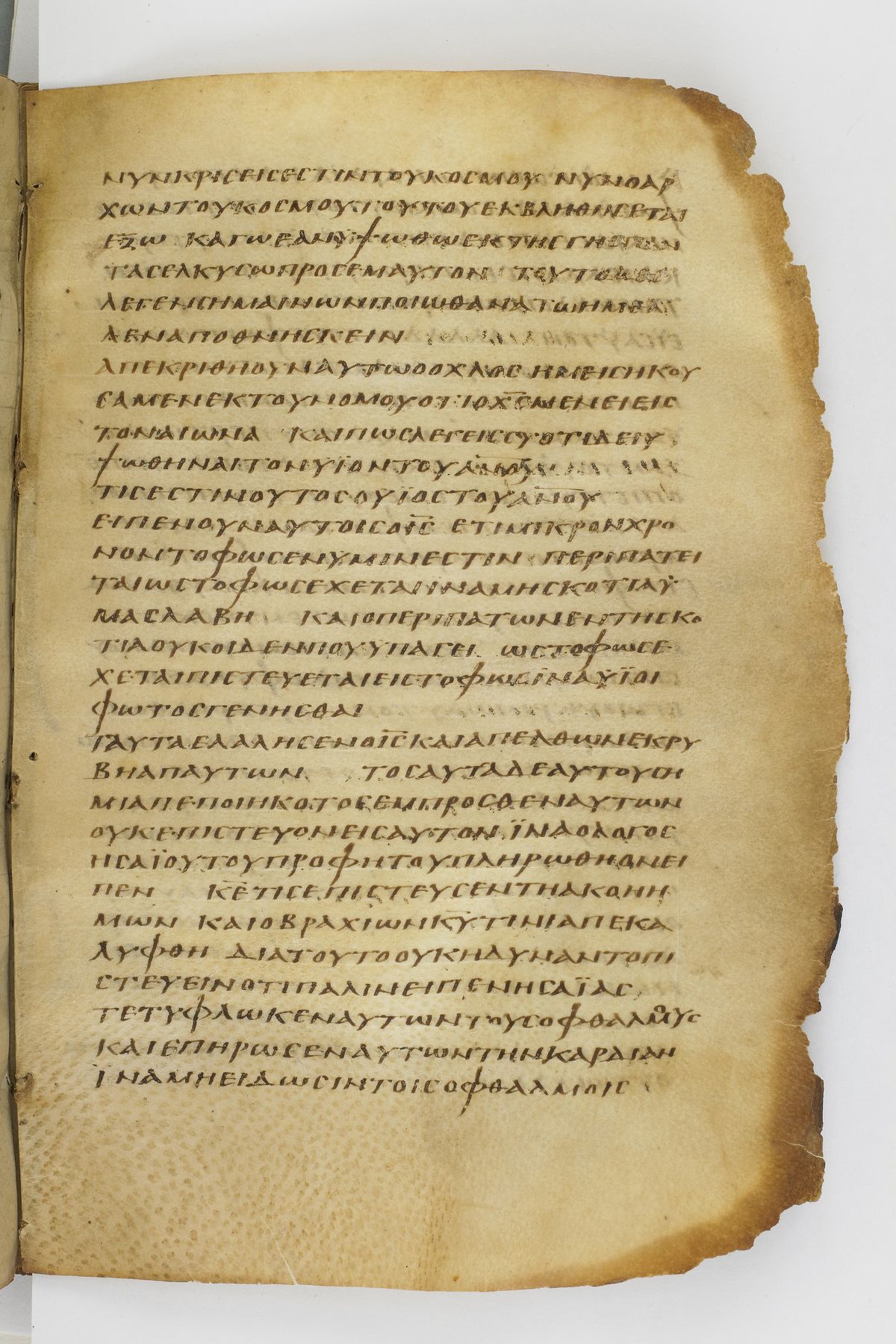
Page from the IGNTP transcription: verses 31-40 on fol. 83r, CSNTM GA_032_0165; verse 40 continues on fol. 83v, CSNTM GA_032_0166 (which begins 'και νοησωσιν τη').
31νυν κρισεις εστιν του κοσμου νυν ο αρχων του κοσμου τουτου εκβληθησεται εξω 32καγω εαν υψωθω εκ της γης παντας ελκυσω προς εμαυτον 33τουτο δε ελεγεν σημαινων ποιω θανατω ημελλεν αποθνησκειν 34απεκριθη ουν αυτω ο οχλος ημεις ηκουσαμεν εκ του νομου οτι ο χς μενει εις τον αιωνα και πως λεγεις συ οτι δει υψωθηναι τον υιον του ανου τις εστιν ουτος ο υιος του ανου 35ειπεν ουν αυτοις ο ις ετι μικρον χρονον το φως εν υμιν εστιν περιπατειται ως το φως εχεται ινα μη σκοτια υμας λαβη και ο περιπατων εν τη σκοτια ουκ οιδεν που υπαγει 36ως το φως εχεται πιστευεται εις το φως ινα υιοι φωτος γενησθαι ταυτα ελαλησεν ο ις και απελθων εκρυβη απ αυτων 37τοσαυτα δε αυτου σημια πεποιηκοτος εμπροσθεν αυτων ουκ επιστευον εις αυτον 38ινα ο λογος ησαιου του προφητου πληρωθη ον ειπεν κε τις επιστευσεν τη ακοη ημων και ο βραχιων κυ τινι απεκαλυφθη 39δια τουτο ουκ ηδυναντο πιστευειν οτι παλιν ειπεν ησαιας 40τετυφλωκεν αυτων τους οφθαλμυς και επηρωσεν αυτων την καρδιαν ινα μη ειδωσιν τοις οφθαλμοις και νοησωσιν τη καρδια και επιστρεψωσιν και ιασομαι αυτους
Compare: Tischendorf 8th edition (1869)
31νῦν κρίσις ἐστὶν τοῦ κόσμου τούτου· νῦν ὁ ἄρχων τοῦ κόσμου τούτου ἐκβληθήσεται ἔξω, 32κἀγὼ ἐὰν ὑψωθῶ ἐκ τῆς γῆς, πάντας ἑλκύσω πρὸς ἐμαυτόν. 33τοῦτο δὲ ἔλεγεν σημαίνων ποίῳ θανάτῳ ἤμελλεν ἀποθνῄσκειν. 34ἀπεκρίθη οὖν αὐτῷ ὁ ὄχλος, ἡμεῖς ἠκούσαμεν ἐκ τοῦ νόμου ὅτι ὁ Χριστὸς μένει εἰς τὸν αἰῶνα, καὶ πῶς λέγεις σὺ ὅτι δεῖ ὑψωθῆναι τὸν υἱὸν τοῦ ἀνθρώπου; τίς ἐστιν οὗτος ὁ υἱὸς τοῦ ἀνθρώπου; 35εἶπεν οὖν αὐτοῖς ὁ Ἰησοῦς· ἔτι μικρὸν χρόνον τὸ φῶς ἐν ὑμῖν ἐστιν. περιπατεῖτε ὡς τὸ φῶς ἔχετε, ἵνα μὴ σκοτία ὑμᾶς καταλάβῃ· καὶ ὁ περιπατῶν ἐν τῇ σκοτίᾳ οὐκ οἶδεν ποῦ ὑπάγει. 36ὡς τὸ φῶς ἔχετε, πιστεύετε εἰς τὸ φῶς, ἵνα υἱοὶ φωτὸς γένησθε. Ταῦτα ἐλάλησεν Ἰησοῦς, καὶ ἀπελθὼν ἐκρύβη ἀπ’ αὐτῶν. 37τοσαῦτα δὲ αὐτοῦ σημεῖα πεποιηκότος ἔμπροσθεν αὐτῶν οὐκ ἐπίστευον εἰς αὐτόν, 38ἵνα ὁ λόγος Ἡσαΐου τοῦ προφήτου πληρωθῇ, ὃν εἶπεν· κύριε, τίς ἐπίστευσεν τῇ ἀκοῇ ἡμῶν; καὶ ὁ βραχίων κυρίου τίνι ἀπεκαλύφθη; 39διὰ τοῦτο οὐκ ἠδύναντο πιστεύειν, ὅτι πάλιν εἶπεν Ἡσαΐας· 40τετύφλωκεν αὐτῶν τοὺς ὀφθαλμοὺς καὶ ἐπώρωσεν αὐτῶν τὴν καρδίαν, ἵνα μὴ ἴδωσιν τοῖς ὀφθαλμοῖς καὶ νοήσωσιν τῇ καρδίᾳ καὶ στραφῶσιν, καὶ ἰάσομαι αὐτούς.
31Now is the judgment of this world: now shall the prince of this world be cast out. 32And I, if I be lifted up from the earth, will draw all men unto me. 33This he said, signifying what death he should die. 34The people answered him, We have heard out of the law that Christ abideth for ever: and how sayest thou, The Son of man must be lifted up? who is this Son of man? 35Then Jesus said unto them, Yet a little while is the light with you. Walk while ye have the light, lest darkness come upon you: for he that walketh in darkness knoweth not whither he goeth. 36While ye have light, believe in the light, that ye may be the children of light. These things spake Jesus, and departed, and did hide himself from them. 37But though he had done so many miracles before them, yet they believed not on him: 38That the saying of Esaias the prophet might be fulfilled, which he spake, Lord, who hath believed our report? and to whom hath the arm of the Lord been revealed? 39Therefore they could not believe, because that Esaias said again, 40He hath blinded their eyes, and hardened their heart; that they should not see with their eyes, nor understand with their heart, and be converted, and I should heal them.
Where on the image
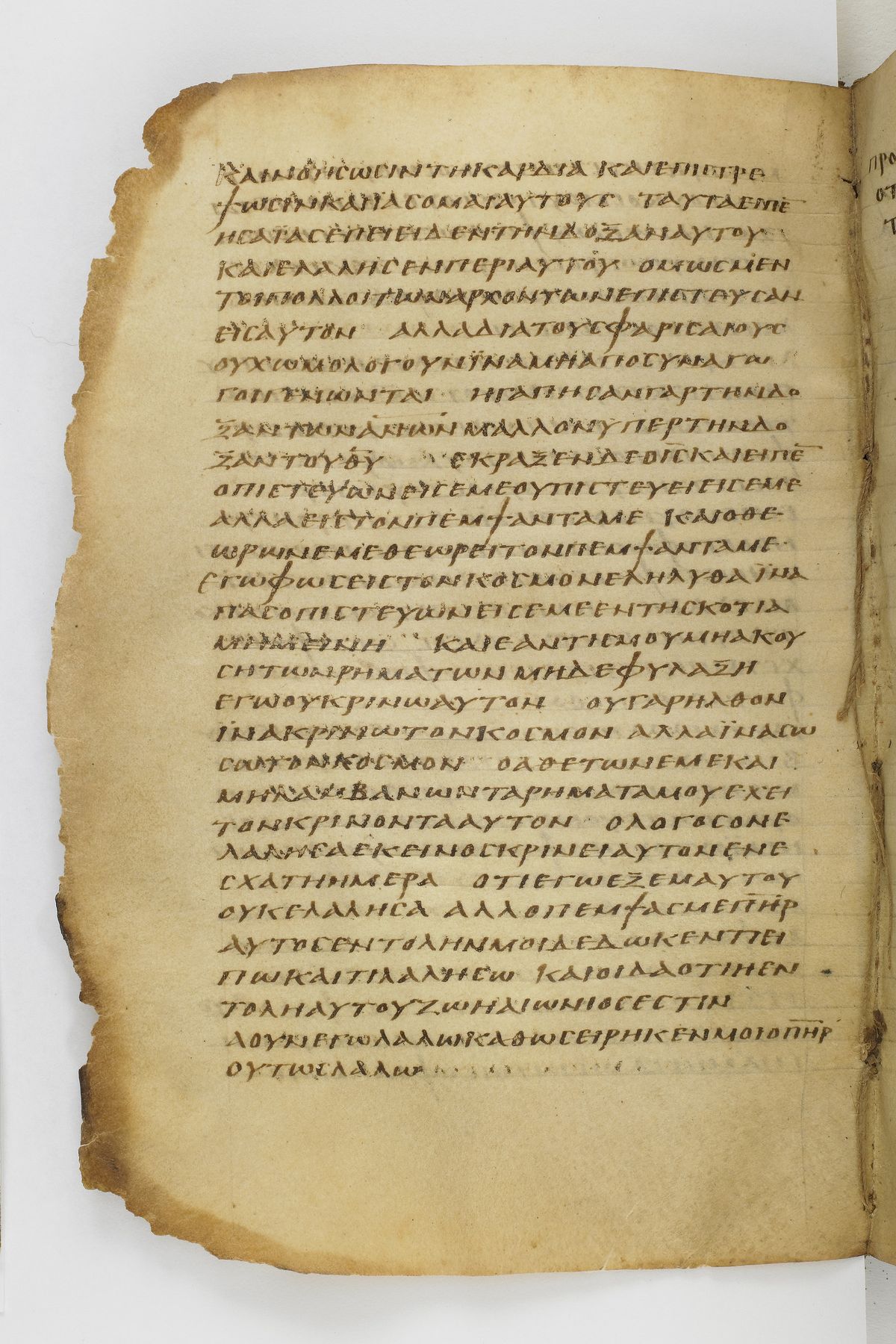
Page from the IGNTP transcription: verses 41-50 on fol. 83v, CSNTM GA_032_0166.
41ταυτα ειπε¯ ησαιας επει ειδεν την δοξαν αυτου και ελαλησεν περι αυτου 42ομως μεντοι πολλοι των αρχοντων επιστευσαν εις αυτον αλλα δια τους φαρισαιους ουχ ωμολογουν ινα μη αποσυναγωγοι γενωνται 43ηγαπησαν γαρ την δοξαν των ανων μαλλον υπερ την δοξαν του θυ 44εκραξεν δε ο ις και ειπε¯ ο πιστευων εις εμε ου πιστευει εις εμε αλλα εις τον πεμψαντα με 45και ο θεωρων εμε θεωρει τον πεμψαντα με 46Εγω φως εις τον κοσμον εληλυθα ινα πας ο πιστευων εις εμε εν τη σκοτια μη μεινη 47και εαν τις μου μη ακουση των ρηματων μηδε φυλαξη εγω ου κρινω αυτον ου γαρ ηλθον ινα κρινω τον κοσμον αλλα ινα σωσω τον κοσμον 48ο αθετων εμε και μη λαμβανων τα ρηματα μου εχει τον κρινοντα αυτον ο λογος ον ελαλησα εκεινος κρινει αυτον εν εσχατη ημερα 49οτι εγω εξ εμαυτου ουκ ελαλησα αλλ ο πεμψας με πηρ αυτος εντολην μοι δεδωκεν τι ειπω και τι λαλησω 50και οιδα οτι η εντολη αυτου ζωη αιωνιος εστιν α ουν εγω λαλω καθως ειρηκεν μοι ο πηρ ουτως λαλω
Compare: Tischendorf 8th edition (1869)
41ταῦτα εἶπεν Ἡσαΐας, ὅτι εἶδεν τὴν δόξαν αὐτοῦ, καὶ ἐλάλησεν περὶ αὐτοῦ. 42ὅμως μέντοι καὶ ἐκ τῶν ἀρχόντων πολλοὶ ἐπίστευσαν εἰς αὐτόν, ἀλλὰ διὰ τοὺς Φαρισαίους οὐχ ὡμολόγουν, ἵνα μὴ ἀποσυνάγωγοι γένωνται· 43ἠγάπησαν γὰρ τὴν δόξαν τῶν ἀνθρώπων μᾶλλον ἤπερ τὴν δόξαν τοῦ θεοῦ. 44Ἰησοῦς δὲ ἔκραξεν καὶ εἶπεν· ὁ πιστεύων εἰς ἐμὲ οὐ πιστεύει εἰς ἐμὲ ἀλλὰ εἰς τὸν πέμψαντά με, 45καὶ ὁ θεωρῶν ἐμὲ θεωρεῖ τὸν πέμψαντά με. 46ἐγὼ φῶς εἰς τὸν κόσμον ἐλήλυθα, ἵνα πᾶς ὁ πιστεύων εἰς ἐμὲ ἐν τῇ σκοτίᾳ μὴ μείνῃ. 47καὶ ἐάν τίς μου ἀκούσῃ τῶν ῥημάτων καὶ μὴ φυλάξῃ, ἐγὼ οὐ κρίνω αὐτόν· οὐ γὰρ ἦλθον ἵνα κρίνω τὸν κόσμον, ἀλλ’ ἵνα σώσω τὸν κόσμον. 48ὁ ἀθετῶν ἐμὲ καὶ μὴ λαμβάνων τὰ ῥήματά μου ἔχει τὸν κρίνοντα αὐτόν· ὁ λόγος ὃν ἐλάλησα, ἐκεῖνος κρινεῖ αὐτὸν τῇ ἐσχάτῃ ἡμέρᾳ· 49ὅτι ἐγὼ ἐξ ἐμαυτοῦ οὐκ ἐλάλησα, ἀλλ’ ὁ πέμψας με πατὴρ αὐτός μοι ἐντολὴν δέδωκεν τί εἴπω καὶ τί λαλήσω. 50καὶ οἶδα ὅτι ἡ ἐντολὴ αὐτοῦ ζωὴ αἰώνιός ἐστιν. ἃ οὖν ἐγὼ λαλῶ, καθὼς εἴρηκέν μοι ὁ πατήρ, οὕτως λαλῶ.
41These things said Esaias, when he saw his glory, and spake of him. 42Nevertheless among the chief rulers also many believed on him; but because of the Pharisees they did not confess him, lest they should be put out of the synagogue: 43For they loved the praise of men more than the praise of God. 44Jesus cried and said, He that believeth on me, believeth not on me, but on him that sent me. 45And he that seeth me seeth him that sent me. 46I am come a light into the world, that whosoever believeth on me should not abide in darkness. 47And if any man hear my words, and believe not, I judge him not: for I came not to judge the world, but to save the world. 48He that rejecteth me, and receiveth not my words, hath one that judgeth him: the word that I have spoken, the same shall judge him in the last day. 49For I have not spoken of myself; but the Father which sent me, he gave me a commandment, what I should say, and what I should speak. 50And I know that his commandment is life everlasting: whatsoever I speak therefore, even as the Father said unto me, so I speak.
Cite
Sources
- Source: Codex Washingtonianus page images + IGNTP transcription (CC BY 4.0) + Tischendorf 8th edition + KJV (holding institution)
- Critical edition: Codex Washingtonianus transcription, IGNTP (CC BY 4.0); Tischendorf 8th edition for comparison
← previous · → next · v cycle view · l back to library