John, Chapter 7 (Codex Washingtonianus)
Introduction
John 7 from Codex Washingtonianus (the Freer Gospels, Gregory-Aland 032, Freer Gallery of Art F1906.274), a parchment codex of the four Gospels written in Egypt in the late 4th or early 5th century and bought by Charles Lang Freer from the dealer Ali Arabi at Giza in 1906. It is one of the oldest nearly complete Gospel books in existence. The Gospels stand in the so-called Western order, Matthew, John, Luke, Mark, and the text is famously block-mixed: the copyist drew on several exemplars of different textual character, so the text type changes in blocks within a single Gospel. After Mark 16:14 the codex carries the Freer Logion, a saying found in no other manuscript. Two passages are lost to damage: Mark 15:13-37 and John 14:26-16:6.
- Scan: each section is shown with the actual page of the codex that carries those verses, from the Freer Gallery's own photographs of F1906.274 served by the Smithsonian IIIF service (ids.si.edu). Which page holds which verse comes from the verse index of the Center for the Study of New Testament Manuscripts (CSNTM), whose photographs of the codex are the same shots; every CSNTM page was matched to its Smithsonian image by pixel comparison before use. Where a verse begins on one page and ends on the next, both pages are listed. For this chapter the page of each verse is taken from the transcription itself, which records where every page begins; CSNTM's index confirms which photograph shows that page.
- Greek: the manuscript's own text, from a diplomatic transcription (see Greek text below), with Tischendorf's 8th critical edition (1869) for comparison.
- English: the King James Version (1611, public domain), verbatim from bible-api.com. The KJV translates the later Byzantine text, so it will not always match the Greek shown or the reading of the codex.
Verses 53 have no entry of their own in the CSNTM index; they are placed on the page that carries both the verse before and the verse after them, which is where continuous text must put them.
Greek text: a diplomatic transcription of Codex Washingtonianus made by the International Greek New Testament Project (IGNTP), transcription of John in GA 032, version 2.1 (2013), published under a Creative Commons Attribution 4.0 licence. It gives the letters as the first scribe wrote them: no accents or breathings, the scribe's own spelling, and the sacred names in their contracted form (θς for θεος, ις for ιησους, κς for κυριος; the overline is not reproduced). A stroke ¯ after a letter (for example μενω¯, το¯) is the scribe's abbreviation for a final ν, kept as the transcription gives it. Corrections by later hands are not shown. Letters in square brackets are not legible on the page and were restored by the transcribers, a dot under a letter marks an uncertain reading, and [...] marks text lost to damage. Beneath each section, for comparison, is Tischendorf's 8th critical edition (1869). Where the two differ, the transcription is what the manuscript says. Each section is shown with the page on which the transcription places its verses.
Manuscript note: Not written in Codex Washingtonianus: verse 53. The English is shown with a bracketed note in the Greek column.
How was this verified? (Provenance)
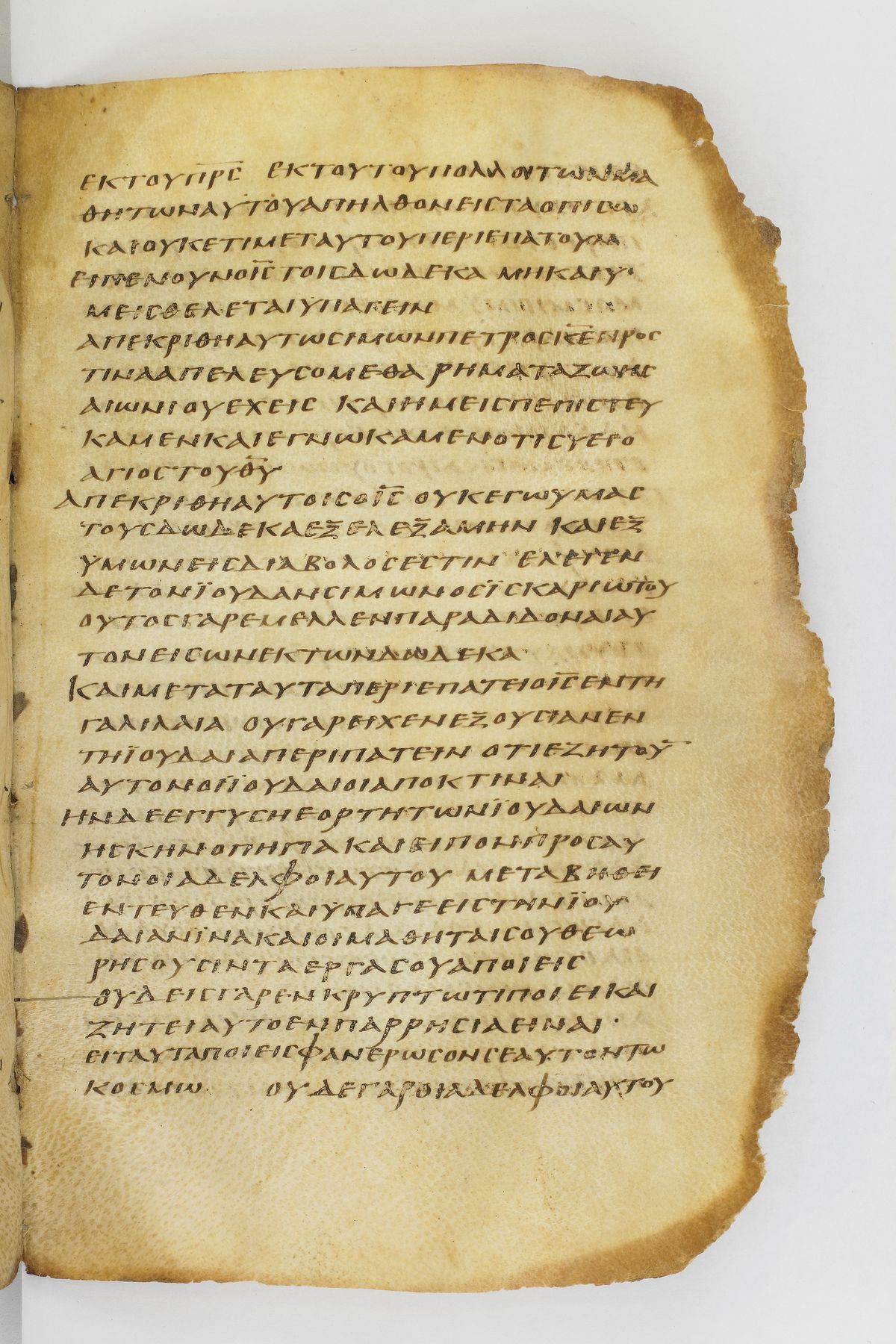
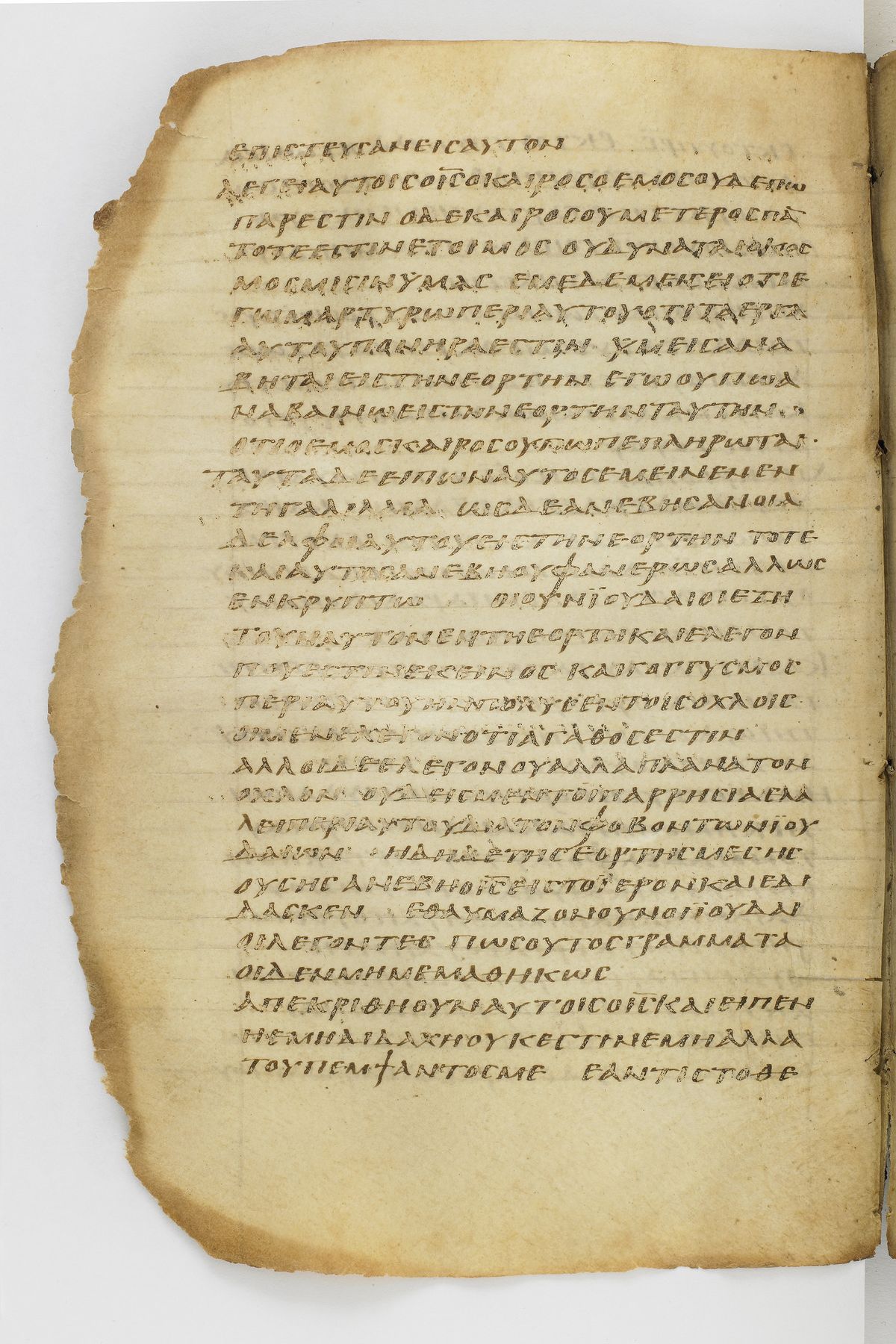
Where on the image
Page from the IGNTP transcription: verses 1-5 on fol. 70r, CSNTM GA_032_0139; verse 5 continues on fol. 70v, CSNTM GA_032_0140 (which begins 'επιστευσαν εις αυτον').
1και μετα ταυτα περιεπατει ο ις εν τη γαλιλαια ου γαρ ειχεν εξουσιαν εν τη ιουδαια περιπατειν οτι εζητου¯ αυτον οι ιουδαιοι αποκτιναι 2ην δε εγγυς η εορτη των ιουδαιων η σκηνοπηγια 3και ειπον προς αυτον οι αδελφοι αυτου μεταβηθει εντευθεν και υπαγε εις την ιουδαιαν ινα και οι μαθηται σου θεωρησουσιν τα εργα σου α ποιεις 4ουδεις γαρ εν κρυπτω τι ποιει και ζητει αυτο εν παρρησια ειναι ει ταυτα ποιεις φανερωσον σεαυτον τω κοσμω 5ουδε γαρ οι αδελφοι αυτου επιστευσαν εις αυτον
Compare: Tischendorf 8th edition (1869)
1Μετὰ ταῦτα περιεπάτει ὁ Ἰησοῦς ἐν τῇ Γαλιλαίᾳ· οὐ γὰρ ἤθελεν ἐν τῇ Ἰουδαίᾳ περιπατεῖν, ὅτι ἐζήτουν αὐτὸν οἱ Ἰουδαῖοι ἀποκτεῖναι. 2ἦν δὲ ἐγγὺς ἡ ἑορτὴ τῶν Ἰουδαίων ἡ σκηνοπηγία. 3εἶπον οὖν πρὸς αὐτὸν οἱ ἀδελφοὶ αὐτοῦ· μετάβηθι ἐντεῦθεν καὶ ὕπαγε εἰς τὴν Ἰουδαίαν, ἵνα καὶ οἱ μαθηταί σου θεωρήσουσιν τὰ ἔργα σου ἃ ποιεῖς· 4οὐδεὶς γάρ τι ἐν κρυπτῷ ποιεῖ καὶ ζητεῖ αὐτὸς ἐν παρρησίᾳ εἶναι. εἰ ταῦτα ποιεῖς, φανέρωσον σεαυτὸν τῷ κόσμῳ. 5οὐδὲ γὰρ οἱ ἀδελφοὶ αὐτοῦ ἐπίστευον εἰς αὐτόν.
1After these things Jesus walked in Galilee: for he would not walk in Jewry, because the Jews sought to kill him. 2Now the Jews’ feast of tabernacles was at hand. 3His brethren therefore said unto him, Depart hence, and go into Judaea, that thy disciples also may see the works that thou doest. 4For there is no man that doeth any thing in secret, and he himself seeketh to be known openly. If thou do these things, shew thyself to the world. 5For neither did his brethren believe in him.
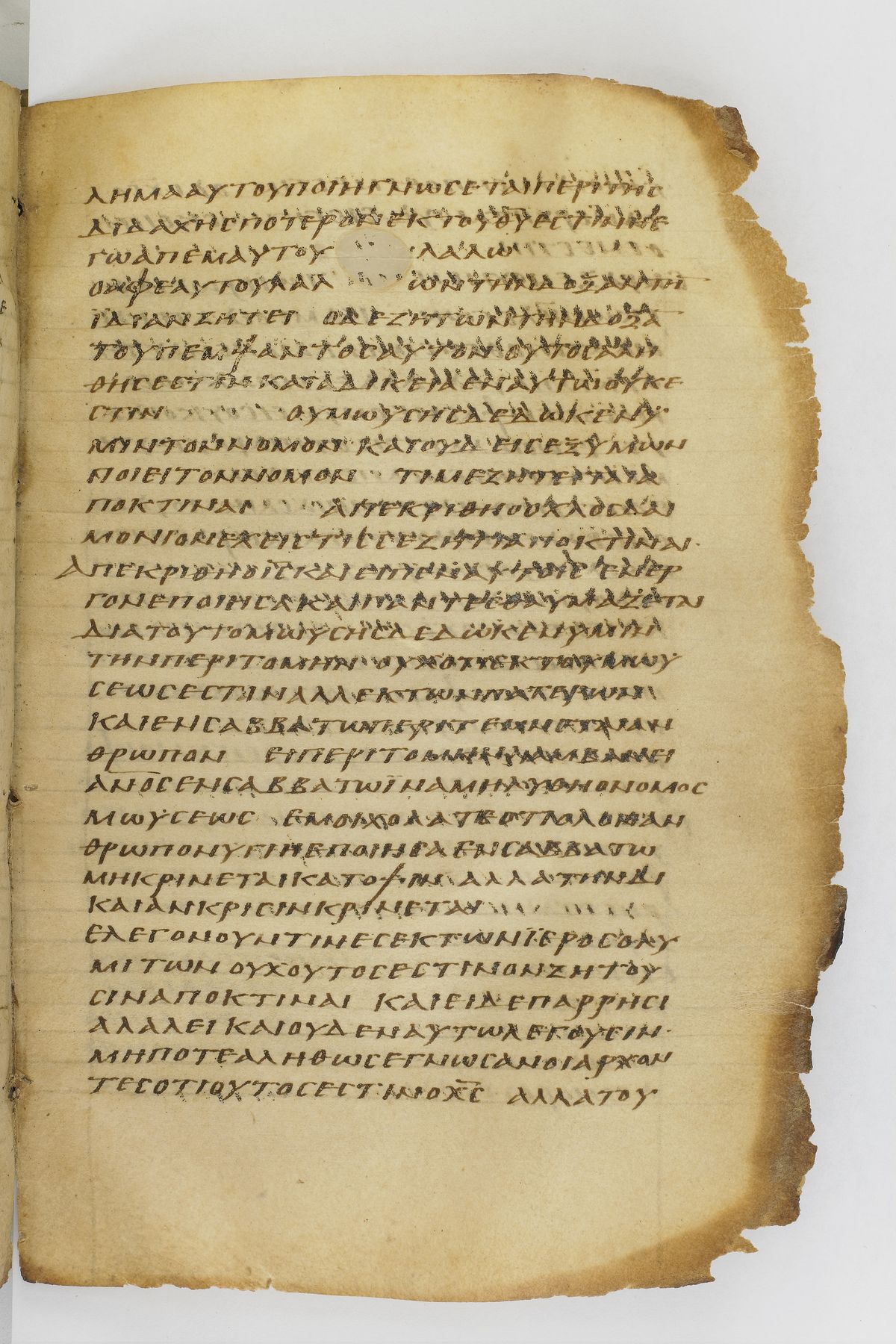
Where on the image
Page from the IGNTP transcription: verses 6-17 on fol. 70v, CSNTM GA_032_0140; verse 17 continues on fol. 71r, CSNTM GA_032_0141 (which begins 'λημα αυτου ποιη').
6Λεγει αυτοις ο ις ο καιρος ο εμος ουδεπω παρεστιν ο δε καιρος ο υμετερος πα¯τοτε εστιν ετοιμος 7ου δυναται ο κοσμος μισιν υμας εμε δε μεισει οτι εγω μαρτυρω περι αυτου οτι τα εργα αυτου πονηρα εστιν 8υμεις αναβηται εις την εορτην εγω ουπω αναβαινω εις την εορτην ταυτην οτι ο εμος καιρος ουπω πεπληρωται 9ταυτα δε ειπων αυτος εμεινεν εν τη γαλιλαια 10ως δε ανεβησαν οι αδελφοι αυτου εις την εορτην τοτε και αυτος ανεβη ου φανερως αλλ ως εν κρυπτω 11οι ουν ιουδαιοι εζητουν αυτον εν τη εορτη και ελεγον που εστιν εκεινος 12και γογγυσμος περι αυτου ην πολυς εν τοις οχλοις οι μεν ελεγον οτι αγαθος εστιν αλλοι δε ελεγον ου αλλα πλανα τον οχλον 13ουδεις μεντοι παρρησια ελαλει περι αυτου δια τον φοβον των ιουδαιων 14ηδη δε της εορτης μεσης ουσης ανεβη ο ις εις το ιερον και εδιδασκεν 15εθαυμαζον ουν οι ιουδαιοι λεγοντες πως ουτος γραμματα οιδεν μη μεμαθηκως 16απεκριθη ουν αυτοις ο ις και ειπεν η εμη διδαχη ουκ εστιν εμη αλλα του πεμψαντος με 17εαν τις το θελημα αυτου ποιη γνωσεται περι της διδαχης ποτερον εκ του θυ εστιν η εγω απ εμαυτου λαλω
Compare: Tischendorf 8th edition (1869)
6λέγει αὐτοῖς ὁ Ἰησοῦς· ὁ καιρὸς ὁ ἐμὸς οὔπω πάρεστιν, ὁ δὲ καιρὸς ὁ ὑμέτερος πάντοτέ ἐστιν ἕτοιμος. 7οὐ δύναται ὁ κόσμος μισεῖν ὑμᾶς, ἐμὲ δὲ μισεῖ, ὅτι ἐγὼ μαρτυρῶ περὶ αὐτοῦ ὅτι τὰ ἔργα αὐτοῦ πονηρά ἐστιν. 8ὑμεῖς ἀνάβητε εἰς τὴν ἑορτήν· ἐγὼ οὐκ ἀναβαίνω εἰς τὴν ἑορτὴν ταύτην, ὅτι ὁ ἐμὸς καιρὸς οὔπω πεπλήρωται. 9ταῦτα εἰπὼν αὐτὸς ἔμεινεν ἐν τῇ Γαλιλαίᾳ. 10ὡς δὲ ἀνέβησαν οἱ ἀδελφοὶ αὐτοῦ εἰς τὴν ἑορτήν, τότε καὶ αὐτὸς ἀνέβη, οὐ φανερῶς ἀλλ’ ἐν κρυπτῷ. 11οἱ οὖν Ἰουδαῖοι ἐζήτουν αὐτὸν ἐν τῇ ἑορτῇ καὶ ἔλεγον· ποῦ ἐστιν ἐκεῖνος; 12καὶ γογγυσμὸς ἦν περὶ αὐτοῦ πολὺς ἐν τῷ ὄχλῳ· οἱ μὲν ἔλεγον ὅτι ἀγαθός ἐστιν· ἄλλοι ἔλεγον· οὔ, ἀλλὰ πλανᾷ τὸν ὄχλον. 13οὐδεὶς μέντοι παρρησίᾳ ἐλάλει περὶ αὐτοῦ διὰ τὸν φόβον τῶν Ἰουδαίων. 14Ἤδη δὲ τῆς ἑορτῆς μεσούσης ἀνέβη Ἰησοῦς εἰς τὸ ἱερὸν καὶ ἐδίδασκεν. 15ἐθαύμαζον οὖν οἱ Ἰουδαῖοι λέγοντες· πῶς οὗτος γράμματα οἶδεν μὴ μεμαθηκώς; 16ἀπεκρίθη οὖν αὐτοῖς Ἰησοῦς καὶ εἶπεν· ἡ ἐμὴ διδαχὴ οὐκ ἔστιν ἐμὴ ἀλλὰ τοῦ πέμψαντός με· 17ἐάν τις θέλῃ τὸ θέλημα αὐτοῦ ποιεῖν, γνώσεται περὶ τῆς διδαχῆς πότερον ἐκ θεοῦ ἐστὶν ἢ ἐγὼ ἀπ’ ἐμαυτοῦ λαλῶ.
6Then Jesus said unto them, My time is not yet come: but your time is alway ready. 7The world cannot hate you; but me it hateth, because I testify of it, that the works thereof are evil. 8Go ye up unto this feast: I go not up yet unto this feast; for my time is not yet full come. 9When he had said these words unto them, he abode still in Galilee. 10But when his brethren were gone up, then went he also up unto the feast, not openly, but as it were in secret. 11Then the Jews sought him at the feast, and said, Where is he? 12And there was much murmuring among the people concerning him: for some said, He is a good man: others said, Nay; but he deceiveth the people. 13Howbeit no man spake openly of him for fear of the Jews. 14Now about the midst of the feast Jesus went up into the temple, and taught. 15And the Jews marvelled, saying, How knoweth this man letters, having never learned? 16Jesus answered them, and said, My doctrine is not mine, but his that sent me. 17If any man will do his will, he shall know of the doctrine, whether it be of God, or whether I speak of myself.
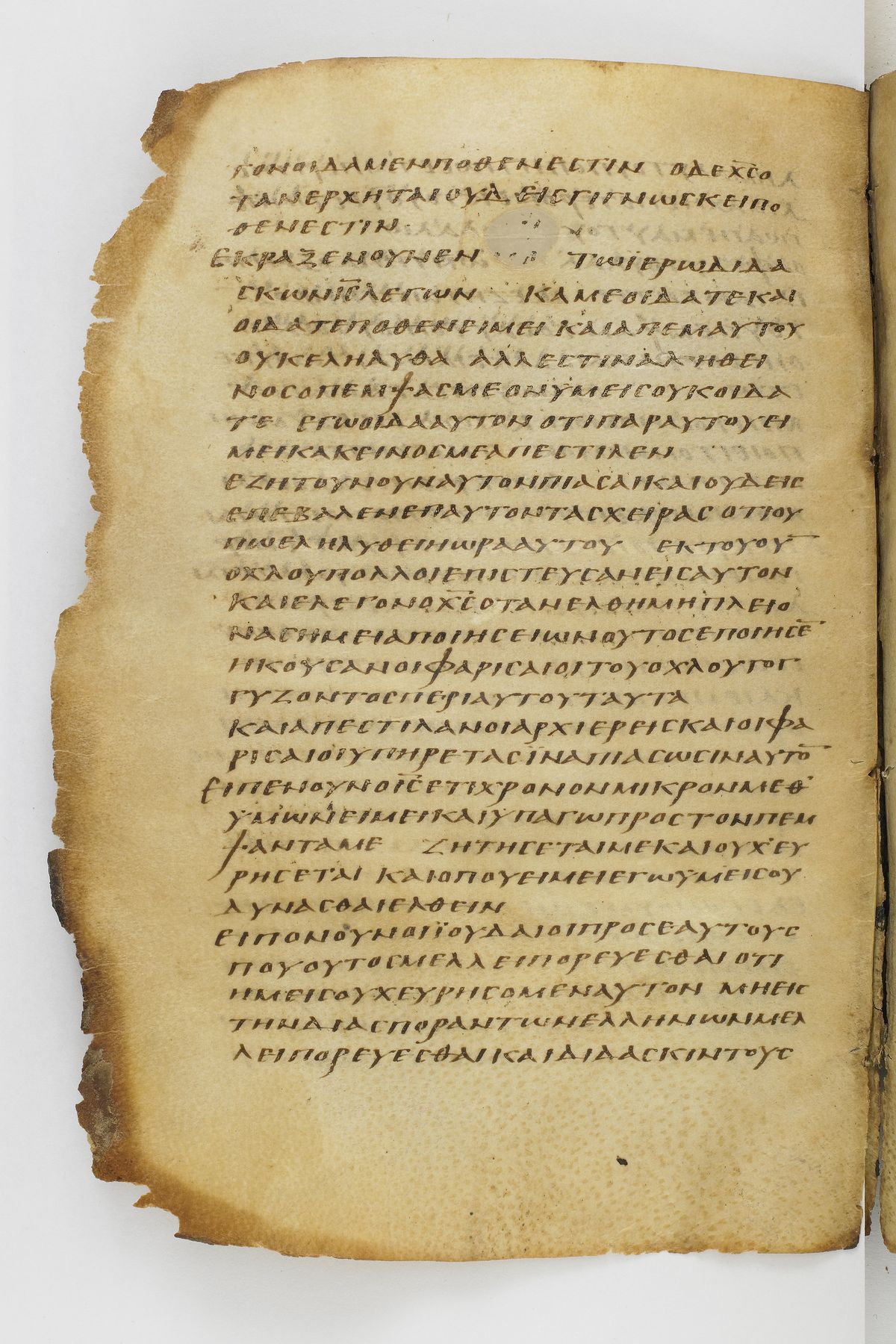
Where on the image
Page from the IGNTP transcription: verses 18-27 on fol. 71r, CSNTM GA_032_0141; verse 27 continues on fol. 71v, CSNTM GA_032_0142 (which begins 'τον οιδαμεν ποθεν').
18ο αφ εαυτου λαλων την δοξαν τη¯ ιδιαν ζητει ο δε ζητων την δοξα¯ του πεμψαντος αυτον ουτος αληθης εστιν και αδικεια εν αυτω ουκ εστιν 19ου μωυσης δεδωκεν υμιν τον νομον και ουδεις εξ υμων ποιει τον νομον τι με ζητειται αποκτιναι 20απεκριθη ο οχλος δαιμονιον εχεις τις σε ζητι αποκτιναι 21Απεκριθη ο ις και ειπεν αυτοις εν εργον εποιησα και παντες θαυμαζεται 22δια τουτο μωυσης δεδωκεν υμιν την περιτομην ουχ οτι εκ του μωυσεως εστιν αλλ εκ των πατερων και εν σαββατω περιτεμνεται ανθρωπον 23ει περιτομην λαμβανει ανος εν σαββατω ινα μη λυθη ο νομος μωυσεως εμοι χολατε οτι ολον ανθρωπον υγιη εποιησα εν σαββατω 24μη κρινεται κατ οψιν αλλα την δικαιαν κρισιν κρινεται 25ελεγον ουν τινες εκ των ιεροσολυμιτων ουχ ουτος εστιν ον ζητουσιν αποκτιναι 26και ειδε παρρησια λαλει και ουδεν αυτω λεγουσιν μηποτε αληθως εγνωσαν οι αρχοντες οτι ουτος εστιν ο χς 27αλλα τουτον οιδαμεν ποθεν εστιν ο δε χς οταν ερχηται ουδεις γιγνωσκει ποθεν εστιν
Compare: Tischendorf 8th edition (1869)
18ὁ ἀφ’ ἑαυτοῦ λαλῶν τὴν δόξαν τὴν ἰδίαν ζητεῖ· ὁ δὲ ζητῶν τὴν δόξαν τοῦ πέμψαντος αὐτόν, οὗτος ἀληθής ἐστιν καὶ ἀδικία ἐν αὐτῷ οὐκ ἔστιν. 19οὐ Μωϋσῆς δέδωκεν ὑμῖν τὸν νόμον; καὶ οὐδεὶς ἐξ ὑμῶν ποιεῖ τὸν νόμον. τί με ζητεῖτε ἀποκτεῖναι; 20ἀπεκρίθη ὁ ὄχλος· δαιμόνιον ἔχεις· τίς σε ζητεῖ ἀποκτεῖναι; 21ἀπεκρίθη Ἰησοῦς καὶ εἶπεν αὐτοῖς· ἓν ἔργον ἐποίησα καὶ πάντες θαυμάζετε. 22ὁ Μωϋσῆς δέδωκεν. ὑμῖν τὴν περιτομήν, οὐχ ὅτι ἐκ τοῦ Μωϋσέως ἐστίν, ἀλλ’ ἐκ τῶν πατέρων, καὶ ἐν σαββάτῳ περιτέμνετε ἄνθρωπον. 23εἰ περιτομὴν λαμβάνει ἄνθρωπος ἐν σαββάτῳ ἵνα μὴ λυθῇ ὁ νόμος ὁ Μωϋσέως, ἐμοὶ χολᾶτε ὅτι ὅλον ἄνθρωπον ὑγιῆ ἐποίησα ἐν σαββάτῳ; 24μὴ κρίνετε κατ’ ὄψιν, ἀλλὰ τὴν δικαίαν κρίσιν κρίνατε. 25Ἔλεγον οὖν τινες ἐκ τῶν Ἱεροσολυμειτῶν· οὐχ οὗτός ἐστιν ὃν ζητοῦσιν ἀποκτεῖναι; 26καὶ ἴδε παρρησίᾳ λαλεῖ, καὶ οὐδὲν αὐτῷ λέγουσιν. μήποτε ἀληθῶς ἔγνωσαν οἱ ἄρχοντες ὅτι οὗτός ἐστιν ὁ Χριστός; 27ἀλλὰ τοῦτον οἴδαμεν πόθεν ἐστίν· ὁ δὲ Χριστὸς ὅταν ἔρχηται, οὐδεὶς γινώσκει πόθεν ἐστίν.
18He that speaketh of himself seeketh his own glory: but he that seeketh his glory that sent him, the same is true, and no unrighteousness is in him. 19Did not Moses give you the law, and yet none of you keepeth the law? Why go ye about to kill me? 20The people answered and said, Thou hast a devil: who goeth about to kill thee? 21Jesus answered and said unto them, I have done one work, and ye all marvel. 22Moses therefore gave unto you circumcision; (not because it is of Moses, but of the fathers;) and ye on the sabbath day circumcise a man. 23If a man on the sabbath day receive circumcision, that the law of Moses should not be broken; are ye angry at me, because I have made a man every whit whole on the sabbath day? 24Judge not according to the appearance, but judge righteous judgment. 25Then said some of them of Jerusalem, Is not this he, whom they seek to kill? 26But, lo, he speaketh boldly, and they say nothing unto him. Do the rulers know indeed that this is the very Christ? 27Howbeit we know this man whence he is: but when Christ cometh, no man knoweth whence he is.
Where on the image
Page from the IGNTP transcription: verses 28-35 on fol. 71v, CSNTM GA_032_0142; verse 35 continues on fol. 72r, CSNTM GA_032_0143 (which begins 'ελληνας').
28Εκραξεν ουν εν τω ιερω διδασκων ις λεγων καμε οιδατε και οιδατε ποθεν ειμει και απ εμαυτου ουκ εληλυθα αλλ εστιν αληθεινος ο πεμψας με ον υμεις ουκ οιδατε 29εγω οιδα αυτον οτι παρ αυτου ειμει κακεινος με απεστιλεν 30εζητουν ουν αυτον πιασαι και ουδεις επεβαλεν επ αυτον τας χειρας οτι ουπω εληλυθει η ωρα αυτου 31εκ του ου¯ οχλου πολλοι επιστευσαν εις αυτον και ελεγον ο χς οταν ελθη μη πλειονα σημεια ποιησει ων ουτος εποιησε¯ 32ηκουσαν οι φαρισαιοι του οχλου γογγυζοντος περι αυτου ταυτα και απεστιλαν οι αρχιερεις και οι φαρισαιοι υπηρετας ινα πιασωσιν αυτο¯ 33Ειπεν ουν ο ις ετι χρονον μικρον μεθ υμων ειμει και υπαγω προς τον πεμψαντα με 34ζητησεται με και ουχ ευρησεται και οπου ειμει εγω υμεις ου δυνασθαι ελθειν 35Ειπον ουν οι ιουδαιοι προς εαυτους που ουτος μελλει πορευεσθαι οτι ημεις ουχ ευρησομεν αυτον μη εις την διασποραν των ελληνων μελλει πορευεσθαι και διδασκιν τους ελληνας
Compare: Tischendorf 8th edition (1869)
28ἔκραξεν οὖν ἐν τῷ ἱερῷ διδάσκων ὁ Ἰησοῦς καὶ λέγων· κἀμὲ οἴδατε καὶ οἴδατε πόθεν εἰμί· καὶ ἀπ’ ἐμαυτοῦ οὐκ ἐλήλυθα, ἀλλ’ ἔστιν ἀληθινὸς ὁ πέμψας με, ὃν ὑμεῖς οὐκ οἴδατε· 29ἐγὼ οἶδα αὐτόν, ὅτι παρ’ αὐτοῦ εἰμι κἀκεῖνός με ἀπέσταλκεν. 30ἐζήτουν οὖν αὐτὸν πιάσαι, καὶ οὐδεὶς ἐπέβαλεν ἐπ’ αὐτὸν τὴν χεῖρα, ὅτι οὔπω ἐληλύθει ἡ ὥρα αὐτοῦ. 31Πολλοὶ δὲ ἐπίστευσαν ἐκ τοῦ ὄχλου εἰς αὐτόν, καὶ ἔλεγον· ὁ Χριστὸς ὅταν ἔλθῃ μὴ πλείονα σημεῖα ποιήσει ὧν οὗτος ποιεῖ; 32ἤκουσαν οἱ Φαρισαῖοι τοῦ ὄχλου γογγύζοντος περὶ αὐτοῦ ταῦτα, καὶ ἀπέστειλαν ὑπηρέτας οἱ ἀρχιερεῖς καὶ οἱ Φαρισαῖοι ἵνα πιάσωσιν αὐτόν. 33εἶπεν οὖν ὁ Ἰησοῦς· ἔτι χρόνον μικρὸν μεθ’ ὑμῶν εἰμι καὶ ὑπάγω πρὸς τὸν πέμψαντά με. 34ζητήσετέ με καὶ οὐχ εὑρήσετε, καὶ ὅπου εἰμὶ ἐγὼ ὑμεῖς οὐ δύνασθε ἐλθεῖν. 35εἶπον οὖν οἱ Ἰουδαῖοι πρὸς ἑαυτούς· ποῦ μέλλει οὗτος πορεύεσθαι, ὅτι οὐχ εὑρήσομεν αὐτόν; μὴ εἰς τὴν διασπορὰν τῶν Ἑλλήνων μέλλει πορεύεσθαι καὶ διδάσκειν τοὺς Ἕλληνας;
28Then cried Jesus in the temple as he taught, saying, Ye both know me, and ye know whence I am: and I am not come of myself, but he that sent me is true, whom ye know not. 29But I know him: for I am from him, and he hath sent me. 30Then they sought to take him: but no man laid hands on him, because his hour was not yet come. 31And many of the people believed on him, and said, When Christ cometh, will he do more miracles than these which this man hath done? 32The Pharisees heard that the people murmured such things concerning him; and the Pharisees and the chief priests sent officers to take him. 33Then said Jesus unto them, Yet a little while am I with you, and then I go unto him that sent me. 34Ye shall seek me, and shall not find me: and where I am, thither ye cannot come. 35Then said the Jews among themselves, Whither will he go, that we shall not find him? will he go unto the dispersed among the Gentiles, and teach the Gentiles?
Where on the image
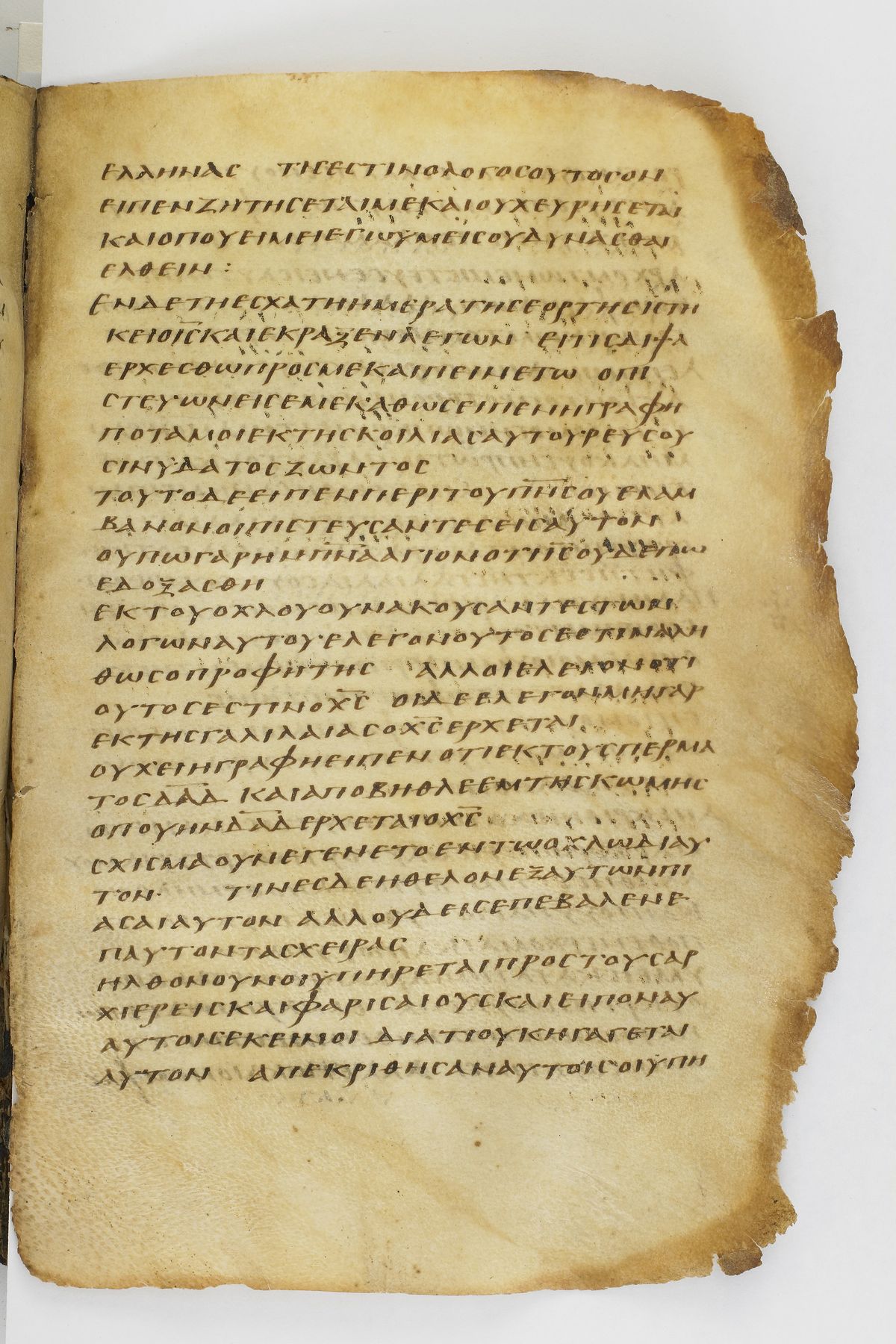
Page from the IGNTP transcription: verses 36-46 on fol. 72r, CSNTM GA_032_0143; verse 46 continues on fol. 72v, CSNTM GA_032_0144 (which begins 'ρεται ουδεποτε ελαλησεν').
36τις εστιν ο λογος ουτος ον ειπεν ζητησεται με και ουχ ευρησεται και οπου ειμει εγω υμεις ου δυνασθαι ελθειν 37εν δε τη εσχατη ημερα της εορτης ιστηκει ο ις και εκραξεν λεγων ει τις διψα ερχεσθω προς με και πεινετω 38ο πιστευων εις εμε καθως ειπεν η γραφη ποταμοι εκ της κοιλιας αυτου ρευσουσιν υδατος ζωντος 39τουτο δε ειπεν περι του πνς ου ελαμβανον οι πιστευσαντες εις αυτον ουπω γαρ ην πνα αγιον οτι ις ουδεπω εδοξασθη 40εκ του οχλου ουν ακουσαντες των λογων αυτου ελεγον ουτος εστιν αληθως ο προφητης 41αλλοι ελεγον οτι ουτος εστιν ο χς οι δε ελεγον μη γαρ εκ της γαλιλαιας ο χς ερχεται 42ουχει η γραφη ειπεν οτι εκ του σπερματος δαδ και απο βηθλεεμ της κωμης οπου ην δαδ ερχεται ο χς 43σχισμα ουν εγενετο εν τω οχλω δι αυτον 44τινες δε ηθελον εξ αυτων πιασαι αυτον αλλ ουδεις επεβαλεν επ αυτον τας χειρας 45ηλθον ουν οι υπηρεται προς τους αρχιερεις και φαρισαιους και ειπον αυαυτοις εκεινοι δια τι ουκ ηγαγεται αυτον 46απεκριθησαν αυτοις οι υπηρεται ουδεποτε ελαλησεν ουτως ανος
Compare: Tischendorf 8th edition (1869)
36τίς ἐστιν ὁ λόγος οὗτος ὃν εἶπεν· ζητήσετέ με καὶ οὐχ εὑρήσετέ, καὶ ὅπου εἰμὶ ἐγὼ ὑμεῖς οὐ δύνασθε ἐλθεῖν; 37Ἐν δὲ τῇ ἐσχάτῃ ἡμέρᾳ τῇ μεγάλῃ τῆς ἑορτῆς εἱστήκει ὁ Ἰησοῦς καὶ ἔκραξεν λέγων· ἐάν τις διψᾷ, ἐρχέσθω καὶ πινέτω. 38ὁ πιστεύων εἰς ἐμέ, καθὼς εἶπεν ἡ γραφή, ποταμοὶ ἐκ τῆς κοιλίας αὐτοῦ ῥεύσουσιν ὕδατος ζῶντος. 39τοῦτο δὲ εἶπεν περὶ τοῦ πνεύματος οὗ ἤμελλον λαμβάνειν οἱ πιστεύσοντες εἰς αὐτόν· οὔπω γὰρ ἦν πνεῦμα, ὅτι Ἰησοῦς οὐδέπω ἐδοξάσθη. 40Ἐκ τοῦ ὄχλου οὖν ἀκούσαντες τῶν λόγων τούτων ἔλεγον· οὗτός ἐστιν ἀληθῶς ὁ προφήτης· 41ἄλλοι ἔλεγον· οὗτός ἐστιν ὁ Χριστός· ἄλλοι ἔλεγον· μὴ γὰρ ἐκ τῆς Γαλιλαίας ὁ Χριστὸς ἔρχεται; 42οὐχ ἡ γραφὴ εἶπεν ὅτι ἐκ τοῦ σπέρματος Δαυεὶδ καὶ ἀπὸ Βηθλεὲμ τῆς κώμης ὅπου ἦν Δαυείδ, ὁ Χριστὸς ἔρχεται; 43σχίσμα οὖν ἐγένετο ἐν τῷ ὄχλῳ δι’ αὐτόν· 44τινὲς δὲ ἤθελον ἐξ αὐτῶν πιάσαι αὐτόν, ἀλλ’ οὐδεὶς ἔβαλεν ἐπ’ αὐτὸν τὰς χεῖρας. 45Ἦλθον οὖν οἱ ὑπηρέται πρὸς τοὺς ἀρχιερεῖς καὶ Φαρισαίους, καὶ εἶπον αὐτοῖς ἐκεῖνοι, διατί οὐκ ἠγάγετε αὐτόν; 46ἀπεκρίθησαν οἱ ὑπηρέται· οὐδέποτε ἐλάλησεν οὕτως ἄνθρωπος, ὡς οὗτος λαλεῖ ὁ ἄνθρωπος.
36What manner of saying is this that he said, Ye shall seek me, and shall not find me: and where I am, thither ye cannot come? 37In the last day, that great day of the feast, Jesus stood and cried, saying, If any man thirst, let him come unto me, and drink. 38He that believeth on me, as the scripture hath said, out of his belly shall flow rivers of living water. 39(But this spake he of the Spirit, which they that believe on him should receive: for the Holy Ghost was not yet given; because that Jesus was not yet glorified.) 40Many of the people therefore, when they heard this saying, said, Of a truth this is the Prophet. 41Others said, This is the Christ. But some said, Shall Christ come out of Galilee? 42Hath not the scripture said, That Christ cometh of the seed of David, and out of the town of Bethlehem, where David was? 43So there was a division among the people because of him. 44And some of them would have taken him; but no man laid hands on him. 45Then came the officers to the chief priests and Pharisees; and they said unto them, Why have ye not brought him? 46The officers answered, Never man spake like this man.
Where on the image
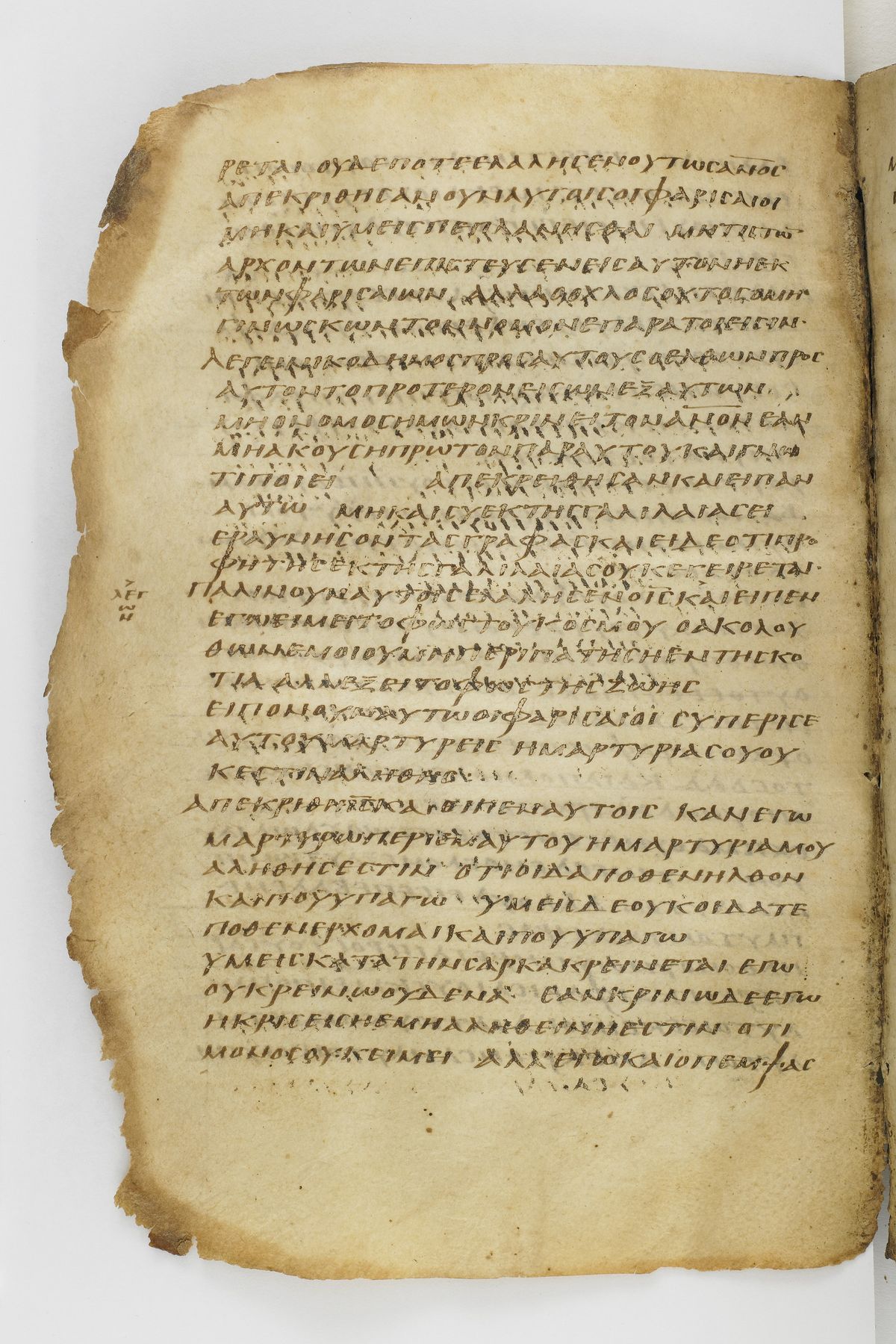
Page from the IGNTP transcription: verses 47-52 on fol. 72v, CSNTM GA_032_0144. Verse 53 is not in Codex Washingtonianus; the IGNTP transcription shows the text passing over it on fol. 72v, CSNTM GA_032_0144.
47απεκριθησαν ουν αυτοις οι φαρισαιοι μη και υμεις πεπλανησθαι 48μη τις τω¯ αρχοντων επιστευσεν εις αυτον η εκ των φαρισαιων 49αλλα ο οχλος ουτος ο μη γινωσκων τον νομον επαρατοι εισιν 50λεγει νικοδημος προς αυτους ο ελθων προς αυτον το προτερον εις ων εξ αυτων 51μη ο νομος ημων κρινει τον ανον εαν μη ακουση πρωτον παρ αυτου και γνω τι ποιει 52απεκρειθησαν και ειπαν αυτω μη και συ εκ της γαλιλαιας ει εραυνησον τας γραφας και ειδε οτι προφητης εκ της γαλιλαιας ουκ εγειρεται 53[not in Codex Washingtonianus]
Compare: Tischendorf 8th edition (1869)
47ἀπεκρίθησαν αὐτοῖς οἱ Φαρισαῖοι· μὴ καὶ ὑμεῖς πεπλάνησθε; 48μή τις ἐκ τῶν ἀρχόντων ἐπίστευσεν εἰς αὐτὸν ἢ ἐκ τῶν Φαρισαίων; 49ἀλλὰ ὁ ὄχλος οὗτος ὁ μὴ γινώσκων τὸν νόμον ἐπάρατοί εἰσίν. 50λέγει Νικόδημος πρὸς αὐτούς, εἷς ὢν ἐξ αὐτῶν· 51μὴ ὁ νόμος ἡμῶν κρίνει τὸν ἄνθρωπον ἐὰν μὴ ἀκούσῃ πρῶτον παρ’ αὐτοῦ καὶ γνῷ τί ποιεῖ; 52ἀπεκρίθησαν καὶ εἶπαν αὐτῷ· μὴ καὶ σὺ ἐκ τῆς Γαλιλαίας εἶ; ἐραύνησον καὶ ἴδε ὅτι προφήτης ἐκ τῆς Γαλιλαίας οὐκ ἐγείρεται. 53και επορευθησαν εκαστος εις τον οικον αυτου.
47Then answered them the Pharisees, Are ye also deceived? 48Have any of the rulers or of the Pharisees believed on him? 49But this people who knoweth not the law are cursed. 50Nicodemus saith unto them, (he that came to Jesus by night, being one of them,) 51Doth our law judge any man, before it hear him, and know what he doeth? 52They answered and said unto him, Art thou also of Galilee? Search, and look: for out of Galilee ariseth no prophet. 53And every man went unto his own house.
Cite
Sources
- Source: Codex Washingtonianus page images + IGNTP transcription (CC BY 4.0) + Tischendorf 8th edition + KJV (holding institution)
- Critical edition: Codex Washingtonianus transcription, IGNTP (CC BY 4.0); Tischendorf 8th edition for comparison
← previous · → next · v cycle view · l back to library