Mark, Chapter 16 (Codex Washingtonianus)
Introduction
Mark 16 from Codex Washingtonianus (the Freer Gospels, Gregory-Aland 032, Freer Gallery of Art F1906.274), a parchment codex of the four Gospels written in Egypt in the late 4th or early 5th century and bought by Charles Lang Freer from the dealer Ali Arabi at Giza in 1906. It is one of the oldest nearly complete Gospel books in existence. The Gospels stand in the so-called Western order, Matthew, John, Luke, Mark, and the text is famously block-mixed: the copyist drew on several exemplars of different textual character, so the text type changes in blocks within a single Gospel. After Mark 16:14 the codex carries the Freer Logion, a saying found in no other manuscript. Two passages are lost to damage: Mark 15:13-37 and John 14:26-16:6.
- Scan: each section is shown with the actual page of the codex that carries those verses, from the Freer Gallery's own photographs of F1906.274 served by the Smithsonian IIIF service (ids.si.edu). Which page holds which verse comes from the verse index of the Center for the Study of New Testament Manuscripts (CSNTM), whose photographs of the codex are the same shots; every CSNTM page was matched to its Smithsonian image by pixel comparison before use. Where a verse begins on one page and ends on the next, both pages are listed. For this chapter the page of each verse is taken from the transcription itself, which records where every page begins; CSNTM's index confirms which photograph shows that page.
- Greek: the manuscript's own text, from a diplomatic transcription (see Greek text below), with Tischendorf's 8th critical edition (1869) for comparison.
- English: the King James Version (1611, public domain), verbatim from bible-api.com. The KJV translates the later Byzantine text, so it will not always match the Greek shown or the reading of the codex.
Greek text: a diplomatic transcription of Codex Washingtonianus made by the Institut für Neutestamentliche Textforschung (INTF), Münster, for the New Testament Virtual Manuscript Room (NTVMR), published under a Creative Commons Attribution 4.0 licence. It gives the letters as the first scribe wrote them: no accents or breathings, the scribe's own spelling, and the sacred names in their contracted form (θς for θεος, ις for ιησους, κς for κυριος; the overline is not reproduced). Corrections by later hands are not shown. Letters in square brackets are not legible on the page and were restored by the transcribers, a dot under a letter marks an uncertain reading, and [...] marks text lost to damage. Beneath each section, for comparison, is Tischendorf's 8th critical edition (1869). Where the two differ, the transcription is what the manuscript says. Each section is shown with the page on which the transcription places its verses.
The Freer Logion: after 16:14 the codex adds a passage found in no other manuscript, in which the disciples excuse their unbelief and Christ replies that the term of Satan's power is fulfilled. The Greek column gives it inside verse 14, between the markers [Freer Logion:] and [end of the Freer Logion]; it is on page GA_032_0373. The KJV has no English for it, and no complete public-domain English translation was found: H. A. Sanders' study of the codex (The Washington Manuscript of the Four Gospels, 1912) gives the Greek only. The one public-domain rendering located covers only the first sentence, made by E. J. Goodspeed from his own corrected Greek ("The Detroit Manuscripts of the Septuagint and New Testament", The Biblical World 31, 1908, p. 226): "And they made excuse, saying, This age of lawlessness and unbelief is under Satan, who, by the unclean spirits, does not allow (sc. "us") power to comprehend the truth of God," etc.
How was this verified? (Provenance)
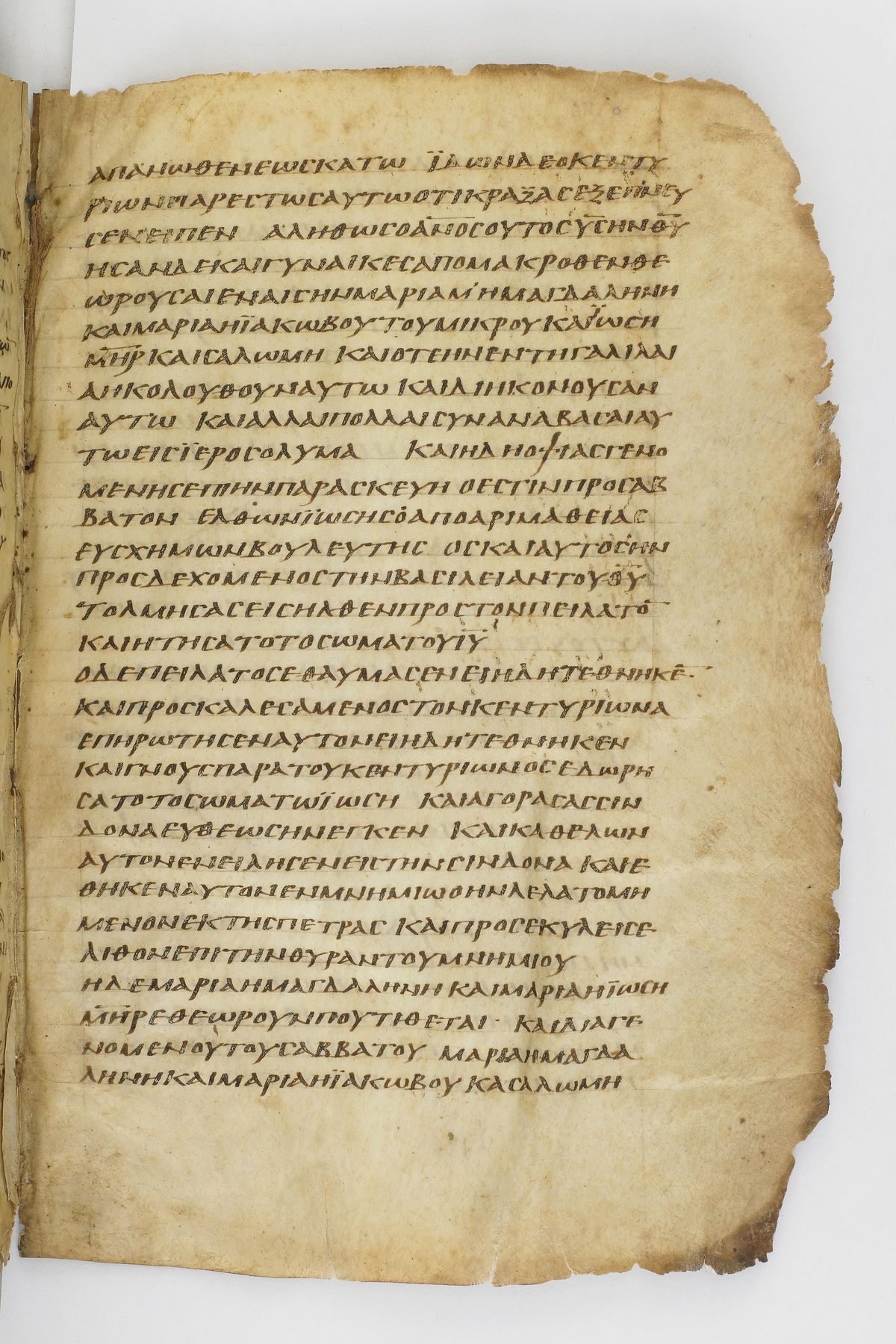
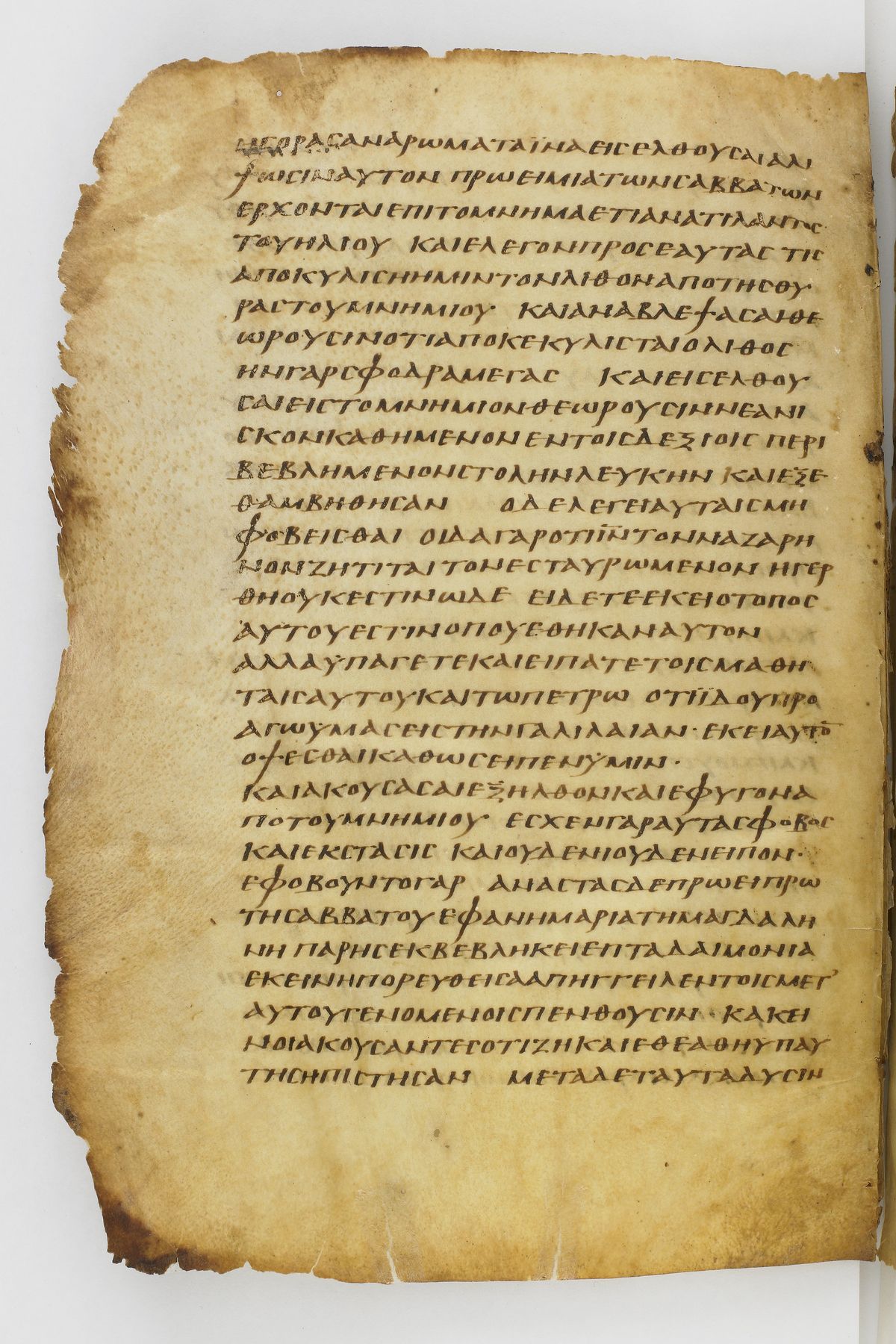
Where on the image
Page from the NTVMR transcription (docID 20032): verse 1 on CSNTM GA_032_0371; verse 1 continues on CSNTM GA_032_0372 (which begins 'ηγορασαν αρωματα ινα').
1και διαγενομενου του σαββατου μαρια η μαγδαληνη και μαρια η ιακωβου κα σαλωμη ηγορασαν αρωματα ινα εισελθουσαι αλιψωσιν αυτον
Compare: Tischendorf 8th edition (1869)
1Καὶ διαγενομένου τοῦ σαββάτου Μαρία ἡ Μαγδαληνὴ καὶ Μαρία ἡ Ἰακώβου καὶ Σαλώμη ἠγόρασαν ἀρώματα, ἵνα ἐλθοῦσαι ἀλείψωσιν αὐτόν.
1And when the sabbath was past, Mary Magdalene, and Mary the mother of James, and Salome, had bought sweet spices, that they might come and anoint him.
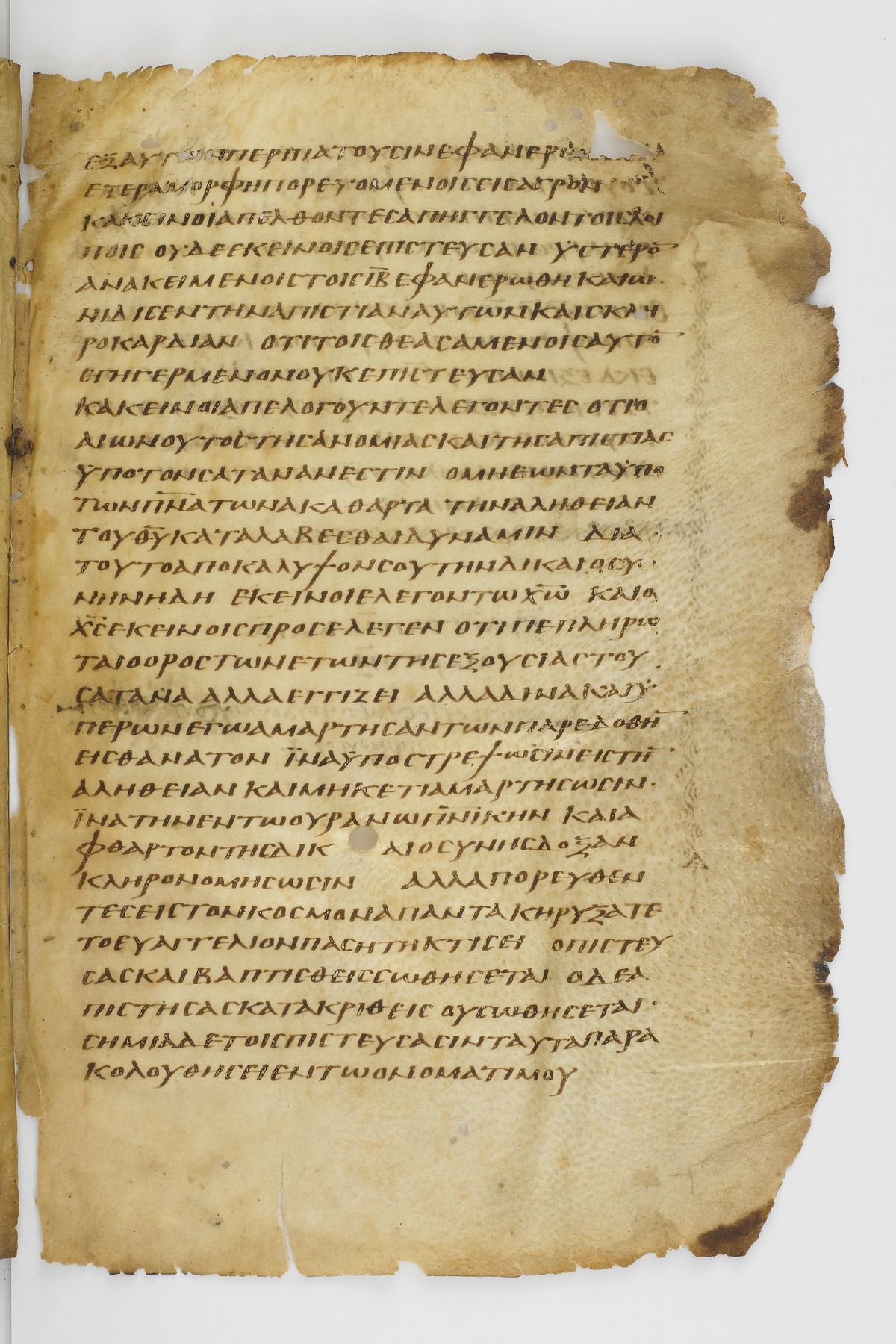
Where on the image
Page from the NTVMR transcription (docID 20032): verses 2-12 on CSNTM GA_032_0372; verse 12 continues on CSNTM GA_032_0373 (which begins 'εξ αυτω̣ν περιπατουσιν').
2πρωει μια των σαββατων ερχονται επι το μνημα ετι ανατιλαντος του ηλιου 3και ελεγον προς εαυτας τις αποκυλιση ημιν τον λιθον απο της θυρας του μνημιου 4και αναβλεψασαι θεωρουσιν οτι αποκεκυλισται ο λιθος ην γαρ σφοδρα μεγας 5και εισελθουσαι εις το μνημιον θεωρουσιν νεανισκον καθημενον εν τοις δεξιοις περιβεβλημενον στολην λευκην και εξεθαμβηθησαν 6ο δε λεγει αυταις μη φοβεισθαι οιδα γαρ οτι ιν τον ναζαρηνον ζητιται τον εσταυρωμενον ηγερθη ουκ εστιν ωδε ειδετε εκει ο τοπος αυτου εστιν οπου εθηκαν αυτον 7αλλα υπαγετε και ειπατε τοις μαθηταις αυτου και τω πετρω οτι ιδου προαγω υμας εις την γαλιλαιαν · εκει αυτον οψεσθαι καθως ειπεν υμιν · 8και ακουσασαι εξηλθον και εφυγον απο του μνημιου εσχεν γαρ αυτας φοβος και εκστασις και ουδενι ουδεν ειπον · εφοβουντο γαρ 9αναστας δε πρωει πρωτη σαββατου εφανη μαρια τη μαγδαληνη παρ ης εκβεβληκει επτα δαιμονια 10εκεινη πορευθεισα απηγγειλεν τοις μετ αυτου γενομενοις πενθουσιν · 11κακεινοι ακουσαντες οτι ζη και εθεαθη υπ αυτης ηπιστησαν 12μετα δε ταυτα δυσιν εξ αυτω̣ν περιπατουσιν εφανερω[θη] [εν] ετερα μορφη πορευομενοις εις αγρον
Compare: Tischendorf 8th edition (1869)
2καὶ λίαν πρωῒ τῇ μιᾷ τῶν σαββάτων ἔρχονται ἐπὶ τὸ μνῆμα, ἀνατείλαντος τοῦ ἡλίου. 3καὶ ἔλεγον πρὸς ἑαυτάς· τίς ἀποκυλίσει ἡμῖν τὸν λίθον ἐκ τῆς θύρας τοῦ μνημείου; 4καὶ ἀναβλέψασαι θεωροῦσιν ὅτι ἀνακεκύλισται ὁ λίθος· ἦν γὰρ μέγας σφόδρα. 5καὶ εἰσελθοῦσαι εἰς τὸ μνημεῖον εἶδον νεανίσκον καθήμενον ἐν τοῖς δεξιοῖς περιβεβλημένον στολὴν λευκήν, καὶ ἐξεθαμβήθησαν. 6ὁ δὲ λέγει αὐταῖς· μὴ ἐκθαμβεῖσθε. Ἰησοῦν ζητεῖτε τὸν Ναζαρηνὸν τὸν ἐσταυρωμένον· ἠγέρθη, οὐκ ἔστιν ὧδε· ἴδε ὁ τόπος ὅπου ἔθηκαν αὐτόν. 7ἀλλὰ ὑπάγετε εἴπατε τοῖς μαθηταῖς αὐτοῦ καὶ τῷ Πέτρῳ ὅτι προάγει ὑμᾶς εἰς τὴν Γαλιλαίαν· ἐκεῖ αὐτὸν ὄψεσθε, καθὼς εἶπεν ὑμῖν. 8καὶ ἐξελθοῦσαι ἔφυγον ἀπὸ τοῦ μνημείου· εἶχεν γὰρ αὐτὰς τρόμος καὶ ἔκστασις, καὶ οὐδενὶ οὐδὲν εἶπον· ἐφοβοῦντο γάρ. 9Ἀναστὰς δὲ πρωῒ πρώτῃ σαββάτου ἐφάνη πρῶτον Μαρίᾳ τῇ Μαγδαληνῇ, ἀφ’ ἧς ἐκβεβλήκει ἑπτὰ δαιμόνια. 10ἐκείνη πορευθεῖσα ἀπήγγειλεν τοῖς μετ’ αὐτοῦ γενομένοις, πενθοῦσιν καὶ κλαίουσιν. 11κἀκεῖνοι ἀκούσαντες ὅτι ζῇ καὶ ἐθεάθη ὑπ’ αὐτῆς ἠπίστησαν. 12Μετὰ δὲ ταῦτα δυσὶν ἐξ αὐτῶν περιπατοῦσιν ἐφανερώθη ἐν ἑτέρᾳ μορφῇ, πορευομένοις εἰς ἀγρόν.
2And very early in the morning the first day of the week, they came unto the sepulchre at the rising of the sun. 3And they said among themselves, Who shall roll us away the stone from the door of the sepulchre? 4And when they looked, they saw that the stone was rolled away: for it was very great. 5And entering into the sepulchre, they saw a young man sitting on the right side, clothed in a long white garment; and they were affrighted. 6And he saith unto them, Be not affrighted: Ye seek Jesus of Nazareth, which was crucified: he is risen; he is not here: behold the place where they laid him. 7But go your way, tell his disciples and Peter that he goeth before you into Galilee: there shall ye see him, as he said unto you. 8And they went out quickly, and fled from the sepulchre; for they trembled and were amazed: neither said they any thing to any man; for they were afraid. 9Now when Jesus was risen early the first day of the week, he appeared first to Mary Magdalene, out of whom he had cast seven devils. 10And she went and told them that had been with him, as they mourned and wept. 11And they, when they had heard that he was alive, and had been seen of her, believed not. 12After that he appeared in another form unto two of them, as they walked, and went into the country.
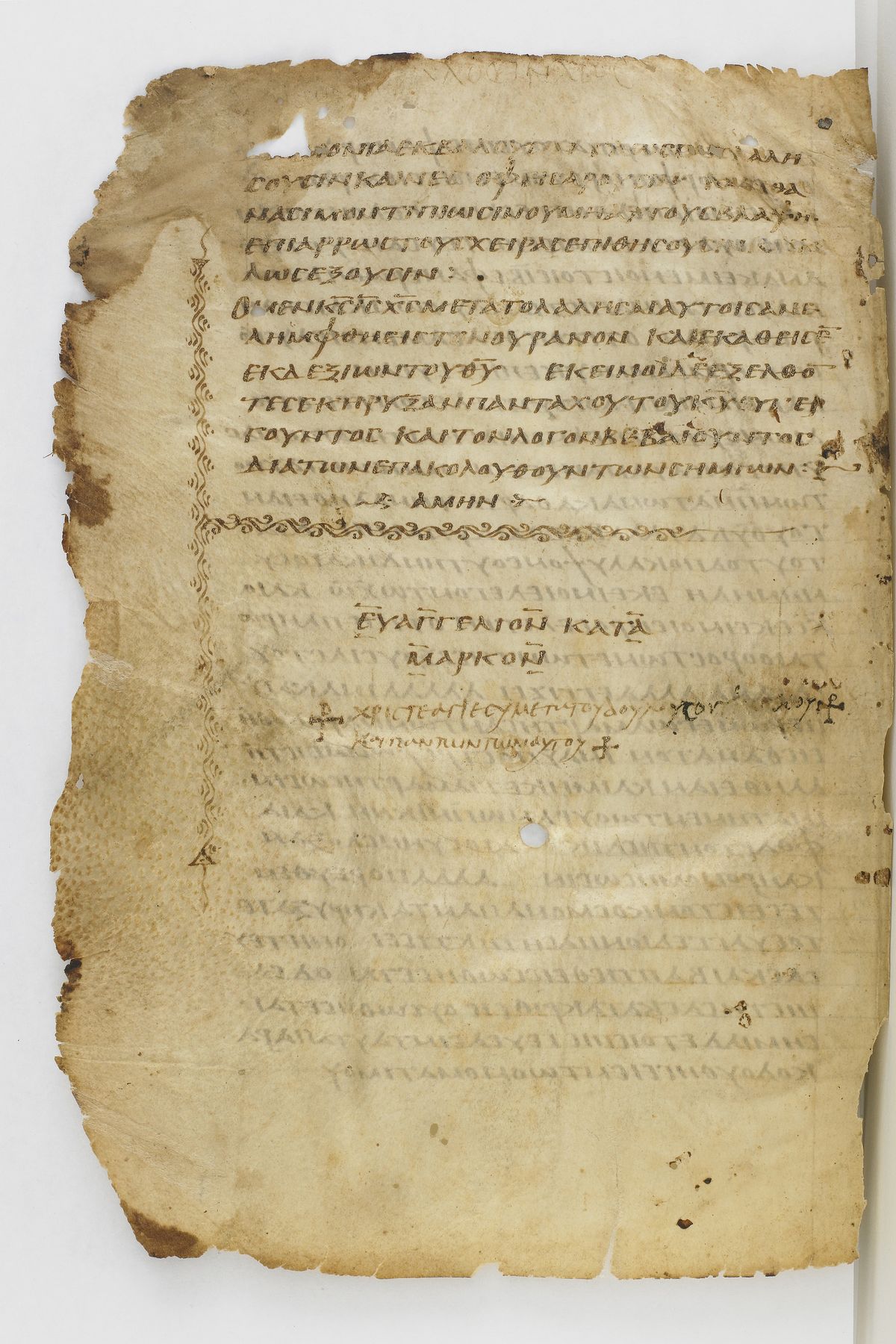
Where on the image
Page from the NTVMR transcription (docID 20032): verses 13-17 on CSNTM GA_032_0373; verse 17 continues on CSNTM GA_032_0374 (which begins 'δ̣[αι]μ̣ονια εκβαλουσιν γλωσσαι̣ς').
13κακεινοι απελθοντες απηγγελον τοις λοιποις ουδε εκεινοις επιστευσαν 14υστερον ανακειμενοις τοις ιβ εφανερωθη και ωνιδισεν την απιστιαν αυτων και σκλ̣η̣ροκαρδιαν οτι τοις θεασαμενοις αυτον εγηγερμενον ουκ επιστευσαν [Freer Logion:] κακεινοι απελογουντε λεγοντες οτι ο αιων ουτος της ανομιας και της απιστιας υπο τον σαταναν εστιν ο μη εων τα υπο των πνατων ακαθαρτα την αληθειαν του θυ καταλαβεσθαι δυναμιν δια τουτο αποκαλυψον σου την δικαιοσυνην ηδη εκεινοι ελεγον τω χω και ο χς εκεινοις προσελεγεν οτι πεπληρωται ο ορος των ετων της εξουσιας του σατανα αλλα εγγιζει αλλα δινα και υπερ ων εγω αμαρτησαντων παρεδοθην εις θανατον ινα υποστρεψωσιν εις την αληθειαν και μηκετι αμαρτησωσιν · ινα την εν τω ουρανω πνικην και αφθαρτον της δικαιοσυνης δοξαν κληρονομησωσιν [end of the Freer Logion] 15αλλα πορευθεντες εις τον κοσμον απαντα κηρυξατε το ευαγγελιον παση τη κτισει 16ο πιστευσας και βαπτισθεις σωθησεται ο δε απιστησας κατακριθεις ου σωθησεται · 17σημια δε τοις πιστευσασιν ταυτα παρακολουθησει εν τω ονοματι μου δ̣[αι]μ̣ονια εκβαλουσιν γλωσσαι̣ς λαλησουσιν καινες
Compare: Tischendorf 8th edition (1869)
13κἀκεῖνοι ἀπελθόντες ἀπήγγειλαν τοῖς λοιποῖς· οὐδὲ ἐκείνοις ἐπίστευσαν. 14Ὕστερον ἀνακειμένοις αὐτοῖς τοῖς ἕνδεκα ἐφανερώθη, καὶ ὠνείδισεν τὴν ἀπιστίαν αὐτῶν καὶ σκληροκαρδίαν, ὅτι τοῖς θεασαμένοις αὐτὸν ἐγηγερμένον οὐκ ἐπίστευσαν. 15καὶ εἶπεν αὐτοῖς· πορευθέντες εἰς τὸν κόσμον ἅπαντα κηρύξατε τὸ εὐαγγέλιον πάσῃ τῇ κτίσει. 16ὁ πιστεύσας καὶ βαπτισθεὶς σωθήσεται, ὁ δὲ ἀπιστήσας κατακριθήσεται. 17σημεῖα δὲ τοῖς πιστεύσασιν ταῦτα παρακολουθήσει· ἐν τῷ ὀνόματί μου δαιμόνια ἐκβαλοῦσιν, γλώσσαις λαλήσουσιν καιναῖς,
13And they went and told it unto the residue: neither believed they them. 14Afterward he appeared unto the eleven as they sat at meat, and upbraided them with their unbelief and hardness of heart, because they believed not them which had seen him after he was risen. [Here the codex adds the Freer Logion, which has no counterpart in the KJV; no complete public-domain English translation of it was found (see the introduction).] 15And he said unto them, Go ye into all the world, and preach the gospel to every creature. 16He that believeth and is baptized shall be saved; but he that believeth not shall be damned. 17And these signs shall follow them that believe; In my name shall they cast out devils; they shall speak with new tongues;
Where on the image
Page from the NTVMR transcription (docID 20032): verses 18-20 on CSNTM GA_032_0374.
18οφεις αρουσιν · κα̣ν̣ θανασιμον τι πιωσιν ου μη αυτους βλαψη · επι αρρωστους χειρας επιθησουσιν και κα̣λως εξουσιν · 19ο μεν κς ις χς μετα το λαλησαι αυτοις ανελημφθη εις τον ουρανον και εκαθεισεν εκ δεξιων του θυ 20εκεινοι δε εξελθοντες εκηρυξαν πανταχου του κυ συνεργουντος και τον λογον βεβαιουντος δια των επακολουθουντων σημιων · αμην
Compare: Tischendorf 8th edition (1869)
18ὄφεις ἀροῦσιν, κἂν θανάσιμόν τι πίωσιν οὐ μὴ αὐτοὺς βλάψῃ, ἐπὶ ἀρρώστους χεῖρας ἐπιθήσουσιν καὶ καλῶς ἕξουσιν. 19ὁ μὲν οὖν κύριος μετὰ τὸ λαλῆσαι αὐτοῖς ἀνελήμφθη εἰς τὸν οὐρανὸν καὶ ἐκάθισεν ἐκ δεξιῶν τοῦ θεοῦ. 20ἐκεῖνοι δὲ ἐξελθόντες ἐκήρυξαν πανταχοῦ, τοῦ κυρίου συνεργοῦντος καὶ τὸν λόγον βεβαιοῦντος διὰ τῶν ἐπακολουθούντων σημείων.
18They shall take up serpents; and if they drink any deadly thing, it shall not hurt them; they shall lay hands on the sick, and they shall recover. 19So then after the Lord had spoken unto them, he was received up into heaven, and sat on the right hand of God. 20And they went forth, and preached every where, the Lord working with them, and confirming the word with signs following. Amen.
Cite
Sources
- Source: Codex Washingtonianus page images + NTVMR transcription (CC BY 4.0) + Tischendorf 8th edition + KJV (holding institution)
- Critical edition: Codex Washingtonianus transcription, NTVMR (INTF Münster, CC BY 4.0); Tischendorf 8th edition for comparison
← previous · → next · v cycle view · l back to library