Mark, Chapter 4 (Codex Washingtonianus)
Introduction
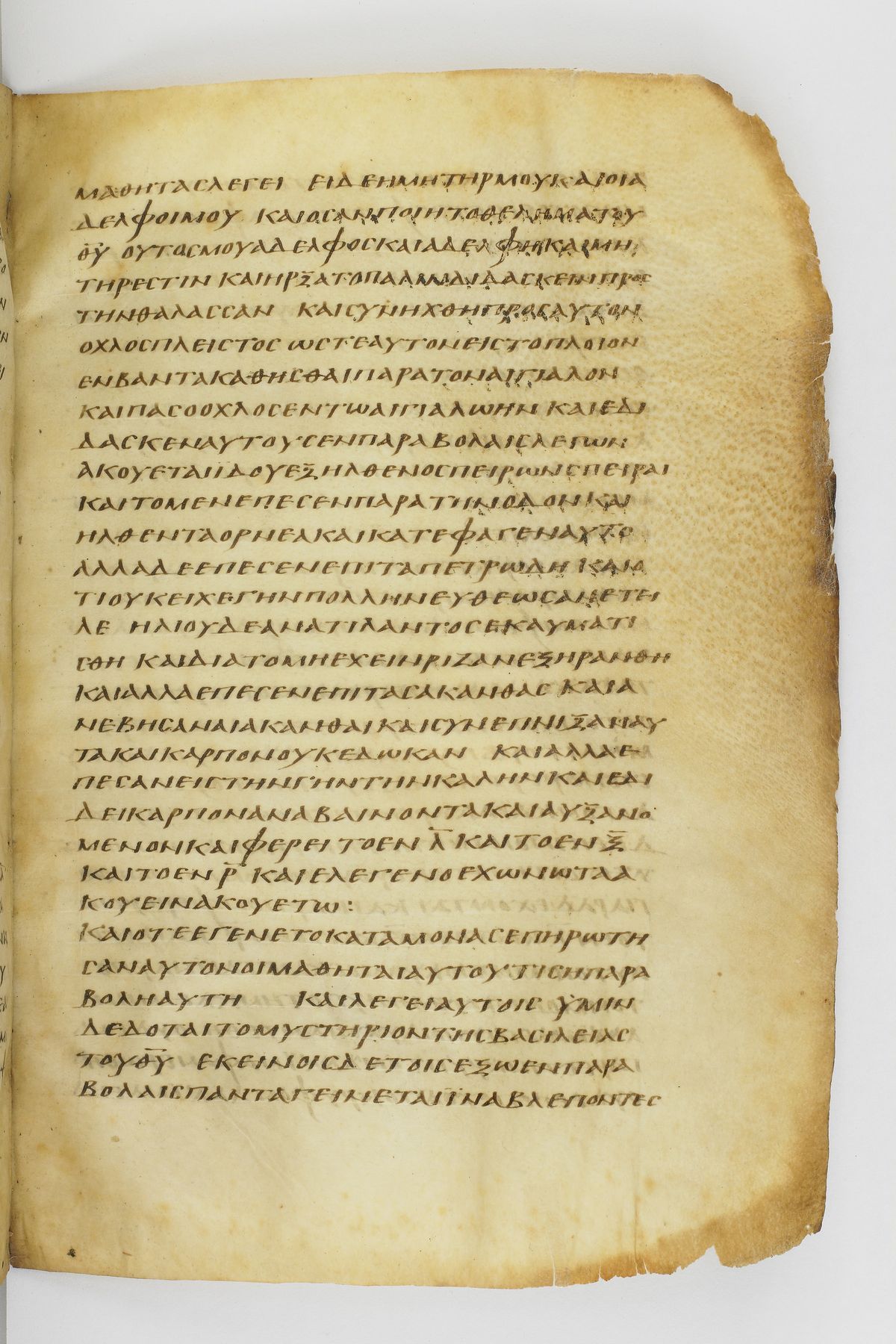
Mark 4 from Codex Washingtonianus (the Freer Gospels, Gregory-Aland 032, Freer Gallery of Art F1906.274), a parchment codex of the four Gospels written in Egypt in the late 4th or early 5th century and bought by Charles Lang Freer from the dealer Ali Arabi at Giza in 1906. It is one of the oldest nearly complete Gospel books in existence. The Gospels stand in the so-called Western order, Matthew, John, Luke, Mark, and the text is famously block-mixed: the copyist drew on several exemplars of different textual character, so the text type changes in blocks within a single Gospel. After Mark 16:14 the codex carries the Freer Logion, a saying found in no other manuscript. Two passages are lost to damage: Mark 15:13-37 and John 14:26-16:6.
- Scan: each section is shown with the actual page of the codex that carries those verses, from the Freer Gallery's own photographs of F1906.274 served by the Smithsonian IIIF service (ids.si.edu). Which page holds which verse comes from the verse index of the Center for the Study of New Testament Manuscripts (CSNTM), whose photographs of the codex are the same shots; every CSNTM page was matched to its Smithsonian image by pixel comparison before use. Where a verse begins on one page and ends on the next, both pages are listed. For this chapter the page of each verse is taken from the transcription itself, which records where every page begins; CSNTM's index confirms which photograph shows that page.
- Greek: the manuscript's own text, from a diplomatic transcription (see Greek text below), with Tischendorf's 8th critical edition (1869) for comparison.
- English: the King James Version (1611, public domain), verbatim from bible-api.com. The KJV translates the later Byzantine text, so it will not always match the Greek shown or the reading of the codex.
Greek text: a diplomatic transcription of Codex Washingtonianus made by the Institut für Neutestamentliche Textforschung (INTF), Münster, for the New Testament Virtual Manuscript Room (NTVMR), published under a Creative Commons Attribution 4.0 licence. It gives the letters as the first scribe wrote them: no accents or breathings, the scribe's own spelling, and the sacred names in their contracted form (θς for θεος, ις for ιησους, κς for κυριος; the overline is not reproduced). Corrections by later hands are not shown. Letters in square brackets are not legible on the page and were restored by the transcribers, a dot under a letter marks an uncertain reading, and [...] marks text lost to damage. Beneath each section, for comparison, is Tischendorf's 8th critical edition (1869). Where the two differ, the transcription is what the manuscript says. Each section is shown with the page on which the transcription places its verses.
How was this verified? (Provenance)
Where on the image
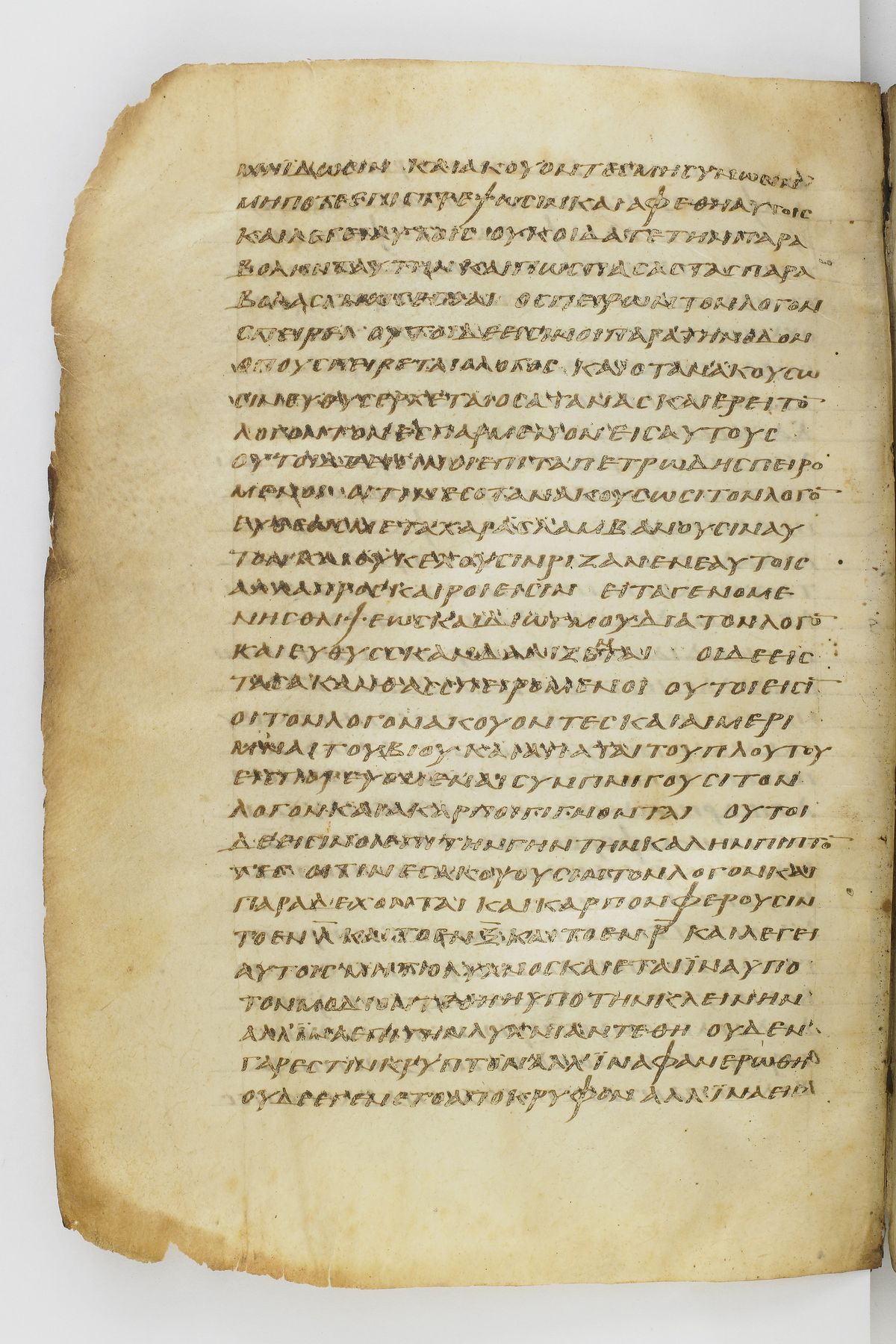
Page from the NTVMR transcription (docID 20032): verses 1-12 on CSNTM GA_032_0323; verse 12 continues on CSNTM GA_032_0324 (which begins 'μη ιδωσιν και').
1και ηρξατο παλιν διδασκειν προς την θαλασσαν και συνηχθη προς αυτον οχλος πλειστος ωστε αυτον εις το πλοιον ενβαντα καθησθαι παρα τον αιγιαλον και πας ο οχλος εν τω αιγιαλω ην 2και εδιδασκεν αυτους εν παραβολαις λεγων 3ακουεται ιδου εξηλθεν ο σπειρων σπειραι 4και το μεν επεσεν παρα την οδον και ηλθεν τα ορνεα και κατεφαγεν αυτο 5αλλα δε επεσεν επι τα πετρωδη και οτι ουκ ειχε γην πολλην ευθεως ανετειλε 6ηλιου δε ανατιλαντος εκαυματισθη και δια το μη εχειν ριζαν εξηρανθη 7και αλλα επεσεν επι τας ακανθας και ανεβησαν αι ακανθαι και συνεπνιξαν αυτα και καρπον ουκ εδωκαν 8και αλλα επεσαν εις την γην την καλην και εδιδει καρπον αναβαινοντα και αυξανομενον και φερει το εν λ και το εν ξ και το εν ρ 9και ελεγεν ο εχων ωτα ακουειν ακουετω : 10και οτε εγενετο κατα μονας επηρωτησαν αυτον οι μαθηται αυτου τις η παραβολη αυτη 11και λεγει αυτοις υμιν δεδοται το μυστηριον της βασιλειας του θυ εκεινοις δε τοις εξω εν παραβολαις παντα γεινεται 12ινα βλεποντες μη ιδωσιν και ακουοντες μη συνωσιν μηποτε επιστρεψωσιν και αφεθη αυτοις
Compare: Tischendorf 8th edition (1869)
1Καὶ πάλιν ἤρξατο διδάσκειν παρὰ τὴν θάλασσαν. καὶ συνάγεται πρὸς αὐτὸν ὄχλος πλεῖστος, ὥστε αὐτὸν εἰς πλοῖον ἐμβάντα καθῆσθαι ἐν τῇ θαλάσσῃ, καὶ πᾶς ὁ ὄχλος πρὸς τὴν θάλασσαν ἐπὶ τῆς γῆς ἦσαν. 2καὶ ἐδίδασκεν αὐτοὺς ἐν παραβολαῖς πολλά, καὶ ἔλεγεν αὐτοῖς ἐν τῇ διδαχῇ αὐτοῦ· 3ἀκούετε. ἰδοὺ ἐξῆλθεν ὁ σπείρων σπεῖραι. 4καὶ ἐγένετο ἐν τῷ σπείρειν ὃ μὲν ἔπεσεν παρὰ τὴν ὁδόν, καὶ ἦλθεν τὰ πετεινὰ καὶ κατέφαγεν αὐτό. 5καὶ ἄλλο ἔπεσεν ἐπὶ τὸ πετρῶδες, ὅπου οὐκ εἶχεν γῆν πολλήν, καὶ εὐθὺς ἐξανέτειλεν διὰ τὸ μὴ ἔχειν βάθος γῆς· 6καὶ ὅτε ἀνέτειλεν ὁ ἥλιος, ἐκαυματίσθη, καὶ διὰ τὸ μὴ ἔχειν ῥίζαν ἐξηράνθη. 7καὶ ἄλλο ἔπεσεν εἰς τὰς ἀκάνθας, καὶ ἀνέβησαν αἱ ἄκανθαι καὶ συνέπνιξαν αὐτό, καὶ καρπὸν οὐκ ἔδωκεν. 8καὶ ἄλλα ἔπεσεν εἰς τὴν γῆν τὴν καλήν, καὶ ἐδίδου καρπὸν ἀναβαίνοντα καὶ αὐξανόμενον, καὶ ἔφερεν εἰς τριάκοντα καὶ εἰς ἑξήκοντα καὶ εἰς ἑκατόν. 9καὶ ἔλεγεν· ὃς ἔχει ὦτα ἀκούειν, ἀκουέτω. 10Καὶ ὅτε ἐγένετο κατὰ μόνας, ἠρώτουν αὐτὸν οἱ περὶ αὐτὸν σὺν τοῖς δώδεκα τὰς παραβολάς. 11καὶ ἔλεγεν αὐτοῖς· ὑμῖν τὸ μυστήριον δέδοται τῆς βασιλείας τοῦ θεοῦ· ἐκείνοις δὲ τοῖς ἔξω ἐν παραβολαῖς πάντα γίνεται, 12ἵνα βλέποντες βλέπωσιν καὶ μὴ ἴδωσιν, καὶ ἀκούοντες ἀκούωσιν καὶ μὴ συνιῶσιν, μήποτε ἐπιστρέψωσιν καὶ ἀφεθῇ αὐτοῖς.
1And he began again to teach by the sea side: and there was gathered unto him a great multitude, so that he entered into a ship, and sat in the sea; and the whole multitude was by the sea on the land. 2And he taught them many things by parables, and said unto them in his doctrine, 3Hearken; Behold, there went out a sower to sow: 4And it came to pass, as he sowed, some fell by the way side, and the fowls of the air came and devoured it up. 5And some fell on stony ground, where it had not much earth; and immediately it sprang up, because it had no depth of earth: 6But when the sun was up, it was scorched; and because it had no root, it withered away. 7And some fell among thorns, and the thorns grew up, and choked it, and it yielded no fruit. 8And other fell on good ground, and did yield fruit that sprang up and increased; and brought forth, some thirty, and some sixty, and some an hundred. 9And he said unto them, He that hath ears to hear, let him hear. 10And when he was alone, they that were about him with the twelve asked of him the parable. 11And he said unto them, Unto you it is given to know the mystery of the kingdom of God: but unto them that are without, all these things are done in parables: 12That seeing they may see, and not perceive; and hearing they may hear, and not understand; lest at any time they should be converted, and their sins should be forgiven them.
Where on the image
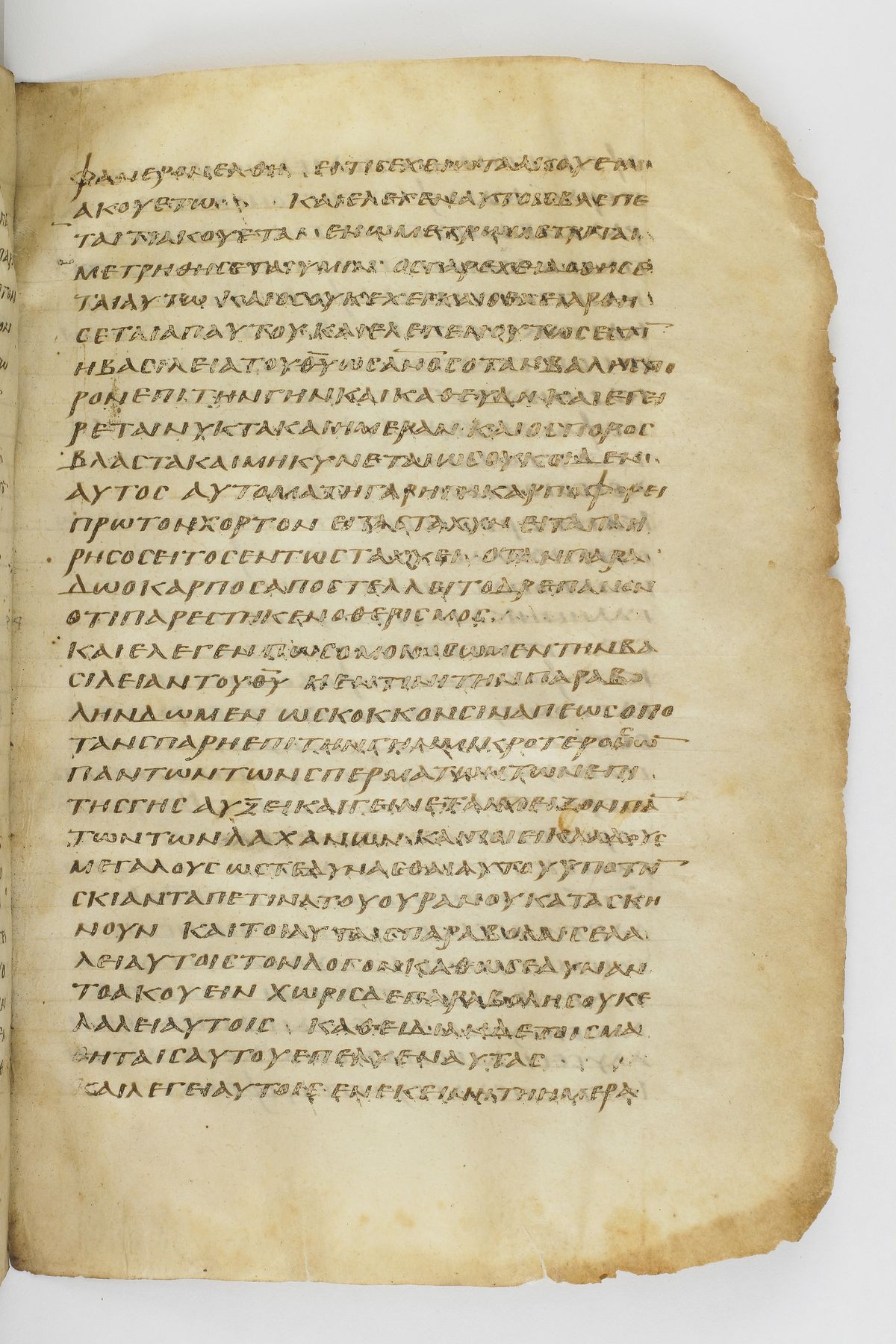
Page from the NTVMR transcription (docID 20032): verses 13-22 on CSNTM GA_032_0324; verse 22 continues on CSNTM GA_032_0325 (which begins 'φανερον ελθη').
13και λεγει αυτοις · ουκ οιδατε την παραβολην ταυτην και πως πασας τας παραβολας γνωσεσθαι 14ο σπειρων τον λογον σπειρει · 15ουτοι δε εισιν οι παρα την οδον οπου σπειρεται ο λογος και οταν ακουσωσιν ευθυς ερχεται ο σατανας και ερει τον λογον τον εσπαρμενον εις αυτους 16ουτοι δε εισιν οι επι τα πετρωδη σπειρομενοι οιτινες οταν ακουσωσι τον λογον ευθεως μετα χαρας λαμβανουσιν αυτον 17και ουκ εχουσιν ριζαν εν εαυτοις αλλα προσκαιροι εισιν ειτα γενομενης θλιψεως και διωγμου δια τον λογον και ευθυς σκανδαλιζεται · 18οι δε εις τας ακανθας σπειρομενοι ουτοι εισιν οι τον λογον ακουοντες 19και αι μεριμναι του βιου και απαται του πλουτου εισπορευομεναι συνπνιγουσι τον λογον και ακαρποι γιγνονται 20ουτοι δε εισιν οι επι την γην την καλην πιπτοντες οιτινες ακουουσιν τον λογον και παραδεχονται και καρπον φερουσιν το εν λ και το εν ξ και το εν ρ 21και λεγει αυτοις μητι ο λυχνος καιεται ινα υπο τον μοδιον τεθη η υπο την κλεινην αλλ ινα επι την λυχνιαν τεθη 22ουδεν γαρ εστιν κρυπτον αλλ ινα φανερωθη ουδε εγενετο αποκρυφον αλλ ινα εις φανερον ελθη
Compare: Tischendorf 8th edition (1869)
13καὶ λέγει αὐτοῖς· οὐκ οἴδατε τὴν παραβολὴν ταύτην, καὶ πῶς πάσας τὰς παραβολὰς γνώσεσθε; 14ὁ σπείρων τὸν λόγον σπείρει. 15οὗτοι δέ εἰσίν οἱ παρὰ τὴν ὁδὸν ὅπου σπείρεται ὁ λόγος, καὶ ὅταν ἀκούσωσιν εὐθὺς ἔρχεται ὁ σατανᾶς καὶ αἴρει τὸν λόγον τὸν ἐσπαρμένον ἐν αὐτοῖς. 16καὶ οὗτοί ὁμοίως εἰσίν οἱ ἐπὶ τὰ πετρώδη σπειρόμενοι, οἳ ὅταν ἀκούσωσιν τὸν λόγον εὐθὺς μετὰ χαρᾶς λαμβάνουσιν αὐτόν, 17καὶ οὐκ ἔχουσιν ῥίζαν ἐν ἑαυτοῖς ἀλλὰ πρόσκαιροί εἰσίν, εἶτα γενομένης θλίψεως ἢ διωγμοῦ διὰ τὸν λόγον εὐθὺς σκανδαλίζονται. 18καὶ ἄλλοι εἰσὶν οἱ ἐπί τὰς ἀκάνθας σπειρόμενοι· οὗτοί εἰσίν οἱ τὸν λόγον ἀκούσαντες, 19καὶ αἱ μέριμναι τοῦ αἰῶνος καὶ ἡ ἀπάτη τοῦ πλούτου καὶ αἱ περὶ τὰ λοιπὰ ἐπιθυμίαι εἰσπορευόμεναι συνπνίγουσιν τὸν λόγον, καὶ ἄκαρπος γίνεται. 20καὶ ἐκεῖνοί εἰσίν οἱ ἐπὶ τὴν γῆν τὴν καλὴν σπαρέντες, οἵτινες ἀκούουσιν τὸν λόγον καὶ παραδέχονται καὶ καρποφοροῦσιν ἓν τριάκοντα καὶ ἓν ἑξήκοντα καὶ ἓν ἑκατόν. 21Καὶ ἔλεγεν αὐτοῖς ὅτι μήτι ἔρχεται ὁ λύχνος ἵνα ὑπὸ τὸν μόδιον τεθῇ ἢ ὑπὸ τὴν κλίνην; οὐχ ἵνα ἐπὶ τὴν λυχνίαν τεθῇ; 22οὐ γάρ ἐστιν τι κρυπτὸν, ἐὰν μὴ ἵνα φανερωθῇ· οὐδὲ ἐγένετο ἀπόκρυφον, ἀλλ’ ἵνα ἔλθῃ εἰς φανερόν.
13And he said unto them, Know ye not this parable? and how then will ye know all parables? 14The sower soweth the word. 15And these are they by the way side, where the word is sown; but when they have heard, Satan cometh immediately, and taketh away the word that was sown in their hearts. 16And these are they likewise which are sown on stony ground; who, when they have heard the word, immediately receive it with gladness; 17And have no root in themselves, and so endure but for a time: afterward, when affliction or persecution ariseth for the word’s sake, immediately they are offended. 18And these are they which are sown among thorns; such as hear the word, 19And the cares of this world, and the deceitfulness of riches, and the lusts of other things entering in, choke the word, and it becometh unfruitful. 20And these are they which are sown on good ground; such as hear the word, and receive it, and bring forth fruit, some thirtyfold, some sixty, and some an hundred. 21And he said unto them, Is a candle brought to be put under a bushel, or under a bed? and not to be set on a candlestick? 22For there is nothing hid, which shall not be manifested; neither was any thing kept secret, but that it should come abroad.
Where on the image
Page from the NTVMR transcription (docID 20032): verses 23-29 on CSNTM GA_032_0325.
23ει τις εχει ωτα ακουειν · ακουετω 24και ελεγεν αυτοις βλεπεται τι ακουεται · εν ω μετρω μετριται μετρηθησεται υμιν · 25ος γαρ εχει δοθησεται αυτω και ος ουκ εχει και ο εχει αρθησεται απ αυτου · 26και ελεγεν ουτως εστιν η βασιλεια του θυ ως ανος οταν βαλη σπορον επι την γην 27και καθευδη και εγειρεται νυκτα και ημεραν και ο σπορος βλαστα και μηκυνεται ως ουκ οιδεν αυτος 28αυτοματη γαρ η γη καρποφορει πρωτον χορτον ειτα σταχυν ειτα πληρης ο σειτος εν τω σταχυει 29οταν παραδω ο καρπος αποστελλει το δρεπανον οτι παρεστηκεν ο θερισμος .
Compare: Tischendorf 8th edition (1869)
23εἴ τις ἔχει ὦτα ἀκούειν, ἀκουέτω. 24Καὶ ἔλεγεν αὐτοῖς· βλέπετε τί ἀκούετε. ἐν ᾧ μέτρῳ μετρεῖτε μετρηθήσεται ὑμῖν καὶ προστεθήσεται ὑμῖν. 25ὃς γὰρ ἔχει, δοθήσεται αὐτῷ· καὶ ὃς οὐκ ἔχει, καὶ ὃ ἔχει ἀρθήσεται ἀπ’ αὐτοῦ. 26Καὶ ἔλεγεν· οὕτως ἐστὶν ἡ βασιλεία τοῦ θεοῦ, ὡς ἄνθρωπος βάλῃ τὸν σπόρον ἐπὶ τῆς γῆς, 27καὶ καθεύδῃ καὶ ἐγείρηται νύκτα καὶ ἡμέραν, καὶ ὁ σπόρος βλαστᾷ καὶ μηκύνηται ὡς οὐκ οἶδεν αὐτός. 28αὐτομάτη ἡ γῆ καρποφορεῖ, πρῶτον χόρτον, εἶτεν στάχυν, εἶτεν πλήρης σῖτος ἐν τῷ στάχυϊ. 29ὅταν δὲ παραδοῖ ὁ καρπός, εὐθὺς ἀποστέλλει τὸ δρέπανον, ὅτι παρέστηκεν ὁ θερισμός.
23If any man have ears to hear, let him hear. 24And he said unto them, Take heed what ye hear: with what measure ye mete, it shall be measured to you: and unto you that hear shall more be given. 25For he that hath, to him shall be given: and he that hath not, from him shall be taken even that which he hath. 26And he said, So is the kingdom of God, as if a man should cast seed into the ground; 27And should sleep, and rise night and day, and the seed should spring and grow up, he knoweth not how. 28For the earth bringeth forth fruit of herself; first the blade, then the ear, after that the full corn in the ear. 29But when the fruit is brought forth, immediately he putteth in the sickle, because the harvest is come.
Where on the image
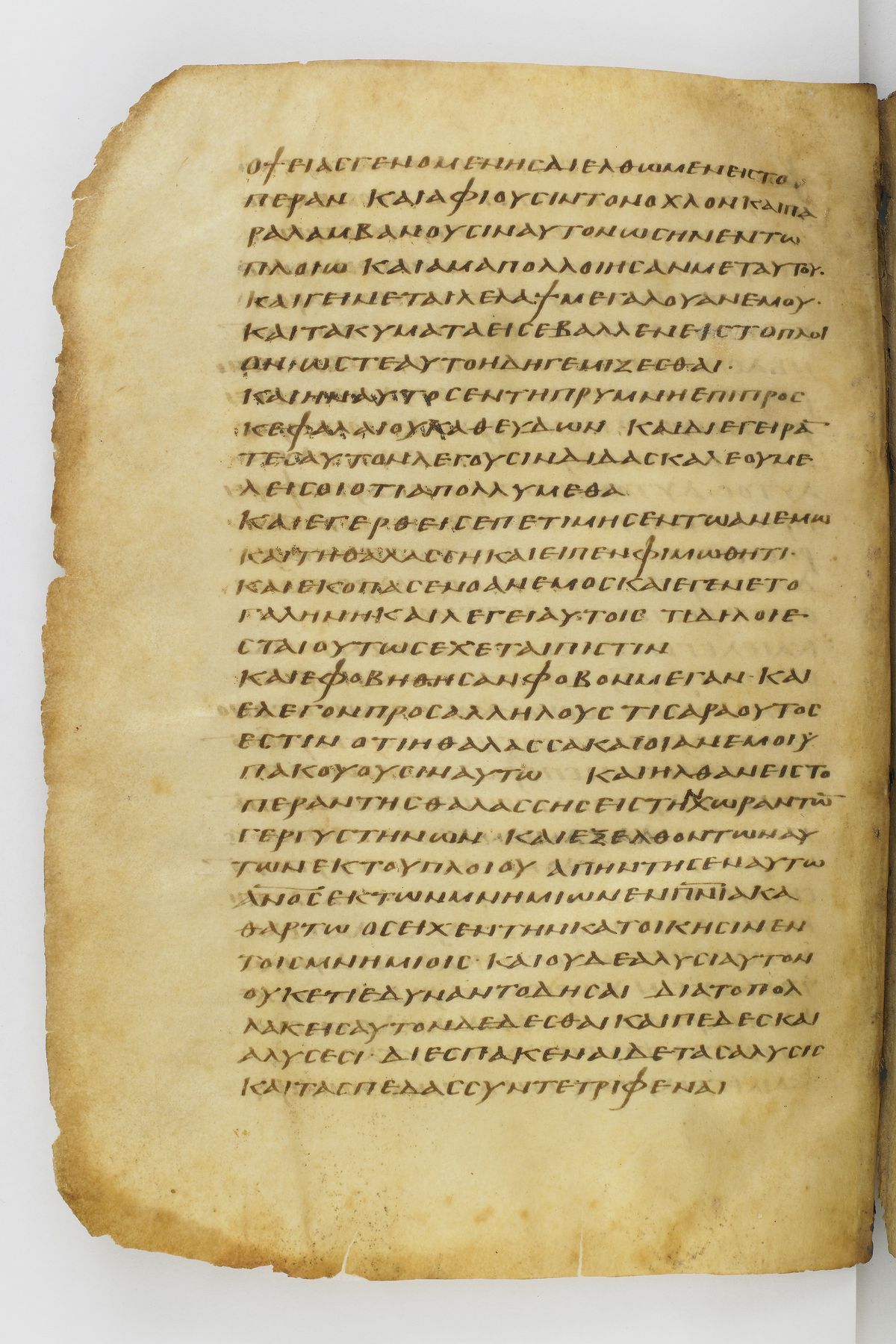
Page from the NTVMR transcription (docID 20032): verses 30-35 on CSNTM GA_032_0325; verse 35 continues on CSNTM GA_032_0326 (which begins 'οψειας γενομενης διελθωμεν').
30και ελεγεν πως ομοιωσωμεν την βασιλειαν του θυ η εν τινι την παραβολην δωμεν 31ως κοκκον σιναπεως οποταν σπαρη επι την γην μικροτερον ων παντων των σπερματων των επι της γης 32αυξει και γεινεται μειζον παντων των λαχανων . και ποιει κλαδους μεγαλους ωστε δυνασθαι αυτου υπο την σκιαν τα πετινα του ουρανου κατασκηνουν 33και τοιαυταις παραβολαις ελαλει αυτοις τον λογον καθως εδυναντο ακουειν 34χωρις δε παραβολης ουκ ελαλει αυτοις καθ ειδιαν δε τοις μαθηταις αυτου επελυεν αυτας 35και λεγει αυτοις εν εκεινη τη ημερα οψειας γενομενης διελθωμεν εις το περαν
Compare: Tischendorf 8th edition (1869)
30Καὶ ἔλεγεν· πῶς ὁμοιώσωμεν τὴν βασιλείαν τοῦ θεοῦ, ἢ ἐν τίνι αὐτὴν παραβολῇ θῶμεν; 31ὡς κόκκῳ σινάπεως, ὃς ὅταν σπαρῇ ἐπὶ τῆς γῆς, μικρότερον ὂν πάντων τῶν σπερμάτων τῶν ἐπὶ τῆς γῆς, 32καὶ ὅταν σπαρῇ, ἀναβαίνει καὶ γίνεται μεῖζον πάντων τῶν λαχάνων, καὶ ποιεῖ κλάδους μεγάλους, ὥστε δύνασθαι ὑπὸ τὴν σκιὰν αὐτοῦ τὰ πετεινὰ τοῦ οὐρανοῦ κατασκηνοῦν. 33Καὶ τοιαύταις παραβολαῖς πολλαῖς ἐλάλει αὐτοῖς τὸν λόγον, καθὼς ἠδύναντο ἀκούειν· 34χωρὶς δὲ παραβολῆς οὐκ ἐλάλει αὐτοῖς, κατ’ ἰδίαν δὲ τοῖς ἰδίοις μαθηταῖς ἐπέλυεν πάντα. 35Καὶ λέγει αὐτοῖς ἐν ἐκείνῃ τῇ ἡμέρᾳ ὀψίας γενομένης· διέλθωμεν εἰς τὸ πέραν.
30And he said, Whereunto shall we liken the kingdom of God? or with what comparison shall we compare it? 31It is like a grain of mustard seed, which, when it is sown in the earth, is less than all the seeds that be in the earth: 32But when it is sown, it groweth up, and becometh greater than all herbs, and shooteth out great branches; so that the fowls of the air may lodge under the shadow of it. 33And with many such parables spake he the word unto them, as they were able to hear it. 34But without a parable spake he not unto them: and when they were alone, he expounded all things to his disciples. 35And the same day, when the even was come, he saith unto them, Let us pass over unto the other side.
Where on the image
Page from the NTVMR transcription (docID 20032): verses 36-41 on CSNTM GA_032_0326.
36και αφιουσιν τον οχλον και παραλαμβανουσιν αυτον ως ην εν τω πλοιω και αμα πολλοι ησαν μετ αυτου · 37και γεινεται λελαψ μεγαλου ανεμου · και τα κυματα εισεβαλλεν εις το πλοιον ωστε αυτο ηδη γεμιζεσθαι · 38και ην αυτος εν τη πρυμνη επι προσκεφαλαιου καθευδων και διεγειραντες αυτον λεγουσιν διδασκαλε ου μελει σοι οτι απολλυμεθα 39και εγερθεις επετιμησεν τω ανεμω και τη θαλασση και ειπεν φιμωθητι · και εκοπασεν ο ανεμος και εγενετο γαληνη · 40και λεγει αυτοις τι διλοι εσται ουτως εχεται πιστιν 41και εφοβηθησαν φοβον μεγαν · και ελεγον προς αλληλους τις αρα ουτος εστιν οτι η θαλασσα και οι ανεμοι υπακουουσιν αυτω
Compare: Tischendorf 8th edition (1869)
36καὶ ἀφέντες τὸν ὄχλον παραλαμβάνουσιν αὐτὸν ὡς ἦν ἐν τῷ πλοίῳ, καὶ ἄλλα πλοῖα ἦσαν μετ’ αὐτοῦ. 37καὶ γίνεται λαῖλαψ μεγάλη ἀνέμου, καὶ τὰ κύματα ἐπέβαλλεν εἰς τὸ πλοῖον, ὥστε ἤδη γεμίζεσθαι τὸ πλοῖον. 38καὶ ἦν αὐτὸς ἐν τῇ πρύμνῃ ἐπὶ τὸ προσκεφάλαιον καθεύδων· καὶ ἐγείρουσιν αὐτὸν καὶ λέγουσιν αὐτῷ· διδάσκαλε, οὐ μέλει σοι ὅτι ἀπολλύμεθα; 39καὶ διεγερθεὶς ἐπετίμησεν τῷ ἀνέμῳ καὶ εἶπεν τῇ θαλάσσῃ· σιώπα, πεφίμωσο. καὶ ἐκόπασεν ὁ ἄνεμος, καὶ ἐγένετο γαλήνη μεγάλη. 40καὶ εἶπεν αὐτοῖς· τί δειλοί ἐστε οὕτως; πῶς οὐκ ἔχετε πίστιν; 41καὶ ἐφοβήθησαν φόβον μέγαν, καὶ ἔλεγον πρὸς ἀλλήλους· τίς ἄρα οὗτός ἐστιν, ὅτι καὶ ὁ ἄνεμος καὶ ἡ θάλασσα αὐτῷ ὑπακούει;
36And when they had sent away the multitude, they took him even as he was in the ship. And there were also with him other little ships. 37And there arose a great storm of wind, and the waves beat into the ship, so that it was now full. 38And he was in the hinder part of the ship, asleep on a pillow: and they awake him, and say unto him, Master, carest thou not that we perish? 39And he arose, and rebuked the wind, and said unto the sea, Peace, be still. And the wind ceased, and there was a great calm. 40And he said unto them, Why are ye so fearful? how is it that ye have no faith? 41And they feared exceedingly, and said one to another, What manner of man is this, that even the wind and the sea obey him?
Cite
Sources
- Source: Codex Washingtonianus page images + NTVMR transcription (CC BY 4.0) + Tischendorf 8th edition + KJV (holding institution)
- Critical edition: Codex Washingtonianus transcription, NTVMR (INTF Münster, CC BY 4.0); Tischendorf 8th edition for comparison
← previous · → next · v cycle view · l back to library