Hebrews, Chapter 2 (Codex Alexandrinus)
Introduction
Hebrews 2 from Codex Alexandrinus (GA 02), a fifth-century Greek Bible held by the British Library (Royal MS 1 D. VIII). In the New Testament it is the chief witness to the Byzantine text in the Gospels and to the Alexandrian text in the rest of the New Testament. Its New Testament volume lacks Matthew 1:1-25:5, John 6:50-8:52 and 2 Corinthians 4:13-12:6.
This entry meets the strict three-criteria standard of the Theosis Library:
- Manuscript scan: the actual page(s) of Codex Alexandrinus containing this passage (folio 139v), reproduced from the British Museum's 1909 photographic facsimile edited by F. G. Kenyon, as digitised by the Getty Research Institute for the Internet Archive. The facsimile prints the verse range beneath each plate; that printed range was read for every page used and agrees with the INTF's NTVMR verse-level page index (CC BY 4.0). The page for each section now comes from the NTVMR transcription itself, which records the page and column on which every verse is written.
- Original text: the manuscript's own text, from a diplomatic transcription (see Greek text below), with Tischendorf's 8th critical edition (1869) for comparison.
- English translation: the King James Version (1611), retrieved verbatim from the public-domain bible-api.com endpoint.
Greek text: a diplomatic transcription of Codex Alexandrinus made by the Institut für Neutestamentliche Textforschung (INTF), Münster, for the New Testament Virtual Manuscript Room (NTVMR), published under a Creative Commons Attribution 4.0 licence. It gives the letters as the first scribe wrote them: no accents or breathings, the scribe's own spelling, and the sacred names in their contracted form (θς for θεος, ις for ιησους, κς for κυριος; the overline is not reproduced). Corrections by later hands are not shown. Letters in square brackets are not legible on the page and were restored by the transcribers, a dot under a letter marks an uncertain reading, and [...] marks text lost to damage. Beneath each section, for comparison, is Tischendorf's 8th critical edition (1869). Where the two differ, the transcription is what the manuscript says. Each section is shown with the page on which the transcription places its verses.
How was this verified? (Provenance)
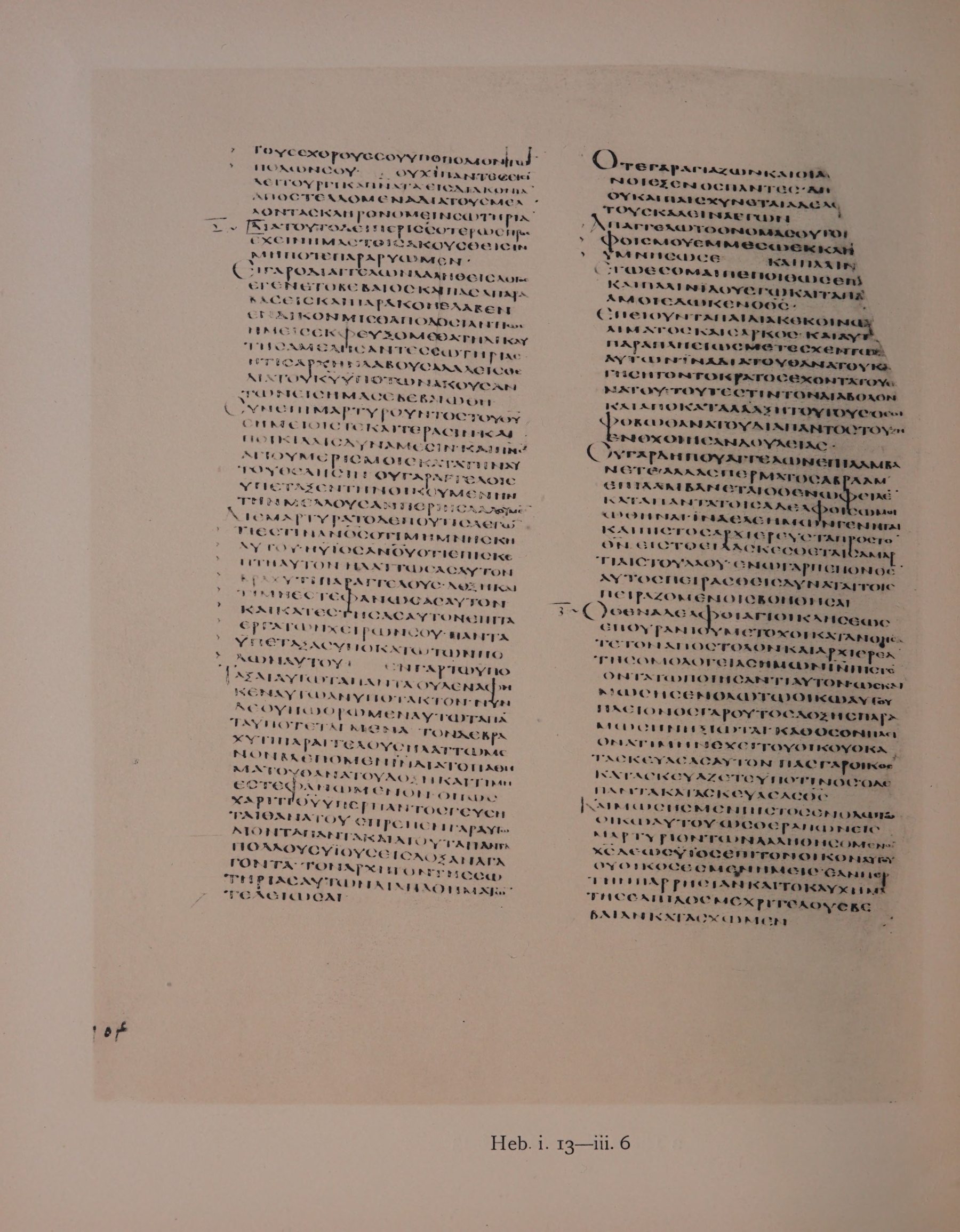
Where on the image
Page from the NTVMR transcription (docID 20002): verses 1-10 on fol. 139v (facsimile leaf 240), col. 1.
1δια τουτο δει περισσοτερως προσεχειν ημας τοις ακουσθεισιν μηποτε παραρυωμεν · 2ει γαρ ο δι αγγελων λαληθεις λογος εγενετο βεβαιος και πασα παραβασεις και παρακοη ελαβεν ενδικον μισθαποδοσιαν · 3πως ημεις εκφευξομεθα τηλικαυτης αμελησαντες σωτηριας ητις αρχην λαβουσα λαλεισθε δια του κυ υπο των ακουσαντων εις ημας εβεβαιωθη · 4συνεπιμαρτυρουντος του θυ σημειοις τε και τερασιν · και ποικιλαις δυναμεσιν · και πνς αγιου μερισμοις κατα την αυτου θελησιν · 5ου γαρ αγγελοις υπεταξεν την οικουμενην την μελλουσαν περι ης λαλουμεν · 6διεμαρτυρατο δε που τις λεγων τι εστιν ανος οτι μημνησκη αυτου · η υιος ανου οτι επισκεπτη αυτον · 7ηλαττωσας αυτον βραχυ τι παρ αγγελους · δοξη και τιμη εστεφανωσας αυτον · και κατεστησας αυτον επι τα εργα των χειρων σου · 8παντα υπεταξας υποκατω των ποδων αυτου · εν γαρ τω υποταξαι αυτω τα παντα · ουδεν αφηκεν αυτω ανυποτακτον · νυν δε ουπω ορωμεν αυτω τα παντα υποτεταγμενα · 9τον δε βραχυ τι παρ αγγελους ηλαττωμενον βλεπομεν ιν δια το παθημα του θανατου δοξη και τιμη εστεφανωμενον · οπως χαριτι θυ υπερ παντος γευσηται θανατου 10επρεπεν γαρ αυτω δι ον τα παντα και δι ου τα παντα πολλους υιους εις δοξαν αγαγοντα · τον αρχηγον της σωτηριας αυτων δια παθηματων τελειωσαι ·
Compare: Tischendorf 8th edition (1869)
1Διὰ τοῦτο δεῖ περισσοτέρως προσέχειν ἡμᾶς τοῖς ἀκουσθεῖσιν, μήποτε παραρυῶμεν. 2εἰ γὰρ ὁ δι’ ἀγγέλων λαληθεὶς λόγος ἐγένετο βέβαιος, καὶ πᾶσα παράβασις καὶ παρακοὴ ἔλαβεν ἔνδικον μισθαποδοσίαν, 3πῶς ἡμεῖς ἐκφευξόμεθα τηλικαύτης ἀμελήσαντες σωτηρίας; ἥτις, ἀρχὴν λαβοῦσα λαλεῖσθαι διὰ τοῦ κυρίου, ὑπὸ τῶν ἀκουσάντων εἰς ἡμᾶς ἐβεβαιώθη, 4συνεπιμαρτυροῦντος τοῦ θεοῦ σημείοις τε καὶ τέρασιν καὶ ποικίλαις δυνάμεσιν καὶ πνεύματος ἁγίου μερισμοῖς κατὰ τὴν αὐτοῦ θέλησιν. 5Οὐ γὰρ ἀγγέλοις ὑπέταξεν τὴν οἰκουμένην τὴν μέλλουσαν, περὶ ἧς λαλοῦμεν. 6διεμαρτύρατο δέ πού τις λέγων, τί ἐστιν ἄνθρωπος ὅτι μιμνῄσκῃ αὐτοῦ, ἢ υἱὸς ἀνθρώπου ὅτι ἐπισκέπτῃ αὐτόν; 7ἠλάττωσας αὐτὸν βραχύ τι παρ’ ἀγγέλους, δόξῃ καὶ τιμῇ ἐστεφάνωσας αὐτόν, 8πάντα ὑπέταξας ὑποκάτω τῶν ποδῶν αὐτοῦ. ἐν τῷ γὰρ ὑποτάξαι αὐτῷ τὰ πάντα οὐδὲν ἀφῆκεν αὐτῷ ἀνυπότακτον. νῦν δὲ οὔπω ὁρῶμεν αὐτῷ τὰ πάντα ὑποτεταγμένα· 9τὸν δὲ βραχύ τι παρ’ ἀγγέλους ἠλαττωμένον βλέπομεν Ἰησοῦν διὰ τὸ πάθημα τοῦ θανάτου δόξῃ καὶ τιμῇ ἐστεφανωμένον, ὅπως χάριτι θεοῦ ὑπὲρ παντὸς γεύσηται θανάτου. 10ἔπρεπεν γὰρ αὐτῷ, δι’ ὃν τὰ πάντα καὶ δι’ οὗ τὰ πάντα, πολλοὺς υἱοὺς εἰς δόξαν ἀγαγόντα τὸν ἀρχηγὸν τῆς σωτηρίας αὐτῶν διὰ παθημάτων τελειῶσαι.
1Therefore we ought to give the more earnest heed to the things which we have heard, lest at any time we should let them slip. 2For if the word spoken by angels was stedfast, and every transgression and disobedience received a just recompence of reward; 3How shall we escape, if we neglect so great salvation; which at the first began to be spoken by the Lord, and was confirmed unto us by them that heard him; 4God also bearing them witness, both with signs and wonders, and with divers miracles, and gifts of the Holy Ghost, according to his own will? 5For unto the angels hath he not put in subjection the world to come, whereof we speak. 6But one in a certain place testified, saying, What is man, that thou art mindful of him? or the son of man, that thou visitest him? 7Thou madest him a little lower than the angels; thou crownedst him with glory and honour, and didst set him over the works of thy hands: 8Thou hast put all things in subjection under his feet. For in that he put all in subjection under him, he left nothing that is not put under him. But now we see not yet all things put under him. 9But we see Jesus, who was made a little lower than the angels for the suffering of death, crowned with glory and honour; that he by the grace of God should taste death for every man. 10For it became him, for whom are all things, and by whom are all things, in bringing many sons unto glory, to make the captain of their salvation perfect through sufferings.
Where on the image
Page from the NTVMR transcription (docID 20002): verses 11-18 on fol. 139v (facsimile leaf 240), col. 2.
11ο τε γαρ αγιαζων και οι α[γιαζομε]νοι εξ ενος παντες · δι η̣[ν] [αιτιαν] ουκ αιπαισχυνεται αδελφ̣[ους] [αυ]τους καλειν 12λεγων απαγγελω το ονομα σου τοι[ς] [αδελ]φοις μου εμμεσω εκκλη[σιας] υμνησω σε · 13και παλιν εγω εσομαι πεποιθως επ [αυτω] και παλιν ιδου εγω και τα πα[ιδια] α μοι εδωκεν ο θς · 14επει ουν τα παιδια κεκοινω[νηκεν] αιματος και σαρκος · και αυτ[ος] παραπλησιως μετεσχεν τω[ν] αυτων · ινα δια του θανατου κα[ταρ]γηση τον το κρατος εχοντα του θ[α]νατου · τουτ εστιν τον διαβολον 15και αποκαταλλαξη τουτους · οσοι φοβω θανατου δια παντος του ζην̣ ενοχοι ησαν δουλειας · 16ου γαρ δηπου αγγελων επιλαμβανετε · αλλα σπερματος αβρααμ επιλαμβανεται 17οθεν ωφειλεν κατα παντα τοις αδελφοις ωμοιωθηναι · ινα ελεημων γενηται και πιστος αρχιερευς τα προς τον θν εις το ειλασκεσθε ταις αμαρτιαις του λαου · 18εν ω γαρ πεπονθεν αυτος πειρασθεις δυναται τοις πειραζομενοις βοηθησαι
Compare: Tischendorf 8th edition (1869)
11ὁ τε γὰρ ἁγιάζων καὶ οἱ ἁγιαζόμενοι ἐξ ἑνὸς πάντες· δι’ ἣν αἰτίαν οὐκ ἐπαισχύνεται ἀδελφοὺς αὐτοὺς καλεῖν, 12λέγων, ἀπαγγελῶ τὸ ὄνομά σου τοῖς ἀδελφοῖς μου, ἐν μέσῳ ἐκκλησίας ὑμνήσω σε· 13καὶ πάλιν, ἐγὼ ἔσομαι πεποιθὼς ἐπ’ αὐτῷ· καὶ πάλιν, ἰδοὺ ἐγὼ καὶ τὰ παιδία ἅ μοι ἔδωκεν ὁ θεός. 14ἐπεὶ οὖν τὰ παιδία κεκοινώνηκεν αἵματος καὶ σαρκός, καὶ αὐτὸς παραπλησίως μετέσχεν τῶν αὐτῶν, ἵνα διὰ τοῦ θανάτου καταργήσῃ τὸν τὸ κράτος ἔχοντα τοῦ θανάτου, τοῦτ’ ἔστιν τὸν διάβολον, 15καὶ ἀπαλλάξῃ τούτους, ὅσοι φόβῳ θανάτου διὰ παντὸς τοῦ ζῆν ἔνοχοι ἦσαν δουλίας. 16οὐ γὰρ δήπου ἀγγέλων ἐπιλαμβάνεται, ἀλλὰ σπέρματος Ἀβραὰμ ἐπιλαμβάνεται. 17ὅθεν ὤφειλεν κατὰ πάντα τοῖς ἀδελφοῖς ὁμοιωθῆναι, ἵνα ἐλεήμων γένηται καὶ πιστὸς ἀρχιερεὺς τὰ πρὸς τὸν θεόν, εἰς τὸ ἱλάσκεσθαι τὰς ἁμαρτίας τοῦ λαοῦ· 18ἐν ᾧ γὰρ πέπονθεν αὐτὸς πειρασθείς, δύναται τοῖς πειραζομένοις βοηθῆσαι.
11For both he that sanctifieth and they who are sanctified are all of one: for which cause he is not ashamed to call them brethren, 12Saying, I will declare thy name unto my brethren, in the midst of the church will I sing praise unto thee. 13And again, I will put my trust in him. And again, Behold I and the children which God hath given me. 14Forasmuch then as the children are partakers of flesh and blood, he also himself likewise took part of the same; that through death he might destroy him that had the power of death, that is, the devil; 15And deliver them who through fear of death were all their lifetime subject to bondage. 16For verily he took not on him the nature of angels; but he took on him the seed of Abraham. 17Wherefore in all things it behoved him to be made like unto his brethren, that he might be a merciful and faithful high priest in things pertaining to God, to make reconciliation for the sins of the people. 18For in that he himself hath suffered being tempted, he is able to succour them that are tempted.
Cite
Sources
- Source: Codex Alexandrinus page images + NTVMR transcription (CC BY 4.0) + Tischendorf 8th edition + KJV (holding institution)
- Critical edition: Codex Alexandrinus transcription, NTVMR (INTF Münster, CC BY 4.0); Tischendorf 8th edition for comparison
← previous · → next · v cycle view · l back to library