John, Chapter 17 (Codex Alexandrinus)
Introduction
John 17 from Codex Alexandrinus (GA 02), a fifth-century Greek Bible held by the British Library (Royal MS 1 D. VIII). In the New Testament it is the chief witness to the Byzantine text in the Gospels and to the Alexandrian text in the rest of the New Testament. Its New Testament volume lacks Matthew 1:1-25:5, John 6:50-8:52 and 2 Corinthians 4:13-12:6.
This entry meets the strict three-criteria standard of the Theosis Library:
- Manuscript scan: the actual page(s) of Codex Alexandrinus containing this passage (folios 78v, 79r), reproduced from the British Museum's 1909 photographic facsimile edited by F. G. Kenyon, as digitised by the Getty Research Institute for the Internet Archive. The facsimile prints the verse range beneath each plate; that printed range was read for every page used and agrees with the INTF's NTVMR verse-level page index (CC BY 4.0). The page for each section now comes from the NTVMR transcription itself, which records the page and column on which every verse is written.
- Original text: the manuscript's own text, from a diplomatic transcription (see Greek text below), with Tischendorf's 8th critical edition (1869) for comparison.
- English translation: the King James Version (1611), retrieved verbatim from the public-domain bible-api.com endpoint.
Greek text: a diplomatic transcription of Codex Alexandrinus made by the Institut für Neutestamentliche Textforschung (INTF), Münster, for the New Testament Virtual Manuscript Room (NTVMR), published under a Creative Commons Attribution 4.0 licence. It gives the letters as the first scribe wrote them: no accents or breathings, the scribe's own spelling, and the sacred names in their contracted form (θς for θεος, ις for ιησους, κς for κυριος; the overline is not reproduced). Corrections by later hands are not shown. Letters in square brackets are not legible on the page and were restored by the transcribers, a dot under a letter marks an uncertain reading, and [...] marks text lost to damage. Beneath each section, for comparison, is Tischendorf's 8th critical edition (1869). Where the two differ, the transcription is what the manuscript says. Each section is shown with the page on which the transcription places its verses.
How was this verified? (Provenance)
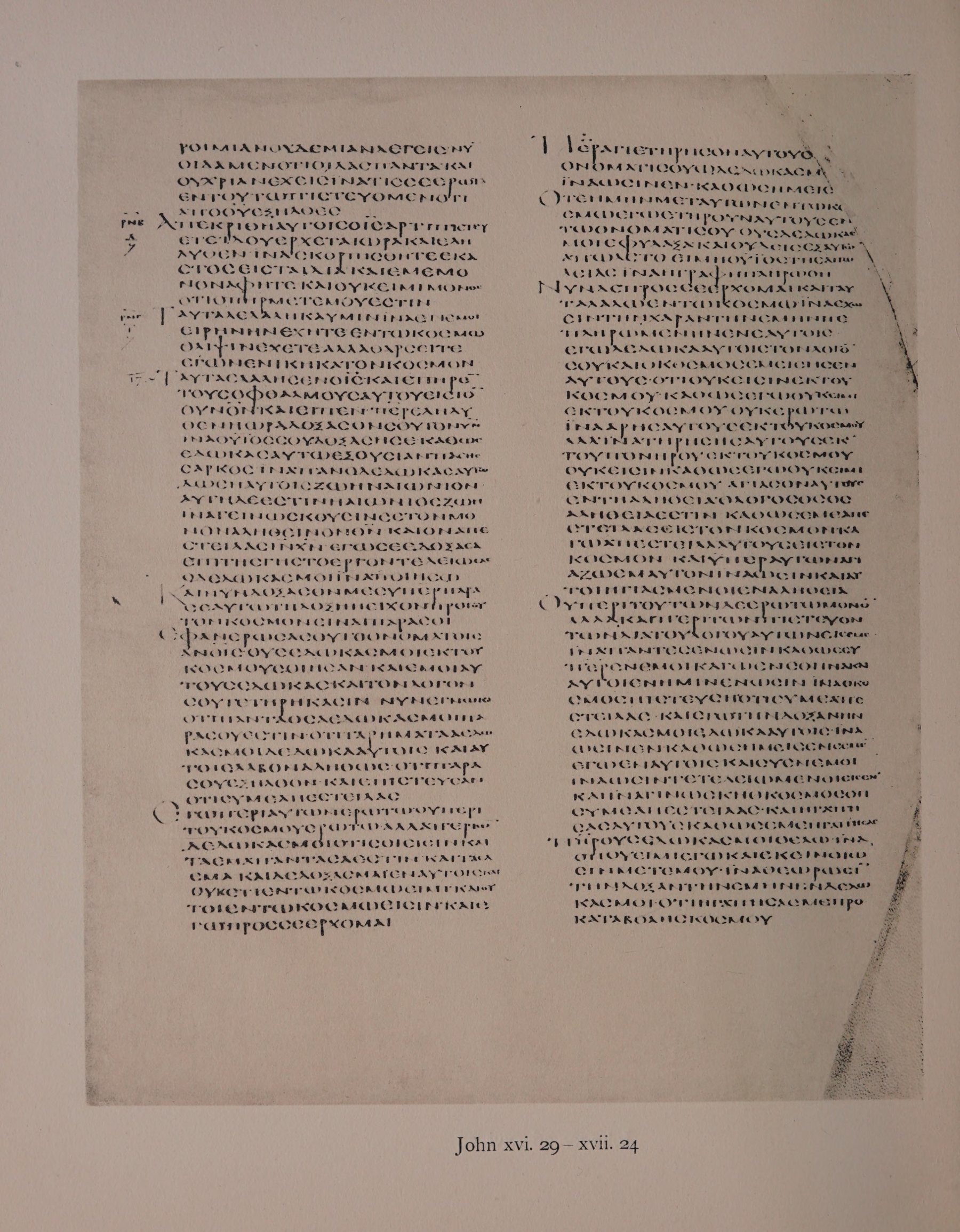
Where on the image
Page from the NTVMR transcription (docID 20002): verses 1-11 on fol. 78v (facsimile leaf 118), col. 1.
1ταυτα ελαλησεν ο ις · και επηρεν τους οφθαλμους αυτου εις τον ουνον · και ειπεν · περ εληλυθεν η ωρα δοξασον σου τον υν ινα ο υιος σου δοξαση σε · 2καθως εδωκας αυτω εξουσιαν πασης σαρκος · ινα παν ο δεδωκας αυτω δωση αυτοις ζωην αιωνιον · 3αυτη δε εστιν η αιωνιος ζωη ινα γεινωσκουσιν σε τον μονον αληθεινον θν · και ον απεστειλας ιν χν · 4εγω σε εδοξασα επι της γης το εργον τελειωσας ο δεδωκας μοι ινα ποιησω 5και νυν δοξασον με συ περ παρα σεαυτω τη δοξη η ειχον προ του τον κοσμον ειναι παρα σοι 6εφανερωσα σου το ονομα τοις ανοις · ους εδωκας μοι εκ του κοσμου σοι ησαν · και εμοι αυτους εδωκας · και τον λογον σου τετηρηκασιν · 7νυν εγνωκα[ν] οτι παντα οσα εδωκας μοι παρα σου εστιν · 8οτι τα ρηματα α εδωκας μοι δεδωκα αυτοις · και αυτοι ελαβον αληθως · οτι παρα σου εξηλθον · και επιστευσαν οτι συ με απεστειλας · 9εγω περι αυτων ερωτω ου περι του κοσμου ερωτω · αλλα περι ων δεδωκας μοι οτι σοι εισιν 10και τα εμα παντα σα εστιν · και τα σα εμα · και δεδοξασμαι εν αυτοις 11[και] ετι εν τω κοσμω ειμι · και ουτοι εν τω κοσμω εισιν · και εγω προς σε ερχομαι περ αγιε τηρησον αυτους [εν] [τω] ονοματι σου ω δεδωκας μ[οι] ινα ωσιν εν · καθως ημεις
Compare: Tischendorf 8th edition (1869)
1Ταῦτα ἐλάλησεν Ἰησοῦς, καὶ ἐπάρας τοὺς ὀφθαλμοὺς αὐτοῦ εἰς τὸν οὐρανὸν εἶπεν· πάτερ, ἐλήλυθεν ἡ ὥρα· δόξασόν σου τὸν υἱόν, ἵνα ὁ υἱὸς δοξάσῃ σέ, 2καθὼς ἔδωκας αὐτῷ ἐξουσίαν πάσης σαρκός, ἵνα πᾶν ὃ δέδωκας αὐτῷ δώσῃ αὐτοῖς ζωὴν αἰώνιον. 3αὕτη δέ ἐστιν ἡ αἰώνιος ζωή, ἵνα γινώσκωσιν σὲ τὸν μόνον ἀληθινὸν θεὸν καὶ ὃν ἀπέστειλας Ἰησοῦν Χριστόν. 4ἐγώ σε ἐδόξασα ἐπὶ τῆς γῆς, τὸ ἔργον τελειώσας ὃ δέδωκάς μοι ἵνα ποιήσω· 5καὶ νῦν δόξασόν με σύ, πάτερ, παρὰ σεαυτῷ τῇ δόξῃ ᾗ εἶχον πρὸ τοῦ τὸν κόσμον εἶναι παρὰ σοί. 6Ἐφανέρωσά σου τὸ ὄνομα τοῖς ἀνθρώποις οὓς ἔδωκάς μοι ἐκ τοῦ κόσμου. σοὶ ἦσαν καὶ ἐμοὶ αὐτοὺς ἔδωκας, καὶ τὸν λόγον σου τετήρηκαν· 7νῦν ἔγνωκαν ὅτι πάντα ὅσα δέδωκάς μοι παρὰ σοῦ εἰσίν· 8ὅτι τὰ ῥήματα ἃ ἔδωκάς μοι δέδωκα αὐτοῖς, καὶ αὐτοὶ ἔλαβον, καὶ ἔγνωσαν ἀληθῶς ὅτι παρὰ σοῦ ἐξῆλθον, καὶ ἐπίστευσαν ὅτι σύ με ἀπέστειλας. 9ἐγὼ περὶ αὐτῶν ἐρωτῶ· οὐ περὶ τοῦ κόσμου ἐρωτῶ, ἀλλὰ περὶ ὧν δέδωκάς μοι, ὅτι σοί εἰσίν, 10καὶ τὰ ἐμὰ πάντα σά ἐστιν καὶ τὰ σὰ ἐμά, καὶ δεδόξασμαι ἐν αὐτοῖς. 11καὶ οὐκέτι εἰμὶ ἐν τῷ κόσμῳ, καὶ αὐτοὶ ἐν τῷ κόσμῳ εἰσίν, κἀγὼ πρὸς σὲ ἔρχομαι. πάτερ ἅγιε, τήρησον αὐτοὺς ἐν τῷ ὀνόματί σου ᾧ δέδωκάς μοι, ἵνα ὦσιν ἓν καθὼς ἡμεῖς.
1These words spake Jesus, and lifted up his eyes to heaven, and said, Father, the hour is come; glorify thy Son, that thy Son also may glorify thee: 2As thou hast given him power over all flesh, that he should give eternal life to as many as thou hast given him. 3And this is life eternal, that they might know thee the only true God, and Jesus Christ, whom thou hast sent. 4I have glorified thee on the earth: I have finished the work which thou gavest me to do. 5And now, O Father, glorify thou me with thine own self with the glory which I had with thee before the world was. 6I have manifested thy name unto the men which thou gavest me out of the world: thine they were, and thou gavest them me; and they have kept thy word. 7Now they have known that all things whatsoever thou hast given me are of thee. 8For I have given unto them the words which thou gavest me; and they have received them, and have known surely that I came out from thee, and they have believed that thou didst send me. 9I pray for them: I pray not for the world, but for them which thou hast given me; for they are thine. 10And all mine are thine, and thine are mine; and I am glorified in them. 11And now I am no more in the world, but these are in the world, and I come to thee. Holy Father, keep through thine own name those whom thou hast given me, that they may be one, as we are.
Where on the image
Page from the NTVMR transcription (docID 20002): verses 12-18 on fol. 78v (facsimile leaf 118), col. 2.
12οτε ημην μετ αυτων εν τω κο̣σμω εγω ετηρουν αυτους εν τω ονοματι σου · ους δεδωκας μοι εφυλαξα · και ουδεις εξ αυτων απωλετο ει μη ο υιος της απωλειας · ινα η γραφη πληρωθη 13νυν δε προς σε ερχομαι · και ταυτα λαλω εν τω κοσμω · ινα εχωσιν την χαραν την εμην πεπληρωμενην εν εαυτοις · 14εγω δεδωκα αυτοις τον λογον σου και ο κοσμος εμεισησεν αυτους · οτι ουκ εισιν εκ του κοσμου · καθως εγω ουκ ειμι εκ του κοσμου · 15ουκ ερωτω ινα αρης αυτους εκ του κοσμου αλλ ινα τηρησης αυτους εκ του πονηρου 16εκ του κοσμου ουκ εισιν · καθως εγω ουκ ειμι εκ του κοσμου · 17αγιασον αυτους εν τη αληθεια · ο λογος ο σος αληθεια εστιν · 18καθως εμε απεστειλας εις τον κοσμον · καγω απεστειλα αυτους εις τον κοσμον ·
Compare: Tischendorf 8th edition (1869)
12ὅτε ἤμην μετ’ αὐτῶν ἐγὼ ἐτήρουν αὐτοὺς ἐν τῷ ὀνόματί σου ᾧ δέδωκάς μοι, καὶ ἐφύλαξα, καὶ οὐδεὶς ἐξ αὐτῶν ἀπώλετο εἰ μὴ ὁ υἱὸς τῆς ἀπωλείας, ἵνα ἡ γραφὴ πληρωθῇ. 13νῦν δὲ πρὸς σὲ ἔρχομαι, καὶ ταῦτα λαλῶ ἐν τῷ κόσμῳ ἵνα ἔχωσιν τὴν χαρὰν τὴν ἐμὴν πεπληρωμένην ἐν ἑαυτοῖς. 14ἐγὼ δέδωκα αὐτοῖς τὸν λόγον σου, καὶ ὁ κόσμος ἐμίσησεν αὐτούς, ὅτι οὐκ εἰσὶν ἐκ τοῦ κόσμου καθὼς ἐγὼ οὐκ εἰμὶ ἐκ τοῦ κόσμου. 15οὐκ ἐρωτῶ ἵνα ἄρῃς αὐτοὺς ἐκ τοῦ κόσμου ἀλλ’ ἵνα τηρήσῃς αὐτοὺς ἐκ τοῦ πονηροῦ. 16ἐκ τοῦ κόσμου οὐκ εἰσὶν καθὼς ἐγὼ οὐκ εἰμὶ ἐκ τοῦ κόσμου. 17ἁγίασον αὐτοὺς ἐν τῇ ἀληθείᾳ· ὁ λόγος ὁ σὸς ἀλήθειά ἐστιν. 18καθὼς ἐμὲ ἀπέστειλας εἰς τὸν κόσμον, κἀγὼ ἀπέστειλα αὐτοὺς εἰς τὸν κόσμον·
12While I was with them in the world, I kept them in thy name: those that thou gavest me I have kept, and none of them is lost, but the son of perdition; that the scripture might be fulfilled. 13And now come I to thee; and these things I speak in the world, that they might have my joy fulfilled in themselves. 14I have given them thy word; and the world hath hated them, because they are not of the world, even as I am not of the world. 15I pray not that thou shouldest take them out of the world, but that thou shouldest keep them from the evil. 16They are not of the world, even as I am not of the world. 17Sanctify them through thy truth: thy word is truth. 18As thou hast sent me into the world, even so have I also sent them into the world.
Where on the image
Page from the NTVMR transcription (docID 20002): verses 19-24 on fol. 78v (facsimile leaf 118), col. 2.
19και υπερ αυτων αγιαζω εμαυτον ινα ωσιν και αυτοι ηγιασμενοι εν αληθεια · 20ου περι τουτων δε ερωτω μονον αλλα και περι των πιστευοντων δια του λογου αυτων εις εμε · 21ινα παντες εν ωσιν · καθως συ περ εν εμοι · καγω εν σοι ινα και αυτοι εν ημιν εν ωσιν · ινα ο κοσμος πιστευση οτι συ με απεστειλας · 22και εγω την δοξαν ην εδωκας μοι εδωκα αυτοις · ινα ωσιν εν · καθως ημεις εν εσμεν 23εγω εν αυτοις · και συ εν εμοι ινα ωσιν τετελειωμενοι εις εν · και ινα γινωσκη ο κοσμος οτι συ με απεστειλας · και ηγαπησας αυτους καθως εμε ηγαπησας 24πηρ ους εδωκας μοι θελω · ινα οπου ειμι εγω και εκεινοι ωσιν μετ εμου · ινα θεωρωσιν την δοξαν την εμην ην δεδωκας μοι · οτι ηγαπησας με προ καταβολης κοσμου ·
Compare: Tischendorf 8th edition (1869)
19καὶ ὑπὲρ αὐτῶν ἁγιάζω ἐμαυτόν, ἵνα ὦσιν καὶ αὐτοὶ ἡγιασμένοι ἐν ἀληθείᾳ. 20Οὐ περὶ τούτων δὲ ἐρωτῶ μόνον, ἀλλὰ καὶ περὶ τῶν πιστευόντων διὰ τοῦ λόγου αὐτῶν εἰς ἐμέ, 21ἵνα πάντες ἓν ὦσιν, καθὼς σύ πατὴρ ἐν ἐμοὶ κἀγὼ ἐν σοί, ἵνα καὶ αὐτοὶ ἐν ἡμῖν ὦσιν, ἵνα ὁ κόσμος πιστεύῃ ὅτι σύ με ἀπέστειλας. 22κἀγὼ τὴν δόξαν ἣν δέδωκάς μοι δέδωκα αὐτοῖς, ἵνα ὦσιν ἓν καθὼς ἡμεῖς ἕν· 23ἐγὼ ἐν αὐτοῖς καὶ σὺ ἐν ἐμοί, ἵνα ὦσιν τετελειωμένοι εἰς ἕν, ἵνα γινώσκῃ ὁ κόσμος ὅτι σύ με ἀπέστειλας καὶ ἠγάπησας αὐτοὺς καθὼς ἐμὲ ἠγάπησας. 24πατήρ, ὃ δέδωκάς μοι, θέλω ἵνα ὅπου εἰμὶ ἐγὼ κἀκεῖνοι ὦσιν μετ’ ἐμοῦ, ἵνα θεωρῶσιν τὴν δόξαν τὴν ἐμήν, ἣν δέδωκάς μοι, ὅτι ἠγάπησάς με πρὸ καταβολῆς κόσμου.
19And for their sakes I sanctify myself, that they also might be sanctified through the truth. 20Neither pray I for these alone, but for them also which shall believe on me through their word; 21That they all may be one; as thou, Father, art in me, and I in thee, that they also may be one in us: that the world may believe that thou hast sent me. 22And the glory which thou gavest me I have given them; that they may be one, even as we are one: 23I in them, and thou in me, that they may be made perfect in one; and that the world may know that thou hast sent me, and hast loved them, as thou hast loved me. 24Father, I will that they also, whom thou hast given me, be with me where I am; that they may behold my glory, which thou hast given me: for thou lovedst me before the foundation of the world.
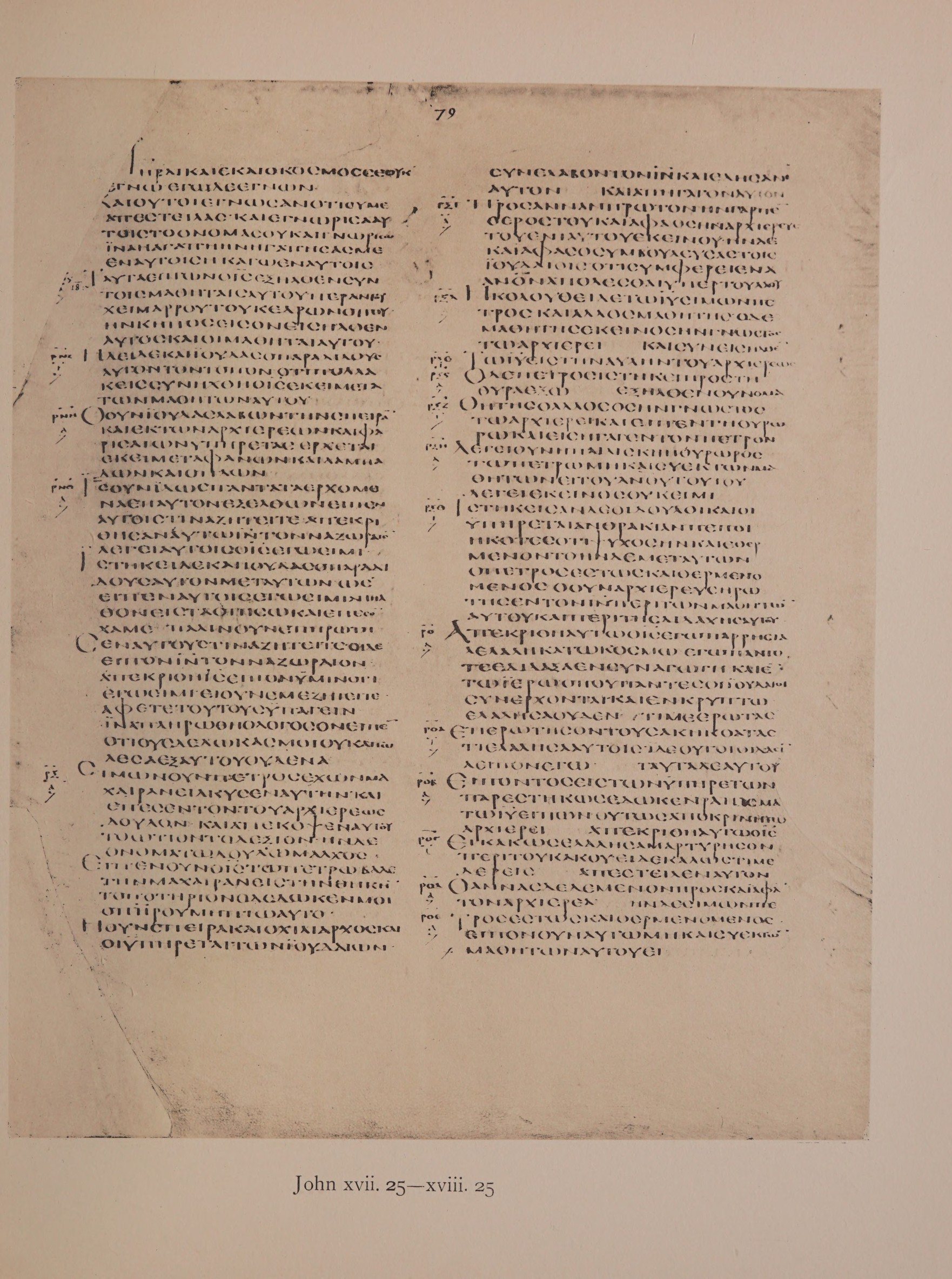
Where on the image
Page from the NTVMR transcription (docID 20002): verses 25-26 on fol. 79r (facsimile leaf 119), col. 1.
25πηρ δικαιε και ο κοσμος σε ουκ εγνω · εγω δε εγνων · κ̣αι ουτοι εγνωσαν οτι συ με απεστειλας · 26και εγνωρισα αυτοις το ονομα σου και γνωρισω ινα η αγαπη ην ηγαπησας με εν αυτοις η καγω εν αυτοις
Compare: Tischendorf 8th edition (1869)
25πατήρ δίκαιε, καὶ ὁ κόσμος σε οὐκ ἔγνω, ἐγὼ δέ σε ἔγνων, καὶ οὗτοι ἔγνωσαν ὅτι σύ με ἀπέστειλας· 26καὶ ἐγνώρισα αὐτοῖς τὸ ὄνομά σου καὶ γνωρίσω, ἵνα ἡ ἀγάπη ἣν ἠγάπησάς με ἐν αὐτοῖς ᾖ κἀγὼ ἐν αὐτοῖς.
25O righteous Father, the world hath not known thee: but I have known thee, and these have known that thou hast sent me. 26And I have declared unto them thy name, and will declare it: that the love wherewith thou hast loved me may be in them, and I in them.
Cite
Sources
- Source: Codex Alexandrinus page images + NTVMR transcription (CC BY 4.0) + Tischendorf 8th edition + KJV (holding institution)
- Critical edition: Codex Alexandrinus transcription, NTVMR (INTF Münster, CC BY 4.0); Tischendorf 8th edition for comparison
← previous · → next · v cycle view · l back to library