Romans, Chapter 2 (Codex Alexandrinus)
Introduction
Romans 2 from Codex Alexandrinus (GA 02), a fifth-century Greek Bible held by the British Library (Royal MS 1 D. VIII). In the New Testament it is the chief witness to the Byzantine text in the Gospels and to the Alexandrian text in the rest of the New Testament. Its New Testament volume lacks Matthew 1:1-25:5, John 6:50-8:52 and 2 Corinthians 4:13-12:6.
This entry meets the strict three-criteria standard of the Theosis Library:
- Manuscript scan: the actual page(s) of Codex Alexandrinus containing this passage (folios 111v, 112r), reproduced from the British Museum's 1909 photographic facsimile edited by F. G. Kenyon, as digitised by the Getty Research Institute for the Internet Archive. The facsimile prints the verse range beneath each plate; that printed range was read for every page used and agrees with the INTF's NTVMR verse-level page index (CC BY 4.0). The page for each section now comes from the NTVMR transcription itself, which records the page and column on which every verse is written.
- Original text: the manuscript's own text, from a diplomatic transcription (see Greek text below), with Tischendorf's 8th critical edition (1869) for comparison.
- English translation: the King James Version (1611), retrieved verbatim from the public-domain bible-api.com endpoint.
Greek text: a diplomatic transcription of Codex Alexandrinus made by the Institut für Neutestamentliche Textforschung (INTF), Münster, for the New Testament Virtual Manuscript Room (NTVMR), published under a Creative Commons Attribution 4.0 licence. It gives the letters as the first scribe wrote them: no accents or breathings, the scribe's own spelling, and the sacred names in their contracted form (θς for θεος, ις for ιησους, κς for κυριος; the overline is not reproduced). Corrections by later hands are not shown. Letters in square brackets are not legible on the page and were restored by the transcribers, a dot under a letter marks an uncertain reading, and [...] marks text lost to damage. Beneath each section, for comparison, is Tischendorf's 8th critical edition (1869). Where the two differ, the transcription is what the manuscript says. Each section is shown with the page on which the transcription places its verses.
How was this verified? (Provenance)
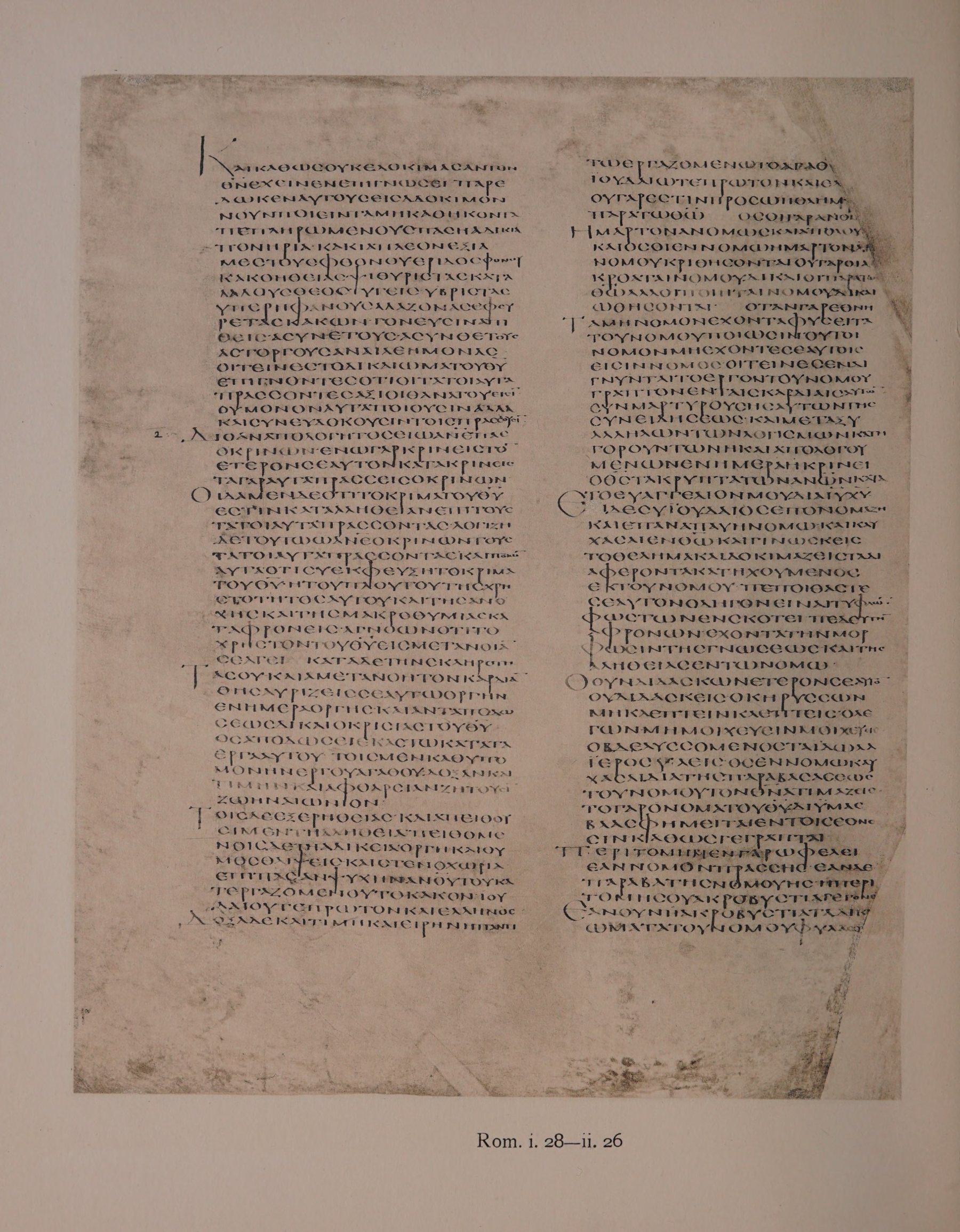
Where on the image
Page from the NTVMR transcription (docID 20002): verses 1-10 on fol. 111v (facsimile leaf 184), col. 1.
1διο αναπολογητος ει ω ανε πας ο κρινων · εν ω γαρ κρινεις τον ετερον σεαυτον κατακρινεις τα γαρ αυτα πρασσεις ο κρινων 2οιδαμεν δε οτι το κριμα του θυ εστιν κατα αληθειαν επι τους τα τοιαυτα πρασσοντας · 3λογιζη δε τουτω ω ανε ο κρινων τους τα τοιαυτα πρασσοντας και ποιων αυτα · οτι συ εκφευξη το κριμα του θυ · 4η του πλουτου της χρηστοτητος αυτου · και της ανοχης και της μακροθυμιας καταφρονεις · αγνοων οτι το χρηστον του θυ εις μετανοιαν σε αγει · 5κατα δε την σκληροτητα σου · και αμετανοητον καρδιαν θησαυριζεις σεαυτω οργην εν ημερα οργης · και ανταποδωσεως δικαιοκρισιας του θυ 6ος αποδωσει εκαστω κατα τα εργα αυτου · 7τοις μεν καθ υπομονην εργου αγαθου · δοξαν και τιμην · και αφθαρσιαν ζητουσιν ζωην αιωνιον · 8τοις δε εξ ερηθειας · και απειθουσι μεν τη αληθεια · πειθομενοις δε τη αδικεια · οργη · και θυμος 9θλιψεις · και στενοχωρια επι πασαν ψυχην ανου του κατεργαζομενου το κακον · ιουδαιου τε πρωτον και ελληνος 10δοξα δε και τιμη και ειρηνη παντι τω εργαζομενω το αγαθ[ον] ιουδαιω τε πρωτον και ελ[ληνι]
Compare: Tischendorf 8th edition (1869)
1Διὸ ἀναπολόγητος εἶ, ὦ ἄνθρωπε πᾶς ὁ κρίνων· ἐν ᾧ γὰρ κρίνεις τὸν ἕτερον, σεαυτὸν κατακρίνεις, τὰ γὰρ αὐτὰ πράσσεις ὁ κρίνων. 2οἴδαμεν γὰρ ὅτι τὸ κρίμα τοῦ θεοῦ ἐστιν κατὰ ἀλήθειαν ἐπὶ τοὺς τὰ τοιαῦτα πράσσοντας. 3λογίζῃ δὲ τοῦτο, ὦ ἄνθρωπε ὁ κρίνων τοὺς τὰ τοιαῦτα πράσσοντας καὶ ποιῶν αὐτά, ὅτι σὺ ἐκφεύξῃ τὸ κρίμα τοῦ θεοῦ; 4ἢ τοῦ πλούτου τῆς χρηστότητος αὐτοῦ καὶ τῆς ἀνοχῆς καὶ τῆς μακροθυμίας καταφρονεῖς, ἀγνοῶν ὅτι τὸ χρηστὸν τοῦ θεοῦ εἰς μετάνοιάν σε ἄγει; 5κατὰ δὲ τὴν σκληρότητά σου καὶ ἀμετανόητον καρδίαν θησαυρίζεις σεαυτῷ ὀργὴν ἐν ἡμέρᾳ ὀργῆς καὶ ἀποκαλύψεως δικαιοκρισίας τοῦ θεοῦ, 6ὃς ἀποδώσει ἑκάστῳ κατὰ τὰ ἔργα αὐτοῦ, 7τοῖς μὲν καθ’ ὑπομονὴν ἔργου ἀγαθοῦ δόξαν καὶ τιμὴν καὶ ἀφθαρσίαν ζητοῦσιν, ζωὴν αἰώνιον· 8τοῖς δὲ ἐξ ἐριθείας καὶ ἀπειθοῦσι τῇ ἀληθείᾳ πειθομένοις δὲ τῇ ἀδικίᾳ, ὀργὴ καὶ θυμός. 9θλῖψις καὶ στενοχωρία ἐπὶ πᾶσαν ψυχὴν ἀνθρώπου τοῦ κατεργαζομένου τὸ κακόν, Ἰουδαίου τε πρῶτον καὶ Ἕλληνος· 10δόξα δὲ καὶ τιμὴ καὶ εἰρήνη παντὶ τῷ ἐργαζομένῳ τὸ ἀγαθόν, Ἰουδαίῳ τε πρῶτον καὶ Ἕλληνι·
1Therefore thou art inexcusable, O man, whosoever thou art that judgest: for wherein thou judgest another, thou condemnest thyself; for thou that judgest doest the same things. 2But we are sure that the judgment of God is according to truth against them which commit such things. 3And thinkest thou this, O man, that judgest them which do such things, and doest the same, that thou shalt escape the judgment of God? 4Or despisest thou the riches of his goodness and forbearance and longsuffering; not knowing that the goodness of God leadeth thee to repentance? 5But after thy hardness and impenitent heart treasurest up unto thyself wrath against the day of wrath and revelation of the righteous judgment of God; 6Who will render to every man according to his deeds: 7To them who by patient continuance in well doing seek for glory and honour and immortality, eternal life: 8But unto them that are contentious, and do not obey the truth, but obey unrighteousness, indignation and wrath, 9Tribulation and anguish, upon every soul of man that doeth evil, of the Jew first, and also of the Gentile; 10But glory, honour, and peace, to every man that worketh good, to the Jew first, and also to the Gentile:
Where on the image
Page from the NTVMR transcription (docID 20002): verses 11-18 on fol. 111v (facsimile leaf 184), col. 2.
11ου γαρ εστιν προσωπολημ[ψια] παρα τω θω · 12οσοι γαρ ανομ̣[ως] ημαρτον ανομως και απολου[νται] και οσοι εν νομω ημαρτον δι[α] νομου κριθησονται 13ου γαρ οι ακροαται νομου δικαιοι παρα τω θω αλλ οι ποιηται νομου δικαιωθησονται · 14οταν γαρ εθνη τα μη νομον εχοντα φυσει τα του νομου ποιωσιν · ουτοι νομον μη εχοντες εαυτοις εισιν νομος · 15οιτεινες ενδιγνυνται το εργον του νομου γραπτον εν ταις καρδιαις αυτων συνμαρτυρουσης αυτων της συνειδησεως · και μεταξυ αλληλων των λογισμων κατηγορουντων η και απολογουμενων 16εν ημερα η κρινει ο θς τα κρυπτα των ανων κατα το ευαγγελιον μου δια ιυ χυ 17ει δε συ ιουδαιος επονομαζη και επαναπαυη νομω · και καυχασαι εν θω · 18και γινωσκεις το θελημα · και δοκιμαζεις τα διαφεροντα · κατηχουμενος εκ του νομου
Compare: Tischendorf 8th edition (1869)
11Οὐ γάρ ἐστιν προσωπολημψία παρὰ τῷ θεῷ. 12ὅσοι γὰρ ἀνόμως ἥμαρτον, ἀνόμως καὶ ἀπολοῦνται· καὶ ὅσοι ἐν νόμῳ ἥμαρτον, διὰ νόμου κριθήσονται· 13οὐ γὰρ οἱ ἀκροαταὶ νόμου δίκαιοι παρὰ τῷ θεῷ, ἀλλ’ οἱ ποιηταὶ νόμου δικαιωθήσονται. 14ὅταν γὰρ ἔθνη τὰ μὴ νόμον ἔχοντα φύσει τὰ τοῦ νόμου ποιῶσιν, οὗτοι νόμον μὴ ἔχοντες ἑαυτοῖς εἰσιν νόμος· 15οἵτινες ἐνδείκνυνται τὸ ἔργον τοῦ νόμου γραπτὸν ἐν ταῖς καρδίαις αὐτῶν, συνμαρτυρούσης αὐτῶν τῆς συνειδήσεως καὶ μεταξὺ ἀλλήλων τῶν λογισμῶν κατηγορούντων ἢ καὶ ἀπολογουμένων, 16ἐν ἡμέρᾳ ὅτε κρινεῖ ὁ θεὸς τὰ κρυπτὰ τῶν ἀνθρώπων κατὰ τὸ εὐαγγέλιόν μου διὰ Χριστοῦ Ἰησοῦ. 17εἰ δὲ σὺ Ἰουδαῖος ἐπονομάζῃ καὶ ἐπαναπαύῃ νόμῳ καὶ καυχᾶσαι ἐν θεῷ 18καὶ γινώσκεις τὸ θέλημα καὶ δοκιμάζεις τὰ διαφέροντα κατηχούμενος ἐκ τοῦ νόμου,
11For there is no respect of persons with God. 12For as many as have sinned without law shall also perish without law: and as many as have sinned in the law shall be judged by the law; 13(For not the hearers of the law are just before God, but the doers of the law shall be justified. 14For when the Gentiles, which have not the law, do by nature the things contained in the law, these, having not the law, are a law unto themselves: 15Which shew the work of the law written in their hearts, their conscience also bearing witness, and their thoughts the mean while accusing or else excusing one another;) 16In the day when God shall judge the secrets of men by Jesus Christ according to my gospel. 17Behold, thou art called a Jew, and restest in the law, and makest thy boast of God, 18And knowest his will, and approvest the things that are more excellent, being instructed out of the law;
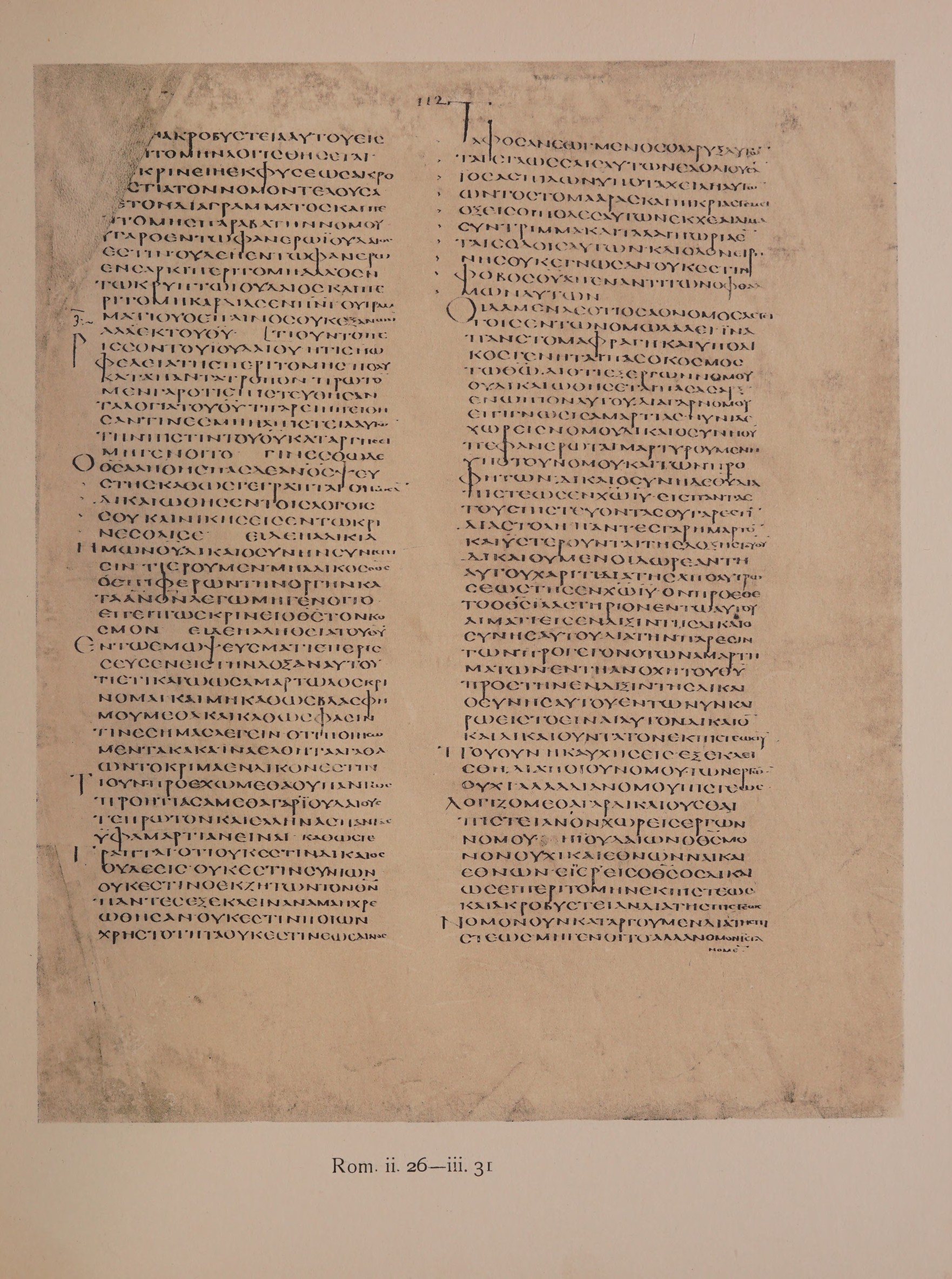
Where on the image
Page from the NTVMR transcription (docID 20002): verses 19-26 on fol. 111v (facsimile leaf 184), col. 2; verse 26 continues on fol. 112r (facsimile leaf 185), col. 1 (which begins '[ουχ] η ακροβυστεια').
19πεποιθας τε σεαυτον οδηγον ειναι τυφλων · φως των εν σκοτει 20πεδευτην αφρονων · εχοντα την μορφωσιν της γνωσεως · και της αληθειας εν τω νομω · 21ο ουν διδασκων ετερον σεαυτον ου διδασκεις · ο κηρυσσων μη κλεπτειν κλεπτεις · 22ο λεγων · μη μοιχευειν μοιχευεις · ο βδελυσσομενος τα ιδωλα ιεροσωλεις · 23ος εν νομω καυχασαι δια της παραβασασεως του νομου τον θν ατιμαζεις · 24το γαρ ονομα του θυ δι υμας βλασφημειται εν τοις εθνεσιν · καθως γεγραπται · 25[...] ωφελει εαν νομον πρασσης · εαν δε παραβατης νομου ης · η περιτομη σου ακροβυστια γεγονεν̣ 26εαν ουν η ακροβυστια τα δικ[αι]ωματα του νομου φυλασσ[η] [ουχ] η ακροβυστεια αυτου εις [περ]ιτομην λογισθησεται ·
Compare: Tischendorf 8th edition (1869)
19πέποιθάς τε σεαυτὸν ὁδηγὸν εἶναι τυφλῶν, φῶς τῶν ἐν σκότει, 20παιδευτὴν ἀφρόνων, διδάσκαλον νηπίων, ἔχοντα τὴν μόρφωσιν τῆς γνώσεως καὶ τῆς ἀληθείας ἐν τῷ νόμῳ. 21ὁ οὖν διδάσκων ἕτερον σεαυτὸν οὐ διδάσκεις; ὁ κηρύσσων μὴ κλέπτειν κλέπτεις; 22ὁ λέγων μὴ μοιχεύειν μοιχεύεις; ὁ βδελυσσόμενος τὰ εἴδωλα ἱεροσυλεῖς; 23ὃς ἐν νόμῳ καυχᾶσαι, διὰ τῆς παραβάσεως τοῦ νόμου τὸν θεὸν ἀτιμάζεις; 24τὸ γὰρ ὄνομα τοῦ θεοῦ δι’ ὑμᾶς βλασφημεῖται ἐν τοῖς ἔθνεσιν, καθὼς γέγραπται. 25περιτομὴ μὲν γὰρ ὠφελεῖ ἐὰν νόμον πράσσῃς· ἐὰν δὲ παραβάτης νόμου ᾖς, ἡ περιτομή σου ἀκροβυστία γέγονεν. 26ἐὰν οὖν ἡ ἀκροβυστία τὰ δικαιώματα τοῦ νόμου φυλάσσῃ, οὐχ ἡ ἀκροβυστία αὐτοῦ εἰς περιτομὴν λογισθήσεται;
19And art confident that thou thyself art a guide of the blind, a light of them which are in darkness, 20An instructor of the foolish, a teacher of babes, which hast the form of knowledge and of the truth in the law. 21Thou therefore which teachest another, teachest thou not thyself? thou that preachest a man should not steal, dost thou steal? 22Thou that sayest a man should not commit adultery, dost thou commit adultery? thou that abhorrest idols, dost thou commit sacrilege? 23Thou that makest thy boast of the law, through breaking the law dishonourest thou God? 24For the name of God is blasphemed among the Gentiles through you, as it is written. 25For circumcision verily profiteth, if thou keep the law: but if thou be a breaker of the law, thy circumcision is made uncircumcision. 26Therefore if the uncircumcision keep the righteousness of the law, shall not his uncircumcision be counted for circumcision?
Where on the image
Page from the NTVMR transcription (docID 20002): verses 27-29 on fol. 112r (facsimile leaf 185), col. 1.
27[και] κρινει η εκ φυσεως ακρο[βυ]στια τον νομον τελουσα [σ]ε̣ τον δια γραμματος και πε[ρ]ι̣τομης παραβατην νομου 28[ο]υ γαρ ο εν τω φανερω ιουδαιος εστιν · ουδε η εν τω φανερω εν σαρκι περιτομη 29αλλ ο εν τω κρυπτω ιουδαιος και περιτομη καρδιας εν πνι · ου γραμματι ου ο επαινος ουκ εξ ανων αλλ εκ του θυ ·
Compare: Tischendorf 8th edition (1869)
27καὶ κρινεῖ ἡ ἐκ φύσεως ἀκροβυστία τὸν νόμον τελοῦσα σὲ τὸν διὰ γράμματος καὶ περιτομῆς παραβάτην νόμου. 28οὐ γὰρ ὁ ἐν τῷ φανερῷ Ἰουδαῖός ἐστιν, οὐδὲ ἡ ἐν τῷ φανερῷ ἐν σαρκὶ περιτομή· 29ἀλλ’ ὁ ἐν τῷ κρυπτῷ Ἰουδαῖος, καὶ περιτομὴ καρδίας ἐν πνεύματι οὐ γράμματι, οὗ ὁ ἔπαινος οὐκ ἐξ ἀνθρώπων ἀλλ’ ἐκ τοῦ θεοῦ.
27And shall not uncircumcision which is by nature, if it fulfil the law, judge thee, who by the letter and circumcision dost transgress the law? 28For he is not a Jew, which is one outwardly; neither is that circumcision, which is outward in the flesh: 29But he is a Jew, which is one inwardly; and circumcision is that of the heart, in the spirit, and not in the letter; whose praise is not of men, but of God.
Cite
Sources
- Source: Codex Alexandrinus page images + NTVMR transcription (CC BY 4.0) + Tischendorf 8th edition + KJV (holding institution)
- Critical edition: Codex Alexandrinus transcription, NTVMR (INTF Münster, CC BY 4.0); Tischendorf 8th edition for comparison
← previous · → next · v cycle view · l back to library