Romans, Chapter 3 (Codex Alexandrinus)
Introduction
Romans 3 from Codex Alexandrinus (GA 02), a fifth-century Greek Bible held by the British Library (Royal MS 1 D. VIII). In the New Testament it is the chief witness to the Byzantine text in the Gospels and to the Alexandrian text in the rest of the New Testament. Its New Testament volume lacks Matthew 1:1-25:5, John 6:50-8:52 and 2 Corinthians 4:13-12:6.
This entry meets the strict three-criteria standard of the Theosis Library:
- Manuscript scan: the actual page(s) of Codex Alexandrinus containing this passage (folio 112r), reproduced from the British Museum's 1909 photographic facsimile edited by F. G. Kenyon, as digitised by the Getty Research Institute for the Internet Archive. The facsimile prints the verse range beneath each plate; that printed range was read for every page used and agrees with the INTF's NTVMR verse-level page index (CC BY 4.0). The page for each section now comes from the NTVMR transcription itself, which records the page and column on which every verse is written.
- Original text: the manuscript's own text, from a diplomatic transcription (see Greek text below), with Tischendorf's 8th critical edition (1869) for comparison.
- English translation: the King James Version (1611), retrieved verbatim from the public-domain bible-api.com endpoint.
Greek text: a diplomatic transcription of Codex Alexandrinus made by the Institut für Neutestamentliche Textforschung (INTF), Münster, for the New Testament Virtual Manuscript Room (NTVMR), published under a Creative Commons Attribution 4.0 licence. It gives the letters as the first scribe wrote them: no accents or breathings, the scribe's own spelling, and the sacred names in their contracted form (θς for θεος, ις for ιησους, κς for κυριος; the overline is not reproduced). Corrections by later hands are not shown. Letters in square brackets are not legible on the page and were restored by the transcribers, a dot under a letter marks an uncertain reading, and [...] marks text lost to damage. Beneath each section, for comparison, is Tischendorf's 8th critical edition (1869). Where the two differ, the transcription is what the manuscript says. Each section is shown with the page on which the transcription places its verses.
How was this verified? (Provenance)
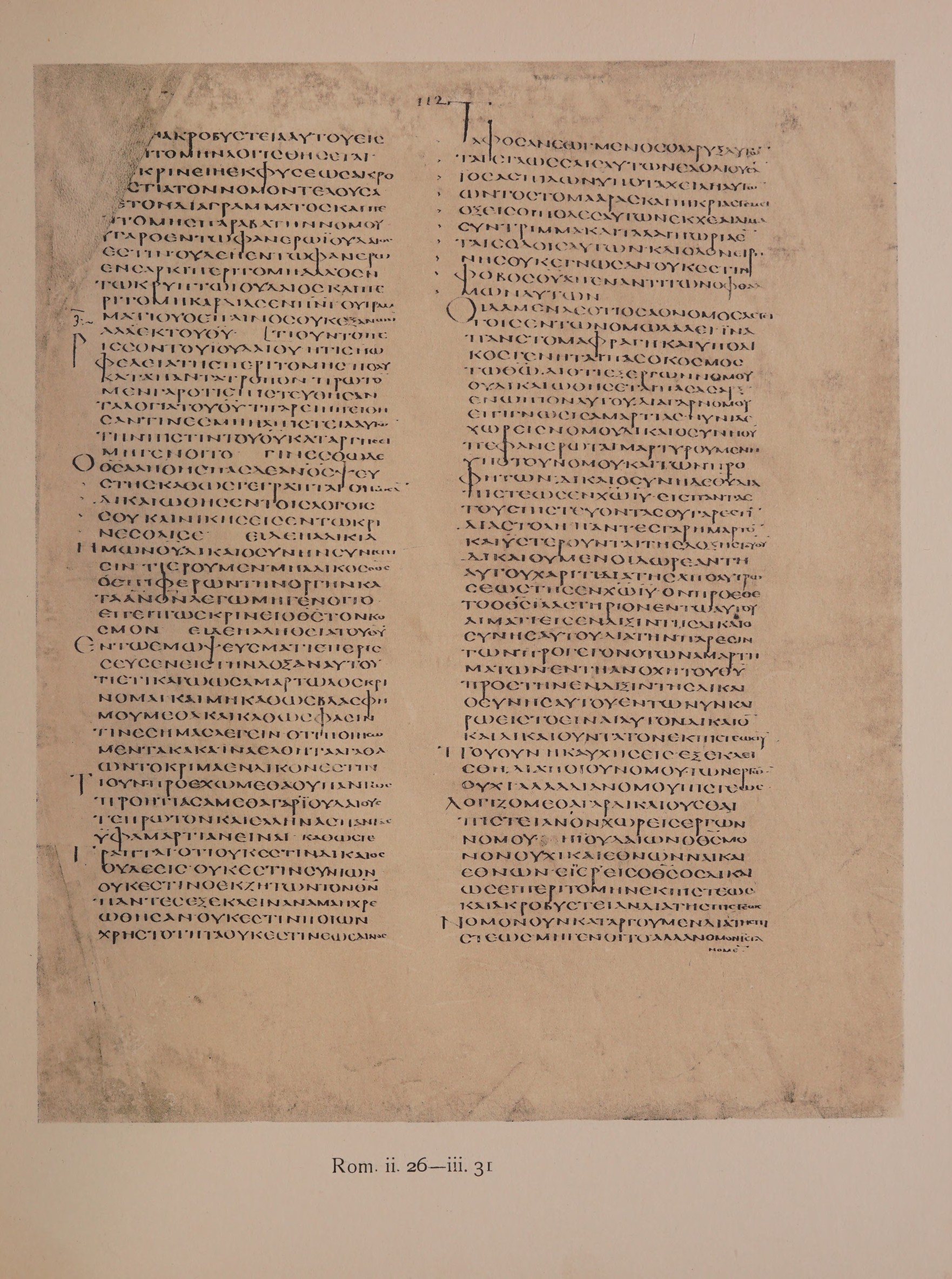
Where on the image
Page from the NTVMR transcription (docID 20002): verses 1-12 on fol. 112r (facsimile leaf 185), col. 1.
1τι ουν το περισσον του ιουδαιου η τις η ωφελεια της περιτομης 2πολυ κατα παντα τροπον πρωτον μεν γαρ οτι επιστευθησαν τα λογια του θυ 3τι γαρ ει ηπειθησαν τινες μη η απιστεια αυτων την πιστιν του θυ καταργησει 4μη γενοιτο · γινεσθω δε ο θς αληθης πας δε ανος ψευστης · καθως γεγραπται οπως αν δικαιωθης εν τοις λογοις σου και νικησεις εν τω κρινεσθαι σε · 5ει δε η αδικια ημων θυ δικαιοσυνην συνιστησιν · τι ερουμεν · μη αδικος ο θς ο επιφερων την οργην κατα ανον λεγω 6μη γενοιτο επει πως κρινει ο θς τον κοσμον · 7ει δε η αληθεια του θυ εν τω εμω ψευσματι επερισσευσεν εις την δοξαν αυτου τι ετι καγω ως αμαρτωλος κρινομαι · 8και μη καθως βλασφημουμεθα και καθως φασιν τινες ημας λεγειν · οτι ποιησωμεν τα κακα · ινα ελθη τα αγαθα ων το κριμα ενδικον εστιν 9τι ουν · προεχωμεθα ου παντως προητιασαμεθα γαρ ιουδαιους τε πρωτον και ελληνας παντας υφ αμαρτιαν ειναι · 10καθως γεγραπται · οτι ουκ εστιν δικαιος ουδε εις · 11ουκ εστιν συνιων ουκ εστιν ο εκζητων τον θν 12παντες εξεκλειναν αμα ηχρεωθησαν ουκ εστιν ποιων χρηστοτητα ουκ εστιν εως αινος
Compare: Tischendorf 8th edition (1869)
1Τί οὖν τὸ περισσὸν τοῦ Ἰουδαίου, ἢ τίς ἡ ὠφέλεια τῆς περιτομῆς; 2πολὺ κατὰ πάντα τρόπον. πρῶτον μὲν γὰρ ὅτι ἐπιστεύθησαν τὰ λόγια τοῦ θεοῦ. 3τί γὰρ εἰ ἠπίστησάν τινες; μὴ ἡ ἀπιστία αὐτῶν τὴν πίστιν τοῦ θεοῦ καταργήσει; 4μὴ γένοιτο· γινέσθω δὲ ὁ θεὸς ἀληθής, πᾶς δὲ ἄνθρωπος ψεύστης, καθάπερ γέγραπται, ὅπως ἂν δικαιωθῇς ἐν τοῖς λόγοις σου καὶ νικήσεις ἐν τῷ κρίνεσθαί σε. 5εἰ δὲ ἡ ἀδικία ἡμῶν θεοῦ δικαιοσύνην συνίστησιν, τί ἐροῦμεν; μὴ ἄδικος ὁ θεὸς ὁ ἐπιφέρων τὴν ὀργήν; κατὰ ἄνθρωπον λέγω. 6μὴ γένοιτο· ἐπεὶ πῶς κρινεῖ ὁ θεὸς τὸν κόσμον; 7εἰ δὲ ἡ ἀλήθεια τοῦ θεοῦ ἐν τῷ ἐμῷ ψεύσματι ἐπερίσσευσεν εἰς τὴν δόξαν αὐτοῦ, τί ἔτι κἀγὼ ὡς ἁμαρτωλὸς κρίνομαι; 8καὶ μὴ καθὼς βλασφημούμεθα καὶ καθώς φασίν τινες ἡμᾶς λέγειν ὅτι ποιήσωμεν τὰ κακὰ ἵνα ἔλθῃ τὰ ἀγαθά; ὧν τὸ κρίμα ἔνδικόν ἐστιν. 9Τί οὖν; προεχόμεθα; οὐ πάντως· προῃτιασάμεθα γὰρ Ἰουδαίους τε καὶ Ἕλληνας πάντας ὑφ’ ἁμαρτίαν εἶναι, 10καθὼς γέγραπται ὅτι οὐκ ἔστιν δίκαιος οὐδὲ εἷς, 11οὐκ ἔστιν ὁ συνίων, οὐκ ἔστιν ὁ ἐκζητῶν τὸν θεόν. 12πάντες ἐξέκλιναν, ἅμα ἠχρεώθησαν· οὐκ ἔστιν ὁ ποιῶν χρηστότητα, οὐκ ἔστιν ἕως ἑνός.
1What advantage then hath the Jew? or what profit is there of circumcision? 2Much every way: chiefly, because that unto them were committed the oracles of God. 3For what if some did not believe? shall their unbelief make the faith of God without effect? 4God forbid: yea, let God be true, but every man a liar; as it is written, That thou mightest be justified in thy sayings, and mightest overcome when thou art judged. 5But if our unrighteousness commend the righteousness of God, what shall we say? Is God unrighteous who taketh vengeance? (I speak as a man) 6God forbid: for then how shall God judge the world? 7For if the truth of God hath more abounded through my lie unto his glory; why yet am I also judged as a sinner? 8And not rather, (as we be slanderously reported, and as some affirm that we say,) Let us do evil, that good may come? whose damnation is just. 9What then? are we better than they? No, in no wise: for we have before proved both Jews and Gentiles, that they are all under sin; 10As it is written, There is none righteous, no, not one: 11There is none that understandeth, there is none that seeketh after God. 12They are all gone out of the way, they are together become unprofitable; there is none that doeth good, no, not one.
Where on the image
Page from the NTVMR transcription (docID 20002): verses 13-22 on fol. 112r (facsimile leaf 185), col. 2.
13ταφος ανεωγμενος ο λαρυξ αυτων ταις γλωσσαις αυτων εδολιουσαν ιος ασπιδων υπο τα χειλη αυτων 14ων το στομα αρας και πικριας γεμει 15οξεις οι ποδες αυτων εκχεαι αιμα 16συντριμμα · και ταλαιπωρια εν ταις οδοις αυτων · 17και οδον ειρηνης ουκ εγνωσαν 18ουκ εστιν φοβος θυ απεναντι των οφθαλμων αυτων 19οιδαμεν δε οτι οσα ο νομος λεγει τοις εν τω νομω λαλει · ινα παν στομα φραγη · και υποδικος γενηται πας ο κοσμος τω θω 20διοτι εξ εργων νομου ου δικαιωθησεται πασα σαρξ ενωπιον αυτου δια γαρ νομου επιγνωσις αμαρτιας · 21νυνι δε χωρεις νομου δικαιοσυνη θυ πεφανερωται μαρτυρουμενη υπο του νομου · και των προφητων · 22δικαιοσυνη δε θυ δια πιστεως εν χω ιυ · εις παντας τους πιστευοντας ου γαρ εστιν διαστολη ·
Compare: Tischendorf 8th edition (1869)
13τάφος ἀνεῳγμένος ὁ λάρυγξ αὐτῶν, ταῖς γλώσσαις αὐτῶν ἐδολιοῦσαν, ἰὸς ἀσπίδων ὑπὸ τὰ χείλη αὐτῶν, 14ὧν τὸ στόμα ἀρᾶς καὶ πικρίας γέμει· 15ὀξεῖς οἱ πόδες αὐτῶν ἐκχέαι αἷμα, 16σύντριμμα καὶ ταλαιπωρία ἐν ταῖς ὁδοῖς αὐτῶν, 17καὶ ὁδὸν εἰρήνης οὐκ ἔγνωσαν. 18οὐκ ἔστιν φόβος θεοῦ ἀπέναντι τῶν ὀφθαλμῶν αὐτῶν. 19οἴδαμεν δὲ ὅτι ὅσα ὁ νόμος λέγει τοῖς ἐν τῷ νόμῳ λαλεῖ, ἵνα πᾶν στόμα φραγῇ καὶ ὑπόδικος γένηται πᾶς ὁ κόσμος τῷ θεῷ· 20διότι ἐξ ἔργων νόμου οὐ δικαιωθήσεται πᾶσα σὰρξ ἐνώπιον αὐτοῦ, διὰ γὰρ νόμου ἐπίγνωσις ἁμαρτίας. 21Νυνὶ δὲ χωρὶς νόμου δικαιοσύνη θεοῦ πεφανέρωται, μαρτυρουμένη ὑπὸ τοῦ νόμου καὶ τῶν προφητῶν, 22δικαιοσύνη δὲ θεοῦ διὰ πίστεως Ἰησοῦ Χριστοῦ, εἰς πάντας τοὺς πιστεύοντας· οὐ γάρ ἐστιν διαστολή·
13Their throat is an open sepulchre; with their tongues they have used deceit; the poison of asps is under their lips: 14Whose mouth is full of cursing and bitterness: 15Their feet are swift to shed blood: 16Destruction and misery are in their ways: 17And the way of peace have they not known: 18There is no fear of God before their eyes. 19Now we know that what things soever the law saith, it saith to them who are under the law: that every mouth may be stopped, and all the world may become guilty before God. 20Therefore by the deeds of the law there shall no flesh be justified in his sight: for by the law is the knowledge of sin. 21But now the righteousness of God without the law is manifested, being witnessed by the law and the prophets; 22Even the righteousness of God which is by faith of Jesus Christ unto all and upon all them that believe: for there is no difference:
Where on the image
Page from the NTVMR transcription (docID 20002): verses 23-31 on fol. 112r (facsimile leaf 185), col. 2.
23παντες γαρ ημαρτον και υστερουνται της δοξης του θυ 24δικαιουμενοι δωρεαν τη αυτου χαριτι δια της απολυτρωσεως της εν χω ιυ · 25ον προεθετο ο θς ιλαστηριον εν τω αυτου αιματι εις ενδιξιν της δικαιοσυνης αυτου δια την παρεσιν των προγεγονοτων αμαρτηματων 26εν τη ανοχη του θυ προς την ενδιξιν της δικαιοσυνης αυτου εν τω νυν καιρω εις το ειναι αυτον δικαιον και δικαιουντα τον εκ πιστεως ιυ 27που ουν η καυχησεις · εξεκλεισθη δια ποιου νομου των εργων ουχι · αλλα δια νομου πιστεως 28λογιζομεθα γαρ δικαιουσθαι πιστει ανον χωρεις εργων νομου · 29μ̣η̣ ιουδαιων ο θς μονον ουχι και εθνων · ναι και εθνων · 30ειερ εις ο θς ος δικαιωσει περιτομην εκ πιστεως και ακροβυστειαν δια της πιστεως 31νομον ουν καταργουμεν δια της πιστεως μη γενοιτο · αλλα νομον ιστανομεν ·
Compare: Tischendorf 8th edition (1869)
23πάντες γὰρ ἥμαρτον καὶ ὑστεροῦνται τῆς δόξης τοῦ θεοῦ, 24δικαιούμενοι δωρεὰν τῇ αὐτοῦ χάριτι διὰ τῆς ἀπολυτρώσεως τῆς ἐν Χριστῷ Ἰησοῦ· 25ὃν προέθετο ὁ θεὸς ἱλαστήριον διὰ πίστεως ἐν τῷ αὐτοῦ αἵματι εἰς ἔνδειξιν τῆς δικαιοσύνης αὐτοῦ διὰ τὴν πάρεσιν τῶν προγεγονότων ἁμαρτημάτων 26ἐν τῇ ἀνοχῇ τοῦ θεοῦ, πρὸς τὴν ἔνδειξιν τῆς δικαιοσύνης αὐτοῦ ἐν τῷ νῦν καιρῷ, εἰς τὸ εἶναι αὐτὸν δίκαιον καὶ δικαιοῦντα τὸν ἐκ πίστεως Ἰησοῦ. 27Ποῦ οὖν ἡ καύχησις; ἐξεκλείσθη. διὰ ποίου νόμου; τῶν ἔργων; οὐχί, ἀλλὰ διὰ νόμου πίστεως. 28λογιζόμεθα γὰρ δικαιοῦσθαι πίστει ἄνθρωπον χωρὶς ἔργων νόμου. 29ἢ Ἰουδαίων ὁ θεὸς μόνον; οὐχὶ καὶ ἐθνῶν; ναὶ καὶ ἐθνῶν, 30εἴπερ εἷς ὁ θεός, ὃς δικαιώσει περιτομὴν ἐκ πίστεως καὶ ἀκροβυστίαν διὰ τῆς πίστεως. 31νόμον οὖν καταργοῦμεν διὰ τῆς πίστεως; μὴ γένοιτο, ἀλλὰ νόμον ἱστάνομεν.
23For all have sinned, and come short of the glory of God; 24Being justified freely by his grace through the redemption that is in Christ Jesus: 25Whom God hath set forth to be a propitiation through faith in his blood, to declare his righteousness for the remission of sins that are past, through the forbearance of God; 26To declare, I say, at this time his righteousness: that he might be just, and the justifier of him which believeth in Jesus. 27Where is boasting then? It is excluded. By what law? of works? Nay: but by the law of faith. 28Therefore we conclude that a man is justified by faith without the deeds of the law. 29Is he the God of the Jews only? is he not also of the Gentiles? Yes, of the Gentiles also: 30Seeing it is one God, which shall justify the circumcision by faith, and uncircumcision through faith. 31Do we then make void the law through faith? God forbid: yea, we establish the law.
Cite
Sources
- Source: Codex Alexandrinus page images + NTVMR transcription (CC BY 4.0) + Tischendorf 8th edition + KJV (holding institution)
- Critical edition: Codex Alexandrinus transcription, NTVMR (INTF Münster, CC BY 4.0); Tischendorf 8th edition for comparison
← previous · → next · v cycle view · l back to library