Romans, Chapter 4 (Codex Alexandrinus)
Introduction
Romans 4 from Codex Alexandrinus (GA 02), a fifth-century Greek Bible held by the British Library (Royal MS 1 D. VIII). In the New Testament it is the chief witness to the Byzantine text in the Gospels and to the Alexandrian text in the rest of the New Testament. Its New Testament volume lacks Matthew 1:1-25:5, John 6:50-8:52 and 2 Corinthians 4:13-12:6.
This entry meets the strict three-criteria standard of the Theosis Library:
- Manuscript scan: the actual page(s) of Codex Alexandrinus containing this passage (folio 112v), reproduced from the British Museum's 1909 photographic facsimile edited by F. G. Kenyon, as digitised by the Getty Research Institute for the Internet Archive. The facsimile prints the verse range beneath each plate; that printed range was read for every page used and agrees with the INTF's NTVMR verse-level page index (CC BY 4.0). The page for each section now comes from the NTVMR transcription itself, which records the page and column on which every verse is written.
- Original text: the manuscript's own text, from a diplomatic transcription (see Greek text below), with Tischendorf's 8th critical edition (1869) for comparison.
- English translation: the King James Version (1611), retrieved verbatim from the public-domain bible-api.com endpoint.
Greek text: a diplomatic transcription of Codex Alexandrinus made by the Institut für Neutestamentliche Textforschung (INTF), Münster, for the New Testament Virtual Manuscript Room (NTVMR), published under a Creative Commons Attribution 4.0 licence. It gives the letters as the first scribe wrote them: no accents or breathings, the scribe's own spelling, and the sacred names in their contracted form (θς for θεος, ις for ιησους, κς for κυριος; the overline is not reproduced). Corrections by later hands are not shown. Letters in square brackets are not legible on the page and were restored by the transcribers, a dot under a letter marks an uncertain reading, and [...] marks text lost to damage. Beneath each section, for comparison, is Tischendorf's 8th critical edition (1869). Where the two differ, the transcription is what the manuscript says. Each section is shown with the page on which the transcription places its verses.
How was this verified? (Provenance)
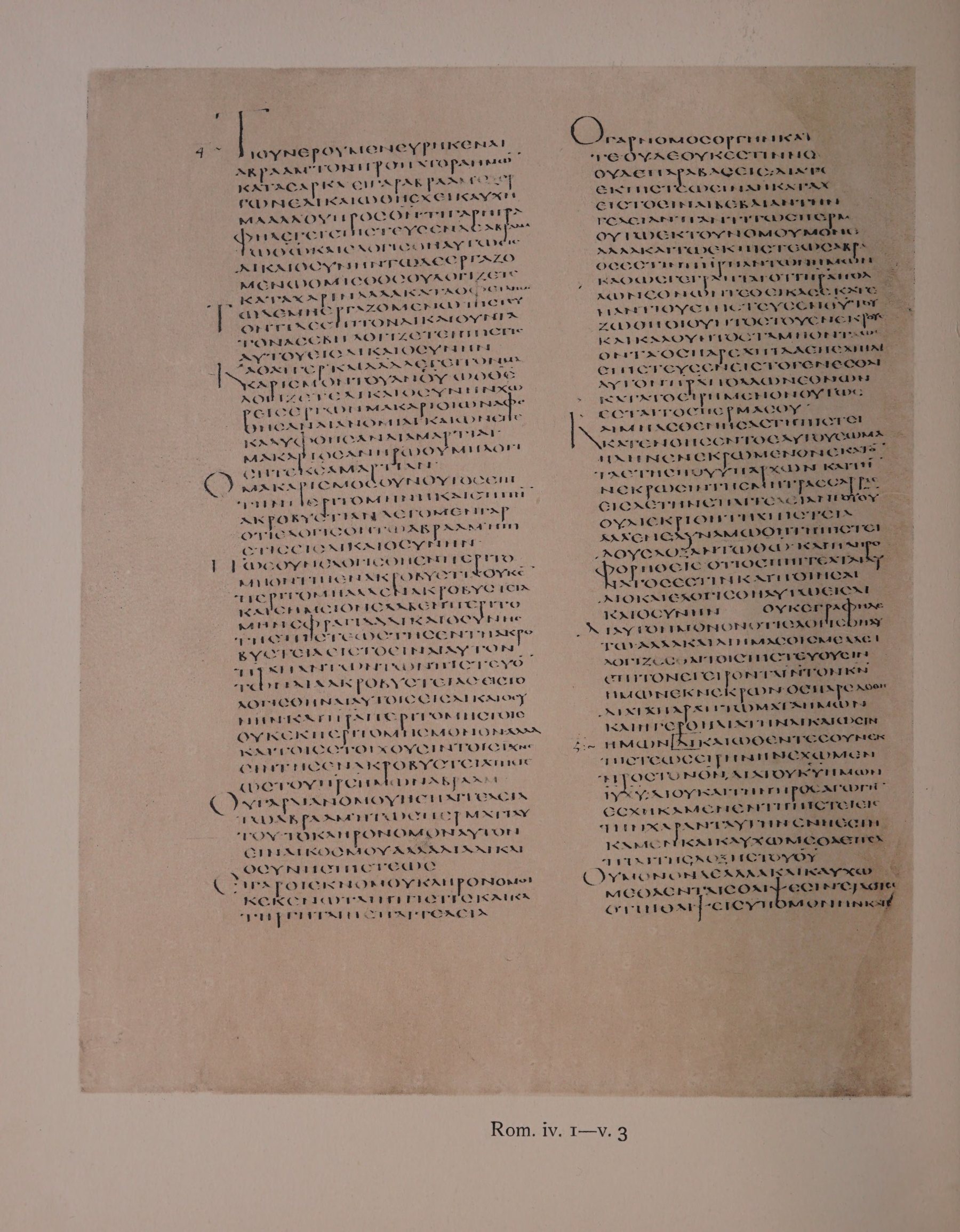
Where on the image
Page from the NTVMR transcription (docID 20002): verses 1-7 on fol. 112v (facsimile leaf 186), col. 1.
1τι ουν ερουμεν ευρηκεναι αβρααμ τον προπατορα ημων κατα σαρκα · 2ει γαρ αβρααμ · εξ εργων εδικαιωθη εχει καυχημα αλλ ου προς θν · 3τι γαρ η γραφη λεγει · επιστευσεν δε αβρααμ τω θω και ελογισθη αυτω εις δικαιοσυνην 4τω δε εργαζομενω ο μισθος ου λογιζετε κατα χαριν αλλα κατα οφειλημα 5τω δε μη εργαζομενω πιστευοντι δε επι τον δικαιουντα τον ασεβη · λογιζετε η πιστις αυτου εις δικαιοσυνην · 6καθαπερ και δαδ λεγει τον μακαρισμον του ανου ω ο θς λογιζετε δικαιοσυνην χωρεις εργων · 7μακαριοι ων αφεθησαν αι ανομιαι · και ων επεκαλυφθησαν αι αμαρτιαι ·
Compare: Tischendorf 8th edition (1869)
1Τί οὖν ἐροῦμεν εὑρηκέναι Ἀβραὰμ τὸν προπάτορα ἡμῶν κατὰ σάρκα; 2εἰ γὰρ Ἀβραὰμ ἐξ ἔργων ἐδικαιώθη, ἔχει καύχημα· ἀλλ’ οὐ πρὸς θεόν. 3τί γὰρ ἡ γραφὴ λέγει; ἐπίστευσεν δὲ Ἀβραὰμ τῷ θεῷ, καὶ ἐλογίσθη αὐτῷ εἰς δικαιοσύνην. 4τῷ δὲ ἐργαζομένῳ ὁ μισθὸς οὐ λογίζεται κατὰ χάριν ἀλλὰ κατὰ ὀφείλημα· 5τῷ δὲ μὴ ἐργαζομένῳ, πιστεύοντι δὲ ἐπὶ τὸν δικαιοῦντα τὸν ἀσεβήν, λογίζεται ἡ πίστις αὐτοῦ εἰς δικαιοσύνην, 6καθάπερ καὶ Δαυεὶδ λέγει τὸν μακαρισμὸν τοῦ ἀνθρώπου ᾧ ὁ θεὸς λογίζεται δικαιοσύνην χωρὶς ἔργων, 7μακάριοι ὧν ἀφέθησαν αἱ ἀνομίαι καὶ ὧν ἐπεκαλύφθησαν αἱ ἁμαρτίαι·
1What shall we say then that Abraham our father, as pertaining to the flesh, hath found? 2For if Abraham were justified by works, he hath whereof to glory; but not before God. 3For what saith the scripture? Abraham believed God, and it was counted unto him for righteousness. 4Now to him that worketh is the reward not reckoned of grace, but of debt. 5But to him that worketh not, but believeth on him that justifieth the ungodly, his faith is counted for righteousness. 6Even as David also describeth the blessedness of the man, unto whom God imputeth righteousness without works, 7Saying, Blessed are they whose iniquities are forgiven, and whose sins are covered.
Where on the image
Page from the NTVMR transcription (docID 20002): verses 8-14 on fol. 112v (facsimile leaf 186), col. 1.
8μακαριος ανηρ ω ου μη λογισητε κς αμαρτιαν · 9ο μακαρισμος ουν ουτος επι την περιτομην η και επι την ακροβυστιαν λεγομεν γαρ οτι ελογισθη τω αβρααμ · η πιστις εις δικαιοσυνην · 10πως ουν ελογισθη εν περιτομη οντι η εν ακροβυστια · ουκ εν περιτομη αλλ εν ακροβυστεια · 11και σημειον ελαβεν περιτομην σφραγιδα δικαιοσυνης της πιστεως της εν τη ακροβυστεια εις το ειναι αυτον πρα παντων των πιστευοντων δι ακροβυστειας εις το λογισθηναι αυτοις εις δικαιοσυνην · 12και πρα περιτομης τοις ουκ εκ περιτομης μονον · αλλα και τοις στοιχουσιν τοις ιχνεσιν της εν ακροβυστεια πιστεως του πρς ημων αβρααμ · 13ου γαρ δια νομου η επαγγελεια τω αβρααμ · η τω σπερματι αυτου · το κληρονομον αυτον ειναι κοσμου · αλλα δια δικαιοσυνης πιστεως · 14ει γαρ οι εκ νομου κληρονομοι κεκενωται η πιστις και κατηργηται η επαγγελεια ·
Compare: Tischendorf 8th edition (1869)
8μακάριος ἀνὴρ οὗ οὐ μὴ λογίσηται κύριος ἁμαρτίαν. 9ὁ μακαρισμὸς οὖν οὗτος ἐπὶ τὴν περιτομὴν ἢ καὶ ἐπὶ τὴν ἀκροβυστίαν; λέγομεν γάρ, ἐλογίσθη τῷ Ἀβραὰμ ἡ πίστις εἰς δικαιοσύνην. 10πῶς οὖν ἐλογίσθη; ἐν περιτομῇ ὄντι ἢ ἐν ἀκροβυστίᾳ; οὐκ ἐν περιτομῇ ἀλλ’ ἐν ἀκροβυστίᾳ· 11καὶ σημεῖον ἔλαβεν περιτομῆς, σφραγῖδα τῆς δικαιοσύνης τῆς πίστεως τῆς ἐν τῇ ἀκροβυστίᾳ, εἰς τὸ εἶναι αὐτὸν πατέρα πάντων τῶν πιστευόντων δι’ ἀκροβυστίας, εἰς τὸ λογισθῆναι αὐτοῖς δικαιοσύνην, 12καὶ πατέρα περιτομῆς τοῖς οὐκ ἐκ περιτομῆς μόνον ἀλλὰ καὶ τοῖς στοιχοῦσιν τοῖς ἴχνεσιν τῆς ἐν ἀκροβυστίᾳ πίστεως τοῦ πατρὸς ἡμῶν Ἀβραάμ. 13οὐ γὰρ διὰ νόμου ἡ ἐπαγγελία τῷ Ἀβραὰμ ἢ τῷ σπέρματι αὐτοῦ, τὸ κληρονόμον αὐτὸν εἶναι κόσμου, ἀλλὰ διὰ δικαιοσύνης πίστεως· 14εἰ γὰρ οἱ ἐκ νόμου κληρονόμοι, κεκένωται ἡ πίστις καὶ κατήργηται ἡ ἐπαγγελία·
8Blessed is the man to whom the Lord will not impute sin. 9Cometh this blessedness then upon the circumcision only, or upon the uncircumcision also? for we say that faith was reckoned to Abraham for righteousness. 10How was it then reckoned? when he was in circumcision, or in uncircumcision? Not in circumcision, but in uncircumcision. 11And he received the sign of circumcision, a seal of the righteousness of the faith which he had yet being uncircumcised: that he might be the father of all them that believe, though they be not circumcised; that righteousness might be imputed unto them also: 12And the father of circumcision to them who are not of the circumcision only, but who also walk in the steps of that faith of our father Abraham, which he had being yet uncircumcised. 13For the promise, that he should be the heir of the world, was not to Abraham, or to his seed, through the law, but through the righteousness of faith. 14For if they which are of the law be heirs, faith is made void, and the promise made of none effect:
Where on the image
Page from the NTVMR transcription (docID 20002): verses 15-25 on fol. 112v (facsimile leaf 186), col. 2.
15ο γαρ νομος οργην κατ̣[εργαζε]τε · ου δε ουκ εστιν νο[μος] ουδε παραβασεις · 16δια το̣[υτο] εκ πιστεως ινα η κατα χ[αριν] εις το ειναι βεβαιαν την [επαγ]γελειαν παντι τω σπερμ[ατι] ου τω εκ του νομου μονο[ν] αλλα και τω εκ πιστεως αβρα[αμ] ος εστιν πηρ παντων ημων 17καθως γεγραπται · οτι πρα πολλων εθνων τεθεικα σε · κατεναντι ου επιστευσεν θυ του ζωοποιουντος τους νεκρους και καλουντος τα μη οντα ως οντα · 18ος παρ ελπιδα επ ελπιδι επιστευσεν εις το γενεσθαι αυτον πρα πολλων εθνων κατα το ειρημενον ουτως εσται το σπερμα σου · 19και μη ασθενησας τη πιστει κατενοησεν το εαυτου σωμα ηδη νενεκρωμενον εκατονταετης που υπαρχων · και την νεκρωσιν της μητρας σαρρας · 20εις δε την επαγγελειαν του θυ ου διεκριθη τη απιστεια αλλ ενεδυναμωθη τη πιστει δους δοξαν τω θω · 21και πληροφορηθεις · οτι ο επηγγελται δυνατος εστιν και ποιησαι · 22διο και ελογισθη αυτω εις δικαιοσυνην 23ουκ εγραφη δε δι αυτον μονον οτι ελογισθη αυτω · 24αλλα και δι ημας οις μελλει λογιζεσθαι τοις πιστευουσιν επι τον εγειροντα ιν τον κν ημων εκ νεκρων · 25ος παρεδοθη δια τα παραπτωματα ημων · και ηγερθη δια την δικαιωσιν ημων
Compare: Tischendorf 8th edition (1869)
15ὁ γὰρ νόμος ὀργὴν κατεργάζεται· οὗ δὲ οὐκ ἔστιν νόμος, οὐδὲ παράβασις. 16διὰ τοῦτο ἐκ πίστεως, ἵνα κατὰ χάριν, εἰς τὸ εἶναι βεβαίαν τὴν ἐπαγγελίαν παντὶ τῷ σπέρματι, οὐ τῷ ἐκ τοῦ νόμου μόνον ἀλλὰ καὶ τῷ ἐκ πίστεως Ἀβραάμ ὅς ἐστιν πατὴρ πάντων ἡμῶν, 17καθὼς γέγραπται ὅτι πατέρα πολλῶν ἐθνῶν τέθεικά σε κατέναντι οὗ ἐπίστευσεν θεοῦ τοῦ ζῳοποιοῦντος τοὺς νεκροὺς καὶ καλοῦντος τὰ μὴ ὄντα ὡς ὄντα· 18ὃς παρ’ ἐλπίδα ἐπ’ ἐλπίδι ἐπίστευσεν εἰς τὸ γενέσθαι αὐτὸν πατέρα πολλῶν ἐθνῶν κατὰ τὸ εἰρημένον, οὕτως ἔσται τὸ σπέρμα σου· 19καὶ μὴ ἀσθενήσας τῇ πίστει κατενόησεν τὸ ἑαυτοῦ σῶμα νενεκρωμένον, ἑκατονταετής που ὑπάρχων, καὶ τὴν νέκρωσιν τῆς μήτρας Σάρρας· 20εἰς δὲ τὴν ἐπαγγελίαν τοῦ θεοῦ οὐ διεκρίθη τῇ ἀπιστίᾳ ἀλλ’ ἐνεδυναμώθη τῇ πίστει, δοὺς δόξαν τῷ θεῷ 21καὶ πληροφορηθεὶς ὅτι ὃ ἐπήγγελται δυνατός ἐστιν καὶ ποιῆσαι. 22διὸ καὶ ἐλογίσθη αὐτῷ εἰς δικαιοσύνην. 23οὐκ ἐγράφη δὲ δι’ αὐτὸν μόνον ὅτι ἐλογίσθη αὐτῷ, 24ἀλλὰ καὶ δι’ ἡμᾶς οἷς μέλλει λογίζεσθαι, τοῖς πιστεύουσιν ἐπὶ τὸν ἐγείραντα Ἰησοῦν τὸν κύριον ἡμῶν ἐκ νεκρῶν, 25ὃς παρεδόθη διὰ τὰ παραπτώματα ἡμῶν καὶ ἠγέρθη διὰ τὴν δικαίωσιν ἡμῶν.
15Because the law worketh wrath: for where no law is, there is no transgression. 16Therefore it is of faith, that it might be by grace; to the end the promise might be sure to all the seed; not to that only which is of the law, but to that also which is of the faith of Abraham; who is the father of us all, 17(As it is written, I have made thee a father of many nations,) before him whom he believed, even God, who quickeneth the dead, and calleth those things which be not as though they were. 18Who against hope believed in hope, that he might become the father of many nations, according to that which was spoken, So shall thy seed be. 19And being not weak in faith, he considered not his own body now dead, when he was about an hundred years old, neither yet the deadness of Sarah’s womb: 20He staggered not at the promise of God through unbelief; but was strong in faith, giving glory to God; 21And being fully persuaded that, what he had promised, he was able also to perform. 22And therefore it was imputed to him for righteousness. 23Now it was not written for his sake alone, that it was imputed to him; 24But for us also, to whom it shall be imputed, if we believe on him that raised up Jesus our Lord from the dead; 25Who was delivered for our offences, and was raised again for our justification.
Cite
Sources
- Source: Codex Alexandrinus page images + NTVMR transcription (CC BY 4.0) + Tischendorf 8th edition + KJV (holding institution)
- Critical edition: Codex Alexandrinus transcription, NTVMR (INTF Münster, CC BY 4.0); Tischendorf 8th edition for comparison
← previous · → next · v cycle view · l back to library