Edicts of Ashoka on the Delhi-Topra pillar: the seven Pillar Edicts
Introduction
The Delhi-Topra pillar is a polished sandstone column that Ashoka set up at Topra (Haryana); the sultan Firoz Shah Tughluq (r. 1351-1388) had it brought to Delhi and raised on the roof of his palace citadel, the Firoz Shah Kotla. It is the only pillar that carries all seven Pillar Edicts. Edicts I-VI repeat the text found on the other Ashokan pillars; the seventh, the latest of Ashoka's dated edicts, is found only here. Edicts I, IV, V and VI are dated 26 years after his consecration and VII 27 years after it (c. 243-242 BCE).
The edicts run round the four faces of the shaft: I-III on the north face, IV on the west, V on the south, and VI with the first part of VII on the east face; the rest of VII is a single band of eleven long lines running round the whole pillar below them. The pillar edicts speak of the king's officers, the Lajūkas, of the protection of animals, of mercy to prisoners condemned to death, and of the Dharma-mahāmātras sent to the Buddhist Saṁgha, the Brahmins, the Ājīvikas and the Jains (Nirgranthas). The whole text survives; small breaks are marked with dots and brackets.
Sources. Original text and English: E. Hultzsch, Inscriptions of Asoka. New Edition (Corpus Inscriptionum Indicarum, vol. I), Oxford: Clarendon Press for the Government of India, 1925, transcribed from the page images of the archive.org scan (public domain). Images: Hultzsch's collotype plates of inked impressions (estampages) of the Delhi-Topra pillar, taken on the stone for the Archaeological Survey of India. An impression is a contact copy pressed on paper from the inscribed surface itself, not a drawing; each section's image is the part of the plate that carries that text, with the plate's own numerals and line numbers in the margins.
Reading the text. Line numbers are Hultzsch's lines on the stone. Letters in square brackets are damaged or uncertain on the stone; dots mark lost letters. The capital letters in brackets, (A), (B) ..., are Hultzsch's sentence divisions and are the same in the transliteration and the English. Hultzsch's footnotes, which record other scholars' readings and his corrections, are not reproduced.
How was this verified? (Provenance)
Where on the image
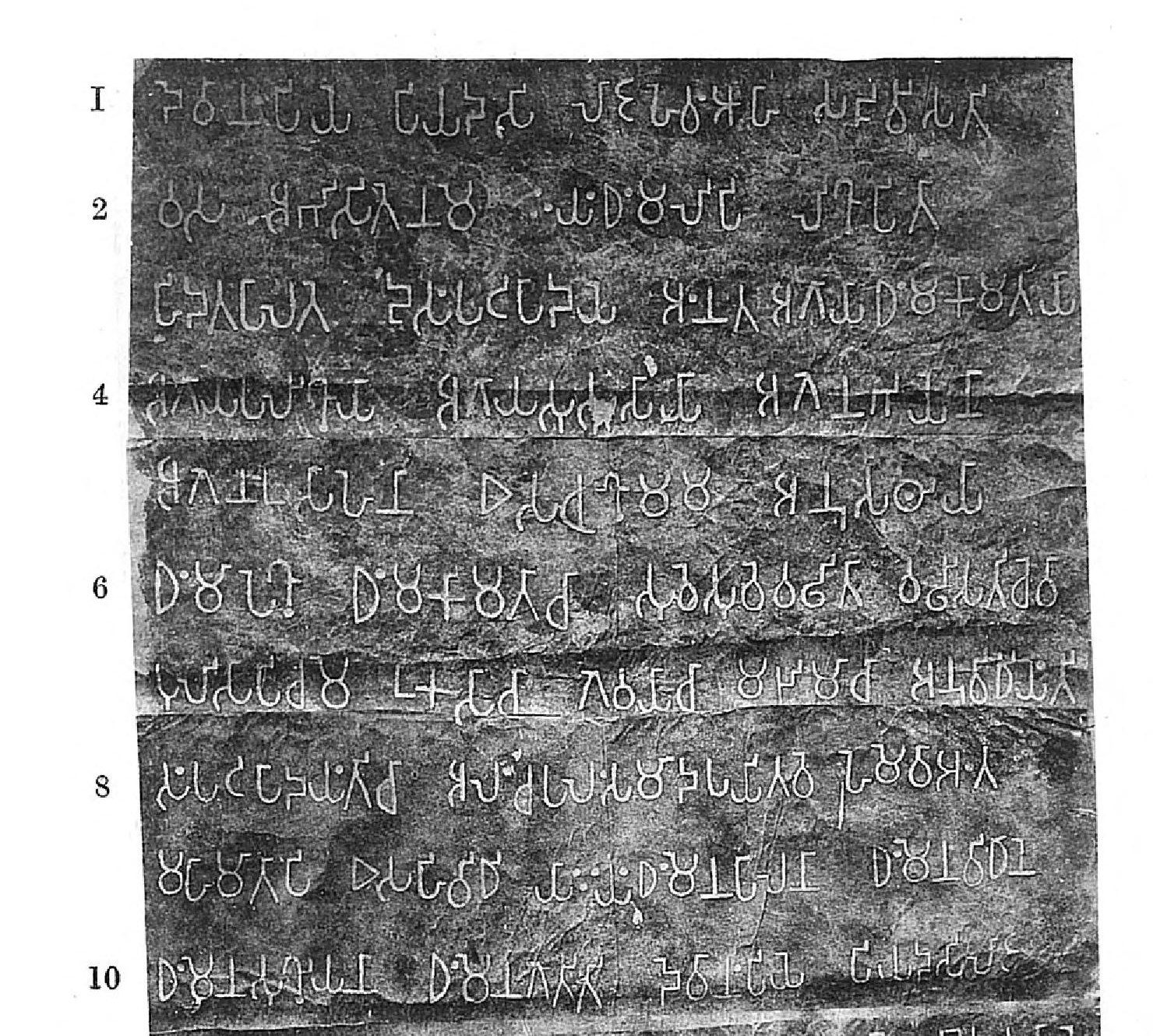
Inked impression (estampage) of the Delhi-Topra pillar, not a photograph of the stone: Hultzsch 1925, plate 'Delhi-Topra pillar: North face' (facing p. 122; archive.org leaf 279), cropped to the upper part of the north face, from the numeral I in the left margin to line 10 (numbered 2 to 10): 10 lines. Checked on the image against the transcription (lines 1-10). Text and English: Hultzsch 1925, pp. 119-120 (archive.org leaves 275-276).
1(A) Devānaṁpiye Piyadasi lāja hevaṁ āhā (B) saḍuvīsati-
2vasa-abhisitena me iyaṁ dhaṁma-lipi likhāpitā
3(C) hidata-pālate dusaṁpaṭipādaye aṁnata agāyā dhaṁma-kāmatāyā
4agāya palīkhāyā agāya su[sū]yāyā agena bhayenā
5agena usāhenā (D) esa chu kho mama anusathiyā
6dhaṁmāpekhā dhaṁma-kāmatā chā suve suve vaḍhitā vaḍhīsati chevā
7(E) pulisā pi cha me ukasā chā gevayā chā majhimā chā anuvidhīyaṁtī
8saṁpaṭipādayaṁti chā alaṁ chapalaṁ samādapayitave (F) hemevā aṁta-
9mahāmātā pi (G) esa hi vidhi yā iyaṁ dhaṁmena pālanā dhaṁmena vidhāne
10dhaṁmena sukhiyanā dhaṁmena gotī ti
(A) King Dēvānāṁpriya Priyadarśin speaks thus.
(B) This rescript on morality was caused to be written by me (when I had been) anointed twenty-six years.
(C) (Happiness) in this (world) and in the other (world) is difficult to secure without great love of morality, careful examination, great obedience, great fear (of sin), (and) great energy.
(D) But indeed by my instruction this regard for morality and love of morality have been promoted day by day and will progress still (more).
(E) And my agents also, both the high ones and the low ones, and those of middle rank, are conforming to and practising (morality), (and are thus) able to stir up fickle (persons).
(F) In the same way the Mahāmātras of the borderers also (are acting).
(G) For (their) instruction (is) this, viz. to protect according to morality, to dispose according to morality, to cause pleasure according to morality, (and) to guard (their speech) according to morality.
Where on the image
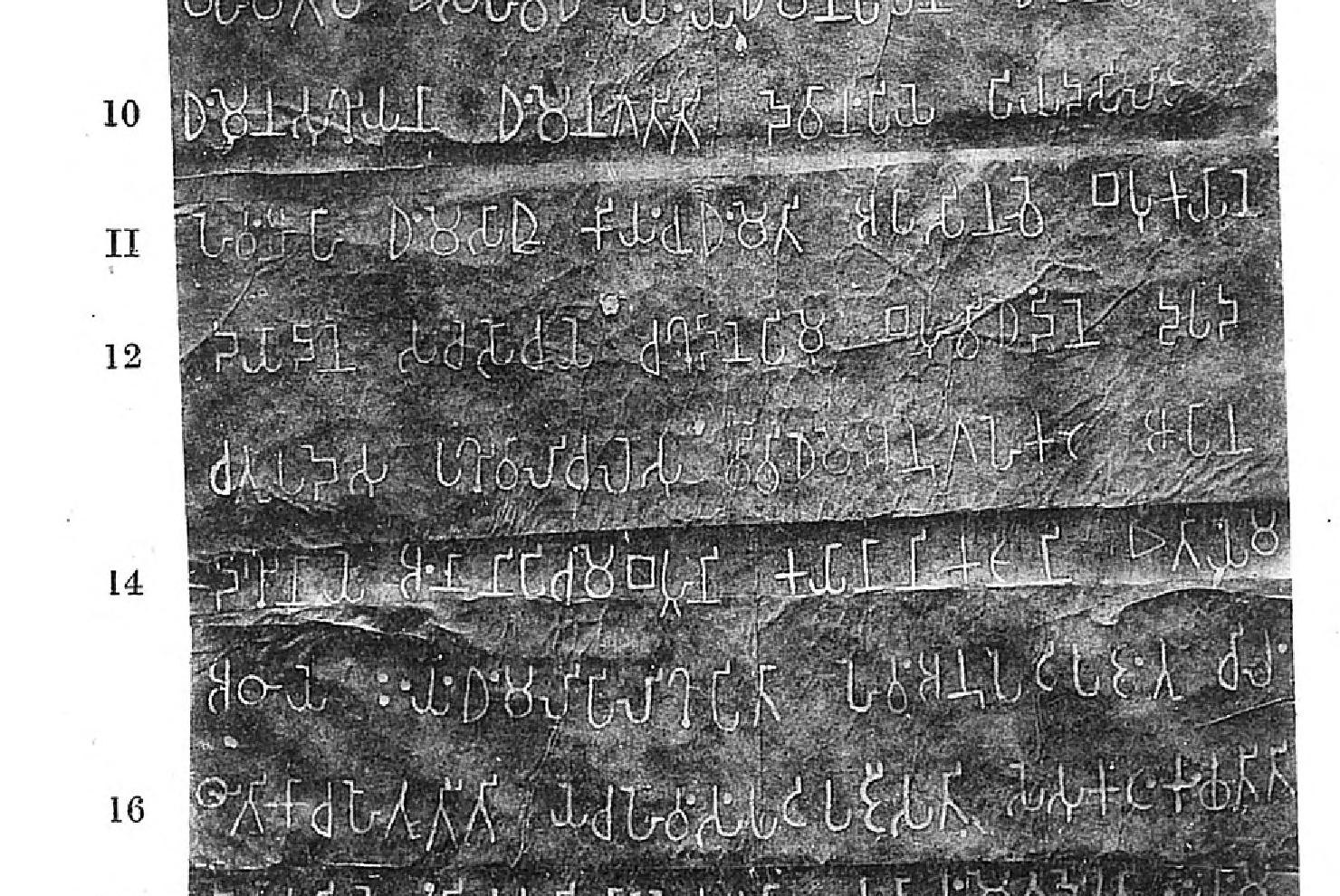
Inked impression (estampage) of the Delhi-Topra pillar, not a photograph of the stone: Hultzsch 1925, plate 'Delhi-Topra pillar: North face' (facing p. 122; archive.org leaf 279), cropped to lines 10-16 of the north face. The edict begins in the second half of line 10, after the last words of edict I; Hultzsch sets the numeral II in the margin at line 11. The crop ends with line 16, above the numeral III. Checked on the image against the transcription (lines 10-16). Text and English: Hultzsch 1925, pp. 120-121 (archive.org leaves 276-277).
10(A) Devānaṁpiye Piyadasi lāja
11hevaṁ āhā (B) dhaṁme sādhū kiyaṁ chu dhaṁme ti (C) apāsinave bahu kayāne
12dayā dāne sache sochaye (D) chakhu-dāne pi me bahuvidhe diṁne (E) dupada-
13chatupadesu pakhi-vālichalesu vividhe me anugahe kaṭe ā pāna-
14dākhināye (F) aṁnāni pi cha me bahūni kayānāni kaṭāni (G) etāye me
15aṭhāye iyaṁ dhaṁma-lipi likhāpitā hevaṁ anupaṭipajaṁtu chilaṁ-
16thitikā cha hotū tī ti (H) ye cha hevaṁ saṁpaṭipajīsati se sukaṭaṁ kachhatī ti
(A) King Dēvānāṁpriya Priyadarśin speaks thus.
(B) (To practise) morality is meritorious; but what does morality include?
(C) (It includes) few sins, many virtuous deeds, compassion, liberality, truthfulness, (and) purity.
(D) The gift of spiritual insight also has been bestowed by me in many ways.
(E) On bipeds and quadrupeds, on birds and aquatic animals various benefits have been conferred by me, (even) to the boon of life.
(F) And many other virtuous deeds also have been performed by me.
(G) For the following purpose was this rescript on morality caused to be written by me, (viz.) in order that (men) might conform to it, and that it might be of long duration.
(H) And he who will act thus will perform good deeds.
Where on the image
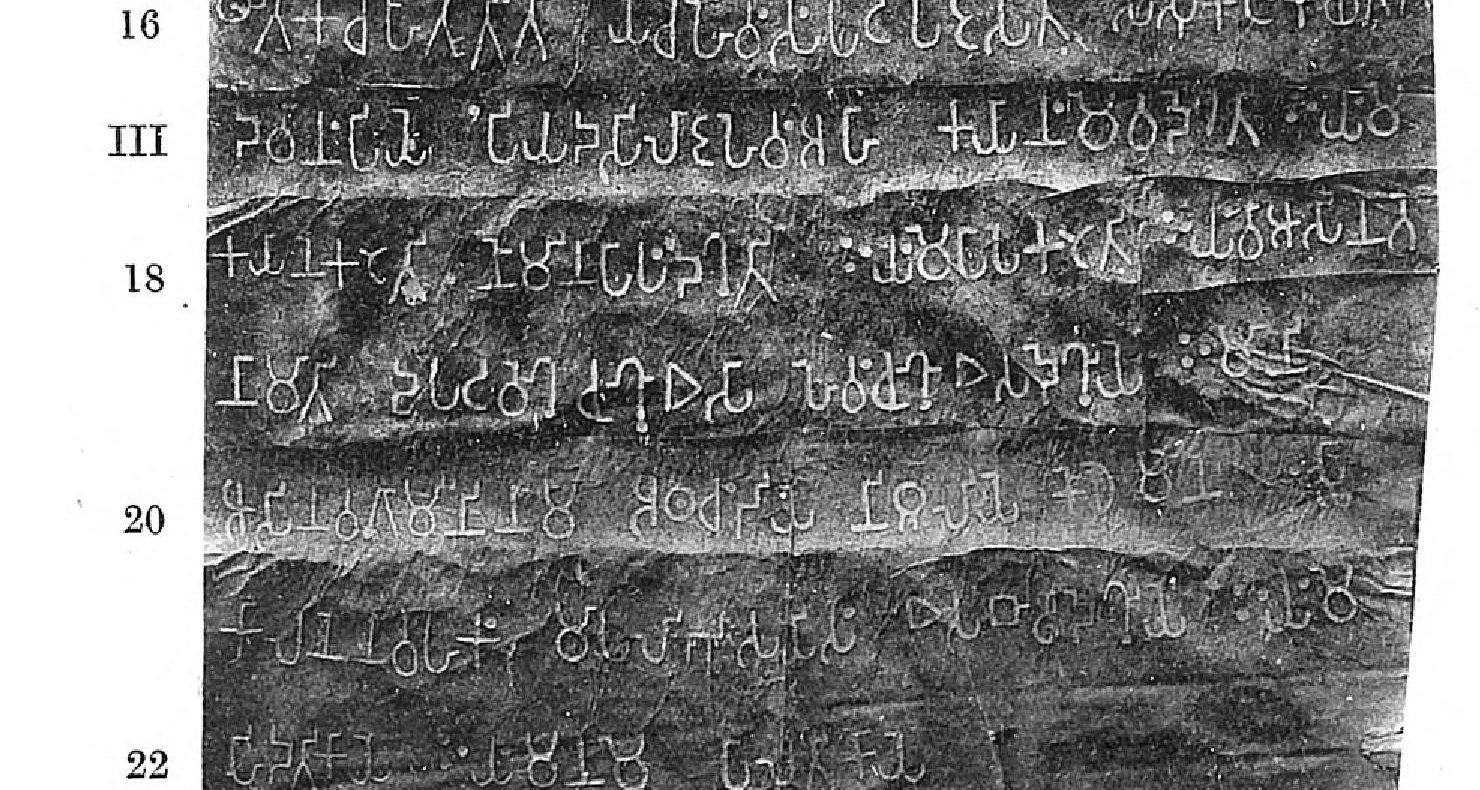
Inked impression (estampage) of the Delhi-Topra pillar, not a photograph of the stone: Hultzsch 1925, plate 'Delhi-Topra pillar: North face' (facing p. 122; archive.org leaf 279), cropped to the foot of the north face, from the numeral III in the left margin (line 17) to line 22: 6 lines. Checked on the image against the transcription (lines 17-22). Text and English: Hultzsch 1925, pp. 121-122 (archive.org leaves 277-278).
17(A) Devānaṁpiye Piyadasi lāja hevaṁ ahā (B) kayānaṁmeva dekhati iyaṁ me
18kayāne kaṭe ti (C) no mina pāpaṁ d[e]khati iyaṁ me pāpe kaṭe ti iyaṁ vā āsinave
19nāmā ti (D) dupaṭivekhe chu kho esā (E) hevaṁ chu kho esa dekhiye (F) imāni
20āsinava-gāmīni nāma atha chaṁḍiye niṭhūliye kodhe māne isyā
21kālanena va hakaṁ mā palibhasayisaṁ (G) esa bāḍha dekhiye (H) iyaṁ me
22hidatikāye iyaṁmana me pālatikāye
(A) King Dēvānāṁpriya Priyadarśin speaks thus.
(B) (Men) regard only (their) virtuous deeds, (thinking): ‘This virtuous deed has been performed by me.’
(C) They do not at all regard (their) evil deeds, (thinking): ‘This evil deed has been performed by me; this very (act) is called a sin.’
(D) Now this is indeed difficult to recognize.
(E) But indeed this ought to be regarded thus:
(F) ‘These (passions), viz. fierceness, cruelty, anger, pride, envy, are called sinful. Let me not ruin (myself) by (these) very (passions).’
(G) The following ought to be specially regarded:
(H) ‘This (action conduces) to my (happiness) in this (world), that other (action) to my (happiness) in the other (world).’
Where on the image
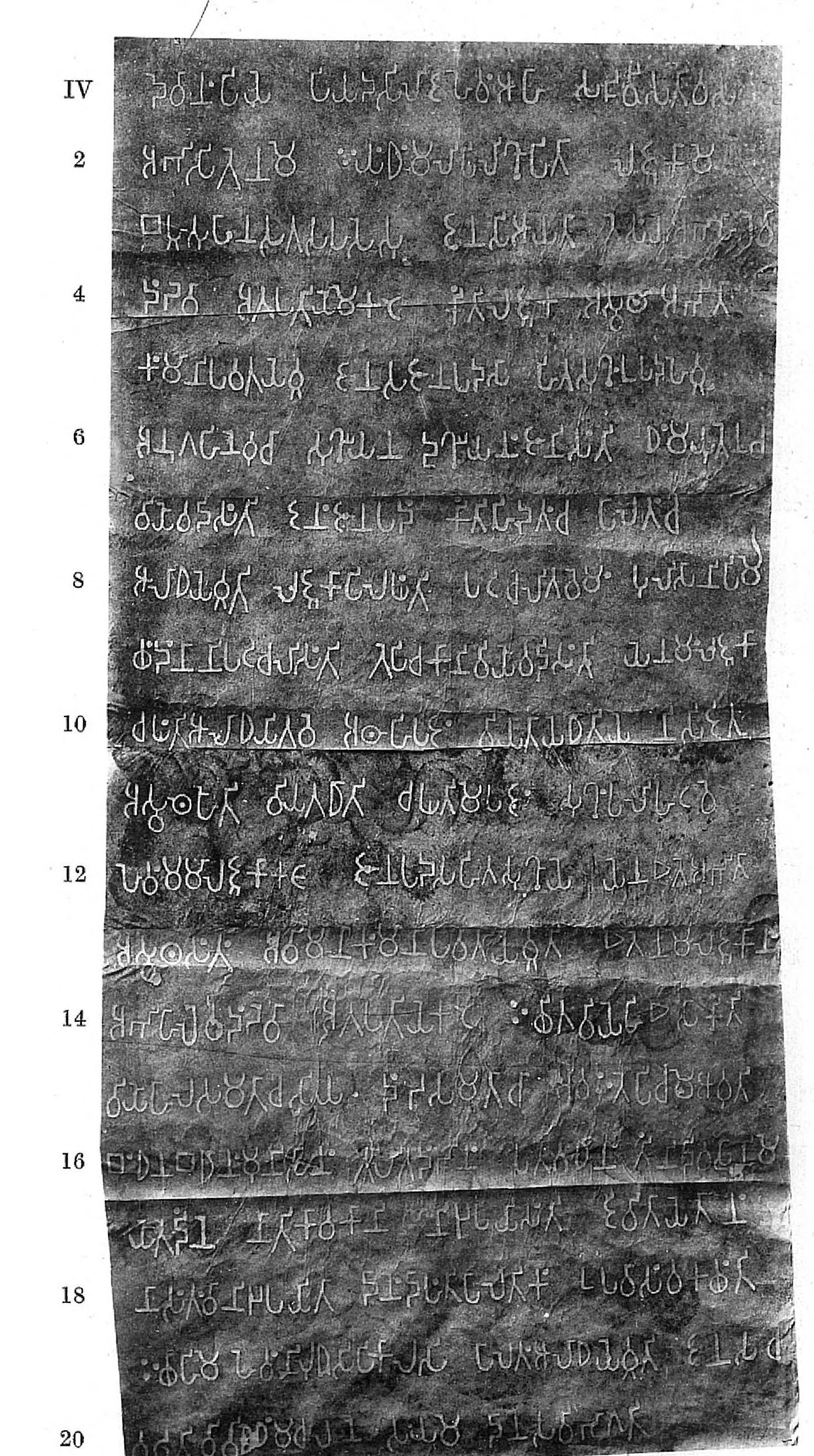
Inked impression (estampage) of the Delhi-Topra pillar, not a photograph of the stone: Hultzsch 1925, plate 'Delhi-Topra pillar: West face' (facing p. 123; archive.org leaf 281), cropped to the whole west face, from the numeral IV in the left margin (line 1) to line 20. Checked on the image against the transcription (lines 1-20). Text and English: Hultzsch 1925, pp. 123-125 (archive.org leaves 280, 282-283).
1(A) Devānaṁpiye Piyadasi l[ā]ja hevaṁ āhā (B) saḍuvīsati-vasa-
2abhisitena me iyaṁ dhaṁma-lipi likhāpitā (C) lajūkā me
3bahūsu pāna-sata-sahasesu janasi āyatā (D) tesaṁ ye abhihāle vā
4daṁḍe vā ata-patiye me kaṭe kiṁti lajūkā asvatha abhītā
5kaṁmāni pavatayevū janasa jānapadasā hita-sukhaṁ upadahevū
6anugahinevu chā (E) sukhīyana-dukhīyanaṁ jānisaṁti dhaṁma-yutena cha
7viyovadisaṁti janaṁ jānapadaṁ kiṁti hidataṁ cha pālataṁ cha
8ālādhayevū ti (F) lajūkā pi laghaṁti paṭichalitave maṁ (G) pulisāni pi me
9chhaṁdaṁnāni paṭichalisaṁti (H) te pi cha kāni viyovadisaṁti yena maṁ lajūkā
10chaghaṁti ālādhayitave (I) athā hi pajaṁ viyatāye dhātiye nisijitu
11asvathe hoti viyata dhāti chaghati me pajaṁ sukhaṁ palihaṭave
12hevaṁ mamā lajūkā kaṭā jānapadasa hita-sukhāye (J) yena ete abhītā
13asvatha saṁtaṁ avimanā kaṁmāni pavatayevū ti etena me lajūkānaṁ
14abh[i]hāle va daṁḍe vā ata-patiye kaṭe (K) ichhitaviye [h]i esā kiṁti
15viyohāla-samatā cha siya daṁḍa-samatā chā (L) ava ite pi cha me āvuti
16baṁdhana-badhānaṁ munisānaṁ tīl[i]ta-daṁḍānaṁ pata-vadhānaṁ tiṁni divasā[n]i me
17yote diṁne (M) nātikā va kāni nijhapayisaṁti jīvitāye tānaṁ
18nāsaṁtaṁ vā nijhapayitā dānaṁ dāhaṁti pālatikaṁ upavāsaṁ va kachhaṁti
19(N) ichhā hi me hevaṁ niludhasi pi kālasi pālataṁ ālādhayevū ti (O) janasa cha
20vaḍhati vividhe dhaṁma-chalane saṁyame dāna-savibhāge ti
(A) King Dēvānāṁpriya Priyadarśin speaks thus.
(B) This rescript on morality was caused to be written by me (when I had been) anointed twenty-six years.
(C) My Lajūkas are occupied with the people, with many hundred thousands of men.
(D) I have ordered that either rewards or punishments are left to their discretion, in order that the Lajūkas should perform (their) duties confidently (and) fearlessly, that they should bestow welfare and happiness on the people of the country, and that they should confer benefits (on them).
(E) They will know how to cause pleasure and to cause pain (to them), and will exhort the people of the country through those who are devoted to morality, in order that they may attain (happiness) both in this (world) and in the other (world).
(F) The Lajūkas also must obey me.
(G) They will also obey the agents who know (my) wishes.
(H) And these (agents) will also exhort those (people), in order that the Lajūkas may be able to please me.
(I) For, as one feels confident after having entrusted (his) child to an intelligent nurse, (thinking): ‘The intelligent nurse will be able to keep my child well’, so the Lajūkas were appointed by me for the welfare and happiness of the country-people.
(J) In order that they should perform (their) duties, being fearless, confident, (and) unperturbed, for this (purpose) I have ordered that either rewards or punishments are left to the discretion of the Lajūkas.
(K) For the following is to be desired, (viz.) that there should be both impartiality in judicial proceedings and impartiality in punishments.
(L) And my order (reaches) even so far (that) a respite of three days is granted by me to persons lying in prison on whom punishment has been passed, (and) who have been condemned to death.
(M) (In this way) either (their) relatives will persuade those (Lajūkas) to (grant) their life, or, if there is none who persuades (them), they will bestow gifts or will undergo fasts in order to (attain happiness) in the other (world).
(N) For my desire is this, that, even when the time (of respite) has expired, they should attain (happiness) in the other (world).
(O) And various moral practices, self-control, (and) the distribution of gifts are (thus) promoted among the people.
Where on the image
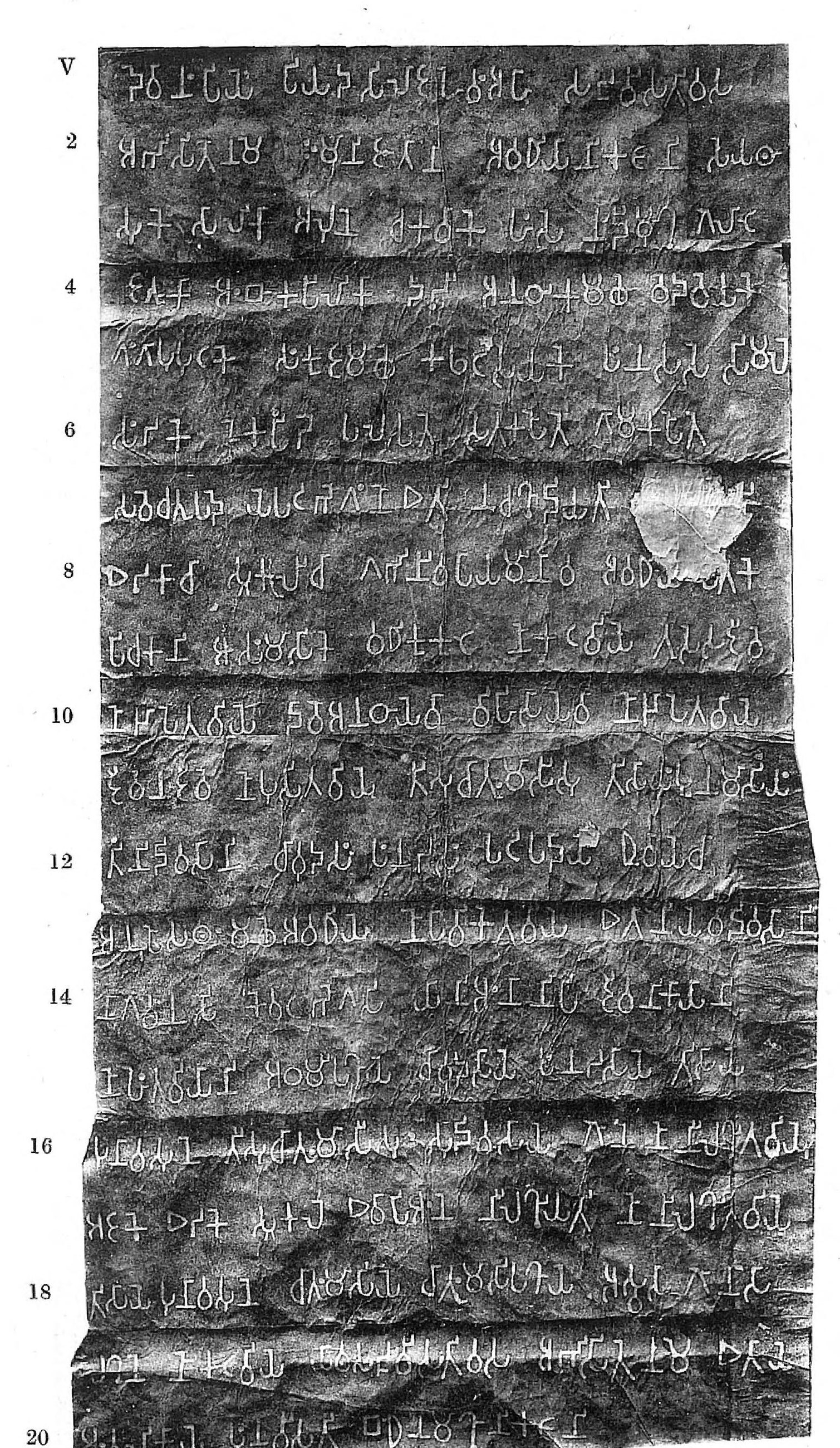
Inked impression (estampage) of the Delhi-Topra pillar, not a photograph of the stone: Hultzsch 1925, plate 'Delhi-Topra pillar: South face' (facing p. 128; archive.org leaf 287), cropped to the whole south face, from the numeral V in the left margin (line 1) to line 20; the pale patch at lines 7-8 is a flaw of the impression, where Hultzsch's text has dots. Checked on the image against the transcription (lines 1-20). Text and English: Hultzsch 1925, pp. 126-128 (archive.org leaves 284-286).
1(A) Devānaṁpiye Piyadasi lāja hevaṁ ahā (B) saḍuvīsati-vasa-
2abhisitena me imāni jātāni avadhiyāni kaṭāni seyathā
3suke sālikā alune chakavāke haṁse naṁdīmukhe gelāṭe
4jatūkā aṁbā-kapīlikā daḷī anaṭhika-machhe vedaveyake
5Gaṁgā-pupuṭake saṁkuja-machhe kaphaṭ[a]-sayake paṁna-sase simale
6saṁḍake okapiṁḍe palasate seta-kapote gāma-kapote
7save chatupade ye paṭibhogaṁ no eti na cha khādiyatī (C) . . . . . . . . . i
8[e]ḷakā chā sūkalī chā gabhinī va pāyamīnā va avadhi[y . p . ta]ke
9pi cha kāni āsaṁmāsike (D) vadhi-kukuṭe no kaṭaviye (E) tuse sajīve
10no jhāpetaviye (F) dāve anaṭhāye vā vihisāye vā no jhāpetaviye
11(G) jīvena jīve no pusitaviye (H) tīsu chātuṁmāsīsu tisāyaṁ puṁnamāsiyaṁ
12tiṁni divasāni chāvudasaṁ paṁnaḍasaṁ paṭipadāy[e] dhuvāye chā
13anuposathaṁ machhe avadhiye no pi viketaviye (I) etāni yevā divasāni
14nāga-vanasi kevaṭa-bhogasi yāni aṁnāni pi jīva-nikāyāni
15no haṁtaviyāni (J) aṭhamī-pakhāye chāvudasāye paṁnaḍasāye tisāye
16punāvasune tīsu chātuṁmāsīsu sudivasāye gone no nīlakhitaviye
17ajake eḍake sūkale e vā pi aṁne nīlakhiyati no nīlakhitaviye
18(K) tisāye punāvasune chātuṁmāsiye chātuṁmāsi-pakhāye asvasā gonasā
19lakhane no kaṭaviye (L) yāva-saḍuvīsati-vasa-abhisitena me etāye
20aṁtalikāye paṁnavīsati baṁdhana-mokhāni kaṭāni
(A) King Dēvānāṁpriya Priyadarśin speaks thus.
(B) (When I had been) anointed twenty-six years, the following animals were declared by me inviolable, viz. parrots, mainas, the aruṇa, ruddy geese, wild geese, the nandīmukha, the gelāṭa, bats, queen-ants, terrapins, boneless fish, the vedaveyaka, the Gaṅgā-pupuṭaka, skate-fish, tortoises and porcupines, squirrels (?), the sṛimara, bulls set at liberty, iguanas (?), the rhinoceros, white doves, domestic doves, (and) all the quadrupeds which are neither useful nor edible.
(C) Those [she-goats], ewes, and sows (which are) either with young or in milk, are inviolable, and also those (of their) young ones (which are) less than six months old.
(D) Cocks must not be caponed.
(E) Husks containing living animals must not be burnt.
(F) Forests must not be burnt either uselessly or in order to destroy (living beings).
(G) Living animals must not be fed with (other) living animals.
(H) Fish are inviolable, and must not be sold, on the three Chāturmāsīs (and) on the Tishyā full-moon during three days, (viz.) the fourteenth, the fifteenth, (and) the first (tithi), and invariably on every fast-day.
(I) And during these same days also no other classes of animals which are in the elephant-park (and) in the preserves of the fishermen, must be killed.
(J) On the eighth (tithi) of (every) fortnight, on the fourteenth, on the fifteenth, on Tishyā, on Punarvasu, on the three Chāturmāsīs, (and) on festivals, bulls must not be castrated, (and) he-goats, rams, boars, and whatever other (animals) are castrated (otherwise), must not be castrated (then).
(K) On Tishyā, on Punarvasu, on the Chāturmāsīs, (and) during the fortnight of (every) Chāturmāsī, horses (and) bullocks must not be branded.
(L) Until (I had been) anointed twenty-six years, in this period the release of prisoners was ordered by me twenty-five (times).
Where on the image
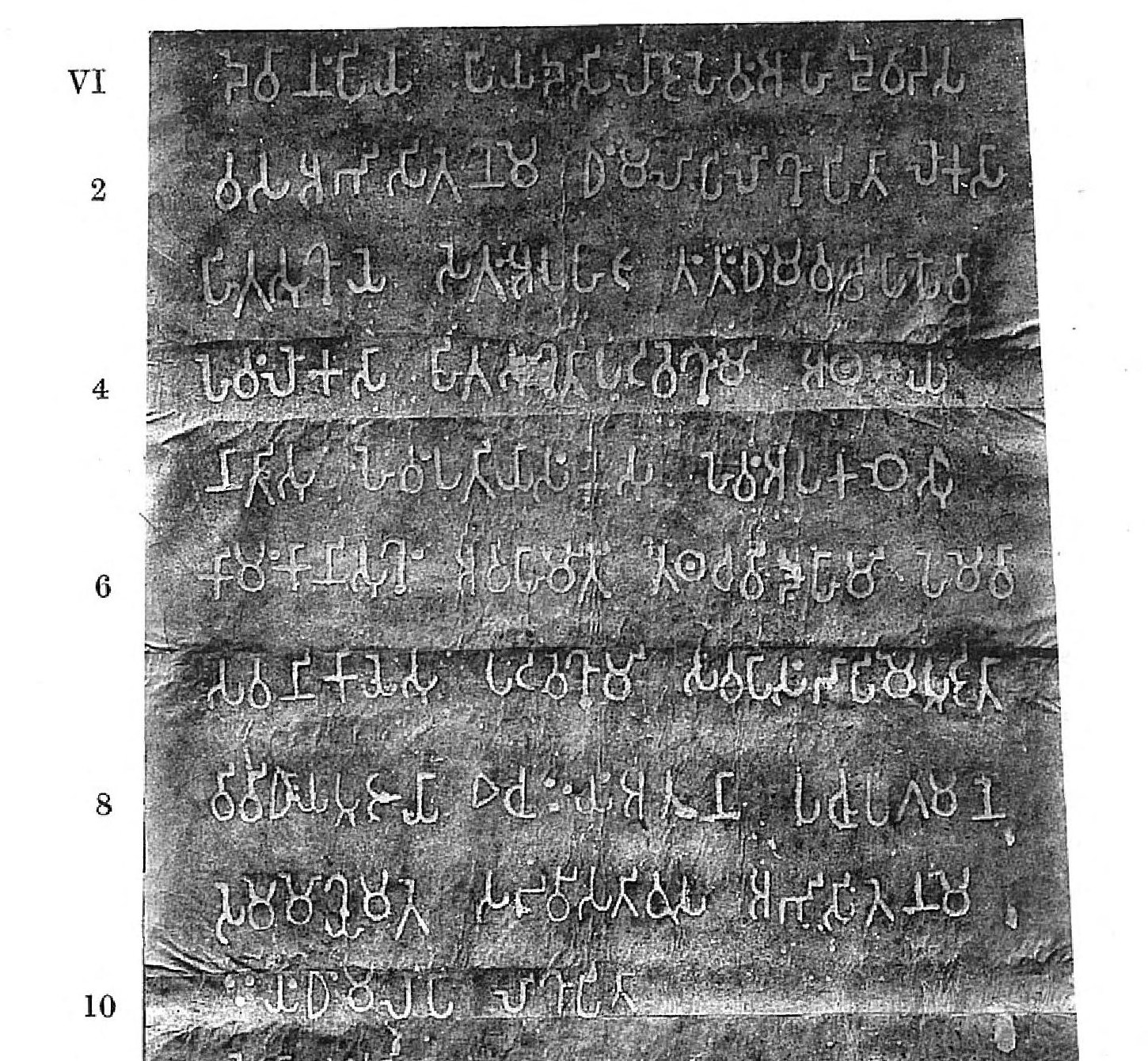
Inked impression (estampage) of the Delhi-Topra pillar, not a photograph of the stone: Hultzsch 1925, plate 'Delhi-Topra pillar: East face' (facing p. 129; archive.org leaf 288), cropped to the upper part of the east face, from the numeral VI in the left margin (line 1) to line 10. Checked on the image against the transcription (lines 1-10). Text and English: Hultzsch 1925, pp. 129-131 (archive.org leaves 289-291).
1(A) Devānaṁpiye Piyadasi lāja hevaṁ ahā (B) duvāḍasa-
2vasa-abhisitena me dhaṁma-lipi likhāpitā lokasā
3hita-sukhāye se taṁ apahaṭā taṁ taṁ dhaṁma-vaḍhi pāpovā
4(C) hevaṁ lokasā hita-[sukhe] ti paṭivekhāmi atha iyaṁ
5nātisu hevaṁ patiyāsaṁnesu hevaṁ apakaṭhesu
6kimaṁ kāni sukhaṁ avahāmī ti tatha cha vidahāmi (D) hemevā
7sava-nikāyesu paṭivekhāmi (E) sava-pāsaṁḍā pi me pūjitā
8vividhāya pūjāyā (F) e chu iyaṁ at[a]nā pachūpagamane
9se me mokhya-mate (G) saḍuvīsati-vasa-abhisitena me
10iyaṁ dhaṁma-lipi likhāpitā
(A) King Dēvānāṁpriya Priyadarśin speaks thus.
(B) (When I had been) anointed twelve years, rescripts on morality were caused to be written by me for the welfare and happiness of the people, (in order that), not transgressing those (rescripts), they might attain a promotion of morality in various respects.
(C) (Thinking): ‘thus the welfare and happiness of the people (will be secured)’, I am directing my attention not only to (my) relatives, but to those who are near and far, in order that I may lead them to happiness, and I am instructing (them) accordingly.
(D) In the same manner I am directing my attention to all classes.
(E) And all the sects have been honoured by me with honours of various kinds.
(F) But this is considered by me (my) principal (duty), viz. visiting (the people) personally.
(G) (When I had been) anointed twenty-six years, this rescript on morality was caused to be written by me.
Where on the image
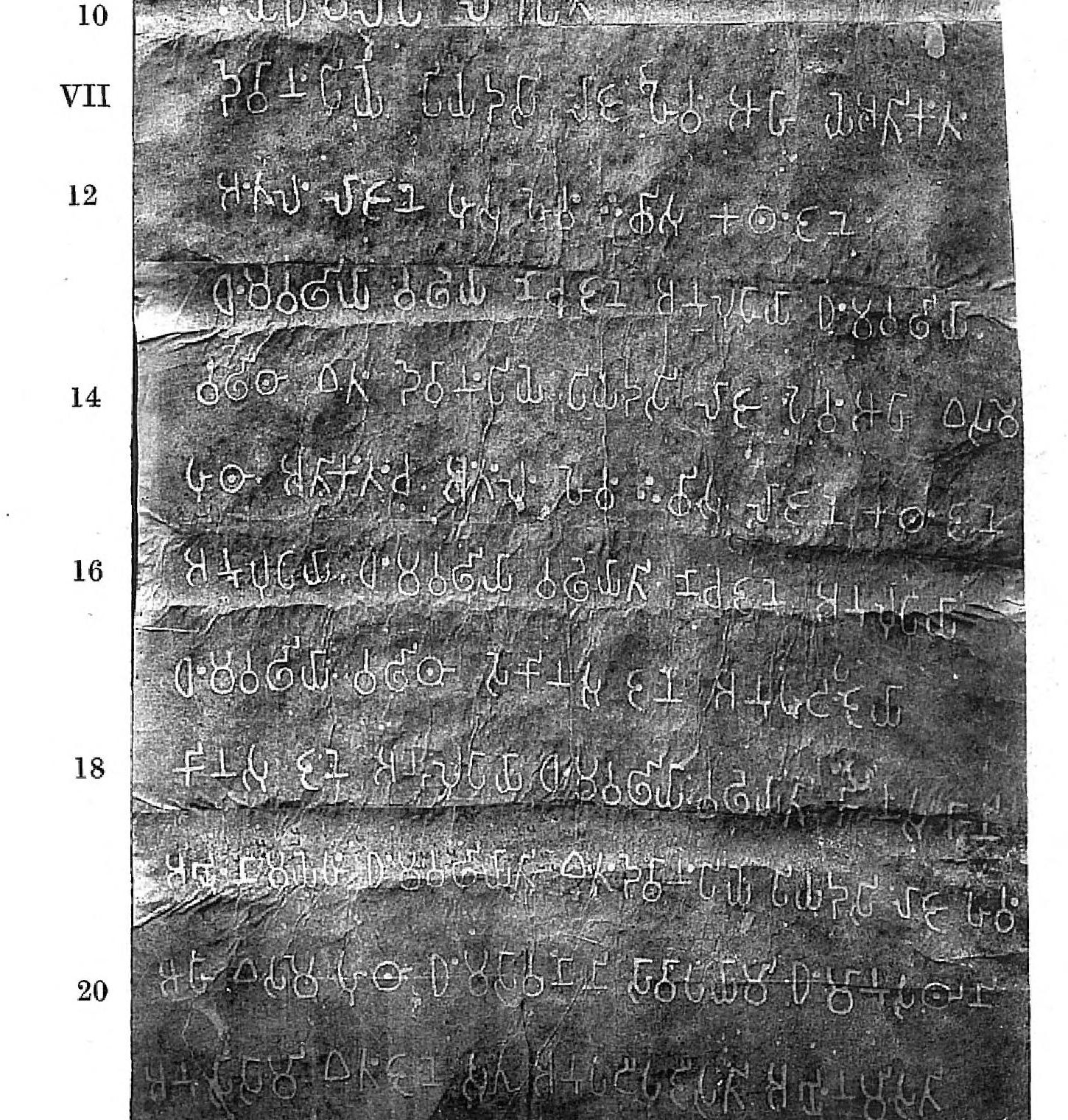
Inked impression (estampage) of the Delhi-Topra pillar, not a photograph of the stone: Hultzsch 1925, plate 'Delhi-Topra pillar: East face' (facing p. 129; archive.org leaf 288), cropped to the lower part of the east face, from the numeral VII in the left margin (line 11) to line 21. Checked on the image against the transcription (lines 11-21). Text and English: Hultzsch 1925, pp. 132-134 (archive.org leaves 292-294).
11(A) Devānaṁpiye Piyadasi lājā hevaṁ āhā (B) ye atikaṁtaṁ
12aṁtalaṁ lājāne husu hevaṁ ichhisu kathaṁ jane
13dhaṁma-vaḍhiyā vaḍheyā no chu jane anulupāyā dhaṁma-vaḍhiyā
14vaḍhithā (C) etaṁ Devānaṁpiye Piyadasi lājā hevaṁ āhā (D) esa me
15huthā (E) atikaṁtaṁ cha aṁtaml[a]ṁ hevaṁ ichhisu lājāne kathaṁ jane
16anulupāyā dhaṁma-vaḍhiyā vaḍheyā ti no cha jane anulupāyā
17dhaṁma-vaḍhiyā vaḍhithā (F) se kinasu jane anu[pa]ṭipajeyā
18(G) kinasu jane anulupāyā dhaṁma-vaḍhiyā vaḍheyā ti (H) k[i]nasu kāni
19abhyuṁnāmayehaṁ dhaṁma-vaḍhiyā ti (I) etaṁ Devānaṁpiye Piyadasi lājā hevaṁ
20āhā (J) esa me huthā (K) dhaṁma-sāvanāni sāvāpayāmi dhaṁmānusathini
21anus[ā]sāmi (L) etaṁ jane sutu anupaṭīpajīsati abhyuṁnamisati
(A) King Dēvānāṁpriya Priyadarśin speaks thus.
(B) The kings who were in times past, had this desire, that men might (be made to) progress by the promotion of morality; but men were not made to progress by an adequate promotion of morality.
(C) Concerning this, king Dēvānāṁpriya Priyadarśin speaks thus.
(D) The following occurred to me.
(E) On one hand, in times past kings had this desire, that men might (be made to) progress by an adequate promotion of morality; (but) on the other hand, men were not made to progress by an adequate promotion of morality.
(F) How then might men (be made to) conform to (morality)?
(G) How might men (be made to) progress by an adequate promotion of morality?
(H) How could I elevate them by the promotion of morality?
(I) Concerning this, king Dēvānāṁpriya Priyadarśin speaks thus.
(J) The following occurred to me.
(K) I shall issue proclamations on morality, (and) shall order instruction in morality (to be given).
(L) Hearing this, men will conform to (it), will be elevated, and will (be made to) progress considerably by the promotion of morality.
Where on the image
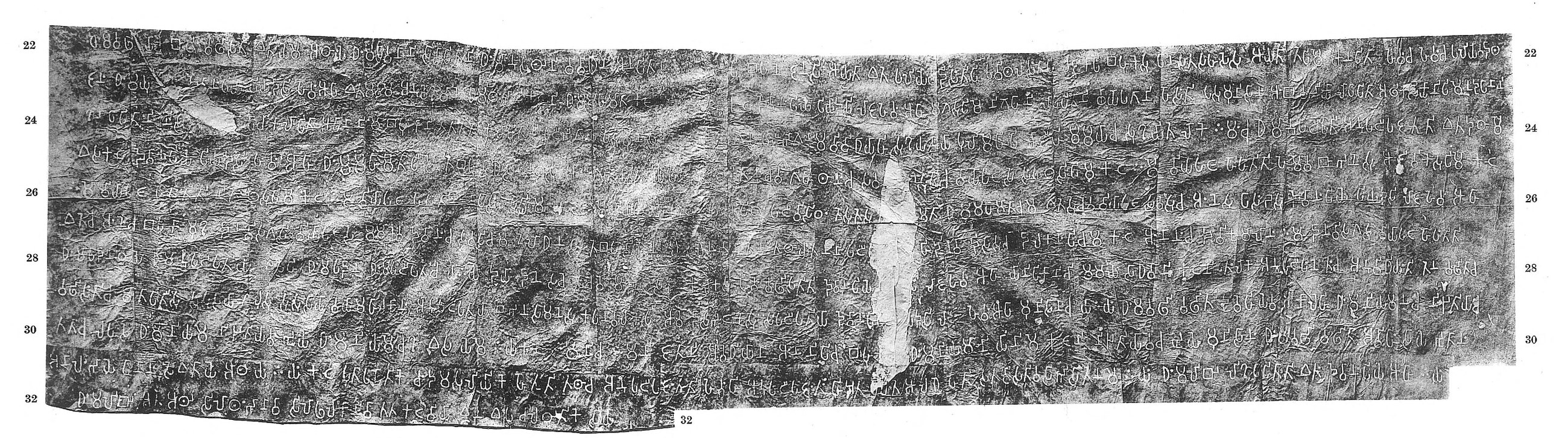
Inked impression (estampage) of the Delhi-Topra pillar, not a photograph of the stone: Hultzsch 1925, plate 'Delhi-Topra pillar: circular inscription' (facing p. 134; archive.org leaf 295), cropped to the band that runs round the whole shaft below the four faces, lines 22-32 (numbered 22 to 32 in both margins); line 32 is short and ends near the middle of the impression. Checked on the image against the transcription (lines 22-32). Text and English: Hultzsch 1925, pp. 132-137 (archive.org leaves 292-294, 296-298).
22dhaṁma-vaḍhiyā cha bāḍhaṁ vaḍhisat[i] (M) etāye me aṭhāye dhaṁma-sāvanāni sāvāpitāni dhaṁmānusathini vividhāni ānapitāni [ya] . . . . . [is]ā pi bahune janasi āyatā e te paliyovadisaṁti pi pavithalisaṁti pi (N) lajūkā pi bahukesu pāna-sata-sahasesu āyatā te pi me ānapitā hevaṁ cha hevaṁ cha paliyovadātha
23janaṁ dhaṁma-yu[ta]ṁ (O) [Dev]ānaṁpiye Piyadasi hevaṁ āhā (P) etameva me anuvekhamāne dhaṁma-thaṁbhāni kaṭāni dhaṁma-mahāmātā kaṭā dhaṁ[ma] . ā . . . e kaṭe (Q) Devānaṁpiye Piyadasi lājā hevaṁ āhā (R) magesu pi me nigohāni lopāpitāni chhāyopagāni hosaṁti pasu-munisānaṁ aṁbā-vaḍikyā lopāpitā (S) aḍha-[kos]ikyāni pi me udupānāni
24khānāpāpitāni niṁsi[ḍha]yā cha kālāpitā (T) āpānāni me ba[h]ukāni tata tata k[ā]lāpitāni paṭībhogāye p[a]su-munisānaṁ (U) [la] . . . . . . esa paṭībhoge nāma (V) vividhāyā hi sukhāyanāyā pulimehi pi lājīhi mamayā cha sukhayite loke (W) imaṁ chu dhaṁmānupaṭīpatī anupaṭīpajaṁtu ti etadathā me
25esa kaṭe (X) Devānaṁpiye Piyadasi hevaṁ āhā (Y) dhaṁma-mahāmātā pi me te bahuvidhesu aṭhesu ānugahikesu viyāpaṭāse pavajītānaṁ cheva gihithānaṁ cha sava . . . . [ḍ]esu pi cha viyāpaṭāse (Z) saṁghaṭhasi pi me kaṭe ime viyāpaṭā hohaṁti ti hemeva bābhanesu ā[j]īvikesu pi me kaṭe
26ime viyāpaṭā hohaṁti ti nigaṁṭhesu pi me kaṭe ime viyāpaṭā hohaṁti nānā-pāsaṁḍesu pi me [ka]ṭe ime viyāpaṭā hohaṁti ti paṭivisiṭhaṁ paṭīvisiṭhaṁ tesu tesu [te] . . . . . . mātā (AA) dhaṁma-mahāmātā chu me etesu cheva viyā[pa]ṭā savesu cha aṁnesu pāsaṁḍesu (BB) Devānaṁpiye Piyadasi lājā hevaṁ āhā
27(CC) ete cha aṁne cha bahukā mukhā dāna-visagasi viyāpaṭāse mama cheva devinaṁ cha savasi cha me olodhanasi te bahuvidhena ā[kā]lena tāni tāni tuṭhāyatan[ā]ni paṭī . . . . . . . . hida cheva disāsu cha (DD) dālakānaṁ pi cha me kaṭe aṁnānaṁ cha devi-kumālānaṁ ime dāna-visagesu viyāpaṭā hohaṁti ti
28dhaṁmāpadānaṭhāye dhaṁmānupaṭipatiye (EE) esa hi dhaṁmāpadāne dhaṁma-paṭīpati cha yā iyaṁ dayā dāne sache sochave madave sādha[v]e cha lokasa hevaṁ vaḍhisati ti (FF) Devānaṁpiye [P . . . . . s . l]ājā hevaṁ āhā (GG) yāni hi [k]ānichi mamiyā sādhavāni kaṭāni taṁ loke anūp[a]ṭīpaṁne taṁ cha anuvidhiyaṁti (HH) tena vaḍhitā cha
29vaḍhisaṁti cha mātā-pit[i]su sususāyā gulusu sususāyā vayo-mahālakānaṁ anupaṭīpatiyā bābhana-samanesu kapana-valākesu āva dāsa-bhaṭakesu saṁpaṭīpatiyā (II) Devānaṁp[iy . . . ya]dasi lājā hevaṁ āhā (JJ) munisānaṁ chu yā iyaṁ dhaṁma-vaḍhi vaḍhitā duvehi yeva ākālehi dhaṁma-niyamena cha nijhatiyā [cha]
30(KK) tata chu lahu se dhaṁma-niyame nijhatiyā va bhuye (LL) dhaṁma-niyame chu kho esa ye me iyaṁ kaṭe imāni cha imāni jātāni avadhiyāni (MM) aṁnāni pi chu bahu[k] . . . dhaṁma-niyamāni yāni me kaṭāni (NN) nijhatiyā va chu bhuye munisānaṁ dhaṁma-vaḍhi vaḍhitā avihiṁsāye bhutānaṁ
31anālaṁbhāye pānānaṁ (OO) se etāye a[th]āye iyaṁ kaṭe putā-papotike chaṁdama-suliyike hotu ti tathā cha anupaṭīpajaṁtu ti (PP) hevaṁ hi anupaṭīpajaṁtaṁ hi[da]ta-[pāla]te āladhe hoti (QQ) satavisati-vasābhis[i]tena me iyaṁ dhaṁma-libi likhāpāpitā ti (RR) etaṁ Devānaṁpiye āhā (SS) iyaṁ
32dhaṁma-libi ata athi silā-thaṁbhāni vā silā-phalakāni vā tata kaṭaviyā ena esa chila-ṭhitike siyā
(M) For this purpose proclamations on morality were issued by me, (and) manifold instruction in morality was ordered (to be given), [in order that those agents] (of mine) too, who are occupied with many people, will exhort (them) and will explain (morality to them) in detail.
(N) The Lajūkas also, who are occupied with many hundred thousands of men,—these too were ordered by me: ‘In such and such a manner exhort ye the people who are devoted to morality’.
(O) Dēvānāṁpriya Priyadarśin speaks thus.
(P) Having in view this very (matter), I have set up pillars of morality, appointed Mahāmātras of morality, (and) issued [proclamations] on morality.
(Q) King Dēvānāṁpriya Priyadarśin speaks thus.
(R) On the roads banyan-trees were caused to be planted by me, (in order that) they might afford shade to cattle and men, (and) mango-groves were caused to be planted.
(S) And (at intervals) of eight kōs wells were caused to be dug by me, and flights of steps (for descending into the water) were caused to be built.
(T) Numerous drinking-places were caused to be established by me, here and there, for the enjoyment of cattle and men.
(U) [But] this so-called enjoyment (is) [of little consequence].
(V) For with various comforts have the people been blessed both by former kings and by myself.
(W) But by me this has been done for the following purpose: that they might conform to that practice of morality.
(X) Dēvānāṁpriya Priyadarśin speaks thus.
(Y) Those my Mahāmātras of morality too are occupied with affairs of many kinds which are beneficial to ascetics as well as to householders, and they are occupied also with all sects.
(Z) Some (Mahāmātras) were ordered by me to busy themselves with the affairs of the Saṁgha; likewise others were ordered by me to busy themselves also with the Brāhmaṇas (and) Ājīvikas; others were ordered by me to busy themselves also with the Nirgranthas; others were ordered by me to busy themselves also with various (other) sects; (thus) different Mahāmātras (are busying themselves) specially with different (congregations).
(AA) But my Mahāmātras of morality are occupied with these (congregations) as well as with all other sects.
(BB) King Dēvānāṁpriya Priyadarśin speaks thus.
(CC) Both these and many other chief (officers) are occupied with the delivery of the gifts of myself as well as of the queens, and among my whole harem [they are reporting] in divers ways different worthy recipients of charity both here and in the provinces.
(DD) And others were ordered by me to busy themselves also with the delivery of the gifts of (my) sons and of other queens’ sons, in order (to promote) noble deeds of morality (and) the practice of morality.
(EE) For noble deeds of morality and the practice of morality (consist in) this, that (morality), viz. compassion, liberality, truthfulness, purity, gentleness, and goodness, will thus be promoted among men.
(FF) King Dēvānāṁpriya Priyadarśin speaks thus.
(GG) Whatsoever good deeds have been performed by me, those the people have imitated, and to those they are conforming.
(HH) Thereby they have been made to progress and will (be made to) progress in obedience to mother and father, in obedience to elders, in courtesy to the aged, in courtesy to Brāhmaṇas and Śramaṇas, to the poor and distressed, (and) even to slaves and servants.
(II) King Dēvānāṁpriya Priyadarśin speaks thus.
(JJ) Now this progress of morality among men has been promoted (by me) only in two ways, (viz.) by moral restrictions and by conversion.
(KK) But among these (two), those moral restrictions are of little consequence; by conversion, however, (morality is promoted) more considerably.
(LL) Now moral restrictions indeed are these, that I have ordered this, (that) certain animals are inviolable.
(MM) But there are also many other moral restrictions which have been imposed by me.
(NN) By conversion, however, the progress of morality among men has been promoted more considerably, (because it leads) to abstention from hurting living beings (and) to abstention from killing animals.
(OO) Now for the following purpose has this been ordered, that it may last as long as (my) sons and great-grandsons (shall reign and) as long as the moon and the sun (shall shine), and in order that (men) may conform to it.
(PP) For if one conforms to this, (happiness) in this (world) and in the other (world) will be attained.
(QQ) This rescript on morality was caused to be written by me (when I had been) anointed twenty-seven years.
(RR) Concerning this, Dēvānāṁpriya says.
(SS) This rescript on morality must be engraved there, where either stone pillars or stone slabs are (available), in order that this may be of long duration.
Notes
- Hultzsch translates dhamma as 'morality'; other translators use 'Dharma' or 'righteousness'.
- Words in round brackets in the English are Hultzsch's additions for sense; words in square brackets render damaged letters.
Cite
Sources
- Source: Delhi-Topra pillar, Firoz Shah Kotla, Delhi (originally at Topra, Haryana), pillar inscription of Ashoka; Hultzsch's collotype plates of inked impressions (1925); Hultzsch's transliteration and English (CII I, 1925), read from the archive.org scan (holding institution)
- Critical edition: E. Hultzsch, Inscriptions of Asoka (CII I, 1925), transliteration read from the scan
← previous · → next · v cycle view · l back to library