Strabo, Geography 2.3.6: Posidonius on Plato's Atlantis
Introduction
In book 2 of his Geography Strabo reviews the work of the Stoic Posidonius (c. 135-51 BCE). Posidonius was right, he says, about the risings and sinkings of the earth caused by earthquakes, and did well to cite Plato, that the story of the island of Atlantis may not be an invention: Solon, on the authority of the Egyptian priests, said it once existed and vanished, an island no smaller than a continent. Posidonius thought this better than saying that its inventor made it vanish, as the poet did the Achaean wall. This is the earliest surviving discussion of whether Plato's Atlantis was real.
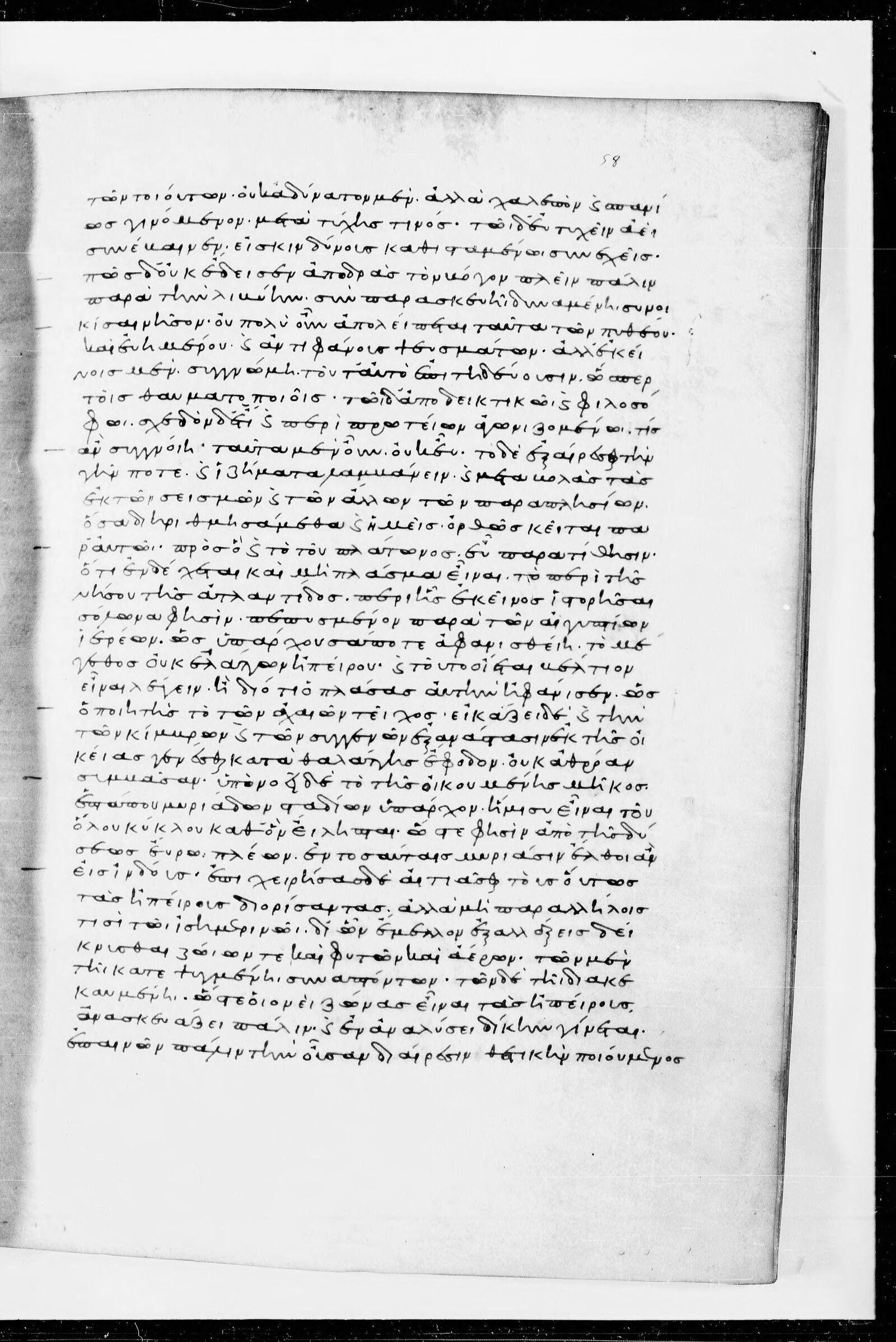
The manuscript is Paris, BnF, grec 1397 (Strabo A), the oldest manuscript of books 1-9, 10th-11th century, in the BnF's black-and-white microfilm images. 2.3.6 stands on fol. 58r, lines 11-29; the words on Plato and Atlantis are on lines 15-17.
How was this verified? (Provenance)
Where on the image
2.3.6 begins at fol. 58r line 11, after ‹ταῦτα μὲν οὖν οὐκ εὖ›: ‹τὸ δὲ ἐξαίρεσθαι τὴν | γῆν ποτε›; the words ‹τὸ τοῦ πλάτωνος εὖ παρατίθησιν ... τῆς ἀτλαντίδος› run over lines 15-17; the section ends at line 29, ‹ἐν τοσαύταις μυριάσιν ἔλθοι ἂν | εἰς ἰνδούς›, followed on the same line by 2.3.7 ‹ἐπιχειρήσας δὲ αἰτιᾶσθαι›. The page begins ‹τῶν τοιούτων· οὐ καὶ δυνατὸν μέν›. Read on the BnF images (line-numbered page and crops).
τὸ δὲ ἐξαίρεσθαι τὴν γῆν ποτε καὶ ἱζήματα λαμβάνειν καὶ μεταβολὰς τὰς ἐκ τῶν σεισμῶν καὶ τῶν ἄλλων τῶν παραπλησίων, ὅσα διηριθμησάμεθα καὶ ἡμεῖς, ὀρθῶς κεῖται παρʼ αὐτῷ· πρὸς ὃ καὶ τὸ τοῦ Πλάτωνος εὖ παρατίθησιν, ὅτι ἐνδέχεται καὶ μὴ πλάσμα εἶναι τὸ περὶ τῆς νήσου τῆς Ἀτλαντίδος, περὶ ἧς ἐκεῖνος ἱστορῆσαι Σόλωνά φησι πεπυσμένον παρὰ τῶν Αἰγυπτίων ἱερέων, ὡς ὑπάρχουσά ποτε ἀφανισθείη, τὸ μέγεθος οὐκ ἐλάττων ἠπείρου· καὶ τοῦτο οἴεται βέλτιον εἶναι λέγειν ἢ διότι ὁ πλάσας αὐτὴν ἠφάνισεν, ὡς ὁ ποιητὴς τὸ τῶν Ἀχαιῶν τεῖχος. εἰκάζει δὲ καὶ τὴν τῶν Κίμβρων καὶ τῶν συγγενῶν ἐξανάστασιν ἐκ τῆς οἰκείας κατὰ λῃστείαν γενέσθαι, οὐ κατὰ θαλάττης ἔφοδον ἀθρόαν συμβᾶσαν. ὑπονοεῖ δὲ τὸ τῆς οἰκουμένης μῆκος ἑπτά που μυριάδων σταδίων ὑπάρχον ἥμισυ εἶναι τοῦ ὅλον κύκλου καθʼ ὃν εἴληπται, ὥστε (φησίν) ἀπὸ τῆς δύσεως εὔρῳ πλέων ἐν τοσαύταις μυριάσιν ἔλθοι ἂν εἰς Ἰνδούς.
However, he is right in attributing to earthquakes and other similar causes, which we also have enumerated, the risings, slips, and changes which at various periods come over the earth. He did well, too, in citing the opinion of Plato, that the tradition concerning the Island of Atlantis might be received as something more than a mere fiction, it having been related by Solon on the authority of the Egyptian priests, that this island, almost as large as a continent, was formerly in existence, although now it had disappeared. Posidonius thinks it better to quote this than to say, He who brought it into existence can also cause it to disappear, as the poet did the wall of the Achivi. He (Posidonius) is also of opinion that the emigration of the Cimbrians and other kindred races from their native territory, was gradual, and occasioned by the inundation of the sea, and by no means a sudden movement. He supposes that the length of the inhabited earth is about 70,000 stadia, being the half of the whole circle on which it is taken; so that, says he, starting from the west, one might, aided by a continual east wind, reach India in so many thousand stadia.
Notes
- Greek: Meineke's Teubner text (Perseus), not a transcription of the manuscript.
- English: Hamilton and Falconer (Bohn, 1854-1857), who translated the earlier text of Kramer; small differences from Meineke's Greek result.
Cite
Sources
- Source: Paris, BnF, grec 1397 (Strabo A) fol. 58r via Gallica (BnF) + Meineke's Greek (Perseus) + Hamilton and Falconer's English (1854-1857, Perseus) (holding institution)
- Critical edition: Perseus editions named per passage
← previous · → next · v cycle view · l back to library