Berossus, Babyloniaka book 2: the ten kings and the flood of Xisouthros (Alexander Polyhistor in George Syncellus)
Introduction
Berossus was a priest of Bel at Babylon who, around 290-278 BCE, wrote a history of his country in Greek for the Seleucid king Antiochus I. His three books ran from the creation of the world through the ten kings who reigned before the flood to the Neo-Babylonian kings. The work is lost. Its fullest remains reached the Byzantine chronicler George Syncellus (c. 800 AD) through a chain of excerpts: Alexander Polyhistor (1st c. BCE) summarized Berossus, Eusebius of Caesarea quoted Polyhistor, and Syncellus copied Eusebius into his Ecloga chronographica.
The manuscript shown is Paris, Bibliothèque nationale de France, grec 1711, an 11th-century copy of Syncellus' chronicle, the oldest and principal witness to the text. The images are the library's black-and-white microfilm, published on Gallica. Each section points at the page that carries it; the line numbers in the notes were counted on the images.
This entry continues the same extract into Berossus' second book: the ten kings before the flood, who reigned 120 sars (one sar = 3,600 years, 432,000 years in all), and the flood under the tenth king Xisouthros. Kronos warns him in a dream, he buries the writings in the city of the sun at Sippar, builds a ship five stadia long, sends out birds three times, lands in Armenia and is taken to live with the gods. The story corresponds to the Babylonian flood stories of Atrahasis and Utnapishtim.
Not included: the summaries of Berossus that survive only in the Armenian translation of Eusebius' Chronicle (no Greek), Syncellus' own remarks on Berossus' chronology (no public-domain English translation), and the short testimonia in other authors.
How was this verified? (Provenance)
Where on the image
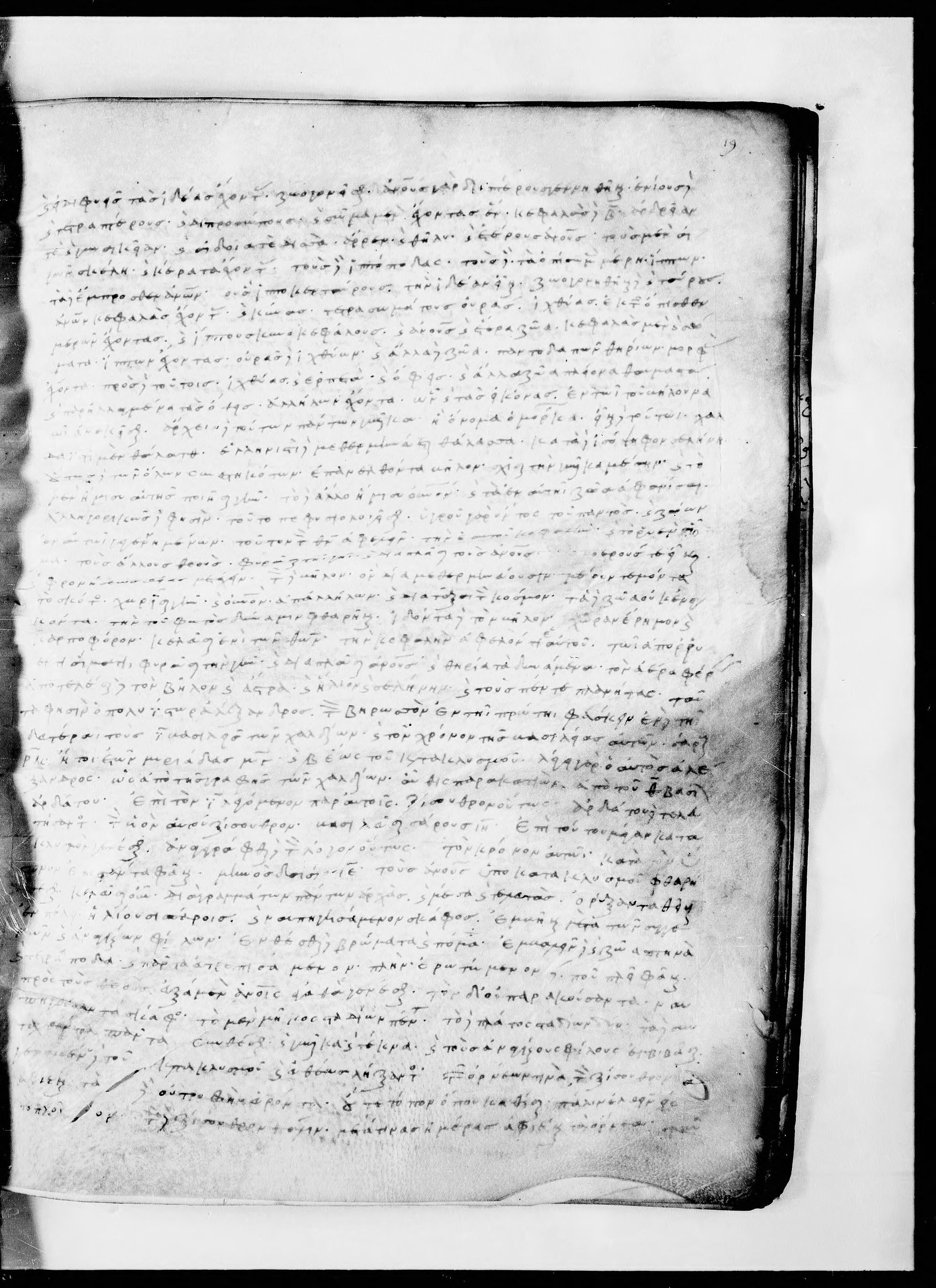
Paris gr. 1711, p. 19 (Gallica image f23, right page of the opening; microfilm). The summary of book 2 begins at the end of line 24 'ἐν τῇ | δευτέρᾳ τοὺς ι´ βασιλέας τῶν Χαλδαίων'; line 26 'λέγει γὰρ ὁ αὐτὸς Ἀλέ-|ξανδρος'; the quotation 'Ἀρδάτου δὲ τελευτήσαντος' begins at the end of line 28, and the section ends on line 30 'ἀναγεγράφθαι δὲ τὸν λόγον οὕτως'. Checked on the image. Viewer: https://gallica.bnf.fr/ark:/12148/btv1b10723005g/f23.item The Greek shown is Müller's edited text; the copyist's wording on the page differs in places (for example the manuscript reads Κορκυραίων where Müller prints Κορδυαίων).
Ἐν δὲ τῇ δευτέρᾳ τοὺς δέκα βασιλεῖς τῶν Χαλδαίων καὶ τὸν χρόνον τῆς βασιλείας αὐτῶν, σάρους ἑκατὸν εἴκοσιν, ἤτοι ἐτῶν μυριάδας τεσσαράκοντα τρεῖς καὶ δύο χιλιάδας, ἕως τοῦ κατακλυσμοῦ· λέγει γὰρ ὁ αὐτὸς Ἀλέξανδρος ὡς ἀπὸ τῆς γραφῆς τῶν Χαλδαίων αὖθις παρακατιὼν ἀπὸ τοῦ ἐνάτου βασιλέως Ἀρδάτου ἐπὶ τὸν δέκατον λεγόμενον παρ’ αὐτοῖς Ξίσουθρον οὕτως· «Ἀρδάτου δὲ τελευτήσαντος τὸν υἱὸν αὐτοῦ Ξίσουθρον βασιλεῦσαι σάρους ὀκτωκαίδεκα· ἐπὶ τούτου μέγαν κατακλυσμὸν γενέσθαι· ἀναγεγράφθαι δὲ τὸν λόγον οὕτως·
(In the second book was contained the history of the ten kings of the Chaldæans, and the periods of the continuance of each reign, which consisted collectively of an hundred and twenty sari, or four hundred and thirty-two thousand years; reaching to the time of the Deluge. For Alexander, enumerating the kings from the writings of the Chaldæans, after the ninth Ardates, proceeds to the tenth, who is called by them Xisuthrus, in this manner:) After the death of Ardates, his son Xisuthrus reigned eighteen sari. In his time happened a great Deluge; the history of which is thus described.
Where on the image
Paris gr. 1711, p. 19 (Gallica image f23, right page of the opening; microfilm). §2 begins on line 30 'τὸν Κρόνον αὐτῷ κατὰ τὸν ὕπνον' and ends on line 36 '...ἀνθρώποις ἀγαθὰ γενέσθαι'. Checked on the image. Viewer: https://gallica.bnf.fr/ark:/12148/btv1b10723005g/f23.item The Greek shown is Müller's edited text; the copyist's wording on the page differs in places (for example the manuscript reads Κορκυραίων where Müller prints Κορδυαίων).
2τὸν Κρόνον αὐτῷ κατὰ τὸν ὕπνον ἐπιστάντα φάναι μηνὸς Δαισίου πέμπτῃ καὶ δεκάτῃ τοὺς ἀνθρώπους ὑπὸ κατακλυσμοῦ διαφθαρήσεσθαι. Κελεῦσαι οὖν διὰ γραμμάτων πάντων ἀρχὰς καὶ μέσα καὶ τελευτὰς ὀρύξαντα θεῖναι ἐν πόλει ἡλίου Σισπάροις, καὶ ναυπηγησάμενον σκάφος ἐμβῆναι μετὰ τῶν συγγενῶν καὶ ἀναγκαίων φίλων· ἐνθέσθαι δὲ βρώματα καὶ πόματα, ἐμβαλεῖν δὲ καὶ ζῶα πτηνὰ καὶ τετράποδα, καὶ πάντα εὐτρεπισάμενον πλεῖν· ἐρωτώμενον δὲ ποῦ πλεῖ; φάναι, πρὸς τοὺς θεοὺς, εὐξάμενον ἀνθρώποις ἀγαθὰ γενέσθαι.
2The Deity, Cronus, appeared to him in a vision, and warned him that upon the fifteenth day of the month Dæsius there would be a flood, by which mankind would be destroyed. He therefore enjoined him to write a history of the beginning, procedure, and conclusion of all things; and to bury it in the city of the Sun at Sippara; and to build a vessel, and take with him into it his friends and relations; and to convey on board every thing necessary to sustain life, together with all the different animals; both birds and quadrupeds, and trust himself fearlessly to the deep. Having asked the Deity, whither he was to sail? he was answered, "To the Gods:" upon which he offered up a prayer for the good of mankind.
Where on the image
Paris gr. 1711, p. 19 (Gallica image f23, right page of the opening; microfilm). §3 begins on line 36 'τὸν δὲ οὐ παρακούσαντα ναυ-|πηγῆσαι σκάφος' and ends on line 38 '...τοὺς ἀναγκαίους φίλους ἐμβιβάσαι'. Checked on the image. Viewer: https://gallica.bnf.fr/ark:/12148/btv1b10723005g/f23.item The Greek shown is Müller's edited text; the copyist's wording on the page differs in places (for example the manuscript reads Κορκυραίων where Müller prints Κορδυαίων).
3Τὸν δ’ οὐ παρακούσαντα ναυπηγῆσαι σκάφος τὸ μὲν μῆκος σταδίων πέντε, τὸ δὲ πλάτος σταδίων δύο· τὰ δὲ συνταχθέντα πάντα συνθέσθαι, καὶ γυναῖκα καὶ τέκνα καὶ τοὺς ἀναγκαίους φίλους ἐμβιβάσαι.
3He then obeyed the divine admonition: and built a vessel five stadia in length, and two in breadth. Into this he put every thing which he had prepared; and last of all conveyed into it his wife, his children, and his friends.
Where on the image
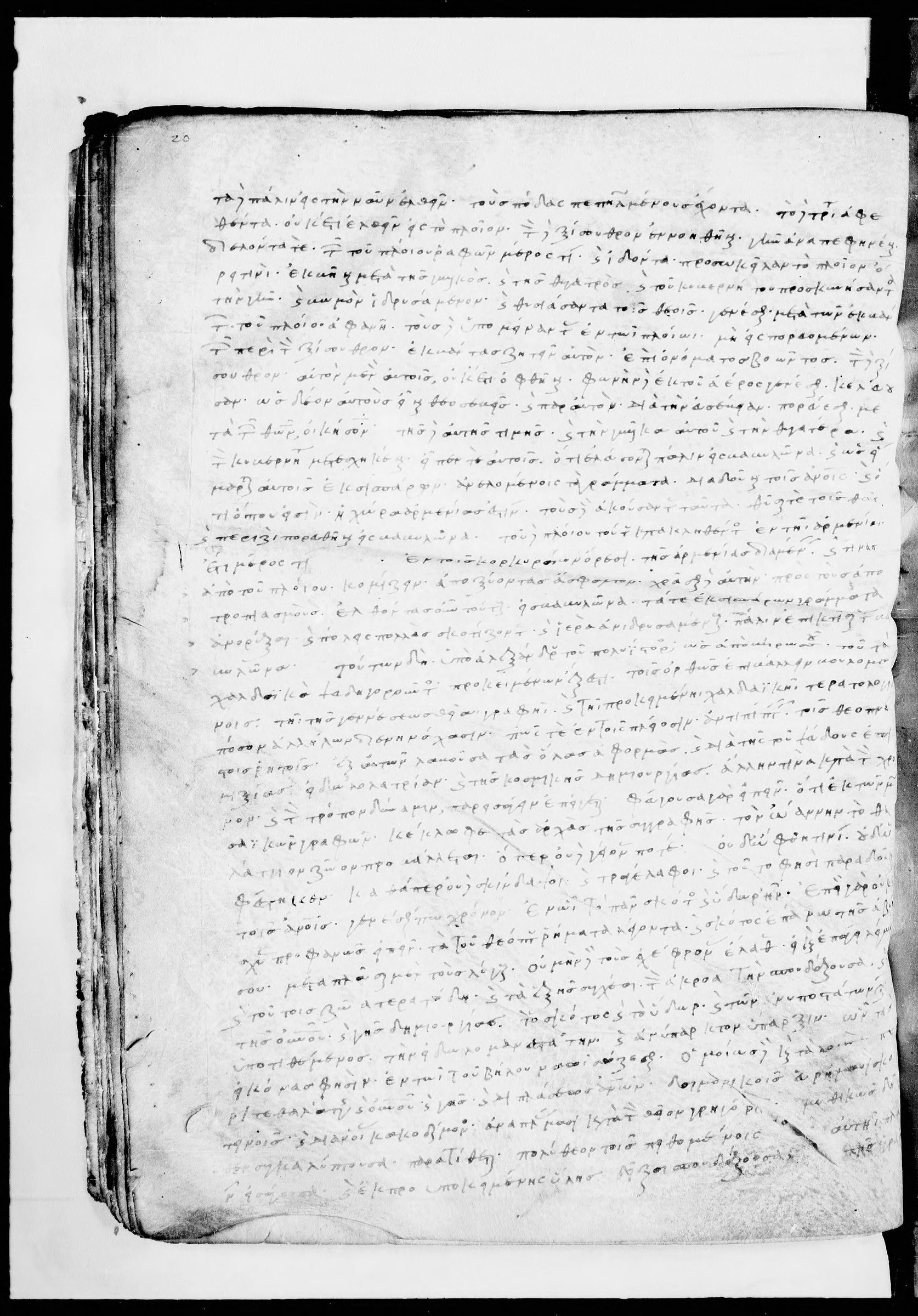
Paris gr. 1711, p. 19 (Gallica image f23, right page of the opening; microfilm). §4 begins on p. 19 line 39 'γενομένου δὲ τοῦ κατακλυσμοῦ καὶ εὐθέως λήξαντος' (corrections in the left margin); p. 19 ends '...μετά τινας ἡμέρας ἀφιέναι τὰ ὄρνεα', p. 20 begins 'ταῦτα δὲ πάλιν εἰς τὴν ναῦν ἐλθεῖν', and the section ends on p. 20 line 6 '...γενέσθαι μετὰ τῶν ἐκβάν-|των τοῦ πλοίου ἀφανῆ'. Checked on the image. Viewer: https://gallica.bnf.fr/ark:/12148/btv1b10723005g/f23.item Paris gr. 1711, p. 20 (Gallica image f24, left page of the opening; microfilm). Checked on the image. Viewer: https://gallica.bnf.fr/ark:/12148/btv1b10723005g/f24.item The Greek shown is Müller's edited text; the copyist's wording on the page differs in places (for example the manuscript reads Κορκυραίων where Müller prints Κορδυαίων).
4Γενομένου δὲ τοῦ κατακλυσμοῦ καὶ εὐθέως λήξαντος, τῶν ὀρνέων τινὰ τὸν Ξίσουθρον ἀφιέναι. Τὰ δὲ οὐ τροφὴν εὑρόντα οὔτε τόπον ὅπου καθίσαι, πάλιν ἐλθεῖν εἰς τὸ πλοῖον. Τὸν δὲ Ξίσουθρον πάλιν μετά τινας ἡμέρας ἀφιέναι τὰ ὄρνεα· ταῦτα δὲ πάλιν εἰς τὴν ναῦν ἐλθεῖν τοὺς πόδας πεπηλωμένους ἔχοντα. Τὸ δὲ τρίτον ἀφεθέντα οὐκ ἔτι ἐλθεῖν εἰς τὸ πλοῖον. Τὸν δὲ Ξίσουθρον ἐννοηθῆναι γῆν ἀναπεφηνέναι, διελθόντα τε τῶν τοῦ πλοίου ῥαφῶν μέρος τι καὶ ἰδόντα προσοκεῖλαν τὸ πλοῖον ὄρει τινὶ ἐκβῆναι μετὰ τῆς γυναικὸς καὶ τῆς θυγατρὸς καὶ τοῦ κυβερνήτου προσκυνήσαντα τὴν γῆν καὶ βωμὸν ἱδρυσάμενον καὶ θυσιάσαντα τοῖς θεοῖς γενέσθαι μετὰ τῶν ἐκβάντων τοῦ πλοίου ἀφανῆ
4After the flood had been upon the earth, and was in time abated, Xisuthrus sent out birds from the vessel; which, not finding any food, nor any place whereupon they might rest their feet, returned to him again. After an interval of some days, he sent them forth a second time; and they now returned with their feet tinged with mud. He made a trial a third time with these birds; but they returned to him no more: from whence he judged that the surface of the earth had appeared above the waters. He therefore made an opening in the vessel, and upon looking out found that it was stranded upon the side of some mountain; upon which he immediately quitted it with his wife, his daughter, and the pilot. Xisuthrus then paid his adoration to the earth: and having constructed an altar, offered sacrifices to the gods, and, with those who had come out of the vessel with him, disappeared.
Where on the image
Paris gr. 1711, p. 20 (Gallica image f24, left page of the opening; microfilm). §5 begins on line 6 'τοὺς δὲ ὑπομείναντας ἐν τῷ πλοίῳ' and ends on line 11 '...τὸν κυβερνήτην μετεσχηκέναι'. Checked on the image. Viewer: https://gallica.bnf.fr/ark:/12148/btv1b10723005g/f24.item The Greek shown is Müller's edited text; the copyist's wording on the page differs in places (for example the manuscript reads Κορκυραίων where Müller prints Κορδυαίων).
5Τοὺς δὲ ὑπομείναντας ἐν τῷ πλοίῳ, μὴ εἰσπορευομένων τῶν περὶ τὸν Ξίσουθρον, ἐκβάντας ζητεῖν αὐτὸν ἐπὶ ὀνόματος βοῶντας· τὸν δὲ Ξίσουθρον αὐτὸν μὲν αὐτοῖς οὐκ ἔτι ὀφθῆναι, φωνὴν δὲ ἐκ τοῦ ἀέρος γενέσθαι κελεύουσαν ὡς δέον αὐτοὺς εἶναι θεοσεβεῖς· καὶ γὰρ αὐτὸν διὰ τὴν εὐσέβειαν πορεύεσθαι μετὰ τῶν θεῶν οἰκήσοντα. Τῆς δὲ αὐτῆς τιμῆς καὶ τὴν γυναῖκα αὐτοῦ καὶ τὴν θυγατέρα καὶ τὸν κυβερνήτην μετεσχηκέναι.
5They, who remained within, finding that their companions did not return, quitted the vessel with many lamentations, and called continually on the name of Xisuthrus. Him they saw no more; but they could distinguish his voice in the air, and could hear him admonish them to pay due regard to religion; and likewise informed them that it was upon account of his piety that he was translated to live with the gods; that his wife and daughter, and the pilot, had obtained the same honour.
Where on the image
Paris gr. 1711, p. 20 (Gallica image f24, left page of the opening; microfilm). §6 begins on line 11 'εἰπεῖν τε αὐτοῖς ὅτι ἐλεύσονται πάλιν εἰς Βαβυλῶνα' and ends on line 14 '...πορευθῆναι εἰς Βαβυλῶνα'. Checked on the image. Viewer: https://gallica.bnf.fr/ark:/12148/btv1b10723005g/f24.item The Greek shown is Müller's edited text; the copyist's wording on the page differs in places (for example the manuscript reads Κορκυραίων where Müller prints Κορδυαίων).
6Εἶπέ τε αὐτοῖς ὅτι ἐλεύσονται πάλιν εἰς Βαβυλῶνα, καὶ ὡς εἵμαρται αὐτοῖς ἐκ Σισπάρων ἀνελομένοις τὰ γράμματα διαδοῦναι τοῖς ἀνθρώποις, καὶ ὅτι εἰσὶν ὅπου ἡ χώρα Ἀρμενίας ἐστί. Τοὺς δὲ ἀκούσαντας ταῦτα θῦσαί τε τοῖς θεοῖς καὶ πέριξ πορευθῆναι εἰς Βαβυλῶνα.
6To this he added, that they should return to Babylonia; and, as it was ordained, search for the writings at Sippara, which they were to make known to all mankind: moreover that the place, wherein they then were, was the land of Armenia. The rest having heard these words, offered sacrifices to the gods; and taking a circuit, journeyed towards Babylonia.
Where on the image
Paris gr. 1711, p. 20 (Gallica image f24, left page of the opening; microfilm). §7 begins on line 14 'τοῦ δὲ πλοίου τούτου κατακλιθέντος ἐν τῇ Ἀρμενίᾳ'; line 15 reads 'ἐν τοῖς Κορκυραίων ὄρεσι' (Cory's 'Corcyræan mountains'); the extract ends on line 19 '...ἐπικτίσαι τὴν Βα-|βυλῶνα', where Syncellus' comment 'Τούτων δὴ ἀπὸ Ἀλεξάνδρου τοῦ Πολυΐστορος' begins. Checked on the image. Viewer: https://gallica.bnf.fr/ark:/12148/btv1b10723005g/f24.item The Greek shown is Müller's edited text; the copyist's wording on the page differs in places (for example the manuscript reads Κορκυραίων where Müller prints Κορδυαίων).
7Τοῦ δὲ πλοίου τούτου κατακλιθέντος ἐν τῇ Ἀρμενίᾳ ἔτι μέρος τι ἐν τοῖς Κορδυαίων ὄρεσι τῆς Ἀρμενίας διαμένειν, καί τινας ἀπὸ τοῦ πλοίου κομίζειν ἀποξύοντας ἄσφαλτον, χρᾶσθαι δὲ αὐτῇ πρὸς τοὺς ἀποτροπιασμούς. Ἐλθόντας οὖν τούτους εἰς Βαβυλῶνα τά τε ἐκ Σισπάρων γράμματα ἀνορύξαι καὶ πόλεις πολλὰς κτίζοντας καὶ ἱερὰ ἀνιδρυσαμένους πάλιν ἐπικτίσαι τὴν Βαβυλῶνα.
7The vessel being thus stranded in Armenia, some part of it yet remains in the Corcyræan mountains of Armenia; and the people scrape off the bitumen, with which it had been outwardly coated, and make use of it by way of an alexipharmic and amulet. And when they returned to Babylon, and had found the writings at Sippara, they built cities, and erected temples: and Babylon was thus inhabited again.
Notes
- Greek: C. Müller, Fragmenta Historicorum Graecorum (1848-1851), text taken from the Digital Fragmenta Historicorum Graecorum and proofread against Müller's printed pages. Müller's notes on variant readings, printed in parentheses inside the text, are left out; his square brackets mark words he took to be additions by the excerptors.
- English: I. P. Cory, Ancient Fragments (2nd ed., 1832). Cory sometimes follows readings of the Armenian translation of Eusebius or older editors rather than the Greek printed here, so a few phrases differ from the Greek. His footnotes and source references are omitted. The capitalized heading at the start of the English is Cory's own heading; Syncellus' Greek heading is not translated by Cory.
- The manuscript's wording differs from Müller's edited text in small details. The Greek is the edition, not a transcription of the page.
- The first section joins Syncellus' summary of book 2 (Müller fr. 4) to the start of the quotation (fr. 7), which follow each other without a break in the manuscript.
- Berossus names the ninth king Ardates here; Apollodorus' list calls him Otiartes.
Cite
Sources
- Source: Paris gr. 1711 (George Syncellus, 11th c.) via Gallica + Greek of C. Müller, FHG (DFHG, proofread) + English of I. P. Cory, Ancient Fragments (1832) (holding institution)
- Critical edition: C. Müller, FHG II and IV (via DFHG, proofread); B. Niese 1889 (Perseus)
← previous · → next · v cycle view · l back to library