Bhagavad Gita, Chapter 9: The Yoga of the Kingly Science and the Kingly Secret
Introduction
The Bhagavad Gita ("Song of the Lord") is a dialogue of 700 verses between the prince Arjuna and Krishna, set on the battlefield of Kurukshetra in book 6 (Bhishmaparvan) of the Mahabharata. Its date of composition is debated; many scholars place it in the last centuries BCE. This is chapter 9, The Yoga of the Kingly Science and the Kingly Secret (34 verses as numbered in the manuscript and in Besant's edition).
The pages shown are from a complete Sanskrit manuscript of the Gita at the University of Pennsylvania (Penn Ms. Coll. 390 Item 559), 90 paper leaves of 7 lines in Devanagari, with speaker headings, colophons and verse-end marks in red. Its final colophon (fol. 90r) dates the copy to Saṃvat 1851, the third day of the bright half of Caitra (1794 CE). Chapter 9 runs from fol. 44r to the chapter colophon on fol. 48r.
Each section below is one manuscript page: the verses whose text ends on that page, located by reading the scribe's verse numbers and the first and last words on the image. When a verse begins at the foot of one page and ends on the next, both pages are shown. The Sanskrit and English are from Annie Besant's edition and translation (4th edition, 1922), which prints each verse in Devanagari with its English; the manuscript's spelling differs from the printed text in small details.
How was this verified? (Provenance)
Where on the image
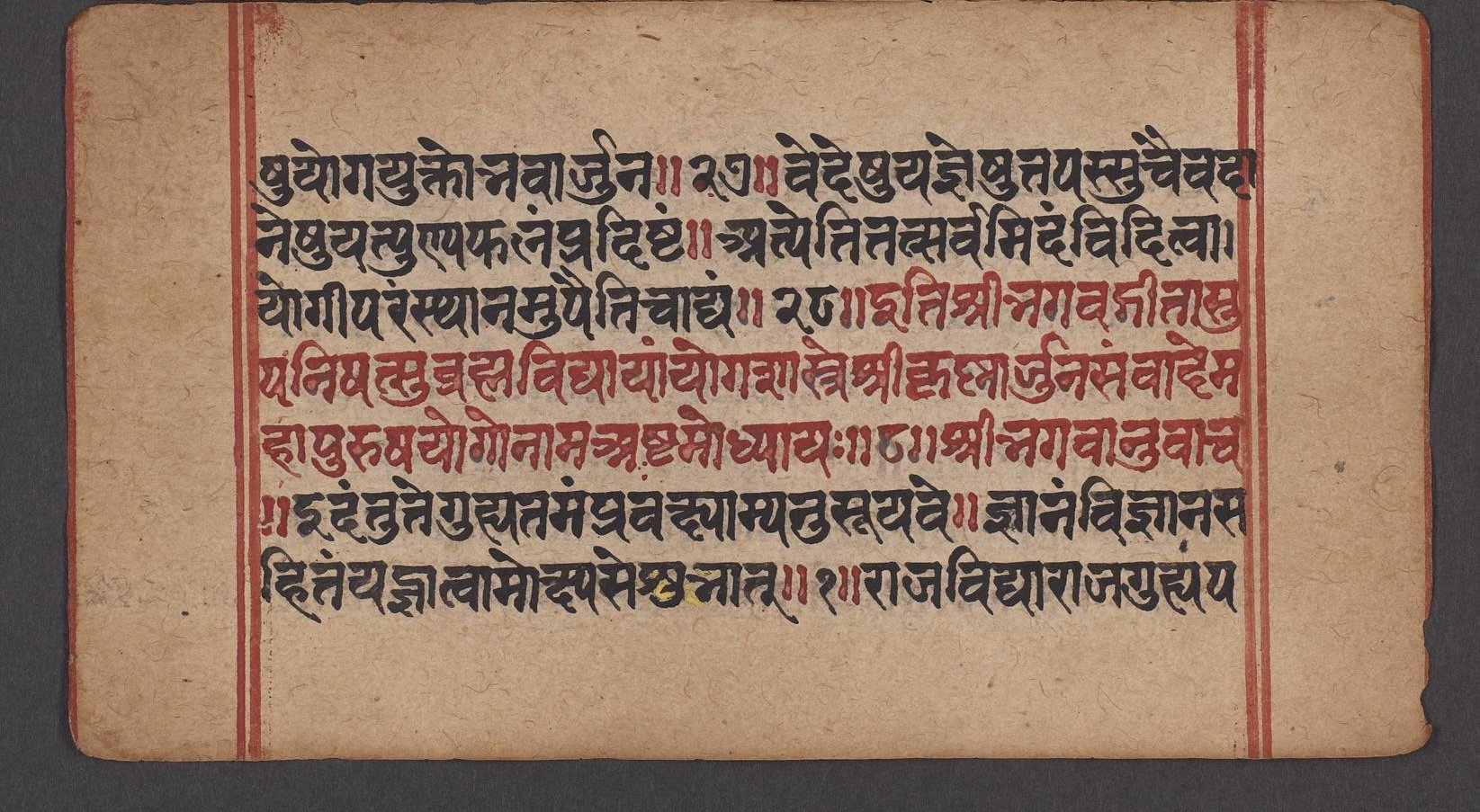
fol. 44r (catalogue label 43r =44r; the scribe repeated folio number 41), OPenn image 6555_0043 (lower leaf). Checked on the image: TEI '43r (=44r)'; ||27|| line 1, ||28|| line 3; colophon lines 3-5 '... mahāpuruṣayogo nāma aṣṭamo 'dhyāyaḥ ||8||'; śrībhagavān uvāca; 9.1 ends line 7 (||1||), 9.2 begins line 7.
1श्रीभगवानुवाच ।
इदं तु ते गुह्यतमं प्रवक्ष्याम्यनसूयवे ।
ज्ञानं विज्ञानसहितं यज्ज्ञात्वा मोक्ष्यसेऽशुभात् ॥ १ ॥
1The Blessed Lord said:
To thee, the uncarping, verily shall I declare this profoundest Secret, wisdom with knowledge combined, which, having known, thou shalt be freed from evil.
Where on the image
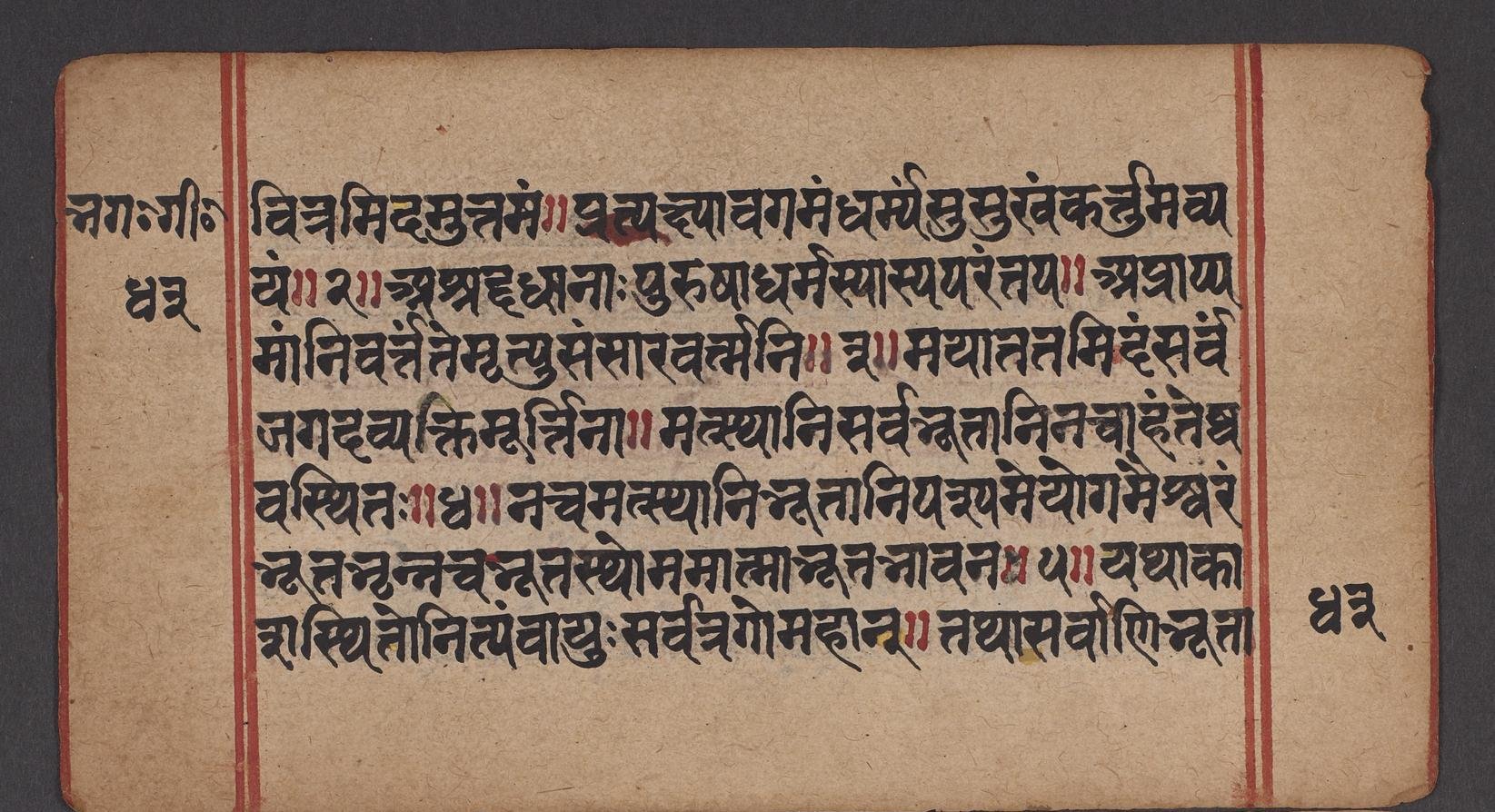
fol. 44v (catalogue label 43v =44v; the scribe repeated folio number 41), OPenn image 6555_0044 (upper leaf). Checked on the image: TEI '43v (=44v)'; ||2|| line 2 ... ||5|| line 6. Verse 9.2 begins on the previous page, fol. 44r, so both pages are shown.
2राजविद्या राजगुह्यं पवित्रमिदमुत्तमम् ।
प्रत्यक्षावगमं धर्म्यं सुसुखं कर्तुमव्ययम् ॥ २ ॥
3अश्रद्दधानाः पुरुषा धर्मस्यास्य परन्तप ।
अप्राप्य मां निवर्तन्ते मृत्युसंसारवर्त्मनि ॥ ३ ॥
4मया ततमिदं सर्वं जगदव्यक्तमूर्तिना ।
मत्स्थानि सर्वभूतानि न चाहं तेष्ववस्थितः ॥ ४ ॥
5न च मत्स्थानि भूतानि पश्य मे योगमैश्वरम् ।
भूतभृन्न च भूतस्थो ममात्मा भूतभावनः ॥ ५ ॥
2Kingly Science, kingly Secret, supreme Purifier, this; intuitional, according to righteousness, very easy to perform, imperishable.
3Men without faith in this knowledge, O Parantapa, not reaching Me, return to the paths of this world of death.
4By Me all this world is pervaded in My unmanifested aspect; all beings have root in Me, I am not rooted in them.
5Nor have beings root in Me; behold My sovereign Yoga! The support of beings, yet not rooted in beings, My Self their efficient cause.
Where on the image
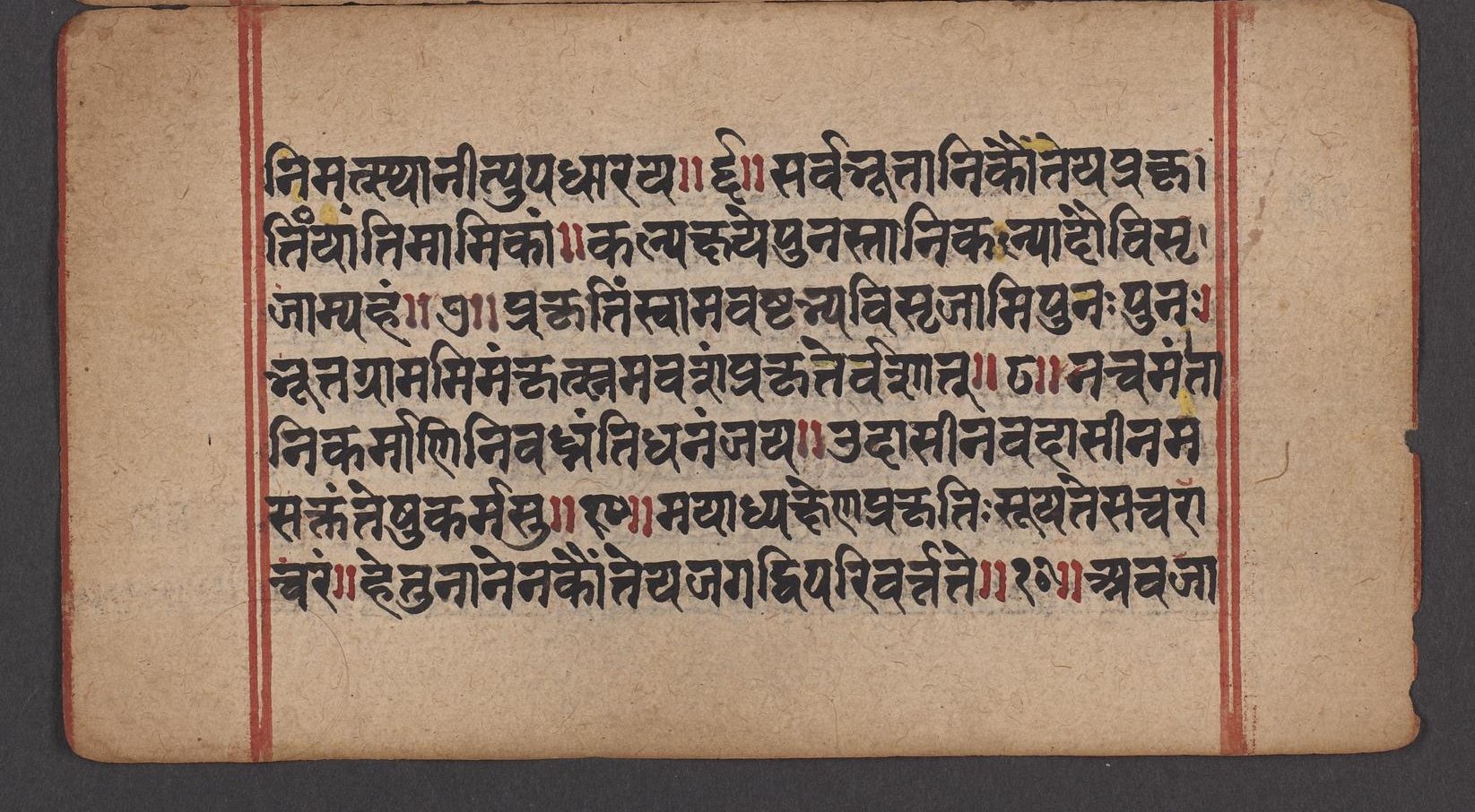
fol. 45r (catalogue label 44r =45r; the scribe repeated folio number 41), OPenn image 6555_0044 (lower leaf). Checked on the image: TEI '44r (=45r)'; ||6|| line 1 ... ||10|| line 7. Verse 9.6 begins on the previous page, fol. 44v, so both pages are shown.
6यथाऽऽकाशस्थितो नित्यं वायुः सर्वत्रगो महान् ।
तथा सर्वाणि भूतानि मत्स्थानीत्युपधारय ॥ ६ ॥
7सर्वभूतानि कौन्तेय प्रकृतिं यान्ति मामिकाम् ।
कल्पक्षये पुनस्तानि कल्पादौ विसृजाम्यहम् ॥ ७ ॥
8प्रकृतिं स्वामवष्टभ्य विसृजामि पुनः पुनः ।
भूतग्राममिमं कृत्स्नमवशं प्रकृतेर्वशात् ॥ ८ ॥
9न च मां तानि कर्माणि निबध्नन्ति धनञ्जय ।
उदासीनवदासीनमसक्तं तेषु कर्मसु ॥ ९ ॥
10मयाऽध्यक्षेण प्रकृतिः सूयते सचराचरम् ।
हेतुनाऽनेन कौन्तेय जगद्विपरिवर्तते ॥ १० ॥
6As the mighty air everywhere moving is rooted in the Ether, so all beings rest rooted in Me—thus know thou.
7All beings, O Kaunteya, enter my lower nature at the end of a world-age; at the beginning of a world-age again I emanate them.
8Hidden in Nature, which is mine own, I emanate again and again all this multitude of beings, helpless, by the force of Nature.
9Nor do these works bind me, O Dhananjaya, enthroned on high unattached to actions.
10Under Me as supervisor, Nature sends forth the moving and unmoving: because of this, O Kaunteya, the universe revolves.
Where on the image
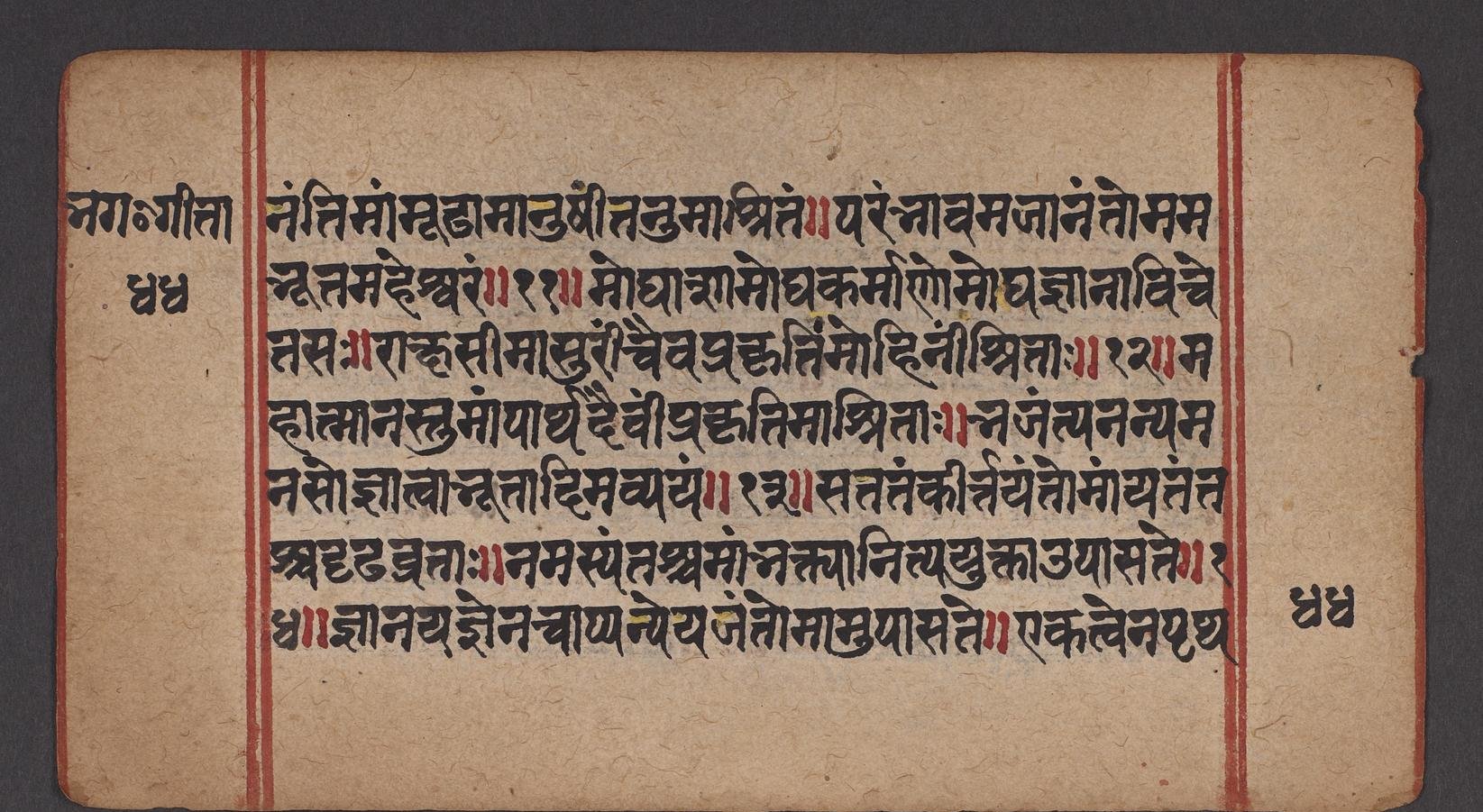
fol. 45v (catalogue label 44v =45v; the scribe repeated folio number 41), OPenn image 6555_0045 (upper leaf). Checked on the image: TEI '44v (=45v)'; ||11|| line 2 ... ||14|| line 7. Verse 9.11 begins on the previous page, fol. 45r, so both pages are shown.
11अवजानन्ति मां मूढा मानुषीं तनुमाश्रितम् ।
परं भावमजानन्तो मम भूतमहेश्वरम् ॥ ११ ॥
12मोघाशा मोघकर्माणो मोघज्ञाना विचेतसः ।
राक्षसीमासुरीं चैव प्रकृतिं मोहिनीं श्रिताः ॥ १२ ॥
13महात्मानस्तु मां पार्थ दैवीं प्रकृतिमाश्रिताः ।
भजन्त्यनन्यमनसो ज्ञात्वा भूतादिमव्ययम् ॥ १३ ॥
14सततं कीर्तयन्तो मां यतन्तश्च दृढव्रताः ।
नमस्यन्तश्च मां भक्त्या नित्ययुक्ता उपासते ॥ १४ ॥
11The foolish disregard Me, when clad in human semblance, ignorant of My supreme nature, the great Lord of beings;
12Empty of hope, empty of deeds, empty of wisdom, senseless, partaking of the deceitful, brutal and demoniacal nature.
13Verily the Mahâtmâs, O Partha, partaking of My divine nature, worship with unwavering mind, having known Me, the imperishable source of beings.
14Always magnifying Me, strenuous, firm in vows, prostrating themselves before Me, they worship Me with devotion ever harmonised.
Where on the image
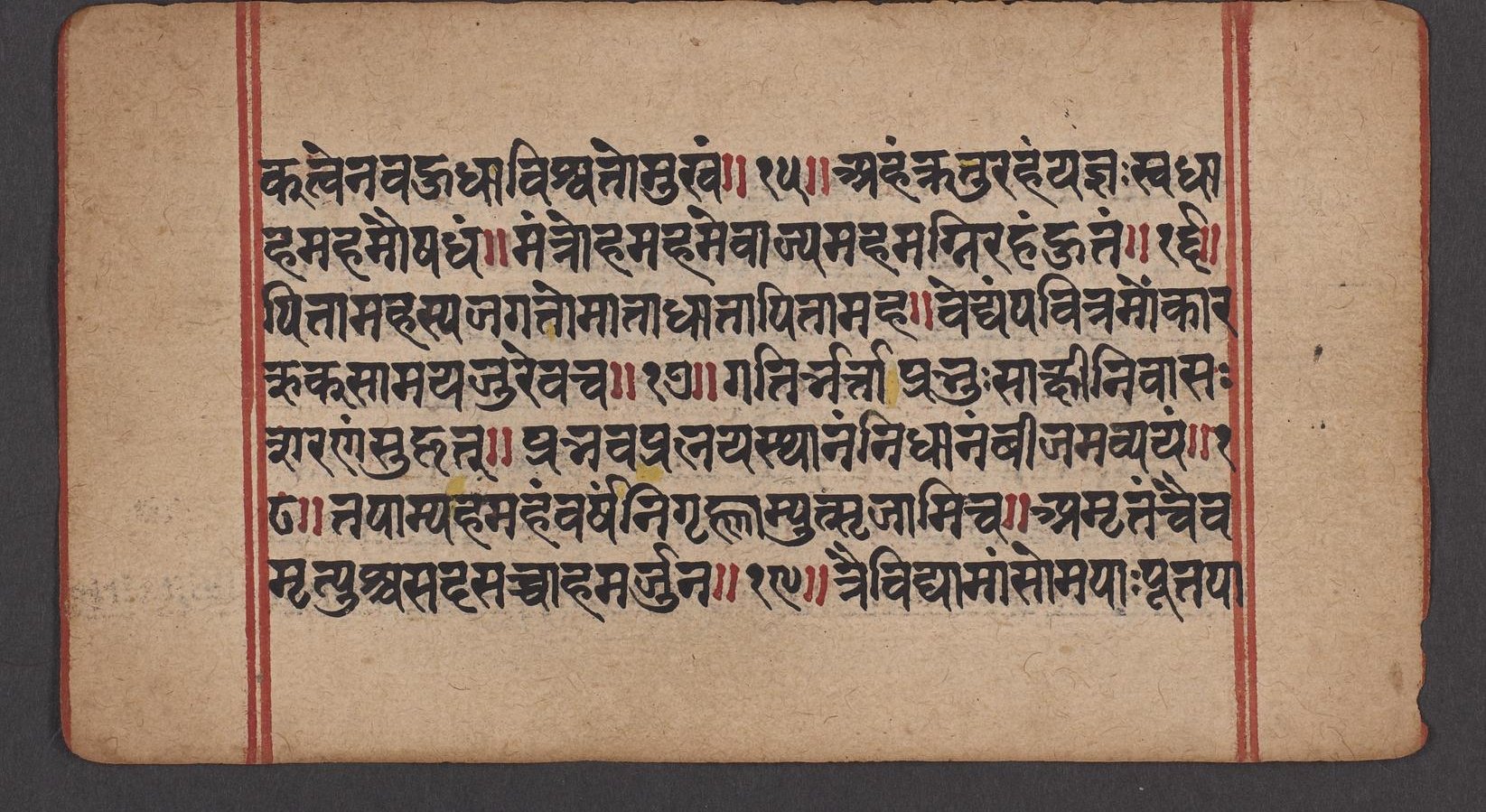
fol. 46r (catalogue label 45r =46r; the scribe repeated folio number 41), OPenn image 6555_0045 (lower leaf). Checked on the image: TEI '45r (=46r)'; ||15|| line 1 ... ||19|| line 7. Verse 9.15 begins on the previous page, fol. 45v, so both pages are shown.
15ज्ञानयज्ञेन चाप्यन्ये यजन्तो मामुपासते ।
एकत्वेन पृथक्त्वेन बहुधा विश्वतोमुखम् ॥ १५ ॥
16अहं क्रतुरहं यज्ञः स्वधाऽहमहमौषधम् ।
मन्त्रोऽहमहमेवाज्यमहमग्निरहं हुतम् ॥ १६ ॥
17पिताऽहमस्य जगतो माता धाता पितामहः ।
वेद्यं पवित्रमोङ्कार ऋक् साम यजुरेव च ॥ १७ ॥
18गतिर्भर्ता प्रभुः साक्षी निवासः शरणं सुहृत् ।
प्रभवः प्रलयः स्थानं निधानं बीजमव्ययम् ॥ १८ ॥
19तपाम्यहमहं वर्षं निगृह्णाम्युत्सृजामि च ।
अमृतं चैव मृत्युश्च सदसच्चाहमर्जुन ॥ १९ ॥
15Others also, sacrificing with the sacrifice of wisdom, worship Me as the One and the Manifold everywhere present.
16I the ablation; I the sacrifice; I the ancestral offering; I the fire-giving herb; the mantram I; I also the butter; I the fire; the burnt-offering I;
17I the Father of this universe, the Mother, the Supporter, the Grandsire, the Holy one to be known, the Word of Power, and also the Rik, Sâma, and Yajur,
18The Path, Husband, Lord, Witness, Abode, Shelter, Lover, Origin, Dissolution, Foundation, house, Seed imperishable.
19I give heat; I hold back and send forth the rain; immortality and also death, being and non-being am I, Arjuna.
Where on the image
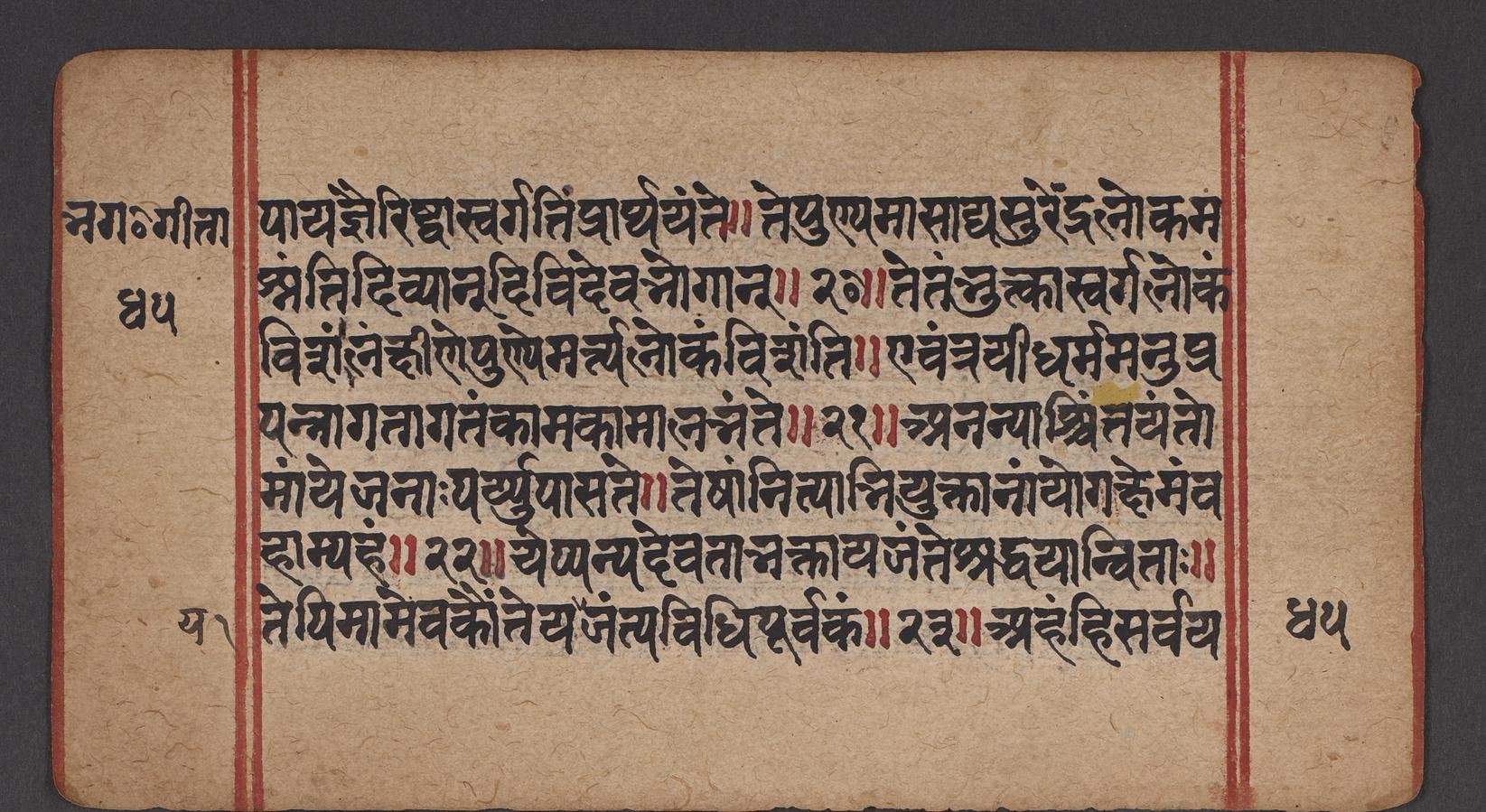
fol. 46v (catalogue label 45v =46v; the scribe repeated folio number 41), OPenn image 6555_0046 (upper leaf). Checked on the image: TEI '45v (=46v)'; ||20|| line 2 ... ||23|| line 7. Verse 9.20 begins on the previous page, fol. 46r, so both pages are shown.
20त्रैविद्या मां सोमपाः पूतपापाः यज्ञैरिष्ट्वा स्वर्गतिं प्रार्थयन्ते ।
ते पुण्यमासाद्य सुरेन्द्रलोकमश्नन्ति दिव्यान्दिवि देवभोगान् ॥ २० ॥
21ते तं भुक्त्वा स्वर्गलोकं विशालम्
क्षीणे पुण्ये मर्त्यलोकं विशन्ति ।
एवं त्रयीधर्ममनुप्रपन्नाः
गतागतं कामकामा लभन्ते ॥ २१ ॥
22अनन्याश्चिन्तयन्तो मां ये जनाः पर्युपासते ।
तेषां नित्याभियुक्तानां योगक्षेमं वहाम्यहम् ॥ २२ ॥
23येऽप्यन्यदेवताभक्ता यजन्ते श्रद्धयाऽन्विताः ।
तेऽपि मामेव कौन्तेय यजन्त्यविधिपूर्वकम् ॥ २३ ॥
20The knowers of the three, the Soma-drinkers, the purified from sin, worshipping Me with sacrifice, pray of Me the way to heaven; they, ascending to the holy world of the Ruler of the Shining Ones, eat in heaven the divine feasts of the Shining Ones.
21They, having enjoyed the spacious heaven-world, their holiness withered, come back to this world of death. Following the virtues enjoined by the three, desiring desires, they obtain the transitory.
22To those men who worship Me alone thinking of no other, to those ever harmonious, I bring full security.
23Even the devotees of other Shining Ones, who worship full of faith, they also worship Me, O son of Kuntî, though contrary to the ancient rule.
Where on the image
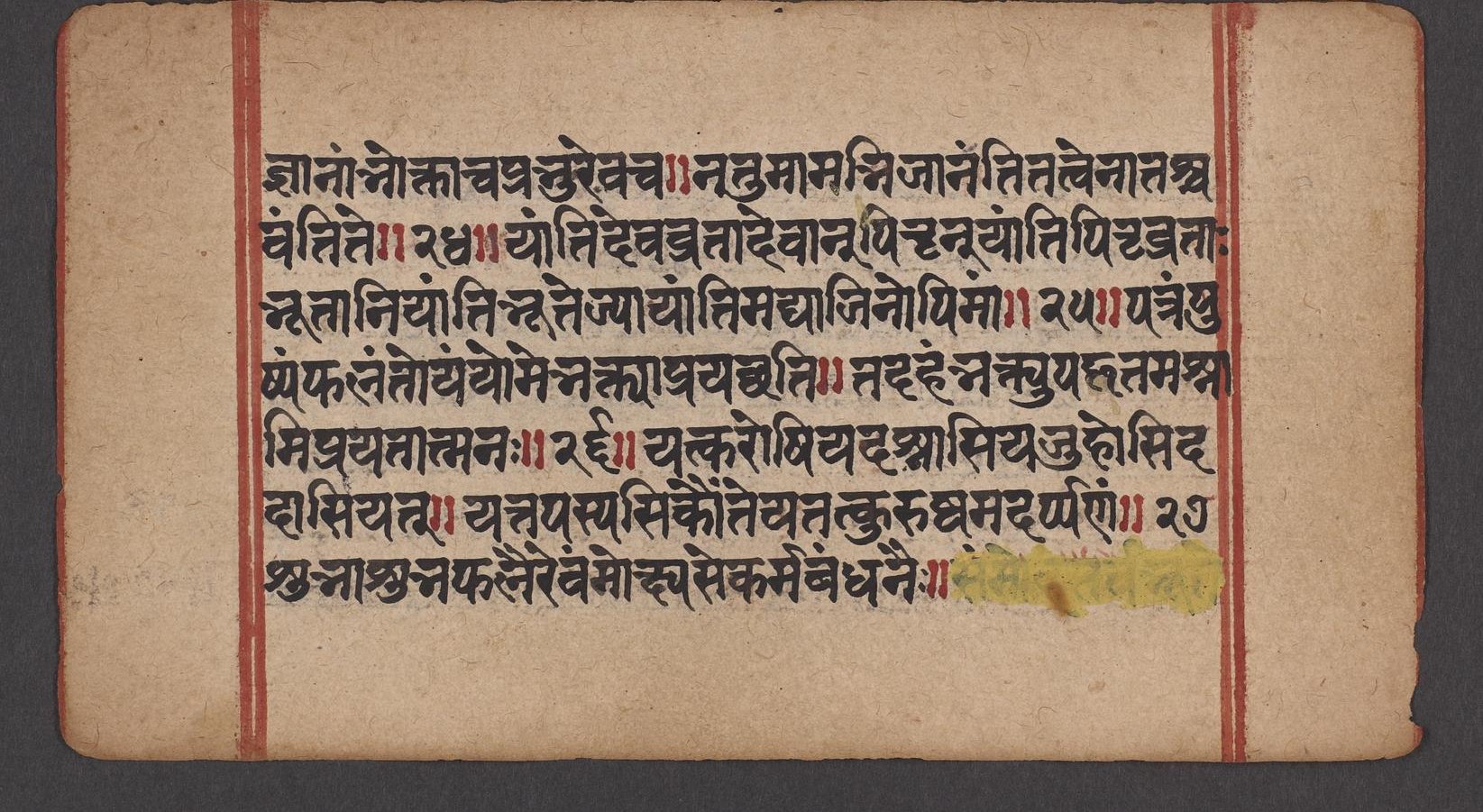
fol. 47r (catalogue label 46r =47r; the scribe repeated folio number 41), OPenn image 6555_0046 (lower leaf). Checked on the image: TEI '46r (=47r)'; ||24|| line 2 ... ||27|| line 6; 9.28 begins line 7 (end of line covered in yellow). Verse 9.24 begins on the previous page, fol. 46v, so both pages are shown.
24अहं हि सर्वयज्ञानां भोक्ता च प्रभुरेव च ।
न तु मामभिजानन्ति तत्त्वेनातश्च्यवन्ति ते ॥ २४ ॥
25यान्ति देवव्रता देवान् पितॄन्यान्ति पितृव्रताः ।
भूतानि यान्ति भूतेज्या यान्ति मद्याजिनोऽपि माम् ॥ २५ ॥
26पत्रं पुष्पं फलं तोयं यो मे भक्त्या प्रयच्छति ।
तदहं भक्त्युपहृतमश्नामि प्रयतात्मनः ॥ २६ ॥
27यत्करोषि यदश्नासि यज्जुहोषि ददासि यत् ।
यत्तपस्यसि कौन्तेय तत्कुरुष्व मदर्पणम् ॥ २७ ॥
24I am indeed the enjoyer of all sacrifices and also the Lord, but they know Me not in Essence, and hence they fall.
25They who worship the Shining Ones go to the Shining Ones; to the Ancestors go the Ancestor-worshippers; to the Elements go those who sacrifice to Elementals; but My worshippers come unto Me.
26He who offereth to Me with devotion a leaf, a flower, a fruit, water, that I accept from the striving self, offered as it is with devotion.
27Whatsoever thou doest, whatsoever thou eatest, whatsoever thou offerest, whatsoever thou givest, whatsoever thou doest of austerity, O Kaunteya, do thou that as an offering unto Me.
Where on the image
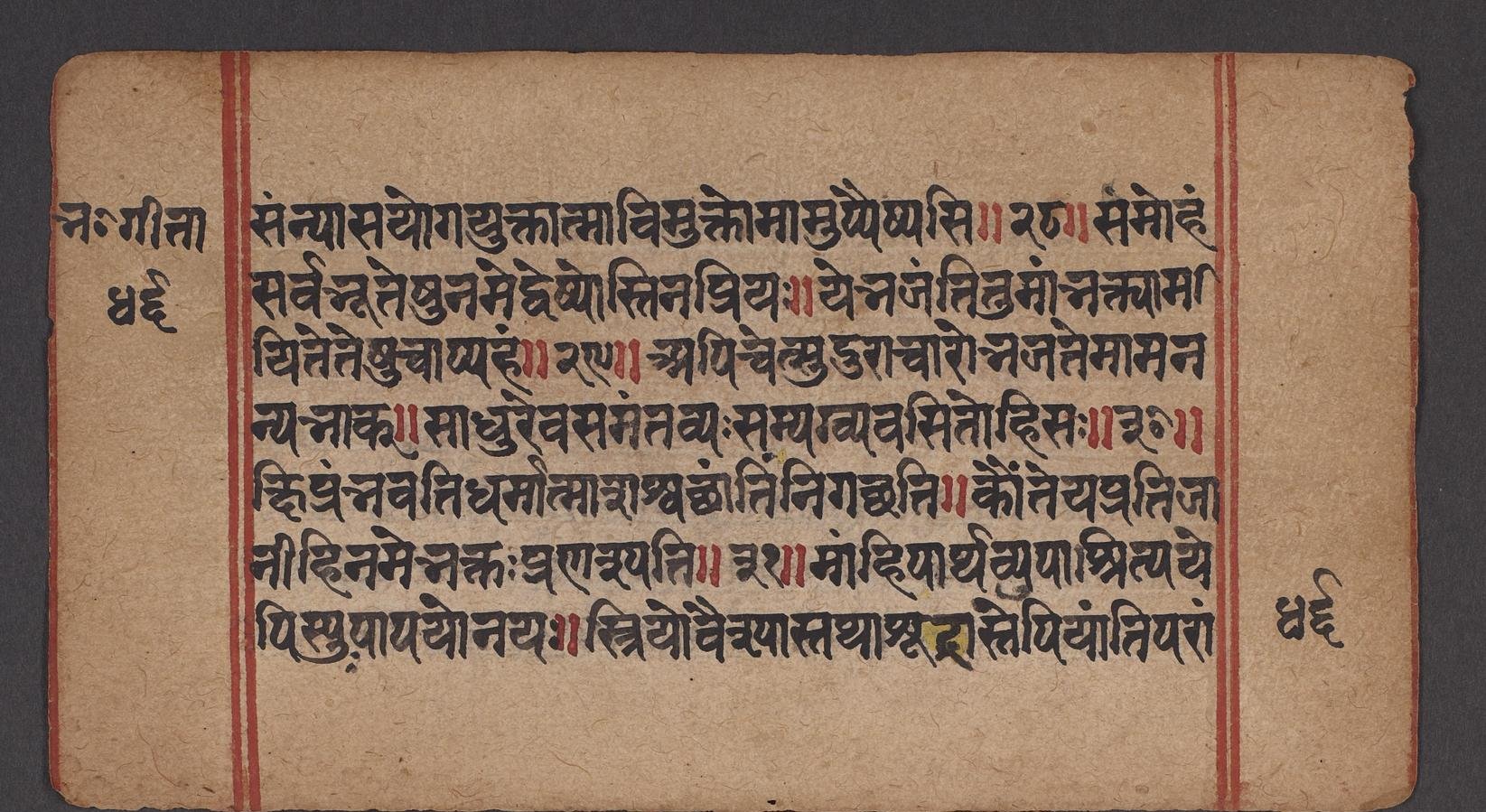
fol. 47v (catalogue label 46v =47v; the scribe repeated folio number 41), OPenn image 6555_0047 (upper leaf). Checked on the image: TEI '46v (=47v)'; ||28|| line 1 ... ||31|| line 6. Verse 9.28 begins on the previous page, fol. 47r, so both pages are shown.
28शुभाशुभफलैरेवं मोक्ष्यसे कर्मबन्धनैः ।
संन्यासयोगयुक्तात्मा विमुक्तो मामुपैष्यसि ॥ २८ ॥
29समोऽहं सर्वभूतेषु न मे द्वेष्योऽस्ति न प्रियः ।
ये भजन्ति तु मां भक्त्या मयि ते तेषु चाप्यहम् ॥ २९ ॥
30अपि चेत्सुदुराचारो भजते मामनन्यभाक् ।
साधुरेव स मन्तव्यः सम्यग्व्यवसितो हि सः ॥ ३० ॥
31क्षिप्रं भवति धर्मात्मा शश्वच्छान्तिं निगच्छति ।
कौन्तेय प्रतिजानीहि न मे भक्तः प्रणश्यति ॥ ३१ ॥
28Thus shalt thou be liberated from the bonds of action, yielding good and evil fruits; thyself harmonised by the yoga of renunciation, thou shalt come unto Me when set free.
29The same am I to all beings; there is none hateful to Me nor dear. They verily who worship Me with devotion, they are in Me, and I also in them.
30Even if the most sinful worship Me, with undivided heart, he too must be accounted righteous, for he hath rightly resolved;
31Speedily he becometh dutiful and goeth to eternal peace; O Kaunteya, know thou for certain that My devotee perisheth never.
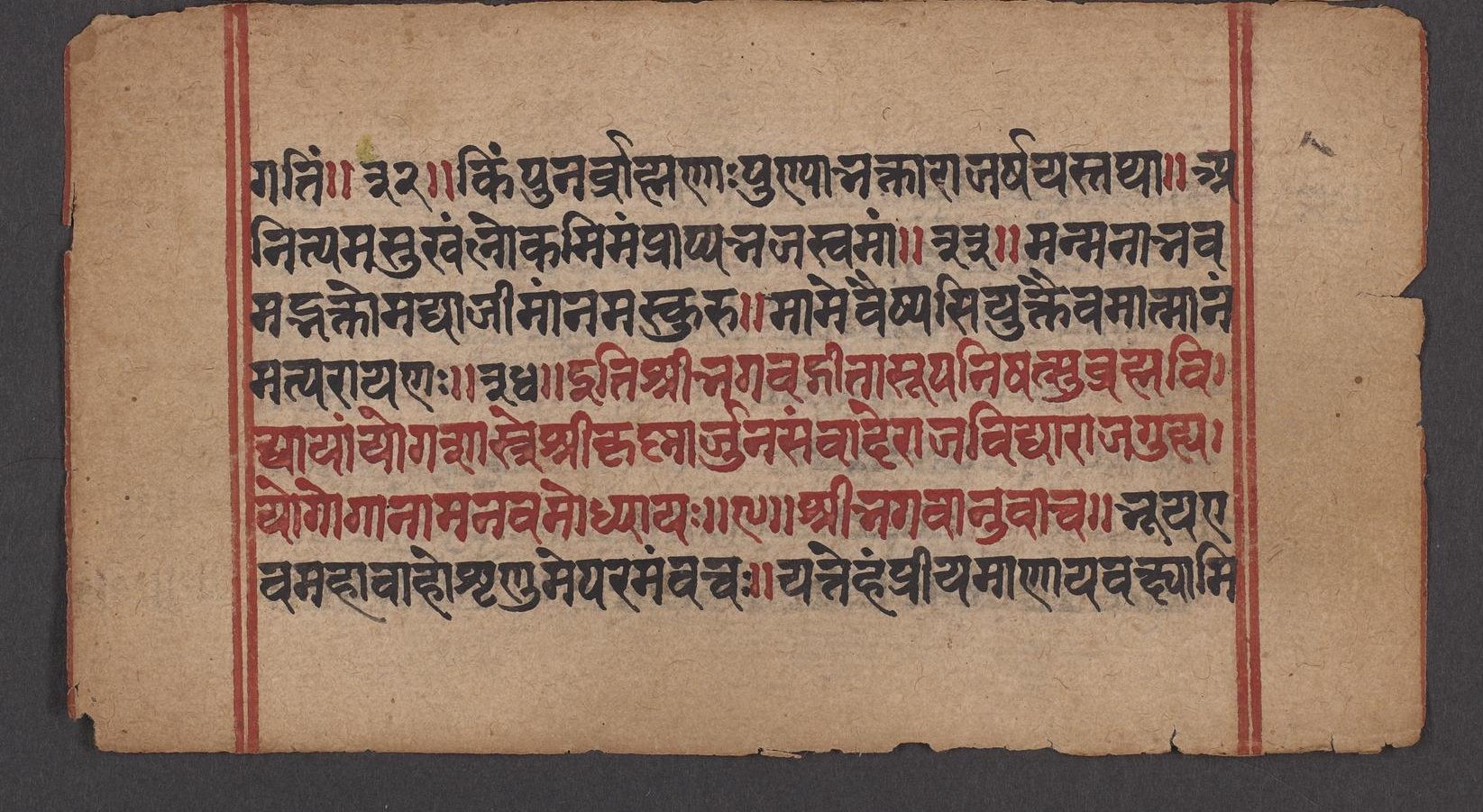
Where on the image
fol. 48r (catalogue label 47r =48r; the scribe repeated folio number 41), OPenn image 6555_0047 (lower leaf). Checked on the image: TEI '47r (=48r)'; ||32|| line 1, ||33|| line 2, ||34|| line 4; colophon lines 4-6 '... rājavidyārājaguhyayogo nāma navamo 'dhyāyaḥ ||9||'; śrībhagavān uvāca line 6; 10.1 begins line 6. Verse 9.32 begins on the previous page, fol. 47v, so both pages are shown.
32मां हि पार्थ व्यपाश्रित्य येऽपि स्युः पापयोनयः ।
स्त्रियो वैश्यास्तथा शूद्रास्तेऽपि यान्ति परां गतिम् ॥ ३२ ॥
33किं पुनर्ब्राह्मणाः पुण्या भक्ता राजर्षयस्तथा ।
अनित्यमसुखं लोकमिमं प्राप्य भजस्व माम् ॥ ३३ ॥
34मन्मना भव मद्भक्तो मद्याजी मां नमस्कुरु ।
मामेवैष्यसि युक्त्वैवमात्मानं मत्परायणः ॥ ३४ ॥
32They who take refuge with Me, O Partha, though of the womb of sin, women, Vaishyas, even Shûdras, they also tread the highest path.
33How much rather then holy Brâhmanas and devoted royal saints; having obtained this transient joyless world, worship thou Me.
34On Me fix thy mind, be devoted to Me; sacrifice to Me; prostrate thyself before Me; harmonised thus in the Self, thou shalt come unto Me, having Me as thy supreme goal.
Where on the image
fol. 48r (catalogue label 47r =48r; the scribe repeated folio number 41): TEI '47r (=48r)'; ||32|| line 1, ||33|| line 2, ||34|| line 4; colophon lines 4-6 '... rājavidyārājaguhyayogo nāma navamo 'dhyāyaḥ ||9||'; śrībhagavān uvāca line 6; 10.1 begins line 6. The manuscript names the chapter rājavidyārājaguhyayoga; the Sanskrit and English shown are the colophon printed in Besant's edition, whose wording differs in places from the manuscript's.
इति श्रीमद्भगवद्गीता॰ राजविद्याराजगुह्ययोगो नाम नवमोऽध्यायः ।
Thus in the glorious Upanishads of the Bhagavad-Gita, the science of the Eternal, the scripture of Yoga, the dialogue between Shrî Krishna and Arjuna, the ninth discourse, entitled: THE YOGA OF THE KINGLY SCIENCE AND THE KINGLY SECRET.
Notes
- Sanskrit and English: Annie Besant, The Bhagavad-Gita, 4th edition (Madras: G. A. Natesan, 1922), transcription validated on English Wikisource. Besant's footnotes are not reproduced.
- Verse numbers follow Besant and the manuscript, which agree throughout: chapter 13 counts Arjuna's opening question ('prakṛtiṃ puruṣaṃ caiva...') as verse 1, so it has 35 verses and the whole text 701.
- K. T. Telang's translation (Sacred Books of the East 8, 1882) was the first choice for the English, but it is continuous prose without verse divisions, so it cannot be matched to manuscript pages verse by verse; Besant's verse-numbered translation is used instead.
- The last section of each chapter is the chapter colophon. Besant prints most Sanskrit colophons in shortened form (marked with ॰) while her English gives the full formula; the manuscript writes the colophon out in full, and its chapter names differ in places from Besant's (see the scan note).
Cite
Sources
- Source: Penn Ms. Coll. 390 Item 559 (dated 1794) via OPenn + Sanskrit and English of Annie Besant, The Bhagavad-Gita (4th ed. 1922), Wikisource (holding institution)
- Critical edition: Annie Besant, The Bhagavad-Gita, 4th ed. (1922), Sanskrit text, via Wikisource
← previous · → next · v cycle view · l back to library