Book of the Dead, Spell 78: Turning into a Hawk the God of Time (papyrus of Iuefankh)
Introduction
The Book of the Dead, in Egyptian the spells for going forth by day, is a collection of funerary spells written on papyrus rolls and placed in burials from the New Kingdom to the Roman period. Each roll was made for one person, with spells taken from a large repertoire and illustrated with drawings (vignettes). This library gives one complete roll: the papyrus of Iuefankh in the Museo Egizio, Turin (Cat. 1791), written in the Ptolemaic period (332-30 BCE) and coming from Thebes. Richard Lepsius published it in 1842 and divided it into 165 chapters; his numbering is still the standard numbering of the spells, and it is used here.
Spell 78 (Birch: 'The chapter of Turning into a Hawk the God of Time.') is on Lepsius's plates XXVIII-XXX and on photographs 11, 12 of the 31 Museo Egizio photographs of the roll.
The Egyptian is the transliteration of the Thesaurus Linguae Aegyptiae (edition by Burkhard Backes), with the column number of the spell before each column; the numbers are those of Lepsius's plates. On the papyrus the text runs in vertical columns of cursive hieroglyphs from right to left along the roll; titles and some words are written in red. Signs restored by the editor are in square brackets, signs the scribe left out in angle brackets, superfluous signs in braces and damaged signs in half brackets. The English is the translation by Samuel Birch, published in 1867 and made from Lepsius's copy of this papyrus, so the English and the Egyptian come from the same manuscript. It was the first complete English translation of the Book of the Dead; many passages are now understood differently. Birch's own square brackets give his alternatives and explanations. The photographs are by the Museo Egizio; each shows a stretch of the roll, and the note of each section says where the spell stands on it.
How was this verified? (Provenance)
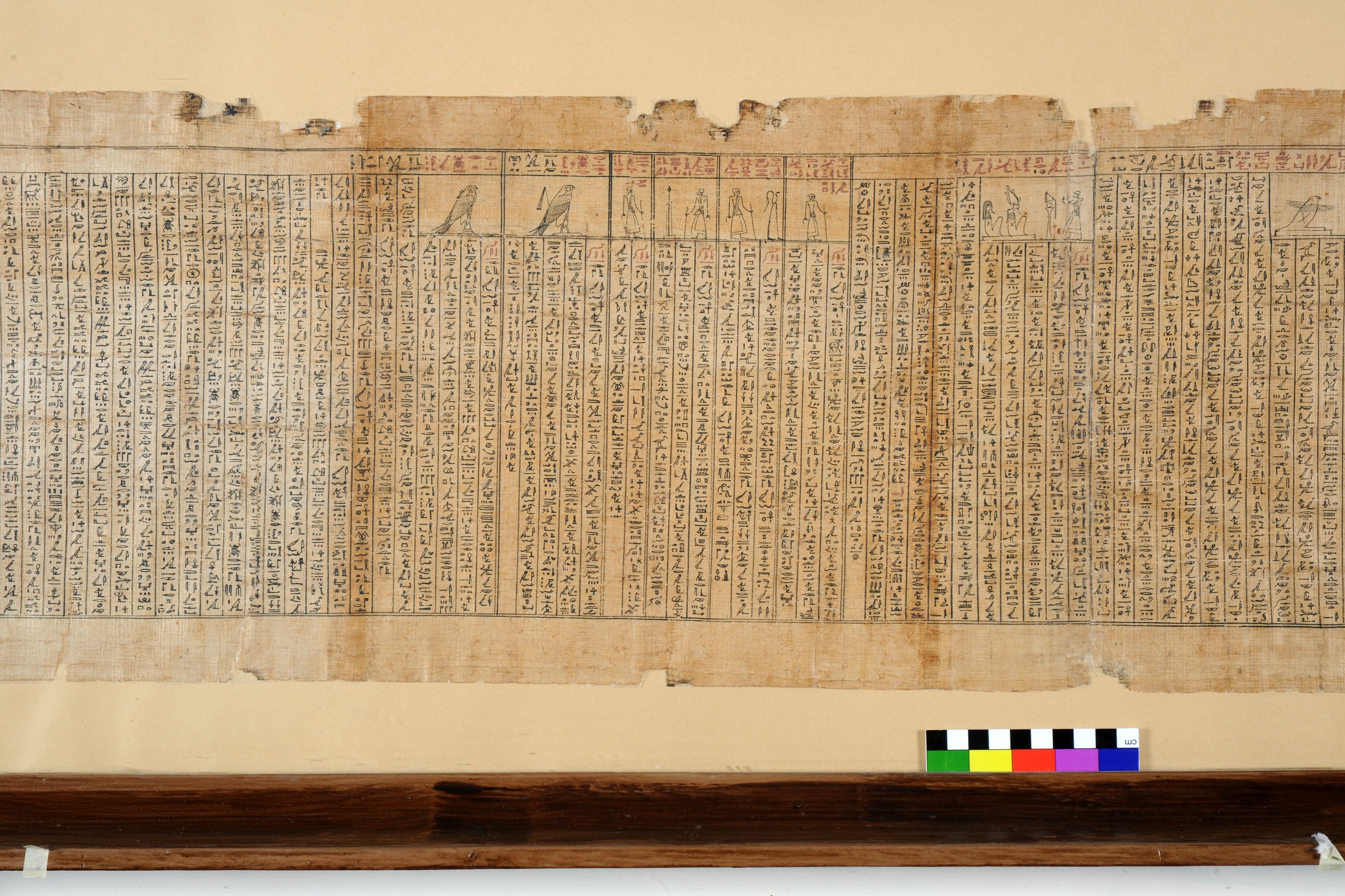
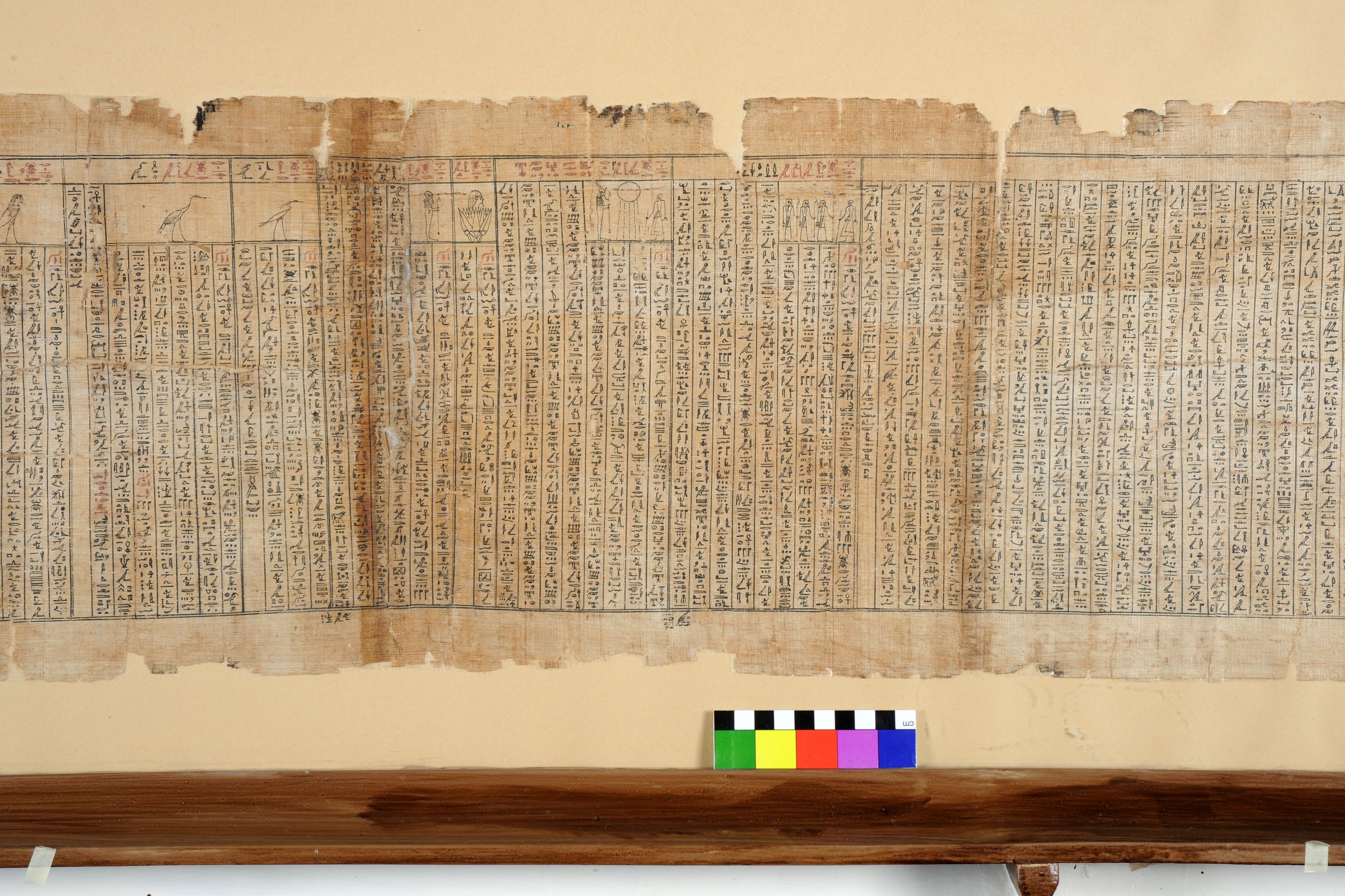
Where on the image
Turin 1791, Spell 78 (TLA Tb 078: title line, columns 1-40; Lepsius 1842, pl. XXVIII-XXX). Photograph 11 of 31 (Commons Book_of_the_Dead_of_Iuefankh,_papyrus_-_Museo_Egizio_Turin_C_1791_p024.jpg): the second falcon at 31-38% (Lepsius pl. XXVIII); its columns run to the left-hand edge and on to photograph 12. Photograph 12 of 31 (Commons Book_of_the_Dead_of_Iuefankh,_papyrus_-_Museo_Egizio_Turin_C_1791_p023.jpg): its columns fill the right part (64-100%; Lepsius pl. XXIX-XXX). Checked by eye: the photographs were matched to Lepsius's plates by their vignettes, red titles and framed compartments, and the overlapping edges of neighbouring photographs were compared.
titlerʾ n jri̯.t-ḫpr,w n bjk nṯr〈,j〉
1ḏd-mdw jn Wsjr […] mꜣꜥ-ḫrw j wr mi̯ r =k r Ḏd,w ḏsr =k wj m wꜣ,t.pl dbn{dbn}.n =j tḫtḫ =j mꜣ{w}〈ꜣ〉 =k sw
2sq〈ꜣ〉i̯ =k sw jḫ{t} ḏi̯! =k snḏ =j qmꜣ =k šf,〈y〉t =j snḏ n =j nṯr.pl dꜣ,t ꜥḥꜣ =sn ꜥr.w,t =sn ḥr =j ky-ḏd r jri̯〈.t〉 mj,tt jn =st ḥr =j
3jmi̯ 〈t〉{r}k〈n〉{m-jy} jri̯{.t} nkn {ꜣ}fꜣ,w =f m pr,w kk,w kfꜣ bꜣg wr jmn 〈r〉 =f jri̯ mj j.n =st nṯr.pl
4sḏm md,t ḫrw ḫp,wy n,tj.w m šms,w Wsjr gr jrf =ṯn nṯr.pl md{,t}〈wi̯〉 nṯr ḥnꜥ nṯr sḏm =f mꜣꜥ =f ky-ḏd mꜣꜥ-ḫrw
5ky-ḏd mꜣꜥ ḏd =k n =f Wsjr […] mꜣꜥ-ḫrw md{,t}〈wi̯〉 ⸢n{t}⸣ =⸢f⸣ jr =k Wsjr wḏb pri̯〈.t〉 m rʾ =k r =f mꜣꜣ =k jrw.pl ḏs =k sqdi̯{.t} bꜣ,pl =k ḏi̯! =k pri̯ =j {j}〈sḫ〉m =j m
6rd.du =j wnn Wsjr […] mꜣꜥ-ḫrw mj nb-〈r-〉ḏr ḥr,j ns,t =f snḏ n =f jm,j.w-dꜣ,t ꜥḥꜣ =sn ꜥr〈r〉.w,t{r} =sn ḥr =f ḏi̯! =k nwd Wsjr […]
7mꜣꜥ-ḫrw jm =f m ꜥnḫ ḥnꜥ nwd,ypl ky-ḏd ḥnꜥ =k nw nṯr.pl mn Wsjr […] mꜣꜥ-ḫrw ḥr jꜣ,t =f mj nb ꜥnḫ p,t dmḏ.tw =f ḥnꜥ 〈ꜣ〉s,t nṯri̯〈.t〉
8swḏꜣ.yw ⸢rʾ⸣ =sn ḥr jri̯〈.t〉 nkn =f jmi̯.n =f jwi̯ mꜣꜣ =f bꜣg =f ky-ḏd gꜣ,jw šmi̯ Wsjr […] mꜣꜥ-ḫrw 〈r〉 md,t =f jwi̯ =f r ḥn,tj p,t
9nḏ Wsjr […] mꜣꜥ-ḫrw m-ꜥ Gbb dbḥ.w =f ḥwj m-ꜥ nb-〈r-〉ḏr ḥr snḏ n =f nṯr.pl dꜣ,t ꜥḥꜣ =sn ꜥr〈r〉.w,t{t} =sn ḥr =f mꜣꜣ =sn ḥꜣm =k
10n =f jnk wꜥ,w m nn n ꜣḫ.w jm,j.w jꜣḫ,w jw jrj =j jrw.pl =j m jrw.pl =f ḏd ⸢n⸣ =k 〈j〉ḫ,t =j jḫ ḏi̯! =k snḏ Wsjr […] mꜣꜥ-ḫrw qmꜣ =k
11šf,〈y〉t =f snḏ n =f nṯr.pl dꜣ,t ꜥḥꜣ =sn ꜥr〈r〉.w,t =sn ḥr =f ntf pw jm,j ꜣḫ.w jm,j.w jꜣḫ,w qmꜣ ḫpr,w.pl m ḥꜥ nṯr ntf wꜥ,w m nn n
12ꜣḫ.w jm,j.w jꜣḫ,w qmꜣ Jtm,w ḏs =f ḫpr.w m wnb.w jr,t =f sḫpr.n =⸢f⸣ s{w}ꜣḫ.n =f ṯnw.n =f ḥr =sn m wnn =sn ḥnꜥ =f js sw wꜥi̯.w
13sr{t} =sn sw pri̯ =f m ꜣḫ,t ḥnꜥ =sn ḏi̯! =sn snḏ =f n nṯr.pl ꜣḫ.w ḫpr.w ḥnꜥ =f wꜥ,w m ḥfn.pl qmꜣ jr,t nb-wꜥ,w js ḫpr.n Wsjr mss! Ḥr,w
14jw Wsjr srwḏ jm =f snḫḫ =f ṯnw =f r jm,j.w ꜣḫ.w ḫpr.w ḥnꜥ =f jw Wsjr ḫꜥi̯〈.w〉 m bjk nṯri̯ sꜥḥ sw Ḥr,w
15m bꜣ =f r jṯi̯〈.t〉 〈j〉ḫ,t =f n Wsjr n dꜣ,t jw ḏd Rw,tj Wsjr ḥr〈,j〉-tp ḥw,t =f nm{m}s jm,j ṯpḥ,t =f ḥmi̯ =k nn ḏr,w.w p,t mj-m js ṯw sꜥḥ.tw
16m ḫpr,w n bjk nṯri̯ nn jw =s r =k jr ⸢md{,t}〈wi̯〉⸣ =k r =k jri̯.n =k ḏr,w.w p,t Wsjr jr,j.pl jṯi̯ 〈j〉ḫ,t Ḥr,w n Wsjr r dꜣ,t
17jw wḥm{.pl} 〈n〉 =f Ḥr,w ḏd n =f jti̯ =f Wsjr m rnp,t.pl ky-ḏd hrw.pl ḏi̯! =k nm{m}s Rw,tj šmi̯ =k jwi̯ =k m-ḥr wꜣ,t.pl p,t mꜣꜣ ṯw jm,j.w ḏr,w.w ꜣḫ,t
18snḏ n =k nṯr.pl dꜣ,t ꜥḥꜣ =sn ꜥr.w,t =sn ḥr 〈=k〉 jri̯ =f nh{ꜣ}n =f r =j jw ḫbḫb ḥr md,t nṯr.pl nb.w-r-ḏr.w jr,j krjw nb-wꜥ,w qꜣi̯ ḥr
19ḏbꜣ〈,t〉 =f šdi̯ =f jm =f nms wꜣḏ Rw,tj nm{m}s =f ḫrw-f〈j〉 Rw,tj r =j j{w} ⸢Gꜣdꜣ⸣ ky-ḏd ⸢Hꜣn⸣ jri̯ n =j wꜣ,t jw =j rḫ.kw
20ky-ḏd jw =〈j〉 qꜣi̯.kw m ⸢ḏbꜣ,w⸣ šdi̯ n =j Rw,tj {j}〈n〉ms n =j ḏi̯!.y n =j {q}〈d〉mꜣ〈,t〉.du =f smn =f n =j ḥr =f m 〈j〉ꜣ,t{j} =f r〈ʾ〉 =j m wsr,t{.pl} =f
21ky-ḏd m wsr =f wr{.pl} nn ḫr p,t mn.tw zbi̯ pw ky-ḏd pw nfr nb-ꜥrꜥ,t.pl swꜣš jnk pw jnk rḫ wꜣ,t.pl nw,w jw ṯꜣw m ẖ,t =j nn ḫsf{.tw} 〈wj〉
22kꜣ.pl nšnj.pl šmi̯ =j {sw}〈r〉 ẖr〈,j〉 sḏr〈,w〉 jwi̯〈,w〉 ḫnt,j sḫ,t.pl =f sšmi̯ kk,w mr jmn,tj.w Wsjr jy =j mjn m pr,w Rw,tj
23pri̯ =j jm =f r pr,w Ꜣs,t nṯr,t mꜣꜣ.n =j ḏsr.pl štꜣ.pl sšmi̯.kw r jmn〈,t〉.pl mj rḏi̯ =s ms〈,wt〉 nṯr wr ꜥꜣ sꜥḥ.w wj Ḥr,w m
24bꜣ =f mꜣn! =j n,tj jm =f jr ḏd =j ḏr ꜥꜣ n Šw ḫsf =sn ꜣ,t jr,j〈.t〉 =j jṯi̯ 〈j〉ḫ,t Ḥr,w n Wsjr r dꜣ,t jnk pw jnk Ḥr,w jm,j 〈j〉ꜣḫ,w
25sḫm m sšd sḫm =j m sšp =f šmi̯ =j jy =j r ḥn,tj p,t jw Ḥr,w ḥr s,t n〈.t〉 jti̯ =f jw Ḥr,w ḥr ns,t =f jw ḥr =j m bjk nṯri̯
26jw pḥ,{tj}〈wj〉 =j m bjk jnk ꜥpr nb =f pri̯ =j r dꜣ,t ky-ḏd r Ḏd,w mꜣn! =j Wsjr wnḫ =j ḥr-ꜥ,du =f wnḫ =j Nw,t mꜣꜣ =sn wj mꜣꜣ
27wj nṯr.pl ⸢jri̯⸣ ⸢Ḥr,w⸣ ḏ,t ky-ḏd ḏd =sn m ḫnt,j-Ḫm r ḏꜣi̯.t =sn ꜥ.du =sn r =j ꜥḥꜥ =j ḫsf =j mꜣjr r =w wn =sn n =j wꜣ〈,t〉.pl ḏsr.〈t〉pl mꜣꜣ =sn jrw =j
28sḏm =sn ḏd.t =j ḥr ḥr =ṯn nṯr.pl dꜣ,t ḫsf.pl ḥr tkn wsr〈,t〉{=j}.pl sṯꜣ jḫm.pl-wrḏ.pl jri̯ n =j wꜣ,t.pl ḏsr.〈t〉pl mꜣꜣ =j ḥr Rꜥ,w 〈nb-〉bꜣ,pl ꜥꜣ
29šf,〈y〉t fꜣi̯ ḥr =ṯn jw =j!! 〈d〉gꜣ.n =j ṯn jw =j ḫꜥi̯.kw m bjk nṯri̯ sꜥḥ wj Ḥr,w n bꜣ =f r jṯi̯〈.t〉 〈j〉ḫ,t n Wsjr
30r dꜣ,t šdi̯.n =j ky-ḏd .kw skm.ypl šꜣjs n =j jr,j.pl ḫb,t =sn n,tj tp-ꜥ.du =j jri̯{.t}.pl n =j wꜣ,t šmi̯ =j pḥ{.n} =j ḫnt,j〈.pl〉 ṯpḥ,t =sn
31jr,j.pl ḥw,t Wsjr ḏd =j n =sn wsr ḏi̯! =j rḫ =sn mj wr nw =f ky-ḏd dr.jw Ḥr,w ḥn〈w〉,t.j =f r Swtj ḏi̯! =j rḫ =sn r-n,tj jṯi̯.n =f ḥwj
32ꜥpr〈.w〉 〈m〉 sḫm r Jtm,w swꜣ.n =f j.n nṯr.pl dꜣ,t r =j ṯnw =sn r =sn ḫnt ṯpḥ,t =sn jr,j.pl ḥw,t Wsjr m =ṯn wj jy.kw r =ṯn šdi̯.n =j dmḏ.n =j
33sḫm.pl ksnḏm.pl ⸢nn⸣ ⸢=k⸣ ky-ḏd wr.pl ⸢nn⸣ ḏsr n =j sḫm.pl wꜣ,t.pl zꜣw wꜣ,t.pl ꜣḫ,t mꜣꜣ s〈j〉 m p,t smn =〈j〉 ꜥr〈r〉w,t ={sn}〈s〉 〈n〉 Wsjr ḏsr n =j wꜣ,t.pl ḥr =j jw
34jri̯.n =j wḏḏ,t hꜣi̯ =j r Ḏd,w mꜣꜣ =j Wsjr ḏd =j n =f 〈j〉ḫ,t bꜣ!! =f pn sms,w mri̯.tw jsp,w m jb n Swtj jw mꜣꜣ.n =j nb
35j:gꜣ〈,w〉 jḫ ⸢ḏi̯⸣ =j rḫ =sn sḫr.w nṯr.pl jri̯.{t}n Ḥr,w m-ḫm,t jti̯ =f Wsjr j Rꜥ,w bꜣ ꜥꜣ šf,〈y〉t m =k wj jy.kw mꜣꜣ =k wj
36sqꜣi̯ =k wj wbꜣ =j dꜣ,t wn =j wꜣ,t.pl jr,j.〈t〉pl p,t jr,j.〈t〉pl tꜣ nn ḫsf jm =j qꜣi̯ s,t =k Wsjr sḏm =k nfr Wsjr wꜣḏ pḥ,tj =k Wsjr ṯz.n =j
37n =k tp =k smn.n =j n =k wsr,t =k nḏm〈.w〉 〈s,t-〉jb =k nḥti̯ ky-ḏd nḥb =k mn〈.w〉 ꜣwi̯{,t}-jb šn,y〈t〉 =k ky-ḏd ꜥpr.pl jw =k mn.tw m kꜣ-jmn,tt
38zꜣ =k Ḥr,w ḫꜥi̯〈.w〉 ḥr ns,t =k ꜥnḫ nb ḫr =f bꜣk n =f ḥḥ.pl snḏ n =f psḏ,t jw ḏd.jn Jtm,w sḫm wꜥ,w n nṯr.pl jw,tj wḏb ḏd n =f Ḥw{t} ꜥꜣb,y ꜥḥꜥ{,n} pw
39Ḥr,w zni̯ ḥr s〈ꜣ〉q.n jti̯ =f nḥm.n Ḥr,w n jti̯ =f nḥm.n Ḥr,w n mw,t =j pw Ḥr,w sn =j pw Ḥr,w ḫnms pw Ḥr,w jy.n Ḥr,w ḥr mw n.w jti̯ =f
40n ḥwꜣ tp =f km〈.w〉 bꜣk n =f nṯr.pl šdi̯.n ḥḥ.pl m jr,t =f wꜥ,w nb =s nb-〈r-〉ḏr
LXXVIII. The chapter of Turning into a Hawk the God of Time.
(Vignette A Hawk.]
Oh Aau [old one]! come thou to Tattu, place thou me in the roads. I have gone round my appointed course. Thou seest it, thou lengthenest it. Hast thou not given me my fear? thou makest my terror. I have [spoken to or] terrified the Gods of the Gate; they fight, they struggle against me, or to do like as has been done to them by me. [They say to me,] Do not thou come cutting down his cap in the house, [within] the darkness, pursuing the Great Squatter who hides to do like the Gods have done to them; listening to words, the words of the types and beings in the service of Osiris. Speak not to him, oh ye Gods, the words of a God to a God. He hears, he is true or justified. Thy words are true thou speakest to him, oh Osiris! He is thine, oh Osiris! A well or flow comes out of thy mouth to him: behold thy own form, and the form of thy Spirits.
Let me come forth and stand on my feet.
The Osiris is like the Universal Lord on his throne; he has terrified those who are in the Gate, they fight and struggle against him. Let thou the Osiris escape from it [or him] alive with the escaped, or with thee like the Gods. The Osiris is placed in his place, as the living Lord of Heaven. He has been preserved by the Goddess Isis. Their mouths water to make his annihilation. He does not go, he sees his lier in wait or his reviler. The Osiris despises his words, he comes to the revolutions of the heaven. The Osiris is defended by Seb; he prays for means from the Universal Lord, for he has terrified the Gods of the Gate; they contend, they struggle against him, they see thy attempt to get into it. I am one of the illuminated Spirits who belong to Light. I have made my shape like his shape. I tell thee things, how thou hast given terror to the Osiris, thou hast made his terror. He has terrified the Gods of the Gate; they fight and struggle against him. He is among the Spirits attached to Light, making transformations into the limbs of a God. He is one of the said Spirits attached to Light. Tum himself made his transformation into his eyelashes [?]. He transformed, he spiritualised, lie grew against them when they were with him, for he, was the only one they let forth. He came forth from the horizon with them, they made him the terror of the Gods and Spirits transformed with him the only one of millions, creating all that is made. For first Osiris made the generation of Horus. Osiris figured him. How was he more dignified than those who belong to the beings of light, created with him? Osiris rose as a divine hawk. Horus embodies [incorporates] it with his soul to take away the things of Osiris at the Gate.
The two Lion-Gods say to Osiris who dwells in the [his] abode attired in his Gate Thou goest back, nowhere in heaven is like. .. when [thou art] embodied in the transformations of a divine hawk. Thou dost not delay for the. .. what is said to thee. Thou hast made to the limits of heaven, oh Osiris! Those guarding things take the hawk of Osiris in the Gate.
It is perceived by Horus: he says to his father Osiris at times or days: Thou receivest the headdress of the two Lion-Gods; thou walkest in the roads of heaven, beheld by those attached to the limits of the horizon of heaven. Thou hast frightened the Gods of the Gate, they fight and contend against what he has done in his course to me.
All the Gods to the utmost are humiliated at the words of the Lord of the Chest. A Lord taller than [crying from] his place, who makes his head attire in it. The Lion-Gods supply his headdress.
Let me turn back the Lions. It is Kat or Han. I have made road, I know, or I have grown tall in the place. The Lion-Gods have given to me a head attire. He has given me his locks, he has placed his head and his neck with his limbs, or with his great power, upon me. The one who does not make heaven fall, whose passage is established, the perfect one, the Lord of Urei, the one adored is I; it is I who know the roads of the Nu [firmament]. The winds are in my belly. The raging. Bulls have not been stopped. I pass by them, for I lie down. I go to him who dwells in the fields, traversing the darkness, avoiding the Spirits of the West, of Osiris. I have come like the Sun from the house of the Lions. I come out of it to the house of the Goddess Isis. I have seen the mysterious Retainers. I pass the hidden Retainers, as does the Divine-born, the very great Horus; he incorporates me with his soul. I have seen that which is in it. For I tell the great whole of Shu [?], they stop a moment for me. Horus takes the things of Osiris to the Gate. I it is I who am Horus in the light prevailing by the fillet. I prevail in his orb, I walk, I come to the revolutions of the heaven. Horus is upon the throne of his father, Horus is on his throne. My face is in the shape of the divine hawk, my hind quarters are in the shape of a hawk. I am the prepared by his Lord, I go forth to the Gate or to Tattu. I have seen Osiris, I am wrapped up by his hands. My wrap is the heaven. They see me, the Gods see me, the Eye of Horus beholds me for ever, or they told them who dwell in S’Khem to let their hands approach me. I stop, I turn back the Oppressors, they open to me the secret roads, they see my shapes, they hear my words.
[Fall] on your faces, oh ye Gods of the Gate! Cease from stopping my rowers, towing the Gods never at rest. I have passed the secret roads, I see the face of the Sun. Spirits, the greatest objects of his creation, lift ye your faces, I have shamed ye. I have risen as a divine hawk. I have incorporated Horus with his soul to take the things of Osiris to the Gate. I, or I myself, have passed the obscured. I have crossed those who guard the blocks, having my head and my hands. A road has been made to me. I go and I follow those who dwell in their houses and watch over the house of Osiris. I tell them I am ready: they know when the great leveller, or Horus, rubs his horns against Set. I let them know that he has taken the. .. ,toTum(?). He has passed [is said by] them to the Gods of the Orbit. I make their number to them who dwell in the Gate and keep the house of Osiris. Let me come to you. I have marshalled, I have brought together thy joyful companions and leaders, or accompanying chiefs. I have arranged the Chiefs of the Roads, who guard the paths of the horizon which looks from the heaven, preparing their halls for Osiris. I have arranged the roads by myself, I have done what has been ordered. I go to Tattu, I see Osiris, I tell him the things about this his great and beloved soul pierced to the heart by Set. I have seen my quiet Lord. I learn their knowledge of the circumstances of the Gods, whom Horus has made of the seed of his father Osiris.
Oh Sun! soul! greatest of things created [terrors], let me come, let me see, let me be as tall as [the gate], let me pass the empyreal Gate. Guardians of heaven, guardians of earth, open a path to me. Let there be no stoppage to me. I reach thy place, oh Osiris Lend me thy strength, oh Osiris! I have tied thy head on thee, I have arranged thy limbs for thee, making a place for thy desired wish, or thy hopes, to make thy joy endure to thy millions or thy instructed. Thou art established as the Bull of the West; thy son Horus is crowned on thy throne; all life is through him, he has made millions, he has formed the Gods.
Said by Turn, the first, the one of the Gods without change, who is called Htu Abi. Horus makes a stand. I pass through the might of his father. Horus has saved his father, Horus has saved my mother, Horus he is my brother, Horus is my cousin. Horus has come to me out of my father. He has proceeded from the dirt [brains ?] of his head. He has made the Gods. He has made millions with his Eye, the only one, its Lord, the Universal Lord.
Notes
- Birch's English was taken from three scans of Bunsen's Egypt's Place in Universal History, vol. V (1867), on the Internet Archive. The three OCR texts were aligned word by word and each word was settled by their agreement; running heads, page numbers, footnote markers and footnotes were removed. Some OCR errors may remain, chiefly in proper names.
- Birch uses the terms and name forms of his time: Hades, Aahlu (Elysium), Tum for Atum, Seb for Geb, Anup for Anubis, Phoenix or Bennu for the heron.
- Labels such as 'title line' or 'gate 1' before a line of the Egyptian translate the position labels of the TLA.
- The TLA has no hieroglyphic encoding for these texts, so only the transliteration is shown.
Cite
Sources
- Source: Papyrus of Iuefankh, Turin, Museo Egizio Cat. 1791 (Museo Egizio photographs, CC0) + TLA transliteration (ed. B. Backes, CC BY-SA 4.0) + English of Samuel Birch (1867, public domain) (holding institution)
- Critical edition: Thesaurus Linguae Aegyptiae, ed. Burkhard Backes (2018 data, AED-TEI)
← previous · → next · v cycle view · l back to library