Daodejing, chapter 42 (Mawangdui silk manuscripts)
Introduction
Chapter 42 of the Daodejing (Laozi), shown on the two oldest nearly complete copies of the work: the silk manuscripts Laozi A and Laozi B, found in 1973 in Tomb 3 at Mawangdui, Changsha (Hunan), a tomb sealed in 168 BCE. Laozi A is written in a script between seal and clerical forms and does not avoid the personal name of the Han founder Liu Bang (邦); it is commonly dated before 195 BCE. Laozi B is in clerical script, avoids 邦, and is commonly dated 194-180 BCE. Both put the De part (chapters 38-81) before the Dao part (chapters 1-37), and a few chapters stand in a different order from the received text.
Each section gives the silk transcription column by column, with the Jicheng column number before each column (for Laozi B, 上 and 下 are the upper and lower halves of a column, photographed on facing plates), and links to the plate that carries those columns. □ marks a lost character; ∠, ‧ and ﹦ are marks written on the silk (﹦ repeats the character before it). Below the transcription is the received text of the Wang Bi recension, which is the text James Legge translated in 1891; the silk wording differs from it, most visibly in 恆 for received 常 (the received text avoids the name of Emperor Wen, Liu Heng), in the frequent final particle 也, and in loan characters such as 胃 for 謂.
How was this verified? (Provenance)
Where on the image
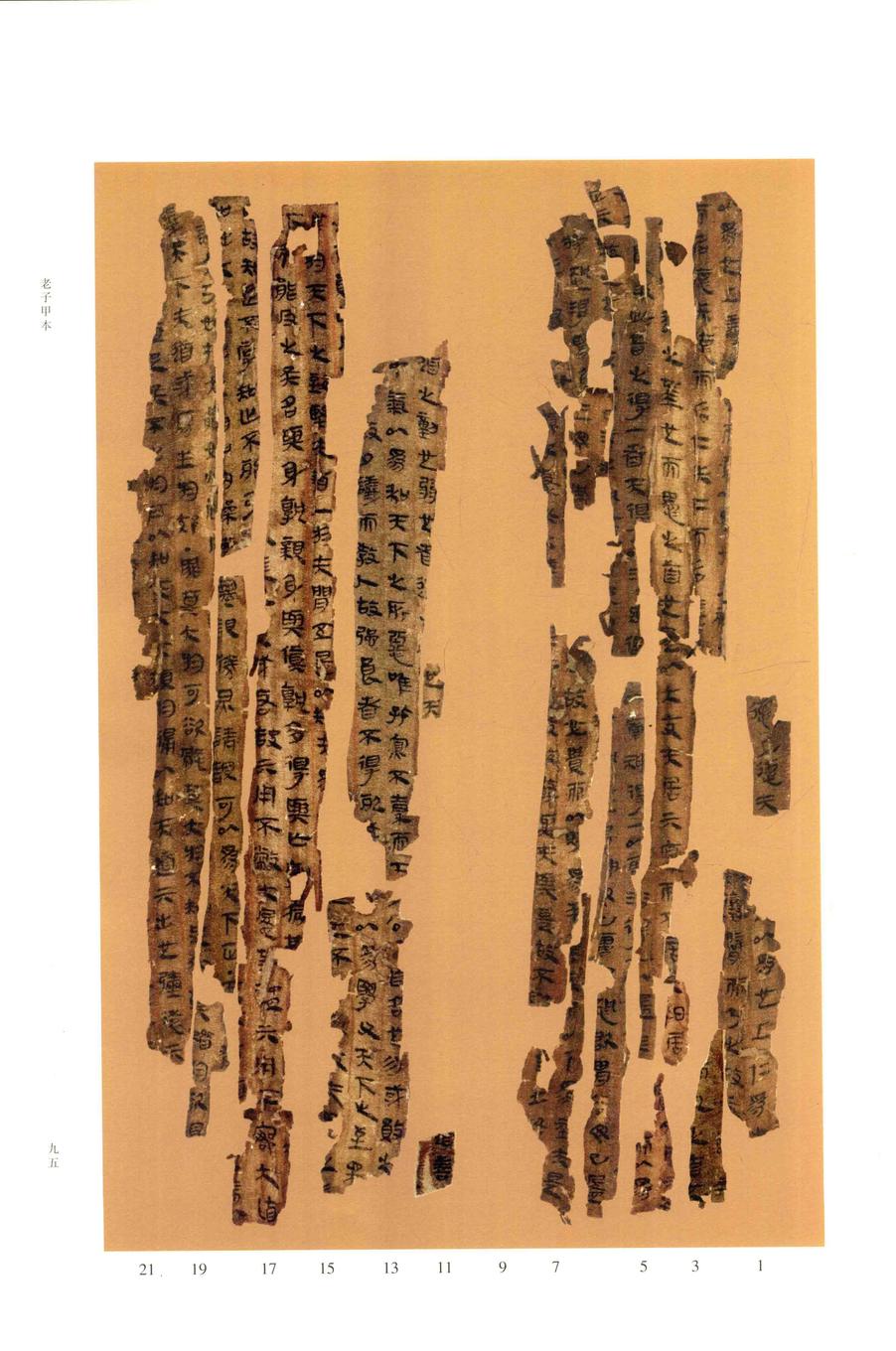
Laozi A (甲本), columns 12 to 14, on plate p. 95 of Changsha Mawangdui Han mu jianbo jicheng, vol. 1 (column numbers are printed under each plate; the columns run from right to left). Checked on the image: column 13 reads 中氣以為和天下之所惡唯孤寡. The opening characters of this chapter are lost or not readable on this plate image, so these are the first characters that were confirmed. In this manuscript the chapter follows chapter 40, not chapter 41. □ marks a character lost on the silk (26 in this section). Transcription and column numbers: Wikisource 老子 (帛書甲本), which follows the Jicheng column numbering. The English is Legge's translation of the received text, shown below the silk transcription; the silk wording differs from it in many places, so compare the two Chinese texts for the variants.
12□□□□□□□□□□□□□□□
13□□□□□中氣以為和天下之所惡唯孤寡不穀而王公以自名也勿或損之□□
14□之而損故人□□教夕議而教人故強良者不得死我□以為學父
Compare: Received text (Wang Bi recension), the text Legge translated
道生一,一生二,二生三,三生萬物。萬物負陰而抱陽,沖氣以為和。人之所惡,唯孤﹑寡﹑不穀,而王公以為稱。故物或損之而益,或益之而損。人之所教,我亦教之。強梁者不得其死,吾將以為教父。
1The Tao produced One; One produced Two; Two produced Three; Three produced All things. All things leave behind them the Obscurity (out of which they have come), and go forward to embrace the Brightness (into which they have emerged), while they are harmonised by the Breath of Vacancy.
2What men dislike is to be orphans, to have little virtue, to be as carriages without naves; and yet these are the designations which kings and princes use for themselves. So it is that some things are increased by being diminished, and others are diminished by being increased.
3What other men (thus) teach, I also teach. The violent and strong do not die their natural death. I will make this the basis of my teaching.
Where on the image
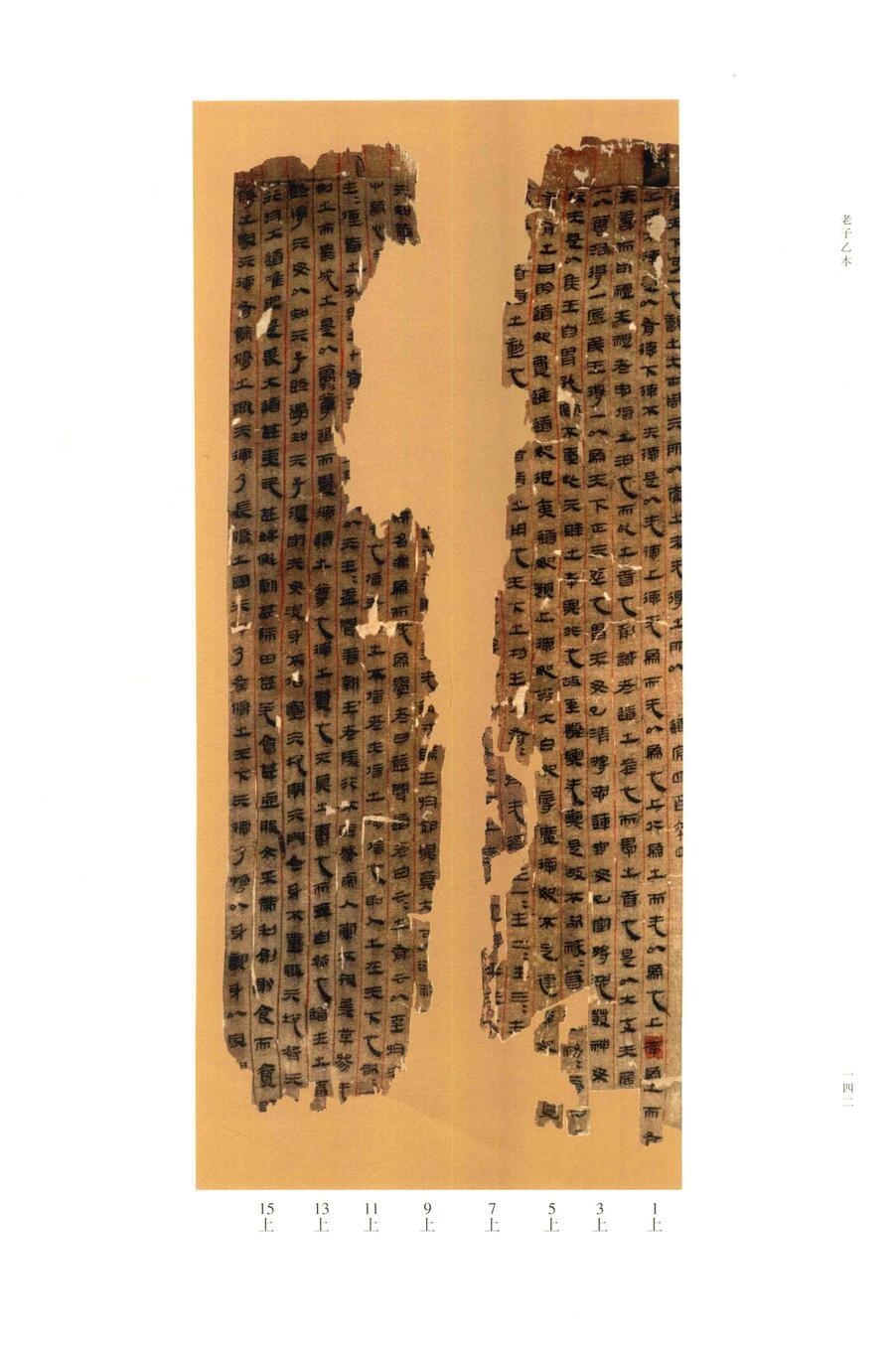
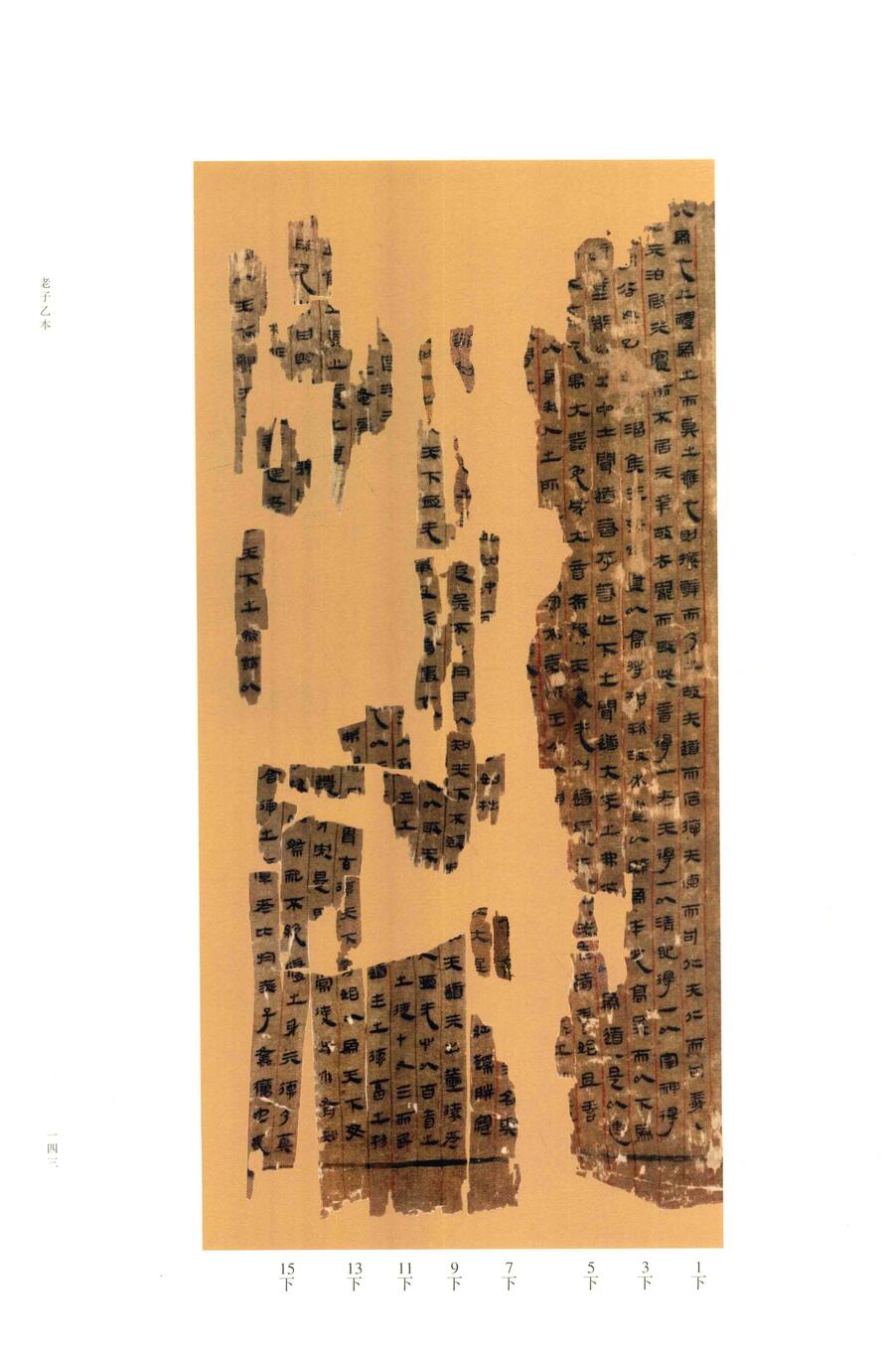
Laozi B (乙本), columns 6上 to 7上, on plates p. 142 and p. 143 of Changsha Mawangdui Han mu jianbo jicheng, vol. 1 (column numbers are printed under each plate; the columns run from right to left; each column of Laozi B is photographed as an upper half (上) and a lower half (下) on facing plates). Checked on the image: column 6上 reads 於有﹦於無 道生一﹦生二﹦生三 (the opening of this chapter, with the end of the preceding text where shown). In this manuscript the chapter follows chapter 40, not chapter 41. □ marks a character lost on the silk (36 in this section). Transcription and column numbers: Wikisource 老子 (帛書乙本), which follows the Jicheng column numbering. The English is Legge's translation of the received text, shown below the silk transcription; the silk wording differs from it in many places, so compare the two Chinese texts for the variants.
6上道生一﹦生二﹦生三﹦生□□□□□□□
6下□□□□以為和人之所亞唯孤寡不穀而王公以自□□□□□□□云﹦之而益
7上□□□□□□□□□□□□□□□□吾將以□□父
Compare: Received text (Wang Bi recension), the text Legge translated
道生一,一生二,二生三,三生萬物。萬物負陰而抱陽,沖氣以為和。人之所惡,唯孤﹑寡﹑不穀,而王公以為稱。故物或損之而益,或益之而損。人之所教,我亦教之。強梁者不得其死,吾將以為教父。
1The Tao produced One; One produced Two; Two produced Three; Three produced All things. All things leave behind them the Obscurity (out of which they have come), and go forward to embrace the Brightness (into which they have emerged), while they are harmonised by the Breath of Vacancy.
2What men dislike is to be orphans, to have little virtue, to be as carriages without naves; and yet these are the designations which kings and princes use for themselves. So it is that some things are increased by being diminished, and others are diminished by being increased.
3What other men (thus) teach, I also teach. The violent and strong do not die their natural death. I will make this the basis of my teaching.
Notes
- English: James Legge, The Tao Teh King (Sacred Books of the East 39, 1891); Legge's paragraph numbers are kept as superscripts.
- Legge translated the received text, not the silk manuscripts. Where the silk wording differs, his English follows the received text shown under the transcription.
- Silk transcription: Wikisource Page transcriptions of the Jicheng plates (revisions of 18 October 2026, marked not yet proofread on Wikisource), checked against the plates for each chapter opening.
Cite
Sources
- Source: Mawangdui Laozi A and B silk manuscripts (plates of Changsha Mawangdui Han mu jianbo jicheng vol. 1, via Wikimedia Commons) + Wikisource column transcription + Wang Bi received text (Wikisource) + Legge 1891 English (Project Gutenberg) (holding institution)
- Critical edition: Changsha Mawangdui Han mu jianbo jicheng (2014) column numbers; Wikisource transcription; Wang Bi received text
← previous · → next · v cycle view · l back to library