Dhammapada 2: Appamādavagga, On Earnestness (verses 21-32)
Introduction
Chapter 2 of the Dhammapada, the Appamādavagga ('On Earnestness' in Max Müller's translation), verses 21-32. The Dhammapada is a collection of 423 verses in Pali attributed to the Buddha, part of the Khuddakanikāya of the Pali canon; its compilation is usually dated to about the third century BCE.
The images are of a Sinhalese palm-leaf manuscript in the John Rylands Library, Manchester (Pali MS 19), once owned by T. W. Rhys Davids. The text is written in Sinhalese script across the whole width of each leaf, nine lines a side, interrupted only by the string holes; each image is one half of a leaf side. This chapter is on fol. 5b. Each section holds the verses that end on that side.
The Pali is the Mahāsaṅgīti edition published by SuttaCentral, and the English is Max Müller's translation in the Sacred Books of the East (1881), which sometimes renders two verses together (for example 58-59).
How was this verified? (Provenance)
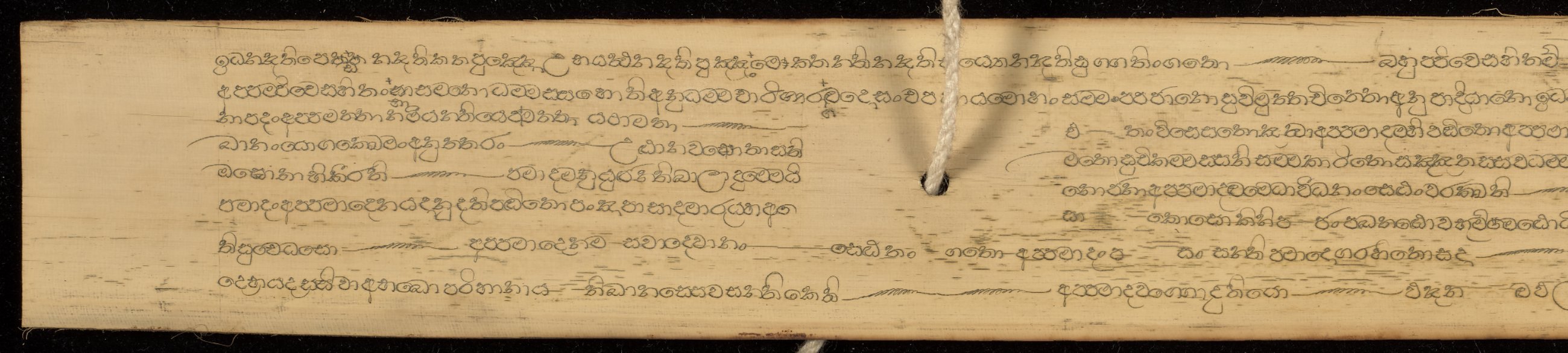
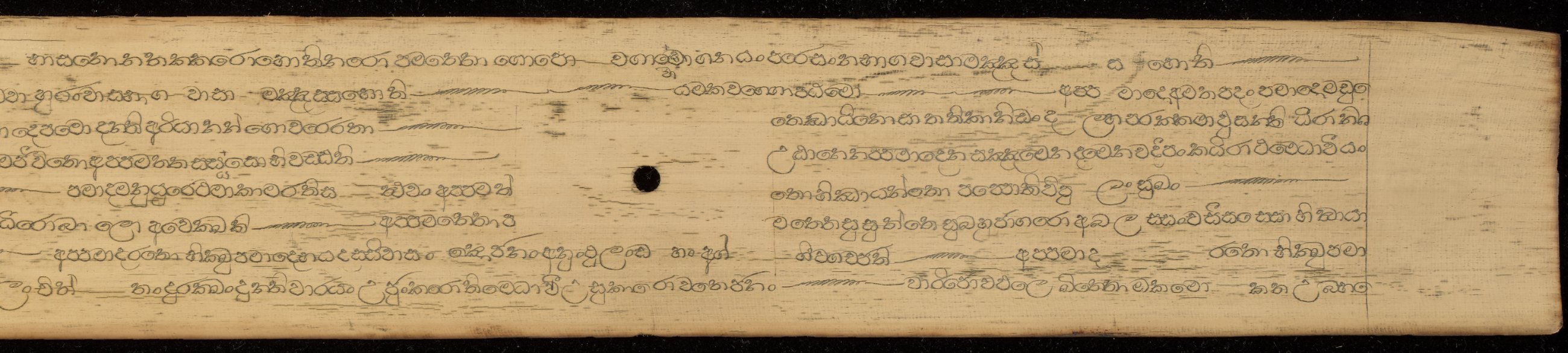
Where on the image
Pali MS 19, fol. 5b (both halves of the leaf side). Checked on the image: the side begins 'idha nandati pecca nandati (v.18)' and its last line ends 'vārijova thale khitto okamokata ubbha- (v.34)'. The Pali shown is the Mahāsaṅgīti edition (SuttaCentral), not a transcription of the manuscript; the scribe's spellings differ in places.
21Appamādo amatapadaṁ, pamādo maccuno padaṁ; Appamattā na mīyanti, ye pamattā yathā matā.
22Evaṁ visesato ñatvā, appamādamhi paṇḍitā; Appamāde pamodanti, ariyānaṁ gocare ratā.
23Te jhāyino sātatikā, niccaṁ daḷhaparakkamā; Phusanti dhīrā nibbānaṁ, yogakkhemaṁ anuttaraṁ.
24Uṭṭhānavato satīmato, Sucikammassa nisammakārino; Saññatassa dhammajīvino, Appamattassa yasobhivaḍḍhati.
25Uṭṭhānenappamādena, saṁyamena damena ca; Dīpaṁ kayirātha medhāvī, yaṁ ogho nābhikīrati.
26Pamādamanuyuñjanti, bālā dummedhino janā; Appamādañca medhāvī, dhanaṁ seṭṭhaṁva rakkhati.
27Mā pamādamanuyuñjetha, mā kāmaratisanthavaṁ; Appamatto hi jhāyanto, pappoti vipulaṁ sukhaṁ.
28Pamādaṁ appamādena, yadā nudati paṇḍito; Paññāpāsādamāruyha, asoko sokiniṁ pajaṁ; Pabbataṭṭhova bhūmaṭṭhe, dhīro bāle avekkhati.
29Appamatto pamattesu, suttesu bahujāgaro; Abalassaṁva sīghasso, hitvā yāti sumedhaso.
30Appamādena maghavā, devānaṁ seṭṭhataṁ gato; Appamādaṁ pasaṁsanti, pamādo garahito sadā.
31Appamādarato bhikkhu, pamāde bhayadassi vā; Saṁyojanaṁ aṇuṁ thūlaṁ, ḍahaṁ aggīva gacchati.
32Appamādarato bhikkhu, pamāde bhayadassi vā; Abhabbo parihānāya, nibbānasseva santike.
21Earnestness is the path of immortality (Nirvana), thoughtlessness the path of death. Those who are in earnest do not die, those who are thoughtless are as if dead already.
22Those who are advanced in earnestness, having understood this clearly, delight in earnestness, and rejoice in the knowledge of the Ariyas (the elect).
23These wise people, meditative, steady, always possessed of strong powers, attain to Nirvana, the highest happiness.
24If an earnest person has roused himself, if he is not forgetful, if his deeds are pure, if he acts with consideration, if he restrains himself, and lives according to law,—then his glory will increase.
25By rousing himself, by earnestness, by restraint and control, the wise man may make for himself an island which no flood can overwhelm.
26Fools follow after vanity, men of evil wisdom. The wise man keeps earnestness as his best jewel.
27Follow not after vanity, nor after the enjoyment of love and lust! He who is earnest and meditative, obtains ample joy.
28When the learned man drives away vanity by earnestness, he, the wise, climbing the terraced heights of wisdom, looks down upon the fools, serene he looks upon the toiling crowd, as one that stands on a mountain looks down upon them that stand upon the plain.
29Earnest among the thoughtless, awake among the sleepers, the wise man advances like a racer, leaving behind the hack.
30By earnestness did Maghavan (Indra) rise to the lordship of the gods. People praise earnestness; thoughtlessness is always blamed.
31A Bhikshu (mendicant) who delights in earnestness, who looks with fear on thoughtlessness, moves about like fire, burning all his fetters, small or large.
32A Bhikshu (mendicant) who delights in reflection, who looks with fear on thoughtlessness, cannot fall away (from his perfect state)—he is close upon Nirvana.
Notes
- Müller's English is from the Wikisource transcription, which leaves out the diacritics the printed book uses in names (for example Nirvana, Brahmana, Mara).
- Words in round brackets are Müller's additions for sense.
Cite
Sources
- Source: Manchester, John Rylands Library, Pali MS 19 (palm leaf, Sinhalese script) + SuttaCentral Pali (Mahāsaṅgīti) + Max Müller's English (SBE X, 1881) (holding institution)
- Critical edition: SuttaCentral, Mahāsaṅgīti Tipiṭaka edition
← previous · → next · v cycle view · l back to library