Dhammapada 4: Pupphavagga, Flowers (verses 44-59)
Introduction
Chapter 4 of the Dhammapada, the Pupphavagga ('Flowers' in Max Müller's translation), verses 44-59. The Dhammapada is a collection of 423 verses in Pali attributed to the Buddha, part of the Khuddakanikāya of the Pali canon; its compilation is usually dated to about the third century BCE.
The images are of a Sinhalese palm-leaf manuscript in the John Rylands Library, Manchester (Pali MS 19), once owned by T. W. Rhys Davids. The text is written in Sinhalese script across the whole width of each leaf, nine lines a side, interrupted only by the string holes; each image is one half of a leaf side. This chapter is on fol. 6a, 6b. Each section holds the verses that end on that side.
The Pali is the Mahāsaṅgīti edition published by SuttaCentral, and the English is Max Müller's translation in the Sacred Books of the East (1881), which sometimes renders two verses together (for example 58-59).
How was this verified? (Provenance)
Where on the image
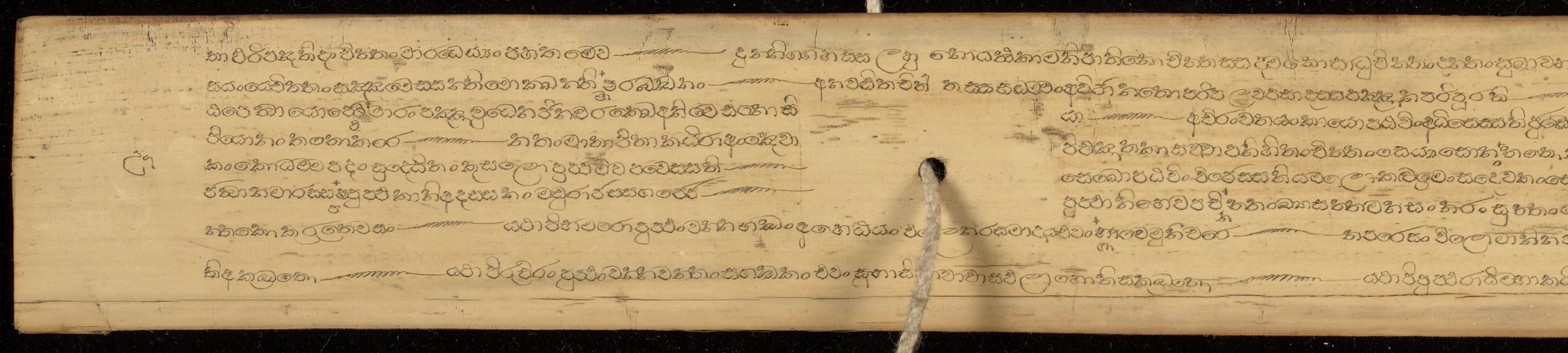
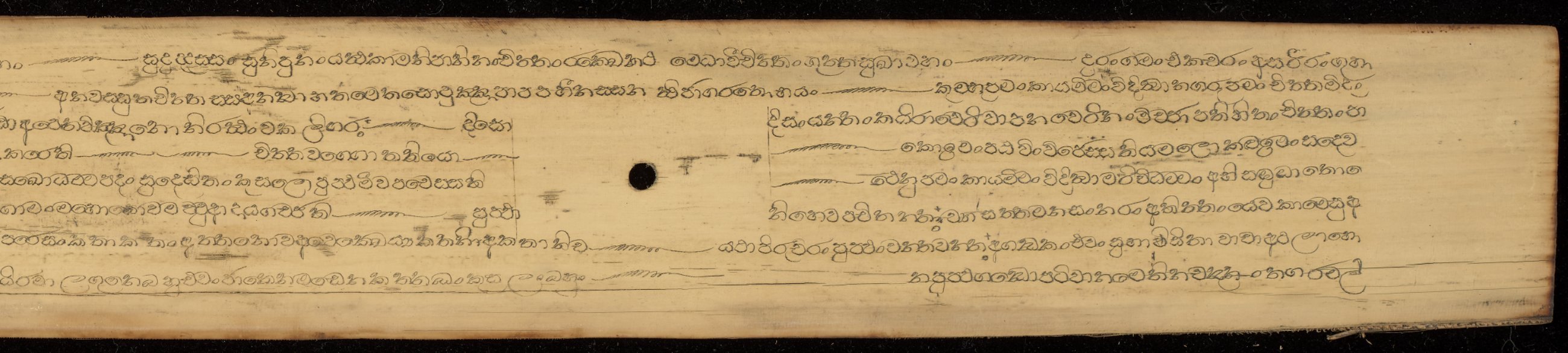
Pali MS 19, fol. 6a (both halves of the leaf side). Checked on the image: the side begins '-to pariphandatidaṃ cittaṃ māradheyyaṃ pahātave (end of v.34)' and its last line ends 'na pupphagandho paṭivātameti na candanaṃ tagaramalli- (v.54)'. The Pali shown is the Mahāsaṅgīti edition (SuttaCentral), not a transcription of the manuscript; the scribe's spellings differ in places.
44Ko imaṁ pathaviṁ vicessati, Yamalokañca imaṁ sadevakaṁ; Ko dhammapadaṁ sudesitaṁ, Kusalo pupphamiva pacessati.
45Sekho pathaviṁ vicessati, Yamalokañca imaṁ sadevakaṁ; Sekho dhammapadaṁ sudesitaṁ, Kusalo pupphamiva pacessati.
46Pheṇūpamaṁ kāyamimaṁ viditvā, Marīcidhammaṁ abhisambudhāno; Chetvāna mārassa papupphakāni, Adassanaṁ maccurājassa gacche.
47Pupphāni heva pacinantaṁ, byāsattamanasaṁ naraṁ; Suttaṁ gāmaṁ mahoghova, maccu ādāya gacchati.
48Pupphāni heva pacinantaṁ, byāsattamanasaṁ naraṁ; Atittaññeva kāmesu, antako kurute vasaṁ.
49Yathāpi bhamaro pupphaṁ, vaṇṇagandhamaheṭhayaṁ; Paleti rasamādāya, evaṁ gāme munī care.
50Na paresaṁ vilomāni, na paresaṁ katākataṁ; Attanova avekkheyya, katāni akatāni ca.
51Yathāpi ruciraṁ pupphaṁ, vaṇṇavantaṁ agandhakaṁ; Evaṁ subhāsitā vācā, aphalā hoti akubbato.
52Yathāpi ruciraṁ pupphaṁ, Vaṇṇavantaṁ sagandhakaṁ; Evaṁ subhāsitā vācā, Saphalā hoti kubbato.
53Yathāpi puppharāsimhā, kayirā mālāguṇe bahū; Evaṁ jātena maccena, kattabbaṁ kusalaṁ bahuṁ.
44Who shall overcome this earth, and the world of Yama (the lord of the departed), and the world of the gods? Who shall find out the plainly shown path of virtue, as a clever man finds out the (right) flower?
45The disciple will overcome the earth, and the world of Yama, and the world of the gods. The disciple will find out the plainly shown path of virtue, as a clever man finds out the (right) flower.
46He who knows that this body is like froth, and has learnt that it is as unsubstantial as a mirage, will break the flower-pointed arrow of Mara, and never see the king of death.
47Death carries off a man who is gathering flowers and whose mind is distracted, as a flood carries off a sleeping village.
48Death subdues a man who is gathering flowers, and whose mind is distracted, before he is satiated in his pleasures.
49As the bee collects nectar and departs without injuring the flower, or its colour or scent, so let a sage dwell in his village.
50Not the perversities of others, not their sins of commission or omission, but his own misdeeds and negligences should a sage take notice of.
51Like a beautiful flower, full of colour, but without scent, are the fine but fruitless words of him who does not act accordingly.
52But, like a beautiful flower, full of colour and full of scent, are the fine and fruitful words of him who acts accordingly.
53As many kinds of wreaths can be made from a heap of flowers, so many good things may be achieved by a mortal when once he is born.
Where on the image
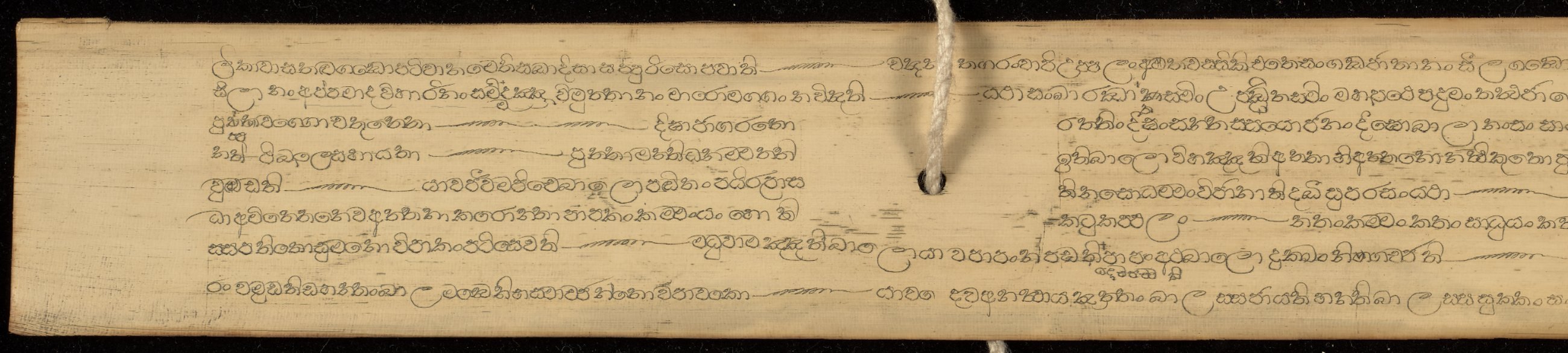
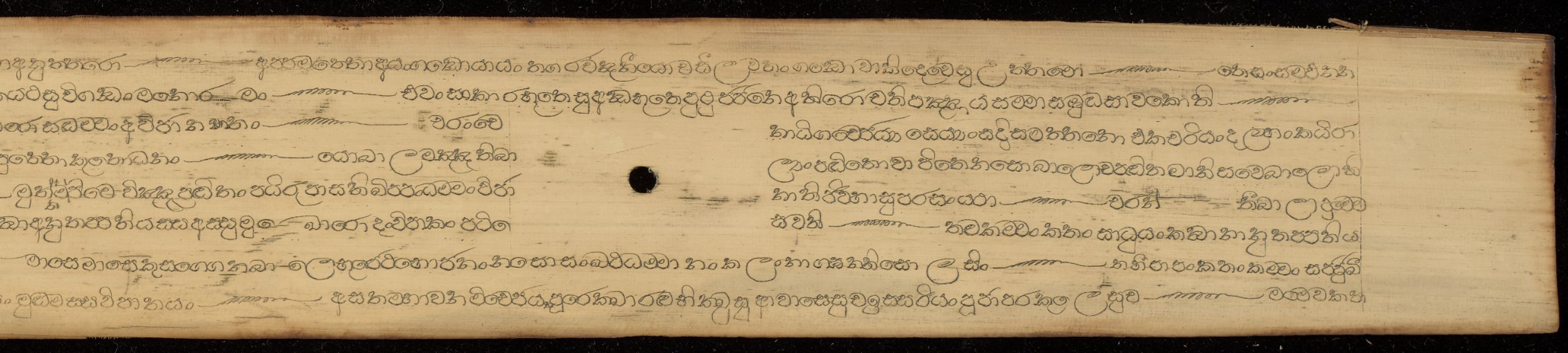
Pali MS 19, fol. 6b (both halves of the leaf side). Checked on the image: the side begins '-kā vā, ... gandho paṭivātameti ... sappuriso pavāti (end of v.54)' and its last line ends 'mameva kata- (v.74)'. Verse 54 begins on fol. 6a and ends on fol. 6b; both sides are shown. The Pali shown is the Mahāsaṅgīti edition (SuttaCentral), not a transcription of the manuscript; the scribe's spellings differ in places.
54Na pupphagandho paṭivātameti, Na candanaṁ tagaramallikā vā; Satañca gandho paṭivātameti, Sabbā disā sappuriso pavāyati.
55Candanaṁ tagaraṁ vāpi, uppalaṁ atha vassikī; Etesaṁ gandhajātānaṁ, sīlagandho anuttaro.
56Appamatto ayaṁ gandho, yāyaṁ tagaracandanī; Yo ca sīlavataṁ gandho, vāti devesu uttamo.
57Tesaṁ sampannasīlānaṁ, appamādavihārinaṁ; Sammadaññāvimuttānaṁ, māro maggaṁ na vindati.
58Yathā saṅkāradhānasmiṁ, ujjhitasmiṁ mahāpathe; Padumaṁ tattha jāyetha, sucigandhaṁ manoramaṁ.
59Evaṁ saṅkārabhūtesu, andhabhūte puthujjane; Atirocati paññāya, sammāsambuddhasāvako.
54The scent of flowers does not travel against the wind, nor (that of) sandal-wood, or of Tagara and Mallika flowers; but the odour of good people travels even against the wind; a good man pervades every place.
55Sandal-wood or Tagara, a lotus-flower, or a Vassiki, among these sorts of perfumes, the perfume of virtue is unsurpassed.
56Mean is the scent that comes from Tagara and sandal-wood;—the perfume of those who possess virtue rises up to the gods as the highest.
57Of the people who possess these virtues, who live without thoughtlessness, and who are emancipated through true knowledge, Mara, the tempter, never finds the way.
58-59As on a heap of rubbish cast upon the highway the lily will grow full of sweet perfume and delight, thus the disciple of the truly enlightened Buddha shines forth by his knowledge among those who are like rubbish, among the people that walk in darkness.
Notes
- Müller's English is from the Wikisource transcription, which leaves out the diacritics the printed book uses in names (for example Nirvana, Brahmana, Mara).
- Words in round brackets are Müller's additions for sense.
Cite
Sources
- Source: Manchester, John Rylands Library, Pali MS 19 (palm leaf, Sinhalese script) + SuttaCentral Pali (Mahāsaṅgīti) + Max Müller's English (SBE X, 1881) (holding institution)
- Critical edition: SuttaCentral, Mahāsaṅgīti Tipiṭaka edition
← previous · → next · v cycle view · l back to library