Dhammapada 5: Bālavagga, The Fool (verses 60-75)
Introduction
Chapter 5 of the Dhammapada, the Bālavagga ('The Fool' in Max Müller's translation), verses 60-75. The Dhammapada is a collection of 423 verses in Pali attributed to the Buddha, part of the Khuddakanikāya of the Pali canon; its compilation is usually dated to about the third century BCE.
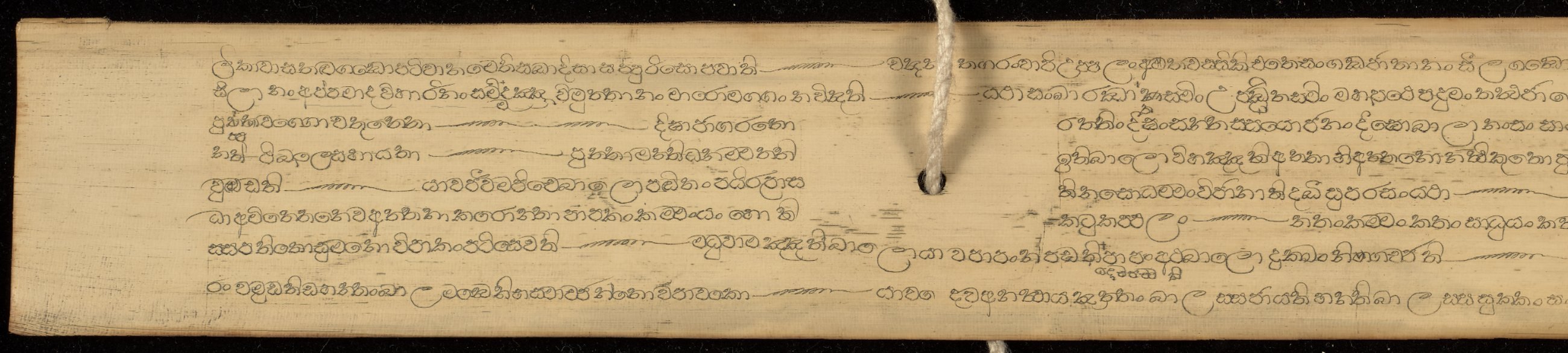
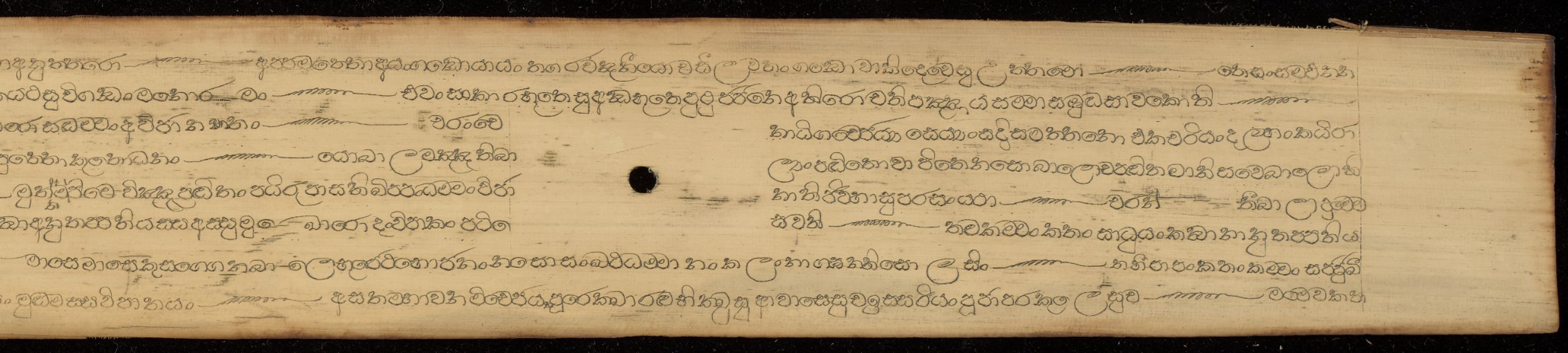
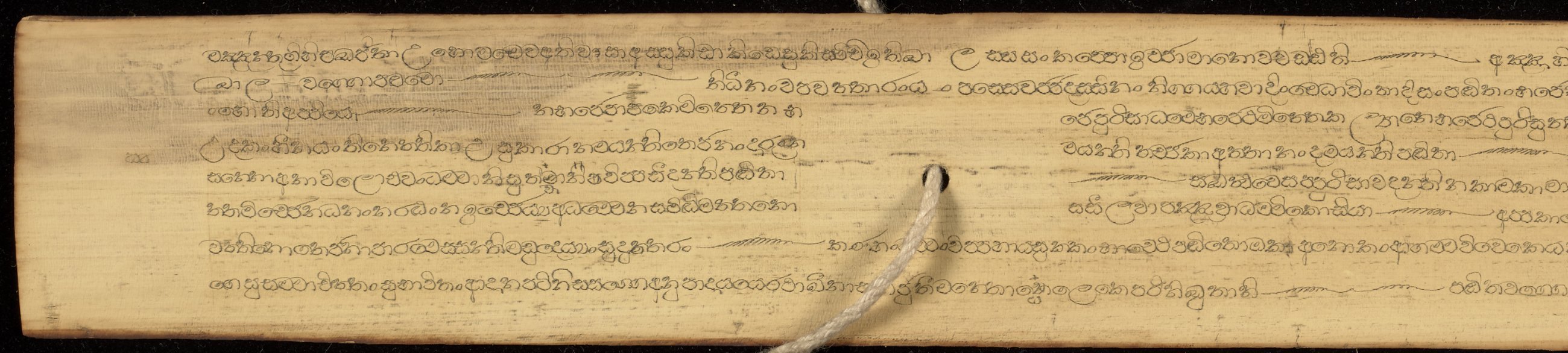
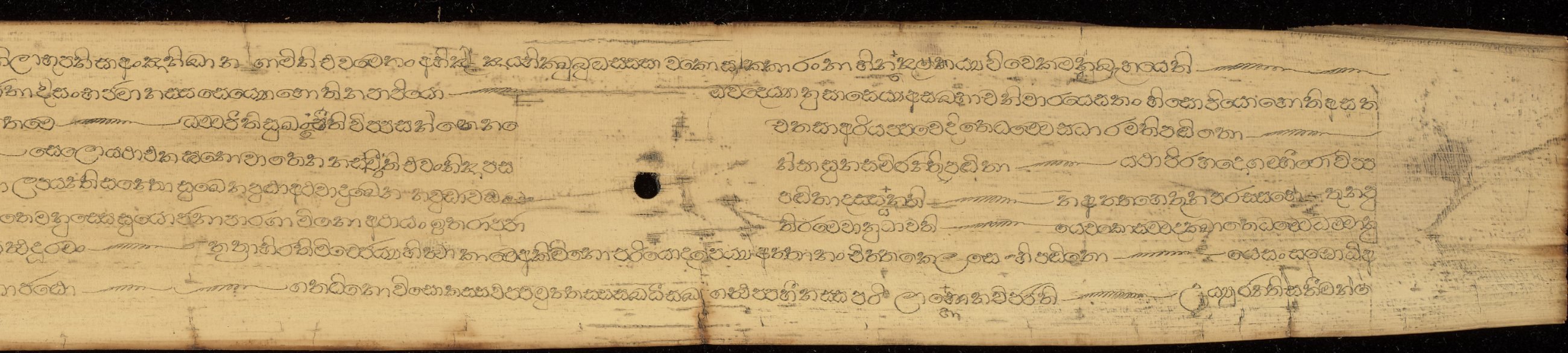
The images are of a Sinhalese palm-leaf manuscript in the John Rylands Library, Manchester (Pali MS 19), once owned by T. W. Rhys Davids. The text is written in Sinhalese script across the whole width of each leaf, nine lines a side, interrupted only by the string holes; each image is one half of a leaf side. This chapter is on fol. 6b, 7a. Each section holds the verses that end on that side.
The Pali is the Mahāsaṅgīti edition published by SuttaCentral, and the English is Max Müller's translation in the Sacred Books of the East (1881), which sometimes renders two verses together (for example 58-59).
How was this verified? (Provenance)
Where on the image
Pali MS 19, fol. 6b (both halves of the leaf side). Checked on the image: the side begins '-kā vā, ... gandho paṭivātameti ... sappuriso pavāti (end of v.54)' and its last line ends 'mameva kata- (v.74)'. The Pali shown is the Mahāsaṅgīti edition (SuttaCentral), not a transcription of the manuscript; the scribe's spellings differ in places.
60Dīghā jāgarato ratti, dīghaṁ santassa yojanaṁ; Dīgho bālāna saṁsāro, saddhammaṁ avijānataṁ.
61Carañce nādhigaccheyya, Seyyaṁ sadisamattano; Ekacariyaṁ daḷhaṁ kayirā, Natthi bāle sahāyatā.
62Puttā matthi dhanaṁ matthi, iti bālo vihaññati; Attā hi attano natthi, kuto puttā kuto dhanaṁ.
63Yo bālo maññati bālyaṁ, paṇḍito vāpi tena so; Bālo ca paṇḍitamānī, sa ve “bālo”ti vuccati.
64Yāvajīvampi ce bālo, paṇḍitaṁ payirupāsati; Na so dhammaṁ vijānāti, dabbī sūparasaṁ yathā.
65Muhuttamapi ce viññū, paṇḍitaṁ payirupāsati; Khippaṁ dhammaṁ vijānāti, jivhā sūparasaṁ yathā.
66Caranti bālā dummedhā, amitteneva attanā; Karontā pāpakaṁ kammaṁ, yaṁ hoti kaṭukapphalaṁ.
67Na taṁ kammaṁ kataṁ sādhu, yaṁ katvā anutappati; Yassa assumukho rodaṁ, vipākaṁ paṭisevati.
68Tañca kammaṁ kataṁ sādhu, yaṁ katvā nānutappati; Yassa patīto sumano, vipākaṁ paṭisevati.
69Madhuṁvā maññati bālo, yāva pāpaṁ na paccati; Yadā ca paccati pāpaṁ, atha dukkhaṁ nigacchati.
70Māse māse kusaggena, bālo bhuñjeyya bhojanaṁ; Na so saṅkhātadhammānaṁ, kalaṁ agghati soḷasiṁ.
71Na hi pāpaṁ kataṁ kammaṁ, Sajjukhīraṁva muccati; Ḍahantaṁ bālamanveti, Bhasmacchannova pāvako.
72Yāvadeva anatthāya, ñattaṁ bālassa jāyati; Hanti bālassa sukkaṁsaṁ, muddhamassa vipātayaṁ.
73Asantaṁ bhāvanamiccheyya, Purekkhārañca bhikkhusu; Āvāsesu ca issariyaṁ, Pūjaṁ parakulesu ca.
60Long is the night to him who is awake; long is a mile to him who is tired; long is life to the foolish who do not know the true law.
61If a traveller does not meet with one who is his better, or his equal, let him firmly keep to his solitary journey; there is no companionship with a fool.
62"These sons belong to me, and this wealth belongs to me," with such thoughts a fool is tormented. He himself does not belong to himself; how much less sons and wealth?
63The fool who knows his foolishness, is wise at least so far. But a fool who thinks himself wise, he is called a fool indeed.
64If a fool be associated with a wise man even all his life, he will perceive the truth as little as a spoon perceives the taste of soup.
65If an intelligent man be associated for one minute only with a wise man, he will soon perceive the truth, as the tongue perceives the taste of soup.
66Fools of little understanding have themselves for their greatest enemies, for they do evil deeds which must bear bitter fruits.
67That deed is not well done of which a man must repent, and the reward of which he receives crying and with a tearful face.
68No, that deed is well done of which a man does not repent, and the reward of which he receives gladly and cheerfully.
69As long as the evil deed done does not bear fruit, the fool thinks it is like honey; but when it ripens, then the fool suffers grief.
70Let a fool month after month eat his food (like an ascetic) with the tip of a blade of Kusa grass, yet is he not worth the sixteenth particle of those who have well weighed the law.
71An evil deed, like newly-drawn milk, does not turn (suddenly); smouldering, like fire covered by ashes, it follows the fool.
72And when the evil deed, after it has become known, brings sorrow to the fool, then it destroys his bright lot, nay, it cleaves his head.
73Let the fool wish for a false reputation, for precedence among the Bhikshus, for lordship in the convents, for worship among other people!
Where on the image
Pali MS 19, fol. 7a (both halves of the leaf side). Checked on the image: the side begins '-ññantu gihī pabbajitā ubho, mamevātivasā assu (v.74)' and its last line ends 'uyyuñjanti satīman- (v.91)'. Verse 74 begins on fol. 6b and ends on fol. 7a; both sides are shown. The Pali shown is the Mahāsaṅgīti edition (SuttaCentral), not a transcription of the manuscript; the scribe's spellings differ in places.
74Mameva kata maññantu, gihī pabbajitā ubho; Mamevātivasā assu, kiccākiccesu kismici; Iti bālassa saṅkappo, icchā māno ca vaḍḍhati.
75Aññā hi lābhūpanisā, aññā nibbānagāminī; Evametaṁ abhiññāya, bhikkhu buddhassa sāvako; Sakkāraṁ nābhinandeyya, vivekamanubrūhaye.
74"May both the layman and he who has left the world think that this is done by me; may they be subject to me in everything which is to be done or is not to be done," thus is the mind of the fool, and his desire and pride increase.
75"One is the road that leads to wealth, another the road that leads to Nirvana;" if the Bhikshu, the disciple of Buddha, has learnt this, he will not yearn for honour, he will strive after separation from the world.
Notes
- Müller's English is from the Wikisource transcription, which leaves out the diacritics the printed book uses in names (for example Nirvana, Brahmana, Mara).
- Words in round brackets are Müller's additions for sense.
Cite
Sources
- Source: Manchester, John Rylands Library, Pali MS 19 (palm leaf, Sinhalese script) + SuttaCentral Pali (Mahāsaṅgīti) + Max Müller's English (SBE X, 1881) (holding institution)
- Critical edition: SuttaCentral, Mahāsaṅgīti Tipiṭaka edition
← previous · → next · v cycle view · l back to library