Dhammapada 6: Paṇḍitavagga, The Wise Man (verses 76-89)
Introduction
Chapter 6 of the Dhammapada, the Paṇḍitavagga ('The Wise Man (Pandita)' in Max Müller's translation), verses 76-89. The Dhammapada is a collection of 423 verses in Pali attributed to the Buddha, part of the Khuddakanikāya of the Pali canon; its compilation is usually dated to about the third century BCE.
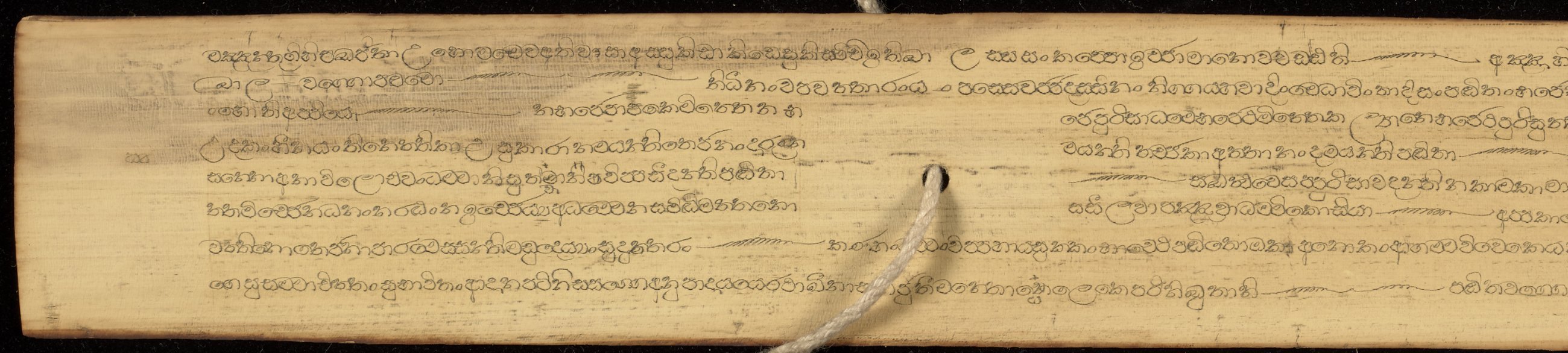
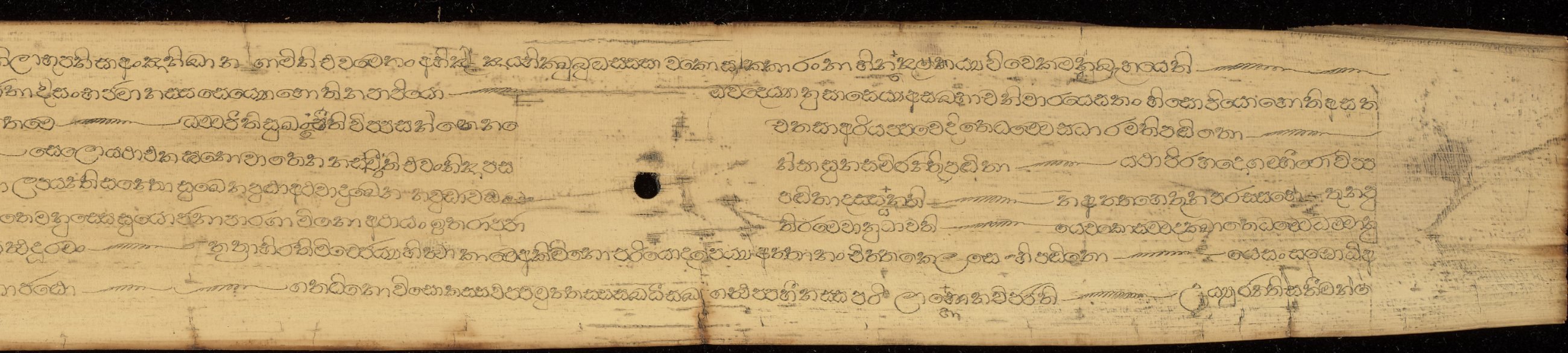
The images are of a Sinhalese palm-leaf manuscript in the John Rylands Library, Manchester (Pali MS 19), once owned by T. W. Rhys Davids. The text is written in Sinhalese script across the whole width of each leaf, nine lines a side, interrupted only by the string holes; each image is one half of a leaf side. This chapter is on fol. 7a. Each section holds the verses that end on that side.
The Pali is the Mahāsaṅgīti edition published by SuttaCentral, and the English is Max Müller's translation in the Sacred Books of the East (1881), which sometimes renders two verses together (for example 58-59).
How was this verified? (Provenance)
Where on the image
Pali MS 19, fol. 7a (both halves of the leaf side). Checked on the image: the side begins '-ññantu gihī pabbajitā ubho, mamevātivasā assu (v.74)' and its last line ends 'uyyuñjanti satīman- (v.91)'. The Pali shown is the Mahāsaṅgīti edition (SuttaCentral), not a transcription of the manuscript; the scribe's spellings differ in places.
76Nidhīnaṁva pavattāraṁ, yaṁ passe vajjadassinaṁ; Niggayhavādiṁ medhāviṁ, tādisaṁ paṇḍitaṁ bhaje; Tādisaṁ bhajamānassa, seyyo hoti na pāpiyo.
77Ovadeyyānusāseyya, asabbhā ca nivāraye; Satañhi so piyo hoti, asataṁ hoti appiyo.
78Na bhaje pāpake mitte, na bhaje purisādhame; Bhajetha mitte kalyāṇe, bhajetha purisuttame.
79Dhammapīti sukhaṁ seti, vippasannena cetasā; Ariyappavedite dhamme, sadā ramati paṇḍito.
80Udakañhi nayanti nettikā, Usukārā namayanti tejanaṁ; Dāruṁ namayanti tacchakā, Attānaṁ damayanti paṇḍitā.
81Selo yathā ekaghano, vātena na samīrati; Evaṁ nindāpasaṁsāsu, na samiñjanti paṇḍitā.
82Yathāpi rahado gambhīro, vippasanno anāvilo; Evaṁ dhammāni sutvāna, vippasīdanti paṇḍitā.
83Sabbattha ve sappurisā cajanti, Na kāmakāmā lapayanti santo; Sukhena phuṭṭhā atha vā dukhena, Na uccāvacaṁ paṇḍitā dassayanti.
84Na attahetu na parassa hetu, Na puttamicche na dhanaṁ na raṭṭhaṁ; Na iccheyya adhammena samiddhimattano, Sa sīlavā paññavā dhammiko siyā.
85Appakā te manussesu, ye janā pāragāmino; Athāyaṁ itarā pajā, tīramevānudhāvati.
86Ye ca kho sammadakkhāte, dhamme dhammānuvattino; Te janā pāramessanti, maccudheyyaṁ suduttaraṁ.
87Kaṇhaṁ dhammaṁ vippahāya, Sukkaṁ bhāvetha paṇḍito; Okā anokamāgamma, Viveke yattha dūramaṁ.
88Tatrābhiratimiccheyya, hitvā kāme akiñcano; Pariyodapeyya attānaṁ, cittaklesehi paṇḍito.
89Yesaṁ sambodhiyaṅgesu, sammā cittaṁ subhāvitaṁ; Ādānapaṭinissagge, anupādāya ye ratā; Khīṇāsavā jutimanto, te loke parinibbutā.
76If you see an intelligent man who tells you where true treasures are to be found, who shows what is to be avoided, and administers reproofs, follow that wise man; it will be better, not worse, for those who follow him.
77Let him admonish, let him teach, let him forbid what is improper!- -he will be beloved of the good, by the bad he will be hated.
78Do not have evil-doers for friends, do not have low people for friends: have virtuous people for friends, have for friends the best of men.
79He who drinks in the law lives happily with a serene mind: the sage rejoices always in the law, as preached by the elect (Ariyas).
80Well-makers lead the water (wherever they like); fletchers bend the arrow; carpenters bend a log of wood; wise people fashion themselves.
81As a solid rock is not shaken by the wind, wise people falter not amidst blame and praise.
82Wise people, after they have listened to the laws, become serene, like a deep, smooth, and still lake.
83Good people walk on whatever befall, the good do not prattle, longing for pleasure; whether touched by happiness or sorrow wise people never appear elated or depressed.
84If, whether for his own sake, or for the sake of others, a man wishes neither for a son, nor for wealth, nor for lordship, and if he does not wish for his own success by unfair means, then he is good, wise, and virtuous.
85Few are there among men who arrive at the other shore (become Arhats); the other people here run up and down the shore.
86But those who, when the law has been well preached to them, follow the law, will pass across the dominion of death, however difficult to overcome.
87-88A wise man should leave the dark state (of ordinary life), and follow the bright state (of the Bhikshu). After going from his home to a homeless state, he should in his retirement look for enjoyment where there seemed to be no enjoyment. Leaving all pleasures behind, and calling nothing his own, the wise man should purge himself from all the troubles of the mind.
89Those whose mind is well grounded in the (seven) elements of knowledge, who without clinging to anything, rejoice in freedom from attachment, whose appetites have been conquered, and who are full of light, are free (even) in this world.
Notes
- Müller's English is from the Wikisource transcription, which leaves out the diacritics the printed book uses in names (for example Nirvana, Brahmana, Mara).
- Words in round brackets are Müller's additions for sense.
Cite
Sources
- Source: Manchester, John Rylands Library, Pali MS 19 (palm leaf, Sinhalese script) + SuttaCentral Pali (Mahāsaṅgīti) + Max Müller's English (SBE X, 1881) (holding institution)
- Critical edition: SuttaCentral, Mahāsaṅgīti Tipiṭaka edition
← previous · → next · v cycle view · l back to library