Dhammapada 7: Arahantavagga, The Venerable (verses 90-99)
Introduction
Chapter 7 of the Dhammapada, the Arahantavagga ('The Venerable (Arhat)' in Max Müller's translation), verses 90-99. The Dhammapada is a collection of 423 verses in Pali attributed to the Buddha, part of the Khuddakanikāya of the Pali canon; its compilation is usually dated to about the third century BCE.
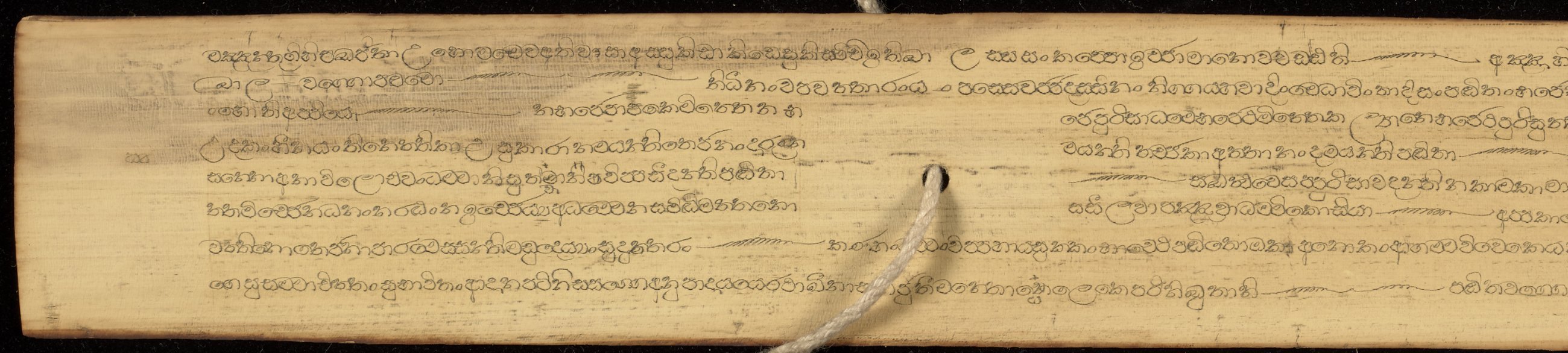
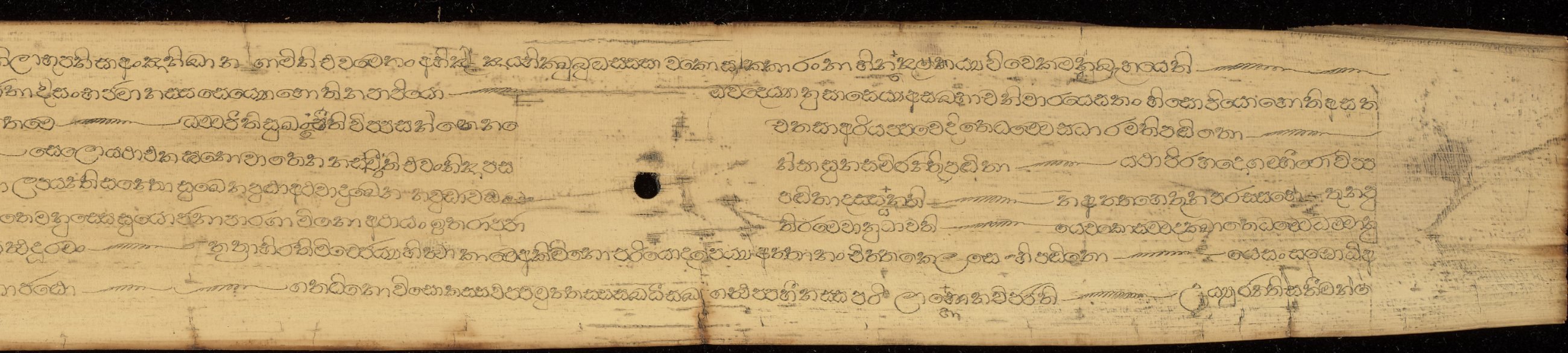
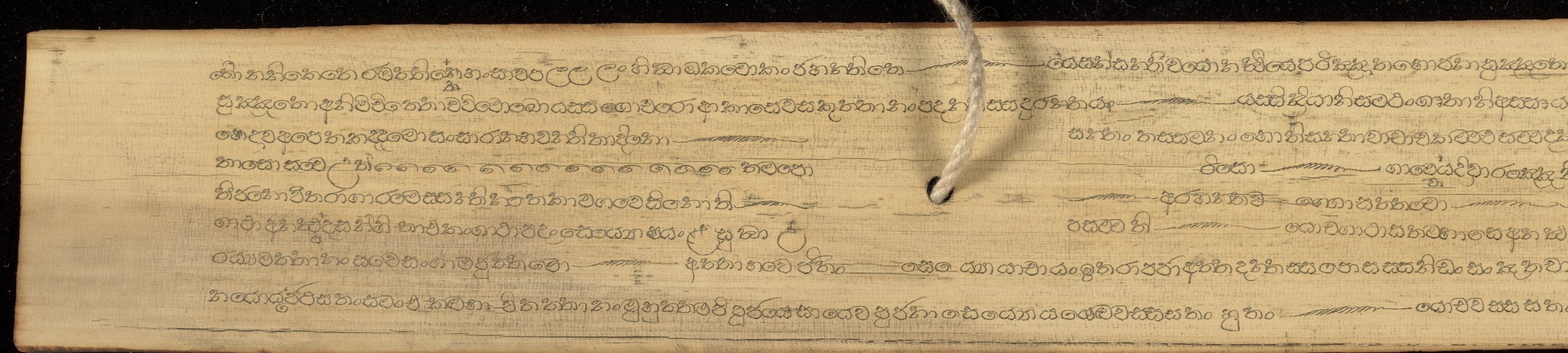
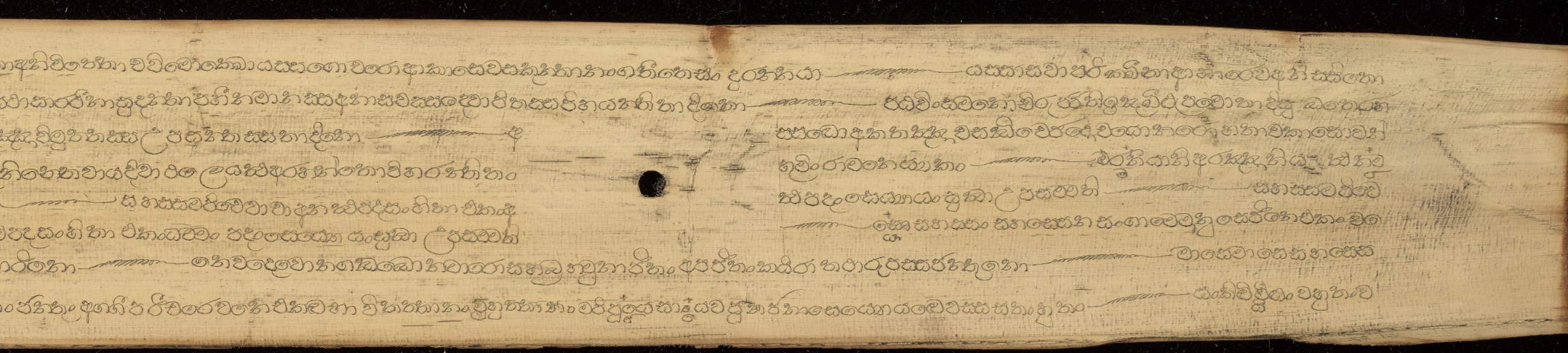
The images are of a Sinhalese palm-leaf manuscript in the John Rylands Library, Manchester (Pali MS 19), once owned by T. W. Rhys Davids. The text is written in Sinhalese script across the whole width of each leaf, nine lines a side, interrupted only by the string holes; each image is one half of a leaf side. This chapter is on fol. 7a, 7b. Each section holds the verses that end on that side.
The Pali is the Mahāsaṅgīti edition published by SuttaCentral, and the English is Max Müller's translation in the Sacred Books of the East (1881), which sometimes renders two verses together (for example 58-59).
How was this verified? (Provenance)
Where on the image
Pali MS 19, fol. 7a (both halves of the leaf side). Checked on the image: the side begins '-ññantu gihī pabbajitā ubho, mamevātivasā assu (v.74)' and its last line ends 'uyyuñjanti satīman- (v.91)'. The Pali shown is the Mahāsaṅgīti edition (SuttaCentral), not a transcription of the manuscript; the scribe's spellings differ in places.
90Gataddhino visokassa, vippamuttassa sabbadhi; Sabbaganthappahīnassa, pariḷāho na vijjati.
90There is no suffering for him who has finished his journey, and abandoned grief, who has freed himself on all sides, and thrown off all fetters.
Where on the image
Pali MS 19, fol. 7b (both halves of the leaf side). Checked on the image: the side begins '-to na nikete ramanti te, haṃsāva pallalaṃ hitvā (v.91)' and its last line ends 'yaṃ kiñci yiṭṭhaṃ va hutaṃ va (v.108)'. Verse 91 begins on fol. 7a and ends on fol. 7b; both sides are shown. The Pali shown is the Mahāsaṅgīti edition (SuttaCentral), not a transcription of the manuscript; the scribe's spellings differ in places.
91Uyyuñjanti satīmanto, na nikete ramanti te; Haṁsāva pallalaṁ hitvā, okamokaṁ jahanti te.
92Yesaṁ sannicayo natthi, ye pariññātabhojanā; Suññato animitto ca, vimokkho yesaṁ gocaro; Ākāseva sakuntānaṁ, gati tesaṁ durannayā.
93Yassāsavā parikkhīṇā, āhāre ca anissito; Suññato animitto ca, vimokkho yassa gocaro; Ākāseva sakuntānaṁ, padaṁ tassa durannayaṁ.
94Yassindriyāni samathaṅgatāni, Assā yathā sārathinā sudantā; Pahīnamānassa anāsavassa, Devāpi tassa pihayanti tādino.
95Pathavisamo no virujjhati, Indakhilupamo tādi subbato; Rahadova apetakaddamo, Saṁsārā na bhavanti tādino.
96Santaṁ tassa manaṁ hoti, santā vācā ca kamma ca; Sammadaññāvimuttassa, upasantassa tādino.
97Assaddho akataññū ca, sandhicchedo ca yo naro; Hatāvakāso vantāso, sa ve uttamaporiso.
98Gāme vā yadi vāraññe, Ninne vā yadi vā thale; Yattha arahanto viharanti, Taṁ bhūmirāmaṇeyyakaṁ.
99Ramaṇīyāni araññāni, yattha na ramatī jano; Vītarāgā ramissanti, na te kāmagavesino.
91They depart with their thoughts well-collected, they are not happy in their abode; like swans who have left their lake, they leave their house and home.
92Men who have no riches, who live on recognised food, who have perceived void and unconditioned freedom (Nirvana), their path is difficult to understand, like that of birds in the air.
93He whose appetites are stilled, who is not absorbed in enjoyment, who has perceived void and unconditioned freedom (Nirvana), his path is difficult to understand, like that of birds in the air.
94The gods even envy him whose senses, like horses well broken in by the driver, have been subdued, who is free from pride, and free from appetites.
95Such a one who does his duty is tolerant like the earth, like Indra's bolt; he is like a lake without mud; no new births are in store for him.
96His thought is quiet, quiet are his word and deed, when he has obtained freedom by true knowledge, when he has thus become a quiet man.
97The man who is free from credulity, but knows the uncreated, who has cut all ties, removed all temptations, renounced all desires, he is the greatest of men.
98In a hamlet or in a forest, in the deep water or on the dry land, wherever venerable persons (Arahanta) dwell, that place is delightful.
99Forests are delightful; where the world finds no delight, there the passionless will find delight, for they look not for pleasures.
Notes
- Müller's English is from the Wikisource transcription, which leaves out the diacritics the printed book uses in names (for example Nirvana, Brahmana, Mara).
- Words in round brackets are Müller's additions for sense.
Cite
Sources
- Source: Manchester, John Rylands Library, Pali MS 19 (palm leaf, Sinhalese script) + SuttaCentral Pali (Mahāsaṅgīti) + Max Müller's English (SBE X, 1881) (holding institution)
- Critical edition: SuttaCentral, Mahāsaṅgīti Tipiṭaka edition
← previous · → next · v cycle view · l back to library