Dhammapada 9: Pāpavagga, Evil (verses 116-128)
Introduction
Chapter 9 of the Dhammapada, the Pāpavagga ('Evil' in Max Müller's translation), verses 116-128. The Dhammapada is a collection of 423 verses in Pali attributed to the Buddha, part of the Khuddakanikāya of the Pali canon; its compilation is usually dated to about the third century BCE.
The images are of a Sinhalese palm-leaf manuscript in the John Rylands Library, Manchester (Pali MS 19), once owned by T. W. Rhys Davids. The text is written in Sinhalese script across the whole width of each leaf, nine lines a side, interrupted only by the string holes; each image is one half of a leaf side. This chapter is on fol. 8a, 8b. Each section holds the verses that end on that side.
The Pali is the Mahāsaṅgīti edition published by SuttaCentral, and the English is Max Müller's translation in the Sacred Books of the East (1881), which sometimes renders two verses together (for example 58-59).
How was this verified? (Provenance)
Where on the image
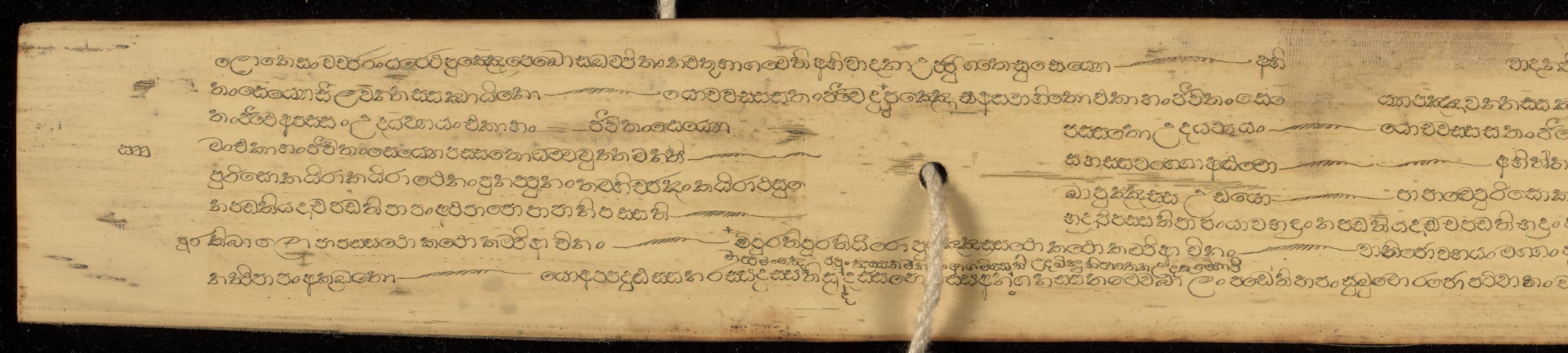
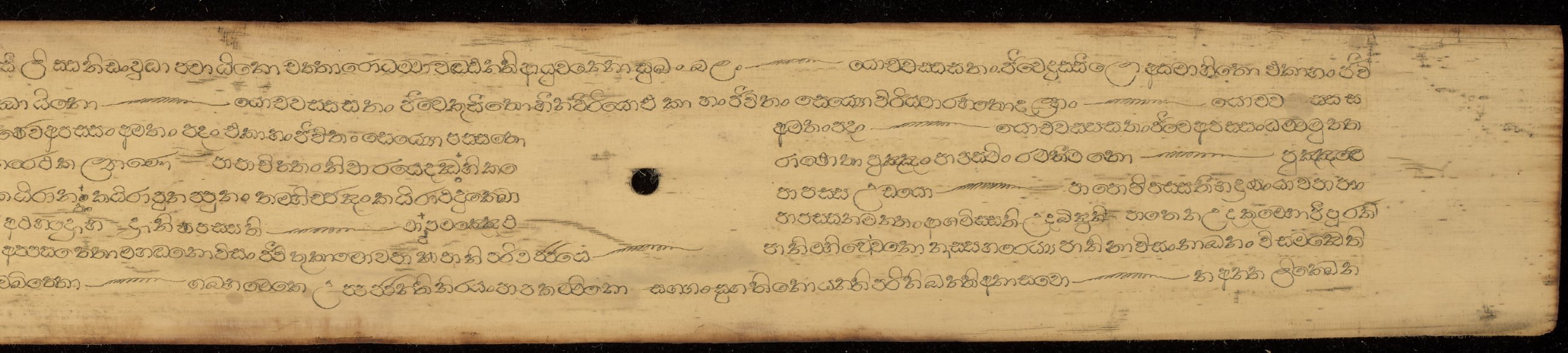
Pali MS 19, fol. 8a (both halves of the leaf side). Checked on the image: the side begins 'loke saṃvaccharaṃ yajetha puññapekkho (v.108)' and its last line ends 'na antalikkhe na (v.127)'. The Pali shown is the Mahāsaṅgīti edition (SuttaCentral), not a transcription of the manuscript; the scribe's spellings differ in places.
116Abhittharetha kalyāṇe, pāpā cittaṁ nivāraye; Dandhañhi karoto puññaṁ, pāpasmiṁ ramatī mano.
117Pāpañce puriso kayirā, Na naṁ kayirā punappunaṁ; Na tamhi chandaṁ kayirātha, Dukkho pāpassa uccayo.
118Puññañce puriso kayirā, kayirā naṁ punappunaṁ; Tamhi chandaṁ kayirātha, sukho puññassa uccayo.
119Pāpopi passati bhadraṁ, Yāva pāpaṁ na paccati; Yadā ca paccati pāpaṁ, Atha pāpo pāpāni passati.
120Bhadropi passati pāpaṁ, Yāva bhadraṁ na paccati; Yadā ca paccati bhadraṁ, Atha bhadro bhadrāni passati.
121Māvamaññetha pāpassa, na mantaṁ āgamissati; Udabindunipātena, udakumbhopi pūrati; Bālo pūrati pāpassa, thokaṁ thokampi ācinaṁ.
122Māvamaññetha puññassa, na mandaṁ āgamissati; Udabindunipātena, udakumbhopi pūrati; Dhīro pūrati puññassa, thokaṁ thokampi ācinaṁ.
123Vāṇijova bhayaṁ maggaṁ, appasattho mahaddhano; Visaṁ jīvitukāmova, pāpāni parivajjaye.
124Pāṇimhi ce vaṇo nāssa, hareyya pāṇinā visaṁ; Nābbaṇaṁ visamanveti, natthi pāpaṁ akubbato.
125Yo appaduṭṭhassa narassa dussati, Suddhassa posassa anaṅgaṇassa; Tameva bālaṁ pacceti pāpaṁ, Sukhumo rajo paṭivātaṁva khitto.
126Gabbhameke uppajjanti, nirayaṁ pāpakammino; Saggaṁ sugatino yanti, parinibbanti anāsavā.
116If a man would hasten towards the good, he should keep his thought away from evil; if a man does what is good slothfully, his mind delights in evil.
117If a man commits a sin, let him not do it again; let him not delight in sin: pain is the outcome of evil.
118If a man does what is good, let him do it again; let him delight in it: happiness is the outcome of good.
119Even an evil-doer sees happiness as long as his evil deed has not ripened; but when his evil deed has ripened, then does the evil-doer see evil.
120Even a good man sees evil days, as long as his good deed has not ripened; but when his good deed has ripened, then does the good man see happy days.
121Let no man think lightly of evil, saying in his heart, It will not come nigh unto me. Even by the falling of water-drops a water-pot is filled; the fool becomes full of evil, even if he gather it little by little.
122Let no man think lightly of good, saying in his heart, It will not come nigh unto me. Even by the falling of water-drops a water-pot is filled; the wise man becomes full of good, even if he gather it little by little.
123Let a man avoid evil deeds, as a merchant, if he has few companions and carries much wealth, avoids a dangerous road; as a man who loves life avoids poison.
124He who has no wound on his hand, may touch poison with his hand; poison does not affect one who has no wound; nor is there evil for one who does not commit evil.
125If a man offend a harmless, pure, and innocent person, the evil falls back upon that fool, like light dust thrown up against the wind.
126Some people are born again; evil-doers go to hell; righteous people go to heaven; those who are free from all worldly desires attain Nirvana.
Where on the image
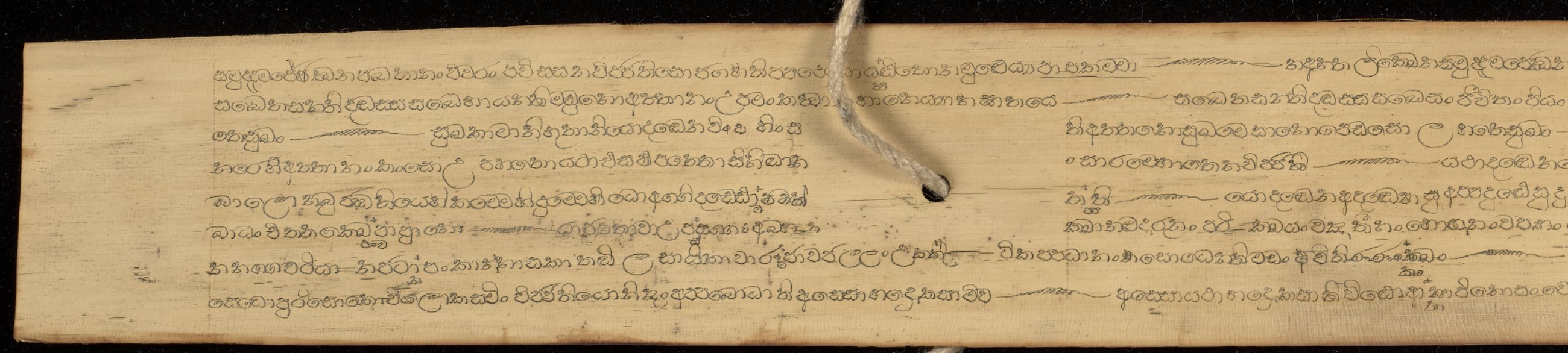
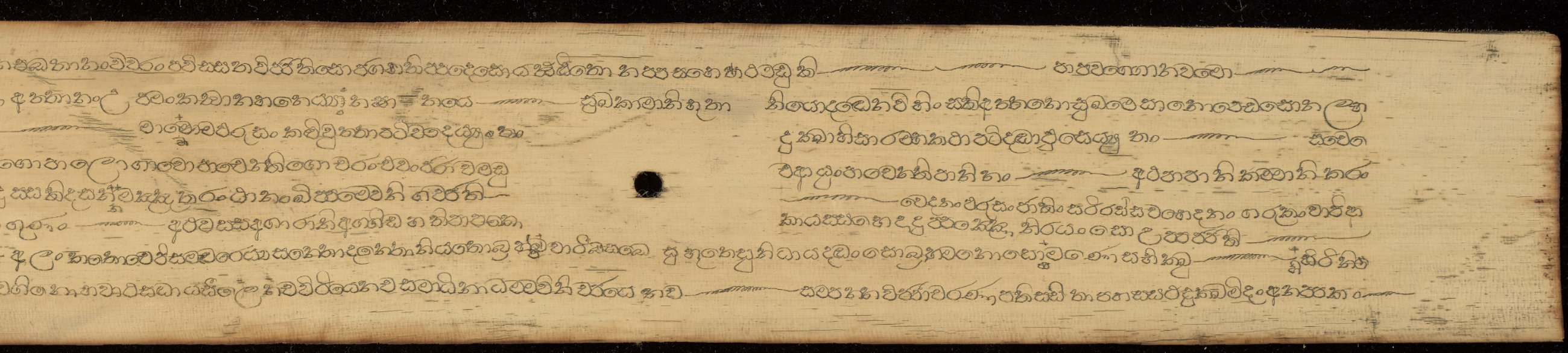
Pali MS 19, fol. 8b (both halves of the leaf side). Checked on the image: the side begins 'samuddamajjhe na pabbatānaṃ vivaraṃ pavissa (v.127)' and its last line ends '... pahassatha dukkhamidaṃ anappakaṃ (end of v.144)'. Verse 127 begins on fol. 8a and ends on fol. 8b; both sides are shown. The Pali shown is the Mahāsaṅgīti edition (SuttaCentral), not a transcription of the manuscript; the scribe's spellings differ in places.
127Na antalikkhe na samuddamajjhe, Na pabbatānaṁ vivaraṁ pavissa; Na vijjatī so jagatippadeso, Yatthaṭṭhito mucceyya pāpakammā.
128Na antalikkhe na samuddamajjhe, Na pabbatānaṁ vivaraṁ pavissa; Na vijjatī so jagatippadeso, Yatthaṭṭhitaṁ nappasaheyya maccu.
127Not in the sky, not in the midst of the sea, not if we enter into the clefts of the mountains, is there known a spot in the whole world where a man might be freed from an evil deed.
128Not in the sky, not in the midst of the sea, not if we enter into the clefts of the mountains, is there known a spot in the whole world where death could not overcome (the mortal).
Notes
- Müller's English is from the Wikisource transcription, which leaves out the diacritics the printed book uses in names (for example Nirvana, Brahmana, Mara).
- Words in round brackets are Müller's additions for sense.
Cite
Sources
- Source: Manchester, John Rylands Library, Pali MS 19 (palm leaf, Sinhalese script) + SuttaCentral Pali (Mahāsaṅgīti) + Max Müller's English (SBE X, 1881) (holding institution)
- Critical edition: SuttaCentral, Mahāsaṅgīti Tipiṭaka edition
← previous · → next · v cycle view · l back to library