Dhammapada 11: Jarāvagga, Old Age (verses 146-156)
Introduction
Chapter 11 of the Dhammapada, the Jarāvagga ('Old Age' in Max Müller's translation), verses 146-156. The Dhammapada is a collection of 423 verses in Pali attributed to the Buddha, part of the Khuddakanikāya of the Pali canon; its compilation is usually dated to about the third century BCE.
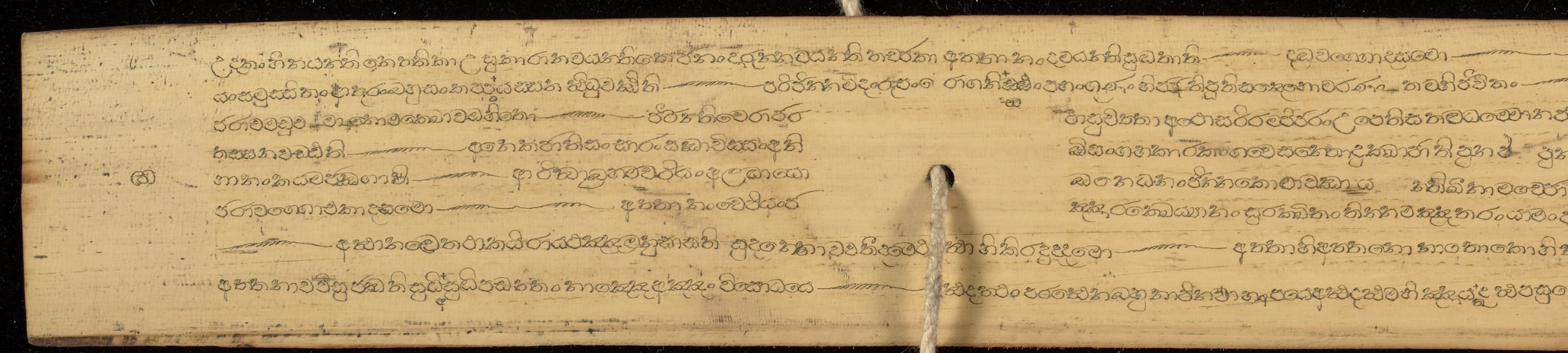
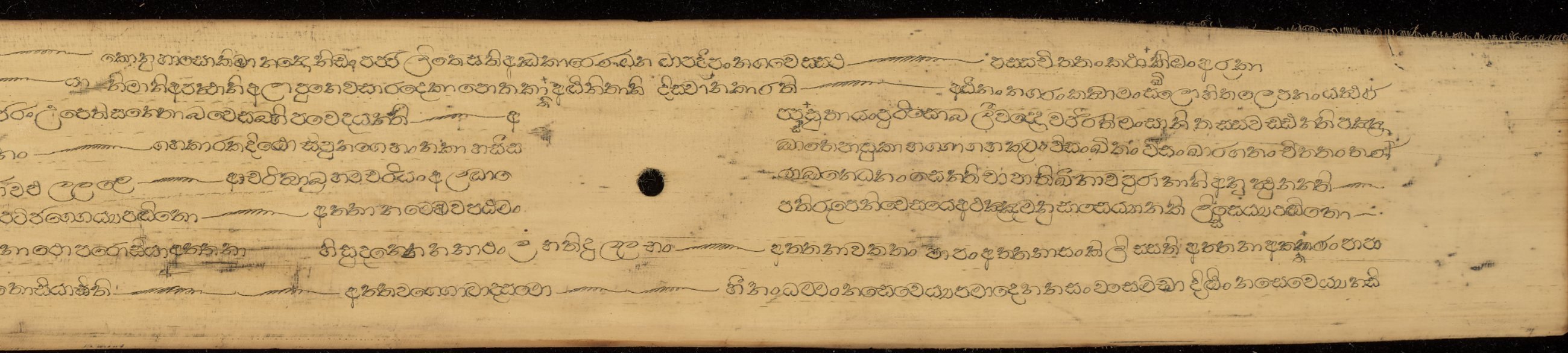
The images are of a Sinhalese palm-leaf manuscript in the John Rylands Library, Manchester (Pali MS 19), once owned by T. W. Rhys Davids. The text is written in Sinhalese script across the whole width of each leaf, nine lines a side, interrupted only by the string holes; each image is one half of a leaf side. This chapter is on fol. 9a. Each section holds the verses that end on that side.
The Pali is the Mahāsaṅgīti edition published by SuttaCentral, and the English is Max Müller's translation in the Sacred Books of the East (1881), which sometimes renders two verses together (for example 58-59).
How was this verified? (Provenance)
Where on the image
Pali MS 19, fol. 9a (both halves of the leaf side). Checked on the image: the side begins 'udakañhi nayanti nettikā (v.145; line 2 has v.147, so not the same words in v.80)' and its last line ends 'micchādiṭṭhiṃ na seveyya na si- (v.167)'. The Pali shown is the Mahāsaṅgīti edition (SuttaCentral), not a transcription of the manuscript; the scribe's spellings differ in places.
146Ko nu hāso kimānando, niccaṁ pajjalite sati; Andhakārena onaddhā, padīpaṁ na gavesatha.
147Passa cittakataṁ bimbaṁ, arukāyaṁ samussitaṁ; Āturaṁ bahusaṅkappaṁ, yassa natthi dhuvaṁ ṭhiti.
148Parijiṇṇamidaṁ rūpaṁ, roganīḷaṁ pabhaṅguraṁ; Bhijjati pūtisandeho, maraṇantañhi jīvitaṁ.
149Yānimāni apatthāni, alābūneva sārade; Kāpotakāni aṭṭhīni, tāni disvāna kā rati.
150Aṭṭhīnaṁ nagaraṁ kataṁ, maṁsalohitalepanaṁ; Yattha jarā ca maccu ca, māno makkho ca ohito.
151Jīranti ve rājarathā sucittā, Atho sarīrampi jaraṁ upeti; Satañca dhammo na jaraṁ upeti, Santo have sabbhi pavedayanti.
152Appassutāyaṁ puriso, balībaddhova jīrati; Maṁsāni tassa vaḍḍhanti, paññā tassa na vaḍḍhati.
153Anekajātisaṁsāraṁ, sandhāvissaṁ anibbisaṁ; Gahakāraṁ gavesanto, dukkhā jāti punappunaṁ.
154Gahakāraka diṭṭhosi, puna gehaṁ na kāhasi; Sabbā te phāsukā bhaggā, gahakūṭaṁ visaṅkhataṁ; Visaṅkhāragataṁ cittaṁ, taṇhānaṁ khayamajjhagā.
155Acaritvā brahmacariyaṁ, aladdhā yobbane dhanaṁ; Jiṇṇakoñcāva jhāyanti, khīṇamaccheva pallale.
156Acaritvā brahmacariyaṁ, aladdhā yobbane dhanaṁ; Senti cāpātikhīṇāva, purāṇāni anutthunaṁ.
146How is there laughter, how is there joy, as this world is always burning? Why do you not seek a light, ye who are surrounded by darkness?
147Look at this dressed-up lump, covered with wounds, joined together, sickly, full of many thoughts, which has no strength, no hold!
148This body is wasted, full of sickness, and frail; this heap of corruption breaks to pieces, life indeed ends in death.
149Those white bones, like gourds thrown away in the autumn, what pleasure is there in looking at them?
150After a stronghold has been made of the bones, it is covered with flesh and blood, and there dwell in it old age and death, pride and deceit.
151The brilliant chariots of kings are destroyed, the body also approaches destruction, but the virtue of good people never approaches destruction,—thus do the good say to the good.
152A man who has learnt little, grows old like an ox; his flesh grows, but his knowledge does not grow.
153-154Looking for the maker of this tabernacle, I shall have to run through a course of many births, so long as I do not find (him); and painful is birth again and again. But now, maker of the tabernacle, thou hast been seen; thou shalt not make up this tabernacle again. All thy rafters are broken, thy ridge-pole is sundered; the mind, approaching the Eternal (visankhara, nirvana), has attained to the extinction of all desires.
155Men who have not observed proper discipline, and have not gained treasure in their youth, perish like old herons in a lake without fish.
156Men who have not observed proper discipline, and have not gained treasure in their youth, lie, like broken bows, sighing after the past.
Notes
- Müller's English is from the Wikisource transcription, which leaves out the diacritics the printed book uses in names (for example Nirvana, Brahmana, Mara).
- Words in round brackets are Müller's additions for sense.
Cite
Sources
- Source: Manchester, John Rylands Library, Pali MS 19 (palm leaf, Sinhalese script) + SuttaCentral Pali (Mahāsaṅgīti) + Max Müller's English (SBE X, 1881) (holding institution)
- Critical edition: SuttaCentral, Mahāsaṅgīti Tipiṭaka edition
← previous · → next · v cycle view · l back to library