Dhammapada 12: Attavagga, Self (verses 157-166)
Introduction
Chapter 12 of the Dhammapada, the Attavagga ('Self' in Max Müller's translation), verses 157-166. The Dhammapada is a collection of 423 verses in Pali attributed to the Buddha, part of the Khuddakanikāya of the Pali canon; its compilation is usually dated to about the third century BCE.
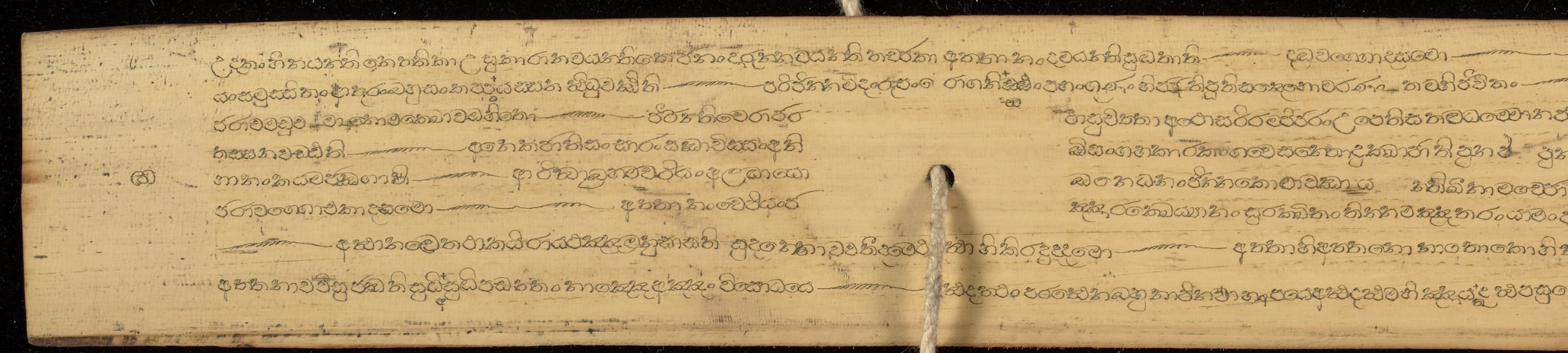
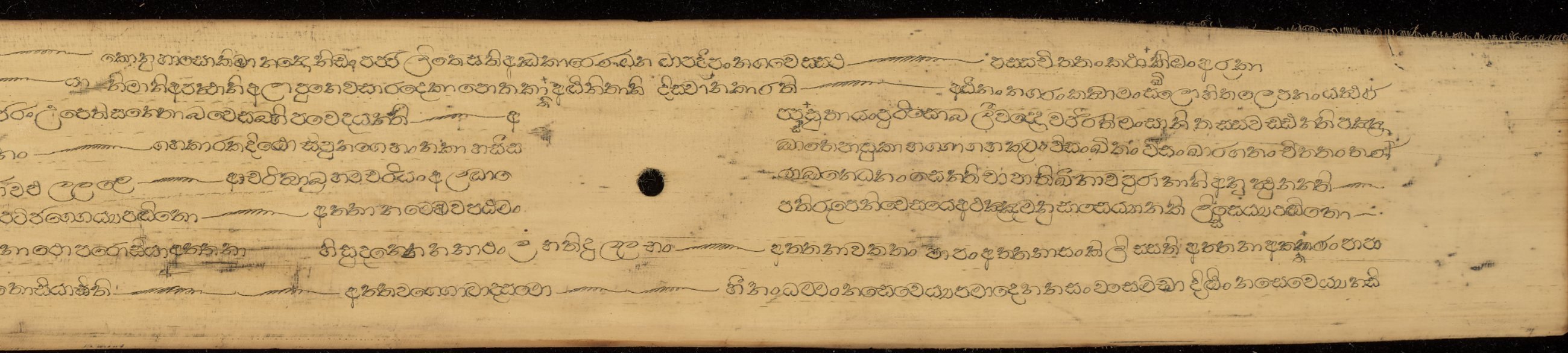
The images are of a Sinhalese palm-leaf manuscript in the John Rylands Library, Manchester (Pali MS 19), once owned by T. W. Rhys Davids. The text is written in Sinhalese script across the whole width of each leaf, nine lines a side, interrupted only by the string holes; each image is one half of a leaf side. This chapter is on fol. 9a. Each section holds the verses that end on that side.
The Pali is the Mahāsaṅgīti edition published by SuttaCentral, and the English is Max Müller's translation in the Sacred Books of the East (1881), which sometimes renders two verses together (for example 58-59).
How was this verified? (Provenance)
Where on the image
Pali MS 19, fol. 9a (both halves of the leaf side). Checked on the image: the side begins 'udakañhi nayanti nettikā (v.145; line 2 has v.147, so not the same words in v.80)' and its last line ends 'micchādiṭṭhiṃ na seveyya na si- (v.167)'. The Pali shown is the Mahāsaṅgīti edition (SuttaCentral), not a transcription of the manuscript; the scribe's spellings differ in places.
157Attānañce piyaṁ jaññā, rakkheyya naṁ surakkhitaṁ; Tiṇṇaṁ aññataraṁ yāmaṁ, paṭijaggeyya paṇḍito.
158Attānameva paṭhamaṁ, patirūpe nivesaye; Athaññamanusāseyya, na kilisseyya paṇḍito.
159Attānañce tathā kayirā, yathāññamanusāsati; Sudanto vata dametha, attā hi kira duddamo.
160Attā hi attano nātho, ko hi nātho paro siyā; Attanā hi sudantena, nāthaṁ labhati dullabhaṁ.
161Attanā hi kataṁ pāpaṁ, Attajaṁ attasambhavaṁ; Abhimatthati dummedhaṁ, Vajiraṁvasmamayaṁ maṇiṁ.
162Yassa accantadussilyaṁ, māluvā sālamivotthataṁ; Karoti so tathattānaṁ, yathā naṁ icchatī diso.
163Sukarāni asādhūni, attano ahitāni ca; Yaṁ ve hitañca sādhuñca, taṁ ve paramadukkaraṁ.
164Yo sāsanaṁ arahataṁ, ariyānaṁ dhammajīvinaṁ; Paṭikkosati dummedho, diṭṭhiṁ nissāya pāpikaṁ; Phalāni kaṭṭhakasseva, attaghātāya phallati.
165Attanā hi kataṁ pāpaṁ, attanā saṅkilissati; Attanā akataṁ pāpaṁ, attanāva visujjhati; Suddhī asuddhi paccattaṁ, nāñño aññaṁ visodhaye.
166Attadatthaṁ paratthena, bahunāpi na hāpaye; Attadatthamabhiññāya, sadatthapasuto siyā.
157If a man hold himself dear, let him watch himself carefully; during one at least out of the three watches a wise man should be watchful.
158Let each man direct himself first to what is proper, then let him teach others; thus a wise man will not suffer.
159If a man make himself as he teaches others to be, then, being himself well subdued, he may subdue (others); one's own self is indeed difficult to subdue.
160Self is the lord of self, who else could be the lord? With self well subdued, a man finds a lord such as few can find.
161The evil done by oneself, self-begotten, self-bred, crushes the foolish, as a diamond breaks a precious stone.
162He whose wickedness is very great brings himself down to that state where his enemy wishes him to be, as a creeper does with the tree which it surrounds.
163Bad deeds, and deeds hurtful to ourselves, are easy to do; what is beneficial and good, that is very difficult to do.
164The foolish man who scorns the rule of the venerable (Arahat), of the elect (Ariya), of the virtuous, and follows false doctrine, he bears fruit to his own destruction, like the fruits of the Katthaka reed.
165By oneself the evil is done, by oneself one suffers; by oneself evil is left undone, by oneself one is purified. Purity and impurity belong to oneself, no one can purify another.
166Let no one forget his own duty for the sake of another's, however great; let a man, after he has discerned his own duty, be always attentive to his duty.
Notes
- Müller's English is from the Wikisource transcription, which leaves out the diacritics the printed book uses in names (for example Nirvana, Brahmana, Mara).
- Words in round brackets are Müller's additions for sense.
Cite
Sources
- Source: Manchester, John Rylands Library, Pali MS 19 (palm leaf, Sinhalese script) + SuttaCentral Pali (Mahāsaṅgīti) + Max Müller's English (SBE X, 1881) (holding institution)
- Critical edition: SuttaCentral, Mahāsaṅgīti Tipiṭaka edition
← previous · → next · v cycle view · l back to library