Dhammapada 13: Lokavagga, The World (verses 167-178)
Introduction
Chapter 13 of the Dhammapada, the Lokavagga ('The World' in Max Müller's translation), verses 167-178. The Dhammapada is a collection of 423 verses in Pali attributed to the Buddha, part of the Khuddakanikāya of the Pali canon; its compilation is usually dated to about the third century BCE.
The images are of a Sinhalese palm-leaf manuscript in the John Rylands Library, Manchester (Pali MS 19), once owned by T. W. Rhys Davids. The text is written in Sinhalese script across the whole width of each leaf, nine lines a side, interrupted only by the string holes; each image is one half of a leaf side. This chapter is on fol. 9b. Each section holds the verses that end on that side.
The Pali is the Mahāsaṅgīti edition published by SuttaCentral, and the English is Max Müller's translation in the Sacred Books of the East (1881), which sometimes renders two verses together (for example 58-59).
How was this verified? (Provenance)
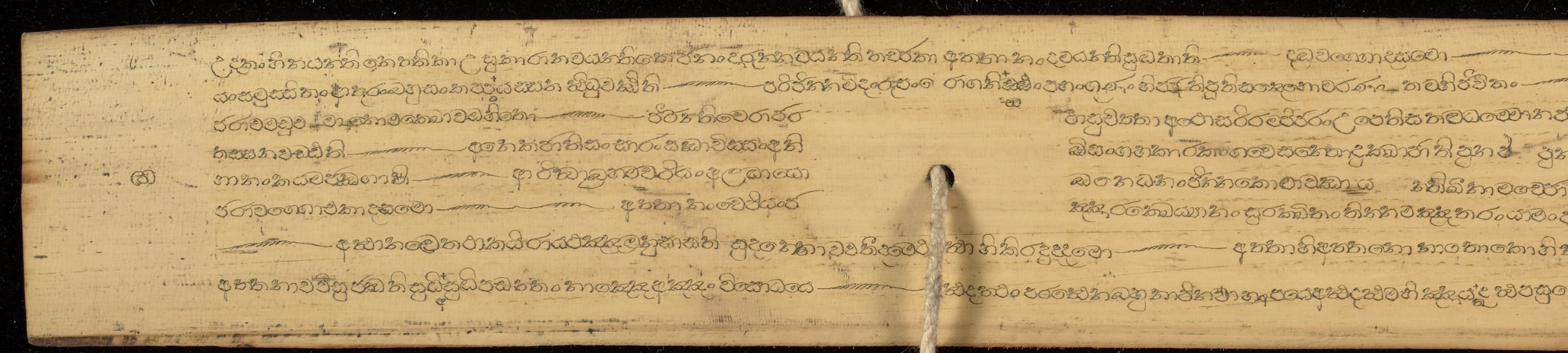
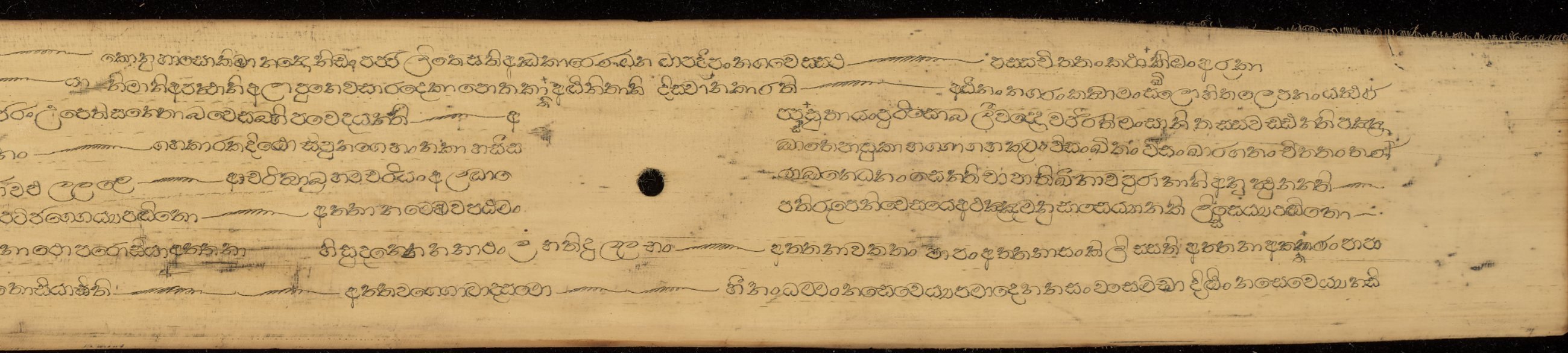
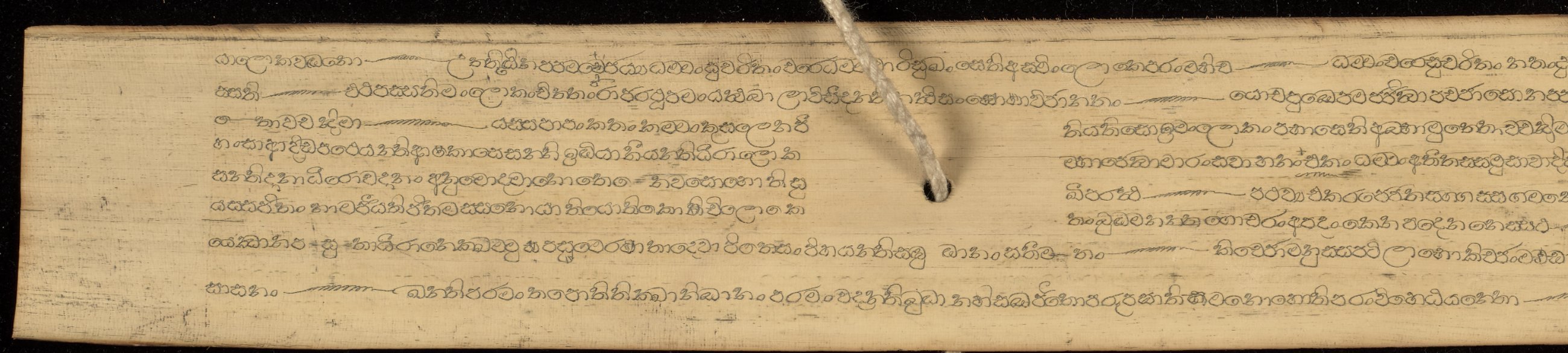
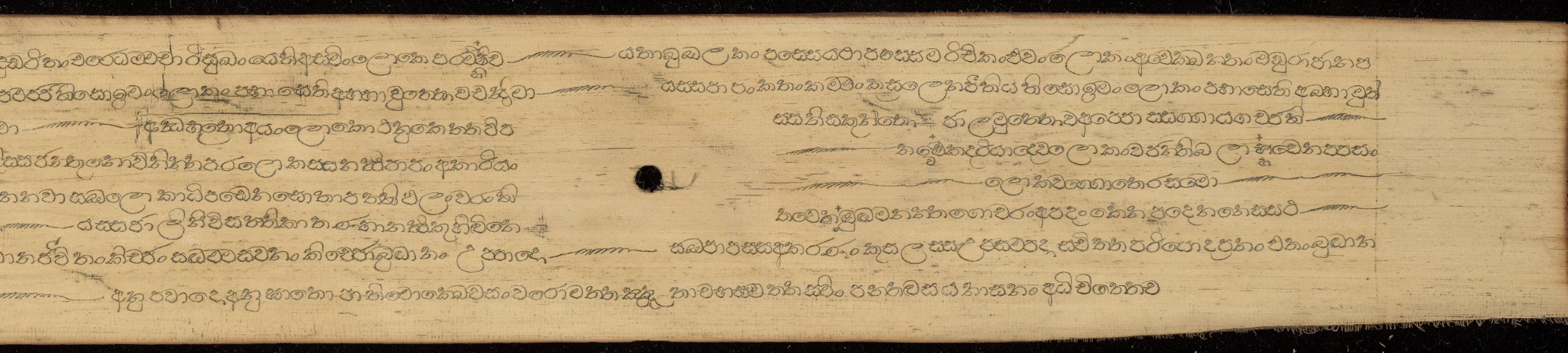
Where on the image
Pali MS 19, fol. 9b (both halves of the leaf side). Checked on the image: the side begins '-yā lokavaḍḍhano (end of v.167), then uttiṭṭhe nappamajjeyya (v.168)' and its last line ends '... pantañca sayanāsanaṃ adhicitte ca (v.185)'. Verse 167 begins on fol. 9a and ends on fol. 9b; both sides are shown. The Pali shown is the Mahāsaṅgīti edition (SuttaCentral), not a transcription of the manuscript; the scribe's spellings differ in places.
167Hīnaṁ dhammaṁ na seveyya, pamādena na saṁvase; Micchādiṭṭhiṁ na seveyya, na siyā lokavaḍḍhano.
168Uttiṭṭhe nappamajjeyya, dhammaṁ sucaritaṁ care; Dhammacārī sukhaṁ seti, asmiṁ loke paramhi ca.
169Dhammaṁ care sucaritaṁ, na naṁ duccaritaṁ care; Dhammacārī sukhaṁ seti, asmiṁ loke paramhi ca.
170Yathā pubbuḷakaṁ passe, yathā passe marīcikaṁ; Evaṁ lokaṁ avekkhantaṁ, maccurājā na passati.
171Etha passathimaṁ lokaṁ, cittaṁ rājarathūpamaṁ; Yattha bālā visīdanti, natthi saṅgo vijānataṁ.
172Yo ca pubbe pamajjitvā, pacchā so nappamajjati; Somaṁ lokaṁ pabhāseti, abbhā muttova candimā.
173Yassa pāpaṁ kataṁ kammaṁ, kusalena pidhīyati; Somaṁ lokaṁ pabhāseti, abbhā muttova candimā.
174Andhabhūto ayaṁ loko, tanukettha vipassati; Sakuṇo jālamuttova, appo saggāya gacchati.
175Haṁsādiccapathe yanti, ākāse yanti iddhiyā; Nīyanti dhīrā lokamhā, jetvā māraṁ savāhiniṁ.
176Ekaṁ dhammaṁ atītassa, musāvādissa jantuno; Vitiṇṇaparalokassa, natthi pāpaṁ akāriyaṁ.
177Na ve kadariyā devalokaṁ vajanti, Bālā have nappasaṁsanti dānaṁ; Dhīro ca dānaṁ anumodamāno, Teneva so hoti sukhī parattha.
178Pathabyā ekarajjena, saggassa gamanena vā; Sabbalokādhipaccena, sotāpattiphalaṁ varaṁ.
167Do not follow the evil law! Do not live on in thoughtlessness! Do not follow false doctrine! Be not a friend of the world.
168Rouse thyself! do not be idle! Follow the law of virtue! The virtuous rests in bliss in this world and in the next.
169Follow the law of virtue; do not follow that of sin. The virtuous rests in bliss in this world and in the next.
170Look upon the world as a bubble, look upon it as a mirage: the king of death does not see him who thus looks down upon the world.
171Come, look at this glittering world, like unto a royal chariot; the foolish are immersed in it, but the wise do not touch it.
172He who formerly was reckless and afterwards became sober, brightens up this world, like the moon when freed from clouds.
173He whose evil deeds are covered by good deeds, brightens up this world, like the moon when freed from clouds.
174This world is dark, few only can see here; a few only go to heaven, like birds escaped from the net.
175The swans go on the path of the sun, they go through the ether by means of their miraculous power; the wise are led out of this world, when they have conquered Mara and his train.
176If a man has transgressed one law, and speaks lies, and scoffs at another world, there is no evil he will not do.
177The uncharitable do not go to the world of the gods; fools only do not praise liberality; a wise man rejoices in liberality, and through it becomes blessed in the other world.
178Better than sovereignty over the earth, better than going to heaven, better than lordship over all worlds, is the reward of the first step in holiness.
Notes
- Müller's English is from the Wikisource transcription, which leaves out the diacritics the printed book uses in names (for example Nirvana, Brahmana, Mara).
- Words in round brackets are Müller's additions for sense.
Cite
Sources
- Source: Manchester, John Rylands Library, Pali MS 19 (palm leaf, Sinhalese script) + SuttaCentral Pali (Mahāsaṅgīti) + Max Müller's English (SBE X, 1881) (holding institution)
- Critical edition: SuttaCentral, Mahāsaṅgīti Tipiṭaka edition
← previous · → next · v cycle view · l back to library