Dhammapada 14: Buddhavagga, The Buddha (verses 179-196)
Introduction
Chapter 14 of the Dhammapada, the Buddhavagga ('The Buddha (The Awakened)' in Max Müller's translation), verses 179-196. The Dhammapada is a collection of 423 verses in Pali attributed to the Buddha, part of the Khuddakanikāya of the Pali canon; its compilation is usually dated to about the third century BCE.
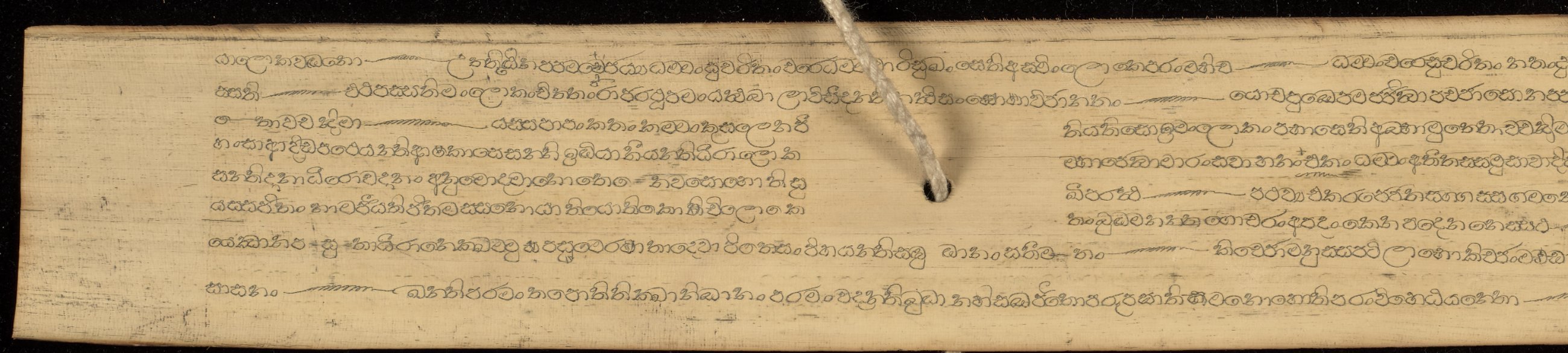
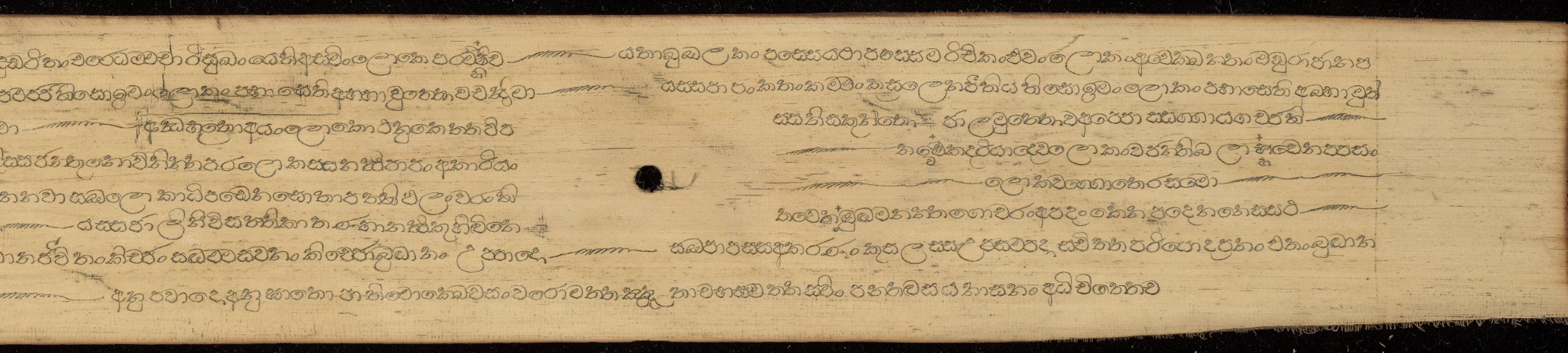
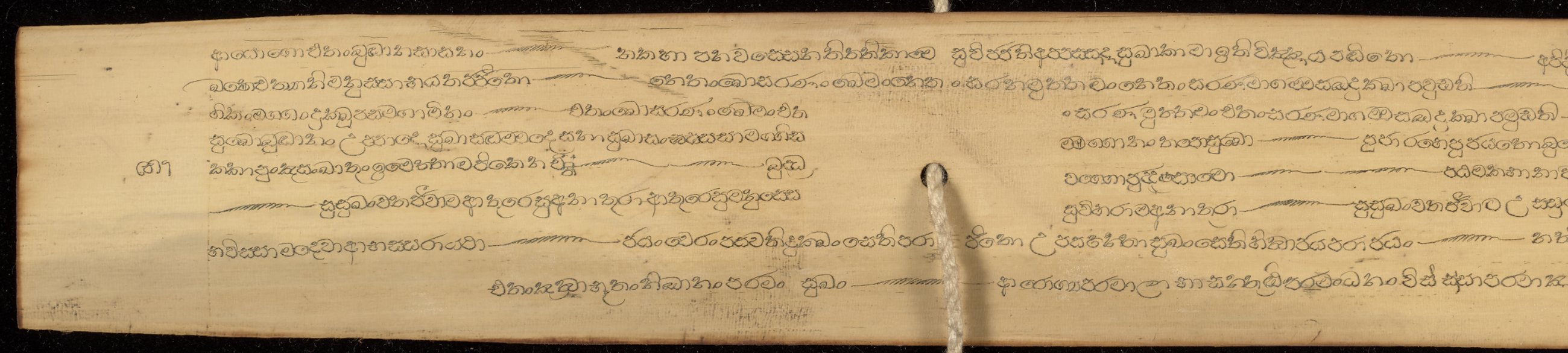
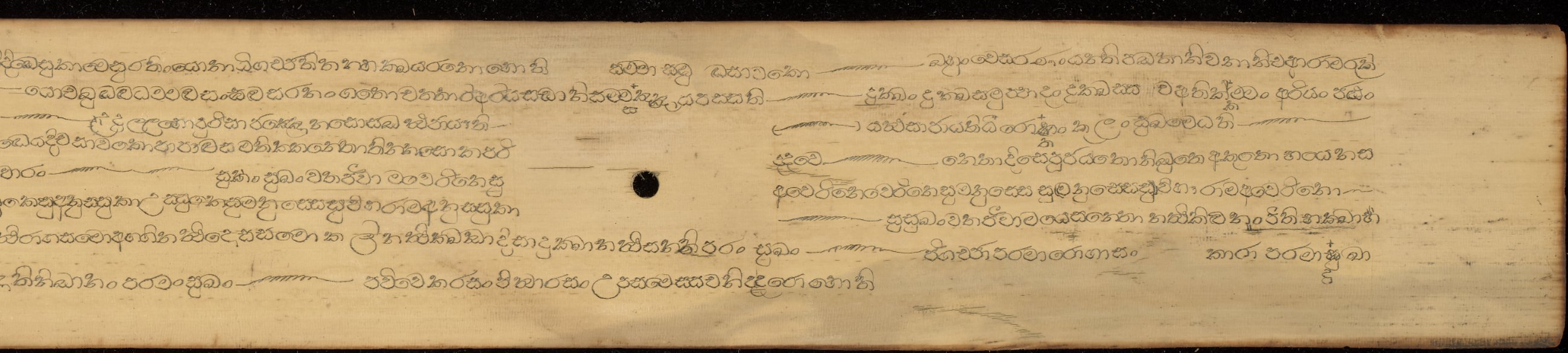
The images are of a Sinhalese palm-leaf manuscript in the John Rylands Library, Manchester (Pali MS 19), once owned by T. W. Rhys Davids. The text is written in Sinhalese script across the whole width of each leaf, nine lines a side, interrupted only by the string holes; each image is one half of a leaf side. This chapter is on fol. 9b, 10a. Each section holds the verses that end on that side.
The Pali is the Mahāsaṅgīti edition published by SuttaCentral, and the English is Max Müller's translation in the Sacred Books of the East (1881), which sometimes renders two verses together (for example 58-59).
How was this verified? (Provenance)
Where on the image
Pali MS 19, fol. 9b (both halves of the leaf side). Checked on the image: the side begins '-yā lokavaḍḍhano (end of v.167), then uttiṭṭhe nappamajjeyya (v.168)' and its last line ends '... pantañca sayanāsanaṃ adhicitte ca (v.185)'. The Pali shown is the Mahāsaṅgīti edition (SuttaCentral), not a transcription of the manuscript; the scribe's spellings differ in places.
179Yassa jitaṁ nāvajīyati, Jitaṁ yassa noyāti koci loke; Taṁ buddhamanantagocaraṁ, Apadaṁ kena padena nessatha.
180Yassa jālinī visattikā, Taṇhā natthi kuhiñci netave; Taṁ buddhamanantagocaraṁ, Apadaṁ kena padena nessatha.
181Ye jhānapasutā dhīrā, nekkhammūpasame ratā; Devāpi tesaṁ pihayanti, sambuddhānaṁ satīmataṁ.
182Kiccho manussapaṭilābho, kicchaṁ maccāna jīvitaṁ; Kicchaṁ saddhammassavanaṁ, kiccho buddhānamuppādo.
183Sabbapāpassa akaraṇaṁ, kusalassa upasampadā; Sacittapariyodapanaṁ, etaṁ buddhāna sāsanaṁ.
184Khantī paramaṁ tapo titikkhā, Nibbānaṁ paramaṁ vadanti buddhā; Na hi pabbajito parūpaghātī, Na samaṇo hoti paraṁ viheṭhayanto.
179He whose conquest is not conquered again, into whose conquest no one in this world enters, by what track can you lead him, the Awakened, the Omniscient, the trackless?
180He whom no desire with its snares and poisons can lead astray, by what track can you lead him, the Awakened, the Omniscient, the trackless?
181Even the gods envy those who are awakened and not forgetful, who are given to meditation, who are wise, and who delight in the repose of retirement (from the world).
182Difficult (to obtain) is the conception of men, difficult is the life of mortals, difficult is the hearing of the True Law, difficult is the birth of the Awakened (the attainment of Buddhahood).
183Not to commit any sin, to do good, and to purify one's mind, that is the teaching of (all) the Awakened.
184The Awakened call patience the highest penance, long-suffering the highest Nirvana; for he is not an anchorite (pravragita) who strikes others, he is not an ascetic (sramana) who insults others.
Where on the image
Pali MS 19, fol. 10a (both halves of the leaf side). Checked on the image: the side begins 'āyogo etaṃ buddhāna sāsanaṃ (end of v.185)' and its last line ends 'pavivekarasaṃ pitvā rasaṃ upasamassa ca niddaro hoti (v.205)'. Verse 185 begins on fol. 9b and ends on fol. 10a; both sides are shown. The Pali shown is the Mahāsaṅgīti edition (SuttaCentral), not a transcription of the manuscript; the scribe's spellings differ in places.
185Anūpavādo anūpaghāto, Pātimokkhe ca saṁvaro; Mattaññutā ca bhattasmiṁ, Pantañca sayanāsanaṁ; Adhicitte ca āyogo, Etaṁ buddhāna sāsanaṁ.
186Na kahāpaṇavassena, titti kāmesu vijjati; Appassādā dukhā kāmā, iti viññāya paṇḍito.
187Api dibbesu kāmesu, ratiṁ so nādhigacchati; Taṇhakkhayarato hoti, sammāsambuddhasāvako.
188Bahuṁ ve saraṇaṁ yanti, pabbatāni vanāni ca; Ārāmarukkhacetyāni, manussā bhayatajjitā.
189Netaṁ kho saraṇaṁ khemaṁ, netaṁ saraṇamuttamaṁ; Netaṁ saraṇamāgamma, sabbadukkhā pamuccati.
190Yo ca buddhañca dhammañca, saṅghañca saraṇaṁ gato; Cattāri ariyasaccāni, sammappaññāya passati.
191Dukkhaṁ dukkhasamuppādaṁ, dukkhassa ca atikkamaṁ; Ariyaṁ caṭṭhaṅgikaṁ maggaṁ, dukkhūpasamagāminaṁ.
192Etaṁ kho saraṇaṁ khemaṁ, etaṁ saraṇamuttamaṁ; Etaṁ saraṇamāgamma, sabbadukkhā pamuccati.
193Dullabho purisājañño, na so sabbattha jāyati; Yattha so jāyati dhīro, taṁ kulaṁ sukhamedhati.
194Sukho buddhānamuppādo, sukhā saddhammadesanā; Sukhā saṅghassa sāmaggī, samaggānaṁ tapo sukho.
195Pūjārahe pūjayato, buddhe yadi va sāvake; Papañcasamatikkante, tiṇṇasokapariddave.
196Te tādise pūjayato, nibbute akutobhaye; Na sakkā puññaṁ saṅkhātuṁ, imettamapi kenaci.
185Not to blame, not to strike, to live restrained under the law, to be moderate in eating, to sleep and sit alone, and to dwell on the highest thoughts,—this is the teaching of the Awakened.
186There is no satisfying lusts, even by a shower of gold pieces; he who knows that lusts have a short taste and cause pain, he is wise;
187Even in heavenly pleasures he finds no satisfaction, the disciple who is fully awakened delights only in the destruction of all desires.
188Men, driven by fear, go to many a refuge, to mountains and forests, to groves and sacred trees.
189But that is not a safe refuge, that is not the best refuge; a man is not delivered from all pains after having gone to that refuge.
190He who takes refuge with Buddha, the Law, and the Church; he who, with clear understanding, sees the four holy truths:—
191Viz. pain, the origin of pain, the destruction of pain, and the eightfold holy way that leads to the quieting of pain;—
192That is the safe refuge, that is the best refuge; having gone to that refuge, a man is delivered from all pain.
193A supernatural person (a Buddha) is not easily found, he is not born everywhere. Wherever such a sage is born, that race prospers.
194Happy is the arising of the awakened, happy is the teaching of the True Law, happy is peace in the church, happy is the devotion of those who are at peace.
195-196He who pays homage to those who deserve homage, whether the awakened (Buddha) or their disciples, those who have overcome the host (of evils), and crossed the flood of sorrow, he who pays homage to such as have found deliverance and know no fear, his merit can never be measured by anybody.
Notes
- Müller's English is from the Wikisource transcription, which leaves out the diacritics the printed book uses in names (for example Nirvana, Brahmana, Mara).
- Words in round brackets are Müller's additions for sense.
Cite
Sources
- Source: Manchester, John Rylands Library, Pali MS 19 (palm leaf, Sinhalese script) + SuttaCentral Pali (Mahāsaṅgīti) + Max Müller's English (SBE X, 1881) (holding institution)
- Critical edition: SuttaCentral, Mahāsaṅgīti Tipiṭaka edition
← previous · → next · v cycle view · l back to library