Dhammapada 15: Sukhavagga, Happiness (verses 197-208)
Introduction
Chapter 15 of the Dhammapada, the Sukhavagga ('Happiness' in Max Müller's translation), verses 197-208. The Dhammapada is a collection of 423 verses in Pali attributed to the Buddha, part of the Khuddakanikāya of the Pali canon; its compilation is usually dated to about the third century BCE.
The images are of a Sinhalese palm-leaf manuscript in the John Rylands Library, Manchester (Pali MS 19), once owned by T. W. Rhys Davids. The text is written in Sinhalese script across the whole width of each leaf, nine lines a side, interrupted only by the string holes; each image is one half of a leaf side. This chapter is on fol. 10a, 10b. Each section holds the verses that end on that side.
The Pali is the Mahāsaṅgīti edition published by SuttaCentral, and the English is Max Müller's translation in the Sacred Books of the East (1881), which sometimes renders two verses together (for example 58-59).
How was this verified? (Provenance)
Where on the image
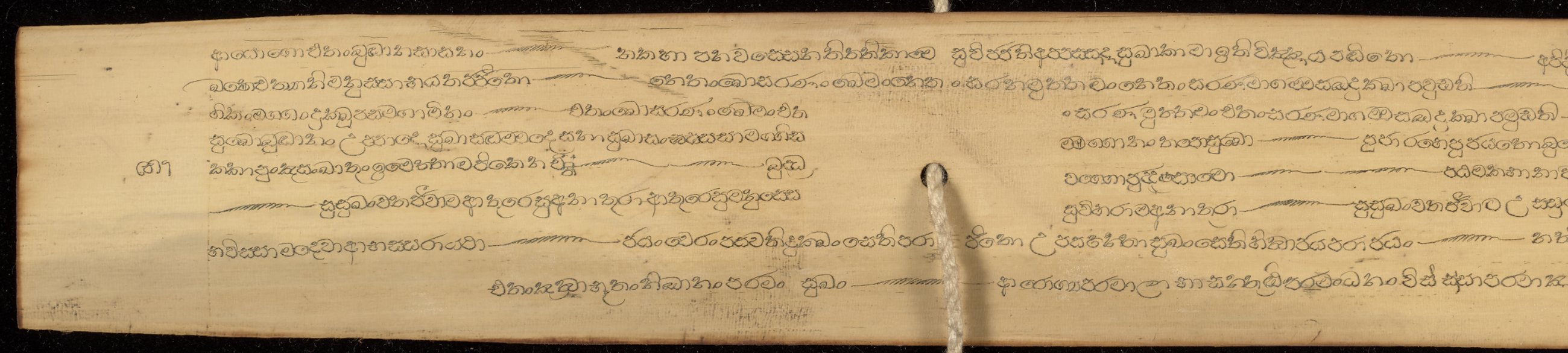
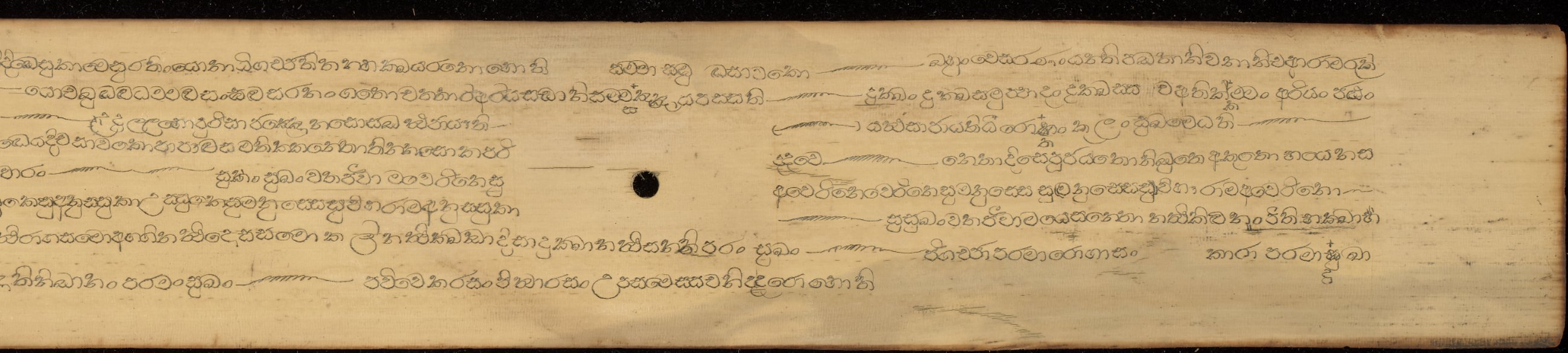
Pali MS 19, fol. 10a (both halves of the leaf side). Checked on the image: the side begins 'āyogo etaṃ buddhāna sāsanaṃ (end of v.185)' and its last line ends 'pavivekarasaṃ pitvā rasaṃ upasamassa ca niddaro hoti (v.205)'. The Pali shown is the Mahāsaṅgīti edition (SuttaCentral), not a transcription of the manuscript; the scribe's spellings differ in places.
197Susukhaṁ vata jīvāma, verinesu averino; Verinesu manussesu, viharāma averino.
198Susukhaṁ vata jīvāma, āturesu anāturā; Āturesu manussesu, viharāma anāturā.
199Susukhaṁ vata jīvāma, ussukesu anussukā; Ussukesu manussesu, viharāma anussukā.
200Susukhaṁ vata jīvāma, yesaṁ no natthi kiñcanaṁ; Pītibhakkhā bhavissāma, devā ābhassarā yathā.
201Jayaṁ veraṁ pasavati, dukkhaṁ seti parājito; Upasanto sukhaṁ seti, hitvā jayaparājayaṁ.
202Natthi rāgasamo aggi, Natthi dosasamo kali; Natthi khandhasamā dukkhā, Natthi santiparaṁ sukhaṁ.
203Jighacchāparamā rogā, saṅkhāraparamā dukhā; Etaṁ ñatvā yathābhūtaṁ, nibbānaṁ paramaṁ sukhaṁ.
204Ārogyaparamā lābhā, Santuṭṭhiparamaṁ dhanaṁ; Vissāsaparamā ñāti, Nibbānaṁ paramaṁ sukhaṁ.
197Let us live happily then, not hating those who hate us! among men who hate us let us dwell free from hatred!
198Let us live happily then, free from ailments among the ailing! among men who are ailing let us dwell free from ailments!
199Let us live happily then, free from greed among the greedy! among men who are greedy let us dwell free from greed!
200Let us live happily then, though we call nothing our own! We shall be like the bright gods, feeding on happiness!
201Victory breeds hatred, for the conquered is unhappy. He who has given up both victory and defeat, he, the contented, is happy.
202There is no fire like passion; there is no losing throw like hatred; there is no pain like this body; there is no happiness higher than rest.
203Hunger is the worst of diseases, the body the greatest of pains; if one knows this truly, that is Nirvana, the highest happiness.
204Health is the greatest of gifts, contentedness the best riches; trust is the best of relationships, Nirvana the highest happiness.
Where on the image
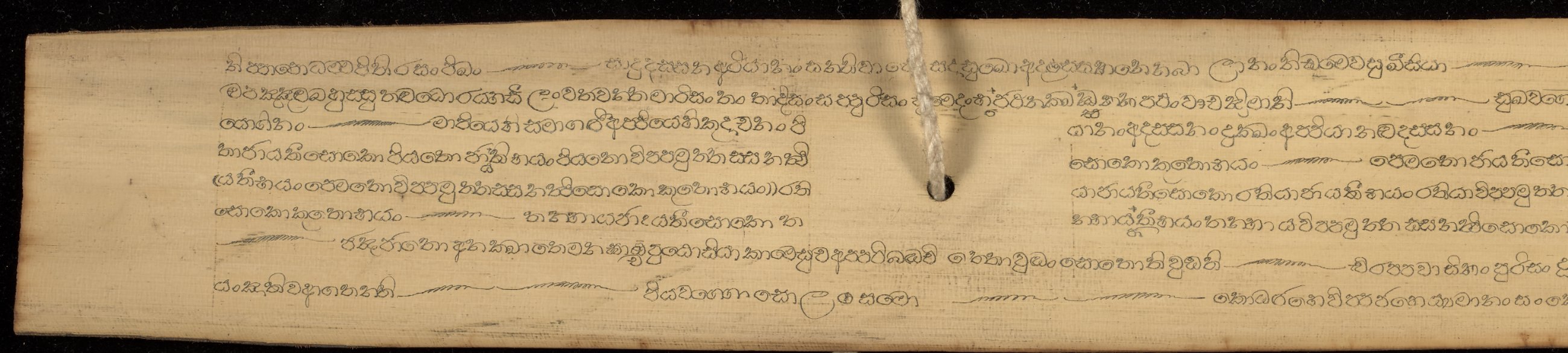
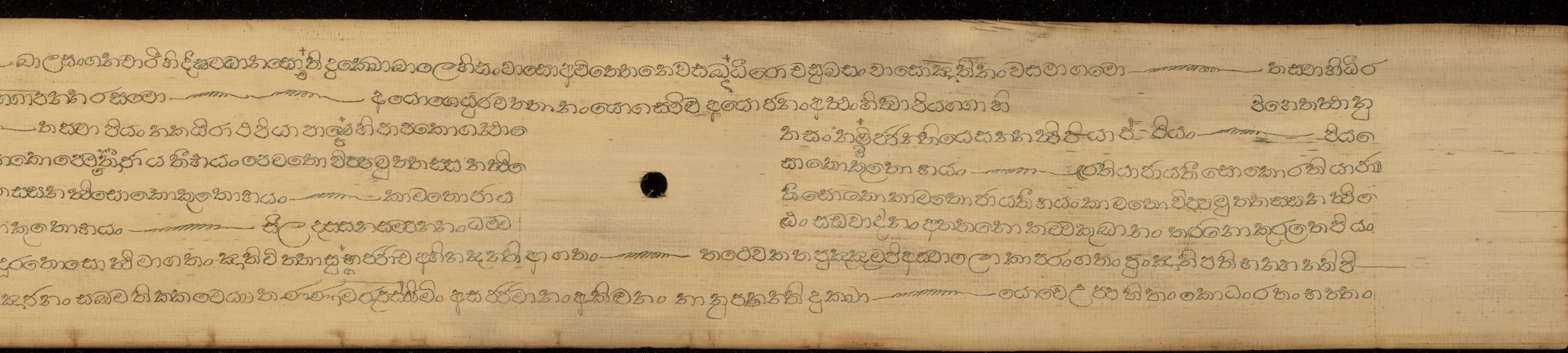
Pali MS 19, fol. 10b (both halves of the leaf side). Checked on the image: the side begins 'nippāpo dhammapītirasaṃ pibaṃ (end of v.205)' and its last line ends 'yo ve uppatitaṃ kodhaṃ rathaṃ bhantaṃ (v.222)'. Verse 205 begins on fol. 10a and ends on fol. 10b; both sides are shown. The Pali shown is the Mahāsaṅgīti edition (SuttaCentral), not a transcription of the manuscript; the scribe's spellings differ in places.
205Pavivekarasaṁ pitvā, rasaṁ upasamassa ca; Niddaro hoti nippāpo, dhammapītirasaṁ pivaṁ.
206Sāhu dassanamariyānaṁ, sannivāso sadā sukho; Adassanena bālānaṁ, niccameva sukhī siyā.
207Bālasaṅgatacārī hi, dīghamaddhāna socati; Dukkho bālehi saṁvāso, amitteneva sabbadā; Dhīro ca sukhasaṁvāso, ñātīnaṁva samāgamo.
208Tasmā hi— Dhīrañca paññañca bahussutañca, Dhorayhasīlaṁ vatavantamariyaṁ; Taṁ tādisaṁ sappurisaṁ sumedhaṁ, Bhajetha nakkhattapathaṁva candimā.
205He who has tasted the sweetness of solitude and tranquillity, is free from fear and free from sin, while he tastes the sweetness of drinking in the law.
206The sight of the elect (Arya) is good, to live with them is always happiness; if a man does not see fools, he will be truly happy.
207He who walks in the company of fools suffers a long way; company with fools, as with an enemy, is always painful; company with the wise is pleasure, like meeting with kinsfolk.
208Therefore, one ought to follow the wise, the intelligent, the learned, the much enduring, the dutiful, the elect; one ought to follow a good and wise man, as the moon follows the path of the stars.
Notes
- Müller's English is from the Wikisource transcription, which leaves out the diacritics the printed book uses in names (for example Nirvana, Brahmana, Mara).
- Words in round brackets are Müller's additions for sense.
Cite
Sources
- Source: Manchester, John Rylands Library, Pali MS 19 (palm leaf, Sinhalese script) + SuttaCentral Pali (Mahāsaṅgīti) + Max Müller's English (SBE X, 1881) (holding institution)
- Critical edition: SuttaCentral, Mahāsaṅgīti Tipiṭaka edition
← previous · → next · v cycle view · l back to library