Dhammapada 17: Kodhavagga, Anger (verses 221-234)
Introduction
Chapter 17 of the Dhammapada, the Kodhavagga ('Anger' in Max Müller's translation), verses 221-234. The Dhammapada is a collection of 423 verses in Pali attributed to the Buddha, part of the Khuddakanikāya of the Pali canon; its compilation is usually dated to about the third century BCE.
The images are of a Sinhalese palm-leaf manuscript in the John Rylands Library, Manchester (Pali MS 19), once owned by T. W. Rhys Davids. The text is written in Sinhalese script across the whole width of each leaf, nine lines a side, interrupted only by the string holes; each image is one half of a leaf side. This chapter is on fol. 10b, 11a. Each section holds the verses that end on that side.
The Pali is the Mahāsaṅgīti edition published by SuttaCentral, and the English is Max Müller's translation in the Sacred Books of the East (1881), which sometimes renders two verses together (for example 58-59).
How was this verified? (Provenance)
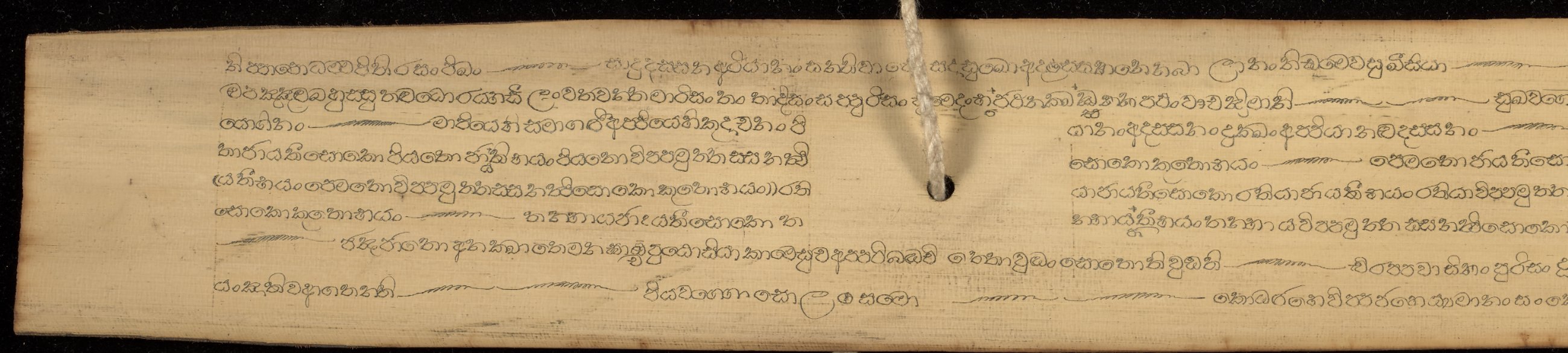
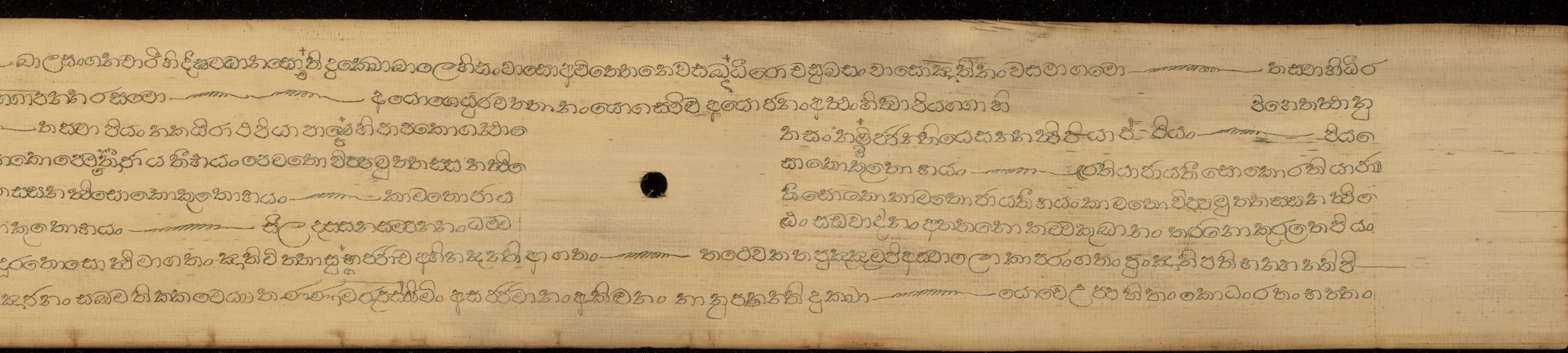
Where on the image
Pali MS 19, fol. 10b (both halves of the leaf side). Checked on the image: the side begins 'nippāpo dhammapītirasaṃ pibaṃ (end of v.205)' and its last line ends 'yo ve uppatitaṃ kodhaṃ rathaṃ bhantaṃ (v.222)'. The Pali shown is the Mahāsaṅgīti edition (SuttaCentral), not a transcription of the manuscript; the scribe's spellings differ in places.
221Kodhaṁ jahe vippajaheyya mānaṁ, Saṁyojanaṁ sabbamatikkameyya; Taṁ nāmarūpasmimasajjamānaṁ, Akiñcanaṁ nānupatanti dukkhā.
221Let a man leave anger, let him forsake pride, let him overcome all bondage! No sufferings befall the man who is not attached to name and form, and who calls nothing his own.
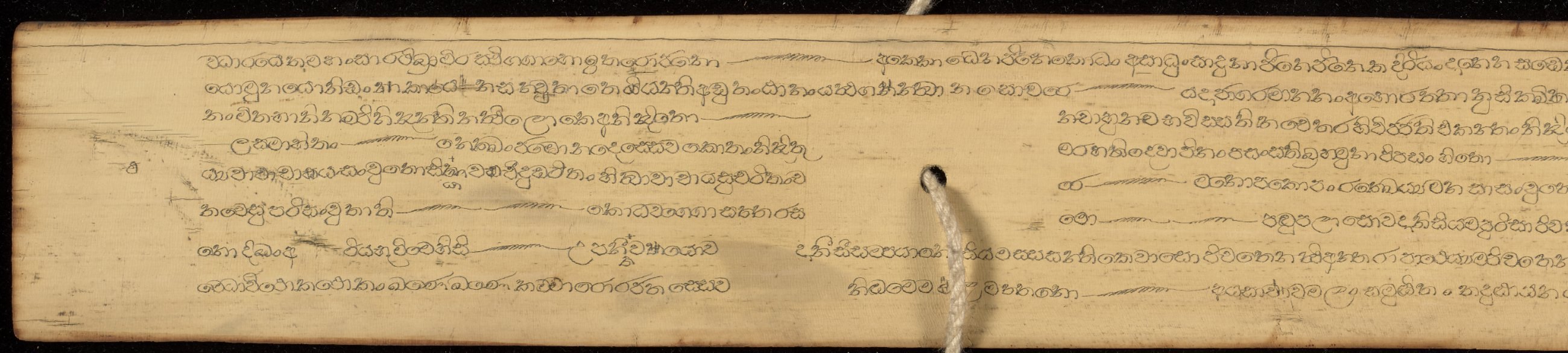
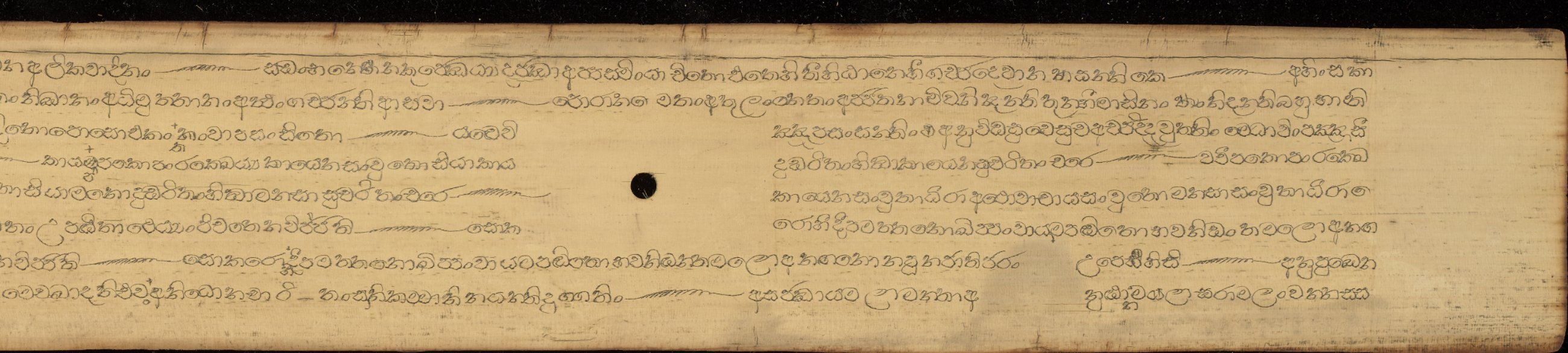
Where on the image
Pali MS 19, fol. 11a (both halves of the leaf side). Checked on the image: the side begins '-va vāraye, tamahaṃ sārathiṃ brūmi rasmiggāho itaro jano (end of v.222); line 1 goes on with v.223 akkodhena jine kodhaṃ' and its last line ends 'asajjhāyamalā mantā anuṭṭhānamalā gharā malaṃ vaṇṇassa (v.241)'. Verse 222 begins on fol. 10b and ends on fol. 11a; both sides are shown. The Pali shown is the Mahāsaṅgīti edition (SuttaCentral), not a transcription of the manuscript; the scribe's spellings differ in places.
222Yo ve uppatitaṁ kodhaṁ, rathaṁ bhantaṁva vāraye; Tamahaṁ sārathiṁ brūmi, rasmiggāho itaro jano.
223Akkodhena jine kodhaṁ, asādhuṁ sādhunā jine; Jine kadariyaṁ dānena, saccenālikavādinaṁ.
224Saccaṁ bhaṇe na kujjheyya, dajjā appampi yācito; Etehi tīhi ṭhānehi, gacche devāna santike.
225Ahiṁsakā ye munayo, niccaṁ kāyena saṁvutā; Te yanti accutaṁ ṭhānaṁ, yattha gantvā na socare.
226Sadā jāgaramānānaṁ, ahorattānusikkhinaṁ; Nibbānaṁ adhimuttānaṁ, atthaṁ gacchanti āsavā.
227Porāṇametaṁ atula, netaṁ ajjatanāmiva; Nindanti tuṇhimāsīnaṁ, nindanti bahubhāṇinaṁ; Mitabhāṇimpi nindanti, natthi loke anindito.
228Na cāhu na ca bhavissati, na cetarahi vijjati; Ekantaṁ nindito poso, ekantaṁ vā pasaṁsito.
229Yañce viññū pasaṁsanti, anuvicca suve suve; Acchiddavuttiṁ medhāviṁ, paññāsīlasamāhitaṁ.
230Nikkhaṁ jambonadasseva, ko taṁ ninditumarahati; Devāpi naṁ pasaṁsanti, brahmunāpi pasaṁsito.
231Kāyappakopaṁ rakkheyya, kāyena saṁvuto siyā; Kāyaduccaritaṁ hitvā, kāyena sucaritaṁ care.
232Vacīpakopaṁ rakkheyya, vācāya saṁvuto siyā; Vacīduccaritaṁ hitvā, vācāya sucaritaṁ care.
233Manopakopaṁ rakkheyya, manasā saṁvuto siyā; Manoduccaritaṁ hitvā, manasā sucaritaṁ care.
234Kāyena saṁvutā dhīrā, atho vācāya saṁvutā; Manasā saṁvutā dhīrā, te ve suparisaṁvutā.
222He who holds back rising anger like a rolling chariot, him I call a real driver; other people are but holding the reins.
223Let a man overcome anger by love, let him overcome evil by good; let him overcome the greedy by liberality, the liar by truth!
224Speak the truth, do not yield to anger; give, if thou art asked for little; by these three steps thou wilt go near the gods.
225The sages who injure nobody, and who always control their body, they will go to the unchangeable place (Nirvana), where, if they have gone, they will suffer no more.
226Those who are ever watchful, who study day and night, and who strive after Nirvana, their passions will come to an end.
227This is an old saying, O Atula, this is not only of to-day: `They blame him who sits silent, they blame him who speaks much, they also blame him who says little; there is no one on earth who is not blamed.'
228There never was, there never will be, nor is there now, a man who is always blamed, or a man who is always praised.
229-230But he whom those who discriminate praise continually day after day, as without blemish, wise, rich in knowledge and virtue, who would dare to blame him, like a coin made of gold from the Gambu river? Even the gods praise him, he is praised even by Brahman.
231Beware of bodily anger, and control thy body! Leave the sins of the body, and with thy body practise virtue!
232Beware of the anger of the tongue, and control thy tongue! Leave the sins of the tongue, and practise virtue with thy tongue!
233Beware of the anger of the mind, and control thy mind! Leave the sins of the mind, and practise virtue with thy mind!
234The wise who control their body, who control their tongue, the wise who control their mind, are indeed well controlled.
Notes
- Müller's English is from the Wikisource transcription, which leaves out the diacritics the printed book uses in names (for example Nirvana, Brahmana, Mara).
- Words in round brackets are Müller's additions for sense.
Cite
Sources
- Source: Manchester, John Rylands Library, Pali MS 19 (palm leaf, Sinhalese script) + SuttaCentral Pali (Mahāsaṅgīti) + Max Müller's English (SBE X, 1881) (holding institution)
- Critical edition: SuttaCentral, Mahāsaṅgīti Tipiṭaka edition
← previous · → next · v cycle view · l back to library