Dhammapada 18: Malavagga, Impurity (verses 235-255)
Introduction
Chapter 18 of the Dhammapada, the Malavagga ('Impurity' in Max Müller's translation), verses 235-255. The Dhammapada is a collection of 423 verses in Pali attributed to the Buddha, part of the Khuddakanikāya of the Pali canon; its compilation is usually dated to about the third century BCE.
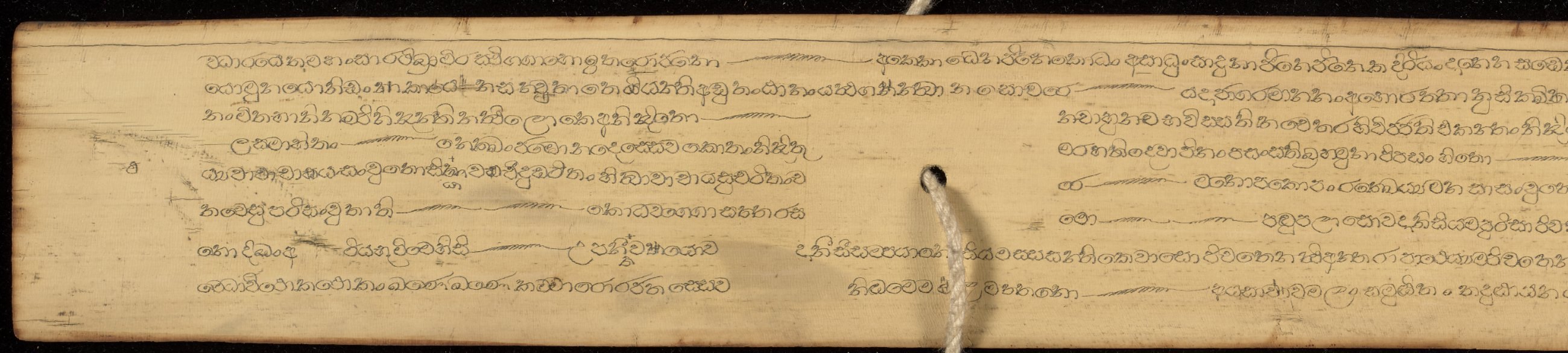
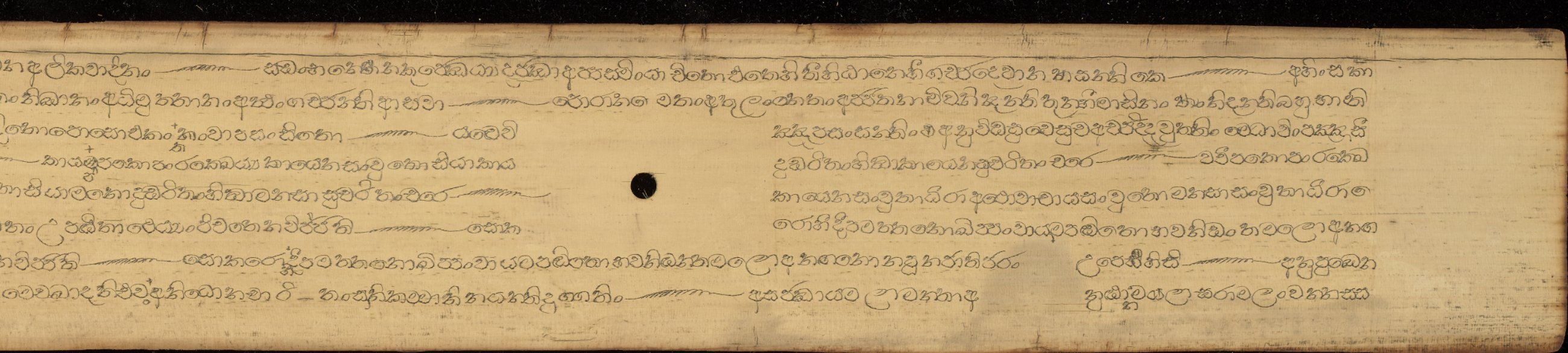
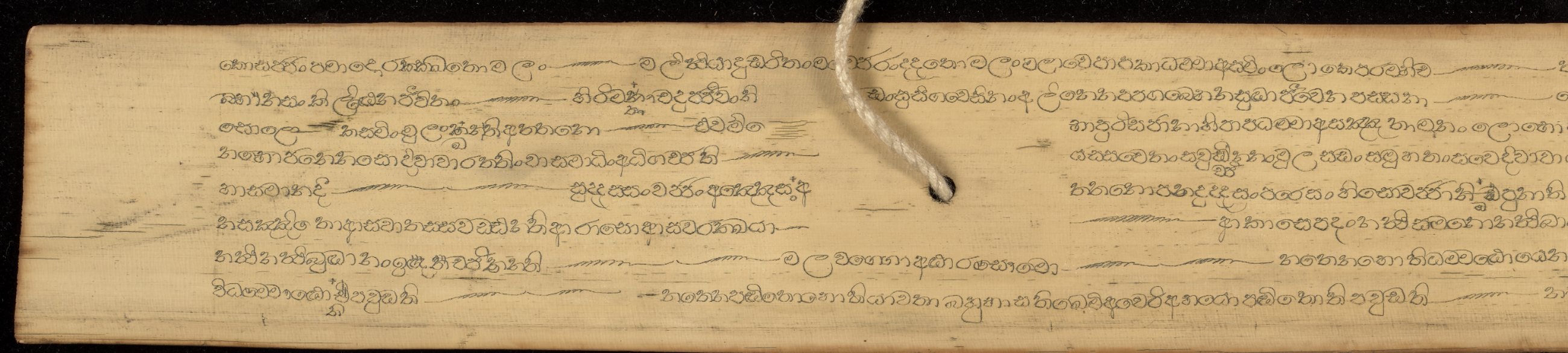
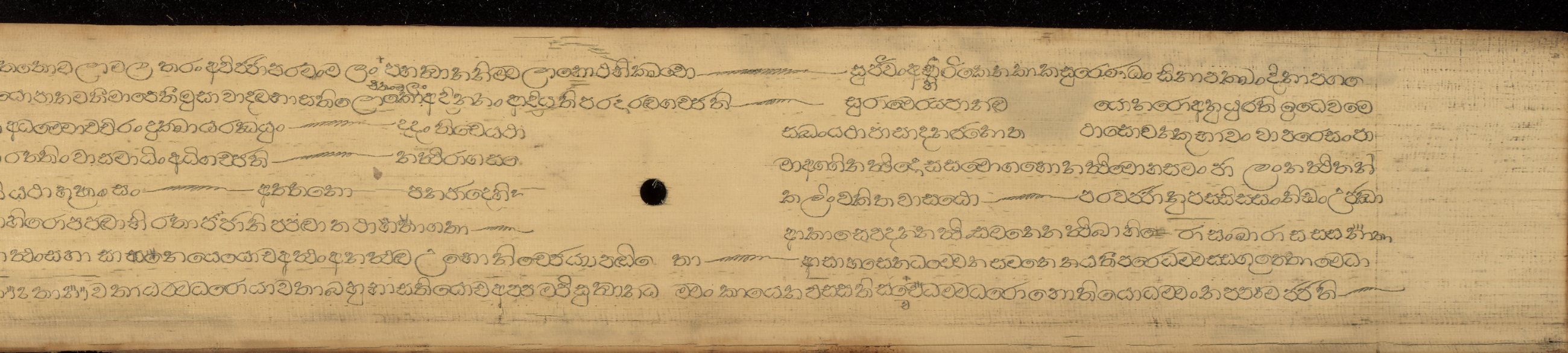
The images are of a Sinhalese palm-leaf manuscript in the John Rylands Library, Manchester (Pali MS 19), once owned by T. W. Rhys Davids. The text is written in Sinhalese script across the whole width of each leaf, nine lines a side, interrupted only by the string holes; each image is one half of a leaf side. This chapter is on fol. 11a, 11b. Each section holds the verses that end on that side.
The Pali is the Mahāsaṅgīti edition published by SuttaCentral, and the English is Max Müller's translation in the Sacred Books of the East (1881), which sometimes renders two verses together (for example 58-59).
How was this verified? (Provenance)
Where on the image
Pali MS 19, fol. 11a (both halves of the leaf side). Checked on the image: the side begins '-va vāraye, tamahaṃ sārathiṃ brūmi rasmiggāho itaro jano (end of v.222); line 1 goes on with v.223 akkodhena jine kodhaṃ' and its last line ends 'asajjhāyamalā mantā anuṭṭhānamalā gharā malaṃ vaṇṇassa (v.241)'. The Pali shown is the Mahāsaṅgīti edition (SuttaCentral), not a transcription of the manuscript; the scribe's spellings differ in places.
235Paṇḍupalāsova dānisi, Yamapurisāpi ca te upaṭṭhitā; Uyyogamukhe ca tiṭṭhasi, Pātheyyampi ca te na vijjati.
236So karohi dīpamattano, Khippaṁ vāyama paṇḍito bhava; Niddhantamalo anaṅgaṇo, Dibbaṁ ariyabhūmiṁ upehisi.
237Upanītavayo ca dānisi, Sampayātosi yamassa santikaṁ; Vāso te natthi antarā, Pātheyyampi ca te na vijjati.
238So karohi dīpamattano, Khippaṁ vāyama paṇḍito bhava; Niddhantamalo anaṅgaṇo, Na punaṁ jātijaraṁ upehisi.
239Anupubbena medhāvī, thokaṁ thokaṁ khaṇe khaṇe; Kammāro rajatasseva, niddhame malamattano.
240Ayasāva malaṁ samuṭṭhitaṁ, Tatuṭṭhāya tameva khādati; Evaṁ atidhonacārinaṁ, Sāni kammāni nayanti duggatiṁ.
235Thou art now like a sear leaf, the messengers of death (Yama) have come near to thee; thou standest at the door of thy departure, and thou hast no provision for thy journey.
236Make thyself an island, work hard, be wise! When thy impurities are blown away, and thou art free from guilt, thou wilt enter into the heavenly world of the elect (Ariya).
237Thy life has come to an end, thou art come near to death (Yama), there is no resting-place for thee on the road, and thou hast no provision for thy journey.
238Make thyself an island, work hard, be wise! When thy impurities are blown away, and thou art free from guilt, thou wilt not enter again into birth and decay.
239Let a wise man blow off the impurities of his self, as a smith blows off the impurities of silver one by one, little by little, and from time to time.
240As the impurity which springs from the iron, when it springs from it, destroys it; thus do a transgressor's own works lead him to the evil path.
Where on the image
Pali MS 19, fol. 11b (both halves of the leaf side). Checked on the image: the side begins 'kosajjaṃ pamādo rakkhato malaṃ (end of v.241)' and its last line ends '... sa ve dhammadharo hoti yo dhammaṃ nappamajjati (end of v.259)'. Verse 241 begins on fol. 11a and ends on fol. 11b; both sides are shown. The Pali shown is the Mahāsaṅgīti edition (SuttaCentral), not a transcription of the manuscript; the scribe's spellings differ in places.
241Asajjhāyamalā mantā, anuṭṭhānamalā gharā; Malaṁ vaṇṇassa kosajjaṁ, pamādo rakkhato malaṁ.
242Malitthiyā duccaritaṁ, maccheraṁ dadato malaṁ; Malā ve pāpakā dhammā, asmiṁ loke paramhi ca.
243Tato malā malataraṁ, avijjā paramaṁ malaṁ; Etaṁ malaṁ pahantvāna, nimmalā hotha bhikkhavo.
244Sujīvaṁ ahirikena, kākasūrena dhaṁsinā; Pakkhandinā pagabbhena, saṅkiliṭṭhena jīvitaṁ.
245Hirīmatā ca dujjīvaṁ, niccaṁ sucigavesinā; Alīnenāppagabbhena, suddhājīvena passatā.
246Yo pāṇamatipāteti, musāvādañca bhāsati; Loke adinnamādiyati, paradārañca gacchati.
247Surāmerayapānañca, yo naro anuyuñjati; Idheva meso lokasmiṁ, mūlaṁ khaṇati attano.
248Evaṁ bho purisa jānāhi, pāpadhammā asaññatā; Mā taṁ lobho adhammo ca, ciraṁ dukkhāya randhayuṁ.
249Dadāti ve yathāsaddhaṁ, yathāpasādanaṁ jano; Tattha yo ca maṅku bhavati, paresaṁ pānabhojane; Na so divā vā rattiṁ vā, samādhimadhigacchati.
250Yassa cetaṁ samucchinnaṁ, mūlaghaccaṁ samūhataṁ; Sa ve divā vā rattiṁ vā, samādhimadhigacchati.
251Natthi rāgasamo aggi, natthi dosasamo gaho; Natthi mohasamaṁ jālaṁ, natthi taṇhāsamā nadī.
252Sudassaṁ vajjamaññesaṁ, attano pana duddasaṁ; Paresaṁ hi so vajjāni, opunāti yathā bhusaṁ; Attano pana chādeti, kaliṁva kitavā saṭho.
253Paravajjānupassissa, niccaṁ ujjhānasaññino; Āsavā tassa vaḍḍhanti, ārā so āsavakkhayā.
254Ākāseva padaṁ natthi, samaṇo natthi bāhire; Papañcābhiratā pajā, nippapañcā tathāgatā.
255Ākāseva padaṁ natthi, samaṇo natthi bāhire; Saṅkhārā sassatā natthi, natthi buddhānamiñjitaṁ.
241The taint of prayers is non-repetition; the taint of houses, non- repair; the taint of the body is sloth; the taint of a watchman, thoughtlessness.
242Bad conduct is the taint of woman, greediness the taint of a benefactor; tainted are all evil ways in this world and in the next.
243But there is a taint worse than all taints,—ignorance is the greatest taint. O mendicants! throw off that taint, and become taintless!
244Life is easy to live for a man who is without shame, a crow hero, a mischief-maker, an insulting, bold, and wretched fellow.
245But life is hard to live for a modest man, who always looks for what is pure, who is disinterested, quiet, spotless, and intelligent.
246He who destroys life, who speaks untruth, who in this world takes what is not given him, who goes to another man's wife;
247And the man who gives himself to drinking intoxicating liquors, he, even in this world, digs up his own root.
248O man, know this, that the unrestrained are in a bad state; take care that greediness and vice do not bring thee to grief for a long time!
249The world gives according to their faith or according to their pleasure: if a man frets about the food and the drink given to others, he will find no rest either by day or by night.
250He in whom that feeling is destroyed, and taken out with the very root, finds rest by day and by night.
251There is no fire like passion, there is no shark like hatred, there is no snare like folly, there is no torrent like greed.
252The fault of others is easily perceived, but that of oneself is difficult to perceive; a man winnows his neighbour's faults like chaff, but his own fault he hides, as a cheat hides the bad die from the gambler.
253If a man looks after the faults of others, and is always inclined to be offended, his own passions will grow, and he is far from the destruction of passions.
254There is no path through the air, a man is not a Samana by outward acts. The world delights in vanity, the Tathagatas (the Buddhas) are free from vanity.
255There is no path through the air, a man is not a Samana by outward acts. No creatures are eternal; but the awakened (Buddha) are never shaken.
Notes
- Müller's English is from the Wikisource transcription, which leaves out the diacritics the printed book uses in names (for example Nirvana, Brahmana, Mara).
- Words in round brackets are Müller's additions for sense.
Cite
Sources
- Source: Manchester, John Rylands Library, Pali MS 19 (palm leaf, Sinhalese script) + SuttaCentral Pali (Mahāsaṅgīti) + Max Müller's English (SBE X, 1881) (holding institution)
- Critical edition: SuttaCentral, Mahāsaṅgīti Tipiṭaka edition
← previous · → next · v cycle view · l back to library