Dhammapada 19: Dhammaṭṭhavagga, The Just (verses 256-272)
Introduction
Chapter 19 of the Dhammapada, the Dhammaṭṭhavagga ('The Just' in Max Müller's translation), verses 256-272. The Dhammapada is a collection of 423 verses in Pali attributed to the Buddha, part of the Khuddakanikāya of the Pali canon; its compilation is usually dated to about the third century BCE.
The images are of a Sinhalese palm-leaf manuscript in the John Rylands Library, Manchester (Pali MS 19), once owned by T. W. Rhys Davids. The text is written in Sinhalese script across the whole width of each leaf, nine lines a side, interrupted only by the string holes; each image is one half of a leaf side. This chapter is on fol. 11b, 12a. Each section holds the verses that end on that side.
The Pali is the Mahāsaṅgīti edition published by SuttaCentral, and the English is Max Müller's translation in the Sacred Books of the East (1881), which sometimes renders two verses together (for example 58-59).
How was this verified? (Provenance)
Where on the image
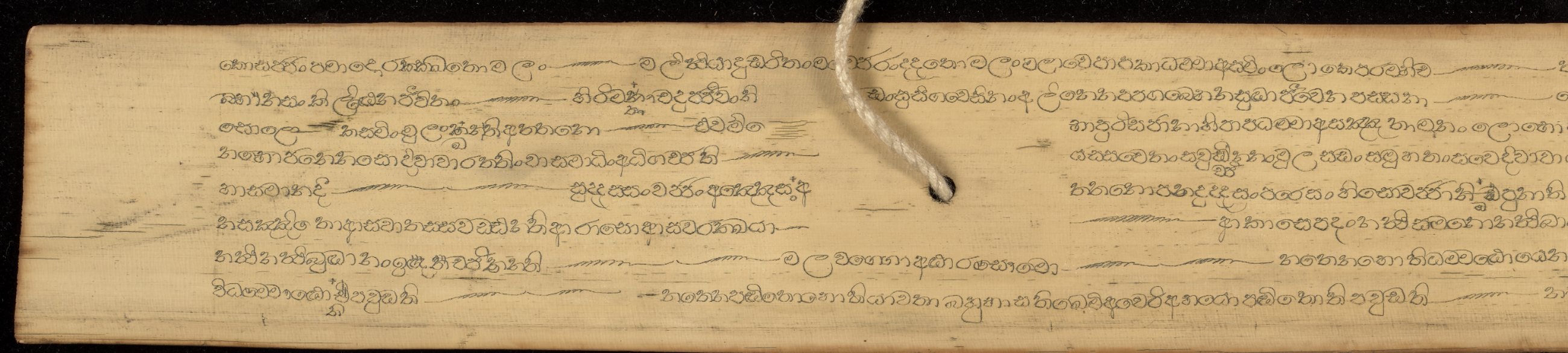
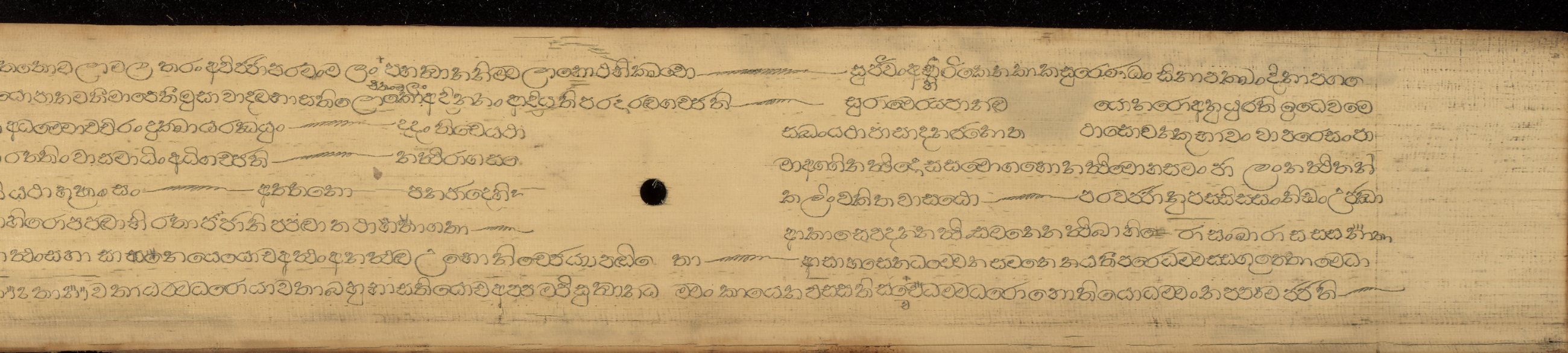
Pali MS 19, fol. 11b (both halves of the leaf side). Checked on the image: the side begins 'kosajjaṃ pamādo rakkhato malaṃ (end of v.241)' and its last line ends '... sa ve dhammadharo hoti yo dhammaṃ nappamajjati (end of v.259)'. The Pali shown is the Mahāsaṅgīti edition (SuttaCentral), not a transcription of the manuscript; the scribe's spellings differ in places.
256Na tena hoti dhammaṭṭho, yenatthaṁ sāhasā naye; Yo ca atthaṁ anatthañca, ubho niccheyya paṇḍito.
257Asāhasena dhammena, samena nayatī pare; Dhammassa gutto medhāvī, “dhammaṭṭho”ti pavuccati.
258Na tena paṇḍito hoti, yāvatā bahu bhāsati; Khemī averī abhayo, “paṇḍito”ti pavuccati.
259Na tāvatā dhammadharo, yāvatā bahu bhāsati; Yo ca appampi sutvāna, dhammaṁ kāyena passati; Sa ve dhammadharo hoti, yo dhammaṁ nappamajjati.
256-257A man is not just if he carries a matter by violence; no, he who distinguishes both right and wrong, who is learned and leads others, not by violence, but by law and equity, and who is guarded by the law and intelligent, he is called just.
258A man is not learned because he talks much; he who is patient, free from hatred and fear, he is called learned.
259A man is not a supporter of the law because he talks much; even if a man has learnt little, but sees the law bodily, he is a supporter of the law, a man who never neglects the law.
Where on the image
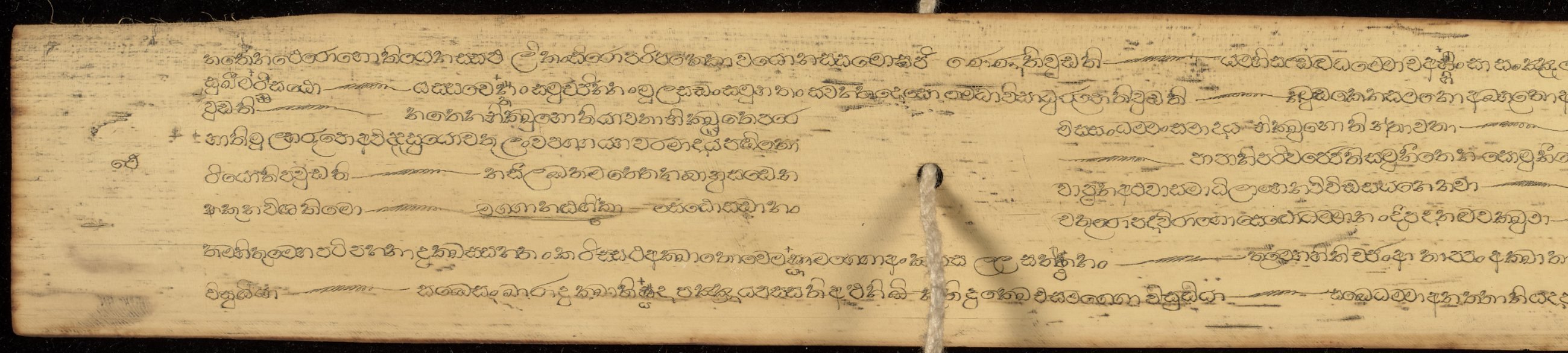
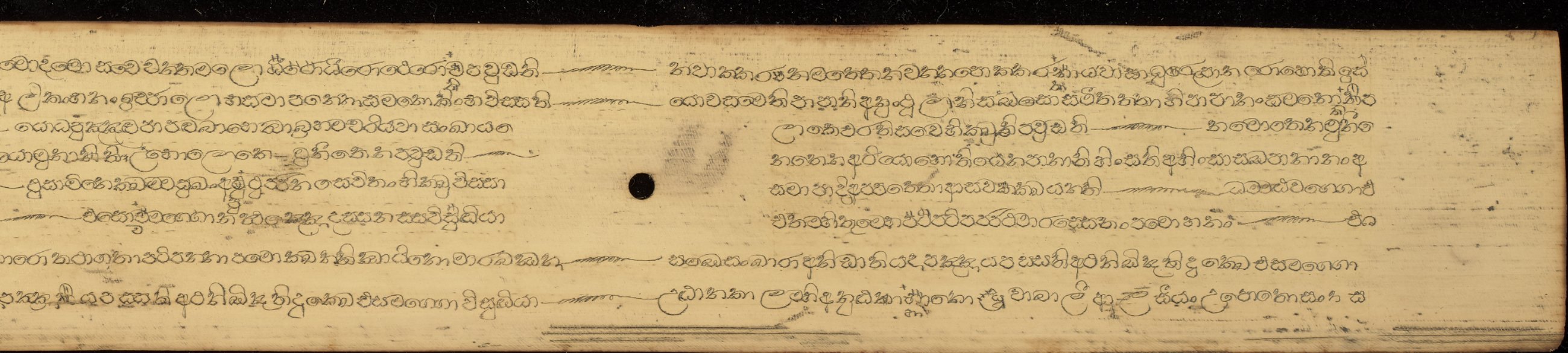
Pali MS 19, fol. 12a (both halves of the leaf side). Checked on the image: the side begins 'na tena thero so hoti yenassa palitaṃ siro (v.260)' and its last line ends 'uṭṭhānakālamhi anuṭṭhahāno yuvā balī ālasiyaṃ upeto saṃsa- (v.280)'. The Pali shown is the Mahāsaṅgīti edition (SuttaCentral), not a transcription of the manuscript; the scribe's spellings differ in places.
260Na tena thero so hoti, yenassa palitaṁ siro; Paripakko vayo tassa, “moghajiṇṇo”ti vuccati.
261Yamhi saccañca dhammo ca, ahiṁsā saṁyamo damo; Sa ve vantamalo dhīro, “thero” iti pavuccati.
262Na vākkaraṇamattena, vaṇṇapokkharatāya vā; Sādhurūpo naro hoti, issukī maccharī saṭho.
263Yassa cetaṁ samucchinnaṁ, mūlaghaccaṁ samūhataṁ; Sa vantadoso medhāvī, “sādhurūpo”ti vuccati.
264Na muṇḍakena samaṇo, abbato alikaṁ bhaṇaṁ; Icchālobhasamāpanno, samaṇo kiṁ bhavissati.
265Yo ca sameti pāpāni, aṇuṁthūlāni sabbaso; Samitattā hi pāpānaṁ, “samaṇo”ti pavuccati.
266Na tena bhikkhu so hoti, yāvatā bhikkhate pare; Vissaṁ dhammaṁ samādāya, bhikkhu hoti na tāvatā.
267Yodha puññañca pāpañca, bāhetvā brahmacariyavā; Saṅkhāya loke carati, sa ve “bhikkhū”ti vuccati.
268Na monena munī hoti, mūḷharūpo aviddasu; Yo ca tulaṁva paggayha, varamādāya paṇḍito.
269Pāpāni parivajjeti, sa munī tena so muni; Yo munāti ubho loke, “muni” tena pavuccati.
270Na tena ariyo hoti, yena pāṇāni hiṁsati; Ahiṁsā sabbapāṇānaṁ, “ariyo”ti pavuccati.
271Na sīlabbatamattena, bāhusaccena vā pana; Atha vā samādhilābhena, vivittasayanena vā.
272Phusāmi nekkhammasukhaṁ, aputhujjanasevitaṁ; Bhikkhu vissāsamāpādi, appatto āsavakkhayaṁ.
260A man is not an elder because his head is grey; his age may be ripe, but he is called `Old-in-vain.'
261He in whom there is truth, virtue, love, restraint, moderation, he who is free from impurity and is wise, he is called an elder.
262An envious greedy, dishonest man does not become respectable by means of much talking only, or by the beauty of his complexion.
263He in whom all this is destroyed, and taken out with the very root, he, when freed from hatred and wise, is called respectable.
264Not by tonsure does an undisciplined man who speaks falsehood become a Samana; can a man be a Samana who is still held captive by desire and greediness?
265He who always quiets the evil, whether small or large, he is called a Samana (a quiet man), because he has quieted all evil.
266A man is not a mendicant (Bhikshu) simply because he asks others for alms; he who adopts the whole law is a Bhikshu, not he who only begs.
267He who is above good and evil, who is chaste, who with knowledge passes through the world, he indeed is called a Bhikshu.
268-269A man is not a Muni because he observes silence (mona, i.e. mauna), if he is foolish and ignorant; but the wise who, taking the balance, chooses the good and avoids evil, he is a Muni, and is a Muni thereby; he who in this world weighs both sides is called a Muni.
270A man is not an elect (Ariya) because he injures living creatures; because he has pity on all living creatures, therefore is a man called Ariya.
271-272Not only by discipline and vows, not only by much learning, not by entering into a trance, not by sleeping alone, do I earn the happiness of release which no worldling can know. Bhikshu, be not confident as long as thou hast not attained the extinction of desires.
Notes
- Müller's English is from the Wikisource transcription, which leaves out the diacritics the printed book uses in names (for example Nirvana, Brahmana, Mara).
- Words in round brackets are Müller's additions for sense.
Cite
Sources
- Source: Manchester, John Rylands Library, Pali MS 19 (palm leaf, Sinhalese script) + SuttaCentral Pali (Mahāsaṅgīti) + Max Müller's English (SBE X, 1881) (holding institution)
- Critical edition: SuttaCentral, Mahāsaṅgīti Tipiṭaka edition
← previous · → next · v cycle view · l back to library