Dhammapada 20: Maggavagga, The Way (verses 273-289)
Introduction
Chapter 20 of the Dhammapada, the Maggavagga ('The Way' in Max Müller's translation), verses 273-289. The Dhammapada is a collection of 423 verses in Pali attributed to the Buddha, part of the Khuddakanikāya of the Pali canon; its compilation is usually dated to about the third century BCE.
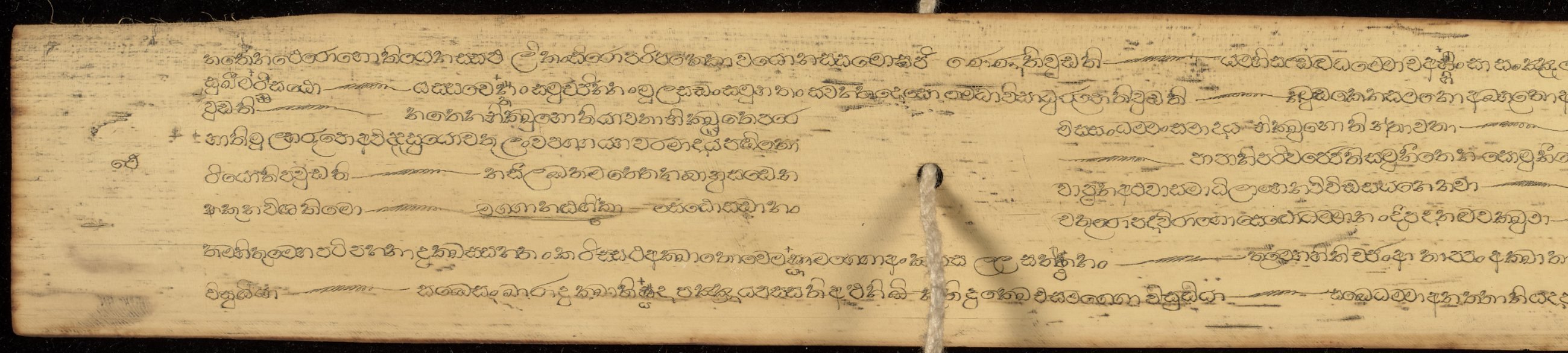
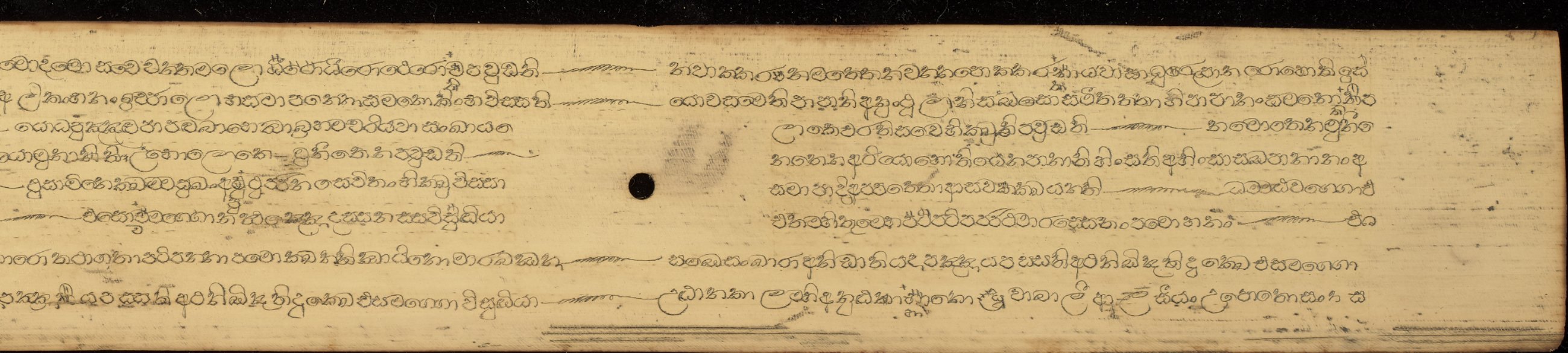
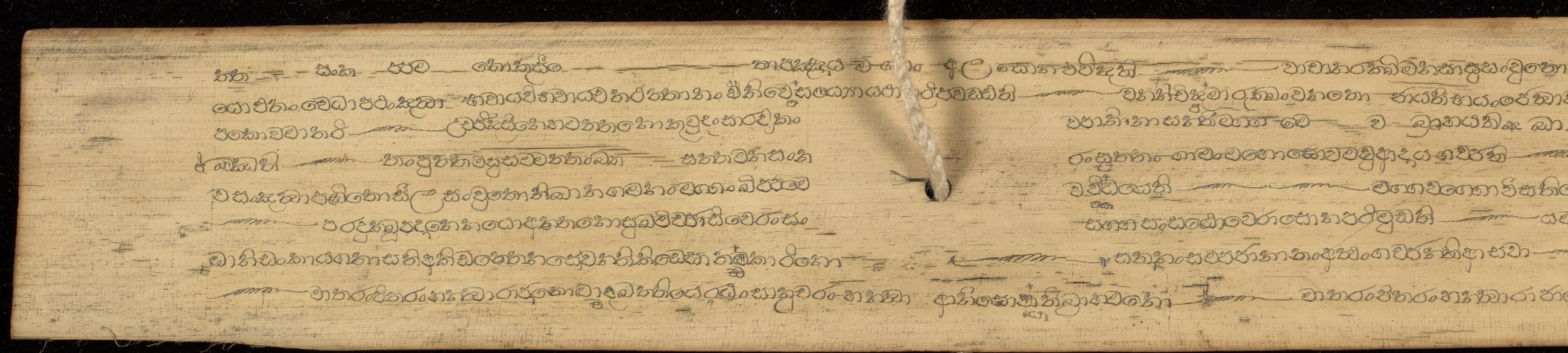
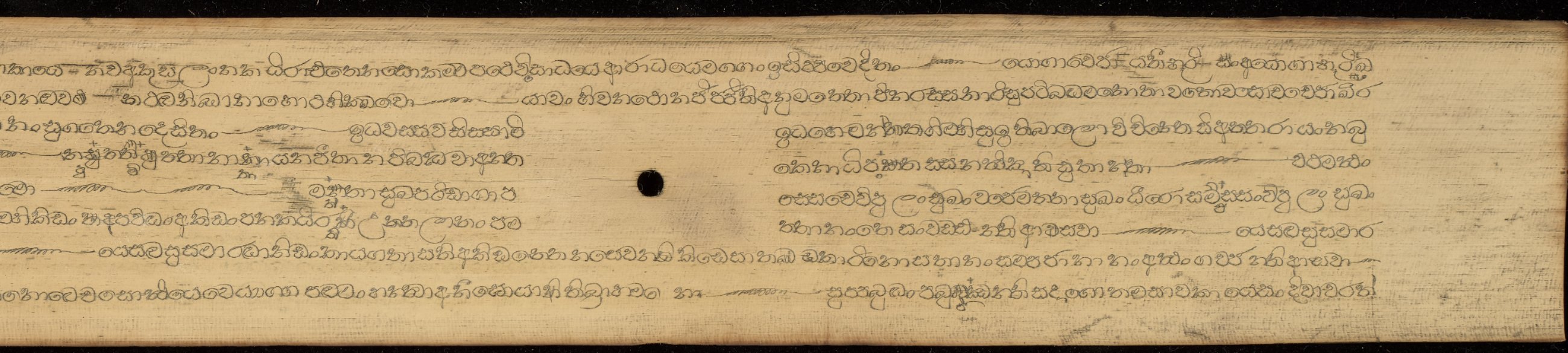
The images are of a Sinhalese palm-leaf manuscript in the John Rylands Library, Manchester (Pali MS 19), once owned by T. W. Rhys Davids. The text is written in Sinhalese script across the whole width of each leaf, nine lines a side, interrupted only by the string holes; each image is one half of a leaf side. This chapter is on fol. 12a, 12b. Each section holds the verses that end on that side.
The Pali is the Mahāsaṅgīti edition published by SuttaCentral, and the English is Max Müller's translation in the Sacred Books of the East (1881), which sometimes renders two verses together (for example 58-59).
How was this verified? (Provenance)
Where on the image
Pali MS 19, fol. 12a (both halves of the leaf side). Checked on the image: the side begins 'na tena thero so hoti yenassa palitaṃ siro (v.260)' and its last line ends 'uṭṭhānakālamhi anuṭṭhahāno yuvā balī ālasiyaṃ upeto saṃsa- (v.280)'. The Pali shown is the Mahāsaṅgīti edition (SuttaCentral), not a transcription of the manuscript; the scribe's spellings differ in places.
273Maggānaṭṭhaṅgiko seṭṭho, saccānaṁ caturo padā; Virāgo seṭṭho dhammānaṁ, dvipadānañca cakkhumā.
274Eseva maggo natthañño, Dassanassa visuddhiyā; Etañhi tumhe paṭipajjatha, Mārassetaṁ pamohanaṁ.
275Etañhi tumhe paṭipannā, dukkhassantaṁ karissatha; Akkhāto vo mayā maggo, aññāya sallakantanaṁ.
276Tumhehi kiccamātappaṁ, akkhātāro tathāgatā; Paṭipannā pamokkhanti, jhāyino mārabandhanā.
277“Sabbe saṅkhārā aniccā”ti, yadā paññāya passati; Atha nibbindati dukkhe, esa maggo visuddhiyā.
278“Sabbe saṅkhārā dukkhā”ti, yadā paññāya passati; Atha nibbindati dukkhe, esa maggo visuddhiyā.
279“Sabbe dhammā anattā”ti, yadā paññāya passati; Atha nibbindati dukkhe, esa maggo visuddhiyā.
273The best of ways is the eightfold; the best of truths the four words; the best of virtues passionlessness; the best of men he who has eyes to see.
274This is the way, there is no other that leads to the purifying of intelligence. Go on this way! Everything else is the deceit of Mara (the tempter).
275If you go on this way, you will make an end of pain! The way was preached by me, when I had understood the removal of the thorns (in the flesh).
276You yourself must make an effort. The Tathagatas (Buddhas) are only preachers. The thoughtful who enter the way are freed from the bondage of Mara.
277`All created things perish,' he who knows and sees this becomes passive in pain; this is the way to purity.
278`All created things are grief and pain,' he who knows and sees this becomes passive in pain; this is the way that leads to purity.
279`All forms are unreal,' he who knows and sees this becomes passive in pain; this is the way that leads to purity.
Where on the image
Pali MS 19, fol. 12b (both halves of the leaf side). Checked on the image: the side begins '-nna-saṅka-ppama-no kusīto ... paññāya maggaṃ alaso na vindati (end of v.280; the scribe leaves gaps marked with dashes in line 1)' and its last line ends 'suppabuddhaṃ pabujjhanti sadā gotamasāvakā yesaṃ divā ca ra- (v.296)'. Verse 280 begins on fol. 12a and ends on fol. 12b; both sides are shown. The Pali shown is the Mahāsaṅgīti edition (SuttaCentral), not a transcription of the manuscript; the scribe's spellings differ in places.
280Uṭṭhānakālamhi anuṭṭhahāno, Yuvā balī ālasiyaṁ upeto; Saṁsannasaṅkappamano kusīto, Paññāya maggaṁ alaso na vindati.
281Vācānurakkhī manasā susaṁvuto, Kāyena ca nākusalaṁ kayirā; Ete tayo kammapathe visodhaye, Ārādhaye maggamisippaveditaṁ.
282Yogā ve jāyatī bhūri, ayogā bhūrisaṅkhayo; Etaṁ dvedhāpathaṁ ñatvā, bhavāya vibhavāya ca; Tathāttānaṁ niveseyya, yathā bhūri pavaḍḍhati.
283Vanaṁ chindatha mā rukkhaṁ, vanato jāyate bhayaṁ; Chetvā vanañca vanathañca, nibbanā hotha bhikkhavo.
284Yāva hi vanatho na chijjati, Aṇumattopi narassa nārisu; Paṭibaddhamanova tāva so, Vaccho khīrapakova mātari.
285Ucchinda sinehamattano, Kumudaṁ sāradikaṁva pāṇinā; Santimaggameva brūhaya, Nibbānaṁ sugatena desitaṁ.
286Idha vassaṁ vasissāmi, idha hemantagimhisu; Iti bālo vicinteti, antarāyaṁ na bujjhati.
287Taṁ puttapasusammattaṁ, byāsattamanasaṁ naraṁ; Suttaṁ gāmaṁ mahoghova, maccu ādāya gacchati.
288Na santi puttā tāṇāya, na pitā nāpi bandhavā; Antakenādhipannassa, natthi ñātīsu tāṇatā.
289Etamatthavasaṁ ñatvā, paṇḍito sīlasaṁvuto; Nibbānagamanaṁ maggaṁ, khippameva visodhaye.
280He who does not rouse himself when it is time to rise, who, though young and strong, is full of sloth, whose will and thought are weak, that lazy and idle man will never find the way to knowledge.
281Watching his speech, well restrained in mind, let a man never commit any wrong with his body! Let a man but keep these three roads of action clear, and he will achieve the way which is taught by the wise.
282Through zeal knowledge is gotten, through lack of zeal knowledge is lost; let a man who knows this double path of gain and loss thus place himself that knowledge may grow.
283Cut down the whole forest (of lust), not a tree only! Danger comes out of the forest (of lust). When you have cut down both the forest (of lust) and its undergrowth, then, Bhikshus, you will be rid of the forest and free!
284So long as the love of man towards women, even the smallest, is not destroyed, so long is his mind in bondage, as the calf that drinks milk is to its mother.
285Cut out the love of self, like an autumn lotus, with thy hand! Cherish the road of peace. Nirvana has been shown by Sugata (Buddha).
286`Here I shall dwell in the rain, here in winter and summer,' thus the fool meditates, and does not think of his death.
287Death comes and carries off that man, praised for his children and flocks, his mind distracted, as a flood carries off a sleeping village.
288Sons are no help, nor a father, nor relations; there is no help from kinsfolk for one whom death has seized.
289A wise and good man who knows the meaning of this, should quickly clear the way that leads to Nirvana.
Notes
- Müller's English is from the Wikisource transcription, which leaves out the diacritics the printed book uses in names (for example Nirvana, Brahmana, Mara).
- Words in round brackets are Müller's additions for sense.
Cite
Sources
- Source: Manchester, John Rylands Library, Pali MS 19 (palm leaf, Sinhalese script) + SuttaCentral Pali (Mahāsaṅgīti) + Max Müller's English (SBE X, 1881) (holding institution)
- Critical edition: SuttaCentral, Mahāsaṅgīti Tipiṭaka edition
← previous · → next · v cycle view · l back to library