Dhammapada 21: Pakiṇṇakavagga, Miscellaneous (verses 290-305)
Introduction
Chapter 21 of the Dhammapada, the Pakiṇṇakavagga ('Miscellaneous' in Max Müller's translation), verses 290-305. The Dhammapada is a collection of 423 verses in Pali attributed to the Buddha, part of the Khuddakanikāya of the Pali canon; its compilation is usually dated to about the third century BCE.
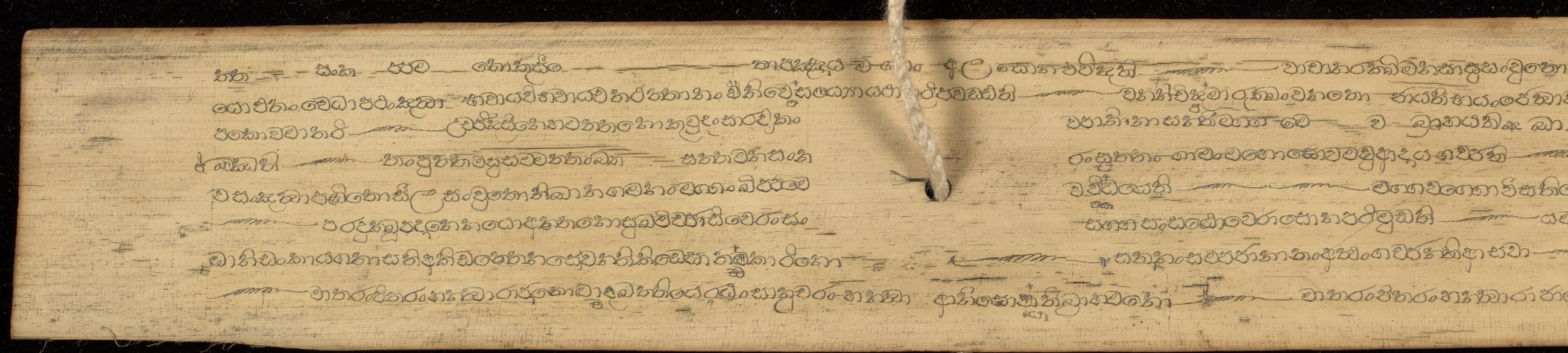
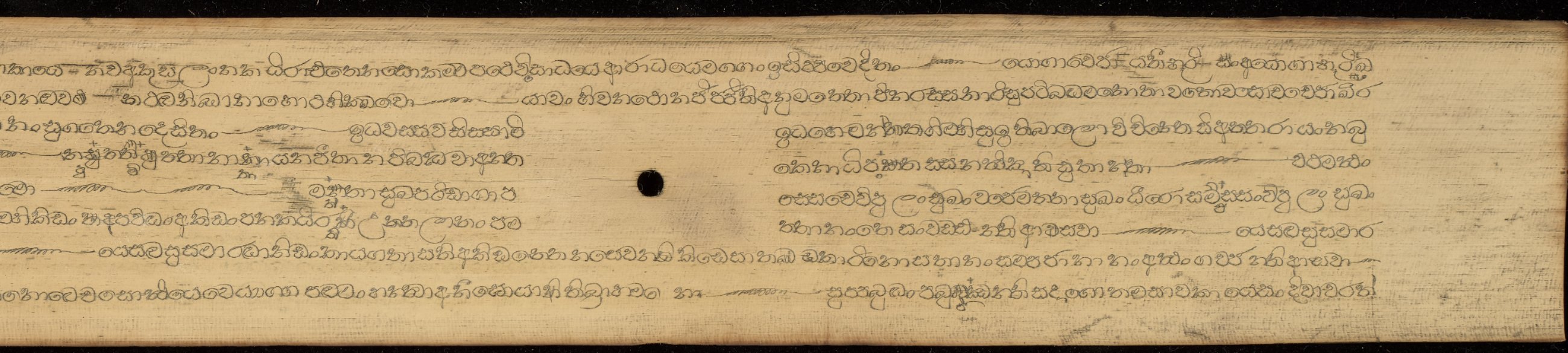
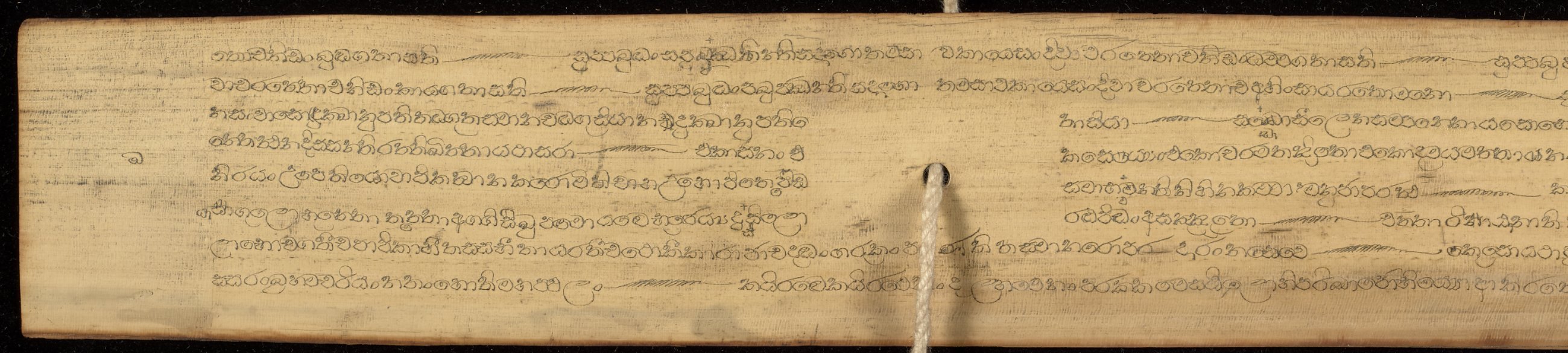
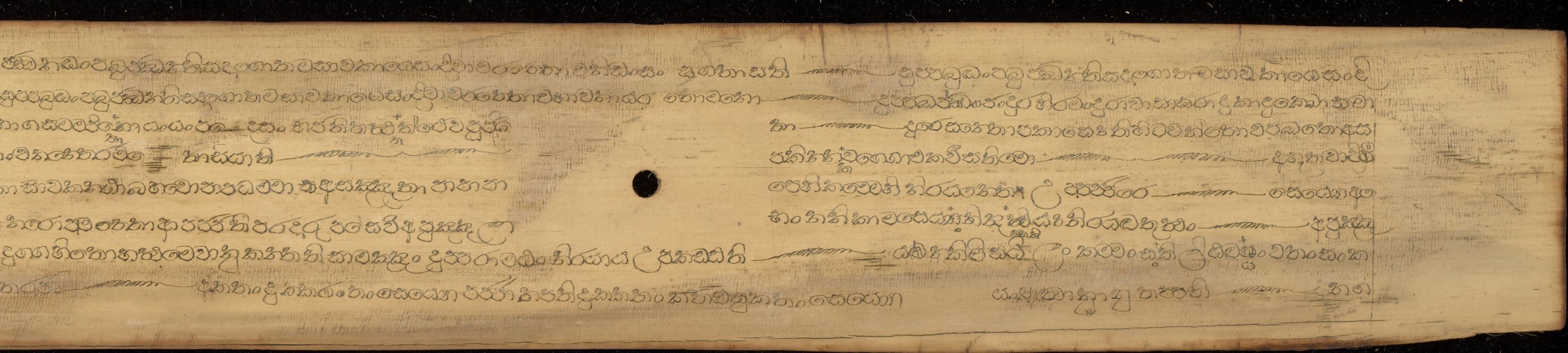
The images are of a Sinhalese palm-leaf manuscript in the John Rylands Library, Manchester (Pali MS 19), once owned by T. W. Rhys Davids. The text is written in Sinhalese script across the whole width of each leaf, nine lines a side, interrupted only by the string holes; each image is one half of a leaf side. This chapter is on fol. 12b, 13a. Each section holds the verses that end on that side.
The Pali is the Mahāsaṅgīti edition published by SuttaCentral, and the English is Max Müller's translation in the Sacred Books of the East (1881), which sometimes renders two verses together (for example 58-59).
How was this verified? (Provenance)
Where on the image
Pali MS 19, fol. 12b (both halves of the leaf side). Checked on the image: the side begins '-nna-saṅka-ppama-no kusīto ... paññāya maggaṃ alaso na vindati (end of v.280; the scribe leaves gaps marked with dashes in line 1)' and its last line ends 'suppabuddhaṃ pabujjhanti sadā gotamasāvakā yesaṃ divā ca ra- (v.296)'. The Pali shown is the Mahāsaṅgīti edition (SuttaCentral), not a transcription of the manuscript; the scribe's spellings differ in places.
290Mattāsukhapariccāgā, passe ce vipulaṁ sukhaṁ; Caje mattāsukhaṁ dhīro, sampassaṁ vipulaṁ sukhaṁ.
291Paradukkhūpadhānena, attano sukhamicchati; Verasaṁsaggasaṁsaṭṭho, verā so na parimuccati.
292Yañhi kiccaṁ apaviddhaṁ, akiccaṁ pana karīyati; Unnaḷānaṁ pamattānaṁ, tesaṁ vaḍḍhanti āsavā.
293Yesañca susamāraddhā, niccaṁ kāyagatā sati; Akiccaṁ te na sevanti, kicce sātaccakārino; Satānaṁ sampajānānaṁ, atthaṁ gacchanti āsavā.
294Mātaraṁ pitaraṁ hantvā, rājāno dve ca khattiye; Raṭṭhaṁ sānucaraṁ hantvā, anīgho yāti brāhmaṇo.
295Mātaraṁ pitaraṁ hantvā, rājāno dve ca sotthiye; Veyagghapañcamaṁ hantvā, anīgho yāti brāhmaṇo.
290If by leaving a small pleasure one sees a great pleasure, let a wise man leave the small pleasure, and look to the great.
291He who, by causing pain to others, wishes to obtain pleasure for himself, he, entangled in the bonds of hatred, will never be free from hatred.
292What ought to be done is neglected, what ought not to be done is done; the desires of unruly, thoughtless people are always increasing.
293But they whose whole watchfulness is always directed to their body, who do not follow what ought not to be done, and who steadfastly do what ought to be done, the desires of such watchful and wise people will come to an end.
294A true Brahmana goes scatheless, though he have killed father and mother, and two valiant kings, though he has destroyed a kingdom with all its subjects.
295A true Brahmana goes scatheless, though he have killed father and mother, and two holy kings, and an eminent man besides.
Where on the image
Pali MS 19, fol. 13a (both halves of the leaf side). Checked on the image: the side begins '-tto ca niccaṃ buddhagatā sati (end of v.296)' and its last line ends '... rattiṃ khittā yathā sarā ... naga- (v.315)'. Verse 296 begins on fol. 12b and ends on fol. 13a; both sides are shown. The Pali shown is the Mahāsaṅgīti edition (SuttaCentral), not a transcription of the manuscript; the scribe's spellings differ in places.
296Suppabuddhaṁ pabujjhanti, sadā gotamasāvakā; Yesaṁ divā ca ratto ca, niccaṁ buddhagatā sati.
297Suppabuddhaṁ pabujjhanti, sadā gotamasāvakā; Yesaṁ divā ca ratto ca, niccaṁ dhammagatā sati.
298Suppabuddhaṁ pabujjhanti, sadā gotamasāvakā; Yesaṁ divā ca ratto ca, niccaṁ saṅghagatā sati.
299Suppabuddhaṁ pabujjhanti, sadā gotamasāvakā; Yesaṁ divā ca ratto ca, niccaṁ kāyagatā sati.
300Suppabuddhaṁ pabujjhanti, sadā gotamasāvakā; Yesaṁ divā ca ratto ca, ahiṁsāya rato mano.
301Suppabuddhaṁ pabujjhanti, sadā gotamasāvakā; Yesaṁ divā ca ratto ca, bhāvanāya rato mano.
302Duppabbajjaṁ durabhiramaṁ, Durāvāsā gharā dukhā; Dukkhosamānasaṁvāso, Dukkhānupatitaddhagū; Tasmā na caddhagū siyā, Na ca dukkhānupatito siyā.
303Saddho sīlena sampanno, yasobhogasamappito; Yaṁ yaṁ padesaṁ bhajati, tattha tattheva pūjito.
304Dūre santo pakāsenti, himavantova pabbato; Asantettha na dissanti, rattiṁ khittā yathā sarā.
305Ekāsanaṁ ekaseyyaṁ, eko caramatandito; Eko damayamattānaṁ, vanante ramito siyā.
296The disciples of Gotama (Buddha) are always well awake, and their thoughts day and night are always set on Buddha.
297The disciples of Gotama are always well awake, and their thoughts day and night are always set on the law.
298The disciples of Gotama are always well awake, and their thoughts day and night are always set on the church.
299The disciples of Gotama are always well awake, and their thoughts day and night are always set on their body.
300The disciples of Gotama are always well awake, and their mind day and night always delights in compassion.
301The disciples of Gotama are always well awake, and their mind day and night always delights in meditation.
302It is hard to leave the world (to become a friar), it is hard to enjoy the world; hard is the monastery, painful are the houses; painful it is to dwell with equals (to share everything in common) and the itinerant mendicant is beset with pain. Therefore let no man be an itinerant mendicant and he will not be beset with pain.
303Whatever place a faithful, virtuous, celebrated, and wealthy man chooses, there he is respected.
304Good people shine from afar, like the snowy mountains; bad people are not seen, like arrows shot by night.
305He alone who, without ceasing, practises the duty of sitting alone and sleeping alone, he, subduing himself, will rejoice in the destruction of all desires alone, as if living in a forest.
Notes
- Müller's English is from the Wikisource transcription, which leaves out the diacritics the printed book uses in names (for example Nirvana, Brahmana, Mara).
- Words in round brackets are Müller's additions for sense.
Cite
Sources
- Source: Manchester, John Rylands Library, Pali MS 19 (palm leaf, Sinhalese script) + SuttaCentral Pali (Mahāsaṅgīti) + Max Müller's English (SBE X, 1881) (holding institution)
- Critical edition: SuttaCentral, Mahāsaṅgīti Tipiṭaka edition
← previous · → next · v cycle view · l back to library