Dhammapada 22: Nirayavagga, The Downward Course (verses 306-319)
Introduction
Chapter 22 of the Dhammapada, the Nirayavagga ('The Downward Course' in Max Müller's translation), verses 306-319. The Dhammapada is a collection of 423 verses in Pali attributed to the Buddha, part of the Khuddakanikāya of the Pali canon; its compilation is usually dated to about the third century BCE.
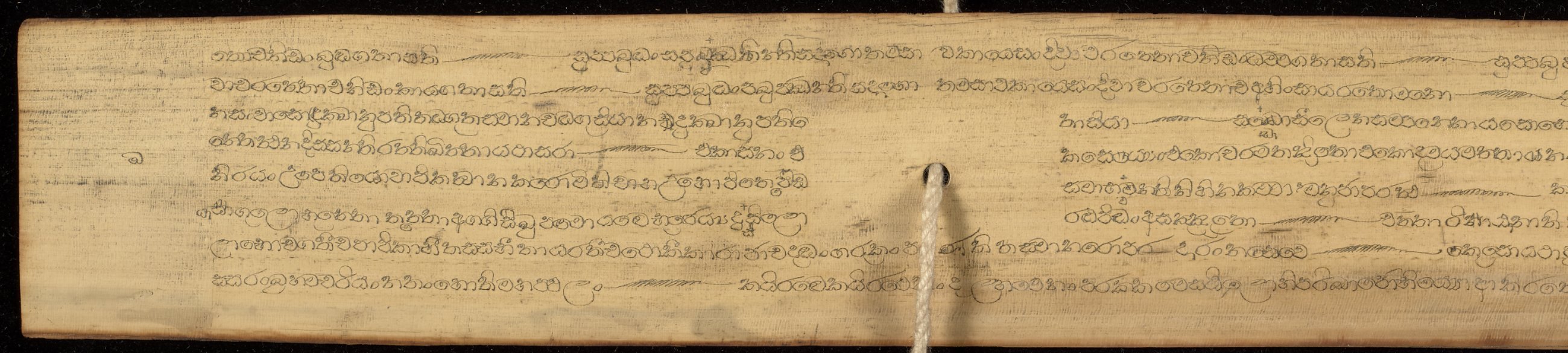
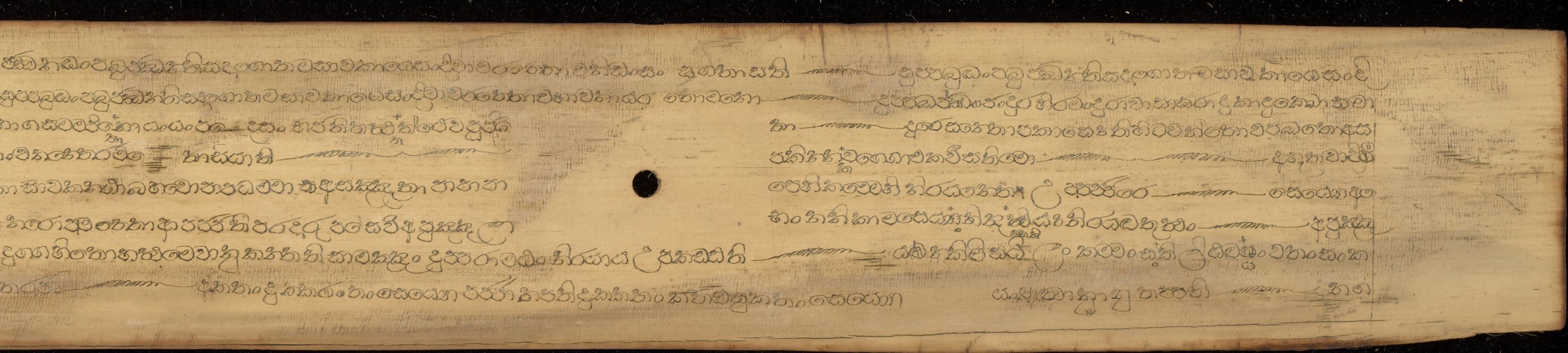
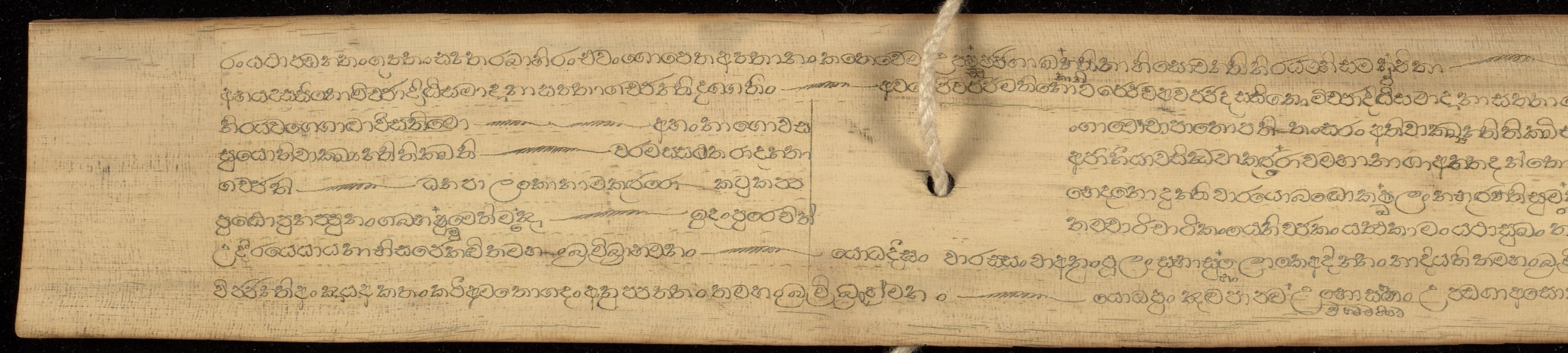
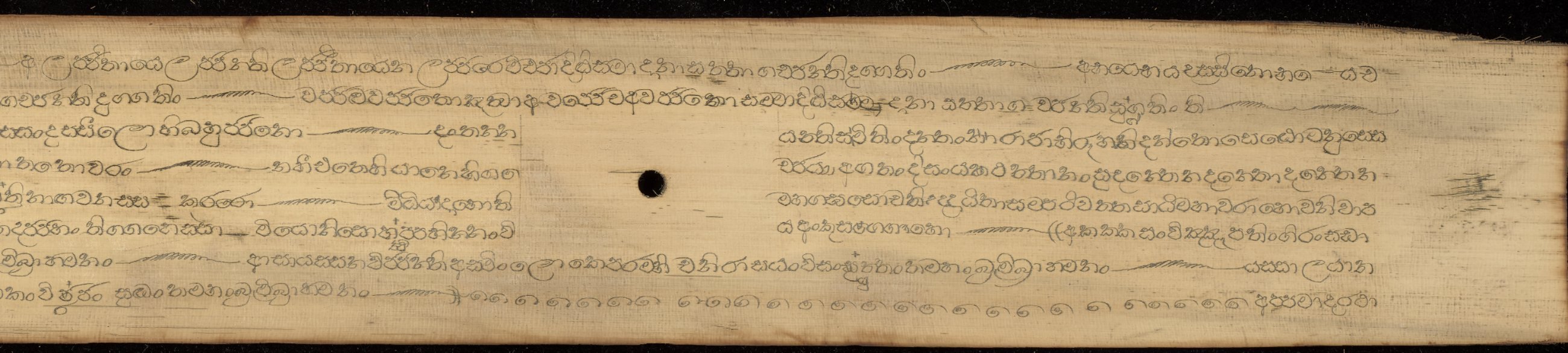
The images are of a Sinhalese palm-leaf manuscript in the John Rylands Library, Manchester (Pali MS 19), once owned by T. W. Rhys Davids. The text is written in Sinhalese script across the whole width of each leaf, nine lines a side, interrupted only by the string holes; each image is one half of a leaf side. This chapter is on fol. 13a, 13b. Each section holds the verses that end on that side.
The Pali is the Mahāsaṅgīti edition published by SuttaCentral, and the English is Max Müller's translation in the Sacred Books of the East (1881), which sometimes renders two verses together (for example 58-59).
How was this verified? (Provenance)
Where on the image
Pali MS 19, fol. 13a (both halves of the leaf side). Checked on the image: the side begins '-tto ca niccaṃ buddhagatā sati (end of v.296)' and its last line ends '... rattiṃ khittā yathā sarā ... naga- (v.315)'. The Pali shown is the Mahāsaṅgīti edition (SuttaCentral), not a transcription of the manuscript; the scribe's spellings differ in places.
306Abhūtavādī nirayaṁ upeti, Yo vāpi katvā na karomi cāha; Ubhopi te pecca samā bhavanti, Nihīnakammā manujā parattha.
307Kāsāvakaṇṭhā bahavo, pāpadhammā asaññatā; Pāpā pāpehi kammehi, nirayaṁ te upapajjare.
308Seyyo ayoguḷo bhutto, tatto aggisikhūpamo; Yañce bhuñjeyya dussīlo, raṭṭhapiṇḍamasaññato.
309Cattāri ṭhānāni naro pamatto, Āpajjati paradārūpasevī; Apuññalābhaṁ na nikāmaseyyaṁ, Nindaṁ tatīyaṁ nirayaṁ catutthaṁ.
310Apuññalābho ca gatī ca pāpikā, Bhītassa bhītāya ratī ca thokikā; Rājā ca daṇḍaṁ garukaṁ paṇeti, Tasmā naro paradāraṁ na seve.
311Kuso yathā duggahito, hatthamevānukantati; Sāmaññaṁ dupparāmaṭṭhaṁ, nirayāyupakaḍḍhati.
312Yaṁ kiñci sithilaṁ kammaṁ, saṅkiliṭṭhañca yaṁ vataṁ; Saṅkassaraṁ brahmacariyaṁ, na taṁ hoti mahapphalaṁ.
313Kayirā ce kayirāthenaṁ, daḷhamenaṁ parakkame; Sithilo hi paribbājo, bhiyyo ākirate rajaṁ.
314Akataṁ dukkaṭaṁ seyyo, pacchā tappati dukkaṭaṁ; Katañca sukataṁ seyyo, yaṁ katvā nānutappati.
306He who says what is not, goes to hell; he also who, having done a thing, says I have not done it. After death both are equal, they are men with evil deeds in the next world.
307Many men whose shoulders are covered with the yellow gown are ill-conditioned and unrestrained; such evil-doers by their evil deeds go to hell.
308Better it would be to swallow a heated iron ball, like flaring fire, than that a bad unrestrained fellow should live on the charity of the land.
309Four things does a wreckless man gain who covets his neighbour's wife,—a bad reputation, an uncomfortable bed, thirdly, punishment, and lastly, hell.
310There is bad reputation, and the evil way (to hell), there is the short pleasure of the frightened in the arms of the frightened, and the king imposes heavy punishment; therefore let no man think of his neighbour's wife.
311As a grass-blade, if badly grasped, cuts the arm, badly-practised asceticism leads to hell.
312An act carelessly performed, a broken vow, and hesitating obedience to discipline, all this brings no great reward.
313If anything is to be done, let a man do it, let him attack it vigorously! A careless pilgrim only scatters the dust of his passions more widely.
314An evil deed is better left undone, for a man repents of it afterwards; a good deed is better done, for having done it, one does not repent.
Where on the image
Pali MS 19, fol. 13b (both halves of the leaf side). Checked on the image: the side begins '-raṃ yathā paccantaṃ guttaṃ santarabāhiraṃ (v.315)' and its last line ends 'after v.326 (... hatthippabhinnaṃ viya aṅkusaggaho) the scribe wrote v.408-412 of the Brāhmaṇavagga out of place (akakkasaṃ viññāpaniṃ giraṃ ... yodha puññañca pāpañca ...), then a row of 'e'-shaped marks, then appamādaratā (first word of v.327)'. Verse 315 begins on fol. 13a and ends on fol. 13b; both sides are shown. The verses 408-412 written out of place at the foot of this side are not part of this chapter's text here; they are shown with chapter 26 on fol. 16a, where the scribe wrote them in their place. The Pali shown is the Mahāsaṅgīti edition (SuttaCentral), not a transcription of the manuscript; the scribe's spellings differ in places.
315Nagaraṁ yathā paccantaṁ, guttaṁ santarabāhiraṁ; Evaṁ gopetha attānaṁ, khaṇo vo mā upaccagā; Khaṇātītā hi socanti, nirayamhi samappitā.
316Alajjitāye lajjanti, lajjitāye na lajjare; Micchādiṭṭhisamādānā, sattā gacchanti duggatiṁ.
317Abhaye bhayadassino, bhaye cābhayadassino; Micchādiṭṭhisamādānā, sattā gacchanti duggatiṁ.
318Avajje vajjamatino, vajje cāvajjadassino; Micchādiṭṭhisamādānā, sattā gacchanti duggatiṁ.
319Vajjañca vajjato ñatvā, avajjañca avajjato; Sammādiṭṭhisamādānā, sattā gacchanti suggatiṁ.
315Like a well-guarded frontier fort, with defences within and without, so let a man guard himself. Not a moment should escape, for they who allow the right moment to pass, suffer pain when they are in hell.
316They who are ashamed of what they ought not to be ashamed of, and are not ashamed of what they ought to be ashamed of, such men, embracing false doctrines enter the evil path.
317They who fear when they ought not to fear, and fear not when they ought to fear, such men, embracing false doctrines, enter the evil path.
318They who forbid when there is nothing to be forbidden, and forbid not when there is something to be forbidden, such men, embracing false doctrines, enter the evil path.
319They who know what is forbidden as forbidden, and what is not forbidden as not forbidden, such men, embracing the true doctrine, enter the good path.
Notes
- Müller's English is from the Wikisource transcription, which leaves out the diacritics the printed book uses in names (for example Nirvana, Brahmana, Mara).
- Words in round brackets are Müller's additions for sense.
Cite
Sources
- Source: Manchester, John Rylands Library, Pali MS 19 (palm leaf, Sinhalese script) + SuttaCentral Pali (Mahāsaṅgīti) + Max Müller's English (SBE X, 1881) (holding institution)
- Critical edition: SuttaCentral, Mahāsaṅgīti Tipiṭaka edition
← previous · → next · v cycle view · l back to library