Dhammapada 23: Nāgavagga, The Elephant (verses 320-333)
Introduction
Chapter 23 of the Dhammapada, the Nāgavagga ('The Elephant' in Max Müller's translation), verses 320-333. The Dhammapada is a collection of 423 verses in Pali attributed to the Buddha, part of the Khuddakanikāya of the Pali canon; its compilation is usually dated to about the third century BCE.
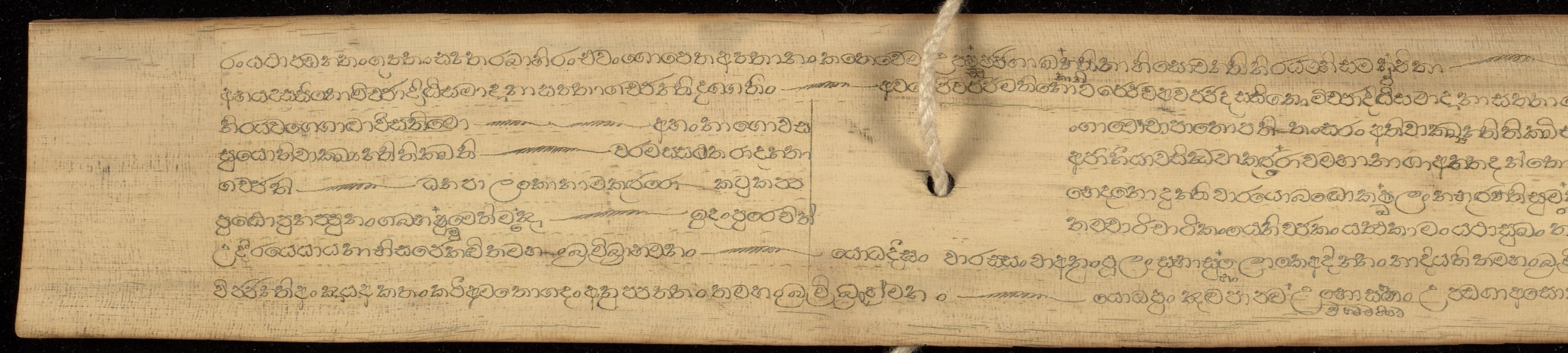
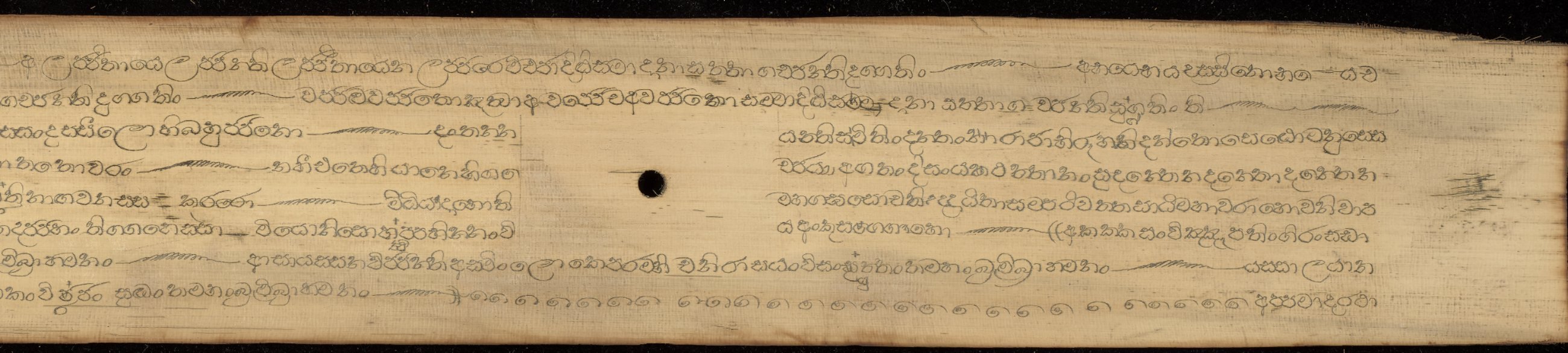
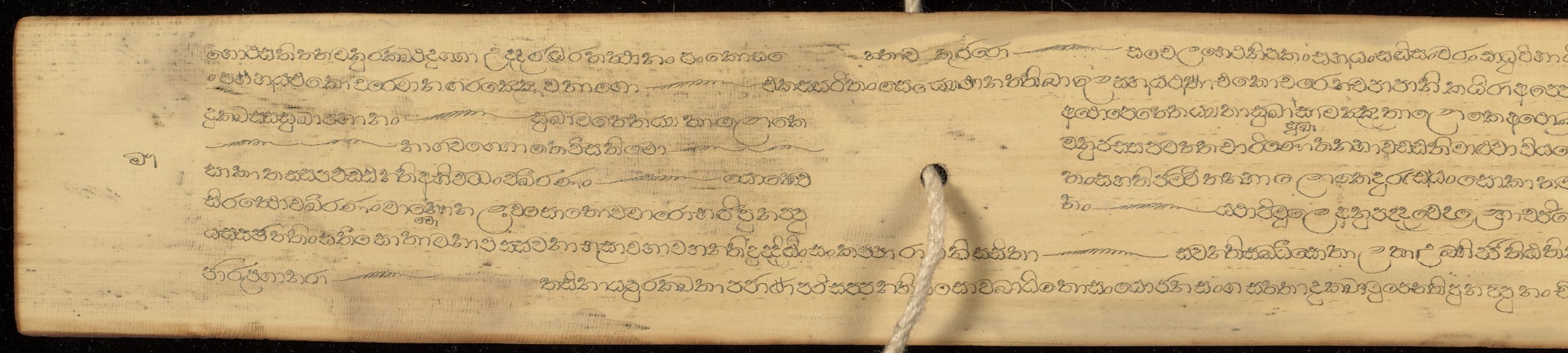
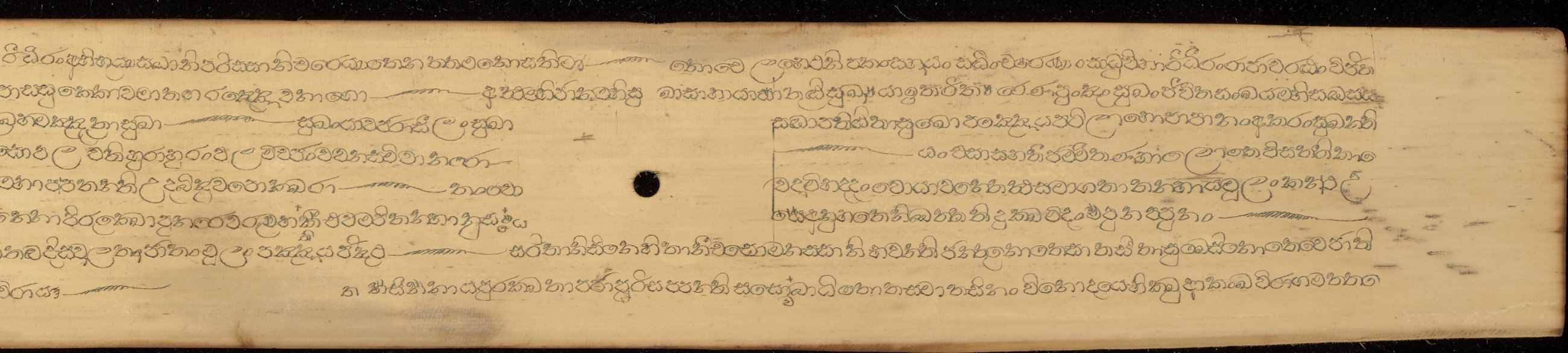
The images are of a Sinhalese palm-leaf manuscript in the John Rylands Library, Manchester (Pali MS 19), once owned by T. W. Rhys Davids. The text is written in Sinhalese script across the whole width of each leaf, nine lines a side, interrupted only by the string holes; each image is one half of a leaf side. This chapter is on fol. 13b, 14a. Each section holds the verses that end on that side.
The Pali is the Mahāsaṅgīti edition published by SuttaCentral, and the English is Max Müller's translation in the Sacred Books of the East (1881), which sometimes renders two verses together (for example 58-59).
At the foot of fol. 13b, after verse 326, the scribe wrote verses 408-412 out of place, then a row of marks, and went on with verse 327. The same verses stand in their proper place on fol. 16a.
How was this verified? (Provenance)
Where on the image
Pali MS 19, fol. 13b (both halves of the leaf side). Checked on the image: the side begins '-raṃ yathā paccantaṃ guttaṃ santarabāhiraṃ (v.315)' and its last line ends 'after v.326 (... hatthippabhinnaṃ viya aṅkusaggaho) the scribe wrote v.408-412 of the Brāhmaṇavagga out of place (akakkasaṃ viññāpaniṃ giraṃ ... yodha puññañca pāpañca ...), then a row of 'e'-shaped marks, then appamādaratā (first word of v.327)'. The verses 408-412 written out of place at the foot of this side are not part of this chapter's text here; they are shown with chapter 26 on fol. 16a, where the scribe wrote them in their place. The Pali shown is the Mahāsaṅgīti edition (SuttaCentral), not a transcription of the manuscript; the scribe's spellings differ in places.
320Ahaṁ nāgova saṅgāme, cāpato patitaṁ saraṁ; Ativākyaṁ titikkhissaṁ, dussīlo hi bahujjano.
321Dantaṁ nayanti samitiṁ, dantaṁ rājābhirūhati; Danto seṭṭho manussesu, yotivākyaṁ titikkhati.
322Varamassatarā dantā, ājānīyā ca sindhavā; Kuñjarā ca mahānāgā, attadanto tato varaṁ.
323Na hi etehi yānehi, gaccheyya agataṁ disaṁ; Yathāttanā sudantena, danto dantena gacchati.
324Dhanapālo nāma kuñjaro, Kaṭukabhedano dunnivārayo; Baddho kabaḷaṁ na bhuñjati, Sumarati nāgavanassa kuñjaro.
325Middhī yadā hoti mahagghaso ca, Niddāyitā samparivattasāyī; Mahāvarāhova nivāpapuṭṭho, Punappunaṁ gabbhamupeti mando.
326Idaṁ pure cittamacāri cārikaṁ, Yenicchakaṁ yatthakāmaṁ yathāsukhaṁ; Tadajjahaṁ niggahessāmi yoniso, Hatthippabhinnaṁ viya aṅkusaggaho.
320Silently shall I endure abuse as the elephant in battle endures the arrow sent from the bow: for the world is ill-natured.
321They lead a tamed elephant to battle, the king mounts a tamed elephant; the tamed is the best among men, he who silently endures abuse.
322Mules are good, if tamed, and noble Sindhu horses, and elephants with large tusks; but he who tames himself is better still.
323For with these animals does no man reach the untrodden country (Nirvana), where a tamed man goes on a tamed animal, viz. on his own well-tamed self.
324The elephant called Dhanapalaka, his temples running with sap, and difficult to hold, does not eat a morsel when bound; the elephant longs for the elephant grove.
325If a man becomes fat and a great eater, if he is sleepy and rolls himself about, that fool, like a hog fed on wash, is born again and again.
326This mind of mine went formerly wandering about as it liked, as it listed, as it pleased; but I shall now hold it in thoroughly, as the rider who holds the hook holds in the furious elephant.
Where on the image
Pali MS 19, fol. 14a (both halves of the leaf side). Checked on the image: the side begins 'the rest of v.327 ... duggā uddharathattānaṃ paṅke sannova kuñjaro' and its last line ends '... tasmā tasiṇaṃ vinodaye bhikkhu ākaṅkhī virāgamatta- (v.343)'. Verse 327 begins on fol. 13b and ends on fol. 14a; both sides are shown. The Pali shown is the Mahāsaṅgīti edition (SuttaCentral), not a transcription of the manuscript; the scribe's spellings differ in places.
327Appamādaratā hotha, sacittamanurakkhatha; Duggā uddharathattānaṁ, paṅke sannova kuñjaro.
328Sace labhetha nipakaṁ sahāyaṁ, Saddhiṁ caraṁ sādhuvihāridhīraṁ; Abhibhuyya sabbāni parissayāni, Careyya tenattamano satīmā.
329No ce labhetha nipakaṁ sahāyaṁ, Saddhiṁ caraṁ sādhuvihāridhīraṁ; Rājāva raṭṭhaṁ vijitaṁ pahāya, Eko care mātaṅgaraññeva nāgo.
330Ekassa caritaṁ seyyo, Natthi bāle sahāyatā; Eko care na ca pāpāni kayirā, Appossukko mātaṅgaraññeva nāgo.
331Atthamhi jātamhi sukhā sahāyā, Tuṭṭhī sukhā yā itarītarena; Puññaṁ sukhaṁ jīvitasaṅkhayamhi, Sabbassa dukkhassa sukhaṁ pahānaṁ.
332Sukhā matteyyatā loke, atho petteyyatā sukhā; Sukhā sāmaññatā loke, atho brahmaññatā sukhā.
333Sukhaṁ yāva jarā sīlaṁ, sukhā saddhā patiṭṭhitā; Sukho paññāya paṭilābho, pāpānaṁ akaraṇaṁ sukhaṁ.
327Be not thoughtless, watch your thoughts! Draw yourself out of the evil way, like an elephant sunk in mud.
328If a man find a prudent companion who walks with him, is wise, and lives soberly, he may walk with him, overcoming all dangers, happy, but considerate.
329If a man find no prudent companion who walks with him, is wise, and lives soberly, let him walk alone, like a king who has left his conquered country behind,—like an elephant in the forest.
330It is better to live alone, there is no companionship with a fool; let a man walk alone, let him commit no sin, with few wishes, like an elephant in the forest.
331If an occasion arises, friends are pleasant; enjoyment is pleasant, whatever be the cause; a good work is pleasant in the hour of death; the giving up of all grief is pleasant.
332Pleasant in the world is the state of a mother, pleasant the state of a father, pleasant the state of a Samana, pleasant the state of a Brahmana.
333Pleasant is virtue lasting to old age, pleasant is a faith firmly rooted; pleasant is attainment of intelligence, pleasant is avoiding of sins.
Notes
- Müller's English is from the Wikisource transcription, which leaves out the diacritics the printed book uses in names (for example Nirvana, Brahmana, Mara).
- Words in round brackets are Müller's additions for sense.
Cite
Sources
- Source: Manchester, John Rylands Library, Pali MS 19 (palm leaf, Sinhalese script) + SuttaCentral Pali (Mahāsaṅgīti) + Max Müller's English (SBE X, 1881) (holding institution)
- Critical edition: SuttaCentral, Mahāsaṅgīti Tipiṭaka edition
← previous · → next · v cycle view · l back to library