Dhammapada 24: Taṇhāvagga, Thirst (verses 334-359)
Introduction
Chapter 24 of the Dhammapada, the Taṇhāvagga ('Thirst' in Max Müller's translation), verses 334-359. The Dhammapada is a collection of 423 verses in Pali attributed to the Buddha, part of the Khuddakanikāya of the Pali canon; its compilation is usually dated to about the third century BCE.
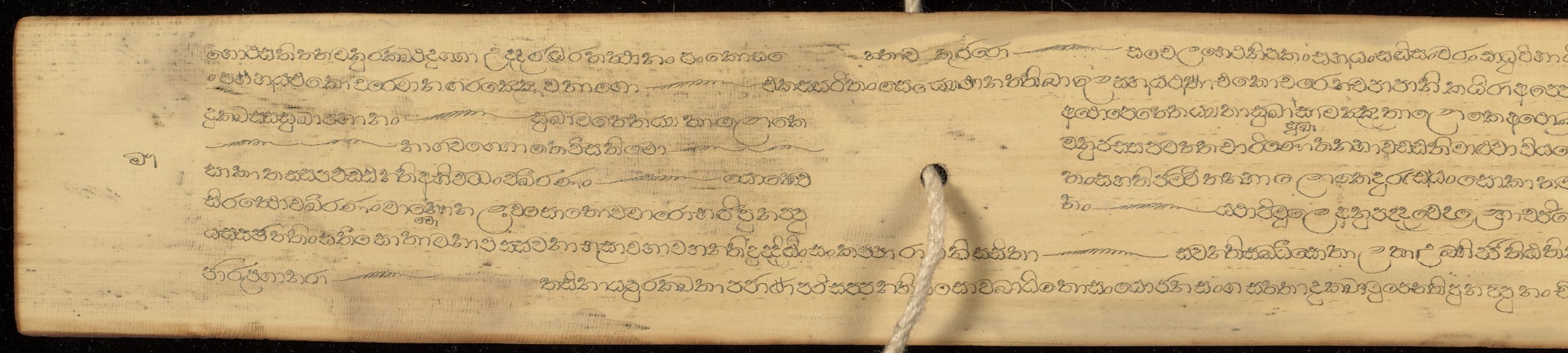
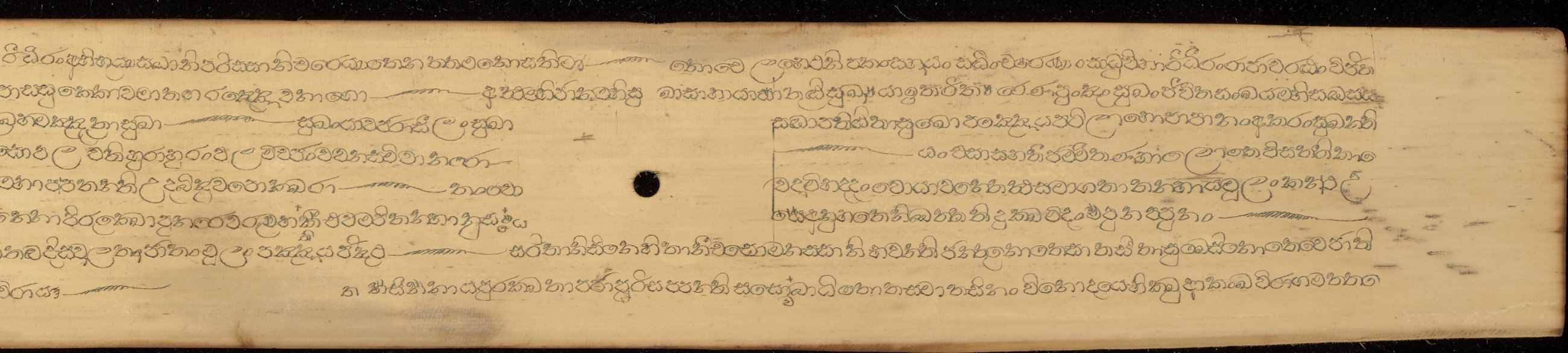
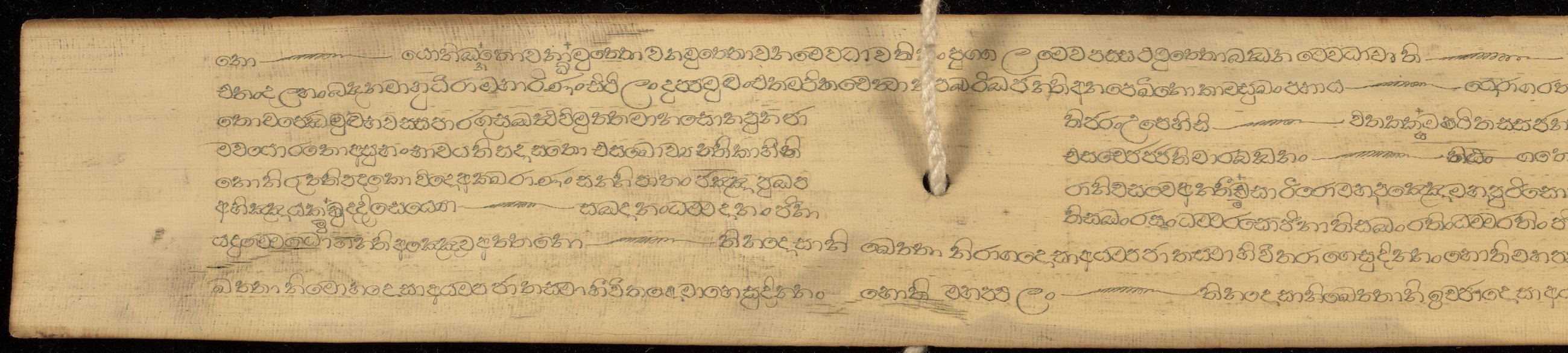
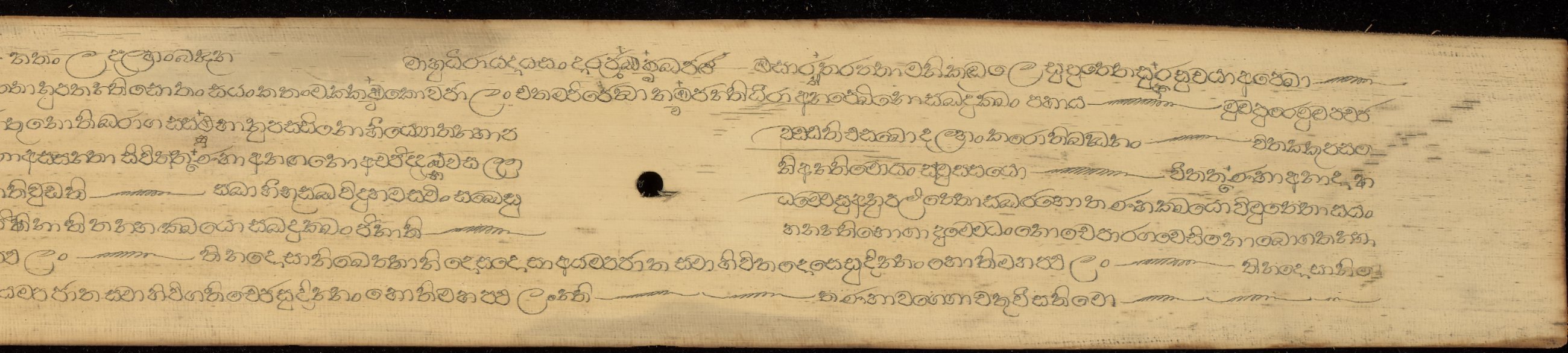
The images are of a Sinhalese palm-leaf manuscript in the John Rylands Library, Manchester (Pali MS 19), once owned by T. W. Rhys Davids. The text is written in Sinhalese script across the whole width of each leaf, nine lines a side, interrupted only by the string holes; each image is one half of a leaf side. This chapter is on fol. 14a, 14b. Each section holds the verses that end on that side.
The Pali is the Mahāsaṅgīti edition published by SuttaCentral, and the English is Max Müller's translation in the Sacred Books of the East (1881), which sometimes renders two verses together (for example 58-59).
How was this verified? (Provenance)
Where on the image
Pali MS 19, fol. 14a (both halves of the leaf side). Checked on the image: the side begins 'the rest of v.327 ... duggā uddharathattānaṃ paṅke sannova kuñjaro' and its last line ends '... tasmā tasiṇaṃ vinodaye bhikkhu ākaṅkhī virāgamatta- (v.343)'. The Pali shown is the Mahāsaṅgīti edition (SuttaCentral), not a transcription of the manuscript; the scribe's spellings differ in places.
334Manujassa pamattacārino, Taṇhā vaḍḍhati māluvā viya; So plavatī hurā huraṁ, Phalamicchaṁva vanasmi vānaro.
335Yaṁ esā sahate jammī, taṇhā loke visattikā; Sokā tassa pavaḍḍhanti, abhivaṭṭhaṁva bīraṇaṁ.
336Yo cetaṁ sahate jammiṁ, taṇhaṁ loke duraccayaṁ; Sokā tamhā papatanti, udabinduva pokkharā.
337Taṁ vo vadāmi bhaddaṁ vo, yāvantettha samāgatā; Taṇhāya mūlaṁ khaṇatha, usīratthova bīraṇaṁ; Mā vo naḷaṁva sotova, māro bhañji punappunaṁ.
338Yathāpi mūle anupaddave daḷhe, Chinnopi rukkho punareva rūhati; Evampi taṇhānusaye anūhate, Nibbattatī dukkhamidaṁ punappunaṁ.
339Yassa chattiṁsati sotā, manāpasavanā bhusā; Mahāvahanti duddiṭṭhiṁ, saṅkappā rāganissitā.
340Savanti sabbadhi sotā, latā uppajja tiṭṭhati; Tañca disvā lataṁ jātaṁ, mūlaṁ paññāya chindatha.
341Saritāni sinehitāni ca, Somanassāni bhavanti jantuno; Te sātasitā sukhesino, Te ve jātijarūpagā narā.
342Tasiṇāya purakkhatā pajā, Parisappanti sasova bandhito; Saṁyojanasaṅgasattakā, Dukkhamupenti punappunaṁ cirāya.
334The thirst of a thoughtless man grows like a creeper; he runs from life to life, like a monkey seeking fruit in the forest.
335Whomsoever this fierce thirst overcomes, full of poison, in this world, his sufferings increase like the abounding Birana grass.
336He who overcomes this fierce thirst, difficult to be conquered in this world, sufferings fall off from him, like water-drops from a lotus leaf.
337This salutary word I tell you, `Do ye, as many as are here assembled, dig up the root of thirst, as he who wants the sweet- scented Usira root must dig up the Birana grass, that Mara (the tempter) may not crush you again and again, as the stream crushes the reeds.'
338As a tree, even though it has been cut down, is firm so long as its root is safe, and grows again, thus, unless the feeders of thirst are destroyed, this pain (of life) will return again and again.
339He whose thirst running towards pleasure is exceeding strong in the thirty-six channels, the waves will carry away that misguided man, viz. his desires which are set on passion.
340The channels run everywhere, the creeper (of passion) stands sprouting; if you see the creeper springing up, cut its root by means of knowledge.
341A creature's pleasures are extravagant and luxurious; sunk in lust and looking for pleasure, men undergo (again and again) birth and decay.
342Men, driven on by thirst, run about like a snared hare; held in fetters and bonds, they undergo pain for a long time, again and again.
Where on the image
Pali MS 19, fol. 14b (both halves of the leaf side). Checked on the image: the side begins '-no (last syllable of v.343), then yo nibbanatho vanādhimutto (v.344)' and its last line ends '... dinnaṃ hoti mahapphalaṃ (end of v.359) and the chapter title taṇhāvaggo catuvīsatimo'. Verse 343 begins on fol. 14a and ends on fol. 14b; both sides are shown. The Pali shown is the Mahāsaṅgīti edition (SuttaCentral), not a transcription of the manuscript; the scribe's spellings differ in places.
343Tasiṇāya purakkhatā pajā, Parisappanti sasova bandhito; Tasmā tasiṇaṁ vinodaye, Ākaṅkhanta virāgamattano.
344Yo nibbanatho vanādhimutto, Vanamutto vanameva dhāvati; Taṁ puggalametha passatha, Mutto bandhanameva dhāvati.
345Na taṁ daḷhaṁ bandhanamāhu dhīrā, Yadāyasaṁ dārujapabbajañca; Sārattarattā maṇikuṇḍalesu, Puttesu dāresu ca yā apekkhā.
346Etaṁ daḷhaṁ bandhanamāhu dhīrā, Ohārinaṁ sithilaṁ duppamuñcaṁ; Etampi chetvāna paribbajanti, Anapekkhino kāmasukhaṁ pahāya.
347Ye rāgarattānupatanti sotaṁ, Sayaṅkataṁ makkaṭakova jālaṁ; Etampi chetvāna vajanti dhīrā, Anapekkhino sabbadukkhaṁ pahāya.
348Muñca pure muñca pacchato, Majjhe muñca bhavassa pāragū; Sabbattha vimuttamānaso, Na punaṁ jātijaraṁ upehisi.
349Vitakkamathitassa jantuno, Tibbarāgassa subhānupassino; Bhiyyo taṇhā pavaḍḍhati, Esa kho daḷhaṁ karoti bandhanaṁ.
350Vitakkūpasame ca yo rato, Asubhaṁ bhāvayate sadā sato; Esa kho byanti kāhiti, Esa checchati mārabandhanaṁ.
351Niṭṭhaṅgato asantāsī, vītataṇho anaṅgaṇo; Acchindi bhavasallāni, antimoyaṁ samussayo.
352Vītataṇho anādāno, Niruttipadakovido; Akkharānaṁ sannipātaṁ, Jaññā pubbāparāni ca; Sa ve “antimasārīro, Mahāpañño mahāpuriso”ti vuccati.
353Sabbābhibhū sabbavidūhamasmi, Sabbesu dhammesu anūpalitto; Sabbañjaho taṇhakkhaye vimutto, Sayaṁ abhiññāya kamuddiseyyaṁ.
354Sabbadānaṁ dhammadānaṁ jināti, Sabbarasaṁ dhammaraso jināti; Sabbaratiṁ dhammarati jināti, Taṇhakkhayo sabbadukkhaṁ jināti.
355Hananti bhogā dummedhaṁ, no ca pāragavesino; Bhogataṇhāya dummedho, hanti aññeva attanaṁ.
356Tiṇadosāni khettāni, rāgadosā ayaṁ pajā; Tasmā hi vītarāgesu, dinnaṁ hoti mahapphalaṁ.
357Tiṇadosāni khettāni, dosadosā ayaṁ pajā; Tasmā hi vītadosesu, dinnaṁ hoti mahapphalaṁ.
358Tiṇadosāni khettāni, mohadosā ayaṁ pajā; Tasmā hi vītamohesu, dinnaṁ hoti mahapphalaṁ.
359Tiṇadosāni khettāni, icchādosā ayaṁ pajā; Tasmā hi vigaticchesu, dinnaṁ hoti mahapphalaṁ.
343Men, driven on by thirst, run about like a snared hare; let therefore the mendicant drive out thirst, by striving after passionlessness for himself.
344He who having got rid of the forest (of lust) (i.e. after having reached Nirvana) gives himself over to forest-life (i.e. to lust), and who, when removed from the forest (i.e. from lust), runs to the forest (i.e. to lust), look at that man! though free, he runs into bondage.
345Wise people do not call that a strong fetter which is made of iron, wood, or hemp; far stronger is the care for precious stones and rings, for sons and a wife.
346That fetter wise people call strong which drags down, yields, but is difficult to undo; after having cut this at last, people leave the world, free from cares, and leaving desires and pleasures behind.
347Those who are slaves to passions, run down with the stream (of desires), as a spider runs down the web which he has made himself; when they have cut this, at last, wise people leave the world free from cares, leaving all affection behind.
348Give up what is before, give up what is behind, give up what is in the middle, when thou goest to the other shore of existence; if thy mind is altogether free, thou wilt not again enter into birth and decay.
349If a man is tossed about by doubts, full of strong passions, and yearning only for what is delightful, his thirst will grow more and more, and he will indeed make his fetters strong.
350If a man delights in quieting doubts, and, always reflecting, dwells on what is not delightful (the impurity of the body, &c.), he certainly will remove, nay, he will cut the fetter of Mara.
351He who has reached the consummation, who does not tremble, who is without thirst and without sin, he has broken all the thorns of life: this will be his last body.
352He who is without thirst and without affection, who understands the words and their interpretation, who knows the order of letters (those which are before and which are after), he has received his last body, he is called the great sage, the great man.
353`I have conquered all, I know all, in all conditions of life I am free from taint; I have left all, and through the destruction of thirst I am free; having learnt myself, whom shall I teach?'
354The gift of the law exceeds all gifts; the sweetness of the law exceeds all sweetness; the delight in the law exceeds all delights; the extinction of thirst overcomes all pain.
355Pleasures destroy the foolish, if they look not for the other shore; the foolish by his thirst for pleasures destroys himself, as if he were his own enemy.
356The fields are damaged by weeds, mankind is damaged by passion: therefore a gift bestowed on the passionless brings great reward.
357The fields are damaged by weeds, mankind is damaged by hatred: therefore a gift bestowed on those who do not hate brings great reward.
358The fields are damaged by weeds, mankind is damaged by vanity: therefore a gift bestowed on those who are free from vanity brings great reward.
359The fields are damaged by weeds, mankind is damaged by lust: therefore a gift bestowed on those who are free from lust brings great reward.
Notes
- Müller's English is from the Wikisource transcription, which leaves out the diacritics the printed book uses in names (for example Nirvana, Brahmana, Mara).
- Words in round brackets are Müller's additions for sense.
Cite
Sources
- Source: Manchester, John Rylands Library, Pali MS 19 (palm leaf, Sinhalese script) + SuttaCentral Pali (Mahāsaṅgīti) + Max Müller's English (SBE X, 1881) (holding institution)
- Critical edition: SuttaCentral, Mahāsaṅgīti Tipiṭaka edition
← previous · → next · v cycle view · l back to library