Diodorus Siculus 1.17-20: the campaign of Osiris through the inhabited world
Introduction
Diodorus of Sicily wrote his Library of History, a history of the world in forty books, between about 60 and 30 BCE; he visited Egypt in the 180th Olympiad (60-56 BCE). Book 1 is devoted to Egypt, and its first part gives what the Egyptian priests and the Greek writers who used them (chiefly Hecataeus of Abdera) told of the beginning of the world and of the gods who ruled Egypt as kings before the first mortal king, Menas. Diodorus reports these accounts without vouching for them.
The manuscript shown is Vat. gr. 130 in the Vatican Library, a parchment copy of books 1-5 made in the middle of the 10th century, the oldest manuscript of this part of the work. The images are the library's black-and-white microfilm; each opening has been split into its two pages. No folio numbers are legible on the images, so pages are cited by DigiVatLib image number and side. Each section is one chapter and lists the page or pages that carry it; the page breaks were read on the images and are recorded in each note.
This entry covers chapters 1.17-20.
How was this verified? (Provenance)
Where on the image
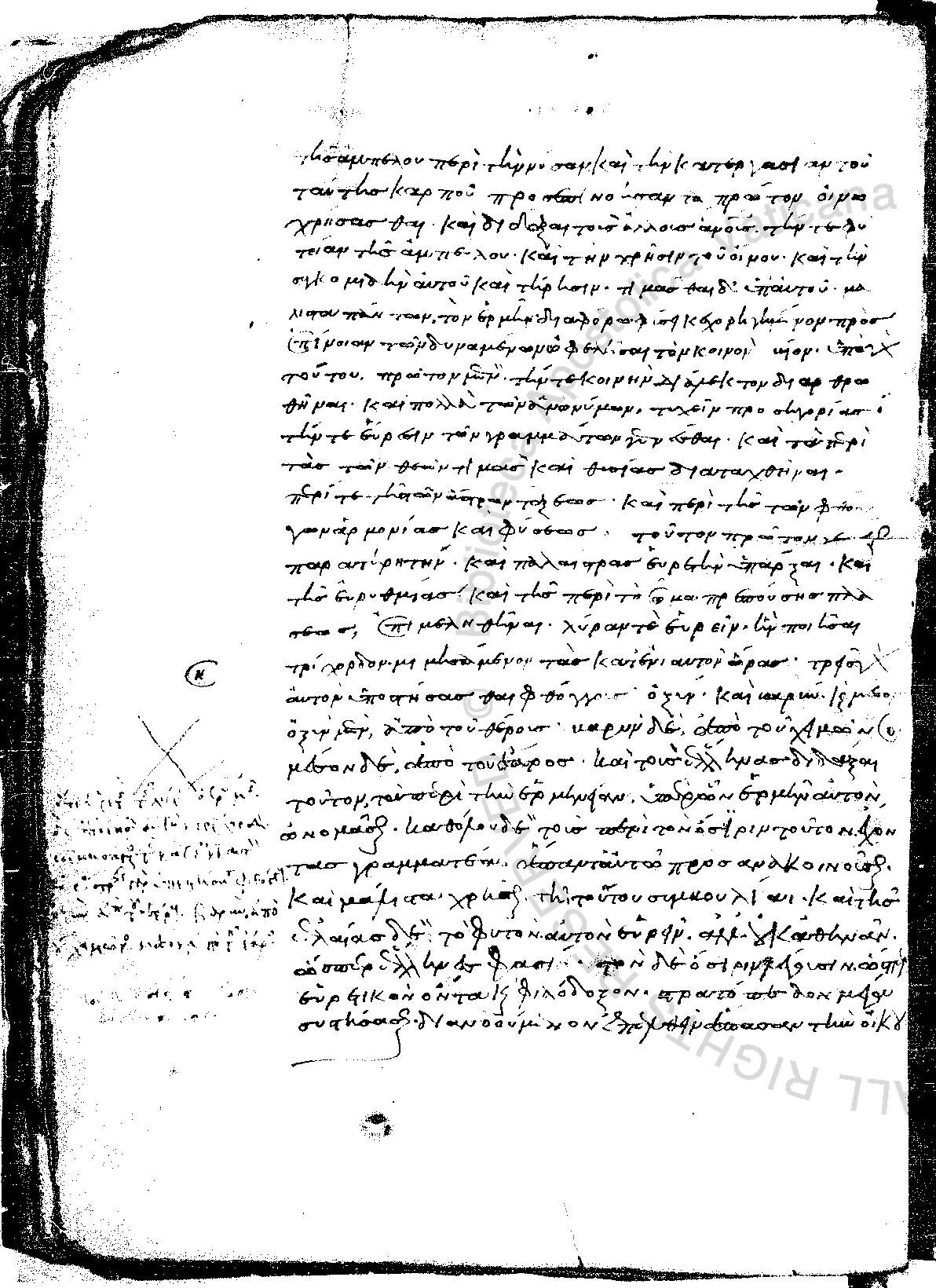
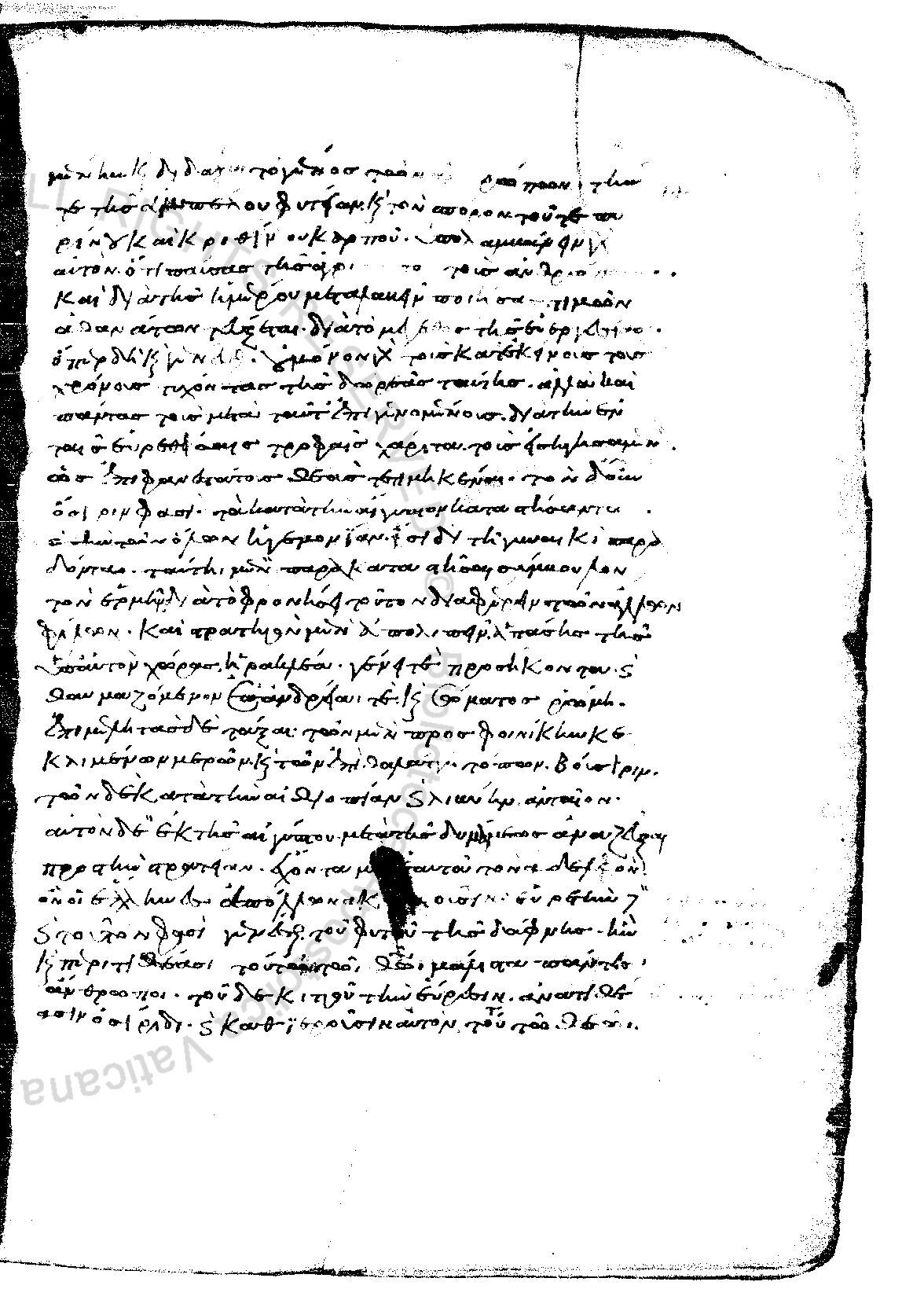
1.17 runs over 3 pages: DigiVatLib image 0017, left page; DigiVatLib image 0017, right page; DigiVatLib image 0018, left page. DigiVatLib image 0017, left page: begins 'τῆς ἀμπέλου περὶ τὴν Νῦσαν, καὶ τὴν κατεργασίαν τοῦ ταύτης καρποῦ' (1.15.8); ends 'στρατόπεδον μέγα συστήσασθαι, διανοούμενον ἐπελθεῖν ἅπασαν τὴν οἰκου-' (1.17.1). DigiVatLib image 0017, right page: begins '-μένην καὶ διδάξαι τὸ γένος τῶν ἀνθρώπων τήν τε τῆς ἀμπέλου φυτείαν' (1.17.1); ends 'τοῦ δὲ κιττοῦ τὴν εὕρεσιν ἀνατιθέασιν Ὀσίριδι, καὶ καθιεροῦσιν αὐτὸν τούτῳ τῷ θεῷ' (1.17.4). DigiVatLib image 0018, left page: begins 'καθάπερ καὶ οἱ Ἕλληνες Διονύσῳ. καὶ κατὰ τὴν Αἰγυπτίων μὲν διάλεκτον' (1.17.4-5); ends 'τὸ περὶ τῆς κόμης νόμιμον παρ’ Αἰγυπτίοις, καὶ τοὺς ποιουμένους' (1.18.3). Checked on the images. Viewer: https://digi.vatlib.it/view/MSS_Vat.gr.130/0017
1τὸν δὲ Ὄσιριν λέγουσιν, ὥσπερ εὐεργετικὸν ὄντα καὶ φιλόδοξον, στρατόπεδον μέγα συστήσασθαι, διανοούμενον ἐπελθεῖν ἅπασαν τὴν οἰκουμένην καὶ διδάξαι τὸ γένος τῶν ἀνθρώπων τήν τε τῆς ἀμπέλου φυτείαν καὶ τὸν σπόρον τοῦ τε πυρίνου καὶ κριθίνου καρποῦ· 2ὑπολαμβάνειν γὰρ αὐτὸν ὅτι παύσας τῆς ἀγριότητος τοὺς ἀνθρώπους καὶ διαίτης ἡμέρου μεταλαβεῖν ποιήσας τιμῶν ἀθανάτων τεύξεται διὰ τὸ μέγεθος τῆς εὐεργεσίας. ὅπερ δὴ καὶ γενέσθαι· οὐ μόνον γὰρ τοὺς κατʼ ἐκείνους τοὺς χρόνους τυχόντας τῆς δωρεᾶς ταύτης, ἀλλὰ καὶ πάντας τοὺς μετὰ ταῦτα ἐπιγενομένους διὰ τὴν ἐν ταῖς εὑρεθείσαις τροφαῖς χάριτα τοὺς εἰσηγησαμένους ὡς ἐπιφανεστάτους θεοὺς τετιμηκέναι. 3τὸν δʼ οὖν Ὄσιρίν φασι τὰ κατὰ τὴν Αἴγυπτον καταστήσαντα καὶ τὴν τῶν ὅλων ἡγεμονίαν Ἴσιδι τῇ γυναικὶ παραδόντα, ταύτῃ μὲν παρακαταστῆσαι σύμβουλον τὸν Ἑρμῆν διὰ τὸ φρονήσει τοῦτον διαφέρειν τῶν ἄλλων φίλων, καὶ στρατηγὸν μὲν ἀπολιπεῖν ἁπάσης τῆς ὑφʼ αὑτὸν χώρας Ἡρακλέα γένει τε προσήκοντα καὶ θαυμαζόμενον ἐπʼ ἀνδρείᾳ τε καὶ σώματος ῥώμῃ, ἐπιμελητὰς δὲ τάξαι τῶν μὲν πρὸς Φοινίκην κεκλιμένων μερῶν καὶ τῶν ἐπὶ θαλάττῃ τόπων Βούσιριν, τῶν δὲ κατὰ τὴν Αἰθιοπίαν καὶ Λιβύην Ἀνταῖον, αὐτὸν δʼ ἐκ τῆς Αἰγύπτου μετὰ τῆς δυνάμεως ἀναζεῦξαι πρὸς τὴν στρατείαν, ἔχοντα μεθʼ αὑτοῦ καὶ τὸν ἀδελφόν, ὃν οἱ Ἕλληνες Ἀπόλλωνα καλοῦσιν. 4εὑρετὴν δὲ καὶ τοῦτόν φασι γενέσθαι τοῦ φυτοῦ τῆς δάφνης, ἣν καὶ περιτιθέασι τούτῳ τῷ θεῷ μάλιστα πάντες ἄνθρωποι. τοῦ δὲ κιττοῦ τὴν εὕρεσιν ἀνατιθέασιν Ὀσίριδι, καὶ καθιεροῦσιν αὐτὸν τούτῳ τῷ θεῷ, καθάπερ καὶ οἱ Ἕλληνες Διονύσῳ. 5καὶ κατὰ τὴν Αἰγυπτίων μὲν διάλεκτον ὀνομάζεσθαί φασι τὸν κιττὸν φυτὸν Ὀσίριδος, προκεκρίσθαι δὲ τῆς ἀμπέλου τοῦτον πρὸς τὴν ἀφιέρωσιν διὰ τὸ τὴν μὲν φυλλορροεῖν, τὸν δὲ πάντα τὸν χρόνον ἀειθαλῆ διαμένειν· ὅπερ τοὺς παλαιοὺς καὶ ἐφʼ ἑτέρων φυτῶν ἀεὶ θαλλόντων πεποιηκέναι, τῇ μὲν Ἀφροδίτῃ τὴν μυρσίνην, τῷ δʼ Ἀπόλλωνι τὴν δάφνην προσάψαντας.
1Of Osiris they say that, being of a beneficent turn of mind, and eager for glory, he gathered together a great army, with the intention of visiting all the inhabited earth and teaching the race of men how to cultivate the vine and sow wheat and barley; 2for he supposed that if he made men give up their savagery and adopt a gentle manner of life he would receive immortal honours because of the magnitude of his benefactions. And this did in fact take place, since not only the men of his time who received this gift, but all succeeding generations as well, because of the delight which they take in the foods which were discovered, have honoured those who introduced them as gods most illustrious. 3Now after Osiris had established the affairs of Egypt and turned the supreme power over to Isis his wife, they say that he placed Hermes at her side as counsellor because his prudence raised him above the king's other friends, and as general of all the land under his sway he left Heracles, who was both his kinsman and renowned for his valour and physical strength, while as governors he appointed Busiris over those parts of Egypt which lie towards Phoenicia and border upon the sea and Antaeus over those adjoining Ethiopia and Libya; then he himself left Egypt with his army to make his campaign, taking in his company also his brother, whom the Greeks call Apollo. 4And it was Apollo, they say, who discovered the laurel, a garland of which all men place about the head of this god above all others. The discovery of ivy is also attributed to Osiris by the Egyptians and made sacred to this god, just as the Greeks also do in the case of Dionysus. 5And in the Egyptian language, they say, the ivy is called the "plant of Osiris" and for purposes of dedication is preferred to the vine, since the latter sheds its leaves while the former ever remains green; the same rule, moreover, the ancients have followed in the case of other plants also which are perennially green, ascribing, for instance, the myrtle to Aphrodite and the laurel to Apollo.
Where on the image
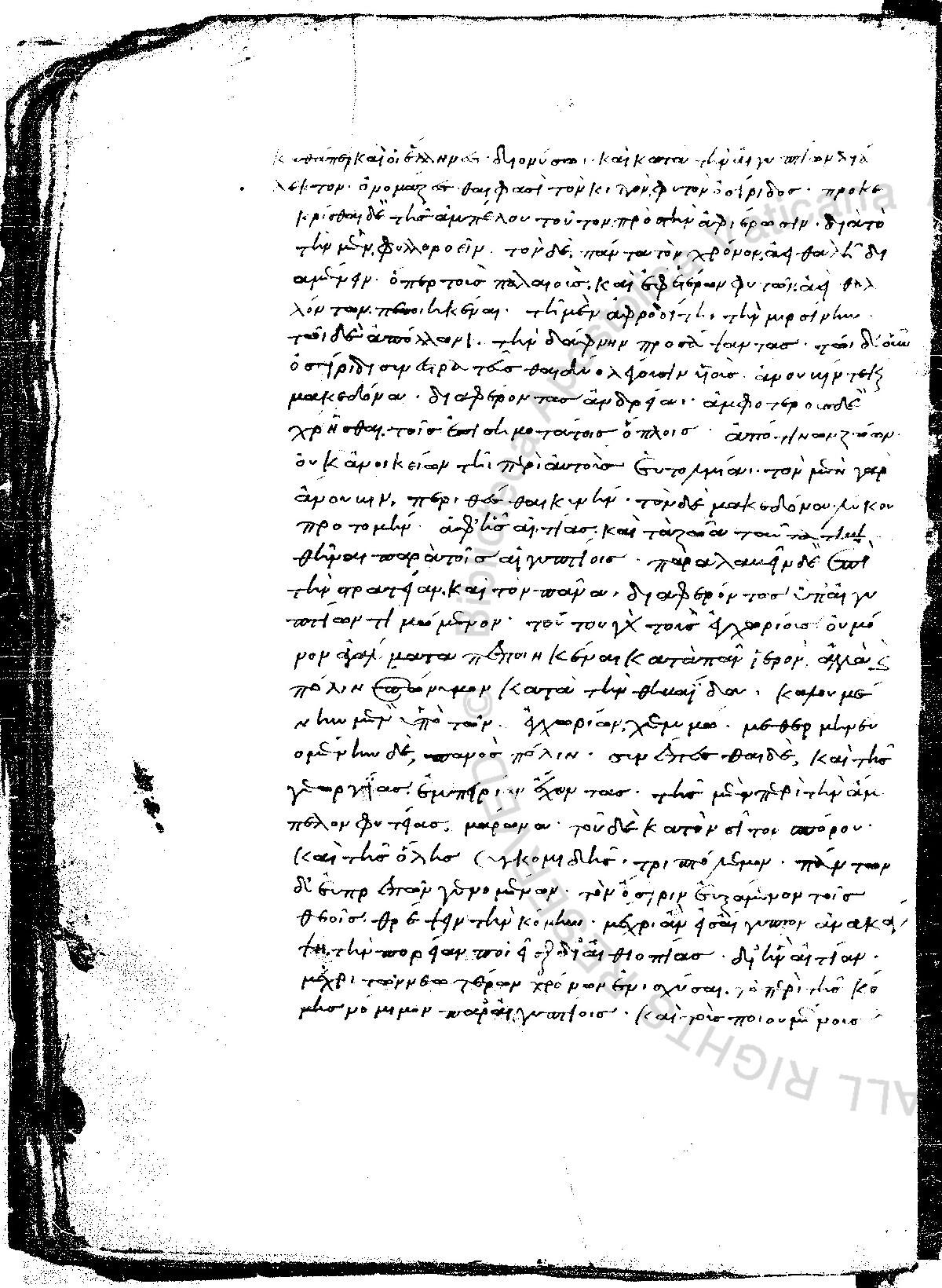
1.18 runs over 2 pages: DigiVatLib image 0018, left page; DigiVatLib image 0018, right page. DigiVatLib image 0018, left page: begins 'καθάπερ καὶ οἱ Ἕλληνες Διονύσῳ. καὶ κατὰ τὴν Αἰγυπτίων μὲν διάλεκτον' (1.17.4-5); ends 'τὸ περὶ τῆς κόμης νόμιμον παρ’ Αἰγυπτίοις, καὶ τοὺς ποιουμένους' (1.18.3). DigiVatLib image 0018, right page: begins 'τὰς ἀποδημίας μέχρι τῆς εἰς οἶκον ἀνακομιδῆς κομοτροφεῖν' (1.18.3); ends 'τὸν δ’ Ἡρακλέα, μεγαλεπίβολον ὄντα ... τό τε γενόμενον ἔκρηγμα ταχέως' (1.19.2). Checked on the images. Viewer: https://digi.vatlib.it/view/MSS_Vat.gr.130/0018
1τῷ δʼ οὖν Ὀσίριδι συνεστρατεῦσθαι δύο λέγουσιν υἱοὺς Ἄνουβίν τε καὶ Μακεδόνα, διαφέροντας ἀνδρείᾳ. ἀμφοτέρους δὲ χρήσασθαι τοῖς ἐπισημοτάτοις ὅπλοις ἀπό τινων ζῴων οὐκ ἀνοικείων τῇ περὶ αὐτοὺς εὐτολμίᾳ· τὸν μὲν γὰρ Ἄνουβιν περιθέσθαι κυνῆν, τὸν δὲ Μακεδόνα λύκου προτομήν· ἀφʼ ἧς αἰτίας καὶ τὰ ζῷα ταῦτα τιμηθῆναι παρὰ τοῖς Αἰγυπτίοις. 2παραλαβεῖν δʼ ἐπὶ τὴν στρατείαν καὶ τὸν Πᾶνα, διαφερόντως ὑπὸ τῶν Αἰγυπτίων τιμώμενον· τούτῳ γὰρ τοὺς ἐγχωρίους οὐ μόνον ἀγάλματα πεποιηκέναι κατὰ πᾶν ἱερόν, ἀλλὰ καὶ πόλιν ἐπώνυμον κατὰ τὴν Θηβαΐδα, καλουμένην μὲν ὑπὸ τῶν ἐγχωρίων Χεμμώ, μεθερμηνευομένην δὲ Πανὸς πόλιν. συνέπεσθαι δὲ καὶ τῆς γεωργίας ἐμπειρίαν ἔχοντας, τῆς μὲν περὶ τὴν ἄμπελον φυτείας Μάρωνα, τοῦ δὲ κατὰ τὸν σῖτον σπόρου καὶ τῆς ὅλης συγκομιδῆς Τριπτόλεμον. 3πάντων δʼ εὐτρεπῶν γενομένων τὸν Ὄσιριν, εὐξάμενον τοῖς θεοῖς θρέψειν τὴν κόμην μέχρι ἂν εἰς Αἴγυπτον ἀνακάμψῃ, τὴν πορείαν ποιεῖσθαι διʼ Αἰθιοπίας· διʼ ἣν αἰτίαν μέχρι τῶν νεωτέρων χρόνων ἐνισχῦσαι τὸ περὶ τῆς κόμης νόμιμον παρʼ Αἰγυπτίοις, καὶ τοὺς ποιουμένους τὰς ἀποδημίας μέχρι τῆς εἰς οἶκον ἀνακομιδῆς κομοτροφεῖν. 4ὄντι δʼ αὐτῷ περὶ τὴν Αἰθιοπίαν ἀχθῆναι λέγουσι πρὸς αὐτὸν τὸ τῶν Σατύρων γένος, οὕς φασιν ἐπὶ τῆς ὀσφύος ἔχειν κόμας. εἶναι γὰρ τὸν Ὄσιριν φιλογέλωτά τε καὶ χαίροντα μουσικῇ καὶ χοροῖς· διὸ καὶ περιάγεσθαι πλῆθος μουσουργῶν, ἐν οἷς παρθένους ἐννέα δυναμένας ᾅδειν καὶ κατὰ τὰ ἄλλα πεπαιδευμένας, τὰς παρὰ τοῖς Ἕλλησιν ὀνομαζομένας Μούσας· τούτων δʼ ἡγεῖσθαι τὸν Ἀπόλλωνα λέγουσιν, ἀφʼ οὗ καὶ Μουσηγέτην αὐτὸν ὠνομάσθαι. 5τούς τε Σατύρους πρὸς ὄρχησιν καὶ μελῳδίαν καὶ πᾶσαν ἄνεσιν καὶ παιδιὰν ὄντας εὐθέτους παραληφθῆναι πρὸς τὴν στρατείαν· οὐ γὰρ πολεμικὸν εἶναι τὸν Ὄσιριν οὐδὲ παρατάξεις συνίστασθαι καὶ κινδύνους, ἅτε παντὸς ἔθνους ὡς θεὸν ἀποδεχομένου διὰ τὰς εὐεργεσίας. 6κατὰ δὲ τὴν Αἰθιοπίαν διδάξαντα τοὺς ἀνθρώπους τὰ περὶ τὴν γεωργίαν καὶ πόλεις ἀξιολόγους κτίσαντα καταλιπεῖν τοὺς ἐπιμελησομένους τῆς χώρας καὶ φόρους πραξομένους.
1Now Osiris was accompanied on his campaign, as the Egyptian account goes, by his two sons Anubis and Macedon, who were distinguished for their valour. Both of them carried the most notable accoutrements of war, taken from certain animals whose character was not unlike the boldness of the men, Anubis wearing a dog's skin and Macedon the fore-parts of a wolf; and it is for this reason that these animals are held in honour among the Egyptians. 2He also took Pan along on his campaign, who is held in special honour by the Egyptians; for the inhabitants of the land have not only set up statues of him at every temple but have also named a city after him in the Thebaid, called by the natives Chemmo, which when translated means City of Pan. In his company were also men who were experienced in agriculture, such as Maron in the cultivation of the vine, and Triptolemus in the sowing of grain and in every step in the harvesting of it. 3And when all his preparations had been completed Osiris made a vow to the gods that he would let his hair grow until his return to Egypt and then made his way through Ethiopia; and this is the reason why this custom with regard to their hair was observed among the Egyptians until recent times, and why those who journeyed abroad let their hair grow until their return home. 4While he was in Ethiopia, their account continues, the Satyr people were brought to him, who, they say, have hair upon their loins. For Osiris was laughter-loving and fond of music and the dance; consequently he took with him a multitude of musicians, among whom were nine maidens who could sing and were trained in the other arts, these maidens being those who among the Greeks are called the Muses; and their leader (hegetes), as the account goes, was Apollo, who was for that reason also given the name Musegetes. 5As for the Satyrs, they were taken along on the campaign because they were proficient in dancing and singing and every kind of relaxation and pastime; for Osiris was not warlike, nor did he have to organize pitched battles or engagements, since every people received him as a god because of his benefactions. 6In Ethiopia he instructed the inhabitants in agriculture and founded some notable cities, and then left behind him men to govern the country and collect the tribute.
Where on the image
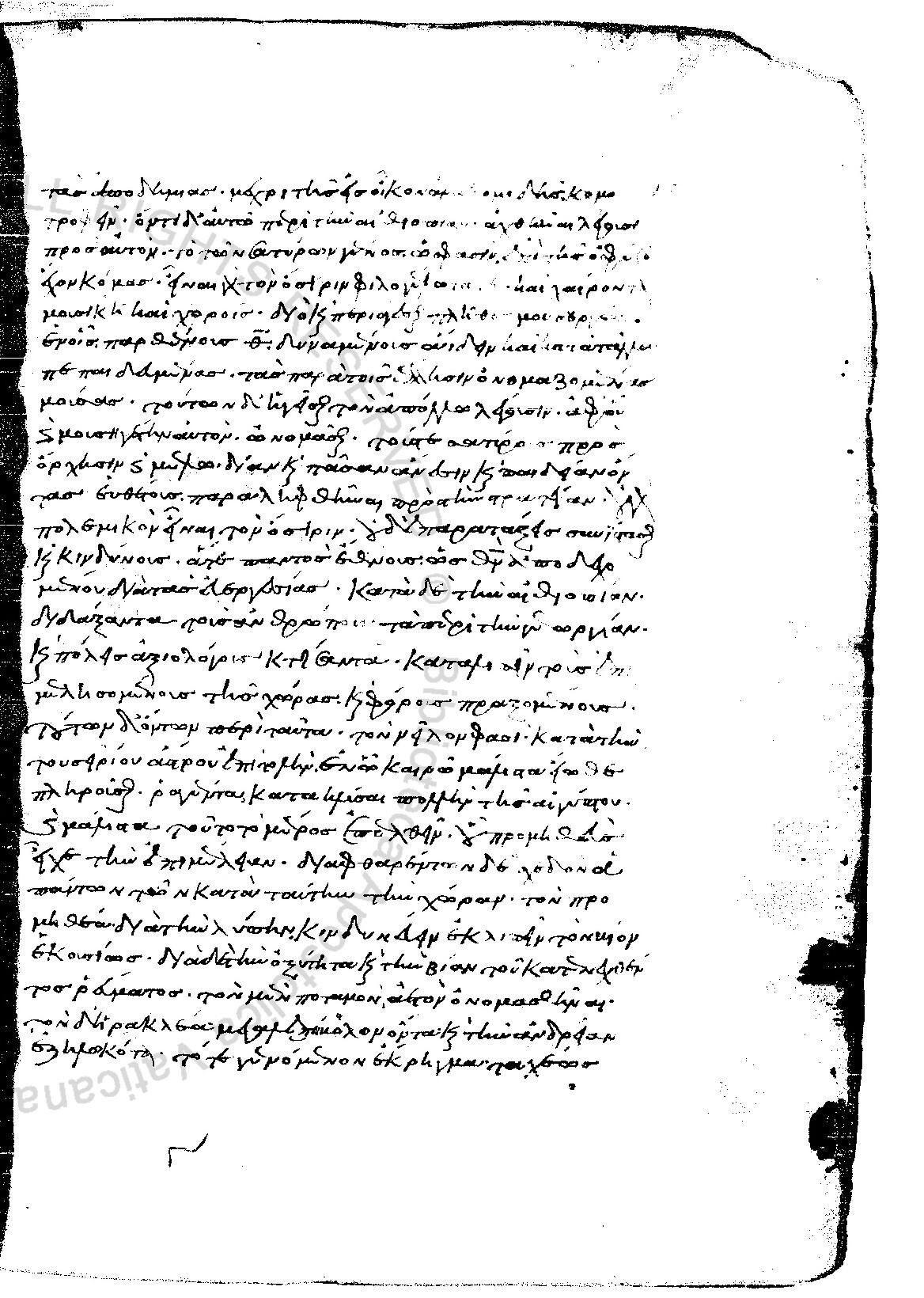
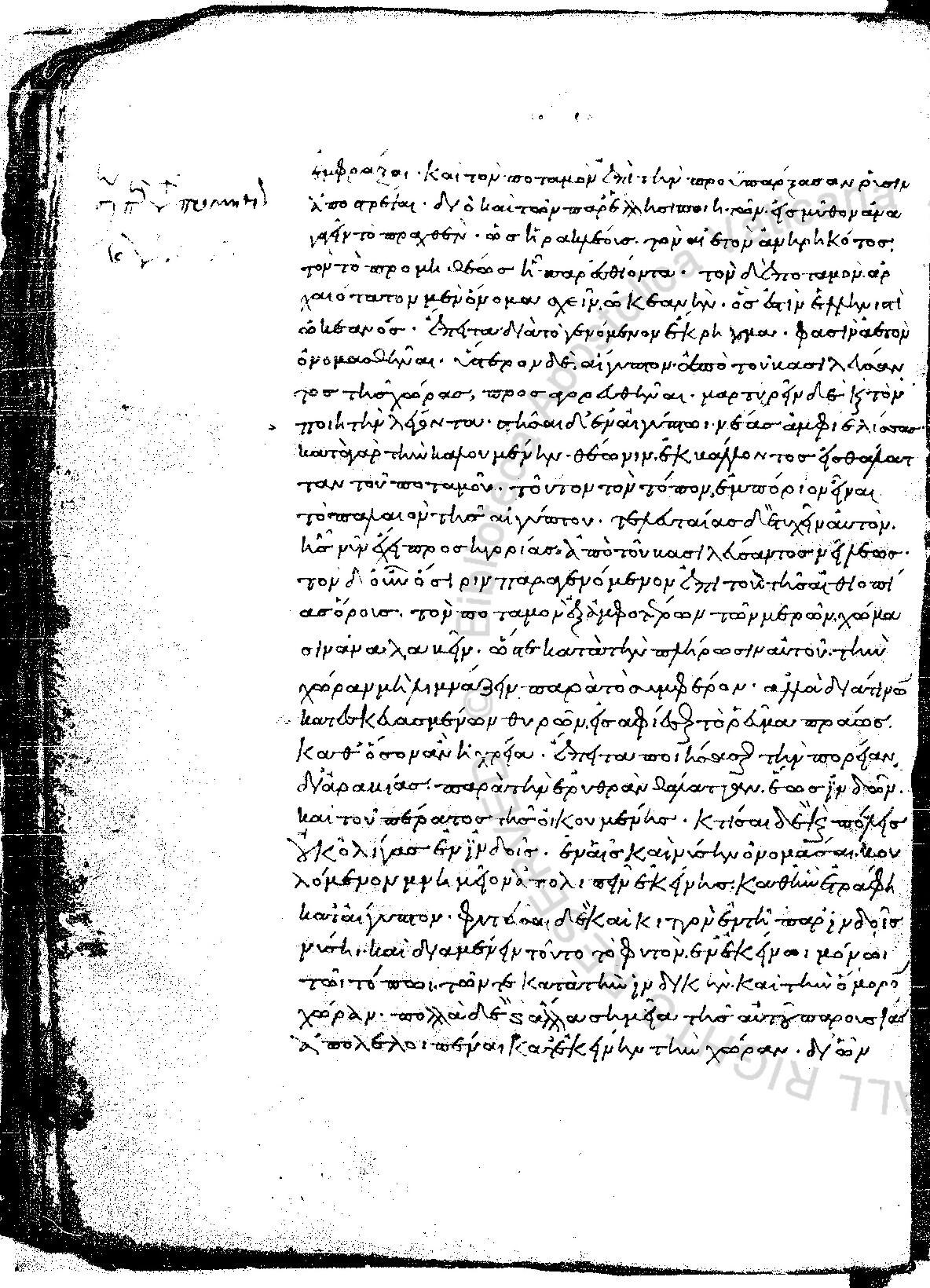
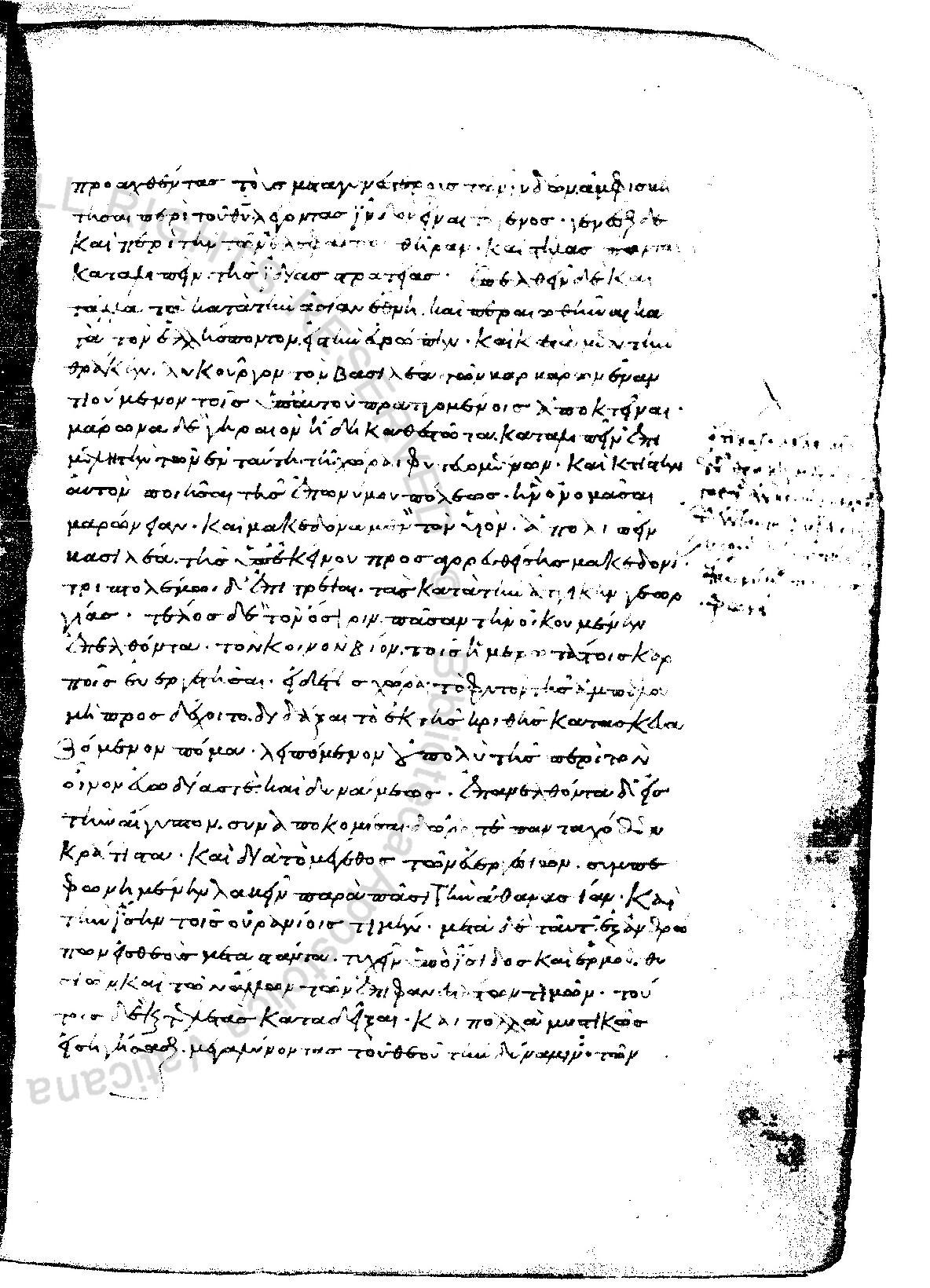
1.19 runs over 3 pages: DigiVatLib image 0018, right page; DigiVatLib image 0019, left page; DigiVatLib image 0019, right page. DigiVatLib image 0018, right page: begins 'τὰς ἀποδημίας μέχρι τῆς εἰς οἶκον ἀνακομιδῆς κομοτροφεῖν' (1.18.3); ends 'τὸν δ’ Ἡρακλέα, μεγαλεπίβολον ὄντα ... τό τε γενόμενον ἔκρηγμα ταχέως' (1.19.2). DigiVatLib image 0019, left page: begins 'ἐμφράξαι καὶ τὸν ποταμὸν ἐπὶ τὴν προϋπάρξασαν ῥύσιν ἀποστρέψαι' (1.19.2); ends 'πολλὰ δὲ καὶ ἄλλα σημεῖα τῆς ἑαυτοῦ παρουσίας ἀπολελοιπέναι κατ’ ἐκείνην τὴν χώραν, δι’ ὧν' (1.19.8). DigiVatLib image 0019, right page: begins 'προαχθέντας τοὺς μεταγενεστέρους τῶν Ἰνδῶν ἀμφισβητῆσαι' (1.19.8); 1.20 begins at the end of the second line 'γενέσθαι δὲ'; ends 'μεγαλύνοντας τοῦ θεοῦ τὴν δύναμιν. τῶν' (1.20.6, with the first word of 1.21). Checked on the images. Viewer: https://digi.vatlib.it/view/MSS_Vat.gr.130/0018
1τούτων δʼ ὄντων περὶ ταῦτα, τὸν Νεῖλόν φασι κατὰ τὴν τοῦ σειρίου ἄστρου ἐπιτολήν, ἐν ᾧ καιρῷ μάλιστα εἴωθε πληροῦσθαι, ῥαγέντα κατακλύσαι πολλὴν τῆς Αἰγύπτου, καὶ μάλιστα τοῦτο τὸ μέρος ἐπελθεῖν οὗ Προμηθεὺς εἶχε τὴν ἐπιμέλειαν· διαφθαρέντων δὲ σχεδὸν ἁπάντων τῶν κατὰ ταύτην τὴν χώραν τὸν Προμηθέα διὰ τὴν λύπην κινδυνεύειν ἐκλιπεῖν τὸν βίον ἑκουσίως. 2διὰ δὲ τὴν ὀξύτητα καὶ τὴν βίαν τοῦ κατενεχθέντος ῥεύματος τὸν μὲν ποταμὸν Ἀετὸν ὀνομασθῆναι, τὸν δʼ Ἡρακλέα, μεγαλεπίβολον ὄντα καὶ τὴν ἀνδρείαν ἐζηλωκότα, τό τε γενόμενον ἔκρηγμα ταχέως ἐμφράξαι καὶ τὸν ποταμὸν ἐπὶ τὴν προϋπάρξασαν ῥύσιν ἀποστρέψαι. 3διὸ καὶ τῶν παρʼ Ἕλλησι ποιητῶν τινας εἰς μῦθον ἀγαγεῖν τὸ πραχθέν, ὡς Ἡρακλέους τὸν ἀετὸν ἀνῃρηκότος τὸν τὸ τοῦ Προμηθέως ἧπαρ ἐσθίοντα. 4τὸν δὲ ποταμὸν ἀρχαιότατον μὲν ὄνομα σχεῖν Ὠκεάνην, ὅς ἐστιν ἑλληνιστὶ Ὠκεανός· ἔπειτα διὰ τὸ γενόμενον ἔκρηγμά φασιν Ἀετὸν ὀνομασθῆναι, ὕστερον δʼ Αἴγυπτον ἀπὸ τοῦ βασιλεύσαντος τῆς χώρας προσαγορευθῆναι· μαρτυρεῖν δὲ καὶ τὸν ποιητὴν λέγοντα στῆσα δʼ ἐν Αἰγύπτῳ ποταμῷ νέας ἀμφιελίσσας. κατὰ γὰρ τὴν καλουμένην Θῶνιν ἐμβάλλοντος εἰς θάλατταν τοῦ ποταμοῦ, τοῦτον τὸν τόπον ἐμπόριον εἶναι τὸ παλαιὸν τῆς Αἰγύπτου· τελευταίας δὲ τυχεῖν αὐτὸν ἧς νῦν ἔχει προσηγορίας ἀπὸ τοῦ βασιλεύσαντος Νειλέως. 5τὸν δʼ οὖν Ὄσιριν παραγενόμενον ἐπὶ τοὺς τῆς Αἰθιοπίας ὅρους τὸν ποταμὸν ἐξ ἀμφοτέρων τῶν μερῶν χώμασιν ἀναλαβεῖν, ὥστε κατὰ τὴν πλήρωσιν αὐτοῦ τὴν χώραν μὴ λιμνάζειν παρὰ τὸ συμφέρον, ἀλλὰ διά τινων κατεσκευασμένων θυρῶν εἰσαφίεσθαι τὸ ῥεῦμα πρᾴως καθʼ ὅσον ἂν ᾖ χρεία. 6ἔπειτα ποιήσασθαι τὴν πορείαν διʼ Ἀραβίας παρὰ τὴν Ἐρυθρὰν θάλατταν ἕως Ἰνδῶν καὶ τοῦ πέρατος τῆς οἰκουμένης. 7κτίσαι δὲ καὶ πόλεις οὐκ ὀλίγας ἐν Ἰνδοῖς, ἐν αἷς καὶ Νῦσαν ὀνομάσαι, βουλόμενον μνημεῖον ἀπολιπεῖν ἐκείνης καθʼ ἣν ἐτράφη κατʼ Αἴγυπτον. φυτεῦσαι δὲ καὶ κιττὸν ἐν τῇ παρʼ Ἰνδοῖς Νύσῃ, καὶ διαμένειν τοῦτο τὸ φυτὸν ἐν ἐκείνῳ μόνῳ τῷ τόπῳ τῶν τε κατὰ τὴν Ἰνδικὴν καὶ τὴν ὅμορον χώραν. 8πολλὰ δὲ καὶ ἄλλα σημεῖα τῆς ἑαυτοῦ παρουσίας ἀπολελοιπέναι κατʼ ἐκείνην τὴν χώραν, διʼ ὧν προαχθέντας τοὺς μεταγενεστέρους τῶν Ἰνδῶν ἀμφισβητῆσαι τοῦ θεοῦ, λέγοντας Ἰνδὸν εἶναι τὸ γένος.
1While Osiris and his army were thus employed, the Nile, they say, at the time of the rising of Sirius, which is the season when the river is usually at flood, breaking out of its banks inundated a large section of Egypt and covered especially that part where Prometheus was governor; and since practically everything in this district was destroyed, Prometheus was so grieved that he was on the point of quitting life wilfully. 2Because its water sweeps down so swiftly and with such violence the river was given the name Aëtus; but Heracles, being ever intent upon great enterprises and eager for the reputation of a manly spirit, speedily stopped the flood at its breach and turned the river back into its former course. 3Consequently certain of the Greek poets worked the incident into a myth, to the effect that Heracles had killed the eagle which was devouring the liver of Prometheus. 4The river in the earliest period bore the name Oceanê, which in Greek is Oceanus; then because of this flood, they say, it was called Aëtus, and still later it was known as Aegyptus after a former king of the land. And the poet also adds his testimony to this when he writes: On the river Aegyptus my curvéd ships I stayed. For it is at Thonis, as it is called, which in early times was the trading-port of Egypt, that the river empties into the sea. Its last name and that which the river now bears it received from the former king Nileus. 5Now when Osiris arrived at the borders of Ethiopia, he curbed the river by dikes on both banks, so that at flood-time it might not form stagnant pools over the land to its detriment, but that the flood-water might be let upon the countryside, in a gentle flow as it might be needed, through gates which he had built. 6After this he continued his march through Arabia along the shore of the Red Sea as far as India and the limits of the inhabited world. 7He also founded not a few cities in India, one of which he named Nysa, wishing to leave there a memorial of that city in Egypt where he had been reared. He also planted ivy in the Indian Nysa, and throughout India and those countries which border upon it the plant to this day is still to be found only in this region. 8And many other signs of his stay he left in that country, which have led the Indians of a later time to lay claim to the god and say that he was by birth a native of India.
Where on the image
1.20 is on DigiVatLib image 0019, right page. DigiVatLib image 0019, right page: begins 'προαχθέντας τοὺς μεταγενεστέρους τῶν Ἰνδῶν ἀμφισβητῆσαι' (1.19.8); 1.20 begins at the end of the second line 'γενέσθαι δὲ'; ends 'μεγαλύνοντας τοῦ θεοῦ τὴν δύναμιν. τῶν' (1.20.6, with the first word of 1.21). Checked on the images. Viewer: https://digi.vatlib.it/view/MSS_Vat.gr.130/0019
1γενέσθαι δὲ καὶ περὶ τὴν τῶν ἐλεφάντων θήραν, καὶ στήλας πανταχοῦ καταλιπεῖν τῆς ἰδίας στρατείας. ἐπελθεῖν δὲ καὶ τἄλλα τὰ κατὰ τὴν Ἀσίαν ἔθνη, καὶ περαιωθῆναι κατὰ τὸν Ἑλλήσποντον εἰς τὴν Εὐρώπην. 2καὶ κατὰ μὲν τὴν Θρᾴκην Λυκοῦργον τὸν βασιλέα τῶν βαρβάρων ἐναντιούμενον τοῖς ὑπʼ αὐτοῦ πραττομένοις ἀποκτεῖναι, Μάρωνα δὲ γηραιὸν ἤδη καθεστῶτα καταλιπεῖν ἐπιμελητὴν τῶν ἐν ταύτῃ τῇ χώρᾳ φυτευομένων, καὶ κτίστην αὐτὸν ποιῆσαι τῆς ἐπωνύμου πόλεως, ἣν ὀνομάσαι Μαρώνειαν. 3καὶ Μακεδόνα μὲν τὸν υἱὸν ἀπολιπεῖν βασιλέα τῆς ἀπʼ ἐκείνου προσαγορευθείσης Μακεδονίας, Τριπτολέμῳ δʼ ἐπιτρέψαι τὰς κατὰ τὴν Ἀττικὴν γεωργίας. τέλος δὲ τὸν Ὄσιριν πᾶσαν τὴν οἰκουμένην ἐπελθόντα τὸν κοινὸν βίον τοῖς ἡμερωτάτοις καρποῖς εὐεργετῆσαι. 4εἰ δέ τις χώρα τὸ φυτὸν τῆς ἀμπέλου μὴ προσδέχοιτο, διδάξαι τὸ ἐκ τῆς κριθῆς κατασκευαζόμενον πόμα, λειπόμενον οὐ πολὺ τῆς περὶ τὸν οἶνον εὐωδίας τε καὶ δυνάμεως. 5ἐπανελθόντα δʼ εἰς τὴν Αἴγυπτον συναποκομίσαι δῶρά τε πανταχόθεν τὰ κράτιστα καὶ διὰ τὸ μέγεθος τῶν εὐεργεσιῶν συμπεφωνημένην λαβεῖν παρὰ πᾶσι τὴν ἀθανασίαν καὶ τὴν ἴσην τοῖς οὐρανίοις τιμήν. 6μετὰ δὲ ταῦτʼ ἐξ ἀνθρώπων εἰς θεοὺς μεταστάντα τυχεῖν ὑπὸ Ἴσιδος καὶ Ἑρμοῦ θυσιῶν καὶ τῶν ἄλλων τῶν ἐπιφανεστάτων τιμῶν. τούτους δὲ καὶ τελετὰς καταδεῖξαι καὶ πολλὰ μυστικῶς εἰσηγήσασθαι, μεγαλύνοντας τοῦ θεοῦ τὴν δύναμιν.
1Osiris also took an interest in hunting elephants, and everywhere left behind him inscribed pillars telling of his campaign. And he visited all the other nations of Asia as well and crossed into Europe at the Hellespont. 2In Thrace he slew Lycurgus, the king of the barbarians, who opposed his undertakings, and Maron, who was now old, he left there to supervise the culture of the plants which he introduced into that land and caused him to found a city to bear his name, which he called Maroneia. 3Macedon his son, moreover, he left as king of Macedonia, which was named after him, while to Triptolemus he assigned the care of agriculture in Attica. Finally, Osiris in this way visited all the inhabited world and advanced community life by the introduction of the fruits which are most easily cultivated. 4And if any country did not admit of the growing of vine he introduced the drink prepared from barley, which is little inferior to wine in aroma and strength. 5On his return to Egypt he brought with him the very greatest presents from every quarter and by reason of the magnitude of his benefactions received the gift of immortality with the approval of all men and honour equal to that offered to the gods of heaven. 6After this he passed from the midst of men into the company of the gods and received from Isis and Hermes sacrifices and every other highest honour. These also instituted rites for him and introduced many things of a mystic nature, magnifying in this way the power of the god.
Notes
- Greek: F. Vogel's Teubner edition (1888), from the Perseus Digital Library, checked against the printed volume. Square brackets are Vogel's marks for words he took to be later additions. The manuscript's wording differs from the edition in places; the Greek shown is the edition, not a transcription of the page.
- English: C. H. Oldfather's Loeb translation (1933), as printed in that year; his footnotes are omitted. Oldfather's section numbers follow Vogel's, with occasional small differences in where a section begins.
Cite
Sources
- Source: Vat. gr. 130 (10th c.) via DigiVatLib IIIF + Vogel Greek (Perseus, checked against the 1888 printing) + Oldfather English (Loeb 1933, public domain) (holding institution)
- Critical edition: F. Vogel, Teubner 1888 (Perseus, checked against the printing)
← previous · → next · v cycle view · l back to library