Hávamál
Introduction
Hávamál from the Poetic Edda, preserved in Codex Regius (GKS 2365 4to, c. 1270). 11 sections across 10 distinct manuscript pages.
How was this verified? (Provenance)
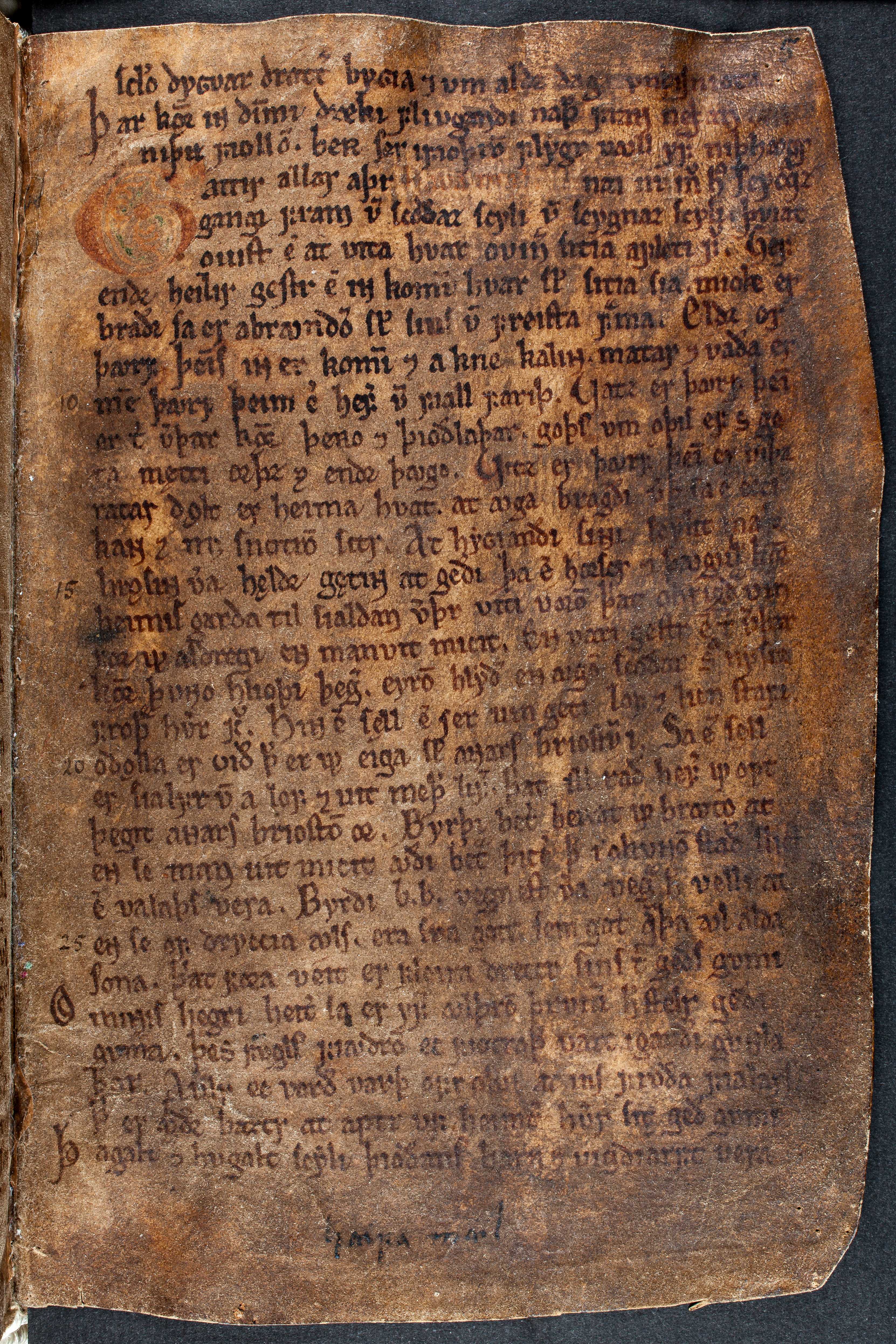
1Gáttir allar, / áðr gangi fram, / um skoðask skyli, / um skyggnast skyli, / því at óvíst er at vita, / hvar óvinir / sitja á fleti fyrir. 2Gefendr heilir! / Gestr er inn kominn, / hvar skal sitja sjá? / Mjök er bráðr, / sá er á bröndum skal / síns of freista frama. 3Elds er þörf, / þeims inn er kominn / ok á kné kalinn; / matar ok váða / er manni þörf, / þeim er hefr um fjall farit. 4Vatns er þörf, / þeim er til verðar kemr, / þerru ok þjóðlaðar, / góðs of æðis, / ef sér geta mætti, / orðs ok endrþögu. 5Vits er þörf, / þeim er víða ratar; / dælt er heima hvat; / at augabragði verðr, / sá er ekki kann / ok með snotrum sitr. 6At hyggjandi sinni / skyli-t maðr hræsinn vera, / heldr gætinn at geði; / þá er horskr ok þögull / kemr heimisgarða til, / sjaldan verðr víti vörum, / því at óbrigðra vin / fær maðr aldregi / en mannvit mikit. 7Inn vari gestr, / er til verðar kemr, / þunnu hljóði þegir, / eyrum hlýðir, / en augum skoðar; / svá nýsisk fróðra hverr fyrir. 8Hinn er sæll, / er sér of getr / lof ok líknstafi; / ódælla er við þat, / er maðr eiga skal / annars brjóstum í. 9Sá er sæll, / er sjalfr of á / lof ok vit, meðan lifir; / því at ill ráð / hefr maðr oft þegit / annars brjóstum ór. 10Byrði betri / berr-at maðr brautu at / en sé mannvit mikit; / auði betra / þykkir þat í ókunnum stað; / slíkt er válaðs vera. 11Byrði betri / berr-at maðr brautu at / en sé mannvit mikit; / vegnest verra / vegr-a hann velli at / en sé ofdrykkja öls. 12Er-a svá gótt / sem gótt kveða / öl alda sona, / því at færa veit, / er fleira drekkr / síns til geðs gumi. 13Óminnishegri heitir / sá er yfir ölðrum þrumir, / hann stelr geði guma; / þess fugls fjöðrum / ek fjötraðr vark / í garði Gunnlaðar. 14Ölr ek varð, / varð ofrölvi / at ins fróða Fjalars; / því er ölðr bazt, / at aftr of heimtir / hverr sitt geð gumi. 15Þagalt ok hugalt / skyli þjóðans barn / ok vígdjarft vera; / glaðr ok reifr / skyli gumna hverr, / unz sinn bíðr bana. 16Ósnjallr maðr / hyggsk munu ey lifa, / ef hann við víg varask; / en elli gefr / hánum engi frið, / þótt hánum geirar gefi.
1All door-ways, before going forward, should be looked to; for difficult it is to know where foes may sit within a dwelling. 2Givers, hail! A guest is come in: where shall he sit? In much haste is he, who on the ways has to try his luck. 3Fire is needful to him who is come in, and whose knees are frozen; food and raiment a man requires, wheo'er the fell has travelled. 4Water to him is needful who for refection comes, a towel and hospitable invitation, a good reception; if he can get it, discourse and answer. 5Wit is needful to him who travels far: at home all is easy. A laughing-stock is he who nothing knows, and with the instructed sits. 6Of his understanding no one should be proud, but rather in conduct cautious. When the prudent and taciturn come to a dwelling, harm seldom befalls the cautious; for a firmer friend no man ever gets than great sagacity. 7A wary guest, who to refection comes, keeps a cautious silence, with his ears listens, and with his eyes observes: so explores every prudent man. 8He is happy, who for himself obtains fame and kind words: less sure is that which a man must have in another's breast. 9He is happy, who in himself possesses fame and wit while living; for bad counsels have oft been received from another's breast. 10A better burthen no man bears on the way than much good sense; that is thought better than riches in a strange place; such is the recourse of the indigent. 11A worse provision on the way he cannot carry than too much beer-bibbing; so good is not, as it is said, beer for the sons of men. 12A worse provision no man can take from table than too much beer-bibbing: for the more he drinks the less control he has of his own mind. 13Oblivion's heron 'tis called that over potations hovers; he steals the minds of men. With this bird's pinions I was fettered in Gunnlods dwelling. 14Drunk I was, I was over-drunk, at that cunning Fialar's. It's the best drunkenness, when every one after it regains his reason. 15Taciturn and prudent, and in war daring, should a king's children be; joyous and liberal every one should be until his hour of death. 16A cowardly man thinks he will ever live, if warfare he avoids; but old age will give him no peace, though spears may spare him.
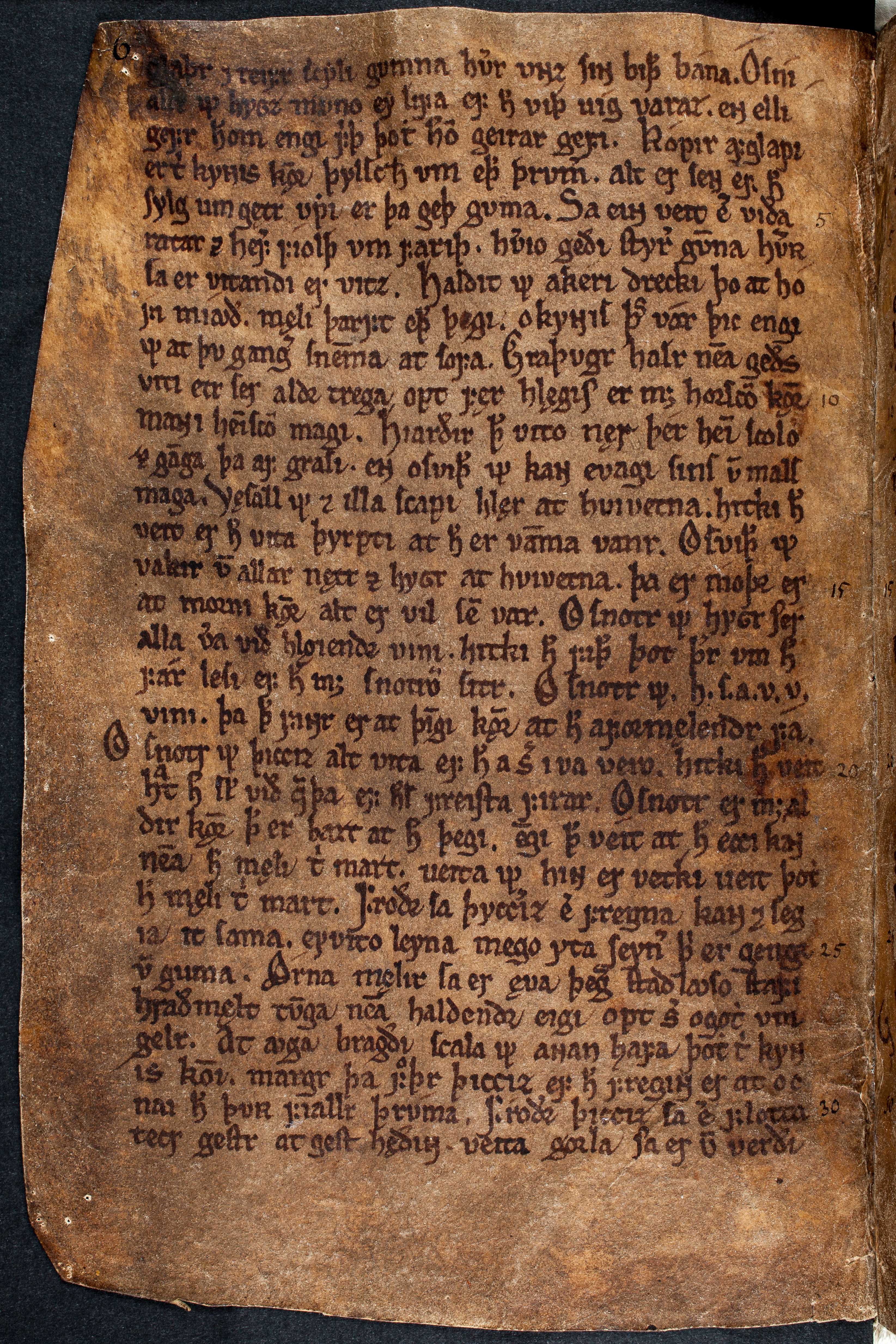
17Kópir afglapi / er til kynnis kemr, / þylsk hann um eða þrumir; / allt er senn, / ef hann sylg of getr, / uppi er þá geð guma. 18Sá einn veit / er víða ratar / ok hefr fjölð of farit, / hverju geði / stýrir gumna hverr, / sá er vitandi er vits. 19Haldi-t maðr á keri, / drekki þó at hófi mjöð, / mæli þarft eða þegi, / ókynnis þess / vár þik engi maðr, / at þú gangir snemma at sofa. 20Gráðugr halr, / nema geðs viti, / etr sér aldrtrega; / oft fær hlægis, / er með horskum kemr, / manni heimskum magi. 21Hjarðir þat vitu, / nær þær heim skulu, / ok ganga þá af grasi; / en ósviðr maðr / kann ævagi / síns of mál maga. 22Vesall maðr / ok illa skapi / hlær at hvívetna; / hittki hann veit, / er hann vita þyrfti, / at hann er-a vamma vanr. 23Ósviðr maðr / vakir um allar nætr / ok hyggr at hvívetna; / þá er móðr, / er at morgni kemr, / allt er víl sem var. 24Ósnotr maðr / hyggr sér alla vera / viðhlæjendr vini; / hittki hann fiðr, / þótt þeir um hann fár lesi, / ef hann með snotrum sitr. 25Ósnotr maðr / hyggr sér alla vera / viðhlæjendr vini; / þá þat finnr, / er at þingi kemr, / at hann á formælendr fáa. 26Ósnotr maðr / þykkisk allt vita, / ef hann á sér í vá veru; / hittki hann veit, / hvat hann skal við kveða, / ef hans freista firar. 27Ósnotr maðr, / er með aldir kemr, / þat er bazt, at hann þegi; / engi þat veit, / at hann ekki kann, / nema hann mæli til margt; / veit-a maðr, / hinn er vettki veit, / þótt hann mæli til margt. 28Fróðr sá þykkisk, / er fregna kann / ok segja it sama; / eyvitu leyna / megu ýta synir, / því er gengr um guma. 29Ærna mælir, / sá er æva þegir, / staðlausu stafi; / hraðmælt tunga, / nema haldendr eigi, / oft sér ógótt of gelr. 30At augabragði / skal-a maðr annan hafa, / þótt til kynnis komi; / margr þá fróðr þykkisk, / ef hann freginn er-at / ok nái hann þurrfjallr þruma. 31Fróðr þykkisk, / sá er flótta tekr, / gestr at gest hæðinn; / veit-a görla, / sá er of verði glissir, / þótt hann með grömum glami. 32Gumnar margir / erusk gagnhollir, / en at virði vrekask; / aldar róg / þat mun æ vera, / órir gestr við gest.
17A fool gapes when to a house he comes, to himself mutters or is silent; but all at once, if he gets drink, then is the man's mind displayed. 18He alone knows who wanders wide, and has much experienced, by what disposition each man is ruled, who common sense possesses. 19Let a man hold the cup, yet of the mead drink moderately, speak sensibly or be silent. As of a fault no man will admonish thee, if thou goest betimes to sleep. 20A greedy man, if he be not moderate, eats to his mortal sorrow. Oftentimes his belly draws laughter on a silly man, who among the prudent comes. 21Cattle know when to go home, and then from grazing cease; but a foolish man never knows his stomach's measure. 22A miserable man, and ill-conditioned, sneers at every thing: one thing he knows not, which he ought to know, that he is not free from faults. 23A foolish man is all night awake, pondering over everything; he then grows tired; and when morning comes, all is lament as before. 24A foolish man thinks all who on him smile to be his friends; he feels it not, although they speak ill of him, when he sits among the clever. 25A foolish man thinks all who speak him fair to be his friends; but he will find, if into court he comes, that he has few advocates. 26A foolish man thinks he knows everything if placed in unexpected difficulty; but he knows not what to answer, if to the test he is put. 27A foolish man, who among people comes, had best be silent; for no one knows that he knows nothing, unless he talks too much. He who previously knew nothing will still know nothing, talk he ever so much. 28He thinks himself wise, who can ask questions and converse also; conceal his ignorance no one can, because it circulates among men. 29He utters too many futile words who is never silent; a garrulous tongue, if it be not checked, sings often to its own harm. 30For a gazing-stock no man shall have another, although he come a stranger to his house. Many a one thinks himself wise, if he is not questioned, and can sit in a dry habit. 31Clever thinks himself the guest who jeers a guest, if he takes to flight. Knows it not certainly he who prates at meat, whether he babbles among foes. 32Many men are mutually well-disposed, yet at table will torment each other. That strife will ever be; guest will guest irritate.
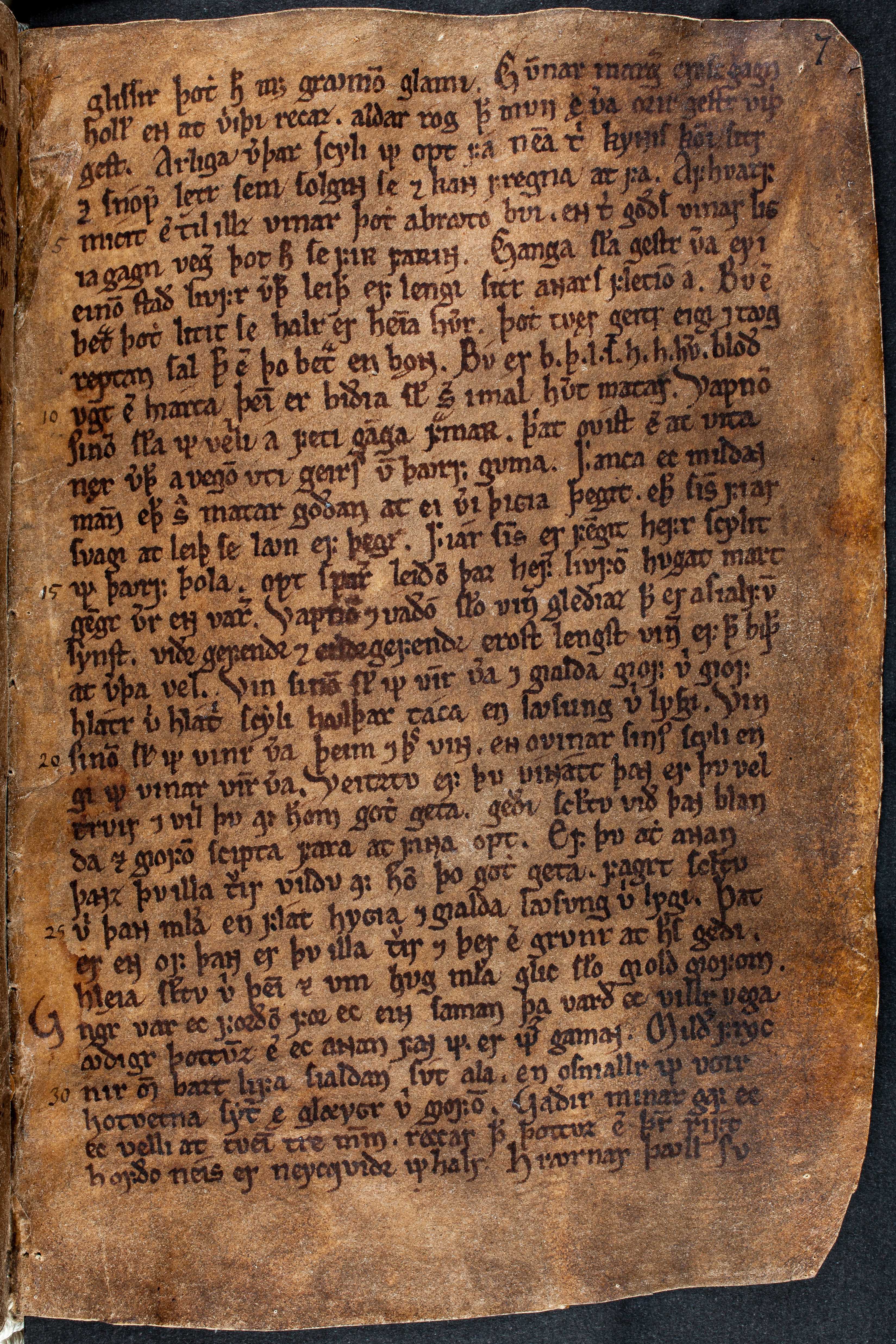
33Árliga verðar / skyli maðr oft fáa, / nema til kynnis komi: / str ok snópir, / lætr sem solginn sé / ok kann fregna at fáu. 34Afhvarf mikit / er til ills vinar, / þótt á brautu búi, / en til góðs vinar / liggja gagnvegir, / þótt hann sé firr farinn. 35Ganga skal, / skal-a gestr vera / ey í einum stað; / ljúfr verðr leiðr, / ef lengi sitr / annars fletjum á. 36Bú er betra, / þótt lítit sé, / halr er heima hverr; / þótt tvær geitr eigi / ok taugreftan sal, / þat er þó betra en bæn. 37Bú er betra, / þótt lítit sé, / halr er heima hverr; / blóðugt er hjarta, / þeim er biðja skal / sér í mál hvert matar. 38Vápnum sínum / skal-a maðr velli á / feti ganga framar, / því at óvíst er at vita, / nær verðr á vegum úti / geirs of þörf guma. 39Fannk-a ek mildan mann / eða svá matar góðan, / at væri-t þiggja þegit, / eða síns féar / svági [glöggvan], / at leið sé laun, ef þægi. 40Féar síns, / er fengit hefr, / skyli-t maðr þörf þola; / oft sparir leiðum, / þats hefr ljúfum hugat; / margt gengr verr en varir. 41Vápnum ok váðum / skulu vinir gleðjask; / þat er á sjalfum sýnst; / viðrgefendr ok endrgefendr / erusk lengst vinir, / ef þat bíðr at verða vel. 42Vin sínum / skal maðr vinr vera / ok gjalda gjöf við gjöf; / hlátr við hlátri / skyli hölðar taka / en lausung við lygi. 43Vin sínum / skal maðr vinr vera, / þeim ok þess vin; / en óvinar síns / skyli engi maðr / vinar vinr vera. 44Veiztu, ef þú vin átt, / þann er þú vel trúir, / ok vill þú af hánum gótt geta, / geði skaltu við þann blanda / ok gjöfum skipta, / fara at finna oft. 45Ef þú átt annan, / þanns þú illa trúir, / vildu af hánum þó gótt geta, / fagrt skaltu við þann mæla / en flátt hyggja / ok gjalda lausung við lygi. 46Það er enn of þann / er þú illa trúir / ok þér er grunr at hans geði, / hlæja skaltu við þeim / ok um hug mæla; / glík skulu gjöld gjöfum. 47Ungr var ek forðum, / fór ek einn saman, / þá varð ek villr vega; / auðigr þóttumk, / er ek annan fann, / maðr er manns gaman. 48Mildir, fræknir / menn bazt lifa, / sjaldan sút ala; / en ósnjallr maðr / uggir hotvetna, / sýtir æ glöggr við gjöfum.
33Early meals a man should often take, unless to a friend's house he goes; else he will sit and mope, will seem half-famished, and can of few things inquire. 34Long is and indirect the way to a bad friend's, though by the road he dwell; but to a good friend's the paths lie direct, though he be far away. 35A guest should depart, not always stay in one place. The welcome becomes unwelcome, if he too long continues in another's house. 36One's own house is best, small though it be; at home is every one his own master. Though he but two goats possess, and a straw-thatched cot, even that is better than begging. 37One's own house is best, small though it be, at home is every one his own master. Bleeding at heart is he, who has to ask for food at every meal-tide. 38Leaving in the field his arms, let no man go a foot's length forward; for it is hard to know when on the way a man may need his weapon. 39I have never found a man so bountiful, or so hospitable that he refused a present; or of his property so liberal that he scorned a recompense. 40Of the property which he has gained no man should suffer need; for the hated oft is spared what for the dear was destined. Much goes worse than is expected. 41With arms and vestments friends should each other gladden, those which are in themselves most sightly. Givers and requiters are longest friends, if all [else] goes well. 42To his friend a man should be a friend, and gifts with gifts requite. Laughter with laughter men should receive, but leasing with lying. 43To his friend a man should be a friend; to him and to his friend; but of his foe no man shall the friend's friend be. 44Know, if thou hast a friend whom thou fully trustest, and from whom thou woulds't good derive, thou shouldst blend thy mind with his, and gifts exchange, and often go to see him. 45If thou hast another, whom thou little trustest, yet wouldst good from him derive, thou shouldst speak him fair, but think craftily, and leasing pay with lying. 46But of him yet further, whom thou little trustest, and thou suspectest his affection; before him thou shouldst laugh, and contrary to thy thoughts speak: requital should the gift resemble. 47I was once young, I was journeying alone, and lost my way; rich I thought myself, when I met another. Man is the joy of man. 48Liberal and brave men live best, they seldom cherish sorrow; but a base-minded man dreads everything; the niggardly is uneasy even at gifts.
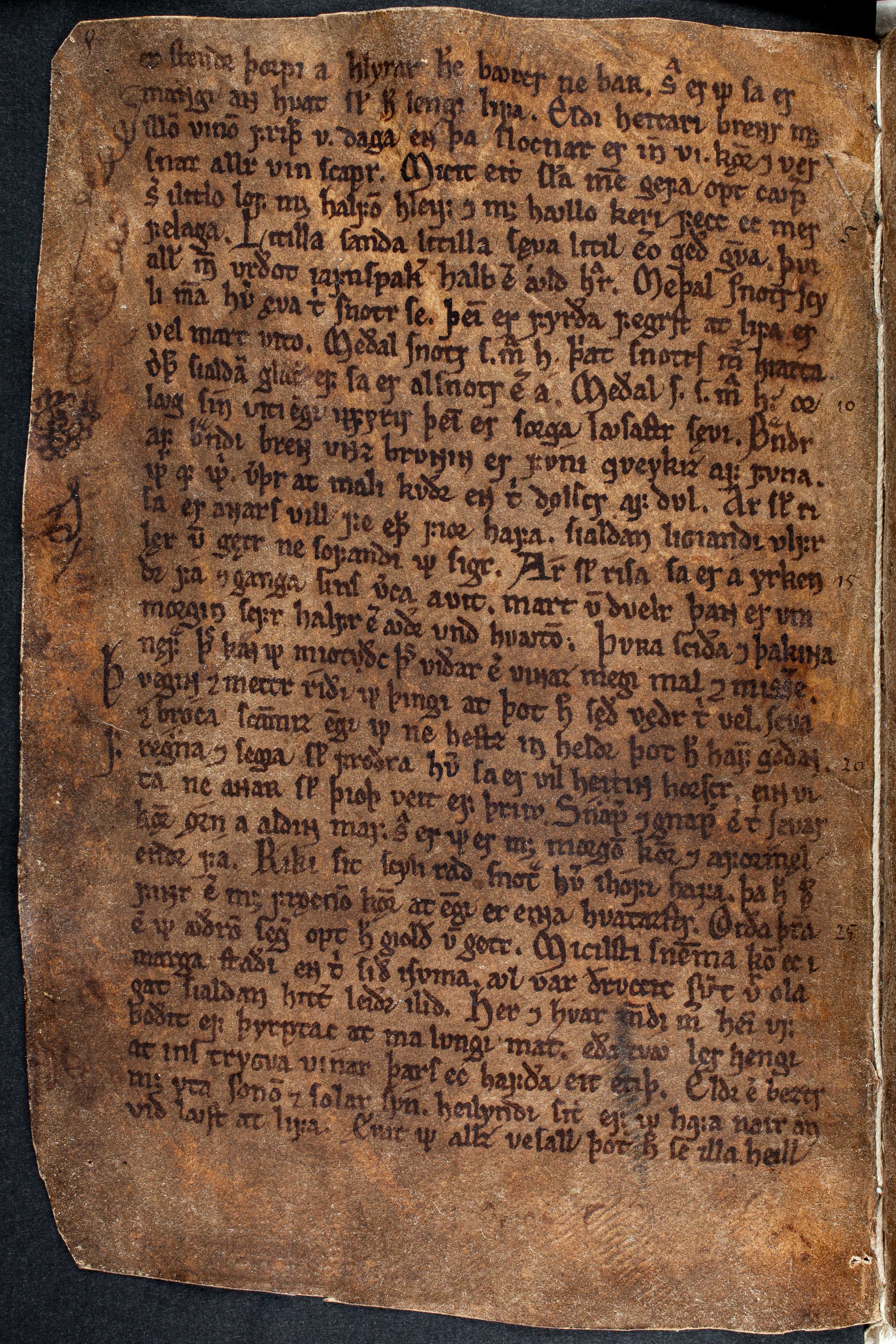
49Váðir mínar / gaf ek velli at / tveim trémönnum; / rekkar þat þóttusk, / er þeir rift höfðu; / neiss er nökkviðr halr. 50Hrörnar þöll, / sú er stendr þorpi á, / hlýr-at henni börkr né barr; / svá er maðr, / sá er manngi ann. / Hvat skal hann lengi lifa? 51Eldi heitari / brennr með illum vinum / friðr fimm daga, / en þá sloknar, / er inn sétti kemr, / ok versnar allr vinskapr. 52Mikit eitt / skal-a manni gefa; / oft kaupir sér í litlu lof, / með halfum hleif / ok með höllu keri / fekk ek mér félaga. 53Lítilla sanda / lítilla sæva / lítil eru geð guma; / því allir menn / urðu-t jafnspakir; / half er öld hvar. 54Meðalsnotr / skyli manna hverr; / æva til snotr sé; / þeim er fyrða / fegrst at lifa, / er vel margt vitu. 55Meðalsnotr / skyli manna hverr, / æva til snotr sé; / því at snotrs manns hjarta / verðr sjaldan glatt, / ef sá er alsnotr, er á. 56Meðalsnotr / skyli manna hverr, / æva til snotr sé; / örlög sín / viti engi fyrir, / þeim er sorgalausastr sefi. 57Brandr af brandi / brenn, unz brunninn er, / funi kveikisk af funa; / maðr af manni / verðr at máli kuðr, / en til dælskr af dul. 58Ár skal rísa, / sá er annars vill / fé eða fjör hafa; / sjaldan liggjandi ulfr / lær of getr / né sofandi maðr sigr. 59Ár skal rísa, / sá er á yrkjendr fáa, / ok ganga síns verka á vit; / margt of dvelr, / þann er um morgin sefr, / hálfr er auðr und hvötum. 60Þurra skíða / ok þakinna næfra, / þess kann maðr mjöt, / þess viðar, / er vinnask megi / mál ok misseri. 61Þveginn ok mettr / ríði maðr þingi at, / þótt hann sé-t væddr til vel; / skúa ok bróka / skammisk engi maðr / né hests in heldr, / þótt hann hafi-t góðan 62Snapir ok gnapir, / er til sævar kemr, / örn á aldinn mar; / svá er maðr, / er með mörgum kemr / ok á formælendr fáa. 63Fregna ok segja / skal fróðra hverr, / sá er vill heitinn horskr; / einn vita / né annarr skal, / þjóð veit, ef þrír ro. 64Ríki sitt / skyli ráðsnotra / hverr í hófi hafa; / þá hann þat finnr, / er með fræknum kemr / at engi er einna hvatastr.
49My garments in a field I gave away to two wooden men: heroes they seemed to be, when they got cloaks: exposed to insult is a naked man. 50A tree withers that on a hill-top stands; protects it neither bark nor leaves: such is the man whom no one favours: why should he live long? 51Hotter than fire love for five days burns between false friends; but is quenched when the sixth day comes, and-friendship is all impaired. 52Something great is not [always] to be given, praise is often for a trifle bought. With half a loaf and a tilted vessel I got myself a comrade. 53Little are the sand-grains, little the wits, little the minds of [some] men; for all men are not wise alike: men are everywhere by halves. 54Moderately wise should each one be, but never over-wise: of those men the lives are fairest, who know much well. 55Moderately wise should each one be, but never over-wise; for a wise man's heart is seldom glad, if he is all-wise who owns it. 56Moderately wise should each one be, but never over-wise. His destiny let know no man beforehand; his mind will be freest from' care. 57Brand burns from brand until it is burnt out; fire is from fire quickened. Man to' man becomes known by speech, but a fool by his bashful silence. 58He should early rise, who another's property or wife desires to have. Seldom a sluggish wolf gets prey, or a sleeping man victory. 59Early should rise he who has few workers, and go his work to see to; greatly is he retarded who sleeps the morn away. Wealth half depends on energy. 60Of dry planks and roof-shingles a man knows the measure; of the fire-wood that may suffice, both measure and time. 61Washed and refected let a man ride to the Thing, although his garments be not too good; of his shoes and breeches let no one be ashamed, nor of his horse, although he have not a good one. 62Inquire and impart should every man of sense, who will be accounted sage. Let one only know, a second may not; if three, all the world knows. 63Gasps and gapes, when to the sea he comes, the eagle over old ocean; so is a man, who among many comes, and has few advocates. 64His power should every sagacious man use with discretion; for he will find, when among the bold he comes, that no one alone is doughtiest.
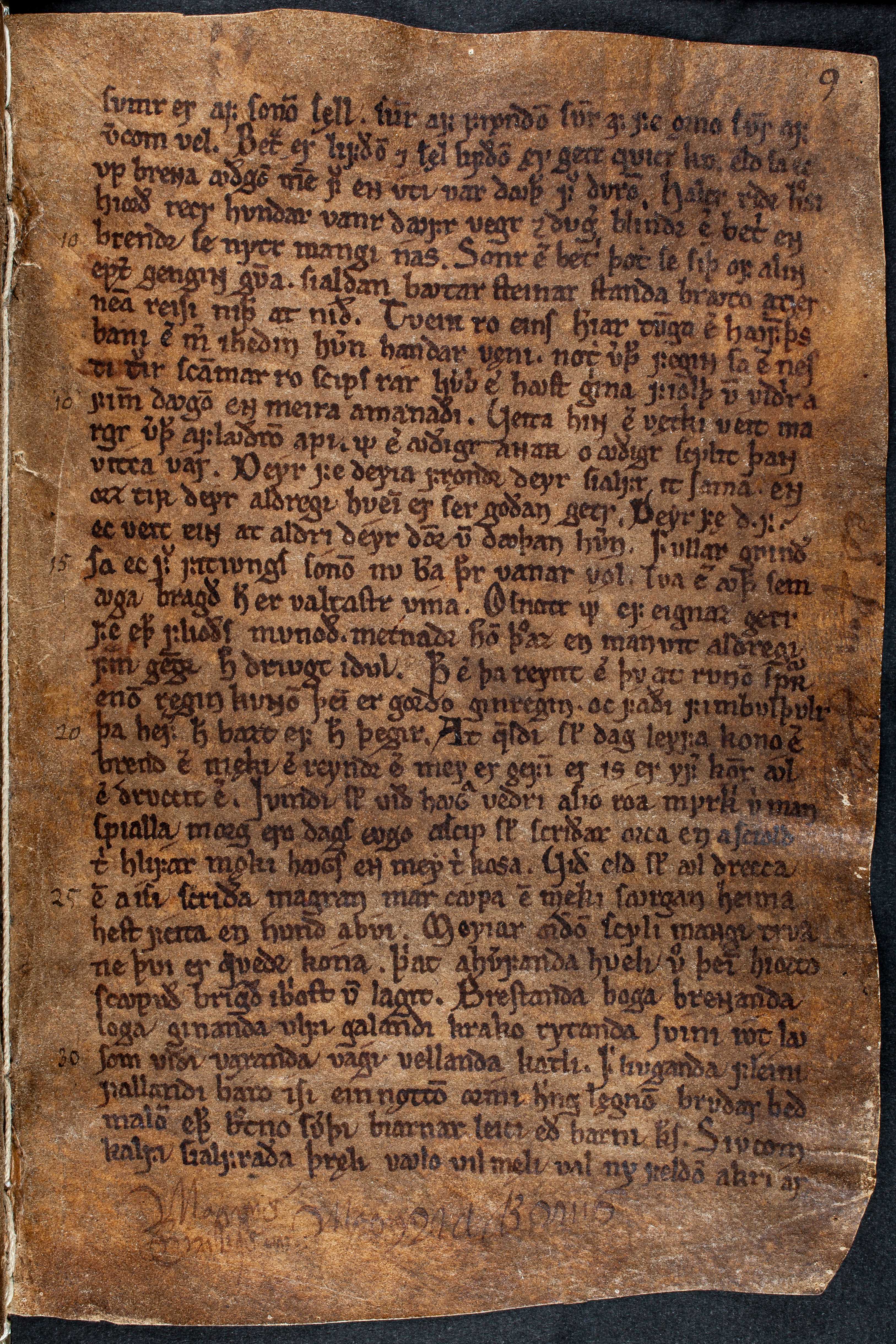
65-- -- -- -- / orða þeira, / er maðr öðrum segir / oft hann gjöld of getr. 66Mikilsti snemma / kom ek í marga staði, / en til síð í suma; / öl var drukkit, / sumt var ólagat, / sjaldan hittir leiðr í líð. 67Hér ok hvar / myndi mér heim of boðit, / ef þyrftak at málungi mat, / eða tvau lær hengi / at ins tryggva vinar, / þars ek hafða eitt etit. 68Eldr er beztr / með ýta sonum / ok sólar sýn, / heilyndi sitt, / ef maðr hafa náir, / án við löst at lifa. 69Er-at maðr alls vesall, / þótt hann sé illa heill; / sumr er af sonum sæll, / sumr af frændum, / sumr af fé ærnu, / sumr af verkum vel. 70Betra er lifðum / en sé ólifðum, / ey getr kvikr kú; / eld sá ek upp brenna / auðgum manni fyrir, / en úti var dauðr fyr durum. 71Haltr ríðr hrossi, / hjörð rekr handar vanr, / daufr vegr ok dugir, / blindr er betri / en brenndr séi, / nýtr manngi nás. 72Sonr er betri, / þótt sé síð of alinn / eftir genginn guma; / sjaldan bautarsteinar / standa brautu nær, / nema reisi niðr at nið. 73Tveir ro eins herjar, / tunga er höfuðs bani; / er mér í heðin hvern / handar væni. 74Nótt verðr feginn / sá er nesti trúir, / skammar ro skips ráar; / hverf er haustgríma; / fjölð of viðrir / á fimm dögum / en meira á mánuði. 75Veit-a hinn, / er vettki veit, / margr verðr af aurum api; / maðr er auðigr, / annar óauðigr, / skyli-t þann vítka váar. 76Deyr fé, / deyja frændr, / deyr sjalfr it sama, / en orðstírr / deyr aldregi, / hveim er sér góðan getr. 77Deyr fé, / deyja frændr, / deyr sjalfr it sama, / ek veit einn, / at aldrei deyr: / dómr um dauðan hvern. 78Fullar grindr / sá ek fyr Fitjungs sonum, / nú bera þeir vánar völ; / svá er auðr / sem augabragð, / hann er valtastr vina. 79Ósnotr maðr, / ef eignask getr / fé eða fljóðs munuð, / metnaðr hánum þróask, / en mannvit aldregi, / fram gengr hann drjúgt í dul. 80Þat er þá reynt, / er þú að rúnum spyrr / inum reginkunnum, / þeim er gerðu ginnregin / ok fáði fimbulþulr, / þá hefir hann bazt, ef hann þegir.
65Circumspect and reserved every man should be, and wary in trusting friends. Of the words that a man says to another he often pays the penalty. 66Much too early I came to many places, but too late to others: the beer was drunk, or not ready: the disliked seldom hits the moment. 67Here and there I should have been invited, if I a meal had needed; or two hams had hung, at that true friend's, where of one I had eaten. 68Fire is best among the sons of men, and the sight of the sun, if his health a man can have, with a life free from vice. 69No man lacks everything, although his health be bad: one in his sons is happy, one in his kin, one in abundant wealth, one in his good works. 70It is better to live, even to live miserably; a living man can always get a cow. I saw fire consume the rich man's property, and death stood without his door. 71The halt can ride on horseback, the one-handed drive cattle; the deaf fight and be useful: to be blind is better than to be burnt no one gets good from a corpse. 72A son is better, even if born late, after his father's departure. Gravestones seldom stand by the way-side unless raised by a kinsman to a kinsman. 73Two are adversaries: the tongue is the bane of the head: under every cloak I expect a hand. * * * 74At night is joyful he who is sure of travelling entertainment. [A ship's yards are short.] Variable is an autumn night. Many are the weather's changes in five days, but more in a month. 75He [only] knows not who knows nothing, that many a one apes another. One man is rich, another poor: let him not be thought blameworthy. 76Cattle die, kindred die, we ourselves also die; but the fair fame never dies of him who has earned it. 77Cattle die, kindred die, we ourselves also die; but I know one thing that never dies,--judgment on each one dead. 78Full storehouses I saw at Dives' sons': now bear they the beggar's staff. Such are riches; as is the twinkling of an eye: of friends they are most fickle. 79A foolish man, if he acquires wealth or woman's love, pride grows within him, but wisdom never: he goes on more and more arrogant. 80Then 'tis made manifest, if of runes thou questionest him, those to the high ones known, which the great powers invented, and the great talker painted, that he had best hold silence.
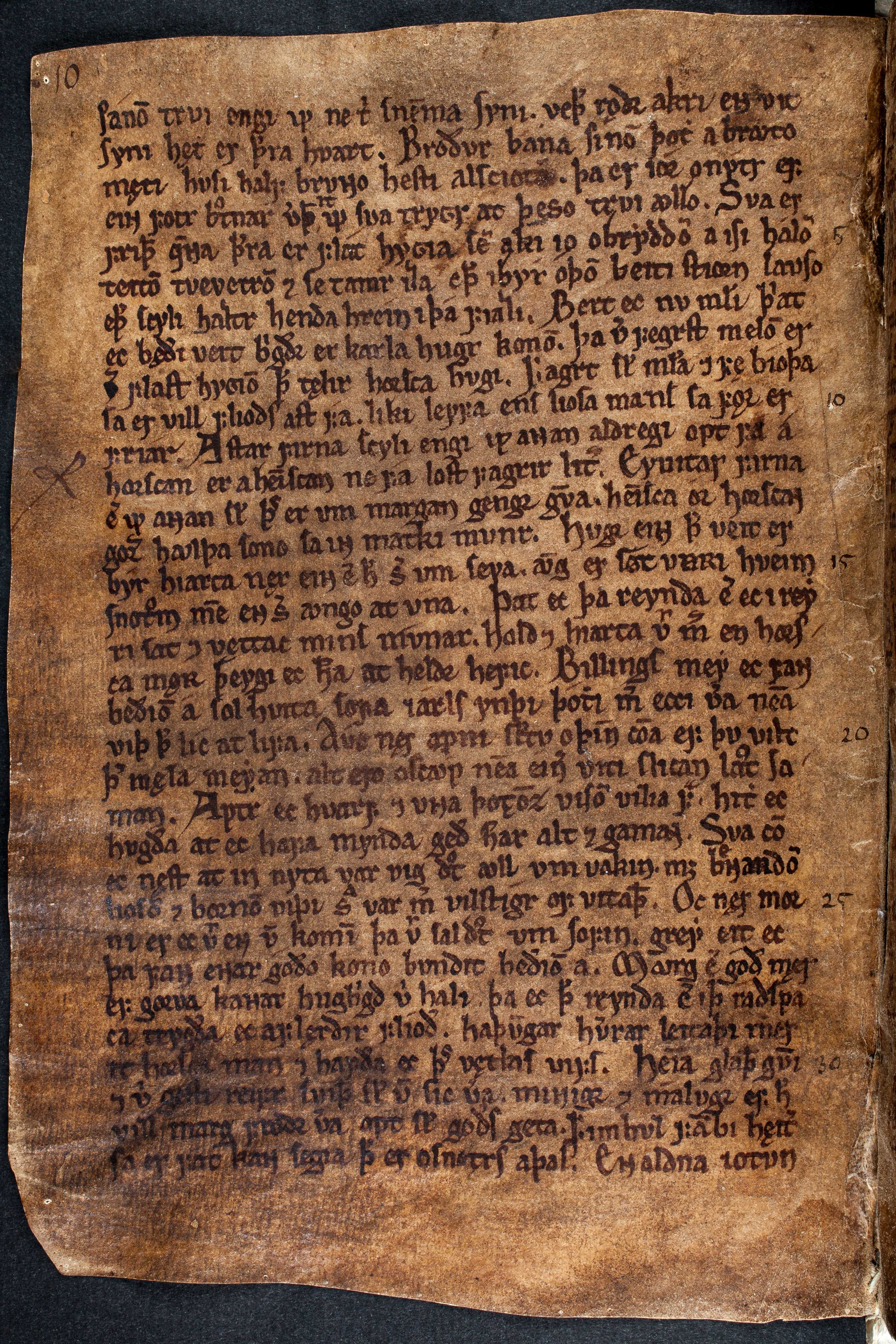
81At kveldi skal dag leyfa, / konu, er brennd er, / mæki, er reyndr er, / mey, er gefin er, / ís, er yfir kemr, / öl, er drukkit er. 82Í vindi skal við höggva, / veðri á sjó róa, / myrkri við man spjalla, / mörg eru dags augu; / á skip skal skriðar orka, / en á skjöld til hlífar, / mæki höggs, / en mey til kossa. 83Við eld skal öl drekka, / en á ísi skríða, / magran mar kaupa, / en mæki saurgan, / heima hest feita, / en hund á búi. 84Meyjar orðum / skyli manngi trúa / né því, er kveðr kona, / því at á hverfanda hvéli / váru þeim hjörtu sköpuð, / brigð í brjóst of lagið. 85Brestanda boga, / brennanda loga, / gínanda ulfi, / galandi kráku, / rýtanda svíni, / rótlausum viði, / vaxanda vági, / vellanda katli, 86Fljúganda fleini, / fallandi báru, / ísi einnættum, / ormi hringlegnum, / brúðar beðmálum / eða brotnu sverði, / bjarnar leiki / eða barni konungs. 87Sjúkum kalfi, / sjalfráða þræli, / völu vilmæli, / val nýfelldum. 88Akri ársánum / trúi engi maðr / né til snemma syni, / - veðr ræðr akri. / en vit syni; / hætt er þeira hvárt. 89Bróðurbana sínum / þótt á brautu mæti, / húsi hálfbrunnu, / hesti alskjótum, / - þá er jór ónýtr, / ef einn fótr brotnar -, / verði-t maðr svá tryggr / at þessu trúi öllu. 90Svá er friðr kvenna, / þeira er flátt hyggja, / sem aki jó óbryddum / á ísi hálum, / teitum, tvévetrum / ok sé tamr illa, / eða í byr óðum / beiti stjórnlausu, / eða skyli haltr henda / hrein í þáfjalli. 91Bert ek nú mæli, / því at ek bæði veit, / brigðr er karla hugr konum; / þá vér fegrst mælum, / er vér flást hyggjum: / þat tælir horska hugi. 92Fagrt skal mæla / ok fé bjóða, / sá er vill fljóðs ást fá, / líki leyfa / ins ljósa mans, / sá fær, er fríar. 93Ástar firna / skyli engi maðr / annan aldregi; / oft fá á horskan, / er á heimskan né fá, / lostfagrir litir. 94Eyvitar firna / er maðr annan skal, / þess er um margan gengr guma; / heimska ór horskum / gerir hölða sonu / sá inn máttki munr. 95Hugr einn þat veit, / er býr hjarta nær, / einn er hann sér of sefa; / öng er sótt verri / hveim snotrum manni / en sér engu at una. 96Þat ek þá reynda, / er ek í reyri sat, / ok vættak míns munar; / hold ok hjarta / var mér in horska mær; / þeygi ek hana at heldr hefik.
81At eve the day is to be praised, a woman after she is burnt, a sword after it is proved, a maid after she is married, ice after it has passed away, beer after it is drunk. 82In the wind one should hew wood, in a breeze row out to sea, in the dark talk with a lass: many are the eyes of day. In a ship voyages are to be made, but a shield is for protection, a sword for striking, but a damsel for a kiss. 83By the fire one should drink beer, on the ice slide; buy a horse that is lean, a sword that is rusty; feed a horse at home, but a dog at the farm. 84In a maiden's words no one should place faith, nor in what a woman says; for on a turning wheel have their hearts been formed, and guile in their breasts been laid; 85In a creaking bow, a burning flame, a yawning wolf, a chattering crow, a grunting swine, a rootless tree, a waxing wave, a boiling kettle, 86A flying dart, a falling billow, a one night's ice, a coiled serpent, a woman's bed-talk, or a broken sword, a bear's play, or a royal child, 87A sick calf, a self-willed thrall, a flattering prophetess, a corpse newly slain, [a serene sky, a laughing lord, a barking dog, and a harlot's grief]; 88An early sown field let no one trust, nor prematurely in a son: weather rules the field, and wit the son, each of which is doubtful; 89A brother's murderer, though on the high road met, a half-burnt house, an over-swift horse, (a horse is useless, if a leg be broken), no man is so confiding as to trust any of these. 90Such is the love of women, who falsehood meditate, as if one drove not rough-shod, on slippery ice, a spirited two-years old and unbroken horse; or as in a raging storm a helmless ship is beaten; or as if the halt were set to catch a reindeer in the thawing fell. 91Openly I now speak, because I both sexes know: unstable are men's minds towards women; 'tis then we speak most fair when we most falsely think: that deceives even the cautious. 92Fair shall speak, and money offer, who would obtain a woman's love. Praise the form of a fair damsel; he gets who courts her. 93At love should no one ever wonder in another: a beauteous countenance oft captivates the wise, which captivates not the foolish. 94Let no one wonder at another's folly, it is the lot of many. All-powerful desire makes of the sons of men fools even of the wise. 95The mind only knows what lies near the heart, that alone is conscious of our affections. No disease is worse to a sensible man than not to be content with himself. 96That I experienced, when in the reeds I sat, awaiting my delight. Body and soul to me was that discreet maiden: nevertheless I possess her not.
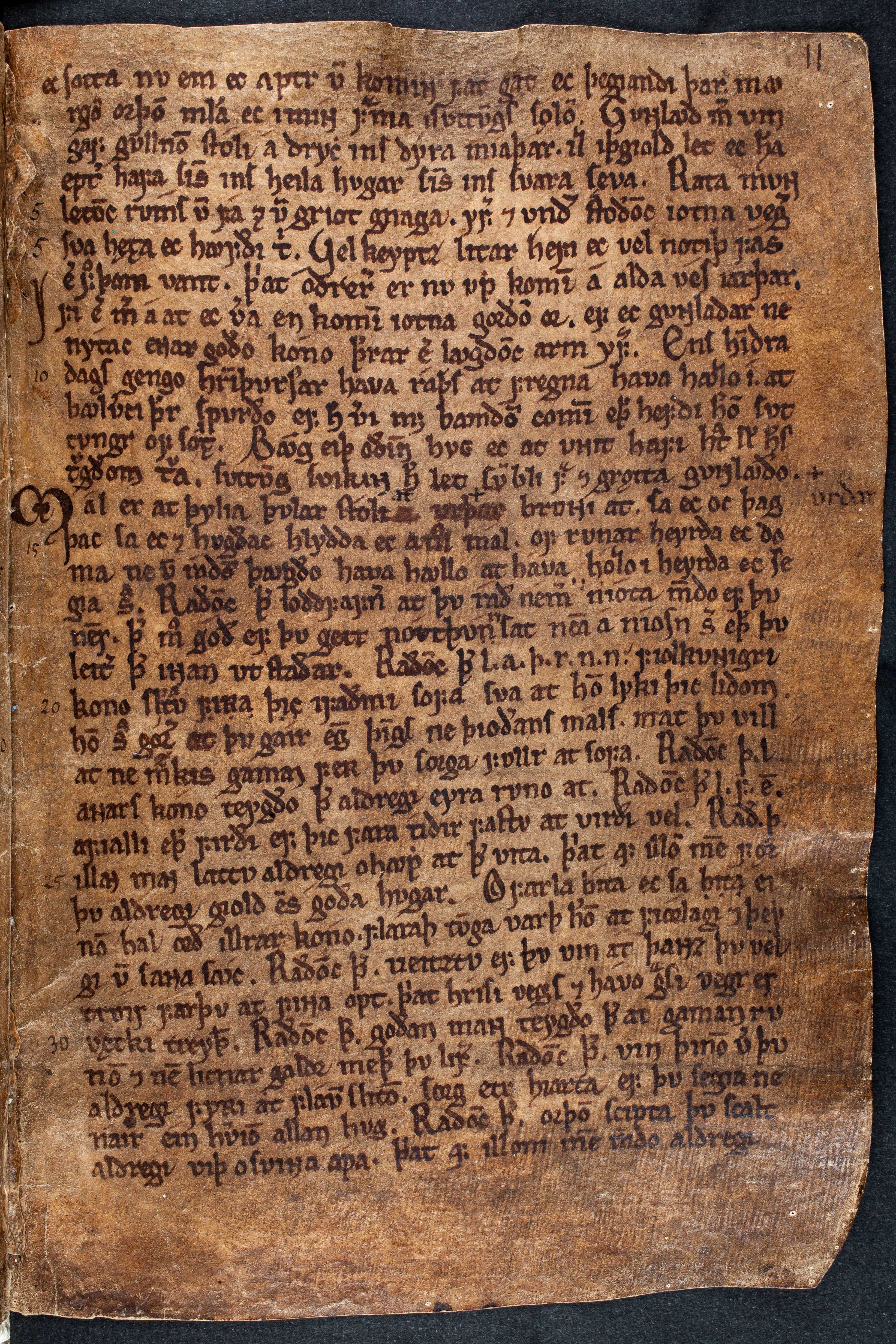
97Billings mey / ek fann beðjum á / sólhvíta sofa; / jarls ynði / þótti mér ekki vera / nema við þat lík at lifa. 98"Auk nær aftni / skaltu, Óðinn, koma, / ef þú vilt þér mæla man; / allt eru ósköp, / nema einir viti / slíkan löst saman." 99Aftr ek hvarf / ok unna þóttumk / vísum vilja frá; / hitt ek hugða, / at ek hafa mynda / geð hennar allt ok gaman. 100Svá kom ek næst, / at in nýta var / vígdrótt öll of vakin / með brennandum ljósum / ok bornum viði, / svá var mér vílstígr of vitaðr. 101Auk nær morgni, / er ek var enn of kominn, / þá var saldrótt of sofin; / grey eitt ek þá fann / innar góðu konu / bundit beðjum á. 102Mörg er góð mær, / ef görva kannar, / hugbrigð við hali; / þá ek þat reynda, / er it ráðspaka / teygða ek á flærðir fljóð; / háðungar hverrar / leitaði mér it horska man, / ok hafða ek þess vettki vífs. 103Heima glaðr gumi / ok við gesti reifr, / sviðr skal um sig vera, / minnigr ok málugr, / ef hann vill margfróðr vera, / oft skal góðs geta; / fimbulfambi heitir, / sá er fátt kann segja, / þat er ósnotrs aðal. 104Inn aldna jötun ek sótta, / nú em ek aftr of kominn: / fátt gat ek þegjandi þar; / mörgum orðum / mælta ek í minn frama / í Suttungs sölum. 105Gunnlöð mér of gaf / gullnum stóli á / drykk ins dýra mjaðar; / ill iðgjöld / lét ek hana eftir hafa / síns ins heila hugar, / síns ins svára sefa. 106Rata munn / létumk rúms of fá / ok um grjót gnaga; / yfir ok undir / stóðumk jötna vegir, / svá hætta ek höfði til. 107Vel keypts litar / hefi ek vel notit, / fás er fróðum vant, / því at Óðrerir / er nú upp kominn / á alda vés jaðar. 108Ifi er mér á, / at ek væra enn kominn / jötna görðum ór, / ef ek Gunnlaðar né nytak, / innar góðu konu, / þeirar er lögðumk arm yfir. 109Ins hindra dags / gengu hrímþursar / Háva ráðs at fregna / Háva höllu í; / at Bölverki þeir spurðu, / ef hann væri með böndum kominn / eða hefði hánum Suttungr of sóit. 110Baugeið Óðinn, / hygg ek, at unnit hafi; / hvat skal hans tryggðum trúa? / Suttung svikinn / hann lét sumbli frá / ok grætta Gunnlöðu. 111Mál er at þylja / þular stóli á / Urðarbrunni at, / sá ek ok þagðak, / sá ek ok hugðak, / hlýdda ek á manna mál; / of rúnar heyrða ek dæma, / né of ráðum þögðu / Háva höllu at, / Háva höllu í, / heyrða ek segja svá: 112Ráðumk þér, Loddfáfnir, / en þú ráð nemir, - / njóta mundu, ef þú nemr, / þér munu góð, ef þú getr -: / nótt þú rís-at / nema á njósn séir / eða þú leitir þér innan út staðar.
97Billing's lass on her couch I found, sun-bright, sleeping. A prince's joy to me seemed naught, if not with that form to live. 98"Yet nearer eve must thou, Odin, come, if thou wilt talk the maiden over; all will be disastrous, unless we alone are privy to such misdeed." 99I returned, thinking to love, at her wise desire. I thought I should obtain her whole heart and love. 100When next I came the bold warriors were all awake, with lights burning, and bearing torches: thus was the way to pleasure closed. 101But at the approach of morn, when again I came, the household all was sleeping; the good damsel's dog alone I found tied to the bed. 102Many a fair maiden, when rightly known, towards men is fickle: that I experienced, when that discreet maiden I strove to seduce: contumely of every kind that wily girl heaped upon me; nor of that damsel gained I aught. 103At home let a man be cheerful, and towards a guest liberal; of wise conduct he should be, of good memory and ready speech; if much knowledge he desires, he must often talk on good. 104Fimbulfambi he is called who' little has to say: such is the nature of the simple. 105The old Jotun I sought; now I am come back: little got I there by silence; in many words I spoke to my advantage in Suttung's halls. 106Gunnlod gave me, on her golden seat, a draught of the precious mead; a bad recompense I afterwards made her, for her whole soul, her fervent love. 107Rati's mouth I caused to make a space, and to gnaw the rock; over and under me were the Jotun's ways: thus I my head did peril. 108Of a well-assumed form I made good use: few things fail the wise; for Odhrærir is now come up to men's earthly dwellings. 109'Tis to me doubtful that I could have come from the Jotun's courts, had not Gunnlod aided me, that good damsel, over whom I laid my arm. 110On the day following came the Hrimthursar, to learn something of the High One, in the High One's hall: after Bolverk they inquired, whether he with the gods were come, or Suttung had destroyed him? 111Odin, I believe, a ring-oath gave. Who in his faith will trust? Suttung defrauded, of his drink bereft, and Gunnlod made to weep! 112Time 'tis to discourse from the preacher's chair. By the well of Urd I silent sat, I saw and meditated, I listened to men's words.
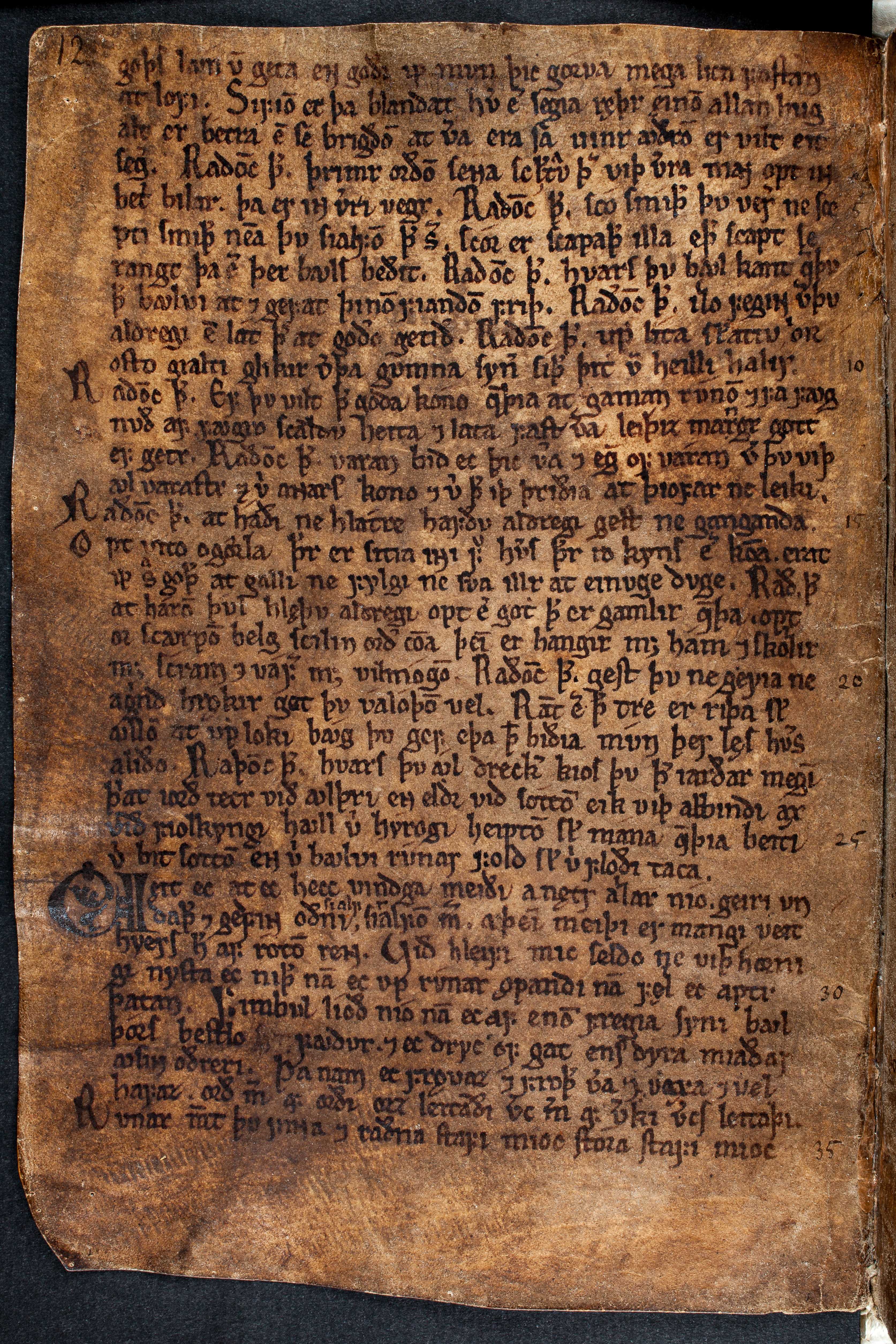
113Ráðumk þér, Loddfáfnir, / en þú ráð nemir, - / njóta mundu, ef þú nemr, / þér munu góð, ef þú getr -: / fjölkunnigri konu / skal-at-tu í faðmi sofa, / svá at hon lyki þik liðum. 114Hon svá gerir, / at þú gáir eigi / þings né þjóðans máls; / mat þú vill-at / né mannskis gaman, / ferr þú sorgafullr at sofa. 115Ráðumk þér, Loddfáfnir, / en þú ráð nemir, - / njóta mundu, ef þú nemr, / þér munu góð, ef þú getr -: / annars konu / teygðu þér aldregi / eyrarúnu at. 116Ráðumk þér, Loddfáfnir, / en þú ráð nemir, - / njóta mundu, ef þú nemr, / þér munu góð, ef þú getr -: / á fjalli eða firði, / ef þik fara tíðir, / fásktu at virði vel. 117Ráðumk þér, Loddfáfnir, / en þú ráð nemir, - / njóta mundu, ef þú nemr, / þér munu góð, ef þú getr -: / illan mann / láttu aldregi / óhöpp at þér vita, / því at af illum manni / fær þú aldregi / gjöld ins góða hugar. 118Ofarla bíta / ek sá einum hal / orð illrar konu; / fláráð tunga / varð hánum at fjörlagi / ok þeygi of sanna sök. 119Ráðumk þér, Loddfáfnir, / en þú ráð nemir, - / njóta mundu, ef þú nemr, / þér munu góð, ef þú getr -: / veistu, ef þú vin átt, / þann er þú vel trúir, / far þú at finna oft, / því at hrísi vex / ok hávu grasi / vegr, er vættki treðr. 120Ráðumk þér, Loddfáfnir, / en þú ráð nemir, - / njóta mundu, ef þú nemr, / þér munu góð, ef þú getr -: / góðan mann / teygðu þér at gamanrúnum / ok nem líknargaldr, meðan þú lifir. 121Ráðumk þér, Loddfáfnir, / en þú ráð nemir, - / njóta mundu, ef þú nemr, / þér munu góð, ef þú getr -: / vin þínum / ver þú aldregi / fyrri at flaumslitum; / sorg etr hjarta, / ef þú segja né náir / einhverjum allan hug. 122Ráðumk þér, Loddfáfnir, / en þú ráð nemir, - / njóta mundu, ef þú nemr, / þér munu góð, ef þú getr -: / orðum skipta / þú skalt aldregi / við ósvinna apa, 123Því at af illum manni / mundu aldregi / góðs laun of geta, / en góðr maðr / mun þik gerva mega / líknfastan at lofi. 124Sifjum er þá blandat, / hver er segja ræðr / einum allan hug; / allt er betra / en sé brigðum at vera; / er-a sá vinr öðrum, er vilt eitt segir. 125Ráðumk, þér Loddfáfnir, / en þú ráð nemir, - / njóta mundu, ef þú nemr, / þér munu góð, ef þú getr -: / þrimr orðum senna / skal-at-tu þér við verra mann / oft inn betri bilar, / þá er inn verri vegr. 126Ráðumk þér, Loddfáfnir, / en þú ráð nemir, - / njóta mundu, ef þú nemr, / þér munu góð, ef þú getr -: / skósmiðr þú verir / né skeftismiðr, / nema þú sjalfum þér séir: / skór er skapaðr illa / eða skaft sé rangt, / þá er þér böls beðit. 127Ráðumk þér, Loddfáfnir, / en þú ráð nemir, - / njóta mundu, ef þú nemr, / þér munu góð, ef þú getr -: / hvars þú böl kannt, / kveð þú þér bölvi at / ok gef-at þínum fjándum frið. 128Ráðumk þér, Loddfáfnir, / en þú ráð nemir, - / njóta mundu, ef þú nemr, / þér munu góð, ef þú getr -: / illu feginn / ver þú aldregi, / en lát þér at góðu getit.
113Of runes I heard discourse, and of things divine, nor of graving them were they silent, nor of sage counsels, at the High One's hall. In the High One's hall. I thus heard say: 114I counsel thee, Loddfafnir, to take advice: thou wilt profit if thou takest it. Rise not at night, unless to explore, or art compelled to go out. 115I counsel thee, Loddfafnir, to take advice, thou wilt profit if thou takest it. In an enchantress's embrace thou mayest not sleep, so that in her arms she clasp thee. 116She will be the cause that thou carest not for Thing or prince's words; food thou wilt shun and human joys; sorrowful wilt thou go to sleep. 117I counsel thee, etc. Another's wife entice thou never to secret converse. 118I counsel thee, etc. By fell or firth if thou have to travel, provide thee well with food. 119I counsel thee, etc. A bad man let thou never know thy misfortunes; for from a bad man thou never wilt obtain a return for thy good will. 120I saw mortally wound a man a wicked woman's words; a false tongue caused his death, and most unrighteously. 121I counsel thee, etc. If thou knowest thou hast a friend, whom thou well canst trust, go oft to visit him; for with brushwood over-grown, and with high grass, is the way that no one treads. 122I counsel thee, etc. A good man attract to thee in pleasant converse; and salutary speech learn while thou livest. 123I counsel thee, etc. With thy friend be thou never first to quarrel. Care gnaws the heart, if thou to no one canst thy whole mind disclose. 124I counsel thee, etc. Words thou never shouldst exchange with a witless fool; 125For from an ill-conditioned man thou wilt never get a return for good; but a good man will bring thee favour by his praise. 126There is a mingling of affection, where one can tell another all his mind. Everything is better than being with the deceitful. He is not another's friend who ever says as he says. 127I counsel thee, etc. Even in three words quarrel not with a worse man: often the better yields, when the worse strikes. 128I counsel thee, etc. Be not a shoemaker, nor a shaftmaker, unless for thyself it be; for a shoe if ill made, or a shaft if crooked, will call down evil on thee.
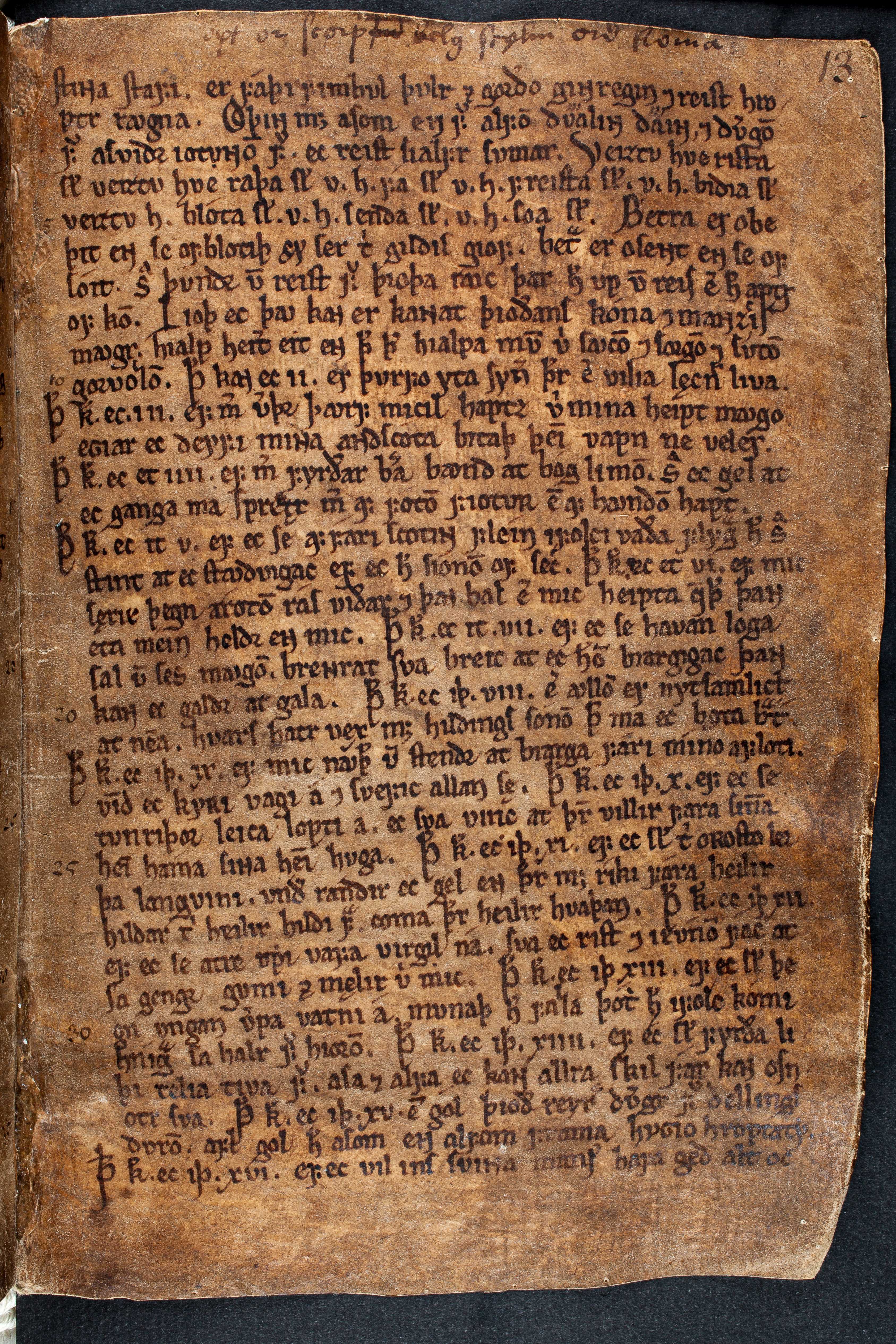
129Ráðumk þér, Loddfáfnir, / en þú ráð nemir, - / njóta mundu, ef þú nemr, / þér munu góð, ef þú getr -: / upp líta / skal-at-tu í orrustu, / - gjalti glíkir / verða gumna synir, - / síðr þitt of heilli halir. 130Ráðumk þér, Loddfáfnir, / en þú ráð nemir, - / njóta mundu, ef þú nemr, / þér munu góð, ef þú getr -: / ef þú vilt þér góða konu / kveðja at gamanrúnum / ok fá fögnuð af, / fögru skaltu heita / ok láta fast vera; / leiðisk manngi gótt, ef getr. 131Ráðumk þér, Loddfáfnir, / en þú ráð nemir, - / njóta mundu, ef þú nemr, / þér munu góð, ef þú getr -: / varan bið ek þik vera / ok eigi ofvaran; / ver þú við öl varastr / ok við annars konu / ok við þat it þriðja, / at þjófar né leiki. 132Ráðumk þér, Loddfáfnir, / en þú ráð nemir, - / njóta mundu, ef þú nemr, / þér munu góð, ef þú getr -: / at háði né hlátri / hafðu aldregi / gest né ganganda. 133Oft vitu ógörla, / þeir er sitja inni fyrir, / hvers þeir ro kyns, er koma; / er-at maðr svá góðr / at galli né fylgi, / né svá illr, at einugi dugi. 134Ráðumk þér, Loddfáfnir, / en þú ráð nemir, - / njóta mundu, ef þú nemr, / þér munu góð, ef þú getr -: / at hárum þul / hlæ þú aldregi, / oft er gótt, þat er gamlir kveða; / oft ór skörpum belg / skilin orð koma / þeim er hangir með hám / ok skollir með skrám / ok váfir með vílmögum. 135Ráðumk þér, Loddfáfnir, / en þú ráð nemir, - / njóta mundu, ef þú nemr, / þér munu góð, ef þú getr -: / gest þú né geyja / né á grind hrekir; / get þú váluðum vel. 136Rammt er þat tré, / er ríða skal / öllum at upploki; / baug þú gef, / eða þat biðja mun / þér læs hvers á liðu. 137Ráðumk þér, Loddfáfnir, / en þú ráð nemir, - / njóta mundu, ef þú nemr, / þér munu góð, ef þú getr -: / hvars þú öl drekkir, / kjós þér jarðar megin, / því at jörð tekr við ölðri, / en eldr við sóttum, / eik við abbindi, / ax við fjölkynngi, / höll við hýrógi, / - heiftum skal mána kveðja, - / beiti við bitsóttum, / en við bölvi rúnar, / fold skal við flóði taka. 138Veit ek, at ek hekk / vindga meiði á / nætr allar níu, / geiri undaðr / ok gefinn Óðni, / sjalfr sjalfum mér, / á þeim meiði, / er manngi veit / hvers af rótum renn. 139Við hleifi mik sældu / né við hornigi; / nýsta ek niðr, / nam ek upp rúnar, / æpandi nam, / fell ek aftr þaðan. 140Fimbulljóð níu / nam ek af inum frægja syni / Bölþorns, Bestlu föður, / ok ek drykk of gat / ins dýra mjaðar, / ausinn Óðreri. 141Þá nam ek frævask / ok fróðr vera / ok vaxa ok vel hafask, / orð mér af orði / orðs leitaði, / verk mér af verki / verks leitaði. 142Rúnar munt þú finna / ok ráðna stafi, / mjök stóra stafi, / mjök stinna stafi, / er fáði fimbulþulr / ok gerðu ginnregin / ok reist hroftr rögna. 143Óðinn með ásum, / en fyr alfum Dáinn, / Dvalinn ok dvergum fyrir, / Ásviðr jötnum fyrir, / ek reist sjalfr sumar. 144Veistu, hvé rísta skal? / Veistu, hvé ráða skal? / Veistu, hvé fáa skal? / Veistu, hvé freista skal? / Veistu, hvé biðja skal? / Veistu, hvé blóta skal? / Veistu, hvé senda skal? / Veistu, hvé sóa skal?
129I counsel thee, etc. Wherever of injury thou knowest, regard that injury as thy own; and give to thy foes no peace. 130I counsel thee, etc. Rejoiced at evil be thou never; but let good give thee pleasure. 131I counsel thee, etc. In a battle look not up, (like swine the sons of men then become) that men may not fascinate thee. 132If thou wilt induce a good woman to pleasant converse, thou must promise fair, and hold to it: no one turns from good if it can be got. 133I enjoin thee to be wary, but not over wary; at drinking be thou most wary, and with another's wife; and thirdly, that thieves delude thee not. 134With insult or derision treat thou never a guest or wayfarer. They often little know, who sit within, of what race they are who come. 135Vices and virtues the sons of mortals bear in their breasts mingled; no one is so good that no failing attends him, nor so bad as to be good for nothing. 136At a hoary speaker laugh thou never; often is good that which the aged utter, oft from a shriveled hide discreet words issue; from those whose skin is pendent and decked with scars, and who go tottering among the vile. 137I counsel thee, etc. Rail not at a guest, nor from thy gate thrust him; treat well the indigent; they will speak well of thee. 138Strong is the bar that must be raised to admit all. Do thou give a penny, or they will call down on thee every ill in thy limbs. 139I counsel thee, etc. Wherever thou beer drinkest, invoke to thee the power of earth; for earth is good against drink, fire for distempers, the oak for constipation, a corn-ear for sorcery, a hall for domestic strife. In bitter hates invoke the moon; the biter for bite-injuries is good; but runes against calamity; fluid let earth absorb. 140I know that I hung, on a wind-rocked tree, nine whole nights, with a spear wounded, and to Odin offered, myself to myself; on that tree, of which no one knows from what root it springs. 141Bread no one gave me, nor a horn of drink, downward I peered, to runes applied myself, wailing learnt them, then fell down thence. 142Potent songs nine from the famed son I learned of Bolthorn, Bestla's sire, and a draught obtained of the precious mead, drawn from Odhrærir. 143Then I began to bear fruit, and to know many things, to grow and well thrive: word by word I sought out words, fact by fact I sought out facts. 144Runes thou wilt find, and explained characters, very large characters, very potent characters, which the great speaker depicted, and the high powers formed, and the powers' prince graved:
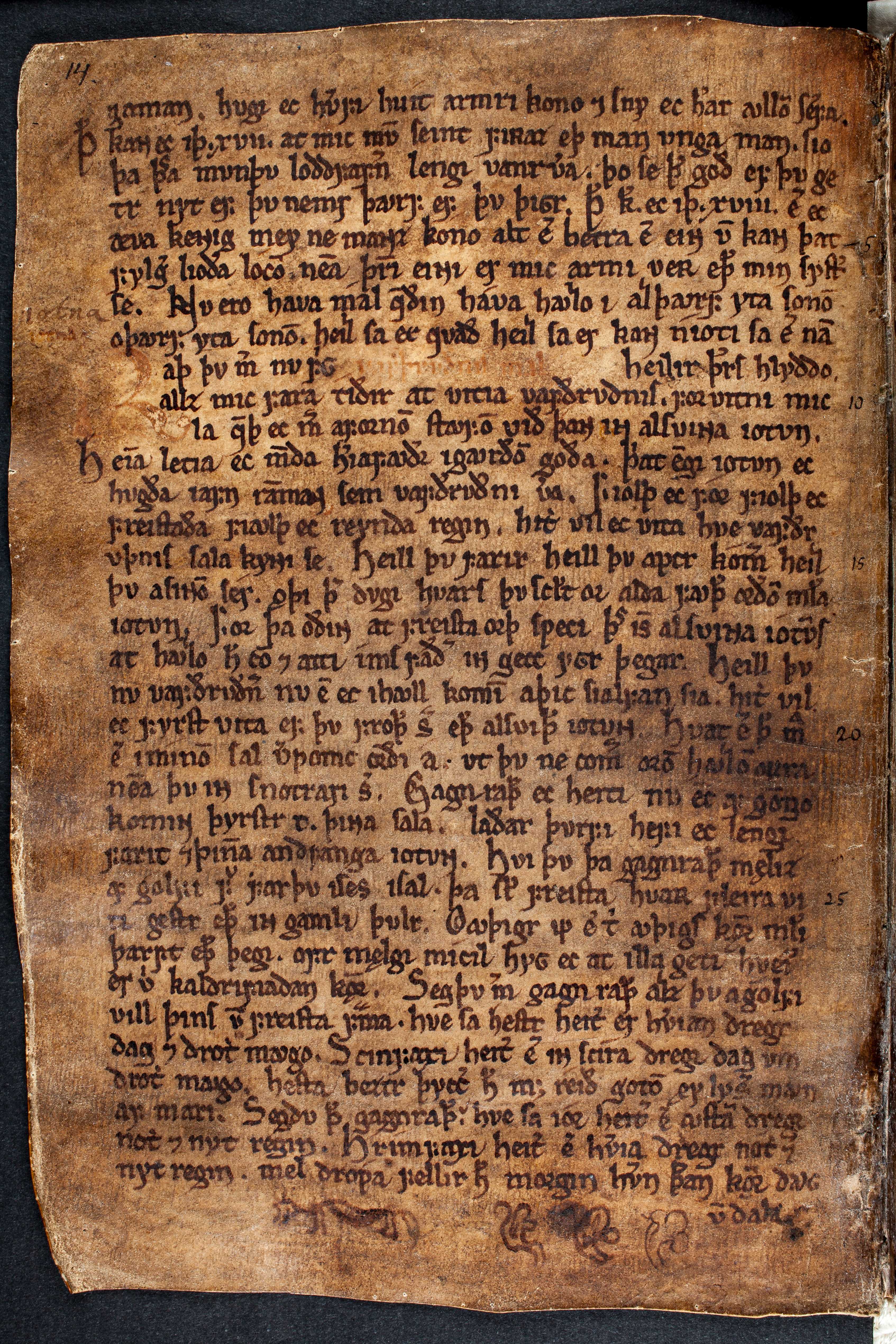
145Betra er óbeðit / en sé ofblótit, / ey sér til gildis gjöf; / betra er ósent / en sé ofsóit. / Svá Þundr of reist / fyr þjóða rök, / þar hann upp of reis, / er hann aftr of kom. 146Ljóð ek þau kann, / er kann-at þjóðans kona / ok mannskis mögr. / Hjalp heitir eitt, / en þat þér hjalpa mun / við sökum ok sorgum / ok sútum görvöllum. 147Þat kann ek annat, / er þurfu ýta synir, / þeir er vilja læknar lifa. 148Það kann ek þriðja: / ef mér verðr þörf mikil / hafts við mína heiftmögu, / eggjar ek deyfi / minna andskota, / bíta-t þeim vápn né velir. 149Þat kann ek it fjórða: / ef mér fyrðar bera / bönd að boglimum, / svá ek gel, / at ek ganga má, / sprettr mér af fótum fjöturr, / en af höndum haft. 150Þat kann ek it fimmta: / ef ek sé af fári skotinn / flein í folki vaða, / fýgr-a hann svá stinnt, / at ek stöðvig-a-k, / ef ek hann sjónum of sék. 151Þat kann ek it sétta: / ef mik særir þegn / á vrótum hrás viðar, / ok þann hal / er mik heifta kveðr, / þann eta mein heldr en mik. 152Þat kann ek it sjaunda: / ef ek sé hávan loga / sal of sessmögum, / brennr-at svá breitt, / at ek hánum bjargig-a-k; / þann kann ek galdr at gala. 153Þat kann ek it átta, / er öllum er / nytsamligt at nema: / hvars hatr vex / með hildings sonum / þat má ek bæta brátt. 154Þat kann ek it níunda: / ef mik nauðr of stendr / at bjarga fari mínu á floti, / vind ek kyrri / vági á / ok svæfik allan sæ. 155Þat kann ek it tíunda: / ef ek sé túnriður / leika lofti á, / ek svá vinnk, / at þær villar fara / sinna heimhama, / sinna heimhuga. 156Þat kann ek it ellifta: / ef ek skal til orrostu / leiða langvini, / und randir ek gel, / en þeir með ríki fara / heilir hildar til, / heilir hildi frá, / koma þeir heilir hvaðan. 157Þat kann ek it tolfta: / ef ek sé á tré uppi / váfa virgilná, / svá ek ríst / ok í rúnum fák, / at sá gengr gumi / ok mælir við mik. 158Þat kann ek it þrettánda: / ef ek skal þegn ungan / verpa vatni á, / mun-at hann falla, / þótt hann í folk komi, / hnígr-a sá halr fyr hjörum. 159Þat kann ek it fjögurtánda: / ef ek skal fyrða liði / telja tíva fyrir, / ása ok alfa / ek kann allra skil; / fár kann ósnotr svá. 160Þat kann ek it fimmtánda / er gól Þjóðrerir / dvergr fyr Dellings durum: / afl gól hann ásum, / en alfum frama, / hyggju Hroftatý.
145Odin among the Æsir, but among the Alfar, Dain, and Dvalin for the dwarfs, Asvid for the Jotuns: some I myself graved. 146Knowest thou how to grave them? knowest thou how to expound them? knowest thou how to depict them? knowest thou how to prove them? knowest thou how to pray? knowest thou how to offer? knowest thou how to send? knowest thou how to consume? 147'Tis better not to pray than too much offer; a gift ever looks to a return. 'Tis better not to send than too much consume. So Thund graved before the origin of men, where he ascended, to whence he afterwards came. 148Those songs I know which the king's wife knows not nor son of man. Help the first is called, for that will help thee against strifes and cares. 149For the second I know, what the sons of men require, who will as leeches live. * * * * 150For the third I know, if I have great need to restrain my foes, the weapons' edge I deaden: of my adversaries nor arms nor wiles harm aught. 151For the fourth I know, if men place bonds on my limbs, I so sing that I can walk; the fetter starts from my feet, and the manacle from my hands. 152For the fifth I know, if I see a shot from a hostile hand, a shaft flying amid the host, so swift it cannot fly that I cannot arrest it, if only I get sight of it. 153For the sixth I know, if one wounds me with a green tree's roots; also if a man declares hatred to me, harm shall consume them sooner than me. 154For the seventh I know, if a lofty house I see blaze o'er its inmates, so furiously it shall not burn that I cannot save it. That song I can sing. 155For the eighth I know, what to all is useful to learn: where hatred grows among the sons of men--that I can quickly assuage. 156For the ninth I know, if I stand in need my bark on the water to save, I can the wind on the waves allay, and the sea lull. 157For the tenth I know, if I see troll-wives sporting in air, I can so operate that they will forsake their own forms, and their own minds. 158For the eleventh I know, if I have to lead my ancient friends to battle, under their shields I sing, and with power they go safe to the fight, safe from the fight; safe on every side they go. 159For the twelfth I know, if on a tree I see a corpse swinging from a halter, I can so grave and in runes depict, that the man shall walk, and with me converse. 160For the thirteenth I know, if on a young man I sprinkle water, he shall not fall, though he into battle come: that man shall not sink before swords.
161Þat kann ek it sextánda: / ef ek vil ins svinna mans / hafa geð allt ok gaman, / hugi ek hverfi / hvítarmri konu, / ok sný ek hennar öllum sefa. 162Þat kann ek it sjautjánda / at mik mun seint firrask / it manunga man. / Ljóða þessa / mun þú, Loddfáfnir, / lengi vanr vera; / þó sé þér góð, ef þú getr, / nýt ef þú nemr, / þörf ef þú þiggr. 163Þat kann ek it átjánda, / er ek æva kennik / mey né manns konu, / - allt er betra, / er einn of kann; / þat fylgir ljóða lokum, - / nema þeiri einni, / er mik armi verr, / eða mín systir sé. 164Nú eru Háva mál / kveðin Háva höllu í, / allþörf ýta sonum, / óþörf jötna sonum; / heill sá, er kvað, / heill sá, er kann, / njóti sá, er nam, / heilir, þeirs hlýddu.
161For the fourteenth I know, if in the society of men I have to enumerate the gods, Æsir and Alfar, I know the distinctions of all. This few unskilled can do. 162For the fifteenth I know what the dwarf Thiodreyrir sang before Delling's doors. Strength he sang to the Æsir, and to the Alfar prosperity, wisdom to Hroptatyr. 163For the sixteenth I know, if a modest maiden's favour and affection I desire to possess, the soul I change of the white-armed damsel, and wholly turn her mind. 164For the seventeenth I know, that that young maiden will reluctantly avoid me. These songs, Loddfafnir! thou wilt long have lacked; yet it may be good if thou understandest them, profitable if thou learnest them. 165For the eighteenth I know that which I never teach to maid or wife of man, (all is better what one only knows. This is the closing of the songs) save her alone who clasps me in her arms, or is my sister. 166Now are sung the High-one's songs, in the High-one's hall, to the sons of men all-useful, but useless to the Jotuns' sons. Hail to him who has sung them! Hail to him who knows them! May he profit who has learnt them! Hail to those who have listened to them!
Cite
Source & Cross-References
- Source text: Codex Regius (GKS 2365 4to) via handrit.is + heimskringla.no + Thorpe (PG #14726) — view original
- Critical edition: Codex Regius (GKS 2365 4to)
← previous · → next · v cycle view · l back to library