Epic of Gilgamesh, Tablet III: preparations for the journey
Introduction
The elders advise Gilgamesh. His mother, the goddess Ninsun, prays to Shamash for his protection and adopts Enkidu. The two heroes leave Uruk for the Forest of Cedar.
The Standard Babylonian version of the epic, traditionally ascribed to the scholar Sin-leqi-unninni, was written on twelve tablets. Most surviving copies come from the libraries of Ashurbanipal at Nineveh (7th century BCE) and from Babylon and other Babylonian cities (7th-2nd century BCE). This page gives Tablet III in the line numbering of the electronic Babylonian Library edition by A. R. George (2022 and later revisions).
How this page is built. Each section is a run of consecutive lines as written on one photographed clay tablet. For every line the eBL edition (https://www.ebl.lmu.de/corpus/L/1/4/SB/III) lists the manuscripts that carry it, with each tablet's own column and line numbers; the tablet chosen for each run is the photographed copy of the work with the most signs preserved there. Commentaries and texts that only quote a line are never chosen. School and excerpt tablets are used only for lines that no photographed library copy preserves as well, and only where they carry the line as text; their sections say so. The original text is eBL's transliteration of that tablet's signs (not a modern composite text): square brackets mark broken signs, x an illegible sign, # a damaged sign, ? an uncertain reading, and words in {braces} are determinatives; the notes give a key to every sign used on this page, and eBL's layout codes are written out in words (for example '(line break)' or '(blank space)'). Superscript numbers are the line numbers of the eBL edition, used in both the Akkadian and the English. The English is A. R. George's translation in the eBL edition (CC BY-NC-SA 4.0), one line of English per line of the poem; italics mark uncertain renderings, as in the source. Where the tablet is broken, the English still translates the whole line of eBL's composite text; each section's note names the lines that are broken on its tablet.
Finding a line on the photograph. Each section names the tablet, the face and column, and the tablet's own line numbers (a prime, as in 5', counts from the first preserved line of a broken column). On a tablet with six columns the obverse carries columns i-iii from left to right; the reverse, turned over from bottom to top, carries columns iv-vi from right to left. The photographs often show the obverse above the reverse with the edges around them; a fragment preserves only part of this layout.
This page shows 164 of the 209 lines of the eBL edition (78%), from 8 tablets in the British Museum: BM.98990 (Nineveh), K.4474 (Nineveh), K.3423 (Nineveh), K.9885 (Nineveh), K.8558 (Nineveh), BM.35079, BM.32960, BM.36093.
Lines not shown. 45 of the 209 lines of the eBL edition are not shown, because no photographed copy of the work used here carries them: 23 (no photograph in eBL: BM.34191); 29-30 (no photograph in eBL: BM.34191); 59 (no photograph in eBL: IM.76873 (Iraq Museum)); 85 (no photograph in eBL: VAT.19286 (Vorderasiatisches Museum, Berlin), IM.76873 (Iraq Museum)); 109-116 (no photograph in eBL: IM.76873 (Iraq Museum)); 122a (no photograph in eBL: IM.76873 (Iraq Museum)); 133-136 (no photograph in eBL: IM.76873 (Iraq Museum)); 164-165 (no photograph in eBL: K.8573); 166-173 (no photograph in eBL: K.8573, BM.34191); 207-222 (no photograph in eBL: BM.34191); 244 (no manuscript preserves it). A line is shown only on a photographed tablet that carries it as text. Commentaries and other texts that quote a line (letters, rituals, god lists) are not used as witnesses, because they carry it with explanations or inside another text; tablets without a photograph in eBL are not used, because the line could not be shown on its tablet.
How was this verified? (Provenance)
Where on the image
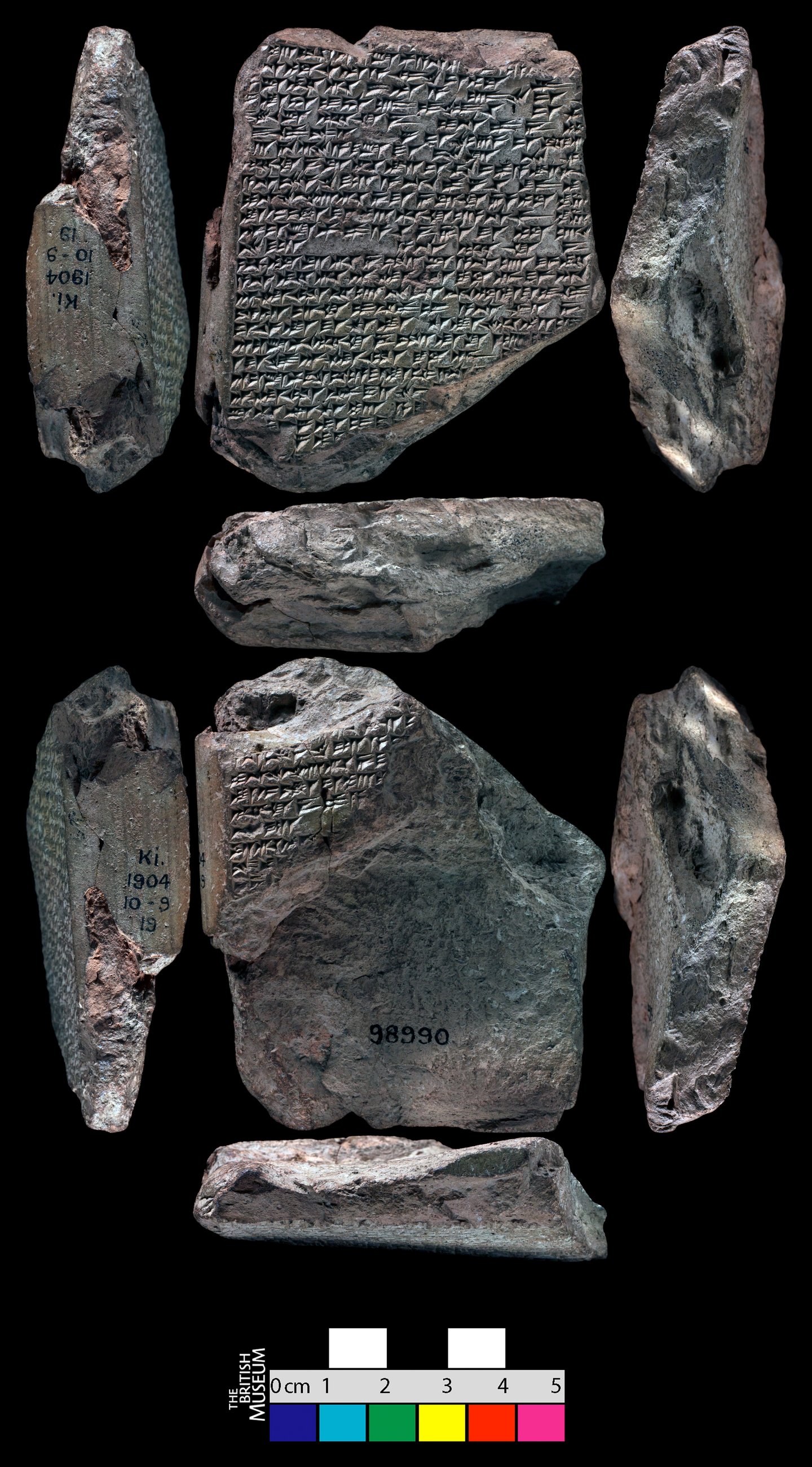
British Museum BM.98990: obverse, column i, the tablet's own lines 1 to 27. eBL's corpus edition (https://www.ebl.lmu.de/corpus/L/1/4/SB/III) attributes SB III 1-28 to this manuscript at these column and line numbers. Photograph checked: obverse, reverse and edges (ink number 98990, registration 1904-10-9,13); a full column on the obverse and a few lines on the reverse, consistent with eBL's columns i (27 lines) and vi (11 lines). On this tablet of lines 1, 27-28 only one to three signs survive and lines 2-6, 8-9, 11, 20-22, 24-26 are partly broken (square brackets and x in the Akkadian). The English of these lines translates eBL's composite text, so it includes words that are not preserved on this tablet but are restored from other manuscripts or by the editors. Square brackets in the English mark eBL's restorations in its composite text; words that survive on other tablets carry no brackets even where this tablet is broken. Lines 7, 10, 12-19 are complete on this tablet. eBL line(s) 23 fall within this run but are not on this tablet (they are listed among the lines not shown).
1[a]-na# [ka-a-ri ša₂] UNUG#{ki#} [ṭi-ha-a ina šul-mi]
2[l]a ta-tak-kil {d#}GIŠ#-gim₂-maš a-na gi#-mir# e-mu#-qi₂#-ka#
3[i]-na-ka liš-ba-a mi-hi-iṣ-ka tuk-k[il]
4a#-lik mah-ri TAB.BA-a u₂-še-ez-z[eb]
5ša₂ ṭu₂-du i-du-u₂ i-bir-šu₂ iṣ-ṣu[r]
6[l]il-lik {d}+en-ki-du₃ i-na pa-ni-k[a]
7i#-de KASKAL.MIN ša₂ {giš}TIR {giš}EREN
8[t]a-ha-zi a-mir-ma qab-lu kul-l[um]
9{d}+en-ki-du₃ ib-ri li-iṣ-ṣur tap-pa-a li-šal-li[m]
10a-na EDIN hi-ra-a-ti pa-gar-šu₂ lib-la
11i-na pu-uh-ri-ni-ma ni-ip-qi₂-dak-ka LUGA[L]
12tu-tar-ram-ma ta-paq-qi₂-dan-na-ši LUGAL
13{d}GIŠ-gim₂-maš pa-a-šu₂ DU₃-uš-ma DUG₄.GA
14MU-ra a-na {d}+en-ki-du₃
15al-ka ib-ri ni-il-lik a-na e₂-gal-mah
16a-na mah-ri {d}nin-sun₂ šar-rat GAL-ti
17{d}nin-sun₂ en-qet mu-da-ti ka-la-ma i-de
18kib-si mil-ki i-šak-kan a-na GIR+MIN₃-ni
19iṣ-ṣab-tu-ma qa-tu qa-tu-us-su-un
20{d}GIŠ-gim₂-maš u {d}+en-ki-du₃ il-la-ku ana E₂.GA[L.MAH]
21ana ma-har {d}nin-sun₂ šar-rat G[AL-ti]
22{d}GIŠ-gim₂-maš it-be₂-e-ma KU₄-ub a-na IG[I x x x x]
24{d}nin-sun₂ ag-da-pu-u[š al-lak]
25ur-hu ru-qa-ta a-š[ar x x x x]
26qab#-la# ša₂ la i-d[u-u₂ x x x]
27[x x] ša₂ la i#-[du-u₂ x x x]
28[u₂-sa]p-pi#-k[i x x x x x x x x x x x]
1‘[Come back in safety] to [the quay of] Uruk!
2Do not trust, O Gilgameš, in the fullness of your strength,
3let your eyes be satisfied, strike a blow to rely on!
4“He who goes in front saves (his) comrade,
5he who knew the road protected his friend.”
6Let Enkidu go in front of you,
7he knows the way to the Forest of Cedar!
8He is tried in battles and experienced in combat,
9let Enkidu protect (his) friend and keep safe (his) comrade!
10let him bring his person back to his wives!
11In this our assembly we hereby give the king into your care:
12you will ensure (his) return and give the king into our care.’
13Gilgameš opened his mouth to speak,
14saying to Enkidu:
15‘Come, my friend, let us go to Egal-maḫ,
16into the presence of the great Queen Ninsun!
17Ninsun is clever, she is wise, she knows everything,
18she will set steps of (good) counsel for our feet.’
19They took each other hand in hand,
20Gilgameš and Enkidu, as they went to Egal-maḫ.
21Into the presence of the great Queen Ninsun,
22Gilgameš arose and entered before [the goddess, his mother.]
24‘O Ninsun, I have grown so bold [as to travel]
25the distant path to where Ḫumbaba is.
26I shall face a battle that I do not know,
27I shall ride a road that I do not know.
28I hereby beseech you, give me your blessing, so that I may go,
Where on the image
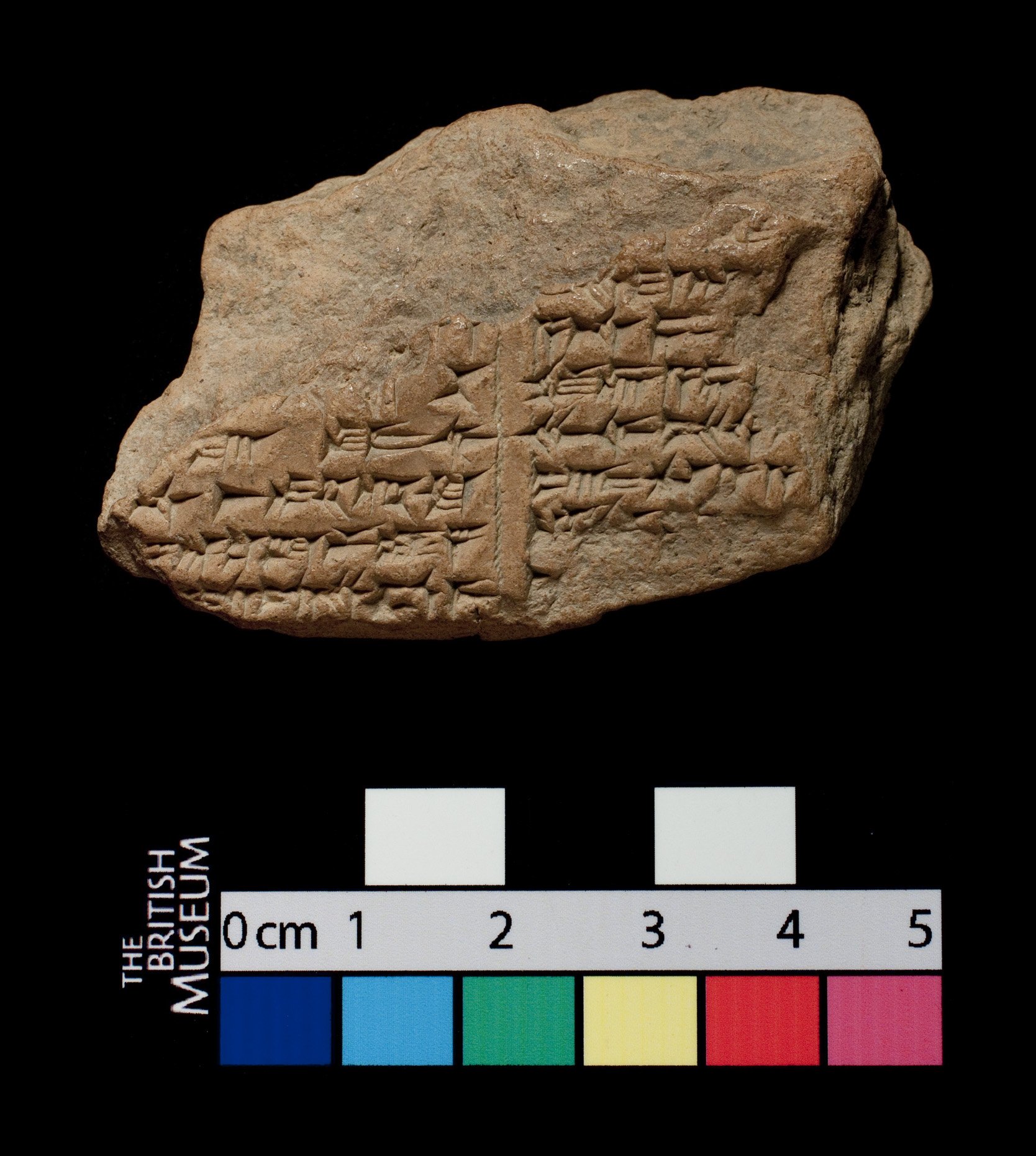
British Museum K.4474: column i, the tablet's own lines 31 to 36. eBL's corpus edition (https://www.ebl.lmu.de/corpus/L/1/4/SB/III) attributes SB III 31-36 to this manuscript at these column and line numbers. Photograph checked: one face, two columns with a divider, consistent with eBL's columns i and ii. On this tablet of lines 31, 33 only one to three signs survive and lines 32, 34-36 are partly broken (square brackets and x in the Akkadian). The English of these lines translates eBL's composite text, so it includes words that are not preserved on this tablet but are restored from other manuscripts or by the editors. Square brackets in the English mark eBL's restorations in its composite text; words that survive on other tablets carry no brackets even where this tablet is broken.
31[x x x x x x x x x x x x x x x lu-pu-u]š
32[x x x x x x x x MU.A]N.NA 2-šu₂
33[x x x x x x x ni-gu]-ta lib-ši
34[x x x li-ir-ta-aṣ-ṣi]-na ina mah-ri-ki
35[x x x x x x x x x š]a₂ {d}GIŠ-gim₂-maš DUMU-ša₂
36[x x x x mar-ṣ]i-iš iš-te-nem-me
31I will return and perform the akītu-festival twice in the year,
32the akītu I will perform twice in the year.
33Let the akītu take place and the merriment begin,
34let the drums be beaten in your presence!’
35[Wild-Cow] Ninsun was listening in sorrow
36to the words of Gilgameš, her son, and Enkidu.
Where on the image
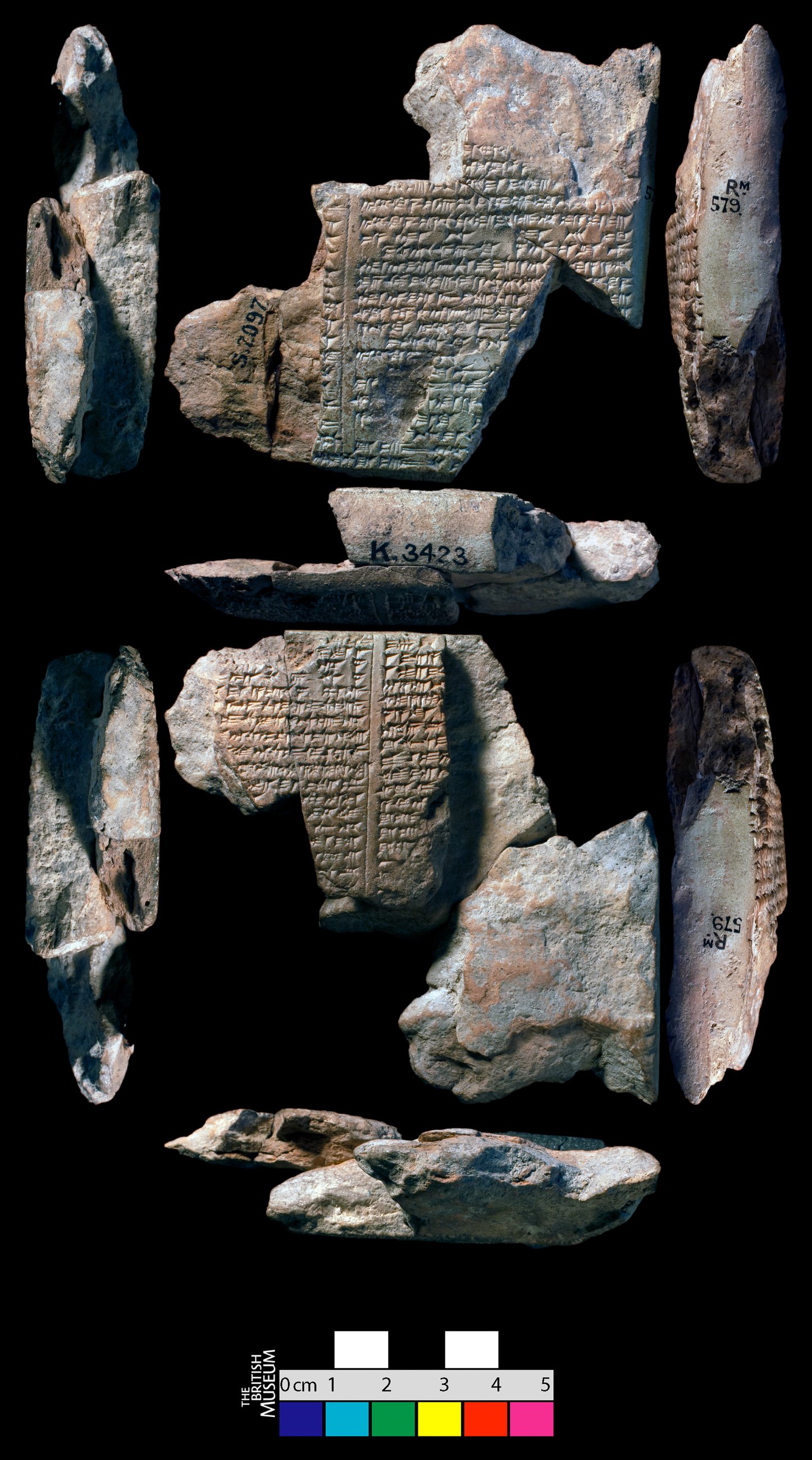
British Museum K.3423: obverse, column ii, the tablet's own lines 1 to 10. eBL's corpus edition (https://www.ebl.lmu.de/corpus/L/1/4/SB/III) attributes SB III 37-46 to this manuscript at these column and line numbers. Photograph checked: obverse, reverse and edges of the join K.3423 + Sm.2097 + Rm.579 (ink numbers on the edges); two columns on each face, consistent with eBL's columns ii-iii and iv-v. On this tablet of lines 37-38 only one to three signs survive and lines 39-46 are partly broken (square brackets and x in the Akkadian). The English of these lines translates eBL's composite text, so it includes words that are not preserved on this tablet but are restored from other manuscripts or by the editors. Square brackets in the English mark eBL's restorations in its composite text; words that survive on other tablets carry no brackets even where this tablet is broken.
37[x x x x x x x x] i#-ru-ub
38[x x x x x x x x x x x x] {u₂#}tu-lal
39[x x x x x x x] si#-m[at pa]g-ri-ša₂
40[x x x x-m]e si-mat ir-te-ša₂
41[x x x x iš-ša₂-ki]n-ma a-ga-ša₂ ap-rat
42[x x x x x x KAR.KI]D-MEŠ qaq-qa-ra i-pi-ra-ni
43[x x x x x x] i-te-li a-na u₂-ri
44[x x x x x x x x ma-h]ar {d}UTU qut-rin-na iš-kun
45[x x x x x x m]a-har {d}UTU i-di-šu₂ iš-ši
46[x x x x x x x x x {d}GI]Š-gim₂-maš lib₃-bi la ṣa-li-la te-mid-su
37She went seven times into the bath-house,
38[she cleansed] herself in water (perfumed with) tamarisk and soapwort.
39[she dressed in] a fine garment, the adornment of her body,
40[…] … the adornment of her breast.
41[…] was put in place and she was wearing her crown,
42[…] … the harlots… the ground.
43She leapt [up] the staircase, she climbed on to the roof,
44she climbed on to the roof, she set up a censer before Šamaš,
45she scattered incense before Šamaš, she lifted her arms:
46‘Why did you assign to [my] son Gilgameš, (why) inflict on him a restless spirit?
Where on the image
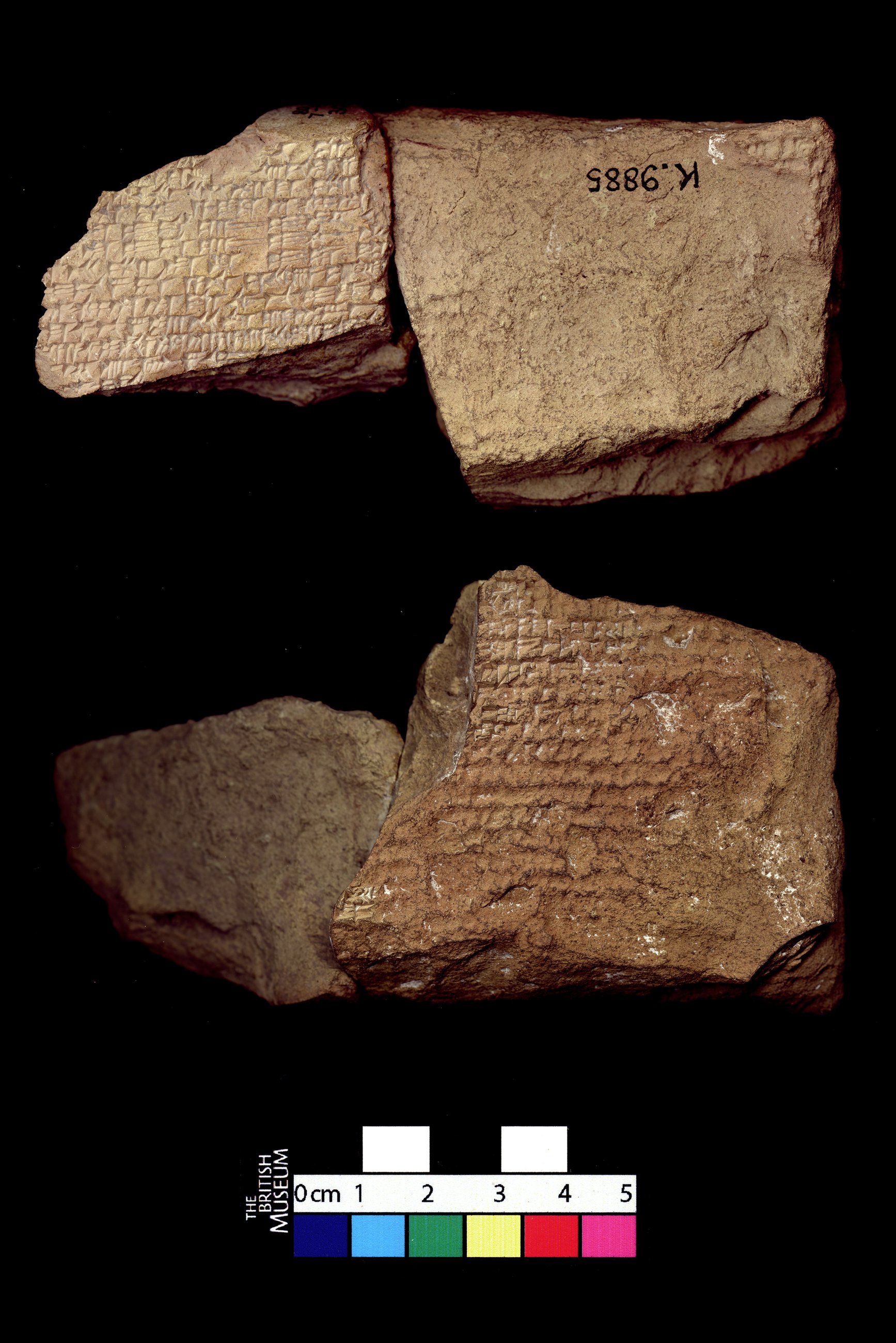
British Museum K.9885: obverse, column ii, the tablet's own lines 3 to 10. eBL's corpus edition (https://www.ebl.lmu.de/corpus/L/1/4/SB/III) attributes SB III 47-54 to this manuscript at these column and line numbers. Photograph checked: both faces of the joined tablet (two pieces, ink number K.9885); text on both faces, consistent with eBL's columns ii-iii and iv-v. On this tablet lines 47-54 are partly broken (square brackets and x in the Akkadian). The English of these lines translates eBL's composite text, so it includes words that are not preserved on this tablet but are restored from other manuscripts or by the editors. Square brackets in the English mark eBL's restorations in its composite text; words that survive on other tablets carry no brackets even where this tablet is broken.
47[x x x x] tal-pu-us-su-ma il-l[ak]
48[x x ru]-qa-tu₄ a-šar {d}hum-ba-b[a]
49[x x x] la i-du-u₂ i-mah-ha[r]
50[x x x š]a₂ la i-du-u₂ i-rak-ka[b]
51[x x] u₄#-mu il-la-ku i-tur-r[a]
52[x x] i-kaš-ša₂-du a-na {giš}TIR {giš}ERE[N]
53[x x] {d}hum-ba-ba da-pi-nu i-nar-r[u]
54[u₃ mi]m-ma lem-nu ša₂ ta-zer-ru u₂-hal-laq ina K[UR]
47For now you have touched him and he will travel
48the distant path to the home of Ḫumbaba.
49He will face a battle that he does not know,
50he will ride a route that he does not know.
51During the days that he travels there and back,
52until he reaches the Forest of Cedar,
53until he slays ferocious Ḫumbaba,
54and annihilates from the land the Evil Thing that you hate,
Where on the image
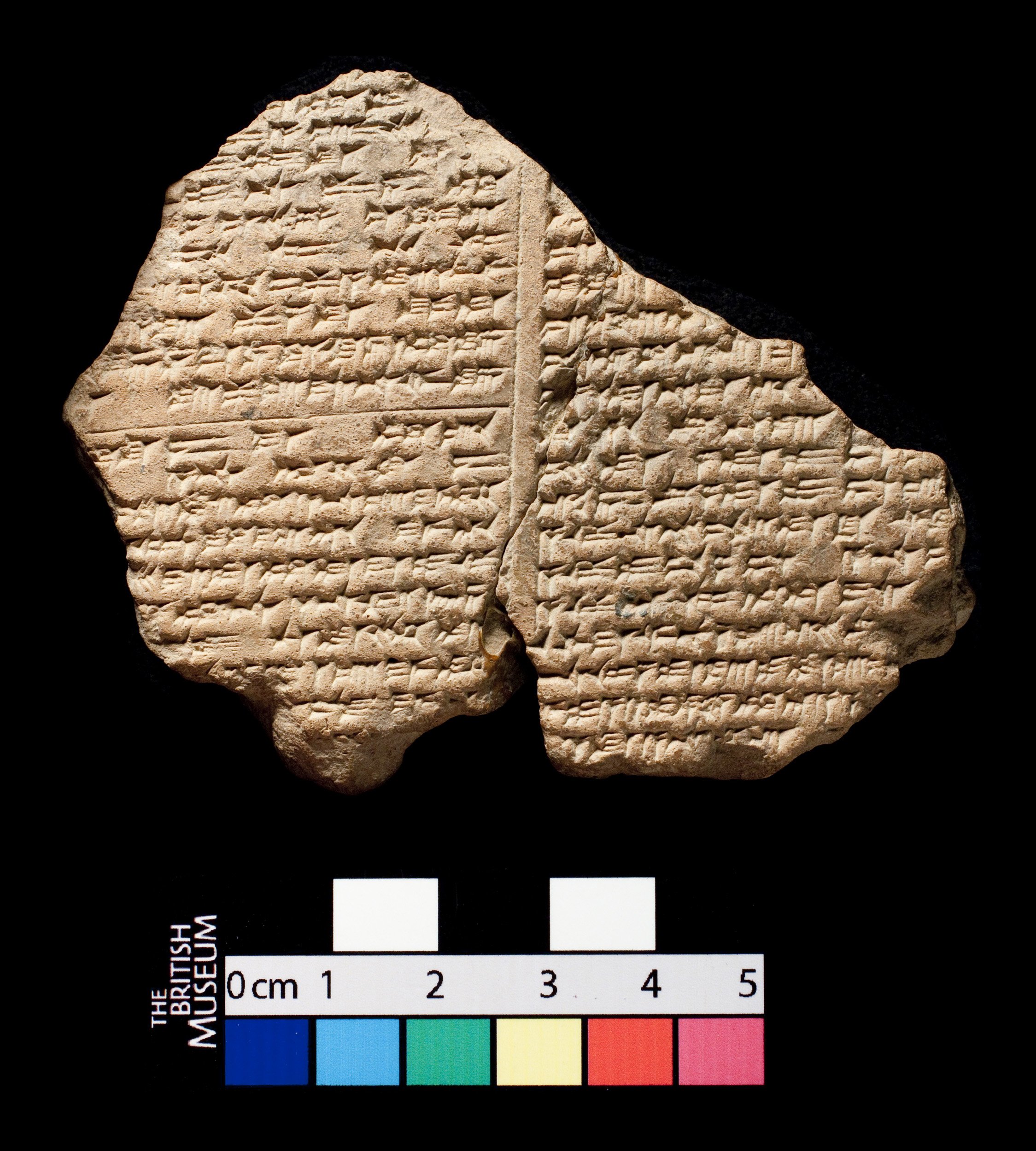
British Museum K.8558: column ii, the tablet's own lines 19 to 22. eBL's corpus edition (https://www.ebl.lmu.de/corpus/L/1/4/SB/III) attributes SB III 55-58 to this manuscript at these column and line numbers. Photograph checked: one face with two columns separated by a ruling, consistent with eBL's columns i and ii. On this tablet of line 58 only one to three signs survive and lines 55-57 are partly broken (square brackets and x in the Akkadian). The English of these lines translates eBL's composite text, so it includes words that are not preserved on this tablet but are restored from other manuscripts or by the editors. Square brackets in the English mark eBL's restorations in its composite text; words that survive on other tablets carry no brackets even where this tablet is broken.
55[i]na u₄-mi ša₂ at-ta i-tu-u₂ x [x x (x x)]
56[š]i-i a-a i-dur-ka {d}a-a k[al-la-tu₂ x x x x]
57[š]a₂-a-šu₂ a-na EN.NUN-M[EŠ x x x x x]
58[ina EN.NUN].AN#.[USAN₂ x x x x x x (x x)]
55by day when [you …] the boundary [of…,]
56may she not fear you, may Aya the Bride remind you:
57“As for him, place him in the care of the watches of the night!
58At eventide […] …”
Where on the image
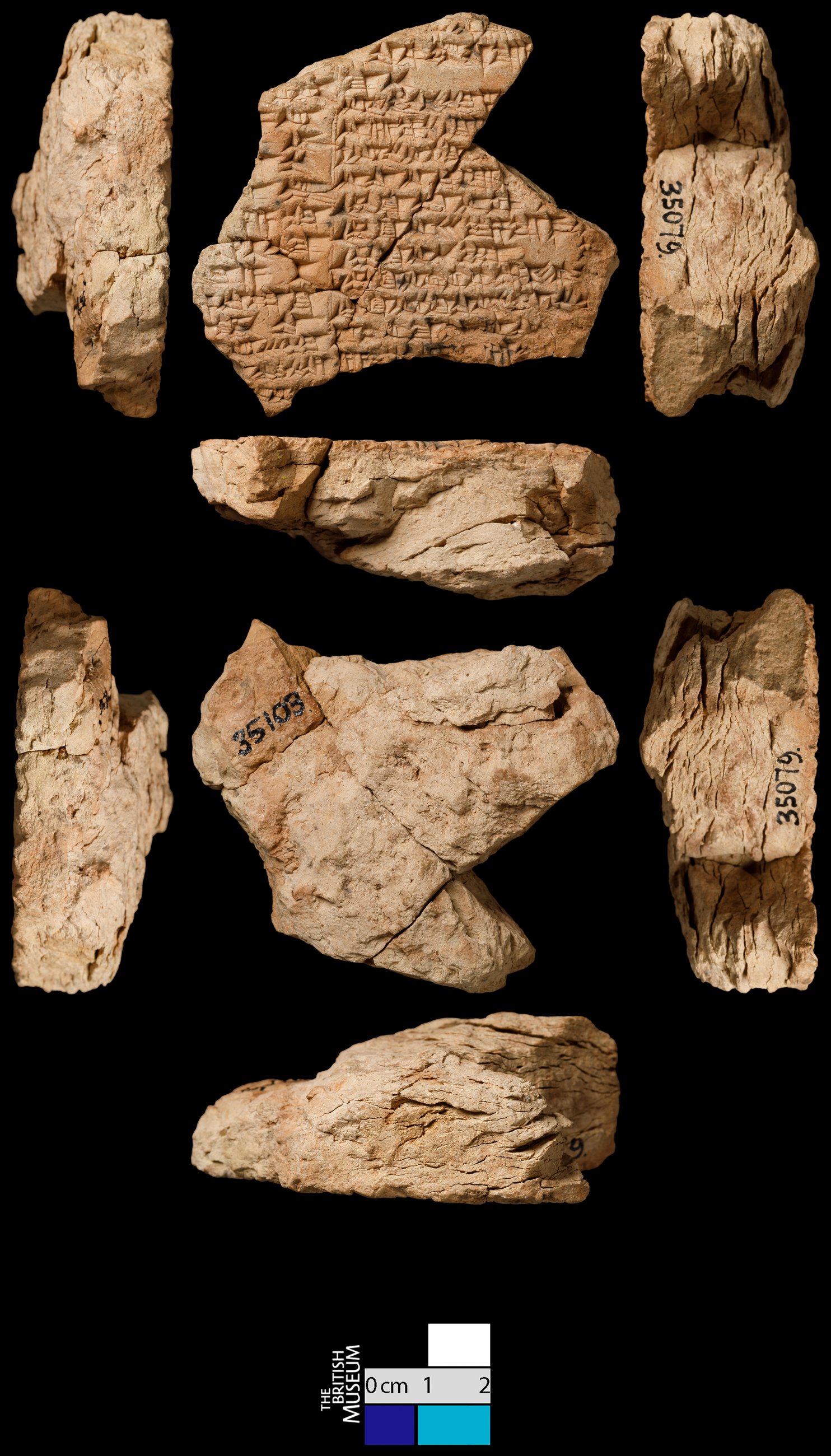
British Museum BM.35079: column ii, the tablet's own lines 1' to 15'. eBL's corpus edition (https://www.ebl.lmu.de/corpus/L/1/4/SB/III) attributes SB III 60-74 to this manuscript at these column and line numbers. Photograph checked: obverse, reverse and edges of the join (ink numbers 35079 and 35103 visible); inscribed obverse, consistent with eBL's columns ii and iii. On this tablet of lines 60, 74 only illegible traces (x) survive, of lines 61-65, 68, 70-71, 73 only one to three signs survive and lines 66-67, 69, 72 are partly broken (square brackets and x in the Akkadian). The English of these lines translates eBL's composite text, so it includes words that are not preserved on this tablet but are restored from other manuscripts or by the editors. Square brackets in the English mark eBL's restorations in its composite text; words that survive on other tablets carry no brackets even where this tablet is broken.
60[...] x
61[...] x-ir-ri
62[... na-ma]-a#-ri
63[x x x x x (x x x) x x x x b]u-li₃
64[x x x x x x x x x] ana KUR
65[x x x x x x x x x A]N-u₂
66[x x x x x x (x x x) ru-u]š-ša₂-a-ka
67[x x x x x (x x)] x ša₂-šu₂-nu-ma
68[x x x x x x x x (x x x) k]a-a-šu₂
69[x x x x x x x (x x x)]-za?# na-šak-ku
70[x x x x x x x n]a-piš-tu₂
71[x x x x x x x x x] re-eš-ka
72[x x x x x x x um-m]a-nu pah-ru
73[x x x x x x x x x x] u₂-paq-qu#
74[x x x x x x x x x x x x x x] x [x]
60[…] to …,
61[…] …,
62… […] to shine.
63You have opened, O [Šamaš, … for the going] out of the livestock,
64for … […] you came forth on the land.
65The uplands […], the heavens growing [bright,]
66the herds of the wild […] your ruddy light.
67[…] waited for […] them,
68the animals […] you.
69[…] I am offering you,
70the dead man […] life.
71To the … […] your head,
72at the coming forth [of your rays the] crowds are gathered.
73The Anunnaki wait intent [on your light.]
74May she not fear [you, may Aya the Bride remind you:]
Where on the image
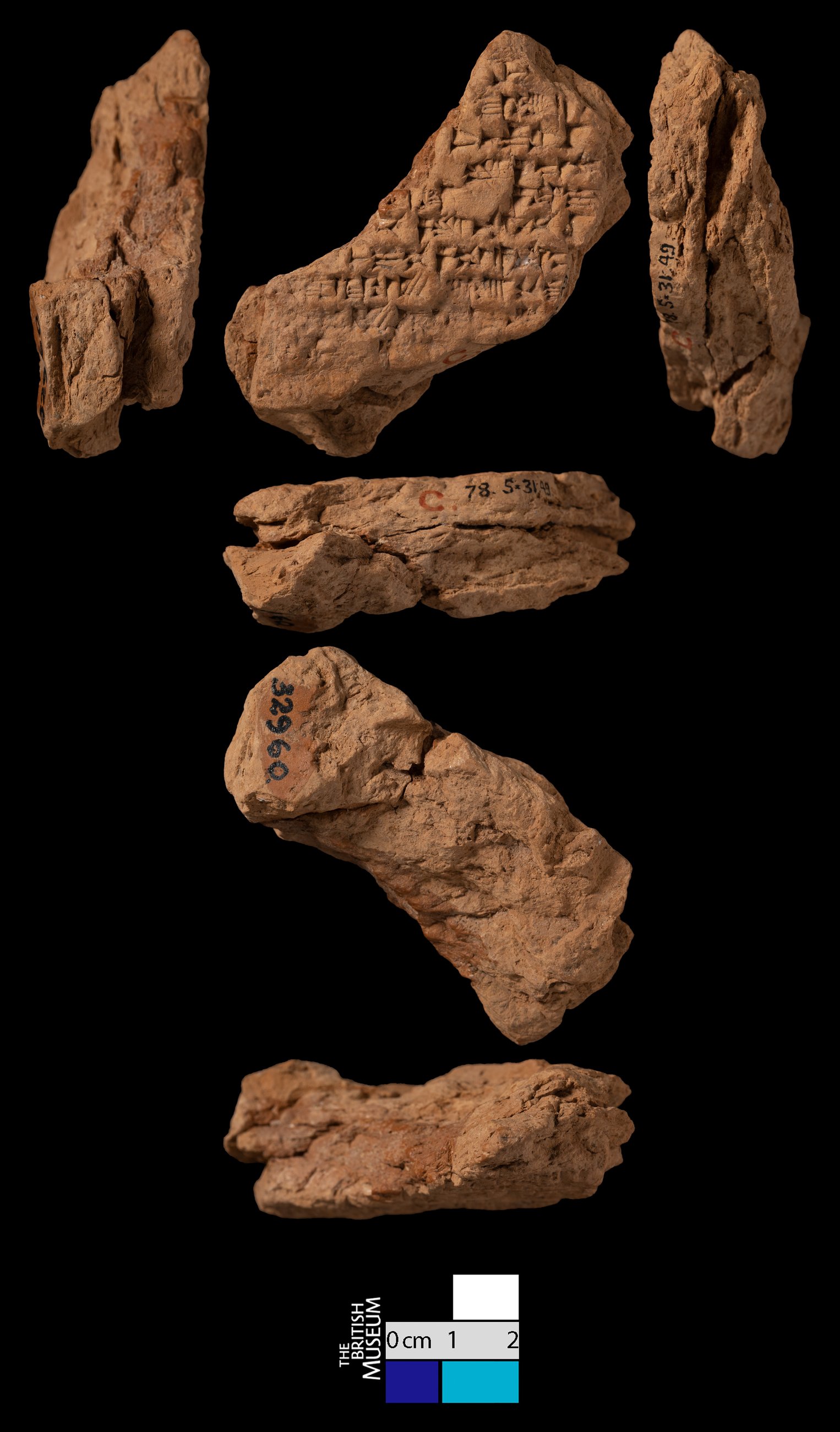
British Museum BM.32960: column iii, the tablet's own lines 1' to 9'. eBL's corpus edition (https://www.ebl.lmu.de/corpus/L/1/4/SB/III) attributes SB III 75-83 to this manuscript at these column and line numbers. Photograph checked: obverse, reverse and edges, ink number 32960; about 10 lines on one face, consistent with eBL's 10 lines of column iii. On this tablet of line 75 only one to three signs survive and lines 76-83 are partly broken (square brackets and x in the Akkadian). The English of these lines translates eBL's composite text, so it includes words that are not preserved on this tablet but are restored from other manuscripts or by the editors. Square brackets in the English mark eBL's restorations in its composite text; words that survive on other tablets carry no brackets even where this tablet is broken.
75[x x x x x x x x x m]u-ši p[i-qid-su]
76[x x x x x x x] šu-kun a-n[a GIRI₃+MIN-šu₂]
77[x x x x {d}+en-k]i-du₃ ina pa-ni-šu₂ [lil-lik]
78[x x x x x] KASKAL+MIN ša₂ {giš}T[IR {giš}EREN]
79[x x x liš-pe]l-ki ša₂-di-i [x x (x)]
80[x x x it-t]i ša₂ KASKAL+MIN ina qa#-ti-šu₂ [x x (x)]
81[x x {d}GIŠ]-gim₂#-maš i-kaš-ša₂-du a-na {gi[š}TIR x x]
82[x x a]r-ra-ku U₄-MEŠ lu#-u₂ kur-r[a-a x x]
83[x x rak]-sa# MURUB₄#-MEŠ-šu₂ lu#-u₂# i?#-zi-[ih x x x x x]
75“As for him, [place him] in [the care of the watches of the night!]
76Make for [his feet] a road of [safety,]
77touch Enkidu, so [he goes] before him!
78Because he [knows] the way to the [Forest of Cedar,]
79[he shall throw] open a path, [make] the mountains [passable.]
80And a torch … for the journey [let him bear] in his hand,
81while Gilgameš travels to the [Forest] of Cedar,
82let the days be long, let the nights be short,
83let his loins be girt, let his stride [be …!]
Where on the image
British Museum K.3423: obverse, column iii, the tablet's own lines 16 to 18. eBL's corpus edition (https://www.ebl.lmu.de/corpus/L/1/4/SB/III) attributes SB III 84-87 to this manuscript at these column and line numbers. Photograph checked: obverse, reverse and edges of the join K.3423 + Sm.2097 + Rm.579 (ink numbers on the edges); two columns on each face, consistent with eBL's columns ii-iii and iv-v. On this tablet of lines 84, 86-87 only one to three signs survive. The English of these lines translates eBL's composite text, so it includes words that are not preserved on this tablet but are restored from other manuscripts or by the editors. Square brackets in the English mark eBL's restorations in its composite text; words that survive on other tablets carry no brackets even where this tablet is broken. eBL line(s) 85 fall within this run but are not on this tablet (they are listed among the lines not shown).
84ina [x x x x x x x x x x]
86ši-[x x x x x x x x x x x x x x x x x]
87in[a x x x x x x x x x x x x x x x x x x x x x x x x]
84At dusk let him pitch camp for the night,
86May she not fear you, may Aya the Bride remind you!
87On the day that Gilgameš, Enkidu and Ḫumbaba come face to face,
Where on the image
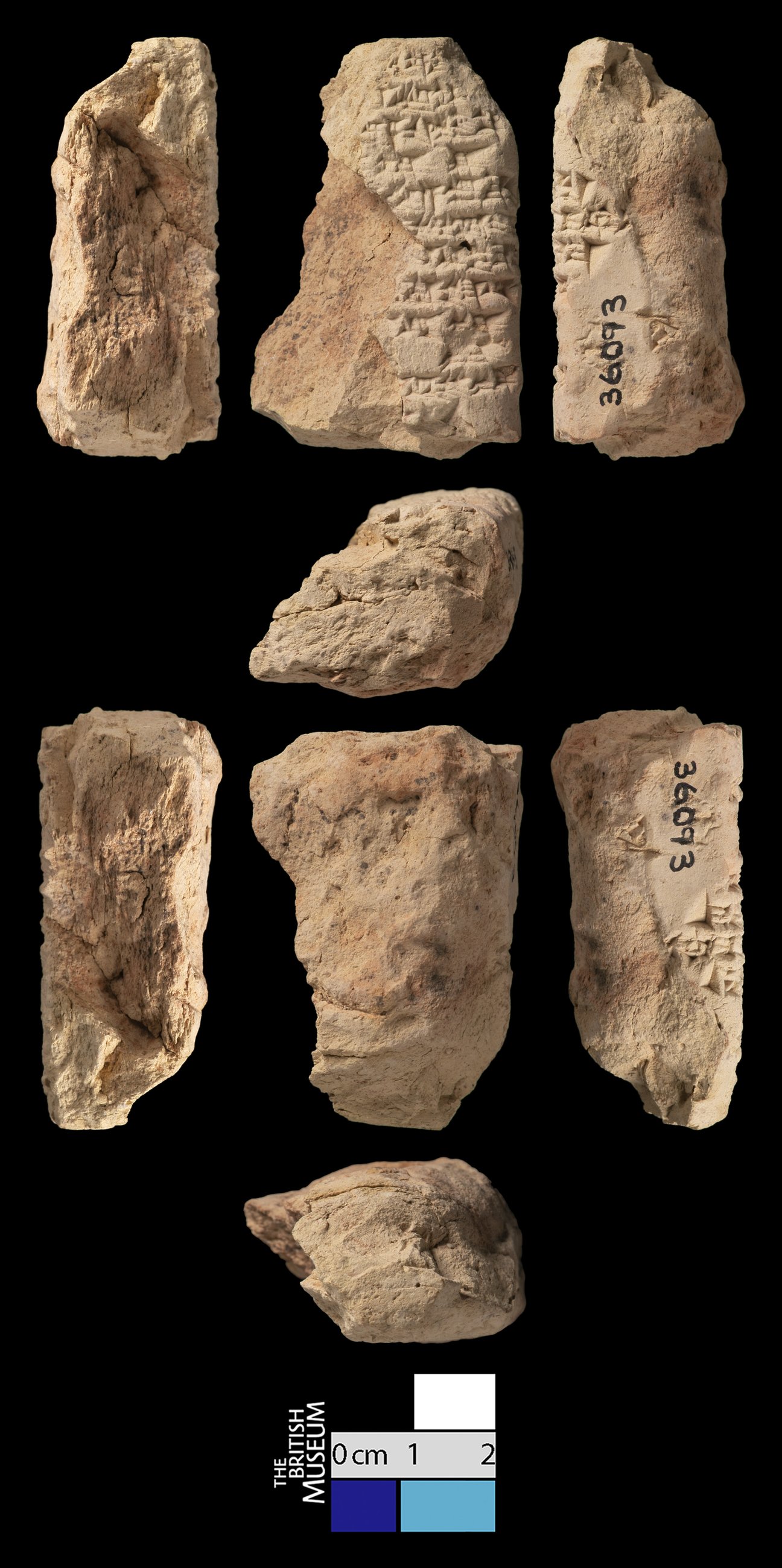
British Museum BM.36093: column iii, the tablet's own lines 1 to 9. eBL's corpus edition (https://www.ebl.lmu.de/corpus/L/1/4/SB/III) attributes SB III 88-95 to this manuscript at these column and line numbers. Photograph checked: obverse, reverse and edges, ink number 36093; about 10 lines on one face, consistent with eBL's 10 lines of column iii. On this tablet of line 94 only one to three signs survive and lines 88-93, 95 are partly broken (square brackets and x in the Akkadian). The English of these lines translates eBL's composite text, so it includes words that are not preserved on this tablet but are restored from other manuscripts or by the editors. Square brackets in the English mark eBL's restorations in its composite text; words that survive on other tablets carry no brackets even where this tablet is broken.
88[x x x x x x x x x x x x m]e-he-e GA[L-MEŠ]
89[x x x x x x {im}KUR.R]A {im}MAR.T[U] (line break) [x x x x x x x]
90[{i]m}ša₂-par-ziq-qa (line break) [x x x x x x] a#-sak-ku
91[x x x x x x {im}me-ha]-a# {im}a-šam-šu-tu₂
92[x x x x x x x x {d}hum-ba-b]a li-ṭu-u₂ pa-ni-šu₂
93[x x x x x x x lik-šu-d]a {d}hum-ba-ba
94[x x x x x x x x x i]t-tu-hu
95[x x x x x x x x p]a-ri-ka# (line break) [x x pa-ni]-ka#
88send against Ḫumbaba, O Šamaš, the great stormwinds:
89South Wind, North Wind, East Wind, West Wind, Blast, Counterblast,
90Gale, Tempest, Typhoon, Hell-Wind,
91Icy Blast, Hurricane, Tornado:
92Let (these) thirteen winds arise so the face of Ḫumbaba darkens,
93and the weapon of Gilgameš reaches Ḫumbaba!
94After your own heart has calmed down,
95at that time, O Šamaš, turn your face to your mules!
Where on the image
British Museum BM.35079: column iii, the tablet's own lines 1' to 14'. eBL's corpus edition (https://www.ebl.lmu.de/corpus/L/1/4/SB/III) attributes SB III 96-108 to this manuscript at these column and line numbers. Photograph checked: obverse, reverse and edges of the join (ink numbers 35079 and 35103 visible); inscribed obverse, consistent with eBL's columns ii and iii. On this tablet of line 97a only one to three signs survive and lines 96-97, 98-108 are partly broken (square brackets and x in the Akkadian). The English of these lines translates eBL's composite text, so it includes words that are not preserved on this tablet but are restored from other manuscripts or by the editors. Square brackets in the English mark eBL's restorations in its composite text; words that survive on other tablets carry no brackets even where this tablet is broken.
96[pa-ru-(u₂)-k]a ha-an-ṭ[u-tu x x x x x x x]
97šub#-tu₂ ne₂-eh-tu₂ ma-a-[a-lu x x x x x x x x]
97ašu-bat [...]
98DINGIR-MEŠ ŠEŠ-MEŠ-ka ninda-b[e₂-e? ...]
99{d}a-a kal-lat ina TUG₂.S[IG₂-ša? x x x x x x x]
100{munus}ri-mat-{d}nin-sun₂# [x x x x x x]
101{d}UTU {d}GIŠ-gim₂-m[aš x x x x x x]
102ul KI-ka AN-e i[z-za-az-za]
103ul KI {d}30 i-za-zu pa-l[a-a (x x x x)]
104ul KI {d}IDIM ABZU i#-[me-eq]
105ul KI {d}ir-ni-ni UN-MEŠ ṣal-ma[t x x x x x]
106ul KI {d}nin-giš-zi-da ina kur-nu-[gi₄-a x x]
107lu-ub?#-ni-šu-ma# {d}UTU [x x x x x x x]
108a-a in#-x x x a-a x [x x x x x x]
96Your fleet-footed mules shall bring you (in) early,
97let a restful seat, a bed … (scribal annotation: broken) be laid out for you
97aa seat of […]
98The gods, your brothers, shall bring food [to delight] you,
99may Aya the Bride wipe your face with her clean garment-fringe!’
100Again Wild-Cow Ninsun repeated (her) behest before Šamaš:
101‘O Šamaš, will not Gilgameš rank with the gods?
102Will he not share the heavens with you?
103Will he not share a sceptre with the moon?
104Will he not become wise with Ea of the Apsû?
105Will he not rule the black-headed race with Irnina?
106[Will he] not dwell in the Land-of-No-Return with Ningišzida?
107Let me make him, O Šamaš, […] …
108may he not … may he not […] the [Forest] of [Cedar.]
Where on the image
British Museum K.3423: reverse, column iv, the tablet's own lines 1' to 16'-17'. eBL's corpus edition (https://www.ebl.lmu.de/corpus/L/1/4/SB/III) attributes SB III 117-132 to this manuscript at these column and line numbers. Photograph checked: obverse, reverse and edges of the join K.3423 + Sm.2097 + Rm.579 (ink numbers on the edges); two columns on each face, consistent with eBL's columns ii-iii and iv-v. On this tablet of lines 117, 129 only one to three signs survive and lines 118-119, 124-128, 130-132 are partly broken (square brackets and x in the Akkadian). The English of these lines translates eBL's composite text, so it includes words that are not preserved on this tablet but are restored from other manuscripts or by the editors. Square brackets in the English mark eBL's restorations in its composite text; words that survive on other tablets carry no brackets even where this tablet is broken. Lines 120-122, 123 are complete on this tablet. eBL line(s) 122a fall within this run but are not on this tablet (they are listed among the lines not shown).
117[{munus}ri-mat-{d}ni]n-sun₂ em-[qet mu-da-at ka-la-ma i-de]
118[x x x x x] {d}GIŠ-gim₂-maš qaq-[x x x x x]
119u₂#-kab#-bit# qut#-rin#-nam-ma it-ta-x [x x (x)]
120{d}+en-ki-du₃ is-sa-am-ma i-šak-ka-na ṭe₃#-e!#-mu#
121{d}+en-ki-du₃ dan-nu ul ṣi-it u₂-ri-ia at-ta
122e-nin-na at-mu-ka (line break) it-ti ši-ir-ki ša₂ {d}GIŠ-gim₂-maš
123NIN.DINGIR.RA-MEŠ qa-aš₂-da-a-ti u# kul#-ma-ša₂-a-ti
124in-di it-ta-di a-na ti-ik-k[i {d}]+en-ki-du₃
125NIN.DINGIR.RA-MEŠ il-qa-a [li-qu-t]a
126u₃ DUMU.MUNUS DINGIR-MEŠ u₂-rab-b[a-a tar-bu-t]a
127a-na-ku {d}+en-ki-du₃ x [x x x x] (line break) il-te-qe₂ a-na [x x x]
128{d}+en-ki-du₃ a#-na# [x x x x x] (line break) {d}[GIŠ-g]im₂-maš l[i-dam-me-eq-šu]
129e-[nin?-n]i ṣu-x [x x x x x]
130u₃# [x (x)] x la a-n[a? x x x x x]
131a-d[i tal-l]a-ku x [x x x x] a#-na {giš}T[IR x x]
132lu-u₂ ar-r[ak x x x x x (x)] (line break) lu-u₂ kur-r[a-a x x]
117[Wild-Cow] Ninsun was clever, [she was wise, she knew everything,]
118[…] Gilgameš … […]
119she smothered the censer and came [down from the roof]
120She summoned Enkidu to declare (her) intention:
121‘O mighty Enkidu, you are not the offspring of my womb,
122but now your brood (will be) with the oblates of Gilgameš,
123the priestesses, hierodules and temple girls.’
124She placed the symbols on Enkidu’s neck:
125‘The priestesses took in the foundling,
126and the Divine Daughters will bring up the foster-child.
127I myself hereby adopt Enkidu, whom [I love], as a son,
128let Gilgameš in [brotherhood] treat Enkidu with favour!
129Now … […]
130And […] … […]
131while [you] travel [together] to the Forest of Cedar,
132let [the days be] long, let the nights be short!
Where on the image
British Museum K.9885: reverse, column iv, the tablet's own lines 1' to 13'. eBL's corpus edition (https://www.ebl.lmu.de/corpus/L/1/4/SB/III) attributes SB III 146-158 to this manuscript at these column and line numbers. Photograph checked: both faces of the joined tablet (two pieces, ink number K.9885); text on both faces, consistent with eBL's columns ii-iii and iv-v. On this tablet of lines 146, 155, 157-158 only illegible traces (x) survive, of line 156 only one to three signs survive and lines 147-154 are partly broken (square brackets and x in the Akkadian). The English of these lines translates eBL's composite text, so it includes words that are not preserved on this tablet but are restored from other manuscripts or by the editors. Square brackets in the English mark eBL's restorations in its composite text; words that survive on other tablets carry no brackets even where this tablet is broken.
146[x] x x [x x x x x x x x x x x]
147[{d}GI]Š-gim₂-maš ana?# [x x x x x x x x x x]
148[x]-bat-tuš-šu₂ ir#-ta#-x x [x x x x x x x]
149[a-n]a KA₂.GAL {giš}ERE[N x x x x x x x x]
150[{d}+e]n-ki-du₃ ina E₂ {d}x [x x x x x]
151u₃# {d}GIŠ-gim₂-maš# ina# E₂# x [x x x x x x]
152[{giš}]ŠIM sur-qin-n[i x x x x x x x x x x]
153[aš₂?]-bu DUMU-MEŠ# {lu₂#}x [x x x x x x x x]
154[a?]-šar ma# qu# šu# [x x x x x x x x x x x]
155[x] x x x x x [x x x x x x x x]
156uš#-x x x x x [x x x x x x x x]
157x x [x x x x x x x x x x x x]
158[x] x x [x x x x x x x x x x x x x]
146… […]
147Gilgameš to […]
148His … […]
149[To] the Gate of Cedar […]
150Enkidu in the chapel of … […]
151and Gilgameš in the chapel of […]
152juniper, incense […]
153members of the [… were] present […]
154where … […]
155… […]
156… […]
157… […]
158… […]
Where on the image
British Museum K.3423: reverse, column v, the tablet's own lines 1' to 16'. eBL's corpus edition (https://www.ebl.lmu.de/corpus/L/1/4/SB/III) attributes SB III 149'-164' to this manuscript at these column and line numbers. Photograph checked: obverse, reverse and edges of the join K.3423 + Sm.2097 + Rm.579 (ink numbers on the edges); two columns on each face, consistent with eBL's columns ii-iii and iv-v. On this tablet of lines 149'-163' only one to three signs survive and line 164' is partly broken (square brackets and x in the Akkadian). The English of these lines translates eBL's composite text, so it includes words that are not preserved on this tablet but are restored from other manuscripts or by the editors. Square brackets in the English mark eBL's restorations in its composite text; words that survive on other tablets carry no brackets even where this tablet is broken.
149'[x x x x x x x x x x x x x-h]ar
150'[x x x x x x x x x x x x-t]a/ERE]N?
151'[x x x x x x x x x x x x-š]u₂
152'[x x x x x x x x x x x x-š]u₂
153'[x x x x x x x x x x x x-š]u₂
154'[x x x x x x x x x x x x-r]i
155'[x x x x x x x x x x x x] x-ab
156'[x x x x x x x x x x x x-l]i?
157'[x x x x x x x x x x x x-t]e
158'[x x x x x x x x x x x x-t]u₄
159'[x x x x x x x x x x x x] KUR
160'[x x x x x x x x x x x x KAS]KAL
161'[x x x x x x x x x x {d}GIŠ-gim₂-m]aš
162'[x x x x x x x x x x x x-m]i?
163'[x x x x x x x x x x x x] x-du
164'[x x x x x x x x x x] {d}GIŠ-gim₂-maš
149'[…] …
150'[…] …
151'[…] …
152'[…] …
153'[…] …
154'[…] …
155'[…] …
156'[…] …
157'[…] …
158'[…] …
159'[…] …
160'[…] road
161'[…] Gilgameš
162'[…] …
163'[…] …
164'[…] Gilgameš
Where on the image
British Museum K.9885: reverse, column v, the tablet's own lines 1' to 4'. eBL's corpus edition (https://www.ebl.lmu.de/corpus/L/1/4/SB/III) attributes SB III 202-205 to this manuscript at these column and line numbers. Photograph checked: both faces of the joined tablet (two pieces, ink number K.9885); text on both faces, consistent with eBL's columns ii-iii and iv-v. On this tablet of lines 202-205 only one to three signs survive. The English of these lines translates eBL's composite text, so it includes words that are not preserved on this tablet but are restored from other manuscripts or by the editors. Square brackets in the English mark eBL's restorations in its composite text; words that survive on other tablets carry no brackets even where this tablet is broken.
202[a-di u₄-mu ni-il-la-ku u₃ ni-tur]-ra#?
203[a-di ni-kaš-ša₂-du a-na {giš}TIR {giš}]ERE[N]
204[a-di {d}hum-ba-ba da-pi-nu ni]-nar-r[u]
205[u mim-ma lem-nu ša₂ {d}UTU i-zer-ru nu-hal-la-qu i-n]a [KUR]
202‘[During the days that we travel there and] back,
203[until we reach the Forest of] Cedar,
204[until we] slay [ferocious Ḫumbaba,
205[and annihilate] from [the land the Evil Thing that Šamaš hates.]
Where on the image
British Museum BM.98990: reverse, column vi, the tablet's own lines 1' to 11'. eBL's corpus edition (https://www.ebl.lmu.de/corpus/L/1/4/SB/III) attributes SB III 223-233 to this manuscript at these column and line numbers. Photograph checked: obverse, reverse and edges (ink number 98990, registration 1904-10-9,13); a full column on the obverse and a few lines on the reverse, consistent with eBL's columns i (27 lines) and vi (11 lines). On this tablet of line 233 only illegible traces (x) survive, of lines 223, 229, 231-232 only one to three signs survive and lines 224-228, 230 are partly broken (square brackets and x in the Akkadian). The English of these lines translates eBL's composite text, so it includes words that are not preserved on this tablet but are restored from other manuscripts or by the editors. Square brackets in the English mark eBL's restorations in its composite text; words that survive on other tablets carry no brackets even where this tablet is broken.
223[x x ne₂-re-be₂-e-t]i š[a₂ x x x x x x x x]
224[x x x x i]b-ri# li-i[ṣ-ṣur tap-pa-a li-šal-lim]
225a#-na EDIN hi-ra-a-t[u₄ pa-gar-šu₂ lib-la]
226i-na pu-uh-ri-ni-ma [ni-ip-qi₂-dak-ka LUGAL]
227tu-tar-ram-ma ta-pa[q-qi₂-dan-na-ši LUGAL]
228{d}+en-ki-du₃ pa-a-š[u₂ x x x x]
229MU-ra [a-na {d}GIŠ-gim₂-maš]
230ib-ri su-uh#-h[ir? x x x x x x x]
231KASKAL la x [x x x x x x x x x]
232in#-n[a-x x x x x x x x x x]
233x [x x x x x x x x x x x]
223to the mountain passes […]
224Let Enkidu [protect] (his) friend [and keep safe (his) comrade!]
225[let him bring his person] back to his wives!
226In this our assembly [we hereby give the king into your care:]
227you will ensure (his) return and give [the king into our care.]’
228Enkidu [opened] his mouth [to speak,]
229saying [to Gilgameš:]
230‘My friend, turn [them back …]
231a journey not for […]
232… […]
233… […]
Notes
- Akkadian: eBL transliteration of the signs on the photographed tablet (manuscript-level ATF), not a composite text.
- English: A. R. George's translation in the eBL edition; it renders eBL's composite text, including restorations from other tablets.
- Line numbers: eBL edition (based on A. R. George, The Babylonian Gilgamesh Epic, Oxford 2003). Each section also gives the tablet's own column and line numbers.
- Signs in the Akkadian: [ ] broken away; x illegible sign; # damaged sign; ? uncertain reading; ! sign corrected by the editor; ... broken signs of unknown number; ( ) signs perhaps broken away; { } determinative; / alternative readings; (line break) the line runs on to the next line of the tablet.
Cite
Sources
- Source: British Museum tablet photographs + eBL manuscript transliterations (eBL corpus edition L I.4, Poem of Gilgamesh (ed. A. R. George, rev. G. Rozzi and E. Jiménez), SB III) + English of the eBL edition (A. R. George (eBL edition)) (holding institution)
- Critical edition: electronic Babylonian Library, Poem of Gilgamesh (ed. A. R. George), manuscript transliterations
← previous · → next · v cycle view · l back to library