Epic of Gilgamesh, Tablet VIII: the funeral of Enkidu
Introduction
Gilgamesh laments Enkidu, has a statue made of him, and lays out treasures and offerings for the gods of the Netherworld at his funeral.
The Standard Babylonian version of the epic, traditionally ascribed to the scholar Sin-leqi-unninni, was written on twelve tablets. Most surviving copies come from the libraries of Ashurbanipal at Nineveh (7th century BCE) and from Babylon and other Babylonian cities (7th-2nd century BCE). This page gives Tablet VIII in the line numbering of the electronic Babylonian Library edition by A. R. George (2022 and later revisions).
How this page is built. Each section is a run of consecutive lines as written on one photographed clay tablet. For every line the eBL edition (https://www.ebl.lmu.de/corpus/L/1/4/SB/VIII) lists the manuscripts that carry it, with each tablet's own column and line numbers; the tablet chosen for each run is the photographed copy of the work with the most signs preserved there. Commentaries and texts that only quote a line are never chosen. School and excerpt tablets are used only for lines that no photographed library copy preserves as well, and only where they carry the line as text; their sections say so. The original text is eBL's transliteration of that tablet's signs (not a modern composite text): square brackets mark broken signs, x an illegible sign, # a damaged sign, ? an uncertain reading, and words in {braces} are determinatives; the notes give a key to every sign used on this page, and eBL's layout codes are written out in words (for example '(line break)' or '(blank space)'). Superscript numbers are the line numbers of the eBL edition, used in both the Akkadian and the English. The English is A. R. George's translation in the eBL edition (CC BY-NC-SA 4.0), one line of English per line of the poem; italics mark uncertain renderings, as in the source. Where the tablet is broken, the English still translates the whole line of eBL's composite text; each section's note names the lines that are broken on its tablet.
Finding a line on the photograph. Each section names the tablet, the face and column, and the tablet's own line numbers (a prime, as in 5', counts from the first preserved line of a broken column). On a tablet with six columns the obverse carries columns i-iii from left to right; the reverse, turned over from bottom to top, carries columns iv-vi from right to left. The photographs often show the obverse above the reverse with the edges around them; a fragment preserves only part of this layout.
This page shows 197 of the 206 lines of the eBL edition (96%), from 8 tablets in the British Museum: K.8587 (Nineveh), K.8565 (Nineveh), BM.37189, K.6899 (Nineveh), BM.36999, K.8281 (Nineveh), BM.36909, K.19549 (Nineveh).
Lines not shown. 9 of the 206 lines of the eBL edition are not shown, because no photographed copy of the work used here carries them: 31-36 (no photograph in eBL: SU-1951.7 (Şanlıurfa Museum)); 47a (no photograph in eBL: SU-1951.7 (Şanlıurfa Museum)); 68 (no photograph in eBL: SU-1951.7 (Şanlıurfa Museum)); 250 (no manuscript preserves it). A line is shown only on a photographed tablet that carries it as text. Commentaries and other texts that quote a line (letters, rituals, god lists) are not used as witnesses, because they carry it with explanations or inside another text; tablets without a photograph in eBL are not used, because the line could not be shown on its tablet.
How was this verified? (Provenance)
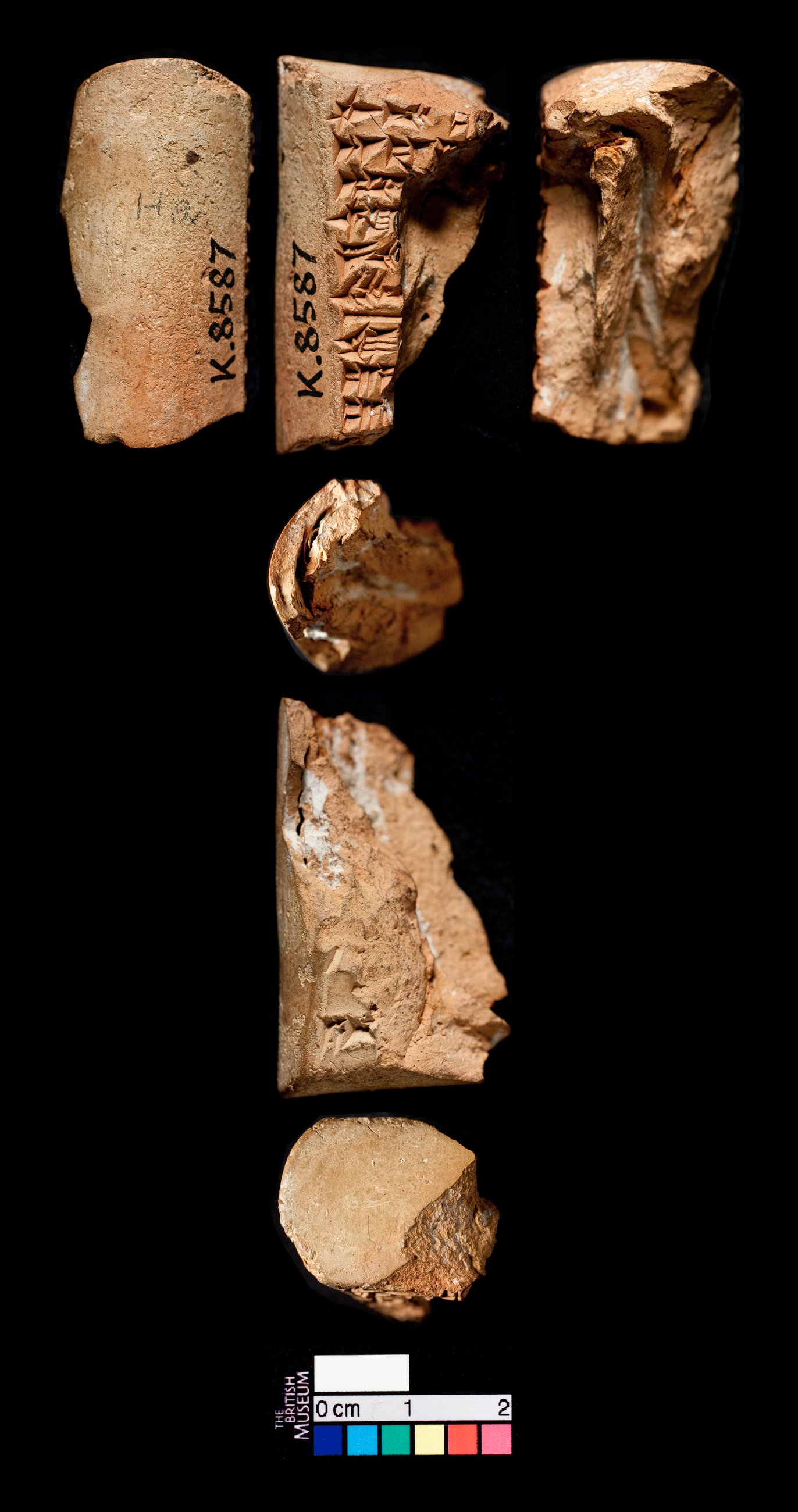
Where on the image
British Museum K.8587: column i, the tablet's own line 1. eBL's corpus edition (https://www.ebl.lmu.de/corpus/L/1/4/SB/VIII) attributes SB VIII 1 to this manuscript at these column and line numbers. Photograph checked: obverse, reverse and edges, ink number K.8587; about 10 lines on one face, consistent with eBL's column i. On this tablet of line 1 only one to three signs survive. The English of this line translates eBL's composite text, so it includes words that are not preserved on this tablet but are restored from other manuscripts or by the editors. Square brackets in the English mark eBL's restorations in its composite text; words that survive on other tablets carry no brackets even where this tablet is broken.
1mim-mu-u₂# [x x x x x x x x]
1At the very first light of dawn,
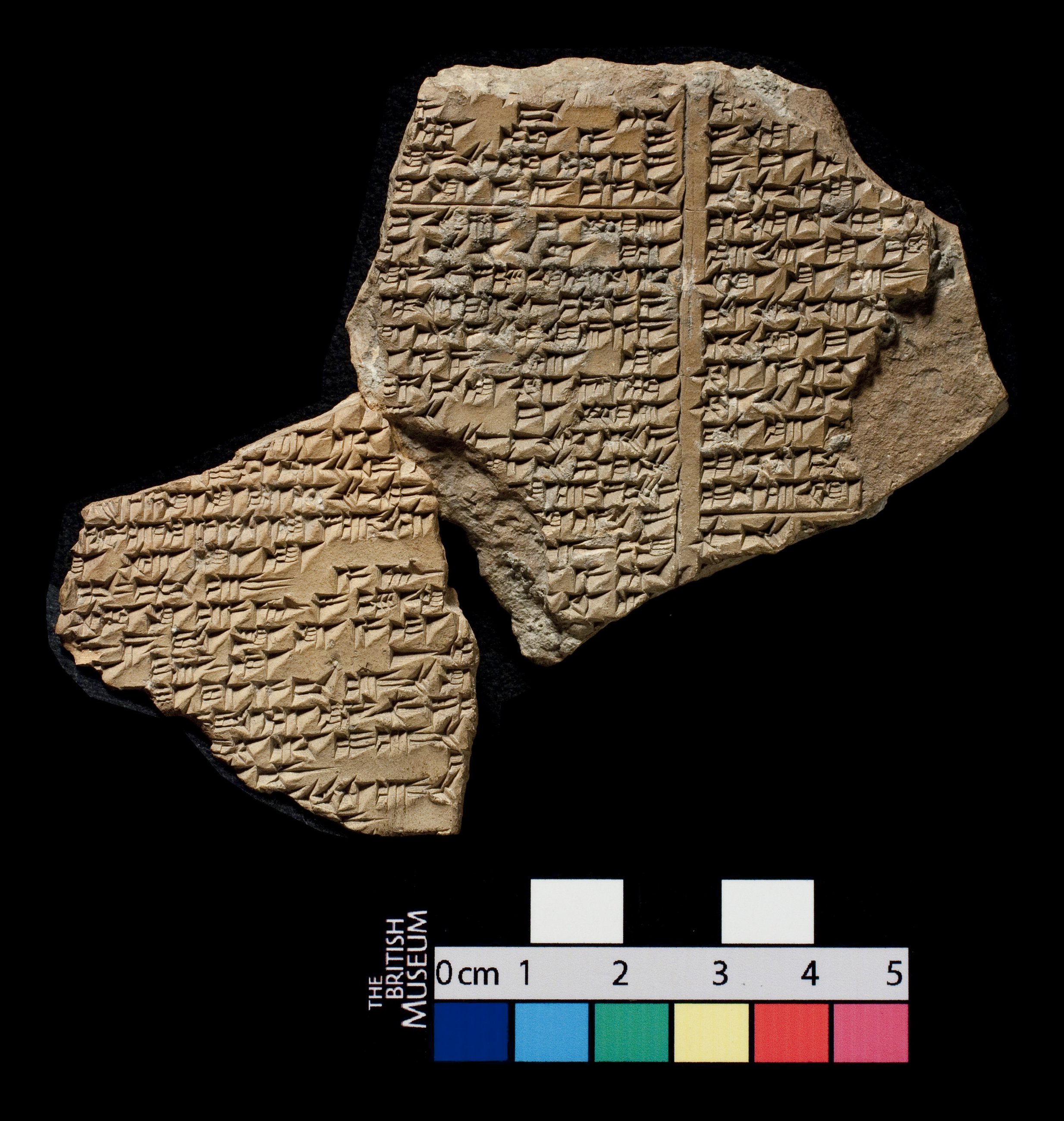
Where on the image
British Museum K.8565: column i, the tablet's own lines 2 to 30. eBL's corpus edition (https://www.ebl.lmu.de/corpus/L/1/4/SB/VIII) attributes SB VIII 2-30 to this manuscript at these column and line numbers. Photograph checked: one face showing the join K.8565 + K.9997 with two columns, consistent with eBL's columns i and ii. On this tablet of lines 3, 27, 29-30 only one to three signs survive and lines 2, 4-26, 28 are partly broken (square brackets and x in the Akkadian). The English of these lines translates eBL's composite text, so it includes words that are not preserved on this tablet but are restored from other manuscripts or by the editors. Square brackets in the English mark eBL's restorations in its composite text; words that survive on other tablets carry no brackets even where this tablet is broken.
2[x x x x x x x a-n]a ib#-ri#-šu₂
3[x x x x x x] ṣa-bi-ti
4[x x x x x x x] x-ka ka-a-ša₂
5[x x x x x x x x u₂]-rab-bu-ka ka-a-ša₂
6[x x x x x x x x k]a-lu me-er-e-ti
7[x x x x x x x ša₂] {giš}TIR {giš}EREN
8[x x x x x x i?-tu?-u]r mu-šu₂ ur-ra
9[x x x x x x x x] rap-ši ša₂ UNUG{ki} su-pu₂-ri
10[x x x x x x x š]a? i-kar-ra-bu EGIR-ni
11[x x x x x (x) e]-lu#-ti ša₂ KUR-i hur-sa-a-ni
12[x x x x x x] x-a-ni el-la
13[x x x q]er-be₂-tu GIM AMA-ka
14[x x x x x] {giš#}ŠUR.MIN₃ {giš}EREN
15[x x x x x x ni-i]h-tal-lu#-pu ina uz-zi-ni
16[x x x x x bu-ṣ]u nim-ru min₃-di-n[u lu-l]i-mu du-ma-mu
17[x x r]i-mu# a#-a-lu tu-ra-hu bu-lu₄ u [nam-ma]š-šu-u₂ ša₂ EDIN
18[x x x] {id₂}u₂-la-a-a qa-diš-tu ša₂ šam-hi-iš n[it-tal-l]a-ku ina a-hi-ša₂
19[lib₂-ki-k]u el-le-tu [pu]-rat-tu₄
20[ša₂ nit]-taq-qu-u₂ A-MEŠ [na-d]a-a-ti
21[lib₂-k]u-nik-ku GURUŠ-MEŠ ša₂ UNUG{ki} [s]u-pu₂-r[i]
22[ša₂ M]E₃-ni iṭ-ṭu-lu a-la-a# [ni-n]a-a#-[ru]
23[lib₂-ki-k]u {lu₂}ENGAR ina mu[h-hi x x (x)]
24[ša₂ ina? {d}a-la]-a#-la ṭa-a-bi u₂-še-lu-[u₂ x x]
25[lib₂-ka-nik-ku x-p]i?-it URU rap-ši ša₂ U[NUG{ki} su-pu₂-ri]
26[x x x m]ah-ri-i u₂-še-ṣ[a-a x x x]
27[lib₂-ki-ku {lu₂}N]A.GADA x [x x x]
28[ša₂ ši-iz-ba ši-ka-r]a u hi-qa u₂-KUR-[x x x x]
29[lib₂-ki-ku{lu₂}KA.B]AR? x [x x x (x)]
30[x x x x x šap?-t]i?-ka# [x x x]
2Gilgameš [was mourning] for his friend:
3O Enkidu, [whom] your mother, a gazelle,
4(and) your father, a wild donkey, [created,]
5whom the wild [asses] reared with their milk,
6and the animals [of the wild taught] all the pastures!
7May the paths, O Enkidu, [of] the Cedar Forest
8[mou]rn you [without pause,] by day and by night!
9May the elders of the populous city of Uruk-the-Sheepfold mourn you!
10May the crowd who would give blessings behind us [mourn you!]
11May the high [peaks] of hills and mountains mourn you,
12[…] … pure.
13May the pastures lament like your mother!
14May [boxwood,] cypress and cedar mourn you,
15through whose midst we crept in our fury!
16May the bear mourn you, the hyena, panther, cheetah, stag and jackal,
17the lion, wild bull, deer, ibex, the herds and animals of the wild!
18May the sacred River Ulāy mourn you, along whose banks we would walk so lustily!
19May the holy Euphrates mourn you,
20which [we used] to pour in libation (as) water from skins!
21May the young men of Uruk-the-Sheepfold mourn you,
22[who] watched our battle, as we slew the Bull of Heaven!
23May the ploughman mourn you in [his furrow],
24[who] will extol your name with his sweet work-song!
25May the … of the populous city of Uruk-the-Sheepfold mourn you,
26[who] will extol your name [with] the first …!
27May the shepherd mourn you [in his cow pen,]
28[who] made sweet [for your mouth] the milk, beer and butter!
29May [the shepherd boy] mourn you […,]
30[who] used to place ghee on your lips!
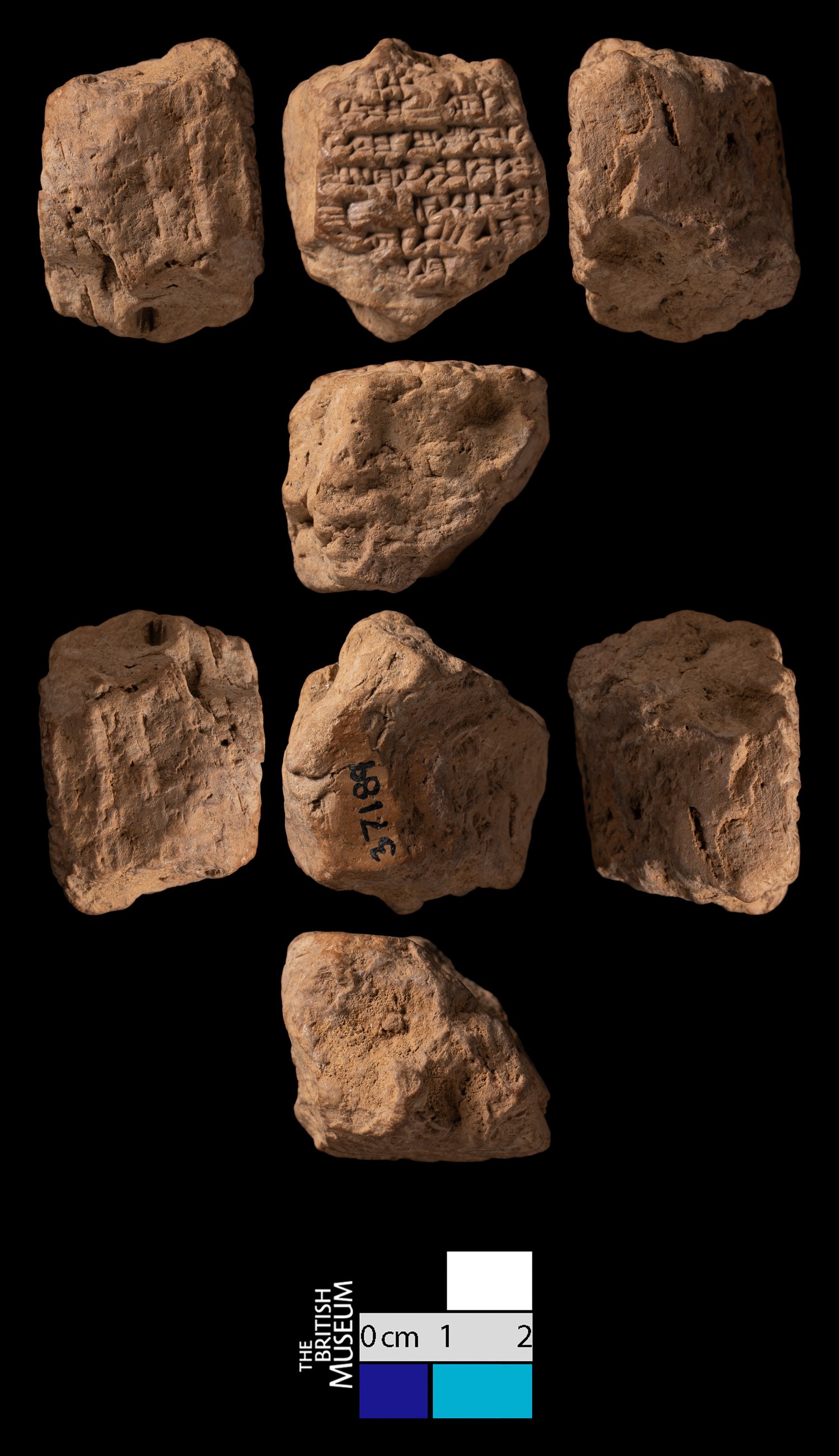
Where on the image
British Museum BM.37189: column i, the tablet's own lines 1' to 6'. eBL's corpus edition (https://www.ebl.lmu.de/corpus/L/1/4/SB/VIII) attributes SB VIII 37-42 to this manuscript at these column and line numbers. Photograph checked: obverse, reverse and edges, ink number 37189; about 8 lines on one face, consistent with eBL's column i. On this tablet of line 37 only one to three signs survive and lines 38-42 are partly broken (square brackets and x in the Akkadian). The English of these lines translates eBL's composite text, so it includes words that are not preserved on this tablet but are restored from other manuscripts or by the editors. Square brackets in the English mark eBL's restorations in its composite text; words that survive on other tablets carry no brackets even where this tablet is broken.
37[x x x lib]-ki# e-li#-[ka ...]
38[ki-ma ŠEŠ?]-MEŠ-ka lib₂-k[ak-ka ...]
39[ki-ma NIN?]-ME-ka lu-u₂ uš-š[u-ra x x x x x x]
40[x x x x] {d}+en-ki-du₃ um-ma-k[a ...]
41[x u₄-me-šu]-ma a-bak-kak-k[a a-na-ku?]
42[ši-ma-in-n]i GURUŠ-MEŠ ši-ma-[in-ni ia-a-ši]
37[May…] mourn over [you!]
38May […] mourn you [as if they were] your [brothers!]
39May their tresses be loosed down [their backs] as if they were your sisters!
40[May they weep] for Enkidu, your mother and father, [as if … ]
41On that very day I [myself] shall mourn y[ou!]
42Hear me, O young men, hear [me!]
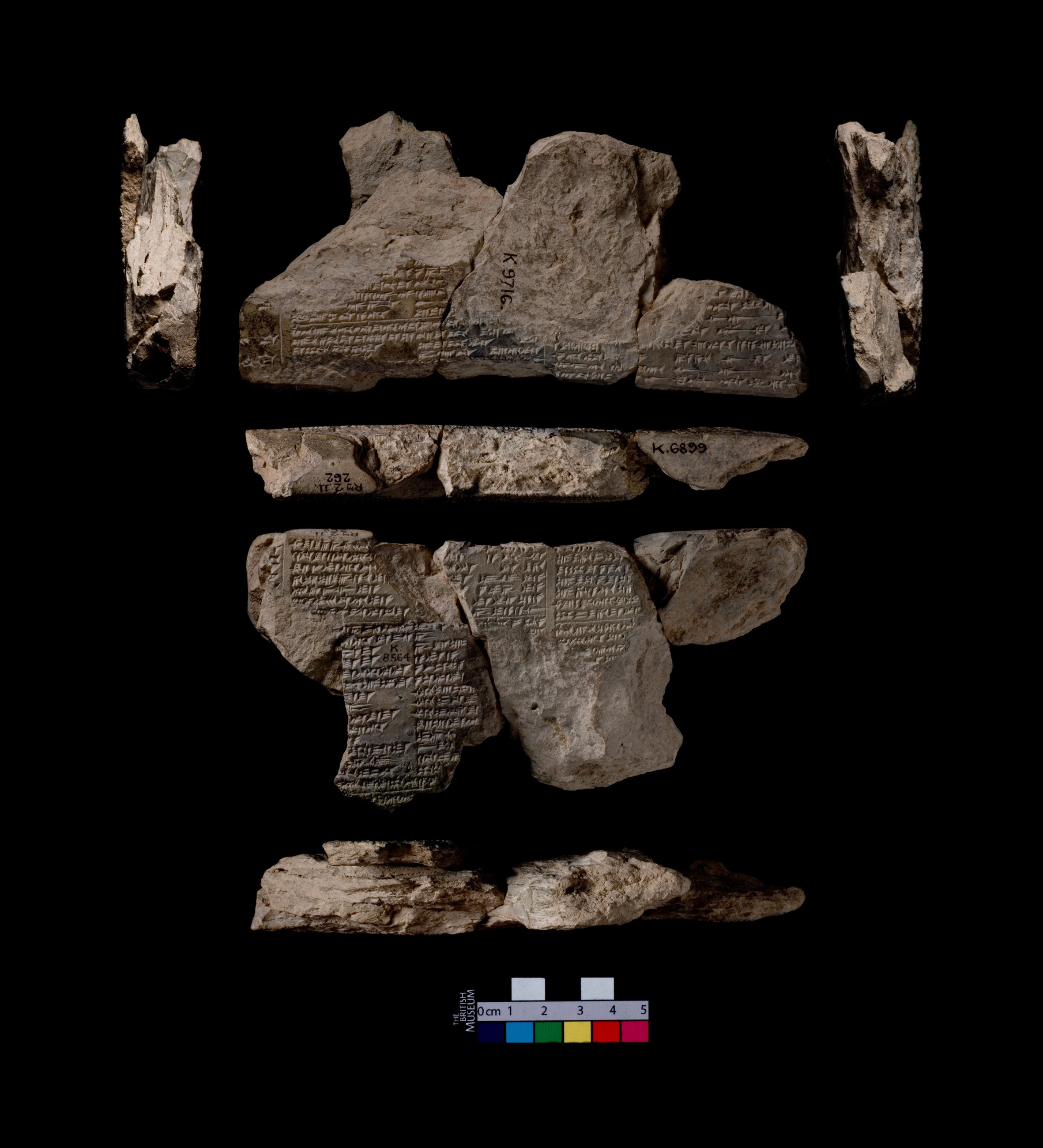
Where on the image
British Museum K.6899: obverse, column ii, the tablet's own lines 1 to 24. eBL's corpus edition (https://www.ebl.lmu.de/corpus/L/1/4/SB/VIII) attributes SB VIII 43-67 to this manuscript at these column and line numbers. Photograph checked: obverse, reverse and edges of the join K.6899 + K.8564 + K.9716 + Rm-II.262 (ink numbers on the pieces); text on both faces, consistent with eBL's columns i-iii and iv-v. On this tablet of line 67 only illegible traces (x) survive, of line 66 only one to three signs survive and lines 43-47, 48-65 are partly broken (square brackets and x in the Akkadian). The English of these lines translates eBL's composite text, so it includes words that are not preserved on this tablet but are restored from other manuscripts or by the editors. Square brackets in the English mark eBL's restorations in its composite text; words that survive on other tablets carry no brackets even where this tablet is broken. eBL line(s) 47a fall within this run but are not on this tablet (they are listed among the lines not shown).
43ši-ma-in-ni ši-bu-ut [URU rap-ši UNUG{ki} ši-ma-i]n-ni# ia#-a#-ši#
44a-na-ku a-na {d}+en-k[i-du₃ ib-ri]-ia a-bak-ki
45GIM lal-la-ri-ti [u₂-n]am-ba ṣar-piš
46ha-aṣ-ṣi-in a-hi-i[a tuk-l]a-tu i-di-ia
47nam-ṣar šip-pi-ia [a-ri-t]u ša₂ pa-ni-ia
48lu-bar i-sin-na-ti-ia n[i-bi-ih] la-le-e-a
49[ša₂-a]-ru# [l]em-nu it-ba-am-ma i-[te-ek-ma]n-ni ia-a-ši
50[x x ku-d]a-ni ṭa#-rid# ak#-kan#-nu# ša₂# KUR#-i# nim-ru ša₂ EDIN
51[x x x i]b-ri ku-da-ni [K]IMIN
52[ša₂ nin-nem]-du-ma ni-lu-u₂ [x x]
53[ni-iṣ-ba-t]u-ma a-la-a [ni-na-ru]
54[nu-šal-pi-t]u {d}hum-ba-ba ša₂ ina {giš}TIR [{giš}EREN aš₂-bu]
55[m]i-nu-u₂ šit-tu ša₂ iṣ-ba-tu-[ka ka-a-ši]
56[ta-ʾ-ad-r]am-ma ul ta-še[m-man-ni ia-a-ši]
57[x šu]-u₂# ul i-na-aš₂-ša₂-a x x x
58[x x x li]b₃-ba-šu-ma ul i-nak-ku-[ud mim-ma-ma]
59[x x x] ib-ri GIM kal-la-t[i x x x]
60[x a-re]-e# i-sa-a[r UGU-šu₂]
61[x x x š]a₂ šu-ud-da-at me-ra-[ni-ša₂]
62[it-ta-na]-as-hur a-na pa-ni-[šu₂ x x x]
63[i-baq-qa-a]m u i-tab-bak qu-un-n[un-tu₄ x x x]
64[x x x x] i#-nam-di dam-qu-ti a-ša₂-a[k-kiš x (x x)]
65[mim-mu-u₂ še-e-ri i-n]a na-ma-ri
66{d}GIŠ-[gim₂-maš x x x x x x x x x]
67[x x x x x x] x x [x x x x x x x x (x x x)]
43Hear me, O elders [of the populous city, Uruk,] hear me!
44I shall mourn Enkidu, my friend,
45like a professional mourning woman I shall lament bitterly.
46The axe at my side, in which my arm trusted,
47the sword of my belt, the shield in front of me;
48my festive garment, the girdle of my delight:
49a wicked wind has risen up against me and robbed me.
50O my friend, a mule on the run, donkey of the uplands, panther of the wild,
51my (friend) Enkidu, a mule on the run, donkey [of the uplands, panther of the wild!]
52We (it was) who joined forces and climbed the uplands,
53seized the Bull of Heaven and [killed it,]
54destroyed Humbaba, who [dwelt in the Cedar] Forest.
55Now what sleep is it that has seized [you?]
56You have become unconscious and cannot [hear me!]
57But he, he would not lift his head;
58he felt his heart, but it was not beating any more.
59He covered (his) friend, (veiling) his face like a bride,
60circling [around him] like an eagle.
61Like a lioness who is deprived of [her] cubs,
62he kept turning about, this way and that.
63He was pulling out his curly tresses and letting them fall in a heap,
64tearing off his finery and casting it away, [… like] something taboo.
65At the very first light [of dawn],
66Gilgameš sent forth a call to the land:
67Forgemaster! [Lapidary!] Coppersmith! Goldsmith! Jeweller!
Where on the image
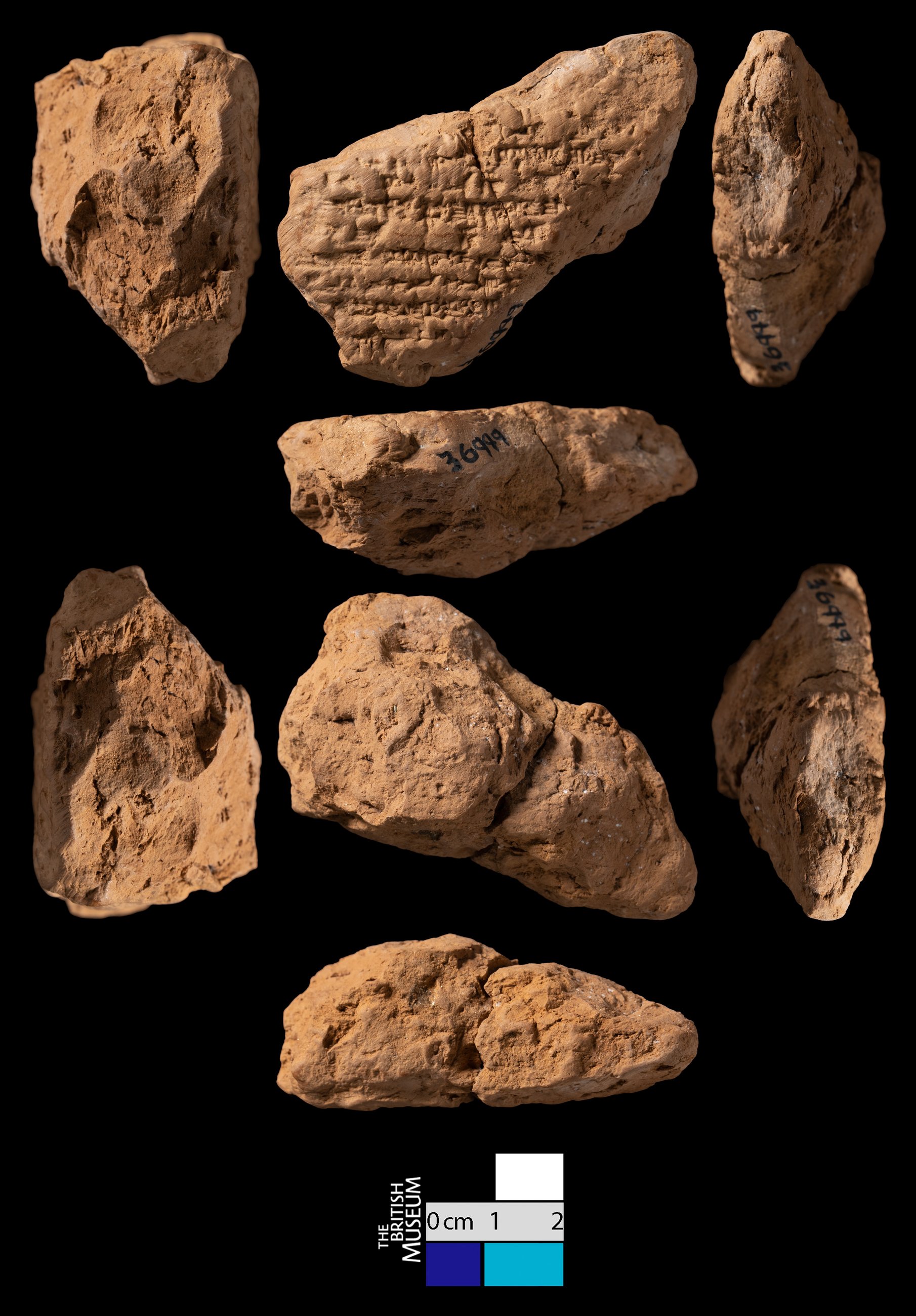
British Museum BM.36999: column ii, the tablet's own lines 1' to 11'. eBL's corpus edition (https://www.ebl.lmu.de/corpus/L/1/4/SB/VIII) attributes SB VIII 69-79 to this manuscript at these column and line numbers. Photograph checked: obverse, reverse and edges, ink number 36999; about 11 lines on one face, consistent with eBL's column ii. On this tablet of lines 69, 78-79 only illegible traces (x) survive, of lines 70, 72 only one to three signs survive and lines 71, 73-77 are partly broken (square brackets and x in the Akkadian). The English of these lines translates eBL's composite text, so it includes words that are not preserved on this tablet but are restored from other manuscripts or by the editors. Square brackets in the English mark eBL's restorations in its composite text; words that survive on other tablets carry no brackets even where this tablet is broken.
69[...] x [x x (x x x)]
70[x x x x mi-na-t]u?-ka?# x x [(x x)]
71[x x (x)] x {na₄?#}ZA#.GIN₃# GABA?#-ka ša₂# KU₃#.SIG₁₇# zu#-mur#-ka?# [(x x)]
72[...] x x x ṣa-lam# i[b-ri-šu₂]
73[(...) (x)] x ša₂ {na₄}ZA.GIN₃# GABA-su ša₂ KU₃#.SIG₁₇ zu#-[mur-šu x x (x)]
74[...]-a?#-ma ṣa-lam [ib-ri-šu₂]
75[...] x x-lu lib₃#-ba-šu# ub#-[la x x x (x x)]
76[i-baq-q]a?-mu?# u# i#-tab#-bak qu#-nun-t[u₄ pe-er-tu₄]
77[i-na-sa]h u# i-nam-di dam-qa#-a#-t[i a-sak-kiš? (x x x)]
78[...] x (x) x x [...]
79[...] x x [...]
69[such as no one before] he fashioned a statue of his friend:
70‘The limbs of my friend [shall be of … ;]
71your eyebrows shall be of lapis lazuli, your chest of gold, your body [shall be of…]’
72[…] … the statue [of his friend],
73[…] were of lapis lazuli, its chest of gold, [its] body [was of…]
74[…] … the statue [of his friend],
75[…] … he wanted to […]
76[He was pulling out] his curly [tresses] and letting them fall in a heap,
77tearing off his finery and casting it away, [… like] something taboo.
78[…] … […]
79[…] … […]
Where on the image
British Museum K.6899: obverse, column iii, the tablet's own lines 0 to 10. eBL's corpus edition (https://www.ebl.lmu.de/corpus/L/1/4/SB/VIII) attributes SB VIII 84-95 to this manuscript at these column and line numbers. Photograph checked: obverse, reverse and edges of the join K.6899 + K.8564 + K.9716 + Rm-II.262 (ink numbers on the pieces); text on both faces, consistent with eBL's columns i-iii and iv-v. On this tablet lines 84, 93 are entirely broken and lines 85-92, 94-95 are partly broken (square brackets and x in the Akkadian). The English of these lines translates eBL's composite text, so it includes words that are not preserved on this tablet but are restored from other manuscripts or by the editors. Square brackets in the English mark eBL's restorations in its composite text; words that survive on other tablets carry no brackets even where this tablet is broken.
84[uš-na-al-ka-a-ma ina ma-a-a-li GAL-i]
85ina# ma#-a#-a#-a[l tak-ni-i uš-na-al-ka-ma]
86u₂-šeš-šeb-ka [šub-ta ne₂-eh-ta šu-bat šu-me-li]
87ma-al-ku ša₂ qaq-qa-r[i u₂-na-aš₂-ša₂-qu GIR₃.MIN-ka]
88u₂-šab-kak-ku UN-[MEŠ ša₂ UNUG{ki} u₂-šad-ma-ma-ak-ka]
89šam-ha-a-ti UN-M[EŠ u₂-ma-al-lak-ka dul₆-la]
90u₃ ana-ku ar-ki-k[a u₂-ša₂-aš₂-ša₂-a x x x x x]
91al-tab-biš-ma KUŠ l[a-ab-bi-im-ma x x x x x x]
92mim-mu-u₂ še-e-ri ina na-[ma-ri ( : )]
93[x x x x x x x x x (x)]
94ri-ik-si-šu₂ ip-ṭ[ur x x x x x]
95{na₄#}ZU₂?# sa-an-d[u x x x x x x x x x x]
84‘[I shall lay you out on a great bed,]
85on a bed [of honour I shall lay you out.]
86I shall set you [on a restful seat, the seat to (my) left,]
87the princes of the earth [will kiss your feet.]
88I shall make weep for you the people [of Uruk, I shall make them sob for you:]
89the people so bonny [I shall fill full of grief for you,]
90And I, after you are gone [I shall have] myself [bear the matted locks of mourning,]
91I shall don the skin of a [lion] and [go] roaming the wild.’
92At the very first light of dawn,
93[Gilgameš arose and entered his treasury.]
94He undid its sealings, he inspected the jewellery:
95obsidian, carnelian, […,] alabaster.
Where on the image
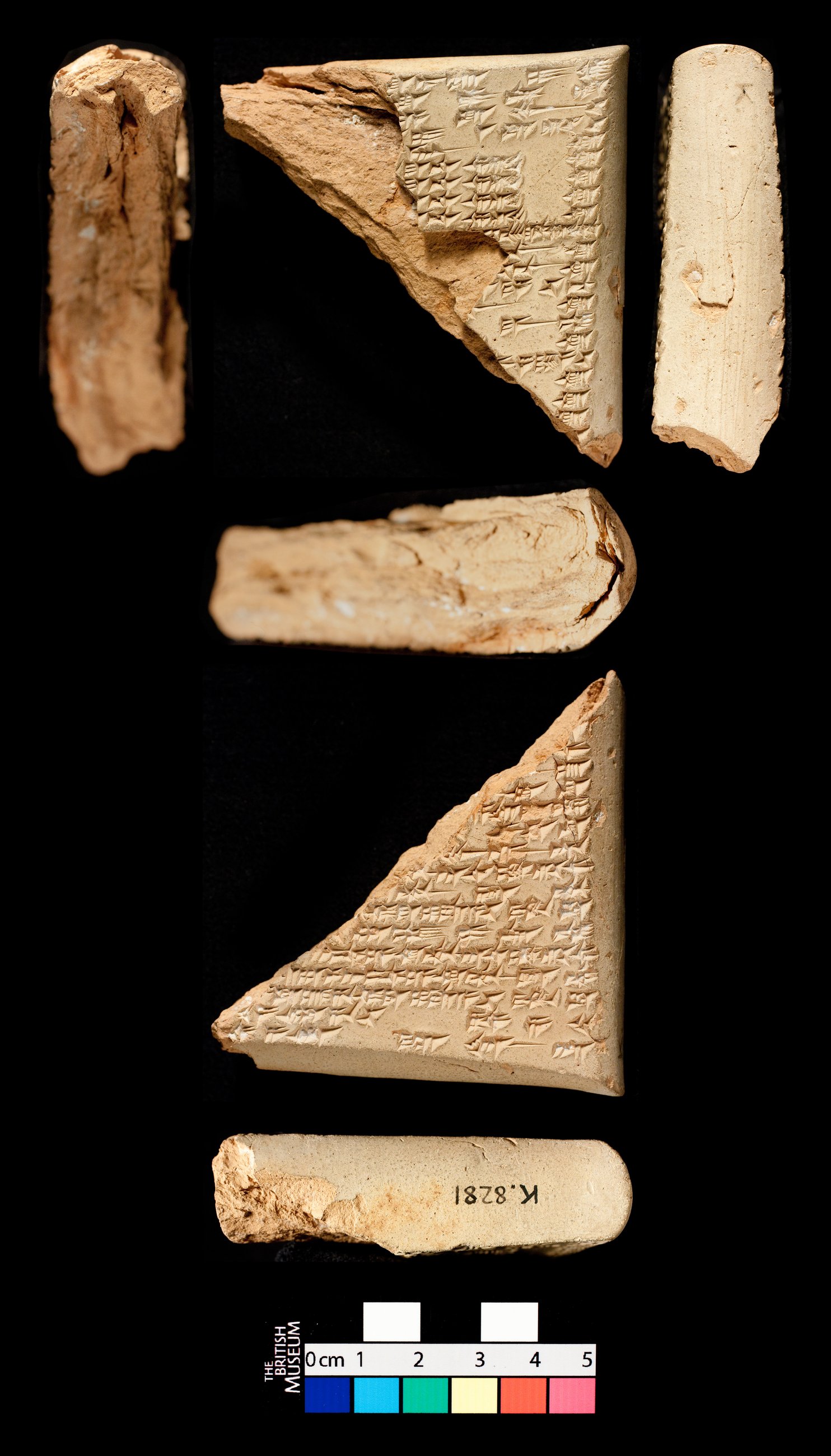
British Museum K.8281: column iii, the tablet's own lines 3 to 21. eBL's corpus edition (https://www.ebl.lmu.de/corpus/L/1/4/SB/VIII) attributes SB VIII 96-115 to this manuscript at these column and line numbers. Photograph checked: obverse, reverse and edges, ink number K.8281; one column on each face, consistent with eBL's columns iii and iv. On this tablet line 103 is entirely broken, of lines 98, 105-106, 108-115 only one to three signs survive and lines 96-97, 99-102, 104, 107 are partly broken (square brackets and x in the Akkadian). The English of these lines translates eBL's composite text, so it includes words that are not preserved on this tablet but are restored from other manuscripts or by the editors. Square brackets in the English mark eBL's restorations in its composite text; words that survive on other tablets carry no brackets even where this tablet is broken. eBL gives no English for line(s) 103.
96[x x x x x x x x x] e#-tep-pu-šu₂
97[x x x x x x x x x iš-t]a-kan ana ib-ri-šu₂
98[x x x x x x x x x x]-MEŠ KIMIN
99[... ša₂ x]+10 ma-na KU₃.SIG₁₇ KIMIN
100[... ša₂ x m]a-na KU₃.SIG₁₇ KIMIN
101[... ša₂ x m]a-na KU₃.SIG₁₇ KIMIN
102[... ša₂ x m]a-na KU₃.SIG₁₇ KIMIN
103[x x x x x x x x x x ( : )]
104x x bi#-ri#-šu₂-nu 30 ma-na KU₃.SIG₁₇ ṣab-tu
105[x x x x x x x x x (x)-šu₂]-nu KIMIN
106[x x x x x x x x x (x)]-šu₂-nu KIMIN
107[x x x x x x x x x (x) k]u-bur-šu₂-nu
108[x x x x x x x x x (x)-šu₂-n]u KIMIN
109[x x x x x x x x x (x)] GAL-tu₄
110[x x x x x x x x x (x)] x KIMIN
111[x x x x x x x x x (x)] x ša₂ MURUB₄-šu₂
112[x x x x x x x x x (x)] KIMIN
113[x x x x x x x x x (x)] KIMIN
114[x x x x x x x x x (x)] KIMIN
115[x x x x x x x x x x x (x) KIMI]N
96[…] … […] skilfully worked,
97[… he] provided for his friend.
98[…] he provided for his friend,
99[… of x]+10 minas of gold he provided for his friend.
100[… of x] minas of gold he provided for his friend.
101[… of x] minas of gold he provided for his friend.
102[… of x] minas of gold he provided for his friend.
103(no English for this line in the eBL edition)
104[… ] between them, mounted in thirty minas of gold,
105[… was] their […,] he provided for his friend.
106[… was] their […,] he provided for his friend.
107[… was] their thickness,
108[… was] their […,] he provided for his friend.
109[…] large
110[…] he provided for his friend.
111[…] of his waist
112[…] he provided for his friend.
113[…] he provided for his friend.
114[…] he provided for his friend.
115[…he provided for his] friend.
Where on the image
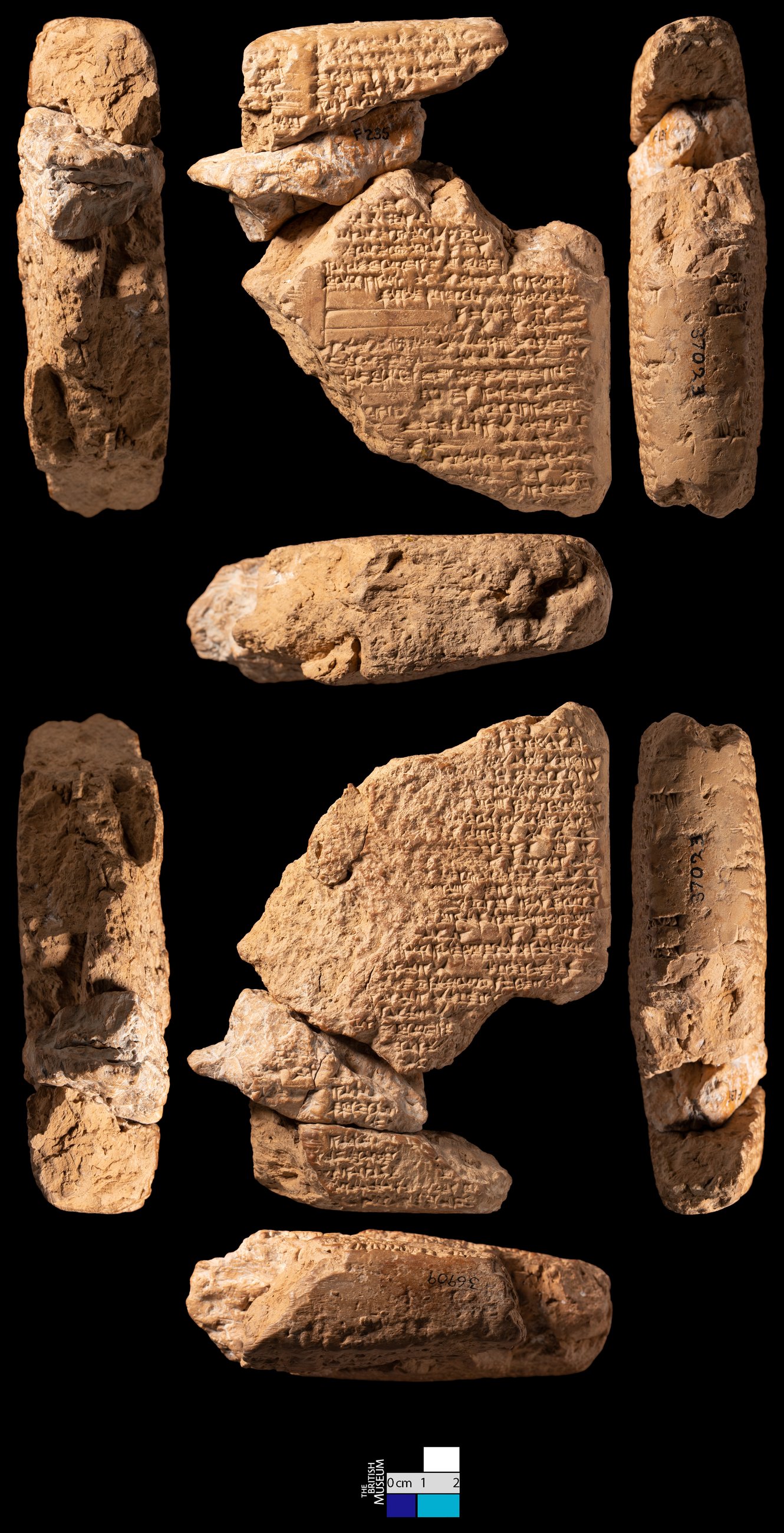
British Museum BM.36909: obverse, column iii, the tablet's own lines 1' to 17'. eBL's corpus edition (https://www.ebl.lmu.de/corpus/L/1/4/SB/VIII) attributes SB VIII 117-133 to this manuscript at these column and line numbers. Photograph checked: obverse, reverse and edges of the join BM.36909 + BM.37023 + F.235.A; text on both faces, consistent with eBL's columns ii-iii and iv-v. On this tablet of line 117 only one to three signs survive and lines 118-133 are partly broken (square brackets and x in the Akkadian). The English of these lines translates eBL's composite text, so it includes words that are not preserved on this tablet but are restored from other manuscripts or by the editors. Square brackets in the English mark eBL's restorations in its composite text; words that survive on other tablets carry no brackets even where this tablet is broken.
117[x x x x x x x x x x (x)] KI[MIN]
118[x x x x (x)] ša₂ GIR+MIN₃-šu₂ KI[MIN]
119[x x x x G]U₂.UN ZU₂ AM.SI di-x x
120[x x ma-na] KU₃.SIG₁₇ na-aṣ-bat-su KIMIN
121[x x x (x)]-mu#?-u₂# dan-nu ša₂ i-di-šu₂ KIMIN
122[x x x] iš#-pat#-su 1 GU₂.UN KU₃.SIG₁₇ na-aṣ-bat-su KIMIN
123[x x] hu#-ut-pa-lu-u₂ ša₂ i-di-šu₂ ZU₂ AM.SI
124[x x x-s]u 40 ma-na KU₃.SIG₁₇ na-aṣ-bat-su KIMIN
125[x x] x x-šu₂# nik-kas₃ mu-rak-ši
126[x x] x x x-i# ku-bur-šu₂ KIMIN
127[...] x x x x ṣa-ri-ru KU₃.SIG₁₇
128[x x] x-tu sa-an-di <<i>> haṭ-ṭu₄ AN.BAR
129[x x x x-l]u?-u₂ ṣi-bit-tu₄ ri-mu
130[...] ik?-ta-lu a-na ib-ri-šu₂
131[GU₄.ME kab-ru]-tu# UDU-ME NIGA-ME uṭ-ṭab₃-bi-ih it-ta-bak ana ib-ri-šu₂
132[...] x {d}UTU ša₂ ib!-ri-ia
133[...] x-a-ti a-na ma-al-ku qaq-qa-ru ka-li ši-ri ub-lu
117[…] he provided [for his friend.]
118[…] of his feet, he provided [for his friend.]
119[… of x] talents of ivory …,
120[… of which] the handle [was x minas] of gold, he provided for his friend.
121[… ] mighty … of his arm, he provided for his friend.
122[… of which] the quiver [was … ], and the handle was a talent of gold, he provided for his friend.
123[… ] the mace in his hand was ivory,
124[… ] of which the handle was forty minas of gold, he provided for his friend.
125[… ] its…, three cubits was its length,
126[… ] … its thickness, he provided for his friend.
127[… ] … of fine gold,
128[… ] … of carnelian, rod of iron,
129[… ] … holder, a wild bull,
130[… ] he ceased to sob for his friend,
131[fat oxen] and fattened sheep he slaughtered, he piled them up for his friend.
132‘[These gifts I display,] O Šamaš, for my friend!’
133[…] … they carried all the meat to the princes of the earth.
Where on the image
British Museum BM.36909: obverse, column iii, the tablet's own lines 18' to 33'. eBL's corpus edition (https://www.ebl.lmu.de/corpus/L/1/4/SB/VIII) attributes SB VIII 134-149 to this manuscript at these column and line numbers. Photograph checked: obverse, reverse and edges of the join BM.36909 + BM.37023 + F.235.A; text on both faces, consistent with eBL's columns ii-iii and iv-v. On this tablet of line 144 only illegible traces (x) survive, of lines 139-142 only one to three signs survive and lines 134-138, 143, 145-149 are partly broken (square brackets and x in the Akkadian). The English of these lines translates eBL's composite text, so it includes words that are not preserved on this tablet but are restored from other manuscripts or by the editors. Square brackets in the English mark eBL's restorations in its composite text; words that survive on other tablets carry no brackets even where this tablet is broken.
134[x (x)] x {d}iš-tar šar-ra-tu₄ GAL-tu₄
135[ta-am-h]i?-ṣu kal-li-re-e iṣ-ṣi el-[li]
136[a-n]a {d}iš-tar šar-ra-tu₄ GAL#-tu₄# [{d}UTU x x x]
137[li]m-hur# {d}iš-tar šar#-r[a-tu₄ x x]
138a#-na IGI# ib-ri-ia lu-[u₂ ha-da-at-ma i-da-a-šu₂ x x]
139[x (x) x] x-na-am [...]
140a#-[na DINGI]R.MA[H {d}UTU x x x]
141lim#-[hur DINGIR.MAH x x x x x]
142a-na! IGI [ib-ri-ia lu-u₂ ha-da-at-ma x x x x x]
143šab-ba {na₄}ZA#.[GIN₃ x x x x x x x x]
144x x x x [x x x x x x x x]
145a-na {d}ereš#-[k]i-g[al x x x x x x x x x x]
146lim!-hur {d}ereš-k[i-gal] š[ar-rat x x x x x x x]
147a-na IGI i[b-ri-ia] lu-[u₂ ha-da-at-ma i-da-a-šu₂ lil-lik]
148em-bu-bu ša₂ {na₄#}GUG# x [x x x x]
149a#-na {d}dumu-zi SIPA na-ram [{d}iš-tar {d}UTU uk-tal-lim]
134[...] ... to the great queen Ištar.
135[A throw]stick of mahogany, the gleaming wood,
136[for] Ištar, the great queen, [he displayed to Šamaš:]
137‘[May] Ištar, the great queen […] receive this,
138may [she] welcome my friend [and so walk at his side!]’
139[… ] a robe.
140for Bēlet-ilī, [the great queen he] displayed [to Šamaš:]
141‘May [Bēlet-ilī], the great [queen] receive this,
142[may she] welcome [my friend and] so walk at his side!’
143A flask of lapis [lazuli, …]
144… […]
145for Ereškigal, [the queen of the Netherworld, he displayed to Šamaš:]
146‘May Ereškigal, the [queen of the populous Netherworld,] receive this,
147may [she] welcome [my friend and so walk at his side!]’
148A flute of carnelian […]
149for Dumuzi, the shepherd beloved of [Ištar, he displayed to Šamaš:]
Where on the image
British Museum BM.36909: reverse, column iv, the tablet's own lines 1 to 25. eBL's corpus edition (https://www.ebl.lmu.de/corpus/L/1/4/SB/VIII) attributes SB VIII 150-173a to this manuscript at these column and line numbers. Photograph checked: obverse, reverse and edges of the join BM.36909 + BM.37023 + F.235.A; text on both faces, consistent with eBL's columns ii-iii and iv-v. On this tablet lines 156-158, 161 are entirely broken, of lines 155, 159-160, 162 only one to three signs survive and lines 150-154, 163-166, 168-170, 172-173a are partly broken (square brackets and x in the Akkadian). The English of these lines translates eBL's composite text, so it includes words that are not preserved on this tablet but are restored from other manuscripts or by the editors. Square brackets in the English mark eBL's restorations in its composite text; words that survive on other tablets carry no brackets even where this tablet is broken. Lines 167, 171 are complete on this tablet. eBL gives no English for line(s) 157, 158.
150lim#-hur# {d#}dumu#-zi# SIPA# na#-ram# [x x x]
151a#-na# IGI# ib#-ri#-ia# lu#-u₂ ha-di-ma i#-[da-a-šu₂ lil-lik]
152{giš}GU.ZA ša₂ ZA#.GIN₃# li#-i# IG[I? x x x x]
153haṭ-ṭi ZA.GIN₃ x [x x x x]
154a-na {d}n[am-tar x x x x x x x x]
155lim#-hur# [x x x x x x x x x x x]
156[a-na IGI ib-ri-ia lu-u₂ ha-di-ma i-da-a-šu lil-lik]
157[x x x x x x x x x x x x (x)]
158[x x x x x x x x x x x x (x)]
159a#-n[a {d}huš-bi-ša₆ {munus}AGRIG KI-ti₃ {d}UTU uk-tal-lim]
160l[im-hur {d}huš-bi-ša₆ {munus}AGRIG KI-ti₃ DAGAL-ti₃]
161[a-na IGI ib-ri-ia lu-u₂ ha-da-at-ma i-da-a-šu₂ lil-lik]
162[u₂-š]e-piš#-ma [x x] x [x x x x x]
163[m]u?-kam-mat KU₃.BABBAR HAR#-MEŠ# URUDU x [x x x x]
164[a]-na {d}ŠU-sa-ṭa-bat ša₂-biṭ {d}e[reš-ki-gal {d}UTU uk-tal-lim]
165[lim]-hur {d}ŠU-sa-ṭa-bat ša₂-biṭ {d#}[x x x (x x)]
166a-na IGI ib-ri-ia lu-u₂ ha-di-ma i#-[da-a-šu₂ lil-lik]
167ib-ri a-a ih!-NINDA₂-ma# lib₃-ba-šu₂ a-a im-ma-ra#-aṣ#
168<...> pa-ru-tu₄ ša₂ lib₃-ba-šu₂ {na₄}ZA#.GIN₃# {na₄}GUG ra-ʾ-i-zu
169<...> ša₂ {giš}TIR {giš}EREN
170<...> {na₄#}ZA#.GIN₃ ra-ʾ-i-zu
171ana <{d}>nin?-šu#-luh#-ha-tum₃#-ma# mu-še-ši-rat E₂# {d#}UTU uk-tal-lim
172[l]im-hur {d#}<nin#>-šu#!-luh#-ha#-tum₃#!-ma# mu-še-ši-rat E₂
173[a-n]a IGI ib-ri-ia lu-u₂ ha-da:at-ma i-da-a-šu₂ lil-lik
173a[<...>] <...> ra-ki#/di#-ma a-na pa-an ib-ri-ia
150‘May Dumuzi, the shepherd beloved of [Ištar (…),] receive this,
151may he welcome my friend and [so walk at his side!]’
152A throne of lapis lazuli … […]
153a staff of lapis lazuli […]
154for Namtar, [the vizier of the Netherworld, he displayed to Šamaš:]
155‘May [Namtar, the vizier of the populous Netherworld,] receive this,
156‘[may he welcome my friend and so walk at his side!]’
157(no English for this line in the eBL edition)
158(no English for this line in the eBL edition)
159for [Ḫušbišag, the stewardess of the Netherworld, he displayed to Šamaš:]
160‘May [Ḫušbišag, the stewardess of the populous Netherworld, receive this,]
161[may she welcome my friend and so walk at his side!]’
162He had (them) make [……]
163a clasp of silver, bangles of copper […]
164for Qāssa-ṭābat, the sweeper of [Ereškigal, he displayed to Šamaš:]
165‘[May] Qāssa-ṭābat, the sweeper [of Ereškigal (…),] receive this,
166may he welcome my friend and [so walk at his side!]
167May my friend not …, nor become sick at heart!’
168[…] of alabaster, the inside of which was inlaid with lapis lazuli and carnelian,
169[depicting an image] of the Cedar Forest,
170[… ] inlayed with carnelian
171for Ninšuluḫḫatumma, the cleaner of the house, he displayed to Šamaš:
172‘May Ninšuluhhatumma, the cleaner of the house, receive this,
173may she welcome my friend and so walk at his side!
173a[May she …] … before my friend,
Where on the image
British Museum K.6899: reverse, column iv, the tablet's own lines 5' to 8'. eBL's corpus edition (https://www.ebl.lmu.de/corpus/L/1/4/SB/VIII) attributes SB VIII 174-177 to this manuscript at these column and line numbers. Photograph checked: obverse, reverse and edges of the join K.6899 + K.8564 + K.9716 + Rm-II.262 (ink numbers on the pieces); text on both faces, consistent with eBL's columns i-iii and iv-v. On this tablet lines 174-175, 177 are partly broken (square brackets and x in the Akkadian). The English of these lines translates eBL's composite text, so it includes words that are not preserved on this tablet but are restored from other manuscripts or by the editors. Square brackets in the English mark eBL's restorations in its composite text; words that survive on other tablets carry no brackets even where this tablet is broken. Line 176 is complete on this tablet.
174ana ib-ri-ia# x# a# x# x# iq#-bi-ma lib₃-ba-šu₂ a-a im-ra-a[ṣ]
175pat-ri ka-ta[p]-pe-e# {na₄}ZA.GIN₃ ši-kir₃-šu
176me₂-šel-ti el#-le#-ti pu-rat-ti
177ana {d}bi-ib-bi [GI]R₂.LA₂ KI-ti₃ {d}UTU uk-tal-lim
174to my friend may he…, may he not become sick at heart.
175A double-edged dagger with a haft of lapis lazuli,
176… of the holy Euphrates,
177for Bibbu, the butcher of the Netherworld, he displayed to Šamaš:
Where on the image
British Museum K.8281: column iv, the tablet's own lines 9' to 16'. eBL's corpus edition (https://www.ebl.lmu.de/corpus/L/1/4/SB/VIII) attributes SB VIII 178-185 to this manuscript at these column and line numbers. Photograph checked: obverse, reverse and edges, ink number K.8281; one column on each face, consistent with eBL's columns iii and iv. On this tablet lines 178-185 are partly broken (square brackets and x in the Akkadian). The English of these lines translates eBL's composite text, so it includes words that are not preserved on this tablet but are restored from other manuscripts or by the editors. Square brackets in the English mark eBL's restorations in its composite text; words that survive on other tablets carry no brackets even where this tablet is broken.
178[x x x x x x x x x K]I-ti₃ DAGAL-ti₃
179[a-na IGI ib-ri-ia lu-u₂ h]a-di-ma i-da-a-šu₂ lil-lik
180[ši]k?-ka-tu₄ pa-ru-tu₄
181[a-na {d}dumu?-zi?-abzu m]aš-hal-tap-pe-e KI-ti₃ {d}UTU uk-tal-lim
182[lim-hur {d}dumu?-zi?-a]bzu maš-hal-tap-pe-e KI-ti₃ DAGAL-ti₃
183[a-na IGI ib-ri-i]a lu-u₂ ha-di-ma i-da-a-šu₂ lil-lik
184[x x x]-HI ša₂ muh-ha-šu₂ {na₄}ZA.GIN₃
185[x x x (x x) {n]a₄}GUG ra-ʾi-zu
178‘[May Bibbu, the butcher] of the populous Netherworld, [receive this,]
179[may he] welcome [my friend] and so walk at his side!’
180[… a] flask of alabaster
181[for Dumuzi-abzu, the] scapegoat of the Netherworld, he displayed to Šamaš:
182‘[May Dumuzi]-abzu, the scapegoat of the populous Netherworld, [receive this,]
183may he welcome my [friend] and so walk at his side!’
184[… ] the top of which was lapis lazuli,
185[… ] inlaid with carnelian,
Where on the image
British Museum BM.36909: reverse, column v, the tablet's own lines 1 to 8. eBL's corpus edition (https://www.ebl.lmu.de/corpus/L/1/4/SB/VIII) attributes SB VIII 199-206 to this manuscript at these column and line numbers. Photograph checked: obverse, reverse and edges of the join BM.36909 + BM.37023 + F.235.A; text on both faces, consistent with eBL's columns ii-iii and iv-v. On this tablet line 205 is entirely broken, of line 204 only illegible traces (x) survive, of lines 200-203, 206 only one to three signs survive and line 199 is partly broken (square brackets and x in the Akkadian). The English of these lines translates eBL's composite text, so it includes words that are not preserved on this tablet but are restored from other manuscripts or by the editors. Square brackets in the English mark eBL's restorations in its composite text; words that survive on other tablets carry no brackets even where this tablet is broken.
199[x x x x x x x x x x x i-da]-a#-šu₂# lil#-lik#
200[x x x x x x x x x x x] {giš#}EREN
201[x x x x x x uk]-tal-lim
202[x x x x x x x x x x x] GAL#-i
203[a-na IGI ib-ri-ia ha-di-ma i-da-a-šu₂] lil-lik
204[x x x x x x x x x x x] x
205[x x x x x x x x x x x x]
206[...] {giš#}EREN#
199‘[May he (or she) welcome my friend and so] walk at his [side!]’
200[…] of cedar
201[for …, the great …,] he displayed [to Šamaš:]
202‘[May …,] the great […, receive this,]
203[may he welcome my friend and] so walk [at his side!]’
204[…] …
205[…]
206[…of ] cedar
Where on the image
British Museum K.6899: reverse, column v, the tablet's own lines 1' to 12'. eBL's corpus edition (https://www.ebl.lmu.de/corpus/L/1/4/SB/VIII) attributes SB VIII 207-219 to this manuscript at these column and line numbers. Photograph checked: obverse, reverse and edges of the join K.6899 + K.8564 + K.9716 + Rm-II.262 (ink numbers on the pieces); text on both faces, consistent with eBL's columns i-iii and iv-v. On this tablet of line 207 only illegible traces (x) survive, of line 219 only one to three signs survive and lines 208-212, 214-215, 218 are partly broken (square brackets and x in the Akkadian). The English of these lines translates eBL's composite text, so it includes words that are not preserved on this tablet but are restored from other manuscripts or by the editors. Square brackets in the English mark eBL's restorations in its composite text; words that survive on other tablets carry no brackets even where this tablet is broken. Lines 213, 216-217 are complete on this tablet. eBL gives no English for line(s) 207.
207[x x x x x x x x] x x [x x x x]
208[...]-du#-tu ša₂ ni-id-[x x x (x)]
209[x x x x-r]a-šu-nu-ma MU-šu₂-nu [x x x x]
210[x x x d]a-a-a-an {d}a-nun-na-[ki x x x]
211{d#}[GIŠ-gim₂-m]aš an-ni-tu₂ ina še-[me-e-šu₂]
212ZIK-ru ša₂ na-a-ri ib-ta-ni# [x x x]
213mim-mu-u₂ še-ri ina na-ma-ri
214{d}GIŠ-gim₂-maš ip-te-ti b[a-ab-šu?]
215u₂-še-ṣa-am-ma {giš}BANŠUR {giš}e-lam-ma-kum ra-b[a-a]
216ma-al-lat {na₄}GUG u₂-ma-al-li LAL₃
217ma#-al#-lat# {na₄}ZA.GIN₃ I₃.NUN.NA um-tal-li
218[x x x x x] x u₂#-za#-ʾ#-i#-nam#-ma# {d#}UTU# uk#-tal#-lim
219[... uk-tal-li]m?
207(no English for this line in the eBL edition)
208‘[…] … which we … […]
209[…] their […], their names […]
210[…] judge of the Anunnaki […]’
211When Gilgameš heard this,
212he conceived [in his heart] the damming of the river.
213At the very first light of dawn,
214Gilgameš opened [his gate.]
215He brought out a great table of elammaku-wood,
216he filled with syrup a dish of carnelian.
217He filled with ghee a dish of lapis lazuli,
218he decorated […] and displayed it to Šamaš.
219[… he displayed to the] sun.
Where on the image
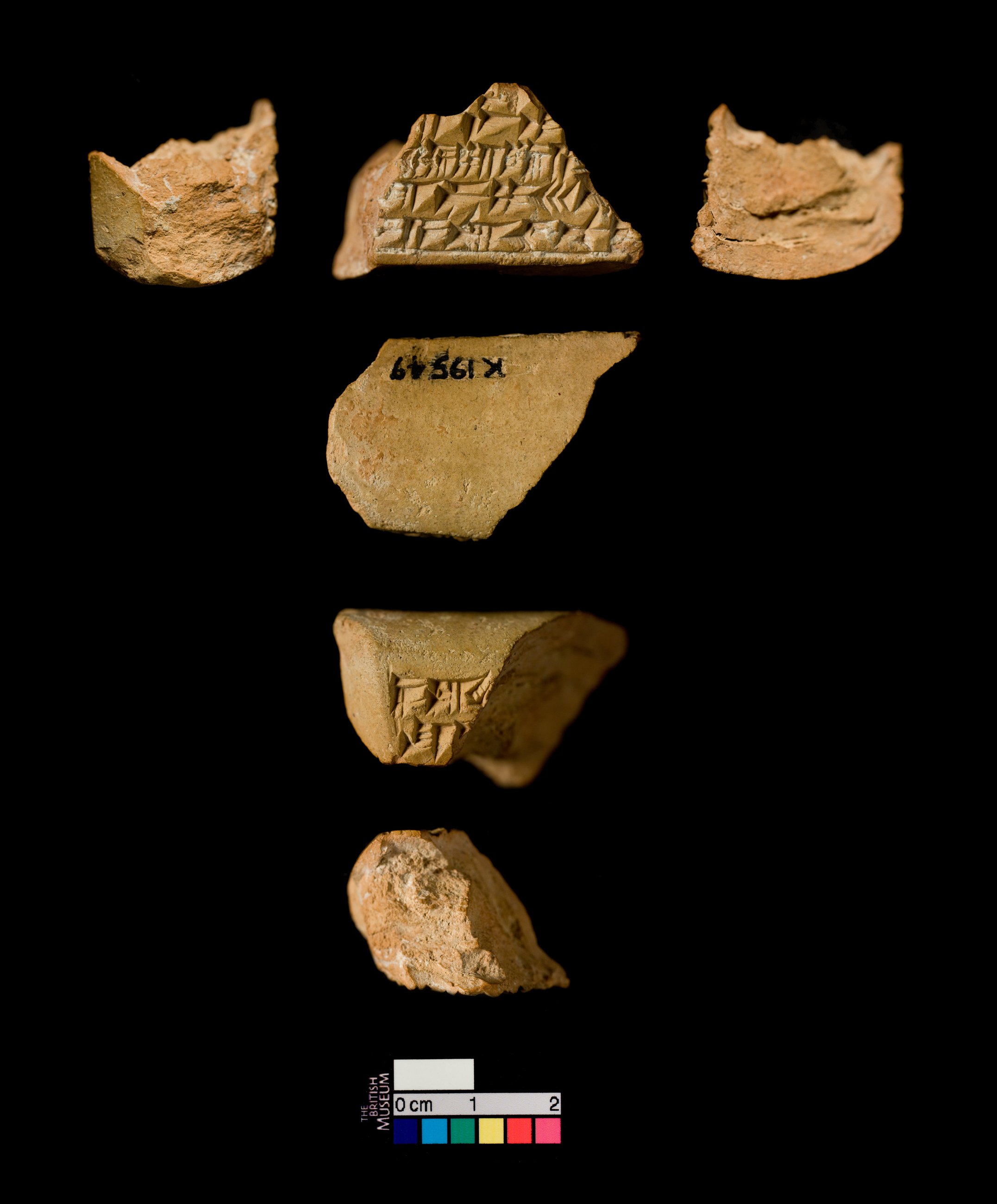
British Museum K.19549: reverse, column vi, the tablet's own lines 1 to 2. eBL's corpus edition (https://www.ebl.lmu.de/corpus/L/1/4/SB/VIII) attributes SB VIII 229-230 to this manuscript at these column and line numbers. Photograph checked: obverse, reverse and edges, ink number K.19549; a few lines on each face. On this tablet of lines 229-230 only one to three signs survive. The English of these lines translates eBL's composite text, so it includes words that are not preserved on this tablet but are restored from other manuscripts or by the editors. Square brackets in the English mark eBL's restorations in its composite text; words that survive on other tablets carry no brackets even where this tablet is broken.
229ni-ip-hi [...]
230šu-u₂?# [...]
229a gold disk […]
230He himself […]
Notes
- Akkadian: eBL transliteration of the signs on the photographed tablet (manuscript-level ATF), not a composite text.
- English: A. R. George's translation in the eBL edition; it renders eBL's composite text, including restorations from other tablets.
- Line numbers: eBL edition (based on A. R. George, The Babylonian Gilgamesh Epic, Oxford 2003). Each section also gives the tablet's own column and line numbers.
- Signs in the Akkadian: [ ] broken away; x illegible sign; # damaged sign; ? uncertain reading; ! sign corrected by the editor; ... broken signs of unknown number; ( ) signs perhaps broken away; { } determinative; < > sign omitted by the scribe, supplied by the editor; << >> sign written in error by the scribe; / alternative readings; : divider sign written on the tablet.
Cite
Sources
- Source: British Museum tablet photographs + eBL manuscript transliterations (eBL corpus edition L I.4, Poem of Gilgamesh (ed. A. R. George, rev. G. Rozzi and E. Jiménez), SB VIII) + English of the eBL edition (A. R. George (eBL edition)) (holding institution)
- Critical edition: electronic Babylonian Library, Poem of Gilgamesh (ed. A. R. George), manuscript transliterations
← previous · → next · v cycle view · l back to library